

Scalable training of artificial neural networks with adaptive sparse connectivity inspired by network science
Open accessThe DOI matches its Crossref record; 53 of the 53 references it cites were found in a registry or an index.
Abstract
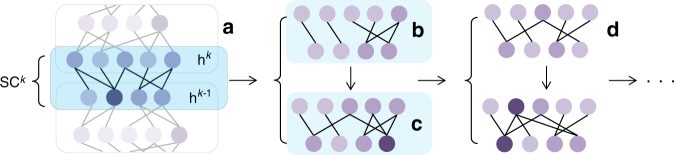
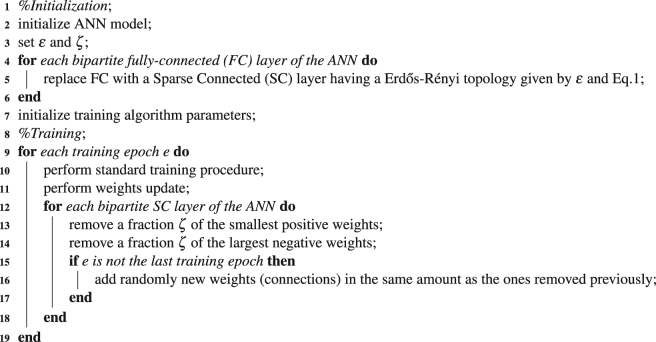
Through the success of deep learning in various domains, artificial neural networks are currently among the most used artificial intelligence methods. Taking inspiration from the network properties of biological neural networks (e.g. sparsity, scale-freeness), we argue that (contrary to general practice) artificial neural networks, too, should not have fully-connected layers. Here we propose sparse evolutionary training of artificial neural networks, an algorithm which evolves an initial sparse topology (Erdős–Rényi random graph) of two consecutive layers of neurons into a scale-free topology, during learning. Our method replaces artificial neural networks fully-connected layers with sparse ones before training, reducing quadratically the number of parameters, with no decrease in accuracy. We demonstrate our claims on restricted Boltzmann machines, multi-layer perceptrons, and convolutional neural networks for unsupervised and supervised learning on 15 datasets. Our approach has the potential to enable artificial neural networks to scale up beyond what is currently possible.
Overview
The claims and statistics of this paper haven’t been checked yet.
Free: it reads the open-access text and checks the first 5 claims that cite a source we can check. Create a free account to check every claim.
Integrity signals
Registry
Cites
Statistics
Figures
Verification
Claims the paper makes
The claims and statistics of this paper haven’t been checked yet.
Free: it reads the open-access text and checks the first 5 claims that cite a source we can check. Create a free account to check every claim.
Claims other papers make about this one
Each is checked against this paper’s own text: does it say what the citing paper says it does?
The cited source says what the claim attributes to it.
In the citing paper
“The idea of selective reinitialization is similar to the emerging idea of dynamic sparse training110–112.”
From Loss of plasticity in deep continual learning (2024) · cites this paper as [110]
Self-check
Percentages, sums and reported differences re-computed from the paper’s own numbers.
The self-check needs the paper’s full text.
Citations
Cites
LeCun, Y., Bengio, Y., & Hinton, G. (2015) · Nature · doi:10.1038/nature14539 · Cited by 84,126
Gradient-based learning applied to document recognition
Lecun, Y., Bottou, L., Bengio, Y., & Haffner, P. (1998) · Proceedings of the IEEE · doi:10.1109/5.726791 · Cited by 58,805
Collective dynamics of ‘small-world’ networks
Watts, D. J., & Strogatz, S. H. (1998) · Nature · doi:10.1038/30918 · Cited by 43,060
Emergence of Scaling in Random Networks
Barabási, A.-L., & Albert, R. (1999) · Science · doi:10.1126/science.286.5439.509 · Cited by 36,135 · cited 1×
“6 and include scale-freeness 7 (detailed in Methods section) and small-worldness 8 .”
Learning representations by back-propagating errors
Rumelhart, D. E., Hinton, G. E., & Williams, R. J. (1986) · Nature · doi:10.1038/323533a0 · Cited by 31,892
Human-level control through deep reinforcement learning
Mnih, V., Kavukcuoglu, K., Silver, D., Rusu, A. A., Veness, J., Bellemare, M. G., Graves, A., Riedmiller, M., Fidjeland, A. K., Ostrovski, G., et al. (2015) · Nature · doi:10.1038/nature14236 · Cited by 30,357
The Elements of Statistical Learning
Hastie, T., Friedman, J., & Tibshirani, R. (2001) · Springer Series in Statistics · doi:10.1007/978-0-387-21606-5 · Cited by 24,162
Reducing the dimensionality of data with neural networks
Hinton, G. E., & Salakhutdinov, R. R. (2006) · Science · doi:10.1126/science.1127647 · Cited by 20,928
Statistical mechanics of complex networks
Albert, R., & Barabási, A.-L. (2002) · Reviews of Modern Physics · doi:10.1103/revmodphys.74.47 · Cited by 20,471
A fast learning algorithm for deep belief nets
Hinton, G. E., Osindero, S., & Teh, Y.-W. (2006) · Neural Computation · doi:10.1162/neco.2006.18.7.1527 · Cited by 16,336 · cited 2×
“…being very successful in providing very good initialization weights to the supervised training of deep arti fi cial neural network architectures 42 , are also very successful as stand alone models in a variety of tasks, such as density estimation to model human choice 31 , collaborative fi…”
Influential
Research works printed but not linked: 18
- Mocanu, D. C. On the synergy of network science and artificial intelligence. In Proc. 25th International Joint Conference on Artificial Intelligence(ed. Kambhampati, S.) 4020–4021 (AAAI Press, New York, 2016).
- Dieleman, S. & Schrauwen, B. Accelerating sparse restricted boltzmann machine training using non-gaussianity measures. In Proc. Deep Learning and Unsupervised Feature Learning, Vol. 9 (eds Bengio Y., Bergstra J. & Le Q.) http://hdl.handle.net/1854/LU-3118568 (Lake Tahoe, 2012).
- Yosinski, J. & Lipson, H. Visually debugging restricted boltzmann machine training with a 3d example. In Representation Learning Workshop, 29th International Conference on Machine Learning (Edinburgh, 2012).
- Whiteson S Stone P Evolutionary function approximation for reinforcement learning J. Mach. Learn. Res. 2006 7 877 917
- Weigend, A. S., Rumelhart, D. E. & Huberman, B. A. Generalization by weight-elimination with application to forecasting. In Proc. Advances in Neural Information Processing Systems, Vol. 3, 875–882 (Morgan-Kaufmann, Colorado, 1991).
- Smolensky, P. Information processing in dynamical systems: foundations of harmony theory. In Parallel Distributed Processing: Explorations in the Microstructure of Cognition (eds Rumelhart, D. E., McClelland, J. L. & CORPORATE PDP Research Group) 194–281 (MIT Press, Cambridge, 1986).
- Osogami T Otsuka M Restricted boltzmann machines modeling human choice Proc. Adv. Neural Inf. Process. Syst. 2014 27 73 81
- Everitt B The Cambridge Dictionary of Statistics 2002 Cambridge, UK; New York Cambridge University Press
- Al-Rfou, R., et al. Theano: a Python framework for fast computation of mathematical expressions. Preprint at https://arxiv.org/abs/1605.02688 (2016). · arXiv
- Urban, G. et al. Do deep convolutional nets really need to be deep and convolutional? In Proc. 5th International Conference on Learning Representations (OpenReview.net, Toulon, 2016).
- Nair, V. & Hinton, G. E. Rectified linear units improve restricted boltzmann machines. In Proc. 27th International Conference on Machine Learning (eds Fürnkranz, J. & Joachims, T.) 807–814 (Omnipress, Haifa, 2010).
- Barabási, A.-L. Network Science (Cambridge University Press, Glasgow, 2016).
- Sutton RS Barto AG Introduction to Reinforcement Learning 1998 Cambridge, MA, USA MIT Press
- Bottou, L. & Bousquet, O. The tradeoffs of large scale learning. In Proc. Advances in Neural Information Processing Systems Vol. 20 (eds Platt, J. C., Koller, D., Singer, Y. & Roweis, S. T.) 161–168 (NIPS Foundation, Vancouver, 2008).
- Larochelle, H. & Murray, I. The neural autoregressive distribution estimator. In Proc. 14th International Conference on Artificial Intelligence and Statistics(eds Gordon, G., Dunson, D. & Dudík, M.) 29–37 (JMLR, Fort Lauderdale, 2011).
- Marlin, B. M., Swersky, K., Chen, B. & de Freitas, N. Inductive principles for restricted boltzmann machine learning. In Proc. 13th International Conference on Artificial Intelligence and Statistics (eds Teh, Y. W. & Titterington, M.) 509–516 (JMLR, Sardinia, 2010).
- LeCun Y Bottou L Bengio Y Haffner P Gradient-based learning applied to document recognition Proc. IEEE 1998 86 2278 2324 10.1109/5.726791 · DOI · Paper page
- Krizhevsky, A. Learning Multiple Layers of Features from Tiny Images. Master’s thesis (2009).
Cited by
Items 201–300 of 598
Dynamic Sparsity Is Channel-Level Sparsity Learner
Yin, L., Li, G., Fang, M., Shen, L., Huang, T., Wang, Z. "., Menkovski, V., Ma, X., Pechenizkiy, M., & Liu, S. (2023) · neural information processing systems · doi:10.52202/075280-2975 · Cited by 32
FreezeNet: Full Performance by Reduced Storage Costs
Wimmer, P., Mehnert, J., & Condurache, A. P. (2021) · Lecture notes in computer science · doi:10.1007/978-3-030-69544-6_41 · Cited by 19
Neuron-based Network Pruning Based on Majority Voting
Alqahtani, A., Xie, X., Essa, E., & Jones, M. W. (2021) · Proceedings - International Conference on Pattern Recognition/Proceedings/International Conference on Pattern Recognition · doi:10.1109/icpr48806.2021.9412897 · Cited by 16
“Our experiment began with sparse topology random graph, after which [18] the weakest connections were iteratively replaced with new initialized ones in the training phase.”
BackgroundMethodInfluentialDon’t Be So Dense: Sparse-to-Sparse GAN Training Without Sacrificing Performance
Liu, S., Tian, Y., Chen, T., & Shen, L. (2023) · International Journal of Computer Vision · doi:10.1007/s11263-023-01824-8 · Cited by 19
“[35] first proposed sparse evolutionary training (SET) that uses a simple prune-and-regrow scheme to update the sparse connectivity, demonstrating better performance than training with static connectivity [20, 31].”
BackgroundMethodInfluentialEvolutionary echo state network for long-term time series prediction: on the edge of chaos
Zhang, G., Zhang, C., & Zhang, W. (2019) · Applied Intelligence · doi:10.1007/s10489-019-01546-w · Cited by 15
Graph and Network Theory for the Analysis of Criminal Networks
Cavallaro, L., Bagdasar, O. D., Meo, P. D., Fiumara, G., & Liotta, A. (2021) · Internet of things · doi:10.1007/978-3-030-67197-6_8 · Cited by 14
“Other practical applications include to deal with large Artificial Neural Networks [5, 6, 7] or targeted advertisements to people based on their friends’ interests [8] or, on the other side, containing the spread of fake news [9].”
BackgroundSelf-citationPERP: Rethinking the Prune-Retrain Paradigm in the Era of LLMsPreprint
Zimmer, M., Andoni, M., Spiegel, C., & Pokutta, S. (2023) · arXiv (Cornell University) · doi:10.48550/arxiv.2312.15230 · Cited by 18
“2020) adapted the Erd ˝ os-R’enyi Kernel (ERK) (Mocanu et al., 2018) for layerwise sparsity, accounting for layer dimensions.”
Optg: Optimizing Gradient-Driven Criteria in Network SparsityPreprint
Zhang, Y., Lin, M., Chen, M., Chao, F., Tian, Y., & Ji, R. (2024) · SSRN Electronic Journal · doi:10.2139/ssrn.4829145 · Cited by 16
Exploiting neuro-inspired dynamic sparsity for energy-efficient intelligent perception
Zhou, S., Gao, C., Delbrück, T., Verhelst, M., & Liu, S. (2025) · Nature Communications · doi:10.1038/s41467-025-65387-7 · Cited by 19
Discovering interpretable models of scientific image data with deep learning
Soelistyo, C. J., & Lowe, A. R. (2024) · IEEE/CVF Conference on Computer Vision and Pattern Recognition Workshops (CVPRW) · doi:10.1109/cvprw63382.2024.00682 · Cited by 17
Yadav, M., Sinha, S., & Stender, M. (2025) · Physical review. E · doi:10.1103/physreve.111.014320 · Cited by 16
Rekha, C. R., Nayar, V. U., & Gopchandran, K. G. (2018) · Optik · doi:10.1016/j.ijleo.2018.07.090 · Cited by 13
Memory-aware and context-aware multi-DNN inference on the edge
Cox, B., Birke, R., & Chen, L. Y. (2022) · Pervasive and Mobile Computing · doi:10.1016/j.pmcj.2022.101594 · Cited by 14
Artificial neural networks training acceleration through network science strategies
Cavallaro, L., Bagdasar, O. D., Meo, P. D., Fiumara, G., & Liotta, A. (2020) · Soft Computing · doi:10.1007/s00500-020-05302-y · Cited by 14
“This work originates in our earlier publication (Mocanu et al. 2018), a promising research avenue to speed up neural”
BackgroundMethodInfluentialSelf-citationThe Elastic Lottery Ticket Hypothesis
Chen, X., Cheng, Y., Wang, S., Gan, Z., Liu, J., & Wang, Z. (2021) · neural information processing systems · doi:10.48550/arxiv.2103.16547 · Cited by 17
Towards Structured Dynamic Sparse Pre-Training of BERTPreprint
Dietrich, A., Gressmann, F., Orr, D., Chelombiev, I., Justus, D., & Luschi, C. (2021) · arXiv (Cornell University) · doi:10.48550/arxiv.2108.06277 · Cited by 18
“…sparsity (Frankle & Carbin, 2019; Gale et al., 2019; Bellec et al., 2017; Mostafa & Wang, 2019; Evci et al., 2019; Dettmers & Zettlemoyer, 2019; Mocanu et al., 2018; Jayakumar et al., 2020), or techniques that dynamically route activations to only interact with a subset of the network weights…”
BackgroundInfluentialAutomatic Noise Filtering with Dynamic Sparse Training in Deep Reinforcement Learning
Grooten, B., Sokar, G., Dohare, S., Mocanu, E., Taylor, M. E., Pechenizkiy, M., & Mocanu, D. C. (2023) · TU/e Research Portal · doi:10.48550/arxiv.2302.06548 · Cited by 16
“It is built upon the DS-TD3 and DS-SAC algorithms of [39], which use sparse evolutionary training (SET) from [33] as the underlying dynamic sparse training method.”
BackgroundMethodInfluentialSelf-citationEPSD: Early Pruning with Self-Distillation for Efficient Model Compression
Dong, C., Liu, N., Zhu, Y., Che, Z., Ma, R., Zhang, F., Mou, X., Chang, Y., & Tang, J. (2024) · Proceedings of the AAAI Conference on Artificial Intelligence · doi:10.1609/aaai.v38i10.29004 · Cited by 16
Mashhadimoslem, H., Kermani, V., Zanganeh, K. E., Shafeen, A., & Elkamel, A. (2023) · The Canadian Journal of Chemical Engineering · doi:10.1002/cjce.25060 · Cited by 12
Modelling dataset bias in machine-learned theories of economic decision-making
Thomas, T., Straub, D., Tatai, F., Shene, M., Tosik, T., Kersting, K., & Rothkopf, C. A. (2024) · Nature Human Behaviour · doi:10.1038/s41562-023-01784-6 · Cited by 20
“Additionally, Bourgin et al. also made use of a training procedure called sparse evolutionary training (SET) 71 .”
InfluentialOn improving deep learning generalization with adaptive sparse connectivity
Liu, S., Mocanu, D. C., & Pechenizkiy, M. (2019) · TU/e Research Portal · doi:10.48550/arxiv.1906.11626 · Cited by 13
“It worths noting that applying iterative neurons pruning to SET-MLP further increases the compression rate by 6 to 7 times.”
BackgroundMethodInfluentialSelf-citationSparse Model Soups: A Recipe for Improved Pruning via Model Averaging
Zimmer, M., Spiegel, C., & Pokutta, S. (2024) · International Conference on Learning Representations · doi:10.48550/arxiv.2306.16788 · Cited by 14
“For a fair comparison, we solely consider the dense-to-sparse training paradigm, as opposed to pruning at initialization (Lee et al., 2019; Tanaka et al., 2020) or dynamic sparse training (DST, Mocanu et al., 2018; Dettmers & Zettlemoyer, 2019; Evci et al., 2020) methods.”
MethodMei, J., Rodriguez-Garcia, A., Takeuchi, D., Wainstein, G., Hubig, N., Mohsenzadeh, Y., & Ramaswamy, S. (2025) · arXiv (Cornell University) · doi:10.48550/arxiv.2501.06762 · Cited by 15
“Recently, network topology found in the biological neural networks have been used to construct ANNs that feature reduced numbers of parameters without performance decline (Goulas et al., 2021; Mocanu et al., 2018).”
InfluentialBlockchain federated learning with sparsity for IoMT devices
Ba, A. F., Yingchi, M., Muhammad, A. U., Samuel, O., Muazu, T., & Kumshe, U. M. M. (2024) · Cluster Computing · doi:10.1007/s10586-024-04810-y · Cited by 12
Deep neural networks architecture driven by problem-specific information
Urda, D., Veredas, F. J., González-Enrique, J., Ruíz-Aguilar, J. J., Jerez, J. M., & Turias, I. J. (2021) · Neural Computing and Applications · doi:10.1007/s00521-021-05702-7 · Cited by 11
Finding Efficient Pruned Network via Refined Gradients for Pruned Weights
Kim, J., Yoo, J., Song, Y., Yoo, K., & Kwak, N. (2023) · ACM International Conference on Multimedia (ACM MM) · doi:10.1145/3581783.3611741 · Cited by 14
Exploring sparsity in graph transformers
Liu, C., Zhan, Y., Ma, X., Ding, L., Tao, D., Wu, J. X., Hu, W., & Du, B. (2024) · Neural Networks · doi:10.1016/j.neunet.2024.106265 · Cited by 14
Pruning Randomly Initialized Neural Networks with Iterative Randomization
Chijiwa, D., Yamaguchi, S., Ida, Y., Umakoshi, K., & Inoue, T. (2021) · neural information processing systems · doi:10.48550/arxiv.2106.09269 · Cited by 24
“[17] proposed sparse evolutionary training (SET), which repeats pruning and regrowth with random values at the end of each training epoch.”
BackgroundPowerpropagation: A sparsity inducing weight reparameterisation
Schwarz, J., Jayakumar, S. M., Pascanu, R., Latham, P. E., & Teh, Y. W. (2021) · neural information processing systems · doi:10.48550/arxiv.2110.00296 · Cited by 65
“Furthermore, there is a growing interest in sparse training [e.g. 12, 13, 14], where the model is regularly pruned or sparsified during training in order to reduce the computational burden.”
BackgroundFederated Learning for Radar Gesture Recognition Based on Spike Timing-Dependent Plasticity
Zhang, M., Li, B., Liu, H., & Zhao, C. (2024) · IEEE Transactions on Aerospace and Electronic Systems · doi:10.1109/taes.2024.3353148 · Cited by 12
“Magnitude-based weight pruning technology was widely used in recent years, which took the magnitude of the weights as a criterion for the importance of the model connection and removed the weight with the smallest value to achieve network sparsity [35].”
MethodChen, Z., Peng, J., Kang, J., & Niyato, D. T. (2024) · IEEE Internet of Things Journal · doi:10.1109/jiot.2024.3457871 · Cited by 10
Li, G., Xiao, Y., Ji, J., Deng, K., Hui, B., Guo, L., & Ma, X. (2025) · IEEE/CVF International Conference on Computer Vision (ICCV) · doi:10.1109/iccv51701.2025.01828 · Cited by 26
“Inspired by the dynamic sparse training [6, 20, 26, 27, 39, 40], our method begins by setting a desired sparsity level on weight gradient at initialization to control weight updates.”
Improving Neural Network With Uniform Sparse Connectivity
Luo, W. (2020) · IEEE Access · doi:10.1109/access.2020.3040943 · Cited by 12
“With these properties, we completely eliminate the needs and issues of lengthy convoluted structure search previously seen in sparse networks[17-20].”
BackgroundMethodInfluentialPhotonic Stochastic Emergent Storage for deep classification by scattering-intrinsic patterns
Leonetti, M., Gosti, G., & Ruocco, G. (2024) · Nature Communications · doi:10.1038/s41467-023-44498-z · Cited by 10
Optimizing deep learning models to combat amyotrophic lateral sclerosis (ALS) disease progression
Qin, H., Hussain, L., Liu, Z., Yan, X., Awwad, F. A. A., Butt, F. M., Salaria, U. A., & Ismail, E. A. A. (2025) · Digital Health · doi:10.1177/20552076251349719 · Cited by 24
Latency-aware automatic CNN channel pruning with GPU runtime analysis
Liu, J., Sun, J., Xu, Z., & Sun, G. (2021) · BenchCouncil Transactions on Benchmarks Standards and Evaluations · doi:10.1016/j.tbench.2021.100009 · Cited by 13
Kim, I., Woo, J., Hwang, H.-G., Kim, B., & Nahm, S. (2022) · Journal of Material Science and Technology · doi:10.1016/j.jmst.2022.02.021 · Cited by 10
Are Straight-Through gradients and Soft-Thresholding all you need for Sparse Training?
Vanderschueren, A., & Vleeschouwer, C. D. (2023) · IEEE Winter Conference on Applications of Computer Vision · doi:10.1109/wacv56688.2023.00380 · Cited by 22
“First, Erdos-Rényi-Kernel (ERK) [30, 3] proposes to scale the global sparsity ratio (= ratio of zeros to the total parameter count) with a layer-wise factor.”
BackgroundMethodInfluentialTraining Large Language Models Efficiently with Sparsity and DataflowPreprint
Srinivasan, V., Gandhi, D., Thakker, U., & Prabhakar, R. (2023) · arXiv (Cornell University) · doi:10.48550/arxiv.2304.05511 · Cited by 12
Balancing innovation and accountability: AI’s transformative influence on logistics in G20 nations
Li, Y., & Zheng, G.-W. (2025) · Humanities and Social Sciences Communications · doi:10.1057/s41599-025-05090-6 · Cited by 9
“Arti fi cial intelligence refers to the simulation of human intelligence processes by machines, especially computer systems (Mocanu et al., 2018).”
Lin, J. (2022) · Natural Hazards · doi:10.1007/s11069-022-05356-1 · Cited by 9
Rapid forecasting of hydrogen concentration based on a multilayer CNN-LSTM network
Shi, Y., Ye, S., & Zheng, Y. (2023) · Measurement Science and Technology · doi:10.1088/1361-6501/acbdb5 · Cited by 9
Deep Stochastic Logic Gate Networks
Kim, Y. (2023) · IEEE Access · doi:10.1109/access.2023.3328622 · Cited by 17
“…Networks for CIFAR-10: PBW (ResNet32) [59], MLPrune (ResNet32) [60], ProbMask (ResNet32) [61], SET-MLP [58] Sparse Function Net [62] Fully-Connected Baselines : Regularized SReLU NN [58], Student-Teacher NN [63] We gathered the comparison results from the deep differentiable logic gate paper [14].”
MethodResultInfluentialMODIFICATION AND PARALLELIZATION OF GENETIC ALGORITHM FOR SYNTHESIS OF ARTIFICIAL NEURAL NETWORKS
Leoshchenko, S., Oliinyk, А., Субботин, С. А., Lytvyn, V., & Shkarupylo, V. V. (2019) · Radio Electronics Computer Science Control · doi:10.15588/1607-3274-2019-4-7 · Cited by 9
“The choosing of topology and configuration the weights of connections of the ANN are the most important stages in the use of neural network technologies for solving practical problems [1–7].”
MethodStudying the Effects of Hashing of Sparse Deep Neural Networks on Data and Model Parallelisms
Mofrad, M. H., Melhem, R., Ahmad, Y., & Hammoud, M. (2020) · IEEE High Performance Extreme Computing Conference · doi:10.1109/hpec43674.2020.9286195 · Cited by 11
“Although sparse DNNs are sparsely-connected, they have been offering comparable prediction accuracy to their dense ones [5], [6].”
BackgroundZheng, S., & Hu, X. (2021) · Frontiers in Psychology · doi:10.3389/fpsyg.2021.594031 · Cited by 9
“Convolution and pooling operations are performed by extracting the input value’s features, and the local features are integrated into all features for output (Montoro et al., 2018; Tommasetti et al., 2018).”
BackgroundDutta, R., Chen, C., Renshaw, D., & Liang, D. (2021) · Scientific Reports · doi:10.1038/s41598-021-95939-y · Cited by 10
ESPN: Extremely Sparse Pruned Networks
Cho, M., Joshi, A., & Hegde, C. (2021) · IEEE Data Science Workshop (DSW) · doi:10.1109/dslw51110.2021.9523404 · Cited by 12
30th Annual Computational Neuroscience Meeting: CNS*2021–Meeting Abstracts
Arora, K., Zulfiqar, I., Schultheiss, H., Martino, F. D., Gulban, O. F., Lage‐Castellanos, A., & Moerel, M. (2021) · Journal of Computational Neuroscience · doi:10.1007/s10827-021-00801-9 · Cited by 9
Pruning rPPG Networks: Toward Small Dense Network with Limited Number of Training Samples
Zhao, C., Cao, P., Xu, S., Li, Z. G., & Feng, Y. (2022) · IEEE/CVF Conference on Computer Vision and Pattern Recognition Workshops (CVPRW) · doi:10.1109/cvprw56347.2022.00223 · Cited by 10
“[29] evolved an initial sparse topology of two consecutive layers of neurons into a scalefree topology during learning.”
BackgroundMethodAvoiding Forgetting and Allowing Forward Transfer in Continual Learning via Sparse Networks
Sokar, G., Mocanu, D. C., & Pechenizkiy, M. (2023) · Lecture notes in computer science · doi:10.1007/978-3-031-26409-2_6 · Cited by 15
“Sparse representations are learned by training each sparse sub-network using dynamic sparse training [36,14], where weights and the sparse topology are jointly optimized.”
BackgroundSelf-citationQuantum speed-up in global optimization of binary neural nets
Liao, Y., Ebler, D., Liu, F., & Dahlsten, O. (2020) · New Journal of Physics · doi:10.1088/1367-2630/abc9ef · Cited by 14
Accelerating Linear Recurrent Neural Networks for the Edge with Unstructured Sparsity
Pierro, A. R. D., Abreu, S., Timcheck, J., Stratmann, P., Wild, A., & Shrestha, S. B. (2025) · University of Groningen research database (University of Groningen / Centre for Information Technology) · doi:10.48550/arxiv.2502.01330 · Cited by 12
“…t and position ℓ in the network, we scale the sparsity s ℓt for each weight according to the Erdös-Renyi-Kernel (ERK) strategy (Evci et al., 2020; Mocanu et al., 2018) to compute the mask M ℓt : is the calculated threshold for W ℓt to reach sparsity s ℓt and TopK ( W, k ) gives the top-k values…”
EdgeHEM: Sparse Federated Reinforcement Learning for Home Energy Management at the Edge
Li, Y., Chen, X., & Wang, Y. (2025) · IEEE Transactions on Smart Grid · doi:10.1109/tsg.2025.3598438 · Cited by 9
“Inspired by biological neural networks [31], the proposed approach replaces common fully connected layers with sparse ones throughout the entire training process, remarkably reducing the number of network parameters.”
Yao, M., Cheng, D., Zhang, L., Liu, L., Song, S. J., Wu, H., & Song, A. (2024) · Applied Soft Computing · doi:10.1016/j.asoc.2024.112444 · Cited by 8
Neural network compression for reinforcement learning tasks
Ivanov, D., Larionov, D., Maslennikov, O. V., & Воеводин, В. В. (2025) · Scientific Reports · doi:10.1038/s41598-025-93955-w · Cited by 13
“We start with a sparse NN and maintain sparsity level throughout training, but with the possibility to rewire weights [31, 32, 33], i.e. to add and to remove connections.”
Mofrad, M. H., Melhem, R., Ahmad, Y., & Hammoud, M. (2020) · IEEE High Performance Extreme Computing Conference · doi:10.1109/hpec43674.2020.9286189 · Cited by 10
“They offer quadratic increase in the network capacity with no or comparable decrease in accuracy [12], [13].”
BackgroundMemA: Fast Inference of Multiple Deep Models
Galjaard, J. M., Cox, B., Ghiassi, A., Chen, L. Y., & Birke, R. (2021) · IEEE International Conference on Pervasive Computing and Communications Workshops (PerCom Workshops) · doi:10.1109/percomworkshops51409.2021.9430952 · Cited by 9
“On the one hand, various memory-reduction strategies for single DNN are explored, such as caching technique [6], [7], pruning DNN layers [8] and model compression [4], [5].”
BackgroundMethodData Parallel Large Sparse Deep Neural Network on GPU
Sattar, N. S., & Anfuzzaman, S. (2020) · IEEE International Symposium on Parallel & Distributed Processing, Workshops and Phd Forum · doi:10.1109/ipdpsw50202.2020.00170 · Cited by 10
Activation function impact on Sparse Neural NetworksPreprint
Dubowski, A. (2020) · arXiv (Cornell University) · doi:10.48550/arxiv.2010.05943 · Cited by 9
“S-shaped rectified linear activation unit (SReLU) is a relatively little-known activation function suggested by Jin et al. [10] and used by Mocanu et al. [18] in their implementation of the SET algorithm.”
BackgroundMethodInfluentialSparse Linear Networks with a Fixed Butterfly Structure: Theory and PracticePreprint
Ailon, N., Leibovich, O., & Nair, V. (2020) · arXiv (Cornell University) · doi:10.48550/arxiv.2007.08864 · Cited by 9
Price, I., & Tanner, J. (2021) · arXiv (Cornell University) · doi:10.48550/arxiv.2102.07655 · Cited by 8
“DST methods (Mocanu et al., 2018; Mostafa & Wang, 2019), on the other hand, modify the support set during training, subject to maintaining a fixed sparsity level overall.”
MethodA comparative study of neural network pruning strategies for industrial applications
Zenoozi, A. D., Erhan, L., Liotta, A., & Cavallaro, L. (2025) · Frontiers in Computer Science · doi:10.3389/fcomp.2025.1563942 · Cited by 8
Self-citationSparse-FCL: Sparse Federated Continual Learning for Evolving Mobile Edge Computing Environments
Liu, Y., Liu, F., Guo, B., Zhang, Z., Xu, R., & Yu, Z. (2025) · IEEE Transactions on Services Computing · doi:10.1109/tsc.2025.3583174 · Cited by 9
“Inspiredbythebrain’ssparseconnectivity andstability-plasticitybalance,SparseTraining[11],[12]has emergedasanewtrainingparadigmfordeepneuralnetworks toachieveacceleratedtraining.”
InfluentialSensor-driven modeling of complex systems using physics-informed supervised machine intelligence
Bhadola, P., Sable, H., Kumari, P., Kadian, S., Narayan, R. J., & Chaudhary, V. (2026) · Applied Physics Reviews · doi:10.1063/5.0309891 · Cited by 9
Fractal: Joint Multi-Level Sparse Pattern Tuning of Accuracy and Performance for DNN Pruning
Guan, Y., Yu, C., Zhou, Y., Leng, J., Li, C., & Guo, M. (2024) · International Conference on Architectural Support for Programming Languages and Operating Systems (ASPLOS) · doi:10.1145/3620666.3651351 · Cited by 11
“Determining the optimal operator given a global accuracy objective is non-trivial [39, 45].”
BackgroundMészáros, B., Knight, J. C., & Nowotny, T. (2024) · Frontiers in Computational Neuroscience · doi:10.3389/fncom.2024.1460309 · Cited by 10
STen: Productive and Efficient Sparsity in PyTorch
Ivanov, A., Dryden, N., Ben‐Nun, T., Schneider, T., Ashkboos, S., & Hoefler, T. (2026) · ACM Transactions on Architecture and Code Optimization · doi:10.1145/3815424 · Cited by 8
“Methods such as SET [66], SNFS [17], and RigL [22] enable training sparse models directly by dynamically updating their connectivity.”
4Ward: A relayering strategy for efficient training of arbitrarily complex directed acyclic graphs
Boccato, T., Ferrante, M., Duggento, A., & Toschi, N. (2023) · Neurocomputing · doi:10.1016/j.neucom.2023.127058 · Cited by 9
SparseMAE: Sparse Training Meets Masked Autoencoders
Zhou, A., Yang, L., Qin, Z., Liu, J., Pan, J., Zhang, R., Zhao, R., Gao, P., & Li, H. (2023) · IEEE/CVF International Conference on Computer Vision (ICCV) · doi:10.1109/iccv51070.2023.01482 · Cited by 10
“Different from post-training methods, sparse training methods [29, 36] aim to adaptively obtain a sparse sub-network while optimizing both model weights and sparse connections from random initialization.”
MethodJain, V., Chouhan, S., Kate, V., Nigam, N., & Bhalerao, S. (2023) · IEEE International Conference on ICT in Business Industry & Government (ICTBIG) · doi:10.1109/ictbig59752.2023.10456105 · Cited by 9
“Exploring techniques to optimize model training processes, such as those proposed in” Scalable Training of Artificial Neural Networks with Adaptive Sparse Connectivity Inspired by Network Science” by Strodthoff et al. [22], can significantly enhance the scalability of our solution.”
MethodSlimRGBD: A Geographic Information Photography Noise Reduction System for Aerial Remote Sensing
Wu, C., Ju, B., Wu, Y., & Xiong, N. N. (2020) · IEEE Access · doi:10.1109/access.2020.2966497 · Cited by 7
Learning Sparse Neural Networks for Better Generalization
Liu, S. (2020) · International Joint Conference on Artificial Intelligence · doi:10.24963/ijcai.2020/735 · Cited by 7
Dismantling complex networks based on the principal eigenvalue of the adjacency matrix
Zhou, M., Tan, J., Liao, H., Wang, Z., & Mao, R. (2020) · Chaos An Interdisciplinary Journal of Nonlinear Science · doi:10.1063/1.5141153 · Cited by 7
Learning Interpretable Concept Groups in CNNs
Varshneya, S., Ledent, A., Vandermeulen, R. A., Lei, Y., Enders, M., Borth, D., & Kloft, M. (2021) · International Joint Conference on Artificial Intelligence · doi:10.24963/ijcai.2021/147 · Cited by 8
Instant Quantization of Neural Networks using Monte Carlo Methods
Mordido, G., Keirsbilck, M. V., & Keller, A. (2019) · Workshop on Energy Efficient Machine Learning and Cognitive Computing for Embedded Applications (EMC2) · doi:10.1109/emc2-nips53020.2019.00014 · Cited by 9
Machine learning applied to smart grids
Mocanu, E. (2017) · TU/e Research Portal · Cited by 22
Self-citationRate-Distortion Theoretic Model Compression: Successive Refinement for PruningPreprint
Isik, B., No, A., & Weissman, T. (2021) · arXiv (Cornell University) · Cited by 8
Signing the Supermask: Keep, Hide, InvertPreprint
Koster, N., Grothe, O., & Rettinger, A. (2022) · arXiv (Cornell University) · doi:10.48550/arxiv.2201.13361 · Cited by 8
Fantastic Weights and How to Find Them: Where to Prune in Dynamic Sparse Training
Nowak, A., Grooten, B., Mocanu, D. C., & Tabor, J. (2023) · TU/e Research Portal · doi:10.48550/arxiv.2306.12230 · Cited by 12
“As the growing criterion, we choose the uniform random [42] and gradient [12] approaches, as they are widely used in the literature.”
BackgroundMethodInfluentialSelf-citationBhalla, D., Ramachandran, A., Rangarajan, K., Dhanakshirur, R. R., Banerjee, S., & Arora, C. (2022) · Current Problems in Diagnostic Radiology · doi:10.1067/j.cpradiol.2022.04.003 · Cited by 7
Learning feature relationships in CNN model via relational embedding convolution layer
Xiong, S., Tan, Y., Wang, G., Yan, P., & Xiang, X. (2024) · Neural Networks · doi:10.1016/j.neunet.2024.106510 · Cited by 6
Brain-inspired wiring economics for artificial neural networks
Zhang, X.-J., Moore, J. M., Gao, T.-T., Zhang, X., & Yan, G. F. (2024) · PNAS Nexus · doi:10.1093/pnasnexus/pgae580 · Cited by 12
“For each model, we adopt our wiring cost-controlled training framework based on three dynamic sparse rewiring algorithms, specifically, sparse evolutionary training (SET) (10), deep rewiring (DeepR) (39), and dynamic sparse reparameterization (DSR) (40), as detailed in Methods.”
InfluentialRepresentation and regression problems in neural networks: Relaxation, generalization, and numerics
Liu, K., & Zuazua, E. (2025) · Mathematical Models and Methods in Applied Sciences · doi:10.1142/s0218202525500228 · Cited by 7
Evolutionary Intrusion Detection Strategy Under Zero Trust Architecture
Cao, B., Zhao, X., & Lv, Z. (2025) · IEEE Journal on Selected Areas in Communications · doi:10.1109/jsac.2025.3560001 · Cited by 6
“3) Evolutionary Learning and Network Topology: Through evolutionary learning, the network transitions from a random sparse topology to a scale-free topology [19], [20], enhancing model efficiency and reducing parameters to achieve a lightweight neural network.”
Embedded Federated Feature Selection with Dynamic Sparse Training: Balancing Accuracy-Cost Tradeoffs
Mahanipour, A., & Khamfroush, H. (2025) · International Joint Conference on Neural Networks (IJCNN) · doi:10.1109/ijcnn64981.2025.11227979 · Cited by 7
“There are only a few studies available in the literature on supervised federated feature selection in horizontal FL.”
Superposing Many Tickets into One: A Performance Booster for Sparse Neural Network Training
Yin, L., Menkovski, V., Fang, M., Huang, T., Pei, Y., Pechenizkiy, M., Mocanu, D. C., & Liu, S. (2022) · TU/e Research Portal · doi:10.48550/arxiv.2205.15322 · Cited by 9
“Sparsity 95% 90% 80% 95% 90% 80% SET [Mocanu et al., 2018] 92.”
BackgroundMethodInfluentialSelf-citationPruning during training by network efficacy modeling
Rajpal, M., Zhang, Y., & Low, B. K. H. (2023) · Machine Learning · doi:10.1007/s10994-023-06304-1 · Cited by 7
“The construction of the saliency function has been discussed in many existing works: Some approaches derived the saliency function from first-order (LeCun et al., 1989; Mol-chanov et al., 2017) and second-order (Hassibi & Stork, 1992; Wang et al., 2020a) Taylor series approximations of L .”
BackgroundMethodInfluentialSparse Multimodal Vision Transformer for Weakly Supervised Semantic Segmentation
Hanna, J., Mommert, M., & Borth, D. (2023) · IEEE/CVF Conference on Computer Vision and Pattern Recognition Workshops (CVPRW) · doi:10.1109/cvprw59228.2023.00208 · Cited by 11
“Mocanu et al. [18] propose a prune and growth procedure called Sparse Evolutionary Training (SET), improving training with fixed sparse connectivity.”
MethodQuantumSEA: In-Time Sparse Exploration for Noise Adaptive Quantum Circuits
Chen, T., Zhang, Z., Wang, H., Gu, J., Li, Z., Pan, D. Z., Chong, F. T., Han, S., & Wang, Z. (2023) · IEEE International Conference on Quantum Computing and Engineering (QCE) · doi:10.1109/qce57702.2023.00015 · Cited by 9
“The conventional sparse distribution in sparse training of classical networks, i.e., Erd ¨ o s-R ´ e nyi [45], determines the layer-wise sparse ratio to be proportional to the number of parameters within each layer.”
BackgroundDual-Grained Lightweight Strategy
Liu, D., Bai, X., Zhao, R., Deng, X., & Yang, L. T. (2024) · IEEE Transactions on Pattern Analysis and Machine Intelligence · doi:10.1109/tpami.2024.3437421 · Cited by 6
“…Iter SNIP [18], Iter GraSP [18], GraSP-MB [18], SNIP-MB [18], ProsPr [3] and NTK-SAP [20]), the dynamic sparse training algorithm (DSR [37], SET [38], Deep-R [39], MEST [40], MEST+EM [40] and MEST+EM&S [40]) and the traditional pruning algorithm (Magnitude after Training, LTR after Training,…”
MethodSparse personalized federated class-incremental learning
Liu, Y., & Huang, D. (2025) · Information Sciences · doi:10.1016/j.ins.2025.121992 · Cited by 6
Cheng, H., Yu, J. Y., Wang, Z., Ma, P., Guo, C., Wang, B., Zhong, W., & Xu, B. (2021) · The Journal of Physical Chemistry B · doi:10.1021/acs.jpcb.1c03552 · Cited by 6
Pushing the Efficiency Limit Using Structured Sparse Convolutions
Verma, V. K., Mehta, N., Si, S., Henao, R., & Carin, L. (2023) · IEEE Winter Conference on Applications of Computer Vision · doi:10.1109/wacv56688.2023.00644 · Cited by 7
Optimization of Sparsity-Constrained Neural Networks as a Mixed Integer Linear Program
Rosenhahn, B. (2023) · Journal of Optimization Theory and Applications · doi:10.1007/s10957-023-02317-x · Cited by 6
A Fast Feedforward Small-World Neural Network for Nonlinear System Modeling
Li, W., Li, Z., & Qiao, J. (2024) · IEEE Transactions on Neural Networks and Learning Systems · doi:10.1109/tnnls.2024.3397627 · Cited by 7
“With the rapid development of artificial intelligence technology, artificial neural networks (ANNs) have become one of the most successful intelligent algorithms nowadays because of their strong nonlinear mapping ability and easy implementation [4].”
Learning with delayed synaptic plasticity
Yaman, A., Iacca, G., Mocanu, D. C., Fletcher, G., & Pechenizkiy, M. (2019) · Genetic and Evolutionary Computation Conference (GECCO) · doi:10.1145/3321707.3321723 · Cited by 6
“Therefore, it may be challenging to scale direct encoding approaches to large networks [14, 29].”
BackgroundSelf-citationPCANN: Distributed ANN Architecture for Image Recognition in Resource-Constrained IoT Devices
Bi, T., Liu, Q., Özçelebi, T., Jarnikov, D., & Sekulovski, D. (2019) · International Conference on Intelligent Environments (IE) · doi:10.1109/ie.2019.000-3 · Cited by 6
“Mocanu et al. [17] propose a method to search for a neural network model which contains less connections between neurons, and achieves similar or even better performance compared with the fully connected network.”
MethodYour lottery ticket is damaged: Towards all-alive pruning for extremely sparse networks
Kim, D., Kim, M., Shim, H., & Lee, J. (2023) · Information Sciences · doi:10.1016/j.ins.2023.03.122 · Cited by 6
Evolving and understanding sparse deep neural networks using cosine similarityPreprint
Pieterse, J., & Mocanu, C. (2019) · TU/e Research Portal · doi:10.48550/arxiv.1903.07138 · Cited by 8
“…dynamic sparse 1 https://github.com/zahraatashgahi/CTRE. training methods use magnitude as a pruning criterion, weight regrowing approaches are of different types, including random (Mocanu et al., 2018; Mostafa & Wang, 2019) and gradient-based regrowth (Evci et al., 2020; Jayakumar et al., 2020).”
BackgroundMethodInfluential
Metadata
- Authors
- Mocanu, D. C., Mocanu, E., Stone, P., Nguyen, P. H., Gibescu, M., & Liotta, A.
- Affiliations
- Eindhoven University of Technology (NL)
- The University of Texas at Austin (US)
- University of Derby (GB)
- Corresponding author
- Mocanu, Decebal Constantin
- Venue
- Nature Communications
- Published
- 2018-06-19
- Volume
- 9
- Issue
- 1
- Pages
- 2383-2383
- ISSN
- 2041-1723 (ISSN-L)
- PMC
- PMC6008460
- OpenAlex
- W2808133870
- Semantic Scholar
- 6dbb9e4b2e3b67dc4e1634989511f67d41373dd0
- Cited by
- 524
- References
- 45
- Citations by year
- 2026: 45 · 2025: 85 · 2024: 72 · 2023: 68 · 2022: 60 · 2021: 100 · 2020: 51 · 2019: 39 · 2018: 4
- FWCI
- 27.30
- Type
- journal article
- Language
- en
- Open access
- gold
- doi.org
- Licence
- cc-by
- creativecommons.org/licenses/by/4.0 (tdm)
- creativecommons.org/licenses/by/4.0 (vor)
- Locations
- Nature Communications (publishedVersion, cc-by)
- Europe PMC (PubMed Central) (publishedVersion, other-oa)
- PubMed Central (publishedVersion, cc-by)
- PubMed (publishedVersion)
- arXiv (Cornell University) (submittedVersion)
- Open Repository and Bibliography (University of Luxembourg) (submittedVersion, other-oa)
- TU/e Research Portal (submittedVersion, cc-by)
- TU/e Research Portal (submittedVersion)
- RePEc: Research Papers in Economics (submittedVersion)
- DOAJ (DOAJ: Directory of Open Access Journals) (submittedVersion, cc-by-sa)
- DOAJ (DOAJ: Directory of Open Access Journals) (submittedVersion)
- Utrecht University Repository (Utrecht University) (submittedVersion, other-oa)
- Research Output (Edinburgh Napier University) (submittedVersion, cc-by)
- Edinburgh Napier Research Repository (Edinburgh Napier University) (submittedVersion, cc-by)
- Open Research (University of Surrey) (submittedVersion, other-oa)
- arXiv (Cornell University)
- Topics
- Physical Sciences › Computer Science › Artificial Intelligence › Neural Networks and Applications
- Physical Sciences › Computer Science › Computer Vision and Pattern Recognition › Advanced Neural Network Applications
- Physical Sciences › Physics and Astronomy › Statistical and Nonlinear Physics › Complex Network Analysis Techniques
- Keywords
- sparse neural networks, scale-free topology, Erdős-Rényi random graphs, parameter reduction, restricted Boltzmann machine, multilayer perceptron, convolutional neural networks, unsupervised learning, supervised learning
About these checks
Registry, retraction, Cites and statistics results are computed, not judged, with one exception: a printed reference that no index lists is read once by a model before it counts as a citation error. Claims are extracted by a model and kept only when their quote appears verbatim in the text; each cited source is then checked, with a model’s help, for whether it says what the claim relies on. Those verdicts can be wrong — read the claim’s quote and the cited source before relying on one.
Statistics and arithmetic are recomputed, not judged.
Confidence bands are shown only for fields calibrated on our annotated test set. None is calibrated yet, so no band is shown.
What counts as a claim ›How we measure confidence ›How we check this ›
Are you an author, or do you see a problem with this page? Request a review
Data sources
Bibliographic data: Semantic Scholar, OpenAlex, Crossref.
Contains information from the Semantic Scholar Academic Graph Datasets, made available under the ODC Attribution License (ODC-BY 1.0).
Semantic Scholar’s data is described in: Kinney, R., et al. (2023). The Semantic Scholar Open Data Platform. arXiv:2301.10140.
