

Scalable training of artificial neural networks with adaptive sparse connectivity inspired by network science
Open accessThe DOI matches its Crossref record; 53 of the 53 references it cites were found in a registry or an index.
Abstract
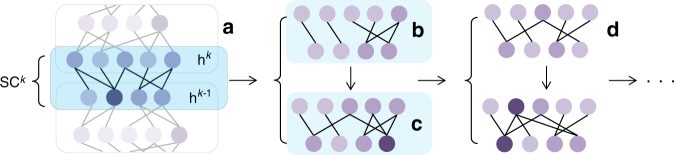
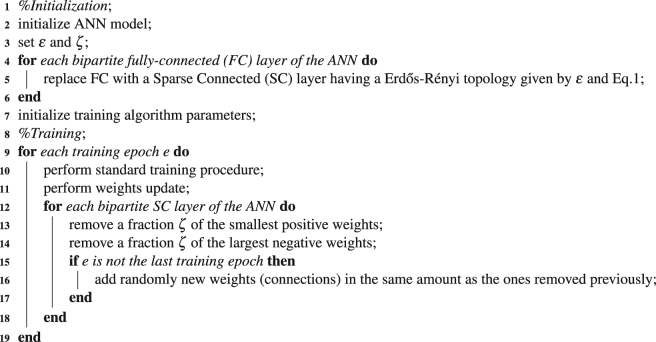
Through the success of deep learning in various domains, artificial neural networks are currently among the most used artificial intelligence methods. Taking inspiration from the network properties of biological neural networks (e.g. sparsity, scale-freeness), we argue that (contrary to general practice) artificial neural networks, too, should not have fully-connected layers. Here we propose sparse evolutionary training of artificial neural networks, an algorithm which evolves an initial sparse topology (Erdős–Rényi random graph) of two consecutive layers of neurons into a scale-free topology, during learning. Our method replaces artificial neural networks fully-connected layers with sparse ones before training, reducing quadratically the number of parameters, with no decrease in accuracy. We demonstrate our claims on restricted Boltzmann machines, multi-layer perceptrons, and convolutional neural networks for unsupervised and supervised learning on 15 datasets. Our approach has the potential to enable artificial neural networks to scale up beyond what is currently possible.
Overview
The claims and statistics of this paper haven’t been checked yet.
Free: it reads the open-access text and checks the first 5 claims that cite a source we can check. Create a free account to check every claim.
Integrity signals
Registry
Cites
Statistics
Figures
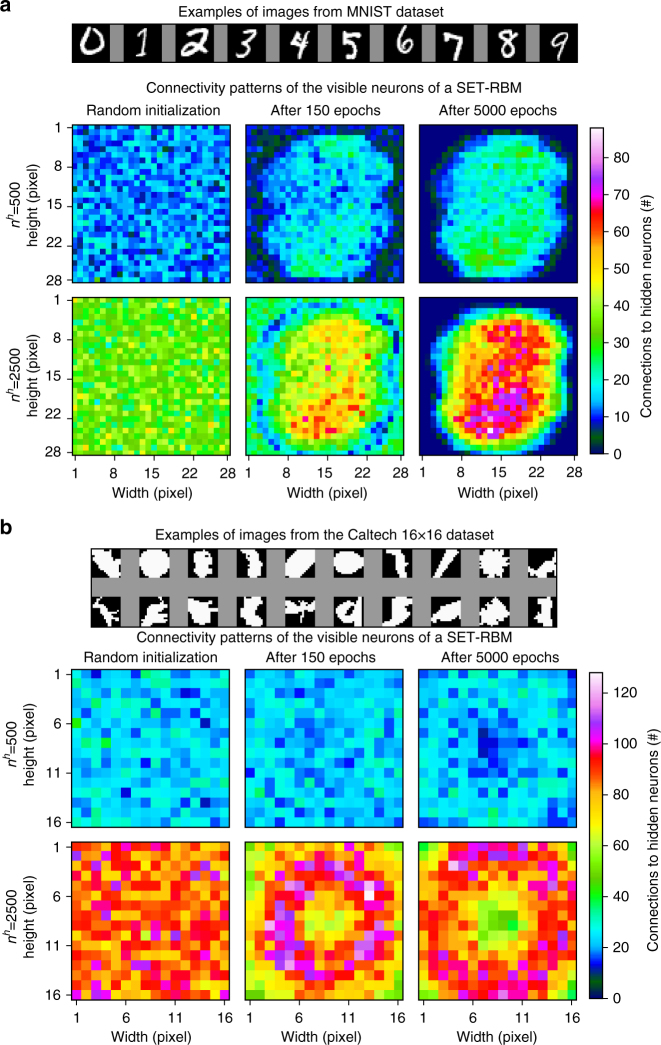
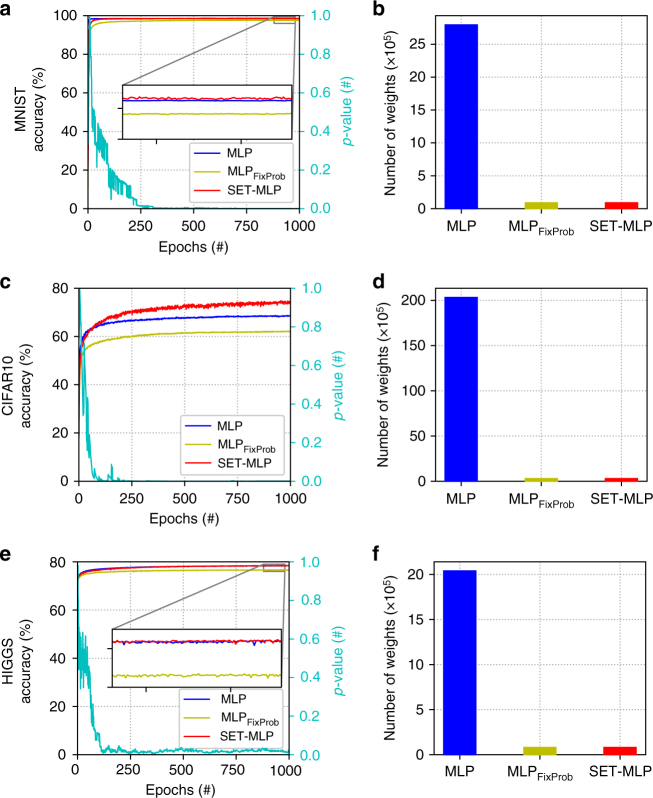
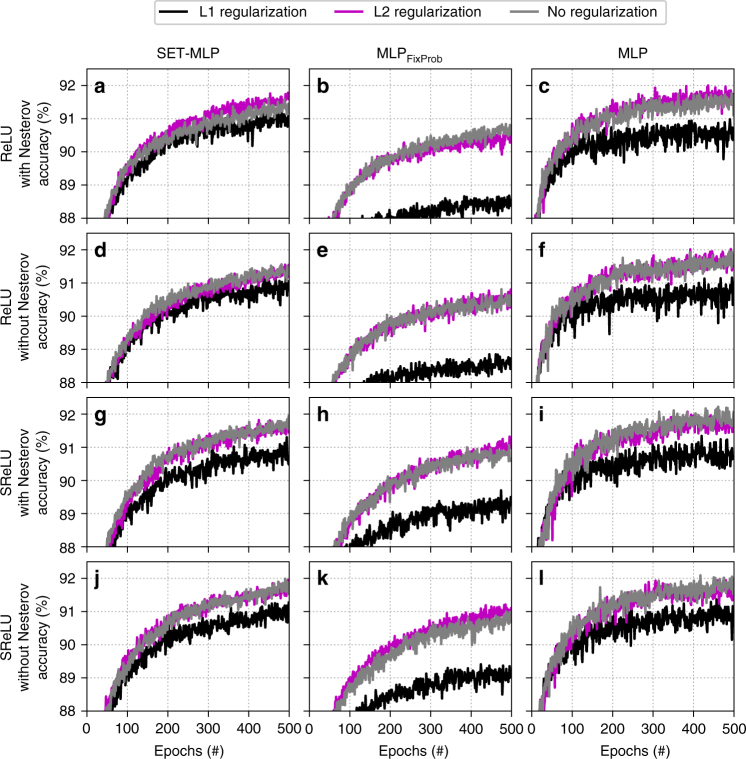
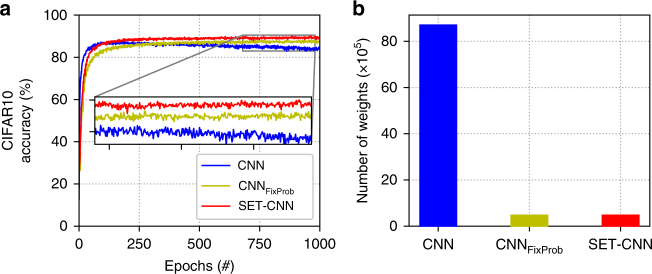
Verification
Claims the paper makes
The claims and statistics of this paper haven’t been checked yet.
Free: it reads the open-access text and checks the first 5 claims that cite a source we can check. Create a free account to check every claim.
Claims other papers make about this one
Each is checked against this paper’s own text: does it say what the citing paper says it does?
The cited source says what the claim attributes to it.
In the citing paper
“The idea of selective reinitialization is similar to the emerging idea of dynamic sparse training110–112.”
From Loss of plasticity in deep continual learning (2024) · cites this paper as [110]
Self-check
Percentages, sums and reported differences re-computed from the paper’s own numbers.
The self-check needs the paper’s full text.
Citations
Cites
LeCun, Y., Bengio, Y., & Hinton, G. (2015) · Nature · doi:10.1038/nature14539 · Cited by 84,126
Gradient-based learning applied to document recognition
Lecun, Y., Bottou, L., Bengio, Y., & Haffner, P. (1998) · Proceedings of the IEEE · doi:10.1109/5.726791 · Cited by 58,805
Collective dynamics of ‘small-world’ networks
Watts, D. J., & Strogatz, S. H. (1998) · Nature · doi:10.1038/30918 · Cited by 43,060
Emergence of Scaling in Random Networks
Barabási, A.-L., & Albert, R. (1999) · Science · doi:10.1126/science.286.5439.509 · Cited by 36,135 · cited 1×
“6 and include scale-freeness 7 (detailed in Methods section) and small-worldness 8 .”
Learning representations by back-propagating errors
Rumelhart, D. E., Hinton, G. E., & Williams, R. J. (1986) · Nature · doi:10.1038/323533a0 · Cited by 31,892
Human-level control through deep reinforcement learning
Mnih, V., Kavukcuoglu, K., Silver, D., Rusu, A. A., Veness, J., Bellemare, M. G., Graves, A., Riedmiller, M., Fidjeland, A. K., Ostrovski, G., et al. (2015) · Nature · doi:10.1038/nature14236 · Cited by 30,357
The Elements of Statistical Learning
Hastie, T., Friedman, J., & Tibshirani, R. (2001) · Springer Series in Statistics · doi:10.1007/978-0-387-21606-5 · Cited by 24,162
Reducing the dimensionality of data with neural networks
Hinton, G. E., & Salakhutdinov, R. R. (2006) · Science · doi:10.1126/science.1127647 · Cited by 20,928
Statistical mechanics of complex networks
Albert, R., & Barabási, A.-L. (2002) · Reviews of Modern Physics · doi:10.1103/revmodphys.74.47 · Cited by 20,471
A fast learning algorithm for deep belief nets
Hinton, G. E., Osindero, S., & Teh, Y.-W. (2006) · Neural Computation · doi:10.1162/neco.2006.18.7.1527 · Cited by 16,336 · cited 2×
“…being very successful in providing very good initialization weights to the supervised training of deep arti fi cial neural network architectures 42 , are also very successful as stand alone models in a variety of tasks, such as density estimation to model human choice 31 , collaborative fi…”
Influential
Research works printed but not linked: 18
- Mocanu, D. C. On the synergy of network science and artificial intelligence. In Proc. 25th International Joint Conference on Artificial Intelligence(ed. Kambhampati, S.) 4020–4021 (AAAI Press, New York, 2016).
- Dieleman, S. & Schrauwen, B. Accelerating sparse restricted boltzmann machine training using non-gaussianity measures. In Proc. Deep Learning and Unsupervised Feature Learning, Vol. 9 (eds Bengio Y., Bergstra J. & Le Q.) http://hdl.handle.net/1854/LU-3118568 (Lake Tahoe, 2012).
- Yosinski, J. & Lipson, H. Visually debugging restricted boltzmann machine training with a 3d example. In Representation Learning Workshop, 29th International Conference on Machine Learning (Edinburgh, 2012).
- Whiteson S Stone P Evolutionary function approximation for reinforcement learning J. Mach. Learn. Res. 2006 7 877 917
- Weigend, A. S., Rumelhart, D. E. & Huberman, B. A. Generalization by weight-elimination with application to forecasting. In Proc. Advances in Neural Information Processing Systems, Vol. 3, 875–882 (Morgan-Kaufmann, Colorado, 1991).
- Smolensky, P. Information processing in dynamical systems: foundations of harmony theory. In Parallel Distributed Processing: Explorations in the Microstructure of Cognition (eds Rumelhart, D. E., McClelland, J. L. & CORPORATE PDP Research Group) 194–281 (MIT Press, Cambridge, 1986).
- Osogami T Otsuka M Restricted boltzmann machines modeling human choice Proc. Adv. Neural Inf. Process. Syst. 2014 27 73 81
- Everitt B The Cambridge Dictionary of Statistics 2002 Cambridge, UK; New York Cambridge University Press
- Al-Rfou, R., et al. Theano: a Python framework for fast computation of mathematical expressions. Preprint at https://arxiv.org/abs/1605.02688 (2016). · arXiv
- Urban, G. et al. Do deep convolutional nets really need to be deep and convolutional? In Proc. 5th International Conference on Learning Representations (OpenReview.net, Toulon, 2016).
- Nair, V. & Hinton, G. E. Rectified linear units improve restricted boltzmann machines. In Proc. 27th International Conference on Machine Learning (eds Fürnkranz, J. & Joachims, T.) 807–814 (Omnipress, Haifa, 2010).
- Barabási, A.-L. Network Science (Cambridge University Press, Glasgow, 2016).
- Sutton RS Barto AG Introduction to Reinforcement Learning 1998 Cambridge, MA, USA MIT Press
- Bottou, L. & Bousquet, O. The tradeoffs of large scale learning. In Proc. Advances in Neural Information Processing Systems Vol. 20 (eds Platt, J. C., Koller, D., Singer, Y. & Roweis, S. T.) 161–168 (NIPS Foundation, Vancouver, 2008).
- Larochelle, H. & Murray, I. The neural autoregressive distribution estimator. In Proc. 14th International Conference on Artificial Intelligence and Statistics(eds Gordon, G., Dunson, D. & Dudík, M.) 29–37 (JMLR, Fort Lauderdale, 2011).
- Marlin, B. M., Swersky, K., Chen, B. & de Freitas, N. Inductive principles for restricted boltzmann machine learning. In Proc. 13th International Conference on Artificial Intelligence and Statistics (eds Teh, Y. W. & Titterington, M.) 509–516 (JMLR, Sardinia, 2010).
- LeCun Y Bottou L Bengio Y Haffner P Gradient-based learning applied to document recognition Proc. IEEE 1998 86 2278 2324 10.1109/5.726791 · DOI · Paper page
- Krizhevsky, A. Learning Multiple Layers of Features from Tiny Images. Master’s thesis (2009).
Cited by
Items 401–500 of 598
Data-Efficient Alignment in Medical Imaging via Reconfigurable Generative Networks
Saxena, D., Cao, J., Xu, J., & Kulshrestha, T. (2025) · IEEE Winter Conference on Applications of Computer Vision · doi:10.1109/wacv61041.2025.00719 · Cited by 2
“For non-CNN layers, the sparsity is allocated using Erdos-R´enyi (ER) [27] with: 1 − n ( l − 1) + n l n ( l − 1) · n l .”
Multilayer perceptron ensembles in a truly sparse training context
van der Wal, P. R. D., Strisciuglio, N., Azzopardi, G., & Mocanu, D. C. (2025) · Neural Computing and Applications · doi:10.1007/s00521-025-11294-3 · Cited by 2
Self-citationPruning at Initialization – A Sketching Perspective
Bar, N., & Giryes, R. (2025) · IEEE Transactions on Pattern Analysis and Machine Intelligence · doi:10.1109/tpami.2025.3598343 · Cited by 3
“In this case, the fine tuning stage is omitted.”
Topographical sparse mapping: A neuro-inspired sparse training framework for deep learning models
Rad, M. K., Neri, F., Moschoyiannis, S., & Bauer, R. (2025) · Neurocomputing · doi:10.1016/j.neucom.2025.131740 · Cited by 2
Ramanujan bipartite graph products for efficient block sparse neural networks
Vooturi, D. T., Varma, G., & Kothapalli, K. (2021) · Concurrency and Computation Practice and Experience · doi:10.1002/cpe.6363 · Cited by 3
“During training: Sparse neural networks are generated during the training process either by gradually removing the connections or rearranging existing set of connections [32, 28, 2, 25, 27, 17, 6].”
A Comparative Study of Neural Network Structures for Detection of Accessibility Problems
Miyata, A., & Okugawa, K. (2020) · 日本バーチャルリアリティ学会論文誌 · doi:10.18974/tvrsj.25.3_174 · Cited by 2
Robustness analysis for compact neural networks
Chen, G., Peng, P., & Tian, Y. (2022) · Scientia Sinica Technologica · doi:10.1360/sst-2021-0233 · Cited by 2
Fakhfakh, M., Bouaziz, B., Batatia, H., & Chaâri, L. (2022) · Lecture notes in networks and systems · doi:10.1007/978-981-16-7618-5_4 · Cited by 2
Federated Learning Communication-Efficiency Framework via Corset Construction
Li, K., & Wang, H. (2022) · The Computer Journal · doi:10.1093/comjnl/bxac062 · Cited by 2
Bayesian optimization for artificial neural networks: application to Covid-19 image classification
Fakhfakh, M., Bouaziz, B., Gargouri, F., & Chaâri, L. (2022) · doi:10.1109/ictih57289.2022.10112015 · Cited by 2
“The proposed optimizer focuses on regularization algorithms with sparse networks [14].”
Explainable Sparse Associative Self-optimizing Neural Networks for Classification
Horzyk, A., Kosno, J., Bulanda, D., & Starzyk, J. A. (2023) · Communications in computer and information science · doi:10.1007/978-981-99-8138-0_19 · Cited by 2
Kichler, N., Afghan, S., & Naumann, U. (2024) · Platform for Advanced Scientific Computing Conference (PASC) · doi:10.1145/3659914.3659915 · Cited by 3
“Unstructured pruning [5, 10, 17, 20, 29] is typically less aggressive and removes individual weights or connections rather than entire neurons or layers.”
Ahmadi, M. A. (2024) · Elsevier eBooks · doi:10.1016/b978-0-443-24010-2.00007-x · Cited by 2
Towards Higher Ranks via Adversarial Weight Pruning
Tian, Y., Chen, H., Guo, T., Xu, C., & Wang, Y. (2023) · neural information processing systems · doi:10.52202/075280-0057 · Cited by 8
Interpreting Neural Networks as Gradual Argumentation Frameworks (Including Proof Appendix)Preprint
Potyka, N. (2020) · arXiv (Cornell University) · doi:10.48550/arxiv.2012.05738 · Cited by 2
“From a machine learning perspective, this is interesting because there has been growing interest in learning sparse neural networks (Louizos, Welling, and Kingma 2018; Frankle and Carbin 2018; Mocanu et al. 2018), not only to improve their interpretability, but also to tame their learning complexity.”
The Use of Artificial Intelligence to Determine Contingent Legal Liabilities Provisions.Preprint
Broby, D., Coulson, A. B., & Dörfler, V. (2021) · SSRN Electronic Journal · doi:10.2139/ssrn.3945406 · Cited by 2
Index Evaluation of Different Hospital Management Modes Based on Deep Learning Model
Li, J., & Wang, Y. (2022) · Computational Intelligence and Neuroscience · doi:10.1155/2022/8507288 · Cited by 2
“proposed a sparse evolutionary training algorithm for ANN, which evolved the initial sparse topology (Erdos-Renyi random graph) of two consecutive layers of neurons into a scale-free topology during the learning process and expanded the scale of ANN to the current possible level [6].”
MethodHow I Learned to Stop Worrying and Love RetrainingPreprint
Zimmer, M., Spiegel, C., & Pokutta, S. (2021) · arXiv (Cornell University) · doi:10.48550/arxiv.2111.00843 · Cited by 2
“Evci et al. (2020) propose a reformulation of the ERDŐS-RÉNYI KERNEL (ERK) (Mocanu et al., 2018) to take the layer and kernel dimensions into account when determining the layerwise sparsity distribution.”
MethodInfluentialZhang, Y., Zhao, J., Wu, W., Muscoloni, A., & Cannistraci, C. V. (2023) · Preprints.org · doi:10.20944/preprints202207.0139.v3 · Cited by 3
Collaborative Natural and Artificial Intelligence: a Multilayer Network InterpretationPreprint
Visconti, R. M. (2024) · Preprints.org · doi:10.20944/preprints202407.0777.v1 · Cited by 2
Carboni, L., Nwaigwe, D., Mainsant, M., Bayle, R., Reyboz, M., Mermillod, M., Dojat, M., & Achard, S. (2024) · SSRN Electronic Journal · doi:10.2139/ssrn.4904745 · Cited by 2
Virabyan, A. (2025) · arXiv.org · doi:10.14529/pct2025 · Cited by 3
Excitation: Momentum For ExpertsPreprint
Shaier, S. (2026) · arXiv (Cornell University) · doi:10.48550/arxiv.2602.21798 · Cited by 2
Mocanu, E., Mocanu, D. C., Paterakis, N. G., & Gibescu, M. (2021) · Elsevier eBooks · doi:10.1016/b978-0-12-820074-2.00007-1 · Cited by 1
Self-citationNon-static TinyML for ad hoc networked devices
Fragkou, E., & Katsaros, D. (2024) · Elsevier eBooks · doi:10.1016/b978-0-44-322202-3.00015-4 · Cited by 2
Dabbaghi, F., Tanhadoust, A., & Ogunsanya, I. G. (2024) · Fire Technology · doi:10.1007/s10694-024-01606-9 · Cited by 1
“…counterparts, is comprised of neurons that are connected to each other (using a weighted connection) to control the flow of information between neurons in the network and made a layered architecture containing an input and an output layer, and one or more hidden layers between these two [55].”
Evaluation of High Sparsity Strategies for Efficient Binary Classification
Erhan, L., Cavallaro, L., Antinori, M. A., & Liotta, A. (2024) · Lecture notes in computer science · doi:10.1007/978-3-031-68323-7_8 · Cited by 1
Self-citationIncremental Soft Pruning to Get the Sparse Neural Network During Training
Zhu, K., Hu, F., Ding, Y., Dong, Y., & Wang, R. (2024) · International Joint Conference on Neural Networks (IJCNN) · doi:10.1109/ijcnn60899.2024.10650747 · Cited by 1
“We have conducted a comparison of ZGP with various state-of-the-art pruning algorithms such as SNIP [24], SM [28], DSR [36], DPF [37], CP [38], RigL [29], SET [39], and DST [40].”
MethodInfluentialBouayad, A., Akallouch, M., Mahdaouy, A. E., Alami, H., & Berrada, I. (2024) · Journal of Information Security and Applications · doi:10.1016/j.jisa.2024.103891 · Cited by 1
A Masked Pruning-Based Algorithm for Dimensionality Reduction in Federated Learning Systems
Gez, T. L. S., & Cohen, K. (2024) · Allerton Conference on Communication, Control, and Computing · doi:10.1109/allerton63246.2024.10735315 · Cited by 1
“Additional strategies involve randomly creating a pruning mask over the model and adjusting this mask during training [21], [22].”
MethodMarcondes, F. S., Gala, A. D. C. O. S., Magalhães, R., de Britto, F. P., Durães, D. A., & Nováis, P. (2025) · SpringerBriefs in computer science · doi:10.1007/978-3-031-76631-2_2 · Cited by 1
Narayanan, V. L., Narayan, J., Dhaked, D. K., & Telmoudi, A. J. (2025) · Processes · doi:10.3390/pr13030808 · Cited by 1
GSMM: Efficient Global Sparsification for Resource-Conscious Multimodal Models
Zhang, W., Pang, H., Zhou, Y., Wang, S., & Li, L. (2025) · IEEE International Conference on Acoustics Speech and Signal Processing · doi:10.1109/icassp49660.2025.10889859 · Cited by 3
Advancing Weight and Channel Sparsification with Enhanced Saliency
Sun, X., Shen, M., Yin, H., Mao, L., Molchanov, P. A., & Álvarez, J. M. (2025) · IEEE Winter Conference on Applications of Computer Vision · doi:10.1109/wacv61041.2025.00704 · Cited by 2
“Dynamic sparse training(DST) methods [2,6,13,14,19, 27, 28] like RigL perform growing with single mini-batch of data B by ranking sparse gradients over Θ P : this greedy technique only cares effectiveness of growing for immediate next gradient descent step.”
Fast Track to Winning Tickets: Repowering One-Shot Pruning for Graph Neural Networks
Yue, Y., Zhang, G., Yang, H., & Cheng, D. (2025) · Proceedings of the AAAI Conference on Artificial Intelligence · doi:10.1609/aaai.v39i12.33435 · Cited by 4
Pruning remote photoplethysmography networks using weight-gradient joint criterion
Zhao, C., Zhang, S., Cao, P., Cheng, S., & Zhang, J. (2025) · Expert Systems with Applications · doi:10.1016/j.eswa.2025.127623 · Cited by 3
Rope-net: deep convolutional neural network via robust principal component analysis
Liu, B., Han, Z. J., Chen, X., Wang, Y., & Tang, Y. (2025) · Machine Learning · doi:10.1007/s10994-025-06782-5 · Cited by 2
“Some approaches (Bellec et al., 2017; Mocanu et al., 2018; Mostafa & Wang, 2019; Dettmers & Zettlemoyer, 2019; Kusupati et al., 2020) Fig.”
Neural network pruning and simultaneous feature and structure selection
Zhang, X., Gu, H., & Kenney, T. (2026) · Neural Networks · doi:10.1016/j.neunet.2026.108977 · Cited by 2
Advanced Use of Automatic Algorithm Configuration: Single- and Multi-Objective Approaches
Rook, J., & López‐Ibáñez, M. (2025) · Genetic and Evolutionary Computation Conference Companion (GECCO Companion) · doi:10.1145/3712255.3716537 · Cited by 1
Jin, Y., She, J., Liu, S., & Gao, Y. (2025) · IEEE/CIC International Conference on Communications in China (ICCC) · doi:10.1109/icccworkshops67136.2025.11148149 · Cited by 2
“Foundational systems like vLLM [5] and ORCA [6] employ basic first-come-first-served (FCFS) scheduling, while the authors in [7] have proposed FastServe’s preemptive scheduling with multi-level feedback queue (MLFQ) prioritization to effectively mitigate head-of-line blocking and reduce the delay…”
prunAdag: an adaptive pruning-aware gradient method
Porcelli, M., Seraghiti, G., & Toint, P. L. (2025) · Computational Optimization and Applications · doi:10.1007/s10589-025-00723-7 · Cited by 2
Efficient Sparse MLPs Through Motif-Level Optimization Under Resource Constraints
Chen, X., Liu, H., & Ziabari, S. S. M. (2025) · AI · doi:10.3390/ai6100266 · Cited by 1
Backdoor defense framework with sparse training and detection in federated learning
Li, Y., Wang, Y., Yuan, H., Zhang, P., Huang, W. X., & Liu, Z. (2025) · Neurocomputing · doi:10.1016/j.neucom.2025.131831 · Cited by 2
Towards optimal sparse CNNs: sparsity-friendly knowledge distillation through feature decoupling
He, W., Fu, Y., & Xiang, Y. (2025) · PeerJ Computer Science · doi:10.7717/peerj-cs.3388 · Cited by 1
Deep Differentiable Logic Gate Networks Based on Fuzzy Zadeh’s T-Norm
Wasilewski, P., & Nguy, C. D. (2026) · Lecture notes in networks and systems · doi:10.1007/978-3-032-04197-5_5 · Cited by 1
Inference and training efficiency in pruned multilayer perceptron networks
Zenoozi, A. D., Erhan, L., Liotta, A., & Cavallaro, L. (2026) · PLOS complex systems. · doi:10.1371/journal.pcsy.0000095 · Cited by 2
“Existing research, including the works of Mocanu et al. [13], Galchonkov et al. [14], Kalyanam et al. [30], Lee et al. [33], and Fan et al. [34], has advanced the understanding of how pruning techniques and approaches affect model performance and energy efficiency across various architectures.”
InfluentialSelf-citationWidth-Adaptive Convolutional Autoencoder with Channels’ Relevance Weighting Mechanism
Almejalli, M., Bchir, O., & Ismail, M. M. B. (2026) · Electronics · doi:10.3390/electronics15071416 · Cited by 1
Wang, C., & Miyazaki, D. (2025) · Workshop on Hyperspectral Image and Signal Processing: Evolution in Remote Sensing · doi:10.1109/whispers69515.2025.11501572 · Cited by 1
“Ablation studies further examine different sparse training strategies (e.g., SET [19], RigL [20]), revealing consistent improvements in classification accuracy and selection quality.”
Generative reinforcement learning for fluid antenna systems based sensing and communication
Zhang, J., Xing, C., Tang, J., Yang, Z., Deng, N., Zhao, N., Wong, K., Niyato, D. T., & Chae, C. (2026) · npj Wireless Technology · doi:10.1038/s44459-026-00035-0 · Cited by 2
Irregular metamaterial networks
Wytock, T. P., Daraio, C., Jaeger, H. M., Schuh, C. A., Valdevit, L., Vitelli, V., & Motter, A. E. (2026) · Nature Reviews Materials · doi:10.1038/s41578-026-00936-0 · Cited by 3
“…connectomes 13–15 and continental-scale power grids 16 to global social media 17,18 and pandemic-related contact networks 19–21 — has given rise to the cross-disciplinary field of network science, which now interacts synergistically with arising artificial intelligence technologies 22,23 .”
Query of Marine Big Data Based on Graph Compression and Views
Zhao, D., Zhang, Y., Lin, J., Song, W., Liotta, A., & Huang, D. (2018) · IEEE ... International Conference on Data Mining workshops · doi:10.1109/icdmw.2018.00044 · Cited by 1
“Recent studies have shown significant progress in solving big data problems from graph perspective [5-7].”
BackgroundSelf-citationIntegration of Spiking Neural Networks for Understanding Interval Timing
Lusk, N. A. (2020) · IntechOpen eBooks · doi:10.5772/intechopen.89781 · Cited by 2
“Recurrent connections may also aid in spontaneously developing high degrees of sparseness within a network like that seen in neocortical circuits [144], which allows for larger networks without compromising effectiveness [145].”
BackgroundCloud Platform System for the Diagnosis of Typical Tea Plant Diseases Based on Neural Network
Yang, J. (2020) · Journal of Physics Conference Series · doi:10.1088/1742-6596/1648/4/042086 · Cited by 1
“Therefore, in the tea planting process, how to diagnose and prevent the typical diseases of tea trees to reduce the loss and make the tea quality meet the quality requirements of high-end markets in Europe and America is a very important and urgent subject[4].”
BackgroundRelations Between Entropy and Accuracy Trends in Complex Artificial Neural Networks
Cavallaro, L., Grassia, M., Fiumara, G., Mangioni, G., Meo, P. D., Carchiolo, V., Bagdasar, O. D., & Liotta, A. (2022) · Studies in computational intelligence · doi:10.1007/978-3-030-93413-2_38 · Cited by 1
Self-citationBora, H. J., Paul, C., Sarma, N. S., & Kalita, A. (2022) · ChemistrySelect · doi:10.1002/slct.202203766 · Cited by 1
Neural Network Panning: Screening the Optimal Sparse Network Before Training
Kang, X., Li, P., Yao, J., & Li, C. (2023) · Lecture notes in computer science · doi:10.1007/978-3-031-26319-4_36 · Cited by 1
Efficient Sparse Networks from Watts-Strogatz Network Priors
Traub, T., Nashouqu, M., & Gulyás, L. (2023) · Lecture notes in computer science · doi:10.1007/978-3-031-41456-5_13 · Cited by 1
Hybrid Deep Learning Model Based on Sparse Recurrent Architecture
Wu, Y., & Liu, M. (2023) · Journal of Circuits Systems and Computers · doi:10.1142/s0218126624501202 · Cited by 1
Gao, X., Ma, J., Li, F., Zhou, Q., & Gao, D. (2024) · Preparative Biochemistry & Biotechnology · doi:10.1080/10826068.2024.2394449 · Cited by 1
“[21,22] Enhancements in network performance can be realized through the integration of genetic algorithms (GA), which emulate natural selection processes to optimize weights and thresholds, hence improving accuracy.”
Searching for Sparse Controllers with a Budget: A Bottom-Up Approach
Reddy, V., Gümüşsoy, S., Eldardiry, H., & Boker, A. (2024) · Proceedings of the ... American Control Conference/Proceedings of the American Control Conference · doi:10.23919/acc60939.2024.10644330 · Cited by 2
“For example, in [14], the approach begins with a sparse network, and the parameters train to maintain sparsity throughout training.”
BackgroundMethodSparse Sounds: Exploring Low-Dimensionality in Music Generation Model
Wang, S., & Liu, S. (2024) · IEEE International Conference on Big Data (BigData) · doi:10.1109/bigdata62323.2024.10825581 · Cited by 1
“Another method used during training is Dynamic Sparse Training (DST) [15]–[19], a sparse-to-sparse approach that begins with a randomly initialized sparse network and simultaneously optimizes both the sparse structure and the weights throughout the training process.”
scGO: interpretable deep neural network for cell status annotation and disease diagnosis
Wu, Y., Xu, P., Wang, L., Liu, S., Hou, Y., Lu, H. J., Hu, P., Li, X., & Yu, X. (2024) · Briefings in Bioinformatics · doi:10.1093/bib/bbaf018 · Cited by 1
“Previous studies have shown that sparse and interpretable neural networks could perform better than fully connected models [41, 52–54].”
Optimizing connectivity through network gradients for Restricted Boltzmann Machines
de Oliveira, A. C. N., & Figueiredo, D. R. (2025) · Neural Networks · doi:10.1016/j.neunet.2025.107486 · Cited by 1
“While the reduction on the absolute number of parameters may be small, recent works observe that an effective connectivity pattern can still yield superior learning curves, learning faster and better (Mocanu et al., 2018; de Oliveira & Figueiredo, 2022).”
BackgroundMethodInfluentialWIP: Iterative Post-training Pruning with Weighted Importance Estimation for Large Language Models
Do, D.-T., Shirai, K., & Nguyen, L.-M. (2025) · Lecture notes in computer science · doi:10.1007/978-3-031-97141-9_13 · Cited by 2
Decay Pruning Method: Smooth Pruning with a Self-Rectifying Procedure
Yang, M., Li, P., Gao, L., Cui, Z., Li, W., & Xiao, J. (2025) · IEEE International Conference on Computer Vision Workshops · doi:10.1109/iccvw69036.2025.00328 · Cited by 1
“As explored in [1, 6, 8, 21, 24], these approaches aim to achieve a better pruning decision by dynamically repeating the prune-and-grow cycle [5].”
Intelligent Neural Networks Models for the Technological Separation Processes
Kupin, A., Zubov, D., Osadchuk, Y., Ivchenko, R., & Saiapin, V. (2023) · International Workshop on Intelligent Information Technologies & Systems of Information Security (IntelITSIS) · doi:10.55056/ceur-ws.org/vol-3373/keynote6.pdf · Cited by 1
Group-Connected Multilayer Perceptron NetworksPreprint
Kachuee, M., Darabi, S., Fazeli, S., & Sarrafzadeh, M. (2019) · arXiv (Cornell University) · doi:10.48550/arxiv.1912.09600 · Cited by 1
“Table 6,7,8,9,10 show the selected architectures for GMLP, MLP, SNN, SET, and FGR, respectively.”
BackgroundMethodInfluentialSearch Spaces for Neural Model TrainingPreprint
Stošić, D., & Stošić, D. (2021) · arXiv (Cornell University) · doi:10.48550/arxiv.2105.12920 · Cited by 5
“While LOTTERY [14] determines at initialization which weights participate in sparse models [15,16], SET [19] and RIGL [19] rewire them throughout training (see Appendix D).”
BackgroundInfluentialGradient-based Weight Density Balancing for Robust Dynamic Sparse TrainingPreprint
Parger, M., Ertl, A., Eibensteiner, P., Mueller, J. H., Winter, M., & Steinberger, M. (2022) · arXiv (Cornell University) · doi:10.48550/arxiv.2210.14012 · Cited by 1
“Sparse Evolutionary Training (SET) (Mocanu et al., 2018a), on the other hand, makes use of a simple and well-established weight removal approach in pruning research.”
BackgroundMethodZhang, Y., Zhao, J., Liao, Z., Wu, W., Michieli, U., & Cannistraci, C. V. (2024) · Preprints.org · doi:10.20944/preprints202406.1136.v1 · Cited by 4
Sparsity-Driven Plasticity in Multi-Task Reinforcement Learning
Todorov, A., Cardenas-Cartagena, J., Cunha, R. F., Zullich, M., & Sabatelli, M. (2025) · Transactions on machine learning research · doi:10.48550/arxiv.2508.06871 · Cited by 3
“We evaluated several sparsification techniques, including: the Gradual Magnitude Pruning (GMP) schedule proposed by Zhu & Gupta (2017), Sparse Evolutionary Training (SET) (Mocanu et al., 2018), and Lottery Ticket Hypothesis (LTH) style rewinding (Frankle & Carbin, 2019).”
An Efficient Training Algorithm for Models with Block-wise Sparsity
Zhu, D., Zuo, Z., & Khalili, M. M. (2025) · Transactions on machine learning research · doi:10.48550/arxiv.2503.21928 · Cited by 2
Cannistraci-Hebb Training on Ultra-Sparse Spiking Neural Networks
Hua, Y., Zhang, J., Zhang, Y., Gu, W., You, L., Xiong, B., Cannistraci, C. V., & Chen, H. (2026) · International Conference on Learning Representations · doi:10.48550/arxiv.2511.05581 · Cited by 3
“For example, Cannistraci-Hebb Training (CHT) (Zhang et al., 2024d) is applied to ANNs, utilizing the CH3-L3 network automaton for link prediction.”
InfluentialSparse Training of Neural Networks based on Multilevel Mirror DescentPreprint
Lunk, Y., Scott, S. J., & Bungert, L. (2026) · arXiv (Cornell University) · doi:10.48550/arxiv.2602.03535 · Cited by 2
“Within the context of sparse training, we also highlight the relevance of genetic evolutionary algorithms, particularly Sparse Evolutionary Training (SET) (Mocanu et al., 2018).”
Neural Networks With Dense Computational Graphs Are Not Universal ApproximatorsPreprint
Rauchwerger, L., Jegelka, S., & Levie, R. (2026) · arXiv (Cornell University) · doi:10.48550/arxiv.2602.07618 · Cited by 1
“Sparse models can match or surpass dense ones in accuracy, using less energy, memory, and training time [Mocanu et al., 2018, Evci et al., 2020, Hoefler et al., 2021, Peste, 2023].”
An, D. (2026) · bioRxiv (Cold Spring Harbor Laboratory) · doi:10.64898/2026.09.19.752860 · Cited by 1
“Six sparsification operators are compared at the same edge budget across three validated circuits — sugar-evoked proboscis extension, its bitter suppression, and mechanosensory grooming with known pathway specificity — silent and spontaneously active states, degree-preserving, weight-shuffled and…”
Byrne, D. W., Smith, S. J., Duran, J., & Santerre, J. (2020) · SMU Data Science Review
Intragroup sparsity for efficient inference
Yu, Z., Wang, C., Wang, X., Zhao, Y. H., & Wu, X. (2021) · International Joint Conference on Neural Networks (IJCNN) · doi:10.1109/ijcnn52387.2021.9533623
“The other is to learn the sparse structure directly; e.g. targeted dropout (TD) [27] and dynamic sparse reparameterization [28], Group size G = 16 .”
BackgroundTraining Sparse Neural Network by Constraining Synaptic Weight on Unit Lp SpherePreprint
Li, W., Yang, X., Li, C., Lü, R., & Xie, X. (2021) · arXiv (Cornell University) · doi:10.48550/arxiv.2103.16013
“where ( ) t w satisfies the definition (10).”
BackgroundInfluentialTowards understanding and modelling sparse training algorithms at extreme sparsity regime
van Engers, V. P. G. (2021)
Architecture Aware Latency Constrained Sparse Neural NetworksPreprint
Zhao, T., Hu, Q., He, X., Xu, W., Wang, J., Leng, C., & Cheng, J. (2021) · arXiv (Cornell University) · doi:10.48550/arxiv.2109.00170
Deep Clustering and Deep Network Compression
Alqahtani, A. (2021) · Cronfa (Swansea University) · doi:10.23889/suthesis.57269
Zhang, Y., Muscoloni, A., & Cannistraci, C. V. (2022) · Preprints.org · doi:10.20944/preprints202207.0139.v1
Manifold Discovery for High-Dimensional Data Using Deep Method
Chen, J., Chen, S., & Ding, X. (2022) · IEEE Access · doi:10.1109/access.2022.3183900
“REFERENCE [1] Decebal Constantin Mocanu, Elena Mocanu and Peter Stone.”
BackgroundYang, J., Wen, M., Tang, M., Shen, J., & Zhang, C. (2021) · IEEE International Conference on High Performance Computing and Communications; IEEE International Conference on Smart City; IEEE International Conference on Data Science and Systems (HPCC/SmartCity/DSS) · doi:10.1109/hpcc-dss-smartcity-dependsys53884.2021.00165
Auxiliary Pneumonia Classification Algorithm Based on Pruning Compression
Yang, C., Zhu, J., Tan, Y. Q., Su, Q.-L., & Zheng, L. (2022) · Computational and Mathematical Methods in Medicine · doi:10.1155/2022/8415187 · Cited by 3
“[30] used the L1-norm on the filter to select unimportant filters for deletion.”
Gradient Coupled Flow: Performance Boosting on Network Pruning by Utilizing Implicit Loss DecreasePreprint
Kang, X., Li, P., Wu, J., & Yao, J. (2022) · SSRN Electronic Journal · doi:10.2139/ssrn.4173877
Can neural networks predict steady annual cycles of marine ecosystems?
Slawig, T., & Pfeil, M. (2022) · Informatik-Spektrum · doi:10.1007/s00287-022-01491-y
“We tested convolutional networks and networks adapted by the Sparse Evolutionary Training (SET) algorithm [8].”
MethodDynamic Network Embedding by Using Sparse Deep Autoencoder
Tang, H., Shao, Z., Zhang, Y., Ma, L., & Lin, Q. (2022) · Lecture notes in computer science · doi:10.1007/978-3-031-20503-3_11
Ma, X. (2022) · Digital Repository Service (Northeastern University) · doi:10.17760/d20467279
PruVer: Verification Assisted Pruning for Deep Reinforcement Learning
Gangopadhyay, B., Dasgupta, P., & Dey, S. (2023) · Lecture notes in computer science · doi:10.1007/978-981-99-7019-3_14 · Cited by 2
Gradient Coupled Flow: Performance Boosting on Network Pruning by Utilizing Implicit Loss Decrease
Wu, J., Kang, X., Xiao, J., & Yao, J. (2023) · Lecture notes in computer science · doi:10.1007/978-981-99-8082-6_18
Towards efficient deep neural network inference and training for ubiquitous AI
Yuan, G. (2023) · Digital Repository Service (Northeastern University) · doi:10.17760/d20581919
Effective and efficient continual learning
Wang, Z. (2023) · Digital Repository Service (Northeastern University) · doi:10.17760/d20592339
A Memristor-Based Adaptive Pooling Network for Cnn OptimizationPreprint
Guo, W., Feng, Z., Zou, J., Shi, T., Wang, Z., Tan, S. E., Xu, Z., Zhu, Y., Dai, Y., & Wu, Z. (2023) · SSRN Electronic Journal · doi:10.2139/ssrn.4648000
Gustafsson, M., Dwivedi, S. K., Hellberg, S., Padyukov, L., & Jörnsten, R. J. (2023) · Research Square · doi:10.21203/rs.3.rs-3486573/v1
Metadata
- Authors
- Mocanu, D. C., Mocanu, E., Stone, P., Nguyen, P. H., Gibescu, M., & Liotta, A.
- Affiliations
- Eindhoven University of Technology (NL)
- The University of Texas at Austin (US)
- University of Derby (GB)
- Corresponding author
- Mocanu, Decebal Constantin
- Venue
- Nature Communications
- Published
- 2018-06-19
- Volume
- 9
- Issue
- 1
- Pages
- 2383-2383
- ISSN
- 2041-1723 (ISSN-L)
- PMC
- PMC6008460
- OpenAlex
- W2808133870
- Semantic Scholar
- 6dbb9e4b2e3b67dc4e1634989511f67d41373dd0
- Cited by
- 524
- References
- 45
- Citations by year
- 2026: 45 · 2025: 85 · 2024: 72 · 2023: 68 · 2022: 60 · 2021: 100 · 2020: 51 · 2019: 39 · 2018: 4
- FWCI
- 27.30
- Type
- journal article
- Language
- en
- Open access
- gold
- doi.org
- Licence
- cc-by
- creativecommons.org/licenses/by/4.0 (tdm)
- creativecommons.org/licenses/by/4.0 (vor)
- Locations
- Nature Communications (publishedVersion, cc-by)
- Europe PMC (PubMed Central) (publishedVersion, other-oa)
- PubMed Central (publishedVersion, cc-by)
- PubMed (publishedVersion)
- arXiv (Cornell University) (submittedVersion)
- Open Repository and Bibliography (University of Luxembourg) (submittedVersion, other-oa)
- TU/e Research Portal (submittedVersion, cc-by)
- TU/e Research Portal (submittedVersion)
- RePEc: Research Papers in Economics (submittedVersion)
- DOAJ (DOAJ: Directory of Open Access Journals) (submittedVersion, cc-by-sa)
- DOAJ (DOAJ: Directory of Open Access Journals) (submittedVersion)
- Utrecht University Repository (Utrecht University) (submittedVersion, other-oa)
- Research Output (Edinburgh Napier University) (submittedVersion, cc-by)
- Edinburgh Napier Research Repository (Edinburgh Napier University) (submittedVersion, cc-by)
- Open Research (University of Surrey) (submittedVersion, other-oa)
- arXiv (Cornell University)
- Topics
- Physical Sciences › Computer Science › Artificial Intelligence › Neural Networks and Applications
- Physical Sciences › Computer Science › Computer Vision and Pattern Recognition › Advanced Neural Network Applications
- Physical Sciences › Physics and Astronomy › Statistical and Nonlinear Physics › Complex Network Analysis Techniques
- Keywords
- sparse neural networks, scale-free topology, Erdős-Rényi random graphs, parameter reduction, restricted Boltzmann machine, multilayer perceptron, convolutional neural networks, unsupervised learning, supervised learning
About these checks
Registry, retraction, Cites and statistics results are computed, not judged, with one exception: a printed reference that no index lists is read once by a model before it counts as a citation error. Claims are extracted by a model and kept only when their quote appears verbatim in the text; each cited source is then checked, with a model’s help, for whether it says what the claim relies on. Those verdicts can be wrong — read the claim’s quote and the cited source before relying on one.
Statistics and arithmetic are recomputed, not judged.
Confidence bands are shown only for fields calibrated on our annotated test set. None is calibrated yet, so no band is shown.
What counts as a claim ›How we measure confidence ›How we check this ›
Are you an author, or do you see a problem with this page? Request a review
Data sources
Bibliographic data: Semantic Scholar, OpenAlex, Crossref.
Contains information from the Semantic Scholar Academic Graph Datasets, made available under the ODC Attribution License (ODC-BY 1.0).
Semantic Scholar’s data is described in: Kinney, R., et al. (2023). The Semantic Scholar Open Data Platform. arXiv:2301.10140.
