

Scalable training of artificial neural networks with adaptive sparse connectivity inspired by network science
Open accessThe DOI matches its Crossref record; 53 of the 53 references it cites were found in a registry or an index.
Abstract
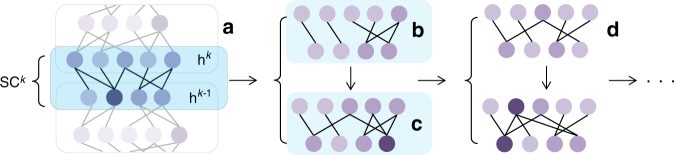
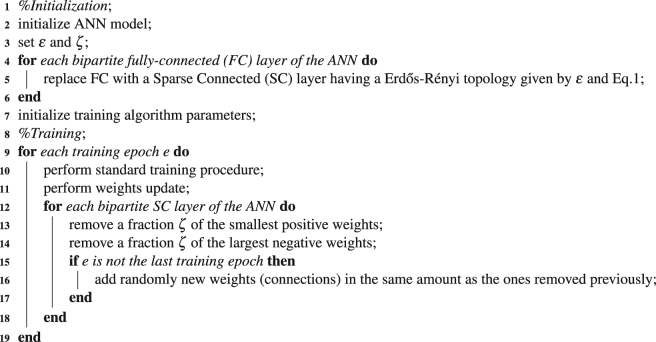
Through the success of deep learning in various domains, artificial neural networks are currently among the most used artificial intelligence methods. Taking inspiration from the network properties of biological neural networks (e.g. sparsity, scale-freeness), we argue that (contrary to general practice) artificial neural networks, too, should not have fully-connected layers. Here we propose sparse evolutionary training of artificial neural networks, an algorithm which evolves an initial sparse topology (Erdős–Rényi random graph) of two consecutive layers of neurons into a scale-free topology, during learning. Our method replaces artificial neural networks fully-connected layers with sparse ones before training, reducing quadratically the number of parameters, with no decrease in accuracy. We demonstrate our claims on restricted Boltzmann machines, multi-layer perceptrons, and convolutional neural networks for unsupervised and supervised learning on 15 datasets. Our approach has the potential to enable artificial neural networks to scale up beyond what is currently possible.
Overview
The claims and statistics of this paper haven’t been checked yet.
Free: it reads the open-access text and checks the first 5 claims that cite a source we can check. Create a free account to check every claim.
Integrity signals
Registry
Cites
Statistics
Figures
Verification
Claims the paper makes
The claims and statistics of this paper haven’t been checked yet.
Free: it reads the open-access text and checks the first 5 claims that cite a source we can check. Create a free account to check every claim.
Claims other papers make about this one
Each is checked against this paper’s own text: does it say what the citing paper says it does?
The cited source says what the claim attributes to it.
In the citing paper
“The idea of selective reinitialization is similar to the emerging idea of dynamic sparse training110–112.”
From Loss of plasticity in deep continual learning (2024) · cites this paper as [110]
Self-check
Percentages, sums and reported differences re-computed from the paper’s own numbers.
The self-check needs the paper’s full text.
Citations
Cites
LeCun, Y., Bengio, Y., & Hinton, G. (2015) · Nature · doi:10.1038/nature14539 · Cited by 84,126
Gradient-based learning applied to document recognition
Lecun, Y., Bottou, L., Bengio, Y., & Haffner, P. (1998) · Proceedings of the IEEE · doi:10.1109/5.726791 · Cited by 58,805
Collective dynamics of ‘small-world’ networks
Watts, D. J., & Strogatz, S. H. (1998) · Nature · doi:10.1038/30918 · Cited by 43,060
Emergence of Scaling in Random Networks
Barabási, A.-L., & Albert, R. (1999) · Science · doi:10.1126/science.286.5439.509 · Cited by 36,135 · cited 1×
“6 and include scale-freeness 7 (detailed in Methods section) and small-worldness 8 .”
Learning representations by back-propagating errors
Rumelhart, D. E., Hinton, G. E., & Williams, R. J. (1986) · Nature · doi:10.1038/323533a0 · Cited by 31,892
Human-level control through deep reinforcement learning
Mnih, V., Kavukcuoglu, K., Silver, D., Rusu, A. A., Veness, J., Bellemare, M. G., Graves, A., Riedmiller, M., Fidjeland, A. K., Ostrovski, G., et al. (2015) · Nature · doi:10.1038/nature14236 · Cited by 30,357
The Elements of Statistical Learning
Hastie, T., Friedman, J., & Tibshirani, R. (2001) · Springer Series in Statistics · doi:10.1007/978-0-387-21606-5 · Cited by 24,162
Reducing the dimensionality of data with neural networks
Hinton, G. E., & Salakhutdinov, R. R. (2006) · Science · doi:10.1126/science.1127647 · Cited by 20,928
Statistical mechanics of complex networks
Albert, R., & Barabási, A.-L. (2002) · Reviews of Modern Physics · doi:10.1103/revmodphys.74.47 · Cited by 20,471
A fast learning algorithm for deep belief nets
Hinton, G. E., Osindero, S., & Teh, Y.-W. (2006) · Neural Computation · doi:10.1162/neco.2006.18.7.1527 · Cited by 16,336 · cited 2×
“…being very successful in providing very good initialization weights to the supervised training of deep arti fi cial neural network architectures 42 , are also very successful as stand alone models in a variety of tasks, such as density estimation to model human choice 31 , collaborative fi…”
Influential
Research works printed but not linked: 18
- Mocanu, D. C. On the synergy of network science and artificial intelligence. In Proc. 25th International Joint Conference on Artificial Intelligence(ed. Kambhampati, S.) 4020–4021 (AAAI Press, New York, 2016).
- Dieleman, S. & Schrauwen, B. Accelerating sparse restricted boltzmann machine training using non-gaussianity measures. In Proc. Deep Learning and Unsupervised Feature Learning, Vol. 9 (eds Bengio Y., Bergstra J. & Le Q.) http://hdl.handle.net/1854/LU-3118568 (Lake Tahoe, 2012).
- Yosinski, J. & Lipson, H. Visually debugging restricted boltzmann machine training with a 3d example. In Representation Learning Workshop, 29th International Conference on Machine Learning (Edinburgh, 2012).
- Whiteson S Stone P Evolutionary function approximation for reinforcement learning J. Mach. Learn. Res. 2006 7 877 917
- Weigend, A. S., Rumelhart, D. E. & Huberman, B. A. Generalization by weight-elimination with application to forecasting. In Proc. Advances in Neural Information Processing Systems, Vol. 3, 875–882 (Morgan-Kaufmann, Colorado, 1991).
- Smolensky, P. Information processing in dynamical systems: foundations of harmony theory. In Parallel Distributed Processing: Explorations in the Microstructure of Cognition (eds Rumelhart, D. E., McClelland, J. L. & CORPORATE PDP Research Group) 194–281 (MIT Press, Cambridge, 1986).
- Osogami T Otsuka M Restricted boltzmann machines modeling human choice Proc. Adv. Neural Inf. Process. Syst. 2014 27 73 81
- Everitt B The Cambridge Dictionary of Statistics 2002 Cambridge, UK; New York Cambridge University Press
- Al-Rfou, R., et al. Theano: a Python framework for fast computation of mathematical expressions. Preprint at https://arxiv.org/abs/1605.02688 (2016). · arXiv
- Urban, G. et al. Do deep convolutional nets really need to be deep and convolutional? In Proc. 5th International Conference on Learning Representations (OpenReview.net, Toulon, 2016).
- Nair, V. & Hinton, G. E. Rectified linear units improve restricted boltzmann machines. In Proc. 27th International Conference on Machine Learning (eds Fürnkranz, J. & Joachims, T.) 807–814 (Omnipress, Haifa, 2010).
- Barabási, A.-L. Network Science (Cambridge University Press, Glasgow, 2016).
- Sutton RS Barto AG Introduction to Reinforcement Learning 1998 Cambridge, MA, USA MIT Press
- Bottou, L. & Bousquet, O. The tradeoffs of large scale learning. In Proc. Advances in Neural Information Processing Systems Vol. 20 (eds Platt, J. C., Koller, D., Singer, Y. & Roweis, S. T.) 161–168 (NIPS Foundation, Vancouver, 2008).
- Larochelle, H. & Murray, I. The neural autoregressive distribution estimator. In Proc. 14th International Conference on Artificial Intelligence and Statistics(eds Gordon, G., Dunson, D. & Dudík, M.) 29–37 (JMLR, Fort Lauderdale, 2011).
- Marlin, B. M., Swersky, K., Chen, B. & de Freitas, N. Inductive principles for restricted boltzmann machine learning. In Proc. 13th International Conference on Artificial Intelligence and Statistics (eds Teh, Y. W. & Titterington, M.) 509–516 (JMLR, Sardinia, 2010).
- LeCun Y Bottou L Bengio Y Haffner P Gradient-based learning applied to document recognition Proc. IEEE 1998 86 2278 2324 10.1109/5.726791 · DOI · Paper page
- Krizhevsky, A. Learning Multiple Layers of Features from Tiny Images. Master’s thesis (2009).
Cited by
Items 301–400 of 598
Sui, D., Sui, D., Wang, X., Zhan, M., Sadeghpour, F., Torkashvand, M., Nasirzadeh, E., & Ostadhassan, M. (2026) · Energy · doi:10.1016/j.energy.2026.140492 · Cited by 5
Universal structural patterns in sparse recurrent neural networks
Zhang, X.-J., Moore, J. M., Yan, G. F., & Li, X. (2023) · Communications Physics · doi:10.1038/s42005-023-01364-0 · Cited by 8
FED-SDS: Adaptive Structured Dynamic Sparsity for Federated Learning Under Heterogeneous Clients
Cheng, Y., Zhang, Z., & Wang, S. (2024) · IEEE International Conference on Acoustics Speech and Signal Processing · doi:10.1109/icassp48485.2024.10446879 · Cited by 5
“In this method, a fraction r of the least significant parameters is initially pruned based on their magnitudes, and then an equivalent number of parameters are promptly reintroduced [10].”
MethodDual-Assessment Driven Pruning: Iterative Optimizing Layer-wise Sparsity for Large Language Model
Sun, Q., Wang, W., Yanni, Z., He, S., Yi, H., Cai, Z., & Liu, H. (2024) · ACM SIGKDD Conference on Knowledge Discovery and Data Mining (KDD) · doi:10.1145/3637528.3671780 · Cited by 5
“Later developments enhanced this approach’s scalability using the Erdos-Renyi graph, extending its use to both fully connected layers (Mo-canu et al., 2018[20]) and convolutional layers (Evci et al., 2020[27]; Liu et al., 2022[28]) without relying on data or feedforward.”
AdapMTL: Adaptive Pruning Framework for Multitask Learning Model
Xiang, M., Tang, S., Yang, Q., Guan, H., & Liu, T. (2024) · ACM International Conference on Multimedia (ACM MM) · doi:10.1145/3664647.3681426 · Cited by 6
Fractal autoencoder with redundancy regularization for unsupervised feature selection
Sun, M., Li, F., & Han, H. (2025) · Science China Information Sciences · doi:10.1007/s11432-023-4132-0 · Cited by 5
Sang, T., Tang, H., Ma, Y., Hao, J., Zheng, Y., Meng, Z., Li, B., & Wang, Z. (2022) · International Joint Conference on Artificial Intelligence · doi:10.24963/ijcai.2022/474 · Cited by 8
An Efficient Channel-level Pruning for CNNs without Fine-tuning
Xu, Z., Sun, J., Liu, Y., & Sun, G. (2021) · International Joint Conference on Neural Networks (IJCNN) · doi:10.1109/ijcnn52387.2021.9533397 · Cited by 7
“Mocanu et al. [23] proposes SET that allows the pruned neurons and connections to revive randomly.”
BackgroundAdaptive Sparsity Level During Training for Efficient Time Series Forecasting with Transformers
Atashgahi, Z., Pechenizkiy, M., Veldhuis, R. N. J., & Mocanu, D. C. (2024) · Lecture notes in computer science · doi:10.1007/978-3-031-70341-6_1 · Cited by 5
Self-citationEfficient Training of Multi-Layer Neural Networks to Achieve Faster Validation
Assiri, A. S. (2021) · Computer Systems Science and Engineering · doi:10.32604/csse.2021.014894 · Cited by 5
“Open-source implementations are freely available for both SET4 and DO.5 We use these implementations to benchmark the performance of TIS against the other two methods.”
BackgroundMethodInfluentialAn Improved DeepNN with Feature Ranking for Covid-19 Detection
El-Attar, N. E., Sabbeh, S. F., Fasihuddin, H., & Awad, W. A. (2021) · Computers, materials & continua/Computers, materials & continua (Print) · doi:10.32604/cmc.2022.022673 · Cited by 5
“[13] have replaced the traditional ANN’s fully connected layer with sparse layers to enhance the classification accuracy.”
BackgroundMethodLiu, Y., Lu, H.-P., & Lai, C.-H. (2022) · IEEE Access · doi:10.1109/access.2022.3158952 · Cited by 6
Pruning deep neural networks generates a sparse, bio-inspired nonlinear controller for insect flight
Zahn, O., Bustamante, J. L., Switzer, C. M., Daniel, T. L., & Kutz, J. N. (2022) · PLoS Computational Biology · doi:10.1371/journal.pcbi.1010512 · Cited by 8
“There are many different methods to make DNNs more sparse, ranging from regularization during training [17] to specifying sparse architectures [18].”
Method[Reproducibility Report] Rigging the Lottery: Making All Tickets WinnersPreprint
Sundar, V., & Dwaraknath, R. V. (2021) · arXiv (Cornell University) · doi:10.48550/arxiv.2103.15767 · Cited by 7
“Following Evci et al. [2020], we base our counting procedure on the Micronet Challenge1, which was conducted as a part of NeurIPS 2019.”
InfluentialToward Building Science Discovery MachinesPreprint
Khalili, A., & Bouchachia, A. (2021) · arXiv (Cornell University) · doi:10.48550/arxiv.2103.15551 · Cited by 5
“Recently, Mocanu et al. [144] were able to significantly reduce the number of parameters of deep learning models with no decrease in performance by enforcing a power law distribution.”
BackgroundNeural Symplectic Integrator with Hamiltonian Inductive Bias for the Gravitational $N$-body ProblemPreprint
Cai, M. X., Zwart, S. P., & Podareanu, D. (2021) · arXiv (Cornell University) · doi:10.48550/arxiv.2111.15631 · Cited by 5
“In an attempt to improve the backbone network, we also tested a sparsely-connected MLP model [see e.g., Constantin Mocanu et al., 2017, Pieterse and Constantin Mocanu, 2019] where 90% of its neurons are randomly zeroed out as a form of regularization.”
MethodZhang, Y., Zhao, J., Wu, W., Muscoloni, A., & Cannistraci, C. V. (2024) · Preprints.org · doi:10.20944/preprints202207.0139.v4 · Cited by 6
Forecasting electricity prices with deep learning and dynamic sparse training
López, M. Z., Ioannou, Y., & Zareipour, H. (2025) · Sustainable Energy Grids and Networks · doi:10.1016/j.segan.2025.101865 · Cited by 10
Ke, S., Yang, K., Zhan, C., Liao, S., Ma, Y., Shang, H., Shen, E., Li, Z., Zhao, Z., & Chen, Z. (2025) · Geocarto International · doi:10.1080/10106049.2025.2600779 · Cited by 7
“To address these challenges, major technological advances include the following: Utilising neural architecture search (NAS) to automatically design hardware-adaptive networks (Jaafra et al. 2019), and employing dynamic sparse computation methods to further improve efficiency (Mocanu et al. 2018).”
SCAN: Bootstrapping Contrastive Pre-training for Data Efficiency
Guo, Y., & Kankanhalli, M. (2025) · IEEE/CVF International Conference on Computer Vision (ICCV) · doi:10.1109/iccv51701.2025.00349 · Cited by 8
“The weight importance is typically quantified using metrics such as magnitude [17, 45], gradients [73], or sensitivity [46].”
Coskuner‐Weber, O., Gentili, P. L., & Uversky, V. N. (2025) · Biophysical Reviews · doi:10.1007/s12551-025-01286-x · Cited by 5
“This concept is mirrored in ML algorithms that adjust weights and connections through training processes (Mocanu et al. 2018).”
Balancing communication overhead and accuracy in compression integration: a survey
Yang, A., Liu, J., Yang, B., Mo, Z., & Li, K. (2025) · The Journal of Supercomputing · doi:10.1007/s11227-025-07451-z · Cited by 9
Sparse Self-Federated Learning for Energy Efficient Cooperative Intelligence in Society 5.0
Domini, D., Erhan, L., Aguzzi, G., Cavallaro, L., Zenoozi, A. D., Liotta, A., & Viroli, M. (2025) · International Joint Conference on Neural Networks (IJCNN) · doi:10.1109/ijcnn64981.2025.11228400 · Cited by 4
“Additionally, a comparative analysis of different sparsification strategies is required, distinguishing between static approaches ( e.g. , pre-and post-pruning) and dynamic techniques ( e.g. , sparse evolutionary training [39]), which adapt the network structure during learning.”
Self-citationAlways-Sparse Training by Growing Connections with Guided Stochastic Exploration
Heddes, M., Srinivasa, N., Givargis, T., & Nicolau, A. (2025) · International Joint Conference on Neural Networks (IJCNN) · doi:10.1109/ijcnn64981.2025.11229016 · Cited by 4
“Every T training steps new connections are grown, which are added with a weight of zero, and the same number of connections are pruned.”
InfluentialEnsemble Learning Based on Multimodal Multiobjective Optimization
Liang, J., Wei, P., Qu, B., Yu, K., Yue, C., Hu, Y., & Ge, S. (2020) · Communications in computer and information science · doi:10.1007/978-981-15-3425-6_24 · Cited by 4
On the Information of Feature Maps and Pruning of Deep Neural Networks
Soltani, M., Wu, S., Ding, J., Ravier, R., & Tarokh, V. (2021) · Proceedings - International Conference on Pattern Recognition/Proceedings/International Conference on Pattern Recognition · doi:10.1109/icpr48806.2021.9412579 · Cited by 10
“00 ResNet32 (SET) [43] 0.”
Model reduction of feed forward neural networks for resource-constrained devices
Fragkou, E., Koultouki, M., & Katsaros, D. (2022) · Applied Intelligence · doi:10.1007/s10489-022-04195-8 · Cited by 10
“The competitors include the SET algorithm [22], and also the fully-connected (FC) neural network without any pruning.”
BackgroundMethodInfluentialEvolutionary Multi-objective Federated Learning
Jin, Y., Zhu, H., Xu, J., & Yang, C. (2022) · Machine learning · doi:10.1007/978-981-19-7083-2_3 · Cited by 4
MMPL: Multi-Objective Multi-Party Learning via Diverse Steps
Zhang, Y., Gong, M., Gao, Y., Li, H., Wang, L., & Wang, Y. (2023) · IEEE Transactions on Emerging Topics in Computational Intelligence · doi:10.1109/tetci.2023.3279666 · Cited by 4
“Sparse evolutionary training (SET) [46] replaces fully-connected layers with sparse matrices before training, and updates the parameters of full-connected layers by pruning and reconnecting the less important neurons.”
BackgroundZhu, J., Wang, L., Han, X. G., Liu, A., & Xie, T. (2024) · IEEE Transactions on Software Engineering · doi:10.1109/tse.2023.3348515 · Cited by 11
“Given a big model, we adopt the Erdös–Rényi [19] initialization approach to reach a predefined sparsity requirement, i.e ., removing a number of model connections (assigning zeros to go to 2 12: return M S the connection weights).”
BackgroundMethodInfluentialPOP-FL: Towards Efficient Federated Learning on Edge Using Parallel Over-Parameterization
Lu, X., Zheng, H., Liu, W., Jiang, Y., & Wu, H. (2024) · IEEE Transactions on Services Computing · doi:10.1109/tsc.2024.3376194 · Cited by 4
“Based on the pruning theory and practical experiences in prior DST works [21], [22], [29], researchers realize that the performance (i.e., inference accuracy) of dynamic sparse training is positively correlated with the coverage degree of explored parameters in the process of searching for the…”
BackgroundZhao, S., Fan, J., Wang, D., Yang, Z., Yin, J., & Yang, H. (2024) · Fuel · doi:10.1016/j.fuel.2024.132827 · Cited by 4
Recent advances in nanotherapy-based treatment of epilepsy
Chen, P., Wang, S., Zhang, H., & Li, J. (2025) · Colloids and Surfaces B Biointerfaces · doi:10.1016/j.colsurfb.2025.114499 · Cited by 4
Learning with delayed synaptic plasticity
Yaman, A., Iacca, G., Mocanu, D. D., Fletcher, G. G., & Pechenizkiy, M. M. (2019) · TU/e Research Portal · Cited by 4
Self-citationGhozia, A., Attiya, G., Adly, E., & El-Fishawy, N. A. (2020) · Computational Intelligence and Neuroscience · doi:10.1155/2020/8813089 · Cited by 4
“On the other hand, the human brain contains 100 billion neurons, passing signals to each other via as many as 1,000 trillion synaptic connections [25].”
BackgroundOCR Service Platform Based on OpenCV
Cai, J., Sun, E., & Chen, Z. (2021) · Journal of Physics Conference Series · doi:10.1088/1742-6596/1883/1/012043 · Cited by 4
“ANN changes the weight and other parameters through algorithms such as gradient descent and backpropagation through learning the input training data to achieve correct prediction of new data.”
BackgroundInfluentialExperiments on Properties of Hidden Structures of Sparse Neural Networks
Stier, J., Darji, H., & Granitzer, M. (2022) · Lecture notes in computer science · doi:10.1007/978-3-030-95470-3_29 · Cited by 6
Feed Forward Neural Network Sparsificationwith Dynamic Pruning
Chouliaras, A., Fragkou, E., & Katsaros, D. (2021) · Panhellenic Conference on Informatics · doi:10.1145/3503823.3503826 · Cited by 9
“The only prior work, found in literature is the one presented in [8], in which SET algorithm prunes a specific number of close-to-zero weights in a MLP and restore them randomly, in every epoch.”
BackgroundMethodInfluentialNon-smooth Bayesian learning for artificial neural networks
Fakhfakh, M., Chaâri, L., Bouaziz, B., & Gargouri, F. (2022) · Journal of Ambient Intelligence and Humanized Computing · doi:10.1007/s12652-022-04073-8 · Cited by 5
“The proposed method targets regularization schemes promoting sparse networks (Mocanu et al. 2018).”
MethodTowards Fully Sparse Training: Information Restoration with Spatial Similarity
Xu, W., He, X., Cheng, K., Wang, P., & Cheng, J. (2022) · Proceedings of the AAAI Conference on Artificial Intelligence · doi:10.1609/aaai.v36i3.20198 · Cited by 6
“SET(Mocanu et al. 2018) simplifies the pruning-regrowing process based on weight magnitude.”
MethodLeveraging Structured Pruning of Convolutional Neural Networks
Tessier, H., Gripon, V., Léonardon, M., Arzel, M., Bertrand, D., & Hannagan, T. (2022) · SiPS ... design and implementation - IEEE Workshop on Signal Processing Systems · doi:10.1109/sips55645.2022.9919253 · Cited by 6
“Other methods can involve a more progressive approach [7] that can include a regrowing mechanism [14].”
MethodCRESPR: Modular Sparsification of DNNs to Improve Pruning Performance and Model Interpretability
Kang, T., Ding, W., & Chen, P. (2023) · Neural Networks · doi:10.1016/j.neunet.2023.12.021 · Cited by 6
HyperSparse Neural Networks: Shifting Exploration to Exploitation through Adaptive Regularization
Glandorf, P., Kaiser, T., & Rosenhahn, B. (2023) · IEEE International Conference on Computer Vision Workshops · doi:10.1109/iccvw60793.2023.00133 · Cited by 9
“The weights that are reactivated can be selected randomly [24] or determined by the gradients [2, 3, 7].”
BackgroundMulti-agent deep reinforcement learning concept for mobile cyber-physical systems control
Petrenko, V. I., & Gurchinsky, M. (2021) · E3S Web of Conferences · doi:10.1051/e3sconf/202127001036 · Cited by 5
Efficient Sparse Artificial Neural NetworksPreprint
Naji, S. M., Abtahi, A., & Marvasti, F. (2021) · arXiv (Cornell University) · doi:10.48550/arxiv.2103.07674 · Cited by 6
“3) Updating a sparse structure during the learning process (evolutionary methods) [32]–[36].”
BackgroundMethodInfluentialBitTrain: Sparse Bitmap Compression for Memory-Efficient Training on the EdgePreprint
Hosny, A., Neseem, M., & Reda, S. (2021) · arXiv (Cornell University) · doi:10.48550/arxiv.2110.15362 · Cited by 6
“[31] introduced a sparse evolutionary training technique reducing quadratically the number of parameters with no effect on accuracy.”
BackgroundLearning by Active Forgetting for Neural NetworksPreprint
Peng, J., Sun, X., Deng, M., Tao, C., Tang, B., Li, W., Wu, G., QingZhu, Liu, Y., Lin, T., et al. (2021) · arXiv (Cornell University) · doi:10.48550/arxiv.2111.10831 · Cited by 5
Zhang, Y., Zhao, J., Wu, W., Muscoloni, A., & Cannistraci, C. V. (2023) · Preprints.org · doi:10.20944/preprints202207.0139.v2 · Cited by 5
An Efficient Plug-and-Play Post-Training Pruning Strategy in Large Language ModelsPreprint
Zhang, Y., Bai, H., Lin, H., Zhao, J., Hou, L., & Cannistraci, C. V. (2023) · Preprints.org · doi:10.20944/preprints202310.1487.v1 · Cited by 9
Scorch: A Library for Sparse Deep LearningPreprint
Yan, B., Root, A. J., Gale, T., Broman, D., & Kjølstad, F. (2024) · arXiv (Cornell University) · doi:10.48550/arxiv.2405.16883 · Cited by 4
“Methods like sparse evolutionary training [44] and dynamic sparse reparameterization [45] induce sparsity during training through pruning or regularization.”
MethodA min–max optimization framework for sparse multi-task deep neural network
Guo, J., Li, L., Sun, H., Qin, M., Yu, H., & Zhang, T. (2025) · Neurocomputing · doi:10.1016/j.neucom.2025.130865 · Cited by 4
Moroke, N. D. (2026) · IEEE Access · doi:10.1109/access.2026.3667829 · Cited by 3
Redundancy Reduction of Musculoskeletal Model for Robots with Group Sparse Neural Network
Zhong, S., Zhang, J., & Nie, X. (2021) · International Conference on Control and Robotics Engineering (ICCRE) · doi:10.1109/iccre51898.2021.9435719 · Cited by 3
“Based on the observation of sparse networks in the brain, [10] proposed a sparse evolutionary training algorithm for artificial neural networks.”
BackgroundCANNON: Communication-Aware Sparse Neural Network Optimization
Goksoy, A. A., Li, G., Mandal, S. K., Ogras, U. Y., & Mărculescu, R. (2023) · IEEE Transactions on Emerging Topics in Computing · doi:10.1109/tetc.2023.3289778 · Cited by 4
Group-informed attentive framework for enhanced diabetes mellitus progression prediction
Sheng, C., Wang, L., Long, C., & Yue, R. (2024) · Frontiers in Endocrinology · doi:10.3389/fendo.2024.1388103 · Cited by 3
Efficient and dynamic layer-wise structured N : M pruning of deep neural networks
Zaid, D. A., Djamaa, B., & Benatia, M. A. (2025) · Neurocomputing · doi:10.1016/j.neucom.2025.131090 · Cited by 5
Task complexity shapes internal representations and robustness in neural networks
Jankowski, R., Radicchi, F., Serrano, M. Á., Boguñá, M., & Fortunato, S. (2026) · Machine Learning Science and Technology · doi:10.1088/2632-2153/ae5503 · Cited by 4
“Sparse connectivity patterns inspired by scale-free graphs have been used to improve the efficiency of training large networks [49], graph-based initialization schemes have been developed to accelerate convergence [50], and random wiring schemes drawn from network models have been explored [51].”
Zhang, Y., Xue, L., Luo, X., Li, P., & Qu, H. (2025) · Digital Signal Processing · doi:10.1016/j.dsp.2025.105808 · Cited by 3
BioGD: Bio-inspired robust gradient descent
Kulikovskikh, I., Prokhorov, S., Lipić, T., Legović, T., & Šmuc, T. (2019) · PLoS ONE · doi:10.1371/journal.pone.0219004 · Cited by 3
Neural networks trained with high-dimensional functions approximation data in high-dimensional space
Zheng, J. D., Wang, J., Chen, Y., Chen, S., Chen, J., Zhong, W., & Wu, W. (2021) · Journal of Intelligent & Fuzzy Systems · doi:10.3233/jifs-211417 · Cited by 3
Prophesied Future and Redefined Past in the Genomic Era
Kovas, Y. V., & Selita, F. (2021) · Palgrave Macmillan UK eBooks · doi:10.1057/978-1-349-96048-4_4 · Cited by 3
Approximation of a marine ecosystem model by artificial neural networks
Pfeil, M., & Slawig, T. (2022) · ETNA - Electronic Transactions on Numerical Analysis · doi:10.1553/etna_vol56s138 · Cited by 4
“Therefore, we combined a genetic algorithm with the sparse evolutionary training procedure [40] to obtain a sparse neural network approximating the steady annual cycle of the marine ecosystem model reasonably.”
MethodResultInfluentialCorrelation clustering for robust gas recognition under mixed interference
Yang, M., Peng, C., Li, X., & Zheng, Y. (2022) · Measurement Science and Technology · doi:10.1088/1361-6501/ac793e · Cited by 3
“One of trends in algorithm design is computation with minimal cost and power for operation in the edge nodes of networks or portable devices [10, 11].”
Variational algorithm of quantum neural network based on quantum particle swarm
Dong, Y., Xie, J., Hu, W., Liu, C., & Luo, Y. (2022) · Journal of Applied Physics · doi:10.1063/5.0098702 · Cited by 3
Ferigo, A., & Iacca, G. (2023) · Genetic and Evolutionary Computation Conference Companion (GECCO Companion) · doi:10.1145/3583133.3590531 · Cited by 7
Amenable Sparse Network Investigator
Damadi, S., nouri, E., & Pirsiavash, H. (2023) · Lecture notes in networks and systems · doi:10.1007/978-3-031-37717-4_27 · Cited by 3
REST: Enhancing Group Robustness in DNNs Through Reweighted Sparse Training
Zhao, J., Yin, L., Liu, S., Fang, M., & Pechenizkiy, M. (2023) · Lecture notes in computer science · doi:10.1007/978-3-031-43415-0_19 · Cited by 6
“DST was first introduced by Sparse Evolutionary Training (SET) [32], which initializes sparse connectivity using an ER topology and periodically explores the parameter space via a prune-and-grow scheme during training.”
BackgroundMethodInfluentialCarboni, L., Nwaigwe, D., Mainsant, M., Bayle, R., Reyboz, M., Mermillod, M., Dojat, M., & Achard, S. (2025) · Neural Networks · doi:10.1016/j.neunet.2025.107125 · Cited by 5
Gez, T. L. S., & Cohen, K. (2026) · IEEE Access · doi:10.1109/access.2026.3744899 · Cited by 4
“Additional strategies involve randomly creating a pruning mask over the model and adjusting this mask during training [22], [23].”
Liu, B., Wang, D., Lv, Q., Han, Z. J., & Tang, Y. (2024) · Electronics · doi:10.3390/electronics13071330 · Cited by 4
FGGP: Fixed-Rate Gradient-First Gradual Pruning
Zhu, L., Bezek, C. D., & Göksel, O. (2025) · Lecture notes in computer science · doi:10.1007/978-3-031-95911-0_1 · Cited by 3
LLM-Barber: Block-Aware Rebuilder for Sparsity Mask in One-Shot for Large Language Models
Su, Y., Guan, Z., Liu, X., Jin, T., Wu, D., Chen, Z., Chesi, G., Wong, N., & Yu, H. (2025) · doi:10.1109/iccad66269.2025.11240704 · Cited by 4
“Secondly, inspired by the pruning-and-growing 1 operation [7], [14], we address the limitations of mask selection of pruning in dense networks due to the changeable significance of weights, by re-evaluating weight importance score in sparse networks and rebuilding the sparsity mask through targeted…”
Synopsis of the PhD Thesis - Network Computations in Artificial Intelligence
Mocanu, D. C. (2018) · International Teletraffic Congress · doi:10.1109/itc30.2018.00027 · Cited by 3
“Furthermore, in Chapter 5 [62], we take this idea further and, starting with a random sparse connectivity pattern and adding an evolutionary process during the training phase of the ANN model, we are capable to reach even better performance.”
MethodSelf-citationArtificial Neural Networks Training Acceleration Through Network Science Strategies
Cavallaro, L., Bagdasar, O. D., Meo, P. D., Fiumara, G., & Liotta, A. (2020) · Lecture notes in computer science · doi:10.1007/978-3-030-40616-5_27 · Cited by 3
Self-citationLivewired Neural Networks: Making Neurons That Fire Together Wire TogetherPreprint
Schumacher, T. (2021) · arXiv (Cornell University) · doi:10.48550/arxiv.2105.08111 · Cited by 4
Learning Compact Representations of Neural Networks using DiscriminAtive Masking (DAM)
Bu, J., Daw, A., Maruf, M., & Karpatne, A. (2021) · neural information processing systems · doi:10.48550/arxiv.2110.00684 · Cited by 11
“Similar to our work, there exists a line of work in the area of dynamic sparse training for unstructured pruning [50, 13, 32, 9, 27] that gradually prunes the model to the target sparsity during training.”
BackgroundArtificial General Intelligence: A New Perspective, with Application to Scientific DiscoveryPreprint
Khalili, A. M. (2022) · Engineering Archive (engrXiv) · doi:10.31224/osf.io/duz8g · Cited by 6
“Recently, Mocanu et al. [144] were able to significantly reduce the number of parameters of deep learning models with no decrease in performance by enforcing a power law distribution.”
BackgroundEntryPrune: Neural Network Feature Selection using First ImpressionsPreprint
Zimmer, F., Okanovic, P., & Hoefler, T. (2024) · arXiv (Cornell University) · doi:10.48550/arxiv.2410.02344 · Cited by 3
“Various metrics have been proposed to guide structured pruning of neurons, including weight magnitudes (Evci et al., 2020; Mocanu et al., 2018) or mathematical approximations of loss change (Molchanov et al., 2019; Lee et al., 2019).”
InfluentialFirst Photon Machine LearningPreprint
Li, L., Kumar, S., Garikapati, M., & Huang, Y. (2025) · Research Square · doi:10.21203/rs.3.rs-7236336/v1 · Cited by 3
Nerva: a Truly Sparse Implementation of Neural NetworksPreprint
Wesselink, W., Grooten, B., Xiao, Q., de Campos, C. P., & Pechenizkiy, M. (2024) · arXiv (Cornell University) · doi:10.48550/arxiv.2407.17437 · Cited by 3
“There are some works that have attempted to implement sparse training in a way that truly saves memory and compute (Mocanu et al., 2018; Curci et al., 2021; Gale et al., 2020; Elsen et al., 2020).”
BackgroundMethodInfluentialYu, Y., Wang, D., Chen, Y., Wang, H., & Huang, M. (2024) · Computers, materials & continua/Computers, materials & continua (Print) · doi:10.32604/cmc.2024.057103 · Cited by 3
Wang, C., & Miyazaki, D. (2025) · IEEE Access · doi:10.1109/access.2025.3541640 · Cited by 2
A Comparative Study of Neural Network Pruning Strategies for AI Deployment on Edge Devices
Zenoozi, A. D., Erhan, L., Liotta, A., & Cavallaro, L. (2025) · Studies in computational intelligence · doi:10.1007/978-3-031-82427-2_1 · Cited by 3
Self-citationAttack Intent Recognition for Incoming Vehicles Based on Deep Learning
Wang, J., Wang, Y., Li, H., & Wang, Y. (2025) · IEEE Transactions on Aerospace and Electronic Systems · doi:10.1109/taes.2025.3604398 · Cited by 2
“Meanwhile, directly employing an ANN for identifying intent may require predefining the maximum possible number of targets or implementing a dynamic target allocation mechanism, which may introduce other complexities and potential drawbacks [25], [26].”
S2Transformer: Exploring Sparsity in Remote Sensing Images for Efficient Super-Resolution
Zhang, Z., Xu, H., Lin, S., Li, D., & Gao, Y. (2025) · Sensors · doi:10.3390/s25185643 · Cited by 3
“For example, SET [37] progressively prunes unimportant weights through dynamic sparse training while regenerating new weights during training.”
Deng, C., Cheng, J., Su, Y., An, Z., Yang, Z., Xia, Z., Zhang, Y., & Wang, S. (2025) · Neural Networks · doi:10.1016/j.neunet.2025.108136 · Cited by 4
Gradient flow-based iterative pruning for efficient and high-quality lightweight diffusion models
Wan, B., Zheng, T., Wang, Y., & Wang, J. (2025) · Neural Networks · doi:10.1016/j.neunet.2025.108227 · Cited by 4
Towards narrowing the generalization gap in deep Boolean networks
Kim, Y. (2025) · Expert Systems with Applications · doi:10.1016/j.eswa.2025.130224 · Cited by 2
Discriminative response pruning for robust and efficient deep networks under label noise
Jin, S., Mao, J., Sun, Z., & Yao, Y. (2025) · Pattern Recognition Letters · doi:10.1016/j.patrec.2025.11.025 · Cited by 2
Revisiting and Improving the NEAT Algorithm
Lyubchev, D., & Marchev, A. (2025) · Conference proceedings/Conference proceedings - IEEE International Conference on Systems, Man, and Cybernetics · doi:10.1109/smc58881.2025.11343234 · Cited by 2
“Analogous connectivity-preserving procedures in adaptive sparse training have demonstrated computational gains without loss of accuracy [20].”
Fast Autoscheduling for Sparse ML Frameworks
Yan, B., Root, A. J., Gale, T., Broman, D., & Kjølstad, F. (2026) · Proceedings of the CGO/Proceedings of the ... CGO · doi:10.1109/cgo68049.2026.11394842 · Cited by 1
“Inspector-based approaches, however, offer advantages when matrices are extensively reused, such as during inference, but our approach is appealing in dynamic settings where tensors change frequently.”
Objective Image Quality Analysis of Convolutional Neural Network Light Field Coding
Medda, D., Song, W., & Perra, C. (2019) · European Workshop on Visual Information Processing · doi:10.1109/euvip47703.2019.8946230 · Cited by 2
“A training process is required to adapt the initial weights values to reach the wanted network purpose [12].”
Asymptotic properties of one-layer artificial neural networks with sparse connectivity
Hirsch, C., Neumann, M., & Schmidt, V. (2022) · Statistics & Probability Letters · doi:10.1016/j.spl.2022.109698 · Cited by 2
Schultheis, E., & Babbar, R. (2023) · Lecture notes in computer science · doi:10.1007/978-3-031-43418-1_41 · Cited by 10
Boumendil, A., Bechkit, W., Portier, P.-É., Mouël, F. L., & Egan, M. (2023) · IEEE International Conference on Tools with Artificial Intelligence (ICTAI) · doi:10.1109/ictai59109.2023.00051 · Cited by 2
“We implement this approach and we apply the ER (Erd ¨ os-R ´ enyi) ratio [26] which associates larger layers with bigger pruning rates.”
PLSR: Unstructured Pruning with Layer-Wise Sparsity Ratio
Zhao, H., Yu, L., Guan, R., Jia, L., Zhang, J., & Yue, Y. (2023) · International Conference on Machine Learning and Applications · doi:10.1109/icmla58977.2023.00009 · Cited by 3
“ER [23] is the ratio introduced from the topology field, and ERK [6] is a similar ratio designed for convolution kernels.”
MethodThe Study of Ceramic Product Recommendation System based on Knowledge Graph
Huang, N., Zhao, W., Nie, Y., & Li, C. (2024) · International Conference on Computer Engineering and Application (ICCEA) · doi:10.1109/iccea62105.2024.10603599 · Cited by 2
“The equation 𝑀(𝑥) = 𝜎(𝑤𝑥 + 𝑏) represents a fully connected neural network layer, where 𝑤 is the weight, 𝑏 is the bias, and 𝜎 is the nonlinear activation function [10].”
Optimizing Fine-Tuning in Quantized Language Models: An In-Depth Analysis of Key Variables
Shen, A., Lai, Z., Li, D., & Hu, X. (2024) · Computers, materials & continua/Computers, materials & continua (Print) · doi:10.32604/cmc.2024.057491 · Cited by 6
Efficient deep neural network training via decreasing precision with layer capacity
Shen, A., Lai, Z., Sun, T., Li, S., Ge, K., Liu, W., & Li, D. (2025) · Frontiers of Computer Science · doi:10.1007/s11704-024-40669-3 · Cited by 7
Fault Testing in AI-Accelerators: A Review
Bhattacharya, B. B., Das, D. K., Chatterjee, S., & Rahaman, H. (2024) · Proceedings - Asian Test Symposium/Proceedings · doi:10.1109/ats64447.2024.10915272 · Cited by 2
“The fault recovery method [6] for AIA-chips relies on pruning of faulty PEs that helps in reducing the model size and in increasing operational speed through the omission of unnecessary computation [34], [35], [36].”
Metadata
- Authors
- Mocanu, D. C., Mocanu, E., Stone, P., Nguyen, P. H., Gibescu, M., & Liotta, A.
- Affiliations
- Eindhoven University of Technology (NL)
- The University of Texas at Austin (US)
- University of Derby (GB)
- Corresponding author
- Mocanu, Decebal Constantin
- Venue
- Nature Communications
- Published
- 2018-06-19
- Volume
- 9
- Issue
- 1
- Pages
- 2383-2383
- ISSN
- 2041-1723 (ISSN-L)
- PMC
- PMC6008460
- OpenAlex
- W2808133870
- Semantic Scholar
- 6dbb9e4b2e3b67dc4e1634989511f67d41373dd0
- Cited by
- 524
- References
- 45
- Citations by year
- 2026: 45 · 2025: 85 · 2024: 72 · 2023: 68 · 2022: 60 · 2021: 100 · 2020: 51 · 2019: 39 · 2018: 4
- FWCI
- 27.30
- Type
- journal article
- Language
- en
- Open access
- gold
- doi.org
- Licence
- cc-by
- creativecommons.org/licenses/by/4.0 (tdm)
- creativecommons.org/licenses/by/4.0 (vor)
- Locations
- Nature Communications (publishedVersion, cc-by)
- Europe PMC (PubMed Central) (publishedVersion, other-oa)
- PubMed Central (publishedVersion, cc-by)
- PubMed (publishedVersion)
- arXiv (Cornell University) (submittedVersion)
- Open Repository and Bibliography (University of Luxembourg) (submittedVersion, other-oa)
- TU/e Research Portal (submittedVersion, cc-by)
- TU/e Research Portal (submittedVersion)
- RePEc: Research Papers in Economics (submittedVersion)
- DOAJ (DOAJ: Directory of Open Access Journals) (submittedVersion, cc-by-sa)
- DOAJ (DOAJ: Directory of Open Access Journals) (submittedVersion)
- Utrecht University Repository (Utrecht University) (submittedVersion, other-oa)
- Research Output (Edinburgh Napier University) (submittedVersion, cc-by)
- Edinburgh Napier Research Repository (Edinburgh Napier University) (submittedVersion, cc-by)
- Open Research (University of Surrey) (submittedVersion, other-oa)
- arXiv (Cornell University)
- Topics
- Physical Sciences › Computer Science › Artificial Intelligence › Neural Networks and Applications
- Physical Sciences › Computer Science › Computer Vision and Pattern Recognition › Advanced Neural Network Applications
- Physical Sciences › Physics and Astronomy › Statistical and Nonlinear Physics › Complex Network Analysis Techniques
- Keywords
- sparse neural networks, scale-free topology, Erdős-Rényi random graphs, parameter reduction, restricted Boltzmann machine, multilayer perceptron, convolutional neural networks, unsupervised learning, supervised learning
About these checks
Registry, retraction, Cites and statistics results are computed, not judged, with one exception: a printed reference that no index lists is read once by a model before it counts as a citation error. Claims are extracted by a model and kept only when their quote appears verbatim in the text; each cited source is then checked, with a model’s help, for whether it says what the claim relies on. Those verdicts can be wrong — read the claim’s quote and the cited source before relying on one.
Statistics and arithmetic are recomputed, not judged.
Confidence bands are shown only for fields calibrated on our annotated test set. None is calibrated yet, so no band is shown.
What counts as a claim ›How we measure confidence ›How we check this ›
Are you an author, or do you see a problem with this page? Request a review
Data sources
Bibliographic data: Semantic Scholar, OpenAlex, Crossref.
Contains information from the Semantic Scholar Academic Graph Datasets, made available under the ODC Attribution License (ODC-BY 1.0).
Semantic Scholar’s data is described in: Kinney, R., et al. (2023). The Semantic Scholar Open Data Platform. arXiv:2301.10140.
