

The DOI matches its Crossref record; 81 of the 82 references it cites were found in a registry or an index, and 1 are not checked yet; none of the 83 sources its claims cite is checked for support yet.
Cultural hitchhiking and competition between patrilineal kin groups explain the post-Neolithic Y-chromosome bottleneck
Open accessAbstract
In human populations, changes in genetic variation are driven not only by genetic processes, but can also arise from cultural or social changes. An abrupt population bottleneck specific to human males has been inferred across several Old World (Africa, Europe, Asia) populations 5000–7000 BP. Here, bringing together anthropological theory, recent population genomic studies and mathematical models, we propose a sociocultural hypothesis, involving the formation of patrilineal kin groups and intergroup competition among these groups. Our analysis shows that this sociocultural hypothesis can explain the inference of a population bottleneck. We also show that our hypothesis is consistent with current findings from the archaeogenetics of Old World Eurasia, and is important for conceptions of cultural and social evolution in prehistory.
Checked 2026-11-12 · 1 reference not checked yet
Overview
CoChat Summary
Written by AI from the paper’s full text.
TL;DR
The paper proposes that the post-Neolithic Y-chromosome bottleneck (5000–7000 BP) was caused by cultural hitchhiking between Y-chromosomes and patrilineal kin groups under intergroup competition, rather than by demographic collapse alone. Mathematical models and archaeogenetic comparisons support this sociocultural hypothesis.
Key findings
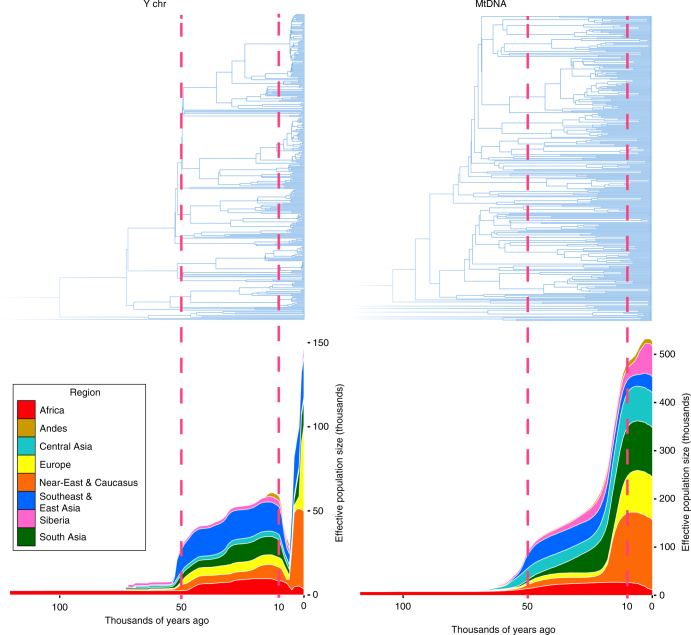
- Karmin et al. inferred a Y-chromosome bottleneck 5000–7000 BP across the Old World, with male effective population size declining to approximately one-twentieth of its pre-Neolithic level and a 1:17 male-to-female disparity, while mitochondrial DNA indicated a stable or increasing female population.
- The authors argue three alternatives fail: ecological/climatic sex-specific effects are too small; Neolithic founder effects are contradicted by larger Neolithic precursor populations and greater Y/mt diversity than hunter-gatherers; and intragroup inequality does not track bottleneck timing because the bottleneck lifts as social stratification rises.
- A modified Lotka–Volterra model shows that two competing male subpopulations sharing a female population drive one male subpopulation to extinction when interpopulation competition dominates intrapopulation competition, corresponding to extinction of a patrilineal descent group.
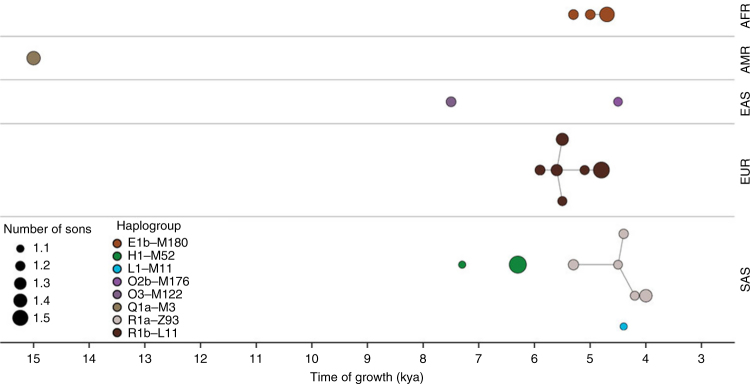
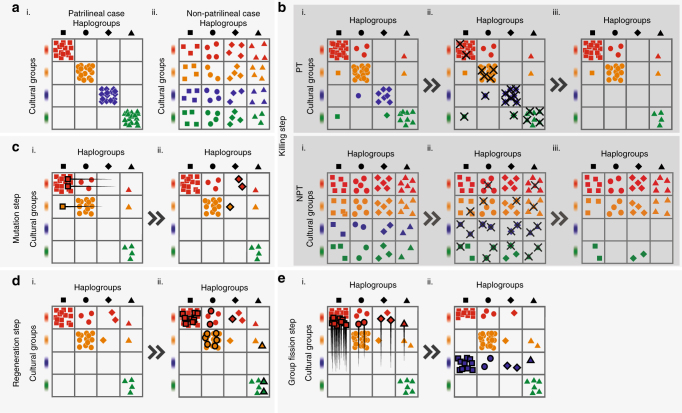
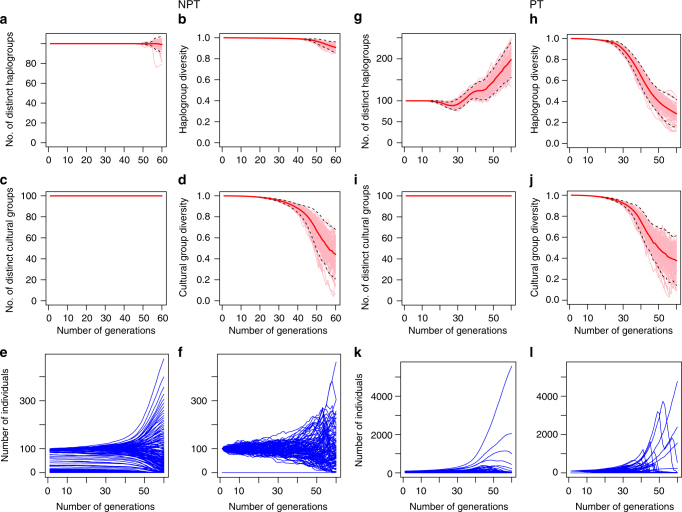
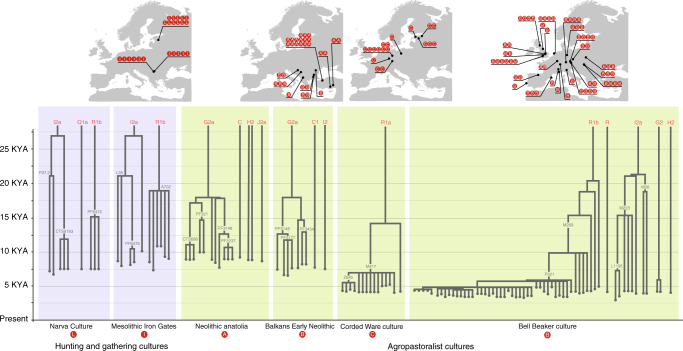
- In a computational grid model run for 60 generations (~1.5 millennia) across 18 parameter sets, patrilineal simulations consistently produced large haplogroup diversity losses and dominance by one or a few haplogroups, while non-patrilineal simulations showed few or no extinctions and roughly equal haplogroup representation; archaeogenetic support includes 81% of sampled Bell Beaker males sharing R1b-S116 and nearly all sampled Corded Ware males sharing R1a-M417.
Methods
- Analytical approach: a modified Lotka–Volterra competition model with two male subpopulations and an exogenous shared female population; the proof is in Supplementary Note 1.
- Computational approach: a discrete-time grid model with cultural groups as rows and haplogroups as columns, including intergroup killing (Poisson-distributed, with smaller groups suffering higher proportional deaths), mutation, regeneration to constant total population size, group extinction below 20 individuals, and group fission; simulations ran 60 generations with 18 parameter combinations (total population 10,000/20,000/30,000; death rate 15%/25%/50%; patrilineal/non-patrilineal), plus model modifications.
- Evidence synthesis: the paper compares model outcomes with published Y-chromosome and mtDNA bottleneck findings and archaeogenetic phylogenies; no new primary genetic data were generated, and simulation code is available online.
Limitations
- Stated: the model’s mutation step changes haplogroup identity rather than real Y-chromosome haplotypes, uses a haplogroup mutation rate much lower than literature Y-haplotype rates, treats patrilineality exogenously, and does not include spatial structure.
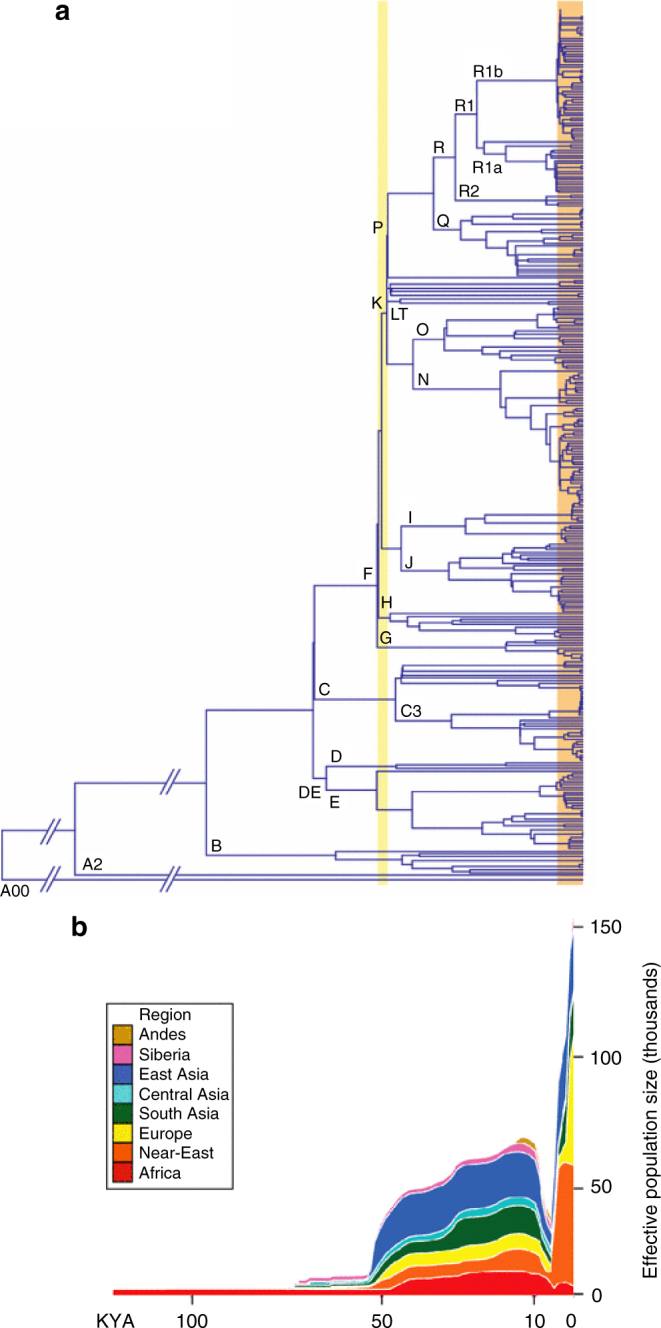
- Stated: the archaeogenetic phylogeny in Fig. 6 is preliminary because most ancient samples were sequenced by hybridization capture, which may miss private mutations and alter inferred coalescence patterns.
- Evident: the hypothesis is supported by qualitative fit and robustness across simulations rather than a formal statistical test against genetic data, and the authors call for further archaeogenetic sampling and modelling to test it.
Model-written summary. Check it against the paper before relying on it.
Integrity signals
Registry
Cites
Statistics
Figures
Verification
Claims the paper makes
43 Own interpretation · 23 Not checked yet · 18 No full text of the sources · 14 Check pending · 11 Own result · 1 Sources not found · 1 Own method
A result the paper reports from its own data — it cites no other source for it, so there is none to check. The quote shows it is in the paper.
In the paper
“We prove that, in a Lotka–Volterra model with two male subpopulations and a subpopulation of females shared between both male subpopulations, competition between the male subpopulations drives one of the male subpopulations to extinction.”
§ Cultural hitchhiking and competition between patrilineal kin groups explain the post-Neolithic Y-chromosome bottleneck > Results > Patrilineal kin group competition explains bottleneck
boostedstates a cause- Asserted: passes — The authors put it forward as true.
- Checkable: passes — It can be checked against evidence.
- Load-bearing: passes — The paper’s conclusions depend on it.
- Based: passes — The paper gives a reason why it holds.
A result the paper reports from its own data — it cites no other source for it, so there is none to check. The quote shows it is in the paper.
In the paper
“These distinctions persist even after modifications to our model, such as the incorporation of cultural selection and fusion of cultural groups (see Supplementary Note 4 for details).”
§ Cultural hitchhiking and competition between patrilineal kin groups explain the post-Neolithic Y-chromosome bottleneck > Results > Patrilineal kin group competition explains bottleneck
plain- Asserted: passes — The authors put it forward as true.
- Checkable: passes — It can be checked against evidence.
- Load-bearing: passes — The paper’s conclusions depend on it.
- Based: passes — The paper gives a reason why it holds.
- Rests on 2 assumptions not shown here.
A result the paper reports from its own data — it cites no other source for it, so there is none to check. The quote shows it is in the paper.
In the paper
“First, simulations with patrilineality are characterized by large reductions in diversity, reproducing a bottleneck-like phenomenon in the Y-chromosome even in the absence of fluctuations in male population size across generations.”
§ Cultural hitchhiking and competition between patrilineal kin groups explain the post-Neolithic Y-chromosome bottleneck > Results > Patrilineal kin group competition explains bottleneck
plainstates a cause- Asserted: passes — The authors put it forward as true.
- Checkable: passes — It can be checked against evidence.
- Load-bearing: passes — The paper’s conclusions depend on it.
- Based: passes — The paper gives a reason why it holds.
- Rests on 2 assumptions not shown here.
In the paper
“The Bell Beaker culture has a high proportion of sampled males (81%) from a large geographical area (Iberia to Hungary) who belong to an identical Y-chromosomal haplogroup (R1b-S116)”
§ Cultural hitchhiking and competition between patrilineal kin groups explain the post-Neolithic Y-chromosome bottleneck > Discussion
What the sources say
- Not checked yetcites [64] Olalde, I. et al. The Beaker phenomenon and the genomic transformation of northwest Europe. Nature 555, 190–196 (2018). source
plain- Asserted: passes — The authors put it forward as true.
- Checkable: passes — It can be checked against evidence.
- Load-bearing: passes — The paper’s conclusions depend on it.
- Based: passes — The paper gives a reason why it holds.
A result the paper states — it cites no source for it, so there is none to check. The quote shows it is in the paper.
In the paper
“It turns out that under Eq. (1) with min(c12, c21) > max(c11, c22), almost always one population of males takes over the other.”
§ Cultural hitchhiking and competition between patrilineal kin groups explain the post-Neolithic Y-chromosome bottleneck > Methods > Modified Lotka–Volterra model
boostedstates a cause- Asserted: passes — The authors put it forward as true.
- Checkable: passes — It can be checked against evidence.
- Load-bearing: passes — The paper’s conclusions depend on it.
- Based: passes — The paper gives a reason why it holds.
- It may state two separate claims as one. 24
- Probably not a substantial claim. 20
Create a free account to see these claims.
Create a free account to see these assumptions.
65 more claims
Create a free account to see all 111 claims and to verify the 44 references still open.
Claims other papers make about this one
Each is checked against this paper’s own text: does it say what the citing paper says it does?
In the citing paper
“If the paternal lineage of Genghis Khan had belonged to R1b or Q lineages, these lineages would be expected to have a wide geographic distribution, corresponding to the territories of the Mongol Empire and its successor states, and to occur at high frequencies in modern populations of Mongol descent.”
From Genomes of the Golden Horde elites and their implications for the rulers of the Mongol Empire (2026) · cites this paper as [54]
In the citing paper
“This scenario is expected based on sociodemographic (53) and sociocultural (54) models, which predict increased Y-chromosome haplotype frequencies in patrilineal groups through elite dominance or other privileges that enable greater access to resources and expansion through lineal segmentary fission.”
From Genomes of the Golden Horde elites and their implications for the rulers of the Mongol Empire (2026) · cites this paper as [54]
In the citing paper
“However, it is questionable whether violence is necessary to explain the genetic signal observed by Karmin et al.1 as the level of violence worldwide at these times remains uncertain (Zeng et al.’s model assumes that 15% of males were killed at each generation9).”
From Patrilineal segmentary systems provide a peaceful explanation for the post-Neolithic Y-chromosome bottleneck (2024) · cites this paper as Zeng et al. [9]
In the citing paper
“(Zeng et al.’s model assumes that 15% of males were killed at each generation9).”
From Patrilineal segmentary systems provide a peaceful explanation for the post-Neolithic Y-chromosome bottleneck (2024) · cites this paper as Zeng et al. [9]
In the citing paper
“The first socio-cultural model proposed to explain the Y chromosome bottleneck involved violent competition between patrilineal kin groups and the killing of large numbers of men9.”
From Patrilineal segmentary systems provide a peaceful explanation for the post-Neolithic Y-chromosome bottleneck (2024) · cites this paper as Zeng et al. [9]
5 more claims about this paper
Create a free account to see every claim other papers make about this one.
Citations
Cites
Evolutionary Games and Population Dynamics
Hofbauer, J., & Sigmund, K. (1998) · doi:10.1017/cbo9781139173179 · Cited by 5,502
Ancient human genomes suggest three ancestral populations for present-day Europeans
Lazaridis, I., Patterson, N., Mittnik, A., Renaud, G., Mallick, S., Kirsanow, K., Sudmant, P. H., Schraiber, J. G., Castellano, S., Lipson, M., et al. (2014) · Nature · doi:10.1038/nature13673 · Cited by 1,357
The Coevolution of Parochial Altruism and War
Choi, J.-K., & Bowles, S. (2007) · Science · doi:10.1126/science.1144237 · Cited by 1,227
Life Histories, Blood Revenge, and Warfare in a Tribal Population
Chagnon, N. A. (1988) · Science · doi:10.1126/science.239.4843.985 · Cited by 1,159
Coevolution: Genes, Culture, and Human Diversity
Durham, W. H. (1991) · doi:10.1515/9781503621534 · Cited by 1,117
Cultural group selection, coevolutionary processes and large-scale cooperation
Henrich, J. (2004) · Journal of Economic Behavior & Organization · doi:10.1016/s0167-2681(03)00094-5 · Cited by 1,096 · cited 1×
“It is very plausible that in addition to competition in which size alone confers survival advantage — so-called selection for large groups (see Henrich, 2004) — differences in cultural innovations or toolkits act as a secondary mechanism of selection among these groups.”
BackgroundA farewell to alms: a brief economic history of the world
(2008) · Choice Reviews Online · doi:10.5860/choice.45-2713 · Cited by 1,088
Farmers and Their Languages: The First Expansions
Diamond, J., & Bellwood, P. (2003) · Science · doi:10.1126/science.1078208 · Cited by 1,054
Clark, G. (2007) · Princeton University Press eBooks · doi:10.1515/9781400827817 · Cited by 963
The Beaker phenomenon and the genomic transformation of northwest Europe
Olalde, I., Brace, S., Allentoft, M. E., Armit, I., Kristiansen, K., Booth, T., Rohland, N., Mallick, S., Szécsényi-Nagy, A., Mittnik, A., et al. (2018) · Nature · doi:10.1038/nature25738 · Cited by 765
Research works printed but not linked: 3
- Bellwood, P. S. & Renfrew, C. Examining the Farming/Language Dispersal Hypothesis (McDonald Institute for Archaeological Research, Cambridge, 2002).
- Kirch, P. V. The Evolution of the Polynesian Chiefdoms (Cambridge University Press, Cambridge, 1989).
- Kristiansen, K. in The World System and the Earth System: Global Socioenvironmental Change and Sustainability Since the Neolithic (ed. Hornborg, A.) 149–162 (Left Coast Press, Walnut Creek, CA, 2007).
Cited by
The Origins and Psychology of Human Cooperation
Henrich, J., & Muthukrishna, M. (2021) · Annual Review of Psychology · doi:10.1146/annurev-psych-081920-042106 · Cited by 457
Dynamic changes in genomic and social structures in third millennium BCE central Europe
Papac, L., Ernée, M., Dobeš, M., Langová, M., Rohrlach, A. B., Aron, F., Neumann, G. U., Spyrou, M. A., Rohland, N., Velemínský, P., et al. (2021) · Science Advances · doi:10.1126/sciadv.abi6941 · Cited by 173
The evolutionary anthropology of political leadership
Garfield, Z. H., Rueden, C. R. V., & Hagen, E. H. (2018) · The Leadership Quarterly · doi:10.1016/j.leaqua.2018.09.001 · Cited by 172
Genes reveal traces of common recent demographic history for most of the Uralic-speaking populations
Tambets, K., Yunusbayev, B., Hudjashov, G., IlumäE, A.-M., Rootsi, S., Honkola, T., Vesakoski, O., Atkinson, Q. D., Skoglund, P., Kushniarevich, A., et al. (2018) · Genome biology · doi:10.1186/s13059-018-1522-1 · Cited by 161
Megalithic tombs in western and northern Neolithic Europe were linked to a kindred society
Sánchez-Quinto, F., Malmström, H., Fraser, M., Girdland-Flink, L., Svensson, E. M., Simões, L. G., George, R., Hollfelder, N., Burenhult, G., Noble, G., et al. (2019) · Proceedings of the National Academy of Sciences · doi:10.1073/pnas.1818037116 · Cited by 138
Kin Networks and Institutional Development
Schulz, J. (2022) · The Economic Journal · doi:10.1093/ej/ueac027 · Cited by 122
Kinship practices in the early state El Argar society from Bronze Age Iberia
Villalba-Mouco, V., Oliart, C., Rihuete-Herrada, C., Rohrlach, A. B., Fregeiro, M. I., Childebayeva, A., Ringbauer, H., Olalde, I., Celdrán Beltrán, E., Puello-Mora, C., et al. (2022) · Scientific Reports · doi:10.1038/s41598-022-25975-9 · Cited by 53
Linderholm, A. E., Kılınç, G. M., Szczepanek, A., Włodarczak, P., Jarosz, P., Bełka, Z., Dopieralska, J., Werens, K., Górski, J., Mazurek, M., et al. (2020) · Scientific Reports · doi:10.1038/s41598-020-63138-w · Cited by 102
Sjögren, K.-G., Olalde, Í., Carver, S., Allentoft, M. E., Knowles, T. D. J., Kroonen, G., Pike, A. W. G., Schröter, P., Brown, K. A., Brown, K. R., et al. (2020) · PLoS ONE · doi:10.1371/journal.pone.0241278 · Cited by 95
Furholt, M. (2021) · Journal of Archaeological Research · doi:10.1007/s10814-020-09153-x · Cited by 78
Greenbaum, G., Friesem, D. E., Hovers, E., Feldman, M. W., & Kolodny, O. (2018) · Quaternary Science Reviews · doi:10.1016/j.quascirev.2018.12.011 · Cited by 75
Self-citationBooth, T. J. (2019) · World Archaeology · doi:10.1080/00438243.2019.1627240 · Cited by 64
The evolution of the human brain and disease susceptibility
Pattabiraman, K., Muchnik, S. K., & Šestan, N. (2020) · Current Opinion in Genetics & Development · doi:10.1016/j.gde.2020.05.004 · Cited by 61
Ancient DNA and migrations: New understandings and misunderstandings
Anthony, D. W. (2023) · Journal of Anthropological Archaeology · doi:10.1016/j.jaa.2023.101508 · Cited by 59
From Physical Aggression to Verbal Behavior: Language Evolution and Self-Domestication Feedback Loop
Progovac, L., & Benítez‐Burraco, A. (2019) · Frontiers in Psychology · doi:10.3389/fpsyg.2019.02807 · Cited by 59
Lassek, W. D., & Gaulin, S. J. C. (2022) · Frontiers in Psychology · doi:10.3389/fpsyg.2022.859931 · Cited by 55
Rohrlach, A. B., Papac, L., Childebayeva, A., Rivollat, M., Villalba‐Mouco, V., Neumann, G. U., Penske, S., Skourtanioti, E., van de Loosdrecht, M. S., Akar, M., et al. (2021) · Scientific Reports · doi:10.1038/s41598-021-94491-z · Cited by 43
Making and unmaking egalitarianism in small-scale human societies
Rueden, C. R. V. (2019) · Current Opinion in Psychology · doi:10.1016/j.copsyc.2019.07.037 · Cited by 41
Historical and hunter-gatherer perspectives on fast-slow life history strategies
Volk, A. A. (2023) · Evolution and Human Behavior · doi:10.1016/j.evolhumbehav.2023.02.006 · Cited by 32
Geary, D. C. (2021) · Neuroscience & Biobehavioral Reviews · doi:10.1016/j.neubiorev.2021.02.020 · Cited by 31
Vekemans, X., Castric, V., Hipperson, H., Müller, N. A., Westerdahl, H., & Cronk, Q. (2021) · Molecular Ecology · doi:10.1111/mec.16020 · Cited by 31
Process and Dynamics of Mediterranean Neolithization (7000–5500 bc)
Leppard, T. P. (2021) · Journal of Archaeological Research · doi:10.1007/s10814-021-09161-5 · Cited by 30
Guyon, L., Guez, J., Toupance, B., Heyer, E., & Chaix, R. (2024) · Nature Communications · doi:10.1038/s41467-024-47618-5 · Cited by 28
Hagen, E. H., & Garfield, Z. H. (2019) · OSF Preprints (OSF Preprints) · doi:10.31219/osf.io/9bcdk · Cited by 28
Assessing the importance of cultural diffusion in the Bantu spread into southeastern Africa
Isern, N., & Fort, J. (2019) · PLoS ONE · doi:10.1371/journal.pone.0215573 · Cited by 26
Human cooperation and evolutionary transitions in individuality
Townsend, C., Ferraro, J. V., Habecker, H., & Flinn, M. V. (2023) · Philosophical Transactions of the Royal Society B Biological Sciences · doi:10.1098/rstb.2021.0414 · Cited by 21
Wang, M., Sun, Q., Feng, Y., Wei, L.-H., Liu, K., Luo, L., Huang, Y., Zhou, K., Yuan, H., Lv, H., et al. (2025) · Journal of Genetics and Genomics · doi:10.1016/j.jgg.2024.11.012 · Cited by 19
Agentic processes in cultural evolution: relevance to Anthropocene sustainability
Richerson, P. J., Boyd, R. T., & Efferson, C. M. (2023) · Philosophical Transactions of the Royal Society B Biological Sciences · doi:10.1098/rstb.2022.0252 · Cited by 19
The genetic legacy of legendary and historical Siberian chieftains
Zvénigorosky, V., Duchesne, S., Romanova, L., Gérard, P., Petit, C., Petit, M., Alexeev, A., Melnichuk, O. A., Gonzalez, A., Fausser, J., et al. (2020) · Communications Biology · doi:10.1038/s42003-020-01307-3 · Cited by 19
Leppard, T. P., Esposito, C., & Esposito, M. (2021) · Journal of Mediterranean Archaeology · doi:10.1558/jma.18784 · Cited by 18
Hrnčíř, V., Duda, P., Šaffa, G., Květina, P., & Zrzavý, J. (2020) · PLOS ONE · doi:10.1371/journal.pone.0229363 · Cited by 16
Oliveira, S., Hübner, A., Fehn, A., Aço, T., Lages, F., Pakendorf, B., Stoneking, M., & Rocha, J. (2018) · European Journal of Human Genetics · doi:10.1038/s41431-018-0304-2 · Cited by 13
Song, M., Wang, Z., Lyu, Q., Ying, J., Wu, Q., Jiang, L., Wang, F., Zhou, Y., Song, F., Luo, H., et al. (2022) · Forensic Science International Genetics · doi:10.1016/j.fsigen.2022.102774 · Cited by 13
Pany‐Kucera, D., Spannagl‐Steiner, M., Waltenberger, L., Parson, W., Strobl, C., Rendl, B., Janker, L., Kanz, F., & Rebay‐Salisbury, K. (2020) · Archaeologia Austriaca · doi:10.1553/archaeologia104s13 · Cited by 11
An evolutionary case for polygyny to counter demographic collapse
Larsen, M. (2023) · Frontiers in Psychology · doi:10.3389/fpsyg.2023.1062950 · Cited by 10
Wang, M., Liu, Y., Luo, L., Wang, Z., Feng, Y., Yang, T., Chen, J., Liu, Y., Huang, Y., Sun, Q., et al. (2026) · Science Advances · doi:10.1126/sciadv.ady1597 · Cited by 8
A New Framework for Quantifying Prehistoric Grave Wealth
Nørtoft, M. (2022) · Journal of Computer Applications in Archaeology · doi:10.5334/jcaa.86 · Cited by 8
Not by Selection Alone: Expanding the Scope of Gene‐Culture Coevolution
Kasser, S. M., Laland, K. N., Fortunato, L., & Feldman, M. W. (2025) · Evolutionary Anthropology Issues News and Reviews · doi:10.1002/evan.70007 · Cited by 8
Self-citationModelling Modes of Production: European 3rd and 2nd Millennium BC Economies
Kristiansen, K., & Earle, T. (2022) · Frontiers in economic history · doi:10.1007/978-3-031-08763-9_8 · Cited by 8
Geary, D. C. (2020) · Journal of Intelligence · doi:10.3390/jintelligence8040042 · Cited by 7
A generalized structured coalescent for purifying selection without recombination
Strütt, S., Excoffier, L., & Peischl, S. (2025) · Genetics · doi:10.1093/genetics/iyaf013 · Cited by 6
Genomes of the Golden Horde elites and their implications for the rulers of the Mongol Empire
Askapuli, A., Kanzawa-Kiriyama, H., Kakuda, T., Kassenali, A., Yessen, S., Schamiloglu, U., Schrodi, S. J., Hawks, J., & Saitou, N. (2026) · Proceedings of the National Academy of Sciences · doi:10.1073/pnas.2531003123 · Cited by 5
He, G., Wang, Z., Jiang, Y., Yuan, H., Luo, L., Feng, Y., Bu, F., Cheng, J., Liu, C., Tang, R., et al. (2026) · Science Advances · doi:10.1126/sciadv.adu7935 · Cited by 5
Larsen, M. (2024) · Routledge eBooks · doi:10.4324/9781003499237 · Cited by 5
Pair-Bonding: In Human Evolution
Larsen, M. (2023) · Springer eBooks · doi:10.1007/978-3-031-08956-5_1684-1 · Cited by 5
Larsen, M., Kennair, L. E. O., & Fisher, M. L. (2026) · Politics and the Life Sciences · doi:10.1017/pls.2026.10020 · Cited by 4
Is History the Same as Evolution? No. Is it Independent of Evolution? Certainly Not
Konner, M. J. (2022) · Evolutionary Psychology · doi:10.1177/14747049211069137 · Cited by 4
On the evolution of male competitiveness
Alger, I. (2021) · Journal of Economic Behavior & Organization · doi:10.1016/j.jebo.2021.07.027 · Cited by 4
On Traces, Clues, and Fiction: Carlo Ginzburg and the Practice of Archaeology
Ribeiro, A. (2024) · Open Archaeology · doi:10.1515/opar-2022-0354 · Cited by 4
Grasgruber, P. (2022) · Research Square · doi:10.21203/rs.3.rs-1617363/v1 · Cited by 4
Grasgruber, P. (2025) · Archaeological and Anthropological Sciences · doi:10.1007/s12520-025-02207-5 · Cited by 3
Intelligence in Multiple Dimensions: Evolutionary Framework for the Study of Human Cognition
Geary, D. C. (2026) · Intelligence & Cognitive Abilities · doi:10.65550/001c.154815 · Cited by 3
García‐Olivares, V., Muñoz‐Barrera, A., Rubio‐Rodríguez, L. A., Jáspez, D., Usera, A. D.-D., Íñigo-Campos, A., Veeramah, K. R., Alonso, S., Thomas, M., Lorenzo-Salazar, J. M., et al. (2023) · Computational and Structural Biotechnology Journal · doi:10.1016/j.csbj.2023.09.012 · Cited by 3
Was descent in Neolithic and Bronze Age Europe patrilineal or bilateral?
Guyon, L., Heyer, É., & Chaix, R. (2025) · Proceedings of the Royal Society B Biological Sciences · doi:10.1098/rspb.2025.0815 · Cited by 3
Chung, N. N., Jacobs, G. S., Sudoyo, H., Malik, S. G., Chew, L. Y., Lansing, J. S., & Cox, M. P. (2019) · Royal Society Open Science · doi:10.1098/rsos.190733 · Cited by 3
Measuring the Efficiency of Purging by non-random Mating in Human Populations
Laurent, R., Gineau, L., Utge, J., Lafosse, S., Phoeung, C. L., Hegay, T., Olaso, R., Boland, A., Deleuze, J., Toupance, B., et al. (2024) · Molecular Biology and Evolution · doi:10.1093/molbev/msae094 · Cited by 3
The Evolution of Competition: A Darwinian Perspective
Winegard, B. M., & Geary, D. C. (2021) · Oxford University Press eBooks · doi:10.1093/oxfordhb/9780190060800.013.6 · Cited by 3
A generalized structured coalescent for purifying selection without recombinationPreprint
Strütt, S., Excoffier, L., & Peischl, S. (2024) · bioRxiv (Cold Spring Harbor Laboratory) · doi:10.1101/2024.06.11.598434 · Cited by 3
Moderní chemická analýza v archeologii, I. díl
(2021) · doi:10.5507/prf.21.24459486 · Cited by 2
Sexual selection and sex differences in brain and cognition
Geary, D. C. (2023) · Elsevier eBooks · doi:10.1016/b978-0-12-820480-1.00032-2 · Cited by 2
Howard, G. C. (2021) · Oxford University Press eBooks · doi:10.1093/oso/9780190687724.003.0010 · Cited by 1
Extraordinary siblings: Mole rats, marmosets, and Radcliffe-Brown
Jones, D. (2025) · PLoS ONE · doi:10.1371/journal.pone.0319385 · Cited by 1
Sexual Selection Creates Status-Seeking Males and Unsustainable Economic Growth
Snyder, B. F. (2025) · Evolutionary Psychological Science · doi:10.1007/s40806-025-00448-0 · Cited by 1
Adamov, D., Ponomarev, G., Igor, E., Zhabagin, M. K., Maxim, B., Антоненко, А. Н., Ruslan, B., & Balanovska, E. V. (2025) · Nature anthropology · doi:10.70322/natanthropol.2025.10017 · Cited by 1
Lipp, H. (2025) · Frontiers in Human Neuroscience · doi:10.3389/fnhum.2025.1654703 · Cited by 1
L. Luca Cavalli-Sforza: A Renaissance Scientist
Feldman, M. W. (2020) · Theoretical Population Biology · doi:10.1016/j.tpb.2019.11.009 · Cited by 1
Self-citationStructures sociales et structures génétiques dans les populations humaines
Chaix, R., Ly, G., Laurent, R., Lafosse, S., Toupance, B., Monidarin, C., Évrard, O., Bourdier, F., & Pavard, S. (2020) · Bulletins et Mémoires de la Société d anthropologie de Paris · doi:10.3166/bmsap-2020-0071 · Cited by 1
Howard, G. C. (2021) · Oxford University Press eBooks · doi:10.1093/oso/9780190687724.003.0004 · Cited by 1
Nichols, R. (2021) · World Archaeology · doi:10.1080/00438243.2021.2021108 · Cited by 1
Pardo-Gordó, S. (2021) · Computational social sciences · doi:10.1007/978-3-030-83643-6_6 · Cited by 1
From craniometry to paleogenetics
Demoule, J.-P. (2021) · Presses universitaires de Provence eBooks · doi:10.4000/books.pup.54568 · Cited by 1
The Biology of Death: How Dying Shapes Cells, Organisms, and Populations
Howard, G. C. (2021) · doi:10.1093/oso/9780190687724.001.0001 · Cited by 1
Voices of the Gods: How We Lost Our Minds to Agriculture
Stanton, J. (2020) · Journal of Evolution and Health An Ancestral Health Society Publication · doi:10.15310/j34145986
Monogamy: exception or rule?Preprint
Alger, I. (2020) · HAL
Attrition-basedOliganthrôpiaRevisited
Decety, N. (2020) · Klio · doi:10.1515/klio-2018-1003
THEORY OF THE WAVE HISTORY OF ETHNOS IN THE NORTHERN HEMISPHERE
Saltykov, A. (2021) · EurasianUnionofScientists · doi:10.31618/esu.2413-9335.2021.3.83.1258
Evolution and Sex Differences in Political Engagement
Geary, D. C. (2021) · Psychological Inquiry · doi:10.1080/1047840x.2021.1930766
Howard, G. C. (2021) · Oxford University Press eBooks · doi:10.1093/oso/9780190687724.003.0001
Howard, G. C. (2021) · Oxford University Press eBooks · doi:10.1093/oso/9780190687724.003.0007
Howard, G. C. (2021) · Oxford University Press eBooks · doi:10.1093/oso/9780190687724.003.0016
Howard, G. C. (2021) · Oxford University Press eBooks · doi:10.1093/oso/9780190687724.003.0014
Howard, G. C. (2021) · Oxford University Press eBooks · doi:10.1093/oso/9780190687724.003.0005
Cognitive bugs, alternative models, and new data
Henrich, J. (2022) · Religion Brain & Behavior · doi:10.1080/2153599x.2021.1991462
Neurocultural Identities and the Problem of Human Violence
Fabbro, F., Fabbro, A., & Crescentini, C. (2022) · Springer eBooks · doi:10.1007/978-3-030-91888-0_9
Howard, G. C. (2021) · Oxford University Press eBooks · doi:10.1093/oso/9780190687724.003.0008
Howard, G. C. (2021) · Oxford University Press eBooks · doi:10.1093/oso/9780190687724.003.0002
Ashes to Ashes and Dust to Dust
Howard, G. C. (2021) · Oxford University Press eBooks · doi:10.1093/oso/9780190687724.003.0006
Howard, G. C. (2021) · Oxford University Press eBooks · doi:10.1093/oso/9780190687724.003.0003
Death in Bacteria, Fungi, and Protista
Howard, G. C. (2021) · Oxford University Press eBooks · doi:10.1093/oso/9780190687724.003.0011
Howard, G. C. (2021) · Oxford University Press eBooks · doi:10.1093/oso/9780190687724.003.0015
Howard, G. C. (2021) · Oxford University Press eBooks · doi:10.1093/oso/9780190687724.003.0012
Programmed Cell Death in Humans
Howard, G. C. (2021) · Oxford University Press eBooks · doi:10.1093/oso/9780190687724.003.0009
Howard, G. C. (2021) · Oxford University Press eBooks · doi:10.1093/oso/9780190687724.003.0013
Lineage Fitness TheoryPreprint
Nichols, R. (2023) · PsyArXiv (OSF Preprints) · doi:10.31234/osf.io/zrt27
The Historiography of Abraham the Patriarch: A Holistic Study
Alatiqi, I. M. (2023) · African Journal of Humanities and Social Sciences · doi:10.51483/afjhss.3.2.2023.1-17
HaploSight: An alternative approach for Y chromosomal haplogroup identificationPreprint
Laoprapaipan, L., Phusawang, K., Laorchairangsi, P., Kitnitchee, A., Wachirawanitchkit, H., Suwanparsert, B., & Promnun, P. (2024) · bioRxiv (Cold Spring Harbor Laboratory) · doi:10.1101/2024.03.13.584919
Howard, G. C. (2021) · Oxford University Press eBooks · doi:10.1093/oso/9780190687724.002.0004
Howard, G. C. (2021) · Oxford University Press eBooks · doi:10.1093/oso/9780190687724.002.0003
Howard, G. C. (2021) · Oxford University Press eBooks · doi:10.1093/oso/9780190687724.002.0007
Howard, G. C. (2021) · Oxford University Press eBooks · doi:10.1093/oso/9780190687724.002.0006
Metadata
- Authors
- Zeng, T. C., Aw, A. J., & Feldman, M. W.
- Affiliations
- Stanford University (US)
- Corresponding author
- Feldman, Marcus W.
- Venue
- Nature Communications
- Published
- 2018-05-25
- Volume
- 9
- Issue
- 1
- Pages
- 2077-2077
- ISSN
- 2041-1723 (ISSN-L)
- PMC
- PMC5970157
- OpenAlex
- W2803342971
- Semantic Scholar
- 5bf90c0f141f9c51a91d7d062bbf013d8eaed85e
- Cited by
- 121
- References
- 80
- Citations by year
- 2026: 16 · 2025: 11 · 2024: 10 · 2023: 10 · 2022: 11 · 2021: 39 · 2020: 13 · 2019: 7 · 2018: 4
- FWCI
- 8.27
- Type
- journal article
- Language
- en
- Open access
- gold
- doi.org
- Locations
- Nature Communications (publishedVersion, cc-by)
- Europe PMC (PubMed Central) (publishedVersion, cc-by)
- PubMed (publishedVersion)
- PubMed Central (publishedVersion, cc-by)
- RePEc: Research Papers in Economics (submittedVersion)
- DOAJ (DOAJ: Directory of Open Access Journals) (submittedVersion, cc-by-sa)
- DOAJ (DOAJ: Directory of Open Access Journals) (submittedVersion)
- Funders
- National Science Foundation (1515127)
- Center for Computational, Evolutionary and Human Genomics, Stanford University
- Topics
- Life Sciences › Biochemistry, Genetics and Molecular Biology › Genetics › Forensic and Genetic Research
- Social Sciences › Cultural Studies › Language and cultural evolution
- Life Sciences › Biochemistry, Genetics and Molecular Biology › Genetics › Genetic diversity and population structure
- Keywords
- intergroup competition, archaeogenetics
- MeSH terms
- Africa, Asia, Computer Simulation, Cultural Characteristics, DNA, Mitochondrial, Europe, Haplotypes, Hierarchy, Social, Humans, Male, Models, Genetic, Population Dynamics, Genetic Variation, Chromosomes, Human, Y
About these checks
Registry, retraction, Cites and statistics results are computed, not judged, with one exception: a printed reference that no index lists is read once by a model before it counts as a citation error. Claims are extracted by a model and kept only when their quote appears verbatim in the text; each cited source is then checked, with a model’s help, for whether it says what the claim relies on. Those verdicts can be wrong — read the claim’s quote and the cited source before relying on one.
A language model drew the claims from the paper on 2026-11-12, under version 3 of the claim definition (model deepseek-v4.1-flash, prompt extract-v3).
A second model labelled each claim on 2026-11-12 (model jev-1.13-20260917, definition revision gold-guideline-v0.2).
Statistics and arithmetic are recomputed, not judged.
Confidence bands are shown only for fields calibrated on our annotated test set. None is calibrated yet, so no band is shown.
What counts as a claim ›How we measure confidence ›How we check this ›
Are you an author, or do you see a problem with this page? Request a review
