

Implementation of multilayer perceptron network with highly uniform passive memristive crossbar circuits
Open accessThe DOI matches its Crossref record; 42 of the 42 references it cites were found in a registry or an index.
Abstract
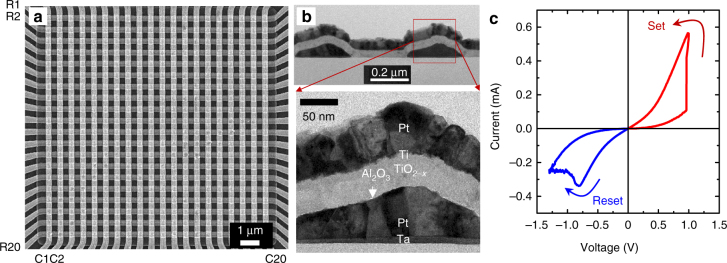
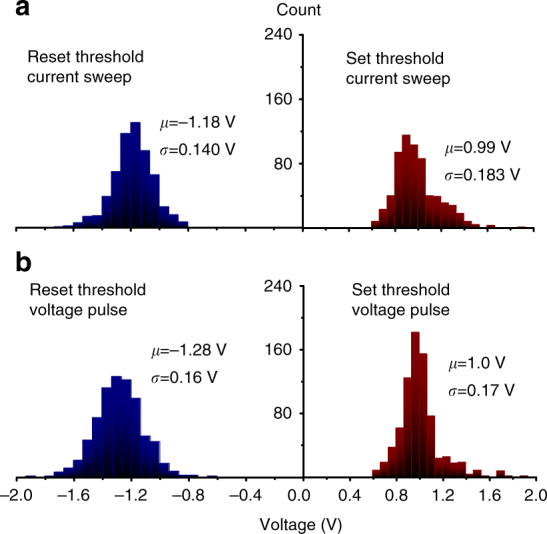
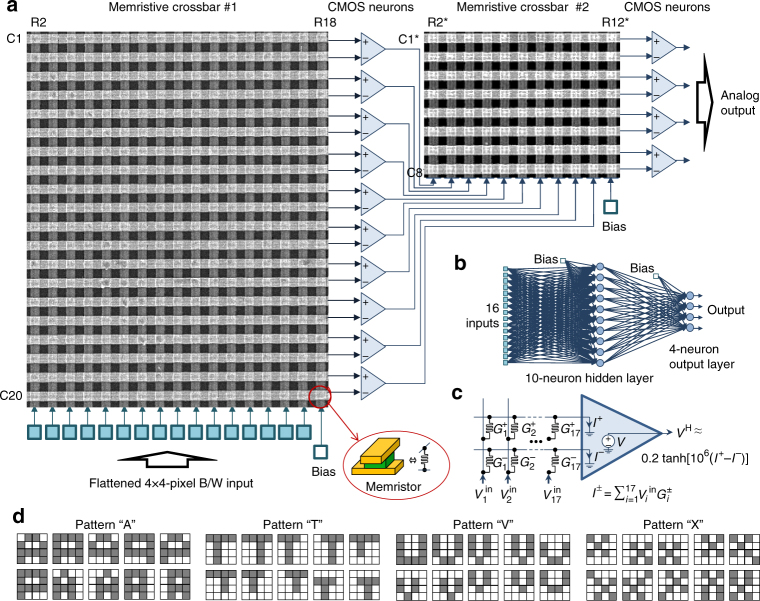
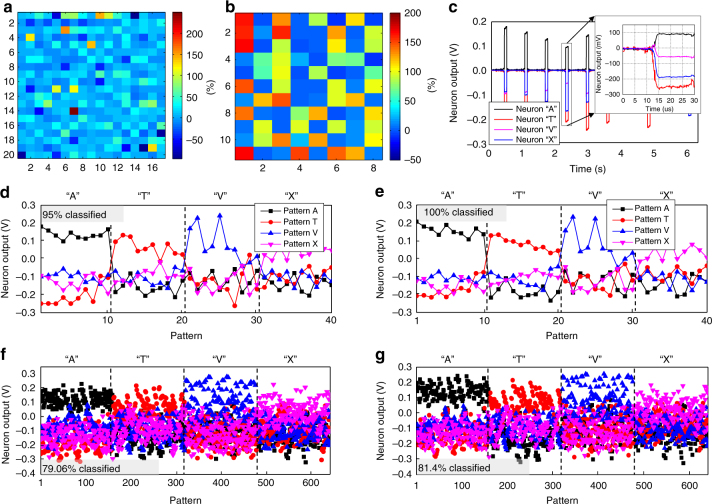
The progress in the field of neural computation hinges on the use of hardware more efficient than the conventional microprocessors. Recent works have shown that mixed-signal integrated memristive circuits, especially their passive (0T1R) variety, may increase the neuromorphic network performance dramatically, leaving far behind their digital counterparts. The major obstacle, however, is immature memristor technology so that only limited functionality has been reported. Here we demonstrate operation of one-hidden layer perceptron classifier entirely in the mixed-signal integrated hardware, comprised of two passive 20 × 20 metal-oxide memristive crossbar arrays, board-integrated with discrete conventional components. The demonstrated network, whose hardware complexity is almost 10× higher as compared to previously reported functional classifier circuits based on passive memristive crossbars, achieves classification fidelity within 3% of that obtained in simulations, when using ex-situ training. The successful demonstration was facilitated by improvements in fabrication technology of memristors, specifically by lowering variations in their I–V characteristics.
Overview
The claims and statistics of this paper haven’t been checked yet.
Free: it reads the open-access text and checks the first 5 claims that cite a source we can check. Create a free account to check every claim.
Integrity signals
Registry
Cites
Statistics
Figures
Verification
Claims the paper makes
The claims and statistics of this paper haven’t been checked yet.
Free: it reads the open-access text and checks the first 5 claims that cite a source we can check. Create a free account to check every claim.
Claims other papers make about this one
Each is checked against this paper’s own text: does it say what the citing paper says it does?
The source backs part of the claim, not all of it — or backs it for a different population, condition or comparison.
In the citing paper
“The progress in the most prospective, passive analog-grade ReRAM circuits13,17,21,22,24, however, has been much slower, mainly because of much stricter requirements for the uniformity of memory cells’ I–V characteristics (Supplementary Fig. 1).”
From 4K-memristor analog-grade passive crossbar circuit (2021) · cites this paper as [24]
Experimental — accuracy not yet measuredThe source backs part of the claim, not all of it — or backs it for a different population, condition or comparison.
In the citing paper
“The developed circuits have ten times more devices and excellent uniformity allowing for significantly better array-scale conductance tuning precision as compared to the previous work24 that reported the largest passive analog-grade memristive crossbar circuits with detailed characterization statistics.”
From 4K-memristor analog-grade passive crossbar circuit (2021) · cites this paper as [24]
Experimental — accuracy not yet measuredThe source backs part of the claim, not all of it — or backs it for a different population, condition or comparison.
In the citing paper
“the former can be achieved by reducing leakages within the device and between neighboring lines, e.g., by patterning the active switching layer and scaling down device feature sizes24, and making higher-aspect ratio electrodes”
From 4K-memristor analog-grade passive crossbar circuit (2021) · cites this paper as [24]
Experimental — accuracy not yet measuredThe cited source says what the claim attributes to it.
In the citing paper
“The developed circuits have ten times more devices and excellent uniformity allowing for significantly better array-scale conductance tuning precision as compared to the previous work24 that reported the largest passive analog-grade memristive crossbar circuits with detailed characterization statistics.”
From 4K-memristor analog-grade passive crossbar circuit (2021) · cites this paper as [24]
Self-check
Percentages, sums and reported differences re-computed from the paper’s own numbers.
The self-check needs the paper’s full text.
Citations
Cites
ImageNet classification with deep convolutional neural networks
Krizhevsky, A., Sutskever, I., & Hinton, G. E. (2017) · Communications of the ACM · doi:10.1145/3065386 · Cited by 112,155
LeCun, Y., Bengio, Y., & Hinton, G. (2015) · Nature · doi:10.1038/nature14539 · Cited by 84,126
Deep learning in neural networks: an overview
Schmidhuber, J. (2015) · Neural Networks · doi:10.1016/j.neunet.2014.09.003 · Cited by 18,570 · cited 3×
“(Similar to our previous work [1, 2], only inference stage was performed in a hardware during such in-situ training, while other operations, such as computing and storing the necessary weight updates, were assisted by an external computer.)”
BackgroundMethodResultA million spiking-neuron integrated circuit with a scalable communication network and interface
Merolla, P. A., Arthur, J. V., Alvarez-Icaza, R., Cassidy, A. S., Sawada, J., Akopyan, F., Jackson, B. L., Imam, N., Guo, C., Nakamura, Y., et al. (2014) · Science · doi:10.1126/science.1254642 · Cited by 4,147
Memristive devices for computing
Yang, J. J., Strukov, D. B., & Stewart, D. R. (2013) · Nature Nanotechnology · doi:10.1038/nnano.2012.240 · Cited by 3,885
Self-citationEyeriss: An Energy-Efficient Reconfigurable Accelerator for Deep Convolutional Neural Networks
Chen, Y.-H., Krishna, T., Emer, J. S., & Sze, V. (2017) · IEEE Journal of Solid-State Circuits · doi:10.1109/jssc.2016.2616357 · Cited by 3,247 · cited 1×
“The breakthrough 3 was enabled not by any significant algorithm advance, but rather by the use of high performance graphics processors 4 , and the further progress is being fueled now by the development of even more powerful graphics processors and custom integrated circuits 5-7 .”
MethodTraining and operation of an integrated neuromorphic network based on metal-oxide memristors
Prezioso, M., Merrikh-Bayat, F., Hoskins, B. D., Adam, G. C., Likharev, K. K., & Strukov, D. B. (2015) · Nature · doi:10.1038/nature14441 · Cited by 3,001 · cited 3×
“26,27 .”
BackgroundInfluentialSelf-citationWong, H.-S. P., Lee, H.-Y., Yu, S., Chen, Y.-S., Wu, Y., Chen, P.-S., Lee, B., Chen, F. T., & Tsai, M.-J. (2012) · Proceedings of the IEEE · doi:10.1109/jproc.2012.2190369 · Cited by 2,757
Memristors with diffusive dynamics as synaptic emulators for neuromorphic computing
Wang, Z., Joshi, S., Savel’ev, S. E., Jiang, H., Midya, R., Lin, P., Hu, M., Ge, N., Strachan, J. P., Li, Z., et al. (2017) · Nature Materials · doi:10.1038/nmat4756 · Cited by 2,358
van de Burgt, Y., Lubberman, E., Fuller, E. J., Keene, S. T., Faria, G. C., Agarwal, S., Marinella, M. J., Alec Talin, A., & Salleo, A. (2017) · Nature Materials · doi:10.1038/nmat4856 · Cited by 1,872
Research works printed but not linked: 10
- Moons, B., Uytterhoeven, R., Dehaene, W. & Verhelst, M. in IEEE International Sold-State Circuits Conference (ISSCC) 246–257 (IEEE, 2017).
- Jouppi, N. P. et al. in Proc. of the 44th Annual International Symposium on Computer Architecture 1–12 (ACM, 2017).
- Mead, C. Analog VLSI and Neural Systems (Addison-Wesley Longman Publishing Co. Inc., Boston, MA, USA, 1989).
- Suri, M. et al. in 2012 International Electron Devices Meeting 235–238 (IEEE, 2012).
- Piccolboni, G. et al. in 2015 International Electron Devices Meeting (IEDM) 447–450 (IEEE, 2015).
- Kim, S. et al. in 2015 International Electron Devices Meeting (IEDM) 443–446 (IEEE, 2015).
- Prezioso, M. et al. in 2015 International Electron Devices Meeting (IEDM) 455–458 (IEEE, 2015).
- Yu, S. et al. in 2016 International Electron Devices Meeting (IEDM) 416–419 (IEEE, 2016).
- Govoreanu, B. et al. in 2011 International Electron Devices Meeting 729–732 (IEEE, 2011).
- Ceze, L. et al. in 2016 74th Annual Device Research Conference (DRC) 1–2 (IEEE, 2016).
Cited by
Items 201–300 of 386
Actor–critic networks with analogue memristors mimicking reward-based learning
Portner, K., Zellweger, T., Martinelli, F., Bégon‐Lours, L., Bragaglia, V., Weilenmann, C., Jubin, D., Falcone, D. F., Hermann, F., Hrynkevych, O., et al. (2025) · Nature Machine Intelligence · doi:10.1038/s42256-025-01149-w · Cited by 21
“When updating the memristors, no additional error mitigation schemes such as write–verify algorithms are necessary as opposed to other weight update schemes 89,90 , thereby simplifying the control circuitry 27,31,91 .”
Yekta, P. V., Honar, F. J., & Fesharaki, M. N. (2018) · Computational Materials Science · doi:10.1016/j.commatsci.2018.12.025 · Cited by 16
Su, R., Chen, D., Cheng, W., Xiao, R., Deng, Y. H., Duan, Y., Li, Y., Ye, L., An, H., Xu, J., et al. (2024) · ACS Applied Materials & Interfaces · doi:10.1021/acsami.4c07951 · Cited by 15
Huang, P., Liu, X., Xin, Y., Gu, Y., Lee, A., Zhang, Y., Xu, Z., Chen, P., Zhang, Y. L., Deng, W., et al. (2024) · ACS Nano · doi:10.1021/acsnano.4c03278 · Cited by 15
Training fully connected networks with resistive memories: impact of device failures
Romero, L. P., Ambrogio, S., Giordano, M., Cristiano, G., Bodini, M., Narayanan, P., Tsai, H.-Y. S., Shelby, R. M., & Burr, G. W. (2018) · Faraday Discussions · doi:10.1039/c8fd00107c · Cited by 15
Battistoni, S., Verna, A., Marasso, S. L., Cocuzza, M., & Erokhin, V. V. (2020) · physica status solidi (a) · doi:10.1002/pssa.201900985 · Cited by 15
Effect of weight overlap region on neuromorphic system with memristive synaptic devices
Lee, G. H., Kim, T., Song, M. S., Park, J., Kim, S., Hong, K., Kim, Y., Park, B., & Kim, H. (2022) · Chaos Solitons & Fractals · doi:10.1016/j.chaos.2022.111999 · Cited by 17
Resistive switching kinetics of electrolyte-gated polyaniline-based memristive devices
Serenko, M. V., Prudnikov, N. V., Emelyanov, A. V., Stupnikov, A. A., Malakhova, Y. N., Savinov, D. V., & Erokhin, V. V. (2024) · Organic Electronics · doi:10.1016/j.orgel.2024.107002 · Cited by 15
Resistive switching memory for high density storage and computing*
Xu, X., Luo, Q., Gong, T., Lv, H., Liu, Q., & Liu, M. (2021) · Chinese Physics B · doi:10.1088/1674-1056/abe0c4 · Cited by 16
Memristive Logic Design of Multifunctional Spiking Neural Network with Unsupervised Learning
Andreeva, N. V., Ryndin, E. A., & Gerasimova, M. I. (2020) · BioNanoScience · doi:10.1007/s12668-020-00778-2 · Cited by 14
An Analog CMOS Implementation for Multi-layer Perceptron With ReLU Activation
Geng, C., Sun, Q., & Nakatake, S. (2020) · International Conference on Modern Circuits and Systems Technologies · doi:10.1109/mocast49295.2020.9200299 · Cited by 14
“Several Analog MLPs have been implemented to solve classification problems in the past decade, which show promising results [6]–[8].”
BackgroundFault Tolerance of Memristor-Based Perceptron Network for Neural Interface
Shchanikov, S., Bordanov, I., Zuev, A. D., Danilin, S. N., Korolev, D. S., Belov, A. I., & Mikhaylov, A. N. (2020) · BioNanoScience · doi:10.1007/s12668-020-00807-0 · Cited by 14
“…network, deep networks) [13–15], in which an input signal is multiplied by a pre-programmed weight (there are synapse architectures with two [15, 16] and multiple [17] memristors), as well as synapses for spiking ANNs in which memristors exhibit synaptic plasticity mechanisms like in living…”
BackgroundLuo, T., Yang, L., Zhang, H., Qu, C., Wang, X., Cui, Y., Wong, W., & Goh, R. S. M. (2021) · IEEE Transactions on Computer-Aided Design of Integrated Circuits and Systems · doi:10.1109/tcad.2021.3120068 · Cited by 16
“A popular choice in neuromorphic computing is the crossbar architecture, where instead of moving data to compute units, processing is done in-situ where the weights are stored [12], [13].”
BackgroundA Simple Memristive Circuit for Pattern Classification Based on Reservoir Computing
Tong, Z., Nakane, R., Hirose, A., & Tanaka, G. (2022) · International Journal of Bifurcation and Chaos · doi:10.1142/s0218127422501413 · Cited by 14
Emerging Devices for Biologically Accurate Neuron
Wan, C., He, Y., Jiang, S., Li, J., & Wan, Q. (2019) · ACS Applied Electronic Materials · doi:10.1021/acsaelm.9b00702 · Cited by 14
aCortex: An Energy-Efficient Multipurpose Mixed-Signal Inference Accelerator
Bavandpour, M., Mahmoodi, M. R., & Strukov, D. B. (2020) · IEEE Journal on Exploratory Solid-State Computational Devices and Circuits · doi:10.1109/jxcdc.2020.2999581 · Cited by 17
“Though the core principles of analog computing had been developed almost four decades ago [9], [10], its efficient implementations were enabled only recently [14]–[30] due to the emergence of novel continuousstate, nonvolatile, memory devices [31], [32].”
BackgroundSelf-citationFundamental Limits on the Computational Accuracy of Resistive Crossbar-based In-memory Architectures
Roy, S. K., Patil, A. D., & Shanbhag, N. R. (2022) · IEEE International Symposium on Circuits and Systems proceedings · doi:10.1109/iscas48785.2022.9937336 · Cited by 17
Jang, J., & Gi, S.-G. (2025) · Advanced Materials Technologies · doi:10.1002/admt.202500588 · Cited by 13
Energy‐Efficient Memristive Euclidean Distance Engine for Brain‐Inspired Competitive Learning
Zhou, H., Chen, J., Wang, Y., Liu, S., Li, Y., Li, Q., Liu, Q., Wang, Z., He, Y., Xu, H. F., et al. (2021) · Advanced Intelligent Systems · doi:10.1002/aisy.202100114 · Cited by 14
Neuromorphic computing with resistive switching memory devices
Ielmini, D., & Ambrogio, S. (2019) · Elsevier eBooks · doi:10.1016/b978-0-08-102584-0.00017-6 · Cited by 14
Resistive switching on individual V 2 O 5 nanoparticles encapsulated in fluorinated graphene films
Ivanov, A. I., Prinz, V. Y., Antonova, I. V., & Gutakovskii, A. K. (2021) · Physical Chemistry Chemical Physics · doi:10.1039/d1cp02930d · Cited by 12
Ji, X., Song, H., Lim, K. G., Zhong, S., & Zhao, R. J. (2021) · Advanced Intelligent Systems · doi:10.1002/aisy.202100119 · Cited by 14
CoDG-ReRAM: An Algorithm-Hardware Co-design to Accelerate Semi-Structured GNNs on ReRAM
Luo, Y., Behnam, P., Thorat, K., Liu, Z., Peng, H., Huang, S., Zhou, S., Khan, O., Tumanov, A., Ding, C., et al. (2022) · IEEE International Conference on Computer Design: VLSI in Computers and Processors (ICCD) · doi:10.1109/iccd56317.2022.00049 · Cited by 18
“In the last decade, there are extensive works that illustrate the results of fabricated ReRAM memory cells [55], memory arrays [39], and also fabricated ReRAM-based accelerators [6], [9], [43].”
BackgroundMemristive Neural Networks for Predicting Seizure Activity
Gerasimova, S. A., Lebedeva, A., Gromov, N. V., Malkov, A., Fedulina, A., Levanova, T. A., & Pisarchik, A. N. (2023) · Современные технологии в медицине · doi:10.17691/stm2023.15.4.03 · Cited by 11
Resistive switching in graphene: A theoretical case study on the alumina-graphene interface
Maciel, R. P., Eriksson, O., Kvashnin, Y. O., Thonig, D., Belotcerkovtceva, D., Kamalakar, M. V., & Ong, C. S. (2023) · Physical Review Research · doi:10.1103/physrevresearch.5.043147 · Cited by 13
Physical neural networks with self-learning capabilities
Yu, W., Guo, H., Xiao, J., & Shen, J. (2024) · Science China Physics Mechanics and Astronomy · doi:10.1007/s11433-024-2403-x · Cited by 11
Bio-Inspired Techniques in a Fully Digital Approach for Lifelong Learning
Bianchi, S., Muñoz-Martín, I., & Ielmini, D. (2020) · Frontiers in Neuroscience · doi:10.3389/fnins.2020.00379 · Cited by 11
“A further improvement of this trend is related to the non-Von Neumann hardware implementation of backpropagation algorithms using non-volatile memories (NVMs) such as phase-change-memory (PCM) and resistive switching memory (RRAM) (Burr et al., 2015; Merrikh-Bayat et al., 2017; Ambrogio et al., 2018).”
BackgroundEfficient Hybrid Training Method for Neuromorphic Hardware Using Analog Nonvolatile Memory
Kwon, D., Woo, S. Y., Hwang, J., Kim, H., Bae, J., Shin, W., Park, B., & Lee, J. (2023) · IEEE Transactions on Neural Networks and Learning Systems · doi:10.1109/tnnls.2023.3327906 · Cited by 10
“…extensive research has been conducted on synaptic devices such as two-terminal resistive random-access memory (RRAM) [23], [24], [25], [26], [27], [28], [29], [30], [31], phase-change RAM (PCRAM) [32], [33], [34], [35], three-terminal ferroelectric field-effect transistors (FeFETs) [36],…”
Neuromorphic Analog Machine Vision Enabled by Nanoelectronic Memristive Devices
Shchanikov, S., Bordanov, I., Kucherik, A. O., Gryaznov, E. G., & Mikhaylov, A. N. (2023) · Applied Sciences · doi:10.3390/app132413309 · Cited by 10
Bhardwaj, K., Semenov, D., Šotner, R., & Majumdar, S. (2025) · Advanced Intelligent Systems · doi:10.1002/aisy.202500215 · Cited by 13
Rhim, S., Ligorio, G., Hermerschmidt, F., Pätzel, M., Herder, M., Hecht, S., & List, E. J. W. (2021) · Journal of Physics D Applied Physics · doi:10.1088/1361-6463/ac2d62 · Cited by 11
“Yet, ANNs composed of such electrical devices need a conversion of the current to the voltage after passing every neuron in the signaling process [10].”
Deyasi, A., Bhattacharjee, A. K., Mukherjee, S., & Sarkar, A. (2021) · Solid State Electronics Letters · doi:10.1016/j.ssel.2021.12.003 · Cited by 10
Memristive brain-like computing
Wen, X.-Y., Wang, Y.-S., He, Y., Miao, X., & Hubei Yangtze Memory Laboratories, W. 4. (2022) · Acta Physica Sinica · doi:10.7498/aps.71.20220666 · Cited by 10
Zhang, Y., Zhang, W., Wang, S., Lin, N., Yu, Y., He, Y., Wang, B., Jiang, H., Lin, P., Xu, X., et al. (2024) · Science Advances · doi:10.1126/sciadv.ado1058 · Cited by 12
Improvement of TiO2 memristor properties by α-particles irradiation
Ilin, A. S., Форш, П. А., Balakshin, Y. V., Shvetsov, B. S., Gusev, D. V., Rusakov, D. M., Задириев, И. И., Kukueva, E. V., Николаевич, М. М., Emelyanov, A. V., et al. (2025) · Applied Physics Letters · doi:10.1063/5.0244853 · Cited by 11
Efficient grouping approach for fault tolerant weight mapping in memristive crossbar array
Yadav, D. N., Thangkhiew, P. L., Chakraborty, S., & Sengupta, I. (2023) · Memories - Materials Devices Circuits and Systems · doi:10.1016/j.memori.2023.100045 · Cited by 11
Youn, S., Kim, K., Park, J., & Kim, H. (2025) · Nano Energy · doi:10.1016/j.nanoen.2025.111633 · Cited by 9
Neuromorphic olfactory perception chips: towards universal odour recognition and cognition
Zhao, Y., Wang, J., Zhang, S., & Liang, W. (2025) · Nature Reviews Electrical Engineering · doi:10.1038/s44287-025-00214-1 · Cited by 11
Quantized Neural Network via Synaptic Segregation Based on Ternary Charge‐Trap Transistors
Baek, Y., Bae, B., Yang, J., Lee, D., Lee, K. H., Park, M., Kim, T., Kim, S., Park, B., Yoo, G., et al. (2023) · Advanced Electronic Materials · doi:10.1002/aelm.202300303 · Cited by 9
Bring memristive in-memory computing into general-purpose machine learning: A perspective
Zhou, H., Chen, J., Li, J., Yang, L., Li, Y., & Miao, X. (2023) · APL Machine Learning · doi:10.1063/5.0167743 · Cited by 10
Xiao, Y., Ke, S., Jin, Y., Zhang, T., Jiang, B., Meng, J., Chen, S., Li, R., Zhang, Z., & Ye, C. (2023) · Ceramics International · doi:10.1016/j.ceramint.2023.12.211 · Cited by 10
A neuron based on a single flux qubit
Klenov, N. V., Kuznetsov, A. V., Schegolev, A. E., Soloviev, I. I., Bakurskiy, S. V., Kupriyanov, M. Y., & Tereshonok, M. V. (2019) · Low Temperature Physics · doi:10.1063/1.5111305 · Cited by 9
Joko, M., Hayashi, Y., Tohei, T., & Sakai, A. (2020) · Japanese Journal of Applied Physics · doi:10.35848/1347-4065/ab8be6 · Cited by 9
The Impact of Device Uniformity on Functionality of Analog Passively-Integrated Memristive Circuits
Fahimi, Z., Mahmoodi, M. R., Klachko, M., Nili, H., & Strukov, D. B. (2021) · IEEE Transactions on Circuits and Systems I Regular Papers · doi:10.1109/tcsi.2021.3097282 · Cited by 13
“TiO 2 memristors have been used in designing 10 × 2 [1], 12 × 12 [4], and 20 × 20 [2], and 64 × 64 [9] crossbar circuits, with excellent retention ( > 20 hrs in 100 ◦ C), endurance ( > 10 6 analog switching cycles), and close to 100% yield.”
MethodSelf-citationSecond-Order Nanoscale Thermal Effects in Memristive Structures Based on Poly-p-Xylylene
Matsukatova, A. N., Emelyanov, A. V., Minnekhanov, A. A., Demin, V. A., Rylkov, V. V., Форш, П. А., & Kashkarov, P. K. (2020) · Journal of Experimental and Theoretical Physics Letters · doi:10.1134/s0021364020180071 · Cited by 9
Rafiq, S., Hazra, J., Liehr, M., Beckmann, K., Abedin, M., Pannu, J. S., Jha, S. K., & Cady, N. C. (2021) · IEEE Transactions on Circuits and Systems I Regular Papers · doi:10.1109/tcsi.2021.3072210 · Cited by 9
“Arrays of NVM, including ReRAM, have been used primarily in vector-matrix multiplication (VMM) in an analog fashion to carry out signal processing and solve classification problems [1]–[3], [11], [12].”
BackgroundMethodPala, M. A., Çimen, M. E., Yıldız, M. Z., Çetinel, G., Avcıoğlu, E., & Alaca, Y. (2022) · Chaos Theory and Applications · doi:10.51537/chaos.1114878 · Cited by 9
Pattern Formation in an M-CNN Structure Utilizing a Locally Active NbOx Memristor
Demirkol, A. Ş., Messaris, I., Ascoli, A., & Tetzlaff, R. (2022) · Springer eBooks · doi:10.1007/978-3-030-90582-8_5 · Cited by 13
Memristive behavior of TiOx obtained via Pb(II)-assisted anodic oxidation process
Gökcen, D., Şentürk, O., Karaca, E., Pekmez, N. Ö., & Pekmez, K. (2019) · Journal of Materials Science Materials in Electronics · doi:10.1007/s10854-019-00867-3 · Cited by 9
Memristor Synapse—A Device-Level Critical Review
Chandrasekaran, S., Chang, Y., & Simanjuntak, F. M. (2026) · Nanomaterials · doi:10.3390/nano16030179 · Cited by 9
Energy Efficient Memristive Transiently Chaotic Neural Network for Combinatorial Optimization
Bao, H., Ren, P., Xu, K., Yang, L., Zhou, H., Li, J., Li, Y., & Miao, X. (2024) · IEEE Transactions on Circuits and Systems I Regular Papers · doi:10.1109/tcsi.2024.3406167 · Cited by 10
“…such as CPUs and GPUs, memristor-based CIM can usually achieve orders of magnitude energy efficiency improvement, especially in artificial neural network applications, such as multi-layer perceptron [7], convolutional neural network [8], recurrent neural network [9], and Trans-former [10], [11].”
BackgroundAccurate Prediction of ReRAM Crossbar Performance Under I-V Nonlinearity and IR Drop
Lee, S., Fouda, M. E., Lee, J., Eltawil, A. M., & Kurdahi, F. J. (2022) · IEEE International Conference on Computer Design: VLSI in Computers and Processors (ICCD) · doi:10.1109/iccd56317.2022.00013 · Cited by 12
Towards Energy-Efficient Computing Hardware Based on Memristive Nanodevices
Huang, Y., Ravichandran, V., Zhao, W., & Xia, Q. (2023) · IEEE Nanotechnology Magazine · doi:10.1109/mnano.2023.3297106 · Cited by 9
“At the device level, memristive devices have emerged as leading candidates for in-memory computing because of their unique characteristics [8], [9], [10], [11].”
BackgroundDamascene versus subtractive line CMP process for resistive memory crossbars BEOL integration
Dawant, R., Gaudreau, M., Roy, M.-A., Mouny, P.-A., Valdenaire, M., Gliech, P., Arias‐Zapata, J., Zegaoui, M., Alibart, F., Drouin, D., et al. (2024) · Micro and Nano Engineering · doi:10.1016/j.mne.2024.100251 · Cited by 8
Kukli, K., Kemell, M., Heikkilä, M., Castán, H., Dueñas, S., Mizohata, K., Ritala, M., & Leskelä, M. A. (2020) · Nanotechnology · doi:10.1088/1361-6528/ab6fd6 · Cited by 8
“[30] Bayat F, Prezioso M, Chakrabarti B, Nili H, Kataeva I and Strukov D 2018 Implementation of multilayer perceptron network with highly uniform passive memristive crossbar circuits, Nature Communications 9, 2331 http://dx.”
BackgroundQuantum-like behavior without quantum physics I: Kinematics of neural-like systems
Selesnick, S. A., Rawling, J. P., & Piccinini, G. (2017) · Journal of Biological Physics · doi:10.1007/s10867-017-9460-9 · Cited by 8
On the organic memristive device resistive switching efficacy
Gerasimov, Y., Zykov, E., Prudnikov, N. V., Talanov, M. O., Toschev, A. S., & Erokhin, V. V. (2020) · Chaos Solitons & Fractals · doi:10.1016/j.chaos.2020.110549 · Cited by 8
Contact Engineering Approach to Improve the Linearity of Multilevel Memristive Devices
Andreeva, N. V., Mazing, D. S., Romanov, A. V., Gerasimova, M. I., Чигирев, Д. А., & Luchinin, V. V. (2021) · Micromachines · doi:10.3390/mi12121567 · Cited by 8
Evolutionary Learning of Binary Neural Network Using a TaO x Memristor via Stochastic Stateful Logic
Kim, D. H., Kim, Y. S., Cheong, W. H., Song, H., Rhee, H., Kay, S. N., Han, J., & Kim, K. M. (2022) · Advanced Intelligent Systems · doi:10.1002/aisy.202200058 · Cited by 8
Wang, J., Zhu, C., Zhang, B., Wang, Y., Xu, Y., Xie, X., Gao, C., Sun, B. T., Bi, J., & Zhou, G. (2025) · ACS Photonics · doi:10.1021/acsphotonics.5c02164 · Cited by 7
Methodology for Hardware-in-the-Loop Simulation of Memristive Neuromorphic Systems
Shchanikov, S. (2021) · Nanobiotechnology Reports · doi:10.1134/s2635167621060215 · Cited by 7
Physics-based modeling of a bi-layer Al₂O₃/Nb₂O₅ analog memristive device
Schroedter, R., Mgeladze, E., Herzig, M., Ascoli, A., Slesazeck, S., Mikolajick, T., & Tetzlaff, R. (2022) · IEEE International Symposium on Circuits and Systems proceedings · doi:10.1109/iscas48785.2022.9937966 · Cited by 8
Resistance Switching Statistics and Mechanisms of Pt Dispersed Silicon Oxide-Based Memristors
Lian, X., Shen, X., Lu, L., He, N., Wan, X., Samanta, S., & Tong, Y. (2019) · Micromachines · doi:10.3390/mi10060369 · Cited by 7
Memristive Cosine‐Similarity‐Based Few‐Shot Learning with Lifelong Memory Adaptation
Zhou, H., Yang, L., Bao, H., Li, J., Li, Y., & Miao, X. (2023) · Advanced Intelligent Systems · doi:10.1002/aisy.202200173 · Cited by 7
Design of Variation-Tolerant 1F-1T Memory Array for Neuromorphic ComputingPreprint
Rana, M. S. K., Thunder, S., Müller, F., Laleni, N., Raffel, Y., Lederer, M., Pirro, L., Chohan, T., Hsuen, J.-H., Wu, T., et al. (2023) · doi:10.36227/techrxiv.22178192 · Cited by 7
Self-citationUltra-high density perovskite nanowire array memristor-based multi-layer perceptron
Poddar, S., Khan, B., Kumar, S., Li, J., Ding, Y., Chen, Z., Wang, K., Jin, C., Wei, J., Peng, Z., et al. (2026) · Nature Communications · doi:10.1038/s41467-026-71372-5 · Cited by 7
“At the heart of this paradigm are memristor crossbar arrays, in which vector-matrix multiplication (VMM), the fundamental operation of neural networks, is executed in-memory through the leveraging of Ohm ’ s law for multiplication and Kirchhoff ’ s law for summation 1 – 3 .”
Quantum-like behavior without quantum physics III: Logic and memory
Selesnick, S. A., & Piccinini, G. (2019) · Journal of Biological Physics · doi:10.1007/s10867-019-09532-6 · Cited by 6
Memristors Based on Nanoscale Layers LiNbO3 and (Co40Fe40B20)x(LiNbO3)100 – x
Nikiruy, K. E., Iliasov, A. I., Emelyanov, A. V., Ситников, А. В., Rylkov, V. V., & Demin, V. A. (2020) · Physics of the Solid State · doi:10.1134/s1063783420090218 · Cited by 6
Zhao, E., Li, X., Liu, X., Wang, C., Liu, G., Liu, S., & Xing, C. (2020) · Journal of Materials Science Materials in Electronics · doi:10.1007/s10854-020-04403-6 · Cited by 6
Organic Memristive Devices for Neuromorphic Applications
Battistoni, S. (2020) · BioNanoScience · doi:10.1007/s12668-020-00808-z · Cited by 6
“Several publications [40 – 46] reported the realization of energy-efficient neuromorphic networks including special class of perceptrons.”
BackgroundArchitecting for Artificial Intelligence with Emerging Nanotechnology
Kulkarni, S., Bhat, S., & Moritz, C. A. (2021) · ACM Journal on Emerging Technologies in Computing Systems · doi:10.1145/3445977 · Cited by 7
Microwave quantum memcapacitor effect
Qiu, X., Kumar, S., Cárdenas-López, F. A., Barrios, G. A., Solano, E., & Albarrán-Arriagada, F. (2024) · Communications Materials · doi:10.1038/s43246-024-00505-4 · Cited by 6
“Recently,memory deviceshavebeenstudiedasfundamentalelementsforneuromorphic computing 11 – 14 ,offeringpotentialforrobustneuromorphicarchitectures 15 – 18 beyond von Neumann ’ s architectures 19 – 21 .”
Multiple connected artificial synapses based on electromigrated Au nanogaps
Sakai, K., Yagi, M., Ito, M., & Shirakashi, J. (2022) · Journal of Vacuum Science & Technology B Nanotechnology and Microelectronics Materials Processing Measurement and Phenomena · doi:10.1116/6.0002081 · Cited by 6
Boudjerida, N., Abdelouahab, M.-S., & Lozi, R. (2023) · The Journal of Difference Equations and Applications · doi:10.1080/10236198.2023.2172334 · Cited by 8
Memristor Hardware-Friendly Reinforcement LearningPreprint
Wu, N., Vincent, A. F., Strukov, D. B., & Xie, Y. (2020) · arXiv (Cornell University) · doi:10.48550/arxiv.2001.06930 · Cited by 6
Self-citationMitigating Imperfections in Mixed-Signal Neuromorphic CircuitsPreprint
Fahimi, Z., Mahmoodi, M. R., Klachko, M., Nili, H., Kim, H., & Strukov, D. B. (2021) · arXiv (Cornell University) · doi:10.48550/arxiv.2107.04236 · Cited by 6
“The most notable candidates that excel in primary features such as long-term retention, high endurance, analog storage, low-power operation, and compact footprint are metal-oxide passive memristors [11] (Fig.”
BackgroundSelf-citationJang, J., Song, Y., & Park, S. (2024) · Advanced Intelligent Systems · doi:10.1002/aisy.202400710 · Cited by 5
Analysis of a Memcapacitor‐Based Online Learning Neural Network Accelerator Framework
Singh, A., Kim, D., & Lee, B. (2025) · Advanced Intelligent Systems · doi:10.1002/aisy.202400795 · Cited by 5
Koroleva, A. A., Khuu, T., Magén, C., Roussel, H., Jiménez, C., Ternon, C., Vatajelu, E. I., & Burriel, M. (2024) · Advanced Electronic Materials · doi:10.1002/aelm.202400096 · Cited by 5
SPIKA: an energy-efficient time-domain hybrid CMOS-RRAM compute-in-memory macro
Humood, K., Pan, Y., Reynolds, G., Mughal, W., Wang, S., Serb, A., & Prodromakis, T. (2025) · Frontiers in Electronics · doi:10.3389/felec.2025.1567562 · Cited by 5
Influence of Frenkel defects on endurance behavior in SnO2:Cu memristors
Mei, F., Shen, H., Li, L., Zang, G., Shao, Y., Liu, L., Lei, L., Huang, F., Lü, X., & Zhu, J. (2019) · Journal of Applied Physics · doi:10.1063/1.5084317 · Cited by 6
Improving Multilevel Writes on Vertical 3-D Cross-Point Resistive Memory
Wang, C., Feng, D., Tong, W., Hua, Y., Liu, J., Wu, B., Zhao, W. J., Song, L., Zhang, Y., Xu, J., et al. (2020) · IEEE Transactions on Computer-Aided Design of Integrated Circuits and Systems · doi:10.1109/tcad.2020.3006188 · Cited by 5
Application of neuromorphic resistive random access memory in image processing
Jiang, B., Zhou, F., & Chai, Y. (2022) · Acta Physica Sinica · doi:10.7498/aps.71.20220463 · Cited by 5
Liehr, M., Beckmann, K., & Cady, N. C. (2022) · IEEE Microelectronics Design & Test Symposium (MDTS) · doi:10.1109/mdts54894.2022.9826924 · Cited by 5
Dong, X., Chen, B., Genov, R., Azghadi, M. R., & Amirsoleimani, A. (2024) · Neurocomputing · doi:10.1016/j.neucom.2024.128275 · Cited by 5
Artificial Neural Network Hardware Implementation: Recent Trends and Applications
Gupta, J., & Koppad, D. (2020) · Advances in intelligent systems and computing · doi:10.1007/978-3-030-37218-7_40 · Cited by 5
Analog Neural Network based on Memristor Crossbar Arrays
Yıldız, H. A., Altun, M., Güngördü, A. D., & Stan, M. R. (2019) · National Conference on Electrical and Electronics Engineering (ELECO) · doi:10.23919/eleco47770.2019.8990597 · Cited by 5
“On the other hand, with the discovery of the memristor (memory element) and its efficient use in crossbar arrays offering dense and regular structures [9-11], it is possible to perform multiplication and addition operations in the analog domain in a very effective way [12-14].”
BackgroundDesign of Multilayer Perceptron Network Based on Metal-Oxide Memristive Devices
Danilin, S. N., Shchanikov, S., Zuev, A. D., Bordanov, I., Korolev, D. S., Belov, A. I., Pimashkin, A. S., Mikhaylov, A. N., & Kazantsev, V. (2019) · International Conference on Developments in eSystems Engineering (DeSE) · doi:10.1109/dese.2019.00103 · Cited by 5
“drawbacks of fabrication technologies of nanoscale electronic components and chips based on them [2, 3, 10];”
BackgroundMethodImplementation of Analog Perceptron as an Essential Element of Configurable Neural Networks
Geng, C., Sun, Q., & Nakatake, S. (2020) · Sensors · doi:10.3390/s20154222 · Cited by 5
Implementation of habituation on single ferroelectric memristor
Li, X., Li, G., Zhang, Z., Zhai, W., Zheng, W., Chen, L., Lin, L., Zhou, X., Yan, Z. B., & Liu, J. (2023) · Applied Physics Letters · doi:10.1063/5.0141710 · Cited by 5
Theoretical analysis and experimental verification of fractional-order RC cobweb circuit network
Liu, Y., Chen, L., Wu, X., Lopes, A. M., Cui, F., & Chen, Y. (2023) · Chaos Solitons & Fractals · doi:10.1016/j.chaos.2023.113541 · Cited by 5
Oxide interface-based polymorphic electronic devices for neuromorphic computing
Pradhan, S., Miller, K., Hartmann, F., Spring, M., Gabel, J., Leikert, B., Kuhn, S., Kamp, M., Lopez‐Richard, V., Sing, M., et al. (2026) · Nature Communications · doi:10.1038/s41467-026-71642-2 · Cited by 4
“These parameters are fundamental for transistor devices to evaluate its competitiveness.”
DEEP LEARNING IN HEAT TRANSFER
Tamaddon-Jahromi, H. R., Chakshu, N. K., Thomas, H., & Nithiarasu, P. (2022) · Annual Reviews of Heat Transfer · doi:10.1615/annualrevheattransfer.2022042131 · Cited by 4
Fault Impact Map for Memristive Crossbar Neural Networks
Schroedter, R., Haidar, A., & Tetzlaff, R. (2024) · International Conference on Modern Circuits and Systems Technologies · doi:10.1109/mocast61810.2024.10615515 · Cited by 4
“68 % impact at position [3 , 11] in layer 1.”
BackgroundMethodMitigating the Impact of ReRAM I-V Nonlinearity and IR Drop via Fast Offline Network Training
Lee, S., Fouda, M. E., Quan, C., Lee, J., Eltawil, A. M., & Kurdahi, F. J. (2024) · IEEE Transactions on Computer-Aided Design of Integrated Circuits and Systems · doi:10.1109/tcad.2024.3459855 · Cited by 5
Hasler, J., & Basu, A. (2025) · Neuromorphic Computing and Engineering · doi:10.1088/2634-4386/ad9b4a · Cited by 4
“Related to the source-coupled VMM topology (figure 5), we can have the FG biased in ohmic operation [134] and parallels the memristive VMM architectures [139–142].”
Sk, M. R., Das, A., Kumar, G., Bhatnagar, D., Roy, S., Raffel, Y., Lederer, M., Seidel, K., De, S., & Chakrabarti, B. (2025) · IEEE Journal of the Electron Devices Society · doi:10.1109/jeds.2025.3556675 · Cited by 5
“Several emerging non-volatile memory (eNVM) technologies offer promise to bridge the gap between computing and storage through energy-efficient computing architectures [9], [10], [11], [12], [13].”
Self-citationMemristive floating-point Fourier neural operator network for efficient scientific modeling
Li, J., Tian, J., Lin, Y., Zhou, Z., Li, Y., Gao, B., Tang, J., Chen, J., He, Y., Qian, H., et al. (2025) · Science Advances · doi:10.1126/sciadv.adv4446 · Cited by 6
“Consequently, this analog computing paradigm can accelerate edge neural network training and inference ( 17 – 21 ).”
Analog Matrix Computing with Resistive Memory: Circuits and Theory
Sun, Z. (2022) · International Symposium on VLSI Technology, Systems and Applications (VLSI-TSA) · doi:10.1109/vlsi-tsa54299.2022.9770998 · Cited by 4
Hu, Y., Ho, T. S. P., Lei, T., Xia, Z., & Wong, M. (2024) · IEEE Transactions on Circuits and Systems I Regular Papers · doi:10.1109/tcsi.2023.3347773 · Cited by 4
“2(a)) or the differential method [26], [27] (Fig.”
Method
Metadata
- Authors
- Bayat, F. M., Prezioso, M., Chakrabarti, B., Nili, H., Kataeva, I., & Strukov, D.
- Affiliations
- University of California, Santa Barbara (US)
- Corresponding author
- Kataeva, I.
- Strukov, D.
- Venue
- Nature Communications
- Published
- 2018-06-13
- Volume
- 9
- Issue
- 1
- Pages
- 2331-2331
- ISSN
- 2041-1723 (ISSN-L)
- PMC
- PMC5998062
- OpenAlex
- W2964263004
- Cited by
- 377
- References
- 41
- Citations by year
- 2026: 9 · 2025: 24 · 2024: 38 · 2023: 46 · 2022: 53 · 2021: 54 · 2020: 88 · 2019: 50 · 2018: 14
- FWCI
- 19.71
- Type
- journal article
- Language
- en
- Open access
- gold
- doi.org
- Licence
- cc-by
- creativecommons.org/licenses/by/4.0 (tdm)
- creativecommons.org/licenses/by/4.0 (vor)
- Locations
- Nature Communications (publishedVersion, cc-by)
- Europe PMC (PubMed Central) (publishedVersion, cc-by)
- PubMed Central (publishedVersion, cc-by)
- PubMed (publishedVersion)
- arXiv (Cornell University) (submittedVersion)
- RePEc: Research Papers in Economics (submittedVersion)
- DOAJ (DOAJ: Directory of Open Access Journals) (submittedVersion)
- DOAJ (DOAJ: Directory of Open Access Journals) (submittedVersion, cc-by-sa)
- arXiv (Cornell University)
- Funders
- DOD | Defense Advanced Research Projects Agency (HR0011-13-C-0051UPSIDE)
- NSF | Directorate for Computer & Information Science and Engineering | Division of Computing and Communication Foundations (1528205)
- Topics
- Physical Sciences › Engineering › Electrical and Electronic Engineering › Advanced Memory and Neural Computing
- Physical Sciences › Computer Science › Artificial Intelligence › Neural Networks and Applications
- Physical Sciences › Computer Science › Artificial Intelligence › Neural Networks and Reservoir Computing
- Keywords
- memristor crossbar, multilayer perceptron, neuromorphic hardware, mixed-signal circuits, metal-oxide memristors, hardware implementation of neural networks
About these checks
Registry, retraction, Cites and statistics results are computed, not judged, with one exception: a printed reference that no index lists is read once by a model before it counts as a citation error. Claims are extracted by a model and kept only when their quote appears verbatim in the text; each cited source is then checked, with a model’s help, for whether it says what the claim relies on. Those verdicts can be wrong — read the claim’s quote and the cited source before relying on one.
Statistics and arithmetic are recomputed, not judged.
Confidence bands are shown only for fields calibrated on our annotated test set. None is calibrated yet, so no band is shown.
What counts as a claim ›How we measure confidence ›How we check this ›
Are you an author, or do you see a problem with this page? Request a review
Data sources
Bibliographic data: Semantic Scholar, OpenAlex, Crossref.
Contains information from the Semantic Scholar Academic Graph Datasets, made available under the ODC Attribution License (ODC-BY 1.0).
Semantic Scholar’s data is described in: Kinney, R., et al. (2023). The Semantic Scholar Open Data Platform. arXiv:2301.10140.
