

Oridonin is a covalent NLRP3 inhibitor with strong anti-inflammasome activity
Open accessThe DOI matches its Crossref record; 61 of the 61 references it cites were found in a registry or an index.
Abstract
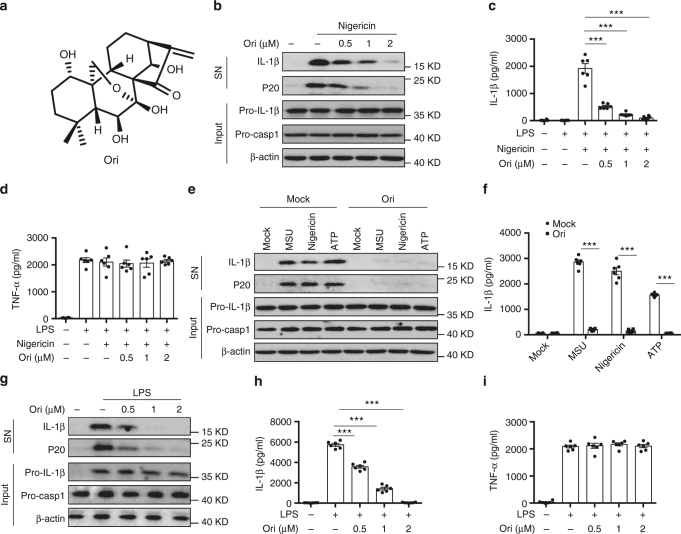
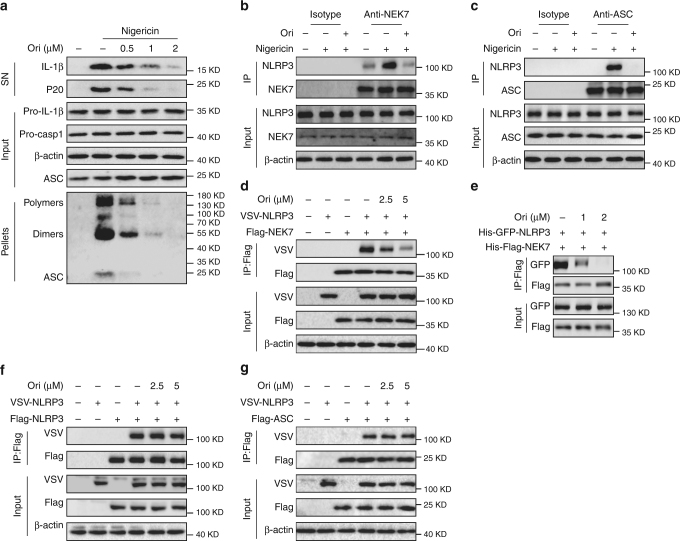
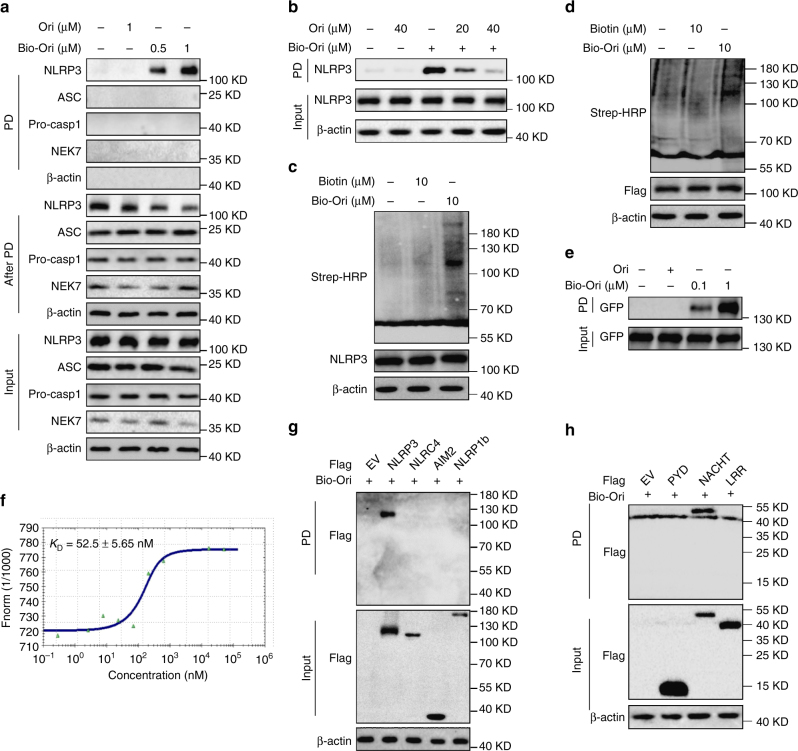
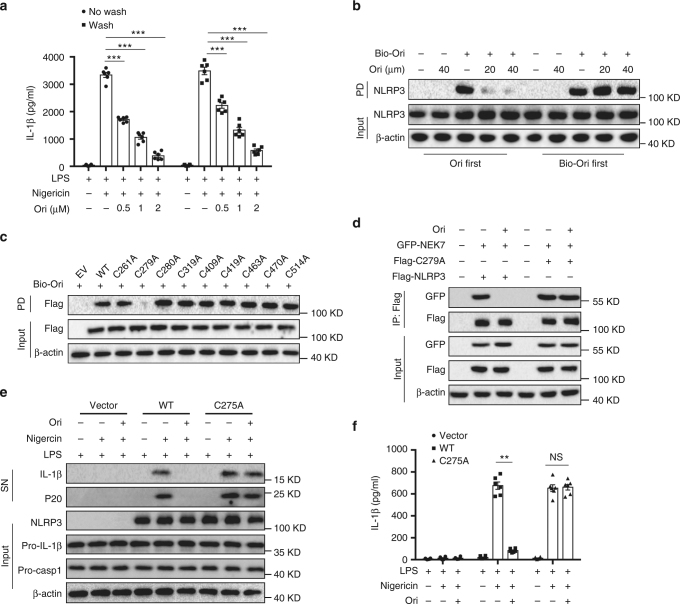
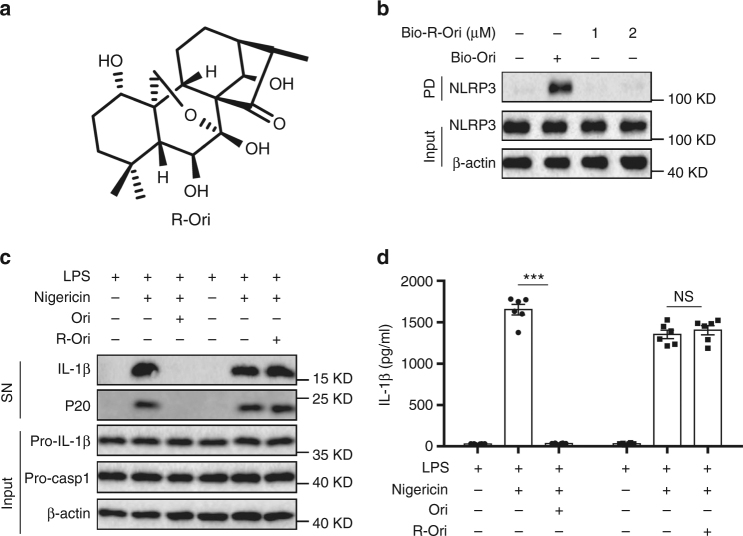
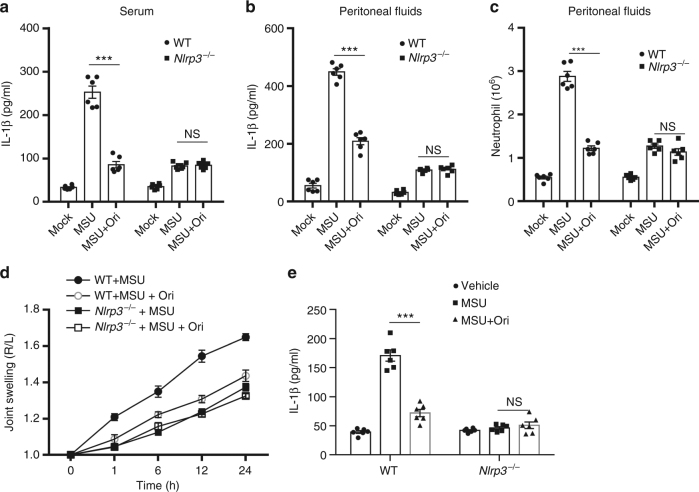
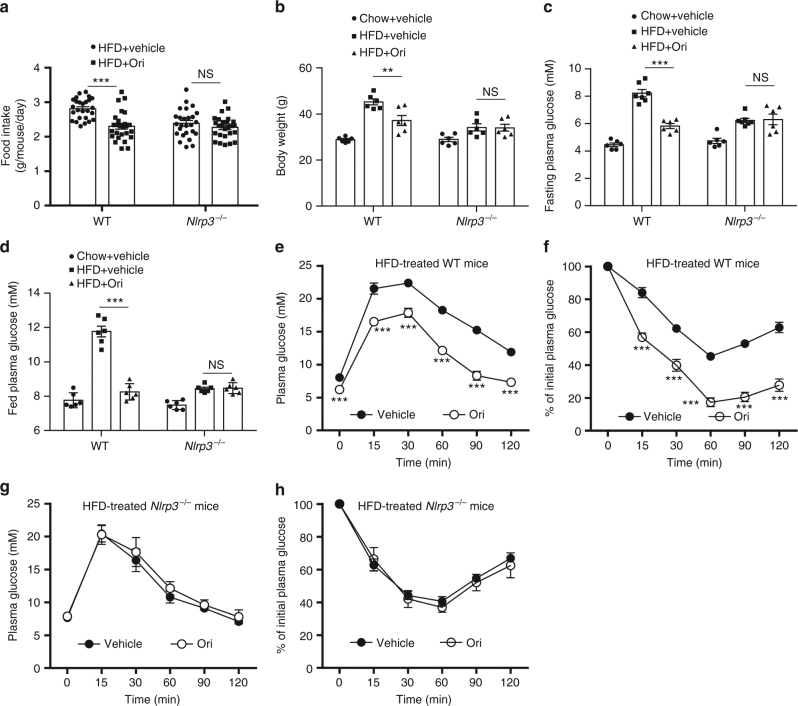
Oridonin (Ori) is the major active ingredient of the traditional Chinese medicinal herb Rabdosia rubescens and has anti-inflammatory activity, but the target of Ori remains unknown. NLRP3 is a central component of NLRP3 inflammasome and has been involved in a wide variety of chronic inflammation-driven human diseases. Here, we show that Ori is a specific and covalent inhibitor for NLRP3 inflammasome. Ori forms a covalent bond with the cysteine 279 of NLRP3 in NACHT domain to block the interaction between NLRP3 and NEK7, thereby inhibiting NLRP3 inflammasome assembly and activation. Importantly, Ori has both preventive or therapeutic effects on mouse models of peritonitis, gouty arthritis and type 2 diabetes, via inhibition of NLRP3 activation. Our results thus identify NLRP3 as the direct target of Ori for mediating Ori’s anti-inflammatory activity. Ori could serve as a lead for developing new therapeutics against NLRP3-driven diseases.
Overview
The claims and statistics of this paper haven’t been checked yet.
Free: it reads the open-access text and checks the first 5 claims that cite a source we can check. Create a free account to check every claim.
Integrity signals
Registry
Cites
Statistics
Figures
Verification
Claims the paper makes
The claims and statistics of this paper haven’t been checked yet.
Free: it reads the open-access text and checks the first 5 claims that cite a source we can check. Create a free account to check every claim.
Claims other papers make about this one
Each is checked against this paper’s own text: does it say what the citing paper says it does?
The check wasn’t confident either way, so it gives no verdict — never disputed.
In the citing paper
“In the specific field of oncology, one covalent PPI inhibitor has been approved by the FDA, while others have entered clinical trials [84, 89, 91–93].”
From The design and development of covalent protein-protein interaction inhibitors for cancer treatment (2020) · cites this paper as [89]
Experimental — accuracy not yet measured
Self-check
Percentages, sums and reported differences re-computed from the paper’s own numbers.
The self-check needs the paper’s full text.
Citations
Cites
A role for mitochondria in nlrp3 inflammasome activation
Zhou, R., Yazdi, A. S., Menu, P., & Tschopp, J. (2011) · Nature · doi:10.1038/nature09663 · Cited by 5,602
Self-citationGout-associated uric acid crystals activate the NALP3 inflammasome
Martinon, F., Pétrilli, V., Mayor, A., Tardivel, A., & Tschopp, J. (2006) · Nature · doi:10.1038/nature04516 · Cited by 5,326
NLRP3 inflammasomes are required for atherogenesis and activated by cholesterol crystals
Duewell, P., Kono, H., Rayner, K. J., Sirois, C. M., Vladimer, G., Bauernfeind, F. G., Abela, G. S., Franchi, L., Nuñez, G., Schnurr, M., et al. (2010) · Nature · doi:10.1038/nature08938 · Cited by 4,026
NLRP3 is activated in Alzheimer’s disease and contributes to pathology in APP/PS1 mice
Heneka, M. T., Kummer, M. P., Stutz, A., Delekate, A., Schwartz, S., Vieira-Saecker, A., Griep, A., Axt, D., Remus, A., Tzeng, T.-C., et al. (2013) · Nature · doi:10.1038/nature11729 · Cited by 2,898
A small-molecule inhibitor of the NLRP3 inflammasome for the treatment of inflammatory diseases
Coll, R. C., Robertson, A. A. B., Chae, J. J., Higgins, S. C., Muñoz-Planillo, R., Inserra, M. C., Vetter, I., Dungan, L. S., Monks, B. G., Stutz, A., et al. (2015) · Nature Medicine · doi:10.1038/nm.3806 · Cited by 2,849
Thioredoxin-interacting protein links oxidative stress to inflammasome activation
Zhou, R., Tardivel, A., Thorens, B., Choi, I., & Tschopp, J. (2010) · Nature Immunology · doi:10.1038/ni.1831 · Cited by 2,708
Self-citationNon-canonical inflammasome activation targets caspase-11
Kayagaki, N., Warming, S., Lamkanfi, M., Walle, L. V., Louie, S., Dong, J., Newton, K., Qu, Y., Liu, J., Heldens, S., et al. (2011) · Nature · doi:10.1038/nature10558 · Cited by 2,530
The Inflammasomes: Guardians of the Body
Martinon, F., Mayor, A., & Tschopp, J. (2009) · Annual Review of Immunology · doi:10.1146/annurev.immunol.021908.132715 · Cited by 2,436
The ketone metabolite β-hydroxybutyrate blocks NLRP3 inflammasome-mediated inflammatory disease
Youm, Y.-H., Nguyen, K. Y., Grant, R. W., Goldberg, E. L., Bodogai, M., Kim, D., D'Agostino, D., Planavsky, N., Lupfer, C., Kanneganti, T. D., et al. (2015) · Nature Medicine · doi:10.1038/nm.3804 · Cited by 2,172
Muñoz-Planillo, R., Kuffa, P., Martínez-Colón, G., Smith, B. L., Rajendiran, T. M., & Núñez, G. (2013) · Immunity · doi:10.1016/j.immuni.2013.05.016 · Cited by 2,147
The resurgence of covalent drugs
Singh, J., Petter, R. C., Baillie, T. A., & Whitty, A. (2011) · Nature Reviews Drug Discovery · doi:10.1038/nrd3410 · Cited by 1,873
Fatty acid–induced NLRP3-ASC inflammasome activation interferes with insulin signaling
Wen, H., Gris, D., Lei, Y., Jha, S., Zhang, L., Huang, M. T.-H., Brickey, W. J., & Ting, J. P.-Y. (2011) · Nature Immunology · doi:10.1038/ni.2022 · Cited by 1,698
The Inflammasome NLRs in Immunity, Inflammation, and Associated Diseases
Davis, B. K., Wen, H., & Ting, J. P.-Y. (2011) · Annual Review of Immunology · doi:10.1146/annurev-immunol-031210-101405 · Cited by 1,618
Activation of the NALP3 inflammasome is triggered by low intracellular potassium concentration
Pétrilli, V, Papin, S., Dostert, C., Mayor, A., Martinon, F., & Tschopp, J. (2007) · Cell Death & Differentiation · doi:10.1038/sj.cdd.4402195 · Cited by 1,445
Molecular mechanisms regulating NLRP3 inflammasome activation
Jo, E.-K., Kim, J. K., Shin, D.-M., & Sasakawa, C. (2016) · Cellular & Molecular Immunology · doi:10.1038/cmi.2015.95 · Cited by 1,378
Unified Polymerization Mechanism for the Assembly of ASC-Dependent Inflammasomes
Lu, A., Magupalli, V. G., Ruan, J., Yin, Q., Atianand, M. K., Vos, M. R., Schröder, G. F., Fitzgerald, K. A., Wu, H., & Egelman, E. H. (2014) · Cell · doi:10.1016/j.cell.2014.02.008 · Cited by 1,353
Masters, S. L., Dunne, A., Subramanian, S. L., Hull, R. L., Tannahill, G. M., Sharp, F. A., Becker, C., Franchi, L., Yoshihara, E., Chen, Z., et al. (2010) · Nature Immunology · doi:10.1038/ni.1935 · Cited by 1,330
NEK7 is an essential mediator of NLRP3 activation downstream of potassium efflux
He, Y., Zeng, M. Y., Yang, D., Motro, B., & Núñez, G. (2016) · Nature · doi:10.1038/nature16959 · Cited by 1,295
Inflammasomes and Their Roles in Health and Disease
Lamkanfi, M., & Dixit, V. M. (2012) · Annual Review of Cell and Developmental Biology · doi:10.1146/annurev-cellbio-101011-155745 · Cited by 935
Yan, Y., Jiang, W., Spinetti, T., Tardivel, A., Castillo, R., Bourquin, C., Guarda, G., Tian, Z., Tschopp, J., & Zhou, R. (2013) · Immunity · doi:10.1016/j.immuni.2013.05.015 · Cited by 784
Self-citationNOD-Like Receptors: Role in Innate Immunity and Inflammatory Disease
Chen, G., Shaw, M. H., Kim, Y.-G., & Nuñez, G. (2009) · Annual Review of Pathology: Mechanisms of Disease · doi:10.1146/annurev.pathol.4.110807.092239 · Cited by 772
Identification of a selective and direct NLRP3 inhibitor to treat inflammatory disorders
Jiang, H., He, H., Chen, Y., Huang, W., Cheng, J., Ye, J., Wang, A., Tao, J., Wang, C., Liu, Q., et al. (2017) · Journal of Experimental Medicine · doi:10.1084/jem.20171419 · Cited by 748
Self-citationShi, H., Wang, Y., Li, X., Zhan, X., Tang, M., Fina, M., Su, L., Pratt, D., Bu, C. H., Hildebrand, S., et al. (2016) · Nature Immunology · doi:10.1038/ni.3333 · Cited by 745
Stienstra, R., Joosten, L. A. B., Koenen, T., van Tits, B., van Diepen, J. A., van den Berg, S. A. A., Rensen, P. C. N., Voshol, P. J., Fantuzzi, G., Hijmans, A., et al. (2010) · Cell Metabolism · doi:10.1016/j.cmet.2010.11.011 · Cited by 676
Anti-inflammatory Compounds Parthenolide and Bay 11-7082 Are Direct Inhibitors of the Inflammasome
Juliana, C., Fernandes-Alnemri, T., Wu, J., Datta, P., Solorzano, L., Yu, J.-W., Meng, R., Quong, A. A., Latz, E., Scott, C. P., et al. (2010) · Journal of Biological Chemistry · doi:10.1074/jbc.m109.082305 · Cited by 610
Dempsey, C., Rubio Araiz, A., Bryson, K. J., Finucane, O., Larkin, C., Mills, E. L., Robertson, A. A. B., Cooper, M. A., O'Neill, L. A. J., & Lynch, M. A. (2017) · Brain Behavior and Immunity · doi:10.1016/j.bbi.2016.12.014 · Cited by 571
Bauer, R. A. (2015) · Drug Discovery Today · doi:10.1016/j.drudis.2015.05.005 · Cited by 534
Tranilast directly targets NLRP 3 to treat inflammasome‐driven diseases
Huang, Y., Jiang, H., Chen, Y., Wang, X., Yang, Y., Tao, J., Deng, X., Liang, G., Zhang, H., Jiang, W., et al. (2018) · EMBO Molecular Medicine · doi:10.15252/emmm.201708689 · Cited by 507
Self-citationDuncan, J. A., Bergstralh, D. T., Wang, Y., Willingham, S. B., Ye, Z., Zimmermann, A. G., & Ting, J. P.-Y. (2007) · Proceedings of the National Academy of Sciences · doi:10.1073/pnas.0611496104 · Cited by 498
Schmid-Burgk, J. L., Chauhan, D., Schmidt, T., Ebert, T. S., Reinhardt, J., Endl, E., & Hornung, V. (2016) · Journal of Biological Chemistry · doi:10.1074/jbc.c115.700492 · Cited by 456
Daniels, M. J. D., Rivers-Auty, J., Schilling, T., Spencer, N. G., Watremez, W., Fasolino, V., Booth, S. J., White, C. S., Baldwin, A. G., Freeman, S., et al. (2016) · Nature Communications · doi:10.1038/ncomms12504 · Cited by 442
ASC filament formation serves as a signal amplification mechanism for inflammasomes
Dick, M. S., Sborgi, L., Rühl, S., Hiller, S., & Broz, P. (2016) · Nature Communications · doi:10.1038/ncomms11929 · Cited by 394
Tang, T., Lang, X., Xu, C., Wang, X., Gong, T., Yang, Y., Cui, J., Bai, L., Wang, J., Jiang, W., et al. (2017) · Nature Communications · doi:10.1038/s41467-017-00227-x · Cited by 361
Self-citationThe Inflammasomes and Autoinflammatory Syndromes
Broderick, L., De Nardo, D., Franklin, B. S., Hoffman, H. M., & Latz, E. (2015) · Annual Review of Pathology: Mechanisms of Disease · doi:10.1146/annurev-pathol-012414-040431 · Cited by 295
He, Y., Varadarajan, S., Muñoz-Planillo, R., Burberry, A., Nakamura, Y., & Núñez, G. (2014) · Journal of Biological Chemistry · doi:10.1074/jbc.m113.515080 · Cited by 268
Honda, H., Nagai, Y., Matsunaga, T., Okamoto, N., Watanabe, Y., Tsuneyama, K., Hayashi, H., Fujii, I., Ikutani, M., Hirai, Y., et al. (2014) · Journal of Leukocyte Biology · doi:10.1189/jlb.3a0114-005rr · Cited by 211
Post-translational regulation of inflammasomes
Yang, J., Liu, Z., & Xiao, T. S. (2017) · Cellular & Molecular Immunology · doi:10.1038/cmi.2016.29 · Cited by 202
Tollip Regulates Proinflammatory Responses to Interleukin-1 and Lipopolysaccharide
Didierlaurent, A., Brissoni, B., Velin, D., Aebi, N., Tardivel, A., Käslin, E., Sirard, J. C., Angelov, G., Tschopp, J., & Burns, K. (2006) · Molecular and Cellular Biology · doi:10.1128/mcb.26.3.735-742.2006 · Cited by 194
Michael Acceptors as Cysteine Protease Inhibitors
Santos, M. M. M., & Moreira, R. (2007) · Mini-Reviews in Medicinal Chemistry · doi:10.2174/138955707782110105 · Cited by 182
Discovery and development of natural product oridonin-inspired anticancer agents
Ding, Y., Ding, C., Ye, N., Liu, Z., Wold, E. A., Chen, H., Wild, C., Shen, Q., & Zhou, J. (2016) · European Journal of Medicinal Chemistry · doi:10.1016/j.ejmech.2016.06.015 · Cited by 178
Yang, G., Lee, H. E., & Lee, J. Y. (2016) · Scientific Reports · doi:10.1038/srep24399 · Cited by 170
Anti-inflammatory activity of traditional Chinese medicinal herbs
Pan, M., Chiou, Y., Tsai, M.-L., & Ho, C. (2011) · Journal of Traditional and Complementary Medicine · doi:10.1016/s2225-4110(16)30052-9 · Cited by 124
Zhao, G., Zhang, T., Ma, X., Jiang, K., Wu, H., Qiu, C., Guo, M., & Deng, G. (2017) · Oncotarget · doi:10.18632/oncotarget.19249 · Cited by 122
The antitumor and antibacterial activity of the Isodon diterpenoids.
FUJITA, E., NAGAO, Y., KANEKO, K., NAKAZAWA, S., & KURODA, H. (1976) · Chemical and Pharmaceutical Bulletin · doi:10.1248/cpb.24.2118 · Cited by 120
Intracellular Glutathione Depletion by Oridonin Leads to Apoptosis in Hepatic Stellate Cells
Kuo, L.-M., Kuo, C.-Y., Lin, C.-Y., Hung, M.-F., Shen, J.-J., & Hwang, T.-L. (2014) · Molecules · doi:10.3390/molecules19033327 · Cited by 110
Oridonin Attenuates Aβ1–42-Induced Neuroinflammation and Inhibits NF-κB Pathway
Wang, S., Yang, H., Yu, L., Jin, J., Qian, L., Zhao, H., Xu, Y., & Zhu, X. (2014) · PLoS ONE · doi:10.1371/journal.pone.0104745 · Cited by 100
Xu, Y., Yang, X., Wang, Y., Feng, D., Lin, S., & Xu, L. (2009) · International Immunopharmacology · doi:10.1016/j.intimp.2009.01.002 · Cited by 98
Mechanisms of joint damage in gout: evidence from cellular and imaging studies
McQueen, F. M., Chhana, A., & Dalbeth, N. (2012) · Nature Reviews Rheumatology · doi:10.1038/nrrheum.2011.207 · Cited by 95
Electrophilic Warhead-Based Design of Compounds Preventing NLRP3 Inflammasome-Dependent Pyroptosis
Cocco, M., Garella, D., Di Stilo, A., Borretto, E., Stevanato, L., Giorgis, M., Marini, E., Fantozzi, R., Miglio, G., & Bertinaria, M. (2014) · Journal of Medicinal Chemistry · doi:10.1021/jm501072b · Cited by 85
Reber, L. L., Marichal, T., Sokolove, J., Starkl, P., Gaudenzio, N., Iwakura, Y., Karasuyama, H., Schwartz, L. B., Robinson, W. H., Tsai, M., et al. (2014) · Arthritis & Rheumatology · doi:10.1002/art.38747 · Cited by 75
Design, Synthesis, and Evaluation of Acrylamide Derivatives as Direct NLRP3 Inflammasome Inhibitors
Cocco, M., Miglio, G., Giorgis, M., Garella, D., Marini, E., Costale, A., Regazzoni, L., Vistoli, G., Orioli, M., Massulaha‐Ahmed, R., et al. (2016) · ChemMedChem · doi:10.1002/cmdc.201600055 · Cited by 75
Antibacterial Activity of Trichorabdal A from Rabdosia trichocarpa Against Helicobacter pylori
Kadota, S., Basnet, P., Ishii, E., Tamura, T., & Namba, T. (1997) · Zentralblatt für Bakteriologie · doi:10.1016/s0934-8840(97)80076-x · Cited by 69
Zhang, Z., Daniels, R., & Schluesener, H. J. (2013) · Journal of Cellular and Molecular Medicine · doi:10.1111/jcmm.12124 · Cited by 65
Mechanistic basis of Nek7 activation through Nek9 binding and induced dimerization
Haq, T., Richards, M. W., Burgess, S. G., Gallego, P., Yeoh, S., O’Regan, L., Reverter, D., Roig, J., Fry, A. M., & Bayliss, R. (2015) · Nature Communications · doi:10.1038/ncomms9771 · Cited by 58
Ahn, H., Kang, S. G., Yoon, S., Kim, P.-H., Kim, D., & Lee, G. (2016) · Cellular and Molecular Immunology · doi:10.1038/cmi.2016.13 · Cited by 53
Wang, S., Zhang, Y., Saas, P., Wang, H., Xu, Y., Chen, K., Zhong, J., Yuan, Y., Wang, Y., & Sun, Y. (2015) · Journal of Gastroenterology and Hepatology · doi:10.1111/jgh.12710 · Cited by 50
Regué, L., Sdelci, S., Bertran, M. T., Caelles, C., Reverter, D., & Roig, J. (2011) · Journal of Biological Chemistry · doi:10.1074/jbc.m110.209080 · Cited by 41
Efficacy of rabdosia rubescens in the treatment of gingivitis
Chen, S., Liu, J., & Zhang, H. (2009) · Journal of Huazhong University of Science and Technology [Medical Sciences] · doi:10.1007/s11596-009-0525-2 · Cited by 37
Huang, J. M., Wu, L., Tashiro, S., Onodera, S., & Ikejima, T. (2005) · PubMed · doi:10.18926/amo/31960 · Cited by 33
Protective effects of oridonin on the sepsis in mice
Zhao, Y., Hu, L., Xu, P., Zhu, M., Liu, Y., Miao, C., & Zhu, Y. (2016) · The Kaohsiung Journal of Medical Sciences · doi:10.1016/j.kjms.2016.07.013 · Cited by 25
[Therapeutic effect of Rabdosia rubescens aqueous extract on chronic pharyngitis and its safety].
Ma, Z., Hu, C., & Zhang, Y. (2011) · PubMed · doi:10.3969/j.issn.1672-7347.2011.02.014 · Cited by 24
Cited by
The NLRP3 inflammasome: molecular activation and regulation to therapeutics
Swanson, K. V., Deng, M., & Ting, J. P.-Y. (2019) · Nature Reviews Immunology · doi:10.1038/s41577-019-0165-0 · Cited by 4,884
DAMP-sensing receptors in sterile inflammation and inflammatory diseases
Gong, T., Liu, L., Jiang, W., & Zhou, R. (2020) · Nature Reviews Immunology · doi:10.1038/s41577-019-0215-7 · Cited by 1,672
Self-citationRecent advances in the mechanisms of NLRP3 inflammasome activation and its inhibitors
Yang, Y., Wang, H., Kouadir, M., Song, H., & Shi, F. (2019) · Cell Death & Disease · doi:10.1038/s41419-019-1413-8 · Cited by 1,269
An update on the regulatory mechanisms of NLRP3 inflammasome activation
Paik, S., Kim, J. K., Silwal, P., Sasakawa, C., & Jo, E.-K. (2021) · Cellular & Molecular Immunology · doi:10.1038/s41423-021-00670-3 · Cited by 892
NLRP3 and pyroptosis blockers for treating inflammatory diseases
Coll, R. C., Schroder, K., & Pelegrín, P. (2022) · Trends in Pharmacological Sciences · doi:10.1016/j.tips.2022.04.003 · Cited by 755
Metadata
- Authors
- He, H., Jiang, H., Chen, Y., Ye, J., Wang, A., Wang, C., Liu, Q., Liang, G., Deng, X., Jiang, W., & Zhou, R.
- Affiliations
- University of Science and Technology of China (CN)
- Xiamen University (CN)
- Chinese Academy of Sciences (CN)
- Corresponding author
- Deng, Xianming
- Jiang, Wei
- Zhou, Rongbin
- ORCID
- Venue
- Nature Communications
- Published
- 2018-06-29
- Volume
- 9
- Issue
- 1
- Pages
- 2550-2550
- ISSN
- 2041-1723 (ISSN-L)
- PMC
- PMC6026158
- OpenAlex
- W2810072585
- Cited by
- 827
- References
- 61
- Citations by year
- 2026: 115 · 2025: 126 · 2024: 139 · 2023: 128 · 2022: 99 · 2021: 98 · 2020: 87 · 2019: 27 · 2018: 7
- FWCI
- 19.55
- Type
- journal article
- Language
- en
- Open access
- gold
- doi.org
- Licence
- cc-by
- creativecommons.org/licenses/by/4.0 (tdm)
- creativecommons.org/licenses/by/4.0 (vor)
- Locations
- Nature Communications (publishedVersion, cc-by)
- Europe PMC (PubMed Central) (publishedVersion, cc-by)
- PubMed Central (publishedVersion, cc-by)
- PubMed (publishedVersion)
- RePEc: Research Papers in Economics (submittedVersion)
- DOAJ (DOAJ: Directory of Open Access Journals) (submittedVersion, cc-by-sa)
- DOAJ (DOAJ: Directory of Open Access Journals) (submittedVersion)
- Funders
- Ministry of Science and Technology of the People's Republic of China (2014CB910800)
- Chinese Academy of Sciences (XDPB03)
- Topics
- Life Sciences › Biochemistry, Genetics and Molecular Biology › Molecular Biology › Inflammasome and immune disorders
- Health Sciences › Medicine › Complementary and alternative medicine › Natural Compounds in Disease Treatment
- Life Sciences › Immunology and Microbiology › Immunology › Immune Response and Inflammation
- Keywords
- oridonin, NLRP3 inflammasome, covalent inhibition, Rabdosia rubescens, anti-inflammatory activity, NEK7, NACHT domain, peritonitis, gout, type 2 diabetes, chronic inflammation, traditional Chinese medicine
- MeSH terms
- NLR Family, Pyrin Domain-Containing 3 Protein, NIMA-Related Kinases, Animals, Anti-Inflammatory Agents, Blood Glucose, Diabetes Mellitus, Type 2, Disease Models, Animal, Gene Expression Regulation, Humans, Inflammation, Mice, Inbred C57BL, Peritonitis, Plant Extracts, Protein Binding, Arthritis, Gouty, Signal Transduction, Mice, Knockout, Isodon, Diterpenes, Kaurane, Mice, Inflammasomes
About these checks
Registry, retraction, Cites and statistics results are computed, not judged, with one exception: a printed reference that no index lists is read once by a model before it counts as a citation error. Claims are extracted by a model and kept only when their quote appears verbatim in the text; each cited source is then checked, with a model’s help, for whether it says what the claim relies on. Those verdicts can be wrong — read the claim’s quote and the cited source before relying on one.
Statistics and arithmetic are recomputed, not judged.
Confidence bands are shown only for fields calibrated on our annotated test set. None is calibrated yet, so no band is shown.
What counts as a claim ›How we measure confidence ›How we check this ›
Are you an author, or do you see a problem with this page? Request a review
Data sources
Bibliographic data: Semantic Scholar, OpenAlex, Crossref.
Contains information from the Semantic Scholar Academic Graph Datasets, made available under the ODC Attribution License (ODC-BY 1.0).
Semantic Scholar’s data is described in: Kinney, R., et al. (2023). The Semantic Scholar Open Data Platform. arXiv:2301.10140.
