

AAV vector-mediated in vivo reprogramming into pluripotency
Open accessThe DOI matches its Crossref record; 79 of the 81 references it cites were found in a registry or an index.
Abstract
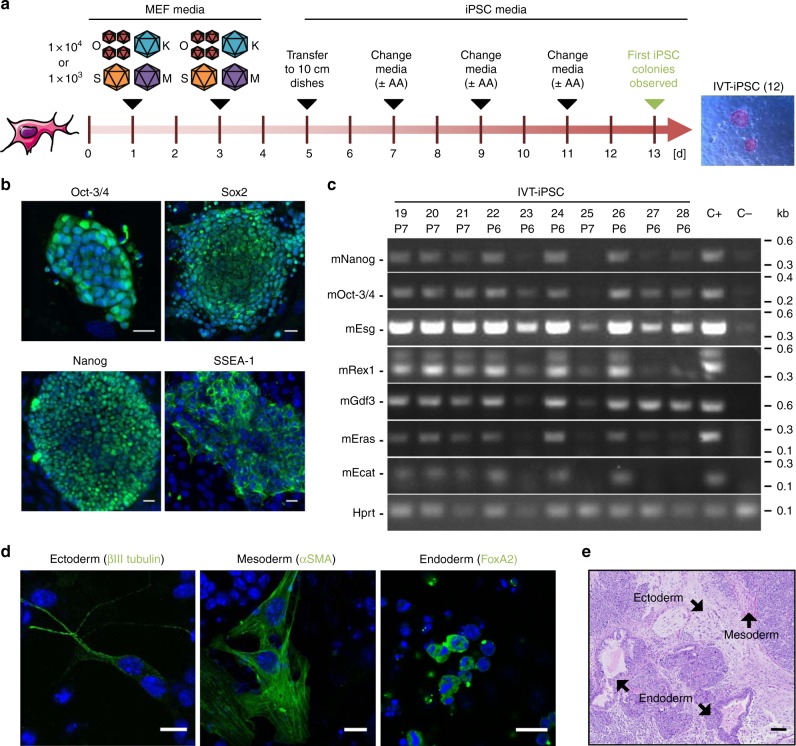
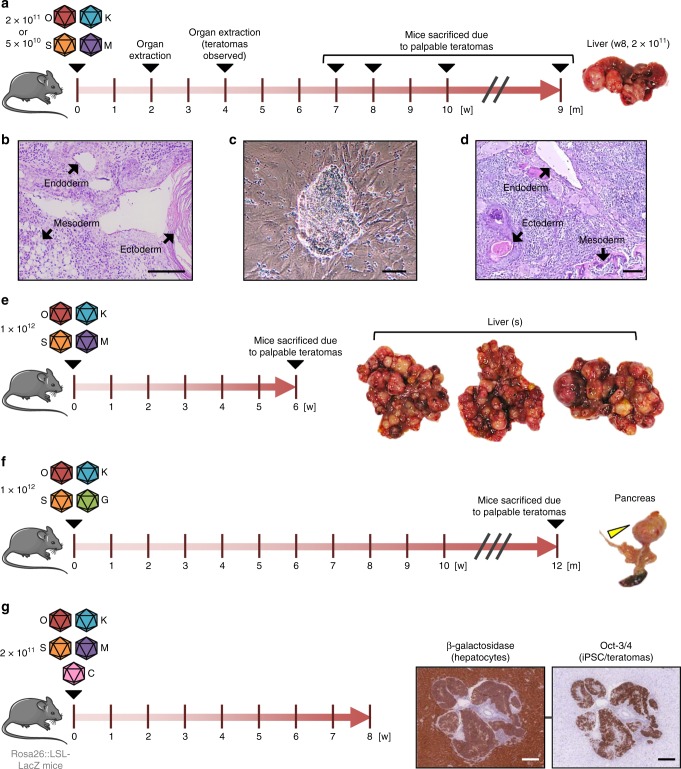
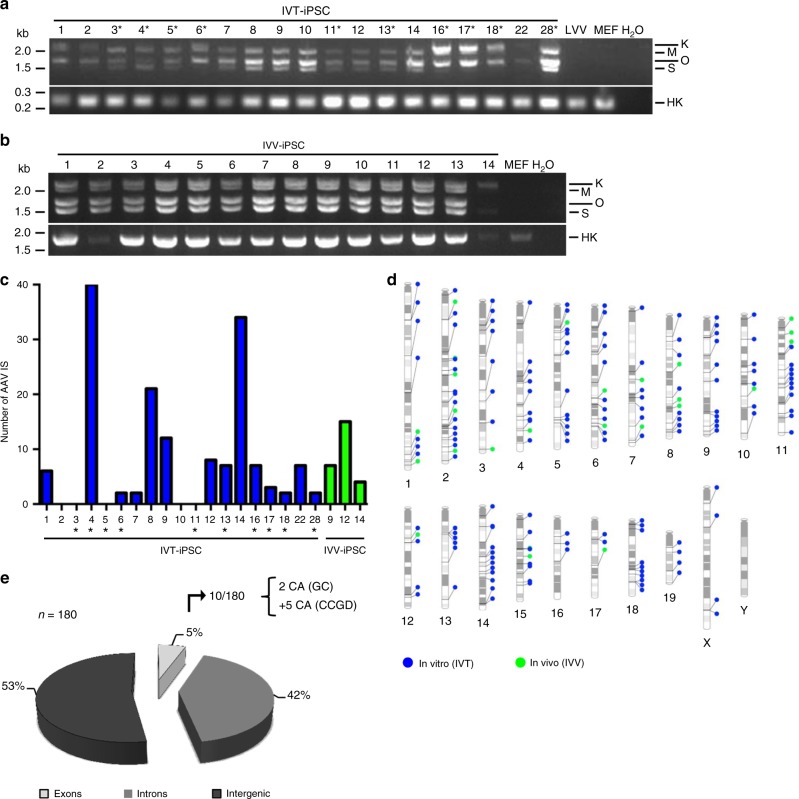
In vivo reprogramming of somatic cells into induced pluripotent stem cells (iPSC) holds vast potential for basic research and regenerative medicine. However, it remains hampered by a need for vectors to express reprogramming factors (Oct-3/4, Klf4, Sox2, c-Myc; OKSM) in selected organs. Here, we report OKSM delivery vectors based on pseudotyped Adeno-associated virus (AAV). Using the AAV-DJ capsid, we could robustly reprogram mouse embryonic fibroblasts with low vector doses. Swapping to AAV8 permitted to efficiently reprogram somatic cells in adult mice by intravenous vector delivery, evidenced by hepatic or extra-hepatic teratomas and iPSC in the blood. Notably, we accomplished full in vivo reprogramming without c-Myc. Most iPSC generated in vitro or in vivo showed transcriptionally silent, intronic or intergenic vector integration, likely reflecting the increased host genome accessibility during reprogramming. Our approach crucially advances in vivo reprogramming technology, and concurrently facilitates investigations into the mechanisms and consequences of AAV persistence.
Overview
The claims and statistics of this paper haven’t been checked yet.
Free: it reads the open-access text and checks the first 5 claims that cite a source we can check. Create a free account to check every claim.
Integrity signals
Registry
Cites
Statistics
Figures
Verification
Claims the paper makes
The claims and statistics of this paper haven’t been checked yet.
Free: it reads the open-access text and checks the first 5 claims that cite a source we can check. Create a free account to check every claim.
Claims other papers make about this one
Each is checked against this paper’s own text: does it say what the citing paper says it does?
The source backs part of the claim, not all of it — or backs it for a different population, condition or comparison.
In the citing paper
“Continuous expression of all four factors in normal mice, however, often induces teratomas17–19 or is fatal within days16, ostensibly due to tissue dysplasia18.”
From Reprogramming to recover youthful epigenetic information and restore vision (2020) · cites this paper as [19]
Experimental — accuracy not yet measuredThe cited source says what the claim attributes to it.
In the citing paper
“Investigators have hitherto shown transduction of specific organs with combinations of OSK or OSKM, but with each encapsulated in a separate vector (Senís et al., 2018)”
From Gene Therapy-Mediated Partial Reprogramming Extends Lifespan and Reverses Age-Related Changes in Aged Mice (2024) · cites this paper as Senís et al., 2018
Self-check
Percentages, sums and reported differences re-computed from the paper’s own numbers.
The self-check needs the paper’s full text.
Citations
Cites
Takahashi, K., & Yamanaka, S. (2006) · Cell · doi:10.1016/j.cell.2006.07.024 · Cited by 26,673
Induction of Pluripotent Stem Cells from Adult Human Fibroblasts by Defined Factors
Takahashi, K., Tanabe, K., Ohnuki, M., Narita, M., Ichisaka, T., Tomoda, K., & Yamanaka, S. (2007) · Cell · doi:10.1016/j.cell.2007.11.019 · Cited by 20,221
Generalized lacZ expression with the ROSA26 Cre reporter strain
Soriano, P. (1999) · Nature Genetics · doi:10.1038/5007 · Cited by 4,859
Production of high-titer helper-free retroviruses by transient transfection.
Pear, W. S., Nolan, G. P., Scott, M. L., & Baltimore, D. (1993) · Proceedings of the National Academy of Sciences · doi:10.1073/pnas.90.18.8392 · Cited by 2,266
Fatality in mice due to oversaturation of cellular microRNA/short hairpin RNA pathways
Grimm, D., Streetz, K. L., Jopling, C. L., Storm, T. A., Pandey, K., Davis, C. R., Marion, P., Salazar, F., & Kay, M. A. (2006) · Nature · doi:10.1038/nature04791 · Cited by 1,677
Self-citationCre-dependent selection yields AAV variants for widespread gene transfer to the adult brain
Deverman, B. E., Pravdo, P. L., Simpson, B. P., Kumar, S. R., Chan, K. Y., Banerjee, A., Wu, W.-L., Yang, B., Huber, N., Pasca, S. P., et al. (2016) · Nature Biotechnology · doi:10.1038/nbt.3440 · Cited by 1,061
In Vivo Amelioration of Age-Associated Hallmarks by Partial Reprogramming.
Ocampo, A., Reddy, P., Martinez-Redondo, P., Platero-Luengo, A., Hatanaka, F., Hishida, T., Li, M., Lam, D., Kurita, M., Beyret, E., et al. (2016) · Cell · doi:10.1016/j.cell.2016.11.052 · Cited by 988
McCarty, D., Monahan, P., & Samulski, R. (2001) · Gene Therapy · doi:10.1038/sj.gt.3301514 · Cited by 735
Grimm, D., Lee, J. S., Wang, L., Desai, T., Akache, B., Storm, T. A., & Kay, M. A. (2008) · Journal of Virology · doi:10.1128/jvi.00254-08 · Cited by 696
Self-citationVisualization of omics data for systems biology
Gehlenborg, N., O'Donoghue, S. I., Baliga, N. S., Goesmann, A., Hibbs, M. A., Kitano, H., Kohlbacher, O., Neuweger, H., Schneider, R., Tenenbaum, D., et al. (2010) · Nature Methods · doi:10.1038/nmeth.1436 · Cited by 620
Cited by
Reprogramming to recover youthful epigenetic information and restore vision
Lu, Y., Brommer, B., Tian, X., Krishnan, A., Meer, M., Wang, C., Vera, D. L., Zeng, Q., Yu, D., Bonkowski, M. S., et al. (2020) · Nature · doi:10.1038/s41586-020-2975-4 · Cited by 820
Sabatino, D. E., Bushman, F. D., Chandler, R. J., Crystal, R. G., Davidson, B. L., Dolmetsch, R., Eggan, K. C., Gao, G., Gil-Farina, I., Kay, M. A., et al. (2022) · Molecular Therapy · doi:10.1016/j.ymthe.2022.06.004 · Cited by 212
Next-generation AAV vectors—Do not judge a virus (only) by its cover
Domenger, C., & Grimm, D. (2019) · Human Molecular Genetics · doi:10.1093/hmg/ddz148 · Cited by 147
Self-citationProduction, Processing, and Characterization of Synthetic AAV Gene Therapy Vectors
El Andari, J., & Grimm, D. (2021) · Biotechnology Journal · doi:10.1002/biot.202000025 · Cited by 96
Self-citationMacip, C. C., Hasan, R., Hoznek, V., Kim, J., Metzger, L. E., Sethna, S., & Davidsohn, N. (2023) · doi:10.1101/2023.01.04.522507 · Cited by 95
Macip, C. C., Hasan, R., Hoznek, V., Kim, J., Lu, Y. R., Metzger, L. E., Sethna, S., & Davidsohn, N. (2024) · Cellular Reprogramming · doi:10.1089/cell.2023.0072 · Cited by 95
“Teratoma formation has been observed in partially reprogrammed animals, particularly when c-Myc is used in the partial rejuvenation cocktail (Abad et al., 2013; Ocampo et al., 2016; Ohnishi et al., 2014; Senís et al., 2018).”
BackgroundLu, J. Y., Simon, M., Zhao, Y., Ablaeva, J., Corson, N., Choi, Y., Yamada, K. Y. H., Schork, N. J., Hood, W. R., Hill, G. E., et al. (2022) · Cell Metabolism · doi:10.1016/j.cmet.2022.04.011 · Cited by 84
Roux, A. E., Zhang, C., Paw, J., Zavala-Solorio, J., Malahias, E., Vijay, T., Kolumam, G., Kenyon, C., & Kimmel, J. C. (2022) · Cell Systems · doi:10.1016/j.cels.2022.05.002 · Cited by 78
Pre-arrayed Pan-AAV Peptide Display Libraries for Rapid Single-Round Screening
Börner, K., Kienle, E., Huang, L.-Y., Weinmann, J., Sacher, A., Bayer, P., Stüllein, C., Fakhiri, J., Zimmermann, L., Westhaus, A., et al. (2020) · Molecular Therapy · doi:10.1016/j.ymthe.2020.02.009 · Cited by 70
Self-citationNon-Integrating Lentiviral Vectors in Clinical Applications: A Glance Through
Gurumoorthy, N., Nordin, F., Tye, G. J., Wan Kamarul Zaman, W. S., & Ng, M. H. (2022) · Biomedicines · doi:10.3390/biomedicines10010107 · Cited by 69
Alle, Q., Le Borgne, E., Bensadoun, P., Lemey, C., Béchir, N., Gabanou, M., Estermann, F., Bertrand‐Gaday, C., Pessemesse, L., Toupet, K., et al. (2022) · Aging Cell · doi:10.1111/acel.13714 · Cited by 66
Adeno-Associated Virus Vectors: Principles, Practices, and Prospects in Gene Therapy
Zwi‐Dantsis, L., Mohamed, S., Massaro, G., & Moeendarbary, E. (2025) · Viruses · doi:10.3390/v17020239 · Cited by 79
“However, the expression of c-Myc may increase the risk of developing teratomas [178–181].”
In vivo reprogramming leads to premature death linked to hepatic and intestinal failure
Parras, A., Vílchez-Acosta, A., Desdín-Micó, G., Picó, S., Mrabti, C., Montenegro-Borbolla, E., Maroun, C. Y., Haghani, A., Brooke, R. T., Maza, M. D. C. L., et al. (2023) · Nature Aging · doi:10.1038/s43587-023-00528-5 · Cited by 62
Reversibility of irreversible aging
Galkin, F., Zhang, B., Dmitriev, S. E., & Gladyshev, V. N. (2019) · Ageing Research Reviews · doi:10.1016/j.arr.2018.11.008 · Cited by 51
Afzal, S., Wilkening, S., von Kalle, C., Schmidt, M., & Fronza, R. (2017) · Molecular Therapy - Nucleic Acids · doi:10.1016/j.omtn.2016.12.001 · Cited by 35
Self-citationKremer, L. P. M., Cerrizuela, S., Dehler, S., Stiehl, T., Weinmann, J., Abendroth, H., Kleber, S., Laure, A., Andari, J. E., Anders, S., et al. (2021) · Molecular Therapy — Methods & Clinical Development · doi:10.1016/j.omtm.2021.07.001 · Cited by 35
“AAV vectors were titrated using quantitative real-time PCR as described in Senís et al.(80) For the CAG_Cre::GFP construct, the primers and probe GFP_forward (fwd), GFP_reverse (rev), and GFP_probe were used, whereas Cre_fwd, Cre_rev, and Cre_probe were used for the CMV_Cre construct (Table S1).”
MethodSelf-citationReprogramming: Emerging Strategies to Rejuvenate Aging Cells and Tissues
Alle, Q., Le Borgne, E., Milhavet, O., & Lemaitre, J.-M. (2021) · International Journal of Molecular Sciences · doi:10.3390/ijms22083990 · Cited by 35
Sustained Vision Recovery by OSK Gene Therapy in a Mouse Model of Glaucoma
Karg, M. M., Lu, Y. R., Refaian, N., Cameron, J., Hoffmann, E., Hoppe, C., Shirahama, S., Shah, M., Krasniqi, D., Krishnan, A., et al. (2023) · Cellular Reprogramming · doi:10.1089/cell.2023.0074 · Cited by 34
“Its safety for therapeutic translation has been questioned due to the oncogenic feature of c-Myc (Senis et al., 2018).”
Engineering cell fate: Applying synthetic biology to cellular reprogramming
Wang, N., Beitz, A. M., & Galloway, K. E. (2020) · Current Opinion in Systems Biology · doi:10.1016/j.coisb.2020.09.002 · Cited by 30
A ride through the epigenetic landscape: aging reversal by reprogramming
Camillo, L. P. D. L., & Quinlan, R. B. A. (2021) · GeroScience · doi:10.1007/s11357-021-00358-6 · Cited by 32
“In vivo delivery of pluripotency factors is vastly improving [187], as well as tissue regeneration by reprogramming [175, 183].”
BackgroundETV2/ER71, the key factor leading the paths to vascular regeneration and angiogenic reprogramming
Kim, T. M., Lee, R. H., Kim, M. S., Lewis, C. A., & Park, C. (2023) · Stem Cell Research & Therapy · doi:10.1186/s13287-023-03267-x · Cited by 38
“The AAV system was found to be efficient in reprogramming somatic cells into iPSCs in vivo after their administration with reprogramming factors in mice, suggesting that the AAV system may provide efficient tool for in vivo reprogramming [92].”
MethodNatural killer cells act as an extrinsic barrier for in vivo reprogramming
Melendez, E., Chondronasiou, D., Mosteiro, L., de Villarreal, J. M., Fernández‐Alfara, M., Lynch, C. J., Grimm, D., Real, F. X., Alcamí, J., Climent, N., et al. (2022) · Development · doi:10.1242/dev.200361 · Cited by 26
Self-citationReversal of ageing- and injury-induced vision loss by Tet-dependent epigenetic reprogramming
Lu, Y., Krishnan, A., Brommer, B., Tian, X., Meer, M., Vera, D. L., Wang, C., Zeng, Q., Yu, D., Bonkowski, M. S., et al. (2019) · doi:10.1101/710210 · Cited by 20
Strategies for Cancer Immunotherapy Using Induced Pluripotency Stem Cells-Based Vaccines
de Jesus, B. B., Neves, B. M., Ferreira, M. M., & Pereira, S. N. (2020) · Cancers · doi:10.3390/cancers12123581 · Cited by 19
“iPSCs reprogramming is a very inefficient process leading to a heterogeneous population of cells either failing or reaching only partial reprogramming [33].”
BackgroundIntegrase deficient lentiviral vector: prospects for safe clinical applications
Yew, C.-H. T., Gurumoorthy, N., Nordin, F., Tye, G. J., Zaman, W. S. W. K., Tan, J. J., & Ng, M. H. (2022) · PeerJ · doi:10.7717/peerj.13704 · Cited by 21
Kisby, T., de Lázaro, I., Fisch, S., Cartwright, E. J., Cossu, G., & Kostarelos, K. (2020) · Advanced Therapeutics · doi:10.1002/adtp.202000141 · Cited by 18
Zwi‐Dantsis, L., Jayarajan, V., Church, G. M., Kamm, R. D., de Magalhães, J. P., & Moeendarbary, E. (2025) · Advanced Healthcare Materials · doi:10.1002/adhm.202500217 · Cited by 16
Roig-Soriano, J., Edo, Á., Verdés, S., Martín-Alonso, C., Sánchez‐de‐Diego, C., Rodríguez-Estévez, L., Serrano, A. L., Abraham, C. R., Bosch, A., Ventura, F., et al. (2025) · Molecular Therapy · doi:10.1016/j.ymthe.2025.02.030 · Cited by 17
VSeq-Toolkit: Comprehensive Computational Analysis of Viral Vectors in Gene Therapy
Afzal, S., Fronza, R., & Schmidt, M. (2020) · Molecular Therapy — Methods & Clinical Development · doi:10.1016/j.omtm.2020.03.024 · Cited by 17
Self-citationSynergistic Anti-Ageing through Senescent Cells Specific Reprogramming
Chen, R., & Skutella, T. (2022) · Cells · doi:10.3390/cells11050830 · Cited by 16
STEMIN and YAP5SA synthetic modified mRNAs regenerate and repair infarcted mouse hearts
Xiao, S. (2022) · The Journal of Cardiovascular Aging · doi:10.20517/jca.2022.20 · Cited by 18
“In fact, adenovirus delivery of stem cell factors is initially curative for regenerating cardiac function, but it causes cardiac rhadomyosarcomas in the long term [25] .”
Bauer, A., Puglisi, M., Nagl, D., Schick, J., Werner, T. A., Klingl, A., Andari, J. E., Hornung, V., Kessler, H., Götz, M., et al. (2022) · Advanced Science · doi:10.1002/advs.202104979 · Cited by 21
Self-citationTranscriptomic reprogramming for neuronal age reversal
Pleşa, A. M., Shadpour, M., Boyden, E. S., & Church, G. M. (2023) · Human Genetics · doi:10.1007/s00439-023-02529-1 · Cited by 13
“This transition is either prohibitive at the organismal level or possesses a great teratogenic risk due to the loss of cell identity and acquisition of stem-like potential (Abad et al. 2013; Ohnishi et al. 2014; Ocampo et al. 2016; Senís et al. 2018).”
BackgroundZhang, S., Yang, B., Shen, X., Chen, H., Wang, F., Tan, Z., Ou, W., Yang, C., Liu, C., Peng, H. Y., et al. (2024) · Cell Proliferation · doi:10.1111/cpr.13680 · Cited by 14
He, Y., Lipa, K. E., Alexander, P. G., Clark, K. L., & Lin, H. (2022) · Biology · doi:10.3390/biology11070996 · Cited by 16
rAAV2-Mediated Restoration of GALC in Neural Stem Cells from Krabbe Patient-Derived iPSCs
Tian, G., Cao, C., Li, S., Wang, W., Zhang, Y., & Lv, Y. (2023) · Pharmaceuticals · doi:10.3390/ph16040624 · Cited by 11
“Genomic titers of the rAAV serotype were determined by quantitative PCR (qPCR) as previously described [71,72].”
MethodEmerging Concepts in Vector Development for Glial Gene Therapy: Implications for Leukodystrophies
von Jonquières, G., Rae, C. D., & Housley, G. D. (2021) · Frontiers in Cellular Neuroscience · doi:10.3389/fncel.2021.661857 · Cited by 12
Flitsch, L. J., Börner, K., Stüllein, C., Ziegler, S., Sonntag-Buck, V., Wiedtke, E., Semkova, V., Yeung, S. W. C. A., Schlee, J., Hajo, M., et al. (2022) · Scientific Reports · doi:10.1038/s41598-022-12404-0 · Cited by 11
Self-citationPlanet of the AAVs: The Spinal Cord Injury Episode
Štěpánková, K., Jendelová, P., & Urdzíková, L. M. (2021) · Biomedicines · doi:10.3390/biomedicines9060613 · Cited by 10
“These promoters provide rapid, robust, and long-term transgene expression in a variety of cell types [64].”
BackgroundInduced Pluripotent Stem Cells in Birds: Opportunities and Challenges for Science and Agriculture
Zahoor, N., Arif, A., Shuaib, M., Jin, K., Li, B., Li, Z., Pei, X., Zhu, X., Zuo, Q., Niu, Y., et al. (2024) · Veterinary Sciences · doi:10.3390/vetsci11120666 · Cited by 12
Transcriptomic reprogramming screen identifies SRSF1 as rejuvenation factorPreprint
Pleşa, A. M., Jung, S., Wang, H. H., Omar, F., Shadpour, M., Buentello, D. C., Pérez-Matos, M. C., Horwitz, N., Cai, G., Ngian, Z., et al. (2023) · bioRxiv (Cold Spring Harbor Laboratory) · doi:10.1101/2023.11.13.566787 · Cited by 8
Kim, D., Lee, M., Arai, Y., Ahn, J., Lee, G. W., & Lee, S. (2024) · Bioactive Materials · doi:10.1016/j.bioactmat.2024.05.011 · Cited by 12
“Cellular reprogramming technology has expanded several aspects of stem cell research as somatic cells with different origins can be induced to produce different cells with desired features, and these reprogramming technologies have developed from in vitro culture method to in vivo [1,2].”
BackgroundDong, A., Samarkhazan, H. S., & Tavakoli, F. (2026) · Cancer Cell International · doi:10.1186/s12935-026-04219-0 · Cited by 9
“…vivo reprogramming extends beyond simple gene delivery to complex cellular reprogramming processes, as evidenced by studies demonstrating direct in vivo reprogramming of fibroblasts into induced pluripotent stem cells (iPSC) or cardiomyocytes using polycistronic factor expression cassettes [119].”
The Progress and Promise of Lineage Reprogramming Strategies for Liver Regeneration
Wang, S., Wang, X., & Wang, Y. (2024) · Cellular and Molecular Gastroenterology and Hepatology · doi:10.1016/j.jcmgh.2024.101395 · Cited by 7
de Lázaro, I., Zhang, B., Makarova, N. E., Mariotti, M., Orejón-Sánchez, T. L., Tringides, C. M., Gladyshev, V. N., & Mooney, D. J. (2021) · bioRxiv (Cold Spring Harbor Laboratory) · doi:10.1101/2021.12.22.473302 · Cited by 8
A single factor for safer cellular rejuvenationPreprint
Camillo, L. P. D. L., Gam, R., Maskalenka, K., Leblanc, F., Urrutia, G. A., Mejia, G., Miller, H. E., Wardlaw, C. P., Pickles, A., Everton, L., et al. (2025) · bioRxiv (Cold Spring Harbor Laboratory) · doi:10.1101/2025.06.05.657370 · Cited by 9
“Shorter protocols often produce teratomas, tumours containing tissues from all germ layers, akin to a body without a body plan [27, 28, 29].”
A Youthful Touch: Reversal of Aging Hallmarks by Cell Reprogramming
Miliotou, E., & de Lázaro, I. (2024) · Cells Tissues Organs · doi:10.1159/000539415 · Cited by 7
“Most attempts at viral and nonviral delivery so far have suffered from either insuf fi cient levels of gene expression rendering the ef fi ciency of re-programming suboptimal, or, the contrary, the appearance of tumors due to prolonged OKSM expression [103, 104].”
STEMIN and YAP5SA, the future of heart repair?
Bejar, N., Xiao, S., Iyer, D., Muili, A., Adeleye, A., McConnell, B. K., & Schwartz, R. J. (2024) · Experimental Biology and Medicine · doi:10.3389/ebm.2024.10246 · Cited by 5
Current advances and future prospects of cell reprogramming in progeroid syndromes
Moledo-Nodar, L., Celemín-Capaldi, V., Ugalde, A. P., & Freije, J. M. P. (2025) · Frontiers in Cell and Developmental Biology · doi:10.3389/fcell.2025.1546423 · Cited by 2
Lentiviral vectors as the delivery vehicles for transduction into iPSCs
Kantor, B., & Chiba‐Falek, O. (2021) · Elsevier eBooks · doi:10.1016/b978-0-323-85766-6.00005-x · Cited by 7
A Versatile In Vivo System to Study Myc in Cell Reprogramming
Senís, E., Mosteiro, L., Grimm, D., & Abad, M. (2021) · Methods in molecular biology · doi:10.1007/978-1-0716-1476-1_14 · Cited by 4
Self-citationDehler, S., Kremer, L. P. M., Cerrizuela, S., Stiehl, T., Weinmann, J., Abendroth, H., Kleber, S., Laure, A., Andari, J. E., Anders, S., et al. (2021) · bioRxiv (Cold Spring Harbor Laboratory) · doi:10.1101/2021.03.05.434064 · Cited by 2
Self-citationLu, Y. R., Cameron, J. C., Hu, Y., Shen, H., Shirahama, S., Tyshkovskiy, A., Chen, Z., 艾家和, Zhu, D. Y., Karg, M. M., et al. (2025) · bioRxiv (Cold Spring Harbor Laboratory) · doi:10.1101/2025.08.30.673239 · Cited by 3
Schnaubelt, A., Zheng, G., Hatami, M., Tödt, J., Wang, H., Skutella, T., Unterberg, A. W., Zweckberger, K., & Younsi, A. (2025) · Biology · doi:10.3390/biology14070817 · Cited by 1
Enhanced liver regeneration via targeted mRNA delivery for partial in vivo reprogramming
Jo, B., Song, Y. S., Song, W., Eom, H.-J., Lee, Y. J., Kim, J., 홍승희, Cho, S., & Cha, H. (2026) · Cell Reports Medicine · doi:10.1016/j.xcrm.2026.103084 · Cited by 4
Random Integration Analysis of Recombinant Adeno-Associated Virus 6 Packaged in Sf9 Insect Cells
Zhang, M., Liu, X., & Zhang, C. (2023) · Molecular Biology · doi:10.1134/s0026893323040209 · Cited by 1
“However, some studies of rAAV random integration sites into mice [34, 48] and non-human primates [49] genomes revealed a low-frequency distribution of integration sites without evidence of genotoxicity.”
BackgroundRandom Integration Analysis of Recombinant Adeno-Associated Virus 6 Packaged in Sf9 Insect Cells
Zhang, M., Liu, X., & Zhang, C. (2023) · Molecular Biology · doi:10.31857/s0026898423040262 · Cited by 1
Liu, P. (2020) · Faculty Opinions – Post-Publication Peer Review of the Biomedical Literature · doi:10.3410/f.739135920.793580966
rAAV Integration: Detection and Risk Assessment
Yuan, J., Gil-Fariña, I., Fronza, R., & Whiteley, L. O. (2024) · Wiley eBooks · doi:10.1002/9781119852810.ch13
Self-citationA kidney specific mouse model to study the effects of in vivo induction of Yamanaka factorsPreprint
Lemberg, K., Franken, G. A. C., Riedhammer, K. M., Hölzel, S., Yousef, K., Lomjansook, K., Kalkar, G. S., Kolvenbach, C. M., Marchuk, D. S., Zion, E., et al. (2025) · bioRxiv (Cold Spring Harbor Laboratory) · doi:10.1101/2025.08.30.672899
Marine Bioactives in Liver Aging: Mechanistic Insights and Translational Potential
Traspas, R. M., & Tman, Z. (2026) · Marine Drugs · doi:10.3390/md24040138 · Cited by 1
abdelnaby, M., Galiakberova, A. A., & Dashinimaev, E. B. (2026) · International Journal of Molecular Sciences · doi:10.3390/ijms27156846
“Importantly, this reprogramming was successful even without c-MYC, highlighting the flexibility of factor combinations required for successful reprogramming [52].”
InfluentialSon, B., Park, G. Y., Jeong, I., Kim, H., Lee, J., Joo, J., Lee, W., & Park, H. H. (2026) · Materials Today Bio · doi:10.1016/j.mtbio.2026.103529
Transcriptomic reprogramming screen identifies SRSF1 as a regulator of aging
Pleşa, A. M., Jung, S., Wang, H. H., Omar, F., Shadpour, M., Buentello, D. C., Pérez-Matos, M. C., Horwitz, N., Cai, G., Ngian, Z., et al. (2026) · Nature Aging · doi:10.1038/s43587-026-01234-8 · Cited by 10
Metadata
- Authors
- Senís, E., Mosteiro, L., Wilkening, S., Wiedtke, E., Nowrouzi, A., Afzal, S., Fronza, R., Landerer, H., Abad, M., Niopek, D., Schmidt, M., Serrano, M., & Grimm, D.
- Affiliations
- Heidelberg University (DE)
- Spanish National Cancer Research Centre (ES)
- German Cancer Research Center (DE)
- Institució Catalana de Recerca i Estudis Avançats (ES)
- Corresponding author
- Serrano, Manuel
- Grimm, Dirk
- ORCID
- Venue
- Nature Communications
- Published
- 2018-07-09
- Volume
- 9
- Issue
- 1
- Pages
- 2651-2651
- ISSN
- 2041-1723 (ISSN-L)
- PMC
- PMC6037684
- OpenAlex
- W2809896540
- Semantic Scholar
- ea47061fabe3f36ca682b00b23ff70b3cb94f4fb
- Cited by
- 64
- References
- 81
- Citations by year
- 2026: 6 · 2025: 8 · 2024: 8 · 2023: 8 · 2022: 12 · 2021: 9 · 2020: 8 · 2019: 3 · 2018: 1
- FWCI
- 1.87
- Type
- journal article
- Language
- en
- Open access
- gold
- doi.org
- Licence
- cc-by
- creativecommons.org/licenses/by/4.0 (tdm)
- creativecommons.org/licenses/by/4.0 (vor)
- Locations
- Nature Communications (publishedVersion, cc-by)
- Europe PMC (PubMed Central) (publishedVersion, cc-by)
- PubMed Central (publishedVersion, cc-by)
- PubMed (publishedVersion)
- RePEc: Research Papers in Economics (submittedVersion)
- LA Referencia (Red Federada de Repositorios Institucionales de Publicaciones Científicas) (submittedVersion, cc-by-nc-sa)
- DOAJ (DOAJ: Directory of Open Access Journals) (submittedVersion)
- DOAJ (DOAJ: Directory of Open Access Journals) (submittedVersion, cc-by-sa)
- Funders
- Deutsche Forschungsgemeinschaft (SFB1129-TP2, TRR179-TP18, EXC81)
- Topics
- Life Sciences › Biochemistry, Genetics and Molecular Biology › Molecular Biology › Pluripotent Stem Cells Research
- Life Sciences › Biochemistry, Genetics and Molecular Biology › Genetics › Virus-based gene therapy research
- Life Sciences › Biochemistry, Genetics and Molecular Biology › Molecular Biology › RNA Interference and Gene Delivery
- Keywords
- in vivo reprogramming, induced pluripotent stem cells, adeno-associated virus vectors, AAV8, mouse embryonic fibroblasts, teratoma, vector integration, genome accessibility
- MeSH terms
- Kruppel-Like Factor 4, Dependovirus, Animals, Cell Line, Cells, Cultured, Embryo, Mammalian, Fibroblasts, Genetic Vectors, Humans, Mice, Inbred C57BL, Mice, Nude, Transcription Factors, Transduction, Genetic, Gene Expression, Sequence Analysis, DNA, Induced Pluripotent Stem Cells, HEK293 Cells, Cellular Reprogramming
About these checks
Registry, retraction, Cites and statistics results are computed, not judged, with one exception: a printed reference that no index lists is read once by a model before it counts as a citation error. Claims are extracted by a model and kept only when their quote appears verbatim in the text; each cited source is then checked, with a model’s help, for whether it says what the claim relies on. Those verdicts can be wrong — read the claim’s quote and the cited source before relying on one.
Statistics and arithmetic are recomputed, not judged.
Confidence bands are shown only for fields calibrated on our annotated test set. None is calibrated yet, so no band is shown.
What counts as a claim ›How we measure confidence ›How we check this ›
Are you an author, or do you see a problem with this page? Request a review
Data sources
Bibliographic data: Semantic Scholar, OpenAlex, Crossref.
Contains information from the Semantic Scholar Academic Graph Datasets, made available under the ODC Attribution License (ODC-BY 1.0).
Semantic Scholar’s data is described in: Kinney, R., et al. (2023). The Semantic Scholar Open Data Platform. arXiv:2301.10140.
