

AAV vector-mediated in vivo reprogramming into pluripotency
Open accessThe DOI matches its Crossref record; 79 of the 81 references it cites were found in a registry or an index.
Abstract
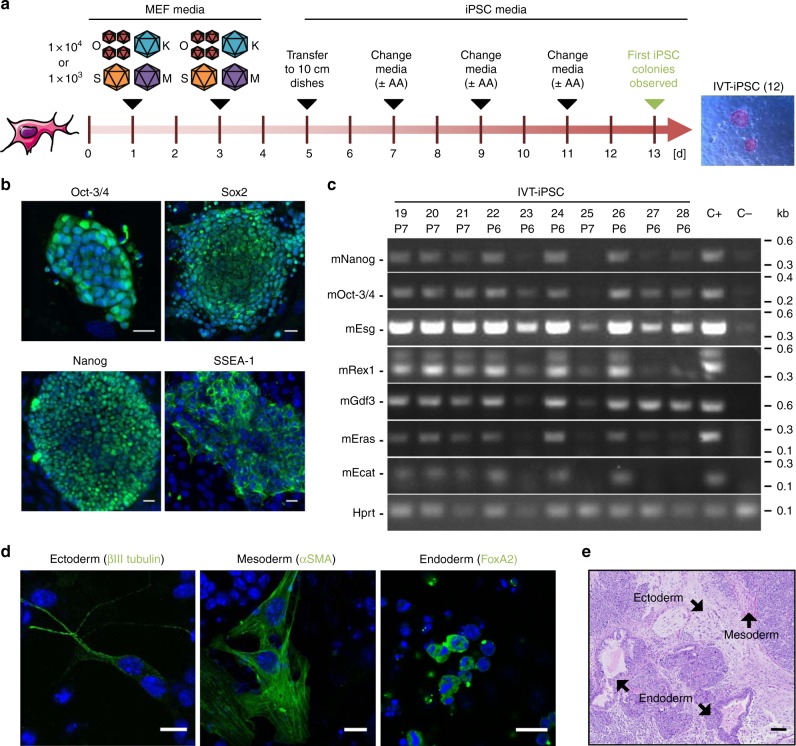
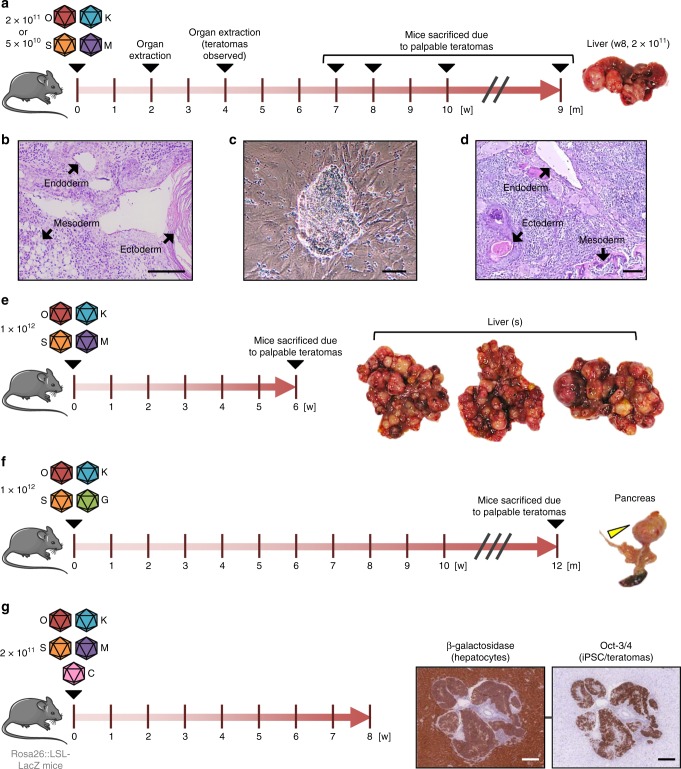
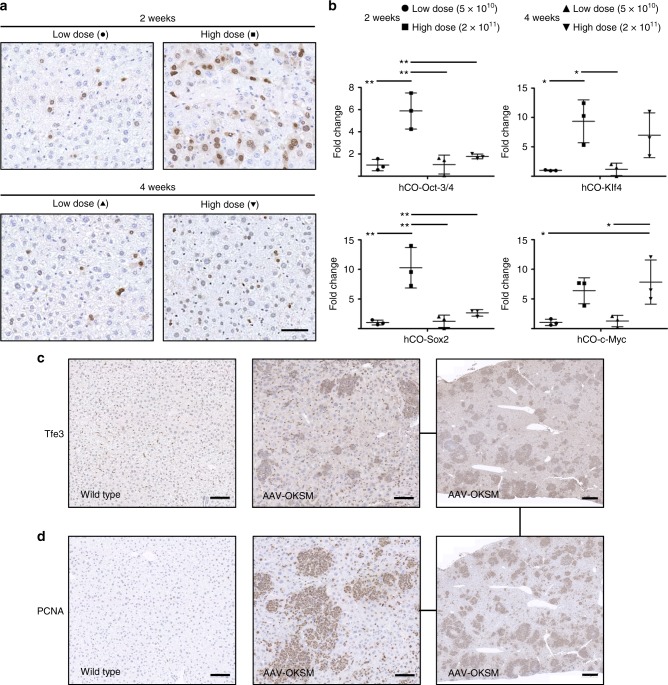
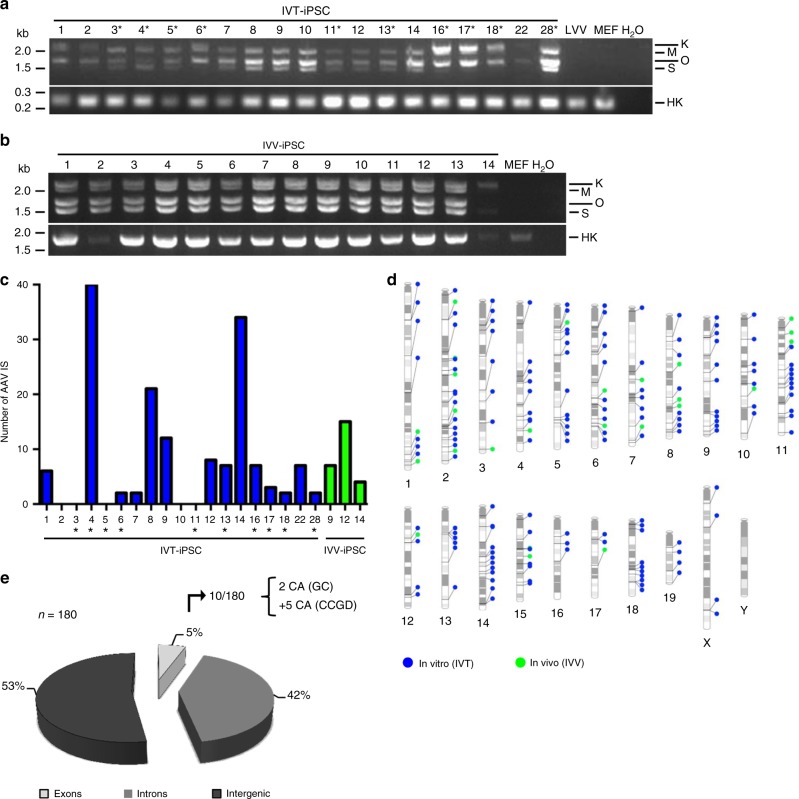
In vivo reprogramming of somatic cells into induced pluripotent stem cells (iPSC) holds vast potential for basic research and regenerative medicine. However, it remains hampered by a need for vectors to express reprogramming factors (Oct-3/4, Klf4, Sox2, c-Myc; OKSM) in selected organs. Here, we report OKSM delivery vectors based on pseudotyped Adeno-associated virus (AAV). Using the AAV-DJ capsid, we could robustly reprogram mouse embryonic fibroblasts with low vector doses. Swapping to AAV8 permitted to efficiently reprogram somatic cells in adult mice by intravenous vector delivery, evidenced by hepatic or extra-hepatic teratomas and iPSC in the blood. Notably, we accomplished full in vivo reprogramming without c-Myc. Most iPSC generated in vitro or in vivo showed transcriptionally silent, intronic or intergenic vector integration, likely reflecting the increased host genome accessibility during reprogramming. Our approach crucially advances in vivo reprogramming technology, and concurrently facilitates investigations into the mechanisms and consequences of AAV persistence.
Overview
The claims and statistics of this paper haven’t been checked yet.
Free: it reads the open-access text and checks the first 5 claims that cite a source we can check. Create a free account to check every claim.
Integrity signals
Registry
Cites
Statistics
Figures
Verification
Claims the paper makes
The claims and statistics of this paper haven’t been checked yet.
Free: it reads the open-access text and checks the first 5 claims that cite a source we can check. Create a free account to check every claim.
Claims other papers make about this one
Each is checked against this paper’s own text: does it say what the citing paper says it does?
The source backs part of the claim, not all of it — or backs it for a different population, condition or comparison.
In the citing paper
“Continuous expression of all four factors in normal mice, however, often induces teratomas17–19 or is fatal within days16, ostensibly due to tissue dysplasia18.”
From Reprogramming to recover youthful epigenetic information and restore vision (2020) · cites this paper as [19]
Experimental — accuracy not yet measuredThe cited source says what the claim attributes to it.
In the citing paper
“Investigators have hitherto shown transduction of specific organs with combinations of OSK or OSKM, but with each encapsulated in a separate vector (Senís et al., 2018)”
From Gene Therapy-Mediated Partial Reprogramming Extends Lifespan and Reverses Age-Related Changes in Aged Mice (2024) · cites this paper as Senís et al., 2018
Self-check
Percentages, sums and reported differences re-computed from the paper’s own numbers.
The self-check needs the paper’s full text.
Citations
Cites
Takahashi, K., & Yamanaka, S. (2006) · Cell · doi:10.1016/j.cell.2006.07.024 · Cited by 26,673
Induction of Pluripotent Stem Cells from Adult Human Fibroblasts by Defined Factors
Takahashi, K., Tanabe, K., Ohnuki, M., Narita, M., Ichisaka, T., Tomoda, K., & Yamanaka, S. (2007) · Cell · doi:10.1016/j.cell.2007.11.019 · Cited by 20,221
Generalized lacZ expression with the ROSA26 Cre reporter strain
Soriano, P. (1999) · Nature Genetics · doi:10.1038/5007 · Cited by 4,859
Production of high-titer helper-free retroviruses by transient transfection.
Pear, W. S., Nolan, G. P., Scott, M. L., & Baltimore, D. (1993) · Proceedings of the National Academy of Sciences · doi:10.1073/pnas.90.18.8392 · Cited by 2,266
Fatality in mice due to oversaturation of cellular microRNA/short hairpin RNA pathways
Grimm, D., Streetz, K. L., Jopling, C. L., Storm, T. A., Pandey, K., Davis, C. R., Marion, P., Salazar, F., & Kay, M. A. (2006) · Nature · doi:10.1038/nature04791 · Cited by 1,677
Self-citationCre-dependent selection yields AAV variants for widespread gene transfer to the adult brain
Deverman, B. E., Pravdo, P. L., Simpson, B. P., Kumar, S. R., Chan, K. Y., Banerjee, A., Wu, W.-L., Yang, B., Huber, N., Pasca, S. P., et al. (2016) · Nature Biotechnology · doi:10.1038/nbt.3440 · Cited by 1,061
In Vivo Amelioration of Age-Associated Hallmarks by Partial Reprogramming.
Ocampo, A., Reddy, P., Martinez-Redondo, P., Platero-Luengo, A., Hatanaka, F., Hishida, T., Li, M., Lam, D., Kurita, M., Beyret, E., et al. (2016) · Cell · doi:10.1016/j.cell.2016.11.052 · Cited by 988
McCarty, D., Monahan, P., & Samulski, R. (2001) · Gene Therapy · doi:10.1038/sj.gt.3301514 · Cited by 735
Grimm, D., Lee, J. S., Wang, L., Desai, T., Akache, B., Storm, T. A., & Kay, M. A. (2008) · Journal of Virology · doi:10.1128/jvi.00254-08 · Cited by 696
Self-citationVisualization of omics data for systems biology
Gehlenborg, N., O'Donoghue, S. I., Baliga, N. S., Goesmann, A., Hibbs, M. A., Kitano, H., Kohlbacher, O., Neuweger, H., Schneider, R., Tenenbaum, D., et al. (2010) · Nature Methods · doi:10.1038/nmeth.1436 · Cited by 620
Tissue damage and senescence provide critical signals for cellular reprogramming in vivo
Mosteiro, L., Pantoja, C., Alcazar, N., Marión, R. M., Chondronasiou, D., Rovira, M., Fernandez-Marcos, P. J., Muñoz-Martin, M., Blanco-Aparicio, C., Pastor, J., et al. (2016) · Science · doi:10.1126/science.aaf4445 · Cited by 589
Self-citationDirect reprogramming of mouse fibroblasts to neural progenitors
Kim, J., Efe, J. A., Zhu, S., Talantova, M., Yuan, X., Wang, S., Lipton, S. A., Zhang, K., & Ding, S. (2011) · Proceedings of the National Academy of Sciences · doi:10.1073/pnas.1103113108 · Cited by 572
Zhong, L., Li, B., Mah, C. S., Govindasamy, L., Agbandje-McKenna, M., Cooper, M., Herzog, R. W., Zolotukhin, I., Warrington, K. H., Weigel-Van Aken, K. A., et al. (2008) · Proceedings of the National Academy of Sciences · doi:10.1073/pnas.0802866105 · Cited by 558
Reprogramming in vivo produces teratomas and iPS cells with totipotency features
Abad, M., Mosteiro, L., Pantoja, C., Cañamero, M., Rayon, T., Ors, I., Graña, O., Megías, D., Domínguez, O., Martínez, D., et al. (2013) · Nature · doi:10.1038/nature12586 · Cited by 547
Self-citationMcCarty, D. M., Fu, H., Monahan, P. E., Toulson, C. E., Naik, P., & Samulski, R. J. (2003) · Gene Therapy · doi:10.1038/sj.gt.3302134 · Cited by 547
Self-complementary AAV vectors; advances and applications
McCarty, D. M. (2008) · Molecular Therapy · doi:10.1038/mt.2008.171 · Cited by 515
Methods for making induced pluripotent stem cells: reprogramming à la carte
González, F., Boué, S., & Belmonte, J. C. I. (2011) · Nature Reviews Genetics · doi:10.1038/nrg2937 · Cited by 508
Feeder-free derivation of induced pluripotent stem cells from adult human adipose stem cells
Sun, N., Panetta, N. J., Gupta, D. M., Wilson, K. D., Lee, A., Jia, F., Hu, S., Cherry, A. M., Robbins, R. C., Longaker, M. T., et al. (2009) · Proceedings of the National Academy of Sciences · doi:10.1073/pnas.0908450106 · Cited by 504
Recurrent AAV2-related insertional mutagenesis in human hepatocellular carcinomas
Nault, J.-C., Datta, S., Imbeaud, S., Franconi, A., Mallet, M., Couchy, G., Letouzé, E., Pilati, C., Verret, B., Blanc, J.-F., et al. (2015) · Nature Genetics · doi:10.1038/ng.3389 · Cited by 489
Ohnishi, K., Semi, K., Yamamoto, T., Shimizu, M., Tanaka, A., Mitsunaga, K., Okita, K., Osafune, K., Arioka, Y., Maeda, T., et al. (2014) · Cell · doi:10.1016/j.cell.2014.01.005 · Cited by 460
Direct conversion of fibroblasts into stably expandable neural stem cells
Thier, M., Wörsdörfer, P., Lakes, Y. B., Gorris, R., Herms, S., Opitz, T., Seiferling, D., Quandel, T., Hoffmann, P., Nöthen, M. M., et al. (2012) · Cell Stem Cell · doi:10.1016/j.stem.2012.03.003 · Cited by 447
Fate tracing of mature hepatocytes in mouse liver homeostasis and regeneration
Malato, Y., Naqvi, S., Schürmann, N., Ng, R., Wang, B., Zape, J., Kay, M. A., Grimm, D., & Willenbring, H. (2011) · Journal of Clinical Investigation · doi:10.1172/jci59261 · Cited by 434
Self-citationSmith, A. G., & Hooper, M. L. (1987) · Developmental Biology · doi:10.1016/0012-1606(87)90132-1 · Cited by 405
AAV serotype 2 vectors preferentially integrate into active genes in mice
Nakai, H., Montini, E., Fuess, S., Storm, T. A., Grompe, M., & Kay, M. A. (2003) · Nature Genetics · doi:10.1038/ng1179 · Cited by 392
Wang, Z., Ma, H.-I., Li, J., Sun, L., Zhang, J., & Xiao, X. (2003) · Gene Therapy · doi:10.1038/sj.gt.3302133 · Cited by 367
Grimm, D., & Kay, M. (2003) · Current Gene Therapy · doi:10.2174/1566523034578285 · Cited by 350
Self-citationBetschinger, J., Nichols, J., Dietmann, S., Corrin, P. D., Paddison, P. J., & Smith, A. (2013) · Cell · doi:10.1016/j.cell.2013.03.012 · Cited by 342
Unrestricted Hepatocyte Transduction with Adeno-Associated Virus Serotype 8 Vectors in Mice
Nakai, H., Fuess, S., Storm, T. A., Muramatsu, S.-I., Nara, Y., & Kay, M. A. (2005) · Journal of Virology · doi:10.1128/jvi.79.1.214-224.2005 · Cited by 327
A synthetic AAV vector enables safe and efficient gene transfer to the mammalian inner ear
Landegger, L. D., Pan, B., Askew, C., Wassmer, S. J., Gluck, S. D., Galvin, A., Taylor, R., Forge, A., Stankovic, K. M., Holt, J. R., et al. (2017) · Nature Biotechnology · doi:10.1038/nbt.3781 · Cited by 325
Injury-Induced Senescence Enables In Vivo Reprogramming in Skeletal Muscle
Chiche, A., Le Roux, I., von Joest, M., Sakai, H., Aguín, S. B., Cazin, C., Salam, R., Fiette, L., Alegria, O., Flamant, P., et al. (2017) · Cell Stem Cell · doi:10.1016/j.stem.2016.11.020 · Cited by 295
CRISPR/Cas9‐mediated genome engineering: An adeno‐associated viral (AAV) vector toolbox
Senís, E., Fatouros, C., Große, S., Wiedtke, E., Niopek, D., Mueller, A., Börner, K., & Grimm, D. (2014) · Biotechnology Journal · doi:10.1002/biot.201400046 · Cited by 260
Self-citationWarlich, E., Kuehle, J., Cantz, T., Brugman, M. H., Maetzig, T., Galla, M., Filipczyk, A. A., Halle, S., Klump, H., Schöler, H. R., et al. (2011) · Molecular Therapy · doi:10.1038/mt.2010.314 · Cited by 259
Margariti, A., Winkler, B., Karamariti, E., Zampetaki, A., Tsai, T.-N., Baban, D., Ragoussis, J., Huang, Y., Han, J.-D. J., Zeng, L., et al. (2012) · Proceedings of the National Academy of Sciences · doi:10.1073/pnas.1205526109 · Cited by 258
Assessing the potential for AAV vector genotoxicity in a murine model
Li, H., Malani, N., Hamilton, S. R., Schlachterman, A., Bussadori, G., Edmonson, S. E., Shah, R., Arruda, V. R., Mingozzi, F., Fraser Wright, J., et al. (2011) · Blood · doi:10.1182/blood-2010-08-302729 · Cited by 236
Zhong, L., Li, B., Jayandharan, G., Mah, C. S., Govindasamy, L., Agbandje-McKenna, M., Herzog, R. W., Weigel-Van Aken, K. A., Hobbs, J. A., Zolotukhin, S., et al. (2008) · Virology · doi:10.1016/j.virol.2008.08.027 · Cited by 232
A myocardium tropic adeno-associated virus (AAV) evolved by DNA shuffling and in vivo selection
Yang, L., Jiang, J., Drouin, L. M., Agbandje-Mckenna, M., Chen, C., Qiao, C., Pu, D., Hu, X., Wang, D.-Z., Li, J., et al. (2009) · Proceedings of the National Academy of Sciences · doi:10.1073/pnas.0813207106 · Cited by 210
A reprogrammable mouse strain from gene-targeted embryonic stem cells
Stadtfeld, M., Maherali, N., Borkent, M., & Hochedlinger, K. (2010) · Nature Methods · doi:10.1038/nmeth.1409 · Cited by 208
Single-gene transgenic mouse strains for reprogramming adult somatic cells
Carey, B. W., Markoulaki, S., Beard, C., Hanna, J., & Jaenisch, R. (2010) · Nature Methods · doi:10.1038/nmeth.1410 · Cited by 205
Grimm, D., Wang, L., Lee, J. S., Schürmann, N., Gu, S., Börner, K., Storm, T. A., & Kay, M. A. (2010) · Journal of Clinical Investigation · doi:10.1172/jci43565 · Cited by 196
Self-citationCronin, T., Vandenberghe, L. H., Hantz, P., Juttner, J., Reimann, A., Kacsó, Á., Huckfeldt, R. M., Busskamp, V., Kohler, H., Lagali, P. S., et al. (2014) · EMBO Molecular Medicine · doi:10.15252/emmm.201404077 · Cited by 184
Comprehensive genomic access to vector integration in clinical gene therapy
Gabriel, R., Eckenberg, R., Paruzynski, A., Bartholomae, C. C., Nowrouzi, A., Arens, A., Howe, S. J., Recchia, A., Cattoglio, C., Wang, W., et al. (2009) · Nature Medicine · doi:10.1038/nm.2057 · Cited by 182
Self-citationGil-Farina, I., Fronza, R., Kaeppel, C., Lopez-Franco, E., Ferreira, V., D'Avola, D., Benito, A., Prieto, J., Petry, H., Gonzalez-Aseguinolaza, G., et al. (2016) · Molecular Therapy · doi:10.1038/mt.2016.52 · Cited by 179
Self-citationA largely random AAV integration profile after LPLD gene therapy
Kaeppel, C., Beattie, S. G., Fronza, R., van Logtenstein, R., Salmon, F., Schmidt, S., Wolf, S., Nowrouzi, A., Glimm, H., von Kalle, C., et al. (2013) · Nature Medicine · doi:10.1038/nm.3230 · Cited by 176
Self-citationXie, J., Xie, Q., Zhang, H., Ameres, S. L., Hung, J.-H., Su, Q., He, R., Mu, X., Seher Ahmed, S., Park, S., et al. (2011) · Molecular Therapy · doi:10.1038/mt.2010.279 · Cited by 166
Conversion of human fibroblasts to angioblast-like progenitor cells
Kurian, L., Sancho-Martinez, I., Nivet, E., Aguirre, A., Moon, K., Pendaries, C., Volle-Challier, C., Bono, F., Herbert, J.-M., Pulecio, J., et al. (2013) · Nature Methods · doi:10.1038/nmeth.2255 · Cited by 145
Molecular Obstacles to Clinical Translation of iPSCs
Tapia, N., & Schöler, H. R. (2016) · Cell Stem Cell · doi:10.1016/j.stem.2016.06.017 · Cited by 141
Logan, G. J., Dane, A. P., Hallwirth, C. V., Smyth, C. M., Wilkie, E. E., Amaya, A. K., Zhu, E., Khandekar, N., Ginn, S. L., Liao, S. H. Y., et al. (2017) · Nature Genetics · doi:10.1038/ng.3893 · Cited by 115
Nowrouzi, A., Penaud-Budloo, M., Kaeppel, C., Appelt, U., Le Guiner, C., Moullier, P., Kalle, C. V., Snyder, R. O., & Schmidt, M. (2012) · Molecular Therapy · doi:10.1038/mt.2012.47 · Cited by 111
Self-citationLineage conversion induced by pluripotency factors involves transient passage through an iPSC stage
Bar-Nur, O., Verheul, C., Sommer, A. G., Brumbaugh, J., Schwarz, B. A., Lipchina, I., Huebner, A. J., Mostoslavsky, G., & Hochedlinger, K. (2015) · Nature Biotechnology · doi:10.1038/nbt.3247 · Cited by 110
Grimm, D., & Zolotukhin, S. (2015) · Molecular Therapy · doi:10.1038/mt.2015.173 · Cited by 106
Self-citationTransgenic mice with defined combinations of drug-inducible reprogramming factors
Markoulaki, S., Hanna, J., Beard, C., Carey, B. W., Cheng, A. W., Lengner, C. J., Dausman, J. A., Fu, D., Gao, Q., Wu, S., et al. (2009) · Nature Biotechnology · doi:10.1038/nbt.1520 · Cited by 101
Karamariti, E., Margariti, A., Winkler, B., Wang, X., Hong, X., Baban, D., Ragoussis, J., Huang, Y., Han, J.-D. J., Wong, M. M., et al. (2013) · Circulation Research · doi:10.1161/circresaha.111.300415 · Cited by 91
Adeno-Associated Virus Type 2 and Hepatocellular Carcinoma?
Berns, K. I., Byrne, B. J., Flotte, T. R., Gao, G., Hauswirth, W. W., Herzog, R. W., Muzyczka, N., VandenDriessche, T., Xiao, X., Zolotukhin, S., et al. (2015) · Human Gene Therapy · doi:10.1089/hum.2015.29014.kib · Cited by 76
Gao, X., Wang, X., Xiong, W., & Chen, J. (2016) · Scientific Reports · doi:10.1038/srep22490 · Cited by 73
Adeno-associated Vector Toxicity—To Be or Not to Be?
Büning, H., & Schmidt, M. (2015) · Molecular Therapy · doi:10.1038/mt.2015.182 · Cited by 71
Self-citationBörner, K., Niopek, D., Cotugno, G., Kaldenbach, M., Pankert, T., Willemsen, J., Zhang, X., Schürmann, N., Mockenhaupt, S., Serva, A., et al. (2013) · Nucleic Acids Research · doi:10.1093/nar/gkt836 · Cited by 61
Self-citationStrobel, B., Klauser, B., Hartig, J. S., Lamla, T., Gantner, F., & Kreuz, S. (2015) · Molecular Therapy · doi:10.1038/mt.2015.123 · Cited by 57
Li, C., Wu, S., Albright, B., Hirsch, M., Li, W., Tseng, Y.-S., Agbandje-McKenna, M., McPhee, S., Asokan, A., & Samulski, R. J. (2016) · Molecular Therapy · doi:10.1038/mt.2015.134 · Cited by 48
In Vivo Cell Reprogramming towards Pluripotency by Virus-Free Overexpression of Defined Factors
Yilmazer, A., de Lázaro, I., Bussy, C., & Kostarelos, K. (2013) · PLoS ONE · doi:10.1371/journal.pone.0054754 · Cited by 45
Looking to the future following 10 years of induced pluripotent stem cell technologies
Li, M., & Belmonte, J. C. I. (2016) · Nature Protocols · doi:10.1038/nprot.2016.108 · Cited by 45
de Lázaro, I., Yilmazer, A., Nam, Y., Qubisi, S., Razak, F. M. A., Degens, H., Cossu, G., & Kostarelos, K. (2019) · Molecular Therapy · doi:10.1016/j.ymthe.2018.10.014 · Cited by 44
Chtarto, A., Humbert-Claude, M., Bockstael, O., Das, A. T., Boutry, S., Breger, L. S., Klaver, B., Melas, C., Barroso-Chinea, P., Gonzalez-Hernandez, T., et al. (2016) · Molecular Therapy - Methods & Clinical Development · doi:10.1038/mtm.2016.27 · Cited by 43
Haenebalcke, L., Goossens, S., Dierickx, P., Bartunkova, S., D’Hont, J., Haigh, K., Hochepied, T., Wirth, D., Nagy, A., & Haigh, J. J. (2013) · Cell Reports · doi:10.1016/j.celrep.2013.01.016 · Cited by 41
Alleviation of off-target effects from vector-encoded shRNAs via codelivered RNA decoys
Mockenhaupt, S., Grosse, S., Rupp, D., Bartenschlager, R., & Grimm, D. (2015) · Proceedings of the National Academy of Sciences · doi:10.1073/pnas.1510476112 · Cited by 39
Self-citationDirected Dedifferentiation Using Partial Reprogramming Induces Invasive Phenotype in Melanoma Cells
Knappe, N., Novak, D., Weina, K., Bernhardt, M., Reith, M., Larribère, L., Hölzel, M., Tüting, T., Gebhardt, C., Umansky, V., et al. (2016) · Stem Cells · doi:10.1002/stem.2284 · Cited by 39
Common Telomere Changes during In Vivo Reprogramming and Early Stages of Tumorigenesis
Marión, R. M., López de Silanes, I., Mosteiro, L., Gamache, B., Abad, M., Guerra, C., Megías, D., Serrano, M., & Blasco, M. A. (2017) · Stem Cell Reports · doi:10.1016/j.stemcr.2017.01.001 · Cited by 39
Self-citationComparative Analysis of Non-viral Transfection Methods in Mouse Embryonic Fibroblast Cells
Lee, M., Chea, K., Pyda, R., Chua, M. M. J., & Dominguez, I. M. (2017) · Journal of Biomolecular Techniques JBT · doi:10.7171/jbt.17-2802-003 · Cited by 37
Afzal, S., Wilkening, S., von Kalle, C., Schmidt, M., & Fronza, R. (2017) · Molecular Therapy - Nucleic Acids · doi:10.1016/j.omtn.2016.12.001 · Cited by 35
Self-citationIn vivo reprogramming for tissue regeneration and organismal rejuvenation
Taguchi, J., & Yamada, Y. (2017) · Current Opinion in Genetics & Development · doi:10.1016/j.gde.2017.07.008 · Cited by 35
Chen, S.-J., Johnston, J., Sandhu, A., Bish, L. T., Hovhannisyan, R., Jno-Charles, O., Sweeney, H. L., & Wilson, J. M. (2013) · Human Gene Therapy Methods · doi:10.1089/hgtb.2012.129 · Cited by 32
Weltner, J., Anisimov, A., Alitalo, K. K., Otonkoski, T., & Trokovic, R. (2012) · Journal of Virology · doi:10.1128/jvi.06302-11 · Cited by 30
Li, M., & Belmonte, J. C. I. (2016) · Circulation Research · doi:10.1161/circresaha.115.306820 · Cited by 30
de Lázaro, I., Cossu, G., & Kostarelos, K. (2017) · EMBO Molecular Medicine · doi:10.15252/emmm.201707650 · Cited by 29
In Situ Pluripotency Factor Expression Promotes Functional Recovery From Cerebral Ischemia
Seo, J. H., Lee, M.-Y., Yu, J. H., Kim, M., Song, M., Seo, C. H., Kim, S., & Cho, S. (2016) · Molecular Therapy · doi:10.1038/mt.2016.124 · Cited by 28
Unveiling the Role of Senescence-Induced Cellular Plasticity
Taguchi, J., & Yamada, Y. (2017) · Cell stem cell · doi:10.1016/j.stem.2017.02.001 · Cited by 20
Tamanini, S., Comi, G. P., & Corti, S. P. (2018) · Molecular Neurobiology · doi:10.1007/s12035-018-0888-0 · Cited by 18
Chen, M., Lu, Y., Hamazaki, T., Tsai, H.-Y., Erger, K. E., Conlon, T. J., Elshikha, A. S., Li, H., Srivastava, A., Yao, C., et al. (2013) · Human Gene Therapy Methods · doi:10.1089/hgtb.2013.011 · Cited by 15
de Lázaro, I., Bussy, C., Yılmazer, A., Jackson, M. S., Humphreys, N. E., & Kostarelos, K. (2014) · Biomaterials · doi:10.1016/j.biomaterials.2014.05.086 · Cited by 13
Bursts of Reprogramming: A Path to Extend Lifespan?
Mahmoudi, S., & Brunet, A. (2016) · Cell · doi:10.1016/j.cell.2016.11.050 · Cited by 10
de Lázaro, I., Yılmazer, A., Nam, Y., et al. (2017) · bioRxiv (Cold Spring Harbor Laboratory) · doi:10.1101/101188 · Cited by 7
Effect of in vivo administration of reprogramming factors in the mouse liver
Tomokuni, A., Eguchi, H., Hoshino, H., Dewi, D. L., Nishikawa, S., Kano, Y., Miyoshi, N., Tojo, A., Kobayashi, S., Gotoh, N., et al. (2013) · Oncology Letters · doi:10.3892/ol.2013.1418 · Cited by 3
Cited by
Reprogramming to recover youthful epigenetic information and restore vision
Lu, Y., Brommer, B., Tian, X., Krishnan, A., Meer, M., Wang, C., Vera, D. L., Zeng, Q., Yu, D., Bonkowski, M. S., et al. (2020) · Nature · doi:10.1038/s41586-020-2975-4 · Cited by 820
Sabatino, D. E., Bushman, F. D., Chandler, R. J., Crystal, R. G., Davidson, B. L., Dolmetsch, R., Eggan, K. C., Gao, G., Gil-Farina, I., Kay, M. A., et al. (2022) · Molecular Therapy · doi:10.1016/j.ymthe.2022.06.004 · Cited by 212
Next-generation AAV vectors—Do not judge a virus (only) by its cover
Domenger, C., & Grimm, D. (2019) · Human Molecular Genetics · doi:10.1093/hmg/ddz148 · Cited by 147
Self-citationProduction, Processing, and Characterization of Synthetic AAV Gene Therapy Vectors
El Andari, J., & Grimm, D. (2021) · Biotechnology Journal · doi:10.1002/biot.202000025 · Cited by 96
Self-citationMacip, C. C., Hasan, R., Hoznek, V., Kim, J., Metzger, L. E., Sethna, S., & Davidsohn, N. (2023) · doi:10.1101/2023.01.04.522507 · Cited by 95
Metadata
- Authors
- Senís, E., Mosteiro, L., Wilkening, S., Wiedtke, E., Nowrouzi, A., Afzal, S., Fronza, R., Landerer, H., Abad, M., Niopek, D., Schmidt, M., Serrano, M., & Grimm, D.
- Affiliations
- Heidelberg University (DE)
- Spanish National Cancer Research Centre (ES)
- German Cancer Research Center (DE)
- Institució Catalana de Recerca i Estudis Avançats (ES)
- Corresponding author
- Serrano, Manuel
- Grimm, Dirk
- ORCID
- Venue
- Nature Communications
- Published
- 2018-07-09
- Volume
- 9
- Issue
- 1
- Pages
- 2651-2651
- ISSN
- 2041-1723 (ISSN-L)
- PMC
- PMC6037684
- OpenAlex
- W2809896540
- Cited by
- 64
- References
- 81
- Citations by year
- 2026: 6 · 2025: 8 · 2024: 8 · 2023: 8 · 2022: 12 · 2021: 9 · 2020: 8 · 2019: 3 · 2018: 1
- FWCI
- 1.87
- Type
- journal article
- Language
- en
- Open access
- gold
- doi.org
- Licence
- cc-by
- creativecommons.org/licenses/by/4.0 (tdm)
- creativecommons.org/licenses/by/4.0 (vor)
- Locations
- Nature Communications (publishedVersion, cc-by)
- Europe PMC (PubMed Central) (publishedVersion, cc-by)
- PubMed Central (publishedVersion, cc-by)
- PubMed (publishedVersion)
- RePEc: Research Papers in Economics (submittedVersion)
- LA Referencia (Red Federada de Repositorios Institucionales de Publicaciones Científicas) (submittedVersion, cc-by-nc-sa)
- DOAJ (DOAJ: Directory of Open Access Journals) (submittedVersion)
- DOAJ (DOAJ: Directory of Open Access Journals) (submittedVersion, cc-by-sa)
- Funders
- Deutsche Forschungsgemeinschaft (SFB1129-TP2, TRR179-TP18, EXC81)
- Topics
- Life Sciences › Biochemistry, Genetics and Molecular Biology › Molecular Biology › Pluripotent Stem Cells Research
- Life Sciences › Biochemistry, Genetics and Molecular Biology › Genetics › Virus-based gene therapy research
- Life Sciences › Biochemistry, Genetics and Molecular Biology › Molecular Biology › RNA Interference and Gene Delivery
- Keywords
- in vivo reprogramming, induced pluripotent stem cells, adeno-associated virus vectors, AAV8, mouse embryonic fibroblasts, teratoma, vector integration, genome accessibility
- MeSH terms
- Kruppel-Like Factor 4, Dependovirus, Animals, Cell Line, Cells, Cultured, Embryo, Mammalian, Fibroblasts, Genetic Vectors, Humans, Mice, Inbred C57BL, Mice, Nude, Transcription Factors, Transduction, Genetic, Gene Expression, Sequence Analysis, DNA, Induced Pluripotent Stem Cells, HEK293 Cells, Cellular Reprogramming
About these checks
Registry, retraction, Cites and statistics results are computed, not judged, with one exception: a printed reference that no index lists is read once by a model before it counts as a citation error. Claims are extracted by a model and kept only when their quote appears verbatim in the text; each cited source is then checked, with a model’s help, for whether it says what the claim relies on. Those verdicts can be wrong — read the claim’s quote and the cited source before relying on one.
Statistics and arithmetic are recomputed, not judged.
Confidence bands are shown only for fields calibrated on our annotated test set. None is calibrated yet, so no band is shown.
What counts as a claim ›How we measure confidence ›How we check this ›
Are you an author, or do you see a problem with this page? Request a review
Data sources
Bibliographic data: Semantic Scholar, OpenAlex, Crossref.
Contains information from the Semantic Scholar Academic Graph Datasets, made available under the ODC Attribution License (ODC-BY 1.0).
Semantic Scholar’s data is described in: Kinney, R., et al. (2023). The Semantic Scholar Open Data Platform. arXiv:2301.10140.
