

The DOI matches its Crossref record; 90 of the 90 references it cites were found in a registry or an index.
Network-based approach to prediction and population-based validation of in silico drug repurposing
Open accessAbstract
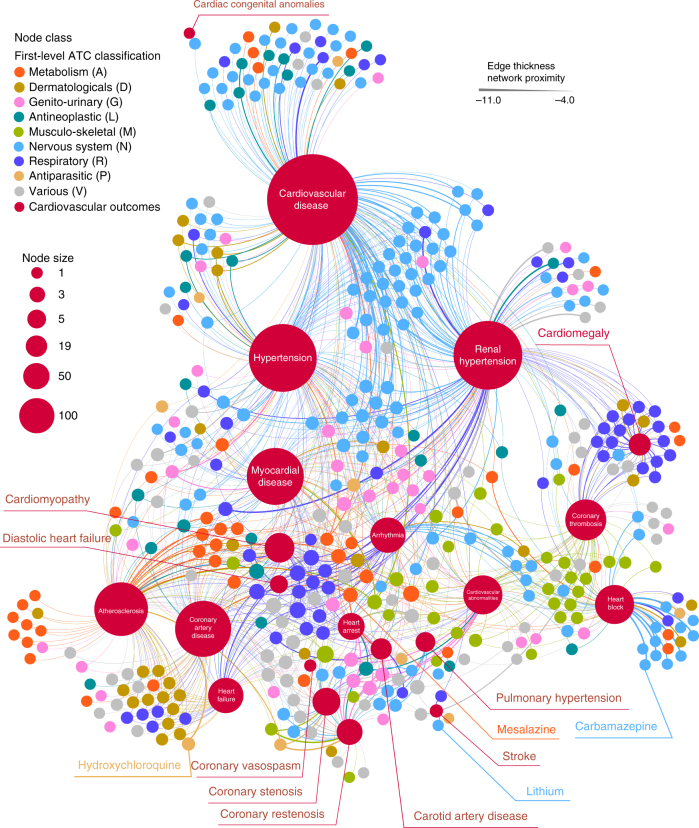
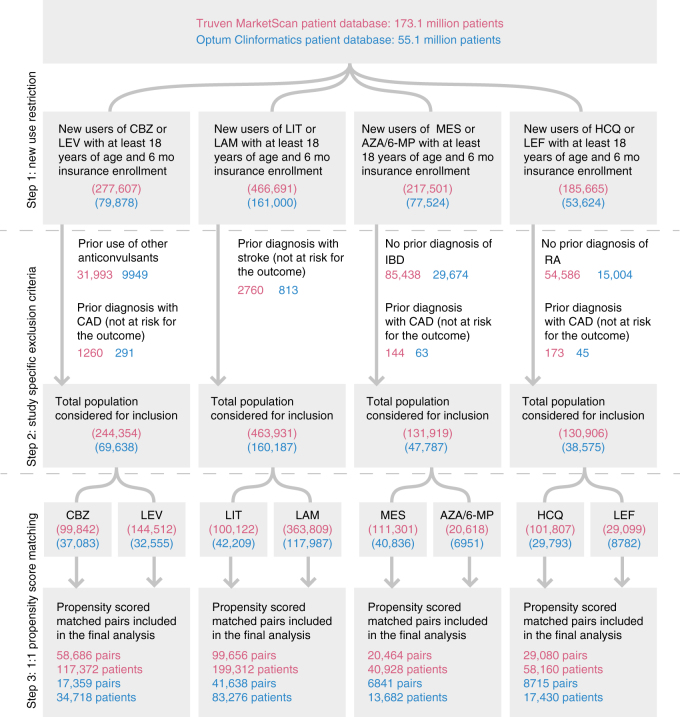
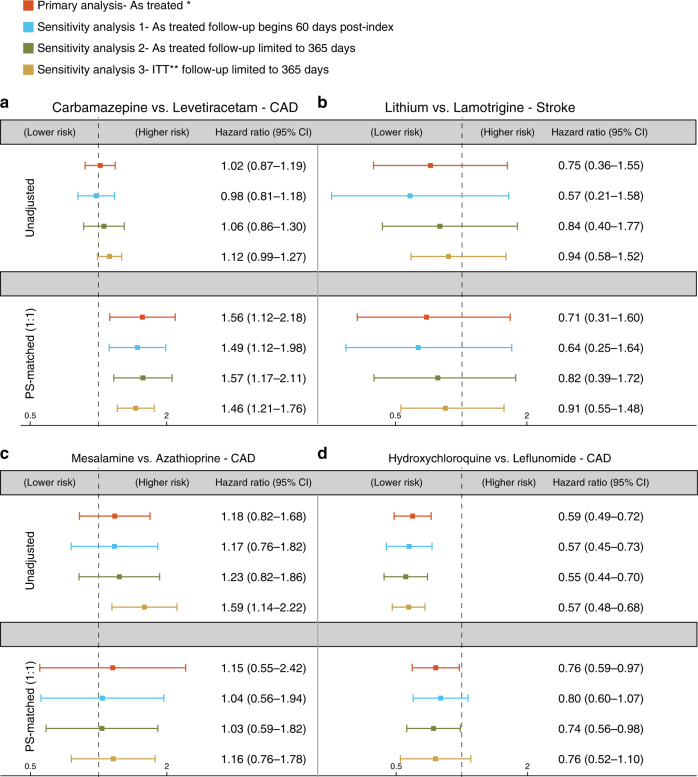
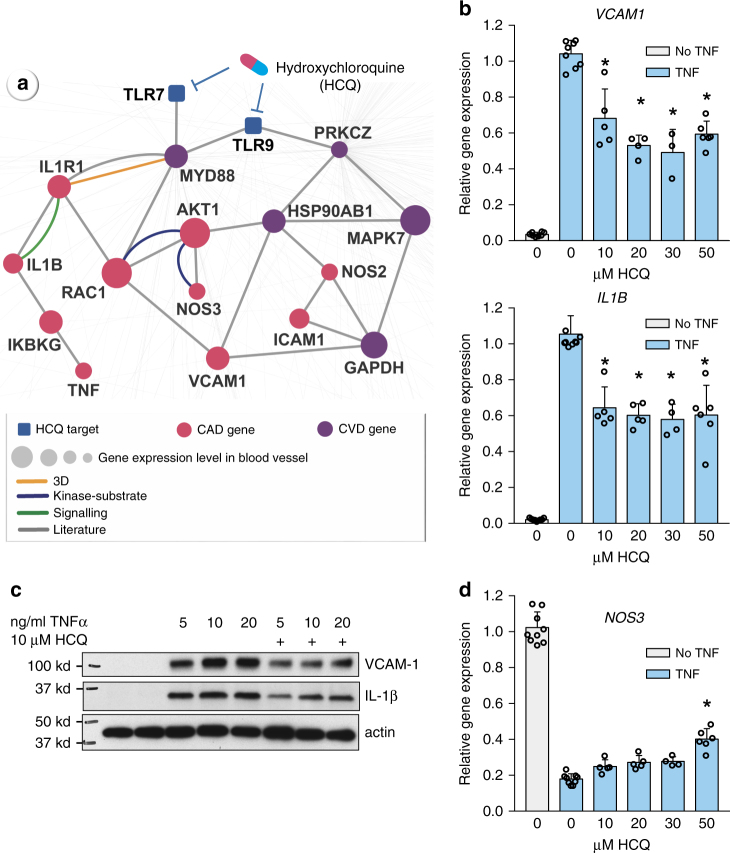
Here we identify hundreds of new drug-disease associations for over 900 FDA-approved drugs by quantifying the network proximity of disease genes and drug targets in the human (protein–protein) interactome. We select four network-predicted associations to test their causal relationship using large healthcare databases with over 220 million patients and state-of-the-art pharmacoepidemiologic analyses. Using propensity score matching, two of four network-based predictions are validated in patient-level data: carbamazepine is associated with an increased risk of coronary artery disease (CAD) [hazard ratio (HR) 1.56, 95% confidence interval (CI) 1.12–2.18], and hydroxychloroquine is associated with a decreased risk of CAD (HR 0.76, 95% CI 0.59–0.97). In vitro experiments show that hydroxychloroquine attenuates pro-inflammatory cytokine-mediated activation in human aortic endothelial cells, supporting mechanistically its potential beneficial effect in CAD. In summary, we demonstrate that a unique integration of protein-protein interaction network proximity and large-scale patient-level longitudinal data complemented by mechanistic in vitro studies can facilitate drug repurposing.
Overview
The claims and statistics of this paper haven’t been checked yet.
Run the check — free, no account needed. It reads the open-access text and checks the sources it cites.
Integrity signals
Registry
Cites
Statistics
Figures
Verification
Claims the paper makes
The claims and statistics of this paper haven’t been checked yet.
Run the check — free, no account needed. It reads the open-access text and checks the sources it cites.
Claims other papers make about this one
Each is checked against this paper’s own text: does it say what the citing paper says it does?
In the citing paper
“Because gene expression data can be noisy and variational, recent advances include fusing the co-expression matrices with existing biomedical networks, such as GO annotations and PPI, and feeding the resulting graph into graph convolution layers (Section 2.2) [150, 151, 152].”
From Graph representation learning in biomedicine and healthcare (2022) · cites this paper as [152]
In the citing paper
“Doing so has enabled more interpretable disease classification models (e.g., weighting gene interactions based on existing biological knowledge).”
From Graph representation learning in biomedicine and healthcare (2022) · cites this paper as [152]
Self-check
Percentages, sums and reported differences re-computed from the paper’s own numbers.
The self-check needs the paper’s full text.
Citations
Cites
Meta-analysis in clinical trials
DerSimonian, R., & Laird, N. (1986) · Controlled Clinical Trials · doi:10.1016/0197-2456(86)90046-2 · Cited by 39,552
The central role of the propensity score in observational studies for causal effects
ROSENBAUM, P. R., & RUBIN, D. B. (1983) · Biometrika · doi:10.1093/biomet/70.1.41 · Cited by 31,241
Database resources of the National Center for Biotechnology Information: update
Wheeler, D. L. (2003) · Nucleic Acids Research · doi:10.1093/nar/gkh073 · Cited by 10,695
Inflammation, Atherosclerosis, and Coronary Artery Disease
Hansson, G. K. (2005) · New England Journal of Medicine · doi:10.1056/nejmra043430 · Cited by 8,773
UniProt: the Universal Protein knowledgebase
Apweiler, R. (2003) · Nucleic Acids Research · doi:10.1093/nar/gkh131 · Cited by 7,593
ChEMBL: a large-scale bioactivity database for drug discovery
Gaulton, A., Bellis, L. J., Bento, A. P., Chambers, J., Davies, M., Hersey, A., Light, Y., McGlinchey, S., Michalovich, D., Al-Lazikani, B., et al. (2012) · Nucleic Acids Research · doi:10.1093/nar/gkr777 · Cited by 4,382
The unified medical language system (UMLS): integrating biomedical terminology
Bodenreider, O. (2004) · Nucleic Acids Research · doi:10.1093/nar/gkh061 · Cited by 4,356
ClinVar: public archive of relationships among sequence variation and human phenotype
Landrum, M. J., Lee, J. M., Riley, G. R., Jang, W., Rubinstein, W. S., Church, D. M., & Maglott, D. R. (2014) · Nucleic Acids Research · doi:10.1093/nar/gkt1113 · Cited by 3,516
PhosphoSitePlus, 2014: mutations, PTMs and recalibrations
Hornbeck, P. V., Zhang, B., Murray, B., Kornhauser, J. M., Latham, V., & Skrzypek, E. (2015) · Nucleic Acids Research · doi:10.1093/nar/gku1267 · Cited by 3,411
Goh, K.-I., Cusick, M. E., Valle, D., Childs, B., Vidal, M., & Barabási, A.-L. (2007) · Proceedings of the National Academy of Sciences · doi:10.1073/pnas.0701361104 · Cited by 3,242
Towards a proteome-scale map of the human protein–protein interaction network
Rual, J.-F. M., Venkatesan, K., Hao, T., Hirozane-Kishikawa, T., Dricot, A., Li, N., Berriz, G. F., Gibbons, F. D., Dreze, M., Ayivi-Guedehoussou, N., et al. (2005) · Nature · doi:10.1038/nature04209 · Cited by 2,904 · cited 1×
“systematic human protein-protein interactome: (1) binary PPIs tested by high-throughput yeasttwo-hybrid (Y2H) systems in which we combined binary PPIs tested from two public available high-quality Y2H datasets (75, 76) and one dataset available from our website: http://ccsb.”
MethodThe NHGRI GWAS Catalog, a curated resource of SNP-trait associations
Welter, D., MacArthur, J., Morales, J., Burdett, T., Hall, P., Junkins, H., Klemm, A., Flicek, P., Manolio, T., Hindorff, L., et al. (2014) · Nucleic Acids Research · doi:10.1093/nar/gkt1229 · Cited by 2,707
Amberger, J. S., Bocchini, C. A., Schiettecatte, F., Scott, A. F., & Hamosh, A. (2015) · Nucleic Acids Research · doi:10.1093/nar/gku1205 · Cited by 2,691 · cited 3×
“For each CV event, we collected disease-associated genes from 8 commonly used data sources: The OMIM database (Online Mendelian Inheritance in Man) (66), The Comparative Toxicogenomics Database (67), HuGE Navigator (68), DisGeNET (69), ClinVar (70), GWAS Catalog (71), GWASdb (72), and PheWAS Catalog (phewas.”
MethodReal-World Evidence — What Is It and What Can It Tell Us?
Sherman, R. E., Anderson, S. A., Pan, G. J. D., Gray, G. W., Gross, T. P., Hunter, N. L., LaVange, L. M., Marinac‐Dabic, D., Marks, P. W., Robb, M. A., et al. (2016) · New England Journal of Medicine · doi:10.1056/nejmsb1609216 · Cited by 2,192
BindingDB: a web-accessible database of experimentally determined protein-ligand binding affinities
Liu, T., Lin, Y., Wen, X., Jorissen, R. N., & Gilson, M. K. (2006) · Nucleic Acids Research · doi:10.1093/nar/gkl999 · Cited by 2,185
DrugBank 4.0: shedding new light on drug metabolism
Law, V., Knox, C., Djoumbou-Feunang, Y., Jewison, T., Guo, A. C., Liu, Y., Maciejewski, A., Arndt, D., Wilson, M., Neveu, V., et al. (2013) · Nucleic Acids Research · doi:10.1093/nar/gkt1068 · Cited by 1,995
The MIntAct project—IntAct as a common curation platform for 11 molecular interaction databases
Orchard, S. E., Ammari, M. G., Aranda, B., Breuza, L., Briganti, L., Broackes-Carter, F. C., Campbell, N. H., Chavali, G. B., Chen, C. C. L., del‐Toro, N., et al. (2013) · Nucleic Acids Research · doi:10.1093/nar/gkt1115 · Cited by 1,845
Yıldırım, M. A., Goh, K.-I., Cusick, M. E., Barabási, A.-Ĺ., & Vidal, M. (2007) · Nature Biotechnology · doi:10.1038/nbt1338 · Cited by 1,744
Evaluating medication effects outside of clinical trials: new-user designs
Ray, W. A. (2003) · American Journal of Epidemiology · doi:10.1093/aje/kwg231 · Cited by 1,646
Uncovering disease-disease relationships through the incomplete interactome
Menche, J., Sharma, A., Kitsak, M., Ghiassian, S. D., Vidal, M., Loscalzo, J., & Barabási, A.-L. (2015) · Science · doi:10.1126/science.1257601 · Cited by 1,546 · cited 3×
“relationship between drugs and diseases (11-13), can serve as a useful tool for efficient screening of potentially new indications for marketed drugs or previously unidentified adverse events (1416).”
BackgroundSelf-citationDatabase resources of the National Center for Biotechnology Information
Coordinators, N. R. (2015) · Nucleic Acids Research · doi:10.1093/nar/gkv1290 · Cited by 1,506
A Proteome-Scale Map of the Human Interactome Network
Rolland, T., Taşan, M., Charloteaux, B., Pevzner, S. J., Zhong, Q., Sahni, N., Yi, S. S., Lemmens, I. H., Fontanillo, C., Mosca, R., et al. (2014) · Cell · doi:10.1016/j.cell.2014.10.050 · Cited by 1,381 · cited 1×
“systematic human protein-protein interactome: (1) binary PPIs tested by high-throughput yeasttwo-hybrid (Y2H) systems in which we combined binary PPIs tested from two public available high-quality Y2H datasets (75, 76) and one dataset available from our website: http://ccsb.”
MethodHwang, S., Ballantyne, C. M., Sharrett, A. R., Smith, L. C., DAVIS, C. E., Gotto, A. M., & Boerwinkle, E. (1997) · Circulation · doi:10.1161/01.cir.96.12.4219 · Cited by 1,340 · cited 6×
“TNF-α (5 ng/ml) caused a robust increase in the expression of VCAM1 and IL1B, and this pro-inflammatory effect was significantly attenuated by all of the doses of hydroxychloroquine tested (Fig.”
BackgroundInfluentialA review of uses of health care utilization databases for epidemiologic research on therapeutics
Schneeweiß, S., & Avorn, J. (2005) · Journal of Clinical Epidemiology · doi:10.1016/j.jclinepi.2004.10.012 · Cited by 1,290
InnateDB: systems biology of innate immunity and beyond—recent updates and continuing curation
Breuer, K., Foroushani, A. B. K., Laird, M. R., Chen, C. C. L., Sribnaia, A., Lo, R., Winsor, G. L., Hancock, R. E. W., Brinkman, F. S. L., & Lynn, D. J. (2012) · Nucleic Acids Research · doi:10.1093/nar/gks1147 · Cited by 1,253
Schneeweiss, S., Rassen, J. A., Glynn, R. J., Avorn, J., Mogun, H., & Brookhart, M. A. (2009) · Epidemiology · doi:10.1097/ede.0b013e3181a663cc · Cited by 1,128 · cited 2×
“We also used a large number of covariates to account for confounding in our studies using the recommended approach of PS-matching for improving inference from large healthcare databases (19), which are increasingly recognized by regulators and payers as a vital source of information to understand safety and effectiven…”
BackgroundMethodDisGeNET: a discovery platform for the dynamical exploration of human diseases and their genes
Pinero, J., Queralt-Rosinach, N., Bravo, A., Deu-Pons, J., Bauer-Mehren, A., Baron, M., Sanz, F., & Furlong, L. I. (2015) · Database · doi:10.1093/database/bav028 · Cited by 1,124
MINT, the molecular interaction database: 2012 update
Licata, L., Briganti, L., Peluso, D., Perfetto, L., Iannuccelli, M., Galeota, E., Sacco, F., Palma, A., Nardozza, A. P., Santonico, E., et al. (2011) · Nucleic Acids Research · doi:10.1093/nar/gkr930 · Cited by 1,062
Denny, J. C., Bastarache, L. A., Ritchie, M. D., Carroll, R. J., Zink, R., Mosley, J. D., Field, J. R., Pulley, J. M., Ramirez, A. H., Bowton, E., et al. (2013) · Nature Biotechnology · doi:10.1038/nbt.2749 · Cited by 987
The BioGRID interaction database: 2015 update
Chatr‐aryamontri, A., Breitkreutz, B., Oughtred, R., Boucher, L., Heinicke, S., Chen, D., Stark, C., Breitkreutz, A., Kolas, N. K., O’Donnell, L., et al. (2014) · Nucleic Acids Research · doi:10.1093/nar/gku1204 · Cited by 911
Pawson, A. J., Sharman, J. L., Benson, H. E., Faccenda, E., Alexander, S. P. H., Buneman, O. P., Davenport, A. P., McGrath, J. C., Peters, J. A., Southan, C., et al. (2013) · Nucleic Acids Research · doi:10.1093/nar/gkt1143 · Cited by 845
Austin, P. C. (2009) · Biometrical Journal · doi:10.1002/bimj.200810488 · Cited by 769
Phospho.ELM: a database of phosphorylation sites--update 2011
Dinkel, H., Chica, C., Via, A., Gould, C., Jensen, L. J., Gibson, T. J., & Diella, F. (2010) · Nucleic Acids Research · doi:10.1093/nar/gkq1104 · Cited by 750
Accuracy of ICD-9-CM Codes for Identifying Cardiovascular and Stroke Risk Factors
Birman-Deych, E., Waterman, A. D., Yan, Y., Nilasena, D. S., Radford, M. J., & Gage, B. F. (2005) · Medical Care · doi:10.1097/01.mlr.0000160417.39497.a9 · Cited by 723
Kaptoge, S. K., Seshasai, S. R. K., Gao, P., Freitag, D. F., Butterworth, A. S., Borglykke, A., Angelantonio, E. D., Gudnason, V. G., Rumley, A., Lowe, G. D. O., et al. (2013) · European Heart Journal · doi:10.1093/eurheartj/eht367 · Cited by 713
Systematic integration of biomedical knowledge prioritizes drugs for repurposing
Himmelstein, D. S., Lizee, A., Hessler, C., Brueggeman, L., Chen, S. L., Hadley, D., Green, A., Khankhanian, P., & Baranzini, S. E. (2017) · eLife · doi:10.7554/elife.26726 · Cited by 666
Network-based in silico drug efficacy screening
Guney, E., Menche, J., Vidal, M., & Barábasi, A.-L. (2016) · Nature Communications · doi:10.1038/ncomms10331 · Cited by 625
Human protein reference database as a discovery resource for proteomics
Peri, S. (2003) · Nucleic Acids Research · doi:10.1093/nar/gkh070 · Cited by 611
Mechanism of endosomal TLR inhibition by antimalarial drugs and imidazoquinolines
Kužnik, A., Benčina, M., Švajger, U., Jeras, M., Rozman, B., & Jerala, R. (2011) · The Journal of Immunology · doi:10.4049/jimmunol.1000702 · Cited by 606
Computational Repositioning of the Anticonvulsant Topiramate for Inflammatory Bowel Disease
Dudley, J. T., Sirota, M., Shenoy, M. M., Pai, R. K., Roedder, S., Chiang, A. P.-F., Morgan, A. A., Sarwal, M., Pasricha, P. J., & Butte, A. J. (2011) · Science Translational Medicine · doi:10.1126/scitranslmed.3002648 · Cited by 604
Rainsford, K. D., Parke, A. L., Clifford‐Rashotte, M., & Kean, W. F. (2015) · Inflammopharmacology · doi:10.1007/s10787-015-0239-y · Cited by 550
Kiyota, Y., Schneeweiß, S., Glynn, R. J., Cannuscio, C. C., Avorn, J., & Solomon, D. H. (2004) · American Heart Journal · doi:10.1016/j.ahj.2004.02.013 · Cited by 533
Therapeutic target database update 2012: a resource for facilitating target-oriented drug discovery
Zhu, F., Shi, Z., Qin, C., Tao, L., Liu, X., Xu, F., Zhang, L., Song, Y., Liu, X., Zhang, J., et al. (2011) · Nucleic Acids Research · doi:10.1093/nar/gkr797 · Cited by 479 · cited 1×
“02) (59), and the PharmGKB database (December 30, 2015) (60).”
Inflammatory cytokines in atherosclerosis: current therapeutic approaches
Tousoulis, D., Oikonomou, E. K., Economou, E. K., Crea, F., & Kaski, J. C. (2016) · European Heart Journal · doi:10.1093/eurheartj/ehv759 · Cited by 465
A navigator for human genome epidemiology
Yu, W., GWINN, M. L., Clyne, M., Yesupriya, A., & Khoury, M. J. (2008) · Nature Genetics · doi:10.1038/ng0208-124 · Cited by 395
Ghiassian, S. D., Menche, J., & Barabási, A.-Ĺ. (2015) · PLoS Computational Biology · doi:10.1371/journal.pcbi.1004120 · Cited by 394
The Comparative Toxicogenomics Database's 10th year anniversary: update 2015
Davis, A. P., Grondin, C., Lennon-Hopkins, K., Saraceni-Richards, C. A., Sciaky, D., King, B. L., Wiegers, T. C., & Mattingly, C. J. (2014) · Nucleic Acids Research · doi:10.1093/nar/gku935 · Cited by 388 · cited 2×
“For each CV event, we collected disease-associated genes from 8 commonly used data sources: The OMIM database (Online Mendelian Inheritance in Man) (66), The Comparative Toxicogenomics Database (67), HuGE Navigator (68), DisGeNET (69), ClinVar (70), GWAS Catalog (71), GWASdb (72), and PheWAS Catalog (phewas.”
MethodPINA v2.0: mining interactome modules
Cowley, M. J., Pinese, M., Kassahn, K. S., Waddell, N., Pearson, J. V., Grimmond, S. M., Biankin, A. V., Hautaniemi, S., & Wu, J. (2011) · Nucleic Acids Research · doi:10.1093/nar/gkr967 · Cited by 353
Lithium Use in Pregnancy and the Risk of Cardiac Malformations
Patorno, E., Huybrechts, K. F., Bateman, B. T., Cohen, J. M., Desai, R. J., Mogun, H., Cohen, L. S., & Hernandez-Diaz, S. (2017) · New England Journal of Medicine · doi:10.1056/nejmoa1612222 · Cited by 265
Self-citationPrecision medicine in cardiology
Antman, E. M., & Loscalzo, J. (2016) · Nature Reviews Cardiology · doi:10.1038/nrcardio.2016.101 · Cited by 258
Self-citationA basic study design for expedited safety signal evaluation based on electronic healthcare data
Schneeweiss, S. (2010) · Pharmacoepidemiology and Drug Safety · doi:10.1002/pds.1926 · Cited by 255
Greene, J. A., & Loscalzo, J. (2017) · New England Journal of Medicine · doi:10.1056/nejmms1706744 · Cited by 213
Self-citationTransparency and Reproducibility of Observational Cohort Studies Using Large Healthcare Databases.
Wang, S., Verpillat, P., Rassen, J. A., Patrick, A., Garry, E., & Bartels, D. (2015) · Clinical Pharmacology & Therapeutics · doi:10.1002/cpt.329 · Cited by 201
SignaLink 2 – a signaling pathway resource with multi-layered regulatory networks
Fazekas, D., Koltai, M., Türei, D., Módos, D., Pálfy, M., Dúl, Z., Zsákai, L., Szalay-Bekő, M., Lenti, K., Farkas, I. J., et al. (2013) · BMC Systems Biology · doi:10.1186/1752-0509-7-7 · Cited by 198
Lu, C. T., Huang, K.-Y., Su, M.-G., Lee, T.-Y., Bretaña, N. A., Chang, W., Chen, Y., Chen, Y., & Huang, H.-D. (2012) · Nucleic Acids Research · doi:10.1093/nar/gks1229 · Cited by 193
Li, M. J., Liu, Z., Wang, P., Wong, M. P., Nelson, M. R., Kocher, J., Yeager, M., Sham, P. C., Chanock, S. J., Xia, Z., et al. (2015) · Nucleic Acids Research · doi:10.1093/nar/gkv1317 · Cited by 190
Anderson, H. D. I., Rahmutula, D., & Gardner, D. G. (2004) · Journal of Biological Chemistry · doi:10.1074/jbc.m309552200 · Cited by 186
Yamagata, K., Horie, M., Aiba, T., Ogawa, S., Aizawa, Y., Ohe, T., Yamagishi, M., Makita, N., Sakurada, H., Tanaka, T., et al. (2017) · Circulation · doi:10.1161/circulationaha.117.027983 · Cited by 181
KATPChannels and Cardiovascular Disease
Nichols, C. G., Singh, G. K., & Grange, D. K. (2013) · Circulation Research · doi:10.1161/circresaha.112.300514 · Cited by 178
Sharma, T., Wasko, M. C., Tang, X., Vedamurthy, D., Yan, X. S., Cote, J. K., & Bili, A. (2016) · Journal of the American Heart Association · doi:10.1161/jaha.115.002867 · Cited by 161
Construction of human activity‐based phosphorylation networks
Newman, R. H., Hu, J., Rho, H., Xie, Z., Woodard, C. L., Neiswinger, J., Cooper, C. L., Shirley, M. D., Clark, H. M., Hu, S., et al. (2013) · Molecular Systems Biology · doi:10.1038/msb.2013.12 · Cited by 158
Novel Small Molecule Inhibitors of TLR7 and TLR9: Mechanism of Action and Efficacy In Vivo
Lamphier, M. S., Zheng, W., Latz, E., Spyvee, M. R., Hansen, H., Rose, J., Genest, M., Yang, H. Q., Shaffer, C. J., Zhao, Y., et al. (2013) · Molecular Pharmacology · doi:10.1124/mol.113.089821 · Cited by 149
Herbrig, K., Haensel, S., Oelschlaegel, U., Pistrosch, F., Foerster, S., & Passauer, J. (2005) · Annals of the Rheumatic Diseases · doi:10.1136/ard.2005.035378 · Cited by 149
Drug discovery effectiveness from the standpoint of therapeutic mechanisms and indications
Shih, H.-P., Zhang, X., & Aronov, A. M. (2017) · Nature Reviews Drug Discovery · doi:10.1038/nrd.2017.194 · Cited by 149
Multifaceted effects of hydroxychloroquine in human disease
Olsen, N. J., Schleich, M. A., & Karp, D. R. (2013) · Seminars in Arthritis and Rheumatism · doi:10.1016/j.semarthrit.2013.01.001 · Cited by 147
INstruct: a database of high-quality 3D structurally resolved protein interactome networks
Meyer, M. J., Das, J., Wang, X., & Yu, H. (2013) · Bioinformatics · doi:10.1093/bioinformatics/btt181 · Cited by 144 · cited 2×
“ELM58; (3) carefully literature-curated PPIs identified by affinity purification followed by mass spectrometry (AP-MS), and from literature-derived lowthroughput experiments from BioGRID59, PINA60, HPRD53, MINT61, IntAct62, and InnateDB63; (4) high-quality PPIs from three-dimensional (3D) protein structures reported i…”
BackgroundSystems Pharmacology of Adverse Event Mitigation by Drug Combinations
Zhao, S., Nishimura, T., Chen, Y., Azeloglu, E. U., Gottesman, O., Giannarelli, C., Zafar, M. U., Bénard, L., Badimón, J. J., Hajjar, R. J., et al. (2013) · Science Translational Medicine · doi:10.1126/scitranslmed.3006548 · Cited by 135
Endocytic regulation of cytokine receptor signaling
Cendrowski, J., Mamińska, A., & Miączyńska, M. (2016) · Cytokine & Growth Factor Reviews · doi:10.1016/j.cytogfr.2016.07.002 · Cited by 133
Mullard, A. (2017) · Nature Reviews Drug Discovery · doi:10.1038/nrd.2017.14 · Cited by 121
PhosphoNetworks: a database for human phosphorylation networks
Hu, J., Rho, H.-S., Newman, R. H., Zhang, J., Zhu, H., & Qian, J. X. (2013) · Bioinformatics · doi:10.1093/bioinformatics/btt627 · Cited by 115
The pharmacogenetics and pharmacogenomics knowledge base: accentuating the knowledge
Hernandez‐Boussard, T., Whirl‐Carrillo, M., Hebert, J. M., Gong, L., Owen, R., Gong, M., Gor, W., Liu, F., Truong, C., Whaley, R. M., et al. (2007) · Nucleic Acids Research · doi:10.1093/nar/gkm1009 · Cited by 113
Hydroxychloroquine inhibits proinflammatory signalling pathways by targeting endosomal NADPH oxidase
Müller‐Calleja, N., Manukyan, D., Canisius, A., Strand, D. J., & Lackner, K. J. (2016) · Annals of the Rheumatic Diseases · doi:10.1136/annrheumdis-2016-210012 · Cited by 110
Cheng, F., Jia, P., Wang, Q., & Zhao, Z. (2014) · Oncotarget · doi:10.18632/oncotarget.1984 · Cited by 105
Self-citationBrilliant, M. H., Vaziri, K., Connor, T. B., Schwartz, S. G., Carroll, J. J., McCarty, C. A., Schrodi, S. J., Hebbring, S. J., Kishor, K. S., Flynn, H. W., et al. (2015) · The American Journal of Medicine · doi:10.1016/j.amjmed.2015.10.015 · Cited by 102 · cited 1×
“5 manner, including demographics, comorbid conditions, and medication use, that allow for highdimensional covariate adjustment to minimize confounding (18-20).”
BackgroundTissue Specificity of Human Disease Module
Kitsak, M., Sharma, A., Menche, J., Güney, E., Ghiassian, S. D., Loscalzo, J., & Barabási, A.-Ĺ. (2016) · Scientific Reports · doi:10.1038/srep35241 · Cited by 99
Self-citationUse of Medicare Data to Identify Coronary Heart Disease Outcomes in the Women’s Health Initiative
Hlatky, M. A., Ray, R. M., Burwen, D. R., Margolis, K. L., Johnson, K., Kucharska‐Newton, A., Manson, J. E., Robinson, J. G., Safford, M. M., Allison, M., et al. (2014) · Circulation Cardiovascular Quality and Outcomes · doi:10.1161/circoutcomes.113.000373 · Cited by 84
West, S. L., Strom, B. L., Freundlich, B., Normand, E. H., Koch, G. G., & Savitz, D. A. (1994) · Journal of Clinical Epidemiology · doi:10.1016/0895-4356(94)90021-3 · Cited by 79
Chen, P., Olson, E. M., Zhou, Q., Kryukova, Y. N., Sampson, H. M., Thomas, D. Y., & Shyng, S. (2013) · Journal of Biological Chemistry · doi:10.1074/jbc.m113.470948 · Cited by 67
Schneeweiß, S., Eichler, H., García‐Altés, A., Chinn, C., Eggimann, A., Garner, S., Goettsch, W., Lim, R. R., Löbker, W., Martin, D., et al. (2016) · Clinical Pharmacology & Therapeutics · doi:10.1002/cpt.512 · Cited by 64
Sandoo, A., Kitas, G. D., Carroll, D., & Zanten, J. V. (2012) · Arthritis Research & Therapy · doi:10.1186/ar3847 · Cited by 63
Cardiovascular risk factors in epilepsy patients taking levetiracetam, carbamazepine or lamotrigine
Svalheim, S., Luef, G. J., Rauchenzauner, M., Mørkrid, L., Gjerstad, L., & Taubøll, E. (2010) · Acta Neurologica Scandinavica · doi:10.1111/j.1600-0404.2010.01372.x · Cited by 57
Le, N., Takei, Y., Izawa‐Ishizawa, Y., Heo, K., Lee, H., Smrcka, A. V., Miller, B. L., Ko, K. A., Ture, S. K., Morrell, C. N., et al. (2014) · The Journal of Immunology · doi:10.4049/jimmunol.1400571 · Cited by 57
Lan, C., Liu, C., Lin, C., Lan, T., McInnis, M. G., Chan, C., & Lan, T. (2015) · Bipolar Disorders · doi:10.1111/bdi.12336 · Cited by 56
Advanced heart block aggravated by carbamazepine.
Beermann, B. A., Edhag, O., & Vallin, H. (1975) · Heart · doi:10.1136/hrt.37.6.668 · Cited by 53
Hartman, O., Kovanen, P. T., Lehtonen, J. Y. A., Eklund, K. K., & Sinisalo, J. P. (2016) · European Heart Journal - Cardiovascular Pharmacotherapy · doi:10.1093/ehjcvp/pvw035 · Cited by 33 · cited 1×
“(131,919) (47,787) Total population considered for inclusion”
Shukla, A. M., Bose, C., Karaduta, O. K., Apostolov, E. O., Kaushal, G. P., Fahmi, T., Segal, M. S., & Shah, S. V. (2015) · PLoS ONE · doi:10.1371/journal.pone.0139226 · Cited by 32
The Future of Cardiovascular Therapeutics
MacRae, C. A., Roden, D. M., & Loscalzo, J. (2016) · Circulation · doi:10.1161/circulationaha.116.023555 · Cited by 29
Self-citationWang, R., & Loscalzo, J. (2016) · Molecular BioSystems · doi:10.1039/c6mb00052e · Cited by 28
Self-citationPharmacogenetic potential biomarkers for carbamazepine adverse drug reactions and clinical response
Monroy‐Jaramillo, N., Fricke-Galindo, I., Ortega‐Vázquez, A., Cook, H. J., LLerena, A., & López, M. (2014) · Drug metabolism and drug interactions · doi:10.1515/dmdi-2013-0046 · Cited by 24
Structural Heart Disease, SCN5A Gene Mutations, and Brugada Syndrome
Saffitz, J. E. (2005) · Circulation · doi:10.1161/circulationaha.105.587147 · Cited by 19 · cited 1×
“with structural heart disease (42, 43) and adverse cardiac events (44, 45).”
Background
Research works printed but not linked: 1
- Muller-Calleja, N., Manukyan, D., Canisius, A., Strand, D. & Lackner, K. J. Hydroxychloroquine inhibits proinflammatory signalling pathways by targeting endosomal NADPH oxidase. Ann. Rheum. Dis. 76, 891–897 (2016). · DOI
Cited by
Sorted by citations
Network-based drug repurposing for novel coronavirus 2019-nCoV/SARS-CoV-2
Zhou, Y., Hou, Y., Shen, J., Huang, Y., Martin, W., & Cheng, F. (2020) · Cell Discovery · doi:10.1038/s41421-020-0153-3 · Cited by 1,623
Self-citationNetwork-based prediction of drug combinations
Cheng, F., Kovács, I. A., & Barabási, A.-Ĺ. (2019) · Nature Communications · doi:10.1038/s41467-019-09186-x · Cited by 819
Self-citationArtificial intelligence in COVID-19 drug repurposing
Zhou, Y., Wang, F., Tang, J., Nussinov, R., & Cheng, F. (2020) · The Lancet Digital Health · doi:10.1016/s2589-7500(20)30192-8 · Cited by 636
Xin, W. A. N. G., Wang, Z., Zheng, J., & Li, S. (2021) · Chinese Journal of Natural Medicines · doi:10.1016/s1875-5364(21)60001-8 · Cited by 559
deepDR: a network-based deep learning approach toin silicodrug repositioning
Zeng, X., Zhu, S., Liu, X., Zhou, Y., Nussinov, R., & Cheng, F. (2019) · Bioinformatics · doi:10.1093/bioinformatics/btz418 · Cited by 540
Self-citation
Metadata
- Authors
- Cheng, F., Desai, R. J., Handy, D. E., Wang, R., Schneeweiss, S., Barabási, A.-L., & Loscalzo, J.
- Affiliations
- Northeastern University (US)
- Brigham and Women's Hospital (US)
- Corresponding author
- Loscalzo, Joseph
- Venue
- Nature Communications
- Published
- 2018-07-12
- Volume
- 9
- Issue
- 1
- Pages
- 2691-2691
- ISSN
- 2041-1723 (ISSN-L)
- PMC
- PMC6043492
- OpenAlex
- W2826750344
- Cited by
- 552
- References
- 90
- Citations by year
- 2026: 47 · 2025: 66 · 2024: 60 · 2023: 58 · 2022: 88 · 2021: 97 · 2020: 86 · 2019: 43 · 2018: 5
- FWCI
- 43.38
- Type
- journal article
- Language
- en
- Open access
- gold
- doi.org
- Locations
- Nature Communications (publishedVersion, cc-by)
- Europe PMC (PubMed Central) (publishedVersion, other-oa)
- PubMed Central (publishedVersion, cc-by)
- PubMed (publishedVersion)
- RePEc: Research Papers in Economics (submittedVersion)
- DOAJ (DOAJ: Directory of Open Access Journals) (submittedVersion, cc-by-sa)
- DOAJ (DOAJ: Directory of Open Access Journals) (submittedVersion)
- Open Research (Auckland University of Technology) (submittedVersion, cc-by)
- Funders
- U.S. Department of Health & Human Services | National Institutes of Health (HL106373, HG007690, GM 107618, HL016795, HL108630)
- Patient-Centered Outcomes Research Institute (ME-1303-5638)
- Topics
- Life Sciences › Pharmacology, Toxicology and Pharmaceutics › Drug Discovery › Computational Drug Discovery Methods
- Life Sciences › Biochemistry, Genetics and Molecular Biology › Molecular Biology › Bioinformatics and Genomic Networks
- Life Sciences › Biochemistry, Genetics and Molecular Biology › Genetics › Genetic Associations and Epidemiology
- Keywords
- drug repurposing, protein-protein interaction network, network proximity, drug-disease associations, coronary artery disease, carbamazepine, hydroxychloroquine, pharmacoepidemiology, propensity score matching, endothelial inflammation, inflammatory cytokines, FDA-approved drugs
- MeSH terms
- Carbamazepine, Computer Simulation, Coronary Artery Disease, Humans, Hydroxychloroquine, Prognosis, Risk Factors, Reproducibility of Results, Proportional Hazards Models, Databases, Factual, Risk Assessment, Propensity Score, Drug Repositioning, Protein Interaction Maps
About these checks
Registry, retraction, Cites and statistics results are computed, not judged, with one exception: a printed reference that no index lists is read once by a model before it counts as a citation error. Claims are extracted by a model and kept only when their quote appears verbatim in the text; each cited source is then checked, with a model’s help, for whether it says what the claim relies on. Those verdicts can be wrong — read the claim’s quote and the cited source before relying on one.
Statistics and arithmetic are recomputed, not judged.
Confidence bands are shown only for fields calibrated on our annotated test set. None is calibrated yet, so no band is shown.
What counts as a claim ›How we measure confidence ›How we check this ›
Are you an author, or do you see a problem with this page? Request a review
