

Mutant FUS causes DNA ligation defects to inhibit oxidative damage repair in Amyotrophic Lateral Sclerosis
Open accessThe DOI matches its Crossref record; 67 of the 67 references it cites were found in a registry or an index.
Abstract
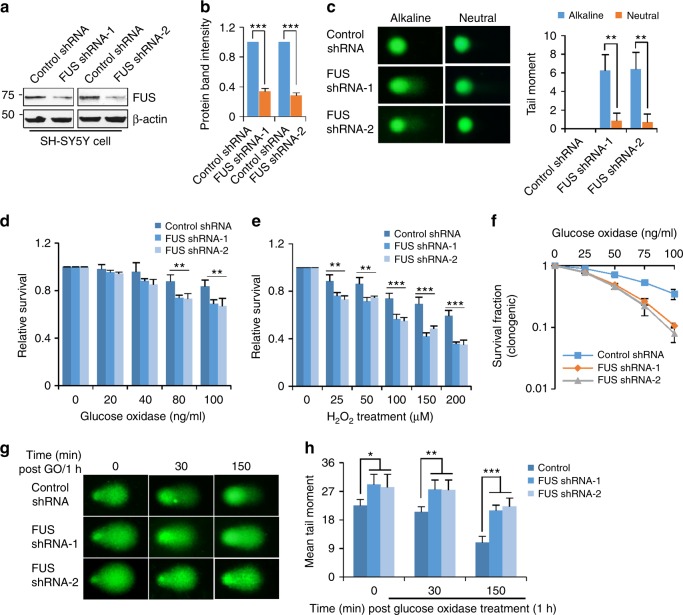
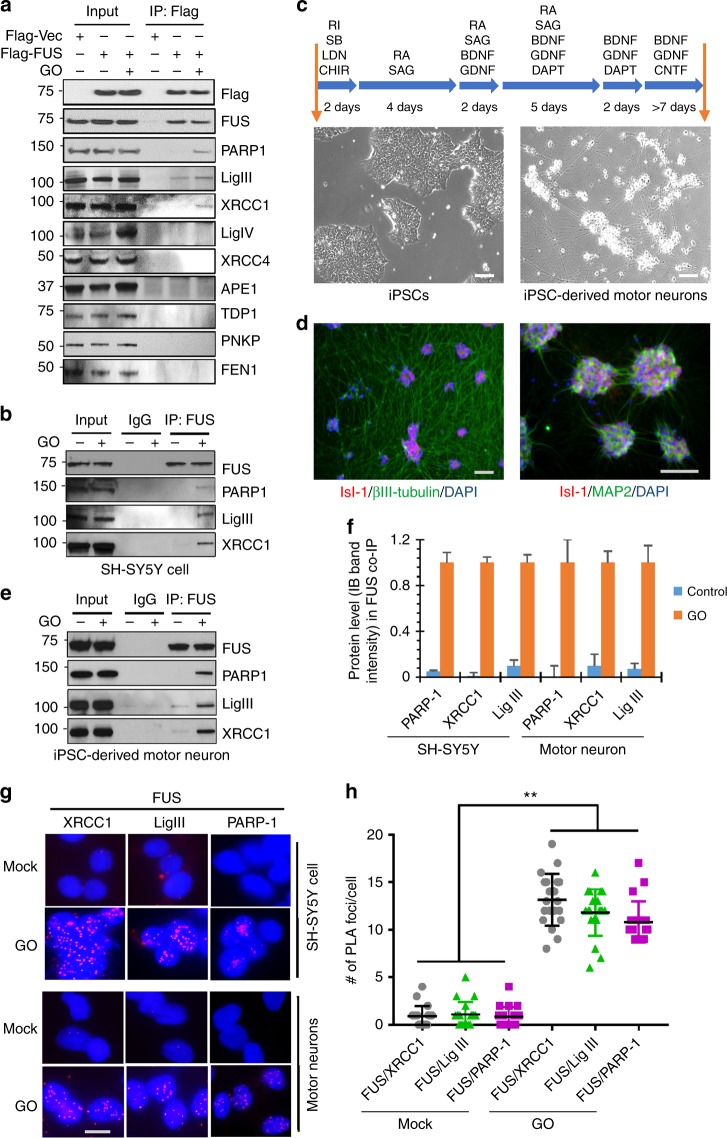
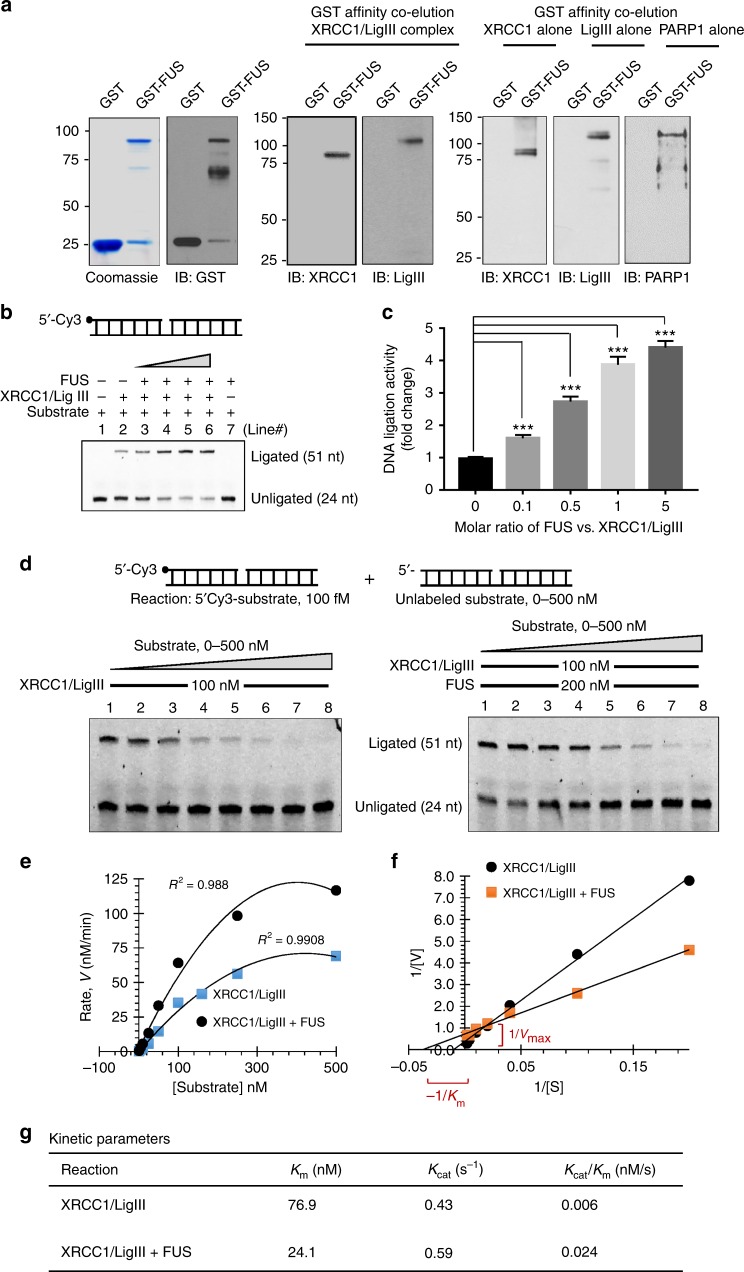
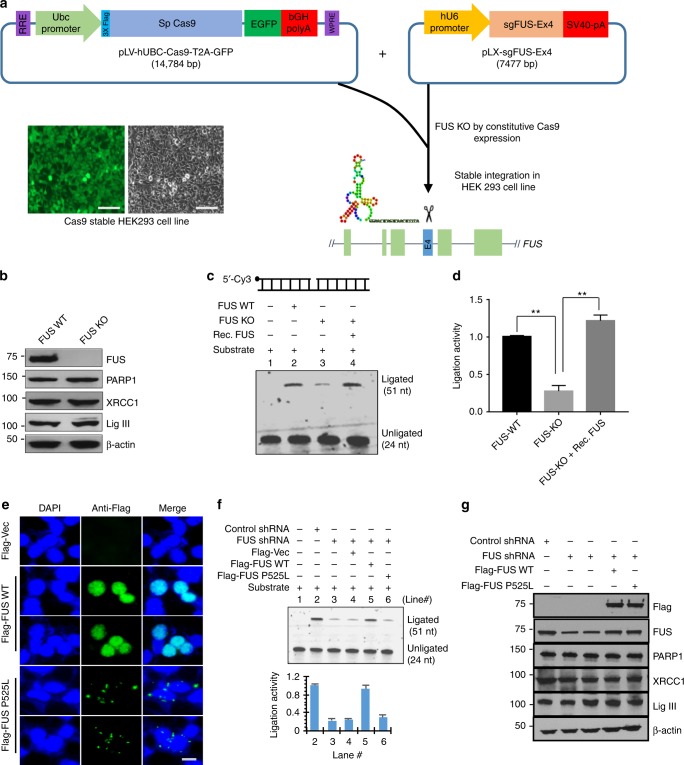
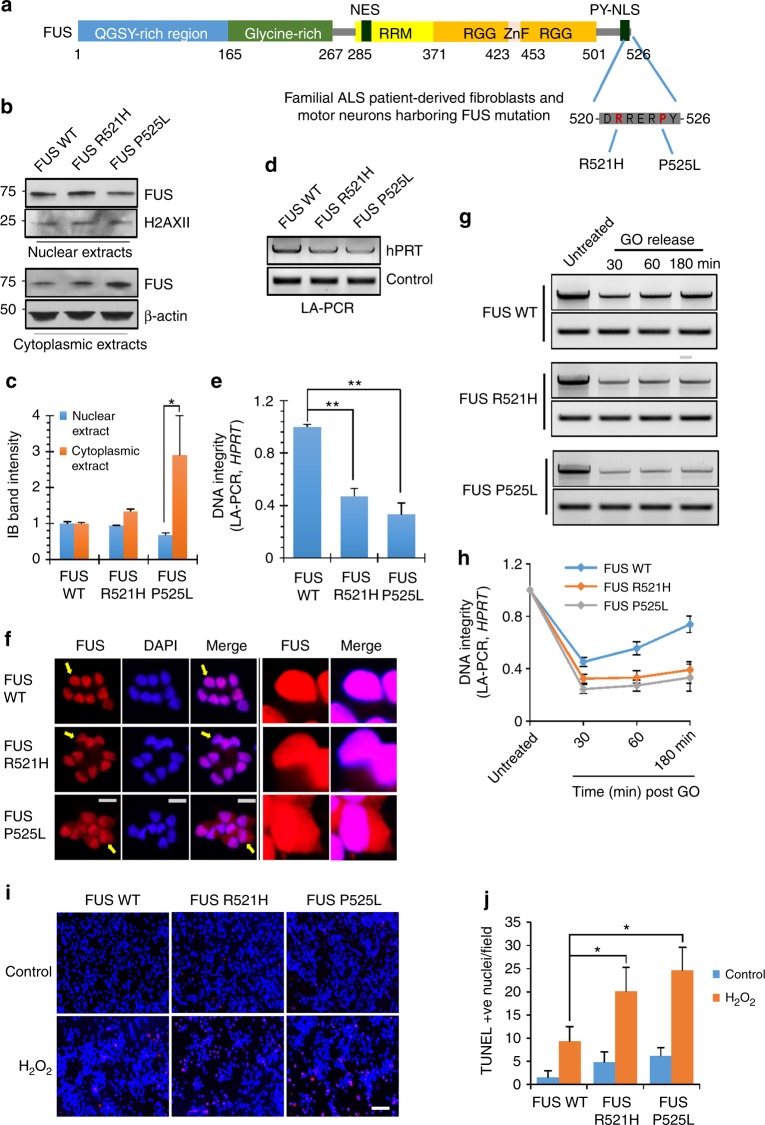
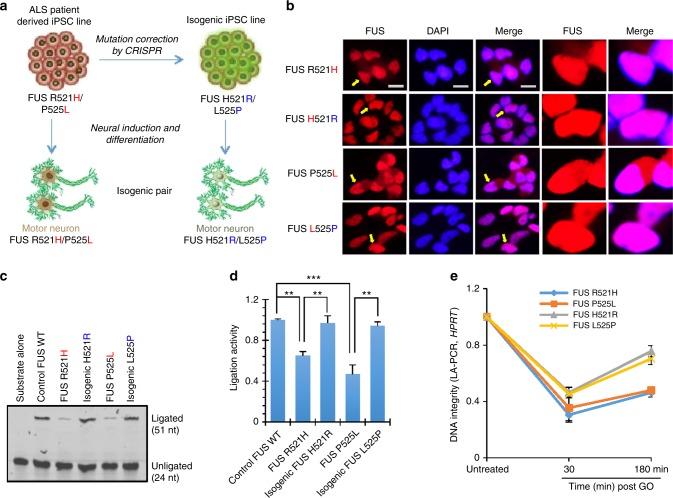
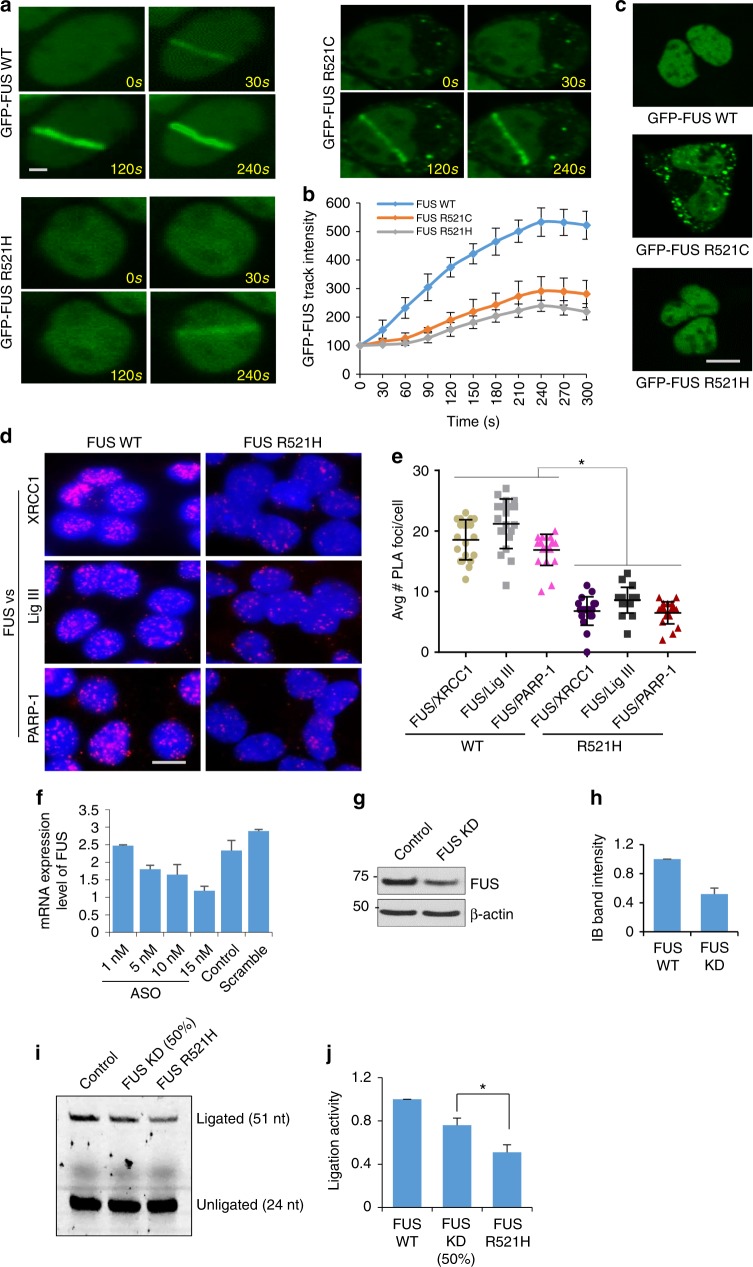
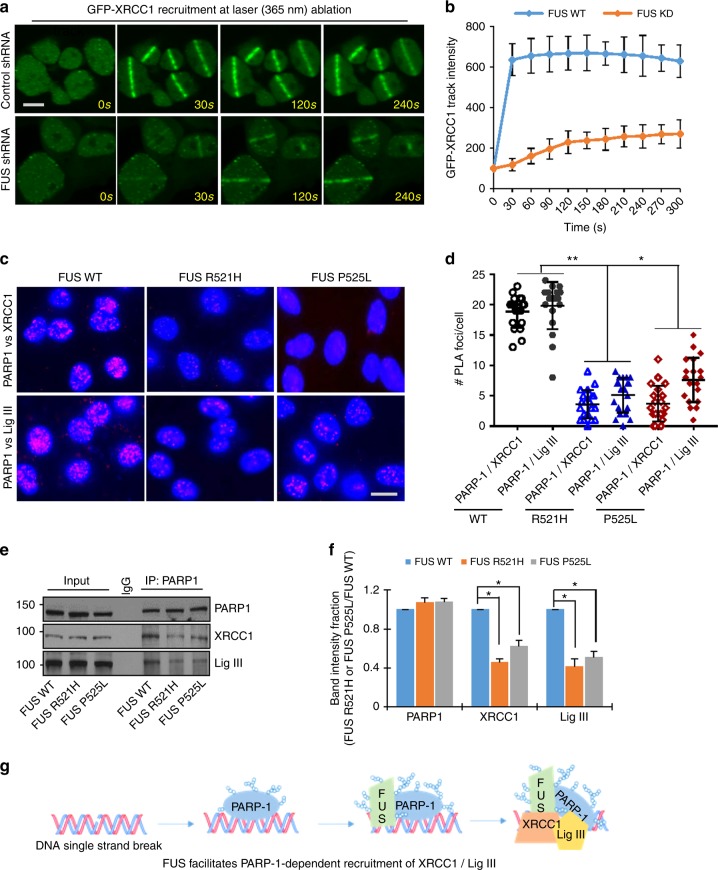
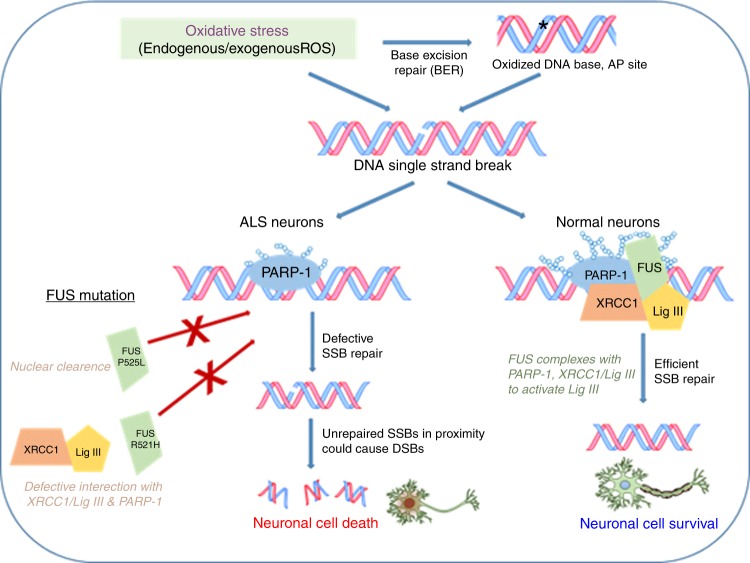
Genome damage and defective repair are etiologically linked to neurodegeneration. However, the specific mechanisms involved remain enigmatic. Here, we identify defects in DNA nick ligation and oxidative damage repair in a subset of amyotrophic lateral sclerosis (ALS) patients. These defects are caused by mutations in the RNA/DNA-binding protein FUS. In healthy neurons, FUS protects the genome by facilitating PARP1-dependent recruitment of XRCC1/DNA Ligase IIIα (LigIII) to oxidized genome sites and activating LigIII via direct interaction. We discover that loss of nuclear FUS caused DNA nick ligation defects in motor neurons due to reduced recruitment of XRCC1/LigIII to DNA strand breaks. Moreover, DNA ligation defects in ALS patient-derived iPSC lines carrying FUS mutations and in motor neurons generated therefrom are rescued by CRISPR/Cas9-mediated correction of mutation. Our findings uncovered a pathway of defective DNA ligation in FUS-linked ALS and suggest that LigIII-targeted therapies may prevent or slow down disease progression.
Overview
The claims and statistics of this paper haven’t been checked yet.
Free: it reads the open-access text and checks the first 5 claims that cite a source we can check. Create a free account to check every claim.
Integrity signals
Registry
Cites
Statistics
Figures
Verification
Claims the paper makes
The claims and statistics of this paper haven’t been checked yet.
Free: it reads the open-access text and checks the first 5 claims that cite a source we can check. Create a free account to check every claim.
Claims other papers make about this one
Each is checked against this paper’s own text: does it say what the citing paper says it does?
The source backs part of the claim, not all of it — or backs it for a different population, condition or comparison.
In the citing paper
“ALS patient iPSC-derived motor neurons with these mutants revealed increased proapoptotic factors, increased oxidative stress, reduced mitochondrial function, and inhibited oxidative damage repair.”
From Utility of iPSC-Derived Cells for Disease Modeling, Drug Development, and Cell Therapy (2022) · cites this paper as [41]
Experimental — accuracy not yet measuredThe cited source says what the claim attributes to it.
In the citing paper
“Fused in sarcoma (FUS) [40,41] and superoxide dismutase 1 (SOD-1) [42,43] are also linked to ALS.”
From Utility of iPSC-Derived Cells for Disease Modeling, Drug Development, and Cell Therapy (2022) · cites this paper as [41]
Self-check
Percentages, sums and reported differences re-computed from the paper’s own numbers.
The self-check needs the paper’s full text.
Citations
Cites
Uttara, B., Singh, A., Zamboni, P., & Mahajan, R. (2009) · Current Neuropharmacology · doi:10.2174/157015909787602823 · Cited by 3,378
A Liquid-to-Solid Phase Transition of the ALS Protein FUS Accelerated by Disease Mutation
Patel, A., Lee, H. O., Jawerth, L., Maharana, S., Jahnel, M., Hein, M. Y., Stoynov, S., Mahamid, J., Saha, S., Franzmann, T. M., et al. (2015) · Cell · doi:10.1016/j.cell.2015.07.047 · Cited by 3,282
Genetic screens in human cells using the CRISPR-Cas9 system
Wang, T., Wei, J. J., Sabatini, D. M., & Lander, E. S. (2014) · Science · doi:10.1126/science.1246981 · Cited by 2,856
Mutations in FUS, an RNA Processing Protein, Cause Familial Amyotrophic Lateral Sclerosis Type 6
Vance, C., Rogelj, B., Hortobágyi, T., De Vos, K. J., Nishimura, A. L., Sreedharan, J., Hu, X., Smith, B., Ruddy, D., Wright, P., et al. (2009) · Science · doi:10.1126/science.1165942 · Cited by 2,564
Mutations in the FUS/TLS Gene on Chromosome 16 Cause Familial Amyotrophic Lateral Sclerosis
Kwiatkowski, T. J., Bosco, D. A., LeClerc, A. L., Tamrazian, E., Vanderburg, C. R., Russ, C., Davis, A., Gilchrist, J., Kasarskis, E. J., Munsat, T., et al. (2009) · Science · doi:10.1126/science.1166066 · Cited by 2,553
Single-strand break repair and genetic disease
Caldecott, K. W. (2008) · Nature Reviews Genetics · doi:10.1038/nrg2380 · Cited by 1,034
TDP-43 and FUS in amyotrophic lateral sclerosis and frontotemporal dementia
Mackenzie, I. R., Rademakers, R., & Neumann, M. (2010) · The Lancet Neurology · doi:10.1016/s1474-4422(10)70195-2 · Cited by 975
Masson, M., Niedergang, C., Schreiber, V., Muller, S., Menissier-de Murcia, J., & de Murcia, G. (1998) · Molecular and Cellular Biology · doi:10.1128/mcb.18.6.3563 · Cited by 910
Gilgun-Sherki, Y., Melamed, E., & Offen, D. (2001) · Neuropharmacology · doi:10.1016/s0028-3908(01)00019-3 · Cited by 838
Poly(ADP-ribosyl)ation by PARP-1: `PAR-laying' NAD+ into a nuclear signal
Kim, M. Y., Zhang, T., & Kraus, W. L. (2005) · Genes & Development · doi:10.1101/gad.1331805 · Cited by 802
DNA repair mechanisms in dividing and non-dividing cells
Iyama, T., & Wilson, D. M. (2013) · DNA Repair · doi:10.1016/j.dnarep.2013.04.015 · Cited by 697
Early steps in the DNA base excision/single-strand interruption repair pathway in mammalian cells
Hegde, M. L., Hazra, T. K., & Mitra, S. (2008) · Cell Research · doi:10.1038/cr.2008.8 · Cited by 661
El-Khamisy, S. F. (2003) · Nucleic Acids Research · doi:10.1093/nar/gkg761 · Cited by 659
DNA damage and its links to neurodegeneration
Madabhushi, R., Pan, L., & Tsai, L.-H. (2014) · Neuron · doi:10.1016/j.neuron.2014.06.034 · Cited by 654
Liquid demixing of intrinsically disordered proteins is seeded by poly(ADP-ribose)
Altmeyer, M., Neelsen, K. J., Teloni, F., Pozdnyakova, I., Pellegrino, S., Grøfte, M., Rask, M.-B. D., Streicher, W., Jungmichel, S., Nielsen, M. L., et al. (2015) · Nature Communications · doi:10.1038/ncomms9088 · Cited by 587
Interaction of FUS and HDAC1 regulates DNA damage response and repair in neurons
Wang, W.-Y., Pan, L., Su, S. C., Quinn, E. J., Sasaki, M., Jimenez, J. C., Mackenzie, I. R. A., Huang, E. J., & Tsai, L.-H. (2013) · Nature Neuroscience · doi:10.1038/nn.3514 · Cited by 438
HDAC6 inhibition reverses axonal transport defects in motor neurons derived from FUS-ALS patients
Guo, W., Naujock, M., Fumagalli, L., Vandoorne, T., Baatsen, P., Boon, R., Ordovás, L., Patel, A., Welters, M., Vanwelden, T., et al. (2017) · Nature Communications · doi:10.1038/s41467-017-00911-y · Cited by 373
Self-citationSite-specific characterization of the Asp- and Glu-ADP-ribosylated proteome
Zhang, Y., Wang, J., Ding, M., & Yu, Y. (2013) · Nature Methods · doi:10.1038/nmeth.2603 · Cited by 352
Deng, H., Zhai, H., Bigio, E. H., Yan, J., Fecto, F., Ajroud, K., Mishra, M., Ajroud‐Driss, S., Heller, S., Sufit, R., et al. (2010) · Annals of Neurology · doi:10.1002/ana.22051 · Cited by 352
ALS-associated mutant FUS induces selective motor neuron degeneration through toxic gain of function
Sharma, A., Lyashchenko, A. K., Lu, L., Nasrabady, S. E., Elmaleh, M., Mendelsohn, M., Nemes, A., Tapia, J. C., Mentis, G. Z., & Shneider, N. A. (2016) · Nature Communications · doi:10.1038/ncomms10465 · Cited by 338
Involvement of XRCC1 and DNA Ligase III Gene Products in DNA Base Excision Repair
Cappelli, E., Taylor, R., Cevasco, M., Abbondandolo, A., Caldecott, K., & Frosina, G. (1997) · Journal of Biological Chemistry · doi:10.1074/jbc.272.38.23970 · Cited by 333
Naumann, M., Pal, A., Goswami, A., Lojewski, X., Japtok, J., Vehlow, A., Naujock, M., Günther, R., Jin, M., Stanslowsky, N., et al. (2018) · Nature Communications · doi:10.1038/s41467-017-02299-1 · Cited by 275
Mastrocola, A. S., Kim, S. H., Trinh, A. T., Rodenkirch, L. A., & Tibbetts, R. S. (2013) · Journal of Biological Chemistry · doi:10.1074/jbc.m113.497974 · Cited by 267
Vance, C., Scotter, E. L., Nishimura, A. L., Troakes, C., Mitchell, J. C., Kathe, C., Urwin, H., Manser, C., Miller, C. C., Hortobágyi, T., et al. (2013) · Human Molecular Genetics · doi:10.1093/hmg/ddt117 · Cited by 264
Energy metabolism in ALS: an underappreciated opportunity?
Vandoorne, T., De Bock, K., & Van Den Bosch, L. (2018) · Acta Neuropathologica · doi:10.1007/s00401-018-1835-x · Cited by 262
Leppard, J. B., Dong, Z., Mackey, Z. B., & Tomkinson, A. E. (2003) · Molecular and Cellular Biology · doi:10.1128/mcb.23.16.5919-5927.2003 · Cited by 230
Nuclear localization sequence of FUS and induction of stress granules by ALS mutants
Gal, J., Zhang, J., Kwinter, D. M., Zhai, J., Jia, H., Jia, J., & Zhu, H. (2011) · Neurobiology of Aging · doi:10.1016/j.neurobiolaging.2010.06.010 · Cited by 215
Sensitized formation of oxidatively generated damage to cellular DNA by UVA radiation
Cadet, J., Douki, T., Ravanat, J.-L., & Di Mascio, P. (2009) · Photochemical & Photobiological Sciences · doi:10.1039/b905343n · Cited by 213
Rulten, S. L., Rotheray, A., Green, R. L., Grundy, G. J., Moore, D. A. Q., Gómez-Herreros, F., Hafezparast, M., & Caldecott, K. W. (2014) · Nucleic Acids Research · doi:10.1093/nar/gkt835 · Cited by 190
C9orf72 expansion disrupts ATM-mediated chromosomal break repair
Walker, C., Herranz-Martin, S., Karyka, E., Liao, C., Lewis, K., Elsayed, W., Lukashchuk, V., Chiang, S.-C., Ray, S., Mulcahy, P. J., et al. (2017) · Nature Neuroscience · doi:10.1038/nn.4604 · Cited by 185
FUS is Phosphorylated by DNA-PK and Accumulates in the Cytoplasm after DNA Damage
Deng, Q., Holler, C. J., Taylor, G., Hudson, K. F., Watkins, W., Gearing, M., Ito, D., Murray, M. E., Dickson, D. W., Seyfried, N. T., et al. (2014) · Journal of Neuroscience · doi:10.1523/jneurosci.0172-14.2014 · Cited by 161
Fused in sarcoma (FUS): An oncogene goes awry in neurodegeneration
Dormann, D., & Haass, C. (2013) · Molecular and Cellular Neuroscience · doi:10.1016/j.mcn.2013.03.006 · Cited by 160
Improved Protocols for the Illumina Genome Analyzer Sequencing System
Quail, M. A., Swerdlow, H., & Turner, D. J. (2009) · Current Protocols in Human Genetics · doi:10.1002/0471142905.hg1802s62 · Cited by 154
DNA Single-Strand Break Repair and Spinocerebellar Ataxia
Caldecott, K. W. (2003) · Cell · doi:10.1016/s0092-8674(02)01247-3 · Cited by 154
Della-Maria, J., Zhou, Y., Tsai, M.-S., Kuhnlein, J., Carney, J. P., Paull, T. T., & Tomkinson, A. E. (2011) · Journal of Biological Chemistry · doi:10.1074/jbc.m111.274159 · Cited by 148
Oxidative genome damage and its repair: implications in aging and neurodegenerative diseases
Hegde, M. L., Mantha, A. K., Hazra, T. K., Bhakat, K. K., Mitra, S., & Szczesny, B. (2012) · Mechanisms of Ageing and Development · doi:10.1016/j.mad.2012.01.005 · Cited by 141
Self-citationTDP-43/FUS in motor neuron disease: Complexity and challenges
Guerrero, E. N., Wang, H., Mitra, J., Hegde, P. M., Stowell, S. E., Liachko, N. F., Kraemer, B. C., Garruto, R. M., Rao, K. S., & Hegde, M. L. (2016) · Progress in Neurobiology · doi:10.1016/j.pneurobio.2016.09.004 · Cited by 140
Pathogenesis of FUS-associated ALS and FTD: insights from rodent models
Nolan, M., Talbot, K., & Ansorge, O. (2016) · Acta Neuropathologica Communications · doi:10.1186/s40478-016-0358-8 · Cited by 139
Conte, A., Lattante, S., Zollino, M., Marangi, G., Luigetti, M., Grande, A. D., Servidei, S., Trombetta, F., & Sabatelli, M. (2011) · Neuromuscular Disorders · doi:10.1016/j.nmd.2011.08.003 · Cited by 137
Kino, Y., Washizu, C., Kurosawa, M., Yamada, M., Miyazaki, H., Akagi, T., Hashikawa, T., Doi, H., Takumi, T., Hicks, G. G., et al. (2015) · Acta Neuropathologica Communications · doi:10.1186/s40478-015-0202-6 · Cited by 119
Oxidatively generated damage to DNA by UVA radiation in cells and human skin
Cadet, J., & Douki, T. (2011) · Journal of Investigative Dermatology · doi:10.1038/jid.2011.51 · Cited by 116
Identification and characterization of FUS/TLS as a new target of ATM
Gardiner, M., Toth, R., Vandermoere, F., Morrice, N. A., & Rouse, J. (2008) · Biochemical Journal · doi:10.1042/bj20081135 · Cited by 111
Hegde, M. L., Theriot, C. A., Das, A., Hegde, P. M., Guo, Z., Gary, R. K., Hazra, T. K., Shen, B., & Mitra, S. (2008) · Journal of Biological Chemistry · doi:10.1074/jbc.m802712200 · Cited by 106
Hegde, M. L., Hegde, P. M., Bellot, L. J., Mandal, S. M., Hazra, T. K., Li, G.-M., Boldogh, I., Tomkinson, A. E., & Mitra, S. (2013) · Proceedings of the National Academy of Sciences · doi:10.1073/pnas.1304231110 · Cited by 105
MOF Phosphorylation by ATM Regulates 53BP1-Mediated Double-Strand Break Repair Pathway Choice
Gupta, A. K. D., Hunt, C. R., Hegde, M. L., Chakraborty, S., Udayakumar, D., Horikoshi, N., Singh, M. K., Ramnarain, D. B., Hittelman, W. N., Namjoshi, S., et al. (2014) · Cell Reports · doi:10.1016/j.celrep.2014.05.044 · Cited by 104
FUS mutations in sporadic amyotrophic lateral sclerosis
Lai, S.-L., Abramzon, Y., Schymick, J. C., Stephan, D. A., Dunckley, T., Dillman, A., Cookson, M., Calvo, A., Battistini, S., Giannini, F., et al. (2011) · Neurobiology of Aging · doi:10.1016/j.neurobiolaging.2009.12.020 · Cited by 98
A New Hypothesis of the Etiology of Amyotrophic Lateral Sclerosis: The DNA Hypothesis
Bradley, W. G. (1982) · Archives of Neurology · doi:10.1001/archneur.1982.00510230003001 · Cited by 90
Dutta, A., Eckelmann, B., Adhikari, S., Ahmed, K. M., Sengupta, S., Pandey, A., Hegde, P. M., Tsai, M.-S., Tainer, J. A., Weinfeld, M., et al. (2016) · Nucleic Acids Research · doi:10.1093/nar/gkw1262 · Cited by 84
Hegde, M. L., Hegde, P. M., Rao, K. S., & Mitra, S. (2011) · Journal of Alzheimer's Disease · doi:10.3233/jad-2011-110281 · Cited by 77
Studies on genomic DNA topology and stability in brain regions of Parkinson’s disease
Hegde, M. L., Gupta, V. B., Anitha, M., Harikrishna, T., Shankar, S. K., Muthane, U., Subba Rao, K., & Jagannatha Rao, K. S. (2006) · Archives of Biochemistry and Biophysics · doi:10.1016/j.abb.2006.02.018 · Cited by 77
German, P., Szaniszlo, P., Hajas, G., Radak, Z., Bacsi, A., Hazra, T. K., Hegde, M. L., Ba, X., & Boldogh, I. (2013) · DNA Repair · doi:10.1016/j.dnarep.2013.06.006 · Cited by 68
Wang, T., Jiang, X., Chen, G., & Xu, J. (2014) · Neurobiology of Aging · doi:10.1016/j.neurobiolaging.2014.07.044 · Cited by 58
Murata, T., Ohtsuka, C., & Terayama, Y. (2008) · Free Radical Research · doi:10.1080/10715760701877262 · Cited by 56
Hegde, P. M., Dutta, A., Sengupta, S., Mitra, J., Adhikari, S., Tomkinson, A. E., Li, G., Boldogh, I. R., Hazra, T. K., MITRA, S. P., et al. (2015) · Journal of Biological Chemistry · doi:10.1074/jbc.m115.642918 · Cited by 54
Human RIF1 encodes an anti-apoptotic factor required for DNA repair
Wang, H., Zhao, A., Chen, L., Zhong, X. Z., Liao, J., Gao, M., Cai, M., Lee, D.-H., Li, J., Chowdhury, D., et al. (2009) · Carcinogenesis · doi:10.1093/carcin/bgp136 · Cited by 54
Wang, H., Dharmalingam, P., Vasquez, V., Mitra, J., Boldogh, I. R., Rao, K. S. J., Kent, T. A., MITRA, S. P., & Hegde, M. L. (2016) · Mechanisms of Ageing and Development · doi:10.1016/j.mad.2016.09.005 · Cited by 50
Speckle-type POZ protein, SPOP, is involved in the DNA damage response
Zhang, D., Wang, H., Sun, M., Yang, J., Zhang, W., Han, S., & Xu, B. (2014) · Carcinogenesis · doi:10.1093/carcin/bgu022 · Cited by 49
Analysis of Oxidative Damage by Gene‐Specific Quantitative PCR
Kovalenko, O. A., & Santos, J. H. (2009) · Current Protocols in Human Genetics · doi:10.1002/0471142905.hg1901s62 · Cited by 48
NEIL2 protects against oxidative DNA damage induced by sidestream smoke in human cells
Sarker, A. H., Chatterjee, A., Williams, M., Lin, S., Havel, C., Jacob III, P., Boldogh, I., Hazra, T. K., Talbot, P., & Hang, B. (2014) · PLoS ONE · doi:10.1371/journal.pone.0090261 · Cited by 44
Aizawa, H., Hideyama, T., Yamashita, T., Kimura, T., Suzuki, N., Aoki, M., & Kwak, S. (2016) · Journal of Clinical Neuroscience · doi:10.1016/j.jocn.2015.12.039 · Cited by 39
Della-Maria, J., Hegde, M. L., McNeill, D. R., Matsumoto, Y., Tsai, M.-S., Ellenberger, T., Wilson, D. M., MITRA, S. P., & Tomkinson, A. E. (2012) · Journal of Biological Chemistry · doi:10.1074/jbc.m112.369975 · Cited by 38
Human DNA Ligases I, III, and IV—Purification and New Specific Assays for These Enzymes
Chen, X., Pascal, J. M., Vijayakumar, S., Wilson, G. M., Ellenberger, T., & Tomkinson, A. E. (2006) · Methods in enzymology on CD-ROM/Methods in enzymology · doi:10.1016/s0076-6879(05)09003-8 · Cited by 37
Schuhwerk, H., Bruhn, C., Siniuk, K., Min, W., Erener, S., Grigaravičius, P., Krüger, A., Ferrari, E. S., Zubel, T., Lázaro, D. R., et al. (2017) · Nucleic Acids Research · doi:10.1093/nar/gkx717 · Cited by 36
Peng, Z.-M., Liao, Z.-P., Matsumoto, Y., Yang, A. J., & Tomkinson, A. (2016) · Journal of Biological Chemistry · doi:10.1074/jbc.m116.746198 · Cited by 31
Clinical and experimental studies of a novel P525R FUS mutation in amyotrophic lateral sclerosis
Kuang, L., Kamelgarn, M., Arenas, A., Gál, J., Taylor, D., Gong, W., Brown, M., Clair, D. K. S., Kasarskis, E. J., & Zhu, H. (2017) · Neurology Genetics · doi:10.1212/nxg.0000000000000172 · Cited by 28
Swetha, R. G., Ramaiah, S., & Anbarasu, A. (2016) · Journal of Biomolecular Structure and Dynamics · doi:10.1080/07391102.2016.1209130 · Cited by 15
Knight, M. I., & Chambers, P. J. (2001) · Protein Expression and Purification · doi:10.1006/prep.2001.1513 · Cited by 14
Cited by
Oxidative Stress: A Key Modulator in Neurodegenerative Diseases
Singh, A., Kukreti, R., Saso, L., & Kukreti, S. (2019) · Molecules · doi:10.3390/molecules24081583 · Cited by 2,254
Oxidative Stress and Antioxidants in Neurodegenerative Disorders
Olufunmilayo, E. O., Gerke-Duncan, M. B., & Holsinger, R. M. D. (2023) · Antioxidants · doi:10.3390/antiox12020517 · Cited by 670
“Loss-of-function mutations in the gene for FUS have been shown to result in DNA strand breaks, which cause an increased vulnerability to oxidative stress, suggesting normal functioning of the protein is protective against oxidative stress in ALS [162].”
Mead, R. J., Shan, N., Reiser, H. J., Marshall, F., & Shaw, P. J. (2023) · Nature Reviews Drug Discovery · doi:10.1038/s41573-022-00612-2 · Cited by 505
Mitra, J., Guerrero, E. N., Hegde, P. M., Liachko, N. F., Wang, H., Vasquez, V., Gao, J., Pandey, A., Taylor, J. P., Kraemer, B. C., et al. (2019) · Proceedings of the National Academy of Sciences · doi:10.1073/pnas.1818415116 · Cited by 305
“We recently reported the role of FUS in regulating recruitment and functions of the XRCC1/Lig3 complex in DNA SSB repair (57).”
BackgroundSelf-citationSingatulina, A. S., Hamon, L., Sukhanova, M. V., Desforges, B., Joshi, V., Bouhss, A., Lavrik, O. I., & Pastré, D. (2019) · Cell Reports · doi:10.1016/j.celrep.2019.04.031 · Cited by 227
Metadata
- Authors
- Wang, H., Guo, W., Mitra, J., Hegde, P. M., Vandoorne, T., Eckelmann, B. J., Mitra, S., Tomkinson, A. E., Van Den Bosch, L., & Hegde, M. L.
- Affiliations
- Houston Methodist (US)
- VIB-KU Leuven Center for Brain & Disease Research (BE)
- Texas A&M Health Science Center (US)
- University of New Mexico (US)
- Corresponding author
- Hegde, Muralidhar L.
- ORCID
- Venue
- Nature Communications
- Published
- 2018-09-11
- Volume
- 9
- Issue
- 1
- Pages
- 3683-3683
- ISSN
- 2041-1723 (ISSN-L)
- PMC
- PMC6134028
- OpenAlex
- W2889934668
- Cited by
- 205
- References
- 67
- Citations by year
- 2026: 10 · 2025: 21 · 2024: 30 · 2023: 33 · 2022: 28 · 2021: 24 · 2020: 31 · 2019: 26 · 2018: 1
- FWCI
- 13.92
- Type
- journal article
- Language
- en
- Open access
- gold
- doi.org
- Licence
- cc-by
- creativecommons.org/licenses/by/4.0 (tdm)
- creativecommons.org/licenses/by/4.0 (vor)
- Locations
- Nature Communications (publishedVersion, cc-by)
- Europe PMC (PubMed Central) (publishedVersion, other-oa)
- PubMed Central (publishedVersion, cc-by)
- PubMed (publishedVersion)
- Lirias (submittedVersion, other-oa)
- RePEc: Research Papers in Economics (submittedVersion)
- DOAJ (DOAJ: Directory of Open Access Journals) (submittedVersion)
- DOAJ (DOAJ: Directory of Open Access Journals) (submittedVersion, cc-by-sa)
- Funders
- U.S. Department of Veterans Affairs (I01 BX002466, BX002466)
- Muscular Dystrophy Association (MDA 294842, 294842)
- Arizona State University
- Fonds Wetenschappelijk Onderzoek
- KU Leuven (C14/17/107)
- Vlaamse regering
- National Institutes of Health (BX002466, CA92584, NS088645)
- Houston Methodist Research Institute
- National Cancer Institute (P01CA092584)
- National Institute of Neurological Disorders and Stroke (R01NS088645)
- National Institute of Environmental Health Sciences (R01ES012512)
- Topics
- Health Sciences › Medicine › Clinical Neurology › Amyotrophic Lateral Sclerosis Research
- Life Sciences › Biochemistry, Genetics and Molecular Biology › Molecular Biology › DNA Repair Mechanisms
- Life Sciences › Neuroscience › Cellular and Molecular Neuroscience › Alzheimer's disease research and treatments
- Keywords
- amyotrophic lateral sclerosis, FUS mutations, oxidative DNA damage repair, DNA ligase III, XRCC1, PARP1, motor neurons, genomic damage, neurodegeneration, iPSC-derived motor neurons, CRISPR/Cas9 gene correction
- MeSH terms
- X-ray Repair Cross Complementing Protein 1, Amyotrophic Lateral Sclerosis, Cell Line, DNA, DNA Damage, DNA Repair, Genes, Dominant, Humans, Models, Biological, Mutation, Poly(ADP-ribose) Polymerases, DNA Ligases, Reactive Oxygen Species, Oxidative Stress, RNA-Binding Protein FUS, Gene Knockout Techniques, Induced Pluripotent Stem Cells, CRISPR-Cas Systems
About these checks
Registry, retraction, Cites and statistics results are computed, not judged, with one exception: a printed reference that no index lists is read once by a model before it counts as a citation error. Claims are extracted by a model and kept only when their quote appears verbatim in the text; each cited source is then checked, with a model’s help, for whether it says what the claim relies on. Those verdicts can be wrong — read the claim’s quote and the cited source before relying on one.
Statistics and arithmetic are recomputed, not judged.
Confidence bands are shown only for fields calibrated on our annotated test set. None is calibrated yet, so no band is shown.
What counts as a claim ›How we measure confidence ›How we check this ›
Are you an author, or do you see a problem with this page? Request a review
Data sources
Bibliographic data: Semantic Scholar, OpenAlex, Crossref.
Contains information from the Semantic Scholar Academic Graph Datasets, made available under the ODC Attribution License (ODC-BY 1.0).
Semantic Scholar’s data is described in: Kinney, R., et al. (2023). The Semantic Scholar Open Data Platform. arXiv:2301.10140.
