

Challenges hindering memristive neuromorphic hardware from going mainstream
Open accessThe DOI matches its Crossref record; 17 of the 17 references it cites were found in a registry or an index.
Abstract
Memristive devices have elicited intense research in the past decade thanks to their inherent low voltage operation, multi-bit storage and cost-effective manufacturability. Nonetheless, several outstanding performance and manufacturability challenges have prevented the widespread industry adoption of redox-based memristive matrices. Here, we discuss these challenges in terms of key metrics and propose a roadmap towards realizing competitive memristive-based neuromorphic processing systems.
Overview
The claims and statistics of this paper haven’t been checked yet.
Free: it reads the open-access text and checks the first 5 claims that cite a source we can check. Create a free account to check every claim.
Integrity signals
Registry
Cites
Statistics
Figures
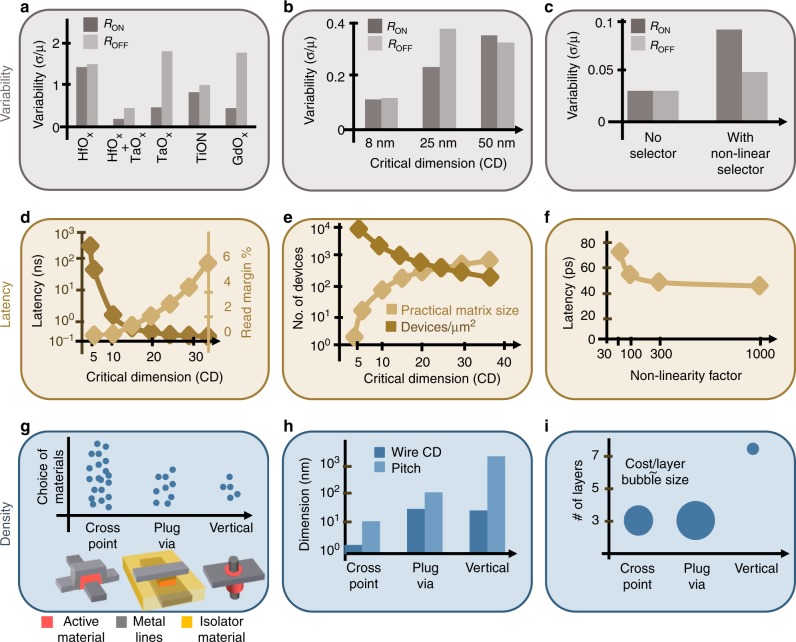
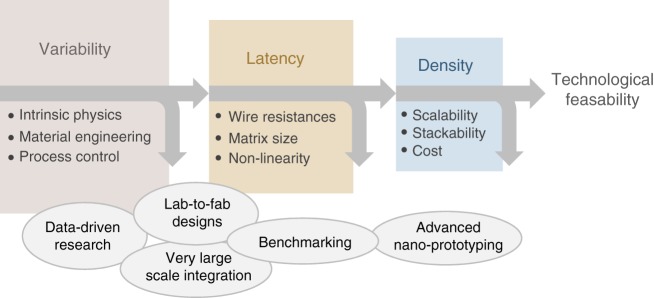
Verification
Claims the paper makes
The claims and statistics of this paper haven’t been checked yet.
Free: it reads the open-access text and checks the first 5 claims that cite a source we can check. Create a free account to check every claim.
Claims other papers make about this one
Each is checked against this paper’s own text: does it say what the citing paper says it does?
The source backs part of the claim, not all of it — or backs it for a different population, condition or comparison.
In the citing paper
“To emulate the complexity and ultra-low power consumption of biological neural networks, hardware platforms for ANNs must achieve an ultra-high integration density (>1 Terabyte per cm2) and low energy consumption (<10 fJ per operation)35.”
From Hardware implementation of memristor-based artificial neural networks (2024) · cites this paper as [35]
Experimental — accuracy not yet measured
Self-check
Percentages, sums and reported differences re-computed from the paper’s own numbers.
The self-check needs the paper’s full text.
Citations
Cites
Neuromorphic computing with multi-memristive synapses
Boybat, I., Le Gallo, M., Nandakumar, S. R., Moraitis, T., Parnell, T., Tuma, T., Rajendran, B., Leblebici, Y., Sebastian, A., & Eleftheriou, E. (2018) · Nature Communications · doi:10.1038/s41467-018-04933-y · Cited by 899
Memristor crossbar arrays with 6-nm half-pitch and 2-nm critical dimension
Pi, S., Li, C., Jiang, H., Xia, W., Xin, H., Yang, J. J., & Xia, Q. (2019) · Nature Nanotechnology · doi:10.1038/s41565-018-0302-0 · Cited by 539 · cited 1×
“1g) and its extreme scalability, down to ~2 nm for an estimated density of >0.7Tb/cm 2 9 (Fig.”
BackgroundHigh‐Speed and Low‐Energy Nitride Memristors
Choi, B. J., Torrezan, A. C., Strachan, J. P., Kotula, P. G., Lohn, A. J., Marinella, M. J., Li, Z., Williams, R. S., & Yang, J. J. (2016) · Advanced Functional Materials · doi:10.1002/adfm.201600680 · Cited by 356
Multibit memory operation of metal-oxide bi-layer memristors
Stathopoulos, S., Khiat, A., Trapatseli, M., Cortese, S., Serb, A., Valov, I., & Prodromakis, T. (2017) · Scientific Reports · doi:10.1038/s41598-017-17785-1 · Cited by 312
Self-citationDesign implications of memristor-based RRAM cross-point structures
Xu, C., Dong, X., Jouppi, N. P., & Xie, Y. (2011) · 2011 Design, Automation & Test in Europe · doi:10.1109/date.2011.5763125 · Cited by 232 · cited 1×
“However, high speed programming requirements can increase the circuitry footprint, thus straying away from the ideal density 11 .”
BackgroundMemristor Crossbars with 4.5 Terabits-per-Inch-Square Density and Two Nanometer Dimension
Pi, S., Li, C., Jiang, H., Xia, W., Xin, H. L., Yang, J. J., & Xia, Q. (2018) · arXiv (Cornell University) · doi:10.48550/arxiv.1804.09848 · Cited by 154 · cited 1×
“1g) and its extreme scalability, down to ~2 nm for an estimated density of >0.7Tb/cm 2 9 (Fig.”
BackgroundVariability of resistive switching memories and its impact on crossbar array performance
Chen, A., & Lin, M.-R. (2011) · 2011 International Reliability Physics Symposium · doi:10.1109/irps.2011.5784590 · Cited by 152 · cited 2×
“The choice of materials plays a critical role 5 (Fig.”
BackgroundRealization of vertical resistive memory (VRRAM) using cost effective 3D process
Baek, I. G., Park, C. J., Ju, H., Seong, D. J., Ahn, H. S., Kim, J. H., Yang, M. K., Song, S. H., Kim, E. M., Park, S. O., et al. (2011) · 2011 International Electron Devices Meeting · doi:10.1109/iedm.2011.6131654 · Cited by 140 · cited 1×
“The number of masks is independent of the number of layers, similar to the three-dimensional fl ash technology 10 .”
Background8-Layers 3D vertical RRAM with excellent scalability towards storage class memory applications
Luo, Q., Xu, X., Gong, T., Lv, H., Dong, D., Ma, H., Yuan, P., Gao, J., Liu, J., Yu, Z., et al. (2017) · 2017 IEEE International Electron Devices Meeting (IEDM) · doi:10.1109/iedm.2017.8268315 · Cited by 97 · cited 1×
“…is heavily in fl uenced by a the choice of active material and of the material stack (e.g., single material HfO x vs. bilayer HfO x + TaO x ) 5,12 ; b the device scaling as determined by the smallest feature dimension (also known as critical dimension or CD); 6 and c the presence of a series…”
BackgroundCross point arrays of 8 nm × 8 nm memristive devices fabricated with nanoimprint lithography
Pi, S., Lin, P., & Xia, Q. (2013) · Journal of Vacuum Science & Technology B, Nanotechnology and Microelectronics: Materials, Processing, Measurement, and Phenomena · doi:10.1116/1.4827021 · Cited by 81
Cited by
Hardware implementation of memristor-based artificial neural networks
Aguirre, F., Sebastian, A., Le Gallo, M., Song, W., Wang, T., Yang, J. J., Lu, W., Chang, M.-F., Ielmini, D., Yang, Y., et al. (2024) · Nature Communications · doi:10.1038/s41467-024-45670-9 · Cited by 564
Semiconductor Quantum Dots for Memories and Neuromorphic Computing Systems
Lv, Z., Wang, Y., Chen, J., Wang, J., Zhou, Y., & Han, S.-T. (2020) · Chemical Reviews · doi:10.1021/acs.chemrev.9b00730 · Cited by 364
Large-Area Soft e-Skin: The Challenges Beyond Sensor Designs
Dahiya, R., Yogeswaran, N., Liu, F., Manjakkal, L., Burdet, E., Hayward, V., & Jörntell, H. (2019) · Proceedings of the IEEE · doi:10.1109/jproc.2019.2941366 · Cited by 309
“Recently, two-terminal memristive devices have gained attention as the state of their internal resistance could indicate the history of the voltage across and/or current through them [97]–[99].”
MXene‐ZnO Memristor for Multimodal In‐Sensor Computing
Wang, Y., Gong, Y., Yang, L., Xiong, Z., Lv, Z., Xing, X., Zhou, Y., Zhang, B., Su, C., Liao, Q., et al. (2021) · Advanced Functional Materials · doi:10.1002/adfm.202100144 · Cited by 257
Amirsoleimani, A., Alibart, F., Yon, V., Xu, J., Pazhouhandeh, M. R., Ecoffey, S., Beilliard, Y., Genov, R., & Drouin, D. (2020) · Advanced Intelligent Systems · doi:10.1002/aisy.202000115 · Cited by 216
Memristive Crossbar Arrays for Storage and Computing Applications
Li, H., Wang, S., Zhang, X., Wang, W., Yang, R., Sun, Z., Feng, W., Lin, P., Wang, Z., Sun, L., et al. (2021) · Advanced Intelligent Systems · doi:10.1002/aisy.202100017 · Cited by 205
Hands-on reservoir computing: a tutorial for practical implementation
Cucchi, M., Abreu, S., Ciccone, G., Brunner, D., & Kleemann, H. (2022) · Neuromorphic Computing and Engineering · doi:10.1088/2634-4386/ac7db7 · Cited by 199
“, backpropagation, weight tuning, etc), while being well suited to symbolic digital machines, may not work reliably on real systems as these usually cannot meet requirements for device-to-device variability and/or precise control over each individual unit/synapse [45].”
BackgroundDanial, L., Pikhay, E., Herbelin, E., Wainstein, N., Gupta, V., Wald, N., Roizin, Y., Daniel, R., & Kvatinsky, S. (2019) · Nature Electronics · doi:10.1038/s41928-019-0331-1 · Cited by 164
Zhang, F., Li, C., Li, Z., Dong, L., & Zhao, J. (2023) · Microsystems & Nanoengineering · doi:10.1038/s41378-023-00487-2 · Cited by 173
Perspective on photonic memristive neuromorphic computing
Goi, E., Zhang, Q., Chen, X., Luan, H., & Gu, M. (2020) · PhotoniX · doi:10.1186/s43074-020-0001-6 · Cited by 164
“Memristors have been successfully employed in basic neuromorphic hardware architectures, however creating brain-like hardware-based systems with more advanced functionalities will require an improved understanding of the functionalities of neurobiological systems, the physics of memristors and overcoming several manuf…”
MethodConcealable physically unclonable function chip with a memristor array
Gao, B., Lin, B., Pang, Y., Xu, F., Lu, Y., Chiu, Y.-C., Liu, Z., Tang, J., Chang, M.-F., Qian, H., et al. (2022) · Science Advances · doi:10.1126/sciadv.abn7753 · Cited by 144
“, inherent stochasticity and high density) and notable variation (27).”
BackgroundKamaei, S., Liu, X., Saeidi, A., Wei, Y., Gastaldi, C., Brügger, J., & Ionescu, A. M. (2023) · Nature Electronics · doi:10.1038/s41928-023-01018-7 · Cited by 155
“More importantly, the neuromorphic hardware should contain additional CMOS circuits to support processing units, peripheral interfaces, memory, clocking circuits and input/output for a complete application 48,49 .”
Analog‐Type Resistive Switching Devices for Neuromorphic Computing
Zhang, W., Gao, B., Tang, J., Li, X., Wu, W., Qian, H., & Wu, H. (2019) · physica status solidi (RRL) - Rapid Research Letters · doi:10.1002/pssr.201900204 · Cited by 132
Han, J., Oh, J., Yun, G., Yoo, D.-E., Kim, M., Yu, J., Choi, S., & Choi, Y. (2021) · Science Advances · doi:10.1126/sciadv.abg8836 · Cited by 123
“24 25–27 However, the memristor neurons cannot self-function for control of neuronal inhibition and �ring threshold voltage due to the lack of controllability.”
BackgroundAnalog Optical Computing for Artificial Intelligence
Wu, J., Lin, X., Guo, Y., Liu, J., Fang, L., Jiao, S., & Dai, Q. (2021) · Engineering · doi:10.1016/j.eng.2021.06.021 · Cited by 129
Two-Dimensional Materials for Brain-Inspired Computing Hardware
Hadke, S. S., Kang, M., Sangwan, V. K., & Hersam, M. C. (2025) · Chemical Reviews · doi:10.1021/acs.chemrev.4c00631 · Cited by 112
Recent Progress in Synaptic Devices Based on 2D Materials
Sun, L., Wang, W. J., & Yang, H. (2020) · Advanced Intelligent Systems · doi:10.1002/aisy.201900167 · Cited by 94
MemTorch: An Open-source Simulation Framework for Memristive Deep Learning Systems
Lammie, C., Xiang, W., Linares-Barranco, B., & Azghadi, M. R. (2022) · Neurocomputing · doi:10.1016/j.neucom.2022.02.043 · Cited by 107
“As a result, DL architectures realized using memristor crossbars are putative to be prone to severe errors due to a number of device limitations including: finite discrete conductance states, device I/V non-linearity, failure, aging, cycle-to-cycle and device-to-device variability [4, 5].”
On the resistive switching mechanism of parylene-based memristive devices
Minnekhanov, A. A., Shvetsov, B. S., Николаевич, М. М., Nikiruy, K. E., Kukueva, E. V., Presnyakov, M. Y., Форш, П. А., Rylkov, V. V., Erokhin, V. V., Demin, V. A., et al. (2019) · Organic Electronics · doi:10.1016/j.orgel.2019.06.052 · Cited by 85
Zhang, Z., Sabbagh, B., Chen, Y., & Yossifon, G. (2024) · ACS Nano · doi:10.1021/acsnano.4c01730 · Cited by 81
S2N2: A FPGA Accelerator for Streaming Spiking Neural Networks
Khodamoradi, A., Denolf, K., & Kastner, R. (2021) · ACM/SIGDA International Symposium on Field-Programmable Gate Arrays (FPGA) · doi:10.1145/3431920.3439283 · Cited by 97
“Analog realizations [22, 23, 44] are based on memristive technology [43] and have to deal with latency, density, and variability issues related to this technology [1].”
BackgroundSelf-assembling crystalline peptide microrod for neuromorphic function implementation
Lv, Z., Xing, X., Huang, S., Wang, Y., Chen, Z., Gong, Y., Zhou, Y., & Han, S. (2021) · Matter · doi:10.1016/j.matt.2021.02.018 · Cited by 73
Jang, J., Gi, S., Yeo, I., Choi, S., Jang, S., Ham, S., Lee, B., & Wang, G. (2022) · Advanced Science · doi:10.1002/advs.202201117 · Cited by 68
Accelerated Addition in Resistive RAM Array Using Parallel-Friendly Majority Gates
Reuben, J., & Pechmann, S. (2021) · IEEE Transactions on Very Large Scale Integration (VLSI) Systems · doi:10.1109/tvlsi.2021.3068470 · Cited by 64
Memristors Based on (Zr, Hf, Nb, Ta, Mo, W) High‐Entropy Oxides
Ahn, M., Park, Y., Lee, S. H., Chae, S., Lee, J., Heron, J. T., Kioupakis, E., Lu, W. D., & Phillips, J. (2021) · Advanced Electronic Materials · doi:10.1002/aelm.202001258 · Cited by 60
Open-loop analog programmable electrochemical memory array
Chen, P., Liu, F., Lin, P., Li, P., Xiao, Y., Zhang, B., & Pan, G. (2023) · Nature Communications · doi:10.1038/s41467-023-41958-4 · Cited by 67
“In practice, emerging devices such as memristors 20 – 22 are prone to intrinsic switching variations 23 – 25 and nonlinear conductance change 26,27 , stemming from their fi lamen-tary switching processes.”
Nanometer‐Scale Uniform Conductance Switching in Molecular Memristors
Goswami, S., Deb, D., Tempez, A., Chaigneau, M., Rath, S. P., Lal, M., Ariando, A., Williams, R. S., Goswami, S., & Venkatesan, T. (2020) · Advanced Materials · doi:10.1002/adma.202004370 · Cited by 53
Functional Applications of Future Data Storage Devices
Yang, J., Zhou, Y., & Han, S. (2021) · Advanced Electronic Materials · doi:10.1002/aelm.202001181 · Cited by 56
MemTorch: A Simulation Framework for Deep Memristive Cross-Bar Architectures
Lammie, C., & Azghadi, M. R. (2020) · IEEE International Symposium on Circuits and Systems proceedings · doi:10.1109/iscas45731.2020.9180810 · Cited by 50
Ostwal, V., Zand, R., DeMara, R. F., & Appenzeller, J. (2019) · IEEE Journal on Exploratory Solid-State Computational Devices and Circuits · doi:10.1109/jxcdc.2019.2956468 · Cited by 46
“while Resistive Random Access Memory (RRAM) technology has shown the potential for achieving such analog conductance behavior, the reliable fabrication of analog RRAM devices has remained challenging [2]. Hence, compound synapses that consist of an ensemble of binary memory elements have been proposed. Employing the p…”
Backgroundvan de Burgt, Y., & Gkoupidenis, P. (2020) · MRS Bulletin · doi:10.1557/mrs.2020.194 · Cited by 46
Yang, J., Tang, X.-G., Gu, X., Sun, Q., Tang, Z., Li, W., & Jiang, Y. (2025) · Nano-Micro Letters · doi:10.1007/s40820-025-01891-1 · Cited by 59
“These capabilities have positioned them as leading candidates for neuromorphic computing, edge intelligence, in-memory architectures, and hardware-level security [4, 17–21].”
Redox transistors for neuromorphic computing
Fuller, E. J., Li, Y., Bennet, C., Keene, S. T., Melianas, A., Agarwal, S., Marinella, M. J., Salleo, A., & Talin, A. A. (2019) · IBM Journal of Research and Development · doi:10.1147/jrd.2019.2942285 · Cited by 50
Simulation platform for pattern recognition based on reservoir computing with memristor networks
Tanaka, G., & Nakane, R. (2022) · Scientific Reports · doi:10.1038/s41598-022-13687-z · Cited by 47
“When micro/nano-scale memristor devices are fabricated, a device-to-device variation in their electrical properties is inevitable 27,36–38 .”
BackgroundIncorporating Variability of Resistive RAM in Circuit Simulations Using the Stanford–PKU Model
Reuben, J., Biglari, M., & Fey, D. (2020) · IEEE Transactions on Nanotechnology · doi:10.1109/tnano.2020.3004666 · Cited by 38
“Variability in RRAM devices is widely recognised as a serious concern hindering its industry adoption and commercialization [4]–[8].”
BackgroundAguirre, F. L., Pazos, S. M., Palumbo, F., Sune, J., & Miranda, E. (2020) · IEEE Access · doi:10.1109/access.2020.3035638 · Cited by 36
“However, the uncontrolled high density of defects in addition to the intrinsic stochastic nature of the switching mechanism can induce a high degree of variability [89].”
BackgroundReconfigurable 2D-ferroelectric platform for neuromorphic computing
Zhai, Y., Xie, P., Hu, J., Chen, X., Feng, Z., Lv, Z., Ding, G., Zhou, K., Zhou, Y., & Han, S. (2023) · Applied Physics Reviews · doi:10.1063/5.0131838 · Cited by 35
Two-dimensional materials for artificial sensory devices: advancing neuromorphic sensing technology
Ko, J., Ock, C., Gim, H., Hong, K., Lee, Y., & Kwon, K. C. (2025) · npj 2D Materials and Applications · doi:10.1038/s41699-025-00556-2 · Cited by 51
“…toencompasscomprehensivesystem-levelimplementationsreplicating biologicalsensorypathways 16,50,67 , from initial signal detection through hierarchical neural networks and specialized circuits.”
Jaafar, A. H., O'Neill, M. B., Kelly, S. M., Verrelli, E., & Kemp, N. T. (2019) · Advanced Electronic Materials · doi:10.1002/aelm.201900197 · Cited by 34
Neuromorphic computing for robotic vision: algorithms to hardware advances
Chowdhury, S. S., Sharma, D., Kosta, A. K., & Roy, K. (2025) · Communications Engineering · doi:10.1038/s44172-025-00492-5 · Cited by 55
“Although non-volatile memories (NVMs) like RRAM and PCM hold promisebeyondtheiruseasdigitalmemories 147 ,theiruseasanalogsynaptic devicespresentschallengessuchasnon-linearandasymmetricconductance updates,limiteddynamicrange,devicevariability,andretention-endurance trade-offs 148,149 .”
Cross-point Resistive Memory: Nonideal Properties and Solutions
Wang, C., Feng, D., Tong, W., Liu, J., Li, Z., Chang, J., Zhang, Y., Wu, B., Xu, J., Zhao, W. J., et al. (2019) · ACM Transactions on Design Automation of Electronic Systems · doi:10.1145/3325067 · Cited by 40
“Energy barrier model can explain this gradual behavior and some important tradeoffs, e.g., retention time vs. write energy [182].”
Gong, Y., Xing, X., Wang, X., Duan, R., Han, S., & Tay, B. K. (2024) · Advanced Functional Materials · doi:10.1002/adfm.202406547 · Cited by 34
Mosbacher, Y., Khoyratee, F., Goldin, M. M., Kanner, S., Malakai, Y., Silva, M., Grassia, F., Ben‐Simon, Y., Cortés, J. M., Barzilai, A., et al. (2020) · Scientific Reports · doi:10.1038/s41598-020-63934-4 · Cited by 38
Khan, M. U., Kim, J., Chougale, M. Y., Furqan, C. M., Saqib, Q. M., Shaukat, R. A., Kobayashi, N. P., Mohammad, B. S., Bae, J., & Kwok, H. S. (2022) · Microsystems & Nanoengineering · doi:10.1038/s41378-022-00390-2 · Cited by 31
“The spike rate-dependent plasticity (SRDP) of the multistate resistive switching device in the discrete channel was examined by varying the pulse width, pulse amplitude, and frequencies 39,41 .”
BackgroundFerroelectric coupling for dual-mode non-filamentary memristors
Gao, Z., Wang, Y., Lv, Z., Xie, P., Xu, Z., Luo, M., Zhang, Y., Huang, S., Zhou, K., Zhang, G., et al. (2022) · Applied Physics Reviews · doi:10.1063/5.0087624 · Cited by 31
A neurohybrid memristive system for adaptive stimulation of hippocampus
Gerasimova, S. A., Lebedeva, A., Fedulina, A., Koryazhkina, M. N., Belov, A. I., Mishchenko, M. A., Matveeva, M., Guseinov, D. V., Mikhaylov, A. N., Kazantsev, V., et al. (2021) · Chaos Solitons & Fractals · doi:10.1016/j.chaos.2021.110804 · Cited by 30
The rise of metal halide perovskite memristors for edge computing
Duan, T., Zha, J., Lin, N., Wang, Z., Tan, C., & Zhou, Y. (2023) · Device · doi:10.1016/j.device.2023.100221 · Cited by 31
An Analysis of Components and Enhancement Strategies for Advancing Memristive Neural Networks
Park, H., Han, J., Yim, S., Shin, D. H., Park, T. W., Woo, K. S., Lee, S. H., Cho, J. M., Kim, H. W., Park, T., et al. (2025) · Advanced Materials · doi:10.1002/adma.202412549 · Cited by 27
Ni Single‐Atoms Based Memristors with Ultrafast Speed and Ultralong Data Retention
Li, H., Li, Q., Li, F., Liu, J., Gong, G., Zhang, Y., Leng, Y., Sun, T., Zhou, Y., & Han, S. (2023) · Advanced Materials · doi:10.1002/adma.202308153 · Cited by 32
Optoelectronic dynamic memristor systems based on two-dimensional crystals
Panin, G. N. (2020) · Chaos Solitons & Fractals · doi:10.1016/j.chaos.2020.110523 · Cited by 24
Adiba, A., Pandey, V., Ahmad, T., Nehla, P., & Munjal, S. (2023) · Physica B Condensed Matter · doi:10.1016/j.physb.2023.414742 · Cited by 25
Volatile MoS2 Memristors with Lateral Silver Ion Migration for Artificial Neuron Applications
Cruces, S., Ganeriwala, M. D., Lee, J., Völkel, L., Braun, D., Grundmann, A., Ran, K., Marín, E. G., Kalisch, H., Heuken, M., et al. (2025) · Small Science · doi:10.1002/smsc.202400523 · Cited by 23
Du, Y., Jing, L., Fang, H., Chen, H., Cai, Y., Wang, R., Zhang, J., & Ji, Z. (2020) · IEEE Transactions on Electron Devices · doi:10.1109/ted.2020.3002736 · Cited by 26
“With further scaling of RRAM technology [8], RTN is expected to be a big concern and, thus, needs special attention.”
MethodMiniaturizing neural networks for charge state autotuning in quantum dots
Czischek, S., Yon, V., Genest, M.-A., Roux, M.-A., Rochette, S., Lemyre, J. C., Moras, M., Pioro-Ladrière, M., Drouin, D., Beilliard, Y., et al. (2021) · Machine Learning Science and Technology · doi:10.1088/2632-2153/ac34db · Cited by 42
“In order to further pursue this idea, the performance of real memristor crossbar arrays, which is expected to be influenced by imperfections [37, 38], will need to be carefully analyzed on the classification task at hand.”
BackgroundBinary Addition in Resistance Switching Memory Array by Sensing Majority
Reuben, J. (2020) · Micromachines · doi:10.3390/mi11050496 · Cited by 22
Stochastic current response in diffusive memristor for security applications
Xing, X., Huang, S., Gong, Y., Wang, J., Lv, Z., Zhou, Y., Zhao, X., Hao, J., & Han, S. (2023) · Materials Today Nano · doi:10.1016/j.mtnano.2023.100315 · Cited by 19
Chen, J., Guo, T., Yang, C., Xu, J., Gao, L., Jia, S., Zhang, P., Chen, J., Zhao, Y., Wang, J., et al. (2023) · The Journal of Physical Chemistry C · doi:10.1021/acs.jpcc.2c08328 · Cited by 18
Ghost diffractive deep neural networks: Optical classifications using light’s second-order coherence
Ye, Z., Zhou, C., Ding, C., Zhao, J., Jiao, S., Wang, H.-B., & Xiong, J. (2023) · Physical Review Applied · doi:10.1103/physrevapplied.20.054012 · Cited by 19
Review of memristor based neuromorphic computation: opportunities, challenges and applications
Shekinah Archita, S., & Ravi, V. K. K. (2024) · Engineering Research Express · doi:10.1088/2631-8695/ad6662 · Cited by 25
Towards scalable memristive hardware for spiking neural networks
Chen, P., Zhang, B., He, E., Xiao, Y., Liu, F., Lin, P., Wang, Z., & Pan, G. (2025) · Materials Horizons · doi:10.1039/d4mh01676a · Cited by 19
SPICE Simulation of RRAM-Based Cross-Point Arrays Using the Dynamic Memdiode Model
Aguirre, F. L., Pazos, S. M., Palumbo, F., Suñé, J., & Miranda, E. A. (2021) · Frontiers in Physics · doi:10.3389/fphy.2021.735021 · Cited by 17
“The intrinsic stochastic nature of the switching mechanism can induce a high degree of variability [92].”
BackgroundAttri, R., Mondal, I., Yadav, B., Kulkarni, G. U., & Rao, C. N. R. (2024) · Materials Horizons · doi:10.1039/d3mh01367g · Cited by 14
Exploiting Non-idealities of Resistive Switching Memories for Efficient Machine Learning
Yon, V., Amirsoleimani, A., Alibart, F., Melko, R. G., Drouin, D., & Beilliard, Y. (2022) · Frontiers in Electronics · doi:10.3389/felec.2022.825077 · Cited by 18
“RSMs are subject to variability and performance issues (Adam et al., 2018; Wang et al., 2019a; Krestinskaya et al., 2019; Chakraborty et al., 2020; Zahoor et al., 2020; Zhao et al., 2020; Xi et al., 2021), which currently restrict their usage to small and noisy NN hardware implementations that can solve only simple pr…”
BackgroundLight Driven Active Transition of Switching Modes in Homogeneous Oxides/Graphene Heterostructure
Chen, X., Zeng, K., Zhu, X. B., Ding, G., Zou, T., Zhang, C., Zhou, K., Zhou, Y., & Han, S. (2019) · Advanced Science · doi:10.1002/advs.201900213 · Cited by 12
Cheung, S. S., Liang, D., Yuan, Y., Peng, Y., Tossoun, B. M., Hu, Y., Xiao, X., Sorin, W. V., Kurczveil, G., & Beausoleil, R. G. (2024) · Laser & Photonics Review · doi:10.1002/lpor.202400001 · Cited by 13
28 nm FDSOI embedded PCM exhibiting near zero drift at 12 K for cryogenic SNNs
Palhares, J. H. Q., Garg, N., Mouny, P.-A., Beilliard, Y., Sandrini, J., Arnaud, F., Anghel, L., Alibart, F., Drouin, D., & Galy, P. (2024) · npj Unconventional Computing · doi:10.1038/s44335-024-00008-y · Cited by 14
“Yet, while highly promising, the non-ideality aspects (i.e., variability, retention) and often the lack of eNVMs speci fi cally designed for cryogenic circuits obstruct the progress and development of scalable unconventional computing systems 3,21,22 .”
Khanra, S., Muhammed Sahad, E., Das, S., Chakraborty, S., Brandão, P., de Bruin, B., Das, B. C., & Paul, N. D. (2025) · Advanced Functional Materials · doi:10.1002/adfm.202502728 · Cited by 12
Emulating synaptic plasticity in ionic liquid-gated zinc tin oxide neuromorphic transistor
Shaji, M., Jose, F. P., Saji, K. J., Antony, A., & Jayaraj, M. K. (2022) · Journal of Materials Science Materials in Electronics · doi:10.1007/s10854-022-08817-2 · Cited by 10
“Despite the simple device structure, memristors face challenges in controlling filament dynamics, writing noise, sustainability, nonlinear writing, and complex architecture for neural networks [16, 17].”
BackgroundMichalas, L., Stathopoulos, S., Khiat, A., & Prodromakis, T. (2019) · Scientific Reports · doi:10.1038/s41598-019-44607-3 · Cited by 10
Self-citationBousoulas, P., Kitsios, S., Chatzinikolaou, T. P., Fyrigos, I.-A., Ntinas, V. G., Tsompanas, M., Sirakoulis, G. C., & Tsoukalas, D. (2022) · Japanese Journal of Applied Physics · doi:10.35848/1347-4065/ac7774 · Cited by 11
Researches on dynamics and noise effects of FHN neuron based on memristor–memcapacitor coupling
Ge, M., Jia, K., Wang, X., Liu, Y., & Jiang, Y. (2025) · Nonlinear Dynamics · doi:10.1007/s11071-025-11454-z · Cited by 9
“However, memelements still face challenges in material stability, device integrated manufacturing, and system modeling and design [21–23].”
Resistive Switching Acceleration Induced by Thermal Confinement
Sarantopoulos, A., Lange, K., Rivadulla, F., Menzel, S., & Dittmann, R. (2024) · Advanced Electronic Materials · doi:10.1002/aelm.202400555 · Cited by 11
Light‐operated On‐chip Autonomous Vision Using Low‐dimensional Material Systems
Walia, S. (2022) · Advanced Materials Technologies · doi:10.1002/admt.202101494 · Cited by 9
All-silicon non-volatile optical memory based on photon avalanche-induced trapping
Yuan, Y., Peng, Y., Cheung, S. S., Sorin, W. V., Hooten, S., Huang, Z., Liang, D., Zhang, J., Fiorentino, M., & Beausoleil, R. G. (2025) · Communications Physics · doi:10.1038/s42005-025-01934-4 · Cited by 13
“Besides that, the yield and reliability of memristors still face certain challenges 29 .”
Gradient Decomposition Methods for Training Neural Networks With Non-ideal Synaptic Devices
Zhao, J., Huang, S., Yousuf, O., Gao, Y., Hoskins, B. D., & Adam, G. C. (2021) · Frontiers in Neuroscience · doi:10.3389/fnins.2021.749811 · Cited by 8
“However, memristor non-idealities make the training process difficult (Adam et al., 2018).”
BackgroundSelf-citationAI-driven model for optimized pulse programming of memristive devices
Spetzler, B., Fritscher, M., Park, S., Kim, N., Wenger, C., & Ziegler, M. (2025) · APL Machine Learning · doi:10.1063/5.0251113 · Cited by 9
Advanced memristive architectures based on nanomaterials for biomedical applications: a mini review
Bouzouita, M., Pathak, S., Zayer, F., Hamdi, B., & Tzouvadaki, I. (2025) · Frontiers in Nanotechnology · doi:10.3389/fnano.2025.1558743 · Cited by 8
A SPICE compact model for forming-free, low-power graphene-insulator-graphene ReRAM technology
Reddy, L. H., Pande, S. R., Roy, T., Vogel, E. M., Chakravorty, A., & Chakrabarti, B. (2021) · Emergent Materials · doi:10.1007/s42247-021-00265-8 · Cited by 8
“Variability is a critical challenge for practical applications and commercialization of ReRAM technologies [18].”
BackgroundHydrogen Atom Doping—A Versatile Method for Modulated Interface Resistive Switching
Vanka, S., Shin, H., Davidson, B. A., Liu, C., & Zou, K. (2022) · Advanced Electronic Materials · doi:10.1002/aelm.202200353 · Cited by 7
Digital in-memory stochastic computing architecture for vector-matrix multiplication
Agwa, S. O., & Prodromakis, T. (2023) · Frontiers in Nanotechnology · doi:10.3389/fnano.2023.1147396 · Cited by 7
Self-citationBio-Inspired Information Pathways: From Neuroscience to Neurotronics
Ziegler, M., Mussenbrock, T., & Kohlstedt, H. (2023) · Springer series on bio- and neurosystems · doi:10.1007/978-3-031-36705-2 · Cited by 10
Batch Training for Neuromorphic Systems with Device Non-idealities
Gao, Y., Wu, S., & Adam, G. C. (2020) · International Conference on Neuromorphic Systems (ICONS) · doi:10.1145/3407197.3407208 · Cited by 7
Self-citationStudies on Oxygen Permeation Resistance of SiCN Thin Film and RRAM Applications
Song, M., Ko, W.-S., Kim, G.-H., Choi, D.-H., & Lee, G. (2022) · Nanomaterials · doi:10.3390/nano12234342 · Cited by 5
Huang, M. Y., Zhang, S., Zhou, P., Chen, Z., Lian, H., Wang, B., Li, Q., Farahi, S. S. M., Subramanian, S., Zeng, Q., et al. (2023) · Materials Today Nano · doi:10.1016/j.mtnano.2023.100449 · Cited by 6
An Overview of Emerging Nuclear Sensor Technologies: Challenges, Advancements and Applications
Huurman, J., Mondal, K., & Martinez, O. A. (2025) · Applied Sciences · doi:10.3390/app15052338 · Cited by 5
Rebooting Neuromorphic Design - A Complexity Engineering Approach
Ganesh, N. (2020) · IEEE International Conference on Rebooting Computing (ICRC) · doi:10.1109/icrc2020.2020.00012 · Cited by 8
Xiao, F., Tan, D., Tian, L., Luo, Z., Yang, Q., Gan, X., Zhang, D., Alexe, M., Chu, Z., Zhang, J., et al. (2025) · Advanced Functional Materials · doi:10.1002/adfm.202523298 · Cited by 6
Performance Analysis of Unipolar CBRAM in 1D1R Configuration Towards IMC Under Realistic Conditions
Tompris, I., Tsipas, E., Fyrigos, I.-A., & Sirakoulis, G. C. (2023) · International Workshop on Cellular Nanoscale Networks and their Applications (CNNA) · doi:10.1109/cnna60945.2023.10652621 · Cited by 4
“While the aforementioned array configurations exhibit very promising attributes in theory, practical implementations have revealed substantial impediments hindering their commercial viability [7].”
BackgroundDynamic Switching and Energy Storage Unified by Electrochemical Ion Intercalation
Yan, Y., Tang, H., Qu, Z., Zhang, W., Schmidt, O. G., & Zhu, M. (2022) · Advanced Materials Technologies · doi:10.1002/admt.202200466 · Cited by 5
Dai, Q., Pei, M., Hao, Z., Li, X., Ai, C., Li, Y., Lu, K., Chen, X., Wang, Q., Wan, C., et al. (2025) · Advanced Functional Materials · doi:10.1002/adfm.202419179 · Cited by 6
A Survey of Ensemble Methods for Mitigating Memristive Neural Network Non-idealities
Kaleem, M. A., Cai, J., Amirsoleimani, A., & Genov, R. (2023) · IEEE International Symposium on Circuits and Systems proceedings · doi:10.1109/iscas46773.2023.10181553 · Cited by 4
“However, they are not perfect and face problems which prevent them from performing at their highest capability [2].”
BackgroundDahiya, A., Pal, P., Rani, S., Gautam, M. K., Babu, R. S., Zeimpekis, I., Georgiadou, D. G., & Kumar, S. (2025) · Materials Science and Engineering R Reports · doi:10.1016/j.mser.2025.101146 · Cited by 6
Efficient Hyperdimensional Computing With Spiking Phasors
Orchard, J., Furlong, P. M., & Simone, K. (2024) · Neural Computation · doi:10.1162/neco_a_01693 · Cited by 7
“This high cost has spurred researchers to explore alternative memory technologies, but these cheaper memories come with problems in variability and reliability that need to be resolved (Rajendran & Alibart, 2016; Adam et al., 2018).”
BackgroundBent-Pyramid: Towards A Quasi-Stochastic Data Representation for AI Hardware
Agwa, S. O., & Prodromakis, T. (2023) · IEEE Interregional NEWCAS Conference (NEWCAS) · doi:10.1109/newcas57931.2023.10198194 · Cited by 3
“However, these analog architectures inherit the same scalability issues of the analog domain in addition to the analog/digital cross-domain interfacing costs [11], [12].”
BackgroundSelf-citationSahu, V. K., Das, A. K., Ajimsha, R. S., Singh, R., & Misra, P. (2024) · Nanotechnology · doi:10.1088/1361-6528/ad403c · Cited by 3
“As Moore ’ s law slows down owing to device sizes approaching their physical limits, the continuous miniatur-isation of memory devices, which results in higher integration density, has encountered hurdles [ 1 ] .”
BackgroundAI-Enabled Efficient Memory Design for Data-Intensive Applications
Gong, N., Wang, J., Jin, W., Das, H., & Haidous, A. (2025) · Springer eBooks · doi:10.1007/978-3-031-71436-8_3 · Cited by 5
A memristive neural decoder for cryogenic fault-tolerant quantum error correction
Yon, V., Marcotte, F., Mouny, P.-A., Dagnew, G. A., Kulchytskyy, B., Rochette, S., Beilliard, Y., Drouin, D., & Ronagh, P. (2025) · Quantum Science and Technology · doi:10.1088/2058-9565/adc3ba · Cited by 11
Exploration of thin film CoFe2O4 memristors with asymmetric electrodes
Seetala, K., Clower, W., Hartmann, M. J., & Zivanovic, S. R. (2025) · Thin Solid Films · doi:10.1016/j.tsf.2025.140758 · Cited by 2
Ghode, S. B., Patil, C. S., Sawant, J. K., Kim, J., Chougale, M. Y., Noman, M., Saqib, Q. M., & Bae, J. (2026) · Materials Science and Engineering R Reports · doi:10.1016/j.mser.2026.101184 · Cited by 3
Ultra-robust Y-doped hafnium oxide ferroelectric memristors for intelligent edge computing
Yang, B., Zhang, W., Li, P., Jia, Y., & Yan, X. (2026) · Science China Materials · doi:10.1007/s40843-025-3817-3 · Cited by 2
Metadata
- Authors
- Adam, G. C., Khiat, A., & Prodromakis, T.
- Affiliations
- George Washington University (US)
- University of Southampton (GB)
- Corresponding author
- Prodromakis, Themis
- Venue
- Nature Communications
- Published
- 2018-12-10
- Volume
- 9
- Issue
- 1
- Pages
- 5267-5267
- ISSN
- 2041-1723 (ISSN-L)
- PMC
- PMC6288140
- OpenAlex
- W2903012893
- Cited by
- 136
- References
- 16
- Citations by year
- 2026: 13 · 2025: 27 · 2024: 14 · 2023: 25 · 2022: 14 · 2021: 15 · 2020: 18 · 2019: 10
- FWCI
- 4.10
- Type
- journal article
- Language
- en
- Open access
- gold
- doi.org
- Licence
- cc-by
- creativecommons.org/licenses/by/4.0 (tdm)
- creativecommons.org/licenses/by/4.0 (vor)
- Locations
- Nature Communications (publishedVersion, cc-by)
- Europe PMC (PubMed Central) (publishedVersion, other-oa)
- PubMed Central (publishedVersion, cc-by)
- PubMed (publishedVersion)
- ePrints Soton (University of Southampton) (acceptedVersion)
- RePEc: Research Papers in Economics (submittedVersion)
- DOAJ (DOAJ: Directory of Open Access Journals) (submittedVersion)
- DOAJ (DOAJ: Directory of Open Access Journals) (submittedVersion, cc-by-sa)
- Funders
- Royal Society
- Engineering and Physical Sciences Research Council (EP/R024642/1, EP/R024642)
- Topics
- Physical Sciences › Engineering › Electrical and Electronic Engineering › Advanced Memory and Neural Computing
- Physical Sciences › Engineering › Electrical and Electronic Engineering › Ferroelectric and Negative Capacitance Devices
- Physical Sciences › Mathematics › Theoretical Computer Science › DNA and Biological Computing
- Keywords
- memristors, neuromorphic hardware, multi-bit storage, low-voltage operation, manufacturability, technology roadmap, industrial adoption
About these checks
Registry, retraction, Cites and statistics results are computed, not judged, with one exception: a printed reference that no index lists is read once by a model before it counts as a citation error. Claims are extracted by a model and kept only when their quote appears verbatim in the text; each cited source is then checked, with a model’s help, for whether it says what the claim relies on. Those verdicts can be wrong — read the claim’s quote and the cited source before relying on one.
Statistics and arithmetic are recomputed, not judged.
Confidence bands are shown only for fields calibrated on our annotated test set. None is calibrated yet, so no band is shown.
What counts as a claim ›How we measure confidence ›How we check this ›
Are you an author, or do you see a problem with this page? Request a review
Data sources
Bibliographic data: Semantic Scholar, OpenAlex, Crossref.
Contains information from the Semantic Scholar Academic Graph Datasets, made available under the ODC Attribution License (ODC-BY 1.0).
Semantic Scholar’s data is described in: Kinney, R., et al. (2023). The Semantic Scholar Open Data Platform. arXiv:2301.10140.
