

The DOI matches its Crossref record; 181 of the 185 references it cites were found in a registry or an index.
Large-Area Soft e-Skin: The Challenges Beyond Sensor Designs
Open accessAbstract
Sensory feedback from touch is critical for many tasks carried out by robots and humans, such as grasping objects or identifying materials. Electronic skin (e-skin) is a crucial technology for these purposes. Artificial tactile skin that can play the roles of human skin remains a distant possibility because of hard issues in resilience, manufacturing, mechanics, sensorics, electronics, energetics, information processing, and transport. Taken together, these issues make it difficult to bestow robots, or prosthetic devices, with effective tactile skins. Nonetheless, progress over the past few years in relation with the above issues has been encouraging, and we have achieved close to providing some of the abilities of biological skin with the advent of deformable sensors and flexible electronics. The naive imitation of skin morphology and sensing an impoverished set of mechanical and thermal quantities are not sufficient. There is a need to find more efficient ways to extract tactile information from mechanical contact than those previously available. Renewed interest in neuromorphic tactile skin is expected to bring some fresh ideas in this field. This article reviews these new developments, particularly related to the handling of tactile data, energy autonomy, and large-area manufacturing. The challenges in relation with these advances for tactile sensing and haptics in robotics and prosthetics are discussed along with potential solutions.
Overview
The claims and statistics of this paper haven’t been checked yet.
Free: it reads the open-access text and checks the first 5 claims that cite a source we can check. Create a free account to check every claim.
Integrity signals
Registry
Cites
Statistics
Figures












Verification
Claims the paper makes
The claims and statistics of this paper haven’t been checked yet.
Free: it reads the open-access text and checks the first 5 claims that cite a source we can check. Create a free account to check every claim.
Claims other papers make about this one
Each is checked against this paper’s own text: does it say what the citing paper says it does?
The source backs part of the claim, not all of it — or backs it for a different population, condition or comparison.
In the citing paper
“In particular, when e-skin tactile sensing communicates harmful external stimuli to the user, soft robotics can utilize its flexibility and high degree of freedom to efficiently move away and adapt to the scenario.[19,36]”
From Flexible Electronics and Devices as Human–Machine Interfaces for Medical Robotics (2022) · cites this paper as [36]
Experimental — accuracy not yet measured
Self-check
Percentages, sums and reported differences re-computed from the paper’s own numbers.
The self-check needs the paper’s full text.
Citations
Cites
Kim, D.-H., Lu, N., Ma, R., Kim, Y.-S., Kim, R.-H., Wang, S., Wu, J., Won, S. M., Tao, H., Islam, A., et al. (2011) · Science · doi:10.1126/science.1206157 · Cited by 4,836 · cited 1×
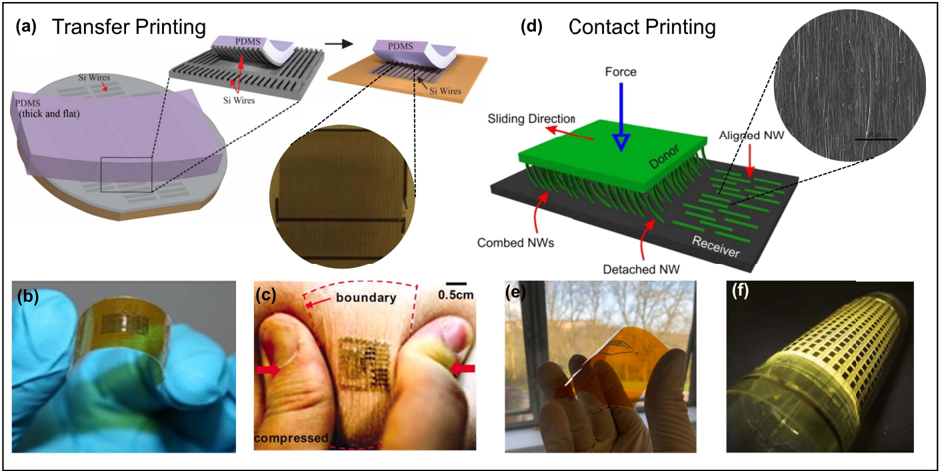
“The transfer printing of multiple types of materials opens interesting avenues for hybrid integrated systems, which is an ideal testbed for e-skin [30], [148], [160].”
Nanoscale Memristor Device as Synapse in Neuromorphic Systems
Jo, S. H., Chang, T., Ebong, I., Bhadviya, B. B., Mazumder, P., & Lu, W. (2010) · Nano Letters · doi:10.1021/nl904092h · Cited by 4,174 · cited 1×
“…hardware neuromorphic architecture implementations reported in the literature are based on devices such as memristor [90], spin logic [91], [92], memristor [93], neuron MOSFET [88], [94], analog circuit-based neurons [95], field-programmable gate array (FPGA) [75], and software-programmed NNs [96].”
WIDROW, B., & HOFF, M. E. (1960) · doi:10.21236/ad0241531 · Cited by 4,009
Memristive devices for computing
Yang, J. J., Strukov, D. B., & Stewart, D. R. (2013) · Nature Nanotechnology · doi:10.1038/nnano.2012.240 · Cited by 3,885 · cited 1×
“Recently, two-terminal memristive devices have gained attention as the state of their internal resistance could indicate the history of the voltage across and/or current through them [97]–[99].”
Highly sensitive flexible pressure sensors with microstructured rubber dielectric layers
Mannsfeld, S. C. B., Tee, B. C.-K., Stoltenberg, R. M., Chen, C. V. H.-H., Barman, S., Muir, B. V. O., Sokolov, A. N., Reese, C., & Bao, Z. (2010) · Nature Materials · doi:10.1038/nmat2834 · Cited by 3,291 · cited 2×
“[39] S.”
Skin-like pressure and strain sensors based on transparent elastic films of carbon nanotubes
Lipomi, D. J., Vosgueritchian, M., Tee, B. C.-K., Hellstrom, S. L., Lee, J. A., Fox, C. H., & Bao, Z. (2011) · Nature Nanotechnology · doi:10.1038/nnano.2011.184 · Cited by 3,188
An ultra-lightweight design for imperceptible plastic electronics
Kaltenbrunner, M., Sekitani, T., Reeder, J., Yokota, T., Kuribara, K., Tokuhara, T., Drack, M., Schwödiauer, R., Graz, I., Bauer-Gogonea, S., et al. (2013) · Nature · doi:10.1038/nature12314 · Cited by 2,485
Multiplexed electrical detection of cancer markers with nanowire sensor arrays
Zheng, G., Patolsky, F., Cui, Y., Wang, W. U., & Lieber, C. M. (2005) · Nature Biotechnology · doi:10.1038/nbt1138 · Cited by 2,436
Hammock, M. L., Chortos, A., Tee, B. C. ‐., Tok, J. B. ‐., & Bao, Z. (2013) · Advanced Materials · doi:10.1002/adma.201302240 · Cited by 2,396 · cited 4×
“There have been other surveys that discussed various types of tactile sensors and some of the issues related to the effective utilization of tactile sensing [9]–[11].”
InfluentialInkjet Printing—Process and Its Applications
Singh, M., Haverinen, H. M., Dhagat, P., & Jabbour, G. E. (2010) · Advanced Materials · doi:10.1002/adma.200901141 · Cited by 2,375
Research works printed but not linked: 2
- standring, 2015, Gray’s anatomy e-book the anatomical basis of clinical practice
- 10.1063/1.3184579 · DOI · Paper page
Cited by
Electronic skins and machine learning for intelligent soft robots
Shih, B., Shah, D., Li, J., Thuruthel, T. G., Park, Y.-L., Iida, F., Bao, Z., Kramer-Bottiglio, R., & Tolley, M. T. (2020) · Science Robotics · doi:10.1126/scirobotics.aaz9239 · Cited by 715
A Review on Soft Sensors for Monitoring, Control, and Optimization of Industrial Processes
Jiang, Y., Yin, S., Dong, J., & Kaynak, O. (2021) · IEEE Sensors Journal · doi:10.1109/jsen.2020.3033153 · Cited by 667
Pyo, S., Lee, J., Bae, K., Sim, S., & Kim, J. (2021) · Advanced Materials · doi:10.1002/adma.202005902 · Cited by 631
Flexible and Stretchable Capacitive Sensors with Different Microstructures
Qin, J., Yin, L., Hao, Y., Zhong, S., Zhang, D., Bi, K., Zhang, Y., Zhao, Y., & Dang, Z. (2021) · Advanced Materials · doi:10.1002/adma.202008267 · Cited by 616
Flexible Electronics and Devices as Human–Machine Interfaces for Medical Robotics
Heng, W., Solomon, S., & Gao, W. (2022) · Advanced Materials · doi:10.1002/adma.202107902 · Cited by 609
Metadata
- Authors
- Dahiya, R., Yogeswaran, N., Liu, F., Manjakkal, L., Burdet, E., Hayward, V., & Jörntell, H.
- Affiliations
- University of Glasgow (GB)
- Imperial College London (GB)
- Institute of Intelligent Systems and Robotics, Sorbonne University, Paris, France
- Lund University (SE)
- Venue
- Proceedings of the IEEE
- Published
- 2019-10
- Volume
- 107
- Issue
- 10
- Pages
- 2016-2033
- ISSN
- 0018-9219 (ISSN-L)
- 1558-2256
- OpenAlex
- W2977568232
- Cited by
- 309
- References
- 185
- Citations by year
- 2026: 25 · 2025: 26 · 2024: 48 · 2023: 37 · 2022: 50 · 2021: 64 · 2020: 55 · 2019: 4
- FWCI
- 15.27
- Type
- journal article
- Language
- en
- Open access
- hybrid
- doi.org
- Locations
- Proceedings of the IEEE (publishedVersion, cc-by)
- ENLIGHTEN (Jurnal Bimbingan dan Konseling Islam) (acceptedVersion, cc-by-sa)
- HAL (submittedVersion, other-oa)
- HAL (submittedVersion)
- Edinburgh Napier Research Repository (Edinburgh Napier University) (submittedVersion, other-oa)
- Funders
- Engineering and Physical Sciences Research Council (EP/M002527/1, EP/R029644/1)
- H2020 Future and Emerging Technologies (H2020-FETOPEN-2018-829186)
- Topics
- Physical Sciences › Engineering › Biomedical Engineering › Advanced Sensor and Energy Harvesting Materials
- Physical Sciences › Engineering › Biomedical Engineering › Soft Robotics and Applications
- Life Sciences › Neuroscience › Cognitive Neuroscience › Tactile and Sensory Interactions
- Keywords
- electronic skin, soft robotics, tactile sensing, haptics, large-area manufacturing, energy self-sufficiency, flexible electronics, prosthetics
About these checks
Registry, retraction, Cites and statistics results are computed, not judged, with one exception: a printed reference that no index lists is read once by a model before it counts as a citation error. Claims are extracted by a model and kept only when their quote appears verbatim in the text; each cited source is then checked, with a model’s help, for whether it says what the claim relies on. Those verdicts can be wrong — read the claim’s quote and the cited source before relying on one.
Statistics and arithmetic are recomputed, not judged.
Confidence bands are shown only for fields calibrated on our annotated test set. None is calibrated yet, so no band is shown.
What counts as a claim ›How we measure confidence ›How we check this ›
Are you an author, or do you see a problem with this page? Request a review
How to cite
Cite CoChat for the checks on this page, and the paper for its own findings.
- This page
- CoChat. (2026). Citation check: Large-Area Soft e-Skin: The Challenges Beyond Sensor Designs. https://app.cochat.ai/papers/10.1109/jproc.2019.2941366
- The paper
- Dahiya, R., Yogeswaran, N., Liu, F., Manjakkal, L., Burdet, E., Hayward, V., & Jörntell, H. (2019). Large-Area Soft e-Skin: The Challenges Beyond Sensor Designs. Proceedings of the IEEE. https://doi.org/10.1109/jproc.2019.2941366
Data sources
Bibliographic data: Semantic Scholar, OpenAlex, Crossref.
Contains information from the Semantic Scholar Academic Graph Datasets, made available under the ODC Attribution License (ODC-BY 1.0).
Semantic Scholar’s data is described in: Kinney, R., et al. (2023). The Semantic Scholar Open Data Platform. arXiv:2301.10140.
