

Microglia and amyloid precursor protein coordinate control of transient Candida cerebritis with memory deficits
Open accessThe DOI matches its Crossref record; 68 of the 69 references it cites were found in a registry or an index.
Abstract
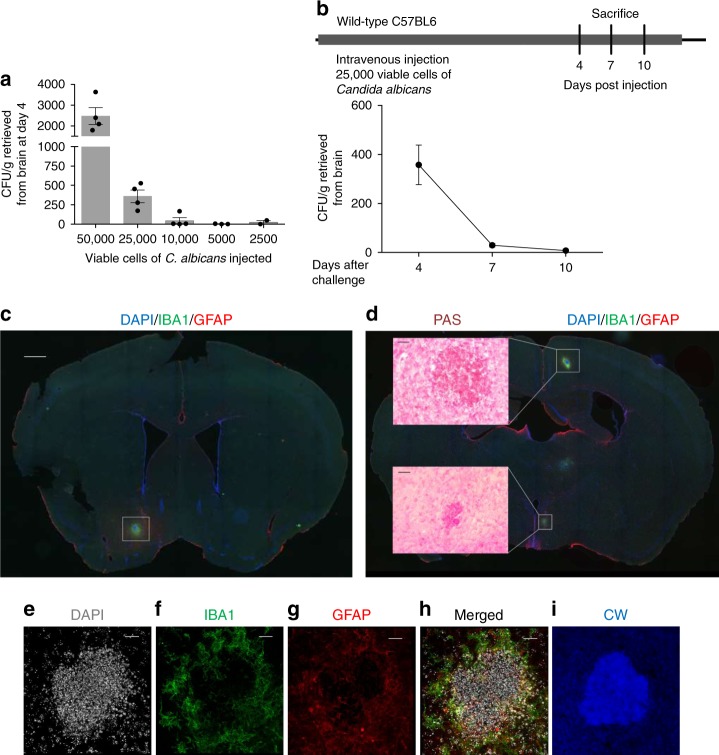
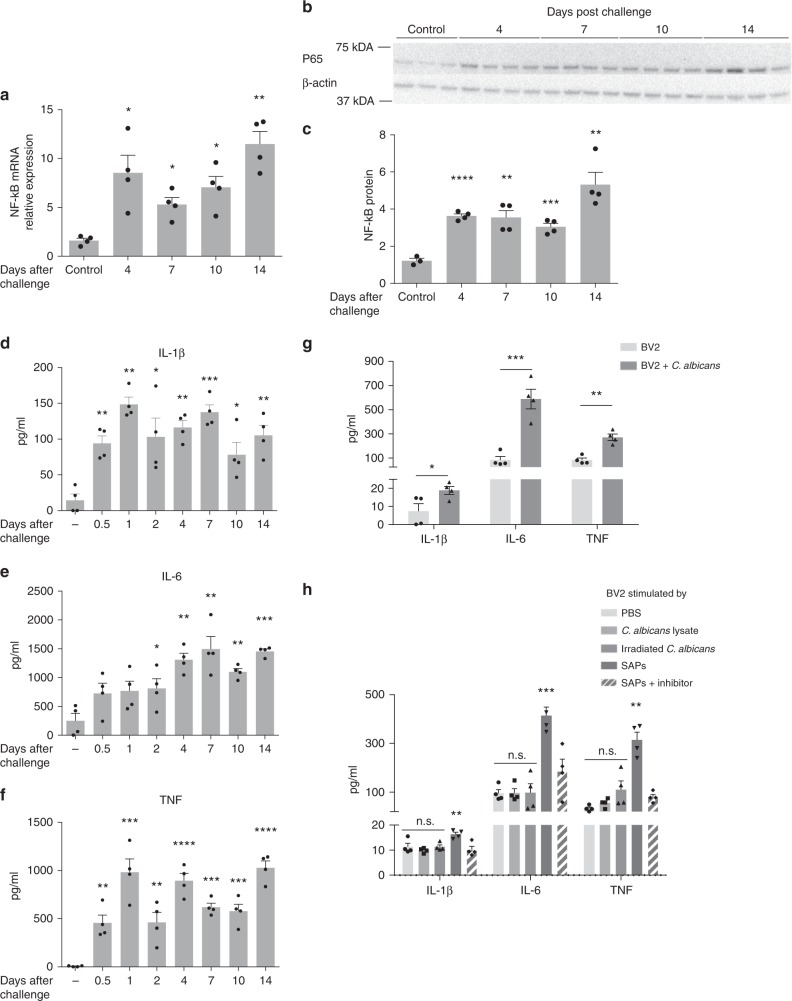
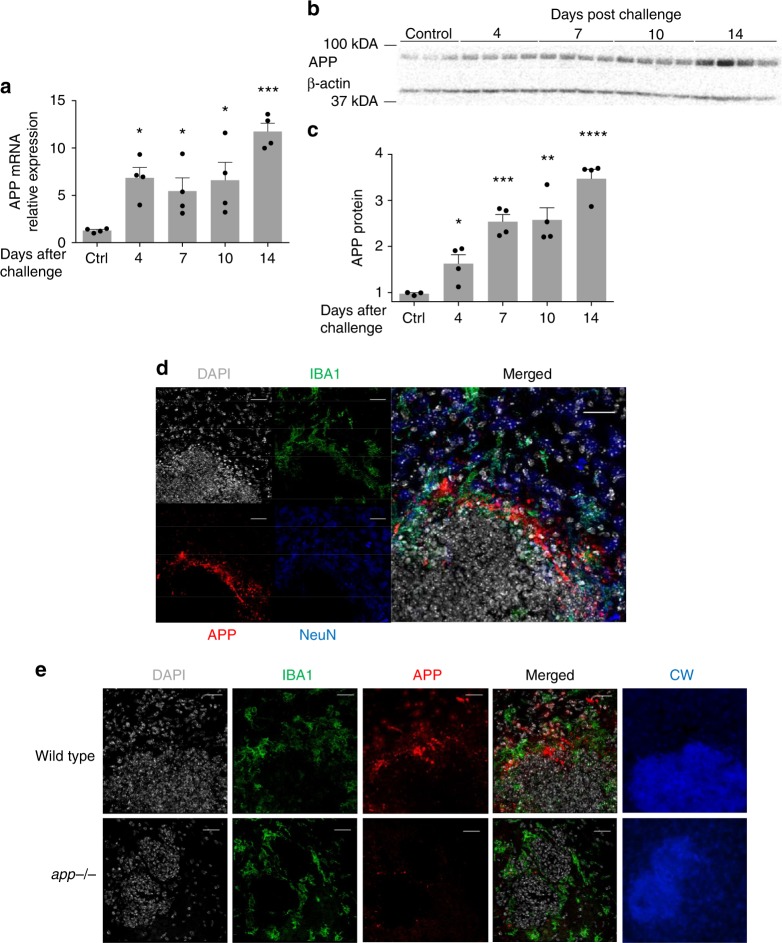
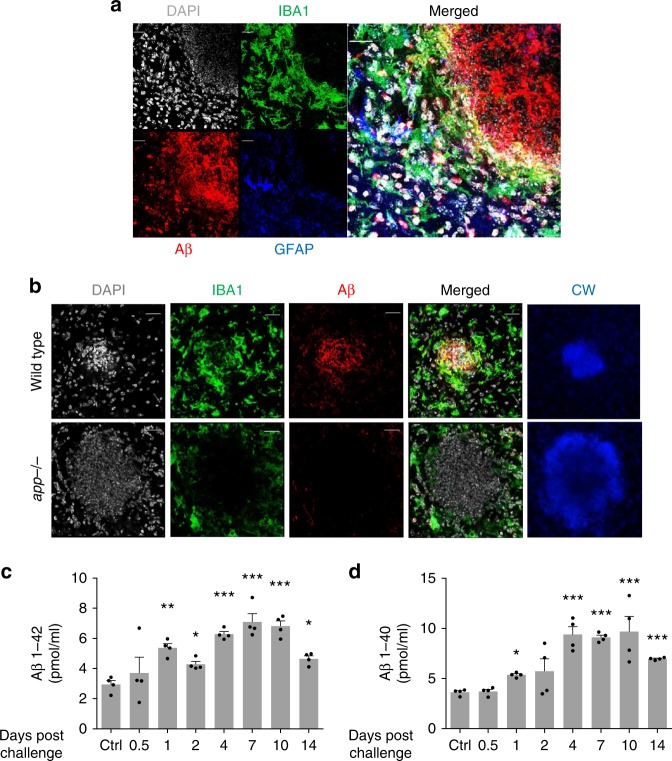
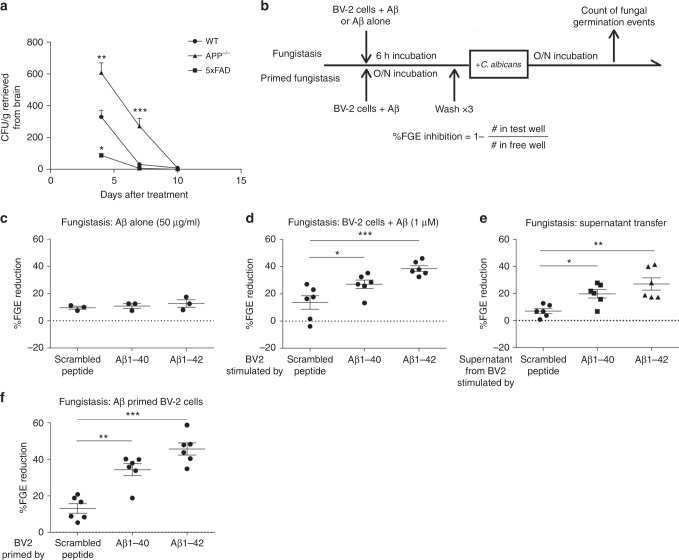
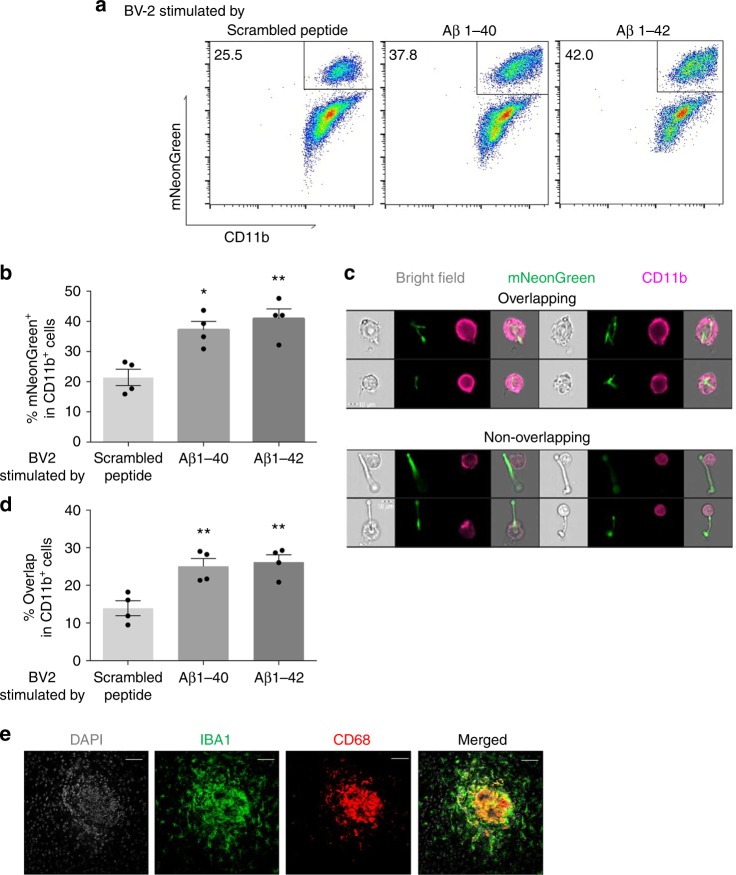
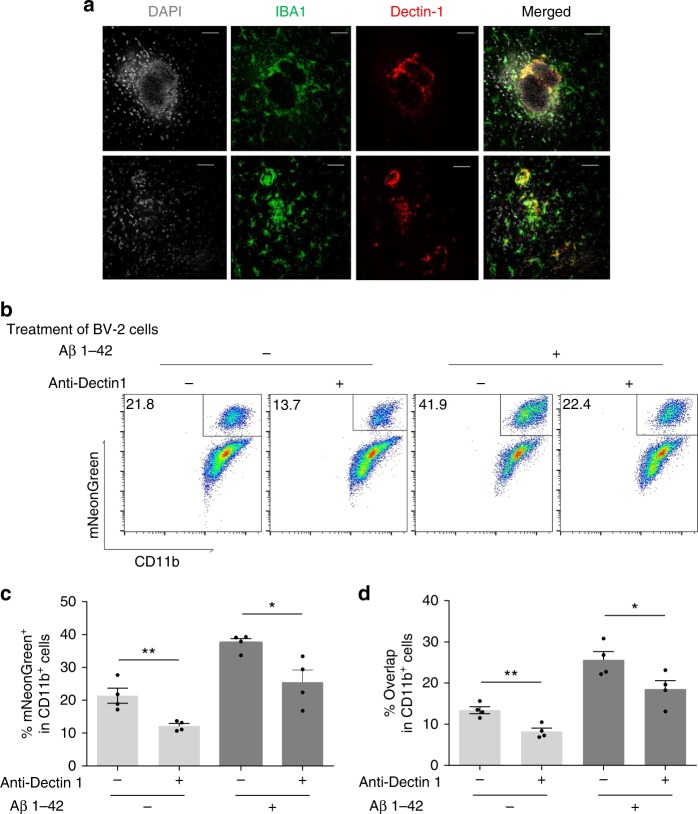
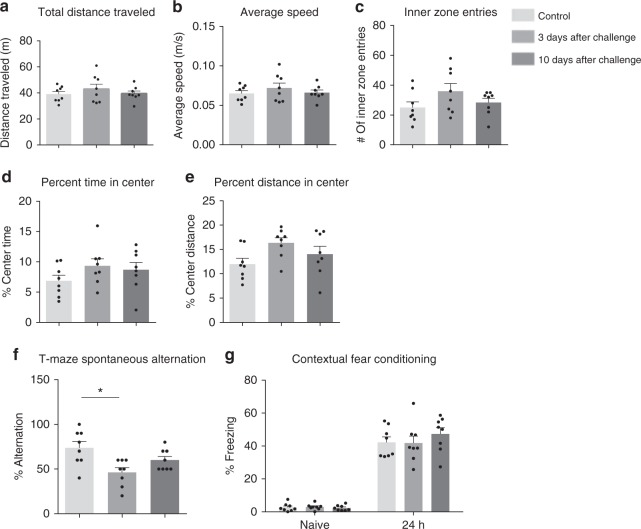
Bloodborne infections with Candida albicans are an increasingly recognized complication of modern medicine. Here, we present a mouse model of low-grade candidemia to determine the effect of disseminated infection on cerebral function and relevant immune determinants. We show that intravenous injection of 25,000 C. albicans cells causes a highly localized cerebritis marked by the accumulation of activated microglial and astroglial cells around yeast aggregates, forming fungal-induced glial granulomas. Amyloid precursor protein accumulates within the periphery of these granulomas, while cleaved amyloid beta (Aβ) peptides accumulate around the yeast cells. CNS-localized C. albicans further activate the transcription factor NF-κB and induce production of interleukin-1β (IL-1β), IL-6, and tumor necrosis factor (TNF), and Aβ peptides enhance both phagocytic and antifungal activity from BV-2 cells. Mice infected with C. albicans display mild memory impairment that resolves with fungal clearance. Our results warrant additional studies to understand the effect of chronic cerebritis on cognitive and immune function.
Overview
The claims and statistics of this paper haven’t been checked yet.
Free: it reads the open-access text and checks the first 5 claims that cite a source we can check. Create a free account to check every claim.
Integrity signals
Registry
Cites
Statistics
Figures
Verification
Claims the paper makes
The claims and statistics of this paper haven’t been checked yet.
Free: it reads the open-access text and checks the first 5 claims that cite a source we can check. Create a free account to check every claim.
Claims other papers make about this one
Each is checked against this paper’s own text: does it say what the citing paper says it does?
The source backs part of the claim, not all of it — or backs it for a different population, condition or comparison.
In the citing paper
“Furthermore, C. albicans induce the production of cytokines that enhance Aβ production which may ultimately contribute to the formation of amyloid plaques and memory decline [90].”
From What would it take to prove that a chronic infection is a causal agent in Alzheimer’s disease? (2025) · cites this paper as [90]
Experimental — accuracy not yet measuredThe cited source says what the claim attributes to it.
In the citing paper
“Notably, in cerebral candidiasis, yeast forms and occasional hyphal forms are surrounded by glial nodules [89], which were later found to be composed of reactive microglia and astrocytes in rodent models of subclinical cerebral candidiasis [90].”
From What would it take to prove that a chronic infection is a causal agent in Alzheimer’s disease? (2025) · cites this paper as [90]
In the citing paper
“familial AD mutations accelerated the clearance of C. albicans from brains in mice.408”
From Amyloid β-based therapy for Alzheimer’s disease: Challenges, successes and future (2023) · cites this paper as [408]
Self-check
Percentages, sums and reported differences re-computed from the paper’s own numbers.
The self-check needs the paper’s full text.
Citations
Cites
The Amyloid Hypothesis of Alzheimer’s Disease: Progress and Problems on the Road to Therapeutics
Hardy, J., & Selkoe, D. J. (2002) · Science · doi:10.1126/science.1072994 · Cited by 13,864
Amyloid oligomers exacerbate tau pathology in a mouse model of tauopathy
Selenica, M.-L. B., Brownlow, M., Jimenez, J. P., Lee, D. C., Pena, G., Dickey, C. A., Gordon, M. N., & Morgan, D. (2013) · Neurodegenerative Diseases · doi:10.1159/000337230 · Cited by 10,359
Diet rapidly and reproducibly alters the human gut microbiome
David, L. A., Maurice, C. F., Carmody, R. N., Gootenberg, D. B., Button, J. E., Wolfe, B. E., Ling, A. V., Devlin, A. S., Varma, Y., Fischbach, M. A., et al. (2014) · Nature · doi:10.1038/nature12820 · Cited by 10,100
A Unique Microglia Type Associated with Restricting Development of Alzheimer’s Disease
Keren-Shaul, H., Spinrad, A., Weiner, A., Matcovitch-Natan, O., Dvir-Szternfeld, R., Ulland, T. K., David, E., Baruch, K., Lara-Astaiso, D., Toth, B., et al. (2017) · Cell · doi:10.1016/j.cell.2017.05.018 · Cited by 5,493
Inflammation and Alzheimer’s disease
Akiyama, H. (2000) · Neurobiology of Aging · doi:10.1016/s0197-4580(00)00124-x · Cited by 4,514
Hidden Killers: Human Fungal Infections
Brown, G. D., Denning, D. W., Gow, N. A. R., Levitz, S. M., Netea, M. G., & White, T. C. (2012) · Science Translational Medicine · doi:10.1126/scitranslmed.3004404 · Cited by 4,284
NF-κB: a key role in inflammatory diseases
Tak, P. P., & Firestein, G. S. (2001) · Journal of Clinical Investigation · doi:10.1172/jci11830 · Cited by 3,918
Krasemann, S., Madore, C., Cialic, R., Baufeld, C., Calcagno, N., El Fatimy, R., Beckers, L., O’Loughlin, E., Xu, Y., Fanek, Z., et al. (2017) · Immunity · doi:10.1016/j.immuni.2017.08.008 · Cited by 2,979
Nonfilamentous C. albicans Mutants Are Avirulent
Lo, H.-J., Köhler, J. R., DiDomenico, B., Loebenberg, D., Cacciapuoti, A., & Fink, G. R. (1997) · Cell · doi:10.1016/s0092-8674(00)80358-x · Cited by 1,809
Microglia-specific localisation of a novel calcium binding protein, Iba1
Ito, D., Imai, Y., Ohsawa, K., Nakajima, K., Fukuuchi, Y., & Kohsaka, S. (1998) · Molecular Brain Research · doi:10.1016/s0169-328x(98)00040-0 · Cited by 1,476
Research works printed but not linked: 1
- Porter PC Necessary and sufficient role for T helper cells to prevent fungal dissemination in allergic lung disease Infect. Immun. 2011 79 4459 4471 10.1128/IAI.05209-11 21875960 PMC3257943 · DOI
Cited by
Amyloid β-based therapy for Alzheimer’s disease: Challenges, successes and future
Zhang, Y., Chen, H., Li, R., Sterling, K., & Song, W. (2023) · Signal Transduction and Targeted Therapy · doi:10.1038/s41392-023-01484-7 · Cited by 988
“albicans from brains in mice.(408) Together, the underlying mechanisms of Aβ peptides exerting their anti-microbial activity including interation with membranes and disruption of membrane integrity; stimulation of phagocytosis by inducing cytokines or altering microorganisms’ conformation.”
BackgroundNew Insights Into the Pathogenesis of Alzheimer's Disease
Fan, L., Mao, C., Hu, X., Zhang, S., Yang, Z., Hu, Z., Sun, H., Fan, Y., Dong, Y., Yang, J., et al. (2020) · Frontiers in Neurology · doi:10.3389/fneur.2019.01312 · Cited by 344
Han, E., Choi, S., Lee, Y., Park, J., Hong, S., & Lee, H. (2019) · The FASEB Journal · doi:10.1096/fj.201901575r · Cited by 240
Current understanding of the Alzheimer’s disease-associated microbiome and therapeutic strategies
Seo, D.-O., & Holtzman, D. M. (2024) · Experimental & Molecular Medicine · doi:10.1038/s12276-023-01146-2 · Cited by 230
Xu, Y., Propson, N. E., Du, S., Xiong, W., & Zheng, H. (2021) · Proceedings of the National Academy of Sciences · doi:10.1073/pnas.2023418118 · Cited by 171
“BV2 cell line maintenance was described as previously (57).”
BackgroundSelf-citation
Metadata
- Authors
- Wu, Y., Du, S., Johnson, J. L., Tung, H.-Y., Landers, C. T., Liu, Y., Seman, B. G., Wheeler, R. T., Costa-Mattioli, M., Kheradmand, F., Zheng, H., & Corry, D. B.
- Affiliations
- Baylor College of Medicine (US)
- University of Maine (US)
- Michael E. DeBakey VA Medical Center (US)
- Corresponding author
- Corry, David B.
- ORCID
- Venue
- Nature Communications
- Published
- 2019-01-04
- Volume
- 10
- Issue
- 1
- Pages
- 58-58
- ISSN
- 2041-1723 (ISSN-L)
- PMC
- PMC6320369
- OpenAlex
- W2908394910
- Cited by
- 143
- References
- 69
- Citations by year
- 2026: 11 · 2025: 28 · 2024: 20 · 2023: 18 · 2022: 14 · 2021: 19 · 2020: 16 · 2019: 17
- FWCI
- 9.82
- Type
- journal article
- Language
- en
- Open access
- gold
- doi.org
- Licence
- cc-by
- creativecommons.org/licenses/by/4.0 (tdm)
- creativecommons.org/licenses/by/4.0 (vor)
- Locations
- Nature Communications (publishedVersion, cc-by)
- Europe PMC (PubMed Central) (publishedVersion, other-oa)
- PubMed Central (publishedVersion, cc-by)
- PubMed (publishedVersion)
- RePEc: Research Papers in Economics (submittedVersion)
- DOAJ (DOAJ: Directory of Open Access Journals) (submittedVersion, cc-by-sa)
- DOAJ (DOAJ: Directory of Open Access Journals) (submittedVersion)
- Funders
- U.S. Department of Veterans Affairs (I01 BX002221)
- Office of Research and Development (RR024574)
- National Heart, Lung, and Blood Institute (R01HL117181)
- National Cancer Institute (P30CA125123)
- National Institute of Allergy and Infectious Diseases (P30AI036211, R01AI135803, R15AI133415, T32AI053831)
- National Center for Research Resources (S10RR024574)
- Topics
- Health Sciences › Medicine › Infectious Diseases › Antifungal resistance and susceptibility
- Life Sciences › Neuroscience › Neurology › Neuroinflammation and Neurodegeneration Mechanisms
- Health Sciences › Medicine › Infectious Diseases › Fungal Infections and Studies
- Keywords
- Candida albicans, candidemia, cerebritis, microglia, amyloid precursor protein, amyloid-beta, astrocytes, NF-κB, IL-1β, TNF-α, interleukin-6, BV-2 cells, phagocytosis, antifungal immunity, memory impairment, fungal infection, mouse model
- MeSH terms
- Animals, Astrocytes, Candida albicans, Memory Disorders, Tumor Necrosis Factor-alpha, Amyloid beta-Peptides, NF-kappa B, Amyloid beta-Protein Precursor, Microglia, Mice, Interleukin-1beta, Cerebrum, Candidemia
About these checks
Registry, retraction, Cites and statistics results are computed, not judged, with one exception: a printed reference that no index lists is read once by a model before it counts as a citation error. Claims are extracted by a model and kept only when their quote appears verbatim in the text; each cited source is then checked, with a model’s help, for whether it says what the claim relies on. Those verdicts can be wrong — read the claim’s quote and the cited source before relying on one.
Statistics and arithmetic are recomputed, not judged.
Confidence bands are shown only for fields calibrated on our annotated test set. None is calibrated yet, so no band is shown.
What counts as a claim ›How we measure confidence ›How we check this ›
Are you an author, or do you see a problem with this page? Request a review
How to cite
Cite CoChat for the checks on this page, and the paper for its own findings.
- This page
- CoChat. (2026). Citation check: Microglia and amyloid precursor protein coordinate control of transient Candida cerebritis with memory deficits. https://app.cochat.ai/papers/10.1038/s41467-018-07991-4
- The paper
- Wu, Y., Du, S., Johnson, J. L., Tung, H.-Y., Landers, C. T., Liu, Y., Seman, B. G., Wheeler, R. T., Costa-Mattioli, M., Kheradmand, F., Zheng, H., & Corry, D. B. (2019). Microglia and amyloid precursor protein coordinate control of transient Candida cerebritis with memory deficits. Nature Communications. https://doi.org/10.1038/s41467-018-07991-4
Data sources
Bibliographic data: Semantic Scholar, OpenAlex, Crossref.
Contains information from the Semantic Scholar Academic Graph Datasets, made available under the ODC Attribution License (ODC-BY 1.0).
Semantic Scholar’s data is described in: Kinney, R., et al. (2023). The Semantic Scholar Open Data Platform. arXiv:2301.10140.
