

Optogenetic stimulation of medial prefrontal cortex Drd1 neurons produces rapid and long-lasting antidepressant effects
Open accessThe DOI matches its Crossref record; 56 of the 56 references it cites were found in a registry or an index.
Abstract
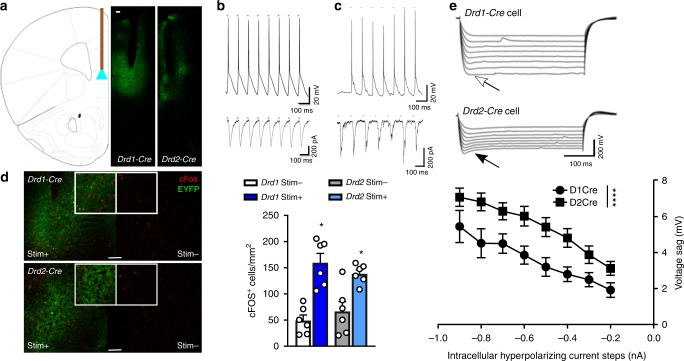
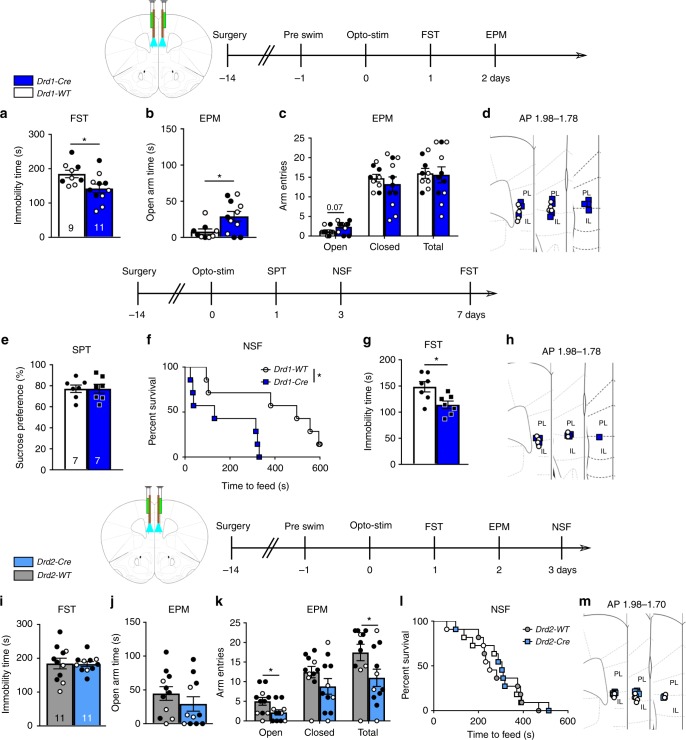
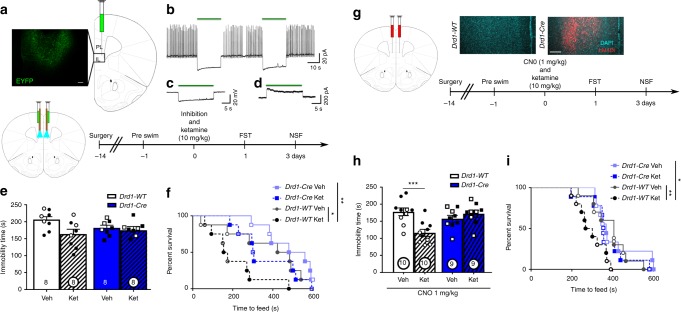
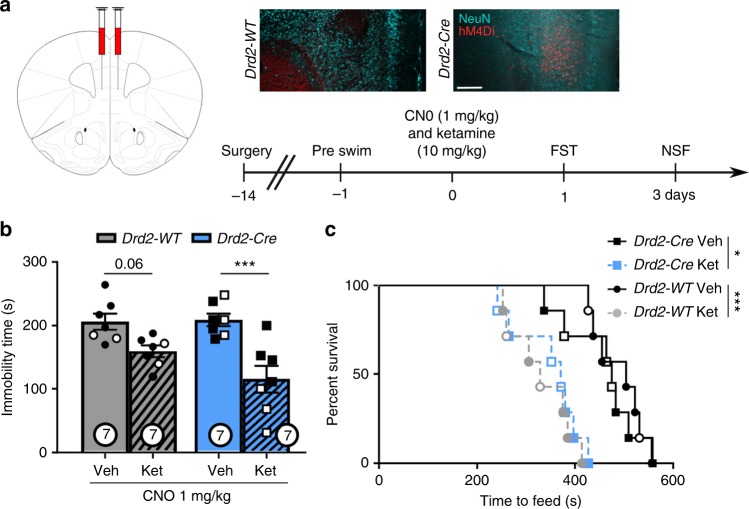
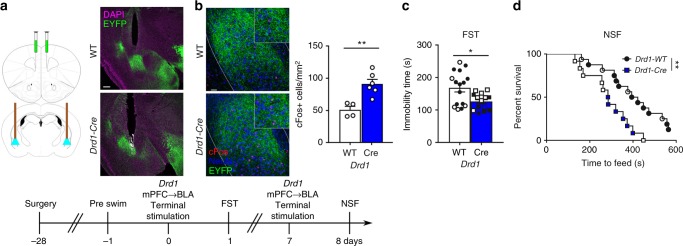
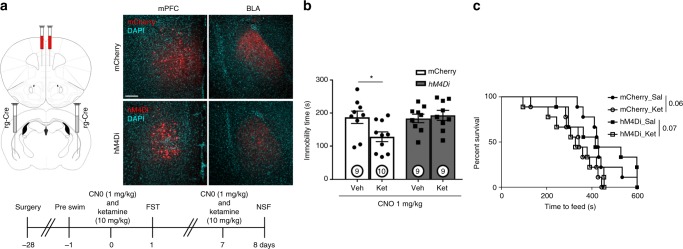
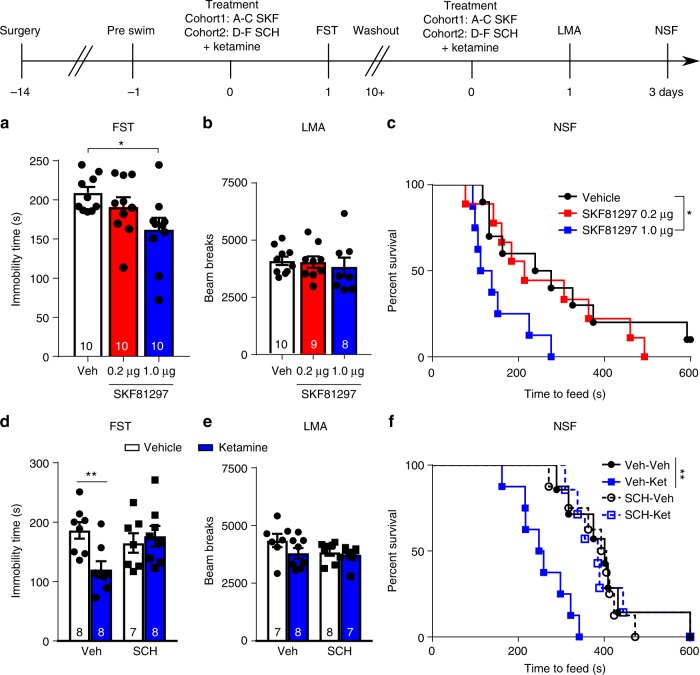
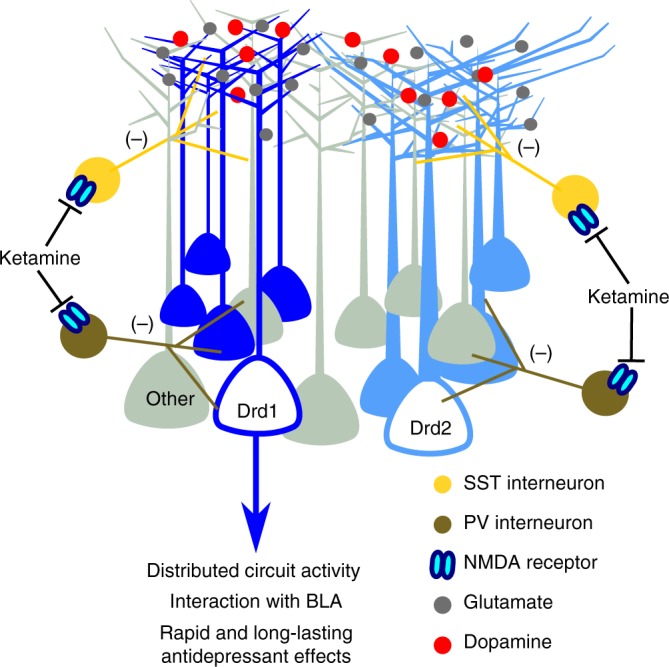
Impaired function in the medial prefrontal cortex (mPFC) contributes to depression, and the therapeutic response produced by novel rapid-acting antidepressants such as ketamine are mediated by mPFC activity. The mPFC contains multiple types of pyramidal cells, but it is unclear whether a particular subtype mediates the rapid antidepressant actions of ketamine. Here we tested two major subtypes, Drd1 and Drd2 dopamine receptor expressing pyramidal neurons and found that activating Drd1 expressing pyramidal cells in the mPFC produces rapid and long-lasting antidepressant and anxiolytic responses. In contrast, photostimulation of Drd2 expressing pyramidal cells was ineffective across anxiety-like and depression-like measures. Disruption of Drd1 activity also blocked the rapid antidepressant effects of ketamine. Finally, we demonstrate that stimulation of mPFC Drd1 terminals in the BLA recapitulates the antidepressant effects of somatic stimulation. These findings aid in understanding the cellular target neurons in the mPFC and the downstream circuitry involved in rapid antidepressant responses.
Overview
The claims and statistics of this paper haven’t been checked yet.
Free: it reads the open-access text and checks the first 5 claims that cite a source we can check. Create a free account to check every claim.
Integrity signals
Registry
Cites
Statistics
Figures
Verification
Claims the paper makes
The claims and statistics of this paper haven’t been checked yet.
Free: it reads the open-access text and checks the first 5 claims that cite a source we can check. Create a free account to check every claim.
Claims other papers make about this one
Each is checked against this paper’s own text: does it say what the citing paper says it does?
The source backs part of the claim, not all of it — or backs it for a different population, condition or comparison.
In the citing paper
“Our findings build upon prior studies showing that non-selective activation of the mPFC can reverse behavioral deficits in depression models [36–39]”
From A nucleus accumbens-projecting prefrontal cortex circuit underlies chronic social stress-induced depression-like behaviors (2026) · cites this paper as [38]
Experimental — accuracy not yet measuredThe cited source says what the claim attributes to it.
In the citing paper
“Moreover, an optogenetic study reveals that activating D1R-, but not D2R-, expressing PFC pyramidal neurons produces rapid and long-lasting antidepressant and anxiolytic responses, and disruption of D1R activity blocks the rapid antidepressant effects of ketamine 212.”
From Mechanisms of synaptic transmission dysregulation in the prefrontal cortex: pathophysiological implications (2022) · cites this paper as [212]
The cited source says what the claim attributes to it.
In the citing paper
“Moreover, an optogenetic study reveals that activating D1R-, but not D2R-, expressing PFC pyramidal neurons produces rapid and long-lasting antidepressant and anxiolytic responses, and disruption of D1R activity blocks the rapid antidepressant effects of ketamine 212.”
From Mechanisms of synaptic transmission dysregulation in the prefrontal cortex: pathophysiological implications (2022) · cites this paper as [212]
Self-check
Percentages, sums and reported differences re-computed from the paper’s own numbers.
The self-check needs the paper’s full text.
Citations
Cites
Molecular Mechanisms of Depression: Perspectives on New Treatment Strategies
Lang, U. E., & Borgwardt, S. (2013) · Cellular Physiology and Biochemistry · doi:10.1159/000350094 · Cited by 8,475
Antidepressant effects of ketamine in depressed patients
Berman, R. M., Cappiello, A., Anand, A., Oren, D. A., Heninger, G. R., Charney, D. S., & Krystal, J. H. (2000) · Biological Psychiatry · doi:10.1016/s0006-3223(99)00230-9 · Cited by 3,856
A randomized trial of an N-methyl-D-aspartate antagonist in treatment-resistant major depression.
Zarate, C. A., Singh, J. B., Carlson, P. J., Brutsche, N. E., Ameli, R., Luckenbaugh, D. A., Charney, D. S., & Manji, H. K. (2006) · Archives of General Psychiatry · doi:10.1001/archpsyc.63.8.856 · Cited by 3,766
mTOR-Dependent Synapse Formation Underlies the Rapid Antidepressant Effects of NMDA Antagonists
Li, N., Lee, B., Liu, R.-J., Banasr, M., Dwyer, J. M., Iwata, M., Li, X.-Y., Aghajanian, G., & Duman, R. S. (2010) · Science · doi:10.1126/science.1190287 · Cited by 2,881
Self-citationMoghaddam, B., Adams, B., Verma, A., & Daly, D. (1997) · The Journal of Neuroscience · doi:10.1523/jneurosci.17-08-02921.1997 · Cited by 1,793
Vyas, A., Mitra, R., Shankaranarayana Rao, B. S., & Chattarji, S. (2002) · The Journal of Neuroscience · doi:10.1523/jneurosci.22-15-06810.2002 · Cited by 1,662
Amygdala circuitry mediating reversible and bidirectional control of anxiety
Tye, K. M., Prakash, R., Kim, S.-Y., Fenno, L. E., Grosenick, L., Zarabi, H., Thompson, K. R., Gradinaru, V., Ramakrishnan, C., & Deisseroth, K. (2011) · Nature · doi:10.1038/nature09820 · Cited by 1,289
Rapid regulation of depression-related behaviours by control of midbrain dopamine neurons
Chaudhury, D., Walsh, J. J., Friedman, A. K., Juarez, B., Ku, S. M., Koo, J. W., Ferguson, D., Tsai, H.-C., Pomeranz, L., Christoffel, D. J., et al. (2013) · Nature · doi:10.1038/nature11713 · Cited by 1,156
Li, N., Liu, R.-J., Dwyer, J. M., Banasr, M., Lee, B., Son, H., Li, X.-Y., Aghajanian, G., & Duman, R. S. (2011) · Biological Psychiatry · doi:10.1016/j.biopsych.2010.12.015 · Cited by 1,082
Self-citationKetamine blocks bursting in the lateral habenula to rapidly relieve depression
Yang, Y., Cui, Y., Sang, K., Dong, Y., Ni, Z., Ma, S., & Hu, H. (2018) · Nature · doi:10.1038/nature25509 · Cited by 1,036
Cited by
Prefrontal cortex and depression
Pizzagalli, D. A., & Roberts, A. C. (2022) · Neuropsychopharmacology · doi:10.1038/s41386-021-01101-7 · Cited by 667
Hare, B. D., & Duman, R. S. (2020) · Molecular Psychiatry · doi:10.1038/s41380-020-0685-9 · Cited by 366
“ACC Anterior cingulate cortex, BLA basolateral amygdala, BMA basomedial amygdala, DRN dorsal raphe nucleus, IL infralimbic, LHB lateral habenula, MDT medial dorsal thalamus, mPFC medial prefrontal cortex, NAc nucleus accumbens, PL prelimbic, SST somatostatin, vHIPP ventral hippocampus, vmPFC ventral medial prefrontal…”
BackgroundSelf-citationGABA interneurons are the cellular trigger for ketamine's rapid antidepressant actions
Gerhard, D. M., Pothula, S., Liu, R.-J., Wu, M., Li, X.-Y., Girgenti, M. J., Taylor, S. R., Duman, C. H., Delpire, E., Picciotto, M., et al. (2020) · Journal of Clinical Investigation · doi:10.1172/jci130808 · Cited by 345
“infusion of a dose in the therapeutic range (18) and a concentration that blocks approximately 50% of NMDA-induced currents (19); or 10 μM, a concentration that is sufficient to block approximately 80% of NMDA-induced currents (20).”
BackgroundSelf-citationYan, Z., & Rein, B. (2022) · Molecular Psychiatry · doi:10.1038/s41380-021-01092-3 · Cited by 300
“Moreover, an optogenetic study reveals that activating D1R-, but not D2R-, expressing PFC pyramidal neurons produces rapid and long-lasting antidepressant and anxiolytic responses, and disruption of D1R activity blocks the rapid antidepressant effects of ketamine [212].”
BackgroundKetamine: A tale of two enantiomers
Jelen, L. A., Young, A. H., & Stone, J. M. (2021) · Journal of Psychopharmacology · doi:10.1177/0269881120959644 · Cited by 246
“Additional research findings indicate that dopamine D1 receptor activity in the mPFC are necessary for the rapid antidepressant actions of (R,S)-ketamine using optogenetic stimulation in a mouse model (Hare et al., 2019).”
BackgroundDopamine and Noradrenaline in the Brain; Overlapping or Dissociate Functions?
Ranjbar-Slamloo, Y., & Fazlali, Z. (2020) · Frontiers in Molecular Neuroscience · doi:10.3389/fnmol.2019.00334 · Cited by 218
The mouse prefrontal cortex: Unity in diversity
Le Merre, P., Ährlund-Richter, S., & Carlén, M. (2021) · Neuron · doi:10.1016/j.neuron.2021.03.035 · Cited by 207
Yang, C., Yang, J., Luo, A., & Hashimoto, K. (2019) · Translational Psychiatry · doi:10.1038/s41398-019-0624-1 · Cited by 190
Neurotrophic mechanisms underlying the rapid and sustained antidepressant actions of ketamine
Deyama, S., & Duman, R. S. (2020) · Pharmacology Biochemistry and Behavior · doi:10.1016/j.pbb.2019.172837 · Cited by 186
“expressing mPFC pyramidal neurons projecting to the basolateral nucleus of the amygdala plays a crucial role in the antidepressant actions of ketamine (Hare et al., 2019).”
BackgroundSelf-citationChronic Stress Weakens Connectivity in the Prefrontal Cortex: Architectural and Molecular Changes.
Woo, E., Sansing, L. H., Arnsten, A. F. T., & Datta, D. (2021) · Chronic Stress · doi:10.1177/24705470211029254 · Cited by 159
A historical review of antidepressant effects of ketamine and its enantiomers
Wei, Y., Chang, L., & Hashimoto, K. (2020) · Pharmacology Biochemistry and Behavior · doi:10.1016/j.pbb.2020.172870 · Cited by 157
Kohtala, S. (2021) · Pharmacological Reports · doi:10.1007/s43440-021-00232-4 · Cited by 142
“Recent rodent studies have further elaborated the cellular targets underlying these effects by examining the role of pyramidal neurons expressing dopamine receptor D1 and D2 (Drd1 and Drd2, respectively) [195].”
BackgroundDesign of fast-onset antidepressant by dissociating SERT from nNOS in the DRN
Sun, N., Qin, Y., Chu, X., Xia, T., Du, Z., Zheng, L., Li, A., Meng, F. J., Zhang, Y., Zhang, J., et al. (2022) · Science · doi:10.1126/science.abo3566 · Cited by 129
Kokkinou, M., Irvine, E. E., Bonsall, D. R., Natesan, S., Wells, L. A., Smith, M., Glegola, J. A., Paul, E. J., Tossell, K., Veronese, M., et al. (2020) · Molecular Psychiatry · doi:10.1038/s41380-020-0740-6 · Cited by 116
Jelen, L. A., & Stone, J. M. (2021) · International Review of Psychiatry · doi:10.1080/09540261.2020.1854194 · Cited by 124
“The exact role of the dopamine system in the antidepressant action of ketamine is yet to be fully elucidated, however recent preclinical work has suggested a key role for dopamine D1 receptor activity in the mPFC (Hare et al., 2019).”
BackgroundBlaze, J., Navickas, A., Phillips, H. L., Heissel, S., Plaza-Jennings, A. L., Miglani, S., Asgharian, H., Foo, M., Katanski, C. D., Watkins, C. P., et al. (2021) · Nature Communications · doi:10.1038/s41467-021-24969-x · Cited by 107
Wu, M., Minkowicz, S., Dumrongprechachan, V., Hamilton, P., & Kozorovitskiy, Y. (2021) · Biological Psychiatry · doi:10.1016/j.biopsych.2020.12.022 · Cited by 95
“A recent study concluded that Drd1-positive neurons in the mPFC regulate depressive-like behavior (72), and our study investigated the underlying neuromodulatory and plasticity mechanisms consistent with this discovery.”
BackgroundResultAgo, Y., Tanabe, W., Higuchi, M., Tsukada, S., Tanaka, T., Yamaguchi, T., Igarashi, H., Yokoyama, R., Seiriki, K., Kasai, A., et al. (2019) · International Journal of Neuropsychopharmacology · doi:10.1093/ijnp/pyz041 · Cited by 92
Perspectives for therapy of treatment‐resistant depression
Papp, M., Cubała, W. J., Święcicki, Ł., Newman‐Tancredi, A., & Willner, P. (2021) · British Journal of Pharmacology · doi:10.1111/bph.15596 · Cited by 104
Cell-type specific modulation of NMDA receptors triggers antidepressant actions
Pothula, S., Kato, T., Liu, R.-J., Wu, M., Gerhard, D., Shinohara, R., Sliby, A.-N., Chowdhury, G. M. I., Behar, K. L., Sanacora, G., et al. (2021) · Molecular Psychiatry · doi:10.1038/s41380-020-0796-3 · Cited by 81
“These findings are consistent with recent optogenetic and chemogenetic studies demonstrating that Drd1-expressing neurons are necessary and sufficient for the rapid antidepressant actions of ketamine [37].”
BackgroundResultSelf-citationJoffe, M. E., Santiago, C. I., Oliver, K. H., Maksymetz, J., Harris, N. A., Engers, J. L., Lindsley, C. W., Winder, D. G., & Conn, P. J. (2020) · Neuron · doi:10.1016/j.neuron.2019.09.044 · Cited by 76
Astrocyte dysfunction drives abnormal resting-state functional connectivity in depression
Liu, J., Mo, J., Wang, X., An, Z., Zhang, S., Zhang, C.-Y., Yi, P., Leong, A. T. L., Ren, J., Chen, L.-Y., et al. (2022) · Science Advances · doi:10.1126/sciadv.abo2098 · Cited by 82
Treatment-resistant depression: molecular mechanisms and management
Kajumba, M. M., Kakooza‐Mwesige, A., Nakasujja, N., Attix, D. K., & Canli, T. (2024) · Molecular Biomedicine · doi:10.1186/s43556-024-00205-y · Cited by 106
“Ketamine rapidly increases DA levels in the medial prefrontal cortex, and antagonizing D 1 Rs in this region prevents the ketamine-induced rapid antidepressant effect [262, 263].”
BackgroundZheng, Y., Wang, N., Wang, S., Zhang, J., Yang, B., & Wang, Z. (2023) · Journal of Experimental & Clinical Cancer Research · doi:10.1186/s13046-023-02696-z · Cited by 89
The Roles of Optogenetics and Technology in Neurobiology: A Review
Chen, W., Li, C., Liang, W., Li, Y., Zou, Z., Xie, Y., Liao, Y., Lin, Y., Lin, Q., Huang, M., et al. (2022) · Frontiers in Aging Neuroscience · doi:10.3389/fnagi.2022.867863 · Cited by 91
Numa, C., Nagai, H., Taniguchi, M., Nagai, M., Shinohara, R., & Furuyashiki, T. (2019) · Scientific Reports · doi:10.1038/s41598-019-52997-7 · Cited by 71
Self-citationJohnston, J. N., Kadriu, B., Allen, J., Gilbert, J. R., Henter, I. D., & Zarate, C. A. (2023) · Neuropharmacology · doi:10.1016/j.neuropharm.2023.109422 · Cited by 76
Depression and substance use disorders: Clinical comorbidity and shared neurobiology
Calarco, C. A., & Lobo, M. K. (2020) · International review of neurobiology · doi:10.1016/bs.irn.2020.09.004 · Cited by 86
Bittar, T. P., Pelaez, M. C., Silva, J. C. H., Quessy, F., Lavigne, A.-A., Morency, D., Blanchette, L.-J., Arsenault, E., Chérasse, Y., Seigneur, J., et al. (2021) · Biological Psychiatry · doi:10.1016/j.biopsych.2021.02.014 · Cited by 76
Tong, Q., Cui, X., Xu, H., Zhang, X., Hu, S., Huang, F., & Xiao, L. (2022) · Molecular Psychiatry · doi:10.1038/s41380-022-01809-y · Cited by 74
Rodent ketamine depression-related research: Finding patterns in a literature of variability
Polis, A. J., Fitzgerald, P. J., Hale, P. J., & Watson, B. O. (2019) · Behavioural Brain Research · doi:10.1016/j.bbr.2019.112153 · Cited by 68
Kokane, S. S., Armant, R. J., Bolaños-Guzmán, C. A., & Perrotti, L. I. (2020) · Behavioural Brain Research · doi:10.1016/j.bbr.2020.112548 · Cited by 61
“2019 [60] Male and female C57BL/6 mice Single dose of 10 mg/kg i.”
BackgroundAnderson, E. M., Gomez, D., Caccamise, A., McPhail, D., & Hearing, M. (2019) · Neurobiology of Stress · doi:10.1016/j.ynstr.2019.100152 · Cited by 60
Roles of multiple lipid mediators in stress and depression
Furuyashiki, T., Akiyama, S., & Kitaoka, S. (2019) · International Immunology · doi:10.1093/intimm/dxz023 · Cited by 59
Dopamine Receptors: Is It Possible to Become a Therapeutic Target for Depression?
Zhao, F., Cheng, Z., Piao, J., Cui, R., & Li, B. (2022) · Frontiers in Pharmacology · doi:10.3389/fphar.2022.947785 · Cited by 78
Fukumoto, K., Fogaça, M. V., Liu, R.-J., Duman, C. H., Li, X., Chaki, S., & Duman, R. S. (2020) · Neuropsychopharmacology · doi:10.1038/s41386-020-0705-0 · Cited by 59
“In addition, pharmacological or chemogenic silencing of mPFC neurons completely blocks the synaptic and/or behavioral effects of ketamine [67, 68].”
BackgroundSelf-citationNeurobiology of the rapid-acting antidepressant effects of ketamine: impact and opportunities
Shinohara, R., Aghajanian, G. K., & Abdallah, C. G. (2021) · Biological Psychiatry · doi:10.1016/j.biopsych.2020.12.006 · Cited by 54
Self-citationMizuno, Y., Ashok, A. H., Bhat, B. B., Jauhar, S., & Howes, O. D. (2023) · Journal of Psychopharmacology · doi:10.1177/02698811231200881 · Cited by 66
“Alternatively, given the replicated finding of lower striatal D 1 receptor availability, one could speculate that it is an adaptive response to lower signalling through the D 1 pathway (Hare et al., 2019).”
BackgroundSex differences in resilience: Experiential factors and their mechanisms
Fallon, I. P., Tanner, M. K., Greenwood, B. N., & Baratta, M. V. (2019) · European Journal of Neuroscience · doi:10.1111/ejn.14639 · Cited by 65
“…intra-mPFC administration of ketamine leads to dopamine release (Lorrain, Baccei, Bristow, Anderson, & Varney, 2003) and optogenetic inhibition of dopamine receptor 1-expressing mPFC neurons eliminates the protective effects of ketamine in both male and female mice (Hare et al., 2019).”
BackgroundInfluentialUncovering the Underlying Mechanisms of Ketamine as a Novel Antidepressant
Xu, S., Yao, X., Li, B., Cui, R., Zhu, C., Wang, Y., & Yang, W. (2022) · Frontiers in Pharmacology · doi:10.3389/fphar.2021.740996 · Cited by 56
Wu, M., Minkowicz, S., Dumrongprechachan, V., Hamilton, P., Xiao, L., & Kozorovitskiy, Y. (2021) · eLife · doi:10.7554/elife.64041 · Cited by 51
“Furthermore, consistent with prior findings ( Hare et al., 2019 ), chemogenetic inhibition of mPFC Drd1 + neuronal excitability through G α i - coupled hM4D blocked the behavioral effects of ketamine after LH ( Figure 6—figure supplement 2a,b ).”
Ketamine’s rapid antidepressant effects are mediated by Ca2+-permeable AMPA receptors
Zaytseva, A., Bouckova, E., Wiles, M. J., Wustrau, M. H., Schmidt, I. G., Mendez-Vazquez, H., Khatri, L., & Kim, S. (2023) · eLife · doi:10.7554/elife.86022 · Cited by 48
“Previous studies have shown that 1 μM ketamine treatment can reduce ~ 50% of NMDA-induced currents (Hare et al., 2019), whereas 10 μM is sufficient to block ~ 80% of NMDA-induced currents (Halliwell et al.”
BackgroundResultLi, Q., Zhang, B., Cao, H., Liu, W., Guo, F., Shen, F., Ye, B., Liu, H., Li, Y., & Liu, Z. (2020) · Neuropharmacology · doi:10.1016/j.neuropharm.2019.107836 · Cited by 47
Kohtala, S., Alitalo, O., Rosenholm, M., Rozov, S. V., & Rantamäki, T. (2020) · Pharmacology & Therapeutics · doi:10.1016/j.pharmthera.2020.107741 · Cited by 50
Kanarik, M., Grimm, O., Mota, N. R., Reif, A., & Harro, J. (2022) · Neuroscience & Biobehavioral Reviews · doi:10.1016/j.neubiorev.2022.104757 · Cited by 59
Ketamine for a Boost of Neural Plasticity: How, but Also When?
Wu, H., Savalia, N. K., & Kwan, A. C. (2021) · Biological Psychiatry · doi:10.1016/j.biopsych.2021.03.014 · Cited by 45
“By contrast, silencing Drd1-expressing neurons blocked the antidepressant action of ketamine (8).”
BackgroundP2X2 receptors in pyramidal neurons are critical for regulating vulnerability to chronic stress
Kuang, X., Zhang, C.-Y., Yan, B.-Y., Cai, W.-Z., Lu, C., Xie, L.-J., Li, S.-J., Kong, P., Fan, J., Pan, S.-M., et al. (2022) · Theranostics · doi:10.7150/thno.72144 · Cited by 47
“Stress induces mPFC pyramidal neuronal atrophy and loss in depression [40-42]; and pyramidal neurons are predominate neurons in the mPFC, gating depressive-like behavior [43-45].”
BackgroundActivation of ventrolateral orbital cortex improves mouse neuropathic pain–induced anxiodepression
Sheng, H.-Y., Lv, S., Cai, Y.-Q., Wu, S. K., Lin, W. C., Liu, T., Lü, N., Cao, H., Zhang, L., & Zhang, Y. (2020) · JCI Insight · doi:10.1172/jci.insight.133625 · Cited by 47
“A recent study from Duman’s laboratory showed that activation of Drd1- but not Drd2-expressing pyramidal neurons in the mPFC of Drd1- and Drd2-Cre recombinase mice produced rapid and long-lasting antidepressive effects (36), suggesting an important role of frontal cortex Drd1–expressing excitatory neurons in antidepre…”
BackgroundBehavioral Animal Models and Neural-Circuit Framework of Depressive Disorder
Tian, X., Russo, S. J., & Li, L. (2024) · Neuroscience Bulletin · doi:10.1007/s12264-024-01270-7 · Cited by 56
Antidepressant mechanisms of ketamine: Focus on GABAergic inhibition
Lüscher, B., Feng, M., & Jefferson, S. J. (2020) · Advances in pharmacology · doi:10.1016/bs.apha.2020.03.002 · Cited by 45
Ketamine: The final frontier or another depressing end?
Sial, O. K., Parise, E. M., Parise, L. F., Gnecco, T., & Bolaños‐Guzmán, C. A. (2020) · Behavioural Brain Research · doi:10.1016/j.bbr.2020.112508 · Cited by 45
“More recent work has shown that photoinhibition of D1-containing DA neurons in the PFC can block the antidepressant effects of ketamine [198].”
BackgroundWu, L., Zhang, T., Chen, K., Lu, C., Liu, X. F., Zhou, J. L., Huang, Y., Yan, H., Chen, Y., Zhang, C. J., et al. (2020) · Phytotherapy Research · doi:10.1002/ptr.6812 · Cited by 43
Xu, X., Xiao, Q., Hong, Y., Liu, Y., Liu, Y., & Tu, J. (2020) · CNS Neuroscience & Therapeutics · doi:10.1111/cns.13465 · Cited by 39
Role of the mesolimbic dopamine pathway in the antidepressant effects of ketamine
Cardona-Acosta, A. M., & Bolaños‐Guzmán, C. A. (2022) · Neuropharmacology · doi:10.1016/j.neuropharm.2022.109374 · Cited by 39
Titulaer, J., Radhe, O., Danielsson, K., Dutheil, S., Marcus, M., Jardemark, K. E., Svensson, T., Snyder, G., Ericson, M., Davis, R., et al. (2022) · European Neuropsychopharmacology · doi:10.1016/j.euroneuro.2022.06.009 · Cited by 42
Furuyashiki, T., & Kitaoka, S. (2019) · Psychiatry and Clinical Neurosciences · doi:10.1111/pcn.12901 · Cited by 37
“Ketamine is known as an NMDA receptor antagonist, and it has been proposed that low-dose ketamine treatment induces paradoxical burst of glutamate release in the medial prefrontal cortex through disinhibiting local neuronal circuits.(22,23) In addition, low-dose ketamine treatment also increases dopamine release in th…”
BackgroundScotton, E., Antqueviezc, B., Vasconcelos, M., Dalpiaz, G., Géa, L. P., Goularte, J. F., Colombo, R., & Rosa, A. R. (2022) · Biochemical Pharmacology · doi:10.1016/j.bcp.2022.114963 · Cited by 40
Montagni, E., Resta, F., Mascaro, A. L. A., & Pavone, F. S. (2019) · Photonics · doi:10.3390/photonics6030092 · Cited by 38
“It was demonstrated that optogenetic stimulation (60 min period—1 min on/1 min off, with 15 ms pulses at 10 Hz) of Drd1 expressing pyramidal cells projection in the mPFC produced a rapid and long-lasting antidepressant response and that these neurons are required for ketamine response [129].”
BackgroundNew era of optogenetics: from the central to peripheral nervous system
Xu, X., Mee, T., & Jia, X. (2020) · Critical Reviews in Biochemistry and Molecular Biology · doi:10.1080/10409238.2020.1726279 · Cited by 32
“Variable ion conductance levels and wavelength activation peaks of opsins have been engineered to facilitate future optogenetic experiments (Maimon, Sparks, et al. 2018; Hare et al. 2019; Kovalev et al. 2019; Mederos et al. 2019; Nguyen et al. 2019).”
BackgroundPothula, S., Liu, R.-J., Wu, M., Sliby, A.-N., Picciotto, M. R., Banerjee, P., & Duman, R. S. (2021) · Neuropsychopharmacology · doi:10.1038/s41386-020-00882-7 · Cited by 29
“Consistent with the current study, optogenetic activation of mPFC glutamatergic neurons is sufficient and necessary to produce rapid and sustained antidepressant-like effects [50].”
ResultSelf-citationD1 Dopamine Receptor Activation Induces Neuronal eEF2 Pathway-Dependent Protein Synthesis
David, O., Barrera, I., Gould, N. L., Gal-Ben-Ari, S., & Rosenblum, K. (2020) · Frontiers in Molecular Neuroscience · doi:10.3389/fnmol.2020.00067 · Cited by 34
Asim, M., Wang, H., & Waris, A. (2023) · Neuropeptides · doi:10.1016/j.npep.2023.102322 · Cited by 33
Luo, Z., Chen, J., Dai, Y., So, K., & Zhang, L. (2023) · Communications Biology · doi:10.1038/s42003-023-05003-w · Cited by 34
Li, Z., Li, J., Wei, Y., Zou, W., Vidjro, O. E., Wang, J., Zhou, L., Zhu, Y., & Ma, T. (2023) · Biological Psychiatry · doi:10.1016/j.biopsych.2023.11.005 · Cited by 33
Ketamine rescues anhedonia by cell-type- and input-specific adaptations in the nucleus accumbens
Lucantonio, F., Roeglin, J., Li, S., Lu, J., Shi, A., Czerpaniak, K., Fiocchi, F. R., Bontempi, L., Shields, B. C., Zarate, C. A., et al. (2025) · Neuron · doi:10.1016/j.neuron.2025.02.021 · Cited by 39
“69 While spine formation is not necessary for the initial behavioral effects of ketamine, it is crucial for maintaining the antidepressant effect over time.”
Is Adult Hippocampal Neurogenesis Really Relevant for the Treatment of Psychiatric Disorders?
Carli, M., Aringhieri, S., Kolachalam, S., Longoni, B., Grenno, G., Rossi, M., Gemignani, A., Fornai, F., Maggio, R., & Scarselli, M. (2020) · Current Neuropharmacology · doi:10.2174/1570159x18666200818194948 · Cited by 34
“mPFC, implying that other mechanisms can be involved in the very short term [96].”
BackgroundEvolution of stress responses refine mechanisms of social rank
Korzan, W. J., & Summers, C. H. (2021) · Neurobiology of Stress · doi:10.1016/j.ynstr.2021.100328 · Cited by 31
Buniyaadi, A., Prabhat, A., Bhardwaj, S. K., & Kumar, V. (2022) · Environmental Pollution · doi:10.1016/j.envpol.2022.119618 · Cited by 30
Dorsal peduncular cortex activity modulates affective behavior and fear extinction in mice
Botterill, J. J., Khlaifia, A., Appings, R., Wilkin, J., Violi, F., Premachandran, H., Cruz-Sanchez, A., Canella, A. E., Patel, A., Zaidi, S. D., et al. (2024) · Neuropsychopharmacology · doi:10.1038/s41386-024-01795-5 · Cited by 36
“Altered mPFC activity underlies many neuropsychiatric disorders, including mood, fear and anxiety disorders [38, 41, 43 – 50].”
Dong, L., Li, L., Chen, W., Chen, J., Ren, D., Zheng, Z.-H., Zhao, C., Zhong, Y., Luo, B., Jing, H., et al. (2022) · Molecular Psychiatry · doi:10.1038/s41380-022-01893-0 · Cited by 30
“Optogenetically stimulating the mPFC neurons exerts antidepressant effects [27, 47].”
BackgroundHare, B. D., Pothula, S., Dileone, R., & Duman, R. S. (2020) · Neuropharmacology · doi:10.1016/j.neuropharm.2020.107947 · Cited by 28
“Recent studies demonstrate that distinct populations of vmPFC projection neurons are disproportionately involved in the response to ketamine (Hare et al., 2019).”
BackgroundSelf-citationObray, J. D., Landin, J. D., Vaughan, D. T., Scofield, M. D., & Chandler, L. J. (2022) · Addiction Neuroscience · doi:10.1016/j.addicn.2022.100044 · Cited by 26
An integrative view on the cell-type-specific mechanisms of ketamine's antidepressant actions
Lewis, V., Rurak, G. M., Salmaso, N., & Aguilar‐Valles, A. (2024) · Trends in Neurosciences · doi:10.1016/j.tins.2023.12.004 · Cited by 33
Roles of the monoaminergic system in the antidepressant effects of ketamine and its metabolites
Ago, Y., Yokoyama, R., Asano, S., & Hashimoto, H. (2022) · Neuropharmacology · doi:10.1016/j.neuropharm.2022.109313 · Cited by 26
Formolo, D. A., Lee, T. H., Yu, J., Lin, K., Chen, G., Kranz, G. S., & Yau, S. (2023) · Biomedicines · doi:10.3390/biomedicines11020249 · Cited by 27
“The mPFC expresses high levels of both adiponectin receptors [19,20] and is one of the key brain regions implicated in rapid antidepressant response [42,64].”
BackgroundMethodInfluentialCumulative Effects of Social Stress on Reward-Guided Actions and Prefrontal Cortical Activity
Barthas, F., Hu, M. Y., Siniscalchi, M. J., Ali, F., Mineur, Y. S., Picciotto, M. R., & Kwan, A. C. (2019) · Biological Psychiatry · doi:10.1016/j.biopsych.2020.02.008 · Cited by 28
Prefrontal cortical circuits in anxiety and fear: an overview
Chen, Y., Hu, N.-Y., Yang, J., & Gao, T. (2022) · Frontiers of Medicine · doi:10.1007/s11684-022-0941-2 · Cited by 32
Ren, L. (2024) · Progress in Neuro-Psychopharmacology and Biological Psychiatry · doi:10.1016/j.pnpbp.2023.110910 · Cited by 23
“These regions include hippocampus (HP) (Georgiou et al., 2022), amygdala (Hare et al., 2019), ventral tegmental area (VTA) (Wu et al., 2021a), and the dorsal raphe nucleus (DRN) (Pham et al., 2020).”
BackgroundZhang, Y.-M., Ye, L., Li, T., Guo, F., Guo, F., Li, Y., & Li, Y. (2021) · Acta Pharmacologica Sinica · doi:10.1038/s41401-021-00807-0 · Cited by 23
“utilized optogenetic techniques to demonstrate that light activation of dopamine type 1 receptor (DRD1) expressing pyramidal neurons produced rapid and long-lasting antidepressant effects, and disruption of DRD1 activity also blocked the rapid antidepressant effects of ketamine [34].”
BackgroundLi, Y., Yu, H., Li, Z., Yin, K.-W., Jin, S., Chen, C.-C., Tan, M.-S., Zhang, C.-J., Liu, X.-H., Li, W.-P., et al. (2025) · Nature Cancer · doi:10.1038/s43018-025-01033-x · Cited by 38
“For instance, studies report that optogenetic stimulation can reverse extinction impairment and trigger antidepressant responses even post-stimulation 45,46 .”
Li, S., Zhang, J., Li, J., Hu, Y., Zhang, M., & Wang, H. (2025) · Frontiers in Neural Circuits · doi:10.3389/fncir.2025.1516839 · Cited by 23
Pilc, A., Machaczka, A., Kawalec, P., Smith, J. L., & Witkin, J. M. (2022) · Expert Opinion on Drug Discovery · doi:10.1080/17460441.2022.2111415 · Cited by 21
“Hare and colleagues [175] and Pothula and colleagues [176] also recently defined specific populations of neurons that drive the antidepressantlike efficacy of NMDA receptor antagonists like ketamine or rapastinel.”
BackgroundPapp, M., Gruca, P., Łasoń, M., Litwa, E., Solecki, W., & Willner, P. (2020) · Journal of Psychopharmacology · doi:10.1177/0269881120967857 · Cited by 23
“…OGS in mice subjected to chronic social defeat (Bagot et al., 2015; Covington et al., 2010; Vialou et al., 2014), and in the forced swim or tail suspension test applied to normal mice (e.g. Hare et al., 2019; Son et al., 2018) or rats (Fuchikami et al., 2015; Jimenez-Sánchez et al., 2016a, 2016b).”
BackgroundMethodLiu, L., Zou, Z., Yang, J., Li, X., Zhu, B., Zhang, H., Sun, Y., Zhang, Y., Zhang, Z., & Wang, W. (2021) · Frontiers in Pharmacology · doi:10.3389/fphar.2021.645638 · Cited by 21
“Bursting of glutamatergic signals in mPFC, causing steady-state synaptic plasticity, resulting in rapid antidepressant effects (Hare et al., 2019).”
BackgroundOptogenetics: A revolutionary approach for the study of depression
Fakhoury, M. (2020) · Progress in Neuro-Psychopharmacology and Biological Psychiatry · doi:10.1016/j.pnpbp.2020.110094 · Cited by 24
Pannu, A. S., & Goyal, R. K. (2024) · CNS & Neurological Disorders - Drug Targets · doi:10.2174/0118715273357909241126064951 · Cited by 29
Zhao, Q., Zhang, X., Zhang, J., Zhang, Y., Jia, L., Guo, S., Zhang, M., Wang, H., Wang, Y., Guan, Y., et al. (2025) · International Immunopharmacology · doi:10.1016/j.intimp.2025.114809 · Cited by 24
Information transmission in mPFC-BLA network during exploratory behavior in the open field
Bao, X., Qi, C., Liu, T., & Zheng, X. (2021) · Behavioural Brain Research · doi:10.1016/j.bbr.2021.113483 · Cited by 22
Peng, F., Fan, J., Ge, T., Liu, Q. Q., & Li, B. J. (2020) · Cell Proliferation · doi:10.1111/cpr.12804 · Cited by 20
Yoon, S. H., Song, W. S., Chung, G., Kim, S. J., & Kim, M. (2024) · Experimental & Molecular Medicine · doi:10.1038/s12276-024-01294-z · Cited by 22
Hales, C. A., Bartlett, J., Arban, R., Hengerer, B., & Robinson, E. S. J. (2020) · Neuropsychopharmacology · doi:10.1038/s41386-020-00797-3 · Cited by 20
Selective activation of D1 dopamine receptors exerts antidepressant-like activity in rats
Désormeaux, C., Demars, F., Davenas, E., Jay, T. M., & Lavergne, F. (2020) · Journal of Psychopharmacology · doi:10.1177/0269881120959613 · Cited by 20
“Interestingly, the mechanisms underlying the efficacy of the rapid-acting newly approved antidepressant, ketamine, include DA D1R activation in the medial prefrontal cortex (Hare et al., 2019).”
BackgroundResultInfluentialAmissah, R. Q., Basha, D., Bukhtiyarova, O., Timofeeva, E., & Timofeev, I. (2021) · Physiology & Behavior · doi:10.1016/j.physbeh.2021.113604 · Cited by 20
“This may explain why stimulation of neurons in the mPFC [59, 60] and VTA [61, 62] has been shown to produce antidepressant effects, and depression is a comorbidity of BED [12-15].”
BackgroundLi, Y., Guo, Q., Huang, J., & Wang, Z. (2022) · Frontiers in Pharmacology · doi:10.3389/fphar.2022.922337 · Cited by 23
“One study showed that optogenetic stimulation of mice produced rapid and stimulating antidepressant effects (Hare et al., 2019).”
BackgroundCheng, Z., Zhao, F., Piao, J., Yang, W., Cui, R., & Li, B. (2024) · Molecular Psychiatry · doi:10.1038/s41380-024-02684-5 · Cited by 25
Chang, L., Zhang, K., Pu, Y., Qu, Y., Wang, S., Xiong, Z., Shirayama, Y., & Hashimoto, K. (2019) · European Archives of Psychiatry and Clinical Neuroscience · doi:10.1007/s00406-019-01012-1 · Cited by 20
Beyer, D. K. E., Mattukat, A., & Freund, N. (2021) · International Journal of Bipolar Disorders · doi:10.1186/s40345-020-00212-2 · Cited by 19
Alitalo, O., Saarreharju, R., Henter, I. D., Zarate, C. A., Kohtala, S., & Rantamäki, T. (2021) · Progress in Neurobiology · doi:10.1016/j.pneurobio.2021.102140 · Cited by 20
Cardinal role of the environment in stress induced changes across life stages and generations
Pang, T. Y., Yaeger, J. D. W., Summers, C. H., & Mitra, R. (2021) · Neuroscience & Biobehavioral Reviews · doi:10.1016/j.neubiorev.2021.01.012 · Cited by 19
Song, Y., Lai, M., Liao, Z., Zhang, Z., Zhu, G., Yang, M., Ai, Z., Zheng, Q., & Su, D. (2024) · Phytomedicine · doi:10.1016/j.phymed.2024.155829 · Cited by 18
Metadata
- Authors
- Hare, B. D., Shinohara, R., Liu, R. J., Pothula, S., DiLeone, R. J., & Duman, R. S.
- Affiliations
- Yale University (US)
- Corresponding author
- Duman, Ronald S.
- Venue
- Nature Communications
- Published
- 2019-01-15
- Volume
- 10
- Issue
- 1
- Pages
- 223-223
- ISSN
- 2041-1723 (ISSN-L)
- PMC
- PMC6333924
- OpenAlex
- W2909539449
- Cited by
- 217
- References
- 54
- Citations by year
- 2026: 13 · 2025: 32 · 2024: 29 · 2023: 21 · 2022: 29 · 2021: 32 · 2020: 39 · 2019: 22
- FWCI
- 18.90
- Type
- journal article
- Language
- en
- Open access
- gold
- doi.org
- Licence
- cc-by
- creativecommons.org/licenses/by/4.0 (tdm)
- creativecommons.org/licenses/by/4.0 (vor)
- Locations
- Nature Communications (publishedVersion, cc-by)
- Europe PMC (PubMed Central) (publishedVersion, other-oa)
- PubMed Central (publishedVersion, cc-by)
- PubMed (publishedVersion)
- RePEc: Research Papers in Economics (submittedVersion)
- DOAJ (DOAJ: Directory of Open Access Journals) (submittedVersion, cc-by-sa)
- DOAJ (DOAJ: Directory of Open Access Journals) (submittedVersion)
- Funders
- Brain and Behavior Research Foundation (24593)
- National Alliance for Research on Schizophrenia and Depression
- National Institutes of Health
- National Institute of Mental Health (MH105910, MH093897, R01MH093897, RO1 MH093897-06A1, R01MH105910)
- National Institute of Diabetes and Digestive and Kidney Diseases (R01DK098994)
- Topics
- Health Sciences › Medicine › Pharmacology (medical) › Treatment of Major Depression
- Life Sciences › Neuroscience › Cellular and Molecular Neuroscience › Neurotransmitter Receptor Influence on Behavior
- Life Sciences › Neuroscience › Cellular and Molecular Neuroscience › Neuroscience and Neuropharmacology Research
- Keywords
- medial prefrontal cortex, pyramidal neurons, optogenetic stimulation, rapid-acting antidepressants, ketamine, depression, anxiety, anxiolytic effects, basolateral amygdala
- MeSH terms
- Animals, Antidepressive Agents, Female, Ketamine, Male, Mice, Inbred C57BL, Prefrontal Cortex, Receptors, Dopamine D1, Receptors, Dopamine D2, Dopamine Agonists, Optogenetics, Basolateral Nuclear Complex
About these checks
Registry, retraction, Cites and statistics results are computed, not judged, with one exception: a printed reference that no index lists is read once by a model before it counts as a citation error. Claims are extracted by a model and kept only when their quote appears verbatim in the text; each cited source is then checked, with a model’s help, for whether it says what the claim relies on. Those verdicts can be wrong — read the claim’s quote and the cited source before relying on one.
Statistics and arithmetic are recomputed, not judged.
Confidence bands are shown only for fields calibrated on our annotated test set. None is calibrated yet, so no band is shown.
What counts as a claim ›How we measure confidence ›How we check this ›
Are you an author, or do you see a problem with this page? Request a review
Data sources
Bibliographic data: Semantic Scholar, OpenAlex, Crossref.
Contains information from the Semantic Scholar Academic Graph Datasets, made available under the ODC Attribution License (ODC-BY 1.0).
Semantic Scholar’s data is described in: Kinney, R., et al. (2023). The Semantic Scholar Open Data Platform. arXiv:2301.10140.
