

The short-chain fatty acid pentanoate suppresses autoimmunity by modulating the metabolic-epigenetic crosstalk in lymphocytes
Open accessThe DOI matches its Crossref record; 51 of the 51 references it cites were found in a registry or an index.
Abstract
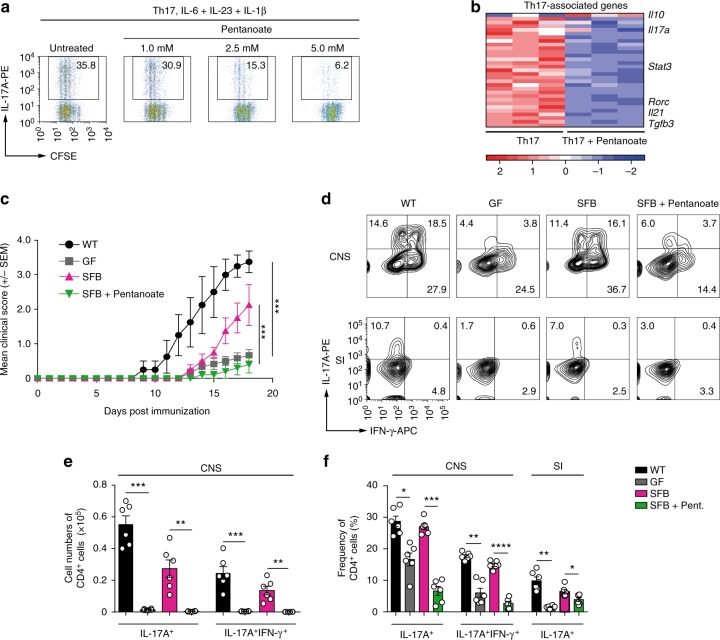
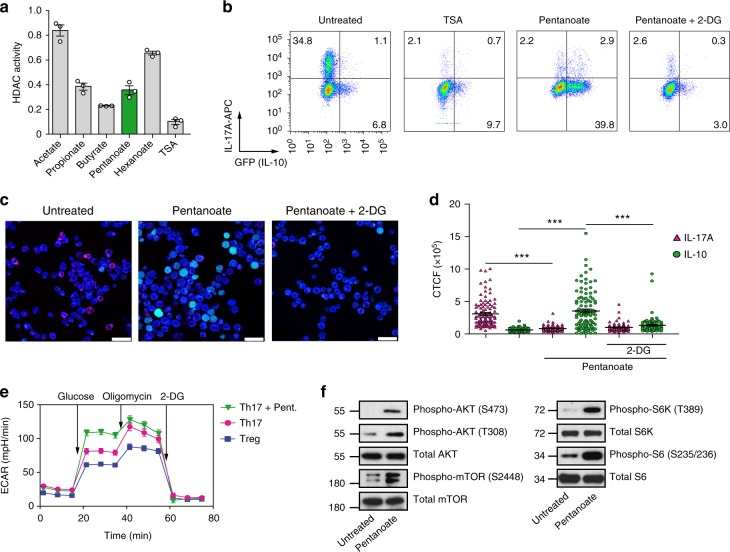
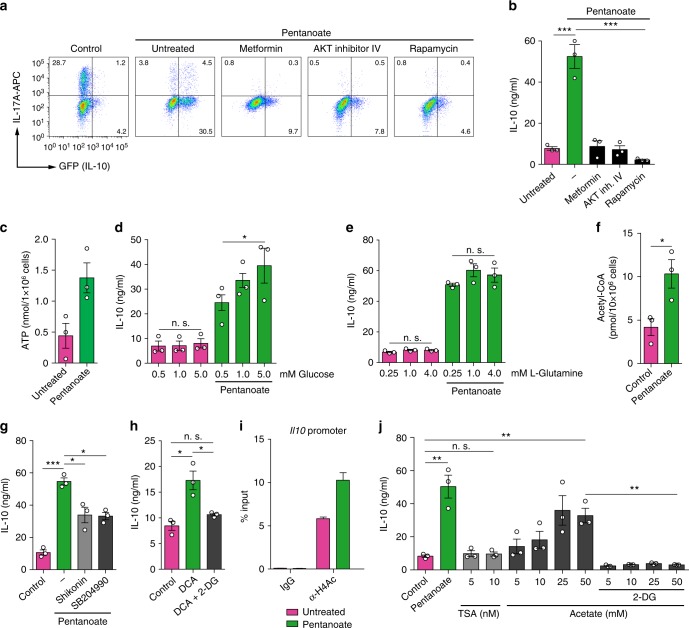
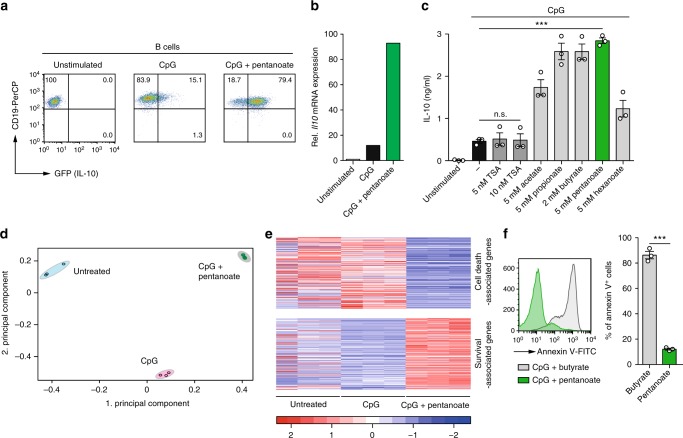
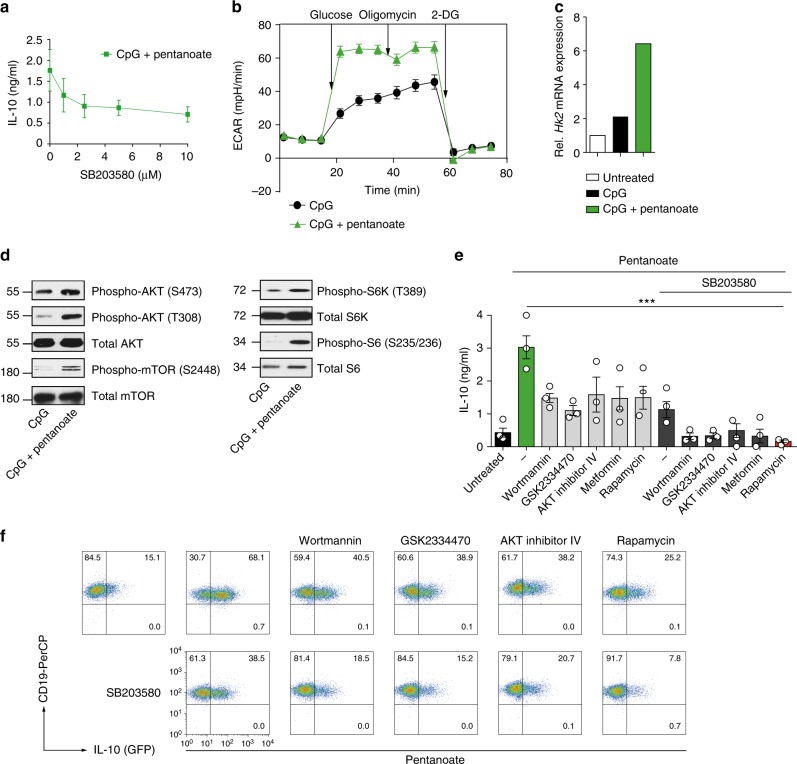
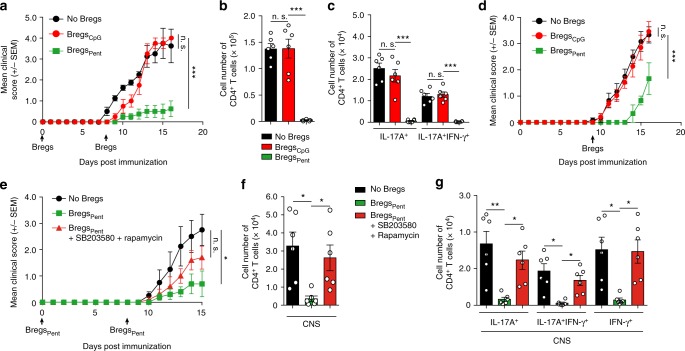
Short-chain fatty acids (SCFAs) have immunomodulatory effects, but the underlying mechanisms are not well understood. Here we show that pentanoate, a physiologically abundant SCFA, is a potent regulator of immunometabolism. Pentanoate induces IL-10 production in lymphocytes by reprogramming their metabolic activity towards elevated glucose oxidation. Mechanistically, this reprogramming is mediated by supplying additional pentanoate-originated acetyl-CoA for histone acetyltransferases, and by pentanoate-triggered enhancement of mTOR activity. In experimental mouse models of colitis and multiple sclerosis, pentanoate-induced regulatory B cells mediate protection from autoimmune pathology. Additionally, pentanoate shows a potent histone deacetylase-inhibitory activity in CD4 + T cells, thereby reducing their IL-17A production. In germ-free mice mono-colonized with segmented filamentous bacteria (SFB), pentanoate inhibits the generation of small-intestinal Th17 cells and ameliorates SFB-promoted inflammation in the central nervous system. Taken together, by enhancing IL-10 production and suppressing Th17 cells, the SCFA pentanoate might be of therapeutic relevance for inflammatory and autoimmune diseases.
Overview
The claims and statistics of this paper haven’t been checked yet.
Free: it reads the open-access text and checks the first 5 claims that cite a source we can check. Create a free account to check every claim.
Integrity signals
Registry
Cites
Statistics
Figures
Verification
Claims the paper makes
The claims and statistics of this paper haven’t been checked yet.
Free: it reads the open-access text and checks the first 5 claims that cite a source we can check. Create a free account to check every claim.
Claims other papers make about this one
Each is checked against this paper’s own text: does it say what the citing paper says it does?
The cited source says what the claim attributes to it.
In the citing paper
“It is known that the glycolytic metabolic pathway promotes IFN-γ expression and T cell effector function20,24–27.”
From Microbial short-chain fatty acids modulate CD8+ T cell responses and improve adoptive immunotherapy for cancer (2021) · cites this paper as [20]
The cited source says what the claim attributes to it.
In the citing paper
“We have recently demonstrated that the SCFA pentanoate (valerate) is also a bacterial metabolite present in the gut of conventional but not of germ-free (GF) mice20.”
From Microbial short-chain fatty acids modulate CD8+ T cell responses and improve adoptive immunotherapy for cancer (2021) · cites this paper as [20]
The cited source says what the claim attributes to it.
In the citing paper
“We recently found that pentanoate was able to impact on the function of CD4+ effector T cells by modulating both cellular metabolism through the activation of mTOR pathway and epigenetic status of cells by inhibiting HDAC enzymes20.”
From Microbial short-chain fatty acids modulate CD8+ T cell responses and improve adoptive immunotherapy for cancer (2021) · cites this paper as [20]
In the citing paper
“We reason valerate may serve as HDAC inhibitor to delay tumour progression and upregulate immune response.41 42”
Self-check
Percentages, sums and reported differences re-computed from the paper’s own numbers.
The self-check needs the paper’s full text.
Citations
Cites
From Dietary Fiber to Host Physiology: Short-Chain Fatty Acids as Key Bacterial Metabolites
Koh, A., De Vadder, F., Kovatcheva-Datchary, P., & Bäckhed, F. (2016) · Cell · doi:10.1016/j.cell.2016.05.041 · Cited by 7,070
Bettelli, E., Carrier, Y., Gao, W., Korn, T., Strom, T. B., Oukka, M., Weiner, H. L., & Kuchroo, V. K. (2006) · Nature · doi:10.1038/nature04753 · Cited by 6,992
De Filippo, C., Cavalieri, D., Di Paola, M., Ramazzotti, M., Poullet, J. B., Massart, S., Collini, S., Pieraccini, G., & Lionetti, P. (2010) · Proceedings of the National Academy of Sciences · doi:10.1073/pnas.1005963107 · Cited by 5,579
Commensal microbe-derived butyrate induces the differentiation of colonic regulatory T cells
Furusawa, Y., Obata, Y., Fukuda, S., Endo, T. A., Nakato, G., Takahashi, D., Nakanishi, Y., Uetake, C., Kato, K., Kato, T., et al. (2013) · Nature · doi:10.1038/nature12721 · Cited by 5,549
The Microbial Metabolites, Short-Chain Fatty Acids, Regulate Colonic T reg Cell Homeostasis
Smith, P. M., Howitt, M. R., Panikov, N., Michaud, M., Gallini, C. A., Bohlooly-Y, M., Glickman, J. N., & Garrett, W. S. (2013) · Science · doi:10.1126/science.1241165 · Cited by 5,413
Metabolites produced by commensal bacteria promote peripheral regulatory T-cell generation
Arpaia, N., Campbell, C., Fan, X., Dikiy, S., van der Veeken, J., deRoos, P., Liu, H., Cross, J. R., Pfeffer, K., Coffer, P. J., et al. (2013) · Nature · doi:10.1038/nature12726 · Cited by 4,838
Induction of Intestinal Th17 Cells by Segmented Filamentous Bacteria
Ivanov, I. I., Atarashi, K., Manel, N., Brodie, E. L., Shima, T., Karaoz, U., Wei, D., Goldfarb, K. C., Santee, C. A., Lynch, S. V., et al. (2009) · Cell · doi:10.1016/j.cell.2009.09.033 · Cited by 4,554
Gut Microbiota Metabolism of Dietary Fiber Influences Allergic Airway Disease and Hematopoiesis
Trompette, A., Gollwitzer, E. S., Yadava, K., Sichelstiel, A. K., Sprenger, N., Ngom-Bru, C., Blanchard, C., Junt, T., Nicod, L. P., Harris, N. L., et al. (2014) · Nature Medicine · doi:10.1038/nm.3444 · Cited by 2,862
Singh, N., Gurav, A., Sivaprakasam, S., Brady, E., Padia, R., Shi, H., Thangaraju, M., Prasad, P. D., Manicassamy, S., Munn, D. H., et al. (2014) · Immunity · doi:10.1016/j.immuni.2013.12.007 · Cited by 2,368
ATP-citrate lyase links cellular metabolism to histone acetylation
Wellen, K. E., Hatzivassiliou, G., Sachdeva, U. M., Bui, T. V., Cross, J. R., & Thompson, C. B. (2009) · Science · doi:10.1126/science.1164097 · Cited by 2,298
Cited by
Items 301–400 of 525
Sun, Y., Zhang, S., Ouyang, T., & Nie, S. (2025) · Food Hydrocolloids · doi:10.1016/j.foodhyd.2025.111817 · Cited by 11
Fan, Z., Yang, B. K., Ross, R. P., Stanton, C., Zhang, F., Sun, J., Zhao, J., Zhang, H., & Chen, W. (2021) · Journal of King Saud University - Science · doi:10.1016/j.jksus.2021.101545 · Cited by 12
Regulatory B Cell Therapy in Kidney Transplantation
Garcia, S. G., Sandoval-Hellín, N., & Franquesa, M. (2021) · Frontiers in Pharmacology · doi:10.3389/fphar.2021.791450 · Cited by 12
“Recent studies have elucidated the role of the SCFA pentanoate in the modulation of mTOR activity, leading to a significant boost of IL-10 production by LPS or CpG stimulated Breg, and a substantial reduction of B cell apoptosis, in addition to reducing expression of IL-17A in effector T cells by inhibiting HDAC (hist…”
BackgroundWang, M., Huang, Y., Xin, M., Li, T., Wang, X., Fang, Y., Liang, S., Cai, T., Xu, X., Dong, L., et al. (2023) · Frontiers in Immunology · doi:10.3389/fimmu.2023.1156471 · Cited by 13
“Pentanoate is an inexpensive and effective immunomodulator with the ability to suppress autoimmunity by inhibiting the activation of abnormal immune cells in the gut and central nervous system (96).”
BackgroundSynthetic microbial consortia for the treatment of Clostridioides difficile infection in mice model
Liu, J., Zhu, W., Lessing, D. J., & Chu, W. (2023) · Microbial Biotechnology · doi:10.1111/1751-7915.14333 · Cited by 12
Microbes little helpers and suppliers for therapeutic asthma approaches
Reuter, S., Raspe, J., & Taube, C. (2024) · Respiratory Research · doi:10.1186/s12931-023-02660-7 · Cited by 13
“Moreover, SCFA appear to be capable of inducing CD103 + tolerogenic DC [69] and IL-10-producing B cells (Bregs) [70].”
BackgroundThe interplay of metabolic and epigenetic players in disease development
Chakraborty, P., & Mukherjee, C. (2024) · Biochemical and Biophysical Research Communications · doi:10.1016/j.bbrc.2024.150621 · Cited by 13
Lee, D. P. S., Gan, A. X., Xia, X. J., Toh, K. Q. X., Chan, G. C. T., Jung, S., & Kim, J. E. (2023) · Molecular Nutrition & Food Research · doi:10.1002/mnfr.202200756 · Cited by 10
Qiu, X., Gao, Q., Wang, J., Zhang, Z., & Tao, L. (2025) · Biochimica et Biophysica Acta (BBA) - Reviews on Cancer · doi:10.1016/j.bbcan.2025.189317 · Cited by 11
Gut microbiota-derived butyrate prevents aortic dissection via GPR41
Yang, H. H. C., Wang, B., Dong, X., Sun, J. T., Miao, Z., & Pan, L. (2025) · Acta Pharmacologica Sinica · doi:10.1038/s41401-025-01592-w · Cited by 10
The role of gut microbiota in neuropathic pain: insights into immune mechanisms
Gong, Z., Zou, J., Fang, Y., Li, J., Luo, Y., Xue, Q., Yu, B., Hua, B., & Liu, Z. (2025) · The Journal of Headache and Pain · doi:10.1186/s10194-025-02260-4 · Cited by 10
“4) Faecalibacte-rium prausnitzii -derived valerate reprograms CD4+ T cell metabolism, promoting glucose oxidation for IL-10 production, while suppressing mice Th17 differentiation through HDAC inhibition [118].”
The signature of the gut microbiota associated with psoriatic arthritis revealed by metagenomics
Liu, W., Li, C., Xie, W., Fan, Y., Zhang, X., Wang, Y., Li, L., & Zhang, Z. (2024) · Therapeutic Advances in Musculoskeletal Disease · doi:10.1177/1759720x241266720 · Cited by 10
Zhu, X. J., Zhi, Y., Heng, X., Zhou, L., Liu, C., Zhao, Y., Wang, Y., Liu, J., & Huang, J. (2024) · Journal of Food Science · doi:10.1111/1750-3841.17372 · Cited by 10
Frumento, D., & Ţălu, Ş. (2025) · Applied Sciences · doi:10.3390/app15063157 · Cited by 10
Cutaneous and Gut Dysbiosis in Alopecia Areata: A Review
Burma, N. E., & Ramien, M. (2025) · JID Innovations · doi:10.1016/j.xjidi.2025.100363 · Cited by 10
Zhou, Y., Liu, C., Wang, J., Wang, Y., Zhan, X., Xu, L., Kang, J., Zhu, G., Jiang, Y., Zhu, X., et al. (2025) · Food Chemistry · doi:10.1016/j.foodchem.2025.145392 · Cited by 9
Yang, L., Shang, W., Chen, D., Qian, H., Zhang, S., Pan, X., Huang, S., Liu, J., & Chen, D. (2025) · Scientific Reports · doi:10.1038/s41598-025-06463-2 · Cited by 9
“Pentanoate has been proved to have anti-inflammatory and immunoregulatory effects by promoting histone H4 acetylation at the IL-10 promoter through the provision of acetyl-CoA and inhibition of HDAC activity, thus inducing IL-10 production in lymphocytes 45 .”
Cen, Q., Cui, Y., Jin, J., Feng, J., Xin, Y., Zhang, Z., Li, J., Wang, J., & Zhang, A. (2025) · Gut Microbes · doi:10.1080/19490976.2025.2576657 · Cited by 9
“143 The availability of free fatty acids and their precursors is a crucial determinant of oligodendrocytes' ability to repair myelin, and acetyl coenzyme a is an early step in fatty acid 1.”
Molecular Mimicry at the Gut–Immune Interface: A Mechanistic Link to Type 1 Diabetes
Chen, S., Luo, Y., Wei, G., & Liu, S. (2025) · Immunology · doi:10.1111/imm.70091 · Cited by 9
Tian, Z., Huang, Y., Wang, Y., Zhao, C., Zhou, Z., Yang, H., & Qiu, Y. (2026) · Interdisciplinary medicine · doi:10.1002/inmd.70083 · Cited by 9
The role of gut-derived short-chain fatty acids in Parkinson's disease
Saadh, M. J., Mustafa, A. N., Mustafa, M. A., Renuka Jyothi, S., Dabis, H. K., Prasad, G. V. S., Mohammad, I. J., Adnan, A., & Idan, A. H. (2024) · Neurogenetics · doi:10.1007/s10048-024-00779-3 · Cited by 9
“SCFAs such as acetate (C2), propionate (C3), and butyrate (C4) are produced daily in the human intestine at a rate of 60:20:20, respectively, in response to dietary fiber content and microbiota composition [33, 34].”
Microbiota and arthritis: cause or consequence?
Cafaro, G., Cruciani, G., Bruno, L., Pozzolo, R. D., Colangelo, A., Tromby, F., Nicchi, M., Pianese, B., Perricone, C., Gerli, R., et al. (2024) · Clinical and Experimental Rheumatology · doi:10.55563/clinexprheumatol/f6q4dc · Cited by 10
The role of the stem cell epigenome in normal aging and rejuvenative therapy
Jayarajan, J., & Milsom, M. D. (2020) · Human Molecular Genetics · doi:10.1093/hmg/ddaa167 · Cited by 9
MultiOmics analysis of metabolic dysregulation and immune features in breast cancer
Zhou, Z.-Y., Bai, N., Zheng, W., & Ni, S. (2025) · International Immunopharmacology · doi:10.1016/j.intimp.2025.114376 · Cited by 8
Zhen, Y., Rahmat, A., Zhang, C., Lin, J., Ma, J., Zhong, Y., & Wang, M. (2025) · mSystems · doi:10.1128/msystems.00116-25 · Cited by 8
“VFAs can suppress the differentiation of Th1 and Th17 cells to reduce the production of pro-inflammatory cytokines (such as IFN-γ, TNF, and IL-17), while promoting Th2-mediated secretion of the anti-inflammatory cytokines (such as IL-10) (67, 68).”
Reprogramming CAR-T cells: Targeting SLC transporters for tumor microenvironment adaptation
Perucha, B., Martinez-Tabar, M., Sánchez-Moreno, I., Justicia-Lirio, P., Lozano, T., & Lasarte, J. J. (2025) · Pharmacological Research · doi:10.1016/j.phrs.2025.107928 · Cited by 8
Yuan, S., Bremmer, A., Yang, X., & Hu, Q. (2025) · Seminars in Cancer Biology · doi:10.1016/j.semcancer.2025.11.023 · Cited by 8
Microbial-Derived Metabolites and Their Impact on Cancer Immunotherapy
Jeong, J., Baines, K. J., & Vareki, S. M. (2026) · Cancer Immunology Research · doi:10.1158/2326-6066.cir-25-1018 · Cited by 9
Microbiota-derived metabolites and cardiovascular implications in Inflammatory Bowel Disease (IBD)
Olic, I. A., Pavlović, N., Kumrić, M., Šantić, R., Bratanić, A., & Božić, J. (2026) · Molecular Medicine · doi:10.1186/s10020-026-01493-6 · Cited by 8
Sanchez‐Quintero, M. J., Delgado, J., Martín-Chaves, L., Vera, D. M., Murri, M., Becerra‐Muñoz, V. M., Estévez, M., Crespo-Leiro, M. G., Paz‐López, G., Gonzalez-Jimenez, A., et al. (2023) · Antioxidants · doi:10.3390/antiox12081643 · Cited by 8
The Role of Gut-derived Short-Chain Fatty Acids in Multiple Sclerosis
Saadh, M. J., Ahmed, H. M., Alani, Z. K., Zuhairi, R. A. H. A., Almarhoon, Z. M., Ahmad, H., Ubaid, M., & Alwan, N. H. (2024) · NeuroMolecular Medicine · doi:10.1007/s12017-024-08783-4 · Cited by 8
“Therefore, it seems that both epigenetic (HDAC inhibition) and metabolic (mTOR) regulation play a role in the protective effects of SCFAs in the development of EAE (Luu et al., 2019).”
Research progress on intestinal microbiota regulating cognitive function through the gut-brain axis
Lin, K., Peng, F., He, K., Qian, Z., Mei, X., Su, Z., Wujimaiti, Y., Xia, X., & Zhang, T. (2024) · Neurological Sciences · doi:10.1007/s10072-024-07525-5 · Cited by 9
“Short-chain fatty acids primarily consist of acetic acid, propionic acid, and butyric acid[59, 60].”
Wang, N., Zhang, C., Li, Y., Min, R., & Wang, X. (2024) · International Journal of Biological Macromolecules · doi:10.1016/j.ijbiomac.2024.133169 · Cited by 8
Microbiota interaction with Tregs: a target for colitis
Mortezaee, K. (2025) · Clinical & Translational Oncology · doi:10.1007/s12094-025-03974-2 · Cited by 8
“Colonic Tregs are not under the influence of pentanoate, instead being affected by butyrate in performing their immunoregulatory activity [24].”
Masson, J. J. R., Ostrowski, M., Duette, G., Lee, M. K. S., Murphy, A. J., Crowe, S. M., & Palmer, C. S. (2020) · Methods in molecular biology · doi:10.1007/978-1-0716-0802-9_15 · Cited by 8
Föh, B., Buhre, J. S., Sina, C., & Ehlers, M. (2022) · Frontiers in Immunology · doi:10.3389/fimmu.2022.1004644 · Cited by 10
Huang, C., Mei, S., Zhang, X., & Tian, X. (2023) · Journal of Clinical Gastroenterology · doi:10.1097/mcg.0000000000001883 · Cited by 8
Control of T-cell immunity by fatty acid metabolism
Kim, J., Lee, Y., & Chung, Y. (2024) · Annals of Pediatric Endocrinology & Metabolism · doi:10.6065/apem.2448160.080 · Cited by 7
Zakharzhevskaya, N. B., Ильинична, Э. С., Александровна, Б. Е., Сергеевич, С. И., Manina, M. A., Kondrashova, P., Lomakina, E. Y., Kardonsky, D. A., Vorobyeva, E. A., Shagaleeva, O. Y., et al. (2025) · World Journal of Gastroenterology · doi:10.3748/wjg.v31.i48.112653 · Cited by 7
“CD is typically developed in adolescence, although it also occurs in infants compared to the UC[13].”
Contextualizing TH17 cells in cancer
Pang, D., Bertocchi, A., Powrie, F. M., & Pohin, M. (2026) · Nature reviews. Immunology · doi:10.1038/s41577-025-01250-6 · Cited by 9
Liu, Y., Wang, S., Xiang, X., Du, Y., Xue, Q., Niu, Y., Peng, W., Ye, L., & Zhou, Q. (2026) · International Journal of Biological Sciences · doi:10.7150/ijbs.126977 · Cited by 7
“…identified that valerate can act as a novel metabolic regulatory molecule for the treatment of autoimmune diseases by reprogramming lymphocyte metabolic activity to promote the secretion of the anti-inflammatory cytokine IL-10 and suppress the differentiation of pro-inflammatory Th17 cells [120] .”
Yu, J., Li, W., Xu, Y. M., & Tang, J. (2026) · Clinical Microbiology Reviews · doi:10.1128/cmr.00368-25 · Cited by 10
“…of CD4+ T cells into pathogenic Th17 cells, reduce IL-17A secretion, induce regulatory B cells (Bregs), and inhibit their apoptosis, enhance lymphocyte glycolysis and IL-10 secretion by inhibiting HDACs, thereby exerting an immunosuppressive effect in colitis and multiple sclerosis models (75).”
Flati, I., Nolfi, M. D. V., Dall’Aglio, F., Vecchiotti, D., Verzella, D., Alesse, E., Capece, D., & Zazzeroni, F. (2023) · Genes · doi:10.3390/genes14101953 · Cited by 8
Corbett, G. A., Moore, R., Feehily, C., Killeen, S. L., O’Brien, E. C., van Sinderen, D., Matthews, E., O’Flaherty, R., Rudd, P. M., Saldova, R., et al. (2024) · Microbiology Spectrum · doi:10.1128/spectrum.01130-24 · Cited by 7
“SCFAs are the microbial fermentation end-products of resistant starch, fiber, and non-starch polysac charides ingested in the diet (27–29), while additional SCFAs are generated in the distal colon from fermentation of amino acids (AA) (30, 31).”
BackgroundWang, A. Y. L., Aviña, A. E., Liu, Y., Chang, Y., & Kao, H. (2025) · Antioxidants · doi:10.3390/antiox14020183 · Cited by 7
“Similarly, Th17 cell studies found that the inhibition of glycolysis increased IL-10 production, whereas the secretion of pro-inflammatory cytokines was reduced [185].”
InfluentialShen, J., Zhou, M., Xiao, N., Tan, Z., & Liang, X. (2025) · International Journal of Molecular Sciences · doi:10.3390/ijms26073150 · Cited by 7
“…n-valeric acid levels ( p < 0.05). n-Valeric acid functions as an immunometabolic modulator, capable of suppressing the differentiation of Th17 cells in the small intestine and alleviating the inflammation in the central nervous system induced by segmented filamentous bacterial colonization [36].”
InfluentialRole of denosumab in lipid metabolism disorders: clinical significance and potential mechanisms
Lou, Y., Chen, H., Fei, S., Chen, X., Guo, L., & Pan, Q. (2025) · Archives of Osteoporosis · doi:10.1007/s11657-025-01546-z · Cited by 7
Exploring the influence of gut microbiota metabolites on vitiligo through the gut-skin axis
Yuan, C., Liu, L., Zeng, D., Yuan, J., Guo, L., & Zhang, J. (2025) · Frontiers in Microbiology · doi:10.3389/fmicb.2025.1566267 · Cited by 8
“Yuan et al. 10.3389/fmicb.2025.1566267 Frontiers in Microbiology 07 frontiersin.org SCFAs promote the initial differentiation of T cells into Th17 cells in a dose-dependent manner by inducing the transcription of IL-17A, IL-17F, and IFN-γ genes, and concurrently inhibit the differentiation of Tregs (Park et al., 2015).”
InfluentialNFATc1 deficiency in B cells ameliorates atopic dermatitis
Kader, H. A., Rehman, S. S. U., Saraswathiamma, D., Shiek, S. S., Bencomo‐Hernandez, A. A., Moorakkan, U. R., Haider, M. T., Munawar, N., Iratni, R., Serfling, E., et al. (2025) · Scientific Reports · doi:10.1038/s41598-025-11247-9 · Cited by 7
Artificial rearing alters intestinal microbiota and induces inflammatory response in piglets
Han, Q., Zhang, X., Nian, H., Liu, H., Li, X., Zhang, R., & Bao, J. (2022) · Frontiers in Microbiology · doi:10.3389/fmicb.2022.1002738 · Cited by 7
“Catenibacterium, Faecalibacterium, Subdoligranulum, and Prevotella were typical post-weaning microbial groups, which was associated with the introduction of non-breast foods and the digestion of dietary fibers (Kageyama and Benno, 2000; Luu et al., 2019; Parada Venegas et al., 2019; Van Hul et al., 2020).”
BackgroundCostello, S. M., Cheney, A. M., Waldum, A., Tripet, B., Cotrina-Vidal, M. L., Kaufmann, H., Norcliffe‐Kaufmann, L., Lefcort, F. B., & Copié, V. (2023) · Metabolites · doi:10.3390/metabo13030433 · Cited by 7
“that helps facilitate the re-methylation of homocysteine to methionine [66,68].”
BackgroundInfluentialEvaluation of metabolites levels in feces of patients with inflammatory bowel diseases
Zhgun, E. S., Kislun, Y. V., Калачнюк, Т. Н., Veselovsky, V. A., Urban, A., Tikhonova, P., Pavlenko, A. V., Ilchenko, G. N., & Ilina, E. N. (2020) · Biomeditsinskaya Khimiya · doi:10.18097/pbmc20206603233 · Cited by 7
Swine-Derived Probiotics and Their Metabolites as an Alternative to Veterinary Antibiotics
Zhao, M., Chen, B., Peng, S., Mei, G. D., Li, M., Lin, F., Sun, T., & Li, Z. (2025) · Veterinary Sciences · doi:10.3390/vetsci12111100 · Cited by 6
“Naturally produced antimicrobial compounds derived from swine-derived beneficial strains—such as bacteriocins, organic acids, and defensins—exhibit potent broad-spectrum antimicrobial activity (Table 3) [54,55].”
Polyphenols-mediated immune regulation: Metabolite-driven epigenetic regulatory mechanisms
Ouyang, B., Wu, Q., Liang, J., Cao, H., & Xiao, J. (2025) · Phytomedicine · doi:10.1016/j.phymed.2025.157535 · Cited by 6
Rosavin derived from Rhodiola alleviates colitis in mice through modulation of Th17 differentiation
Wang, Y. N., Jiang, Y., Li, M., Xiao, Y., Zhao, Q., Zeng, J., Wei, S., Chen, S., Zhao, Y., Du, F., et al. (2024) · Phytomedicine · doi:10.1016/j.phymed.2024.156318 · Cited by 6
Cao, S., Jiang, J., Yin, H., Su, X., Li, Q., Wu, J., Li, W., Wang, L., & Lu, Q. (2025) · European Journal of Immunology · doi:10.1002/eji.70059 · Cited by 6
“…SCFAs, such as pentanoate and propionic acid, exhibit immunomodulatory properties that suppress Th17 cell responses and increase Treg cell populations in the EAE model and MS patients, highlighting the therapeutic relevance in the management of inflammatory and autoimmune diseases [117, 118].”
Ganesan, R., & Suk, K. T. (2022) · Process Biochemistry · doi:10.1016/j.procbio.2022.10.031 · Cited by 6
Guo, C., He, S., Barz, M. L., Binda, S., & Wang, H. (2024) · Molecular Nutrition & Food Research · doi:10.1002/mnfr.202300672 · Cited by 6
Alhasan, M. M., Landa, M. S., García, S. I., Gerlach, R. G., Harb, H., Fahlbusch, F. B., Conrad, M. L., & Barrientos, G. (2024) · Scientific Reports · doi:10.1038/s41598-024-83981-5 · Cited by 6
Xie, Z., Eriksen, D. B., Johnsen, P. R., Nielsen, D. S., & Frøkiær, H. (2025) · BioFactors · doi:10.1002/biof.70007 · Cited by 6
“As one of the SCFAs, microbial fermentation-produced val-erate has been reported to improve gut integrity at 2 mM 16 and modulate lymphocytes 17 and CD8 + T cell responses 18 efficiently.”
Hu, L., Zhao, X., Li, P., Zeng, Y., Zhang, Y., Shen, Y., Wang, Y., Sun, X., Lai, B., & Zhong, C. (2022) · Frontiers in Immunology · doi:10.3389/fimmu.2022.864314 · Cited by 7
“Thus, difference between pathogenic Th17 and the other conventional regulatory Th17 has been comprehensively compared in the past (77).”
BackgroundHuman microbiota colonization and pancreatic ductal carcinoma
Yuan, F., Yang, G., Yang, J., Ren, J., You, L., & Zhao, Y. (2022) · Critical Reviews in Microbiology · doi:10.1080/1040841x.2022.2080526 · Cited by 6
“As mentioned above, previous research on the use of the oral microbiota as a bacterial biomarker for PDAC is inconsistent and contradictory (Torres et al. 2015; Luu et al. 2019; Farrell et al. 2012; Sun et al. 2020) , and this inconsistency may be due to differences in sample collection methods.”
BackgroundResultBreakthroughs in Medicinal Chemistry: New Targets and Mechanisms, New Drugs, New Hopes-3
Mangoni, A. A., Tuccinardi, T., Collina, S., Eynde, J. J. V., Muñoz‐Torrero, D., Karaman, R., Siciliano, C., Sousa, E., Prókai-Tátrai, K., Rautio, J., et al. (2018) · Molecules · doi:10.3390/molecules23071596 · Cited by 6
Ding, J., Xu, J., Wu, H., Li, M., Xiao, Y., Fu, J., Zhu, X., Wu, N., Sun, Q., & Liu, Y. (2024) · Genomics · doi:10.1016/j.ygeno.2024.110969 · Cited by 5
Rangsinth, P., Zheng, C., Shiu, P. H.-T., Wang, W., Kwong, T. C., Choy, C. T., Leung, S. W., Tencomnao, T., Chuchawankul, S., Prasansuklab, A., et al. (2025) · Food Frontiers · doi:10.1002/fft2.543 · Cited by 5
Zheng, M., Wei, Y., Hong, J., Li, Z., Zhu, Y., Hong, T., Jiang, Z., & Ni, H. (2025) · Foods · doi:10.3390/foods14101818 · Cited by 5
“Valeric acid has been found to suppress autoimmunity by regulating lymphocyte metabolism and may also serve as a potential cancer therapeutic agent [47,48].”
Zhang, Z., Wu, D., Li, X., Jia, Y., Qi, J., Harmon, D. L., & Xu, M. (2025) · Tropical Animal Health and Production · doi:10.1007/s11250-025-04464-x · Cited by 5
“Butyric acid, a short-chain fatty acid, is generated through the enzymatic breakdown of carbohydrates and proteins by gut bacteria (Luu et al. 2019).”
Tang, T., Zhang, Y., Xing, X., Sun, R., Yu, Z., Tian, Y., Zhang, Z., Zhang, P., & Xu, F. (2025) · Journal of Pharmaceutical Analysis · doi:10.1016/j.jpha.2025.101409 · Cited by 5
“As reported, regulating short-chain fatty acid [8,9], bile acid [10], or tryptophan metabolism [11,12] have exhibited protective effects for alleviating inflammatory diseases.”
Shan, L., Chelliah, R., Park, S., Lee, Y., Vijayalakshmi, S., & Oh, D. (2025) · Food & Function · doi:10.1039/d5fo00818b · Cited by 5
Xu, H., Li, S., Liu, S., & Zuo, Y. (2025) · Journal of Inflammation Research · doi:10.2147/jir.s551394 · Cited by 7
“84 In B cells, butyrate and propionate attenuate both intestinal and systemic plasma cell differentiation and autoantibody production via HDAC inhibition, as evidenced by lower IgG1, IgA, and IgE levels in SCFAs-fed mice.”
The Gut-Brain Axis (GBA): Implications for Brain Longevity
Gautam, P., Vishwakarma, R. K., & Pathak, A. (2025) · Nutritional neurosciences · doi:10.1007/978-981-95-2790-8_9 · Cited by 10
CAR-T/NK/M-based combination therapies in cancer: A comprehensive review
Vaja, S., Khandelwal, S., Vora, C., Khan, A. A., Wajeed, S., Sk, M. H., & Baig, M. S. (2026) · Current Problems in Cancer · doi:10.1016/j.currproblcancer.2026.101269 · Cited by 5
Natural polysaccharide riclin acts as an immune adjuvant to enhance chemotherapy efficacy in NSCLC
Miao, Y., Liu, X., Tao, J., Jiao, Y., Fan, Y., Sun, X., Liu, J., Ding, Z., Zhang, J., Gao, Q., et al. (2026) · npj Precision Oncology · doi:10.1038/s41698-026-01318-z · Cited by 5
Gut microbiota and immunometabolism in obesity
Torres-Mayo, A., Liébana-García, R., Olivares, M., Pellón, A., Anguíta, J., & Sanz, Y. (2026) · Gut Microbes · doi:10.1080/19490976.2026.2667610 · Cited by 5
“116 These pathways governs the generation of T helper and regulatory T cells and utilizes SCFA-derived acetyl-CoA to fuel FA synthesis for antibody production, which may confer a protective effect in the context of obesity.”
Yang, J., He, X., Yao, J., Zhang, P., Yi, B., Fang, Z., Guo, N., Guan, Y., & Zhang, G. (2024) · Chinese Medicine · doi:10.1186/s13020-024-01015-8 · Cited by 5
“Functionally, SCFAs can influence intestinal mucosa integrity, regulate glucose metabolism, lipid metabolism, the immune system, and inflammatory reactions, induce the differentiation of colon regulatory cells (Tregs), and improve intestinal barrier functions [56].”
BackgroundZhou, W., Zheng, X., Tao, W., Li, Y., Lin, Y., Xing, J., Luo, M., Zhou, H., & Yang, Y. (2024) · Food Bioscience · doi:10.1016/j.fbio.2024.105446 · Cited by 5
Learning from the microbes: exploiting the microbiome to enforce T cell immunotherapy
Staudt, S., Ziegler-Martin, K., Visekruna, A., Slingerland, J. B., Shouval, R., Hudecek, M., van den Brink, M. R. M., & Luu, M. (2023) · Frontiers in Immunology · doi:10.3389/fimmu.2023.1269015 · Cited by 5
Self-citationMartínez-García, J. J., Rainteau, D. P., Humbert, L., Lamazière, A., Lesnik, P., & Chamaillard, M. (2022) · Metabolites · doi:10.3390/metabo12050390 · Cited by 6
“Metabolites 2022, 12, 390 5 of 12 Consequently, a greater susceptibility to Salmonella infection was noticed as a consequence of the adherence of SFB that concomitantly leads to an overproduction of Reg3 gamma by intestinal epithelial cells.”
BackgroundInfluentialLi, J., Li, Q., Kong, X., Wang, G., Li, C., Li, Z., Li, X., Sun, P., Ding, T., & Deng, Y. (2025) · Food Quality and Safety · doi:10.1093/fqsafe/fyaf050 · Cited by 5
Liu, Y., Peng, X., Gao, K.-X., Wang, Z., Deng, Q.-L., Wang, J., Yue, L.-T., Wang, Y., & Hu, M.-B. (2025) · Journal of Agricultural and Food Chemistry · doi:10.1021/acs.jafc.5c07693 · Cited by 4
Gut-Immune Interplay: Decoding the Microbiome’s Impact on Immunity and Diseases
Khazi, A. I., & Ahmad, A. (2025) · Journal of Pharmacy And Bioallied Sciences · doi:10.4103/jpbs.jpbs_1377_25 · Cited by 4
Glycolytic diversity drives immune complexity in cancer
Wu, C.-Y., Huang, C.-X., Yuan, W., & Kuang, D. (2025) · Trends in Immunology · doi:10.1016/j.it.2025.11.002 · Cited by 4
Lights and Shadows of Nutrient-Driven Keratinocyte Inflammation in Psoriasis
Speranza, D., Pantano, A., Cullotta, C., Pallio, G., Vaccaro, M., Scuruchi, M., & Irrera, N. (2025) · International Journal of Molecular Sciences · doi:10.3390/ijms262311652 · Cited by 4
“These effects arise through GPR43/GPR109A signaling and epigenetic remodeling that increases histone acetylation [43,44].”
InfluentialFatty acid–related immune network in psoriasis: metabolic regulation of innate and adaptive immunity
Wen, P., Zhuo, X., & Xue, S. (2026) · Frontiers in Pharmacology · doi:10.3389/fphar.2026.1731683 · Cited by 4
“…contrast, SCFA-induced HDAC inhibition may also epigenetically repress Th17-associated loci, such as IL-17A and Rorc, through a reduction in histone acetylation or modulation of chromatin accessibility at these pro-inflammatory gene sites (Lai et al., 2023; McBride et al., 2023; Luu et al., 2019).”
Guan, L., Li, X., He, C., Zheng, P., Zou, Y., Zhu, Q., Li, X., Liang, J., Yang, J., Zhang, L., et al. (2026) · Advanced Science · doi:10.1002/advs.202517642 · Cited by 6
Xie, J., Zhang, J., Zhang, L., & Chen, X. (2026) · Frontiers in Microbiology · doi:10.3389/fmicb.2026.1740680 · Cited by 5
“…prompting dendritic cells to adopt a tolerant phenotype and facilitating the dierentiation and proliferation of peripheral inducible Tregs; butyric acid and propionic acid augment the accessibility and stable expression of the FOXP3 locus via HDAC inhibition (Luu et al., 2019; Luu et al., 2021).”
Zhao, W., Nagata, K., Akiyama, R., Yamazaki, Y., Kouda, H., Miura, R., Ishii, K., Tokita, R., Ito, N., Yamasaki, N., et al. (2026) · Allergology International · doi:10.1016/j.alit.2026.05.005 · Cited by 4
Shen, X., Zhu, X., Liu, H., Yuan, R., Guo, Q., & Zhao, P. (2024) · PLoS ONE · doi:10.1371/journal.pone.0302361 · Cited by 5
Cortes‐Figueiredo, F., Asseyer, S., Chien, C., Zimmermann, H. G., Ruprecht, K., Schmitz‐Hübsch, T., Bellmann–Strobl, J., Paul, F., & Morais, V. A. (2024) · Scientific Reports · doi:10.1038/s41598-024-57592-z · Cited by 4
“In 58 the peripheral immune compartment, CD4+ T cells from patients with MS show oxidative 59 phosphorylation (OxPhos) insufficiency [9–11], which, in animal models, has been linked to an 60 exacerbation of CNS autoimmune-mediated inflammation [12,13].”
BackgroundKennedy, E. C., Ross, F. C., O'Shea, C., Lavelle, A., Ross, R. P., Dempsey, E. M., Stanton, C., & Hawkes, C. P. (2025) · BMJ Open · doi:10.1136/bmjopen-2024-089206 · Cited by 4
Poveda, M. C., Löser, S., Gillan, V., Richards, J., Ciancia, C., Blackburn, G. J., Kerr, E., Barrett, M. P., Hildersley, K. A., Jay, P., et al. (2025) · Metabolomics · doi:10.1007/s11306-025-02248-w · Cited by 4
“Both a short-chain (valeric acid) and long-chain (stearic acid) fatty acids were identified, the former having been reported as interfering with histone deacetylation required for CD4 + T cell activation (Luu et al., 2019 ).”
Research Progress of Physiological Function of Short-Chain Fatty Acids in the Intestine
殷, 桐. (2022) · Advances in Clinical Medicine · doi:10.12677/acm.2022.122137 · Cited by 4
Metabolic regulation of γδ intraepithelial lymphocytes
Alonso, S., & Edelblum, K. L. (2023) · Discovery Immunology · doi:10.1093/discim/kyad011 · Cited by 4
“Acetate, propionate, and pentanoate can also increase mTOR activity to promote CD4 T cell differentiation [70] or cytotoxic T cell effector function [71].”
BackgroundWang, X., Wang, Y., & Sun, L. (2024) · Biophysics Reports · doi:10.52601/bpr.2024.240050 · Cited by 3
“Additionally, less-studied pentanoate could induce IL-10 production in lymphocytes and inhibit IL-17A production, inhibiting autoimmunity (Luu et al. 2019).”
Ma, K., Li, F., Su, B., Liu, L., Xiang, S., Zhou, S., Luo, J., Xiong, W., Bian, Z., Yan, J., et al. (2025) · Journal of Food Science · doi:10.1111/1750-3841.70200 · Cited by 3
Gao, Z., Li, H., Wen, J., Ding, W., Yu, J., Zhang, Y., Song, X., & Wu, J. (2025) · Foods · doi:10.3390/foods14132378 · Cited by 3
“Specifically, valerate can alleviate inflammation and autoimmune diseases by promoting the secretion of IL-10 and inhibiting the apoptosis of regulatory B cells [35].”
Mediterranean Pattern Diet in Multiple Sclerosis: A Review Focusing on Immunometabolites
Papiri, G., Paci, C., D’Andreamatteo, G., Membrino, V., Crescenzo, T. D., Cacchiò, G., Cagnetti, C., & Vignini, A. (2025) · Current Neuropharmacology · doi:10.2174/011570159x382929250719084728 · Cited by 3
“SCFAs are mostly produced by anaerobic gut commensals by fermentation of complex carbohydrates, especially dietary fiber, while in minor proportions derived from protein catabolism and other dietary sources [275, 276].”
Fang, J., Gu, J., Pan, F., Wang, Y., Tao, Y., & Long, L. (2025) · Medicine · doi:10.1097/md.0000000000045327 · Cited by 3
“[38,39] SCFAs can inhibit osteoclast differentiation and bone resorption by downregulating TRAF6 and NFATc1.”
Asayesh, M., Nazarzadeh, A., Jamshidi, S., Keramat, S., Ryszkiel, I., & Stanek, A. (2026) · Nutrients · doi:10.3390/nu18081216 · Cited by 3
Fatty acid metabolism—an emerging regulatory node in T‐cell immunometabolism
Arenberg, B. C., Sack, M. N., & Wu, J. (2026) · Clinical & Translational Immunology · doi:10.1002/cti2.70091 · Cited by 3
“9 12 These effects appear to be regulated at the epigenetic level, where enhanced H3 acetylation at the FOXP3 locus increases murine Treg differentiation.”
Metadata
- Authors
- Luu, M., Pautz, S., Kohl, V., Singh, R., Romero, R., Lucas, S., Hofmann, J., Raifer, H., Vachharajani, N., Carrascosa, L. C., Lamp, B., Nist, A., Stiewe, T., Shaul, Y., Adhikary, T., Zaiss, M. M., Lauth, M., Steinhoff, U., & Visekruna, A.
- Affiliations
- Philipps University of Marburg (DE)
- University of Kassel (DE)
- Friedrich-Alexander-Universität Erlangen-Nürnberg (DE)
- Hebrew University of Jerusalem (IL)
- Corresponding author
- Visekruna, Alexander
- ORCID
- Venue
- Nature Communications
- Published
- 2019-02-15
- Volume
- 10
- Issue
- 1
- Pages
- 760-760
- ISSN
- 2041-1723 (ISSN-L)
- PMC
- PMC6377655
- OpenAlex
- W2911672024
- Semantic Scholar
- 231ddeddc2856139155ba0e5b83b063b19a6a99c
- Cited by
- 508
- References
- 51
- Citations by year
- 2026: 51 · 2025: 92 · 2024: 95 · 2023: 75 · 2022: 86 · 2021: 50 · 2020: 44 · 2019: 14
- FWCI
- 16.04
- Type
- journal article
- Language
- en
- Open access
- gold
- doi.org
- Licence
- cc-by
- creativecommons.org/licenses/by/4.0 (tdm)
- creativecommons.org/licenses/by/4.0 (vor)
- Locations
- Nature Communications (publishedVersion, cc-by)
- Europe PMC (PubMed Central) (publishedVersion, cc-by)
- PubMed Central (publishedVersion, cc-by)
- PubMed (publishedVersion)
- RePEc: Research Papers in Economics (submittedVersion)
- DOAJ (DOAJ: Directory of Open Access Journals) (submittedVersion)
- DOAJ (DOAJ: Directory of Open Access Journals) (submittedVersion, cc-by-sa)
- Funders
- Philipps-Universität Marburg
- Helmholtz Zentrum München
- Topics
- Life Sciences › Biochemistry, Genetics and Molecular Biology › Molecular Biology › Gut microbiota and health
- Life Sciences › Immunology and Microbiology › Immunology › T-cell and B-cell Immunology
- Life Sciences › Immunology and Microbiology › Immunology › Psoriasis: Treatment and Pathogenesis
- Keywords
- short-chain fatty acids, immunometabolism, autoimmunity, IL-10, glucose oxidation, acetyl-CoA, histone acetylation, histone deacetylase inhibition, mTOR, regulatory B cells, Th17 cells, segmented filamentous bacteria, colitis, multiple sclerosis, CD4+ T cells, IL-17A, germ-free mice
- MeSH terms
- Animals, Colitis, Fatty Acids, Volatile, Lymphocytes, Multiple Sclerosis, Valerates, CD4-Positive T-Lymphocytes, Autoimmunity, Interleukin-10, Epigenesis, Genetic, Mice, Th17 Cells
About these checks
Registry, retraction, Cites and statistics results are computed, not judged, with one exception: a printed reference that no index lists is read once by a model before it counts as a citation error. Claims are extracted by a model and kept only when their quote appears verbatim in the text; each cited source is then checked, with a model’s help, for whether it says what the claim relies on. Those verdicts can be wrong — read the claim’s quote and the cited source before relying on one.
Statistics and arithmetic are recomputed, not judged.
Confidence bands are shown only for fields calibrated on our annotated test set. None is calibrated yet, so no band is shown.
What counts as a claim ›How we measure confidence ›How we check this ›
Are you an author, or do you see a problem with this page? Request a review
Data sources
Bibliographic data: Semantic Scholar, OpenAlex, Crossref.
Contains information from the Semantic Scholar Academic Graph Datasets, made available under the ODC Attribution License (ODC-BY 1.0).
Semantic Scholar’s data is described in: Kinney, R., et al. (2023). The Semantic Scholar Open Data Platform. arXiv:2301.10140.
