

The short-chain fatty acid pentanoate suppresses autoimmunity by modulating the metabolic-epigenetic crosstalk in lymphocytes
Open accessThe DOI matches its Crossref record; 51 of the 51 references it cites were found in a registry or an index.
Abstract
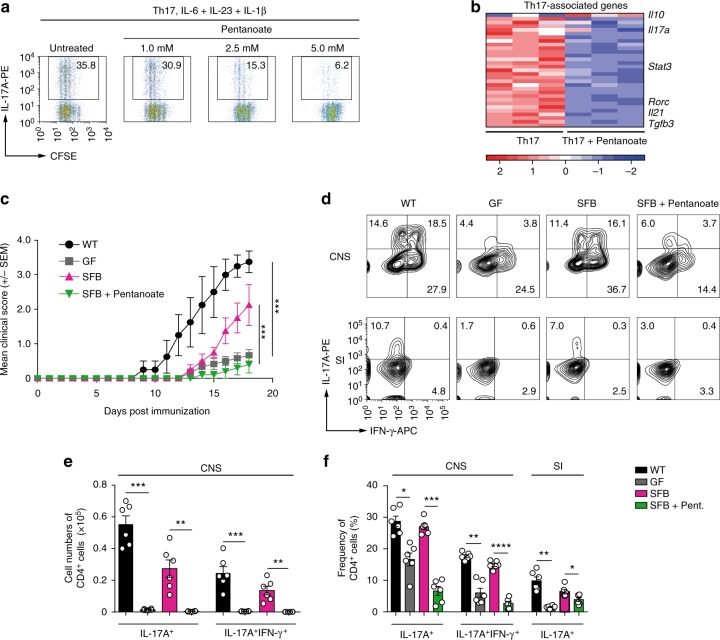
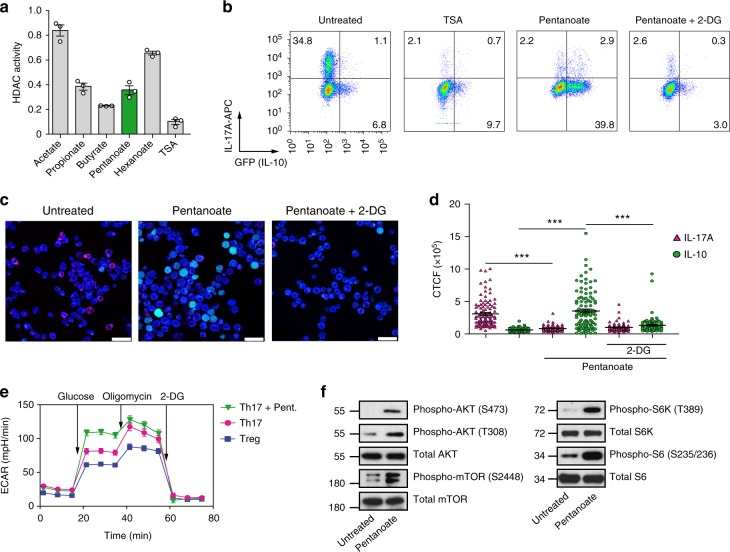
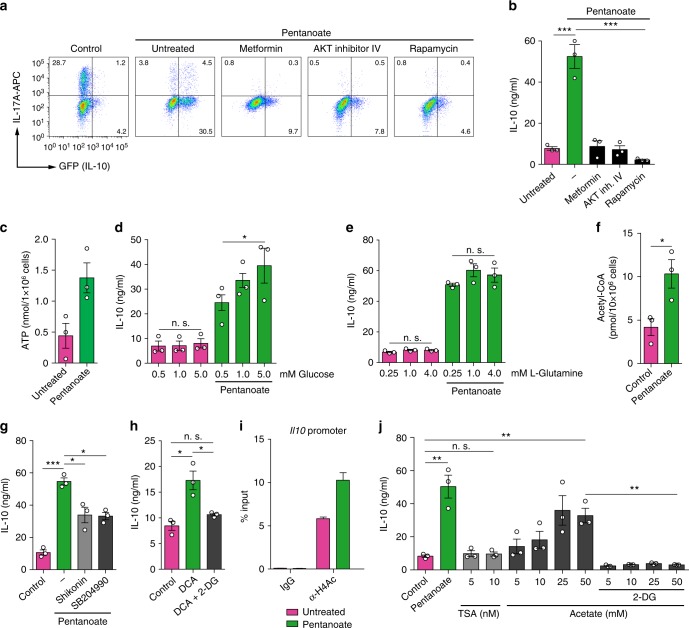
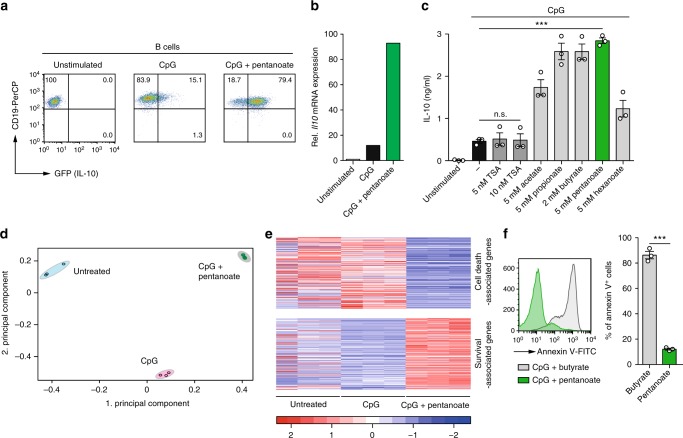
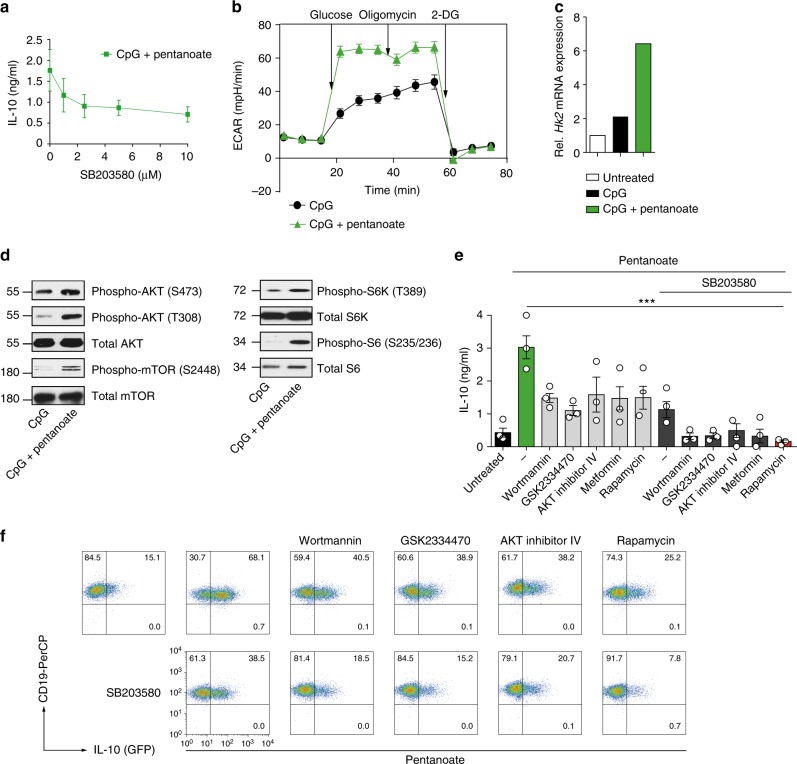
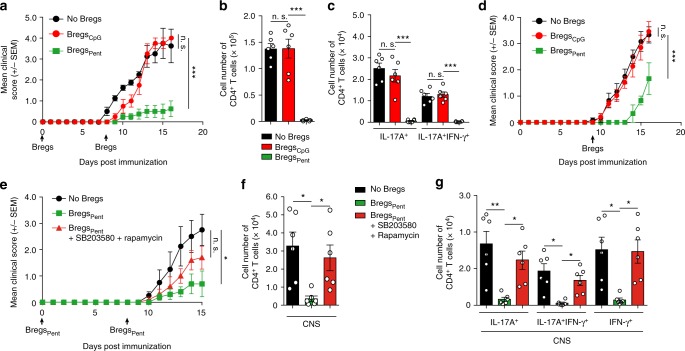
Short-chain fatty acids (SCFAs) have immunomodulatory effects, but the underlying mechanisms are not well understood. Here we show that pentanoate, a physiologically abundant SCFA, is a potent regulator of immunometabolism. Pentanoate induces IL-10 production in lymphocytes by reprogramming their metabolic activity towards elevated glucose oxidation. Mechanistically, this reprogramming is mediated by supplying additional pentanoate-originated acetyl-CoA for histone acetyltransferases, and by pentanoate-triggered enhancement of mTOR activity. In experimental mouse models of colitis and multiple sclerosis, pentanoate-induced regulatory B cells mediate protection from autoimmune pathology. Additionally, pentanoate shows a potent histone deacetylase-inhibitory activity in CD4 + T cells, thereby reducing their IL-17A production. In germ-free mice mono-colonized with segmented filamentous bacteria (SFB), pentanoate inhibits the generation of small-intestinal Th17 cells and ameliorates SFB-promoted inflammation in the central nervous system. Taken together, by enhancing IL-10 production and suppressing Th17 cells, the SCFA pentanoate might be of therapeutic relevance for inflammatory and autoimmune diseases.
Overview
The claims and statistics of this paper haven’t been checked yet.
Free: it reads the open-access text and checks the first 5 claims that cite a source we can check. Create a free account to check every claim.
Integrity signals
Registry
Cites
Statistics
Figures
Verification
Claims the paper makes
The claims and statistics of this paper haven’t been checked yet.
Free: it reads the open-access text and checks the first 5 claims that cite a source we can check. Create a free account to check every claim.
Claims other papers make about this one
Each is checked against this paper’s own text: does it say what the citing paper says it does?
The cited source says what the claim attributes to it.
In the citing paper
“It is known that the glycolytic metabolic pathway promotes IFN-γ expression and T cell effector function20,24–27.”
From Microbial short-chain fatty acids modulate CD8+ T cell responses and improve adoptive immunotherapy for cancer (2021) · cites this paper as [20]
The cited source says what the claim attributes to it.
In the citing paper
“We have recently demonstrated that the SCFA pentanoate (valerate) is also a bacterial metabolite present in the gut of conventional but not of germ-free (GF) mice20.”
From Microbial short-chain fatty acids modulate CD8+ T cell responses and improve adoptive immunotherapy for cancer (2021) · cites this paper as [20]
The cited source says what the claim attributes to it.
In the citing paper
“We recently found that pentanoate was able to impact on the function of CD4+ effector T cells by modulating both cellular metabolism through the activation of mTOR pathway and epigenetic status of cells by inhibiting HDAC enzymes20.”
From Microbial short-chain fatty acids modulate CD8+ T cell responses and improve adoptive immunotherapy for cancer (2021) · cites this paper as [20]
In the citing paper
“We reason valerate may serve as HDAC inhibitor to delay tumour progression and upregulate immune response.41 42”
Self-check
Percentages, sums and reported differences re-computed from the paper’s own numbers.
The self-check needs the paper’s full text.
Citations
Cites
From Dietary Fiber to Host Physiology: Short-Chain Fatty Acids as Key Bacterial Metabolites
Koh, A., De Vadder, F., Kovatcheva-Datchary, P., & Bäckhed, F. (2016) · Cell · doi:10.1016/j.cell.2016.05.041 · Cited by 7,070
Bettelli, E., Carrier, Y., Gao, W., Korn, T., Strom, T. B., Oukka, M., Weiner, H. L., & Kuchroo, V. K. (2006) · Nature · doi:10.1038/nature04753 · Cited by 6,992
De Filippo, C., Cavalieri, D., Di Paola, M., Ramazzotti, M., Poullet, J. B., Massart, S., Collini, S., Pieraccini, G., & Lionetti, P. (2010) · Proceedings of the National Academy of Sciences · doi:10.1073/pnas.1005963107 · Cited by 5,579
Commensal microbe-derived butyrate induces the differentiation of colonic regulatory T cells
Furusawa, Y., Obata, Y., Fukuda, S., Endo, T. A., Nakato, G., Takahashi, D., Nakanishi, Y., Uetake, C., Kato, K., Kato, T., et al. (2013) · Nature · doi:10.1038/nature12721 · Cited by 5,549
The Microbial Metabolites, Short-Chain Fatty Acids, Regulate Colonic T reg Cell Homeostasis
Smith, P. M., Howitt, M. R., Panikov, N., Michaud, M., Gallini, C. A., Bohlooly-Y, M., Glickman, J. N., & Garrett, W. S. (2013) · Science · doi:10.1126/science.1241165 · Cited by 5,413
Metabolites produced by commensal bacteria promote peripheral regulatory T-cell generation
Arpaia, N., Campbell, C., Fan, X., Dikiy, S., van der Veeken, J., deRoos, P., Liu, H., Cross, J. R., Pfeffer, K., Coffer, P. J., et al. (2013) · Nature · doi:10.1038/nature12726 · Cited by 4,838
Induction of Intestinal Th17 Cells by Segmented Filamentous Bacteria
Ivanov, I. I., Atarashi, K., Manel, N., Brodie, E. L., Shima, T., Karaoz, U., Wei, D., Goldfarb, K. C., Santee, C. A., Lynch, S. V., et al. (2009) · Cell · doi:10.1016/j.cell.2009.09.033 · Cited by 4,554
Gut Microbiota Metabolism of Dietary Fiber Influences Allergic Airway Disease and Hematopoiesis
Trompette, A., Gollwitzer, E. S., Yadava, K., Sichelstiel, A. K., Sprenger, N., Ngom-Bru, C., Blanchard, C., Junt, T., Nicod, L. P., Harris, N. L., et al. (2014) · Nature Medicine · doi:10.1038/nm.3444 · Cited by 2,862
Singh, N., Gurav, A., Sivaprakasam, S., Brady, E., Padia, R., Shi, H., Thangaraju, M., Prasad, P. D., Manicassamy, S., Munn, D. H., et al. (2014) · Immunity · doi:10.1016/j.immuni.2013.12.007 · Cited by 2,368
ATP-citrate lyase links cellular metabolism to histone acetylation
Wellen, K. E., Hatzivassiliou, G., Sachdeva, U. M., Bui, T. V., Cross, J. R., & Thompson, C. B. (2009) · Science · doi:10.1126/science.1164097 · Cited by 2,298
Cited by
Items 201–300 of 525
Zogorean, R., & Wirtz, S. J. (2023) · Frontiers in Immunology · doi:10.3389/fimmu.2023.1260266 · Cited by 27
Zhang, C., Zhang, Y., Ma, K., Wang, G., Tang, M., Wang, R., Xia, Z., Xu, Z., Sun, M., Bao, X., et al. (2022) · Annals of Translational Medicine · doi:10.21037/atm-22-458 · Cited by 25
“Notably, Bifidobacteria, Bacteroides, and Prevotella are potent producers of short-chain fatty acids (SCFAs), while the Lactobacillus species produce lactate via fermentation (17-19).”
BackgroundKamal, N., Saharan, B. S., Duhan, J. S., Kumar, A., Chaudhary, P., Goyal, C., Kumar, M., Goyat, N., Sindhu, M., & Mudgil, P. (2024) · Medicine in Microecology · doi:10.1016/j.medmic.2024.100118 · Cited by 27
Short-chain fatty acids in the tumor microenvironment: from molecular mechanisms to cancer therapy
Xiang, Y., Du, A., Wang, Z., Pan, H., & Yuan, K. (2025) · Theranostics · doi:10.7150/thno.119304 · Cited by 27
“Previous studies have confirmed its potent anti-inflammatory effects in inflammatory and autoimmune diseases [156], suggesting a potential role in modulating tumor immunity within the TME.”
Kang, K., Sun, Y., Pan, D., Chang, B., & Sang, L.-X. (2021) · Journal of Immunology Research · doi:10.1155/2021/5084713 · Cited by 28
Yao, H., Yang, H., Wang, Y., Xing, Q., Lin, Y., & Chai, Y. (2022) · Frontiers in Cellular and Infection Microbiology · doi:10.3389/fcimb.2022.1040211 · Cited by 28
“Pentanoate has been linked to autoimmune disorders and inflammation as it boosts IL-10 production and suppresses Th17 cells (Luu et al., 2019).”
BackgroundGut Feelings: How Microbes, Diet, and Host Immunity Shape Disease
Theis, B. F., Park, J. S., Kim, J. S., Zeydabadinejad, S., Vijay–Kumar, M., Yeoh, B. S., & Saha, P. (2025) · Biomedicines · doi:10.3390/biomedicines13061357 · Cited by 25
Becker, A., Abuazab, M., Schwiertz, A., Walter, S., Fassbender, K. C., Fousse, M., & Unger, M. M. (2021) · Autoimmunity Highlights · doi:10.1186/s13317-021-00149-1 · Cited by 26
“Other studies also reported significant beneficial effects in the EAE model by the SCFAs valerate and propionate [7, 13].”
BackgroundInfluentialMicrobial Metabolites in Multiple Sclerosis: Implications for Pathogenesis and Treatment
Duarte-Silva, E. P., Meuth, S. G., & Peixoto, C. A. (2022) · Frontiers in Neuroscience · doi:10.3389/fnins.2022.885031 · Cited by 24
“Through epigenetic and metabolic modulation, pentanoate was shown to inhibit immune cell infiltration into the brain and intestine, particularly Th17 lymphocytes, and to inhibit IL-17A secretion and the expression of RORγt and STAT3 (Luu et al., 2019).”
BackgroundBugbee, E., Wang, A. A., & Gommerman, J. L. (2023) · Frontiers in Immunology · doi:10.3389/fimmu.2023.1188750 · Cited by 27
Hirose, M., Sekar, P., Eladham, M. W., Albataineh, M. T., Rahmani, M., & Ibrahim, S. M. (2023) · Journal of Molecular Medicine · doi:10.1007/s00109-023-02381-w · Cited by 25
“SCFAs are also known to control the differentiation of CD4+ T cells ex vivo and in vivo [102–104].”
BackgroundGargari, G., Mantegazza, G., Taverniti, V., Gardana, C., Valenza, A., Rossignoli, F., Barbaro, M. R., Marasco, G., Cremon, C., Barbara, G., et al. (2023) · Gut Microbes · doi:10.1080/19490976.2023.2274128 · Cited by 25
“Valerate, shown to reduce autoimmunity by enhancing IL-10 and suppressing Th17 cells 36 , was reported to be positively associated with fecal type and significantly higher in patients with IBS-D than in those with IBS-C 12,13 .”
Advances in reprogramming of energy metabolism in tumor T cells
Xuekai, L., Yan, S., Chu, J., Yifei, S., Wu, X., Wenyuan, Z., Han, S., & Xi, Y. (2024) · Frontiers in Immunology · doi:10.3389/fimmu.2024.1347181 · Cited by 24
The therapeutic potential of immunoengineering for systemic autoimmunity
McBride, D. A., Jones, R. M., Bottini, N., & Shah, N. J. (2024) · Nature Reviews Rheumatology · doi:10.1038/s41584-024-01084-x · Cited by 26
“Butyrate is a metabolite of gut microbiota that facilitates immunoregulation through epigenetic modification 79,80 .”
Advances in the mechanism of action of short-chain fatty acids in psoriasis
Zhang, Q., Zhao, L., Li, Y., Wang, S., Lu, G., & Wang, H. (2024) · International Immunopharmacology · doi:10.1016/j.intimp.2024.112928 · Cited by 24
Propionic Acid Impact on Multiple Sclerosis: Evidence and Challenges
Lorefice, L., & Żołędziewska, M. (2024) · Nutrients · doi:10.3390/nu16223887 · Cited by 25
Li, L., Zhao, S., Xiang, T., Feng, H., Ma, L., & Fu, P. (2022) · Chinese Medical Journal · doi:10.1097/cm9.0000000000002295 · Cited by 23
“SCFAs can enhance the glycolytic rate and increase acetyl-CoA concentrations, thus connecting cellular metabolism and chromatin modifications.([7]) Acetate, the principal SCFA in the colon, is readily absorbed and transported.”
BackgroundNemati, M. H., Yazdanpanah, E., Kazemi, R., Orooji, N., Dadfar, S., Oksenych, V., & Haghmorad, D. (2025) · Biology · doi:10.3390/biology14040435 · Cited by 28
“This inhibition suppressed IL-17A gene expression in Th17 cells, further illustrating the therapeutic potential of gut microbiota modulation [161].”
Mucosa-associated bacteria and metabolites in inflammatory bowel disease: from inside to insight
Wang, X., He, L., Dong, Y., Qin, X., Zhang, H., Wang, B., Wang, S., & Cao, H. (2026) · npj Biofilms and Microbiomes · doi:10.1038/s41522-025-00887-4 · Cited by 26
“Through the use of various speci fi c metabolic enzyme inhibitors, it was found that valerate-dependent IL-10 secretion is achieved through enhanced mTOR activity, increased glucose-derived pyruvate oxidation, and elevated acetyl-CoA production 97 .”
Zorraquín‐Peña, I., Taladrid, D., Tamargo, A., Silva, M., Molinero, N., de Llano, D. G., Bartolomé, B., & Moreno-Arribas, M. V. (2021) · Microorganisms · doi:10.3390/microorganisms9071378 · Cited by 27
Age-dependent effects of gut microbiota metabolites on brain resident macrophages
Hasavci, D., & Blank, T. (2022) · Frontiers in Cellular Neuroscience · doi:10.3389/fncel.2022.944526 · Cited by 24
“They mainly comprise of acetate, propionate and butyrate (Fernandes et al., 2014; Luu et al., 2019).”
BackgroundByström, J., Taher, T. E. I., Henson, S. M., Gould, D., & Mageed, R. A. (2022) · Frontiers in Immunology · doi:10.3389/fimmu.2022.990794 · Cited by 23
Li, X., An, S., Luo, Z., Zhou, P., Wang, L., & Feng, R. (2023) · Food Chemistry · doi:10.1016/j.foodchem.2023.135592 · Cited by 24
Protein modification by short-chain fatty acid metabolites in sepsis: a comprehensive review
Zhang, L., Shi, X., Qiu, H., Liu, S., Yang, T., Li, X., & Liu, X. (2023) · Frontiers in Immunology · doi:10.3389/fimmu.2023.1171834 · Cited by 25
New therapeutic avenues in multiple sclerosis: Is there a place for gut microbiota-based treatments?
Campagnoli, L. I. M., Marchesi, N., Varesi, A., Morozzi, M., Mascione, L., Ricevuti, G., Esposito, C., Galeotti, N., & Pascale, A. (2024) · Pharmacological Research · doi:10.1016/j.phrs.2024.107456 · Cited by 25
Antibacterial Monoclonal Antibodies Do Not Disrupt the Intestinal Microbiome or Its Function
Jones-Nelson, O., Tovchigrechko, A., Glover, M. S., Fernandes, F., Rangaswamy, U. S., Liu, H., Tabor, D. E., Boyd, J., Warrener, P., Martínez, J. L., et al. (2020) · Antimicrobial Agents and Chemotherapy · doi:10.1128/aac.02347-19 · Cited by 23
“Autoimmune disease, graft-versus-host disease, allergies, and inflammatory bowel syndrome have all been linked to microbiome dysbiosis (47–50).”
Elhag, D. A., Kumar, M., & Khodor, S. A. (2020) · International Journal of Molecular Sciences · doi:10.3390/ijms22010125 · Cited by 27
“Interestingly, therapeutic effects of SCFAs (mainly pentanoate) on autoimmune disorders were shown to be mediated by Th17, macrophage, and DC via lowering the expression of the inflammatory genes including IL-6, IL-12, IL17A, IL-21 [180,219], lowering the immune response towards intestinal microbiota and enhancing the…”
BackgroundZhang, Y., Tang, N., Zhou, H., & Zhu, Y. (2024) · Biomedicine & Pharmacotherapy · doi:10.1016/j.biopha.2024.116218 · Cited by 22
Liu, S. (2025) · Frontiers in Microbiology · doi:10.3389/fmicb.2025.1675155 · Cited by 22
Zhang, Y., Xia, G., Nie, X., Zeng, Y., Chen, Y., Qian, Y., Chen, G., Huang, J., Wang, C., Zhang, C., et al. (2021) · Frontiers in Cellular and Infection Microbiology · doi:10.3389/fcimb.2021.641997 · Cited by 26
Choi, J., Kim, J., Park, M., & Lee, H. (2022) · Nutrients · doi:10.3390/nu15010145 · Cited by 27
“In addition, SCFAs suppress Salmonella growth [81], cancer [82], obesity [83], histone deacetylases [84,85], and autoimmunity [86].”
BackgroundThe impact of microbiome dysbiosis on T cell function within the tumor microenvironment (TME)
DiPalma, M. P., & Blattman, J. N. (2023) · Frontiers in Cell and Developmental Biology · doi:10.3389/fcell.2023.1141215 · Cited by 24
The Roles and Mechanisms of Gut Microbiota in Food Allergy
Cheng, Y., Liu, X., Chen, F., Rolnik, B. M., Chleilat, F., Ling, Z., Snyder, M. P., & Zhou, X. (2023) · Advanced Gut & Microbiome Research · doi:10.1155/2023/9575410 · Cited by 23
Fatty acids and epigenetics in health and diseases
Chung, M.-Y., & Kim, B. H. (2024) · Food Science and Biotechnology · doi:10.1007/s10068-024-01664-3 · Cited by 25
“Valerate has been studied as a potential inhibitor of auto-immune and inflammatory diseases (Luu et al., 2019).”
Effect of Short Chain Fatty Acids on Age-Related Disorders
Fernandes, M. F., de Oliveira, S., Portovedo, M., Rodrigues, P. B., & Vinolo, M. A. R. (2020) · Advances in experimental medicine and biology · doi:10.1007/978-3-030-42667-5_4 · Cited by 26
A Deep Insight Into Regulatory T Cell Metabolism in Renal Disease: Facts and Perspectives
Han, Z., Ma, K., Tao, H., Liu, H., Zhang, J., Sai, X., Li, Y., Chi, M., Nian, Q., Song, L., et al. (2022) · Frontiers in Immunology · doi:10.3389/fimmu.2022.826732 · Cited by 22
Li, L., Wang, Y., Zhang, Z., & Wang, C. (2022) · Aquaculture · doi:10.1016/j.aquaculture.2022.739019 · Cited by 22
Microbiome and Behçet's disease: a systematic review
Joubert, M., André, M. F. J., Barnich, N., & Billard, E. (2022) · Clinical and Experimental Rheumatology · doi:10.55563/clinexprheumatol/zbt4gx · Cited by 23
Dou, P., Li, X., Zou, X., Wang, K., Yao, L., Sun, Z., Hong, H., Luo, Y., & Tan, Y. (2023) · Food Science and Human Wellness · doi:10.26599/fshw.2022.9250164 · Cited by 23
Gadjalova, I., Heinze, J. M., Goess, M. C., Hofmann, J. I., Albers, J. J., Spallek, R., Blissenbach, B., Buck, A., Weber, M.-C., Scherer, E., et al. (2023) · Mucosal Immunology · doi:10.1016/j.mucimm.2023.10.005 · Cited by 21
Self-citationShort-chain fatty acid valerate reduces voluntary alcohol intake in male mice
Bokoliya, S. C., Russell, J. T., Dorsett, Y., Panier, H. A., Singh, V., Daddi, L., Yuan, H., Dedon, L. R., Liu, Z., Zhou, Y., et al. (2024) · Microbiome · doi:10.1186/s40168-024-01829-6 · Cited by 22
“The immune modulatory effect of valerate has been shown in experimental mouse models of colitis and multiple sclerosis, mediated by suppressing Th 17 cells and the enhancement of IL-10 production [69].”
BackgroundLi, P., Han, M., Zhao, X., Ren, G., Mei, S., & Zhong, C. (2022) · Cells · doi:10.3390/cells11111767 · Cited by 24
“In addition to butyrate, the HDAC inhibitor valerate (VPA) also increases the activity of the mTOR complex and strongly induces IL-10 expression in T cells [37].”
BackgroundHoffman, K. R., Brownell, Z., Doyle, W. J., & Ochoa‐Repáraz, J. (2022) · Journal of Autoimmunity · doi:10.1016/j.jaut.2022.102957 · Cited by 23
Lisco, G., Triggiani, D., Giagulli, V. A., Pergola, G. D., Guastamacchia, E., Piazzolla, G., Jirillo, E., & Triggiani, V. (2023) · Endocrine Metabolic & Immune Disorders - Drug Targets · doi:10.2174/1871530323666230330121301 · Cited by 21
Implications of immunometabolism for smouldering MS pathology and therapy
Bittner, S., Pape, K., Klotz, L., & Zipp, F. (2023) · Nature Reviews Neurology · doi:10.1038/s41582-023-00839-6 · Cited by 23
Microbial metabolites: novel therapeutic tools for boosting cancer therapies
Luu, M., & Visekruna, A. (2021) · Trends in Cell Biology · doi:10.1016/j.tcb.2021.08.005 · Cited by 20
Self-citationDeciphering the interdependent labyrinth between gut microbiota and the immune system
Saini, A., Dalal, P., & Sharma, D. (2022) · Letters in Applied Microbiology · doi:10.1111/lam.13775 · Cited by 21
“For instance, short-chain fatty acids, a gut microbiota metabolite directly affect the immune cells via epigenetic modification-induced changes in metabolism through suppression of histone deacetylase (Luu et al. 2019).”
BackgroundFettig, N. M., Robinson, H. G., Allanach, J. R., Davis, K. M., Simister, R. L., Wang, E. J., Sharon, A. J., Ye, J., Popple, S., Seo, J. H., et al. (2022) · Cell Reports · doi:10.1016/j.celrep.2022.111328 · Cited by 21
Zhu, W., Peng, K., Zhao, Y. H., Xu, C., Tao, X., Liu, Y., Huang, Y., & Yang, X. (2022) · Frontiers in Pharmacology · doi:10.3389/fphar.2022.938760 · Cited by 21
“Among SCFAs, butyrate has been studied extensively in immunomodulatory and gut barrier function (Luu et al., 2019).”
BackgroundPostbiotics Implication in the Microbiota-Host Intestinal Epithelial Cells Mutualism
Kaur, H., Kaur, G., & Ali, S. A. (2023) · Probiotics and Antimicrobial Proteins · doi:10.1007/s12602-023-10062-w · Cited by 20
“Dietary fiber is necessary for gut bacteria to produce butyrate, which acts as an HDAC inhibitor to reduce inflammation by preventing NF-kB and STAT activation [93].”
Liu, M., Li, S., Cao, N., Wang, Q., Liu, Y., Xu, Q., Zhang, L., Sun, C., Xiao, X., & Yao, J. (2023) · International Immunopharmacology · doi:10.1016/j.intimp.2023.111090 · Cited by 23
Taming the Sentinels: Microbiome-Derived Metabolites and Polarization of T Cells
Wojciech, Ł., Tan, K. S. W., & Gascoigne, N. R. J. (2020) · International Journal of Molecular Sciences · doi:10.3390/ijms21207740 · Cited by 19
“Another SCFA for which potent effects on the CD4 compartment were recently identified is pentanoate [53].”
BackgroundMicrobiota and immunoregulation: A focus on regulatory B lymphocytes and transplantation
Pacaud, M., Colas, L., & Brouard, S. (2021) · American Journal of Transplantation · doi:10.1111/ajt.16522 · Cited by 21
Metabolization of microbial postbiotic pentanoate drives anti-cancer CAR T cellsPreprint
Staudt, S., Nikolka, F., Perl, M., Franz, J., Leblay, N., Yuan, X.-K., Larrayoz, M., Lozano, T., Warmuth, L., Fante, M. A., et al. (2024) · bioRxiv (Cold Spring Harbor Laboratory) · doi:10.1101/2024.08.19.608538 · Cited by 24
Self-citationChen, Y., Xie, Y., & Yu, X. (2025) · Frontiers of Medicine · doi:10.1007/s11684-025-1129-3 · Cited by 18
Luu, M., Krause, F. F., Monning, H., Wempe, A., Leister, H., Mainieri, L., Staudt, S., Ziegler-Martin, K., Mangold, K., Kappelhoff, N., et al. (2024) · Mucosal Immunology · doi:10.1016/j.mucimm.2024.09.003 · Cited by 18
Self-citationDeng, X., Gong, X., Zhou, D., & Hong, Z. (2025) · Frontiers in Immunology · doi:10.3389/fimmu.2025.1513599 · Cited by 22
Larder, C. E., Iskandar, M. M., & Kubow, S. J. (2021) · Nutrients · doi:10.3390/nu13082720 · Cited by 19
“Conversely, the conjugated base of valeric acid has been associated with enhancing interleukin-10 production and suppressing Th17 cells, which could provide anti-inflammatory benefits [79].”
BackgroundZhou, P., Zhang, W., Liao, Y., Zhai, Z., Lu, S., Jiang, S., Hu, W., & Gong, W. (2025) · International Journal of Surgery · doi:10.1097/js9.0000000000002573 · Cited by 18
Wang, J., Zi, F., Liu, W., ChengRui, L. I. U., Zhang, Z., Kong, L., Xu, X., Wei, J., Chen, T., & Li, J. (2026) · Gut Microbes · doi:10.1080/19490976.2025.2609455 · Cited by 17
“38 Specifically, butyrate can upregulate T-bet expression to enhance Th1 polarization while downregulating RORγt to inhibit Th17 commitment.”
Metabolic heterogeneity in tumor microenvironment – A novel landmark for immunotherapy
Chen, C., Han, P., & Qing, Y. (2024) · Autoimmunity Reviews · doi:10.1016/j.autrev.2024.103579 · Cited by 17
Lin, M., Feng, L., Cheng, Z., & Wang, K. (2020) · Process Biochemistry · doi:10.1016/j.procbio.2020.12.018 · Cited by 19
Chen, Y., Wang, Z., Chen, X., Chao, G., & Zhang, S. (2023) · Journal of Applied Microbiology · doi:10.1093/jambio/lxad032 · Cited by 16
Mandato, C., Colucci, A., Lanzillo, R., Staiano, A., Scarpato, E., Schiavo, L., Operto, F. F., Serra, M. R., Monaco, C. D., Napoli, J. S., et al. (2023) · Children · doi:10.3390/children10061022 · Cited by 17
“They are critical players in CNS chronic inflammation, progressive degeneration, and remyelination [34,51].”
BackgroundWu, Q. D., Zhang, Y., Wang, C., Hou, Y., He, W., Wang, L., Xiong, J., Ren, Z., Wang, H., Sui, B., et al. (2023) · Journal of Virology · doi:10.1128/jvi.00656-23 · Cited by 18
Tan, D. S. Y., Akelew, Y., Snelson, M., Nguyen, J., & O’Sullivan, K. M. (2024) · International Journal of Molecular Sciences · doi:10.3390/ijms25094817 · Cited by 18
“In the gut, SCFAs have been shown to interact with several GPCRs, including GPR41, GPR43, and GPR109a, which are highly expressed on immune cells, including neutrophils, monocytes, and macrophages [5,34–37] (Figure 1).”
BackgroundExploring the Role of the Microbiome in Rheumatoid Arthritis—A Critical Review
Ermencheva, P., Kotov, G. N., Shumnalieva, R., Velikova, T. V., & Monov, S. V. (2024) · Microorganisms · doi:10.3390/microorganisms12071387 · Cited by 18
“It is shown that Prevotella generates predominantly acetate with undetectable levels of pentanoate, which correlates with its proposed role in autoimmune inflammatory diseases [71].”
BackgroundSaha, S., Rehman, L., Rehman, A., Darbaniyan, F., Weber, D. M., Becnel, M., Gaballa, M., Thomas, S. K., Lee, H. C., Chang, C., et al. (2025) · Blood Advances · doi:10.1182/bloodadvances.2024014476 · Cited by 16
“22 Despite this, directly manipulating the in vivo SCFA levels in patients undergoing CAR-T therapy, either through probiotic supplementation or direct SCFA administration, may not produce the intended therapeutic bene fi ts.”
Modeling the Th17 and Tregs Paradigm: Implications for Cancer Immunotherapy
Corral‐Jara, K. F., da Silva, G. R., Fierro, N. A., & Soumelis, V. (2021) · Frontiers in Cell and Developmental Biology · doi:10.3389/fcell.2021.675099 · Cited by 17
Zhao, B., Zhou, B., Dong, C., Zhang, R., Xie, D., Tian, Y., & Yang, L. (2021) · Frontiers in Microbiology · doi:10.3389/fmicb.2021.645500 · Cited by 17
Ganesan, R., & Suk, K. T. (2022) · Livers · doi:10.3390/livers2030012 · Cited by 16
“Gut homeostasis and microbial communication in epithelial tissues, the immune system, Staphylococcus epidermidis, and molecular mechanisms are activated by SCFAs via the liver feedback mechanism [15,16].”
BackgroundZhong, C., Bai, X., Chen, Q., Ma, Y., Li, J., Zhang, J., Luo, Q., & Cai, K. (2022) · Acta Diabetologica · doi:10.1007/s00592-022-01948-2 · Cited by 19
“Valerate could induce interleukin-10 (IL-10) production by reprogramming the metabolic activity toward elevated glucose oxidation and reduce IL-17A production via the inhibition of histone deacetylase [25].”
BackgroundPandey, M., & Bhattacharyya, J. (2024) · Epigenomics · doi:10.2217/epi-2023-0382 · Cited by 15
Liu, M., Zhang, Y., Xiang, C., Yang, T., Wang, X., Lu, Q., Lu, H., Chen, F., Feng, C., Yang, X., et al. (2024) · Acta Pharmacologica Sinica · doi:10.1038/s41401-024-01291-y · Cited by 16
Hinshaw, D. C., Swain, C. A., Chen, D., Hanna, A., Molina, P. A., Maynard, C. L., Lee, G., McFarland, B. C., Samant, R. S., & Shevde, L. A. (2022) · Laboratory Investigation · doi:10.1038/s41374-022-00828-1 · Cited by 16
Effects of intestinal microbes on rheumatic diseases: A bibliometric analysis
Huang, R., Zhang, M., Lu, Y., Xu, D., Liu, Y., Jin, M., Xian, S., Wang, S., Tong, X., Lu, J., et al. (2023) · Frontiers in Microbiology · doi:10.3389/fmicb.2022.1074003 · Cited by 15
“It is reported that pentanoate acts as a regulator of immunometabolism by suppressing IL-17A production and inducing IL-10 expression in effector T cells (Luu et al., 2019).”
BackgroundMaternal γδ T cells shape offspring pulmonary type 2 immunity in a microbiota-dependent manner
Papotto, P. H., Yılmaz, B., Pimenta, G. F., Mensurado, S., Cunha, C., Fiala, G. J., da Costa, D. G., Gonçalves‐Sousa, N., Chan, B. H. K., Blankenhaus, B., et al. (2023) · Cell Reports · doi:10.1016/j.celrep.2023.112074 · Cited by 18
“Reports in the literature indicate that pentanoate can present both suppressive and enhancing effects on lymphocytes; either by reducing IL-17 production in CD4 + T cells 52 or inducing IFN-γ production in CD8 + T cells 53 .”
BackgroundImmunostimulating Commensal Bacteria and Their Potential Use as Therapeutics
McCuaig, B., & Goto, Y. (2023) · International Journal of Molecular Sciences · doi:10.3390/ijms242115644 · Cited by 15
González-Brito, A., & Uribe‐Herranz, M. (2023) · Frontiers in Immunology · doi:10.3389/fimmu.2023.1083303 · Cited by 14
“Results showed that Th17 cells treated ex vivo with pentanoate increased the extracellular acidification rate and enhanced their glycolytic activity leading to metabolic and epigenetic reprogramming and the loss of the pathogenic phenotype of Th17 cells in autoimmune disease (26).”
BackgroundUnraveling the intricate dance of the Mediterranean diet and gut microbiota in autoimmune resilience
Tsigalou, C., Tsolou, A., Stavropoulou, E., Konstantinidis, T. G., Zafiriou, E., Dardiotis, E., Tsirogianni, A., & Bogdanos, D. P. (2024) · Frontiers in Nutrition · doi:10.3389/fnut.2024.1383040 · Cited by 14
Wegner, V. D., Feile, A., Alb, M., Hudecek, M., Hewitt, P. G., & Mosig, A. S. (2025) · Advanced Healthcare Materials · doi:10.1002/adhm.202405003 · Cited by 15
Fallahi, N., Rafiee, M., Hosseini, S. S., Sereshki, N., Sarab, G. A., & Erfanian, N. (2025) · Letters in Applied Microbiology · doi:10.1093/lambio/ovaf091 · Cited by 15
Yang, H., Yang, J., Cheng, H., Cao, H., Tang, S., Wang, Q., Zhao, J., Li, B., Ding, Y., & Ma, C. (2019) · Scientific Reports · doi:10.1038/s41598-019-54558-4 · Cited by 14
Yamashita, H., Nishiyama, M., Ohbuchi, K., Kanno, H., Tsuchiya, K., Yamaguchi, J., Mizuno, T., Ebata, T., Nagino, M., & Yokoyama, Y. (2021) · Pharmacological Research · doi:10.1016/j.phrs.2021.105981 · Cited by 16
Multiple sclerosis and the microbiota
Engelenburg, H. J., Lucassen, P. J., Sarafian, J. T., Parker, W., & Laman, J. D. (2022) · Evolution Medicine and Public Health · doi:10.1093/emph/eoac009 · Cited by 16
“SCFA supplements Firmicutes: Bacteroides # [106] Treg " IL-10 " Th1/Th17 # [105, 129] Reduced brain atrophy, disease progression and relapse rate [105] LCPUFA supplements Faecalibacterium l Bifidobacterium " Roseburia " [130] Th1/Th17 # [131] PLP10 supplement: Reduced relapse rate and disease progression [60]”
BackgroundGut microbiome, a novel precision medicine biomarker for hepatocellular carcinoma
Chen, P., Devkota, S., Shiao, S. L., Hendifar, A. E., & Yang, J. D. (2025) · Frontiers in Immunology · doi:10.3389/fimmu.2025.1568962 · Cited by 13
García, C. J., Beltrán, D., Frutos-Lisón, M. D., García‐Conesa, M., Tomás-Barberán, F. A., & García-Villalba, R. (2024) · Food & Function · doi:10.1039/d4fo02233e · Cited by 13
Xu, Y., Yu, M., Huang, X., Wang, G., Wang, H., Zhang, F., Zhang, J., & Gao, X. (2024) · mSystems · doi:10.1128/msystems.00968-24 · Cited by 16
“It has also been reported that Dialister could exert an immunomodulatory effect by producing the short-chain fatty acid (SCFA) pentanoate (66).”
Yu, L., Guo, Q., Gu, X., Wang, Z., Li, J., Wang, X., Xu, Z., Wang, Y., Zhang, Y., Zhang, Y., et al. (2025) · British Journal of Cancer · doi:10.1038/s41416-025-03105-2 · Cited by 14
“This epigenetic modi fi cation can in fl uence gene expression and contribute to changes in immune responses and tumour microenvironment [30, 32].”
Im, J., Lee, D.-W., Park, O.-J., Natarajan, S., Park, J., Yun, C., & Han, S. H. (2022) · Frontiers in Microbiology · doi:10.3389/fmicb.2022.1063650 · Cited by 13
“Acetate (C2), propionate (C3), and butyrate (C4) are representative SCFAs accounting for more than 95% of all SCFAs; and their molar ratio in the human colon is about 60:20:20 (Cummings et al., 1987; Fernandes et al., 2014; Luu et al., 2019).”
BackgroundThe Role of Gut Microbiota in Neuromyelitis Optica Spectrum Disorder
Yao, S., Yang, X., Cen, L., & Tan, S. (2024) · International Journal of Molecular Sciences · doi:10.3390/ijms25063179 · Cited by 13
“In addition, the production of IL-10 during SCFA-induced Th17 cell differentiation was also dependent on the inhibition of HDAC activity [132,133].”
BackgroundYin, Q., Ni, J., & Ying, J. (2024) · Immunity Inflammation and Disease · doi:10.1002/iid3.1263 · Cited by 13
Ma, J., Lu, Q., Zhao, Y., Liu, X., Ding, G., Wang, Y., Wang, X., Chen, Y., Zhang, T., & Cheng, X. (2024) · Brain Research Bulletin · doi:10.1016/j.brainresbull.2024.111171 · Cited by 15
Bi, Y., Wei, H., Nian, H., Liu, R., Ji, W., Liu, H., & Bao, J. (2022) · Frontiers in Microbiology · doi:10.3389/fmicb.2022.819011 · Cited by 12
Epigenetic regulation by metabolites from the gut microbiome
Marín-Tello, C., Jintaridth, P., Sanchez, F., Gonzalez, C., Zelada-Castillo, L., Vasquez-Arqueros, A., Guevara-Vásquez, A. M., & Vieira, A. V. (2022) · Beneficial Microbes · doi:10.3920/bm2022.0006 · Cited by 12
Matrine Mediated Immune Protection in MS by Regulating Gut Microbiota and Production of SCFAs
Dou, M., Chu, Y., Zhou, X., Wang, M., Li, X., Ma, R., Fan, Z., Zhao, X., Wang, W., Li, S., et al. (2023) · Molecular Neurobiology · doi:10.1007/s12035-023-03568-5 · Cited by 13
“Valeric acid, one of the major SCFAs, could effectively inhibit the production of IL-17A and the proliferation of Th17 cells, pathogenic cells essential for the development of EAE [45].”
Gu, J., Zheng, Y., Yang, H., Li, Y., Liu, S., Wu, Y., Ren, L., Yang, Y. P., & Long, Y. (2023) · Journal of Functional Foods · doi:10.1016/j.jff.2023.105811 · Cited by 15
Shi, W., Ye, H., Deng, Y., Chen, S., Xiao, W. L., Wang, Z., Xiong, Z., & Zhao, L. (2022) · Journal of Chromatography B · doi:10.1016/j.jchromb.2021.123096 · Cited by 13
Xiao, X., Guo, K., Liu, J., Liu, Y., Yang, C., Xu, Y., & Deng, B. (2023) · Animals · doi:10.3390/ani14010146 · Cited by 11
“Previous studies have inferred that valeric acid inhibits the release of inflammatory cytokines and the growth of pathogens, maintains barrier functions and microbial balance and further protects the host against injury [38–41].”
BackgroundGeng, X., Tian, W., Zhuang, M., Ma, W., Lin, R., Shang, H., Yu, Z., Shen, R., & Li, J. (2024) · Foods · doi:10.3390/foods13244113 · Cited by 12
“Isobutyric and isovaleric acids affect adipocytes as well as lipid and glucose metabolism, and they help to improve insulin sensitivity in individuals with metabolic disorders [69].”
Metadata
- Authors
- Luu, M., Pautz, S., Kohl, V., Singh, R., Romero, R., Lucas, S., Hofmann, J., Raifer, H., Vachharajani, N., Carrascosa, L. C., Lamp, B., Nist, A., Stiewe, T., Shaul, Y., Adhikary, T., Zaiss, M. M., Lauth, M., Steinhoff, U., & Visekruna, A.
- Affiliations
- Philipps University of Marburg (DE)
- University of Kassel (DE)
- Friedrich-Alexander-Universität Erlangen-Nürnberg (DE)
- Hebrew University of Jerusalem (IL)
- Corresponding author
- Visekruna, Alexander
- ORCID
- Venue
- Nature Communications
- Published
- 2019-02-15
- Volume
- 10
- Issue
- 1
- Pages
- 760-760
- ISSN
- 2041-1723 (ISSN-L)
- PMC
- PMC6377655
- OpenAlex
- W2911672024
- Semantic Scholar
- 231ddeddc2856139155ba0e5b83b063b19a6a99c
- Cited by
- 508
- References
- 51
- Citations by year
- 2026: 51 · 2025: 92 · 2024: 95 · 2023: 75 · 2022: 86 · 2021: 50 · 2020: 44 · 2019: 14
- FWCI
- 16.04
- Type
- journal article
- Language
- en
- Open access
- gold
- doi.org
- Licence
- cc-by
- creativecommons.org/licenses/by/4.0 (tdm)
- creativecommons.org/licenses/by/4.0 (vor)
- Locations
- Nature Communications (publishedVersion, cc-by)
- Europe PMC (PubMed Central) (publishedVersion, cc-by)
- PubMed Central (publishedVersion, cc-by)
- PubMed (publishedVersion)
- RePEc: Research Papers in Economics (submittedVersion)
- DOAJ (DOAJ: Directory of Open Access Journals) (submittedVersion)
- DOAJ (DOAJ: Directory of Open Access Journals) (submittedVersion, cc-by-sa)
- Funders
- Philipps-Universität Marburg
- Helmholtz Zentrum München
- Topics
- Life Sciences › Biochemistry, Genetics and Molecular Biology › Molecular Biology › Gut microbiota and health
- Life Sciences › Immunology and Microbiology › Immunology › T-cell and B-cell Immunology
- Life Sciences › Immunology and Microbiology › Immunology › Psoriasis: Treatment and Pathogenesis
- Keywords
- short-chain fatty acids, immunometabolism, autoimmunity, IL-10, glucose oxidation, acetyl-CoA, histone acetylation, histone deacetylase inhibition, mTOR, regulatory B cells, Th17 cells, segmented filamentous bacteria, colitis, multiple sclerosis, CD4+ T cells, IL-17A, germ-free mice
- MeSH terms
- Animals, Colitis, Fatty Acids, Volatile, Lymphocytes, Multiple Sclerosis, Valerates, CD4-Positive T-Lymphocytes, Autoimmunity, Interleukin-10, Epigenesis, Genetic, Mice, Th17 Cells
About these checks
Registry, retraction, Cites and statistics results are computed, not judged, with one exception: a printed reference that no index lists is read once by a model before it counts as a citation error. Claims are extracted by a model and kept only when their quote appears verbatim in the text; each cited source is then checked, with a model’s help, for whether it says what the claim relies on. Those verdicts can be wrong — read the claim’s quote and the cited source before relying on one.
Statistics and arithmetic are recomputed, not judged.
Confidence bands are shown only for fields calibrated on our annotated test set. None is calibrated yet, so no band is shown.
What counts as a claim ›How we measure confidence ›How we check this ›
Are you an author, or do you see a problem with this page? Request a review
Data sources
Bibliographic data: Semantic Scholar, OpenAlex, Crossref.
Contains information from the Semantic Scholar Academic Graph Datasets, made available under the ODC Attribution License (ODC-BY 1.0).
Semantic Scholar’s data is described in: Kinney, R., et al. (2023). The Semantic Scholar Open Data Platform. arXiv:2301.10140.
