

The short-chain fatty acid pentanoate suppresses autoimmunity by modulating the metabolic-epigenetic crosstalk in lymphocytes
Open accessThe DOI matches its Crossref record; 51 of the 51 references it cites were found in a registry or an index.
Abstract
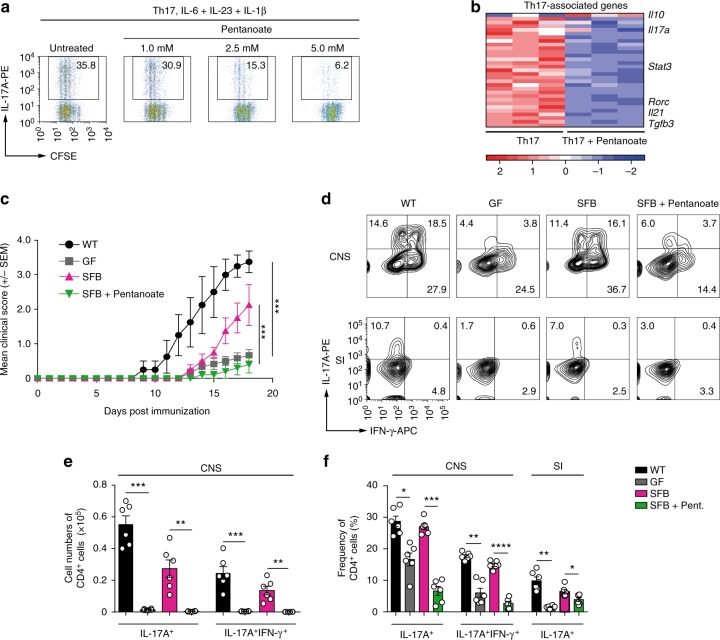
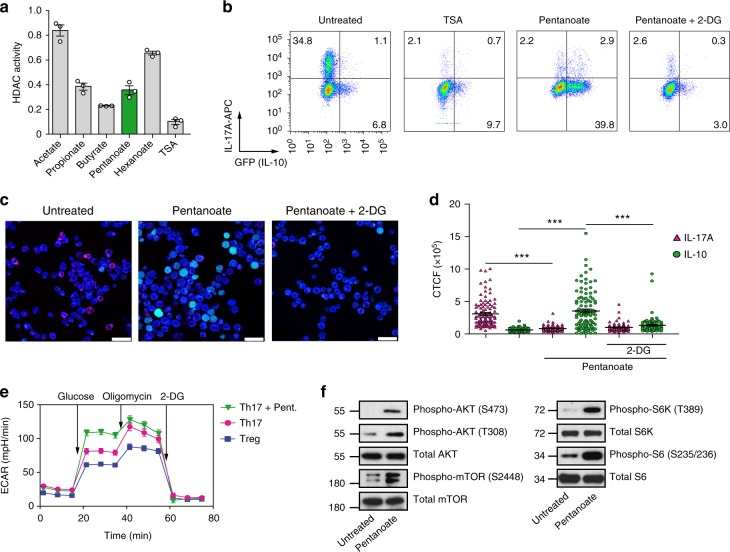
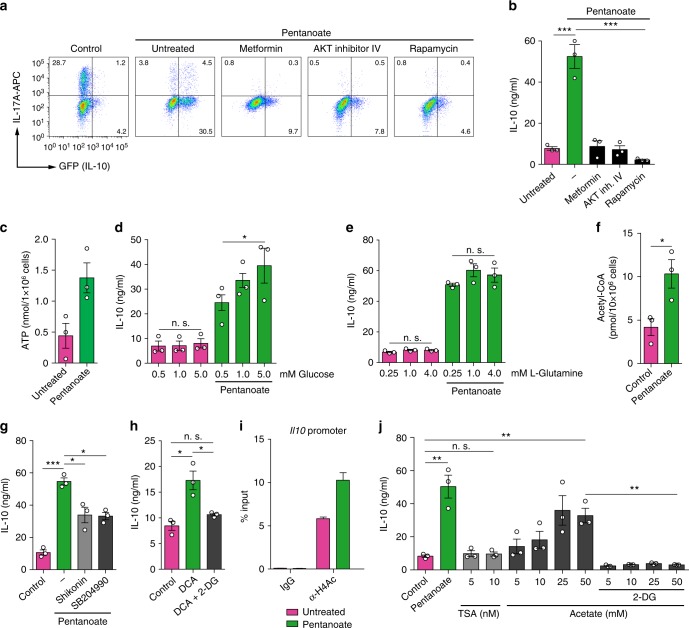
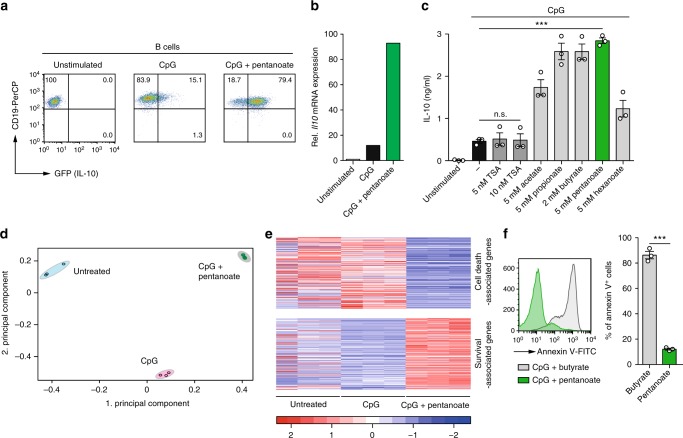
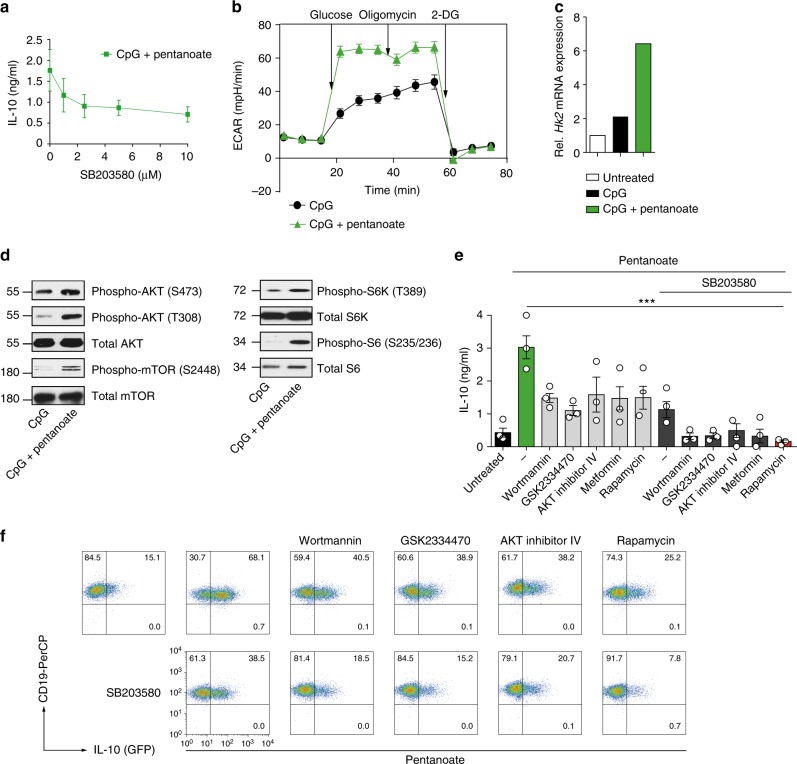
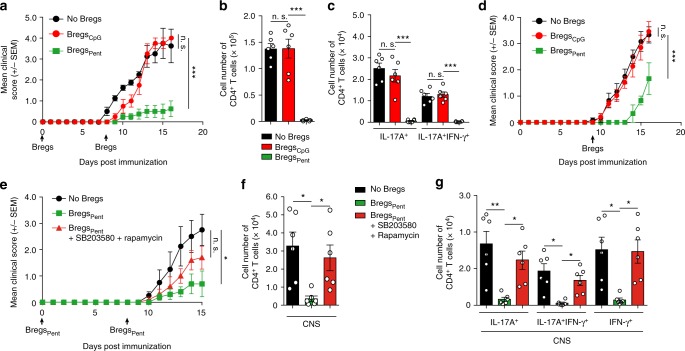
Short-chain fatty acids (SCFAs) have immunomodulatory effects, but the underlying mechanisms are not well understood. Here we show that pentanoate, a physiologically abundant SCFA, is a potent regulator of immunometabolism. Pentanoate induces IL-10 production in lymphocytes by reprogramming their metabolic activity towards elevated glucose oxidation. Mechanistically, this reprogramming is mediated by supplying additional pentanoate-originated acetyl-CoA for histone acetyltransferases, and by pentanoate-triggered enhancement of mTOR activity. In experimental mouse models of colitis and multiple sclerosis, pentanoate-induced regulatory B cells mediate protection from autoimmune pathology. Additionally, pentanoate shows a potent histone deacetylase-inhibitory activity in CD4 + T cells, thereby reducing their IL-17A production. In germ-free mice mono-colonized with segmented filamentous bacteria (SFB), pentanoate inhibits the generation of small-intestinal Th17 cells and ameliorates SFB-promoted inflammation in the central nervous system. Taken together, by enhancing IL-10 production and suppressing Th17 cells, the SCFA pentanoate might be of therapeutic relevance for inflammatory and autoimmune diseases.
Overview
The claims and statistics of this paper haven’t been checked yet.
Free: it reads the open-access text and checks the first 5 claims that cite a source we can check. Create a free account to check every claim.
Integrity signals
Registry
Cites
Statistics
Figures
Verification
Claims the paper makes
The claims and statistics of this paper haven’t been checked yet.
Free: it reads the open-access text and checks the first 5 claims that cite a source we can check. Create a free account to check every claim.
Claims other papers make about this one
Each is checked against this paper’s own text: does it say what the citing paper says it does?
The cited source says what the claim attributes to it.
In the citing paper
“It is known that the glycolytic metabolic pathway promotes IFN-γ expression and T cell effector function20,24–27.”
From Microbial short-chain fatty acids modulate CD8+ T cell responses and improve adoptive immunotherapy for cancer (2021) · cites this paper as [20]
The cited source says what the claim attributes to it.
In the citing paper
“We have recently demonstrated that the SCFA pentanoate (valerate) is also a bacterial metabolite present in the gut of conventional but not of germ-free (GF) mice20.”
From Microbial short-chain fatty acids modulate CD8+ T cell responses and improve adoptive immunotherapy for cancer (2021) · cites this paper as [20]
The cited source says what the claim attributes to it.
In the citing paper
“We recently found that pentanoate was able to impact on the function of CD4+ effector T cells by modulating both cellular metabolism through the activation of mTOR pathway and epigenetic status of cells by inhibiting HDAC enzymes20.”
From Microbial short-chain fatty acids modulate CD8+ T cell responses and improve adoptive immunotherapy for cancer (2021) · cites this paper as [20]
In the citing paper
“We reason valerate may serve as HDAC inhibitor to delay tumour progression and upregulate immune response.41 42”
Self-check
Percentages, sums and reported differences re-computed from the paper’s own numbers.
The self-check needs the paper’s full text.
Citations
Cites
From Dietary Fiber to Host Physiology: Short-Chain Fatty Acids as Key Bacterial Metabolites
Koh, A., De Vadder, F., Kovatcheva-Datchary, P., & Bäckhed, F. (2016) · Cell · doi:10.1016/j.cell.2016.05.041 · Cited by 7,070
Bettelli, E., Carrier, Y., Gao, W., Korn, T., Strom, T. B., Oukka, M., Weiner, H. L., & Kuchroo, V. K. (2006) · Nature · doi:10.1038/nature04753 · Cited by 6,992
De Filippo, C., Cavalieri, D., Di Paola, M., Ramazzotti, M., Poullet, J. B., Massart, S., Collini, S., Pieraccini, G., & Lionetti, P. (2010) · Proceedings of the National Academy of Sciences · doi:10.1073/pnas.1005963107 · Cited by 5,579
Commensal microbe-derived butyrate induces the differentiation of colonic regulatory T cells
Furusawa, Y., Obata, Y., Fukuda, S., Endo, T. A., Nakato, G., Takahashi, D., Nakanishi, Y., Uetake, C., Kato, K., Kato, T., et al. (2013) · Nature · doi:10.1038/nature12721 · Cited by 5,549
The Microbial Metabolites, Short-Chain Fatty Acids, Regulate Colonic T reg Cell Homeostasis
Smith, P. M., Howitt, M. R., Panikov, N., Michaud, M., Gallini, C. A., Bohlooly-Y, M., Glickman, J. N., & Garrett, W. S. (2013) · Science · doi:10.1126/science.1241165 · Cited by 5,413
Metabolites produced by commensal bacteria promote peripheral regulatory T-cell generation
Arpaia, N., Campbell, C., Fan, X., Dikiy, S., van der Veeken, J., deRoos, P., Liu, H., Cross, J. R., Pfeffer, K., Coffer, P. J., et al. (2013) · Nature · doi:10.1038/nature12726 · Cited by 4,838
Induction of Intestinal Th17 Cells by Segmented Filamentous Bacteria
Ivanov, I. I., Atarashi, K., Manel, N., Brodie, E. L., Shima, T., Karaoz, U., Wei, D., Goldfarb, K. C., Santee, C. A., Lynch, S. V., et al. (2009) · Cell · doi:10.1016/j.cell.2009.09.033 · Cited by 4,554
Gut Microbiota Metabolism of Dietary Fiber Influences Allergic Airway Disease and Hematopoiesis
Trompette, A., Gollwitzer, E. S., Yadava, K., Sichelstiel, A. K., Sprenger, N., Ngom-Bru, C., Blanchard, C., Junt, T., Nicod, L. P., Harris, N. L., et al. (2014) · Nature Medicine · doi:10.1038/nm.3444 · Cited by 2,862
Singh, N., Gurav, A., Sivaprakasam, S., Brady, E., Padia, R., Shi, H., Thangaraju, M., Prasad, P. D., Manicassamy, S., Munn, D. H., et al. (2014) · Immunity · doi:10.1016/j.immuni.2013.12.007 · Cited by 2,368
ATP-citrate lyase links cellular metabolism to histone acetylation
Wellen, K. E., Hatzivassiliou, G., Sachdeva, U. M., Bui, T. V., Cross, J. R., & Thompson, C. B. (2009) · Science · doi:10.1126/science.1164097 · Cited by 2,298
Posttranscriptional Control of T Cell Effector Function by Aerobic Glycolysis
Chang, C.-H., Curtis, J. D., Maggi, L. B., Faubert, B., Villarino, A. V., O’Sullivan, D., Huang, S. C.-C., van der Windt, G. J. W., Blagih, J., Qiu, J., et al. (2013) · Cell · doi:10.1016/j.cell.2013.05.016 · Cited by 2,204
Chang, P. V., Hao, L., Offermanns, S., & Medzhitov, R. (2014) · Proceedings of the National Academy of Sciences · doi:10.1073/pnas.1322269111 · Cited by 2,175
Activation of a metabolic gene regulatory network downstream of mTOR complex 1
Düvel, K., Yecies, J. L., Menon, S., Raman, P., Lipovsky, A. I., Souza, A. L., Triantafellow, E., Ma, Q., Gorski, R., Cleaver, S., et al. (2010) · Molecular Cell · doi:10.1016/j.molcel.2010.06.022 · Cited by 2,020
Shi, L. Z., Wang, R., Huang, G., Vogel, P., Neale, G., Green, D. R., & Chi, H. (2011) · Journal of Experimental Medicine · doi:10.1084/jem.20110278 · Cited by 1,803
Kelly, C. J., Zheng, L., Campbell, E. L., Saeedi, B., Scholz, C. C., Bayless, A. J., Wilson, K. E., Glover, L. E., Kominsky, D. J., Magnuson, A., et al. (2015) · Cell Host & Microbe · doi:10.1016/j.chom.2015.03.005 · Cited by 1,716
B cells regulate autoimmunity by provision of IL-10
Fillatreau, S., Sweenie, C. H., McGeachy, M. J., Gray, D., & Anderton, S. M. (2002) · Nature Immunology · doi:10.1038/ni833 · Cited by 1,647
Generation of pathogenic TH17 cells in the absence of TGF-β signalling
Ghoreschi, K., Laurence, A., Yang, X.-P., Tato, C. M., McGeachy, M. J., Konkel, J. E., Ramos, H. L., Wei, L., Davidson, T. S., Bouladoux, N., et al. (2010) · Nature · doi:10.1038/nature09447 · Cited by 1,388
Proinflammatory T-cell responses to gut microbiota promote experimental autoimmune encephalomyelitis
Lee, Y. K., Menezes, J. S., Umesaki, Y., & Mazmanian, S. K. (2011) · Proceedings of the National Academy of Sciences · doi:10.1073/pnas.1000082107 · Cited by 1,323
Park, J., Kim, M., Kang, S. G., Jannasch, A. H., Cooper, B., Patterson, J., & Kim, C. H. (2015) · Mucosal Immunology · doi:10.1038/mi.2014.44 · Cited by 1,307
Commensal microbiota and myelin autoantigen cooperate to trigger autoimmune demyelination
Berer, K., Mues, M., Koutrolos, M., Rasbi, Z. A., Boziki, M., Johner, C., Wekerle, H., & Krishnamoorthy, G. (2011) · Nature · doi:10.1038/nature10554 · Cited by 1,251
Induction and molecular signature of pathogenic TH17 cells
Lee, Y., Awasthi, A., Yosef, N., Quintana, F. J., Xiao, S., Peters, A., Wu, C., Kleinewietfeld, M., Kunder, S., Hafler, D. A., et al. (2012) · Nature Immunology · doi:10.1038/ni.2416 · Cited by 1,174
A Validated Regulatory Network for Th17 Cell Specification
Ciofani, M., Madar, A., Galan, C., Sellars, M., Mace, K., Pauli, F., Agarwal, A., Huang, W., Parkurst, C. N., Muratet, M., et al. (2012) · Cell · doi:10.1016/j.cell.2012.09.016 · Cited by 1,160
Kim, M. H., Kang, S. G., Park, J. H., Yanagisawa, M., & Kim, C. H. (2013) · Gastroenterology · doi:10.1053/j.gastro.2013.04.056 · Cited by 1,127
Dietary fatty acids directly impact central nervous system autoimmunity via the small intestine
Haghikia, A., Jörg, S., Duscha, A., Berg, J., Manzel, A., Waschbisch, A., Hammer, A., Lee, D.-H., May, C., Wilck, N., et al. (2015) · Immunity · doi:10.1016/j.immuni.2015.09.007 · Cited by 927
Gut Microbial Metabolites Fuel Host Antibody Responses
Kim, M., Qie, Y., Park, J., & Kim, C. H. (2016) · Cell Host & Microbe · doi:10.1016/j.chom.2016.07.001 · Cited by 893
Seasonal cycling in the gut microbiome of the Hadza hunter-gatherers of Tanzania
Smits, S. A., Leach, J., Sonnenburg, E. D., Gonzalez, C. G., Lichtman, J. S., Reid, G., Knight, R., Manjurano, A., Changalucha, J., Elias, J. E., et al. (2017) · Science · doi:10.1126/science.aan4834 · Cited by 886
Short-chain fatty acids regulate systemic bone mass and protect from pathological bone loss
Lucas, S., Omata, Y., Hofmann, J., Böttcher, M., Iljazovic, A., Sarter, K., Albrecht, O., Schulz, O., Krishnacoumar, B., Krönke, G., et al. (2018) · Nature Communications · doi:10.1038/s41467-017-02490-4 · Cited by 815
Self-citationThe Colonic Crypt Protects Stem Cells from Microbiota-Derived Metabolites
Kaiko, G. E., Ryu, S. H., Koues, O. I., Collins, P. L., Solnica-Krezel, L., Pearce, E. J., Pearce, E. L., Oltz, E. M., & Stappenbeck, T. S. (2016) · Cell · doi:10.1016/j.cell.2016.05.018 · Cited by 733
Mathewson, N. D., Jenq, R., Mathew, A. V., Koenigsknecht, M., Hanash, A., Toubai, T., Oravecz-Wilson, K., Wu, S.-R., Sun, Y., Rossi, C., et al. (2016) · Nature Immunology · doi:10.1038/ni.3400 · Cited by 725
Mariño, E., Richards, J. L., McLeod, K. H., Stanley, D., Yap, Y. A., Knight, J., McKenzie, C., Kranich, J., Oliveira, A. C., Rossello, F. J., et al. (2017) · Nature Immunology · doi:10.1038/ni.3713 · Cited by 686
Fiber-utilizing capacity varies in Prevotella- versus Bacteroides-dominated gut microbiota
Chen, T., Long, W., Zhang, C., Liu, S., Zhao, L., & Hamaker, B. R. (2017) · Scientific Reports · doi:10.1038/s41598-017-02995-4 · Cited by 601
Growth factors can influence cell growth and survival through effects on glucose metabolism
Vander Heiden, M. G., Plas, D. R., Rathmell, J. C., Fox, C. J., Harris, M. H., & Thompson, C. B. (2001) · Molecular and Cellular Biology · doi:10.1128/mcb.21.17.5899-5912.2001 · Cited by 536
Zhou, L., Zhang, M., Wang, Y., Dorfman, R. G., Liu, H., Yu, T., Chen, X., Tang, D., Xu, L., Yin, Y., et al. (2018) · Inflammatory Bowel Diseases · doi:10.1093/ibd/izy182 · Cited by 525
Roberts, D. J., & Miyamoto, S. (2015) · Cell Death & Differentiation · doi:10.1038/cdd.2014.173 · Cited by 504
Balmer, M. L., Ma, E. H., Bantug, G. R., Grählert, J., Pfister, S., Glatter, T., Jauch, A., Dimeloe, S., Slack, E., Dehio, P., et al. (2016) · Immunity · doi:10.1016/j.immuni.2016.03.016 · Cited by 361
The Microbial Metabolite Butyrate Induces Expression of Th1-Associated Factors in CD4+ T Cells
Kespohl, M., Vachharajani, N., Luu, M., Harb, H., Pautz, S., Wolff, S., Sillner, N., Walker, A., Schmitt-Kopplin, P., Boettger, T., et al. (2017) · Frontiers in Immunology · doi:10.3389/fimmu.2017.01036 · Cited by 294
Self-citationMetabolic control of regulatory T cell development and function
Zeng, H., & Chi, H. (2015) · Trends in Immunology · doi:10.1016/j.it.2014.08.003 · Cited by 274
IL-17A secretion by CD8+ T cells supports Th17-mediated autoimmune encephalomyelitis
Huber, M., Heink, S., Pagenstecher, A., Reinhard, K., Ritter, J., Visekruna, A., Guralnik, A., Bollig, N., Jeltsch, K., Heinemann, C., et al. (2013) · Journal of Clinical Investigation · doi:10.1172/jci63681 · Cited by 254
Self-citationDihydropyrimidine Accumulation Is Required for the Epithelial-Mesenchymal Transition
Shaul, Y. D., Freinkman, E., Comb, W. C., Cantor, J. R., Tam, W. L., Thiru, P., Kim, D., Kanarek, N., Pacold, M. E., Chen, W. W., et al. (2014) · Cell · doi:10.1016/j.cell.2014.07.032 · Cited by 222
Self-citationBantug, G. R., Fischer, M., Grählert, J., Balmer, M. L., Unterstab, G., Develioglu, L., Steiner, R., Zhang, L., Costa, A. S. H., Gubser, P. M., et al. (2018) · Immunity · doi:10.1016/j.immuni.2018.02.012 · Cited by 193
Cutting Edge: The Pathogenicity of IFN-γ–Producing Th17 Cells Is Independent of T-bet
Duhen, R., Glatigny, S., Arbelaez, C. A., Blair, T. C., Oukka, M., & Bettelli, E. (2013) · The Journal of Immunology · doi:10.4049/jimmunol.1203172 · Cited by 168
Park, J., Goergen, C. J., HogenEsch, H., & Kim, C. H. (2016) · The Journal of Immunology · doi:10.4049/jimmunol.1502046 · Cited by 166
Dietary Fatty Acids Directly Impact Central Nervous System Autoimmunity via the Small Intestine
Haghikia, A., Jörg, S., Duscha, A., Berg, J., Manzel, A., Waschbisch, A., Hammer, A., Lee, D.-H., May, C., Wilck, N., et al. (2016) · Immunity · doi:10.1016/j.immuni.2016.04.006 · Cited by 122
Microbial metabolites control gut inflammatory responses
Arpaia, N., & Rudensky, A. Y. (2014) · Proceedings of the National Academy of Sciences · doi:10.1073/pnas.1323183111 · Cited by 111
Kim, D. S., Kwon, J.-E., Lee, S. H., Kim, E. K., Ryu, J.-G., Jung, K.-A., Choi, J.-W., Park, M.-J., Moon, Y.-M., Park, S.-H., et al. (2018) · Frontiers in Immunology · doi:10.3389/fimmu.2018.01525 · Cited by 110
Roberts, D. J., & Miyamoto, S. (2015) · Cell Death and Differentiation · doi:10.1038/cdd.2014.208 · Cited by 93
IL-17– and IFN-γ–Secreting Foxp3+ T Cells Infiltrate the Target Tissue in Experimental Autoimmunity
Esposito, M., Ruffini, F., Bergami, A., Garzetti, L., Borsellino, G., Battistini, L., Martino, G., & Furlan, R. (2010) · The Journal of Immunology · doi:10.4049/jimmunol.1001519 · Cited by 82
Enteric pathogen exploitation of the microbiota-generated nutrient environment of the gut
Keeney, K. M., & Finlay, B. B. (2011) · Current Opinion in Microbiology · doi:10.1016/j.mib.2010.12.012 · Cited by 81
Glucose metabolism and cell size in continuous cultures ofSaccharomyces cerevisiae
Porro, D., Brambilla, L., & Alberghina, L. (2003) · FEMS Microbiology Letters · doi:10.1016/s0378-1097(03)00815-2 · Cited by 63
Bollrath, J., & Powrie, F. (2013) · Science · doi:10.1126/science.1242674 · Cited by 60
Mion, F., Tonon, S., Toffoletto, B., Cesselli, D., Pucillo, C. E. M., & Vitale, G. (2014) · Molecular Immunology · doi:10.1016/j.molimm.2014.05.018 · Cited by 53
Cited by
The Role of Short-Chain Fatty Acids From Gut Microbiota in Gut-Brain Communication
Silva, Y. P., Bernardi, A., & Frozza, R. L. (2020) · Frontiers in Endocrinology · doi:10.3389/fendo.2020.00025 · Cited by 3,043
“Comprised mostly of acetate (C2), propionate (C3), and butyrate (C4) (63, 64) in an approximate molar rate of 60:20:20, respectively (65), approximately 500–600 mmol of SCFAs are produced in the gut per day depending on the fiber content in the diet, microbiota composition, and gut transit time (66, 67).”
BackgroundBiology and therapeutic potential of interleukin-10
Saraiva, M., Vieira, P., & O’Garra, A. (2020) · Journal of Experimental Medicine · doi:10.1084/jem.20190418 · Cited by 1,118
Luu, M., Riester, Z., Baldrich, A., Reichardt, N., Yuille, S., Busetti, A., Klein, M., Wempe, A., Leister, H., Raifer, H., et al. (2021) · Nature Communications · doi:10.1038/s41467-021-24331-1 · Cited by 771
Self-citationYang, W., & Cong, Y. (2021) · Cellular & Molecular Immunology · doi:10.1038/s41423-021-00661-4 · Cited by 679
“It has been reported that SCFAs promoted IL-10 production in differentiated Th1 cells in a GPR43-dependent manner,(43) while SCFA induction of IL-10 during the differentiation of Th1 and Th17 cells was dependent on inhibiting HDAC activity.(96,104,109) IL-22, a member of the IL-10 family, is critical to host protectio…”
BackgroundCD8+ T cell metabolism in infection and cancer
Reina-Campos, M., Scharping, N. E., & Goldrath, A. W. (2021) · Nature Reviews Immunology · doi:10.1038/s41577-021-00537-8 · Cited by 612
Metadata
- Authors
- Luu, M., Pautz, S., Kohl, V., Singh, R., Romero, R., Lucas, S., Hofmann, J., Raifer, H., Vachharajani, N., Carrascosa, L. C., Lamp, B., Nist, A., Stiewe, T., Shaul, Y., Adhikary, T., Zaiss, M. M., Lauth, M., Steinhoff, U., & Visekruna, A.
- Affiliations
- Philipps University of Marburg (DE)
- University of Kassel (DE)
- Friedrich-Alexander-Universität Erlangen-Nürnberg (DE)
- Hebrew University of Jerusalem (IL)
- Corresponding author
- Visekruna, Alexander
- ORCID
- Venue
- Nature Communications
- Published
- 2019-02-15
- Volume
- 10
- Issue
- 1
- Pages
- 760-760
- ISSN
- 2041-1723 (ISSN-L)
- PMC
- PMC6377655
- OpenAlex
- W2911672024
- Semantic Scholar
- 231ddeddc2856139155ba0e5b83b063b19a6a99c
- Cited by
- 508
- References
- 51
- Citations by year
- 2026: 51 · 2025: 92 · 2024: 95 · 2023: 75 · 2022: 86 · 2021: 50 · 2020: 44 · 2019: 14
- FWCI
- 16.04
- Type
- journal article
- Language
- en
- Open access
- gold
- doi.org
- Licence
- cc-by
- creativecommons.org/licenses/by/4.0 (tdm)
- creativecommons.org/licenses/by/4.0 (vor)
- Locations
- Nature Communications (publishedVersion, cc-by)
- Europe PMC (PubMed Central) (publishedVersion, cc-by)
- PubMed Central (publishedVersion, cc-by)
- PubMed (publishedVersion)
- RePEc: Research Papers in Economics (submittedVersion)
- DOAJ (DOAJ: Directory of Open Access Journals) (submittedVersion)
- DOAJ (DOAJ: Directory of Open Access Journals) (submittedVersion, cc-by-sa)
- Funders
- Philipps-Universität Marburg
- Helmholtz Zentrum München
- Topics
- Life Sciences › Biochemistry, Genetics and Molecular Biology › Molecular Biology › Gut microbiota and health
- Life Sciences › Immunology and Microbiology › Immunology › T-cell and B-cell Immunology
- Life Sciences › Immunology and Microbiology › Immunology › Psoriasis: Treatment and Pathogenesis
- Keywords
- short-chain fatty acids, immunometabolism, autoimmunity, IL-10, glucose oxidation, acetyl-CoA, histone acetylation, histone deacetylase inhibition, mTOR, regulatory B cells, Th17 cells, segmented filamentous bacteria, colitis, multiple sclerosis, CD4+ T cells, IL-17A, germ-free mice
- MeSH terms
- Animals, Colitis, Fatty Acids, Volatile, Lymphocytes, Multiple Sclerosis, Valerates, CD4-Positive T-Lymphocytes, Autoimmunity, Interleukin-10, Epigenesis, Genetic, Mice, Th17 Cells
About these checks
Registry, retraction, Cites and statistics results are computed, not judged, with one exception: a printed reference that no index lists is read once by a model before it counts as a citation error. Claims are extracted by a model and kept only when their quote appears verbatim in the text; each cited source is then checked, with a model’s help, for whether it says what the claim relies on. Those verdicts can be wrong — read the claim’s quote and the cited source before relying on one.
Statistics and arithmetic are recomputed, not judged.
Confidence bands are shown only for fields calibrated on our annotated test set. None is calibrated yet, so no band is shown.
What counts as a claim ›How we measure confidence ›How we check this ›
Are you an author, or do you see a problem with this page? Request a review
Data sources
Bibliographic data: Semantic Scholar, OpenAlex, Crossref.
Contains information from the Semantic Scholar Academic Graph Datasets, made available under the ODC Attribution License (ODC-BY 1.0).
Semantic Scholar’s data is described in: Kinney, R., et al. (2023). The Semantic Scholar Open Data Platform. arXiv:2301.10140.
