

Prospective discovery of small molecule enhancers of an E3 ligase-substrate interaction
Open accessThe DOI matches its Crossref record; 44 of the 44 references it cites were found in a registry or an index.
Abstract
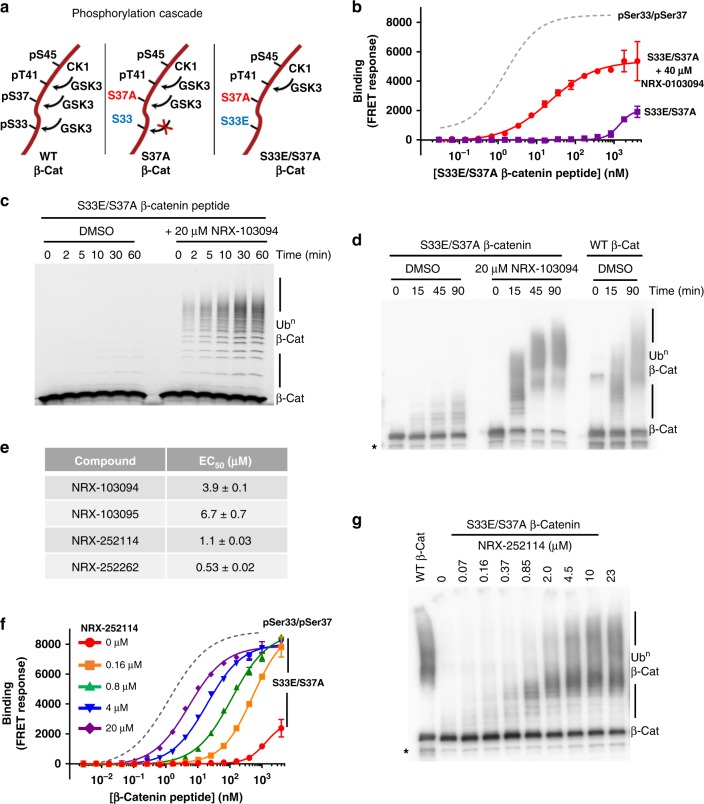
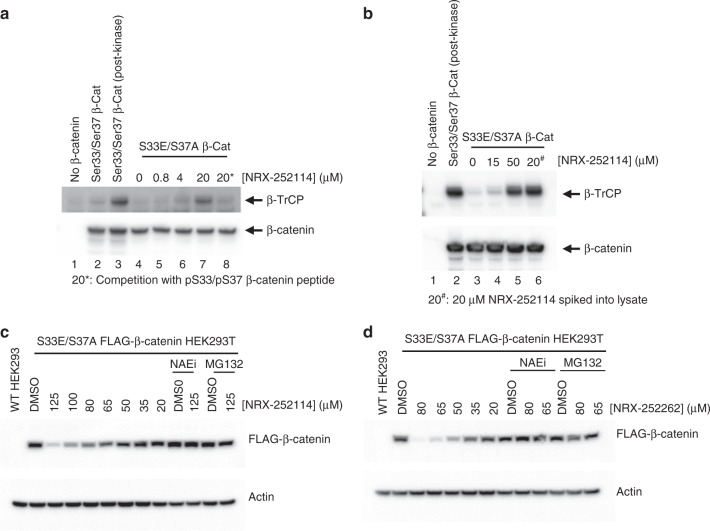
Protein–protein interactions (PPIs) governing the recognition of substrates by E3 ubiquitin ligases are critical to cellular function. There is significant therapeutic potential in the development of small molecules that modulate these interactions; however, rational design of small molecule enhancers of PPIs remains elusive. Herein, we report the prospective identification and rational design of potent small molecules that enhance the interaction between an oncogenic transcription factor, β-Catenin, and its cognate E3 ligase, SCF β-TrCP . These enhancers potentiate the ubiquitylation of mutant β-Catenin by β-TrCP in vitro and induce the degradation of an engineered mutant β-Catenin in a cellular system. Distinct from PROTACs, these drug-like small molecules insert into a naturally occurring PPI interface, with contacts optimized for both the substrate and ligase within the same small molecule entity. The prospective discovery of ‘molecular glue’ presented here provides a paradigm for the development of small molecule degraders targeting hard-to-drug proteins.
Overview
The claims and statistics of this paper haven’t been checked yet.
Free: it reads the open-access text and checks the first 5 claims that cite a source we can check. Create a free account to check every claim.
Integrity signals
Registry
Cites
Statistics
Figures
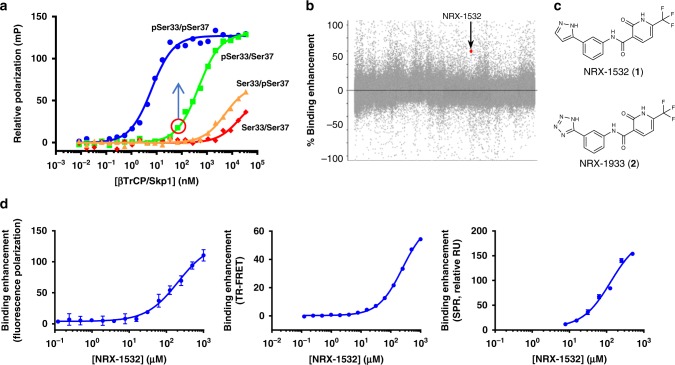
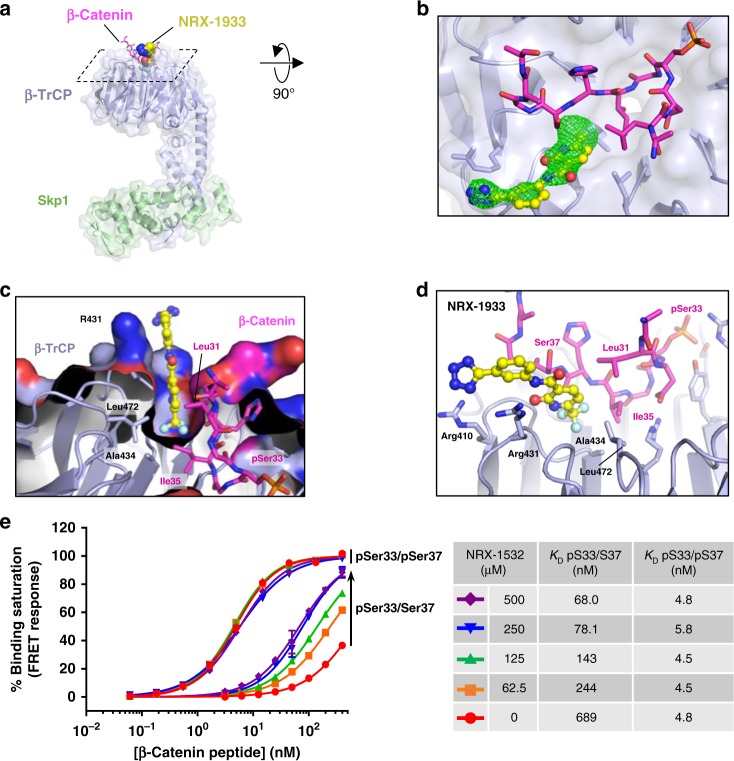
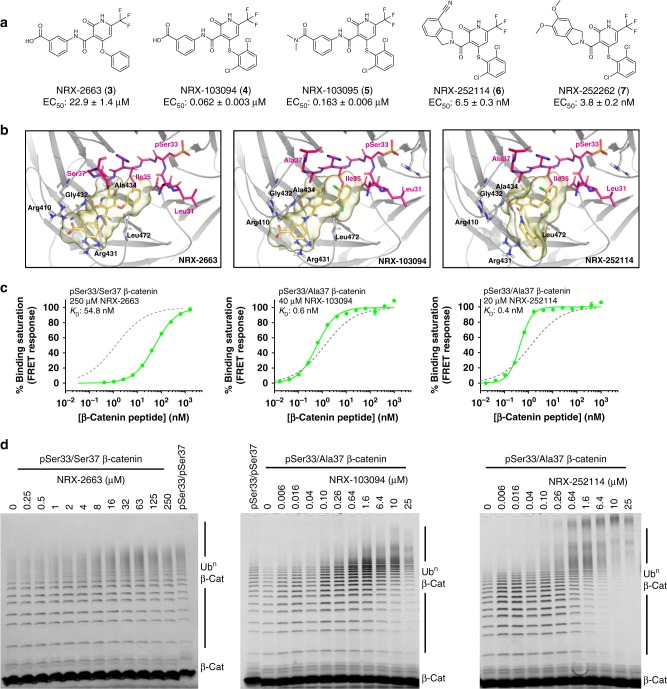
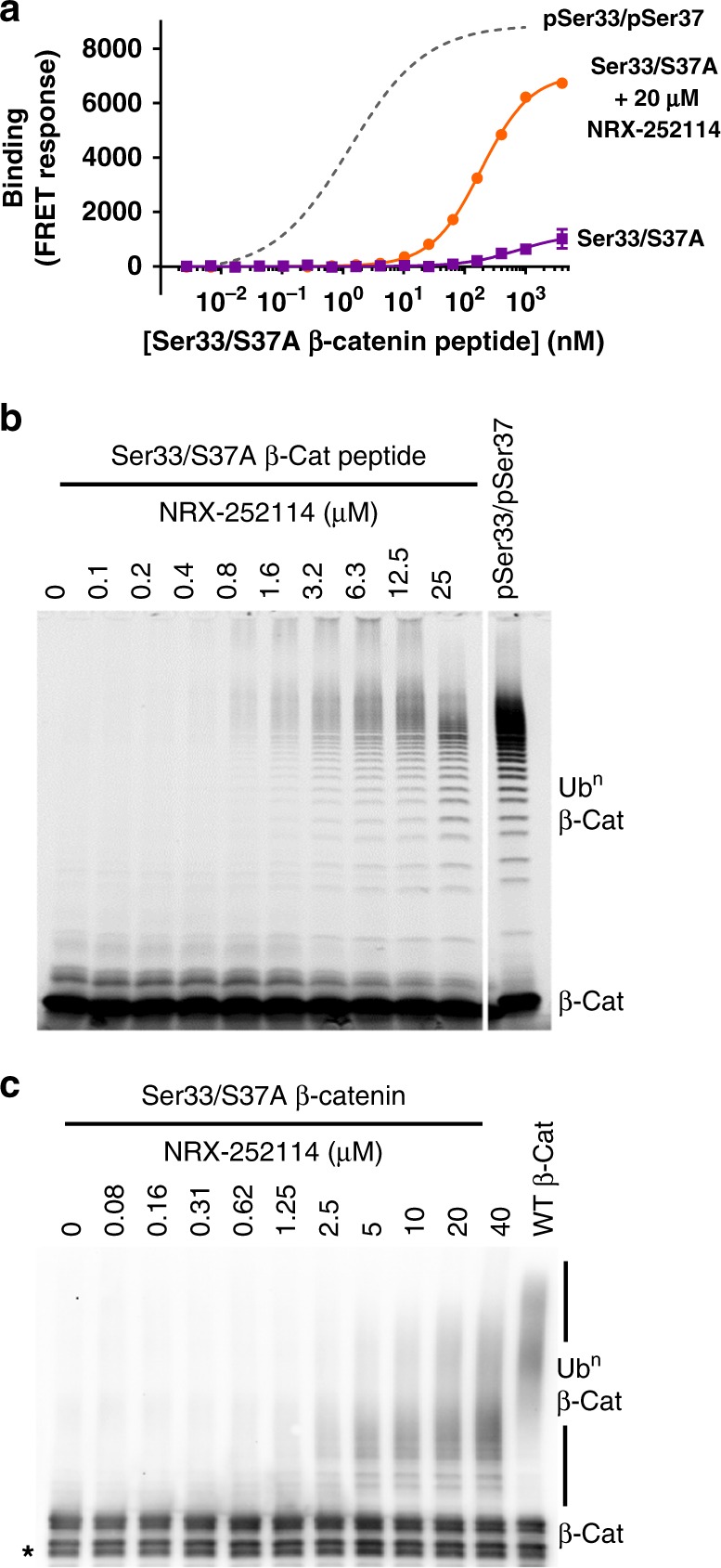
Verification
Claims the paper makes
The claims and statistics of this paper haven’t been checked yet.
Free: it reads the open-access text and checks the first 5 claims that cite a source we can check. Create a free account to check every claim.
Claims other papers make about this one
Each is checked against this paper’s own text: does it say what the citing paper says it does?
The cited source doesn’t support the claim as written.
In the citing paper
“Even higher cooperativity is achieved by the rationally developed NRX-252114 compound, which is capable of enhancing the binding between β-TrCP and a hypophosphorylated β-catenin degron (pSer33/Ala37) peptide by 680-folds38.”
From Defining molecular glues with a dual-nanobody cannabidiol sensor (2022) · cites this paper as [38]
Checked by a reasoning model — may be wrong.
Experimental — accuracy not yet measuredThe source backs part of the claim, not all of it — or backs it for a different population, condition or comparison.
In the citing paper
“Taken together, our findings provide another example that the underlying principles of molecular glue mechanisms might be rooted in the partial mimicry of naturally occurring PPIs at preexisting sites of high PPI propensity, interactions that are further enhanced by a matching molecular glue1,10,11,50–54.”
From Cereblon induces G3BP2 neosubstrate degradation using molecular surface mimicry (2026) · cites this paper as [52]
Experimental — accuracy not yet measuredThe cited source says what the claim attributes to it.
In the citing paper
“Similarly, tR-FRet and fluorescence polarization (FP) assays offer robust scalable formats for detecting molecular glue-induced interactions in vitro (Simonetta et al. 2019;wang et al. 2021;Hsia et al. 2024;Kozicka et al. 2024).”
From From serendipity to strategy: molecular glue degraders in cancer therapeutics (2025) · cites this paper as Simonetta et al. 2019
The cited source says what the claim attributes to it.
In the citing paper
“Similarly, a β-catenin degrader was rationally optimized from a weak screening hit using structural knowledge of the β-catenin interface with its cognate e3 ligase: ScF β-tRcP (Simonetta et al. 2019).”
From From serendipity to strategy: molecular glue degraders in cancer therapeutics (2025) · cites this paper as Simonetta et al. 2019
In the citing paper
“This campaign identified several compounds, like NRX-1532, able to enhance the binding and CRL1 b-TrCP -dependent ubiquitination of mutant b-catenin (Fig. 7 and 8).166”
From Chasing molecular glue degraders: screening approaches (2022) · cites this paper as [166]
7 more claims about this paper
Create a free account to see every claim other papers make about this one.
Self-check
Percentages, sums and reported differences re-computed from the paper’s own numbers.
The self-check needs the paper’s full text.
Citations
Cites
Features and development of Coot
Emsley, P., Lohkamp, B., Scott, W. G., & Cowtan, K. (2010) · Acta Crystallographica Section D Biological Crystallography · doi:10.1107/s0907444910007493 · Cited by 29,915
PHENIX : a comprehensive Python-based system for macromolecular structure solution
Adams, P. D., Afonine, P. V., Bunkóczi, G., Chen, V. B., Davis, I. W., Echols, N., Headd, J. J., Hung, L.-W., Kapral, G. J., Grosse-Kunstleve, R. W., et al. (2010) · Acta Crystallographica Section D Biological Crystallography · doi:10.1107/s0907444909052925 · Cited by 23,716
Phaser crystallographic software
McCoy, A. J., Grosse-Kunstleve, R. W., Adams, P. D., Winn, M. D., Storoni, L. C., & Read, R. J. (2007) · Journal of Applied Crystallography · doi:10.1107/s0021889807021206 · Cited by 20,612
Kabsch, W. (2010) · Acta Crystallographica Section D Biological Crystallography · doi:10.1107/s0907444909047337 · Cited by 16,463
MolProbity : all-atom structure validation for macromolecular crystallography
Chen, V. B., Arendall, W. B., Headd, J. J., Keedy, D. A., Immormino, R. M., Kapral, G. J., Murray, L. W., Richardson, J. S., & Richardson, D. C. (2010) · Acta Crystallographica Section D Biological Crystallography · doi:10.1107/s0907444909042073 · Cited by 14,115
PHENIX: a comprehensive Python-based system for macromolecular structure solution
Adams, P. D., Afonine, P. V., Bunkóczi, G., Chen, V. B., Davis, I. W., Echols, N., Headd, J. J., Hung, L.-W., Kapral, G. J., Grosse-Kunstleve, R. W., et al. (2012) · International Tables for Crystallography · doi:10.1107/97809553602060000865 · Cited by 7,334
Towards automated crystallographic structure refinement with phenix.refine
Afonine, P. V., Grosse-Kunstleve, R. W., Echols, N., Headd, J. J., Moriarty, N. W., Mustyakimov, M., Terwilliger, T. C., Urzhumtsev, A., Zwart, P. H., & Adams, P. D. (2012) · Acta Crystallographica Section D Biological Crystallography · doi:10.1107/s0907444912001308 · Cited by 5,511
Wnt/β-Catenin Signaling, Disease, and Emerging Therapeutic Modalities
Nusse, R., & Clevers, H. (2017) · Cell · doi:10.1016/j.cell.2017.05.016 · Cited by 4,342
Polakis, P. (2000) · Genes & Development · doi:10.1101/gad.14.15.1837 · Cited by 3,183
RING Domain E3 Ubiquitin Ligases
Deshaies, R. J., & Joazeiro, C. A. P. (2009) · Annual Review of Biochemistry · doi:10.1146/annurev.biochem.78.101807.093809 · Cited by 2,679
Cited by
Items 101–200 of 219
Molecular glue degrader for tumor treatment
Hu, Y., Yan, Y., Wang, J., Hou, J., & Lin, Q. (2024) · Frontiers in Oncology · doi:10.3389/fonc.2024.1512666 · Cited by 19
Exploration of degrons and their ability to mediate targeted protein degradation
Harris, T. J., & Trader, D. J. (2025) · RSC Medicinal Chemistry · doi:10.1039/d4md00787e · Cited by 19
Primed for degradation: How weak protein interactions enable molecular glue degraders
Hanzl, A., Inghelram, C., Schmitt, S., & Thomä, N. H. (2025) · Current Opinion in Structural Biology · doi:10.1016/j.sbi.2025.103052 · Cited by 17
Targeted Protein Degradation and Regulation with Molecular Glue: Past and Recent Discoveries
Fang, Y.-Z., He, Q., & Cao, J. (2021) · Current Medicinal Chemistry · doi:10.2174/0929867328666210806113949 · Cited by 16
Signaling pathways and their potential therapeutic utility in esophageal squamous cell carcinoma
Kadian, L. K., Arora, M., Prasad, C. P., Pramanik, R., & Chauhan, S. S. (2022) · Clinical & Translational Oncology · doi:10.1007/s12094-021-02763-x · Cited by 18
Zhang, H., Liu, C., Zhu, D., Zhang, Q., & Li, J. (2022) · Journal of Medicinal Chemistry · doi:10.1021/acs.jmedchem.2c01016 · Cited by 16
EFMC: Trends in Medicinal Chemistry and Chemical Biology
Auberson, Y. P., Arimondo, P. B., Duca, M., Essig, S., Grether, U., Rufer, A. C., Sbardella, G., Schopfer, U., Torrens, A., van der Stelt, M., et al. (2023) · ChemBioChem · doi:10.1002/cbic.202200690 · Cited by 18
Castaldi, M. P., Hendricks, J. A., & Zhang, A. X. (2020) · Current Opinion in Chemical Biology · doi:10.1016/j.cbpa.2020.03.003 · Cited by 15
Functional mapping of the 14-3-3 hub protein as a guide to design 14-3-3 molecular glues
Somsen, B. A., Craenmehr, F. W. B., Liu, W.-H. W., Koops, A. A., Pennings, M. A. M., Visser, E. J., Ottmann, C., Cossar, P. J., & Brunsveld, L. (2022) · Chemical Science · doi:10.1039/d2sc04662h · Cited by 15
Beta-Transducin Repeats-Containing Proteins as an Anticancer Target
Kim, D. J., Yi, Y. W., & Seong, Y. (2023) · Cancers · doi:10.3390/cancers15174248 · Cited by 15
Belling the “cat”: Wnt/β-catenin signaling and its significance in future cancer therapies
Goyal, A., Murkute, S. L., Bhowmik, S., Prasad, C. P., & Mohapatra, P. (2024) · Biochimica et Biophysica Acta (BBA) - Reviews on Cancer · doi:10.1016/j.bbcan.2024.189195 · Cited by 19
Asmar, A. J., Beck, D. B., & Werner, A. A. (2020) · Experimental Cell Research · doi:10.1016/j.yexcr.2020.112300 · Cited by 15
Harnessing UBR5 for targeted protein degradation of key transcriptional regulators
Taherbhoy, A. M., & Daniels, D. L. (2023) · Trends in Pharmacological Sciences · doi:10.1016/j.tips.2023.09.001 · Cited by 13
Advances in the development of Wnt/β-catenin signaling inhibitors
Fujita, M., & Demizu, Y. (2025) · RSC Medicinal Chemistry · doi:10.1039/d4md00749b · Cited by 15
The human E3 ligase RNF185 is a regulator of the SARS-CoV-2 envelope protein
Zou, C., Yoon, H., Park, P. M. C., Patten, J. J., Pellman, J., Carreiro, J., Tsai, J. M., Li, Y.-D., Burman, S. S. R., Donovan, K. A., et al. (2023) · iScience · doi:10.1016/j.isci.2023.106601 · Cited by 12
Extrapolating Lessons from Targeted Protein Degradation to Other Proximity-Inducing Drugs
Winter, G. E. (2024) · ACS Chemical Biology · doi:10.1021/acschembio.4c00191 · Cited by 13
From serendipity to strategy: molecular glue degraders in cancer therapeutics
Darling, S., Bajrami, I., & West, S. C. (2025) · Critical Reviews in Biochemistry and Molecular Biology · doi:10.1080/10409238.2025.2564068 · Cited by 9
“Similarly, tR-FRet and fluorescence polarization (FP) assays offer robust scalable formats for detecting molecular glue-induced interactions in vitro (Simonetta et al. 2019; wang et al. 2021; Hsia et al. 2024; Kozicka et al. 2024).”
Stabilization of Native Protein–Protein Interactions with Molecular Glues: A 14-3-3 Case Study
Konstantinidou, M., Virta, J. M., & Arkin, M. R. (2025) · Accounts of Chemical Research · doi:10.1021/acs.accounts.5c00441 · Cited by 13
Intracellular pH regulates β-catenin with low pHi increasing adhesion and signaling functions
Czowski, B. J., Marchi, A. N., & White, K. A. (2026) · Journal of Biological Chemistry · doi:10.1016/j.jbc.2026.111134 · Cited by 9
“Existing high-resolution structures of β -catenin bound to β - TrCP were obtained from the PDB: 1P22 (44), 6M94 (45), as well as a high-resolution ternary structure of 6M94 (45), .”
Exploiting Ubiquitin Ligases for Induced Target Degradation as an Antiviral Strategy
Verma, R. (2021) · Advances in experimental medicine and biology · doi:10.1007/978-981-16-0267-2_13 · Cited by 11
Cereblon induces G3BP2 neosubstrate degradation using molecular surface mimicry
Annunziato, S., Quan, C., Donckele, E. J., Lamberto, I., Bunker, R. D., Zlotosch, M., Schwander, L., Murthy, A., Wiedmer, L., Staehly, C., et al. (2026) · Nature Structural & Molecular Biology · doi:10.1038/s41594-025-01738-8 · Cited by 9
Broad Target Screening Reveals Abundance of FKBP12-Based Molecular Glues in Focused Libraries
Dreizler, J. K., Meyners, C., Sugiarto, W. O., Repity, M. L., Maciel, E. V. S., Purder, P. L., Lermyte, F., Knapp, S., & Hausch, F. (2025) · Journal of Medicinal Chemistry · doi:10.1021/acs.jmedchem.5c00220 · Cited by 9
Opportunities in proximity modulation: Bridging academia and industry
Đikić, I., Mayor‐Ruiz, C., Winter, G. E., Koch, K., Ciulli, A., & Thomä, N. H. (2025) · Molecular Cell · doi:10.1016/j.molcel.2025.07.018 · Cited by 11
Mao, S., Zhang, X., Zhao, Y., Li, X., Wang, Z., Zhou, P., Wang, Z., Zhang, X., Hu, X., Huang, G., et al. (2025) · Journal of Translational Medicine · doi:10.1186/s12967-025-07333-1 · Cited by 12
“5) [177].”
Stan, A. L., Bosart, K., Kaur, M., Vo, M., Escorcia, W., Yoder, R. J., Bouley, R. A., & Petreaca, R. C. (2024) · PLoS ONE · doi:10.1371/journal.pone.0299114 · Cited by 12
“The PDB files of the wild-type PPP2R1A (PDB ID: 1B3U) [23], PTEN (PDB ID: 1D5R) [24], PIK3CA (PDB ID: 2RD0) [25], CTNNB1 (PDB ID: 6M90) [26], and TP53 (PDB ID: 8F2I) [27] human protein 3D structures were downloaded from the Protein Data Bank.”
Feng, Y., Xia, J., Xu, X., Zhao, T., Tan, Z., Wang, Q., Wang, J., Meng, J., Sanderson, C. M., Lu, Z.-L., et al. (2021) · Anti-Cancer Drugs · doi:10.1097/cad.0000000000001073 · Cited by 9
Targeting the ubiquitin–proteasome system and drug therapy in colorectal cancer
Su, R., Shao, Y., Wang, Q., Liu, D., Wang, Y., Kong, D., & Qiu, Y. (2025) · Journal of Molecular Cell Biology · doi:10.1093/jmcb/mjaf027 · Cited by 10
“Phosphorylated β -catenin is recognized by ubiquitin ligases to mediate its ubiquitination (Simonetta et al., 2019 ), leading to proteasomal degradation (Aberle et al., 1997 ).”
Degrons and degradation signals beyond short linear motifs
Wang, B., & Zheng, N. (2025) · Nature Chemical Biology · doi:10.1038/s41589-025-02056-2 · Cited by 12
“In most cases, their functions require specific tertiary structure folds in the substrate proteins, although potent MG compounds have been recently developed to potentiate a hypophosphorylated SLiM degron 124 .”
Identification and Functional Analysis of a Novel CTNNB1 Mutation in Pediatric Medulloblastoma
Alaña, L., Nunes‐Xavier, C. E., Zaldumbide, L., Martín‐Guerrero, I., Mosteiro, L., Alba‐Pavón, P., Villate, O., García‐Obregón, S., González-García, H., Herraiz, R., et al. (2022) · Cancers · doi:10.3390/cancers14020421 · Cited by 8
“It has been recently described as small molecules that bind to non-phosphorylated or Ser37Ala mutant β-catenin and enhance their binding to β-TrCP, representing a therapeutic strategy to target proteins defective in ligase binding, ubiquitylation, and degradation [49,50].”
BackgroundChen, S., Solazzo, R., Fouché, M., ROTH, H. ‐., Dittrich, B., & Riniker, S. (2025) · Journal of Chemical Theory and Computation · doi:10.1021/acs.jctc.5c00736 · Cited by 8
Stein, R. R., Fouché, M., Kearns, J. D., & ROTH, H. ‐. (2023) · RSC Chemical Biology · doi:10.1039/d2cb00216g · Cited by 7
Beute für das Proteasom: Gezielter Proteinabbau aus medizinalchemischer Perspektive
Luh, L. M., Scheib, U., Juenemann, K., Wortmann, L., Brands, M., & Cromm, P. M. (2020) · Angewandte Chemie · doi:10.1002/ange.202004310 · Cited by 7
From Degraders to Molecular Glues: New Ways of Breaking Down Disease‐Associated Proteins
Nagel, Y. A., Britschgi, A., & Ricci, A. (2021) · Wiley eBooks · doi:10.1002/9783527826872.ch2 · Cited by 7
Activation of the 26S Proteasome to Reduce Proteotoxic Stress and Improve the Efficacy of PROTACs
Sedláček, J. (2024) · ACS Pharmacology & Translational Science · doi:10.1021/acsptsci.4c00408 · Cited by 6
Recent Advances in Targeted Protein Degradation Molecular Glues as Anticancer Drugs
Shen, Y., Wen, W., Chen, L., Zhang, N., Wei, C., & Hu, H. (2025) · Clinical and Experimental Pharmacology and Physiology · doi:10.1111/1440-1681.70064 · Cited by 7
Targeting β-catenin: PROTACs and precision degraders for Wnt-driven cancers
Trapani, J. B., Caroland, K. P., Ahmed, Y. F., Robbins, D. J., Weiss, V. L., & Lee, E. (2026) · Frontiers in Oncology · doi:10.3389/fonc.2026.1777843 · Cited by 6
Chen, D., Lin, S., Zeng, Z., An, J., Yan, W., Gu, Z., Chen, L., & He, B. (2023) · European Journal of Medicinal Chemistry · doi:10.1016/j.ejmech.2023.115926 · Cited by 6
Strategic advancement of E3 ubiquitin ligase in the management of hepatocellular carcinoma
Miao, Y., Wang, S., Zhang, J., Liu, H., Zhang, C., Jin, S., & Bai, D.-S. (2024) · Medical Oncology · doi:10.1007/s12032-024-02411-8 · Cited by 7
“1C, https:// www. rcsb. org) is a component of the SCF (SKP1-CUL1-F-box) complex [42], which is responsible for recognizing and targeting specific proteins for ubiquitination, thereby marking them for subsequent degradation [43].”
Piech, S., Brüschweiler, S., Westphalen, J., Siess, K. M., Murias, J. G., Konrat, R., Bigenzahn, J. W., & Superti‐Furga, G. (2024) · ACS Chemical Biology · doi:10.1021/acschembio.4c00077 · Cited by 8
Methods to characterize and discover molecular degraders in cells
Lin, Z., & Woo, C. M. (2022) · Chemical Society Reviews · doi:10.1039/d2cs00261b · Cited by 7
Choo, M. Z. Y., Lim, E., Wong, W. S. F., & Chai, C. L. L. (2025) · Journal of Medicinal Chemistry · doi:10.1021/acs.jmedchem.5c00055 · Cited by 5
Karanjin counteracts OVX-induced bone loss by dual regulating bone remodeling
Ma, Q., Li, C., Lin, G., Shi, J., Wang, C., Wang, H., Cai, J., Zhang, Y., Li, J., Chang, M., et al. (2025) · Phytomedicine · doi:10.1016/j.phymed.2025.157099 · Cited by 6
Unlocking DCAFs To Catalyze Degrader Development: An Arena for Innovative Approaches
Miao, Q., Kadam, V. D., Mukherjee, A., Tan, Z., & Teng, M. (2023) · Journal of Medicinal Chemistry · doi:10.1021/acs.jmedchem.3c01209 · Cited by 7
Zeng, J., Chen, Z., He, Y., Jiang, Z., Zhang, Y., Dong, Q., Chen, L., Deng, S., He, Z. X., Li, L., et al. (2024) · European Journal of Medicinal Chemistry · doi:10.1016/j.ejmech.2024.116821 · Cited by 5
[Targeting Cullin-RING E3 ligases for anti-cancer therapy: efforts on drug discovery].
Yu, Q., Xiong, X., & Sun, Y. (2020) · PubMed Central · doi:10.3785/j.issn.1008-9292.2020.02.21 · Cited by 8
“NRX ̄1532、 NRX ̄252262 β ̄catenin / β ̄TrCP β ̄catenin:β ̄TrCP 促进 S37A 突变 β ̄catenin 降解 基于荧光偏振的高 通量筛选 — [76]”
A Complete Mechanistic Framework for Molecular Glue Characterization
Couturier, M., Guilbert, R., Clarkson, P., & Argyrou, A. (2025) · Journal of the American Chemical Society · doi:10.1021/jacs.5c09166 · Cited by 5
Ye, T., Alamgir, A., Robertus, C. M., Colina, D., Monticello, C., Donahue, T. C., Hong, L., Vincoff, S., Goel, S., Fekkes, P., et al. (2026) · Science Advances · doi:10.1126/sciadv.aec8271 · Cited by 9
“However, while a peptide-based PROTAC and molecular glue have been developed for targeted degradation of β - catenin ( 21 , 22 ), they both require very high doses for activity—in the tens of micromolar range—and are incapable of discriminating the cytosolic/nuclear and membrane subpopulations of β…”
Monoubiquitination empowers ubiquitin chain elongation
Wu, K., DeVita, R. J., & Pan, Z. (2024) · Journal of Biological Chemistry · doi:10.1016/j.jbc.2024.105753 · Cited by 6
“First, unlike low-af fi nity interactions between APC/ C and substrates, β -catenin – SCF β -TrCP and CK1 α – CRL4 CREN in this study are of high-af fi nity interactions, possessing binding K d of 2 nM (29) and 75 nM (30), respectively.”
BackgroundZhang, R., Zheng, Y., Xiang, F., & Zhou, J. (2024) · European Journal of Medicinal Chemistry · doi:10.1016/j.ejmech.2024.116756 · Cited by 6
A Glutathione S-Transferase Pi Molecular Glue Tethers Splicing Factors and Remodels Cell Metabolism
Leace, D. M., Ware, M. L., Murtagh, O. L., Tsai, H.-K., Chang, C., & Hsu, K. (2025) · Journal of the American Chemical Society · doi:10.1021/jacs.5c06951 · Cited by 3
Nuclear β-catenin: molecular regulation, challenges and therapeutic opportunities
Xie, B., Cao, Y., Li, W., Chen, R., Zhou, Q., & Xie, X. (2025) · Cell Communication and Signaling · doi:10.1186/s12964-025-02600-6 · Cited by 8
“8) [177].”
Clues for glues: from serendipity to nature’s blueprints in degrader discovery
Kozicka, Z. (2025) · Essays in Biochemistry · doi:10.1042/ebc20253058 · Cited by 6
“Simonetta et al. [94] showed that small molecules can ‘patch’ this hypomorph by mimicking the missing phosphoserine, restoring degradation (Figure 2d).”
Molecular glue degraders: Rational design, specificity engineering, and advanced delivery
Ma, L., Wang, N., Zhu, J., Wu, L., He, S., & Zhang, B. (2026) · Acta Pharmaceutica Sinica B · doi:10.1016/j.apsb.2026.02.020 · Cited by 10
Sriram, S., Krishnakumar, P., & Sudandiradoss, C. (2026) · Frontiers in Molecular Biosciences · doi:10.3389/fmolb.2026.1745654 · Cited by 3
“…motifs or structural features whose accessibility and recognition are frequently regulated by post-translational modifications (PTMs); for example, phosphorylation of the β-catenin degron enhances its recognition by the SCF E3 ligase and promotes its subsequent degradation (Simonetta et al., 2019).”
Advantages of PROTACs in achieving selective degradation of homologous protein families
Yang, L., Mao, X., Zhang, J., Shu, J., Huang, W., Dong, X., Chen, Y., & Wu, M. (2026) · Beilstein Journal of Organic Chemistry · doi:10.3762/bjoc.22.49 · Cited by 3
PROTACs for central nervous system disorders: challenges and opportunities
Zheng, N., Shao, J., Xiong, B., Wei, Y., Wang, X., Zhou, Y., Song, Z., Zhang, A., Xu, C., Zhao, Q., et al. (2026) · Bioorganic & Medicinal Chemistry · doi:10.1016/j.bmc.2026.118703 · Cited by 4
Guilbert, R., Couturier, M., Si, Y., Donovan, D. O., Longmire, D., Mak, H., Clarkson, P., & Argyrou, A. (2025) · Journal of Biological Chemistry · doi:10.1016/j.jbc.2025.108526 · Cited by 4
“As previously reported, NRX-252262 dramatically enhances the interaction between b -TrCP1 and b -catenin (8).”
InfluentialPhosphodegrons in Health and Disease: From Cellular Homeostasis to Therapeutic Potential
Nakagawa, T., & Nakagawa, M. (2025) · Kinases and Phosphatases · doi:10.3390/kinasesphosphatases3010003 · Cited by 3
“Chemical biology approaches, including phosphorylation-mimetic peptides [140] and binding enhancers [120], could provide versatile tools for studying phosphodegrons.”
InfluentialGlycosylation Weakens Skp1 Homodimerization in Toxoplasma gondii by Interrupting a Fuzzy Interaction
Cantrell, D. A., Urbauer, R. J. B., Kim, H. W., Woods, R. J., Urbauer, J. L., Wood, Z. A., & West, C. M. (2025) · Biochemistry · doi:10.1021/acs.biochem.4c00859 · Cited by 4
Predicting PROTAC-targeted Degradation and Designing Androgen Receptor Degraders with AiPROTACPreprint
Zhang, L., Sun, R., Li, X., Ren, C., Long, Y., Tan, W., Wang, X., Zou, K., Yang, X., Wu, M., et al. (2025) · bioRxiv (Cold Spring Harbor Laboratory) · doi:10.1101/2025.02.26.640266 · Cited by 6
“They also address proteins involved in protein-protein interactions, which are challenging for inhibitors that block catalytic activities or disrupt interfaces 16,17 .”
Leong, K. F., Chen, Z., & Coghi, P. S. (2025) · Frontiers in Immunology · doi:10.3389/fimmu.2025.1622091 · Cited by 2
Martínez‐Cartró, M., Serrano‐Morrás, Á., Bertran‐Mostazo, A., Castaño‐Muñiz, R., Scaffidi, S., Ivanova, V., Csorba, N., Simon, J., Ábrányi‐Balogh, P., Li, Y., et al. (2025) · Advanced Science · doi:10.1002/advs.202506068 · Cited by 4
Labhade, S., Bhole, R. P., Karwa, P. N., Kapare, H. S., & Singh, S. (2025) · Naunyn-Schmiedeberg s Archives of Pharmacology · doi:10.1007/s00210-025-04630-w · Cited by 2
“Molecular glues have emerged as a novel class of small molecules that stabilize or induce interactions between specific proteins, leading to the formation of functional complexes (Simonetta et al. 2019).”
Jawed, B., Kanwal, R., Zakir, S. K., Gaudio, F., Esposito, J. E., Ishaqui, A. A., Martinotti, S., Botteghi, M., & Toniato, E. (2026) · Frontiers in Immunology · doi:10.3389/fimmu.2026.1764253 · Cited by 4
Targeting the Interaction of NRF2 and β-TrCP with Molecular Glues
O’Donovan, D. H., Winter-Holt, J. J., Collie, G. W., Cuomo, M. E., McGarry, D., Fox, M., Seong, B. K. A., Grazini, U., Barton, P., Longmire, D., et al. (2026) · ACS Chemical Biology · doi:10.1021/acschembio.5c01006 · Cited by 2
Chen, S., Xu, H., Li, N., Yang, Y., Pang, R., Zhang, S., Qiao, J., & Chen, H. (2025) · Cell Communication and Signaling · doi:10.1186/s12964-025-02334-5 · Cited by 3
“For example, NRX-252,114, a small molecule PPI modulator, improves the interaction between the transcription factor, β-catenin, and its corresponding E3 ligase, SCFβ-TrCP, leading to β-Catenin ubiquitination and degradation [46].”
Targeted Protein Degradation: "The Gold Rush is On!"
Kotlarek, D., Pawlik, A., Sagan, M., Sowała, M., Zawiślak-Architek, A., & Walczak, M. (2020) · Technology Transfer and Entrepreneurship · doi:10.2174/2213809907666200130111436 · Cited by 2
Mutations that stick: Unexpected discovery of molecular glue mimicry
Whelan, R., José‐Duran, F., & Mayor‐Ruiz, C. (2025) · Molecular Cell · doi:10.1016/j.molcel.2025.03.017 · Cited by 2
Drug discovery technologies–Current and future trends
Noe, M. C., Steppan, C. M., & Weston, A. D. (2025) · Elsevier eBooks · doi:10.1016/b978-0-443-29808-0.00019-4 · Cited by 1
Masters of Gene Expression: Transcription Factors in Pediatric Cancers
Pathania, A. S. (2025) · Cancers · doi:10.3390/cancers17213439 · Cited by 3
Yang, Y., Zhu, R., Liang, J., Yan, H., Zhang, H., Tian, J., Zhang, R., Liu, X., Liu, Y., Li, H., et al. (2026) · JACS Au · doi:10.1021/jacsau.5c01404 · Cited by 3
Ubiquitin E3 ligase KLHL6 brings exhausted T-cells back into action
Chen, Z., Bullock, A. N., & Kessler, B. M. (2026) · Immunity & Inflammation · doi:10.1007/s44466-026-00032-6 · Cited by 2
“For example, molecular glues have been designed to stabilise the interaction of β-catenin with its cognate E3 ligase Skp1-Cullin-F-box and β-transducin repeat-containing protein (SCF β-TrCP ) [7], and could be similarly developed to enhance KLHL6 interactions with TOX and PGAM5.”
Huang, Q., Mu, Q., Liu, N., Liu, G., & Liu, C. (2026) · Advanced Interventional Materials · doi:10.1016/j.advim.2026.100015 · Cited by 4
The role of e3 ubiquitin ligases and deubiquitinating enzymes in hepatocellular carcinoma
Wang, L., Zhang, H., Hu, Y., Li, X., Liu, J., & Liang, Y. (2026) · Cell Biology and Toxicology · doi:10.1007/s10565-026-10192-1 · Cited by 1
“β-TrCP, identified as an E3 ubiquitin ligase(Simonetta et al. 2019), contributes to the regulation of the Wnt/ β-catenin signaling axis(Azzolin et al. 2014).”
Jiang, J., Chen, Y., Wan, R., Huang, C., Tao, X., Luo, C., Deng, J., Zhang, Z., Liu, T., Tan, Y., et al. (2026) · Journal of the American Chemical Society · doi:10.1021/jacs.6c03429 · Cited by 2
Targeted Protein Degradation Chemical Probes
Galdeano, C., & Barril, X. (2020) · Royal Society of Chemistry eBooks · doi:10.1039/9781839160745-00150 · Cited by 2
A reaction of 2-carbonyl-substituted 1H-benzo[f]chromenes with N-arylamides of cyanoacetic acid
Osipov, D. V., Krasnikov, P. E., & Аrtemenko, A. А. (2024) · Chemistry of Heterocyclic Compounds · doi:10.1007/s10593-024-03312-4 · Cited by 1
Targeting clonal mutations with synthetic microbes
Renteln, M. (2024) · Critical Reviews in Oncology/Hematology · doi:10.1016/j.critrevonc.2024.104572 · Cited by 8
Structural and Biophysical Principles of Degrader Ternary Complexes
Zollman, D., & Ciulli, A. (2020) · Royal Society of Chemistry eBooks · doi:10.1039/9781839160691-00014 · Cited by 3
Targeted Protein Degradation – The Story So Far
O’Donovan, D. H., Luh, L. M., & Cromm, P. M. (2022) · Wiley eBooks · doi:10.1002/9783527836208.ch1 · Cited by 3
Branon, T. C. (2025) · Wiley eBooks · doi:10.1002/9781394236145.ch16 · Cited by 1
Identification and SAR optimization of FBXO22-mediated TEAD Targeted Glue™ degradersPreprint
Fisher, M., Fletcher, A., Hamby, C., Miles, J., Ambler, M., Azevedo, A., Bisetto, S., Davies, C. T. R., Drouhin, P., Greger, L., et al. (2026) · bioRxiv (Cold Spring Harbor Laboratory) · doi:10.64898/2026.04.21.719895 · Cited by 1
“…DDB1 and CUL4 associated factor 16 (DCAF16) 19–25 , DDB1 and CUL4 associated factor 15 (DCAF15) 26 , F-box/WD repeat-containing protein 1A (β-TRCP) 27 , von Hippel-Lindau disease tumour suppressor (VHL) 28 , Kelch-like ECH-associated protein 1 (KEAP1) 29 , Murine Double Minute 2 (MDM2), and Seven…”
Assay Development and High‐Throughput Screening
Carettoni, D., & Bader, B. (2021) · Wiley eBooks · doi:10.1002/0471266949.bmc165.pub2 · Cited by 2
Numao, S., Etienne, G., Malojcic, G., Schmidt, E. K., & Dumelin, C. E. (2021) · Elsevier eBooks · doi:10.1016/b978-0-12-820472-6.00078-5
Destruction with a Purpose: Targeted Protein Degradation in Drug Discovery
Martinelli, P., Kofink, C. C., Boeck, G., Weinstabl, H., & Koegl, M. (2022) · Wiley eBooks · doi:10.1002/9783527836208.ch11
Simple and Efficient Synthesis of Piperidine-2,6-DionesPreprint
Liu, Y., Xue, Z., Yang, K.-W., Yin, H., Wang, T., Guan, Y., Ligang, Y.-F., Zhong, H., & Bai, Z. (2023) · SSRN Electronic Journal · doi:10.2139/ssrn.4659363
New Therapeutic Chemical Modalities: Compositions, Modes-of-action, and Drug Discovery
Valeur, E. (2023) · Royal Society of Chemistry eBooks · doi:10.1039/9781788018982-00911
Ligandability assessment of the C‐terminal Rel‐homology domain of NFAT1
Böttcher, J., Fuchs, J. E., Mayer, M., Kahmann, J. D., Żak, K. M., Wunberg, T., Wöhrle, S., & Kessler, D. (2024) · Archiv der Pharmazie · doi:10.1002/ardp.202300649
Reboud‐Ravaux, M. (2024) · Biologie Aujourd hui · doi:10.1051/jbio/2024007
Gupta, D., Khedpande, N., & Barve, K. H. (2024) · Springer eBooks · doi:10.1007/978-981-97-5077-1_16
Emerging Technologies for Epigenetic Drug Discovery
(2024) · Royal Society of Chemistry eBooks · doi:10.1039/9781837674916-part2
Mass Spectrometry and Chemical Biology Approaches for Deconvoluting Epigenetic Targets
Burton, A. J., Hamza, G. M., Iannetta, A. A., Miele, E., & Zhang, A. X. (2024) · Royal Society of Chemistry eBooks · doi:10.1039/9781837674916-00050
Assessing the Stability of Molecular Glues with Weighted Ensemble Simulations
Atik, S. B., & Dickson, A. (2026) · Journal of Chemical Theory and Computation · doi:10.1021/acs.jctc.6c00319
Yang, L., Duan, H., Mao, X., Li, B., Che, J., & Dong, X. (2025) · Elsevier eBooks · doi:10.1016/b978-0-443-21816-3.00004-x
Molecular Glues as Activators for PPI
Qi, X. (2025) · Wiley eBooks · doi:10.1002/9783527845828.ch13
Progress on molecular glue degraders
Chen, J., Deng, Z., Li, H., & Liu, L. (2026) · Scientia Sinica Chimica · doi:10.1360/ssc-2025-0228
Thielen, A. S., Bräuning, B., Gottemukkala, K. V., Müller, J., Prabu, J. R., Klaessens, S., den Eynde, B. J. V., Murray, P. J., & Schulman, B. A. (2026) · bioRxiv (Cold Spring Harbor Laboratory) · doi:10.64898/2026.01.12.698998
“Indeed, a small molecule discovered to restore b -TRCP E3 binding to defective substrate established the possibility of prospecting for novel molecular glue de-graders 77 .”
Assessing the Stability of Molecular Glues with Weighted Ensemble SimulationsPreprint
Atik, S. B., & Dickson, A. (2026) · bioRxiv (Cold Spring Harbor Laboratory) · doi:10.64898/2026.01.23.701371
“These experimental strategies are often integrated with biological validation assays and medicinal chemistry optimization to refine initial hits for potency and specificity [47, 40].”
Shang, H., Zhu, Y., Liu, Y., Yang, L., Qu, Y., Cui, M., Dong, M., Piao, X., & Li, D. (2026) · Analytica Chimica Acta · doi:10.1016/j.aca.2026.345264
Molecular Glue Degraders Redefining Targeted Therapies From Discovery to Therapeutic Applications
Wen, J., Yu, J., Wen, W., & Jiang, B. (2026) · MedComm – Oncology · doi:10.1002/mog2.70058
Metadata
- Authors
- Simonetta, K. R., Taygerly, J., Boyle, K., Basham, S. E., Padovani, C., Lou, Y., Cummins, T. J., Yung, S. L., von Soly, S. K., Kayser, F., Kuriyan, J., Rape, M., Cardozo, M., Gallop, M. A., Bence, N. F., Barsanti, P. A., & Saha, A.
- Affiliations
- Nurix (United States) (US)
- Howard Hughes Medical Institute (US)
- Corresponding author
- Simonetta, Kyle R.
- Saha, Anjanabha
- ORCID
- Venue
- Nature Communications
- Published
- 2019-03-29
- Volume
- 10
- Issue
- 1
- Pages
- 1402-1402
- ISSN
- 2041-1723 (ISSN-L)
- PMC
- PMC6441019
- OpenAlex
- W2928048394
- Semantic Scholar
- 95dd56a04d9bb6f20819811ea4365eb6ff1a62a0
- Cited by
- 217
- References
- 44
- Citations by year
- 2026: 36 · 2025: 42 · 2024: 35 · 2023: 27 · 2022: 23 · 2021: 25 · 2020: 27 · 2019: 2
- FWCI
- 6.37
- Type
- journal article
- Language
- en
- Open access
- gold
- doi.org
- Licence
- cc-by
- creativecommons.org/licenses/by/4.0 (tdm)
- creativecommons.org/licenses/by/4.0 (vor)
- Locations
- Nature Communications (publishedVersion, cc-by)
- Europe PMC (PubMed Central) (publishedVersion, cc-by)
- PubMed Central (publishedVersion, cc-by)
- PubMed (publishedVersion)
- RePEc: Research Papers in Economics (submittedVersion)
- DOAJ (DOAJ: Directory of Open Access Journals) (submittedVersion, cc-by-sa)
- DOAJ (DOAJ: Directory of Open Access Journals) (submittedVersion)
- eScholarship (California Digital Library) (submittedVersion)
- Topics
- Life Sciences › Biochemistry, Genetics and Molecular Biology › Molecular Biology › Protein Degradation and Inhibitors
- Life Sciences › Biochemistry, Genetics and Molecular Biology › Molecular Biology › Ubiquitin and proteasome pathways
- Physical Sciences › Chemistry › Organic Chemistry › Chemical Synthesis and Analysis
- Keywords
- E3 ubiquitin ligase, β-catenin, molecular glues, small-molecule degraders, PROTACs, ubiquitination, protein degradation, oncogenic transcription factor, rational drug design
- MeSH terms
- Humans, Phosphorylation, Protein Binding, Substrate Specificity, Ubiquitin-Protein Ligases, beta-Transducin Repeat-Containing Proteins, beta Catenin, Small Molecule Libraries, Ubiquitination, HEK293 Cells, Proteolysis
About these checks
Registry, retraction, Cites and statistics results are computed, not judged, with one exception: a printed reference that no index lists is read once by a model before it counts as a citation error. Claims are extracted by a model and kept only when their quote appears verbatim in the text; each cited source is then checked, with a model’s help, for whether it says what the claim relies on. Those verdicts can be wrong — read the claim’s quote and the cited source before relying on one.
Statistics and arithmetic are recomputed, not judged.
Confidence bands are shown only for fields calibrated on our annotated test set. None is calibrated yet, so no band is shown.
What counts as a claim ›How we measure confidence ›How we check this ›
Are you an author, or do you see a problem with this page? Request a review
Data sources
Bibliographic data: Semantic Scholar, OpenAlex, Crossref.
Contains information from the Semantic Scholar Academic Graph Datasets, made available under the ODC Attribution License (ODC-BY 1.0).
Semantic Scholar’s data is described in: Kinney, R., et al. (2023). The Semantic Scholar Open Data Platform. arXiv:2301.10140.
