

Model-based understanding of single-cell CRISPR screening
Open accessThe DOI matches its Crossref record; 39 of the 39 references it cites were found in a registry or an index.
Abstract
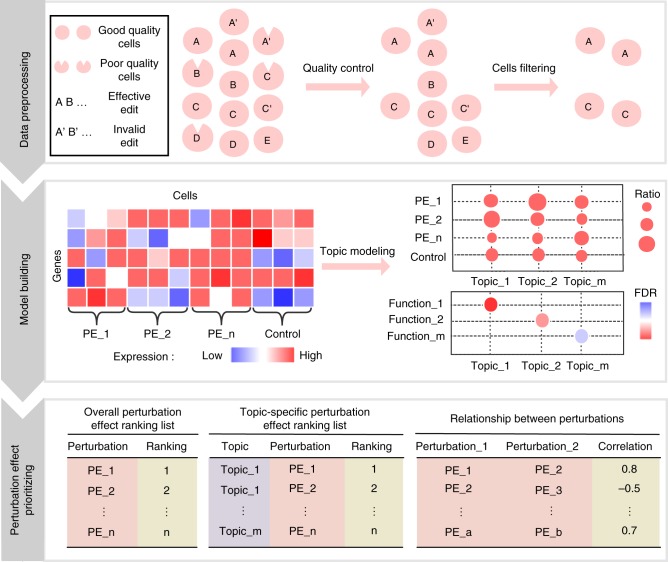
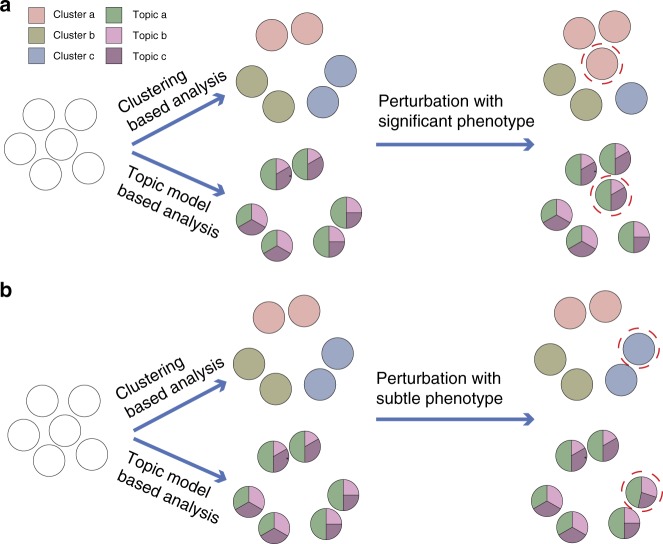
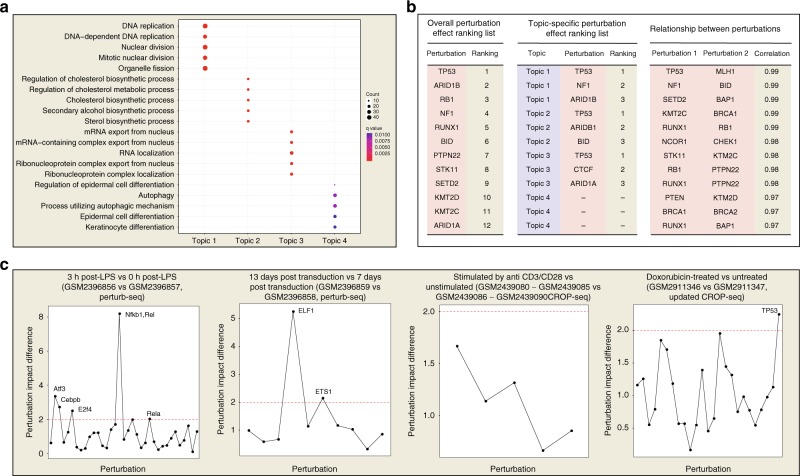
The recently developed single-cell CRISPR screening techniques, independently termed Perturb-Seq, CRISP-seq, or CROP-seq, combine pooled CRISPR screening with single-cell RNA-seq to investigate functional CRISPR screening in a single-cell granularity. Here, we present MUSIC, an integrated pipeline for model-based understanding of single-cell CRISPR screening data. Comprehensive tests applied to all the publicly available data revealed that MUSIC accurately quantifies and prioritizes the individual gene perturbation effect on cell phenotypes with tolerance for the substantial noise that exists in such data analysis. MUSIC facilitates the single-cell CRISPR screening from three perspectives, i.e., prioritizing the gene perturbation effect as an overall perturbation effect, in a functional topic-specific way, and quantifying the relationships between different perturbations. In summary, MUSIC provides an effective and applicable solution to elucidate perturbation function and biologic circuits by a model-based quantitative analysis of single-cell-based CRISPR screening data.
Overview
The claims and statistics of this paper haven’t been checked yet.
Free: it reads the open-access text and checks the first 5 claims that cite a source we can check. Create a free account to check every claim.
Integrity signals
Registry
Cites
Statistics
Figures
Verification
Claims the paper makes
The claims and statistics of this paper haven’t been checked yet.
Free: it reads the open-access text and checks the first 5 claims that cite a source we can check. Create a free account to check every claim.
Claims other papers make about this one
Each is checked against this paper’s own text: does it say what the citing paper says it does?
The source backs part of the claim, not all of it — or backs it for a different population, condition or comparison.
In the citing paper
“Published computational methods for perturbation data are primarily focused on individual datasets28-30.”
From scPerturb: harmonized single-cell perturbation data (2024) · cites this paper as [28]
Experimental — accuracy not yet measuredThe source backs part of the claim, not all of it — or backs it for a different population, condition or comparison.
In the citing paper
“There are a number of existing methods that perform perturbation-effect analysis in single-cell omics data, but none of them achieve guaranteed confounder identification, which is a necessary condition for interpretable causal-effect estimation.”
From Causal identification of single-cell experimental perturbation effects with CINEMA-OT (2023) · cites this paper as [6]
Experimental — accuracy not yet measuredThe cited source says what the claim attributes to it.
In the citing paper
“MUSIC[27] is an analytical tool for single-cell CRISPR screening data analysis. By allocating topic probability profiles instead of discrete clusters and enabling a quantitative assessment of perturbation impact, MUSIC automatically chooses the ideal topic number for perturbation analysis and handles problems such as sample imbalance.”
From A mini-review on perturbation modelling across single-cell omic modalities (2024) · cites this paper as [27]
In the citing paper
“As previous work has shown (11–13, 19), focusing on gene modules instead of individual genes provides more statistical power to detect biologically-meaningful perturbation effects using fewer cells than would be required for single gene-level analysis, and can capture diversity both within and across cell types.”
From In vivo Perturb-Seq reveals neuronal and glial abnormalities associated with autism risk genes (2020) · cites this paper as [19]
Self-check
Percentages, sums and reported differences re-computed from the paper’s own numbers.
The self-check needs the paper’s full text.
Citations
Cites
clusterProfiler: an R Package for Comparing Biological Themes Among Gene Clusters
Yu, G., Wang, L.-G., Han, Y., & He, Q.-Y. (2012) · OMICS: A Journal of Integrative Biology · doi:10.1089/omi.2011.0118 · Cited by 36,259
Spatial reconstruction of single-cell gene expression data
Satija, R., Farrell, J. A., Gennert, D., Schier, A. F., & Regev, A. (2015) · Nature Biotechnology · doi:10.1038/nbt.3192 · Cited by 7,055
Genome-scale CRISPR-Cas9 knockout screening in human cells
Shalem, O., Sanjana, N. E., Hartenian, E., Shi, X., Scott, D. A., Mikkelsen, T. S., Heckl, D., Ebert, B. L., Root, D. E., Doench, J. G., et al. (2014) · Science · doi:10.1126/science.1247005 · Cited by 5,234
CRISPR-Mediated Modular RNA-Guided Regulation of Transcription in Eukaryotes
Gilbert, L. A., Larson, M. H., Morsut, L., Liu, Z., Brar, G. A., Torres, S. E., Stern-Ginossar, N., Brandman, O., Whitehead, E. H., Doudna, J. A., et al. (2013) · Cell · doi:10.1016/j.cell.2013.06.044 · Cited by 3,696
High-Frequency off-Target Mutagenesis Induced by CRISPR-Cas Nucleases in Human Cells
Fu, Y., Foden, J. A., Khayter, C., Maeder, M. L., Reyon, D., Joung, J. K., & Sander, J. D. (2013) · Nature Biotechnology · doi:10.1038/nbt.2623 · Cited by 3,292
Genetic screens in human cells using the CRISPR-Cas9 system
Wang, T., Wei, J. J., Sabatini, D. M., & Lander, E. S. (2014) · Science · doi:10.1126/science.1246981 · Cited by 2,856
GUIDE-seq enables genome-wide profiling of off-target cleavage by CRISPR-Cas nucleases
Tsai, S. Q., Zheng, Z., Nguyen, N. T., Liebers, M., Topkar, V. V., Thapar, V., Wyvekens, N., Khayter, C., Iafrate, A. J., Le, L. P., et al. (2015) · Nature Biotechnology · doi:10.1038/nbt.3117 · Cited by 2,268
Transcriptome and genome sequencing uncovers functional variation in humans
The Geuvadis Consortium, Lappalainen, T., Sammeth, M., Friedländer, M. R., ‘t Hoen, P. A. C., Monlong, J., Rivas, M. A., Gonzàlez-Porta, M., Kurbatova, N., Griebel, T., et al. (2013) · Nature · doi:10.1038/nature12531 · Cited by 1,888
Dixit, A., Parnas, O., Li, B., Chen, J., Fulco, C. P., Jerby-Arnon, L., Marjanovic, N. D., Dionne, D., Burks, T., Raychowdhury, R., et al. (2016) · Cell · doi:10.1016/j.cell.2016.11.038 · Cited by 1,863
Adamson, B., Norman, T. M., Jost, M., Cho, M. Y., Nuñez, J. K., Chen, Y., Villalta, J. E., Gilbert, L. A., Horlbeck, M. A., Hein, M. Y., et al. (2016) · Cell · doi:10.1016/j.cell.2016.11.048 · Cited by 1,193
Cited by
Best practices for single-cell analysis across modalities
Heumos, L., Schaar, A. C., Lance, C., Litinetskaya, A., Drost, F., Zappia, L., Lücken, M. D., Strobl, D. C., Henao, J., Curion, F., et al. (2023) · Nature Reviews Genetics · doi:10.1038/s41576-023-00586-w · Cited by 1,051
The technological landscape and applications of single-cell multi-omics
Baysoy, A., Bai, Z., Satija, R., & Fan, R. (2023) · Nature Reviews Molecular Cell Biology · doi:10.1038/s41580-023-00615-w · Cited by 1,037
Applications of single-cell RNA sequencing in drug discovery and development
Van de Sande, B., Lee, J. S., Mutasa-Gottgens, E., Naughton, B., Bacon, W., Manning, J., Wang, Y., Pollard, J., Mendez, M., Hill, J., et al. (2023) · Nature Reviews Drug Discovery · doi:10.1038/s41573-023-00688-4 · Cited by 437
In vivo Perturb-Seq reveals neuronal and glial abnormalities associated with autism risk genes
Jin, X., Simmons, S. K., Guo, A., Shetty, A. S., Ko, M., Nguyen, L., Jokhi, V., Robinson, E., Oyler, P., Curry, N., et al. (2020) · Science · doi:10.1126/science.aaz6063 · Cited by 317
“As previous work has shown (Adamson et al., 2016; Dixit et al., 2016; Jaitin et al., 2016; Duan et al., 2019), focusing on gene modules instead of individual genes provides more power to detect biologically meaningful perturbation effects using fewer cells than would be required for single gene-level analysis.”
BackgroundIntegrative Methods and Practical Challenges for Single-Cell Multi-omics
Ma, A., McDermaid, A., Xu, J., Chang, Y., & Ma, Q. (2020) · Trends in Biotechnology · doi:10.1016/j.tibtech.2020.02.013 · Cited by 273
“It has been applied to derive the functional topics of each cell with specific perturbation by integrative analysis of matched scRNA-Seq and single-cell CRISPR screening data [38].”
MethodInfluential(2022) · Nature Reviews Methods Primers · doi:10.1038/s43586-022-00098-7 · Cited by 250
Papalexi, E., Mimitou, E. P., Butler, A. W., Foster, S., Bracken, B., Mauck, W. M., Wessels, H.-H., Hao, Y., Yeung, B. Z., Smibert, P., et al. (2021) · Nature Genetics · doi:10.1038/s41588-021-00778-2 · Cited by 237
Design and analysis of CRISPR–Cas experiments
Hanna, R. E., & Doench, J. G. (2020) · Nature Biotechnology · doi:10.1038/s41587-020-0490-7 · Cited by 208
scPerturb: harmonized single-cell perturbation data
Peidli, S., Green, T. D., Shen, C., Gross, T., Min, J., Garda, S., Yuan, B., Schumacher, L. J., Taylor-King, J. P., Marks, D. S., et al. (2024) · Nature Methods · doi:10.1038/s41592-023-02144-y · Cited by 194
“Published computational methods for perturbation data are primarily focused on individual datasets 28–30 .”
Rood, J. E., Hupalowska, A., & Regev, A. (2024) · Cell · doi:10.1016/j.cell.2024.07.035 · Cited by 139
Machine learning for perturbational single-cell omics
Ji, Y., Lotfollahi, M., Wolf, F. A., & Theis, F. J. (2021) · Cell Systems · doi:10.1016/j.cels.2021.05.016 · Cited by 137
Sun, D., Liu, Z., Li, T., Wu, Q., & Wang, C. (2022) · Nucleic Acids Research · doi:10.1093/nar/gkac150 · Cited by 122
“In recent years, 67 it has been extended to bioinformatics to analyze single-cell epigenomics(23) and CRISPR 68 screening data(24) owing to the tolerance to the sparsity of data and the interpretability of topics.”
BackgroundResolving organoid brain region identities by mapping single-cell genomic data to reference atlases
Fleck, J. S., Sanchís-Calleja, F., He, Z., Santel, M., Boyle, M. J., Camp, J. G., & Treutlein, B. (2021) · Cell Stem Cell · doi:10.1016/j.stem.2021.02.015 · Cited by 118
CRISPR/Cas-Based In Vitro Diagnostic Platforms for Cancer Biomarker Detection
Gong, S., Zhang, S., Lü, F., Pan, W., Li, N., & Tang, B. (2021) · Analytical Chemistry · doi:10.1021/acs.analchem.1c02533 · Cited by 105
Self-citationscMAGeCK links genotypes with multiple phenotypes in single-cell CRISPR screens
Yang, L., Zhu, Y., Yu, H., Cheng, X., Chen, S., Chu, Y., Huang, H., Zhang, J., & Li, W. (2020) · Genome Biology · doi:10.1186/s13059-020-1928-4 · Cited by 94
Causal identification of single-cell experimental perturbation effects with CINEMA-OT
Dong, M., Wang, B., Wei, J., de O. Fonseca, A. H., Perry, C. J., Frey, A., Ouerghi, F., Foxman, E. F., Ishizuka, J. J., Dhodapkar, R. M., et al. (2023) · Nature Methods · doi:10.1038/s41592-023-02040-5 · Cited by 94
Lalli, M. A., Avey, D., Dougherty, J. D., Milbrandt, J., & Mitra, R. D. (2020) · Genome Research · doi:10.1101/gr.262295.120 · Cited by 91
“S3; Duan et al. 2019; McFaline-Figueroa et al. 2019; Yang et al. 2020).”
Single-cell omics: experimental workflow, data analyses and applications
Sun, F., Li, H., Sun, D., Fu, S., Gu, L., Shao, X., Wang, Q., Dong, X., Duan, B., Xing, F., et al. (2024) · Science China Life Sciences · doi:10.1007/s11427-023-2561-0 · Cited by 102
Self-citationComputational methods for single-cell multi-omics integration and alignment
Stanojevic, S., Li, Y., Ristivojevic, A., & Garmire, L. X. (2022) · Genomics, Proteomics & Bioinformatics · doi:10.1016/j.gpb.2022.11.013 · Cited by 74
“In the perturbation effect prioritizing step, MUSIC utilizes the output from the topic model and estimates individual gene perturbation effects on cell phenotypes.”
BackgroundMethodInfluentialGenome-coverage single-cell histone modifications for embryo lineage tracing
Liu, M., Yue, Y., Chen, X., Xian, K., Dong, C. F., Shi, M., Xiong, H., Tian, K., Li, Y., Zhang, Q. C., et al. (2025) · Nature · doi:10.1038/s41586-025-08656-1 · Cited by 67
A mini-review on perturbation modelling across single-cell omic modalities
Gavriilidis, G. I., Vasileiou, V., Orfanou, A., Ishaque, N., & Psomopoulos, F. (2024) · Computational and Structural Biotechnology Journal · doi:10.1016/j.csbj.2024.04.058 · Cited by 54
“MUSIC [27] is an analytical tool for single-cell CRISPR screening data analysis.”
MethodCell Reprogramming With CRISPR/Cas9 Based Transcriptional Regulation Systems
Шакирова, К. М., Ovchinnikova, V. Y., & Dashinimaev, E. B. (2020) · Frontiers in Bioengineering and Biotechnology · doi:10.3389/fbioe.2020.00882 · Cited by 62
Moving from in vitro to in vivo CRISPR screens
Kuhn, M., Santinha, A. J., & Platt, R. J. (2021) · Gene and Genome Editing · doi:10.1016/j.ggedit.2021.100008 · Cited by 61
Identifying cell types to interpret scRNA-seq data: how, why and more possibilities
Wang, Z., Ding, H., & Zou, Q. (2020) · Briefings in Functional Genomics · doi:10.1093/bfgp/elaa003 · Cited by 62
Technologies and Computational Analysis Strategies for CRISPR Applications
Clement, K., Hsu, J. Y., Canver, M. C., Joung, J. K., & Pinello, L. (2020) · Molecular Cell · doi:10.1016/j.molcel.2020.06.012 · Cited by 51
“MUSIC (Duan et al., 2019) uses topic modeling to discover biological functions induced by perturbations.”
MethodMachine learning for single-cell genomics data analysis
Raimundo, F., Meng-Papaxanthos, L., Vallot, C., & Vert, J. (2021) · Current Opinion in Systems Biology · doi:10.1016/j.coisb.2021.04.006 · Cited by 51
Massively Parallel CRISPR‐Based Genetic Perturbation Screening at Single‐Cell Resolution
Cheng, J., Lin, G., Wang, T., Wang, Y., Guo, W., Liao, J., Yang, P., Chen, J., Shao, X., Lu, X., et al. (2022) · Advanced Science · doi:10.1002/advs.202204484 · Cited by 48
CRISPR screen in mechanism and target discovery for cancer immunotherapy
Liu, D., Zhao, X., Tang, A., Xu, X., Liu, S., Zha, L., Ma, W., Zheng, J., & Shi, M. (2020) · Biochimica et Biophysica Acta (BBA) - Reviews on Cancer · doi:10.1016/j.bbcan.2020.188378 · Cited by 48
Zhou, Y., Luo, K., Liang, L., Chen, M., & He, X. (2023) · Nature Methods · doi:10.1038/s41592-023-02017-4 · Cited by 34
“This type of procedure has been used in previous single-cell CRISPR screening data 31 .”
BackgroundMethodVlachavas, E., Bohn, J. R., Ückert, F., & Nürnberg, S. (2021) · International Journal of Molecular Sciences · doi:10.3390/ijms22062822 · Cited by 38
Probabilistic machine learning ensures accurate ambient denoising in droplet-based single-cell omicsPreprint
Sheng, C., Lopes, R., Li, G., Schuierer, S., Waldt, A., Cuttat, R., Dimitrieva, S., Kauffmann, A., Durand, E., Galli, G. G., et al. (2022) · bioRxiv (Cold Spring Harbor Laboratory) · doi:10.1101/2022.01.14.476312 · Cited by 42
Self-citationDecoding heterogeneous single-cell perturbation responses
Song, B., Liu, D., Dai, W., McMyn, N. F., Wang, Q., Yang, D., Krejčí, A., Vasilyev, A., Untermoser, N., Loregger, A., et al. (2025) · Nature Cell Biology · doi:10.1038/s41556-025-01626-9 · Cited by 58
“Methods such as MUSIC 18 , MIMOSCA 3 , scMAGeCK 15 and SCEPTRE 19 estimate the average effects of perturbations but fall short of capturing response heterogeneity.”
Pooled genetic screens with image‐based profiling
Walton, R. T., Singh, A. K., & Blainey, P. C. (2022) · Molecular Systems Biology · doi:10.15252/msb.202110768 · Cited by 31
“Single-cell resolution, and, for microscopy-based profiling, spatial resolution, provide the opportunity to account for confounding variables such as cell state, local spatial context, and perturbation status (Dixit et al , 2016; Duan et al , 2019; Papalexi et al , 2021; Wang, 2021).”
BackgroundPerturBase: a comprehensive database for single-cell perturbation data analysis and visualization
Wei, Z., Si, D., Duan, B., Gao, Y., Yu, Q., Zhang, Z., Guo, L., & Liu, Q. (2024) · Nucleic Acids Research · doi:10.1093/nar/gkae858 · Cited by 44
Self-citationBarry, T., Mason, K., Roeder, K., & Katsevich, E. (2024) · Genome Biology · doi:10.1186/s13059-024-03254-2 · Cited by 28
“Several methods, including MIMOSCA [1], MUSIC [38], and Mixscape [9], have been developed to address this issue.”
MethodA Systematic Comparison of Single-Cell Perturbation Response Prediction Models
Li, L., You, Y., Fu, Y., Liao, W., Fan, X., Lu, S., Cao, Y., Li, B., Ren, W., Kong, J., et al. (2024) · bioRxiv (Cold Spring Harbor Laboratory) · doi:10.1101/2024.12.23.630036 · Cited by 25
“Multiplexed perturbations together with scRNAseq, such as Perturb-seq and CROP-seq, help uncover how cells respond to diverse stimuli or interventions ( 3–5 ).”
Single-Cell Analysis of the Transcriptome and Epigenome
Mazan-Mamczarz, K., Ha, J., De, S., & Sen, P. (2022) · Methods in molecular biology · doi:10.1007/978-1-0716-1831-8_3 · Cited by 29
High-content CRISPR screening in tumor immunology
Holcomb, E. A., Pearson, A. N., Jungles, K. M., Tate, A., James, J. G., Jiang, L., Huber, A. K., & Green, M. D. (2022) · Frontiers in Immunology · doi:10.3389/fimmu.2022.1041451 · Cited by 28
CRISPR screening in hematology research: from bulk to single-cell level
Meyers, S., Demeyer, S., & Cools, J. (2023) · Journal of Hematology & Oncology · doi:10.1186/s13045-023-01495-5 · Cited by 25
“Finally, MUSIC is an integrated tool where topic modeling is used to study the biological functions associated with a particular perturbation [82].”
MethodYazdi, Z. F., Roshannezhad, S., Sharif, S., & Abbaszadegan, M. R. (2024) · Journal of Translational Medicine · doi:10.1186/s12967-024-05908-y · Cited by 25
Song, M.-S., Alluin, J. V., & Rossi, J. J. (2022) · Genes · doi:10.3390/genes13030436 · Cited by 29
Synthetic apomixis: from genetic basis to agricultural application
Li, S., Wang, J., Jia, S.-G., Wang, K., & Li, H. (2023) · Seed Biology · doi:10.48130/seedbio-2023-0010 · Cited by 25
Zhao, Y., Zhang, M., & Yang, D. (2022) · Quantitative Biology · doi:10.15302/j-qb-022-0299 · Cited by 25
“Finally, MUSIC estimates the single perturbation effect on whole gene expression profiles.”
MethodInfluentialGenePert: Leveraging GenePT Embeddings for Gene Perturbation PredictionPreprint
Chen, Y. T., & Zou, J. (2024) · bioRxiv (Cold Spring Harbor Laboratory) · doi:10.1101/2024.10.27.620513 · Cited by 31
“…work in in silico perturbation prediction used linear models on the perturbation feature matrix (i.e., a matrix with 1 for the perturbed gene and 0 otherwise) to describe the mean impact of each perturbation on gene expression across cells [Dixit et al., 2016, Duan et al., 2019, Yang et al., 2020].”
MethodSingle-cell technologies: current and near future
Wang, C., Liu, Q., Fan, X., & Shi, T. (2024) · Science China Life Sciences · doi:10.1007/s11427-024-2813-y · Cited by 19
“For scCRISPR data analysis, existing bioinformatics tools generally focus on three aspects, including data preprocessing (Wei et al., 2023), data denoising (Duan et al., 2019), and functional analysis (Roohani et al., 2024), aiming to uncover rich perturbation information.”
Self-citationGao, Y., Wei, Z., Dong, K., Chen, K., Yang, J., Chuai, G., & Liu, Q. (2024) · Nature Computational Science · doi:10.1038/s43588-024-00698-1 · Cited by 21
“The data analysis models include methods such as Milo 12 , mixscape 16 , CINEMA-OT 13 , MELD-VFC 14 and MUSIC 15 .”
InfluentialSelf-citationMachine learning to dissect perturbations in complex cellular systems
Monfort‐Lanzas, P., Rungger, K., Madersbacher, L., & Hackl, H. (2025) · Computational and Structural Biotechnology Journal · doi:10.1016/j.csbj.2025.02.028 · Cited by 24
“For instance, the tool model-based understanding of single-cell CRISPR screening (MUSIC) [48] applies topic modeling to distinguish cellular perturbation states and identify critical regulatory changes.”
Advances in Single-Cell Sequencing Technology and Its Application in Poultry Science
Liu, Y., Liang, S., Wang, B., Zhao, J., Zi, X., Yan, S., Dou, T., Jia, J., Wang, K., & Ge, C. (2022) · Genes · doi:10.3390/genes13122211 · Cited by 16
Manipulating and studying gene function in human pluripotent stem cell models
Balmas, E., Sozza, F., Bottini, S., Ratto, M. L., Savoré, G., Becca, S., Snijders, K. E., & Bertero, A. (2023) · FEBS Letters · doi:10.1002/1873-3468.14709 · Cited by 18
“…prioritizes perturbation effects on cell phenotypes at various levels: overall effect topic-specific effect and relationship between perturbations [255]. scMAGeCK is a single cell extension of MAGeCK; it has two analyses mode: scMAGeCK-Robust Rank Aggregation (RRA), which finds perturbations…”
MethodHeyman, O., Yehezkel, D., Mattioli, C. C., Blumberger, N., Rosenberg, G., Solomon, A., Hoffman, D., Moshe, N. B. B., & Avraham, R. (2023) · Proceedings of the National Academy of Sciences · doi:10.1073/pnas.2218812120 · Cited by 15
“To validate our MAESTRO hits, we applied a pipeline that models single-cell CRISPR screening [MUSIC algorithm (46)] on our data.”
Emerging applications of single-cell profiling in precision medicine of atherosclerosis
Lin, H., Zhang, M., Hu, M., Zhang, Y., Jiang, W., Tang, W., Ouyang, Y., Jiang, L., Mi, Y., Chen, Z., et al. (2024) · Journal of Translational Medicine · doi:10.1186/s12967-023-04629-y · Cited by 18
“It is fused with single-cell analysis to derive a variety of technologies, such as Perturb-Seq, CRISP-Seg, and Mosaic-Seg [105– 108].”
MethodInterpretation, extrapolation and perturbation of single cells
Dimitrov, D., Schrod, S., Rohbeck, M., & Stegle, O. (2026) · Nature Reviews Genetics · doi:10.1038/s41576-025-00920-4 · Cited by 38
Expanding horizons of CRISPR applications beyond genome editing
Liang, Y., Tong, S., Zhang, J., Tan, G., Zhang, L., Lee, S. Y., & Tong, Y. (2025) · Trends in Genetics · doi:10.1016/j.tig.2025.06.003 · Cited by 14
Personalized Medicine Using Cutting Edge Technologies for Genetic Epilepsies
Garcia-Rosa, S., Brenha, B. D. F., da Rocha, V. F., Goulart, E., & Araújo, B. H. S. (2020) · Current Neuropharmacology · doi:10.2174/1570159x18666200915151909 · Cited by 14
“This approach provides the screening for genes involved in drug resistance or specific cellular target, combining the resolution of massively parallel scRNA-Seq with the genome editing scale of pooled CRISPR screens resulting in functional information about the influence of specific genetic perturbation on the phenoty…”
Potts, M. A., McDonald, J. A., Sutherland, K. D., & Herold, M. J. (2020) · European Journal of Immunology · doi:10.1002/eji.202048712 · Cited by 12
Guide assignment in single-cell CRISPR screens using crispat
Braunger, J. M., & Velten, B. (2024) · Bioinformatics · doi:10.1093/bioinformatics/btae535 · Cited by 13
“…with crispat, the learnt assignments can serve as input to a wide range of different down-stream analysis, including differential expression analysis with SCEPTRE, Seurat or scanpy (Wolf et al. 2018, Barry et al. 2023, Hao et al. 2024) or dimension reduction (Duan et al. 2019, Zhou et al. 2023).”
MethodLi, Q., Huang, H., Li, R., Hou, X.-Y., Yang, Q., Jiang, H., Cai, Q.-L., & Kong, D. (2025) · Biosensors and Bioelectronics · doi:10.1016/j.bios.2025.117929 · Cited by 11
Decoding the genomic landscape of chromatin-associated biomolecular condensates
Yu, Z., Wang, Q., Zhang, Q., Tian, Y., Yan, G., Zhu, J., Zhu, G., & Zhang, Y. (2024) · Nature Communications · doi:10.1038/s41467-024-51426-2 · Cited by 10
“CondSigDetector empirically learns 2 ~10topicsforeachcontextandthenappliesanautomaticstrategyto select the optimal topic number as described in the previous study 62 .”
PerturbDB for unraveling gene functions and regulatory networks
Yang, B., Zhang, M., Shi, Y., Zheng, B.-Q., Shi, C., Lu, D., Yang, Z.-Z., Dong, Y.-M., Zhu, L., Ma, X., et al. (2024) · Nucleic Acids Research · doi:10.1093/nar/gkae777 · Cited by 15
CRISPR Screens in Toxicology Research: An Overview
Sobh, A., Russo, M., & Vulpe, C. D. (2021) · Current Protocols · doi:10.1002/cpz1.136 · Cited by 10
Multiview learning in biomedical applications
Serra, A., Galdi, P., & Tagliaferri, R. (2023) · Elsevier eBooks · doi:10.1016/b978-0-323-96104-2.00010-5 · Cited by 13
Recent advances of genome editing and related technologies in China
Sun, W. C., & Wang, H. (2020) · Gene Therapy · doi:10.1038/s41434-020-0181-5 · Cited by 10
“developed an analytical tool MUSIC for single-cell CRISPR screening data analysis [111].”
MethodBig data analytics in single‐cell transcriptomics: Five grand opportunities
Bhattacharya, N., Nelson, C. C., Ahuja, G., & Sengupta, D. (2021) · Wiley Interdisciplinary Reviews Data Mining and Knowledge Discovery · doi:10.1002/widm.1414 · Cited by 8
“An integrated pipeline MUSIC performs model-based discerning of single-cell CRISPR screening data (Duan et al., 2019).”
MethodIn vivo Pooled Screening: A Scalable Tool to Study the Complexity of Aging and Age-Related Disease
Jensen, M. B., & Marblestone, A. H. (2021) · Frontiers in Aging · doi:10.3389/fragi.2021.714926 · Cited by 9
“Recently, tools have been developed to detect perturbation based on effects on the broader transcriptome (L. Yang et al., 2020a; Duan et al., 2019; Papalexi et al., 2021).”
MethodWei, H., Han, T., Li, T., Wu, Q., & Wang, C. (2023) · Briefings in Bioinformatics · doi:10.1093/bib/bbad123 · Cited by 10
Lalli, M. A., Avey, D. R., Dougherty, J. D., Milbrandt, J., & Mitra, R. D. (2019) · bioRxiv (Cold Spring Harbor Laboratory) · doi:10.1101/862680 · Cited by 9
High-throughput screening for optimizing adoptive T cell therapies
Zhang, Y., Xu, Q., Gao, Z., Zhang, H., Xie, X., & Li, M. (2024) · Experimental Hematology and Oncology · doi:10.1186/s40164-024-00580-w · Cited by 14
Immaculate Conception? Priority and Invention in the CRISPR Patent Dispute
Sherkow, J. S. (2022) · The CRISPR Journal · doi:10.1089/crispr.2022.0033 · Cited by 7
Zhang, H., Liu, Y., Liu, W., Lin, A., Fang, Y., Qu, L., Zhang, X., Luo, P., Wang, L., & Jiang, A. (2025) · Biomarker Research · doi:10.1186/s40364-025-00811-0 · Cited by 10
Zhao, Y., Li, X., & Du, Y. (2026) · Journal of Translational Medicine · doi:10.1186/s12967-026-07849-0 · Cited by 7
“For example, the topic-modeling framework MUSIC [32] aggregates weak but coherent transcriptional responses across cells by learning shared perturbation-associated programs, substantially improving sensitivity to effects diluted at the single-gene level.”
Barragán-Álvarez, C. P., Flores-Fernández, J. M., Hernández‐Pérez, O. R., Ávila‐González, D., Díaz, N. F., Padilla‐Camberos, E., Dublán‐García, O., Gómez‐Oliván, L. M., & Diaz-Martinez, N. E. (2022) · Frontiers in Cell and Developmental Biology · doi:10.3389/fcell.2022.947769 · Cited by 6
“examples of these advances in data analysis (Duan et al., 2019; Yang et al., 2020; Barry et al., 2021; Watson et al., 2021).”
BackgroundHe, Y., Li, H., Ju, X., & Gong, B. (2024) · Biochimica et Biophysica Acta (BBA) - Reviews on Cancer · doi:10.1016/j.bbcan.2024.189212 · Cited by 6
Regulatory network hubs guide dynamic human lineage specificationPreprint
Takeuchi, C., Sivakumar, S., Sundarrajan, A., Wang, Y., Goetsch, S. C., Zhao, H., Wang, L., Nzima, M., Deng, M., Kulkarni, K. N., et al. (2025) · bioRxiv (Cold Spring Harbor Laboratory) · doi:10.64898/2025.12.15.694070 · Cited by 5
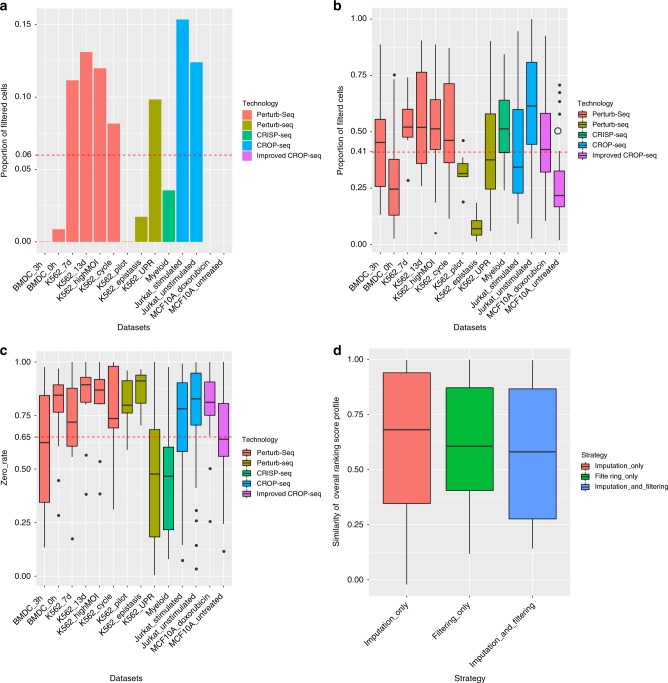
“Some methods filter out cells based on target gene expression level 78 or differential expressed genes 79 .”
scDecouple: decoupling cellular response from infected proportion bias in scCRISPR-seq
Meng, Q., Wei, L., Ma, K., Shi, M., Lin, X., Ho, J. W. K., Li, Y., & Zhang, X. (2024) · Briefings in Bioinformatics · doi:10.1093/bib/bbae011 · Cited by 3
Decoding cell fate: integrated experimental and computational analysis at the single-cell level
Zhou, Y., Hou, S., Miao, X., Zhang, G., Li, Z., Zhang, D., Lin, Y., & Lin, Y. (2025) · Bioinformatics · doi:10.1093/bioinformatics/btaf603 · Cited by 4
“…targets ranging from quantifying perturbation magnitude (Dixit et al. 2016, Yang et al. 2020, Dong et al. 2023), ranking the perturbation effects (Duan et al. 2019, Yang et al. 2020), and finding optimal perturbation strategy (Zhang et al. 2023) to identifying distinct cell groups or states (Jin…”
Tian, Z., Octaviani, S., & Huang, J. Y. (2023) · Expert Opinion on Therapeutic Targets · doi:10.1080/14728222.2023.2293751 · Cited by 4
“However, a recent breakthrough has addressed this limitation by integrating single-cell RNA sequencing (scRNA-seq) with CRISPR screening, employing innovative methods such as Perturb-Seq, CRISP-seq, and CROP-seq [14].”
MethodDissecting cellular ecosystem with single-cell CRISPR screens
Liu, Z., Lan, Z., Kang, X., Yao, Y., & Rao, S. (2025) · Blood Science · doi:10.1097/bs9.0000000000000266 · Cited by 2
“58 The analytical frontier is now evolving from descriptive analysis toward predictive and causal modeling.”
Rutkowski, P., & Tabaka, M. (2025) · NAR Genomics and Bioinformatics · doi:10.1093/nargab/lqaf040 · Cited by 4
“In the data preprocessing step, we find modality-specific programs with topic modeling using LD A. LD A topics provide a highly compressed yet sensitive representation [ 65 ].”
Theory for High-Throughput Genetic Interaction Screening
McCarthy, M. E., Dodd, W. B., Lu, X., Pritko, D. J., Patel, N. D., Haskell, C. V., Sanabria, H., Blenner, M., & Birtwistle, M. R. (2023) · ACS Synthetic Biology · doi:10.1021/acssynbio.2c00627 · Cited by 2
Inference of heterogeneous effects in single-cell genetic perturbation screensPreprint
Fu, Z., & Hou, L. (2024) · bioRxiv (Cold Spring Harbor Laboratory) · doi:10.1101/2024.05.28.596224 · Cited by 2
A systematic comparison of single-cell perturbation response prediction models
Li, L., You, Y., Fu, Y., Liao, W., Fan, X., Lu, S., Cao, Y., Li, B., Ren, W., Kong, J., et al. (2026) · Science Advances · doi:10.1126/sciadv.aed3414 · Cited by 1
Spatial and Multiple Omics in Horticultural Plants: Advances and Prospects
Mohanty, G. R., Mohanty, S. R., Debnath, S., Chakraborty, N. R., Kole, A., Paikray, S., Das, S. K., Mohanty, S. K., & Deb, P. (2026) · CABI biotechnology series. · doi:10.1079/9781836994572.0011 · Cited by 1
Single-Cell RNA Sequencing (sc-RNAseq) in the Development of Biomedical Therapeutics
Saw, P. E., & Song, E. (2025) · Springer eBooks · doi:10.1007/978-981-96-3041-7_17 · Cited by 1
A Comprehensive Review of Cell-Type Deconvolution in Spatial Transcriptomic Data
Wang, L., Hu, Y., & Gao, L. (2025) · Big Data Mining and Analytics · doi:10.26599/bdma.2025.9020056 · Cited by 1
Wang, X., Lalli, M. A., Thopte, U., & Buxbaum, J. D. (2024) · bioRxiv (Cold Spring Harbor Laboratory) · doi:10.1101/2024.09.25.614184 · Cited by 1
“In addition, specialized methods, such as differential expression (DE) analysis using tools like GSFA ( 39 ), MUSIC ( 35 ), and scMAGeCK ( 36 ), have been developed to address the unique characteristics of scCRISPR screens, focusing more on perturbation effects, differentially expressed genes, and…”
MethodBouwers, E. G. (2011) · PUB – Publications at Bielefeld University (Bielefeld University)
Zhang, C., Bi, F., Zhang, J., & Guo, C. (2024) · Lecture notes in computer science · doi:10.1007/978-981-97-4399-5_54
Self-citationA review on single-cell perturbation data analysis
Fu, Z., Yang, M., & Hou, L. (2025) · Scientia Sinica Mathematica · doi:10.1360/ssm-2024-0315
Advances in single-cell perturbation modeling
Qi, X., Zhao, L., Chen, R., & Zhao, Y. C. (2025) · Chinese Science Bulletin (Chinese Version) · doi:10.1360/csb-2025-0682
Genetic Convergence Analysis of CRISPR Perturbations Deciphers Gene Functional SimilarityPreprint
Zhang, T., Shang, E., & Roeder, K. (2025) · bioRxiv (Cold Spring Harbor Laboratory) · doi:10.1101/2025.11.13.688060 · Cited by 3
“Next, perturbations with similar effects on modules are identified, either by clustering effect sizes [6, 8] or by identifying those perturbations with a significant impact on pre-specified modules [9, 10].”
Fu, X., Yang, C., Cui, C., Geng, A., Sun, Y., Zha, C., Cui, F., Wei, L., Zou, Q., Gao, X.-J., et al. (2026) · Genome Research · doi:10.1101/gr.281523.125
Self-citationUnsupervised representation learning for single-cell transcriptomic and epigenomic data
Raimundo, F. (2022) · theses.fr (ABES) · doi:10.70675/760cd5d0z17c6z4f4ezb476z68bd387daf22
Liu, L., Chen, S., Ding, M., Duan, Y., Pu, L., Li, L., Peng, H., & Yu, Q. (2026) · Frontiers in Oncology · doi:10.3389/fonc.2026.1787786
Ge, C., & Li, H. (2026) · bioRxiv (Cold Spring Harbor Laboratory) · doi:10.64898/2026.04.20.719759
“Recovering such DAG-structured networks is essential for understanding how genes coordinate cell states, how perturbations propagate through regulatory programs, and which effects are direct rather than mediated through downstream pathways[8–10].”
Modeling Dynamics, Cell Type Specificity, and Perturbations in Gene Regulatory Networks
Shin, J., Halberg, S., Liu, Y., Hazra, S., Lee, E. D.-I., & Roy, S. (2026) · Annual Review of Genomics and Human Genetics · doi:10.1146/annurev-genom-120922-103729
“Several methods have been developed to estimate gene expression programs, including D-SPIN [51], MUSIC [31], PerturbDecode [40], and GSFA [146].”
Charting the computational landscape of single-cell genetic perturbation
Zhang, Y., Huang, J., Li, Y., Liu, T., Ren, L., Huang, J. H., Lin, H., Feng, J., & Zhang, Y. (2026) · Journal of Advanced Research · doi:10.1016/j.jare.2026.06.012 · Cited by 1
CRISPRing through time: How cutting-edge technology is revolutionizing life sciences and medicine
Banik, I., & Coppé, J. (2026) · Molecular Therapy — Nucleic Acids · doi:10.1016/j.omtn.2026.103003
Wang, H., & Oba, K. (2026) · Frontiers in Bioinformatics · doi:10.3389/fbinf.2026.1924703
“…clustered regularly interspaced short palindromic repeats (CRISPR)-based perturbation across many genes and cell types could, in principle, yield a comprehensive atlas of gene function (Dixit et al., 2016; Adamson et al., 2016; Norman et al., 2019; Replogle et al., 2020; Duan et al., 2019).”
Metadata
- Authors
- Duan, B., Zhou, C., Zhu, C., Yu, Y., Li, G., Zhang, S., Zhang, C., Ye, X., Ma, H., Qu, S., Zhang, Z., Wang, P., Sun, S., & Liu, Q.
- Affiliations
- Tongji University (CN)
- Academy of Mathematics and Systems Science (CN)
- Shanghai Jiao Tong University (CN)
- ShanghaiTech University (CN)
- Corresponding author
- Wang, Ping
- Sun, Shuyang
- Liu, Qi
- ORCID
- Venue
- Nature Communications
- Published
- 2019-05-20
- Volume
- 10
- Issue
- 1
- Pages
- 2233-2233
- ISSN
- 2041-1723 (ISSN-L)
- PMC
- PMC6527552
- OpenAlex
- W2945730477
- Cited by
- 98
- References
- 39
- Citations by year
- 2026: 11 · 2025: 15 · 2024: 21 · 2023: 13 · 2022: 14 · 2021: 10 · 2020: 12 · 2019: 1
- FWCI
- 3.06
- Type
- journal article
- Language
- en
- Open access
- gold
- doi.org
- Licence
- cc-by
- creativecommons.org/licenses/by/4.0 (tdm)
- creativecommons.org/licenses/by/4.0 (vor)
- Locations
- Nature Communications (publishedVersion, cc-by)
- Europe PMC (PubMed Central) (publishedVersion, cc-by)
- PubMed Central (publishedVersion, cc-by)
- PubMed (publishedVersion)
- RePEc: Research Papers in Economics (submittedVersion)
- DOAJ (DOAJ: Directory of Open Access Journals) (submittedVersion)
- DOAJ (DOAJ: Directory of Open Access Journals) (submittedVersion, cc-by-sa)
- Funders
- Natural Science Foundation of Shanghai (17ZR1449400)
- National Natural Science Foundation of China (2017YFC0908500, 61572361)
- Shanghai Rising-Star Program (16QA1403900)
- National Key Research and Development Program of China (2017YFC0908500, 2016YFC1303205)
- Fundamental Research Funds for the Central Universities
- Topics
- Life Sciences › Biochemistry, Genetics and Molecular Biology › Molecular Biology › Single-cell and spatial transcriptomics
- Life Sciences › Biochemistry, Genetics and Molecular Biology › Molecular Biology › CRISPR and Genetic Engineering
- Life Sciences › Biochemistry, Genetics and Molecular Biology › Molecular Biology › Gene Regulatory Network Analysis
- Keywords
- Perturb-seq, model-based analysis, single-cell RNA sequencing, functional genomics, biological circuits
- MeSH terms
- RNA, Guide, CRISPR-Cas Systems, Feasibility Studies, Humans, Models, Genetic, RNA, Guide, Kinetoplastida, Sequence Analysis, RNA, Jurkat Cells, Computational Biology, K562 Cells, Gene Expression Profiling, Gene Knockdown Techniques, Single-Cell Analysis, Clustered Regularly Interspaced Short Palindromic Repeats, Datasets as Topic
About these checks
Registry, retraction, Cites and statistics results are computed, not judged, with one exception: a printed reference that no index lists is read once by a model before it counts as a citation error. Claims are extracted by a model and kept only when their quote appears verbatim in the text; each cited source is then checked, with a model’s help, for whether it says what the claim relies on. Those verdicts can be wrong — read the claim’s quote and the cited source before relying on one.
Statistics and arithmetic are recomputed, not judged.
Confidence bands are shown only for fields calibrated on our annotated test set. None is calibrated yet, so no band is shown.
What counts as a claim ›How we measure confidence ›How we check this ›
Are you an author, or do you see a problem with this page? Request a review
Data sources
Bibliographic data: Semantic Scholar, OpenAlex, Crossref.
Contains information from the Semantic Scholar Academic Graph Datasets, made available under the ODC Attribution License (ODC-BY 1.0).
Semantic Scholar’s data is described in: Kinney, R., et al. (2023). The Semantic Scholar Open Data Platform. arXiv:2301.10140.
