

Model-based understanding of single-cell CRISPR screening
Open accessThe DOI matches its Crossref record; 40 of the 40 references it cites were found in a registry or an index.
Abstract
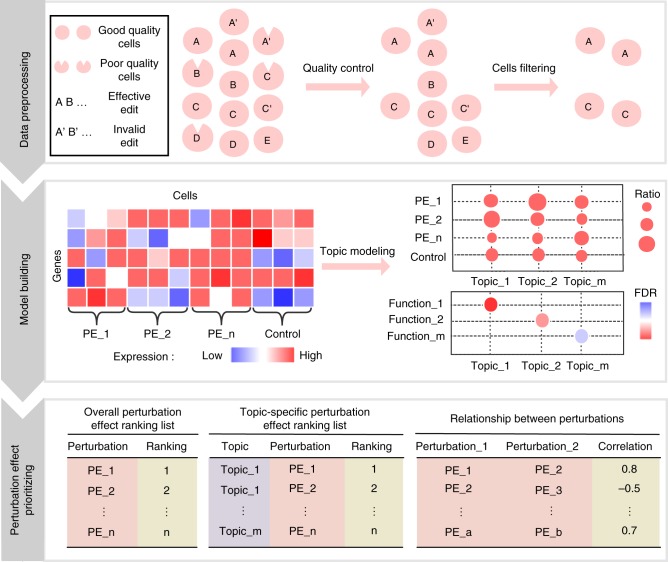
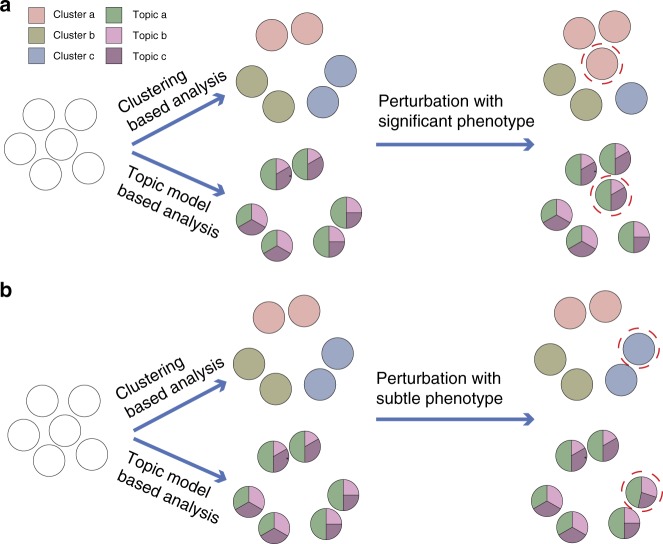
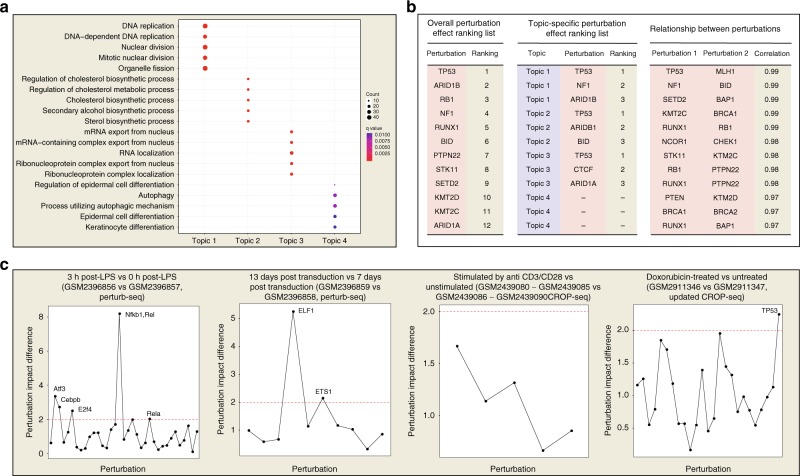
The recently developed single-cell CRISPR screening techniques, independently termed Perturb-Seq, CRISP-seq, or CROP-seq, combine pooled CRISPR screening with single-cell RNA-seq to investigate functional CRISPR screening in a single-cell granularity. Here, we present MUSIC, an integrated pipeline for model-based understanding of single-cell CRISPR screening data. Comprehensive tests applied to all the publicly available data revealed that MUSIC accurately quantifies and prioritizes the individual gene perturbation effect on cell phenotypes with tolerance for the substantial noise that exists in such data analysis. MUSIC facilitates the single-cell CRISPR screening from three perspectives, i.e., prioritizing the gene perturbation effect as an overall perturbation effect, in a functional topic-specific way, and quantifying the relationships between different perturbations. In summary, MUSIC provides an effective and applicable solution to elucidate perturbation function and biologic circuits by a model-based quantitative analysis of single-cell-based CRISPR screening data.
Overview
The claims and statistics of this paper haven’t been checked yet.
Free: it reads the open-access text and checks the first 5 claims that cite a source we can check. Create a free account to check every claim.
Integrity signals
Registry
Cites
Statistics
Figures
Verification
Claims the paper makes
The claims and statistics of this paper haven’t been checked yet.
Free: it reads the open-access text and checks the first 5 claims that cite a source we can check. Create a free account to check every claim.
Claims other papers make about this one
Each is checked against this paper’s own text: does it say what the citing paper says it does?
The source backs part of the claim, not all of it — or backs it for a different population, condition or comparison.
In the citing paper
“Published computational methods for perturbation data are primarily focused on individual datasets28-30.”
From scPerturb: harmonized single-cell perturbation data (2024) · cites this paper as [28]
Experimental — accuracy not yet measuredThe source backs part of the claim, not all of it — or backs it for a different population, condition or comparison.
In the citing paper
“There are a number of existing methods that perform perturbation-effect analysis in single-cell omics data, but none of them achieve guaranteed confounder identification, which is a necessary condition for interpretable causal-effect estimation.”
From Causal identification of single-cell experimental perturbation effects with CINEMA-OT (2023) · cites this paper as [6]
Experimental — accuracy not yet measuredThe cited source says what the claim attributes to it.
In the citing paper
“MUSIC[27] is an analytical tool for single-cell CRISPR screening data analysis. By allocating topic probability profiles instead of discrete clusters and enabling a quantitative assessment of perturbation impact, MUSIC automatically chooses the ideal topic number for perturbation analysis and handles problems such as sample imbalance.”
From A mini-review on perturbation modelling across single-cell omic modalities (2024) · cites this paper as [27]
In the citing paper
“As previous work has shown (11–13, 19), focusing on gene modules instead of individual genes provides more statistical power to detect biologically-meaningful perturbation effects using fewer cells than would be required for single gene-level analysis, and can capture diversity both within and across cell types.”
From In vivo Perturb-Seq reveals neuronal and glial abnormalities associated with autism risk genes (2020) · cites this paper as [19]
Self-check
Percentages, sums and reported differences re-computed from the paper’s own numbers.
The self-check needs the paper’s full text.
Citations
Cites
clusterProfiler: an R Package for Comparing Biological Themes Among Gene Clusters
Yu, G., Wang, L.-G., Han, Y., & He, Q.-Y. (2012) · OMICS: A Journal of Integrative Biology · doi:10.1089/omi.2011.0118 · Cited by 36,259
Spatial reconstruction of single-cell gene expression data
Satija, R., Farrell, J. A., Gennert, D., Schier, A. F., & Regev, A. (2015) · Nature Biotechnology · doi:10.1038/nbt.3192 · Cited by 7,055
Genome-scale CRISPR-Cas9 knockout screening in human cells
Shalem, O., Sanjana, N. E., Hartenian, E., Shi, X., Scott, D. A., Mikkelsen, T. S., Heckl, D., Ebert, B. L., Root, D. E., Doench, J. G., et al. (2014) · Science · doi:10.1126/science.1247005 · Cited by 5,234
CRISPR-Mediated Modular RNA-Guided Regulation of Transcription in Eukaryotes
Gilbert, L. A., Larson, M. H., Morsut, L., Liu, Z., Brar, G. A., Torres, S. E., Stern-Ginossar, N., Brandman, O., Whitehead, E. H., Doudna, J. A., et al. (2013) · Cell · doi:10.1016/j.cell.2013.06.044 · Cited by 3,696
High-Frequency off-Target Mutagenesis Induced by CRISPR-Cas Nucleases in Human Cells
Fu, Y., Foden, J. A., Khayter, C., Maeder, M. L., Reyon, D., Joung, J. K., & Sander, J. D. (2013) · Nature Biotechnology · doi:10.1038/nbt.2623 · Cited by 3,292
Genetic screens in human cells using the CRISPR-Cas9 system
Wang, T., Wei, J. J., Sabatini, D. M., & Lander, E. S. (2014) · Science · doi:10.1126/science.1246981 · Cited by 2,856
GUIDE-seq enables genome-wide profiling of off-target cleavage by CRISPR-Cas nucleases
Tsai, S. Q., Zheng, Z., Nguyen, N. T., Liebers, M., Topkar, V. V., Thapar, V., Wyvekens, N., Khayter, C., Iafrate, A. J., Le, L. P., et al. (2015) · Nature Biotechnology · doi:10.1038/nbt.3117 · Cited by 2,268
Transcriptome and genome sequencing uncovers functional variation in humans
The Geuvadis Consortium, Lappalainen, T., Sammeth, M., Friedländer, M. R., ‘t Hoen, P. A. C., Monlong, J., Rivas, M. A., Gonzàlez-Porta, M., Kurbatova, N., Griebel, T., et al. (2013) · Nature · doi:10.1038/nature12531 · Cited by 1,888
Dixit, A., Parnas, O., Li, B., Chen, J., Fulco, C. P., Jerby-Arnon, L., Marjanovic, N. D., Dionne, D., Burks, T., Raychowdhury, R., et al. (2016) · Cell · doi:10.1016/j.cell.2016.11.038 · Cited by 1,863
Adamson, B., Norman, T. M., Jost, M., Cho, M. Y., Nuñez, J. K., Chen, Y., Villalta, J. E., Gilbert, L. A., Horlbeck, M. A., Hein, M. Y., et al. (2016) · Cell · doi:10.1016/j.cell.2016.11.048 · Cited by 1,193
Pooling across cells to normalize single-cell RNA sequencing data with many zero counts
L. Lun, A. T., Bach, K., & Marioni, J. C. (2016) · Genome Biology · doi:10.1186/s13059-016-0947-7 · Cited by 1,108
Pooled CRISPR screening with single-cell transcriptome readout.
Datlinger, P., Rendeiro, A. F., Schmidl, C., Krausgruber, T., Traxler, P., Klughammer, J., Schuster, L. C., Kuchler, A., Alpar, D., & Bock, C. (2017) · Nature Methods · doi:10.1038/nmeth.4177 · Cited by 1,096
A correlated topic model of Science
Blei, D. M., & Lafferty, J. (2018) · doi:10.1184/r1/6587330.v1 · Cited by 1,088
Accounting for technical noise in single-cell RNA-seq experiments
Brennecke, P., Anders, S., Kim, J. K., Kołodziejczyk, A. A., Zhang, X., Proserpio, V., Baying, B., Benes, V., Teichmann, S. A., Marioni, J. C., et al. (2013) · Nature Methods · doi:10.1038/nmeth.2645 · Cited by 979
A correlated topic model of Science
Blei, D. M., & Lafferty, J. D. (2007) · The Annals of Applied Statistics · doi:10.1214/07-aoas114 · Cited by 953
CIRCLE-Seq: A highly sensitive in vitro screen for genome-wide CRISPR-cas9 nuclease off-targets
Tsai, S. Q., Nguyen, N. T., Malagon-Lopez, J., Topkar, V. V., Aryee, M. J., & Joung, J. K. (2017) · Nature Methods · doi:10.1038/nmeth.4278 · Cited by 814
Dissecting Immune Circuits by Linking CRISPR-Pooled Screens with Single-Cell RNA-Seq
Jaitin, D. A., Weiner, A., Yofe, I., Lara-Astiaso, D., Keren-Shaul, H., David, E., Salame, T. M., Tanay, A., van Oudenaarden, A., & Amit, I. (2016) · Cell · doi:10.1016/j.cell.2016.11.039 · Cited by 777
SAVER: gene expression recovery for single-cell RNA sequencing
Huang, M., Wang, J., Torre, E., Dueck, H., Shaffer, S., Bonasio, R., Murray, J. I., Raj, A., Li, M., & Zhang, N. R. (2018) · Nature Methods · doi:10.1038/s41592-018-0033-z · Cited by 747
Aas, T., Børresen, A.-L., Geisler, S., Smith-Sørensen, B., Johnsen, H., Varhaug, J. E., Akslen, L. A., & Lønning, P. E. (1996) · Nature Medicine · doi:10.1038/nm0796-811 · Cited by 736
ZIFA: Dimensionality reduction for zero-inflated single-cell gene expression analysis
Pierson, E., & Yau, C. (2015) · Genome Biology · doi:10.1186/s13059-015-0805-z · Cited by 577
Kinoshita, S., Akira, S., & Kishimoto, T. (1992) · Proceedings of the National Academy of Sciences · doi:10.1073/pnas.89.4.1473 · Cited by 327
Leveraging Rules of Nonsense-Mediated mRNA Decay for Genome Engineering and Personalized Medicine
Popp, M. W., & Maquat, L. E. (2016) · Cell · doi:10.1016/j.cell.2016.05.053 · Cited by 298
On the design of CRISPR-based single-cell molecular screens
Hill, A. J., McFaline-Figueroa, J. L., Starita, L. M., Gasperini, M. J., Matreyek, K. A., Packer, J., Jackson, D., Shendure, J., & Trapnell, C. (2018) · Nature Methods · doi:10.1038/nmeth.4604 · Cited by 262
Every Cell Is Special: Genome-wide Studies Add a New Dimension to Single-Cell Biology
Junker, J. P., & van Oudenaarden, A. (2014) · Cell · doi:10.1016/j.cell.2014.02.010 · Cited by 219
Identification of ribosomal RNA genes in metagenomic fragments
Huang, Y., Gilna, P., & Li, W. (2009) · Bioinformatics · doi:10.1093/bioinformatics/btp161 · Cited by 210
Zhu, L. J., Holmes, B. R., Aronin, N., & Brodsky, M. H. (2014) · PLoS ONE · doi:10.1371/journal.pone.0108424 · Cited by 195
Regulation of C/EBPβ and resulting functions in cells of the monocytic lineage
Huber, R., Pietsch, D., Panterodt, T., & Brand, K. (2012) · Cellular Signalling · doi:10.1016/j.cellsig.2012.02.007 · Cited by 187
Rørth, P., Szabo, K., & Texido, G. (2000) · Molecular Cell · doi:10.1016/s1097-2765(05)00008-0 · Cited by 160
Visualizing the structure of RNA-seq expression data using grade of membership models
Dey, K. K., Hsiao, C. J., & Stephens, M. (2017) · PLOS Genetics · doi:10.1371/journal.pgen.1006599 · Cited by 156
Liu, Y., Jiang, Z., Zhou, Y., Qiu, H., Wang, G., Luo, Y., Liu, J.-B., Liu, X., Bu, W., Song, J., et al. (2017) · Biomedicine & Pharmacotherapy · doi:10.1016/j.biopha.2017.06.073 · Cited by 76
GABP Cooperates With c-Myb and C/EBP to Activate the Neutrophil Elastase Promoter
Nuchprayoon, I., Simkevich, C. P., Luo, M., Friedman, A. D., & Rosmarin, A. G. (1997) · Blood · doi:10.1182/blood.v89.12.4546 · Cited by 75
Ikenoue, T., Jingushi, S., Urabe, K., Okazaki, K., & Iwamoto, Y. (1999) · Journal of Cellular Biochemistry · doi:10.1002/(sici)1097-4644(19991101)75:2<206::aid-jcb3>3.0.co;2-t · Cited by 64
Rørth, P. (2000) · Molecular Cell · doi:10.1016/s1097-2765(00)00004-6 · Cited by 59
Odrowaz, Z., & Sharrocks, A. D. (2012) · PLoS ONE · doi:10.1371/journal.pone.0049892 · Cited by 51
Mutant p53 perturbs DNA replication checkpoint control through TopBP1 and Treslin
Liu, K., Lin, F., Graves, J. D., Lee, Y.-J., & Lin, W.-C. (2017) · Proceedings of the National Academy of Sciences · doi:10.1073/pnas.1619832114 · Cited by 46
Vikhanskaya, F., & D’Incalci, M. (1995) · International Journal of Cancer · doi:10.1002/ijc.2910610320 · Cited by 40
Transcriptional Inhibition of Interleukin-8 Expression in Tumor Necrosis Factor-tolerant Cells
Weber, M., Sydlik, C., Quirling, M., Nothdurfter, C., Zwergal, A., Heiß, P., Bell, S. A., Neumeier, D., Ziegler‐Heitbrock, H. W. L., & Brand, K. (2003) · Journal of Biological Chemistry · doi:10.1074/jbc.m211646200 · Cited by 29
MetaTopics: an integration tool to analyze microbial community profile by topic model
Yan, J., Chuai, G., Qi, T., Shao, F., Zhou, C., Zhu, C., Yang, J., Yu, Y., Shi, C., Ning, K., et al. (2017) · BMC Genomics · doi:10.1186/s12864-016-3257-2 · Cited by 26
Self-citationHochhauser, D., Valkov, N. I., Gump, J. L., Wei, I., O'Hare, C., Hartley, J. A., Fan, J., Bertino, J. R., Banerjee, D., & Sullivan, D. M. (1999) · Journal of Cellular Biochemistry · doi:10.1002/(sici)1097-4644(19991101)75:2<245::aid-jcb7>3.0.co;2-g · Cited by 22
Single-minded CRISPR screening
Lanning, B. R., & Vakoc, C. R. (2017) · Nature Biotechnology · doi:10.1038/nbt.3849 · Cited by 4
Cited by
Best practices for single-cell analysis across modalities
Heumos, L., Schaar, A. C., Lance, C., Litinetskaya, A., Drost, F., Zappia, L., Lücken, M. D., Strobl, D. C., Henao, J., Curion, F., et al. (2023) · Nature Reviews Genetics · doi:10.1038/s41576-023-00586-w · Cited by 1,051
The technological landscape and applications of single-cell multi-omics
Baysoy, A., Bai, Z., Satija, R., & Fan, R. (2023) · Nature Reviews Molecular Cell Biology · doi:10.1038/s41580-023-00615-w · Cited by 1,037
Applications of single-cell RNA sequencing in drug discovery and development
Van de Sande, B., Lee, J. S., Mutasa-Gottgens, E., Naughton, B., Bacon, W., Manning, J., Wang, Y., Pollard, J., Mendez, M., Hill, J., et al. (2023) · Nature Reviews Drug Discovery · doi:10.1038/s41573-023-00688-4 · Cited by 437
In vivo Perturb-Seq reveals neuronal and glial abnormalities associated with autism risk genes
Jin, X., Simmons, S. K., Guo, A., Shetty, A. S., Ko, M., Nguyen, L., Jokhi, V., Robinson, E., Oyler, P., Curry, N., et al. (2020) · Science · doi:10.1126/science.aaz6063 · Cited by 317
“As previous work has shown (Adamson et al., 2016; Dixit et al., 2016; Jaitin et al., 2016; Duan et al., 2019), focusing on gene modules instead of individual genes provides more power to detect biologically meaningful perturbation effects using fewer cells than would be required for single gene-level analysis.”
BackgroundIntegrative Methods and Practical Challenges for Single-Cell Multi-omics
Ma, A., McDermaid, A., Xu, J., Chang, Y., & Ma, Q. (2020) · Trends in Biotechnology · doi:10.1016/j.tibtech.2020.02.013 · Cited by 273
“It has been applied to derive the functional topics of each cell with specific perturbation by integrative analysis of matched scRNA-Seq and single-cell CRISPR screening data [38].”
MethodInfluential
Metadata
- Authors
- Duan, B., Zhou, C., Zhu, C., Yu, Y., Li, G., Zhang, S., Zhang, C., Ye, X., Ma, H., Qu, S., Zhang, Z., Wang, P., Sun, S., & Liu, Q.
- Affiliations
- Tongji University (CN)
- Academy of Mathematics and Systems Science (CN)
- Shanghai Jiao Tong University (CN)
- ShanghaiTech University (CN)
- Corresponding author
- Wang, Ping
- Sun, Shuyang
- Liu, Qi
- ORCID
- Venue
- Nature Communications
- Published
- 2019-05-20
- Volume
- 10
- Issue
- 1
- Pages
- 2233-2233
- ISSN
- 2041-1723 (ISSN-L)
- PMC
- PMC6527552
- OpenAlex
- W2945730477
- Cited by
- 98
- References
- 39
- Citations by year
- 2026: 11 · 2025: 15 · 2024: 21 · 2023: 13 · 2022: 14 · 2021: 10 · 2020: 12 · 2019: 1
- FWCI
- 3.06
- Type
- journal article
- Language
- en
- Open access
- gold
- doi.org
- Licence
- cc-by
- creativecommons.org/licenses/by/4.0 (tdm)
- creativecommons.org/licenses/by/4.0 (vor)
- Locations
- Nature Communications (publishedVersion, cc-by)
- Europe PMC (PubMed Central) (publishedVersion, cc-by)
- PubMed Central (publishedVersion, cc-by)
- PubMed (publishedVersion)
- RePEc: Research Papers in Economics (submittedVersion)
- DOAJ (DOAJ: Directory of Open Access Journals) (submittedVersion)
- DOAJ (DOAJ: Directory of Open Access Journals) (submittedVersion, cc-by-sa)
- Funders
- Natural Science Foundation of Shanghai (17ZR1449400)
- National Natural Science Foundation of China (2017YFC0908500, 61572361)
- Shanghai Rising-Star Program (16QA1403900)
- National Key Research and Development Program of China (2017YFC0908500, 2016YFC1303205)
- Fundamental Research Funds for the Central Universities
- Topics
- Life Sciences › Biochemistry, Genetics and Molecular Biology › Molecular Biology › Single-cell and spatial transcriptomics
- Life Sciences › Biochemistry, Genetics and Molecular Biology › Molecular Biology › CRISPR and Genetic Engineering
- Life Sciences › Biochemistry, Genetics and Molecular Biology › Molecular Biology › Gene Regulatory Network Analysis
- Keywords
- Perturb-seq, model-based analysis, single-cell RNA sequencing, functional genomics, biological circuits
- MeSH terms
- RNA, Guide, CRISPR-Cas Systems, Feasibility Studies, Humans, Models, Genetic, RNA, Guide, Kinetoplastida, Sequence Analysis, RNA, Jurkat Cells, Computational Biology, K562 Cells, Gene Expression Profiling, Gene Knockdown Techniques, Single-Cell Analysis, Clustered Regularly Interspaced Short Palindromic Repeats, Datasets as Topic
About these checks
Registry, retraction, Cites and statistics results are computed, not judged, with one exception: a printed reference that no index lists is read once by a model before it counts as a citation error. Claims are extracted by a model and kept only when their quote appears verbatim in the text; each cited source is then checked, with a model’s help, for whether it says what the claim relies on. Those verdicts can be wrong — read the claim’s quote and the cited source before relying on one.
Statistics and arithmetic are recomputed, not judged.
Confidence bands are shown only for fields calibrated on our annotated test set. None is calibrated yet, so no band is shown.
What counts as a claim ›How we measure confidence ›How we check this ›
Are you an author, or do you see a problem with this page? Request a review
Data sources
Bibliographic data: Semantic Scholar, OpenAlex, Crossref.
Contains information from the Semantic Scholar Academic Graph Datasets, made available under the ODC Attribution License (ODC-BY 1.0).
Semantic Scholar’s data is described in: Kinney, R., et al. (2023). The Semantic Scholar Open Data Platform. arXiv:2301.10140.
