

The DOI matches its Crossref record; 52 of the 53 references it cites were found in a registry or an index.
Analysis of polygenic risk score usage and performance in diverse human populations
Open accessPublished version of a preprint
Abstract
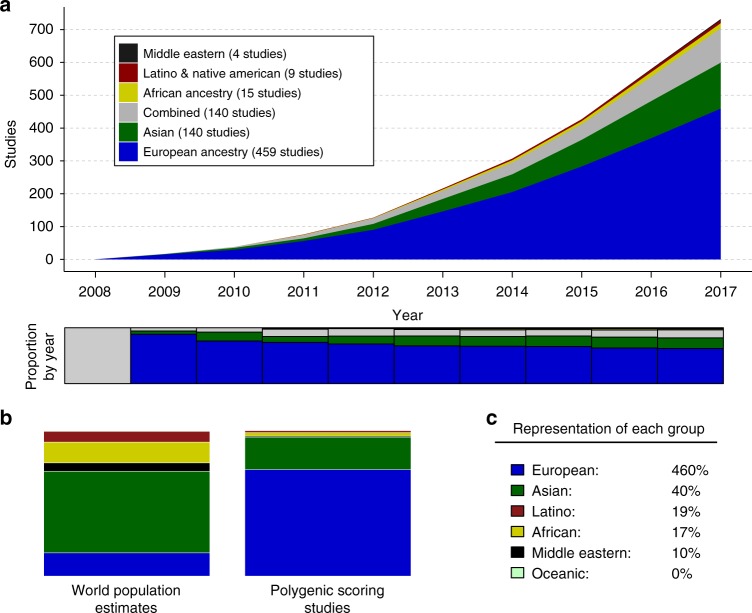
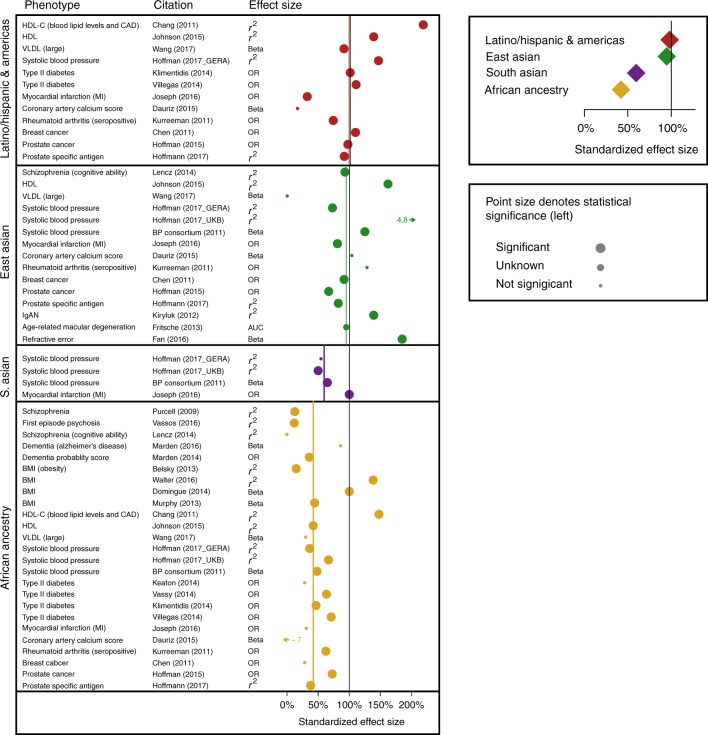
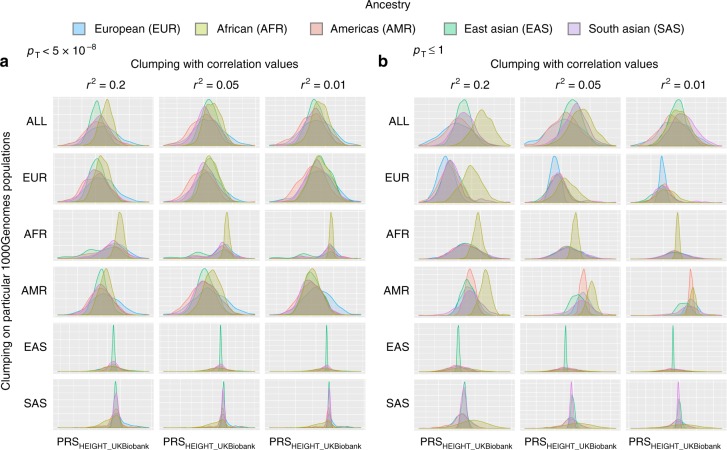
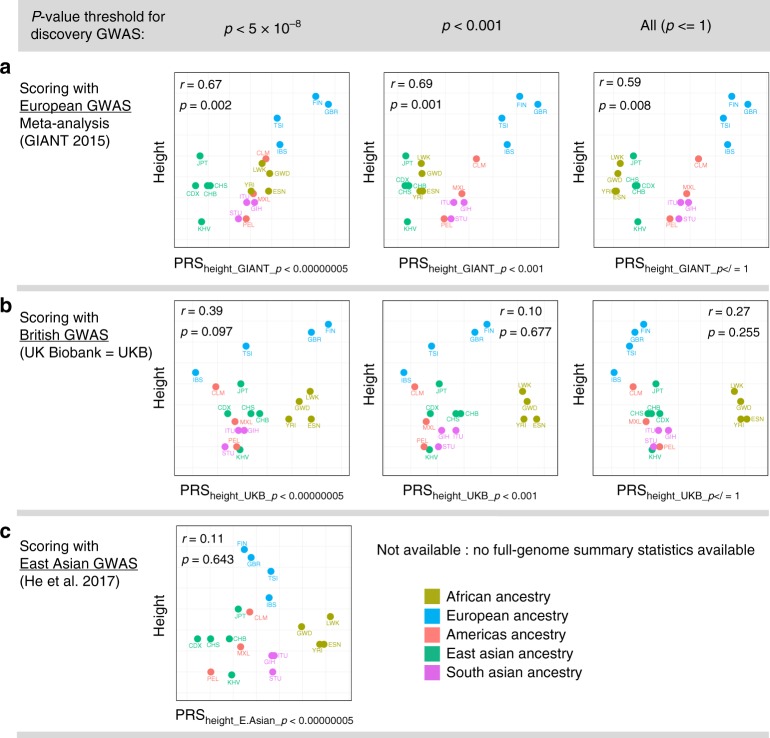
A historical tendency to use European ancestry samples hinders medical genetics research, including the use of polygenic scores, which are individual-level metrics of genetic risk. We analyze the first decade of polygenic scoring studies (2008–2017, inclusive), and find that 67% of studies included exclusively European ancestry participants and another 19% included only East Asian ancestry participants. Only 3.8% of studies were among cohorts of African, Hispanic, or Indigenous peoples. We find that predictive performance of European ancestry-derived polygenic scores is lower in non-European ancestry samples (e.g. African ancestry samples: t = −5.97, df = 24, p = 3.7 × 10 −6 ), and we demonstrate the effects of methodological choices in polygenic score distributions for worldwide populations. These findings highlight the need for improved treatment of linkage disequilibrium and variant frequencies when applying polygenic scoring to cohorts of non-European ancestry, and bolster the rationale for large-scale GWAS in diverse human populations.
Overview
The claims and statistics of this paper haven’t been checked yet.
Run the check — free, no account needed. It reads the open-access text and checks the sources it cites.
Integrity signals
Registry
Cites
Statistics
Figures
Verification
Claims the paper makes
The claims and statistics of this paper haven’t been checked yet.
Run the check — free, no account needed. It reads the open-access text and checks the sources it cites.
Claims other papers make about this one
Each is checked against this paper’s own text: does it say what the citing paper says it does?
The source backs part of the claim, not all of it — or backs it for a different population, condition or comparison.
In the citing paper
“PGIs like ours that are constructed from GWAS in samples of European genetic ancestries are generally found to have much lower predictive power in samples with other genetic ancestries; for example, on average across phenotypes, estimates of relative accuracy (ratio of R2) in African-genetic-ancestry to European-genetic-ancestry samples have been 22%23 and 36%24.”
From Polygenic prediction of educational attainment within and between families from genome-wide association analyses in 3 million individuals (2022) · cites this paper as [24]
Experimental — accuracy not yet measuredIn the citing paper
“Then, each original variable used in the models was put in linear regressions with the 20 first principal components of the SNP genotype data to correct for population stratification (associations of environmental effects with genetic structure due to geographic separation, population mixtures, and migrations that occurred throughout our evolutionary history)91,92, as well as with the age of the”
From The impact of digital media on children’s intelligence while controlling for genetic differences in cognition and socioeconomic background (2022) · cites this paper as [91]
Self-check
Percentages, sums and reported differences re-computed from the paper’s own numbers.
The self-check needs the paper’s full text.
Citations
Cites
PLINK: a tool set for whole-genome association and population-based linkage analyses.
Purcell, S., Neale, B., Todd-Brown, K., Thomas, L., Ferreira, M. A. R., Bender, D., Maller, J., Sklar, P., de Bakker, P. I. W., Daly, M. J., et al. (2007) · The American Journal of Human Genetics · doi:10.1086/519795 · Cited by 34,089
A global reference for human genetic variation
The 1000 Genomes Project Consortium, authors, C., Auton, A., Abecasis, G. R., Steering committee, Altshuler, D. M., Durbin, R. M., Abecasis, G. R., Bentley, D. R., Chakravarti, A., et al. (2015) · Nature · doi:10.1038/nature15393 · Cited by 18,247
Second-generation PLINK: rising to the challenge of larger and richer datasets
Chang, C. C., Chow, C. C., Tellier, L. C., Vattikuti, S., Purcell, S. M., & Lee, J. J. (2015) · Gigascience · doi:10.1186/s13742-015-0047-8 · Cited by 12,709
The UK Biobank resource with deep phenotyping and genomic data
Bycroft, C., Freeman, C., Petkova, D., Band, G., Elliott, L. T., Sharp, K., Motyer, A., Vukcevic, D., Delaneau, O., O’Connell, J., et al. (2018) · Nature · doi:10.1038/s41586-018-0579-z · Cited by 8,876
A map of human genome variation from population-scale sequencing.
The 1000 Genomes Project Consortium (2010) · Nature · doi:10.1038/nature09534 · Cited by 7,877
Biological insights from 108 schizophrenia-associated genetic loci
Schizophrenia Working Group of the Psychiatric Genomics Consortium (2014) · Nature · doi:10.1038/nature13595 · Cited by 7,577
Common polygenic variation contributes to risk of schizophrenia and bipolar disorder
The International Schizophrenia Consortium (2009) · Nature · doi:10.1038/nature08185 · Cited by 4,821 · cited 1×
“2 (see schizophrenia and Purcell 2009 in the citation information for this point).”
BackgroundeQTLGen, Wray, N. R., 23andMe, the Major Depressive Disorder Working Group of the Psychiatric Genomics Consortium, Ripke, S., Mattheisen, M., Trzaskowski, M., Byrne, E. M., Abdellaoui, A., Adams, M. J., et al. (2018) · Nature Genetics · doi:10.1038/s41588-018-0090-3 · Cited by 3,005
Clinical use of current polygenic risk scores may exacerbate health disparities
Martin, A. R., Kanai, M., Kamatani, Y., Okada, Y., Neale, B. M., & Daly, M. J. (2019) · Nature Genetics · doi:10.1038/s41588-019-0379-x · Cited by 2,821
Blundell, J. E., Baker, J. L., Boyland, E. J., Blaak, E. E., Charzewska, J., Henauw, S. D., Frühbeck, G., González‐Gross, M., Hebebrand, J., Holm, L., et al. (2017) · Obesity Facts · doi:10.1159/000455952 · Cited by 1,983
Cited by
Sorted by citations
Tutorial: a guide to performing polygenic risk score analyses
Choi, S. W., Mak, T. S. H., & O’Reilly, P. F. (2020) · Nature Protocols · doi:10.1038/s41596-020-0353-1 · Cited by 2,058
PRSice-2: Polygenic Risk Score software for biobank-scale data
Choi, S. W., & O’Reilly, P. F. (2019) · GigaScience · doi:10.1093/gigascience/giz082 · Cited by 1,538
Mullins, N., Forstner, A. J., O’Connell, K. S., Coombes, B., Coleman, J. R. I., Qiao, Z., Als, T. D., Bigdeli, T. B., Børte, S., Bryois, J., et al. (2021) · Nature Genetics · doi:10.1038/s41588-021-00857-4 · Cited by 1,517
The power of genetic diversity in genome-wide association studies of lipids
Graham, S. E., Clarke, S. L., Wu, K.-H. H., Kanoni, S., Zajac, G. J. M., Ramdas, S., Surakka, I., Ntalla, I., Vedantam, S., Winkler, T. W., et al. (2021) · Nature · doi:10.1038/s41586-021-04064-3 · Cited by 972
Mendelian Randomization: Concepts and Scope
Richmond, R. C., & Davey Smith, G. (2022) · Cold Spring Harbor Perspectives in Medicine · doi:10.1101/cshperspect.a040501 · Cited by 841
A saturated map of common genetic variants associated with human height
Yengo, L., Vedantam, S., Marouli, E., Sidorenko, J., Bartell, E., Sakaue, S., Graff, M., Eliasen, A. U., Jiang, Y., Raghavan, S., et al. (2022) · Nature · doi:10.1038/s41586-022-05275-y · Cited by 825
The trans-ancestral genomic architecture of glycemic traits
Chen, J., Spracklen, C. N., Marenne, G., Varshney, A., Corbin, L. J., Luan, J., Willems, S. M., Wu, Y., Zhang, X., Horikoshi, M., et al. (2021) · Nature Genetics · doi:10.1038/s41588-021-00852-9 · Cited by 776
“In agreement with results for other traits 36,77,78 , we confirm that European ancestry-derived PGS perform much worse when the test dataset is from a different ancestry.”
Peterson, R. E., Kuchenbaecker, K., Walters, R. K., Chen, C.-Y., Popejoy, A. B., Periyasamy, S., Lam, M., Iyegbe, C., Strawbridge, R. J., Brick, L., et al. (2019) · Cell · doi:10.1016/j.cell.2019.08.051 · Cited by 797
“Genetic risk prediction attenuates with increasing divergence between the discovery and target populations, indicating that polygenic risk scores (PRSs) based on Eurocentric GWASs are not equally predictive when applied to non-European populations (Duncan et al., 2019; Martin et al., 2019).”
Self-citationAlgorithmic fairness in artificial intelligence for medicine and healthcare
Chen, R. J., Wang, J. J., Williamson, D. F. K., Chen, T. Y., Lipkova, J., Lu, M. Y., Sahai, S., & Mahmood, F. (2023) · Nature Biomedical Engineering · doi:10.1038/s41551-023-01056-8 · Cited by 750
“Additionally, cross-ancestry association studies that include populations from divergent ancestries have uncovered new diseased loci 174 .”
BackgroundAragam, K. G., Jiang, T., Goel, A., Kanoni, S., Wolford, B. N., Atri, D. S., Weeks, E. M., Wang, M., Hindy, G., Zhou, W., et al. (2022) · Nature Genetics · doi:10.1038/s41588-022-01233-6 · Cited by 738
The Polygenic Score Catalog as an open database for reproducibility and systematic evaluation
Lambert, S. A., Gil, L., Jupp, S., Ritchie, S. C., Xu, Y., Buniello, A., McMahon, A., Abraham, G., Chapman, M., Parkinson, H., et al. (2021) · Nature Genetics · doi:10.1038/s41588-021-00783-5 · Cited by 732
Improving polygenic prediction in ancestrally diverse populations
Ruan, Y., Lin, Y.-F., Feng, Y.-C. A., Chen, C.-Y., Lam, M., Guo, Z., Initiatives, S. G. A., Ahn, Y. M., Akiyama, K., Arai, M., et al. (2022) · Nature Genetics · doi:10.1038/s41588-022-01054-7 · Cited by 707
Okbay, A., Wu, Y., Wang, N., Jayashankar, H., Bennett, M., Nehzati, S. M., Sidorenko, J., Kweon, H., Goldman, G., Gjorgjieva, T., et al. (2022) · Nature Genetics · doi:10.1038/s41588-022-01016-z · Cited by 654
Nievergelt, C. M., Maihofer, A. X., Klengel, T., Atkinson, E. G., Chen, C.-Y., Choi, K. W., Coleman, J. R. I., Dalvie, S., Duncan, L. E., Gelernter, J., et al. (2019) · Nature Communications · doi:10.1038/s41467-019-12576-w · Cited by 635
Self-citationConti, D. V., Darst, B. F., Moss, L. C., Saunders, E. J., Sheng, X., Chou, A., Schumacher, F. R., Olama, A. A. A., Benlloch, S., Dadaev, T., et al. (2021) · Nature Genetics · doi:10.1038/s41588-020-00748-0 · Cited by 462
Variable prediction accuracy of polygenic scores within an ancestry group
Mostafavi, H., Harpak, A., Agarwal, I., Conley, D., Pritchard, J. K., & Przeworski, M. (2020) · eLife · doi:10.7554/elife.48376 · Cited by 457
O’Sullivan, J. W., Raghavan, S., Márquez‐Luna, C., Luzum, J. A., Damrauer, S. M., Ashley, E. A., O’Donnell, C. J., Willer, C. J., & Natarajan, P. (2022) · Circulation · doi:10.1161/cir.0000000000001077 · Cited by 443
Underspecification Presents Challenges for Credibility in Modern Machine Learning
D'Amour, A., Heller, K., Moldovan, D., Adlam, B., Alipanahi, B., Beutel, A., Chen, C., Deaton, J., Eisenstein, J., Hoffman, M. D., et al. (2020) · arXiv · doi:10.48550/arxiv.2011.03395 · Cited by 398
“, 2018), but face difficulties when applied to new patient populations (Martin et al., 2017; Duncan et al., 2019; Berg et al., 2019).”
BackgroundThe GWAS Diversity Monitor tracks diversity by disease in real time
Mills, M. C., & Rahal, C. (2020) · Nature Genetics · doi:10.1038/s41588-020-0580-y · Cited by 342
Privé, F., Aschard, H., Carmi, S., Folkersen, L., Hoggart, C., O’Reilly, P. F., & Vilhjálmsson, B. J. (2022) · The American Journal of Human Genetics · doi:10.1016/j.ajhg.2021.11.008 · Cited by 375
Principles and methods for transferring polygenic risk scores across global populations
Kachuri, L., Chatterjee, N., Hirbo, J. B., Schaid, D. J., Martin, I. K., Kullo, I. J., Kenny, E. E., Paşaniuc, B., Auer, P. L., Conomos, M. P., et al. (2023) · Nature Reviews Genetics · doi:10.1038/s41576-023-00637-2 · Cited by 366
“PRSs have lower accuracy in cross-population prediction when the target sample is genetically distant from the discovery GWAS sample, regardless of the PRS construction method 3,11–16 (Fig.”
Deconstructing a Syndrome: Genomic Insights Into PCOS Causal Mechanisms and Classification
Dapas, M., & Dunaif, A. (2022) · Endocrine Reviews · doi:10.1210/endrev/bnac001 · Cited by 300
Predicting Polygenic Risk of Psychiatric Disorders
Martin, A. R., Daly, M. J., Robinson, E., Hyman, S. E., & Neale, B. M. (2018) · Biological Psychiatry · doi:10.1016/j.biopsych.2018.12.015 · Cited by 303
Investigating the genetic architecture of noncognitive skills using GWAS-by-subtraction
Demange, P., Malanchini, M., Mallard, T. T., Biroli, P., Cox, S. R., Grotzinger, A. D., Tucker–Drob, E. M., Abdellaoui, A., Arseneault, L., van Bergen, E., et al. (2021) · Nature Genetics · doi:10.1038/s41588-020-00754-2 · Cited by 308
Self-citationThe influence of evolutionary history on human health and disease
Benton, M. L., Abraham, A., LaBella, A. L., Abbot, P., Rokas, A., & Capra, J. A. (2021) · Nature Reviews Genetics · doi:10.1038/s41576-020-00305-9 · Cited by 291
Epidemiology and genomics of prostate cancer in Asian men
Zhu, Y., Mo, M., Yu, W., Wu, J., Pan, J. G., Freedland, S. J., Zheng, Y., & Ye, D. (2021) · Nature Reviews Urology · doi:10.1038/s41585-021-00442-8 · Cited by 293
Prospective study design and data analysis in UK Biobank
Allen, N. E., Lacey, B., Lawlor, D. A., Pell, J. P., Gallacher, J., Smeeth, L. L., Elliott, P., Matthews, P. M., Lyons, R. A., Whetton, A. D., et al. (2024) · Science Translational Medicine · doi:10.1126/scitranslmed.adf4428 · Cited by 312
“As such, other large population cohorts with biological samples are needed around the world to increase the heterogeneity of genetic and nongenetic risk factors for disease ( 42 ) (Table 2).”
BackgroundThompson, D. J., Wells, D., Selzam, S., Peneva, I., Moore, R., Sharp, K., Tarran, W. A., Beard, E. J., Riveros-Mckay, F., Giner-Delgado, C., et al. (2022) · doi:10.1101/2022.06.16.22276246 · Cited by 280
Wang, Y., Guo, J., Ni, G., Yang, J., Visscher, P. M., & Yengo, L. (2020) · Nature Communications · doi:10.1038/s41467-020-17719-y · Cited by 271
Weissbrod, O., Kanai, M., Shi, H., Gazal, S., Peyrot, W. J., Khera, A. V., Okada, Y., The Biobank Japan Project, Matsuda, K., Yamanashi, Y., et al. (2022) · Nature Genetics · doi:10.1038/s41588-022-01036-9 · Cited by 262
Common genetic variation influencing human white matter microstructure
Zhao, B., Li, T., Yang, Y., Wang, X., Luo, T., Shan, Y., Zhu, Z., Xiong, D., Hauberg, M. E., Bendl, J. M., et al. (2021) · Science · doi:10.1126/science.abf3736 · Cited by 229
“For example, glioma risk genes from five more regions were associated with whitematter microstructure,including RAVER2 (1p31.”
BackgroundZheutlin, A. B., Dennis, J. K., Linnér, R. K., Moscati, A., RESTREPO, N. A., Straub, P., Ruderfer, D. M., Castro, V. M., Chen, C., Ge, T., et al. (2019) · American Journal of Psychiatry · doi:10.1176/appi.ajp.2019.18091085 · Cited by 223
“It is well known that PRSs calculated from genome-wide association studies (GWASs) performed primarily in one ancestry demonstrate poorer performance in other ancestries as a function of differing linkage disequilibrium (LD) structures with causal variants and lack of diversity on genotyping platforms (23, 24).”
BackgroundGenomics yields biological and phenotypic insights into bipolar disorder
O’Connell, K. S., Koromina, M., van der Veen, T., Boltz, T. A., David, F. S., Yang, J. M. K., Lin, K., Wang, X., Coleman, J. R. I., Mitchell, B. L., et al. (2025) · Nature · doi:10.1038/s41586-024-08468-9 · Cited by 289
“These results highlight the benefits of multi-ancestry representation in the PRS training data, in line with findings from other diseases 51 .”
Zheng, Z., Liu, S., Sidorenko, J., Wang, Y., Lin, T., Yengo, L., Turley, P., Ani, A., Wang, R., Nolte, I. M., et al. (2024) · Nature Genetics · doi:10.1038/s41588-024-01704-y · Cited by 253
“4a ), in line with previous studies 14-19 , 48 .”
ResultLennon, N. J., Kottyan, L. C., Kachulis, C., Abul‐Husn, N. S., Arias, J. D., Belbin, G. M., Below, J. E., Berndt, S. I., Chung, W. K., Cimino, J. J., et al. (2024) · Nature Medicine · doi:10.1038/s41591-024-02796-z · Cited by 221
“In particular, the vast majority of GWASs have focused on individuals of European ancestry, and the predictive accuracy of PRSs declines with increasing genetic distance from the discovery population 5,30,35 the burden of a range of conditions 22 .”
Genetics of Atrial Fibrillation in 2020
Roselli, C., Rienstra, M., & Ellinor, P. T. (2020) · Circulation Research · doi:10.1161/circresaha.120.316575 · Cited by 218
Wells, P. M., Adebayo, A. S., Bowyer, R. C. E., Freidin, M. B., Finckh, A., Strowig, T., Lesker, T. R., Alpizar-Rodriguez, D., Gilbert, B., Kirkham, B., et al. (2020) · The Lancet Rheumatology · doi:10.1016/s2665-9913(20)30064-3 · Cited by 192
Calculating Polygenic Risk Scores (PRS) in UK Biobank: A Practical Guide for Epidemiologists
Collister, J. A., Liu, X., & Clifton, L. (2022) · Frontiers in Genetics · doi:10.3389/fgene.2022.818574 · Cited by 207
“PRS will perform best in populations of the same ancestry as those in which they were derived (Duncan et al., 2019).”
MethodAfrican genetic diversity and adaptation inform a precision medicine agenda
Pereira, L., Mutesa, L., Tindana, P. O., & Ramsay, M. (2021) · Nature Reviews Genetics · doi:10.1038/s41576-020-00306-8 · Cited by 194
Evaluating the promise of inclusion of African ancestry populations in genomics
Bentley, A. R., Callier, S., & Rotimi, C. N. (2020) · npj Genomic Medicine · doi:10.1038/s41525-019-0111-x · Cited by 189
“Similarly, the median effect size for PRS for a variety of traits in African ancestry samples was only 42% of that in matched European ancestry samples in an analysis of published PRS studies.(40) In contrast, risk scores based on data derived in African Americans have been demonstrated to perform significantly better…”
BackgroundAmariuta, T., Ishigaki, K., Sugishita, H., Ohta, T., Koido, M., Dey, K. K., Matsuda, K., Murakami, Y., Price, A. L., Kawakami, E., et al. (2020) · Nature Genetics · doi:10.1038/s41588-020-00740-8 · Cited by 187
Challenges and Opportunities for Developing More Generalizable Polygenic Risk Scores
Wang, Y., Tsuo, K., Kanai, M., Neale, B. M., & Martin, A. R. (2022) · Annual Review of Biomedical Data Science · doi:10.1146/annurev-biodatasci-111721-074830 · Cited by 173
Lu, X., Liu, Z., Cui, Q., Liu, F., Li, J., Niu, X., Shen, C., Hu, D., Huang, K., Chen, J., et al. (2022) · European Heart Journal · doi:10.1093/eurheartj/ehac093 · Cited by 165
“Polygenic scoring studies have primarily been conducted in European ancestry populations, but its predictive utility decreased largely in other ethnic groups.(16,17) Due to the lack of comprehensively characterized and genotyped cohorts, few studies have evaluated the performance of PRS in a prospective setting among…”
BackgroundSelf-citationThompson, D. J., Wells, D., Selzam, S., Peneva, I., Moore, R., Sharp, K., Tarran, W. A., Beard, E. J., Riveros-Mckay, F., Giner-Delgado, C., et al. (2024) · PLoS ONE · doi:10.1371/journal.pone.0307270 · Cited by 459
“One critical aspect is PRS performance in different ancestry groups [21, 22].”
BackgroundResultPolygenic risk scores in cardiovascular risk prediction: A cohort study and modelling analyses
Sun, L., Pennells, L. A. M., Kaptoge, S. K., Nelson, C. P., Abraham, G., Arnold, M., Bell, S., Bolton, T., Burgess, S., Dudbridge, F., et al. (2021) · PLoS Medicine · doi:10.1371/journal.pmed.1003498 · Cited by 173
A global view of the genetic basis of Alzheimer disease
Reitz, C., Pericak‐Vance, M. A., Foroud, T., & Mayeux, R. P. (2023) · Nature Reviews Neurology · doi:10.1038/s41582-023-00789-z · Cited by 181
Opportunistic genomic screening. Recommendations of the European Society of Human Genetics
On behalf of the European Society of Human Genetics, de Wert, G. M. W. R., Dondorp, W., Clarke, A. J., Dequeker, E. M. C., Cordier, C., Deans, Z. C., van El, C. G., Fellmann, F., Hastings, R. J., et al. (2020) · European Journal of Human Genetics · doi:10.1038/s41431-020-00758-w · Cited by 164
Dementia in Latin America: Paving the way toward a regional action plan
Parra, M. A., Báez, S., Sedeño, L., Campo, C. G., Santamaría‐García, H. A., Aprahamian, I., Bertolucci, P. H. F., Bustin, J., Bicalho, M. A. C., Cano, C. A., et al. (2020) · Alzheimer s & Dementia · doi:10.1002/alz.12202 · Cited by 155
Márquez‐Luna, C., Gazal, S., Loh, P., Kim, S. S., Furlotte, N. A., Auton, A., Agee, M., Alipanahi, B., Bell, R. K., Bryc, K., et al. (2021) · Nature Communications · doi:10.1038/s41467-021-25171-9 · Cited by 155
Polygenic risk scores and breast cancer risk prediction
Roberts, E., Howell, S. J., & Evans, D. G. (2023) · The Breast · doi:10.1016/j.breast.2023.01.003 · Cited by 135
“It is vital that an individual’s PRS is compared to population specific distribution, often done using Principal Component Analysis, to ensure that the right adjustments can be made depending on which ethnicity the individual has [68], as in most studies, ethnicity is self-declared.”
MethodGenetic prediction of complex traits with polygenic scores: a statistical review
Ma, Y., & Zhou, X. (2021) · Trends in Genetics · doi:10.1016/j.tig.2021.06.004 · Cited by 136
“With methodological advances and increased availability of GWASs in under-represented populations [112,114], PGS accuracy in diverse populations will be further improved.”
BackgroundBigdeli, T. B., Genovese, G., Georgakopoulos, P., Meyers, J. L., Peterson, R. E., Iyegbe, C. O., Medeiros, H., Valderrama, J., Achtyes, E. D., Kotov, R., et al. (2019) · Molecular Psychiatry · doi:10.1038/s41380-019-0517-y · Cited by 122
Self-citationPerkins, D. O., Loohuis, L. M. O., Barbee, J., Ford, J. R., Jeffries, C. D., Addington, J., Bearden, C. E., Cadenhead, K. S., Cannon, T. D., Cornblatt, B. A., et al. (2019) · American Journal of Psychiatry · doi:10.1176/appi.ajp.2019.18060721 · Cited by 125
Polygenic Scores for Height in Admixed Populations
Bitarello, B. D., & Mathieson, I. (2020) · G3 Genes Genomes Genetics · doi:10.1534/g3.120.401658 · Cited by 124
Anderson, K. M., Collins, M. A., Chin, R., Ge, T., Rosenberg, M. D., & Holmes, A. J. (2020) · Nature Communications · doi:10.1038/s41467-020-16710-x · Cited by 123
“Reports of My Death Were Greatly Exaggerated”: Behavior Genetics in the Postgenomic Era
Harden, K. P. (2020) · Annual Review of Psychology · doi:10.1146/annurev-psych-052220-103822 · Cited by 125
Polygenic scores: prediction versus explanation
Plomin, R. J., & von Stumm, S. (2021) · Molecular Psychiatry · doi:10.1038/s41380-021-01348-y · Cited by 139
FinnGen, Sakaue, S., Kanai, M., Karjalainen, J. M., Akiyama, M., Kurki, M., Matoba, N., Takahashi, A., Hirata, M., Kubo, M., et al. (2020) · Nature Medicine · doi:10.1038/s41591-020-0785-8 · Cited by 122
Lees, J. A., Mai, T., Galardini, M., Wheeler, N. E., Horsfield, S., Parkhill, J., & Corander, J. (2020) · mBio · doi:10.1128/mbio.01344-20 · Cited by 120
Cavazos, T. B., & Witte, J. S. (2020) · Human Genetics and Genomics Advances · doi:10.1016/j.xhgg.2020.100017 · Cited by 126
“5-fold higher than their percentage of the world population; conversely, there is underrepresentation of diverse populations such as individuals of African ancestry in GWASs, which is one-fifth their percentage.(3) Potential explanations for the limited portability of European-derived PRSs across populations includes…”
BackgroundCollin, C. B., Gebhardt, T., Golebiewski, M., Karaderi, T., Hillemanns, M., Khan, F. M., Salehzadeh‐Yazdi, A., Kirschner, M. W., Krobitsch, S., & Kuepfer, L. (2022) · Journal of Personalized Medicine · doi:10.3390/jpm12020166 · Cited by 128
Shi, H., Gazal, S., Kanai, M., Koch, E. M., Schoech, A. P., Siewert, K. M., Kim, S. S., Luo, Y., Amariuta, T., Huang, H., et al. (2021) · Nature Communications · doi:10.1038/s41467-021-21286-1 · Cited by 119
Global Biobank analyses provide lessons for developing polygenic risk scores across diverse cohorts
Wang, Y., Namba, S., Lopera-Maya, E. A., Kerminen, S., Tsuo, K., Läll, K., Kanai, M., Zhou, W., Wu, K.-H., Favé, M.-J., et al. (2023) · Cell Genomics · doi:10.1016/j.xgen.2022.100241 · Cited by 122
Khan, S. S., Post, W. S., Guo, X., Tan, J., Zhu, F., Bos, D., Sedaghati-Khayat, B., van Rooij, J., Aday, A., Allen, N. B., et al. (2023) · JAMA · doi:10.1001/jama.2023.7575 · Cited by 117
Genetic contributions to bipolar disorder: current status and future directions
O’Connell, K. S., & Coombes, B. J. (2021) · Psychological Medicine · doi:10.1017/s0033291721001252 · Cited by 122
“, 2018) by limiting the therapeutic advances gained by pharmacogenomics and improved genetic risk predictions to those of European descent (Duncan et al., 2019; Martin et al., 2019; Sirugo et al., 2019).”
Transferability of genetic risk scores in African populations
Kamiza, A. B., Touré, S. M., Vujković, M., Machipisa, T., Soremekun, O. S., Kintu, C., Corpas, M., Pirie, F. J., Young, E. H., Gill, D., et al. (2022) · Nature Medicine · doi:10.1038/s41591-022-01835-x · Cited by 114
Elgart, M., Lyons, G. R., Brufau, S. R., Kurniansyah, N., Brody, J. A., Guo, X., Lin, H. J., Raffield, L. M., Gao, Y. L., Chen, H., et al. (2022) · Communications Biology · doi:10.1038/s42003-022-03812-z · Cited by 113
Implementation and implications for polygenic risk scores in healthcare
Slunecka, J. L., van der Zee, M. D., Beck, J. J., Johnson, B. N., Finnicum, C. T., Pool, R., Hottenga, J., de Geus, E. J. C., & Ehli, E. A. (2021) · Human Genomics · doi:10.1186/s40246-021-00339-y · Cited by 120
Is population structure in the genetic biobank era irrelevant, a challenge, or an opportunity?
Lawson, D. J., Davies, N. M., Haworth, S. J., Ashraf, B. H., Howe, L. J., Crawford, A. A., Hemani, G., Smith, G. D., & Timpson, N. J. (2019) · Human Genetics · doi:10.1007/s00439-019-02014-8 · Cited by 106
Amplification is the primary mode of gene-by-sex interaction in complex human traits
Zhu, C., Ming, M. J., Cole, J. M., Edge, M. D., Kirkpatrick, M., & Harpak, A. (2023) · Cell Genomics · doi:10.1016/j.xgen.2023.100297 · Cited by 100
Validation of a Genome-Wide Polygenic Score for Coronary Artery Disease in South Asians
Wang, M., Menon, R., Mishra, S., Patel, A. P., Chaffin, M. D., Tanneeru, D., Deshmukh, M., Mathew, O., Apte, S., Devanboo, C. S., et al. (2020) · Journal of the American College of Cardiology · doi:10.1016/j.jacc.2020.06.024 · Cited by 107
Characterizing the Genetic Architecture of Parkinson's Disease in Latinos
Loesch, D. P., Horimoto, A. R. V. R., Heilbron, K., Sarihan, E. I., Inca‐Martinez, M., Mason, E., Cornejo‐Olivas, M., Torres, L., Mazzetti, P., Cosentino, C., et al. (2021) · Annals of Neurology · doi:10.1002/ana.26153 · Cited by 96
A new method for multiancestry polygenic prediction improves performance across diverse populations
Zhang, H., Zhan, J., Jin, J., Zhang, J., Lu, W., Zhao, R., Ahearn, T. U., Yu, Z., O’Connell, J., Jiang, Y., et al. (2023) · Nature Genetics · doi:10.1038/s41588-023-01501-z · Cited by 116
Matoba, N., Liang, D., Sun, H., Aygün, N., McAfee, J. C., Davis, J. E., Raffield, L. M., Qian, H., Piven, J., Li, Y., et al. (2020) · Translational Psychiatry · doi:10.1038/s41398-020-00953-9 · Cited by 97
Recent advances in polygenic scores: translation, equitability, methods and FAIR tools
Xiang, R., Kelemen, M., Xu, Y., Harris, L. W., Parkinson, H., Inouye, M., & Lambert, S. A. (2024) · Genome Medicine · doi:10.1186/s13073-024-01304-9 · Cited by 102
Zhao, H., Rasheed, H., Nøst, T. H., Cho, Y., Liu, Y., Bhatta, L., Bhattacharya, A., Initiative, G. B. M.-A., Hemani, G., Smith, G. D., et al. (2022) · Cell Genomics · doi:10.1016/j.xgen.2022.100195 · Cited by 90
Cultural evolution of genetic heritability
Uchiyama, R., Spicer, R., & Muthukrishna, M. (2021) · Behavioral and Brain Sciences · doi:10.1017/s0140525x21000893 · Cited by 103
Sun, C., Kovacs, P. L., & Guiu‐Jurado, E. (2021) · Genes · doi:10.3390/genes12060841 · Cited by 104
Genetic associations with mathematics tracking and persistence in secondary school
Harden, K. P., Domingue, B. W., Belsky, D. W., Boardman, J. D., Crosnoe, R., Malanchini, M., Nivard, M., Tucker-Drob, E. M., & Harris, K. M. (2020) · npj Science of Learning · doi:10.1038/s41539-020-0060-2 · Cited by 92
“Of those in the genetic sample, we focused on unrelated respondents of European ancestry, due to the problem of population stratification in diverse samples.(33,57) Transcripts (N= 12,032) and genetic samples (N= 5,045 of European origin) were collected for partially overlapping subsets of the Wave 1 respondents.”
BackgroundSelf-citationWeale, M. E., Riveros-Mckay, F., Selzam, S., Seth, P., Moore, R., Tarran, W. A., Gradovich, E., Giner-Delgado, C., Palmer, D. S., Wells, D., et al. (2021) · The American Journal of Cardiology · doi:10.1016/j.amjcard.2021.02.032 · Cited by 90
Twin studies to GWAS: there and back again
Friedman, N. P., Banich, M. T., & Keller, M. C. (2021) · Trends in Cognitive Sciences · doi:10.1016/j.tics.2021.06.007 · Cited by 88
False discovery rate control in genome-wide association studies with population structure
Sesia, M., Bates, S., Candès, E. J., Marchini, J., & Sabatti, C. (2021) · Proceedings of the National Academy of Sciences · doi:10.1073/pnas.2105841118 · Cited by 82
Panofsky, A. L., Dasgupta, K., & Iturriaga, N. (2020) · American Journal of Physical Anthropology · doi:10.1002/ajpa.24150 · Cited by 99
“Geneticists have argued such comparisons are invalid, likely reflecting population stratification and different environments than different genetic endowments for education (Duncan et al., 2019; Novembre & Barton, 2018).”
BackgroundMcInnes, G., Sharo, A. G., Koleske, M. L., Brown, J. E. H., Norstad, M., Adhikari, A. N., Wang, S., Brenner, S. E., Halpern, J., Koenig, B. A., et al. (2021) · The American Journal of Human Genetics · doi:10.1016/j.ajhg.2021.03.003 · Cited by 86
“For individuals seeking healthcare, polygenic risk scores are more accurate for patients of European ancestry because the data from which algorithms are trained are derived largely from individuals of European ancestry.(56,57) Similarly, variant impact predictors tend to be derived from cataloged variants in databases…”
BackgroundFrom genetics to epigenetics to unravel the etiology of adolescent idiopathic scoliosis
Pérez-Machado, G., Berenguer-Pascual, E., Bovea-Marco, M., Rubio-Belmar, P. A., García-López, E., Garzón, M. J., Mena, S., Pallardó, F. V., Bas, T., Vinã, J. R., et al. (2020) · Bone · doi:10.1016/j.bone.2020.115563 · Cited by 87
Gettler, K., Levantovsky, R. M., Moscati, A., Giri, M., Wu, Y., Hsu, N.-Y., Chuang, L.-S. F., Sazonovs, A., Venkateswaran, S., Korie, U. M., et al. (2020) · Gastroenterology · doi:10.1053/j.gastro.2020.12.034 · Cited by 88
The construction of cross-population polygenic risk scores using transfer learning
Zhao, Z., Fritsche, L. G., Smith, J. A., Mukherjee, B., & Lee, S. (2022) · The American Journal of Human Genetics · doi:10.1016/j.ajhg.2022.09.010 · Cited by 85
“Overall, these methods perform well and help to identify high-risk individuals within the same ancestry group.(2,4,7,8) However, due to insufficient GWAS data from non-Europeanancestry groups such as South Asian and African ancestry, PRSs for these cross-population groups often show only limited prediction performance.”
MethodGenome-wide risk prediction of common diseases across ancestries in one million people
Mars, N., Kerminen, S., Feng, Y. A., Kanai, M., Läll, K., Thomas, L. F., Skogholt, A. H., Parolo, P. D. B., Neale, B. M., Smoller, J. W., et al. (2022) · Cell Genomics · doi:10.1016/j.xgen.2022.100118 · Cited by 84
“line with the previous studies using a smaller number of variants, with further evidence from comparisons of prediction accuracy of anthropometric traits and lipid biomarkers.(5,19,22,24,26,34,38,39) The genome-wide PRSs were also compared to the PRSs containing a smaller number of variants.”
ResultColtell, Ó., Sorlí, J. V., Asensio, E. M., Barragán, R., González, J. I., Gimenez-Alba, I. M., Zanón‐Moreno, V., Estruch, R., Sabio, J. B. R., Pascual, E. C., et al. (2020) · Nutrients · doi:10.3390/nu12020310 · Cited by 83
“…results emphasize the need to carry out specific studies to know which genetic variants are most relevant in each population, because the results of the most significant associations in a population or in a meta-analysis are not always those that are actually observed in a di ff erent population [89].”
Capalbo, A., Poli, M., Riera‐Escamilla, A., Shukla, V., Høffding, M. K., Krausz, C. G., Hoffmann, E. R., & Simón, C. (2020) · Human Reproduction Update · doi:10.1093/humupd/dmaa044 · Cited by 85
Thareja, G., Al-Sarraj, Y. A., Belkadi, A., Al-Motawa, M., Qatar Genome Project Management, Ismail, S. I., Al‐Muftah, W., Badji, R. M., Mbarek, H., Darwish, D., et al. (2021) · Nature Communications · doi:10.1038/s41467-021-21381-3 · Cited by 83
Interactions between Polygenic Scores and Environments: Methodological and Conceptual Challenges
Domingue, B. W., Trejo, S., Armstrong‐Carter, E., & Tucker–Drob, E. M. (2020) · Sociological Science · doi:10.15195/v7.a19 · Cited by 86
“Of particular note is the massive overrepresentation of European-descent individuals in both GWAS (Mills and Rahal 2019) and PGS (Duncan et al. 2019) studies.”
BackgroundSelf-citationKurniansyah, N., Goodman, M. O., Kelly, T. N., Elfassy, T., Wiggins, K. L., Bis, J. C., Guo, X., Palmas, W., Taylor, K. D., Lin, H. J., et al. (2022) · Nature Communications · doi:10.1038/s41467-022-31080-2 · Cited by 80
Using Recurrent Neural Networks for Predicting Type-2 Diabetes from Genomic and Tabular Data
Srinivasu, P. N., Shafi, J., Krishna, T. B. M., Sujatha, C. N., Praveen, S. P., & Ijaz, M. F. (2022) · Diagnostics · doi:10.3390/diagnostics12123067 · Cited by 84
“[8] for risk analysis using the sum of the weight of each risk-associated locus of genomic sequence obtained from the corresponding evidence.”
MethodPolygenic risk scores: An overview from bench to bedside for personalised medicine
Cross, B., Turner, R., & Pirmohamed, M. (2022) · Frontiers in Genetics · doi:10.3389/fgene.2022.1000667 · Cited by 86
“highlighting the huge disparities in genetic research populations (Duncan et al., 2019).”
BackgroundMulti-PGS enhances polygenic prediction by combining 937 polygenic scores
Albiñana, C., Zhu, Z., Schork, A. J., Ingason, A., Aschard, H., Brikell, I., Bulik, C. M., Petersen, L. V., Agerbo, E., Grove, J., et al. (2023) · Nature Communications · doi:10.1038/s41467-023-40330-w · Cited by 85
Sauce, B., Liebherr, M., Judd, N., & Klingberg, T. (2022) · Scientific Reports · doi:10.1038/s41598-022-11341-2 · Cited by 74
Prado, P., Medel, V., González-Gómez, R., Sainz‐Ballesteros, A., Vidal, V., Santamaría‐García, H. A., Moguilner, S., Mejía, J. A., Slachevsky, A., Behrens, M. I., et al. (2023) · Scientific Data · doi:10.1038/s41597-023-02806-8 · Cited by 93
“…seems more urgent given the recent evidence that the so-called non-stereotypic populations 15 (participants from underrepresented populations in admixtures, genetics, cultural backgrounds, and demographics) defy the generalization of brain-phenotype models from stereotypical populations 19–22 .”
BackgroundA reusable benchmark of brain-age prediction from M/EEG resting-state signals
Engemann, D. A., Mellot, A., Höchenberger, R., Banville, H. J., Sabbagh, D., Gemein, L. A. W., Ball, T., & Gramfort, A. (2022) · NeuroImage · doi:10.1016/j.neuroimage.2022.119521 · Cited by 89
The complete and fully-phased diploid genome of a male Han Chinese
Yang, C., Zhou, Y., Song, Y., Wu, D., Zeng, Y., Nie, L., Liu, P., Zhang, S., Chen, G., Xu, J., et al. (2023) · Cell Research · doi:10.1038/s41422-023-00849-5 · Cited by 87
“The lack of ethnic diversity in genomic studies has hampered a complete understanding of the genomic components of global human populations and limited the translation of genetic research to clinical medicine in underrepresented populations.(3,4) The bias in genomic studies is also reflected in wide use of the current…”
Background
Metadata
- Authors
- Duncan, L., Shen, H., Gelaye, B., Meijsen, J., Ressler, K., Feldman, M., Peterson, R., & Domingue, B.
- Affiliations
- Stanford University (US)
- Harvard University (US)
- Virginia Commonwealth University (US)
- Corresponding author
- Duncan, L.
- Venue
- Nature Communications
- Published
- 2019-07-25
- Volume
- 10
- Issue
- 1
- Pages
- 3328-3328
- ISSN
- 2041-1723 (ISSN-L)
- PMC
- PMC6658471
- OpenAlex
- W2963160524
- Semantic Scholar
- 712594d2beca4baa700cc51e92361b74500c6aa8
- Cited by
- 1,038
- References
- 53
- Citations by year
- 2026: 100 · 2025: 126 · 2024: 140 · 2023: 157 · 2022: 186 · 2021: 207 · 2020: 100 · 2019: 19
- FWCI
- 77.29
- Type
- journal article
- Language
- en
- Open access
- gold
- doi.org
- Locations
- Nature Communications (publishedVersion, cc-by)
- PubMed Central (publishedVersion, cc-by)
- PubMed (publishedVersion)
- RePEc: Research Papers in Economics (submittedVersion)
- DOAJ (DOAJ: Directory of Open Access Journals) (submittedVersion)
- DOAJ (DOAJ: Directory of Open Access Journals) (submittedVersion, cc-by-sa)
- SUNY Digital Repository Support (State University of New York System) (submittedVersion, cc-by-nc-nd)
- Funders
- none.
- Topics
- Life Sciences › Biochemistry, Genetics and Molecular Biology › Genetics › Genetic Associations and Epidemiology
- Social Sciences › Anthropology › Race, Genetics, and Society
- Life Sciences › Biochemistry, Genetics and Molecular Biology › Genetics › Forensic and Genetic Research
- Keywords
- polygenic risk score, ancestry bias, genetic ancestry, non-European ancestry populations, predictive performance, linkage disequilibrium, variant frequency, genome-wide association study, underrepresented groups
- MeSH terms
- Human Genetics, Female, Hispanic or Latino, Humans, Male, Linkage Disequilibrium, Multifactorial Inheritance, White People, Asian People, Genome-Wide Association Study
About these checks
Registry, retraction, Cites and statistics results are computed, not judged, with one exception: a printed reference that no index lists is read once by a model before it counts as a citation error. Claims are extracted by a model and kept only when their quote appears verbatim in the text; each cited source is then checked, with a model’s help, for whether it says what the claim relies on. Those verdicts can be wrong — read the claim’s quote and the cited source before relying on one.
Statistics and arithmetic are recomputed, not judged.
Confidence bands are shown only for fields calibrated on our annotated test set. None is calibrated yet, so no band is shown.
What counts as a claim ›How we measure confidence ›How we check this ›
Are you an author, or do you see a problem with this page? Request a review
