

Low-carbon innovation induced by emissions trading in China
Open accessThe DOI matches its Crossref record; 51 of the 53 references it cites were found in a registry or an index, and 2 are not checked yet; 8 of the 31 sources its claims cite were checked for support.
Abstract
Emissions trading scheme (ETS) has been adopted by an increasing number of countries and regions for carbon mitigation, but its actual effect depends on specific program design and institutional context. Before launching the world largest ETS, China experimented with seven independent regional pilots, whose effects are only indirectly explored. Here we provide firm-level evidence of the innovation effect directly from China's pilot emissions trading, based on latest patenting information and a quasi-experimental design. China's pilots increase low-carbon innovation of ETS firms by 5-10% without crowding out their other technology innovation. The increase from ETS firms accounts for about 1% increase of the regional low-carbon patents, while a similar increase from large non-ETS firms is also induced by the ETS. Most importantly, the effect is not associated with permit price, auction, or firm characteristics, but is driven by mass-based allowance allocation. A rate-based approach, however, is adopted by China's national market.
Verified 2026-11-25 · 2 references not checked yet
Overview
CoChat Summary
TL;DR
China’s seven regional emissions trading pilots increased low-carbon innovation among regulated firms, with an average of 1.75 additional low-carbon patents per ETS firm in the first two years and no evidence that other technology innovation was crowded out. The effect was modest at the regional level, spilled over to some large unregulated firms, and was driven by mass-based allowance allocation rather than permit price or auction design.
Key findings
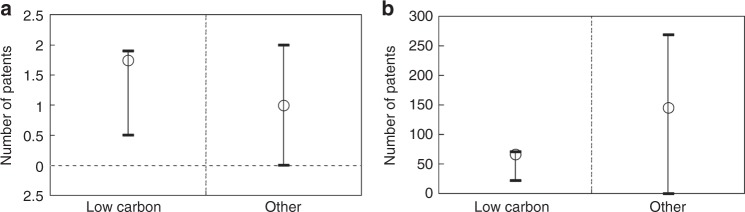
- An ETS firm filed 1.75 additional low-carbon patents on average in the first two years of the pilots, with a 95% CI of (0.5, 1.9).
- China’s pilots increased low-carbon innovation of ETS firms by 5–10%; under one extrapolation this implied 282 (90, 301) additional low-carbon patents, or a 10.1% (3.04%, 10.9%) increase among all ETS firms.
- The direct effect contributed about 0.4–2% of the more than 16,000 low-carbon patents filed by firms in ETS regions during 2014–2015, and ETS firms accounted for about a 1% increase in regional low-carbon patents.
- The ETS also increased “other technology” patenting by 1 (0, 2) patent per firm, and low-carbon patents rose from only a few percent before the ETS to 31% of induced patents; 69% of induced patents were non-low-carbon.
- Spillovers were found for large unregulated firms: the paper reports about one more patent per firm in response to the ETS for large non-ETS firms in covered sectors and in Shenzhen-covered sectors, while small firms showed no significant effect.
Methods
- The study used a quasi-experimental matching-adjusted difference-in-differences (DID) design, with a nearest-neighbor match on industrial code, location, and Mahalanobis distance based on pre-treatment firm characteristics and patenting.
- Data combined SIPO patent applications with the Annual Survey of Industrial Firms (ASIF); the merged dataset included 309,656 firms, 2,000,120 patents, and 147,102 low-carbon patents.
- Main analysis used a Tobit-modified empirical-likelihood DID to handle zero patents, with robustness checks using alternative matching/specifications, placebo tests, and a common parametric DID.
Limitations
- The paper states that the overall impact cannot be precisely estimated because spillovers complicate aggregation across regulated and unregulated firms.
- The authors note that the matching design left 40% of ETS firms unmatched, mostly larger and more innovative firms, so coverage is incomplete.
- Evident from the text: the study relies on patent filings as the innovation measure, and the paper acknowledges that citation information was unavailable in China’s patent data, limiting direct quality measurement.
Model-written summary. Check it against the paper before relying on it.
Integrity signals
Registry
Cites
Statistics
Figures
Verification
Claims the paper makes
7 Valid · 2 Not valid · 9 Not checked · 58 Own results and interpretations
The cited sources support only part of this claim — read each source’s verdict below.
In the paper
“The overall contribution of China’s pilot ETS to regional low-carbon innovation was similar to that of the EU ETS22.”
§ Low-carbon innovation induced by emissions trading in China > Results > Rate and direction of ETS-induced innovation
What the sources say
- Partly supportedcites [22] Calel R Dechezleprêtre A Environmental policy and directed technological change: evidence from the european carbon market Rev. Econ. Stat. 2016 98 173 191 10.1162/REST_a_00470 sourceExperimental — accuracy not yet measured
The Introduction (page not provided) estimates that the EU ETS accounted for less than a 1% increase in low-carbon patenting at the EPO. The paper does not assess China’s pilot ETS or compare its contribution with the EU ETS, so the claimed similarity is unsupported. (LLM, conf=0.85)
plain- Asserted: passes — The authors put it forward as true.
- Checkable: passes — It can be checked against evidence.
- Load-bearing: unclear — It is unclear whether the paper’s conclusions depend on it.
- Based: passes — The paper gives a reason why it holds.
- Partly supported
The cited sources support only part of this claim — read each source’s verdict below.
In the paper
“The innovation impact from the two methods, however, is likely ambiguous6,33.”
§ Low-carbon innovation induced by emissions trading in China > Results > Potential mechanism of the ETS in facilitating innovation
What the sources say
- Partly supportedcites [6] Fischer C Parry IWH Pizer WA Instrument choice for environmental protection when technological innovation is endogenous J. Environ. Econ. Manag. 2003 45 523 545 10.1016/S0095-0696(03)00002-0 sourceExperimental — accuracy not yet measured
Our copy does state that innovation incentives are ambiguous and circumstance-dependent, but for a different comparison than the claim draws: in Section B (Comparing Policy Instruments) it says 'in theory, whether innovation incentives are highest under the emissions tax or auctioned permits is ambiguous... depends crucially on the strength of the imitation effect', and the Conclusion repeats that 'under different circumstances, either auctioned permits or taxes can induce larger amounts of innovation'. The permit schemes it models are a grandfathered (mass/pre-R&D-emissions-based) allocation and an auctioned allocation — it never analyses a rate-based (output/benchmark per-unit-of-output) allocation, so the specific mass-based vs. rate-based comparison attributed here is not in this paper (searched: output-based allocation, benchmark emissions rate, per unit of output, contingent allocation; only free vs. auctioned permits and tax appear, e.g. Table 1 'Determinants of the Incentives for Innovation'). Thus the general ambiguity point is supported while the two allocation methods at issue are not. (LLM, conf=0.72)
- Partly supportedcites [33] Fischer, C. Rebating environmental policy revenues: output-based allocations and tradable performance standards. Resources for the Future Discussion Paper, 01–22 (2001). sourceExperimental — accuracy not yet measured
Section 3, “Support for Output” (page unavailable), describes competing effects on innovation under output-based rebating: higher compliance costs can increase incentives, while reduced rebate values and demand for energy-saving technologies can diminish them. It does not establish that the innovation impacts of both mass-based and rate-based allocation are ambiguous; it concludes that output-based rebating is unlikely to provide incentives as strong as efficient market-based policies. (LLM, conf=0.78)
hedged- Asserted: passes — The authors put it forward as true.
- Checkable: passes — It can be checked against evidence.
- Load-bearing: unclear — It is unclear whether the paper’s conclusions depend on it.
- Based: passes — The paper gives a reason why it holds.
- Partly supported
The sources with a verdict support this claim; the rest weren’t checked yet, have no full text we could read, or their verdicts aren’t rated yet.
In the paper
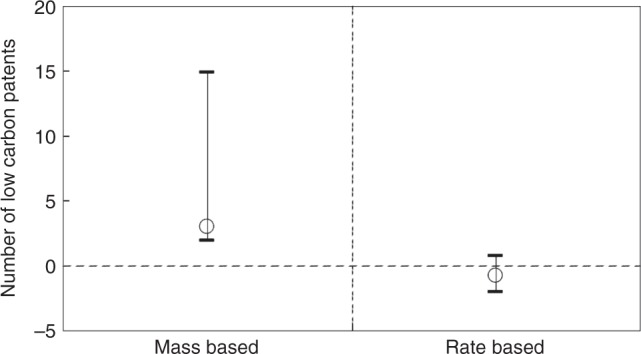
“We further ruled out the influence from other factors, including program commitment in cap reduction, industrial competition37,38 (measured by Herfindahl-Hirschman Index), firms’ previous patenting experience39, and ownership. Mass-based allocation was the only one that ensured an induced innovation effect from the ETS.”
§ Low-carbon innovation induced by emissions trading in China > Results > Potential mechanism of the ETS in facilitating innovation
What the sources say
- Supportedcites [37] Aghion P Bloom N Blundell R Griffith R Howitt P Competition and innovation: an inverted-U relationship Q. J. Econ. 2005 120 701 728 source
The citation is attached to “industrial competition,” not to the citing authors’ finding about mass-based ETS allocation. Section 6.2 reports an inverted-U relationship between product-market competition and innovation measured by patent counts, supporting the inclusion of competition as a factor to consider. (LLM, conf=0.88)
- Not checked — no full text of the sourcecites [38] Hashmi AR Competition and innovation: the inverted-U relationship revisited Rev. Econ. Stat. 2013 95 1653 1668 10.1162/REST_a_00364 source
- Not checked — no full text of the sourcecites [39] Hu AGZ Zhang P Zhao L China as number one? Evidence from China’s most recent patenting surge J. Dev. Econ. 2017 124 107 119 10.1016/j.jdeveco.2016.09.004 source
plainstates a cause- Asserted: passes — The authors put it forward as true.
- Checkable: passes — It can be checked against evidence.
- Load-bearing: passes — The paper’s conclusions depend on it.
- Based: passes — The paper gives a reason why it holds.
- Supported
A result the paper states — it cites no source for it, so there is none to check. The quote shows it is in the paper.
In the paper
“If we assume moderately that the same policy effect of 1.75 additional patents applied to these firms, the total effect on all the ETS firms would be 282 (90, 301) additional low-carbon patents considering data censoring at zero, or 10.1% (3.04%, 10.9%) increase (Supplementary Table 13 and Supplementary Note 4).”
§ Low-carbon innovation induced by emissions trading in China > Results > Rate and direction of ETS-induced innovation
hedgedstates a possible cause- Asserted: passes — The authors put it forward as true.
- Checkable: passes — It can be checked against evidence.
- Load-bearing: passes — The paper’s conclusions depend on it.
- Based: passes — The paper gives a reason why it holds.
- Rests on an assumption not shown here.
A result the paper reports from its own data — it cites no other source for it, so there is none to check. The quote shows it is in the paper.
In the paper
“An average ETS firm filed 1.75 additional low-carbon patents, with a 95% confidence interval of (0.5, 1.9), during the first two years of the ETS (Fig. 3a and Supplementary Table 5).”
§ Low-carbon innovation induced by emissions trading in China > Results > Rate and direction of ETS-induced innovation
plainstates a cause- Asserted: passes — The authors put it forward as true.
- Checkable: passes — It can be checked against evidence.
- Load-bearing: passes — The paper’s conclusions depend on it.
- Based: passes — The paper gives a reason why it holds.
35 more claims
Create a free account to see all 76 claims and to verify the 4 references still open.
- Probably not a substantial claim. 12
- It may state two separate claims as one. 27
- Borderline: one of the tests for a substantial claim is unclear. 2
- The quote only partly states this claim. 2
Citations
Cites
Matching As An Econometric Evaluation Estimator
Heckman, J. J., Ichimura, H., & Todd, P. (1998) · Review of Economic Studies · doi:10.1111/1467-937x.00044 · Cited by 3,807
The Environment and Directed Technical Change
Acemoglu, D., Aghion, P., Bursztyn, L., & Hemous, D. (2012) · American Economic Review · doi:10.1257/aer.102.1.131 · Cited by 3,734
Characterizing Selection Bias Using Experimental Data
Heckman, J., Ichimura, H., Smith, J., & Todd, P. (1998) · Econometrica · doi:10.2307/2999630 · Cited by 2,286
Competition and innovation: an inverted U relationship
Blundell, R., Howitt, P., Griffith, R., Aghion, P., & Bloom, N. (2002) · Working Paper Series · doi:10.1920/wp.ifs.2002.0204 · Cited by 2,109
Induced Innovation and Energy Prices
(1998) · Cited by 1,722
Acemoglu, D. (2002) · Review of Economic Studies · doi:10.1111/1467-937x.00226 · Cited by 1,701
Carbon Taxes, Path Dependency, and Directed Technical Change: Evidence from the Auto Industry
Aghion, P., Dechezleprêtre, A., Hémous, D., Martin, R., & Van Reenen, J. (2016) · Journal of Political Economy · doi:10.1086/684581 · Cited by 1,604
Citations, family size, opposition and the value of patent rights
Harhoff, D., Scherer, F. M., & Vopel, K. (2003) · Research Policy · doi:10.1016/s0048-7333(02)00124-5 · Cited by 1,508
Future CO 2 Emissions and Climate Change from Existing Energy Infrastructure
Davis, S. J., Caldeira, K., & Matthews, H. D. (2010) · Science · doi:10.1126/science.1188566 · Cited by 1,399
Implementing Matching Estimators for Average Treatment Effects in Stata
Abadie, A., Drukker, D., Herr, J. L., & Imbens, G. W. (2004) · The Stata Journal: Promoting communications on statistics and Stata · doi:10.1177/1536867x0400400307 · Cited by 1,386
Research works printed but not linked: 2
- ICAP. Emissions Trading Worldwide: Status Report 2018 2018 Berlin ICAP
- Clarke, L. et al. in Climate Change 2014: Mitigation of Climate Change. Contribution of Working Group III to the Fifth Assessment Report of the Intergovernmental Panel on Climate Change (eds. Edenhofer, O. et al.) (Cambridge University Press, 2014).
Cited by
Heterogeneous green innovations and carbon emission performance: Evidence at China's city level
Xu, L., Fan, M., Yang, L., & Shao, S. (2021) · Energy Economics · doi:10.1016/j.eneco.2021.105269 · Cited by 870
Do carbon emission trading schemes stimulate green innovation in enterprises? Evidence from China
Chen, Z., Zhang, X., & Chen, F. (2021) · Technological Forecasting and Social Change · doi:10.1016/j.techfore.2021.120744 · Cited by 688
Who is financing corporate green innovation?
Xiang, X., Liu, C., & Yang, M. (2022) · International Review of Economics & Finance · doi:10.1016/j.iref.2021.12.011 · Cited by 625
Issues and solutions toward zinc anode in aqueous zinc‐ion batteries: A mini review
Xie, C., Li, Y., Wang, Q., Sun, D., Tang, Y., & Wang, H. (2020) · Carbon Energy · doi:10.1002/cey2.67 · Cited by 401
Green credit policy, government behavior and green innovation quality of enterprises
Wang, H., Qi, S., Zhou, C., Zhou, J., & Huang, X. (2022) · Journal of Cleaner Production · doi:10.1016/j.jclepro.2021.129834 · Cited by 368
Comprehensive review on zinc‐ion battery anode: Challenges and strategies
Zhang, X., Hu, J., Fu, N., Zhou, W., Liu, B., Deng, Q., & Wu, X. (2022) · InfoMat · doi:10.1002/inf2.12306 · Cited by 371
The effectiveness of China’s regional carbon market pilots in reducing firm emissions
Cui, J., Wang, C., Zhang, J., & Zheng, Y. (2021) · Proceedings of the National Academy of Sciences · doi:10.1073/pnas.2109912118 · Cited by 349
“However, these studies are only focused on certain companies, such as power generators (24), large firms (25), or publicly listed companies (26, 27).”
Climate policy and low-carbon innovation: Evidence from low-carbon city pilots in China
Pan, A., Zhang, W., Shi, X., & Dai, L. (2022) · Energy Economics · doi:10.1016/j.eneco.2022.106129 · Cited by 319
Zhao, X., Nakonieczny, J., Jabeen, F., Shahzad, U., & Jia, W. (2022) · Technological Forecasting and Social Change · doi:10.1016/j.techfore.2022.122021 · Cited by 293
Climate finance policy in practice: a review of the evidence
Bhandary, R. R., Gallagher, K. S., & Zhang, F. (2021) · Climate Policy · doi:10.1080/14693062.2020.1871313 · Cited by 297
Zhou, F., & Wang, X. (2022) · Economic Analysis and Policy · doi:10.1016/j.eap.2022.03.007 · Cited by 247
Cao, J., Ho, M. S., Ma, R., & Teng, F. (2021) · Journal of Public Economics · doi:10.1016/j.jpubeco.2021.104470 · Cited by 243
Wu, Q., & Wang, Y. (2022) · Energy Economics · doi:10.1016/j.eneco.2022.105990 · Cited by 243
Yang, G., Nie, Y., Li, H., & Wang, H. (2023) · International Journal of Production Economics · doi:10.1016/j.ijpe.2023.108969 · Cited by 236
Climbing the quality ladder of green innovation: Does green finance matter?
Huang, H., Mbanyele, W., Wang, F., Song, M., & Wang, Y. (2022) · Technological Forecasting and Social Change · doi:10.1016/j.techfore.2022.122007 · Cited by 234
Zhang, Z., Hu, G., Mu, X., & Kong, L. (2022) · Journal of Environmental Management · doi:10.1016/j.jenvman.2022.116087 · Cited by 222
Does green innovation increase enterprise value?
Hao, X., Chen, F., & Chen, Z. (2022) · Business Strategy and the Environment · doi:10.1002/bse.2952 · Cited by 222
Wang, X., Huang, J., & Liu, H. (2022) · Journal of Environmental Management · doi:10.1016/j.jenvman.2021.114357 · Cited by 210
Has Carbon Emissions Trading Reduced PM2.5 in China?
Liu, J.-Y., Woodward, R. T., & Zhang, Y.-J. (2021) · Environmental Science & Technology · doi:10.1021/acs.est.1c00248 · Cited by 204
Liu, Z., & Sun, H. (2021) · Environmental Impact Assessment Review · doi:10.1016/j.eiar.2021.106589 · Cited by 209
Pan, X., Pu, C., Yuan, S., & Xu, H. (2022) · Journal of Environmental Management · doi:10.1016/j.jenvman.2022.115228 · Cited by 205
Xiang, X., Liu, C., Yang, M., & Zhao, X. (2020) · Corporate Social Responsibility and Environmental Management · doi:10.1002/csr.1998 · Cited by 190
Liang, T., Zhang, Y.-J., & Qiang, W. (2022) · Technological Forecasting and Social Change · doi:10.1016/j.techfore.2022.121728 · Cited by 172
Evaluating the impact of carbon emissions trading scheme on Chinese firms’ total factor productivity
Xiao, J., Li, G., Zhu, B., Xie, L., Hu, Y., & Huang, J. (2021) · Journal of Cleaner Production · doi:10.1016/j.jclepro.2021.127104 · Cited by 171
Zhao, A., Wang, J., Sun, Z., & Guan, H. (2022) · Economic Analysis and Policy · doi:10.1016/j.eap.2022.02.009 · Cited by 168
High-speed railways and collaborative innovation
Hanley, D., Li, J., & Wu, M. (2022) · Regional Science and Urban Economics · doi:10.1016/j.regsciurbeco.2021.103717 · Cited by 163
Li, C., Ya-ping, Q., Liu, S., & Wang, X. (2022) · Energy Economics · doi:10.1016/j.eneco.2022.105931 · Cited by 156
Influence of a pilot carbon trading policy on enterprises’ low-carbon innovation in China
Qi, S., Zhou, C., Li, K., & Tang, S.-Y. (2021) · Climate Policy · doi:10.1080/14693062.2020.1864268 · Cited by 157
Jin, C., Monfort, A., Chen, F., Xia, N., & Wu, B. (2024) · Technological Forecasting and Social Change · doi:10.1016/j.techfore.2023.123129 · Cited by 176
Zhao, X., Shang, Y., Ma, X., Xia, P., & Shahzad, U. (2022) · IEEE Transactions on Engineering Management · doi:10.1109/tem.2022.3186905 · Cited by 151
The impact of Fintech on corporate carbon emissions: Towards green and sustainable development
Wang, C., Wang, L., Zhao, S., Yang, C., & Albitar, K. (2024) · Business Strategy and the Environment · doi:10.1002/bse.3778 · Cited by 162
Chen, L., Yuan-quan, L., Meng, Y., & Zhao, W. (2023) · Journal of Cleaner Production · doi:10.1016/j.jclepro.2023.137484 · Cited by 134
Heterogeneous emission trading schemes and green innovation
Yao, S., Yu, X., Yan, S., & Wen, S. (2021) · Energy Policy · doi:10.1016/j.enpol.2021.112367 · Cited by 130
Hunjra, A. I., Zhao, S., Goodell, J. W., et al. (2023) · Finance research letters · doi:10.1016/j.frl.2023.104910 · Cited by 117
Has carbon emissions trading system promoted non-fossil energy development in China?
Liu, J.-Y., & Zhang, Y. (2021) · Applied Energy · doi:10.1016/j.apenergy.2021.117613 · Cited by 120
Song, M., Zheng, H., & Shen, Z. (2023) · Energy · doi:10.1016/j.energy.2023.127465 · Cited by 121
Zhang, S., Zhang, M., Qiao, Y., Li, X., & Li, S. (2022) · Journal of Cleaner Production · doi:10.1016/j.jclepro.2022.131921 · Cited by 127
Wei, Y., Zhu, R., & Tan, L. (2022) · Journal of Environmental Management · doi:10.1016/j.jenvman.2022.115874 · Cited by 127
Tian, Y., Song, W., & Liu, M. (2021) · Economic Analysis and Policy · doi:10.1016/j.eap.2021.04.002 · Cited by 118
Xing, L., Khan, Y. A., Arshed, N., & Iqbal, M. (2023) · Renewable and Sustainable Energy Reviews · doi:10.1016/j.rser.2023.113365 · Cited by 113
Digital economy development, corporate social responsibility and low‐carbon innovation
Chen, W. (2023) · Corporate Social Responsibility and Environmental Management · doi:10.1002/csr.2443 · Cited by 120
Du, L., Lin, W., Du, J., Jin, M., & Fan, M. (2022) · Journal of Environmental Management · doi:10.1016/j.jenvman.2022.115349 · Cited by 112
Hao, X., Fu, W., & Albitar, K. (2023) · Journal of Economic Analysis · doi:10.58567/jea02030002 · Cited by 144
Hu, H., Qi, S., & Chen, Y. (2023) · China Economic Review · doi:10.1016/j.chieco.2023.101933 · Cited by 104
Xu, L. E., Yang, L., Li, D., & Shao, S. (2022) · Energy Economics · doi:10.1016/j.eneco.2022.106479 · Cited by 106
Faking for fortune: Emissions trading schemes and corporate greenwashing in China
Tan, R., Cai, Q., & Pan, L. (2024) · Energy Economics · doi:10.1016/j.eneco.2024.107319 · Cited by 120
Xian, B., Wang, Y., Xu, Y., Wang, J., & Li, X. (2024) · Economic Analysis and Policy · doi:10.1016/j.eap.2024.01.011 · Cited by 104
Is cooperative green innovation better for carbon reduction? Evidence from China
Zhao, Y., Zhao, Z., Zhao, Z., et al. (2023) · Journal of Cleaner Production · doi:10.1016/j.jclepro.2023.136400 · Cited by 89
Wang, J., Luo, X., & Zhu, J. (2022) · Chinese Journal of Population Resources and Environment · doi:10.1016/j.cjpre.2022.06.001 · Cited by 89
Self-citationLiu, J., & Liu, X. (2023) · Journal of Innovation & Knowledge · doi:10.1016/j.jik.2023.100410 · Cited by 95
Jia, L., Zhang, X., Wang, X., Chen, X., Xu, X., & Song, M. (2024) · Journal of Environmental Management · doi:10.1016/j.jenvman.2024.121229 · Cited by 102
Miao, C., Chen, Z., & Zhang, A. (2024) · The Science of The Total Environment · doi:10.1016/j.scitotenv.2024.173551 · Cited by 86
Xu, Y., Dong, Z., & Yan, W. S. (2023) · The Science of The Total Environment · doi:10.1016/j.scitotenv.2023.162790 · Cited by 85
Does reducing air pollution improve the progress of sustainable development in China?
Zhao, Y., Tan, Y., & Feng, S. (2020) · Journal of Cleaner Production · doi:10.1016/j.jclepro.2020.122759 · Cited by 77
Substantive response or strategic response? The induced green innovation effects of carbon prices
Chen, M., Li, Z., & Liu, Z. (2024) · International Review of Financial Analysis · doi:10.1016/j.irfa.2024.103139 · Cited by 86
Zhang, W., Zhu, B., Li, Y., & Yan, D. (2024) · Humanities and Social Sciences Communications · doi:10.1057/s41599-024-02671-9 · Cited by 143
Sun, Y., Shen, S., & Zhou, C. (2022) · Energy Economics · doi:10.1016/j.eneco.2023.106984 · Cited by 86
China’s low-carbon policy intensity dataset from national- to prefecture-level over 2007–2022
Dong, X., Wang, C., Zhang, F., Zhang, H., & Xia, C. (2024) · Scientific Data · doi:10.1038/s41597-024-03033-5 · Cited by 84
“Previous literature mainly used dummy variables or ordinal variables to quantify the individual effect of pilot 12–15 , short-term 16 , regional and industrial 17 low-carbon policies, which are not able to evaluate the effects of low-carbon policies as a whole.”
MethodRen, Y., Huynh, T. L. D., Liu, P.-Z., & Narayan, S. (2024) · Energy Economics · doi:10.1016/j.eneco.2024.107629 · Cited by 80
Xiao, D., Yu, F., & Guo, C. (2022) · Energy Economics · doi:10.1016/j.eneco.2023.106770 · Cited by 73
Li, J., Fang, L., Chen, S., & Mao, H. (2022) · Environmental Impact Assessment Review · doi:10.1016/j.eiar.2022.106807 · Cited by 74
Can carbon emission trading policy break China's urban carbon lock-in?
Zhou, C., & Qi, S. (2024) · Journal of Environmental Management · doi:10.1016/j.jenvman.2024.120129 · Cited by 86
The heterogeneous impact of green public procurement on corporate green innovation
Kou, M., Zhang, L., Wang, H., Wang, Y., & Shan, Z. (2024) · Resources Conservation and Recycling · doi:10.1016/j.resconrec.2024.107441 · Cited by 81
Eco-industrial parks and green technological progress: Evidence from Chinese cities
Wu, J., Nie, X., Wang, H., & Li, W. (2023) · Technological Forecasting and Social Change · doi:10.1016/j.techfore.2023.122360 · Cited by 71
Emission reduction target, complexity and industrial performance
Dong, Z., Chen, W., & Wang, S. (2020) · Journal of Environmental Management · doi:10.1016/j.jenvman.2020.110148 · Cited by 66
Carbon neutrality and green technology innovation efficiency in Chinese textile industry
Xu, X., Cui, X., Zhang, Y., Chen, X., & Li, W. (2023) · Journal of Cleaner Production · doi:10.1016/j.jclepro.2023.136453 · Cited by 76
Li, C., Li, X., Song, D., & Tian, M. (2021) · Energy & Environment · doi:10.1177/0958305x211015327 · Cited by 67
Fu, L., Yi, Y., Wu, T. N., Cheng, R., & Zhang, Z. (2022) · Environmental Science and Pollution Research · doi:10.1007/s11356-022-22877-1 · Cited by 70
Fixed asset changes with carbon regulation: The cases of China
Dong, H., Liu, W., Liu, Y., & Xiong, Z. (2022) · Journal of Environmental Management · doi:10.1016/j.jenvman.2022.114494 · Cited by 63
Li, W., Xu, J., Ostic, D., Yang, J., Rongdi, G., & Zhu, L. (2021) · Computers & Industrial Engineering · doi:10.1016/j.cie.2021.107566 · Cited by 64
Energy transition in China: Assessing progress in sustainable development and resilience directions
Gatto, A., Drago, C., Panarello, D., & Aldieri, L. (2023) · International Economics · doi:10.1016/j.inteco.2023.08.001 · Cited by 63
Hu, Y. H., Chi, Y., Zhou, W., Li, J., Wang, Z., & Yuan, Y. (2023) · Energy · doi:10.1016/j.energy.2023.127047 · Cited by 59
Ni, X., Jin, Q., & Huang, K. (2022) · Finance research letters · doi:10.1016/j.frl.2022.103134 · Cited by 69
Assessing the effects of emissions trading systems on energy consumption and energy mix
Tan, X., Sun, Q., Wang, M., Cheong, T. S., Shum, W. Y., & Huang, J. (2022) · Applied Energy · doi:10.1016/j.apenergy.2022.118583 · Cited by 64
Zhang, Y., & Shi, W. (2023) · Computers & Industrial Engineering · doi:10.1016/j.cie.2023.109240 · Cited by 61
Does carbon emission trading improve low-carbon technical efficiency? Evidence from China
Cai, W., & Ye, P. (2021) · Sustainable Production and Consumption · doi:10.1016/j.spc.2021.09.024 · Cited by 69
Li, K., Qi, S., & Shi, X. (2023) · Technological Forecasting and Social Change · doi:10.1016/j.techfore.2023.122468 · Cited by 63
Du, M., & Zhang, Y. (2023) · Energy Economics · doi:10.1016/j.eneco.2023.106769 · Cited by 60
Effects of emission trading scheme (ETS) on change rate of carbon emission
Jung, H., & Song, C. (2023) · Scientific Reports · doi:10.1038/s41598-023-28154-6 · Cited by 75
Bian, Z., Liu, J., Zhang, Y., Peng, B., & Jiao, J. (2024) · Journal of Cleaner Production · doi:10.1016/j.jclepro.2024.140943 · Cited by 55
Jiang, Q., & Tang, P. (2023) · Energy Policy · doi:10.1016/j.enpol.2023.113700 · Cited by 54
Zhao, X., Guo, Y., & Feng, T. (2023) · Resources Policy · doi:10.1016/j.resourpol.2023.103657 · Cited by 58
Song, C., Liu, Q., Song, J., & Ma, W. (2024) · Journal of Environmental Management · doi:10.1016/j.jenvman.2024.120940 · Cited by 66
Wang, B., Gong, S., & Yang, Y. (2024) · Technological Forecasting and Social Change · doi:10.1016/j.techfore.2024.123522 · Cited by 61
Belated stock returns for green innovation under carbon emissions trading market
Chen, F., Chen, Z., & Zhang, X. (2024) · Journal of Corporate Finance · doi:10.1016/j.jcorpfin.2024.102558 · Cited by 55
Pan, X., Pan, X., Wu, X., Jiang, L., Guo, S., & Feng, X. (2021) · Journal of Cleaner Production · doi:10.1016/j.jclepro.2021.129532 · Cited by 52
Chen, L., Shen, Q., Yu, X., & Chen, X. (2024) · Journal of Innovation & Knowledge · doi:10.1016/j.jik.2024.100478 · Cited by 60
Setyadi, A., Soekotjo, S., Lestari, S. D., Pawirosumarto, S., & Damaris, A. (2025) · Sustainability · doi:10.3390/su17020789 · Cited by 86
Jing, Z., Liu, Z., Wang, T., & Zhang, X. (2024) · Energy · doi:10.1016/j.energy.2024.132357 · Cited by 56
Directing energy transition toward decarbonization: The China story
Li, K., Tan, X., Yan, Y., Jiang, D., & Qi, S. (2022) · Energy · doi:10.1016/j.energy.2022.124934 · Cited by 57
Ding, Y., Bi, C., Qi, Y., & Han, D. (2024) · Energy Strategy Reviews · doi:10.1016/j.esr.2024.101395 · Cited by 55
Does carbon emission trading system induce enterprises’ green innovation?
Deng, H., Zhang, W., & Liu, D. (2023) · Journal of Asian Economics · doi:10.1016/j.asieco.2023.101597 · Cited by 52
Huang, D., & Chen, G. (2022) · International Journal of Environmental Research and Public Health · doi:10.3390/ijerph19031209 · Cited by 51
“Under the pressure of CETS policy, carbon emission companies in pilot cities will take decisions such as carbon emission quota trading [25,26], emission reduction innovation, and location relocation to deal with the policy pressure [27].”
BackgroundJung, H., Song, S., Ahn, Y.-H., Hwang, H., & Song, C. (2021) · Scientific Reports · doi:10.1038/s41598-021-91193-4 · Cited by 51
Qi, Y., Yuan, M., & Bai, T. (2023) · Journal of Environmental Management · doi:10.1016/j.jenvman.2023.117671 · Cited by 57
Xu, J., Hong, J., & Zhou, Z. (2022) · Emerging Markets Finance and Trade · doi:10.1080/1540496x.2022.2128753 · Cited by 47
“In addition, the study indicates that a combination of green bond provision, emission tax, and emission quota plays a vital role in reducing carbon emissions (Hussain and Lee 2022), and that both EU ETS and China’s carbon emission trading market can help promote enterprises’ green innovation activities (Zhu et al. 201…”
BackgroundWang, Z., & Chu, E. (2024) · Economic Analysis and Policy · doi:10.1016/j.eap.2024.04.029 · Cited by 47
Li, K., Yan, Y., & Zhang, X. (2021) · Technological Forecasting and Social Change · doi:10.1016/j.techfore.2021.121015 · Cited by 44
Hao, W., Rasul, F., Bhatti, Z., Hassan, M. S., Ahmed, I., & Asghar, N. (2021) · Environmental Science and Pollution Research · doi:10.1007/s11356-021-12559-9 · Cited by 49
“According to some researchers, to capture the environmental quality, carbon dioxide emissions prove to be a useful indicator (Khan et al. 2018; Hanif 2018c; Zhu et al. 2019).”
BackgroundCarbon pricing and enterprise productivity-The role of price stabilization mechanism
Mo, J., Tu, Q., & Wang, J. (2023) · Energy Economics · doi:10.1016/j.eneco.2023.106631 · Cited by 48
Metadata
- Authors
- Zhu, J., Fan, Y., Deng, X., & Xue, L.
- Affiliations
- Tsinghua University (CN)
- Massachusetts Institute of Technology (US)
- Southwestern University of Finance and Economics (CN)
- Corresponding author
- Zhu, Junming
- Deng, Xinghua
- Venue
- Nature Communications
- Published
- 2019-09-09
- Volume
- 10
- Issue
- 1
- Pages
- 4088-4088
- ISSN
- 2041-1723 (ISSN-L)
- PMC
- PMC6733790
- OpenAlex
- W2971578311
- Semantic Scholar
- f32ee0be0b649f065e9822beb43a2192f8378f60
- Cited by
- 467
- References
- 50
- Citations by year
- 2026: 57 · 2025: 90 · 2024: 99 · 2023: 97 · 2022: 74 · 2021: 42 · 2020: 8
- FWCI
- 38.64
- Type
- journal article
- Language
- en
- Open access
- gold
- doi.org
- Licence
- cc-by
- creativecommons.org/licenses/by/4.0 (tdm)
- creativecommons.org/licenses/by/4.0 (vor)
- Locations
- Nature Communications (publishedVersion, cc-by)
- PubMed Central (publishedVersion, cc-by)
- PubMed (publishedVersion)
- RePEc: Research Papers in Economics (submittedVersion)
- DOAJ (DOAJ: Directory of Open Access Journals) (submittedVersion)
- DOAJ (DOAJ: Directory of Open Access Journals) (submittedVersion, cc-by-sa)
- Funders
- National Natural Science Foundation of China (71704092)
- Tsinghua University (2017THZWYY08)
- Tsinghua University’s Center for Industrial Development and Environmental Governance, Summer Institute for China’s Green Innovators, and Tang Scholar
- Topics
- Social Sciences › Economics, Econometrics and Finance › Economics and Econometrics › Climate Change Policy and Economics
- Social Sciences › Business, Management and Accounting › Marketing › Environmental Sustainability in Business
- Social Sciences › Economics, Econometrics and Finance › Economics and Econometrics › Energy, Environment, Economic Growth
- Keywords
- emissions trading, low-carbon innovation, carbon pricing, patenting, China carbon market, business innovation
About these checks
Registry, retraction, Cites and statistics results are computed, not judged, with one exception: a printed reference that no index lists is read once by a model before it counts as a citation error. Claims are extracted by a model and kept only when their quote appears verbatim in the text; each cited source is then checked, with a model’s help, for whether it says what the claim relies on. Those verdicts can be wrong — read the claim’s quote and the cited source before relying on one.
The claim verdicts this report counts are experimental: their accuracy is not yet measured.
A language model drew the claims from the paper on 2026-10-10, under version 3 of the claim definition (model deepseek-v4.1-flash, prompt extract-v3).
A second model labelled each claim on 2026-10-10 (model jev-1.13-20260917, definition revision gold-guideline-v0.2).
Cited sources are checked with a language model’s help (gpt-6-sol and qwen3.8-omni-flash).
Statistics and arithmetic are recomputed, not judged.
Confidence bands are shown only for fields calibrated on our annotated test set. None is calibrated yet, so no band is shown.
What counts as a claim ›How we measure confidence ›How we check this ›
Are you an author, or do you see a problem with this page? Request a review
Data sources
Bibliographic data: Semantic Scholar, OpenAlex, Crossref.
Contains information from the Semantic Scholar Academic Graph Datasets, made available under the ODC Attribution License (ODC-BY 1.0).
Semantic Scholar’s data is described in: Kinney, R., et al. (2023). The Semantic Scholar Open Data Platform. arXiv:2301.10140.
