

The DOI matches its Crossref record; 75 of the 75 references it cites were found in a registry or an index; 3 of the 24 sources its claims cite were checked for support.
Mitochondrial oxidative capacity and NAD+ biosynthesis are reduced in human sarcopenia across ethnicities
Open accessAbstract
The causes of impaired skeletal muscle mass and strength during aging are well-studied in healthy populations. Less is known on pathological age-related muscle wasting and weakness termed sarcopenia, which directly impacts physical autonomy and survival. Here, we compare genome-wide transcriptional changes of sarcopenia versus age-matched controls in muscle biopsies from 119 older men from Singapore, Hertfordshire UK and Jamaica. Individuals with sarcopenia reproducibly demonstrate a prominent transcriptional signature of mitochondrial bioenergetic dysfunction in skeletal muscle, with low PGC-1α/ERRα signalling, and downregulation of oxidative phosphorylation and mitochondrial proteostasis genes. These changes translate functionally into fewer mitochondria, reduced mitochondrial respiratory complex expression and activity, and low NAD + levels through perturbed NAD + biosynthesis and salvage in sarcopenic muscle. We provide an integrated molecular profile of human sarcopenia across ethnicities, demonstrating a fundamental role of altered mitochondrial metabolism in the pathological loss of skeletal muscle mass and function in older people.
Overview
AI snapshot
Written from the paper’s full text.
TL;DR
In a multi-ethnic case-control study of muscle biopsies from older men, sarcopenia was reproducibly characterized by a dominant transcriptional signature of mitochondrial bioenergetic dysfunction, including low PGC-1α/ERRα signaling and downregulated oxidative phosphorylation and mitochondrial proteostasis genes. These changes translated into fewer mitochondria, reduced respiratory complex expression and activity, and 32% lower muscle NAD+ through perturbed NAD+ biosynthesis and salvage.
Key findings
- In the Singapore Sarcopenia Study (SSS), 179 genes were altered in sarcopenic muscle at FDR < 10% (133 downregulated, 46 upregulated), with 133 genes annotated to the mitochondrion GO term; oxidative phosphorylation, mitochondrial respiratory chain, and TCA cycle gene sets were repressed at FDR < 10E−10, and age-adjusted gene ranks were highly conserved (Spearman rs = 0.95).
- Mitochondrial dysfunction replicated across ethnicities: HSS and JSS showed lower oxidative phosphorylation, mitochondrial respiratory ETC, and TCA cycle gene sets at FDR < 10E−04 and 10%, respectively; low ALMi and low muscle function also associated with depleted mitochondrial gene sets.
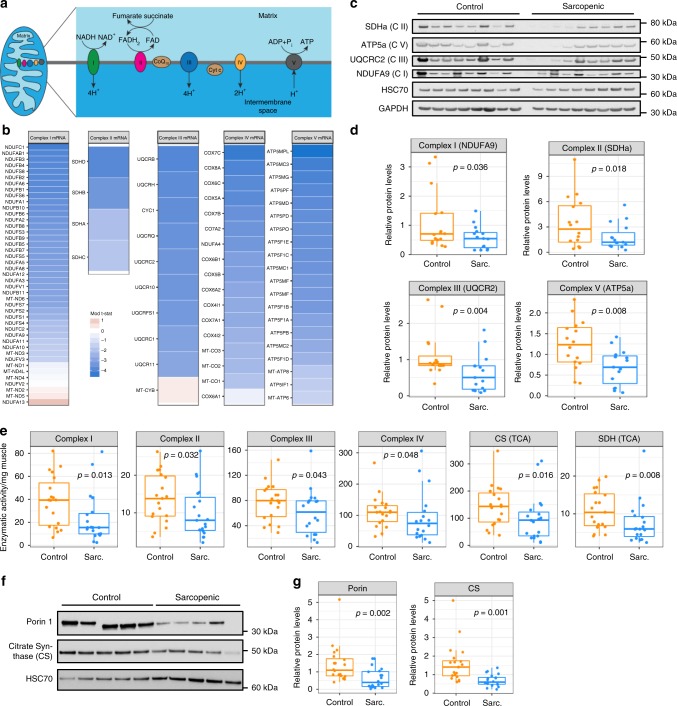
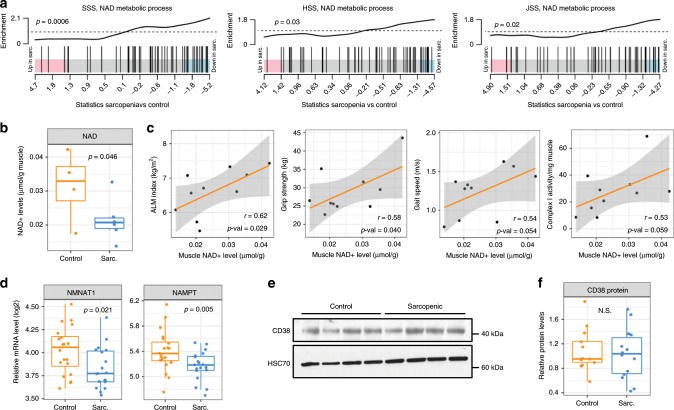
- Functional validation showed NDUFA9, SDHa, UQCR2, and ATP5a protein levels down by 44–51%, lower complexes I–IV activity, strongly reduced citrate synthase and succinate dehydrogenase activity, and 32% lower muscle NAD+; NAD+ correlated positively with ALMi, grip strength, gait speed, and complex I activity, while NMNAT1 and NAMPT were reduced and CD38, PARPs, and sirtuins were not increased.
- Other signatures included repressed mTOR signaling (FDR = 1.2E−02) but less than OXPHOS; no denervation/NMJ or inflammatory signatures except weak inflammation in JSS; ALMi associated with 318 genes at FDR < 10%, whereas grip strength and gait speed associated with only 7 and 9 genes at nominal p < 0.001 but FDR > 10%.
Methods
- Multi-ethnic case-control MEMOSA study of 119 older men from Singapore (SSS), Hertfordshire UK (HSS), and Jamaica (JSS); SSS included 20 sarcopenic Chinese men and 20 age-matched controls, HSS included 40 Caucasian men, and JSS included 40 Afro-Caribbean men. Sarcopenia was defined by AWGSOP (SSS) or EWGSOP (HSS/JSS) criteria using ALMi, grip strength, and gait speed.
- Vastus lateralis muscle biopsies were profiled by high-coverage total RNA sequencing (>70 million reads per sample; SSS 75–104 million, HSS 51–110 million, JSS 55–88 million); differential expression used limma/edgeR, pathway enrichment used CAMERA with MSigDB, and selected genes were validated by nanoString nCounter.
- Functional assays included mitochondrial enzymatic activity on mitochondrial fractions from 15–30 mg muscle, western blot for respiratory complex subunits and mitochondrial proteins, and NAD+ quantification in remaining biopsies, benchmarked against UHPLC-MS.
Limitations
- Stated: NAD+ results require further validation because they were analyzed in a subset of SSS individuals with sufficient remaining muscle biopsy (Fig. 6b, n = 4–6 per group); complex IV western blot was detected in less than 20% of samples and was excluded from analysis.
- Stated/evident: the cross-sectional case-control design cannot establish causality, and all cohorts were older men, so findings may not generalize to women.
- Evident: functional validation sample sizes were small and varied by assay and cohort; replication cohorts had variable sample sizes per phenotype (e.g., NAD+ metabolic process gene-set analysis n = 4–28 per group), and no independent prospective validation is reported.
Model-written summary. Check it against the paper before relying on it.
Integrity signals
Registry
Cites
Statistics
Figures
Verification
Claims the paper makes
26 Own result · 20 Own interpretation · 8 Not checked yet · 6 Own method · 1 Partly supported · 1 No basis given · accuracy not yet measured
A result the paper reports from its own data — it cites no other source for it, so there is none to check. The quote shows it is in the paper.
In the paper
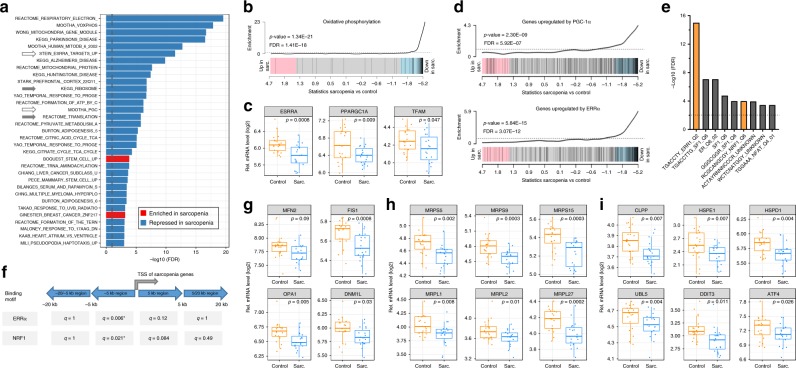
“Expression profiles of genes controlling mitochondrial dynamics through fusion and fission were lower in sarcopenic individuals, both through single gene and pathway enrichment analyses (Fig. 2g; Fig. S2d).”
§ Mitochondrial oxidative capacity and NAD+ biosynthesis are reduced in human sarcopenia across ethnicities > Results > Perturbed mitochondrial dynamics and UPRmt in sarcopenic muscle
plaincorrelational- Asserted: passes — The authors put it forward as true.
- Checkable: passes — It can be checked against evidence.
- Load-bearing: passes — The paper’s conclusions depend on it.
- Based: passes — The paper gives a reason why it holds.
A result the paper reports from its own data — it cites no other source for it, so there is none to check. The quote shows it is in the paper.
In the paper
“Interestingly, many genes controlling the UPRmt were strongly downregulated in the muscle of sarcopenic participants, including those encoding the mitochondrial heat-shock proteins, the protease CLPP and their transcriptional effectors UBL5, ATF4, and CHOP/DDIT3 (Fig. 2i; Supplementary Fig. 2f).”
§ Mitochondrial oxidative capacity and NAD+ biosynthesis are reduced in human sarcopenia across ethnicities > Results > Perturbed mitochondrial dynamics and UPRmt in sarcopenic muscle
boostedcorrelational- Asserted: passes — The authors put it forward as true.
- Checkable: passes — It can be checked against evidence.
- Load-bearing: passes — The paper’s conclusions depend on it.
- Based: passes — The paper gives a reason why it holds.
A result the paper reports from its own data — it cites no other source for it, so there is none to check. The quote shows it is in the paper.
In the paper
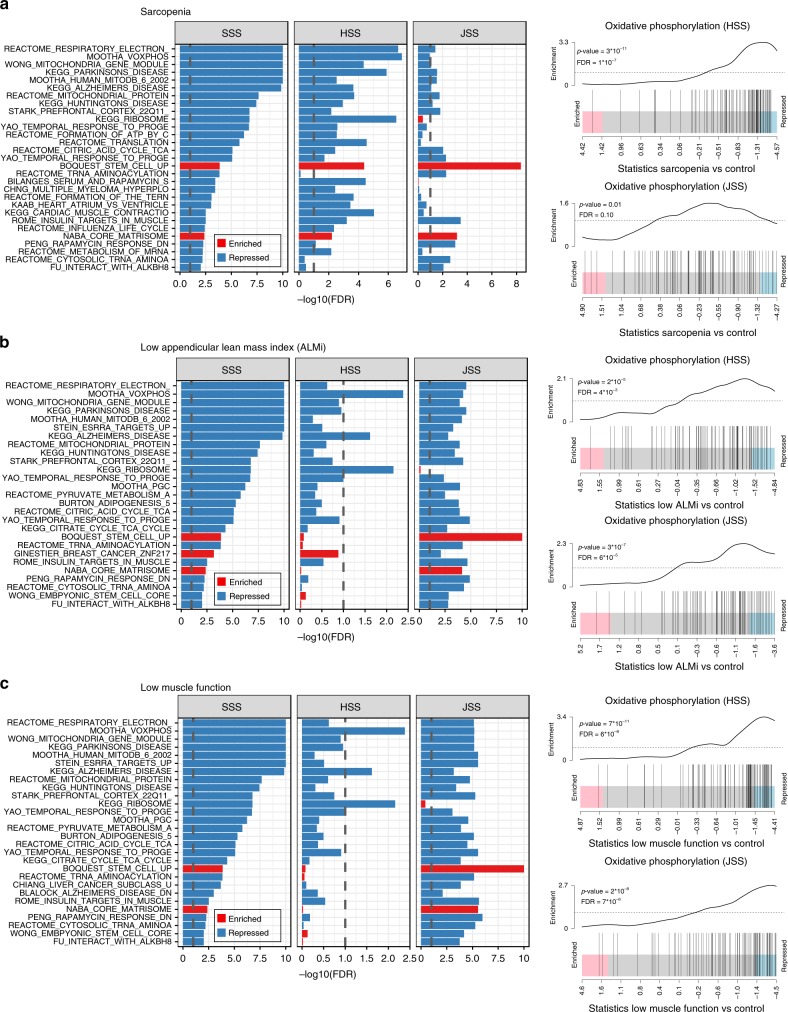
“Gene sets controlling mitochondrial function were also consistently depleted in participants with low ALMi (Fig. 3b) and low muscle function (Fig. 3c) in HSS and JSS cohorts.”
§ Mitochondrial oxidative capacity and NAD+ biosynthesis are reduced in human sarcopenia across ethnicities > Results > Sarcopenia has a common transcriptional profile across ethnicities
plaincorrelational- Asserted: passes — The authors put it forward as true.
- Checkable: passes — It can be checked against evidence.
- Load-bearing: passes — The paper’s conclusions depend on it.
- Based: passes — The paper gives a reason why it holds.
A result the paper reports from its own data — it cites no other source for it, so there is none to check. The quote shows it is in the paper.
In the paper
“Mitochondrial respiratory chain, TCA cycle regulator, and oxidative phosphorylation gene sets were repressed in sarcopenic muscle with highly significant FDRs (<10E−10).”
§ Mitochondrial oxidative capacity and NAD+ biosynthesis are reduced in human sarcopenia across ethnicities > Results > Mitochondrial dysfunction is the major transcriptional hallmark of sarcopenic muscle
boostedcorrelational- Asserted: passes — The authors put it forward as true.
- Checkable: passes — It can be checked against evidence.
- Load-bearing: passes — The paper’s conclusions depend on it.
- Based: passes — The paper gives a reason why it holds.
A result the paper reports from its own data — it cites no other source for it, so there is none to check. The quote shows it is in the paper.
In the paper
“mRNA levels of PGC-1α and ERRα were reduced in sarcopenic muscle (Fig. 2c)”
§ Mitochondrial oxidative capacity and NAD+ biosynthesis are reduced in human sarcopenia across ethnicities > Results > Altered signaling through ERRα and PGC-1α in sarcopenic muscle
plaincorrelational- Asserted: passes — The authors put it forward as true.
- Checkable: passes — It can be checked against evidence.
- Load-bearing: passes — The paper’s conclusions depend on it.
- Based: passes — The paper gives a reason why it holds.
A result the paper reports from its own data — it cites no other source for it, so there is none to check. The quote shows it is in the paper.
In the paper
“In addition, the promoters of the genes downregulated in sarcopenic muscle were highly enriched in ERRα and nuclear respiratory factor 1 (NRF1) binding sites (Fig. 2e, f).”
§ Mitochondrial oxidative capacity and NAD+ biosynthesis are reduced in human sarcopenia across ethnicities > Results > Altered signaling through ERRα and PGC-1α in sarcopenic muscle
plaincorrelational- Asserted: passes — The authors put it forward as true.
- Checkable: passes — It can be checked against evidence.
- Load-bearing: passes — The paper’s conclusions depend on it.
- Based: passes — The paper gives a reason why it holds.
A result the paper reports from its own data — it cites no other source for it, so there is none to check. The quote shows it is in the paper.
In the paper
“Many genes encoding both the small and large subunits of the mitochondrial ribosome were downregulated in sarcopenic muscle (Fig. 2h; Supplementary Fig. 2e)”
§ Mitochondrial oxidative capacity and NAD+ biosynthesis are reduced in human sarcopenia across ethnicities > Results > Perturbed mitochondrial dynamics and UPRmt in sarcopenic muscle
plaincorrelational- Asserted: passes — The authors put it forward as true.
- Checkable: passes — It can be checked against evidence.
- Load-bearing: passes — The paper’s conclusions depend on it.
- Based: passes — The paper gives a reason why it holds.
A result the paper reports from its own data — it cites no other source for it, so there is none to check. The quote shows it is in the paper.
In the paper
“Sets of genes controlling neuromuscular processes, NMJ structure and acetylcholine receptor signaling were not deregulated in sarcopenic muscle across the three cohorts (Supplementary Fig. 2i, k, l)”
§ Mitochondrial oxidative capacity and NAD+ biosynthesis are reduced in human sarcopenia across ethnicities > Results > Role of other molecular processes in human sarcopenia
plain- Asserted: passes — The authors put it forward as true.
- Checkable: passes — It can be checked against evidence.
- Load-bearing: passes — The paper’s conclusions depend on it.
- Based: passes — The paper gives a reason why it holds.
A result the paper reports from its own data — it cites no other source for it, so there is none to check. The quote shows it is in the paper.
In the paper
“The pathway enrichment analyses of sarcopenic muscle also revealed lower expression of the transcriptional networks regulated by the ERRα nuclear receptor (gene name ESRRA) and the PGC-1α transcriptional coactivator (PPARGCA1) (Fig. 2a)”
§ Mitochondrial oxidative capacity and NAD+ biosynthesis are reduced in human sarcopenia across ethnicities > Results > Altered signaling through ERRα and PGC-1α in sarcopenic muscle
plaincorrelational- Asserted: passes — The authors put it forward as true.
- Checkable: passes — It can be checked against evidence.
- Load-bearing: passes — The paper’s conclusions depend on it.
- Based: passes — The paper gives a reason why it holds.
A result the paper reports from its own data — it cites no other source for it, so there is none to check. The quote shows it is in the paper.
In the paper
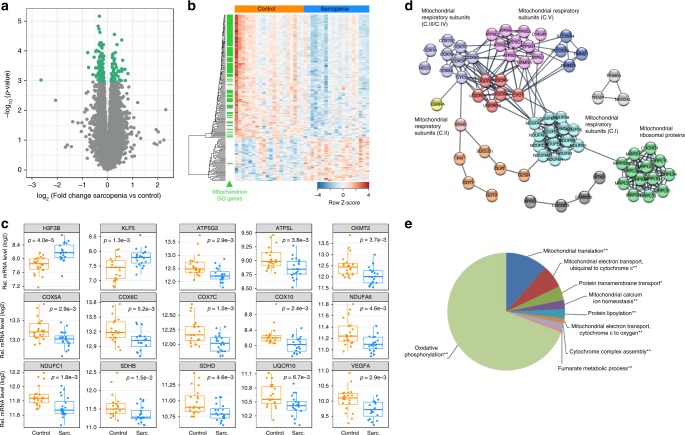
“Case–control analysis in SSS revealed a strong perturbation of muscle gene expression in sarcopenic participants where 179 genes encoding 150 proteins and 29 noncoding RNAs were altered in sarcopenic muscle with false-discovery rate (FDR) < 10% (Fig. 1a; Supplementary Data 2).”
§ Mitochondrial oxidative capacity and NAD+ biosynthesis are reduced in human sarcopenia across ethnicities > Results > Mitochondrial dysfunction is the major transcriptional hallmark of sarcopenic muscle
plaincorrelational- Asserted: passes — The authors put it forward as true.
- Checkable: passes — It can be checked against evidence.
- Load-bearing: passes — The paper’s conclusions depend on it.
- Based: passes — The paper gives a reason why it holds.
- Probably not a substantial claim. 11
- It may state two separate claims as one. 17
The cited sources support only part of this claim — read each source’s verdict below.
In the paper
“Interestingly, genetic loss of function of Mfn2 and Opa1 in mice is sufficient to cause sarcopenia43–45”
§ Mitochondrial oxidative capacity and NAD+ biosynthesis are reduced in human sarcopenia across ethnicities > Discussion
What the sources say
- Partly supportedcites [43] Chen, H. et al. Mitochondrial fusion is required for mtDNA stability in skeletal muscle and tolerance of mtDNA mutations. Cell 141, 280–289 (2010). sourceExperimental — accuracy not yet measured
The Results sections report that mice lacking both Mfn1 and Mfn2 in skeletal muscle had smaller muscle fibers and reduced muscle size. OPA1 loss was examined in cells, not mice, and the paper does not establish sarcopenia as the outcome of Mfn2 and Opa1 loss. Page numbers are unavailable in our copy. (LLM, conf=0.88)
- Partly supportedcites [44] Sebastian, D. et al. Mfn2 deficiency links age-related sarcopenia and impaired autophagy to activation of an adaptive mitophagy pathway. EMBO J. 35, 1677–1693 (2016). sourceExperimental — accuracy not yet measured
The Results section reports that Mfn2-deficient mice develop muscle atrophy and that Mfn2 deficiency promotes sarcopenia during aging. The paper describes OPA1’s role in mitochondrial fusion but does not report that loss of Opa1 causes sarcopenia. It also shows age-related sarcopenia is aggravated by Mfn2 loss, rather than establishing that Mfn2 loss alone is sufficient to cause sarcopenia. (LLM, conf=0.88)
- Partly supportedcites [45] Tezze, C. et al. Age-associated Loss of OPA1 in muscle impacts muscle mass, metabolic homeostasis, systemic inflammation, and epithelial senescence. Cell Metab. 25, 1374–1389.e6 (2017). sourceExperimental — accuracy not yet measured
The Introduction reports that muscle-specific Opa1 deletion causes muscle loss, and the Discussion reports reduced muscle mass after combined Mfn1/Mfn2 deletion. The paper does not establish that loss of Mfn2 alone causes sarcopenia in mice; its mitofusin comparison concerns deletion of both genes. No page numbers are available in our copy. (LLM, conf=0.86)
plaindirect- Asserted: passes — The authors put it forward as true.
- Checkable: passes — It can be checked against evidence.
- Load-bearing: fails — The paper’s conclusions may not depend on it.
- Based: passes — The paper gives a reason why it holds.
Probably not a substantial claim. The paper’s conclusions may not depend on it.
- Partly supported
A result the paper reports from its own data — it cites no other source for it, so there is none to check. The quote shows it is in the paper.
In the paper
“As a sign of altered protein anabolism, mTOR signaling was repressed in sarcopenic muscle (FDR = 1.2E−02; Supplementary Fig. 2g), but to a much lesser extent than oxidative phosphorylation (FDR < 10E−10; Supplementary Fig. 1b).”
§ Mitochondrial oxidative capacity and NAD+ biosynthesis are reduced in human sarcopenia across ethnicities > Results > Role of other molecular processes in human sarcopenia
plaincorrelational- Asserted: passes — The authors put it forward as true.
- Checkable: passes — It can be checked against evidence.
- Load-bearing: unclear — It is unclear whether the paper’s conclusions depend on it.
- Based: passes — The paper gives a reason why it holds.
It may state two separate claims as one.
A result the paper reports from its own data — it cites no other source for it, so there is none to check. The quote shows it is in the paper.
In the paper
“This sarcopenic signature was enriched in downregulated genes, out of which 133 genes were annotated under the mitochondrion gene ontology term (Fig. 1b, green ticks).”
§ Mitochondrial oxidative capacity and NAD+ biosynthesis are reduced in human sarcopenia across ethnicities > Results > Mitochondrial dysfunction is the major transcriptional hallmark of sarcopenic muscle
plaincorrelational- Asserted: passes — The authors put it forward as true.
- Checkable: passes — It can be checked against evidence.
- Load-bearing: passes — The paper’s conclusions depend on it.
- Based: passes — The paper gives a reason why it holds.
It may state two separate claims as one.
A result the paper reports from its own data — it cites no other source for it, so there is none to check. The quote shows it is in the paper.
In the paper
“Gene-set enrichment analysis following high coverage RNA sequencing of sarcopenic and control muscle confirmed that mitochondrial bioenergetic dysfunction is a strong signature of sarcopenia in all cohorts/ethnicities (Fig. 3a), including lower oxidative phosphorylation, mitochondrial respiratory ETC and TCA cycle at FDR < 10E−04 and 10% in HSS and JSS, respectively (Fig. 3a).”
§ Mitochondrial oxidative capacity and NAD+ biosynthesis are reduced in human sarcopenia across ethnicities > Results > Sarcopenia has a common transcriptional profile across ethnicities
boostedcorrelational- Asserted: passes — The authors put it forward as true.
- Checkable: passes — It can be checked against evidence.
- Load-bearing: passes — The paper’s conclusions depend on it.
- Based: passes — The paper gives a reason why it holds.
It may state two separate claims as one.
A result the paper reports from its own data — it cites no other source for it, so there is none to check. The quote shows it is in the paper.
In the paper
“NDUFA9, SDHa, UQCR2, and ATP5a, representing complexes I, II, III, and V, respectively, were downregulated by 44–51% in sarcopenic muscle (Fig. 5d).”
§ Mitochondrial oxidative capacity and NAD+ biosynthesis are reduced in human sarcopenia across ethnicities > Results > Mitochondrial bioenergetics is low in human sarcopenic muscle
plaincorrelational- Asserted: passes — The authors put it forward as true.
- Checkable: passes — It can be checked against evidence.
- Load-bearing: passes — The paper’s conclusions depend on it.
- Based: passes — The paper gives a reason why it holds.
It may state two separate claims as one.
A result the paper reports from its own data — it cites no other source for it, so there is none to check. The quote shows it is in the paper.
In the paper
“and correlated positively with ALMi, grip strength, gait speed, and complex I activity (Fig. 6c).”
§ Mitochondrial oxidative capacity and NAD+ biosynthesis are reduced in human sarcopenia across ethnicities > Results > NAD+ levels are low in human sarcopenic muscle
plaincorrelational- Asserted: passes — The authors put it forward as true.
- Checkable: passes — It can be checked against evidence.
- Load-bearing: passes — The paper’s conclusions depend on it.
- Based: passes — The paper gives a reason why it holds.
It may state two separate claims as one.
What the paper did — it cites no source for this, so there is none to check. The quote shows it is in the paper.
In the paper
“Age-adjustment slightly decreased the statistical significance of the differentially expressed genes (Supplementary Fig. 1c), but the rank of genes differentially expressed in sarcopenic muscle was highly conserved (Supplementary Fig. 1d, Spearman rank correlation rs = 0.95).”
§ Mitochondrial oxidative capacity and NAD+ biosynthesis are reduced in human sarcopenia across ethnicities > Results > Mitochondrial dysfunction is the major transcriptional hallmark of sarcopenic muscle
plaincorrelational- Asserted: passes — The authors put it forward as true.
- Checkable: passes — It can be checked against evidence.
- Load-bearing: passes — The paper’s conclusions depend on it.
- Based: passes — The paper gives a reason why it holds.
It may state two separate claims as one.
What the paper did — it cites no source for this, so there is none to check. The quote shows it is in the paper.
In the paper
“Independent mRNA gene expression validation of 80 selected genes using nanoString nCounter demonstrated tight correlation with RNAseq data (Supplementary Fig. 1a; Supplementary Data 3), and confirmed lower expression of mitochondrial function genes in sarcopenic muscle (Fig. 1c).”
§ Mitochondrial oxidative capacity and NAD+ biosynthesis are reduced in human sarcopenia across ethnicities > Results > Mitochondrial dysfunction is the major transcriptional hallmark of sarcopenic muscle
boostedcorrelational- Asserted: passes — The authors put it forward as true.
- Checkable: passes — It can be checked against evidence.
- Load-bearing: passes — The paper’s conclusions depend on it.
- Based: passes — The paper gives a reason why it holds.
It may state two separate claims as one.
A conclusion the paper draws from its own results — it cites no other source for it, so there is none to check. The quote shows it is in the paper.
In the paper
“Translational mechanisms also overlapped with this transcriptional regulation as a large cluster of MRPs was downregulated in sarcopenia and likely contributed to the decreased protein expression of mitochondrial respiratory chain subunits.”
§ Mitochondrial oxidative capacity and NAD+ biosynthesis are reduced in human sarcopenia across ethnicities > Discussion
hedgedconditional- Asserted: passes — The authors put it forward as true.
- Checkable: passes — It can be checked against evidence.
- Load-bearing: passes — The paper’s conclusions depend on it.
- Based: passes — The paper gives a reason why it holds.
It may state two separate claims as one.
None of the sources cited for this claim have been checked yet.
In the paper
“Reduced NAD+ levels in skeletal muscle of aged or Nampt deficient mice alter mitochondrial bioenergetics and impair muscle mass, strength and endurance49,50,52,53”
§ Mitochondrial oxidative capacity and NAD+ biosynthesis are reduced in human sarcopenia across ethnicities > Discussion
What the sources say
- Not checked yetcites [49] Camacho-Pereira, J. et al. CD38 dictates age-related NAD Decline and mitochondrial dysfunction through an SIRT3-dependent mechanism. Cell Metab. 23, 1127–1139 (2016). source
- Not checked yetcites [50] Gomes, A. P. et al. Declining NAD(+) induces a pseudohypoxic state disrupting nuclear-mitochondrial communication during aging. Cell 155, 1624–1638 (2013). source
- Not checked yetcites [52] Frederick, D. W. et al. Loss of NAD homeostasis leads to progressive and reversible degeneration of skeletal muscle. Cell Metab. 24, 269–282 (2016). source
- Not checked yetcites [53] Zhang, H. et al. NAD(+) repletion improves mitochondrial and stem cell function and enhances life span in mice. Science 352, 1436–1443 (2016). source
plaindirect- Asserted: passes — The authors put it forward as true.
- Checkable: passes — It can be checked against evidence.
- Load-bearing: passes — The paper’s conclusions depend on it.
- Based: passes — The paper gives a reason why it holds.
Probably not a substantial claim. It may state two separate claims as one.
A conclusion the paper draws from its own results — it cites no other source for it, so there is none to check. The quote shows it is in the paper.
In the paper
“Thus, human sarcopenia is driven by a major mitochondrial deficit detected both transcriptionally and functionally, for which reduced levels of NAD+ in muscle impair metabolic homeostasis and contribute to functional decline by altering muscle bioenergetics.”
§ Mitochondrial oxidative capacity and NAD+ biosynthesis are reduced in human sarcopenia across ethnicities > Results > NAD+ levels are low in human sarcopenic muscle
plaindirect- Asserted: passes — The authors put it forward as true.
- Checkable: passes — It can be checked against evidence.
- Load-bearing: passes — The paper’s conclusions depend on it.
- Based: passes — The paper gives a reason why it holds.
It may state two separate claims as one.
A conclusion the paper draws from its own results — it cites no other source for it, so there is none to check. The quote shows it is in the paper.
In the paper
“Reduced complex activity was linked to lower amounts of mitochondria as it was not affected when normalized to CS activity (Supplementary Fig. 3b).”
§ Mitochondrial oxidative capacity and NAD+ biosynthesis are reduced in human sarcopenia across ethnicities > Results > Mitochondrial bioenergetics is low in human sarcopenic muscle
plaincorrelational- Asserted: passes — The authors put it forward as true.
- Checkable: passes — It can be checked against evidence.
- Load-bearing: passes — The paper’s conclusions depend on it.
- Based: passes — The paper gives a reason why it holds.
It may state two separate claims as one.
A conclusion the paper draws from its own results — it cites no other source for it, so there is none to check. The quote shows it is in the paper.
In the paper
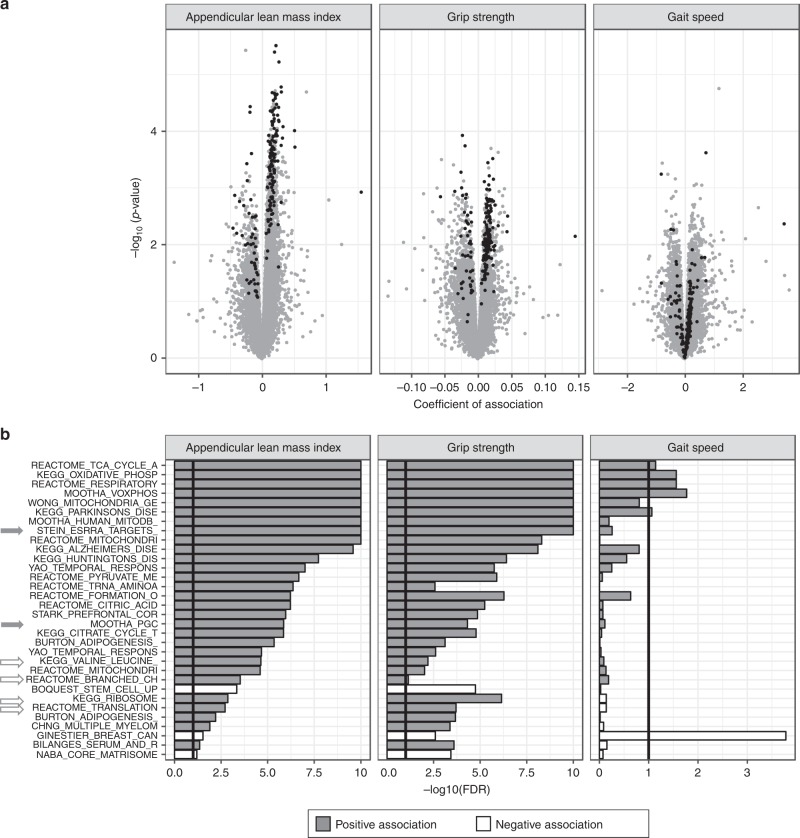
“Together, these results demonstrate that all clinical parameters used to diagnose sarcopenia contribute to the molecular profiles of sarcopenic muscle, with the strongest contribution from low muscle mass followed by grip strength and gait speed.”
§ Mitochondrial oxidative capacity and NAD+ biosynthesis are reduced in human sarcopenia across ethnicities > Results > Muscle mass and strength drive the molecular phenotype of sarcopenia
boostedcorrelational- Asserted: passes — The authors put it forward as true.
- Checkable: passes — It can be checked against evidence.
- Load-bearing: passes — The paper’s conclusions depend on it.
- Based: passes — The paper gives a reason why it holds.
It may state two separate claims as one.
What the paper did — it cites no source for this, so there is none to check. The quote shows it is in the paper.
In the paper
“Although our NAD+ results require further validation as they were analyzed in a subset of individuals with sufficient amounts of remaining muscle biopsy from SSS”
§ Mitochondrial oxidative capacity and NAD+ biosynthesis are reduced in human sarcopenia across ethnicities > Discussion
hedged- Asserted: passes — The authors put it forward as true.
- Checkable: passes — It can be checked against evidence.
- Load-bearing: passes — The paper’s conclusions depend on it.
- Based: passes — The paper gives a reason why it holds.
Probably not a substantial claim.
In the paper
“NAD+ decline during aging is well documented in preclinical models and has recently emerged in humans where skin and brain NAD+ decreases across the lifespan46.”
§ Mitochondrial oxidative capacity and NAD+ biosynthesis are reduced in human sarcopenia across ethnicities > Discussion
What the sources say
- Not checked yetcites [46] Rajman, L., Chwalek, K. & Sinclair, D. A. Therapeutic potential of NAD-boosting molecules: the in vivo evidence. Cell Metab. 27, 529–547 (2018). source
boostedcorrelational- Asserted: passes — The authors put it forward as true.
- Checkable: passes — It can be checked against evidence.
- Load-bearing: fails — The paper’s conclusions may not depend on it.
- Based: passes — The paper gives a reason why it holds.
Probably not a substantial claim. The paper’s conclusions may not depend on it. It may state two separate claims as one.
A conclusion the paper draws from its own results — it cites no other source for it, so there is none to check. The quote shows it is in the paper.
In the paper
“Thus, sarcopenia arises from a general bioenergetic deficit which differs mechanistically from primary mitochondrial myopathies caused by decreased activity of a specific complex.”
§ Mitochondrial oxidative capacity and NAD+ biosynthesis are reduced in human sarcopenia across ethnicities > Results > Mitochondrial bioenergetics is low in human sarcopenic muscle
plaindirect- Asserted: passes — The authors put it forward as true.
- Checkable: passes — It can be checked against evidence.
- Load-bearing: passes — The paper’s conclusions depend on it.
- Based: passes — The paper gives a reason why it holds.
It may state two separate claims as one.
A conclusion the paper draws from its own results — it cites no other source for it, so there is none to check. The quote shows it is in the paper.
In the paper
“Collectively, the MEMOSA study results provide a genome-wide molecular resource of mechanisms and biomarkers of pathological muscle aging across ethnicities.”
§ Mitochondrial oxidative capacity and NAD+ biosynthesis are reduced in human sarcopenia across ethnicities > Discussion
plain- Asserted: passes — The authors put it forward as true.
- Checkable: passes — It can be checked against evidence.
- Load-bearing: passes — The paper’s conclusions depend on it.
- Based: passes — The paper gives a reason why it holds.
Probably not a substantial claim.
None of the sources cited for this claim have been checked yet.
In the paper
“The established benefits of physical activity on mitochondrial efficiency in aged skeletal muscle2,47,59”
§ Mitochondrial oxidative capacity and NAD+ biosynthesis are reduced in human sarcopenia across ethnicities > Discussion
What the sources say
- Not checked yetcites [2] Cartee, G. D., Hepple, R. T., Bamman, M. M. & Zierath, J. R. Exercise promotes healthy aging of skeletal muscle. Cell Metab. 23, 1034–1047 (2016). source
- Not checked yetcites [47] Greggio, C. et al. Enhanced respiratory chain supercomplex formation in response to exercise in human skeletal muscle. Cell Metab. 25, 301–311 (2017). source
- Not checked yetcites [59] Broskey, N. T. et al. Skeletal muscle mitochondria in the elderly: effects of physical fitness and exercise training. J. Clin. Endocrinol. Metab. 99, 1852–1861 (2014). source
boosteddirect- Asserted: passes — The authors put it forward as true.
- Checkable: passes — It can be checked against evidence.
- Load-bearing: fails — The paper’s conclusions may not depend on it.
- Based: passes — The paper gives a reason why it holds.
Probably not a substantial claim. The paper’s conclusions may not depend on it.
None of the sources cited for this claim have been checked yet.
In the paper
“the demonstration that these interventions are safe and increase NAD+ levels in early human clinical testing46,55,56”
§ Mitochondrial oxidative capacity and NAD+ biosynthesis are reduced in human sarcopenia across ethnicities > Discussion
What the sources say
- Not checked yetcites [46] Rajman, L., Chwalek, K. & Sinclair, D. A. Therapeutic potential of NAD-boosting molecules: the in vivo evidence. Cell Metab. 27, 529–547 (2018). source
- Not checked yetcites [55] Elhassan, Y. S. et al. Nicotinamide riboside augments the aged human skeletal muscle NAD(+) metabolome and induces transcriptomic and anti-inflammatory signatures. Cell Rep. 28, 1717–1728 (2019). e1716. source
- Not checked yetcites [56] Martens, C. R. et al. Chronic nicotinamide riboside supplementation is well-tolerated and elevates NAD(+) in healthy middle-aged and older adults. Nat. Commun. 9, 1286 (2018). source
boosteddirect- Asserted: passes — The authors put it forward as true.
- Checkable: passes — It can be checked against evidence.
- Load-bearing: passes — The paper’s conclusions depend on it.
- Based: passes — The paper gives a reason why it holds.
It may state two separate claims as one.
What the paper did — it cites no source for this, so there is none to check. The quote shows it is in the paper.
In the paper
“One sample (from the SSS cohort) which did not reach this threshold because of an abnormally low percentage of uniquely mapped reads was excluded from the analysis.”
§ Mitochondrial oxidative capacity and NAD+ biosynthesis are reduced in human sarcopenia across ethnicities > Methods > mRNA differential expression & pathway enrichment analyses
plainSingle case- Asserted: passes — The authors put it forward as true.
- Checkable: passes — It can be checked against evidence.
- Load-bearing: fails — The paper’s conclusions may not depend on it.
- Based: passes — The paper gives a reason why it holds.
Probably not a substantial claim. The paper’s conclusions may not depend on it.
A conclusion the paper draws from its own results — it cites no other source for it, so there is none to check. The quote shows it is in the paper.
In the paper
“our study creates the mechanistic basis to test the clinical efficacy of NAD+ precursors on muscle strength and physical function in older people with sarcopenia.”
§ Mitochondrial oxidative capacity and NAD+ biosynthesis are reduced in human sarcopenia across ethnicities > Discussion
plain- Asserted: passes — The authors put it forward as true.
- Checkable: fails — It may be too vague to check against evidence.
- Load-bearing: passes — The paper’s conclusions depend on it.
- Based: passes — The paper gives a reason why it holds.
Probably not a substantial claim. It may be too vague to check against evidence.
What the paper did — it cites no source for this, so there is none to check. The quote shows it is in the paper.
In the paper
“All RNA samples were homogeneous and passed quality control with 260/280 nm ratio > 1.8 and RIN scores > 7.”
§ Mitochondrial oxidative capacity and NAD+ biosynthesis are reduced in human sarcopenia across ethnicities > Methods > RNA extraction
plain- Asserted: passes — The authors put it forward as true.
- Checkable: passes — It can be checked against evidence.
- Load-bearing: fails — The paper’s conclusions may not depend on it.
- Based: passes — The paper gives a reason why it holds.
Probably not a substantial claim. The paper’s conclusions may not depend on it. It may state two separate claims as one.
What the paper did — it cites no source for this, so there is none to check. The quote shows it is in the paper.
In the paper
“Complexes I–III and V were correctly detected in all samples but complex IV was only detected in less than 20% of samples and was excluded from the analysis.”
§ Mitochondrial oxidative capacity and NAD+ biosynthesis are reduced in human sarcopenia across ethnicities > Methods > Western blot
plain- Asserted: passes — The authors put it forward as true.
- Checkable: passes — It can be checked against evidence.
- Load-bearing: fails — The paper’s conclusions may not depend on it.
- Based: passes — The paper gives a reason why it holds.
Probably not a substantial claim. The paper’s conclusions may not depend on it. It may state two separate claims as one.
A conclusion the paper draws from its own results — it cites no other source for it, so there is none to check. The quote shows it is in the paper.
In the paper
“provides a strong rationale for intervention trials targeting muscle mitochondrial bioenergetics to manage sarcopenia in older people.”
§ Mitochondrial oxidative capacity and NAD+ biosynthesis are reduced in human sarcopenia across ethnicities > Discussion
boosted- Asserted: passes — The authors put it forward as true.
- Checkable: fails — It may be too vague to check against evidence.
- Load-bearing: passes — The paper’s conclusions depend on it.
- Based: passes — The paper gives a reason why it holds.
Probably not a substantial claim. It may be too vague to check against evidence.
The paper relies on this without support.
Little is known about the molecular processes of pathological sarcopenia compared with healthy muscle aging.
“While the molecular processes associated with the average functional decline of muscle in the healthy population have been well studied, little is known about the pathological state of sarcopenia, the pathological muscle wasting and weakness of the old age recently assigned an ICD-10 disease code due to its negative impact on physical function, quality of life, and survival6,19–21.”
The paper relies on this without support.
The clinical definition of sarcopenia is standardized enough to characterize a molecular signature of sarcopenia in older people.
“Standardization of the clinical definition now provides an opportunity to characterize the molecular “signature” of sarcopenia in older people.”
Claims other papers make about this one
Each is checked against this paper’s own text: does it say what the citing paper says it does?
In the citing paper
“Mitochondrial dysfunction and low nicotinamide adenine dinucleotide (NAD+) levels are hallmarks of skeletal muscle ageing and sarcopenia1–3”
From Trigonelline Is an NAD+ Precursor That Improves Muscle Function during Ageing and Is Reduced in Human Sarcopenia (2024) · cites this paper as [3]
In the citing paper
“Our previous profiling of muscle biopsies from patients with sarcopenia versus age-matched healthy controls revealed that mitochondrial dysfunction and reduced NAD+, two well-established molecular hallmarks of organismal ageing11, are prominent features of pathological progression and sarcopenia3.”
From Trigonelline Is an NAD+ Precursor That Improves Muscle Function during Ageing and Is Reduced in Human Sarcopenia (2024) · cites this paper as [3]
Self-check
Percentages, sums and reported differences re-computed from the paper’s own numbers.
Each contradiction between two passages listed here was confirmed by an independent check.
Rated minor: it would not touch a result — a value no result rests on, a p-value that stays on the same side of the significance level, or a conflict that is clerical, resolved elsewhere in the paper, or outside its own findings.
In the paper
§ Mitochondrial oxidative capacity and NAD+ biosynthesis are reduced in human sarcopenia across ethnicities > Results > Mitochondrial dysfunction is the major transcriptional hallmark of sarcopenic muscle
“179 genes encoding 150 proteins and 29 noncoding RNAs were altered in sarcopenic muscle”
§ Mitochondrial oxidative capacity and NAD+ biosynthesis are reduced in human sarcopenia across ethnicities > Methods > Network and gene ontology analyses
“Protein interaction networks were generated with the 149 protein coding genes differentially regulated in sarcopenia”
Citations
Cites
Subramanian, A., Tamayo, P., Mootha, V. K., Mukherjee, S., Ebert, B. L., Gillette, M. A., Paulovich, A., Pomeroy, S. L., Golub, T. R., Lander, E. S., et al. (2005) · Proceedings of the National Academy of Sciences · doi:10.1073/pnas.0506580102 · Cited by 53,625
STAR: ultrafast universal RNA-seq aligner
Dobin, A., Davis, C. A., Schlesinger, F., Drenkow, J., Zaleski, C., Jha, S., Batut, P., Chaisson, M., & Gingeras, T. R. (2013) · Bioinformatics · doi:10.1093/bioinformatics/bts635 · Cited by 51,709
Robinson, M. D., McCarthy, D. J., & Smyth, G. K. (2010) · Bioinformatics · doi:10.1093/bioinformatics/btp616 · Cited by 41,364
HTSeq—a Python framework to work with high-throughput sequencing data
Anders, S., Pyl, P. T., & Huber, W. (2015) · Bioinformatics · doi:10.1093/bioinformatics/btu638 · Cited by 21,464
López-Otín, C., Blasco, M. A., Partridge, L., Serrano, M., & Kroemer, G. (2013) · Cell · doi:10.1016/j.cell.2013.05.039 · Cited by 14,982
Heinz, S., Benner, C., Spann, N., Bertolino, E., Lin, Y. C., Laslo, P., Cheng, J. X., Murre, C., Singh, H., & Glass, C. K. (2010) · Molecular Cell · doi:10.1016/j.molcel.2010.05.004 · Cited by 13,382
Smyth, G. K. (2004) · Statistical Applications in Genetics and Molecular Biology · doi:10.2202/1544-6115.1027 · Cited by 11,829
Sarcopenia: European consensus on definition and diagnosis
Cruz-Jentoft, A. J., Baeyens, J. P., Bauer, J. M., Boirie, Y., Cederholm, T., Landi, F., Martin, F. C., Michel, J.-P., Rolland, Y., Schneider, S. M., et al. (2010) · Age and Ageing · doi:10.1093/ageing/afq034 · Cited by 11,601
Gait speed and survival in older adults.
Studenski, S. (2011) · JAMA · doi:10.1001/jama.2010.1923 · Cited by 4,558
Sarcopenia in Asia: Consensus Report of the Asian Working Group for Sarcopenia
Chen, L.-K., Liu, L.-K., Woo, J., Assantachai, P., Auyeung, T.-W., Bahyah, K. S., Chou, M.-Y., Chen, L.-Y., Hsu, P.-S., Krairit, O., et al. (2014) · Journal of the American Medical Directors Association · doi:10.1016/j.jamda.2013.11.025 · Cited by 4,051
Cited by
Sorted by citations
Items 201–300 of 353
Liu, Z., Shen, Z., Lu, H., Lu, B., Zhang, P., Chen, W., Huang, G., Qu, X., Yu, Z., Chen, F., et al. (2025) · ACS Nano · doi:10.1021/acsnano.5c18226 · Cited by 6
Bao, W., Liu, S., Du, C., Liu, J., Luo, X., he, Y., Huang, D., Xu, W., Lei, Y., Huang, W., et al. (2026) · Journal of Controlled Release · doi:10.1016/j.jconrel.2025.114595 · Cited by 9
Li, W., Fang, W. J., Zhang, Y., Chen, Q., Shentu, W., Lai, Q., Cheng, L., Yan, S., Kong, Q., & Qiao, S. (2025) · Frontiers in Aging Neuroscience · doi:10.3389/fnagi.2025.1552905 · Cited by 5
Manickam, R., Santhana, S., Xuan, W., Bisht, K. S., & Tipparaju, S. M. (2025) · Canadian Journal of Physiology and Pharmacology · doi:10.1139/cjpp-2024-0400 · Cited by 9
Gardell, S. J., & Coen, P. M. (2022) · Nature Aging · doi:10.1038/s43587-022-00192-1 · Cited by 5
Determinants of Muscle Density and Clinical Outcomes: Findings from the Hertfordshire Cohort Study
Laskou, F., Westbury, L. D., Fuggle, N. R., Harvey, N. C., Patel, H. P., Cooper, C. C., Ward, K. A., & Dennison, E. M. (2022) · Bone · doi:10.1016/j.bone.2022.116521 · Cited by 7
Self-citationWitham, M. D., Adamson, S., Avenell, A., Band, M. M., Bashir, T., Donnan, P. T., Casella, G., Hapca, A., Hume, C., Kemp, P. R., et al. (2022) · Efficacy and Mechanism Evaluation · doi:10.3310/llbx6901 · Cited by 5
BTG2 acts as an inducer of muscle stem cell senescence
Peng, B., Chen, Y., Wang, Y., Fu, Y., Zeng, X., Zhou, H., Abulaiti, Z., Wang, S., & Zhang, H. (2023) · Biochemical and Biophysical Research Communications · doi:10.1016/j.bbrc.2023.05.098 · Cited by 5
Callegari, S., Mirzaei, F., Agbaria, L., Shariff, S., Kantawala, B., Moronge, D., & Ogendi, B. M. O. (2023) · International Journal of Molecular Sciences · doi:10.3390/ijms242317018 · Cited by 7
Li, M., Yu, J., Cui, G., Chen, Y. H., Lai, Y., Cheng, S., & He, K. (2022) · Journal of Applied Physics · doi:10.1063/5.0084762 · Cited by 5
Botella, J., Perri, E., Caruana, N. J., López-Calcerrada, S., Brischigliaro, M., Jamnick, N. A., Oorschot, V. M. J., Saner, N. J., Díaz‐Lara, J., Taylor, D. F., et al. (2024) · bioRxiv (Cold Spring Harbor Laboratory) · doi:10.1101/2024.12.19.629456 · Cited by 5
Mitochondrial Quality Control in Alzheimer’s Disease: Insights from Caenorhabditis elegans Models
Ganguly, U., Carroll, T., Nehrke, K. W., & Johnson, G. V. W. (2024) · Antioxidants · doi:10.3390/antiox13111343 · Cited by 5
“The mTOR complex assembles on the lysosome surface, and, depending upon amino acid availability, the activation/inactivation of mTOR and its downstream components is crucial for mitophagy. mTOR-AMPK signaling in mitophagy is discussed in detail below.”
PGE2 Ameliorates Aging-Aggravated Rotator Cuff Muscle Atrophy
Shu, L., Wang, X., Wang, H., Tang, Y., Wang, C., & Zhang, Y. (2025) · Journal of Bone and Joint Surgery · doi:10.2106/jbjs.24.00866 · Cited by 4
Zhang, J., Hu, M., Wu, X., Guo, M., Ma, Y., Qiu, J., Wang, S., Cao, Y., Zhong, Y., Chen, F., et al. (2025) · Advanced Science · doi:10.1002/advs.202510368 · Cited by 6
Ma, X., Rao, Z., Jin, Z., Lu, Y., Sun, Z., & Zheng, L. (2025) · Biomolecules · doi:10.3390/biom16010003 · Cited by 5
“Transcriptomic analysis of muscle biopsies from individuals with sarcopenia also shows reduced mitochondrial content and diminished PGC-1 α /ERR α signaling [92], underscoring the link between mitochondrial quantity and biogenesis.”
Chung, S. X., Shahar, S., Singh, D. K. A., Rivan, N. F. M., Karim, N. A., Fuad, N. F. N., Ong, Y. Q., Arifin, A., & Rahni, A. A. A. (2026) · European Journal of Nutrition · doi:10.1007/s00394-025-03845-0 · Cited by 9
Pei, Z., Liang, F., Wang, X., & Li, H. (2026) · Mechanisms of Ageing and Development · doi:10.1016/j.mad.2026.112174 · Cited by 7
Premature skeletal muscle aging in VPS13A deficiency relates to impaired autophagy
Riccardi, V., Viscomi, C. F., Sandri, M., D’Alessandro, A., Dzieciątkowska, M., Stephenson, D., Federti, E., Hermann, A., Salviati, L., Siciliano, A., et al. (2025) · Acta Neuropathologica Communications · doi:10.1186/s40478-025-01997-y · Cited by 5
Andrade, K. S. G., Liu, J., Guimarães, D. S. P. S. F., Ferreira, J. C. B., Wang, Z., Wang, D., & Silveira, L. R. (2025) · The Journal of Physiology · doi:10.1113/jp288882 · Cited by 4
“In sarcopenia, genes related to mitochondrial function, TCA cycle metabolism, and OXPHOS are down-regulated, and ageing is linked to reduced mitochondrial DNA and metabolic dysfunction (Migliavacca et al., 2019; Short et al., 2005).”
del Torto, A., Capelli, C., Peressutti, R., Silvestre, A. D., Livi, U., Nalli, C., Sponga, S., Amici, G., Baccarani, U., & Lazzer, S. (2021) · Applied Physiology Nutrition and Metabolism · doi:10.1139/apnm-2020-0987 · Cited by 4
Xu, K., Zhang, L., Wang, T., Yu, T., Zhao, X., & Zhang, Y. (2024) · BMC Musculoskeletal Disorders · doi:10.1186/s12891-024-07568-x · Cited by 4
Kim, D., Shin, Y., Baek, Y.-W., Kang, H., Lim, J., & Bae, O. (2024) · Journal of Toxicology and Environmental Health · doi:10.1080/15287394.2024.2420083 · Cited by 5
“…and Callahan 2020), and mitochondrial dysfunction was noted as a significant pathological mechanism of various muscle diseases, including sarcopenia (Dao et al. 2020; Migliavacca et al. 2019), muscle atrophy (Borgia et al. 2017), or cachexia (Marzetti et al. 2017; van de Haterd et al. 2022).”
Deane, C. S., Willis, C. R. G., Gallagher, I. J., Brook, M. S., Gharahdaghi, N., Wylie, L. J., Wilkinson, D. J., Smith, K. E., Atherton, P. J., & Etheridge, T. (2024) · Translational Exercise Biomedicine · doi:10.1515/teb-2024-0030 · Cited by 4
Wang, Q., Zhao, X., Wang, S.-K., & Lu, S. (2024) · International Immunopharmacology · doi:10.1016/j.intimp.2024.113687 · Cited by 5
Wang, T., Chen, S., Zhou, D., & Hong, Z. (2025) · Metabolism · doi:10.1016/j.metabol.2025.156148 · Cited by 7
Ren, Q., Ding, K., Jiang, W., Zhu, W., & Gao, Y. (2025) · Experimental Gerontology · doi:10.1016/j.exger.2025.112729 · Cited by 4
“The basic information of the externally validated GEO datasets is provided in Supplementary Table 2 (S2) (Migliavacca et al., 2019; Hedman et al., 2023).”
Bokov, R. O., & Popov, D. V. (2022) · Human Physiology · doi:10.1134/s0362119722030033 · Cited by 4
“Interestingly, a similar result was obtained in vastus lateralis of old individuals with sarcopenia (characterized by reduced mitochondrial density) compared with age-related controls [82].”
ResultExploration of mitochondrial defects in sarcopenic hip fracture patients
Hintze, S., Baber, L., Hofmeister, F., Jarmusch, S., Todorow, V., Mehaffey, S., Tanganelli, F., Ferrari, U., Neuerburg, C., Teupser, D., et al. (2022) · Heliyon · doi:10.1016/j.heliyon.2022.e11143 · Cited by 3
Peng, W., Xia, Z., Guo, Y., Li, L., He, J., & Su, Y. (2024) · BMC Geriatrics · doi:10.1186/s12877-024-04938-x · Cited by 4
Postoperative Stress, Metabolism, and Catabolism
Calvani, R., Picca, A., Coelho‐Júnior, H. J., Tosato, M., & Marzetti, E. (2024) · Practical issues in geriatrics · doi:10.1007/978-3-031-77707-3_21 · Cited by 3
Guan, K., Liu, X., Liu, R., Xiao, R., Lu, W., Ma, Y., Wang, R., & Niu, T. (2025) · International Journal of Biological Macromolecules · doi:10.1016/j.ijbiomac.2025.147215 · Cited by 3
Ferroptosis-related stress during aging and its relevance to disease
Maher, P. A., Soriano‐Castell, D., Dar, N. J., Soriano, S., & Currais, A. J. M. (2025) · GeroScience · doi:10.1007/s11357-025-01929-7 · Cited by 6
“Sarcopenia is associated with alterations in mitochondrial quality control, bioenergetics, and redox biology in the muscle with aging [3, 244, 422], and these changes are observed across ethnicities [260].”
Fu, W., Chang, N., Liang, H., Xu, R., Yang, K., Xu, L., & Wang, X. (2025) · Journal of Translational Medicine · doi:10.1186/s12967-025-07191-x · Cited by 4
Sun, W., Shangguan, Z., Li, J., Ye, X., Lin, Q., & Chen, G. (2025) · European journal of medical research · doi:10.1186/s40001-025-03471-w · Cited by 5
Exercise modulates redox homeostasis in cardiovascular and metabolic diseases: from bench to clinic
Wang, J., Zhang, J., Zhang, H., Yu, F., Tian, Z., & Jia, D. (2026) · Cardiovascular Diabetology · doi:10.1186/s12933-026-03131-1 · Cited by 4
“Redox dysregulation plays a significant role in the pathophysiology of cardiovascular [13] and metabolic diseases (e.g., diabetes [14], obesity [15], fatty liver diseases [16], and sarcopenia [17] ) (Fig.”
Ye, M., Lai, P., Fang, Y., Li, Y., Wang, F., Yu, J., Zhang, Y., Yang, Q., Zhu, J., Xie, X., et al. (2025) · Experimental Gerontology · doi:10.1016/j.exger.2025.112693 · Cited by 3
“Human sarcopenia data were sourced from GSE111017, a dataset that includes muscle biopsy samples from 119 elderly individuals who are healthy or meet the diagnostic criteria for sarcopenia from Hertfordshire, Jamaica, and Singapore (Migliavacca et al., 2019).”
Cho, H. B., Kim, H., Lee, S., Cho, C. W., Park, J., Youn, S., So, G., Kang, S., Kim, H. J., & Park, K. (2025) · Advanced Science · doi:10.1002/advs.202415303 · Cited by 3
Wang, M., & Shi, H. (2025) · Frontiers in Nutrition · doi:10.3389/fnut.2025.1529140 · Cited by 3
Jianpi Qiangji Granule ameliorates aging-associated sarcopenia via AMPK/PGC-1α axis in SAMP8 mice
Pan, Z., Zhang, Y., Zhang, J., Zhang, L., Feng, Q., Zhang, J., Yao, Y., Liu, W., & Yuan, W. (2025) · Phytomedicine · doi:10.1016/j.phymed.2025.157473 · Cited by 3
Xu, Q., Li, J., Yang, J. H., & Xu, Z. (2022) · Evidence-based Complementary and Alternative Medicine · doi:10.1155/2022/1488905 · Cited by 3
“Changes in mitochondria include decreased mitochondria, decreased expression and activity of mitochondrial respiratory complexes, and interference with NAD biosynthesis and repair in muscle [27].”
BackgroundFu, W., Kadeer, G., He, Y., & Feng, Y. J. (2022) · Frontiers in Genetics · doi:10.3389/fgene.2022.975886 · Cited by 3
Chavira-Suárez, E., Ibáñez, C. A., Castro-Rodríguez, D. C., Reyes‐Castro, L. A., Ramírez-Leal, M. G., Martı́nez-Mota, L., & Zambrano, E. (2023) · Journal of Biosciences · doi:10.1007/s12038-023-00338-2 · Cited by 3
“In addition, MO-programmed changes in mitochondria will certainly influence frailty (Tarry-Adkins et al. 2016; Migliavacca et al. 2019).”
BackgroundRegular exercise attenuates alcoholic myopathy in zebrafish by modulating mitochondrial homeostasis
Wen, W., Guo, C., Chen, Z., Yang, D. K., Zhu, D., Jing, Q., Zheng, L., Sun, C., & Tang, C. (2023) · PLoS ONE · doi:10.1371/journal.pone.0294700 · Cited by 3
Kamihara, T., Omura, T., & Shimizu, A. (2025) · Geriatrics and gerontology international/Geriatrics & gerontology international · doi:10.1111/ggi.70042 · Cited by 4
Improving our understanding of the biology of aging: findings from the Age-It Research Program
Chiti, F., Conti, F., Corda, D., Giorgino, F., Graziani, A., Passarino, G., Sandri, M., & di Fagagna, F. D. (2025) · The Journals of Gerontology Series B · doi:10.1093/geronb/gbaf197 · Cited by 4
“…increased mitochondrial ROS emission and DNA damage (Park et al., 2017), activation of an inflammatory response (Rodriguez-Nuevo et al. 2018; Tezze et al., 2017), and decreased cytosolic Ca 2+ due to sequestration (Favaro et al., 2019), and bioenergetic/metabolic crisis (Migliavacca et al., 2019).”
Caicedo, A., Castañeda, V., Díaz, J., Haro-Vinueza, A., Park, J., Kim, J. K., Overbey, E. G., Salinas, I., Nardocci, G., Camera, A., et al. (2023) · Research Square · doi:10.21203/rs.3.rs-2819258/v1 · Cited by 4
Markers of Mitochondrial Function and DNA Repair Associated with Physical Function in Centenarians
Sánchez-Román, I., Ferrando, B., Holst, C. M., Mengel‐From, J., Rasmussen, S. H., Thinggaard, M., Bohr, V. A., Christensen, K., & Stevnsner, T. (2024) · Biomolecules · doi:10.3390/biom14080909 · Cited by 2
“Loss of muscle mass during aging has also been associated with lower NAD+ levels in skeletal muscle [73] and NAD+ boosting strategies have emerged due to their potential to improve muscle function and mitigate age-associated physiological decline in mice [74].”
BackgroundNajm, A., Bîrcă, A. C., Niculescu, A.-G., Alberts, A., Grumezescu, A. M., Gălățeanu, B., Vasile, B. Ş., Beuran, M., Gașpar, B. S., Turculeţ, C. Ş., et al. (2025) · International Journal of Molecular Sciences · doi:10.3390/ijms26125594 · Cited by 2
Zheng, L., Li, L., Liu, Z., Sun, C., Wang, D., Peng, X., Sun, K., Zhu, L., & Wei, X. (2025) · Phytomedicine · doi:10.1016/j.phymed.2025.157432 · Cited by 2
From Bench to Clinic: The 2024 FASEB Scientific Research Conference on NAD Metabolism and Signaling
Imai, S., Pirinen, E., Sack, M. N., Treebak, J. T., Tzoulis, C., Bruzzone, S., Guse, A. H., Hottiger, M. O., & Cambronne, X. A. (2025) · Molecular Medicine · doi:10.1186/s10020-025-01394-0 · Cited by 2
“Treebak recommended focusing on identifying diseases where NAD + levels are decreased in specific cells or tissues; for instance, skeletal muscle NAD + levels in diseases such as sarcopenia and mitochondrial myopathy have been shown to be reduced (Migliavacca et al. 2019).”
Clinical evidence for the use of NAD+ precursors to slow aging
Khatri, S., Abdellatif, M., & Sedej, S. (2025) · Geromedicine · doi:10.70401/geromedicine.2025.0008 · Cited by 3
Ball, B. K., Khan, H., Park, J. H., Jayant, K., Chan, D. D., & Brubaker, D. K. (2026) · npj Microgravity · doi:10.1038/s41526-025-00557-x · Cited by 5
Li, Y., Guo, X., Li, S., et al. (2026) · Scientific Reports · doi:10.1038/s41598-026-35002-w · Cited by 2
Balajam, N. Z., Dehghanbanadaki, H., Heshmat, R., Mardani-Fard, H. A., Kasaeian, A., Majidi, Z., Bandarian, F., Fahimfar, N., Farzadfar, F., Ostovar, A., et al. (2026) · BMC Geriatrics · doi:10.1186/s12877-026-07058-w · Cited by 2
Protective effects of irisin in sarcopenia: a promising treatment
Chen, Y., Li, G., Gao, F., Li, R., Yang, M., Ge, Y., & Wu, X. (2026) · Journal of Orthopaedic Translation · doi:10.1016/j.jot.2026.101090 · Cited by 2
“Clinical investigations by Migliavacca et al. utilizing muscle biopsy specimens from elderly populations demonstrated significant impairments in both mitochondrial function and nicotinamide adenine dinucleotide (NAD + ) biosynthesis in sarcopenic individuals [97].”
The hallmarks of skeletal muscle health
Vainshtein, A., Blaauw, B., Bock, K. D., Muñoz‐Cánoves, P., Olson, E. N., Ottenheijm, C. A. C., Richter, E. A., Ruas, J. L., Schaeffer, L., Spiegelman, B. M., et al. (2026) · Nature Metabolism · doi:10.1038/s42255-026-01595-9 · Cited by 4
“Mitochondrial density and PGC-1α expression are reduced in type 2 diabetes 67 and ageing 68 .”
Antoun, E., Migliavacca, E., Garratt, E. S., Barton, S. J., Titcombe, P., Westbury, L. D., Baczynska, A., Dodds, R., Roberts, H. C., Sayer, A. A., et al. (2021) · JCSM Rapid Communications · doi:10.1002/rco2.44 · Cited by 3
“RNAseq was carried out as previously described.(21) Briefly, 250 ng of total RNA was employed as starting material for”
MethodResultSelf-citationMcDonald, C., Alderson, C., Birkbeck, M. G., Brown, L., Din, S. D., Gorman, G. S., Hollingsworth, K. G., Massarella, C., Rehman, R. Z. U., Rochester, L., et al. (2024) · BMJ Open · doi:10.1136/bmjopen-2023-076518 · Cited by 2
“13 Therapies that increase NAD+ concentrations may therefore provide a way to reverse the changes commonly seen in ageing skeletal muscle which contribute to sarcopenia, including deficits in mitochondrial function.”
BackgroundSelf-citationThe association between oxidative balance score and muscular dystrophies
Tang, D.-P., Lin, L., & Zheng, Y. (2024) · Frontiers in Nutrition · doi:10.3389/fnut.2024.1465486 · Cited by 2
Bhandari, R., Lukas, K., Lee, K., Shamunee, J., Almeida, B., Guzman, T., Echevarria, M., Lindenfeld, L., Nenninger, C. H., Iukuridze, A., et al. (2024) · Pediatric Blood & Cancer · doi:10.1002/pbc.31369 · Cited by 2
Neto, L. H. J., Hounkpe, B. W., Fernandes, G. H., Takayama, L., Caparbo, V. F., Lopes, N. H. M., Pereira, A. C., & Pereira, R. M. R. (2021) · Aging · doi:10.18632/aging.203505 · Cited by 2
Nutrition and Exercise to Maintain Physical Functioning During Ageing
Grootswagers, P., Mensink, M., & de Groot, C. P. G. M. (2021) · Healthy ageing and longevity · doi:10.1007/978-3-030-83017-5_14 · Cited by 2
Ran, S., Zhao, M.-F., Huang, L., & Liu, B. (2023) · Journal of Affective Disorders · doi:10.1016/j.jad.2023.01.042 · Cited by 2
Piétri‐Rouxel, F., Falcone, S., & Traoré, M. (2023) · médecine/sciences · doi:10.1051/medsci/2023143 · Cited by 2
Palikhe, S., & Nakagawa, T. (2022) · Springer eBooks · doi:10.1007/978-981-16-7977-3_8 · Cited by 1
Baleev, M. S., Kiseleva, E. B., Loginova, M. M., Shirmanova, M. V., Fraerman, A. P., Shcheslavskiy, V. I., Gladkova, N. D., & Ryabkov, M. G. (2023) · Russian Sklifosovsky Journal Emergency Medical Care · doi:10.23934/2223-9022-2023-12-2-230-238 · Cited by 1
Accelerated Aging process in Patients Living with HIV: Role of Mitochondrial Dysfunction.
Gnoni, M. L. (2024) · Norton Healthcare Medical Journal · doi:10.59541/001c.117234 · Cited by 2
Gnoni, M. L. (2024) · Norton Healthcare Medical Journal · doi:10.59541/001c.118562 · Cited by 1
Ran, S., Li, Z., Lin, X., & Liu, B. (2025) · Archives of Gerontology and Geriatrics · doi:10.1016/j.archger.2025.105762 · Cited by 2
METABOLISM IN THE SMALL INTESTINAL MUCOSA IN THE ACUTE PERIOD OF SPINAL INJURY
Baleev, M. S. (2025) · Bulletin of Pirogov National Medical & Surgical Center · doi:10.25881/20728255_2025_20_2_53 · Cited by 1
Disruption of Rab9-dependent mitophagy contributes to menopause-induced sarcopenia
Uebo, S., Ikeda, Y., Uchikado, Y., Sasaki, Y., Akasaki, Y., Kubozono, T., & Ohishi, M. (2025) · Experimental Gerontology · doi:10.1016/j.exger.2025.112970 · Cited by 1
Li, L., Wang, R., Zhu, J., Cao, F., Min, J., Ouyang, D., & Lin, L. (2025) · Bioorganic Chemistry · doi:10.1016/j.bioorg.2025.109296 · Cited by 1
Nivedya, C., Venkhatesh, P., Rodriguez, B. I., Le, H., Afolabi, J., Marshall, A., Neikirk, K., Masenga, S. K., Aftab, M., Kazma, L. J., et al. (2025) · Aging advances. · doi:10.4103/agingadv.agingadv-d-25-00013 · Cited by 2
Muscle–immune metabolic crosstalk: shared pathways in cachexia and exercise
Westermann, S., Bennühr, B., Fumo, A. R., Rohm, M., & Hiller, K. (2026) · Current Opinion in Biotechnology · doi:10.1016/j.copbio.2026.103455 · Cited by 2
Azamov, B., Shim, W.-S., Lee, C., Kang, Y., Jo, Y., Rethineswaran, V. K., Muradillaeva, S., Hwang, S., Ryu, S., Bae, S. S., et al. (2026) · Free Radical Biology and Medicine · doi:10.1016/j.freeradbiomed.2026.03.043 · Cited by 1
郑凤婷, Zhou, J., Cao, Y., Lin, L., Wang, W., Zhang, L., Li, W., Li, T. Y., & Wang, L. (2026) · Journal of Physiology and Biochemistry · doi:10.1007/s13105-026-01146-6 · Cited by 1
Molecular Mechanisms and Nutritional Modulation in Sarcopenia: A Narrative Review
Chin, H. S., Liu, L., Liao, P.-J., Wee, A. L. R. M., Kwek, X.-Y., Teh, B. T., & Koh, F. H.-X. (2026) · Nutrients · doi:10.3390/nu18071161 · Cited by 3
“A second, parallel strategy targets the profound mitochondrial dysfunction observed in aging muscle [10].”
Xuekelati, S., Maimaitiwusiman, Z., Guo, Y., Guo, S., Xu, Q., Ke, J., Xu, L., Yang, Y., & Wang, H. B. (2026) · Diabetes Metabolic Syndrome and Obesity · doi:10.2147/dmso.s596507 · Cited by 1
Xin, Y., He, Y., & Liu, X. (2026) · Burns & Trauma · doi:10.1093/burnst/tkag037 · Cited by 1
“These findings suggest that mammalian UPR mt is not a single linear pathway, but rather a network highly intertwined with metabolic, antioxidant , and inflammator y regulation [ 56, 68, 75].”
Liu, X., Li, H., Zuo, W., Wang, G., Jiang, J., Li, Z., He, X., Wang, W., Yue, Y., Yang, Z., et al. (2026) · The journal of nutrition health & aging · doi:10.1016/j.jnha.2026.100904 · Cited by 1
“A large three-country cohort ( 340 m) further reported suppressed mitochondrial proteostasis and PGC-1 α /ERR α signaling, leading to impaired respiratory complex activity, reduced mitochondrial abundance, and muscle NAD + depletion [19].”
Bae, J., You, C., Park, J., & Kang, J. (2026) · Experimental & Molecular Medicine · doi:10.1038/s12276-026-01762-8 · Cited by 1
Sun, J., Yan, M., Jiang, D., Yang, C., Duan, F., Luo, J., Chen, H., Zhang, J. Z., & Lian, Q. (2026) · Journal of Advanced Research · doi:10.1016/j.jare.2026.07.001 · Cited by 1
Berger, M. M., Blaauw, R., D’Amelio, P., Ehrhart, N. P., Gombart, A. F., Gramlich, L. M., Kressig, R. W., & Calder, P. C. (2026) · GeroScience · doi:10.1007/s11357-026-02402-9 · Cited by 1
“These ROS subsequently activate inflammatory signalling pathways, particularly NF-kB, perpetuating a cycle of oxidative damage and inflammation [26].”
Dong, S., Wang, M., Liang, C., Xu, P., Ye, Z., Yao, J., Zhongquan, T. A. N. G., Ou, T., Zhao, X., Dai, X., et al. (2026) · Frontiers in Cell and Developmental Biology · doi:10.3389/fcell.2026.1912393 · Cited by 1
“…into a training cohort comprising 66 control samples and 37 samples from individuals with sarcopenia; GSE111016 served as an independent external cohort comprising 20 control samples and 20 samples from individuals with sarcopenia (Migliavacca et al., 2019; Kim et al., 2024; Zuo et al., 2025).”
Eguchi, T., Hayashiji, N., Tabata, S., Kabetani, K., Shintani, Y., Makinoshima, H., & Ito, N. (2026) · Science Advances · doi:10.1126/sciadv.aeb4011 · Cited by 1
Linking mitochondrial dysfunction to sarcopenia
Alway, S. E. (2021) · Elsevier eBooks · doi:10.1016/b978-0-12-822146-4.00004-1 · Cited by 1
Role of muscle stem cells in sarcopenia
Fujita, R. (2021) · Elsevier eBooks · doi:10.1016/b978-0-12-822146-4.00009-0 · Cited by 1
Wang, B. H., Yang, X., Li, C., Yang, R., Sun, T., & Yin, Y. (2024) · Frontiers in Neurology · doi:10.3389/fneur.2024.1373605 · Cited by 1
Jiang, Z., Jiang, S., Ren, X., Ji, X., Yu, H., & Zhao, Z. (2024) · American Journal of Health Promotion · doi:10.1177/08901171241288349 · Cited by 1
“23 Gender differences existed in muscle fi ber composition, with male mitochondria having lower antioxidant levels compared to females.”
McDonald, C., Alderson, C., Birkbeck, M. G., Din, S. D., Gorman, G. S., Hollingsworth, K. G., Kirk, C., Massarella, C., Rochester, L., Tuppen, H. A. L., et al. (2025) · GeroScience · doi:10.1007/s11357-025-01606-9 · Cited by 1
“Skeletal muscle NAD concentrations in the current study were higher than those reported in previous studies [7].”
Self-citationDeciphering the genetic interconnection between sarcopenia and osteoporosis: SCD1
Lv, Y., Du, Y.-J., Liu, J.-M., Liao, J.-Q., Ma, C., Xu, R., Fang, J.-H., Zhao, L., Pu, S., & Lu, S. (2025) · Journal of Bone and Mineral Metabolism · doi:10.1007/s00774-025-01612-z · Cited by 1
“The GSE111006 dataset comprised vastus lat-eralis muscle biopsy samples from four sarcopenia subjects and 28 controls, also based on GPL16791 platform, and was used as a validation set [16].”
InfluentialThe Role of Mitochondria in Age‐Related Sarcopenia
Ferrucci, L., Zampino, M., Coen, P. M., & Goodpaster, B. H. (2021) · Wiley eBooks · doi:10.1002/9781119597896.ch3 · Cited by 2
Prabakaran, A. D., McFarland, K., Miz, K., Durumutla, H. B., Piczer, K., Soussi, F. E. A., Latimer, H., Werbrich, C., Blair, N. S., Millay, D. P., et al. (2023) · bioRxiv (Cold Spring Harbor Laboratory) · doi:10.1101/2023.10.16.562573 · Cited by 1
Slade, L., Etheridge, T., & Szewczyk, N. J. (2024) · Preprints.org · doi:10.20944/preprints202403.1866.v1 · Cited by 1
Prokopidis, K., Farahani, S. J., Altinpinar, B. G., Alizadehkhaiyat, O., Burke, A., Nortcliffe, A., Lip, G. Y. H., Sankaranarayanan, R., Muhamadali, H., & Isanejad, M. (2025) · medRxiv · doi:10.1101/2025.08.26.25334502 · Cited by 1
Patent Highlights October–November 2019
Mucke, H. A. (2020) · Pharmaceutical Patent Analyst · doi:10.4155/ppa-2020-0003
Crocco, P., Iannone, F., Dato, S., Rose, G., & Passarino, G. (2021) · Elsevier eBooks · doi:10.1016/c2019-0-04856-x
Itaconate and its derivatives repress C2C12 myogenesisPreprint
Oh, T. S., Hutchins, D. C., Mainali, R., Goslen, K. H., & Quinn, M. A. (2021) · bioRxiv (Cold Spring Harbor Laboratory) · doi:10.1101/2021.02.01.429228
Skeletal muscle health in aging
Grevendonk, L. (2021) · Research Publications (Maastricht University) · doi:10.26481/dis.20211006lg
Metadata
- Authors
- Migliavacca, E., Tay, S. K. H., Patel, H. P., Sonntag, T., Civiletto, G., McFarlane, C., Forrester, T., Barton, S. J., Leow, M. K., Antoun, E., Charpagne, A., Seng Chong, Y., Descombes, P., Feng, L., Francis-Emmanuel, P., Garratt, E. S., Giner, M. P., Green, C. O., Karaz, S., Kothandaraman, N., Marquis, J., Metairon, S., Moco, S., Nelson, G., Ngo, S., Pleasants, T., Raymond, F., Sayer, A. A., Ming Sim, C., Slater-Jefferies, J., Syddall, H. E., Fang Tan, P., Titcombe, P., Vaz, C., Westbury, L. D., Wong, G., Yonghui, W., Cooper, C., Sheppard, A., Godfrey, K. M., Lillycrop, K. A., Karnani, N., & Feige, J. N.
- Affiliations
- École Polytechnique Fédérale de Lausanne (CH)
- National University of Singapore (SG)
- University Hospital Southampton NHS Foundation Trust (GB)
- James Cook University (AU)
- University of the West Indies (JM)
- MRC Lifecourse Epidemiology Unit (GB)
- Agency for Science, Technology and Research (SG)
- University of Southampton (GB)
- University of Auckland (NZ)
- NIHR Newcastle Biomedical Research Centre (GB)
- Corresponding author
- Godfrey, Keith M.
- Lillycrop, Karen A.
- Karnani, Neerja
- ORCID
- Migliavacca, Eugenia
- Tay, Stacey K. H.
- Patel, Harnish P.
- Civiletto, Gabriele
- McFarlane, Craig
- Barton, Sheila J.
- Leow, Melvin K.
- Antoun, Elie
- Charpagne, Aline
- Seng Chong, Yap
- Descombes, Patrick
- Francis-Emmanuel, Patrice
- Garratt, Emma S.
- Giner, Maria Pilar
- Marquis, Julien
- Metairon, Sylviane
- Moco, Sofia
- Raymond, Frederic
- Sayer, Avan A.
- Slater-Jefferies, Jo
- Syddall, Holly E.
- Titcombe, Philip
- Vaz, Candida
- Westbury, Leo D.
- Cooper, Cyrus
- Godfrey, Keith M.
- Lillycrop, Karen A.
- Karnani, Neerja
- Feige, Jerome N.
- Venue
- Nature Communications
- Published
- 2019-12-20
- Volume
- 10
- Issue
- 1
- Pages
- 5808-5808
- ISSN
- 2041-1723 (ISSN-L)
- PMC
- PMC6925228
- OpenAlex
- W2992356442
- Semantic Scholar
- d022163e1837e1b77bb72fbeb26e8415b92d6063
- Cited by
- 365
- References
- 75
- Citations by year
- 2026: 66 · 2025: 74 · 2024: 65 · 2023: 56 · 2022: 50 · 2021: 37 · 2020: 16
- FWCI
- 8.52
- Type
- journal article
- Language
- en
- Open access
- gold
- doi.org
- Locations
- Nature Communications (publishedVersion, cc-by)
- Europe PMC (PubMed Central) (publishedVersion, cc-by)
- PubMed Central (publishedVersion, cc-by)
- PubMed (publishedVersion)
- ResearchOnline at James Cook University (James Cook University) (submittedVersion)
- ePrints Soton (University of Southampton) (submittedVersion)
- National University of Singapore (submittedVersion)
- RePEc: Research Papers in Economics (submittedVersion)
- DOAJ (DOAJ: Directory of Open Access Journals) (submittedVersion)
- DOAJ (DOAJ: Directory of Open Access Journals) (submittedVersion, cc-by-sa)
- Infoscience (Ecole Polytechnique Fédérale de Lausanne) (submittedVersion, cc-by-nc-nd)
- Funders
- University Hospital Southampton NHS Foundation Trust
- National Institute for Health and Care Research (NF-SI-0515-10042, NIHR200286, NF-SI-0508-10082, U24AG047867, 289346, CL-2011-26-002, NF-SI-0617-10109, NF-SI-0513-10085)
- National Osteoporosis Society
- University of Southampton
- University of Oxford
- European Commission (FP7/2007, 289346)
- Agency for Science, Technology and Research
- National University of Singapore
- Singapore Institute for Clinical Sciences
- International Osteoporosis Foundation
- National Institute for Health Research Southampton Biomedical Research Centre (289346)
- National Institutes of Health
- Directorate for Biological Sciences
- Medical Research Council (MC_UU_20/4, MC_UU_12011/4, MC_UU_12011/2, MC_U47585827, MC_UU_12011/1, MC_ST_U2055)
- Biotechnology and Biological Sciences Research Council (ES/M0099X)
- Economic and Social Research Council
- National Institute on Aging (U24AG047867)
- Topics
- Life Sciences › Biochemistry, Genetics and Molecular Biology › Molecular Biology › Muscle Physiology and Disorders
- Health Sciences › Medicine › Physiology (medical) › Nutrition and Health in Aging
- Life Sciences › Biochemistry, Genetics and Molecular Biology › Molecular Biology › Mitochondrial Function and Pathology
- Keywords
- sarcopenia, mitochondrial oxidative capacity, NAD biosynthesis, NAD+ salvage pathway, skeletal muscle aging, oxidative phosphorylation, mitochondrial proteostasis, mitochondrial respiratory chain, mitochondrial mass, ethnic differences, older men
- MeSH terms
- Proteostasis, Aged, Aged, 80 and over, Aging, Biopsy, Energy Metabolism, United Kingdom, Humans, Jamaica, Male, Middle Aged, Mitochondria, NAD, Oxidation-Reduction, Oxidative Phosphorylation, Singapore, Case-Control Studies, Oxidative Stress, Muscle, Skeletal, Sarcopenia
About these checks
Registry, retraction, Cites and statistics results are computed, not judged, with one exception: a printed reference that no index lists is read once by a model before it counts as a citation error. Claims are extracted by a model and kept only when their quote appears verbatim in the text; each cited source is then checked, with a model’s help, for whether it says what the claim relies on. Those verdicts can be wrong — read the claim’s quote and the cited source before relying on one.
A language model drew the claims from the paper on 2026-10-09, under version 3 of the claim definition (model deepseek-v4.1-flash, prompt extract-v3).
A second model labelled each claim on 2026-10-09 (model jev-1.13-20260917, definition revision gold-guideline-v0.2).
Cited sources are checked with a language model’s help (gpt-6-sol).
Statistics and arithmetic are recomputed, not judged.
Confidence bands are shown only for fields calibrated on our annotated test set. None is calibrated yet, so no band is shown.
What counts as a claim ›How we measure confidence ›How we check this ›
Are you an author, or do you see a problem with this page? Request a review
