

Determining sequencing depth in a single-cell RNA-seq experiment
Open accessThe DOI matches its Crossref record; 58 of the 58 references it cites were found in a registry or an index.
Abstract
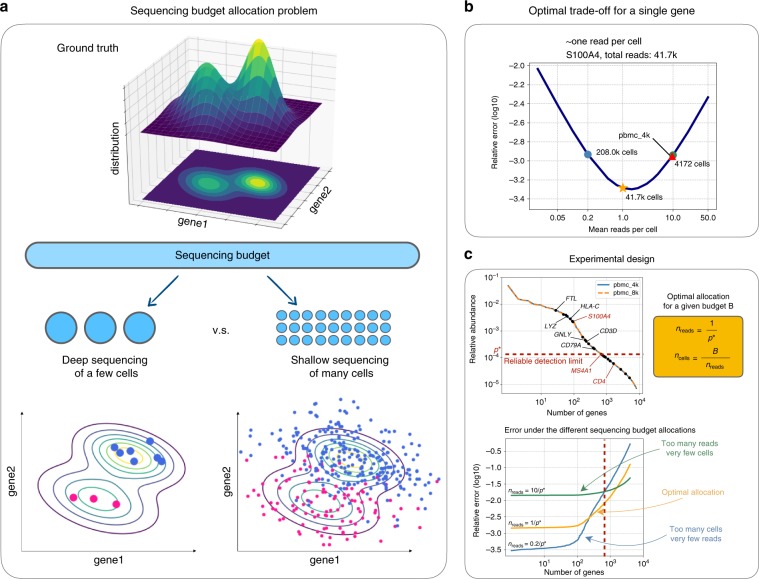
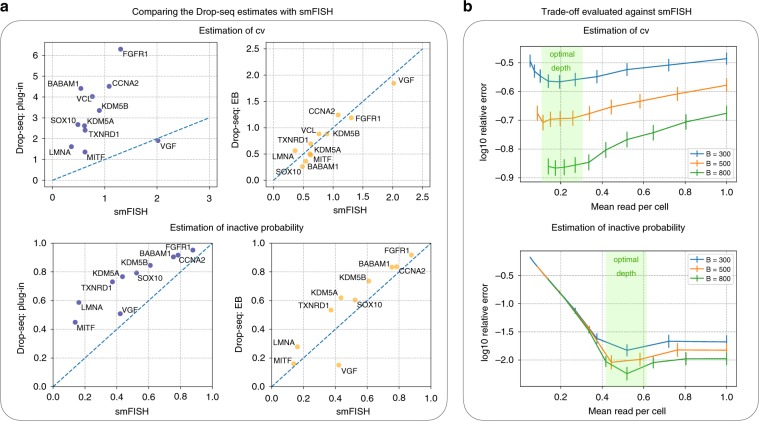
An underlying question for virtually all single-cell RNA sequencing experiments is how to allocate the limited sequencing budget: deep sequencing of a few cells or shallow sequencing of many cells? Here we present a mathematical framework which reveals that, for estimating many important gene properties, the optimal allocation is to sequence at a depth of around one read per cell per gene. Interestingly, the corresponding optimal estimator is not the widely-used plug-in estimator, but one developed via empirical Bayes.
Overview
The claims and statistics of this paper haven’t been checked yet.
Free: it reads the open-access text and checks the first 5 claims that cite a source we can check. Create a free account to check every claim.
Integrity signals
Registry
Cites
Statistics
Figures
Verification
Claims the paper makes
The claims and statistics of this paper haven’t been checked yet.
Free: it reads the open-access text and checks the first 5 claims that cite a source we can check. Create a free account to check every claim.
Claims other papers make about this one
Each is checked against this paper’s own text: does it say what the citing paper says it does?
The source backs part of the claim, not all of it — or backs it for a different population, condition or comparison.
In the citing paper
“Deeper sequencing provides a more comprehensive gene expression profile, while insufficient sequencing depth may result in the loss of crucial information, impacting the annotation of cell types and the interpretation of their functions.”
From Single-cell sequencing to multi-omics: technologies and applications (2024) · cites this paper as [244]
Experimental — accuracy not yet measuredThe cited source says what the claim attributes to it.
In the citing paper
“Sequencing depth directly affects the quality of the data obtained, and choosing the appropriate sequencing depth in scRNA-seq is crucial [244].”
From Single-cell sequencing to multi-omics: technologies and applications (2024) · cites this paper as [244]
Self-check
Percentages, sums and reported differences re-computed from the paper’s own numbers.
The self-check needs the paper’s full text.
Citations
Cites
Robinson, M. D., McCarthy, D. J., & Smyth, G. K. (2010) · Bioinformatics · doi:10.1093/bioinformatics/btp616 · Cited by 41,364 · cited 1×
“(20) Note that there are two terms in the above equation; the first Var[Xcg] corresponds to the true gene variance and the second E[Xcg] corresponds to the technical variation introduced by the Poisson noise.”
BackgroundNormalized cuts and image segmentation
Shi, J., & Malik, J. (2000) · IEEE Transactions on Pattern Analysis and Machine Intelligence · doi:10.1109/34.868688 · Cited by 15,502
Gene Expression Omnibus: NCBI gene expression and hybridization array data repository
Edgar, R. (2002) · Nucleic Acids Research · doi:10.1093/nar/30.1.207 · Cited by 13,288
STRING v10: protein–protein interaction networks, integrated over the tree of life
Szklarczyk, D., Franceschini, A., Wyder, S., Forslund, K., Heller, D., Huerta-Cepas, J., Simonovic, M., Roth, A., Santos, A., Tsafou, K. P., et al. (2015) · Nucleic Acids Research · doi:10.1093/nar/gku1003 · Cited by 10,436
The cancer genome atlas pan-cancer analysis project
The Cancer Genome Atlas Research Network, Weinstein, J. N., Collisson, E. A., Mills, G. B., Shaw, K. R. M., Ozenberger, B. A., Ellrott, K., Shmulevich, I., Sander, C., & Stuart, J. M. (2013) · Nature Genetics · doi:10.1038/ng.2764 · Cited by 9,092
Massively parallel digital transcriptional profiling of single cells
Zheng, G. X. Y., Terry, J. M., Belgrader, P., Ryvkin, P., Bent, Z. W., Wilson, R., Ziraldo, S. B., Wheeler, T. D., McDermott, G. P., Zhu, J., et al. (2017) · Nature Communications · doi:10.1038/ncomms14049 · Cited by 7,353
Highly parallel genome-wide expression profiling of individual cells using nanoliter droplets.
Macosko, E. Z., Basu, A., Satija, R., Nemesh, J., Shekhar, K., Goldman, M., Tirosh, I., Bialas, A. R., Kamitaki, N., Martersteck, E. M., et al. (2015) · Cell · doi:10.1016/j.cell.2015.05.002 · Cited by 7,110
Sparse inverse covariance estimation with the graphical lasso
Friedman, J., Hastie, T., & Tibshirani, R. (2008) · Biostatistics · doi:10.1093/biostatistics/kxm045 · Cited by 6,355
A General Framework for Weighted Gene Co-Expression Network Analysis
Zhang, B., & Horvath, S. (2005) · Statistical Applications in Genetics and Molecular Biology · doi:10.2202/1544-6115.1128 · Cited by 5,684 · cited 4×
“Taking the simplified model (18) as the working 173 example.”
BackgroundMethodInfluentialDEGseq: an R package for identifying differentially expressed genes from RNA-seq data
Wang, L., Feng, Z., Wang, X., Wang, X., & Zhang, X. (2010) · Bioinformatics · doi:10.1093/bioinformatics/btp612 · Cited by 4,553
Research works printed but not linked: 2
- Mohammadi, S., Davila-Velderrain, J., Kellis, M. & Grama, A. DECODE-ing sparsity patterns in single-cell RNA-seq, Preprint at 10.1101/241646v2 (2018). · doi:10.1101/241646v2
- Ding, J. et al., Systematic comparative analysis of single cell rna-sequencing methods, Preprint at 10.1101/632216v2 (2019). · doi:10.1101/632216v2
Cited by
Zhang, M. J., Hou, K., Dey, K. K., Sakaue, S., Jagadeesh, K. A., Weinand, K., Taychameekiatchai, A., Rao, P., Pisco, A. O., Zou, J., et al. (2022) · Nature Genetics · doi:10.1038/s41588-022-01167-z · Cited by 302
Self-citationSarkar, A., & Stephens, M. (2021) · Nature Genetics · doi:10.1038/s41588-021-00873-4 · Cited by 224
Single-cell sequencing to multi-omics: technologies and applications
Wu, X., Yang, X., Dai, Y., Zhao, Z., Zhu, J., Guo, H., & Yang, R. (2024) · Biomarker Research · doi:10.1186/s40364-024-00643-4 · Cited by 222
“Sequencing depth directly affects the quality of the data obtained, and choosing the appropriate sequencing depth in scRNA-seq is crucial [244].”
BackgroundTemporal modelling using single-cell transcriptomics
Ding, J., Sharon, N., & Bar-Joseph, Z. (2022) · Nature Reviews Genetics · doi:10.1038/s41576-021-00444-7 · Cited by 195
“A few methods have been proposed to recommend the number of cells for single-cell experiments, including single-cell empirical Bayes (sceb) 70 and How many Cells (see Related links). note that the number can probably be reduced for time-series studies if one expects to see the same cell types at…”
BackgroundMethodA multicenter study benchmarking single-cell RNA sequencing technologies using reference samples
Chen, W., Zhao, Y., Chen, X., Yang, Z., Xu, X., Bi, Y., Chen, V., Li, J., Choi, H., Ernest, B., et al. (2021) · Nature Biotechnology · doi:10.1038/s41587-020-00748-9 · Cited by 114
Chen, Z., Zhao, M., Liang, J., Hu, Z., Huang, Y., Li, M., Pang, Y., Lu, T., Sui, Q., Zhan, C., et al. (2021) · EBioMedicine · doi:10.1016/j.ebiom.2021.103459 · Cited by 127
“In recent years, single-cell sequencing, geared on the cellular and molecular characteristics, has provided an insight into the mechanisms underlying the normal physiological or biochemical processes and diseases at a single cell level [12 (cid:1) 14].”
Sun, T., Song, D., Li, W. V., & Li, J. J. (2021) · Genome Biology · doi:10.1186/s13059-021-02367-2 · Cited by 109
Seyfferth, C., Eekhout, T., Shi, D., Neumann, M., Berg, L. S., Ke, Y., Shahan, R., Cox, K. L., Gómez-Cano, F., Nelissen, H., et al. (2024) · The Plant Cell · doi:10.1093/plcell/koae003 · Cited by 92
“Another common suggestion for a prelim-inary sample quality control is to analyze the expression of a gene subset related to a biological question (Zhang et al. 2020).”
BackgroundInfluentialBenchmarking integration of single-cell differential expression
Hai, N. C. T., Baik, B., Yoon, S., Park, T., & Nam, D. (2023) · Nature Communications · doi:10.1038/s41467-023-37126-3 · Cited by 88
“Inrecentyears,shallowbuthigh-throughput sequencingusingfor example 10x Genomics ’ technique has been widely used 34 .”
MethodCrafting a blueprint for single-cell RNA sequencing
Denyer, T., & Timmermans, M. C. P. (2021) · Trends in Plant Science · doi:10.1016/j.tplants.2021.08.016 · Cited by 80
The rise of single‐cell proteomics
Ctortecka, C., & Mechtler, K. (2021) · Analytical Science Advances · doi:10.1002/ansa.202000152 · Cited by 89
Genetic basis of mitochondrial diseases
Gušić, M., & Prokisch, H. (2021) · FEBS Letters · doi:10.1002/1873-3468.14068 · Cited by 88
Cheng, X., Peng, T., Chu, T., Yang, Y., Liu, J., Gao, Q., Cao, C., & Wei, J. (2025) · Journal of Hematology & Oncology · doi:10.1186/s13045-025-01722-1 · Cited by 84
Human skeletal muscle fiber heterogeneity beyond myosin heavy chains
Moreno‐Justicia, R., der Stede, T. V., Stocks, B., Laitila, J. M., Seaborne, R. A. E., de Loock, A. V., Lievens, E., Samodova, D., Marín-Arraiza, L., Dmytriyeva, O., et al. (2025) · Nature Communications · doi:10.1038/s41467-025-56896-6 · Cited by 78
“Rich transcriptome data was further obtained by deeper sequencing (±1 M reads per fi ber) compared to conventional single cell methods 21 .”
The Application of Single‐Cell RNA Sequencing in Vaccinology
Noé, A., Cargill, T. N., Nielsen, C. M., Russell, A. J. C., & Barnes, E. J. (2020) · Journal of Immunology Research · doi:10.1155/2020/8624963 · Cited by 66
“It has been suggested that to estimate several important gene characteristics, the most favourable sequencing depth is around one read per cell per gene [153].”
Consequences and opportunities arising due to sparser single-cell RNA-seq datasets
Bouland, G. A., Mahfouz, A. E., & Reinders, M. J. T. (2023) · Genome biology · doi:10.1186/s13059-023-02933-w · Cited by 62
“It is likely that this trend will continue over the next years as, for many biological questions, shallow sequencing of many cells is more cost effective than deep sequencing of a few cells [16].”
BackgroundConsensus clustering of single-cell RNA-seq data by enhancing network affinity
Cui, Y., Zhang, S., Liang, Y. J., Wang, X., Ferraro, T. N., & Chen, Y. (2021) · Briefings in Bioinformatics · doi:10.1093/bib/bbab236 · Cited by 53
A coordinated progression of progenitor cell states initiates urinary tract development
Sanchez-Ferras, O., Pacis, A., Sotiropoulou, M., Zhang, Y., Wang, Y. C., Bourgey, M., Bourque, G., Ragoussis, J., & Bouchard, M. (2021) · Nature Communications · doi:10.1038/s41467-021-22931-5 · Cited by 61
Towards a definition of microglia heterogeneity
Healy, L. M., Zia, S., & Plemel, J. R. (2022) · Communications Biology · doi:10.1038/s42003-022-04081-6 · Cited by 54
Method of moments framework for differential expression analysis of single-cell RNA sequencing data
Kim, M. C., Gate, R. E., Lee, D. S., Tolopko, A., Lu, A. C., Gordon, E. D., Shifrut, E., García-Nieto, P. E., Marson, A., Ntranos, V., et al. (2024) · Cell · doi:10.1016/j.cell.2024.09.044 · Cited by 57
“…to the naive plug-in estimators employed by scHOT, 35 empirical Bayes estimators under the Poisson approximation introduced by Zhang et al. 36 (a special case of the Memento estimator for setting q = 0), and estimates derived from BASiCS 27 (see STAR Methods for forms of the naive and…”
InfluentialSelf-citationSingle-Cell Mapping of GLP-1 and GIP Receptor Expression in the Dorsal Vagal Complex
Ludwig, M. Q., Todorov, P. V., Egerod, K. L., Olson, D. P., & Pers, T. H. (2021) · Diabetes · doi:10.2337/dbi21-0003 · Cited by 38
“I Aim for When Profiling the Incretin Response in the Hindbrain? Typically, the number of cells and sequencing read depth are traded off against each other (32).”
BackgroundNovella-Rausell, C., Grudniewska, M., Peters, D. J. M., & Mahfouz, A. E. (2023) · iScience · doi:10.1016/j.isci.2023.106877 · Cited by 42
“Rare cell populations usually remain undetected and the cost to profile these cells often precludes the studies of less abundant cell populations.(17,18) The aforementioned challenges could be addressed by creating a reference atlas of the kidney that leverages the vast collection of available cells and nuclei profile…”
BackgroundStudying stochastic systems biology of the cell with single-cell genomics data
Gorin, G., Vastola, J. J., & Pachter, L. S. (2023) · Cell Systems · doi:10.1016/j.cels.2023.08.004 · Cited by 51
Verma, M., Asakura, Y., Wang, X., Zhou, K., Ünverdi, M., Kann, A. P., Krauss, R. S., & Asakura, A. (2024) · eLife · doi:10.7554/elife.73592 · Cited by 40
Advances in long-read single-cell transcriptomics
Kumari, P., Kaur, M., Dindhoria, K., Ashford, B., Amarasinghe, S. L., & Thind, A. S. (2024) · Human Genetics · doi:10.1007/s00439-024-02678-x · Cited by 42
“However, based on the aim of study for sequence depth, one should consider factors such as sub-population rarity, desired resolution, and transcript complexity to measure etc. (Zhang et al. 2020; Denyer and Timmermans 2022).”
BackgroundHigh sensitivity single cell RNA sequencing with split pool barcoding
Tran, V., Papalexi, E., Schroeder, S., Kim, G., Sapre, A., Pangallo, J., Sova, A., Matulich, P., Kenyon, L., Sayar, Z., et al. (2022) · bioRxiv (Cold Spring Harbor Laboratory) · doi:10.1101/2022.08.27.505512 · Cited by 35
Cell-type brain-region specific changes in prefrontal cortex of a mouse model of alcohol dependence
Salem, N. A., Manzano, L. A., Keist, M. W., Ponomareva, O. Y., Roberts, A. J., Roberto, M., & Mayfield, R. D. (2023) · Neurobiology of Disease · doi:10.1016/j.nbd.2023.106361 · Cited by 35
“Sequencing depth provided an average of 38,000 reads per cell exceeding the optimal of one read per cell per gene (Zhang et al., 2020).”
BackgroundScCCL: Single-Cell Data Clustering Based on Self-Supervised Contrastive Learning
Du, L., Han, R., Liu, B., Wang, Y., & Li, J. (2023) · IEEE Transactions on Computational Biology and Bioinformatics · doi:10.1109/tcbb.2023.3241129 · Cited by 35
“…can simultaneously detect the transcriptional status of numerous of cells in one experiment, so it is of great significance for biological research [2]. scRNA-seq technology is capable of measuring gene expression within the transcriptome of a single cell, which is of great significance for…”
BackgroundCell-by-Cell Deconstruction of Stem Cell Niches
Tikhonova, A. N., Lasry, A., Austin, R. J., & Aifantis, I. (2020) · Cell stem cell · doi:10.1016/j.stem.2020.06.013 · Cited by 34
“Though sequencing at relatively shallow depth is sufficient for common tasks such as cell-type identification, deep sequencing effectively mitigates technical noise and allows for the dissection of cell-specific transcriptional programs (Zhang et al., 2020).”
BackgroundThe multicellular signalling network of ovarian cancer metastases
Sommerfeld, L., Finkernagel, F., Jansen, J. M., Wagner, U. A. G., Nist, A., Stiewe, T., Müller‐Brüsselbach, S., Sokòl, A. M., Graumann, J., Reinartz, S., et al. (2021) · Clinical and Translational Medicine · doi:10.1002/ctm2.633 · Cited by 29
“27–32 It is also currently unclear, to which extent ascites-derived cell types resemble their counterparts in solid tumour lesions, since unbiased omics analysis have not been described for tumour-associated non-immune cells from HGSC patients.”
Comparative Proteome Signatures of Trace Samples by Multiplexed Data-Independent Acquisition
Ctortecka, C., Krššáková, G., Stejskal, K., Penninger, J. M., Mendjan, S., Mechtler, K., & Stadlmann, J. (2021) · Molecular & Cellular Proteomics · doi:10.1016/j.mcpro.2021.100177 · Cited by 30
Auerbach, B. J., Hu, J., Reilly, M. P., & Li, M. (2021) · Genome Research · doi:10.1101/gr.275430.121 · Cited by 33
“Although common cell types can be detected and their gene expression levels reliably measured with a relatively small number of cells (Heimberg et al. 2016; Zhang et al. 2020), to reliably detect rare cell types, a larger number of cells is needed.”
BackgroundUnderstanding cervical cancer at single-cell resolution
Yue, S., Wang, Q., Zhang, J., Hu, Q., & Liu, C. (2023) · Cancer Letters · doi:10.1016/j.canlet.2023.216408 · Cited by 32
Dumeaux, V., Massahi, S., Bettauer, V., Mottola, A., Dukovny, A., Khurdia, S. S., Costa, A. C. B. P., Omran, R. P., Simpson, S., Xie, J. L., et al. (2023) · eLife · doi:10.7554/elife.81406 · Cited by 25
Practical Considerations for Single‐Cell Genomics
Regan, C., & Preall, J. B. (2022) · Current Protocols · doi:10.1002/cpz1.498 · Cited by 27
“For scRNAseq, a convenient optimal depth of one read per protein-coding gene in the genome per cell (e.g., approximately 25,000 reads for a typical human cell) has been proposed as a general guideline that covers the most common use cases (Zhang et al., 2020).”
BackgroundGene-expression memory-based prediction of cell lineages from scRNA-seq datasets
Eisele, A. S., Tarbier, M., Dormann, A. A., Pelechano, V., & Suter, D. M. (2024) · Nature Communications · doi:10.1038/s41467-024-47158-y · Cited by 33
“Sensitivity of lineage predictions decreased with decreasing sequencing depth but the precision of lineage predictions stayed high above values of 5000 – 8000 reads/cell as commonly recommended for available scRNA-seq technologies 37 – 39 (Fig.”
BackgroundLee, J., Geng, S., Li, S., & Li, L. (2021) · Frontiers in Immunology · doi:10.3389/fimmu.2021.627036 · Cited by 28
“This number is higher than many published datasets (37).”
ResultEndocrine Pancreas Development and Dysfunction Through the Lens of Single-Cell RNA-Sequencing
Szlachcic, W. J., Ziojla, N., Kizewska, D. K., Kempa, M., & Borowiak, M. (2021) · Frontiers in Cell and Developmental Biology · doi:10.3389/fcell.2021.629212 · Cited by 19
Debiased personalized gene coexpression networks for population-scale scRNA-seq data
Lu, S., & Keleş, S. (2023) · Genome Research · doi:10.1101/gr.277363.122 · Cited by 22
scAllele: A versatile tool for the detection and analysis of variants in scRNA-seq
Quinones-Valdez, G., Fu, T., Chan, T. W., & Xiao, X. G. (2022) · Science Advances · doi:10.1126/sciadv.abn6398 · Cited by 17
More for less: predicting and maximizing genomic variant discovery via Bayesian nonparametrics
Masoero, L., Camerlenghi, F., Favaro, S., & Broderick, T. (2021) · Biometrika · doi:10.1093/biomet/asab012 · Cited by 32
Fate-mapping mice: new tools and technology for immune discovery
Lee, S. E., Rudd, B. D., & Smith, N. L. (2022) · Trends in Immunology · doi:10.1016/j.it.2022.01.004 · Cited by 17
Doubly Stochastic Normalization of the Gaussian Kernel Is Robust to Heteroskedastic Noise
Landa, B., Coifman, R. R., & Kluger, Y. (2021) · SIAM Journal on Mathematics of Data Science · doi:10.1137/20m1342124 · Cited by 35
Otsuji, K., Takahashi, Y. K., Osako, T., Kobayashi, T., Takano, T., Saeki, S., Yang, L., Baba, S., Kumegawa, K., Suzuki, H., et al. (2024) · npj Precision Oncology · doi:10.1038/s41698-024-00723-6 · Cited by 26
“GiventhatscRNA-seq is susceptible to pseudo-negative results in gene expression because of limited sequencing depth 34,35 , which can underestimate correlation assessments, we smoothed the data using the Rmagic package 36 in advance.”
MethodShi, S. Y., Luo, X., Yamawaki, T., Li, C.-M., Ason, B. L., & Furtado, M. B. (2021) · Current Cardiology Reports · doi:10.1007/s11886-021-01517-z · Cited by 14
Single-cell transcriptome atlas of Drosophila gastrula 2.0
Sakaguchi, S., Mizuno, S., Okochi, Y., Tanegashima, C., Nishimura, O., Uemura, T., Kadota, M., Naoki, H., & Kondo, T. (2023) · Cell Reports · doi:10.1016/j.celrep.2023.112707 · Cited by 14
Distinctive populations of CD4+T cells associated with vaccine efficacy
Woodring, T. S., Dewey, C. N., Dias, L. D. S., He, X. Q., Dobson, H. E., Wüthrich, M., & Klein, B. S. (2022) · iScience · doi:10.1016/j.isci.2022.104934 · Cited by 12
“A general limitation of scRNAseq data is depth of sequencing, which comes at the cost of sequencing large numbers of cells (Zhang et al., 2020).”
Zhou, J., Huang, Y., Xiao, D., Liu, D., Chen, X., Pan, Z., Wang, L., Watanabe, N., Pathak, J. L., & Li, J. (2025) · Journal of Advanced Research · doi:10.1016/j.jare.2025.06.076 · Cited by 17
“As the data were derived from public datasets, the sequencing depth may not have been su f-ficient to detect specific pathogenic genes [52].”
Single-Cell Analysis for Whole-Organism Datasets
Pisco, A. O., Tojo, B. M., & McGeever, A. (2021) · Annual Review of Biomedical Data Science · doi:10.1146/annurev-biodatasci-092820-031008 · Cited by 11
Application of a RiboTag‐based approach to generate and analyze mRNA from enteric neural cells
Leven, P., Schneider, R., Siemens, K. D., Jackson, W. S., & Wehner, S. (2021) · Neurogastroenterology & Motility · doi:10.1111/nmo.14309 · Cited by 14
Bhargava, A., Szachnowski, U., Chazal, M., Foretek, D., Caval, V., Aicher, S., da Fonseca, J. P., Jeannin, P., Beauclair, G., Monot, M., et al. (2023) · iScience · doi:10.1016/j.isci.2023.108449 · Cited by 13
Hoedjes, K. M., Grath, S., Posnien, N., Ritchie, M. G., Schlötterer, C., Abbott, J. K., Almudí, I., Coronado‐Zamora, M., Mitchell, E. D., Flatt, T., et al. (2024) · Molecular Ecology · doi:10.1111/mec.17382 · Cited by 13
“This is especially important to consider if the expected expression differences are rather small (Zhang et al., 2020), which is often the case in ecological or evolutionary research, for example, for studies examining environmental effects on individuals of the same species.”
Computational tools for analyzing single-cell data in pluripotent cell differentiation studies
Ding, J., Alavi, A., Ebrahimkhani, M. R., & Bar‐Joseph, Z. (2021) · Cell Reports Methods · doi:10.1016/j.crmeth.2021.100087 · Cited by 10
“org/howmanycells/) and sceb (Zhang et al., 2020) (Table 1) are computational tools that can estimate the total required number of cells on the basis of user inputs for the”
BackgroundJohansen, N., Hu, H., & Quon, G. (2023) · Nature Communications · doi:10.1038/s41467-023-40744-6 · Cited by 11
Hildyard, J. C. W., Wells, D. J., & Piercy, R. J. (2021) · Wellcome Open Research · doi:10.12688/wellcomeopenres.16972.1 · Cited by 15
It Is Not Just Fat: Dissecting the Heterogeneity of Adipose Tissue Function
Efthymiou, V., & Patti, M. (2022) · Current Diabetes Reports · doi:10.1007/s11892-022-01455-2 · Cited by 10
Scaled Process Priors for Bayesian Nonparametric Estimation of the Unseen Genetic Variation
Camerlenghi, F., Favaro, S., Masoero, L., & Broderick, T. (2022) · Journal of the American Statistical Association · doi:10.1080/01621459.2022.2115918 · Cited by 23
“Other applications arise in precision medicine (Momozawa and Mizukami 2020), microbiome analysis (Sanders et al. 2019), single-cell sequencing (Zhang, Ntranos, and Tse 2020) and wildlife monitoring (Johansson et al. 2020).”
Emerging measurements for tumor-infiltrating lymphocytes in breast cancer
Wu, R., Horimoto, Y., Oshi, M., Benesch, M. G. K., Khoury, T., Takabe, K., & Ishikawa, T. (2024) · Japanese Journal of Clinical Oncology · doi:10.1093/jjco/hyae033 · Cited by 12
Single-cell RNA sequencing in ovarian cancer: Current progress and future prospects
Chong, Z. X. (2025) · Progress in Biophysics and Molecular Biology · doi:10.1016/j.pbiomolbio.2025.01.002 · Cited by 9
Rodríguez-Romaguera, J., Namboodiri, V. M. K., Basiri, M. L., Stamatakis, A. M., & Stuber Garret, D. (2020) · Cold Spring Harbor Perspectives in Medicine · doi:10.1101/cshperspect.a039792 · Cited by 9
“In terms of data robustness, the primary factor determining the statistical resolution of feature identification and cell-type classification is the balance between depth of transcriptome coverage and total number of cells (Svensson et al., 2017, 2017; Zhang et al., 2020).”
BackgroundDrake, R. S., Villanueva, M. A., Vilme, M., Russo, D. D., Navia, A. W., Love, J. C., & Shalek, A. K. (2022) · Methods in molecular biology · doi:10.1007/978-1-0716-2756-3_3 · Cited by 9
Karikomi, M. K., Zhou, P., & Nie, Q. H. (2022) · Briefings in Bioinformatics · doi:10.1093/bib/bbac223 · Cited by 7
Temporal single-cell regeneration studies: the greatest thing since sliced pancreas?
Domínguez‐Bendala, J., Qadir, M. M. F., & Pastori, R. L. (2021) · Trends in Endocrinology and Metabolism · doi:10.1016/j.tem.2021.04.009 · Cited by 8
Comparative proteome signatures of trace samples by multiplexed Data-Independent AcquisitionPreprint
Ctortecka, C., Krššáková, G., Stejskal, K., Penninger, J. M., Mendjan, S., Mechtler, K., & Stadlmann, J. (2021) · bioRxiv (Cold Spring Harbor Laboratory) · doi:10.1101/2021.02.11.430601 · Cited by 7
Burgos-Ruiz, A. M., Geng, F., Pujol, G., Sanabria, E., Brethouwer, T., Almuedo‐Castillo, M., Ruiz‐Herrera, A., Tena, J. J., & Bogdanović, O. (2025) · Molecular Systems Biology · doi:10.1038/s44320-025-00157-7 · Cited by 14
“Consistent with previous work, we also found that the number of expressed genes decreases progressively as spermatogenesis advances (Zhang et al, 2020), resulting in global transcriptional downregulation in elongated spermatids.”
Miao, Z., Kong, W., Vinayak, R. K., Sun, W., & Han, F. (2022) · Journal of the American Statistical Association · doi:10.1080/01621459.2022.2120401 · Cited by 14
“…of X ( k ) ij that is a slight simplification to Sarkar and Stephens’s Equation (1): (measurement model) (1.1) Here r k ij ( ) > 0 adjusts the cell “read depth” (see Zhang, Ntranos, and Tse 2020, p. 1), often set to be the scaled cell’s total reads across all genes (Sarkar and Stephens 2021, eq.”
BackgroundInfluentialTranscript accumulation rates in the early Caenorhabditis elegans embryo
Sivaramakrishnan, P., Watkins, C., & Murray, J. I. (2023) · Science Advances · doi:10.1126/sciadv.adi1270 · Cited by 9
“Studies in cell culture have shown a strong correlation between reads from different single-cell RNA-seq (scRNA-seq) platforms and smFISH transcript counts, alluding to the potential for scRNA-seq data to be used for genome-wide estimation of absolute transcript levels ( 17 – 19 ).”
Schupp, P. G., Shelton, S. J., Brody, D. J., Eliscu, R., Johnson, B., Mazor, T., Kelley, K. W., Potts, M. B., McDermott, M. W., Huang, E. J., et al. (2024) · Cancers · doi:10.3390/cancers16132429 · Cited by 7
Zhao, S., Crouse, W. L., Qian, S., Luo, K., Stephens, M., & He, X. (2022) · bioRxiv (Cold Spring Harbor Laboratory) · doi:10.1101/2022.09.27.509700 · Cited by 5
Single-Cell Transcriptomic Analysis of Mononuclear Cell Populations in Skeletal Muscle
He, G. J., Galvis, J., Cheung, T. H., & Grand, F. L. (2023) · Methods in molecular biology · doi:10.1007/978-1-0716-3036-5_26 · Cited by 4
Isolation of myeloid cells from mouse brain tumors for single-cell RNA-seq analysis
Dang, M. T., Mafra, F., & Haldar, M. (2021) · STAR Protocols · doi:10.1016/j.xpro.2021.100957 · Cited by 3
Ji, J., Chao, H., Chen, H., Liao, J., Shi, W., Ye, Y., Wang, T., You, Y., Liu, N., Ji, J., et al. (2024) · Open Biology · doi:10.1098/rsob.240063 · Cited by 4
“…show that the set of PVLAB genes that are upregulated in TL are also significantly enriched for both GWAS genes and psychoactive drug targets, highlighting the importance of regional differences (and especially TL) for neuropsychiatric disorders genes and response to psychoactive drugs in PVALB.”
BackgroundDozer: Debiased personalized gene co-expression networks for population-scale scRNA-seq dataPreprint
Lu, S., & Keleş, S. (2023) · bioRxiv (Cold Spring Harbor Laboratory) · doi:10.1101/2023.04.25.538290 · Cited by 4
“…factor (TF) present in both the hTFtarget database and the gene co-expression network, we tested the enrichment of its targets from the hTFtarget database (Zhang et al., 2020b) among the genes with edges to the TF in the constructed co-expression network with the standard hypergeometric test.”
Spermiogenesis alterations in the absence of CTCF revealed by single cell RNA sequencing
Torres-Flores, U., Díaz-Espinosa, F., López-Santaella, T., Rebollar‐Vega, R., Vázquez-Jiménez, A., Taylor, I., Ortiz-Hernández, R., Echeverría, O. M., Vázquez‐Nin, G. H., Gutiérrez‐Ruíz, M. C., et al. (2023) · Frontiers in Cell and Developmental Biology · doi:10.3389/fcell.2023.1119514 · Cited by 3
“Since we used a droplet-based platform with a cell throughput lower than the most widely used platform (ddSeq-BioRad versus Chromium from 10X Genomics, respectively), we decided to increase the number of reads per cell to estimate the true transcriptional state of cells in our system (Zhang et al., 2020).”
MethodDedden, M., Wiendl, M., Müller, T. M., Neurath, M. F., & Zundler, S. (2023) · Frontiers in Immunology · doi:10.3389/fimmu.2023.1027346 · Cited by 4
“Frontiers in Immunology 08 expression below the detection threshold of single cell RNA sequencing (39).”
BackgroundShrinkage estimation of gene interaction networks in single-cell RNA sequencing data
Vo, D. H. T., & Thorne, T. (2024) · BMC Bioinformatics · doi:10.1186/s12859-024-05946-9 · Cited by 3
“Increasing sequencing depth can potentially provide more information of gene transcription and reduce technical noise [47].”
BackgroundKuendee, N., Puthier, D., Nguyen, C., & Chokeshaiusaha, K. (2021) · The Thai Journal of Veterinary Medicine · doi:10.56808/2985-1130.3174 · Cited by 3
“Such limited read counts should hereby be accounted for both restrictedly available NK cell datasets and expressed genes—including the cell marker gene manifested in this study (Zhang et al. , 2020).”
BackgroundKim, M. C., Gate, R. E., Lee, D. S., Lu, A. C., Gordon, E. D., Shifrut, E., Marson, A., Ntranos, V., & Ye, C. (2022) · bioRxiv (Cold Spring Harbor Laboratory) · doi:10.1101/2022.11.09.515836 · Cited by 3
“We will start this section by reviewing the derivation of the Poisson estimators first presented in [36] in the context of determining optimal sequencing depth for scRNA-seq experiments.”
BackgroundMethodInfluentialSelf-citationCleanet: Robust Doublet Detection in Cytometry Data Based on Protein Expression Patterns
Ionita, M., McKeague, M. L., Painter, M. M., Mathew, D., Pattekar, A., Rezk, A., Shwetank, Maseda, D., Wherry, E. J., & Greenplate, A. R. (2025) · Cytometry Part A · doi:10.1002/cyto.a.24961 · Cited by 5
Protocol for isolating immune cells from human gastric muscularis propria for single-cell analysis
AlAsfoor, S., Bernard, C. E., Jessen, E., Simon, V. A., Rakhshan, F., Cipriani, G., Hsi, L. C., Patraw, J. A., Carothers, K. J., Lau, J. S., et al. (2024) · STAR Protocols · doi:10.1016/j.xpro.2024.103258 · Cited by 2
Evaluation of T Cell Receptor Construction Methods from scRNA-Seq Data
Tian, R., Yu, Z., Xue, Z., Wu, J., Wu, L., Cai, S., Gao, B. Z., He, B., Zhao, Y. S., Yao, J., et al. (2024) · Genomics Proteomics & Bioinformatics · doi:10.1093/gpbjnl/qzae086 · Cited by 3
“This emphasizes once again the critical importance of sequencing depth in NGS experiments [44,45].”
Projecting clumped transcriptomes onto single cell atlases to achieve single cell resolutionPreprint
Johansen, N., & Quon, G. (2022) · bioRxiv (Cold Spring Harbor Laboratory) · doi:10.1101/2022.04.26.489628 · Cited by 2
“Furthermore, mRNA capture efficiencies can vary between protocols 32 , and technologies such as SMART-seqv2 yield significantly high read depth per cell compared to 3’ tagging technologies such as the 10x Chromium 33 . scProjection can be used to project RNA samples sequenced from specialized spatial and multi-modal s…”
Total-mRNA-Aware Analysis for Droplet-Based Single Cell SequencingPreprint
Lian, Q., Ma, J., Hua, K., Rong, Z., Cai, J., Jiang, X., Zhou, J., Xu, J., Zhang, Z., Fan, L., et al. (2022) · Research Square · doi:10.21203/rs.3.rs-2211167/v1 · Cited by 2
Marshall, K. L., Stadtmauer, D. J., Maziarz, J. D., Wagner, G. P., & Lesch, B. J. (2024) · Developmental Cell · doi:10.1016/j.devcel.2024.10.013 · Cited by 3
Li, R., Zhang, J., Wang, Q., Fan, J.-Q., & Lin, B. (2026) · Experimental & Molecular Medicine · doi:10.1038/s12276-025-01618-7 · Cited by 1
“The sequencing depth 26,27 for microglial cells in the CX3CR1 GFP/GFP and C57BL/6J groups was 81.6k and 297.9k mean reads per cell, respectively, and the sequencing depth for whole retinal cells in the CX3CR1 GFP/GFP and C57BL/6J groups was 18.6k and 14.7k mean reads per cell, respectively.”
Single-Cell mRNA Sequencing in Precision Medicine: Promise and Challenges
Zhang, K. K., Li, J., Jeon, M. S., & Ramos, K. S. (2023) · Elsevier eBooks · doi:10.1016/b978-0-12-824010-6.00028-9 · Cited by 2
Hildyard, J. C. W., Wells, D. J., & Piercy, R. J. (2020) · bioRxiv (Cold Spring Harbor Laboratory) · doi:10.1101/2020.10.29.360461 · Cited by 1
“Furthermore, these approaches are not without limitation: the whole transcriptome nature of the method typically favours breadth over depth [21, 22]: large-scale changes involving many gene components will be mapped well, while more specific, smaller-scale processes can be missed.”
BackgroundMiao, Z., Kong, W., Vinayak, R. K., Sun, W., & Han, F. (2021) · arXiv (Cornell University) · doi:10.48550/arxiv.2106.03022 · Cited by 2
“…of X ( k ) ij that is a slight simplification to Sarkar and Stephens’s Equation (1): (measurement model) (1.1) Here r k ij ( ) > 0 adjusts the cell “read depth” (see Zhang, Ntranos, and Tse 2020, p. 1), often set to be the scaled cell’s total reads across all genes (Sarkar and Stephens 2021, eq.”
BackgroundInfluentialMarshall, K. L., Stadtmauer, D. J., Maziarz, J. D., Wagner, G. P., & Lesch, B. J. (2023) · bioRxiv (Cold Spring Harbor Laboratory) · doi:10.1101/2023.06.17.545442 · Cited by 1
“performed using bulk RNA-seq data, especially for lowly expressed genes, due to the better coverage 317 depth per gene (Squair et al. 2021; Zhang et al. 2020; Zheng et al. 2017; Kim et al. 2020).”
MethodBurgos-Ruiz, A. M., Geng, F., Pujol, G., Sanabria, E., Brethouwer, T., Almuedo‐Castillo, M., Ruiz‐Herrera, A., Tena, J. J., & Bogdanović, O. (2025) · bioRxiv (Cold Spring Harbor Laboratory) · doi:10.1101/2025.03.12.642371 · Cited by 1
Gomez, L. C., Poldsam, H., Ishishita, S., Irrobali, E., Lai, H. C., & Pool, A. (2026) · bioRxiv (Cold Spring Harbor Laboratory) · doi:10.64898/2026.06.11.731752 · Cited by 2
Gebiola, M., Le, B. H., & Mauck, K. E. (2022) · Insect Science · doi:10.1111/1744-7917.13008
Novel populations of CD4 + T cells associated with vaccine efficacyPreprint
Woodring, T. S., Dewey, C. N., Dias, L. D. S., He, X. Q., Dobson, H. E., Wüthrich, M., & Klein, B. S. (2022) · bioRxiv (Cold Spring Harbor Laboratory) · doi:10.1101/2022.06.23.497400
“A general limitation of scRNAseq data is depth of sequencing, which comes at the cost of sequencing large numbers of cells (Zhang et al., 2020).”
BackgroundRecent advances in computational modeling
Pinky, P., Neha, N., & Parvez, S. (2024) · Elsevier eBooks · doi:10.1016/b978-0-443-13222-3.00006-x
Optimal sequencing budget allocation for trajectory reconstruction of single cells
Moriel, N., Memet, E., & Nitzan, M. (2024) · Bioinformatics · doi:10.1093/bioinformatics/btae258 · Cited by 1
“…tradeoff under a fixed sequencing budget for tasks including identification of transcriptional programs ( Heimberg et al. 2016), modeling gene expression distributions (Svensson et al. 2019), profiling rare cell types (Torre et al. 2018), and gene expression estimation (Zhang et al. 2020).”
Etebar, F., Whatmore, P., Harkin, D. G., & Dando, S. J. (2024) · Investigative Ophthalmology & Visual Science · doi:10.1167/iovs.65.12.42 · Cited by 1
“43 In leptomeninges, we identified a distinct cluster of neutrophils.”
BackgroundA realistic FastQ-based framework FastQDesign for ScRNA-seq study design issues
Wang, Y., Chen, Y., Ahn, K. W., & Lin, C. (2025) · Communications Biology · doi:10.1038/s42003-025-07938-8 · Cited by 1
“Zhang et al. 4 determined the optimal sequencing depth to be around one UMI per cell per gene using empirical Bayesderivation. scPower 5 modelstherelationshipbetweensamplesize,cell number per sample, sequencing depth, and the power of detecting differentially expressed genes for a selected cell…”
Recovering undersampled single-cell transcriptomes with HyperCellPreprint
Bzdok, D., Hodgson, L. M., & Krishnaswamy, S. (2025) · Research Square · doi:10.21203/rs.3.rs-6436032/v1
Transcript Identification Using Arrayed Hydrogels With TrapFISH
Morse, D. B., Toprakcioglu, Z., Denduluri‐Marthi, A., Brenton, J. D., Thomas, C. J., & Knowles, T. P. J. (2025) · Advanced Materials Technologies · doi:10.1002/admt.202401953
Metadata
- Authors
- Zhang, M. J., Ntranos, V., & Tse, D.
- Affiliations
- Stanford University (US)
- California Institute of Technology (US)
- Corresponding author
- Tse, David
- Venue
- Nature Communications
- Published
- 2020-02-07
- Volume
- 11
- Issue
- 1
- Pages
- 774-774
- ISSN
- 2041-1723 (ISSN-L)
- PMC
- PMC7005864
- OpenAlex
- W3004833389
- Semantic Scholar
- 38e2de891444f2f6e15e8b9c64a0e40843188fe7
- Cited by
- 112
- References
- 55
- Citations by year
- 2026: 8 · 2025: 14 · 2024: 18 · 2023: 21 · 2022: 20 · 2021: 26 · 2020: 5
- FWCI
- 5.83
- Type
- journal article
- Language
- en
- Open access
- gold
- doi.org
- Licence
- cc-by
- creativecommons.org/licenses/by/4.0 (tdm)
- creativecommons.org/licenses/by/4.0 (vor)
- Locations
- Nature Communications (publishedVersion, cc-by)
- PubMed Central (publishedVersion, cc-by)
- PubMed (publishedVersion)
- CaltechAUTHORS (California Institute of Technology) (submittedVersion, cc-by)
- RePEc: Research Papers in Economics (submittedVersion)
- DOAJ (DOAJ: Directory of Open Access Journals) (submittedVersion)
- DOAJ (DOAJ: Directory of Open Access Journals) (submittedVersion, cc-by-sa)
- Funders
- U.S. Department of Health & Human Services | NIH | National Human Genome Research Institute (R01HG008164)
- Topics
- Life Sciences › Biochemistry, Genetics and Molecular Biology › Molecular Biology › Single-cell and spatial transcriptomics
- Life Sciences › Biochemistry, Genetics and Molecular Biology › Molecular Biology › Gene expression and cancer classification
- Life Sciences › Biochemistry, Genetics and Molecular Biology › Molecular Biology › Genomics and Phylogenetic Studies
- Keywords
- sequencing depth, single-cell RNA sequencing, empirical Bayes, plug-in estimator, gene expression estimation, mathematical framework
- MeSH terms
- S100 Calcium-Binding Protein A4, Models, Theoretical, Reproducibility of Results, Gene Expression, In Situ Hybridization, Fluorescence, Sequence Analysis, RNA, Computational Biology, Gene Regulatory Networks, Single-Cell Analysis
About these checks
Registry, retraction, Cites and statistics results are computed, not judged, with one exception: a printed reference that no index lists is read once by a model before it counts as a citation error. Claims are extracted by a model and kept only when their quote appears verbatim in the text; each cited source is then checked, with a model’s help, for whether it says what the claim relies on. Those verdicts can be wrong — read the claim’s quote and the cited source before relying on one.
Statistics and arithmetic are recomputed, not judged.
Confidence bands are shown only for fields calibrated on our annotated test set. None is calibrated yet, so no band is shown.
What counts as a claim ›How we measure confidence ›How we check this ›
Are you an author, or do you see a problem with this page? Request a review
Data sources
Bibliographic data: Semantic Scholar, OpenAlex, Crossref.
Contains information from the Semantic Scholar Academic Graph Datasets, made available under the ODC Attribution License (ODC-BY 1.0).
Semantic Scholar’s data is described in: Kinney, R., et al. (2023). The Semantic Scholar Open Data Platform. arXiv:2301.10140.
