

HIF-1α and HIF-2α differently regulate tumour development and inflammation of clear cell renal cell carcinoma in mice
Open accessThe DOI matches its Crossref record; 107 of the 110 references it cites were found in a registry or an index.
Abstract
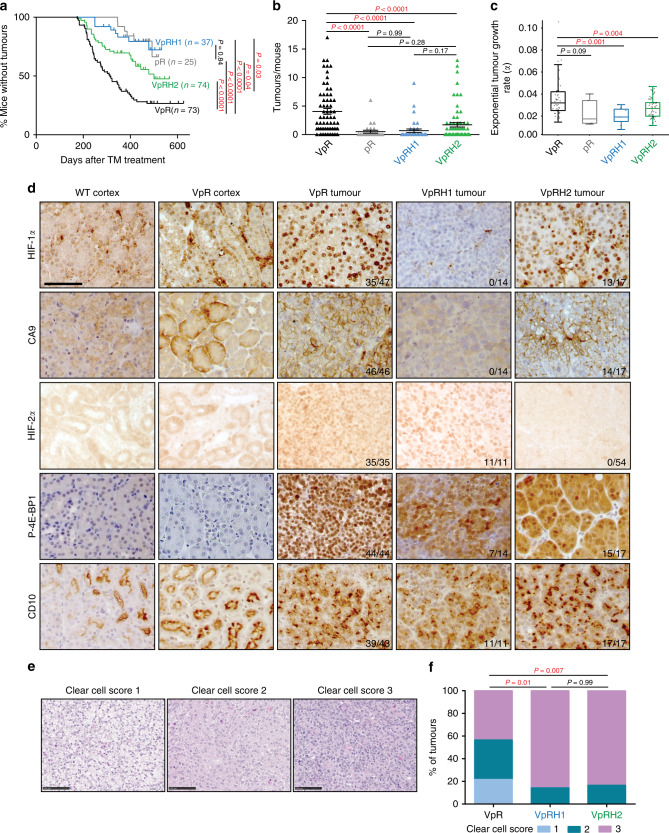
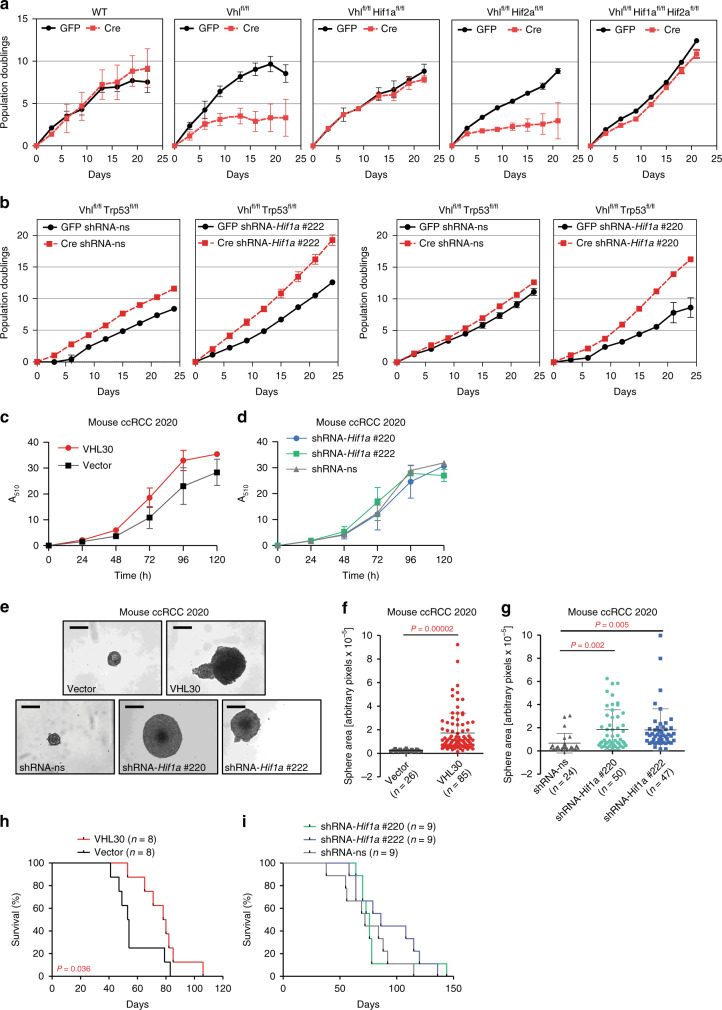
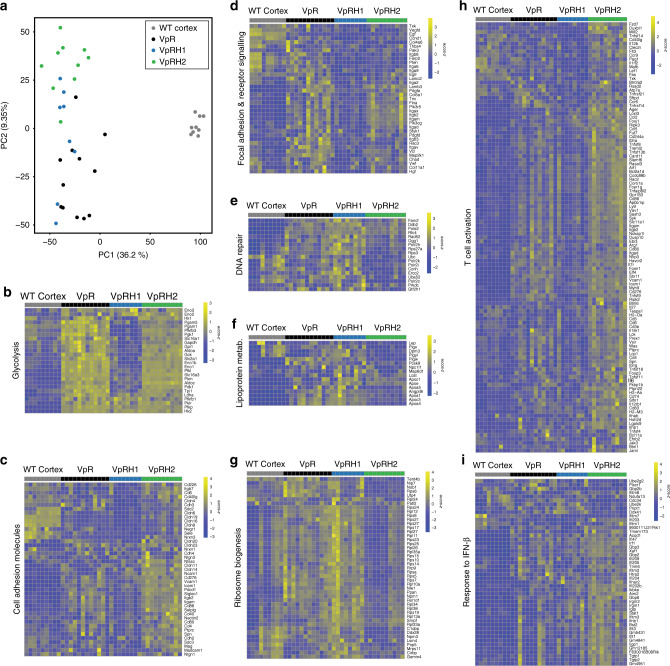
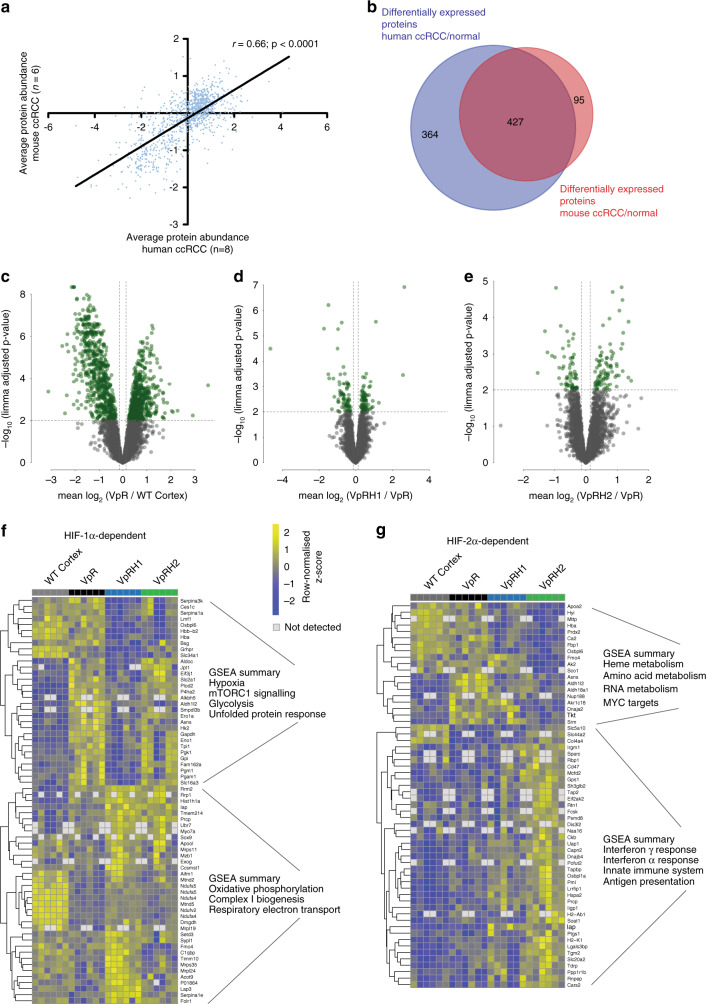
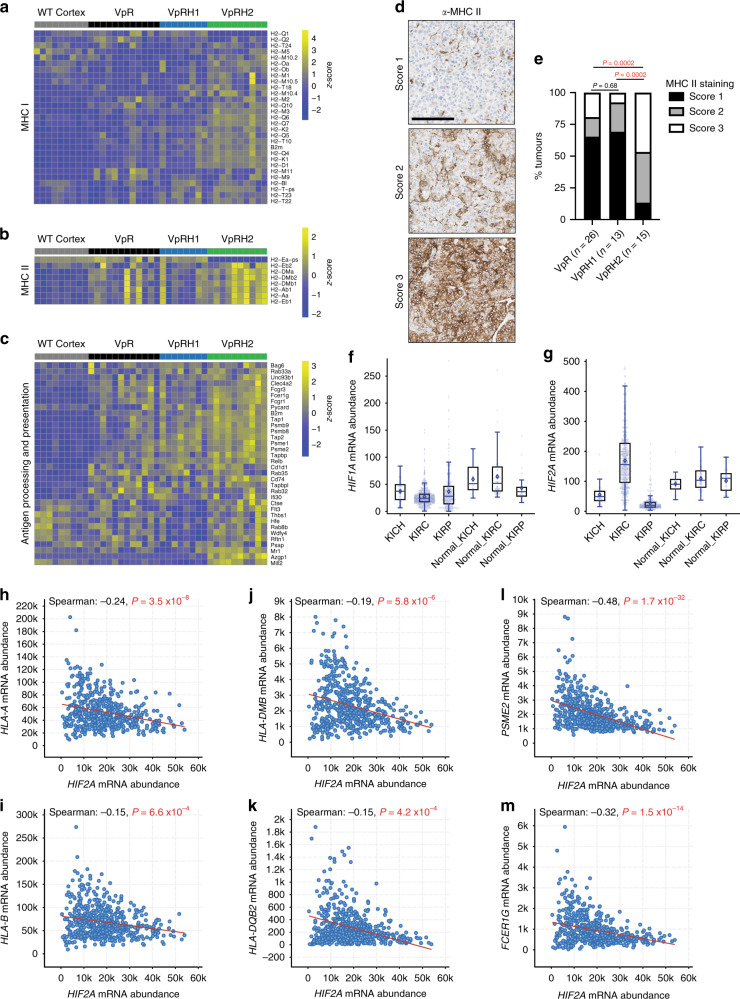
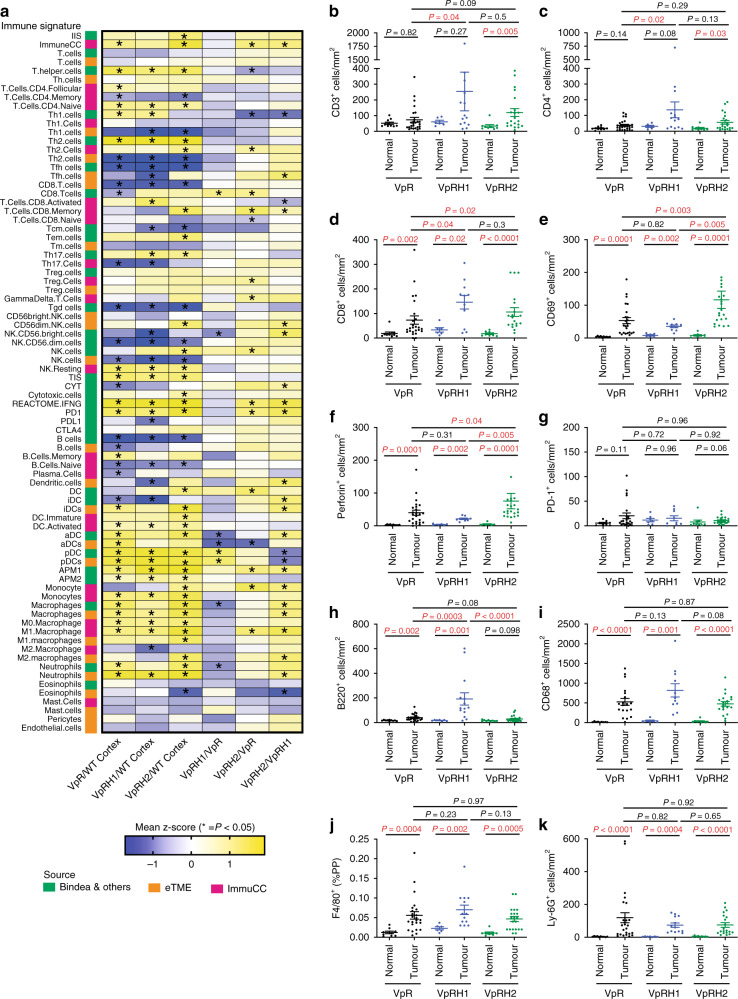
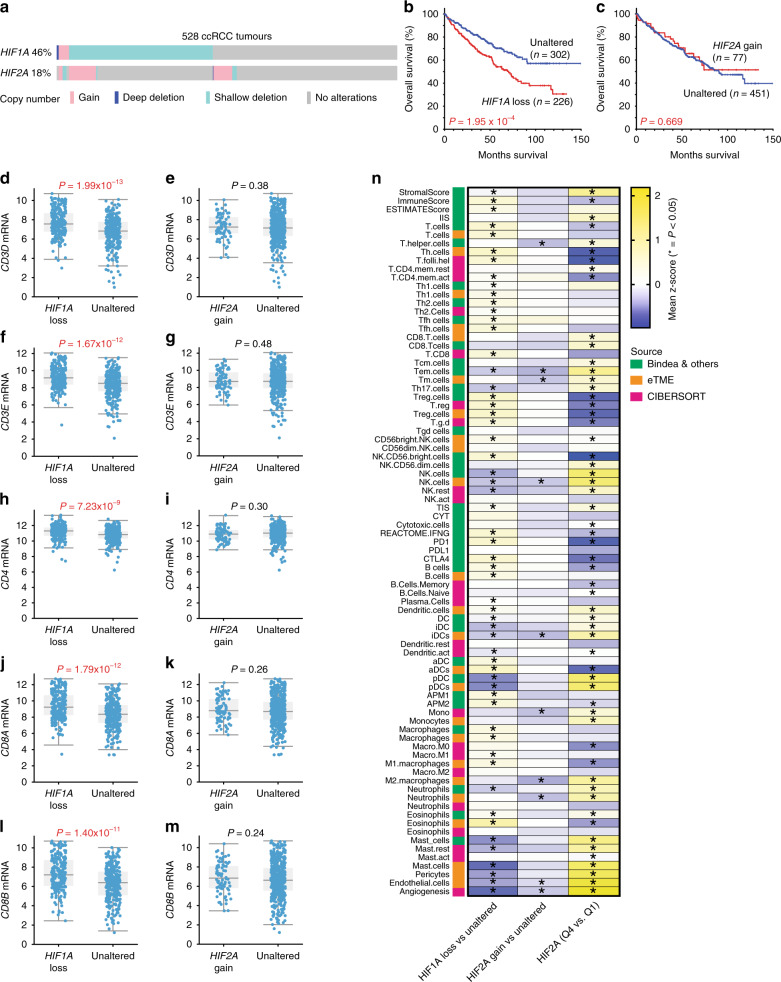
Mutational inactivation of VHL is the earliest genetic event in the majority of clear cell renal cell carcinomas (ccRCC), leading to accumulation of the HIF-1α and HIF-2α transcription factors. While correlative studies of human ccRCC and functional studies using human ccRCC cell lines have implicated HIF-1α as an inhibitor and HIF-2α as a promoter of aggressive tumour behaviours, their roles in tumour onset have not been functionally addressed. Herein we show using an autochthonous ccRCC model that Hif1a is essential for tumour formation whereas Hif2a deletion has only minor effects on tumour initiation and growth. Both HIF-1α and HIF-2α are required for the clear cell phenotype. Transcriptomic and proteomic analyses reveal that HIF-1α regulates glycolysis while HIF-2α regulates genes associated with lipoprotein metabolism, ribosome biogenesis and E2F and MYC transcriptional activities. HIF-2α-deficient tumours are characterised by increased antigen presentation, interferon signalling and CD8 + T cell infiltration and activation. Single copy loss of HIF1A or high levels of HIF2A mRNA expression correlate with altered immune microenvironments in human ccRCC. These studies reveal an oncogenic role of HIF-1α in ccRCC initiation and suggest that alterations in the balance of HIF-1α and HIF-2α activities can affect different aspects of ccRCC biology and disease aggressiveness.
Overview
The claims and statistics of this paper haven’t been checked yet.
Free: it reads the open-access text and checks the first 5 claims that cite a source we can check. Create a free account to check every claim.
Integrity signals
Registry
Cites
Statistics
Figures
Verification
Claims the paper makes
The claims and statistics of this paper haven’t been checked yet.
Free: it reads the open-access text and checks the first 5 claims that cite a source we can check. Create a free account to check every claim.
Claims other papers make about this one
Each is checked against this paper’s own text: does it say what the citing paper says it does?
The source backs part of the claim, not all of it — or backs it for a different population, condition or comparison.
In the citing paper
“Furthermore, although loss of chromosome 14q spanning the HIF1A locus occurs frequently in RCC, recent studies suggest that HIF1A may not be the target of 14q deletion, challenging the notion of HIF-1α as a tumor suppressor in ccRCC [30,31].”
From Revisiting the HIF switch in the tumor and its immune microenvironment. (2022) · cites this paper as [31]
Experimental — accuracy not yet measured
Self-check
Percentages, sums and reported differences re-computed from the paper’s own numbers.
The self-check needs the paper’s full text.
Citations
Cites
1 retracted
RETRACTED: Acriflavine inhibits HIF-1 dimerization, tumor growth, and vascularization
Lee, K., Zhang, H., Qian, D. Z., Rey, S., Liu, J. O., & Semenza, G. L. (2009) · Proceedings of the National Academy of Sciences · doi:10.1073/pnas.0909353106 · Cited by 451
RetractedModerated estimation of fold change and dispersion for RNA-seq data with DESeq2
Love, M. I., Huber, W., & Anders, S. (2014) · Genome Biology · doi:10.1186/s13059-014-0550-8 · Cited by 95,106
Bray, F., Ferlay, J., Soerjomataram, I., Siegel, R. L., Torre, L. A., & Jemal, A. (2018) · CA: A Cancer Journal for Clinicians · doi:10.3322/caac.21492 · Cited by 84,109
Trimmomatic: a flexible trimmer for Illumina sequence data
Bolger, A. M., Lohse, M., & Usadel, B. (2014) · Bioinformatics · doi:10.1093/bioinformatics/btu170 · Cited by 65,548
Subramanian, A., Tamayo, P., Mootha, V. K., Mukherjee, S., Ebert, B. L., Gillette, M. A., Paulovich, A., Pomeroy, S. L., Golub, T. R., Lander, E. S., et al. (2005) · Proceedings of the National Academy of Sciences · doi:10.1073/pnas.0506580102 · Cited by 53,625
STAR: ultrafast universal RNA-seq aligner
Dobin, A., Davis, C. A., Schlesinger, F., Drenkow, J., Zaleski, C., Jha, S., Batut, P., Chaisson, M., & Gingeras, T. R. (2013) · Bioinformatics · doi:10.1093/bioinformatics/bts635 · Cited by 51,709
Gene Ontology: tool for the unification of biology
Ashburner, M., Ball, C. A., Blake, J. A., Botstein, D., Butler, H., Cherry, J. M., Davis, A. P., Dolinski, K., Dwight, S. S., Eppig, J. T., et al. (2000) · Nature Genetics · doi:10.1038/75556 · Cited by 43,206
Cerami, E., Gao, J., Dogrusoz, U., Gross, B. E., Sumer, S. O., Aksoy, B. A., Jacobsen, A., Byrne, C. J., Heuer, M. L., Larsson, E., et al. (2012) · Cancer Discovery · doi:10.1158/2159-8290.cd-12-0095 · Cited by 17,455
Integrative Analysis of Complex Cancer Genomics and Clinical Profiles Using the cBioPortal
Gao, J., Aksoy, B. A., Dogrusoz, U., Dresdner, G., Gross, B., Sumer, S. O., Sun, Y., Jacobsen, A., Sinha, R., Larsson, E., et al. (2013) · Science Signaling · doi:10.1126/scisignal.2004088 · Cited by 15,160
Robust enumeration of cell subsets from tissue expression profiles
Newman, A. M., Liu, C. L., Green, M. R., Gentles, A. J., Feng, W., Xu, Y., Hoang, C. D., Diehn, M., & Alizadeh, A. A. (2015) · Nature Methods · doi:10.1038/nmeth.3337 · Cited by 13,224
Cited by
Items 101–200 of 313
LRRK2 is a Candidate Prognostic Biomarker for Clear Cell Renal Cell Carcinoma
Yang, C., Pang, J., Xu, J., Pan, H., Li, Y., Zhang, H., Liu, H., & Xiao, S. (2021) · Cancer Cell International · doi:10.1186/s12935-021-02047-y · Cited by 14
Gad, S., Teuff, G. L., Nguyen, B., Verkarre, V., Duchatelle, V., Molinié, V., Posseme, K., Grandon, B., Costa, M. D., Job, B., et al. (2021) · Oncology Letters · doi:10.3892/ol.2021.13096 · Cited by 15
Carroll, C., Manaprasertsak, A., Castro, A. B., van den Bos, H., Spierings, D. C. J., Wardenaar, R., Bukkuri, A., Engström, N., Baratchart, E., Yang, M., et al. (2024) · Cancer Research Communications · doi:10.1158/2767-9764.crc-23-0396 · Cited by 15
A CAIX Dual-Targeting Small-Molecule Probe for Noninvasive Imaging of ccRCC
He, C., Liu, F., Tao, J., Wang, Z., Liu, J., Liu, S., Xu, X., Li, L., Wang, F., Yang, X., et al. (2024) · Molecular Pharmaceutics · doi:10.1021/acs.molpharmaceut.4c00104 · Cited by 14
The Mechanisms of Ferroptosis and the Applications in Tumor Treatment: Enemies or Friends?
Tan, S., Kong, Y., Xian, Y., Gao, P., Xu, Y., Wei, C., Lin, P., Ye, W., Li, Z., & Zhu, X. M. (2022) · Frontiers in Molecular Biosciences · doi:10.3389/fmolb.2022.938677 · Cited by 14
“We demonstrate that the HIF2α-HILPDA signaling pathway is the main pathway to activate ccRCC, and HIF2α strongly inhibits GPX4 expression by activating downstream proteins (Zou et al., 2019; Courtney et al., 2020; Hoefflin et al., 2020).”
BackgroundChee, Y. H., Samali, A., & Robinson, C. M. (2022) · Biochimica et Biophysica Acta (BBA) - Reviews on Cancer · doi:10.1016/j.bbcan.2022.188814 · Cited by 14
Bouthelier, A., Meléndez‐Rodríguez, F., Urrutia, A. A., & Aragonés, J. (2020) · International Journal of Molecular Sciences · doi:10.3390/ijms21249401 · Cited by 14
“Along this line, higher expression of CaIX, Phd3, Slc7a5, Glut1, Pgm1 occurred but not N rg1 in a Vhl-deficient renal cell mouse mo el when compared with non-tumor renal region, which is in line with our data in Vhl-deficient kidneys [47].”
“Dissecting the role of T cell exhaustion in cancer progression: a multifaceted approach“
Li, X., & Song, S. (2025) · Frontiers in Immunology · doi:10.3389/fimmu.2025.1646292 · Cited by 13
Stransky, L. A., Gao, W., Schmidt, L. S., Bi, K., Ricketts, C. J., Ramesh, V., James, A. E., Difilippantonio, S., Ileva, L. V., Kalen, J. D., et al. (2024) · Proceedings of the National Academy of Sciences · doi:10.1073/pnas.2408549121 · Cited by 13
Minisini, M., Cricchi, E., & Brancolini, C. (2023) · Life · doi:10.3390/life14010020 · Cited by 16
“In particular, HIF1A and EPAS1/HIF2A can have opposing effects in cancer cells by controlling the transcription of different target genes [6,7].”
BackgroundRevisiting mechanisms of resistance to immunotherapies in metastatic clear-cell renal-cell carcinoma
Chatwal, M. S., Chahoud, J., & Spiess, P. E. (2023) · Cancer Drug Resistance · doi:10.20517/cdr.2023.09 · Cited by 12
Wu, J., Sun, Z., Bi, Q., & Wang, W. (2022) · Frontiers in Oncology · doi:10.3389/fonc.2022.815223 · Cited by 13
“It is known that in the case of VHL mutated, HIF-1a is essential for the formation of ccRCC tumors (59).”
BackgroundYou, Y., Ren, Y., Liu, J., & Qu, J. (2021) · Frontiers in Genetics · doi:10.3389/fgene.2021.736156 · Cited by 12
Lv, D., Shen, T., Yao, J., Yang, Q., Xiang, Y., & Ma, Z. (2021) · Frontiers in Cell and Developmental Biology · doi:10.3389/fcell.2021.775642 · Cited by 12
Lin, E., Zhu, P., Ye, C., Huang, M., Liu, X., Tian, K., Tang, Y., Zeng, J., Cheng, S., Liu, J., et al. (2022) · Frontiers in Immunology · doi:10.3389/fimmu.2022.830220 · Cited by 13
High SPATA18 Expression and its Diagnostic and Prognostic Value in Clear Cell Renal Cell Carcinoma
Lingui, X., Weifeng, L., Wang, Y., & Yibin, Z. (2023) · Medical Science Monitor · doi:10.12659/msm.938474 · Cited by 12
Seven Novel Genes Related to Cell Proliferation and Migration of VHL-Mutated Pheochromocytoma
Gao, S., Liu, L., Li, Z., Pang, Y., Shi, J., & Zhu, F. (2021) · Frontiers in Endocrinology · doi:10.3389/fendo.2021.598656 · Cited by 12
“The deregulation of HIF2a could promote tumor development (60), but HIF2a had an undeveloped function that was largely independent of ARNT, which could affect gene transcription, cell differentiation, proliferation, and tumor metastasis and growth (61, 62).”
BackgroundMohl, D. A., Lagies, S., Zodel, K., Zumkeller, M., Peighambari, A., Ganner, A., Plattner, D. A., Neumann‐Haefelin, E., Adlesic, M., Frew, I. J., et al. (2023) · Cells · doi:10.3390/cells12081102 · Cited by 12
“This murine model has the tubule-specific deletion of Vhl, Trp53, and Rb1, abbreviated as VPR, which is described as an accurate model of ccRCC and shows mutational, transcriptional, proteomic, histological and immunohistochemical similarities to human ccRCC [9,25].”
BackgroundSelf-citationThe Role of the PAX Genes in Renal Cell Carcinoma
Li, L., Hossain, S. M., & Eccles, M. R. (2024) · International Journal of Molecular Sciences · doi:10.3390/ijms25126730 · Cited by 11
“Interaction of the PAX8 protein with hypoxia inducible factor 2 down-stream like CCND1 and MYC [42,43].”
BackgroundPeng, Z., Song, J., Zhu, W., Bao, H., Hu, Y., Shi, Y., Cheng, X., Jiang, M., Fang, F., Chen, J., et al. (2025) · Molecular Metabolism · doi:10.1016/j.molmet.2025.102109 · Cited by 11
Does the Urinary Proteome Reflect ccRCC Stage and Grade Progression?
Santorelli, L., Stella, M., Chinello, C., Capitoli, G., Piga, I., Smith, A. J., Grasso, A. A. C., Grasso, M., Bovo, G., & Magni, F. (2021) · Diagnostics · doi:10.3390/diagnostics11122369 · Cited by 11
Rustum, Y. M., Reis, R. J., & Rustum, T. M. (2023) · International Journal of Molecular Sciences · doi:10.3390/ijms24020902 · Cited by 12
“Functionally, HIF-1α is reported to regulate glycolysis, which is predominately involved in early stages of ccRCC development, while HIF-2α regulates genes associated with lipoprotein metabolism and is predominately involved in late stages [13].”
BackgroundAlchahin, A. M., Τσέα, Ι., & Baryawno, N. (2023) · Cancers · doi:10.3390/cancers15194734 · Cited by 12
“Along with the targeting of angiogenesis, there is a particular interest in inhibiting the mTOR pathway in ccRCC because of the known involvement of the regulatory effects on HIF2a production, but also its role in regulating cell proliferation and survival processes [60].”
BackgroundSinaga, E., Hasanah, U., & Sipahutar, F. R. P. (2023) · Pharmacological Research - Modern Chinese Medicine · doi:10.1016/j.prmcm.2023.100336 · Cited by 11
Wang, Y., Chen, X., Tang, N., Guo, M., & Ai, D. (2024) · International Journal of Molecular Sciences · doi:10.3390/ijms25074134 · Cited by 12
“Furthermore, the degradation of HIF-2 α is induced by products of the VHL gene [76].”
BackgroundMolecular chaperones: Guardians of tumor suppressor stability and function
Heritz, J. A., Backe, S. J., & Mollapour, M. (2024) · Oncotarget · doi:10.18632/oncotarget.28653 · Cited by 11
Fang, Y., Shen, F., Huang, R., Lin, Y., Wu, Y., Li, Q., Xie, Z., Yang, X., Zhang, Z., Jin, X., et al. (2025) · ACS Nano · doi:10.1021/acsnano.4c14277 · Cited by 10
FERICIAN, A. M., Ferician, O. C., Cumpănaș, A. D., Berzava, P. L., Neşiu, A., BARMAYOUN, A., & Cîmpean, A. M. (2022) · Cancer Genomics & Proteomics · doi:10.21873/cgp.20334 · Cited by 10
TAK1 in Vascular Signaling: “Friend or Foe”?
Fan, G., Lu, J., Zha, J., Guo, W., Zhang, Y., Liu, Y., & Zhang, L. (2024) · Journal of Inflammation Research · doi:10.2147/jir.s458948 · Cited by 10
“61,62 Activation of the inflammatory pathway can induce the expression of HIF-1α, resulting in a positive feedback loop.”
BackgroundLombardi, O., Li, R., Jabbar, F., Evans, H., Halim, S., Lima, J. D. C. C., Browning, L., Byrne, H. M., Choudhry, H., Ratcliffe, P. J., et al. (2025) · Cell Reports · doi:10.1016/j.celrep.2024.115169 · Cited by 10
Tan, R., Bai, Q., Jia, L.-H., Wang, Y., Li, T., Lin, J.-Y., Liu, J., Su, H.-W., Kantawong, F., & Wang, L. (2025) · Biomedicine & Pharmacotherapy · doi:10.1016/j.biopha.2025.117842 · Cited by 10
Emerging roles of non-coding RNAs in the metabolic reprogramming of tumor-associated macrophages
Li, J., Lu, Z., Zhang, Y., Xia, L., & Su, Z. (2021) · Immunology Letters · doi:10.1016/j.imlet.2021.02.003 · Cited by 10
Bai, S., Chen, L., Yan, Y., Wang, X., Jiang, A., Li, R., Kang, H., Feng, Z., Li, G., Ma, W., et al. (2022) · Frontiers in Cell and Developmental Biology · doi:10.3389/fcell.2021.796156 · Cited by 11
“Under hypoxia conditions, HIFs can bind with transcriptional coactivator and hypoxia response element to increase the expression of a string of target genes, consequently regulating various biological processes, including proliferation, metabolism, angiogenesis, migration, and invasion (Gilkes et al., 2014; de Heer et…”
BackgroundInfluentialHigh expression of eIF4A1 predicts unfavorable prognosis in clear cell renal cell carcinoma
Zhang, L.-L., Chang, W., He, S.-B., Zhang, B., Ma, G., Shang, P., & Yue, Z. (2022) · Molecular and Cellular Probes · doi:10.1016/j.mcp.2022.101845 · Cited by 10
Diseases of Hereditary Renal Cell Cancers
Iliopoulos, O. (2023) · Urologic Clinics of North America · doi:10.1016/j.ucl.2023.01.010 · Cited by 11
Crosstalk of glutamine metabolism between cancer-associated fibroblasts and cancer cells
Chen, T., Xu, Y., Yang, F., Pan, Y., Ji, N., Li, J., Zeng, X. Y., Chen, Q., Jiang, L., & Shen, Y. (2025) · Cellular Signalling · doi:10.1016/j.cellsig.2025.111874 · Cited by 12
Xu, H., Tu, B., Li, H., & Shan, Y. (2025) · Frontiers in Immunology · doi:10.3389/fimmu.2025.1683844 · Cited by 11
Zhang, K., Yang, W., Zhang, Z., Ma, K., Li, L., Xu, Y., Qiu, J., Yu, C., Zhou, J., Cai, L., et al. (2022) · Journal of Oncology · doi:10.1155/2022/2124088 · Cited by 9
Research Progress of Tumor Microenvironment Targeted Therapy for Clear Cell Renal Cell Carcinoma
Huang, Y., Sun, H., & Guo, P. (2023) · Cancer Control · doi:10.1177/10732748231155700 · Cited by 9
Shao, I., Peng, P., Wu, H., Chen, J., Lai, J. C., Chang, J., Wu, H., Wu, K., Pang, S., & Hsu, K. (2023) · Cancer Medicine · doi:10.1002/cam4.5723 · Cited by 10
EPAS1/HIF-2α Acts as an Unanticipated Tumor-Suppressive Role in Papillary Thyroid Carcinoma
Zhang, R., Zhao, J., & Zhao, L. (2023) · International Journal of General Medicine · doi:10.2147/ijgm.s409874 · Cited by 10
Gui, W., Zhuang, T., Zhen, F., Zhang, C., Wang, Q., Xu, M., Qi, N., & Yao, R. (2024) · Molecular Carcinogenesis · doi:10.1002/mc.23746 · Cited by 9
Epigenome-Metabolome-Epigenome signaling cascade in cell biological processes
Li, L., Chen, K., Wu, Y., Xiang, G., & Liu, X. (2021) · Journal of genetics and genomics/Journal of Genetics and Genomics · doi:10.1016/j.jgg.2021.09.006 · Cited by 9
He, Y., Zhang, B., Han, D., Du, Y., Zhang, X., Wang, H., Yue, Z., & Shang, P. (2022) · Biochemical Genetics · doi:10.1007/s10528-022-10319-z · Cited by 9
pan, B., Kang, J.-L., Zheng, R., Wei, C., & Zhi, Y. (2024) · Pathology - Research and Practice · doi:10.1016/j.prp.2024.155324 · Cited by 9
Matsukawa, T., Doi, T., Obayashi, K., Sumida, K., Fujimoto, N., & Endo, M. (2023) · Cancer Science · doi:10.1111/cas.15700 · Cited by 9
Ince, W., & Eisen, T. G. (2021) · Expert Opinion on Investigational Drugs · doi:10.1080/13543784.2021.2014814 · Cited by 8
“have given rise to the concept that HIF-2α functions as a ccRCC oncogene and HIF-1α as a tumor suppressor [38].”
BackgroundLangbein, L. E., Hajjar, R. E., Kim, W. Y., & Yang, H. (2022) · American Journal of Physiology-Cell Physiology · doi:10.1152/ajpcell.00255.2022 · Cited by 8
iHypoxia: An Integrative Database of Protein Expression Dynamics in Response to Hypoxia in Animals
Liu, Z., Wang, P., Zhang, Q., Li, S., Zhang, Y., Guo, Y., Jia, C., Shao, T., Li, L., Cheng, H., et al. (2022) · Genomics Proteomics & Bioinformatics · doi:10.1016/j.gpb.2022.12.001 · Cited by 8
Sharma, R., Balta, S., Raza, A., Escalona, R. M., Kannourakis, G., Prithviraj, P., & Ahmed, N. (2023) · Cancers · doi:10.3390/cancers15092586 · Cited by 8
“Recent studies have revealed oncogenic and tumoursuppressive roles of HIF proteins in ccRCC instigation and propose that modification in the equilibrium of HIF-1α and HIF-2α activities can have a role in ccRCC progression and aggressiveness [12].”
BackgroundInfluentialKang, L., Chen, X., Qi, P., Ma, Z., Han, D., Zhang, X., & Shang, P. (2024) · Translational Cancer Research · doi:10.21037/tcr-24-744 · Cited by 8
“…acid protein (pVHL) leads to aberrant activation of HIFs, which induces gene expression programs by altering cellular metabolism, inducing angiogenesis, and promoting epithelial-mesenchymal transition, invasion, and metastatic diffusion, which play a key role in the pathogenesis of ccRCC (90).”
Sirocchi, C., Urschler, M., & Pfeifer, B. (2025) · BioData Mining · doi:10.1186/s13040-025-00430-3 · Cited by 9
“Pearson’s correlation has positive coefficients across all datasets, with significant p-values for “Breast”, “Glass”, “Ionosphere”, and “Lymphography”.”
Ma, M., Hu, R., Huang, Q., Zhong, X., Li, J., Lv, M., Yi, J., Sun, J., Fan, K., Xu, Y., et al. (2025) · Pharmacological Research · doi:10.1016/j.phrs.2025.107811 · Cited by 8
Tamukong, P. K., Kuhlmann, P., You, S., Su, S., Wang, Y., Yoon, S., Gong, J., Figlin, R. A., Janes, J. L., Freedland, S. J., et al. (2022) · Urologic Oncology Seminars and Original Investigations · doi:10.1016/j.urolonc.2022.07.010 · Cited by 9
Zhou, J., Zeng, Y., Wang, H., Jin, S., Wang, Y., He, S., Frey, B., Fietkau, R., Hecht, M., Ma, H., et al. (2022) · Therapeutic Advances in Medical Oncology · doi:10.1177/17588359221126154 · Cited by 8
Temiz, M. Z., Çolakerol, A., Sönmez, S. Z., Gokce, A., Canıtez, İ. O., Özsoy, Ş., Kandıralı, E., Semerciöz, A., & Müslümanoğlu, A. Y. (2022) · Clinical Genitourinary Cancer · doi:10.1016/j.clgc.2022.11.011 · Cited by 8
The 5th Kidney Cancer Research Summit: Research Accelerating Cures for Renal Cell Carcinoma in 2023
Choueiri, T. K., Pal, S. K., Lewis, B., Poteat, S., Pels, K., & Hammers, H. J. (2023) · The Oncologist · doi:10.1093/oncolo/oyad322 · Cited by 8
“Recently a conserved 48 gene signature was described for HIF activation in tumor cells including ccRCC. 14 As a key driver of ccRCC tumorigenesis, HIF-2 α emerged as a target for drug development.”
BackgroundInfluentialhZIP1 Inhibits Progression of Clear Cell Renal Cell Carcinoma by Suppressing NF-kB/HIF-1α Pathway
Zhan, B., Dong, X., Yuan, Y., Gong, Z., & Li, B. (2021) · Frontiers in Oncology · doi:10.3389/fonc.2021.759818 · Cited by 8
“HIF-1a is reported to suppress apoptosis and to promote tumorous progression in renal cancer cells (28, 29); especially associated with metastatic tumors of ccRCC (30).”
BackgroundCAR-T cell therapy for solid tumors: HIF-1α as a potential enhancement strategy
Li, H., Xiong, J., Wang, C. H., Hu, L. B., Wang, Y. B., Ping, Q. R., Yang, M., Tan, J., Li, T., & Yang, Y. (2025) · Autoimmunity · doi:10.1080/08916934.2025.2579069 · Cited by 9
“Complementary research by Hoefflin et al. established HIF-1α (distinct from HIF-2α) as critical for tumorigenesis and inflammation in clear cell renal cell carcinoma (ccRCC) [39].”
The hypoxic tumor microenvironment: Functional and metabolic reprogramming of key immune populations
Ojaroodi, A. F., Shokravi, S., Eskandarzadeh, S., Ghahremanzadeh, A., Alizadeh, F., Amirikar, F., Mobayen, G., Mahrooghi, D., Lahouty, M., Shamsasenjan, K., et al. (2026) · Pathology - Research and Practice · doi:10.1016/j.prp.2026.156443 · Cited by 8
Vuong, L. H., Cornish, A. E., Pfeil, J. Q., Khandwala, Y. S., Jiang, H., Zheng, D. X. T., Mascareno, E. A., Rittenhouse, N., Rappold, P. M., Leibold, J., et al. (2026) · Cancer Cell · doi:10.1016/j.ccell.2026.05.007 · Cited by 7
Self-citationYang, D., Li, Q., Lu, P., Wu, D., Li, W., Meng, X., Xing, M., Shangguan, W., Chen, B., Yang, J., et al. (2023) · Journal of Biological Chemistry · doi:10.1016/j.jbc.2023.105535 · Cited by 7
He, H., Xie, Y., Song, F., Feng, Z., & Rong, P. (2024) · European Journal of Radiology · doi:10.1016/j.ejrad.2024.111433 · Cited by 7
Swearson, S., Rataan, A. O., Eliason, S. L., Amendt, B. A., Zakharia, Y., Salem, A. K., Ho, T. H., & Rustum, Y. M. (2022) · International Journal of Molecular Sciences · doi:10.3390/ijms23105604 · Cited by 7
Yang, Y., Chen, S., Wang, Q., Niu, M., Qu, Y., & Zhou, Y. (2023) · Frontiers in Pharmacology · doi:10.3389/fphar.2023.1208740 · Cited by 7
“Class I is highly expressed in tumor cells, especially HDAC1, HDAC2 andHDAC3 (Kato et al., 2009; Hoefflin et al., 2020; Que et al., 2021).”
BackgroundLi, X., Yuan-kai, W., Xiao, Z., Liu, Y., Wang, C., Zhou, L., & Yang, X. (2023) · Pathology - Research and Practice · doi:10.1016/j.prp.2023.154984 · Cited by 7
Sun, S., Su, D., Dong, T., Wang, B., Ji, X., Chu, L., Lu, S., Zhang, T., Sun, X., Liu, Y., et al. (2025) · Cell Communication and Signaling · doi:10.1186/s12964-025-02375-w · Cited by 6
“Rou-ven Hoefflin and other researchers demonstrated that ccRCC formation predominantly depends on the presence of HIF-1α, whereas the effects of HIF-2α deletion are more moderate [23].”
HIFα isoform specific activities drive cell-type specificity of VHL-associated oncogenesis
Lima, J. D. C. C., Hooker, M., Li, R., Barros, A. B., Masson, N., Pugh, C. W., Mole, D. R., Adam, J., Ratcliffe, P. J., & Kurlekar, S. (2025) · Nature Communications · doi:10.1038/s41467-025-64214-3 · Cited by 6
Fang, T., Peng, C., Ding, R., Fan, Y., Jia, J., Chen, J., Zhang, X., Wang, D., & Li, J. (2025) · Biomaterials · doi:10.1016/j.biomaterials.2025.123837 · Cited by 7
HIF sustain a transcriptional regulatory circuit of EPAS1 expression in renal clear cell carcinoma
Naas, S., Krüger, R., Grampp, S., Lauer, V., Kraus, A., Naas, J., Müller, F., Gsottberger, F., Schiffer, M., Wullich, B., et al. (2026) · Nature Communications · doi:10.1038/s41467-026-68576-0 · Cited by 6
Breaking the Hypoxia Barrier: Supramolecular Nanoassemblies Empower Photodynamic Therapy of Tumors
Peng, Y., Shi, C., Cao, Y., Shi, L., Fang, F., & Chen, X. S. (2026) · Angewandte Chemie International Edition · doi:10.1002/anie.202525238 · Cited by 6
LRRK2 reduces the sensitivity to TKI and PD-1 blockade in ccRCC via activating LPCAT1
Hong, Y., Li, W., Xing, Z., Lu, M., Tang, T., Zhu, L., Xiong, W., Zhang, H., Liu, W., & Ren, S. (2025) · Oncogene · doi:10.1038/s41388-025-03289-0 · Cited by 6
Wang, Y., Zhu, W., Zhang, T., Liu, Q., Zou, M., Xie, Y., Wang, M., Wang, T. S., Pang, Y., Jing, T., et al. (2025) · Journal of Hazardous Materials · doi:10.1016/j.jhazmat.2025.138273 · Cited by 7
Qiu, H.-B., Liang, Z., Yang, J., Zhou, Y., Zhou, Z., Wan, X., Li, N., Tao, K., Li, Y., Wu, X., et al. (2025) · Signal Transduction and Targeted Therapy · doi:10.1038/s41392-025-02456-9 · Cited by 6
Safrygina, E., Applebee, C. J., McIntyre, A., Padget, J. A., & Larijani, B. (2024) · BJC Reports · doi:10.1038/s44276-023-00033-7 · Cited by 8
Tolani, M. A., Zubairu, I. H., Kabir, B., Awaisu, M., Abdullahi, M., Adeniji, A. A., Umar, S. S., Bello, A. K., & Tagawa, S. T. (2024) · Urologic Oncology Seminars and Original Investigations · doi:10.1016/j.urolonc.2024.07.014 · Cited by 6
Nishizawa, H., Funasaki, S., Ma, W., Kubota, Y., Watanabe, K., Arima, Y., Kuroda, S., Ito, T., Furuya, M., Motoshima, T., et al. (2025) · Genes to Cells · doi:10.1111/gtc.13195 · Cited by 6
“In ccRCC, among stabilized HIFs, HIF1α, rather than HIF2α, contributes to early metabolic changes by upregulating glycolysis, which is essential for tumorigenesis (Hoefflin et al. 2020).”
Chen, Y., Hsieh, C.-L., Huang, B., & Chen, Y. (2021) · Journal of Food and Drug Analysis · doi:10.38212/2224-6614.3367 · Cited by 8
“Under normoxic conditions, HIF-a expression can increase with growth factor signalling [19].”
BackgroundChen, X., Li, C., Zeng, R., Qiu, L., Huang, J., Wang, N., Ren, X., & Ling, X. (2023) · Cellular and Molecular Biology · doi:10.14715/cmb/2023.69.3.21 · Cited by 6
“through different signal pathways or gene fragments (9).”
BackgroundHIF Pathways in Clear Cell Renal Cancer
Lombardi, O., & Mole, D. R. (2021) · IntechOpen eBooks · doi:10.5772/intechopen.96539 · Cited by 6
Park, S., Kim, J., Jang, W., Kim, K., & Jang, K. (2023) · Journal of Pathology and Translational Medicine · doi:10.4132/jptm.2023.02.01 · Cited by 6
“HIF2α, on the other hand, playing a pivotal role in tumor progression and metastasis [19], and being the main driver in the development of clear cell RCC [29], is an attractive therapeutic”
BackgroundInfluentialStrategic trimodal therapy enhances radiation-induced abscopal response in renal cancer
Rachamala, H. K., Nakka, N. M. R., Dutta, S. K., Wang, E., Mukhopadhyay, D., & Pal, K. (2025) · Journal of Translational Medicine · doi:10.1186/s12967-025-07518-8 · Cited by 5
“The LVRCC67 cell line was propagated in K-1 medium, as previously described [19].”
Mechanisms of resistance to VHL loss-induced genetic and pharmacological vulnerabilities
Ge, J., Hirosue, S., Castillon, L., Patel, S. A., Wesolowski, L., Dyas, A., Yong, C., de Haan, S., Drost, J., Stewart, G. D., et al. (2025) · EMBO Molecular Medicine · doi:10.1038/s44321-025-00361-w · Cited by 5
Lv, M., Feng, Y., Zeng, S., Zhang, Y., Shen, W., Guan, W., Xiangyu, E., Zeng, H., Zhao, R., & Yu, J. (2024) · Naunyn-Schmiedeberg s Archives of Pharmacology · doi:10.1007/s00210-024-03238-w · Cited by 5
“…HIF1A, BCL2, CASP3, etc. all played a significant role in anti-tumor and anti-inflammatory effects, and they were important molecules that have received much attention in current tumor and inflammation research (Jia et al. 2021; Hoefflin et al. 2020; Frommel and Zarling 1999; Zanganeh et al. 2016).”
Qi, Z., Yang, X., Geng, Z., Zhang, L., Huang, Z., Shi, C., Xie, Q., & Zhang, F. (2025) · Journal of Environmental Sciences · doi:10.1016/j.jes.2025.09.052 · Cited by 6
Yuan, Y., Liu, Z., Li, B., Gong, Z., Piao, C., Liu, Z., Zhang, Z., & Dong, X. (2023) · International Journal of Oncology · doi:10.3892/ijo.2023.5488 · Cited by 5
Yao, Z., Zheng, Z., Zheng, X., Wu, H., Zhao, W., Mu, X., Sun, F., Wu, K., & Zheng, J. (2022) · Oxidative Medicine and Cellular Longevity · doi:10.1155/2022/9039732 · Cited by 5
“…MTB cluster C2 with unfavored prognosis demonstrated elevated score of hypoxia and Wnt/Beta-catenin signalings which were consistent with existing studies that HIF-2 α played a key role in tumor hypoxia environment and Wnt/Beta-catenin signalings produced protumourigenic activities [64, 65].”
Ye, H., Wu, K., Liu, Y., Zhu, Y., Luo, H., & Zou, W. (2022) · Arabian Journal of Chemistry · doi:10.1016/j.arabjc.2022.103938 · Cited by 5
Wu, L., Yuan, S., Lin, Q., Chen, G., Zhang, W., Zheng, W., & Lin, H. L. (2023) · The Journal of Gene Medicine · doi:10.1002/jgm.3549 · Cited by 5
Hypoxia-Inducible Factor-1α (HIF-1α) as a Factor to Predict the Prognosis of Spinal Chordoma
He, G., & Liu, X. (2024) · Spine · doi:10.1097/brs.0000000000004925 · Cited by 5
“Our results revealed that higher HIF-1 α levels in both the nucleus and Manystudies have reported that HIF-1 α expression is closely related to tumor development, 30 – 32 indicating that determination of HIF-1 α expression may provide valuable information for the prognosis of tumor patients.”
BackgroundWong, R., Patel, R., Mejía, N. A. C., Guerra-Londoño, J. J., Huang, H., Gundre, S., Napa, N., & Cata, J. P. (2025) · British Journal of Anaesthesia · doi:10.1016/j.bja.2025.02.042 · Cited by 4
Loss of ACSL1 fuels ferroptosis resistance in clear cell renal carcinoma
Wang, S., Wang, Y.-X., Liu, B., Zhang, D., Zhang, Z., Yang, H., Li, G., Zhao, X., Liu, J., Li, Q., et al. (2025) · Cancer Biology & Therapy · doi:10.1080/15384047.2025.2567815 · Cited by 4
“R1010 mutations, while inversely correlated with HIF1-α mRNA abundance, 36 suggesting that these genetic alterations may drive ccRCC tumorigenesis via ACSL1 inhibition.”
HIF2A as a prognostic and clinical therapeutic target in ovarian clear cell carcinoma
Jiang, M., Yamaguchi, K., Hamada, K., Hosoe, Y., Mise, Y., Kitamura, S., Liu, Z., Wei, H., Gao, Z., Taki, M., et al. (2026) · International Journal of Cancer · doi:10.1002/ijc.70341 · Cited by 4
The Hippo pathway in clear cell renal cell carcinoma (ccRCC): a nexus with the VHL disruption?
Waeckel, T., Lefranc, R., Waeckel, M., Riffet, M., Tillou, X., Levallet, G., & Bazille, C. (2026) · Translational Oncology · doi:10.1016/j.tranon.2026.102721 · Cited by 4
Gui, C., Liu, J., Chen, J., Zhou, X., Feng, H., Fu, L., Chen, Y., Zhang, L., Huang, H., Xu, X., et al. (2026) · Cancer Letters · doi:10.1016/j.canlet.2026.218466 · Cited by 4
Clear cell renal carcinoma essentially requires CDKL3 for oncogenesis
Ma, L., Pang, Z., Zhang, H., Yang, X., Zheng, S., Chen, Y., Ding, W., Han, Q., Zhang, X., Cao, L., et al. (2025) · Proceedings of the National Academy of Sciences · doi:10.1073/pnas.2415244122 · Cited by 4
Analysis of HIF-1α expression and genetic polymorphisms in human clear cell renal cell carcinoma
Vargová, D., Kolková, Z., Dargaj, J., Briš, L., Ľupták, J., Daňková, Z., Fraňová, S., Švihra, J., Slávik, P., & Šútovská, M. (2024) · Pathology & Oncology Research · doi:10.3389/pore.2023.1611444 · Cited by 4
Lactiplantibacillus plantarum K8 lysates regulate hypoxia-induced gene expression
Jeong, J., Kang, B.-H., Ju, S., Park, N. Y., Kim, D., Dinh, N. T. B., Lee, J., Rhee, C. Y., Cho, D., Kim, H., et al. (2024) · Scientific Reports · doi:10.1038/s41598-024-56958-7 · Cited by 6
Liu, J., Yang, T., Liu, J., Hao, X., Guo, Y., Luo, S., & Zhou, B. (2024) · Discover Oncology · doi:10.1007/s12672-024-01543-7 · Cited by 4
Liu, W., Ni, Y., Wang, W., Cui, K., Duan, Q., Bai, Z., Shahzad, A., Liu, X., Dong, Y., Xu, Z. Y., et al. (2025) · Cellular Signalling · doi:10.1016/j.cellsig.2025.111591 · Cited by 4
Metadata
- Authors
- Hoefflin, R., Harlander, S., Schäfer, S., Metzger, P., Kuo, F., Schönenberger, D., Adlesic, M., Peighambari, A., Seidel, P., Chen, C.-Y., Consenza-Contreras, M., Jud, A., Lahrmann, B., Grabe, N., Heide, D., Uhl, F. M., Chan, T. A., Duyster, J., Zeiser, R., Schell, C., Heikenwalder, M., Schilling, O., Hakimi, A. A., Boerries, M., & Frew, I. J.
- Affiliations
- University of Freiburg (DE)
- University of Zurich (CH)
- Memorial Sloan Kettering Cancer Center (US)
- Heidelberg University (DE)
- German Cancer Research Center (DE)
- Corresponding author
- Frew, Ian J.
- ORCID
- Venue
- Nature Communications
- Published
- 2020-08-17
- Volume
- 11
- Issue
- 1
- Pages
- 4111-4111
- ISSN
- 2041-1723 (ISSN-L)
- PMC
- PMC7431415
- OpenAlex
- W3049040124
- Semantic Scholar
- da5bbf59efc2b0913155570ee08a44afb821066e
- Cited by
- 292
- References
- 110
- Citations by year
- 2026: 49 · 2025: 56 · 2024: 38 · 2023: 41 · 2022: 61 · 2021: 45 · 2020: 2
- FWCI
- 12.76
- Type
- journal article
- Language
- en
- Open access
- gold
- doi.org
- Licence
- cc-by
- creativecommons.org/licenses/by/4.0 (tdm)
- creativecommons.org/licenses/by/4.0 (vor)
- Locations
- Nature Communications (publishedVersion, cc-by)
- PubMed Central (publishedVersion, cc-by)
- PubMed (publishedVersion)
- RePEc: Research Papers in Economics (submittedVersion)
- DOAJ (DOAJ: Directory of Open Access Journals) (submittedVersion, cc-by-sa)
- Funders
- Else-Kröner-Fresenius Stiftung and Berta-Ottenstein Programme for Clinician Scientists
- Deutsche Forschungsgemeinschaft (CRC 850, SCHI 871/11-1)
- Topics
- Life Sciences › Biochemistry, Genetics and Molecular Biology › Cancer Research › Cancer, Hypoxia, and Metabolism
- Health Sciences › Medicine › Oncology › Renal cell carcinoma treatment
- Life Sciences › Biochemistry, Genetics and Molecular Biology › Cancer Research › Ferroptosis and cancer prognosis
- Keywords
- clear cell renal cell carcinoma, HIF-1α, HIF-2α, VHL inactivation, tumor initiation, tumor growth, tumor inflammation, glycolysis, lipoprotein metabolism, ribosome biogenesis, c-Myc, E2F transcription factors, antigen presentation, interferon signaling, CD8+ T cell infiltration, tumor immune microenvironment, tumor aggressiveness
- MeSH terms
- Endothelial PAS Domain-Containing Protein 1, Animals, Carcinoma, Renal Cell, Humans, Immunohistochemistry, Inflammation, Kidney Neoplasms, Mass Spectrometry, Blotting, Western, Gene Expression Regulation, Neoplastic, 3T3 Cells, Sequence Analysis, RNA, CD8-Positive T-Lymphocytes, Proteomics, Cell Line, Tumor, Cell Proliferation, Mice, Basic Helix-Loop-Helix Transcription Factors, Basic Helix-Loop-Helix Proteins, Hypoxia-Inducible Factor 1, alpha Subunit, Tumor Microenvironment, Real-Time Polymerase Chain Reaction
About these checks
Registry, retraction, Cites and statistics results are computed, not judged, with one exception: a printed reference that no index lists is read once by a model before it counts as a citation error. Claims are extracted by a model and kept only when their quote appears verbatim in the text; each cited source is then checked, with a model’s help, for whether it says what the claim relies on. Those verdicts can be wrong — read the claim’s quote and the cited source before relying on one.
Statistics and arithmetic are recomputed, not judged.
Confidence bands are shown only for fields calibrated on our annotated test set. None is calibrated yet, so no band is shown.
What counts as a claim ›How we measure confidence ›How we check this ›
Are you an author, or do you see a problem with this page? Request a review
Data sources
Bibliographic data: Semantic Scholar, OpenAlex, Crossref.
Contains information from the Semantic Scholar Academic Graph Datasets, made available under the ODC Attribution License (ODC-BY 1.0).
Semantic Scholar’s data is described in: Kinney, R., et al. (2023). The Semantic Scholar Open Data Platform. arXiv:2301.10140.
