

HIF-1α and HIF-2α differently regulate tumour development and inflammation of clear cell renal cell carcinoma in mice
Open accessThe DOI matches its Crossref record; 107 of the 110 references it cites were found in a registry or an index.
Abstract
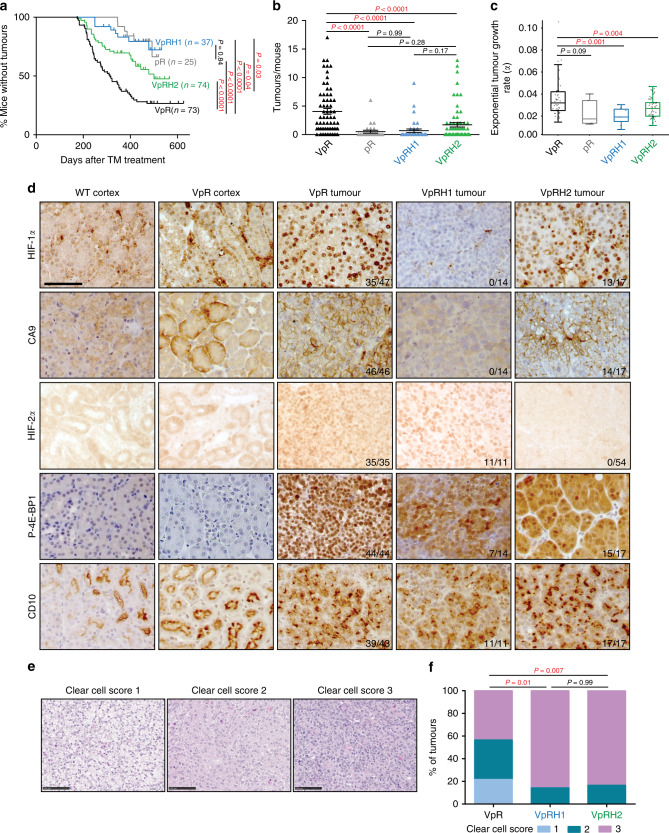
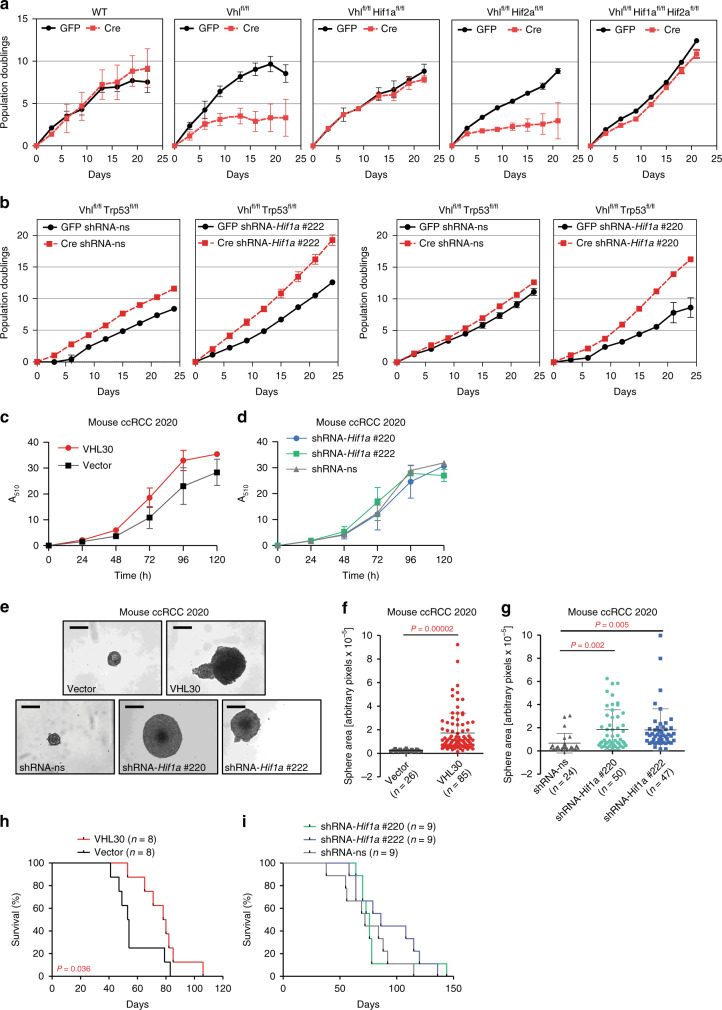
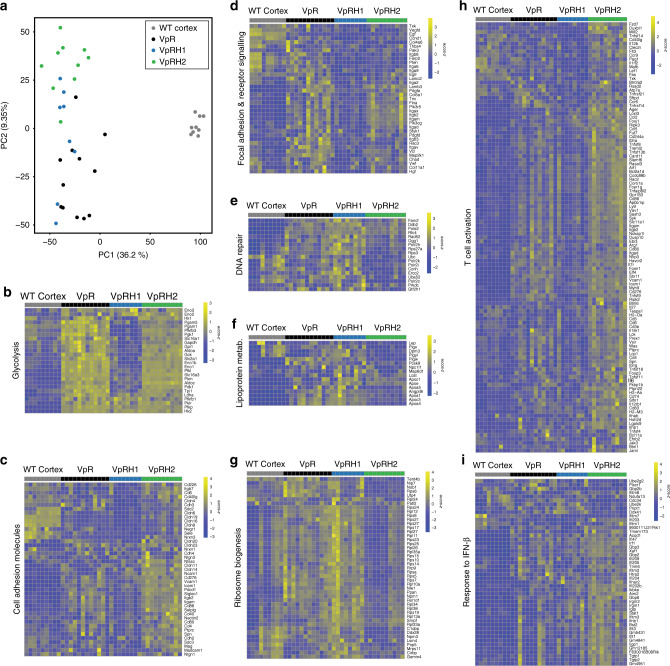
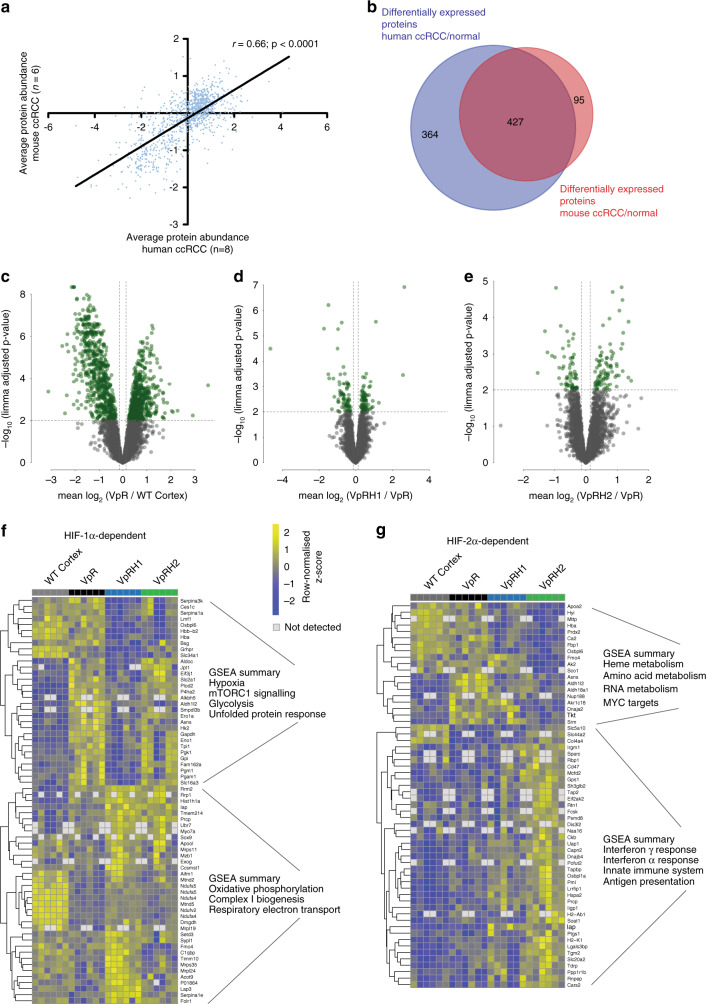
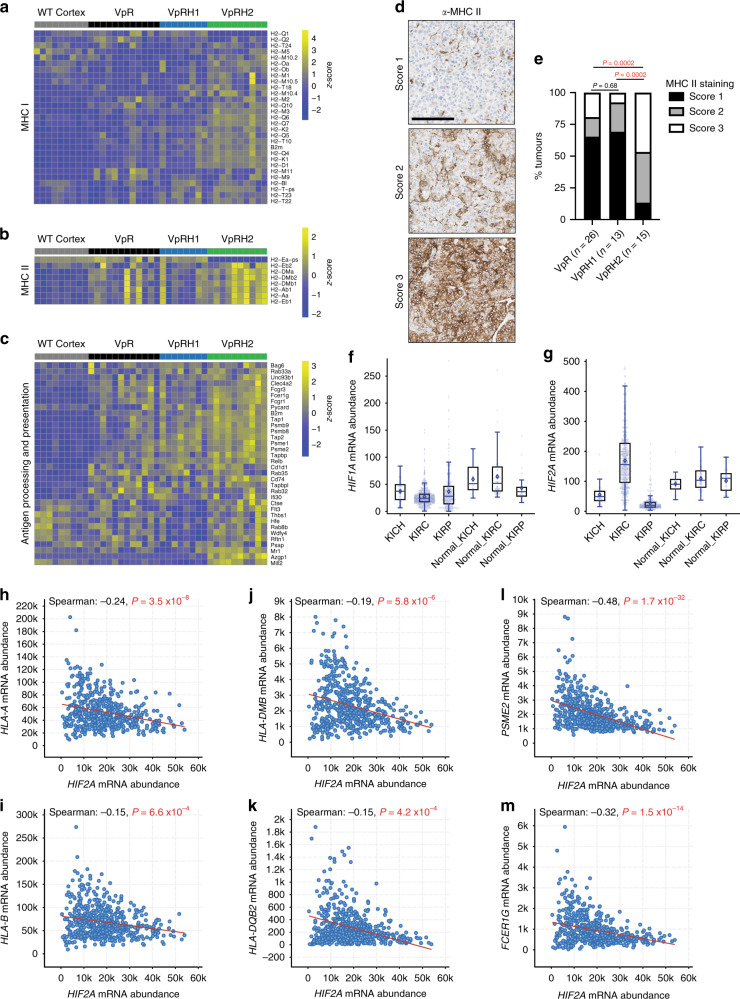
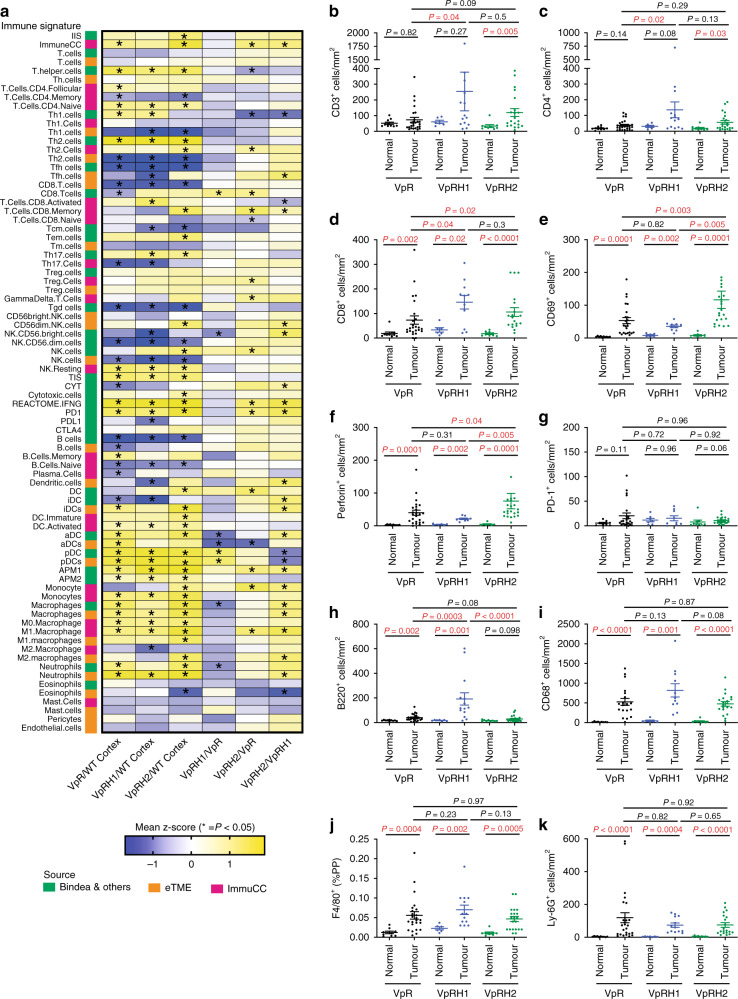
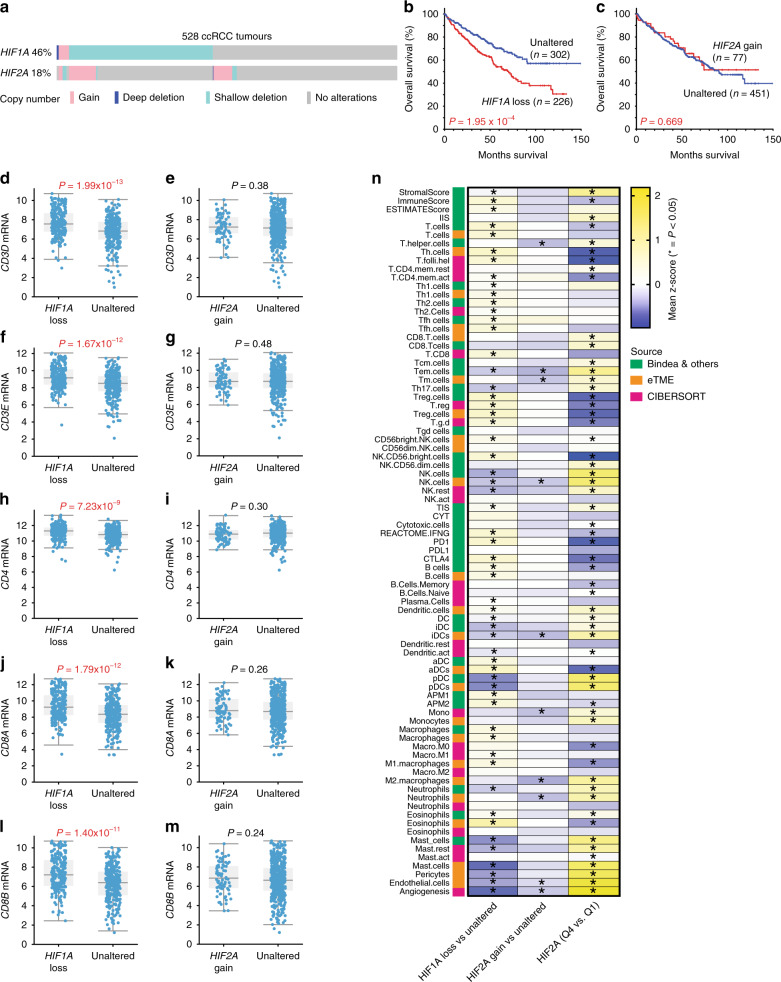
Mutational inactivation of VHL is the earliest genetic event in the majority of clear cell renal cell carcinomas (ccRCC), leading to accumulation of the HIF-1α and HIF-2α transcription factors. While correlative studies of human ccRCC and functional studies using human ccRCC cell lines have implicated HIF-1α as an inhibitor and HIF-2α as a promoter of aggressive tumour behaviours, their roles in tumour onset have not been functionally addressed. Herein we show using an autochthonous ccRCC model that Hif1a is essential for tumour formation whereas Hif2a deletion has only minor effects on tumour initiation and growth. Both HIF-1α and HIF-2α are required for the clear cell phenotype. Transcriptomic and proteomic analyses reveal that HIF-1α regulates glycolysis while HIF-2α regulates genes associated with lipoprotein metabolism, ribosome biogenesis and E2F and MYC transcriptional activities. HIF-2α-deficient tumours are characterised by increased antigen presentation, interferon signalling and CD8 + T cell infiltration and activation. Single copy loss of HIF1A or high levels of HIF2A mRNA expression correlate with altered immune microenvironments in human ccRCC. These studies reveal an oncogenic role of HIF-1α in ccRCC initiation and suggest that alterations in the balance of HIF-1α and HIF-2α activities can affect different aspects of ccRCC biology and disease aggressiveness.
Overview
The claims and statistics of this paper haven’t been checked yet.
Free: it reads the open-access text and checks the first 5 claims that cite a source we can check. Create a free account to check every claim.
Integrity signals
Registry
Cites
Statistics
Figures
Verification
Claims the paper makes
The claims and statistics of this paper haven’t been checked yet.
Free: it reads the open-access text and checks the first 5 claims that cite a source we can check. Create a free account to check every claim.
Claims other papers make about this one
Each is checked against this paper’s own text: does it say what the citing paper says it does?
The source backs part of the claim, not all of it — or backs it for a different population, condition or comparison.
In the citing paper
“Furthermore, although loss of chromosome 14q spanning the HIF1A locus occurs frequently in RCC, recent studies suggest that HIF1A may not be the target of 14q deletion, challenging the notion of HIF-1α as a tumor suppressor in ccRCC [30,31].”
From Revisiting the HIF switch in the tumor and its immune microenvironment. (2022) · cites this paper as [31]
Experimental — accuracy not yet measured
Self-check
Percentages, sums and reported differences re-computed from the paper’s own numbers.
The self-check needs the paper’s full text.
Citations
Cites
1 retracted
RETRACTED: Acriflavine inhibits HIF-1 dimerization, tumor growth, and vascularization
Lee, K., Zhang, H., Qian, D. Z., Rey, S., Liu, J. O., & Semenza, G. L. (2009) · Proceedings of the National Academy of Sciences · doi:10.1073/pnas.0909353106 · Cited by 451
RetractedModerated estimation of fold change and dispersion for RNA-seq data with DESeq2
Love, M. I., Huber, W., & Anders, S. (2014) · Genome Biology · doi:10.1186/s13059-014-0550-8 · Cited by 95,106
Bray, F., Ferlay, J., Soerjomataram, I., Siegel, R. L., Torre, L. A., & Jemal, A. (2018) · CA: A Cancer Journal for Clinicians · doi:10.3322/caac.21492 · Cited by 84,109
Trimmomatic: a flexible trimmer for Illumina sequence data
Bolger, A. M., Lohse, M., & Usadel, B. (2014) · Bioinformatics · doi:10.1093/bioinformatics/btu170 · Cited by 65,548
Subramanian, A., Tamayo, P., Mootha, V. K., Mukherjee, S., Ebert, B. L., Gillette, M. A., Paulovich, A., Pomeroy, S. L., Golub, T. R., Lander, E. S., et al. (2005) · Proceedings of the National Academy of Sciences · doi:10.1073/pnas.0506580102 · Cited by 53,625
STAR: ultrafast universal RNA-seq aligner
Dobin, A., Davis, C. A., Schlesinger, F., Drenkow, J., Zaleski, C., Jha, S., Batut, P., Chaisson, M., & Gingeras, T. R. (2013) · Bioinformatics · doi:10.1093/bioinformatics/bts635 · Cited by 51,709
Gene Ontology: tool for the unification of biology
Ashburner, M., Ball, C. A., Blake, J. A., Botstein, D., Butler, H., Cherry, J. M., Davis, A. P., Dolinski, K., Dwight, S. S., Eppig, J. T., et al. (2000) · Nature Genetics · doi:10.1038/75556 · Cited by 43,206
Cerami, E., Gao, J., Dogrusoz, U., Gross, B. E., Sumer, S. O., Aksoy, B. A., Jacobsen, A., Byrne, C. J., Heuer, M. L., Larsson, E., et al. (2012) · Cancer Discovery · doi:10.1158/2159-8290.cd-12-0095 · Cited by 17,455
Integrative Analysis of Complex Cancer Genomics and Clinical Profiles Using the cBioPortal
Gao, J., Aksoy, B. A., Dogrusoz, U., Dresdner, G., Gross, B., Sumer, S. O., Sun, Y., Jacobsen, A., Sinha, R., Larsson, E., et al. (2013) · Science Signaling · doi:10.1126/scisignal.2004088 · Cited by 15,160
Robust enumeration of cell subsets from tissue expression profiles
Newman, A. M., Liu, C. L., Green, M. R., Gentles, A. J., Feng, W., Xu, Y., Hoang, C. D., Diehn, M., & Alizadeh, A. A. (2015) · Nature Methods · doi:10.1038/nmeth.3337 · Cited by 13,224
Cited by
Items 201–300 of 313
Deletion of the transcription factor ATF4 in a model of clear cell renal cell carcinoma
Chi, Y., Chikara, S., Aguila, E. M. D., Zhang, T., Geri, J. B., Nanus, D. M., & Gudas, L. J. (2025) · Neoplasia · doi:10.1016/j.neo.2025.101188 · Cited by 4
“This activation of HIF1 α can lead to high levels of vascularization and immune cell infiltration in ccRCC [10,11].”
Waldum, H. L. (2021) · Cancers · doi:10.3390/cancers13133159 · Cited by 4
“This concept is about to have a therapeutic implication [108].”
BackgroundNovel genetically engineered mouse models for clear cell renal cell carcinoma
van der Mijn, J. C., Laursen, K. B., Fu, L., Khani, F., Dow, L. E., Nowak, D. G., Chen, Q., Gross, S. S., Nanus, D. M., & Gudas, L. J. (2023) · Scientific Reports · doi:10.1038/s41598-023-35106-7 · Cited by 6
Programming of the endometrial immune milieu by interferon gamma during early pregnancy in pigs
Sponchiado, M., Gu, W., Madrid, D. M. D. C., Carroll, R. A., Davenport, K. M., Lucas, C. G., Sullivan, R. M., Wells, K. D., Driver, J. P., Warren, W. C., et al. (2025) · Biology of Reproduction · doi:10.1093/biolre/ioaf221 · Cited by 3
Qiu, B., Wang, Q., Peng, H., Yang, Z., Zhu, Z., Qiu, L., & Lin, J. (2025) · Chemical & Biomedical Imaging · doi:10.1021/cbmi.5c00151 · Cited by 4
Huang, Y., Zhang, W., Xu, W., Du, L., Zhang, X., Wang, W., Shi, G., & Wang, J. (2026) · Journal of the Renin-Angiotensin-Aldosterone System · doi:10.1177/14703203251401461 · Cited by 3
Structural variation drives enhancer hijacking via 3D genome disruption in ccRCC
Dong, Y., Xia, W., Yang, Z., Ren, L., Wang, H., Zhou, Y., Li, Q., Chen, Z., Xia, Z., Zheng, Y., et al. (2026) · npj Digital Medicine · doi:10.1038/s41746-025-02186-w · Cited by 3
Development of CAIX-targeted radioligand theranostic pairs for clear cell renal cell carcinoma
Liu, Y., Mo, C., Dong, Y., Tang, P., Li, H., Xu, Z., Zhao, Y., Chen, H., & Hu, K. (2026) · Chemical Engineering Journal · doi:10.1016/j.cej.2026.174381 · Cited by 3
Zou, C., Wang, Y. J., Chen, Q., Shi, J., Wu, X., & Luo, Q. (2026) · Frontiers in Oncology · doi:10.3389/fonc.2026.1745024 · Cited by 3
Wang, D., Horton, T. M., Lee, K. D., Ogobuiro, I. C., Vatankhah, F., Ramos-Andrade, I., Pisano, J. C., Thakur, V. S., Gurevich, M. K., Taylor, S., et al. (2026) · Cancer Research · doi:10.1158/0008-5472.can-25-3236 · Cited by 3
Fang, Q., Li, Z., Xue, Y., Zong, X., Ma, W., Xi, G., Wu, Y., & Li, Z. (2022) · Anti-Cancer Agents in Medicinal Chemistry · doi:10.2174/1871520622666220825155125 · Cited by 3
Peighambari, A., Huang, H., Metzger, P., Adlesic, M., Zodel, K., Schäfer, S., Seidel, P., Braun, L. M., Hülsdünker, J., Melchinger, W., et al. (2025) · Scientific Reports · doi:10.1038/s41598-025-04917-1 · Cited by 3
“…cluster-specific differential gene expression analyses with cellular lineage markers that were identified in previous scRNA-seq studies of resident renal cells 23,24 , our previous bulk RNA-seq studies of the mouse ccRCC model 19,20 , and well-established marker genes to annotate clusters (Fig.”
InfluentialSelf-citationProangiogenic effects of peritumoral adipose tissue in kidney cancer
Ferrando, M., Bannoud, N., Arboccó, F. C. V., Romeo, L. R., López‐Fontana, C. M., Carón, R. W., Bruna, F., Croci, D. O., & Pistone‐Creydt, V. (2025) · Frontiers in Medicine · doi:10.3389/fmed.2025.1652589 · Cited by 3
Pham, T., Ohe, C., Yoshida, T., Nakamoto, T., Kinoshita, H., & Tsuta, K. (2023) · Pathology - Research and Practice · doi:10.1016/j.prp.2023.154841 · Cited by 4
The implied dysregulated RKIP-hypoxia axis in cancer and immune evasion: Clinical implications
McWhorter, R., Chouaïb, S., & Bonavida, B. (2025) · Drug Resistance Updates · doi:10.1016/j.drup.2025.101328 · Cited by 2
Li, S., Chen, Y., Jie, L. F., Zhou, X., Miao, W., 舒宏瑞, Zhao, W., Wang, Y., Wu, T., Luo, J., et al. (2026) · Bioorganic Chemistry · doi:10.1016/j.bioorg.2026.109890 · Cited by 2
He, H., Liu, X.-D., & Jonasch, E. W. (2026) · MedScience · doi:10.1007/s11684-025-1136-4 · Cited by 2
Von Hippel-Lindau disease: pathophysiological and clinical advances
van Alfen, S. J., van der Tuin, K., van de Kooij, B., Links, T. P., & Zandee, W. T. (2026) · Familial Cancer · doi:10.1007/s10689-026-00579-8 · Cited by 2
“For example, HIF-2α is generally considered the oncogenic driver in ccRCC, whereas HIF-1α is considered to be dispensable, or even act as a tumor suppressor [25].”
Yu, Y., Huang, H., & Liang, H. (2023) · The Journal of Gene Medicine · doi:10.1002/jgm.3494 · Cited by 2
Moratalla, A. B. P., Carrión, B., Heras, K. V. G. D. L., Arias-Salazar, L., Yélamos-Sanz, B., Segura, T., & Serrano‐Heras, G. (2025) · Biomedicines · doi:10.3390/biomedicines13051234 · Cited by 3
Metabolic Reprogramming in Kidney Cancer: Implications for Therapy
Edo, E. T. (2025) · annals of urologic oncology · doi:10.32948/auo.2025.06.02 · Cited by 2
“HIF-1α and HIF-2α serve as master regulators of metabolic adaptation in kidney cancer, with their aberrant activation representing a molecular hallmark of ccRCC [44].”
Fracassi, C., Simoni, M., Uggé, M., Morelli, M. J., & Bernardi, R. (2024) · Heliyon · doi:10.1016/j.heliyon.2024.e36499 · Cited by 1
“These include known tissue-specific oncogenes like HIF2 α ( EPAS1 ), which is aberrantly expressed in ccRCC [14], and PROX1, which is overexpressed and promotes migration and invasion in TNBC [15].”
Investigating the regulatory mechanism of glucose metabolism by ubiquitin-like protein MNSFβ
Kono, M., Yamasaki, K., & Nakamura, M. (2024) · Molecular Biology Reports · doi:10.1007/s11033-024-10009-6 · Cited by 1
“HIF-1α overexpression has been found in various can - cer types and is related to tumor aggressiveness [13–15 ].”
SET1B Drives Sustained HIF Activity and Disease Progression in Clear-Cell Renal Cell Carcinoma
Ortmann, B. M., Pauzaite, T., Bertlin, J. A. C., Seear, R., Arnaiz, E., Marzec, L. W., Handyside, A., Bowker, L. M., Barnett, S. E., Harcourt, K., et al. (2026) · Cancer Research · doi:10.1158/0008-5472.can-25-1076 · Cited by 1
“Moreover, HIFs also play roles in inflammation, immune modulation, and tumor progression, making the HIF pathway a promising therapeutic target (3–5).”
Liu, X., Wang, H., Wang, K., & Liu, Y. (2025) · PLoS ONE · doi:10.1371/journal.pone.0322639 · Cited by 2
“Elevated ribosome biogenesis has been observed in clear cell renal cell carcinoma [13] and during kidney development [14], indicating its importance in both disease and normal physiological processes.”
Targeting Tumor‐Immune Microenvironment with Organoid and Organ‐on‐a‐Chip: An Updated Review
Madani, S., Holman, J. B., Rajput, M. U., Ali, S. W., Shi, Z., Qiu, B., Zhang, A., Li, C., & Ding, W. (2025) · Advanced Materials Technologies · doi:10.1002/admt.202501704 · Cited by 1
Bi, Y., Wang, R., Lu, L., Wang, L., Chen, X., Nie, X., Meng, J., & Cai, S. (2025) · Clinical and Experimental Medicine · doi:10.1007/s10238-025-01978-4 · Cited by 1
EGLN1 (PHD2) role in tumor microenvironment: insights for therapeutic targeting
Verna, G., Fantini, V., Grieco, A., Ciarrocchi, A., & Sancisi, V. (2025) · Experimental & Molecular Medicine · doi:10.1038/s12276-025-01602-1 · Cited by 3
“These results suggest a context-dependent effect of the two factors and a possible complementarity of their functions in cancer development 34 .”
Roles of E3 ubiquitin ligases and deubiquitinating enzymes in renal cell carcinoma
Jiang, M., Si, W., Huang, S., Qu, S., Zhang, M., & Quan, Y. (2026) · Frontiers in Oncology · doi:10.3389/fonc.2025.1628710 · Cited by 1
Mitochondrial changes in clear cell renal cell carcinoma: mechanisms and potential targets
Yang, J., Pan, X., Luo, X., Zheng, X., & Wang, J. (2026) · Biochemical and Biophysical Research Communications · doi:10.1016/j.bbrc.2026.153354 · Cited by 1
USP10 regulates HIF2α stability by deubiquitinating HIF2α regardless of VHL status in kidney cancer
Xu, S., Huang, W., Ma, B., & Li, X. (2026) · Translational Andrology and Urology · doi:10.21037/tau-2025-aw-778 · Cited by 1
“Owing to its overexpression and increased activity, HIF2 α is a key oncogenic driver in RCC (6).”
Cobalt Chloride Protects Against Intestinal Irradiation‐Induced Injury by Activating the HIF ‐2α
Zhao, J., Liu, R., Shou, Z., Fang, L., Wang, Y., Feng, Z., Cai, S., Yu, R., Cheng, Y., Du, J., et al. (2026) · The FASEB Journal · doi:10.1096/fj.202501410r · Cited by 1
“For example, HIF-1α directly regulates the expression of many glycolysis-related genes within tumors, while HIF-2α enhances the transcriptional activity of c-Myc to promote proliferation of hypoxic cells [14].”
Yongjie, L., Jingjing, W., Yimeng, S., Aolong, W., Rui, Y., Jianru, W., Bin, L., Wang, Y., Wang, X., & Zhu, M. (2026) · Frontiers in Pharmacology · doi:10.3389/fphar.2026.1771529 · Cited by 1
Guo, Z., Jiang, H., Wang, X., Xuan, K., Zhong, H., Liu, C., Zhang, M., Li, Z., Huang, W., & Sun, Y. (2026) · Cell Death Discovery · doi:10.1038/s41420-026-03013-1 · Cited by 1
“In a mouse model, HIF-1 α has been shown to induce glycolytic reprogramming and tumorigenesis [13].”
Emerging roles of ATP citrate lyase in kidney diseases: from pathogenic driver to therapeutic target
Wei, M., Tao, M., Tan, H., Jin, Z., Yang, Y., Xiao, Z., Li, G., & Chen, Y. (2026) · Renal Failure · doi:10.1080/0886022x.2026.2652826 · Cited by 1
Dai, H., Chu, X., Du, H., Yang, S., Yao, Y., Yu, X., Zhao, Y., Dong, P., Lyu, Z., Wang, W., et al. (2026) · Nature Communications · doi:10.1038/s41467-026-71785-2 · Cited by 1
Dynamic molecular networks unveil the mechanism behind hypoxia‐induced tumour cell dormancy
Wang, P., Li, H. X., Lan, Y., Zhang, H. G., Li, C. F., Zhang, X., & Wang, W. (2026) · Biological reviews/Biological reviews of the Cambridge Philosophical Society · doi:10.1002/brv.70195 · Cited by 2
Fan, K., Zhou, Y., Xu, J., Mathis, B. J., Hao, J., Feng, Y., Lin, J., Yu, X., Liu, S., Sun, D., et al. (2026) · Free Radical Biology and Medicine · doi:10.1016/j.freeradbiomed.2026.07.022 · Cited by 1
Zhang, Y., Kho, B. S., Wang, X., Lu, H., Zhu, M., Zhu, R., & Wang, Y. (2026) · Cancers · doi:10.3390/cancers18142250 · Cited by 1
NQO1 at the crossroads of oxidative stress, cancer, and therapeutic innovation
Ybarra, M. M., Kumar, A. P., & Ghosh, R. (2026) · Biochemical Pharmacology · doi:10.1016/j.bcp.2026.118363 · Cited by 1
Auletta, F., Ieranò, C., Febbraro, D. G. D., Bello, A. M., Rea, G., Napolitano, M., Galdiero, F., Guardascione, G., Trotta, A. M., Santagata, S., et al. (2026) · Cell Death Discovery · doi:10.1038/s41420-026-03026-w · Cited by 2
Renal Cell Carcinoma: Histopathology, Molecular Features, and the Emerging Role of Organoid Models
Coppola, A. K., Shahini, A., Mehrjoo, Z., Tarikere, S., Tanguay, S., & Riazalhosseini, Y. (2026) · Gene · doi:10.1016/j.gene.2026.150216 · Cited by 1
Regulated cell death programs shaping cancer therapy
Luo, H., & Guo, Y. (2026) · Cellular Oncology · doi:10.1007/s13402-026-01232-3 · Cited by 1
“Dysregulation of HIF-1α occurs in multiple malig - nancies [241], and this dysregulation can transcriptionally activate lactate dehydrogenase (LDH), further promoting glycolytic reprogramming [242, 243 ].”
Satardey, R., Yadav, R., Das, M., & Pal, D. K. (2022) · Annals of Medical Science and Research · doi:10.4103/amsr.amsr_38_22 · Cited by 1
Non-canonical approaches to targeting hypoxic tumors.
Zhao, S., & El‐Deiry, W. S. (2022) · PubMed Central · Cited by 2
Predictive genomic biomarkers of therapeutic effects in renal cell carcinoma
Yan, W., Hou, N., Zheng, J., & Zhai, W. (2023) · Cellular Oncology · doi:10.1007/s13402-023-00827-4 · Cited by 1
“This reduces the expression of antigens and the activation and infiltration of CD8 + T cells and interferon signaling [152].”
Can Next Generation Sequencing Data be used to help characterise clear cell renal cell carcinoma?
Kanaan, R. (2022) · Otago University Research Archive (University of Otago) · Cited by 1
Wang, Y. (2021) · Biomedical Journal of Scientific & Technical Research · doi:10.26717/bjstr.2021.35.005764
“HIF - 1 alpha to participate in the glucose metabolism of tumor cells, tumor cell metabolism ability is higher than the surrounding normal tissues and its metabolic characteristic is by glycolysis of glucose to their own needs a lot of energy, tumor growth is the lack of blood supply area rely on glycolytic energy, an…”
BackgroundMihailović, S., Dzamic, Z. M., & Pljesa-Ercegovac, M. S. (2022) · Medicinski podmladak · doi:10.5937/mp73-35557 · Cited by 1
Nam, E.-J., Kong, S.-K., Cho, I., Paik, S. R., & Kim, Y. (2023) · Journal of Drug Delivery Science and Technology · doi:10.1016/j.jddst.2023.105179 · Cited by 1
A Review: Novel Therapies for Advanced Clear Cell Renal Cell Carcinoma
Mar, N., Dwabe, S., Kaakour, D., Seyedin, S. N., Rezazadeh, A., & Daneshvar, M. (2024) · Kidney Cancer · doi:10.1177/24684570241288088
“9 Subsequent mutations or chromosomal copy number alterations in epigenetic regulatory genes (including PBRM1, BAP1, SETD2, and KDM5C), cell-cycle regulatory genes (including TP53, CDKN2A, and MYC), or PI3K pathway genes (including PIK3CA, PTEN, MTOR, and TSC1) arise recurrently in ccRCC and are…”
Seal, S., Luchtel, R. A., Akram, T., Isaila, B., Perry, K. T., Procissi, D., Hafizi, S., & Shenoy, N. K. (2024) · bioRxiv (Cold Spring Harbor Laboratory) · doi:10.1101/2024.12.01.625494 · Cited by 1
Hypoxia-Inducible Factors: Regulation and Therapeutic Potential
Lin, I., Chang, K., Cheng, F., Kanwar, R. K., Kamplikar, P., Kanwar, J. R., & Cheung, C. H. A. (2025) · Springer eBooks · doi:10.1007/978-981-96-1016-7_11 · Cited by 1
Advancements in RNA-targeted therapies for renal cell carcinoma
Zhang, H., Lin, A., Cai, C., Liu, Y., Fang, Y., Luo, P., Jiang, A., & Wang, L. (2025) · European Journal of Pharmacology · doi:10.1016/j.ejphar.2025.177788
The Fundamentals of Cancer Immunity
Jia, H., Yang, L., & Liu, J. (2025) · Royal Society of Chemistry eBooks · doi:10.1039/9781837675739-00098 · Cited by 1
Ha, H., Wang, J., Zhang, X., Du, Y., Xiong, W., Li, S., & Shang, P. (2025) · Translational Andrology and Urology · doi:10.21037/tau-2025-197
“Clear cell renal cell carcinoma (ccRCC) constitutes approximately 70–80% of all kidney malignancies (2).”
Collagen Prolyl Hydroxylases Regulate HIF-α Levels Independently of pVHL in ccRCCPreprint
Green, Y. S., Acuña-Pilarte, K., Jones, M., Halberg, L. M.-T., Ho, T. H., & Koh, M. Y. (2025) · bioRxiv (Cold Spring Harbor Laboratory) · doi:10.1101/2025.09.14.676157
NRF2 Dysregulation and Its Implications in Renal Cell Carcinoma
Jang, B., & Kwak, M. (2025) · Drug Targets and Therapeutics · doi:10.58502/dtt.25.0013
Zhang, B., Wang, Z., Tang, Y., Ma, G., Liu, Y., Li, Y., Hao, J., Ye, J., Sun, X., & Lu, L. (2025) · International Journal of Biological Macromolecules · doi:10.1016/j.ijbiomac.2025.149676
Mechanisms of Synthetic Lethality in Renal Cell Carcinoma
Bertlin, J. A. C. (2023) · Apollo (University of Cambridge) · doi:10.17863/cam.106713
Chernyakov, D., Groß, A., Fischer, A., Bornkessel, N., Schultheiß, C., Gerloff, D., & Edemir, B. (2021) · Figshare · doi:10.6084/m9.figshare.14927033
Chernyakov, D., Groß, A., Fischer, A., Bornkessel, N., Schultheiß, C., Gerloff, D., & Edemir, B. (2021) · Figshare · doi:10.6084/m9.figshare.14927042
Fengzhi, L. I., Aljahdali, I. A. M., Zhang, R., Nastiuk, K. L., Krolewski, J. J., & Ling, X. (2021) · Figshare · doi:10.6084/m9.figshare.15162096
Faurot, S. (2022) · Iowa Research Online (The University of Iowa) · doi:10.25820/etd.006829
Chernyakov, D., Groß, A., Fischer, A., Bornkessel, N., Schultheiß, C., Gerloff, D., & Edemir, B. (2021) · Figshare · doi:10.6084/m9.figshare.14927036
Chernyakov, D., Groß, A., Fischer, A., Bornkessel, N., Schultheiß, C., Gerloff, D., & Edemir, B. (2021) · Figshare · doi:10.6084/m9.figshare.14927012
Chernyakov, D., Groß, A., Fischer, A., Bornkessel, N., Schultheiß, C., Gerloff, D., & Edemir, B. (2021) · Figshare · doi:10.6084/m9.figshare.14927018
Chernyakov, D., Groß, A., Fischer, A., Bornkessel, N., Schultheiß, C., Gerloff, D., & Edemir, B. (2021) · Figshare · doi:10.6084/m9.figshare.14927015
Chernyakov, D., Groß, A., Fischer, A., Bornkessel, N., Schultheiß, C., Gerloff, D., & Edemir, B. (2021) · Figshare · doi:10.6084/m9.figshare.14927039
Liu, R., Feng, Y., Deng, Y., Zou, Z., Ye, J., Cai, Z., Zhu, X., Liang, Y., Lu, J., Zhang, H., et al. (2021) · Figshare · doi:10.6084/m9.figshare.14746861
Costa, A. B. F. (2022) · Portuguese National Funding Agency for Science, Research and Technology (RCAAP Project by FCT) · doi:10.34626/5c1z-es24
Additional file 1 of LRRK2 is a candidate prognostic biomarker for clear cell renal cell carcinoma
Yang, C., Pang, J., Xu, J., Pan, H., Li, Y., Zhang, H., Liu, H., & Xiao, S.-Y. (2021) · Figshare · doi:10.6084/m9.figshare.14905795
Xi, Y., Shen, Y., Wu, D., Zhang, J., Lin, C., Wang, L., Yu, C., Yu, B., & Shen, W. (2022) · Figshare · doi:10.6084/m9.figshare.20326413
Chernyakov, D., Groß, A., Fischer, A., Bornkessel, N., Schultheiß, C., Gerloff, D., & Edemir, B. (2021) · Figshare · doi:10.6084/m9.figshare.14927009
The development of autoantibody diagnostics in renal cell carcinoma
Tsoumpeli, M. (2021)
Farmácia Filomena, Vila Nova de Gaia
Sousa, A. P. (2023) · Portuguese National Funding Agency for Science, Research and Technology (RCAAP Project by FCT) · doi:10.34626/band-0952
Παχυσαρκία και καρκίνος του νεφρού
Κατσίκα, Έ. Δ. (2023) · University of Thessaly Institutional Repository (University of Thessaly) · doi:10.26253/heal.uth.39627
Wilk, B. M., Gajapathy, M., Brown, D. M., Duncan, V. E., & Worthey, E. A. (2026) · Orphanet Journal of Rare Diseases · doi:10.1186/s13023-026-04228-2
Roennfeldt, A. E., Dinh, D. T., McPhee, T. R., Rose, R., Smith, K. M., Jayapal, M., Allen, T. P., Robker, R. L., Bersten, D. C., Peet, D. J., et al. (2026) · Molecular and Cellular Endocrinology · doi:10.1016/j.mce.2026.112754
Harrer, D. C., Lüke, F., Pukrop, T., Ghibelli, L., Reichle, A., & Heudobler, D. (2026) · Frontiers in Pharmacology · doi:10.3389/fphar.2026.1629187
Weng, K. Q., Li, X., Chen, X. B., Lin, J. W., Liu, L. J., Yan, L. Y., & Xie, R. Y. (2026) · Frontiers in Cell and Developmental Biology · doi:10.3389/fcell.2026.1720910
Dermal hypoxia adaptation promotes psoriasis progression by activating HIF2α-NAMPT pathwayPreprint
Lei, M., Jiang, J., Liu, W., Wang, D., Zou, Y., Xiao, Y., An, W., Xu, X., Yl, W., Xiang, X., et al. (2026) · Research Square · doi:10.21203/rs.3.rs-8647519/v1
Morales-Álvarez, C. M., Jiménez-Domínguez, A. C., Rios-Pelegrina, R. M., Arance, E., Marín-Benesiu, F., Vázquez-Alonso, F., Martínez-González, L. J., & Álvarez-Cubero, M. (2026) · Frontiers in Medicine · doi:10.3389/fmed.2026.1734511
“…of RCC are largely shaped by genetic alterations and dysregulation of gene expression in key pathways, including hypoxia signaling (VHL/HIF regulation), chromatin remodeling (SWI/SNF complex), and intracellular signaling cascades such as those mediated by inositol 1,4,5-triphosphate (IP3) (13).”
InfluentialKono, M. (2025) · Institutional Repositories DataBase (IRDB)
Tang, Z., Yu, X., Chen, X., Liang, J., Tu, Y., Zhou, Z., Yu, F., Zhang, C., Fan, S., & Tao, M. (2026) · Fishes · doi:10.3390/fishes11040233
Breaking the Hypoxia Barrier: Supramolecular Nanoassemblies Empower Photodynamic Therapy of Tumors
Peng, Y., Shi, C., Cao, Y., Shi, L., Fang, F., & Chen, X. S. (2026) · Angewandte Chemie · doi:10.1002/ange.202525238 · Cited by 2
Research Progress of Cuproptosis in Orthopaedics: Opportunities and Challenges
Wang, C., & An, P. (2026) · Journal of Cellular and Molecular Medicine · doi:10.1111/jcmm.71175
“Notably, HIF-1α exerts a more pronounced effect in early-stage clear cell renal cell carcinoma (ccRCC) [94] and neuroblastoma (NB) [95].”
Sexually dimorphic effects of mutations in ccRCC driver genes in renal proximal tubule cellsPreprint
Catalano, A., Kainz, C., Moos, K., Jaeger, S., Müller, M., Federkiel, Y., Witt, C. C., Cuomo, F., Waterhölter, A., Schoberth, M., et al. (2026) · bioRxiv (Cold Spring Harbor Laboratory) · doi:10.64898/2026.05.22.727114
“…by Vhl deletion in male proximal tubule cells to differentially expressed genes in ccRCC tumors resulting from Vhl/Trp53/Rb1 , Vhl/Trp53/Rb1/Hif1a or Vhl/Trp53/Rb1/Hif2a deletion in male mice (transcriptomes from female tumors are not available) compared to normal male renal cortex 23 .”
InfluentialSelf-citationDu, B.-B., Qian, Z., Zhu, C.-Z., & Guan, Q. (2026) · World Journal of Gastroenterology · doi:10.3748/wjg.119277
Xue, J., Deng, J., Qin, H., Li, Y., Jing, Z., Zhao, Z. Y., & Wang, H. (2026) · Discover Oncology · doi:10.1007/s12672-026-05365-7
“Additional changes include heightened expression of hypoxia-inducible factor 1α (HIF-1α) [122], specificity protein 1 (SP1) expression [123], tumor necrosis factor-α (TNF-α) expression [124], and aldehyde dehydrogenase (ALDH) activity [125].”
Xiao, Y., Chen, Y., Zhang, Z., Zhang, H., Yang, Z., Feng, Y., & Cai, L. (2026) · ACS Pharmacology & Translational Science · doi:10.1021/acsptsci.6c00077
Overview of clear cell renal cell carcinoma: from mechanisms to clinical
Yang, H., Zhang, X., Ji, Q., & Sheng, X. (2026) · Frontiers in Medicine · doi:10.3389/fmed.2026.1822724
From Tissue Specificity to Systemic Cues: Shaping MYC-Driven Tumor Metabolism
Alamoudi, A. A., Mao, Y., Zadra, G., & Labbé, D. P. (2026) · Cancer Research · doi:10.1158/0008-5472.can-26-0142
Oh, W. J., Park, J. O., Dahanayake, T. K., Yeom, S. Y., Ryu, H., Seo, S. I., & Kim, T. J. (2026) · Frontiers in Immunology · doi:10.3389/fimmu.2026.1864165
Dual loss of VHL and RASSF1A enhances tumorigenicity in clear cell renal cancer
Donninger, H., Ferrill, R., Hobbing, K., Vos, M., & Clark, G. J. (2026) · Frontiers in Oncology · doi:10.3389/fonc.2026.1884868
O 2 -sensing and HIF regulation: from oxygen homeostasis to tumor-associated immune responses
Schneider, V., Fandrey, J., & Winning, S. (2026) · American Journal of Physiology-Cell Physiology · doi:10.1152/ajpcell.00185.2026
Hailu, G. S., Fabbrizi, E., Mancini, A., Fiorentino, F., Mai, A., & Rotili, D. (2026) · Drug Discovery Today · doi:10.1016/j.drudis.2026.104769
Rustum, Y. M. (2026) · International Journal of Molecular Sciences · doi:10.3390/ijms27177858
Lou, J., Ren, Y., Gong, B., Guo, Y., Lv, D., Shan, S., Lu, Q., Sun, A., Wu, J., Chen, Y., et al. (2026) · Annals of Medicine · doi:10.1080/07853890.2026.2730502
“…in 2022 [1], of which the most prevalent subtype is clear cell renal cell carcinoma (ccRCC), accounting for approximately 70–80% of all cases [2,3]. ccRCC is characterized by significant molecular and immune heterogeneity, which plays crucial roles in tumour progression and patient outcomes…”
Du, J., Zhang, C., Zhang, L., Tian, J., Wang, W., Chen, F., Diao, L., & Yang, Q. (2026) · Arabian Journal of Chemistry · doi:10.25259/ajc_98_2026
Metadata
- Authors
- Hoefflin, R., Harlander, S., Schäfer, S., Metzger, P., Kuo, F., Schönenberger, D., Adlesic, M., Peighambari, A., Seidel, P., Chen, C.-Y., Consenza-Contreras, M., Jud, A., Lahrmann, B., Grabe, N., Heide, D., Uhl, F. M., Chan, T. A., Duyster, J., Zeiser, R., Schell, C., Heikenwalder, M., Schilling, O., Hakimi, A. A., Boerries, M., & Frew, I. J.
- Affiliations
- University of Freiburg (DE)
- University of Zurich (CH)
- Memorial Sloan Kettering Cancer Center (US)
- Heidelberg University (DE)
- German Cancer Research Center (DE)
- Corresponding author
- Frew, Ian J.
- ORCID
- Venue
- Nature Communications
- Published
- 2020-08-17
- Volume
- 11
- Issue
- 1
- Pages
- 4111-4111
- ISSN
- 2041-1723 (ISSN-L)
- PMC
- PMC7431415
- OpenAlex
- W3049040124
- Semantic Scholar
- da5bbf59efc2b0913155570ee08a44afb821066e
- Cited by
- 292
- References
- 110
- Citations by year
- 2026: 49 · 2025: 56 · 2024: 38 · 2023: 41 · 2022: 61 · 2021: 45 · 2020: 2
- FWCI
- 12.76
- Type
- journal article
- Language
- en
- Open access
- gold
- doi.org
- Licence
- cc-by
- creativecommons.org/licenses/by/4.0 (tdm)
- creativecommons.org/licenses/by/4.0 (vor)
- Locations
- Nature Communications (publishedVersion, cc-by)
- PubMed Central (publishedVersion, cc-by)
- PubMed (publishedVersion)
- RePEc: Research Papers in Economics (submittedVersion)
- DOAJ (DOAJ: Directory of Open Access Journals) (submittedVersion, cc-by-sa)
- Funders
- Else-Kröner-Fresenius Stiftung and Berta-Ottenstein Programme for Clinician Scientists
- Deutsche Forschungsgemeinschaft (CRC 850, SCHI 871/11-1)
- Topics
- Life Sciences › Biochemistry, Genetics and Molecular Biology › Cancer Research › Cancer, Hypoxia, and Metabolism
- Health Sciences › Medicine › Oncology › Renal cell carcinoma treatment
- Life Sciences › Biochemistry, Genetics and Molecular Biology › Cancer Research › Ferroptosis and cancer prognosis
- Keywords
- clear cell renal cell carcinoma, HIF-1α, HIF-2α, VHL inactivation, tumor initiation, tumor growth, tumor inflammation, glycolysis, lipoprotein metabolism, ribosome biogenesis, c-Myc, E2F transcription factors, antigen presentation, interferon signaling, CD8+ T cell infiltration, tumor immune microenvironment, tumor aggressiveness
- MeSH terms
- Endothelial PAS Domain-Containing Protein 1, Animals, Carcinoma, Renal Cell, Humans, Immunohistochemistry, Inflammation, Kidney Neoplasms, Mass Spectrometry, Blotting, Western, Gene Expression Regulation, Neoplastic, 3T3 Cells, Sequence Analysis, RNA, CD8-Positive T-Lymphocytes, Proteomics, Cell Line, Tumor, Cell Proliferation, Mice, Basic Helix-Loop-Helix Transcription Factors, Basic Helix-Loop-Helix Proteins, Hypoxia-Inducible Factor 1, alpha Subunit, Tumor Microenvironment, Real-Time Polymerase Chain Reaction
About these checks
Registry, retraction, Cites and statistics results are computed, not judged, with one exception: a printed reference that no index lists is read once by a model before it counts as a citation error. Claims are extracted by a model and kept only when their quote appears verbatim in the text; each cited source is then checked, with a model’s help, for whether it says what the claim relies on. Those verdicts can be wrong — read the claim’s quote and the cited source before relying on one.
Statistics and arithmetic are recomputed, not judged.
Confidence bands are shown only for fields calibrated on our annotated test set. None is calibrated yet, so no band is shown.
What counts as a claim ›How we measure confidence ›How we check this ›
Are you an author, or do you see a problem with this page? Request a review
Data sources
Bibliographic data: Semantic Scholar, OpenAlex, Crossref.
Contains information from the Semantic Scholar Academic Graph Datasets, made available under the ODC Attribution License (ODC-BY 1.0).
Semantic Scholar’s data is described in: Kinney, R., et al. (2023). The Semantic Scholar Open Data Platform. arXiv:2301.10140.
