

Printable microscale interfaces for long-term peripheral nerve mapping and precision control
Open accessPublished version of a preprint
The DOI matches its Crossref record; 127 of the 127 references it cites were found in a registry or an index.
Abstract
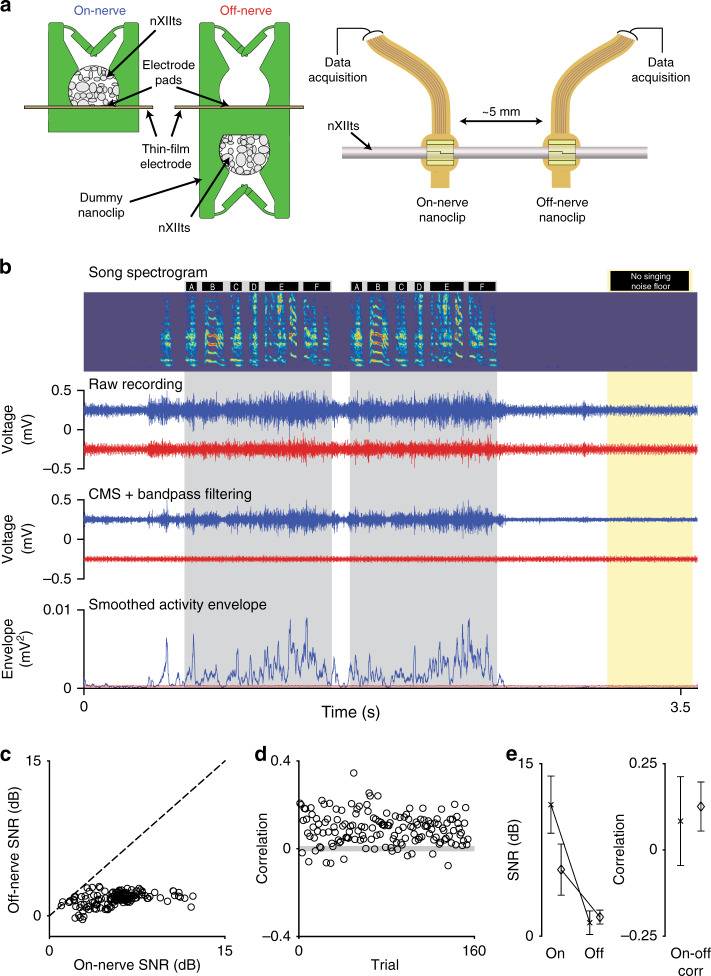
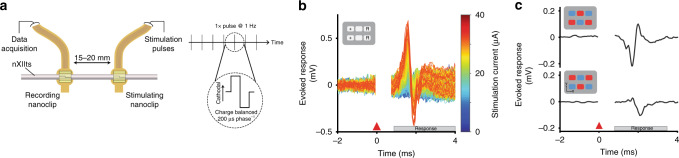
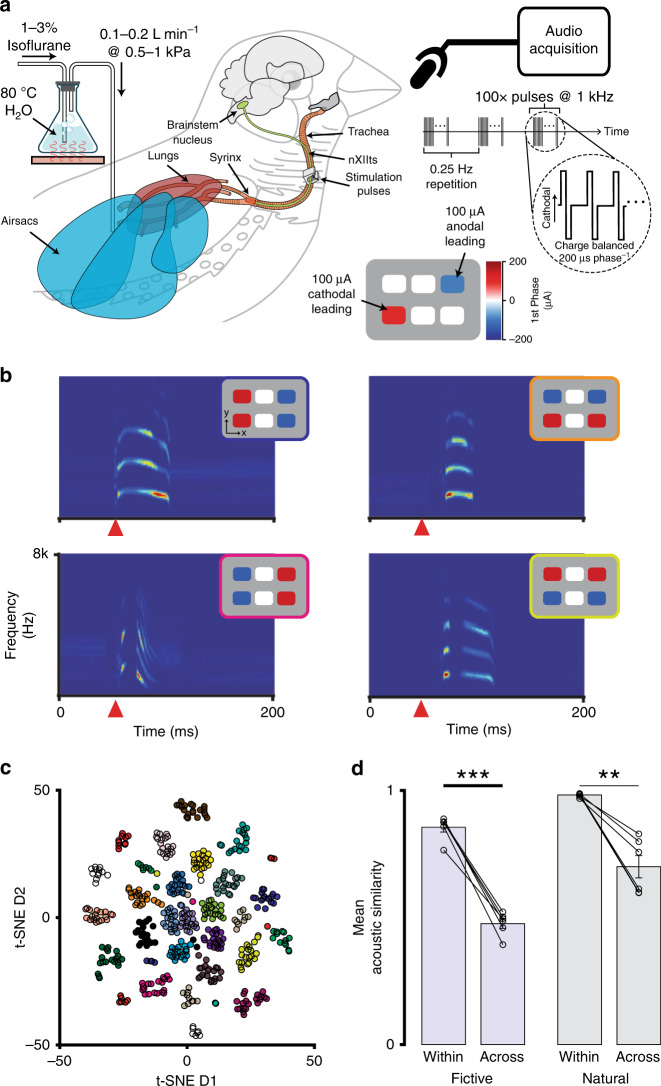
The nascent field of bioelectronic medicine seeks to decode and modulate peripheral nervous system signals to obtain therapeutic control of targeted end organs and effectors. Current approaches rely heavily on electrode-based devices, but size scalability, material and microfabrication challenges, limited surgical accessibility, and the biomechanically dynamic implantation environment are significant impediments to developing and deploying peripheral interfacing technologies. Here, we present a microscale implantable device – the nanoclip – for chronic interfacing with fine peripheral nerves in small animal models that begins to meet these constraints. We demonstrate the capability to make stable, high signal-to-noise ratio recordings of behaviorally-linked nerve activity over multi-week timescales. In addition, we show that multi-channel, current-steering-based stimulation within the confines of the small device can achieve multi-dimensional control of a small nerve. These results highlight the potential of new microscale design and fabrication techniques for realizing viable devices for long-term peripheral interfacing.
Overview
The claims and statistics of this paper haven’t been checked yet.
Free: it reads the open-access text and checks the first 5 claims that cite a source we can check. Create a free account to check every claim.
Integrity signals
Registry
Cites
Statistics
Figures
Verification
Claims the paper makes
The claims and statistics of this paper haven’t been checked yet.
Free: it reads the open-access text and checks the first 5 claims that cite a source we can check. Create a free account to check every claim.
Claims other papers make about this one
Each is checked against this paper’s own text: does it say what the citing paper says it does?
The cited source says what the claim attributes to it.
In the citing paper
“Compared to commercially available rigid electrodes based on silicon wafers and rigid packaging, flexible electrodes are also more biocompatible (details described in section 2) and can adapt to the complex tissue geometries of the human body,[293–295] such as sulci in the cerebral cortex,[296,297] bundled peripheral nerves,[298] and stretching motions on the skin.[299]”
From Flexible Electronics and Devices as Human–Machine Interfaces for Medical Robotics (2022) · cites this paper as [298]
Self-check
Percentages, sums and reported differences re-computed from the paper’s own numbers.
The self-check needs the paper’s full text.
Citations
Cites
Vagus nerve stimulation attenuates the systemic inflammatory response to endotoxin
Borovikova, L. V., Ivanova, S., Zhang, M., Yang, H., Botchkina, G. I., Watkins, L. R., Wang, H., Abumrad, N., Eaton, J. W., & Tracey, K. J. (2000) · Nature · doi:10.1038/35013070 · Cited by 4,211 · cited 3×
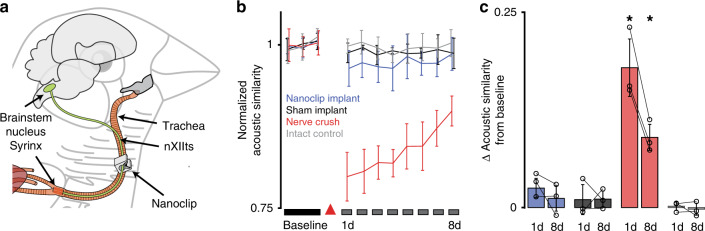
“Each bird received one of the following manipulations: (1) bilateral implant of nanoclip nerve interface (n= 3 birds); (2) bilateral sham implant (n= 3 birds); (3) bilateral nerve crush (transient ~1 N force applied to nXIIts with 2.”
BackgroundMethodPoisson's ratio and modern materials
Greaves, G. N., Greer, A. L., Lakes, R. S., & Rouxel, T. (2011) · Nature Materials · doi:10.1038/nmat3134 · Cited by 2,362
Neural Stimulation and Recording Electrodes
Cogan, S. F. (2008) · Annual Review of Biomedical Engineering · doi:10.1146/annurev.bioeng.10.061807.160518 · Cited by 2,243 · cited 4×
“Following nanoclip printing and post-processing (Figure S1b), the gold electrodes were plated with electrodeposited iridium oxide films (EIROF) (Cogan, 2008; Gillis et al., 2018), increasing their charge injection capacity (Figure S3) and reducing the likelihood of irreversible electrochemical processes at the electro…”
MethodInfluentialDynamics of ongoing activity: explanation of the large variability in evoked cortical responses
Arieli, A., Sterkin, A., Grinvald, A., & Aertsen, A. (1996) · Science · doi:10.1126/science.273.5283.1868 · Cited by 1,660 · cited 2×
“…interventions only provide snapshots of nerve function and fail to address how function is modulated outside of the experimental context or across physiological states (Arieli et al., 1996; Dhawale et al., 2017; Evarts, 1964; Gulati et al., 2014; Lee and Dan, 2012; Santhanam et al., 2007).”
BackgroundGarcía-Alonso, C. R., Pérez-Naranjo, L. M., & Fernández-Caballero, J. C. (2014) · Annals of Operations Research · doi:10.1007/s10479-011-0841-3 · Cited by 1,353
A review on 3D micro-additive manufacturing technologies
Vaezi, M., Seitz, H., & Yang, S. (2013) · The International Journal of Advanced Manufacturing Technology · doi:10.1007/s00170-012-4605-2 · Cited by 1,293 · cited 1×
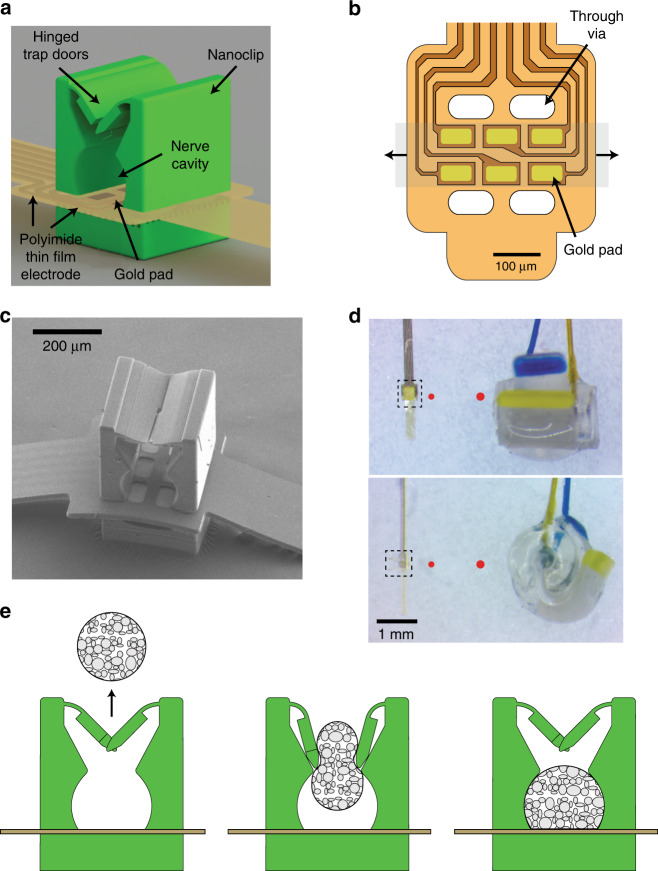
“Our approach combines thin-film microfabrication photolithography techniques (Feeney and Kounaves, 2000; Madou, 2011) and high-resolution 3D printing (Sun and Kawata, 2006; Vaezi et al., 2013) to realize an implantable device that more precisely matches the scale of small nerve implant targets (Figure 1a).”
MethodVariability, compensation and homeostasis in neuron and network function
Marder, E., & Goaillard, J.-M. (2006) · Nature Reviews Neuroscience · doi:10.1038/nrn1949 · Cited by 1,212
Electronic dura mater for long-term multimodal neural interfaces
Minev, I. R., Musienko, P., Hirsch, A., Barraud, Q., Wenger, N., Moraud, E. M., Gandar, J., Capogrosso, M., Milekovic, T., Asboth, L., et al. (2015) · Science · doi:10.1126/science.1260318 · Cited by 1,082 · cited 6×
“, 2015), and additional investigation of metamaterial designs that mimic the biomechanics of peripheral tissues could significantly improve long-term biointegration of these devices (Adly et al., 2018; Minev et al., 2015).”
InfluentialRestoring natural sensory feedback in real-time bidirectional hand prostheses
Raspopovic, S., Capogrosso, M., Petrini, F. M., Bonizzato, M., Rigosa, J., Di Pino, G., Carpaneto, J., Controzzi, M., Boretius, T., Fernandez, E., et al. (2014) · Science Translational Medicine · doi:10.1126/scitranslmed.3006820 · Cited by 1,001 · cited 2×
“Furthermore, the development of future closedloop bioelectronic therapies that record, decipher, and modulate ongoing activity will require continuous access to high-quality, stable nerve recordings (Birmingham et al., 2014; Famm et al., 2013; Raspopovic et al., 2014; Reardon, 2014).”
BackgroundNavarro, X., Krueger, T. B., Lago, N., Micera, S., Stieglitz, T., & Dario, P. (2005) · Journal of the Peripheral Nervous System · doi:10.1111/j.1085-9489.2005.10303.x · Cited by 845 · cited 2×
“For example, traditional extra-neural cuff electrodes interface with intact whole nerves, but have limited recording capability and are a challenge to size properly for fine nerve targets (Loeb and Peck, 1996; Navarro et al., 2005; Somann et al., 2017).”
Background
Research works printed but not linked: 1
- Ali F The basal ganglia is necessary for learning spectral, but not temporal, features of birdsong Neuron 2013 80 494 506 24075977 PMC3929499 · DOI
Cited by
Flexible Electronics and Devices as Human–Machine Interfaces for Medical Robotics
Heng, W., Solomon, S., & Gao, W. (2022) · Advanced Materials · doi:10.1002/adma.202107902 · Cited by 609
Direct laser writing of 3D electrodes on flexible substrates
Brown, M. A., Zappitelli, K. M., Singh, L., Yuan, R., Bemrose, M. A., Brogden, V., Miller, D. J., Smear, M. C., Cogan, S. F., & Gardner, T. J. (2023) · Nature Communications · doi:10.1038/s41467-023-39152-7 · Cited by 102
“This method was used in our prior work developing a peripheral nerve interface [27].”
MethodSelf-citationMimosa‐Inspired Stimuli‐Responsive Curling Bioadhesive Tape Promotes Peripheral Nerve Regeneration
Zhang, M., An, H., Gu, Z., Huang, Z., Zhang, F., Jiang, B., Wen, Y., & Zhang, P. (2023) · Advanced Materials · doi:10.1002/adma.202212015 · Cited by 92
Stretchable conductive fibers: Design, properties and applications
Song, X., Ji, J., Zhou, N., Chen, M., Qu, R., Li, H., Zhang, L., Ma, S., Ma, Z., & Wei, Y. (2024) · Progress in Materials Science · doi:10.1016/j.pmatsci.2024.101288 · Cited by 80
4D‐Printed Soft and Stretchable Self‐Folding Cuff Electrodes for Small‐Nerve Interfacing
Hiendlmeier, L., Zurita, F., Vogel, J., Duca, F. D., Boustani, G. A., Hu, P., Kopic, I., Nikić, M., Teshima, T., & Wolfrum, B. L. (2023) · Advanced Materials · doi:10.1002/adma.202210206 · Cited by 75
Welle, E. J., Patel, P. R., Woods, J. E., Petrossians, A., della Valle, E., Vega-Medina, A., Richie, J. M., Cai, D., Weiland, J. D., & Chestek, C. A. (2020) · Journal of Neural Engineering · doi:10.1088/1741-2552/ab8343 · Cited by 72
Noninvasive Stimulation of Peripheral Nerves using Temporally‐Interfering Electrical Fields
Botzanowski, B., Donahue, M. J., Ejneby, M. S., Gallina, A. L., Ngom, I., Missey, F., Acerbo, E., Byun, D., Carron, R., Cassara, A. M., et al. (2022) · Advanced Healthcare Materials · doi:10.1002/adhm.202200075 · Cited by 66
Machine Learning for Bioelectronics on Wearable and Implantable Devices: Challenges and Potential
Goh, G. D., Lee, J. M., Goh, G. L., Huang, X., Lee, S., & Yeong, W. Y. (2022) · Tissue Engineering Part A · doi:10.1089/ten.tea.2022.0119 · Cited by 52
“Polymeric materials, such as polyimide, 59,60 paryleneC, 61–63 and Polydimethylsiloxane (PDMS) 63,64 have been used to reduce the modulus gap between tissue and devices.”
3D printing of functional bioengineered constructs for neural regeneration: a review
Zhu, H., Yao, C., Wei, B.-Y., Xu, C., Huang, X., Liu, Y., He, J., Zhang, J., & Li, D. (2023) · International Journal of Extreme Manufacturing · doi:10.1088/2631-7990/ace56c · Cited by 46
Flexible Microinterventional Sensors for Advanced Biosignal Monitoring
Liu, Y., Fan, P., Pan, Y., & Ping, J. F. (2025) · Chemical Reviews · doi:10.1021/acs.chemrev.5c00115 · Cited by 43
3D Bioelectronics with a Remodellable Matrix for Long‐Term Tissue Integration and Recording
Boys, A. J., Carnicer‐Lombarte, A., Güemes, A., van Niekerk, D. C., Hilton, S., Barone, D. G., Proctor, C. M., Owens, R. M., & Malliaras, G. G. (2022) · Advanced Materials · doi:10.1002/adma.202207847 · Cited by 43
Moon, H., Aymon, B. F. G., Deng, J., Zhou, T., Prevosto, V., Wang, F., Wu, J., & Zhao, X. (2025) · Science Advances · doi:10.1126/sciadv.adz3668 · Cited by 22
“Although many strategies for device implantation have emerged to secure contact with peripheral nerves—such as soft-actuating ( 51 ), nanoclip ( 52 ), shape memory ( 53 ), and self-healing ( 3 , 54 ) de-vices—these physical contact methods still impose mechanical pressure.”
Flexible and stretchable implantable devices for peripheral neuromuscular electrophysiology
Li, H., Zhao, H., Song, K., Han, F., Liu, Z., & Tian, Q. (2024) · Nanoscale · doi:10.1039/d3nr05488h · Cited by 18
Cracchiolo, M., Panarese, A., Valle, G. D., Strauss, I., Granata, G., Iorio, R. D., Stieglitz, T., Rossini, P. M., Mazzoni, A., & Micera, S. (2021) · Journal of Neural Engineering · doi:10.1088/1741-2552/abef3a · Cited by 17
“We are aware that peripheral intraneural probes currently run into issues of signal stability and degraded performance over time (see [76] for a review), however a new generation of long-term peripheral interfaces may be available soon [77].”
Soft‐Actuated Cuff Electrodes with Minimal Contact for Bidirectional Peripheral Interfaces
Moon, H., Park, B., Chou, N., Park, K., Lee, S., & Kim, S. (2024) · Advanced Materials · doi:10.1002/adma.202409942 · Cited by 15
3D Printed Biohybrid Microsystems
Prinz, V. Y., & Fritzler, K. B. (2022) · Advanced Materials Technologies · doi:10.1002/admt.202101633 · Cited by 16
Thermoformed Parylene‐C Cuff Electrodes for Small Nerve Interfacing
Zurita, F., Freko, S., Hiendlmeier, L., Duca, F. D., Groll, T., Seelbach, O., Steiger, K., & Wolfrum, B. L. (2023) · Advanced NanoBiomed Research · doi:10.1002/anbr.202300102 · Cited by 12
A Microclip Peripheral Nerve Interface (μcPNI) for Bioelectronic Interfacing with Small Nerves
Rowan, C. C., Graudejus, O., & Otchy, T. M. (2021) · Advanced Science · doi:10.1002/advs.202102945 · Cited by 12
Self-citationFully 3D‐Printed Cuff Electrode for Small Nerve Interfacing
Zurita, F., Grob, L., Erben, A., Duca, F. D., Clausen‐Schaumann, H., Sudhop, S., Hayden, O., & Wolfrum, B. L. (2022) · Advanced Materials Technologies · doi:10.1002/admt.202200989 · Cited by 12
Adam, I., & Elemans, C. P. H. (2020) · Journal of Neuroscience · doi:10.1523/jneurosci.0111-20.2020 · Cited by 11
Mechanism of peripheral nerve modulation and recent applications
Shin, H., Kang, M., & Lee, S. (2021) · International Journal of Optomechatronics · doi:10.1080/15599612.2021.1978601 · Cited by 9
“(f) 3D-printed nano clip electrode.([50]) (g) Schematic diagram of implanting a split-ring electrode on a nerve.”
BackgroundMethodTaghlabi, K. M., Cruz-Garza, J. G., Hassan, T., Potnis, O., Bhenderu, L. S. S., Guerrero, J. R., Whitehead, R. E., Wu, Y. C., Luan, L., Xie, C., et al. (2024) · Journal of Neural Engineering · doi:10.1088/1741-2552/ad200f · Cited by 9
“The nano-clip electrode uses a 3D-printed clip to press two carbon nanotube electrodes against the nerves [62] and is directly integrated with multichannel thin-film electrodes suitable for chronic nerve interfacing [63].”
MethodChanging the tune using bioelectronics
Chang, E. H. (2021) · Bioelectronic Medicine · doi:10.1186/s42234-021-00063-x · Cited by 9
Recent developments and future perspectives on neuroelectronic devices
Rinklin, P., & Wolfrum, B. L. (2021) · e-Neuroforum · doi:10.1515/nf-2021-0019 · Cited by 7
“…nature of most structures found in the PNS. Exploiting this symmetry to create amore intricate tissue–electrode seal, microfabricated clip systems that embed electrodes for recording and stimulation have recently been presented (Lissandrello et al., 2017; Otchy et al., 2020; see Figure 2c and d).”
BackgroundAccelerating neurotechnology development using an Agile methodology
Thota, A. K., & Jung, R. (2024) · Frontiers in Neuroscience · doi:10.3389/fnins.2024.1328540 · Cited by 7
A Suction-Based Peripheral Nerve Gripper Capable of Controlling the Suction Force
Jang, N., Lee, M., & Hwang, D. (2021) · IEEE/ASME Transactions on Mechatronics · doi:10.1109/tmech.2021.3077078 · Cited by 7
Developing Conductive Materials for Peripheral Nerve Interfaces
Zhang, H., Lü, L., Wang, Y., & Zhao, Y. (2025) · Small Methods · doi:10.1002/smtd.202501219 · Cited by 5
Sharpened and mechanically durable carbon fiber electrode arrays for neural interfacingPreprint
Welle, E. J., Woods, J. E., Jiman, A. A., Richie, J. M., Bottorff, E. C., Ouyang, Z., Seymour, J. P., Patel, P. R., Bruns, T. M., & Chestek, C. A. (2021) · bioRxiv (Cold Spring Harbor Laboratory) · doi:10.1101/2021.01.21.427697 · Cited by 5
High-Stability Polyimide-based Flexible Electrodes with IrO x to Interface the Mouse Vagus NervePreprint
Sun, T., Falcone, J., Crosfield, C., Lopez, M. F., Peragine, J., Modi, R., Sharma, R., Baker, B., Anderson, G., Savani, S., et al. (2021) · bioRxiv (Cold Spring Harbor Laboratory) · doi:10.1101/2021.05.10.442867 · Cited by 5
“This gap is due to challenges that arise from the small 100 μm diameter of the nerve, including achieving stable low impedance materials for stimulation, making robust devices to interface the delicate nerve, and maintaining intimate contact with nerve for such a small nerve diameter [2], [9], [10].”
BackgroundChronic CNT Fiber Interface With Median Nerve at Acupoint PC6 for Rat’s Myocardial Ischemia Control
Yu, A., Li, P., Yuan, J., Han, L., Li, M., Song, X., Liu, C., Fu, Q., Ning, S., Chai, Y., et al. (2025) · IEEE Transactions on Neural Systems and Rehabilitation Engineering · doi:10.1109/tnsre.2025.3555405 · Cited by 4
Salman, I. M. (2023) · Hypertension Research · doi:10.1038/s41440-023-01486-6 · Cited by 4
“As the nerve fi lls the nanoclip cavity and makes contact with the electrode pads, the doors close behind the nerve to secure the nanoclip in place [92, 95].”
InfluentialWater-triggered self-wrapping and immobilization of an all-organic hydrogel-based cuff electrode
Osawa, S., Imamura, F., Nozaki, N., Ko, T., Osaki, S., Tottori, S., Nakagawa, A., & Nishizawa, M. (2025) · Materials Today Bio · doi:10.1016/j.mtbio.2025.102248 · Cited by 3
“Cuff electrodes are commonly attached to nerves through manual methods such as suturing or clipping [18 – 20].”
Wang, Y., Zheng, J., Jiang, Y., Lee, C., & Li, Y. (2026) · Advanced Functional Materials · doi:10.1002/adfm.202526000 · Cited by 3
“…as glucose [159, 160], nitric oxide [86], pH [87], calcium, and sodium ions [161] in Figure 2l,m. Additionally, subcutaneous sensors can track EMG signals [162, 163] and peripheral nerve electrical activity [164, 165], offering comprehensive data for medical monitoring and therapeutic applications.”
Chen, L., Liu, Y., Huang, Y., Li, Z., Zhang, C., Tang, J., Ling, X., Cao, B., Li, B., Zhang, Y., et al. (2025) · Advanced Science · doi:10.1002/advs.202414732 · Cited by 3
Klus, J., Boys, A. J., Serrano, R. R., Malliaras, G. G., & Carnicer‐Lombarte, A. (2025) · Journal of Neural Engineering · doi:10.1088/1741-2552/ae0c3b · Cited by 2
Li, M., Ly, C. M., Wen, J., Rustogi, P., & Meng, E. F. (2026) · Bioelectronic Medicine · doi:10.1186/s42234-025-00199-0 · Cited by 1
Călin, B. Ş., Popescu, R. C., Ghita, R. G., Tanasă, E., Mihai, S., & Păun, I. A. (2025) · Polymers · doi:10.3390/polym17192620 · Cited by 1
“…nature, IP-Dip has demonstrated excellent long-term stability and biocompatibility in biomedical applications, with studies showing its suitability for durable, implantable devices such as nerve interfaces that maintain structural integrity and performance over extended periods of in vivo use [71].”
이주용 (2023) · Seoul National University Open Repository (Seoul National University)
Botzanowski, B. (2023) · theses.fr (ABES) · doi:10.70675/8c9a737cz0d7bz4c88z8744zae2cb6b08aa1
Metadata
- Authors
- Otchy, T. M., Michas, C., Lee, B., Gopalan, K., Nerurkar, V., Gleick, J., Semu, D., Darkwa, L., Holinski, B. J., Chew, D. J., White, A. E., & Gardner, T. J.
- Affiliations
- Boston University (US)
- GlaxoSmithKline (United Kingdom) (GB)
- Corresponding author
- Otchy, Timothy M.
- Gardner, Timothy J.
- ORCID
- Venue
- Nature Communications
- Published
- 2020-08-21
- Volume
- 11
- Issue
- 1
- Pages
- 4191-4191
- ISSN
- 2041-1723 (ISSN-L)
- PMC
- PMC7442820
- OpenAlex
- W3080522122
- Cited by
- 35
- References
- 126
- Citations by year
- 2026: 1 · 2025: 8 · 2024: 4 · 2023: 6 · 2022: 5 · 2021: 9 · 2020: 2
- FWCI
- 2.52
- Type
- journal article
- Language
- en
- Open access
- gold
- doi.org
- Licence
- cc-by
- creativecommons.org/licenses/by/4.0 (tdm)
- creativecommons.org/licenses/by/4.0 (vor)
- Locations
- Nature Communications (publishedVersion, cc-by)
- bioRxiv (Cold Spring Harbor Laboratory) (acceptedVersion, cc-by)
- PubMed Central (publishedVersion, cc-by)
- PubMed (publishedVersion)
- RePEc: Research Papers in Economics (submittedVersion)
- DOAJ (DOAJ: Directory of Open Access Journals) (submittedVersion, cc-by-sa)
- OpenBU (Boston University) (submittedVersion, cc-by)
- Funders
- GlaxoSmithKline (NA)
- U.S. Department of Health & Human Services | NIH | National Institute of Neurological Disorders and Stroke (R01NS089679, R01NS104925)
- Topics
- Life Sciences › Neuroscience › Cellular and Molecular Neuroscience › Neuroscience and Neural Engineering
- Life Sciences › Neuroscience › Neurology › Vagus Nerve Stimulation Research
- Physical Sciences › Engineering › Electrical and Electronic Engineering › Analog and Mixed-Signal Circuit Design
- Keywords
- bioelectronic medicine, peripheral nerve recording, multichannel stimulation, long-term neural recording, small animal models, peripheral nervous system, microfabrication
- MeSH terms
- Animals, Biomedical Engineering, Electrodes, Implanted, Evoked Potentials, Male, Microelectrodes, Peripheral Nerves, Models, Animal, Finches, Microtechnology, Signal-To-Noise Ratio, Printing, Three-Dimensional
About these checks
Registry, retraction, Cites and statistics results are computed, not judged, with one exception: a printed reference that no index lists is read once by a model before it counts as a citation error. Claims are extracted by a model and kept only when their quote appears verbatim in the text; each cited source is then checked, with a model’s help, for whether it says what the claim relies on. Those verdicts can be wrong — read the claim’s quote and the cited source before relying on one.
Statistics and arithmetic are recomputed, not judged.
Confidence bands are shown only for fields calibrated on our annotated test set. None is calibrated yet, so no band is shown.
What counts as a claim ›How we measure confidence ›How we check this ›
Are you an author, or do you see a problem with this page? Request a review
Data sources
Bibliographic data: Semantic Scholar, OpenAlex, Crossref.
Contains information from the Semantic Scholar Academic Graph Datasets, made available under the ODC Attribution License (ODC-BY 1.0).
Semantic Scholar’s data is described in: Kinney, R., et al. (2023). The Semantic Scholar Open Data Platform. arXiv:2301.10140.
