

Circadian control of brain glymphatic and lymphatic fluid flow
Open accessThe DOI matches its Crossref record; 69 of the 69 references it cites were found in a registry or an index.
Abstract
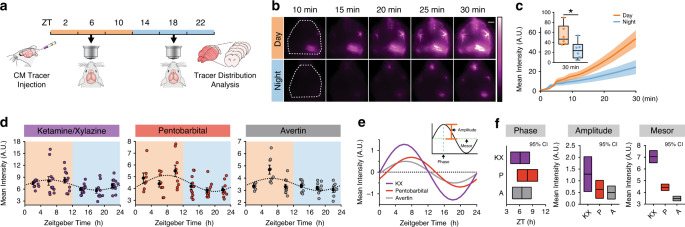
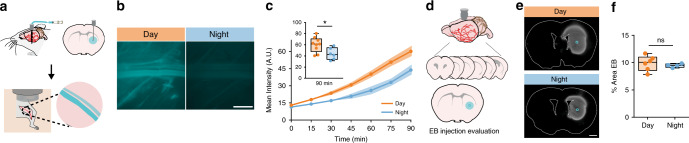
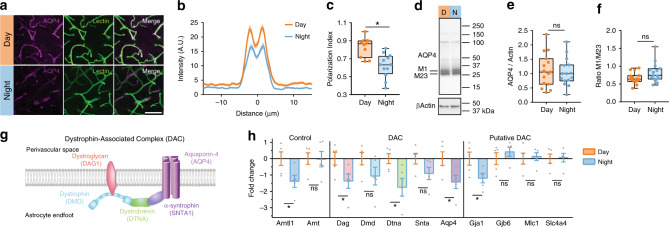
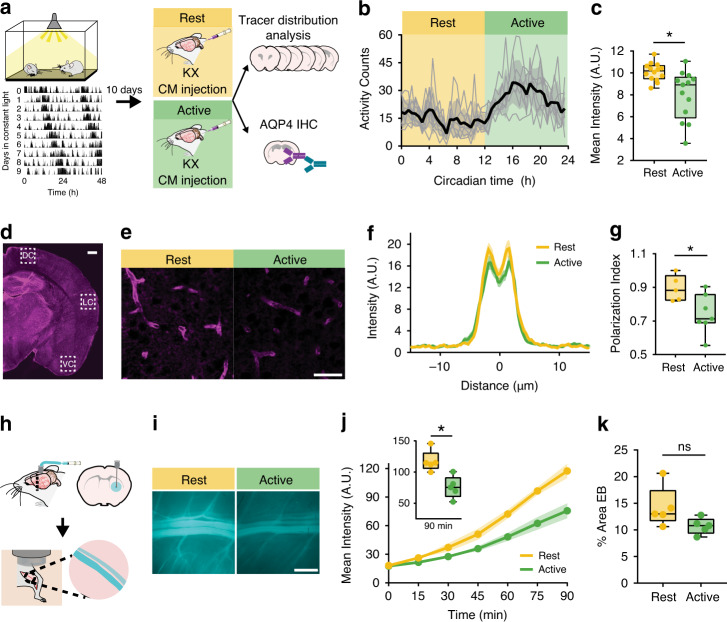
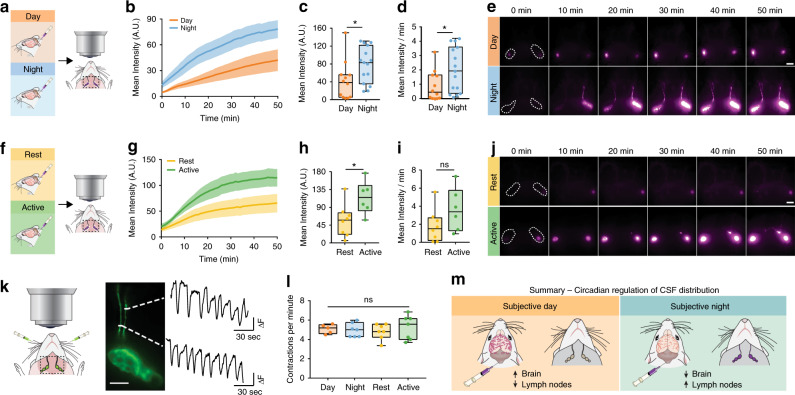
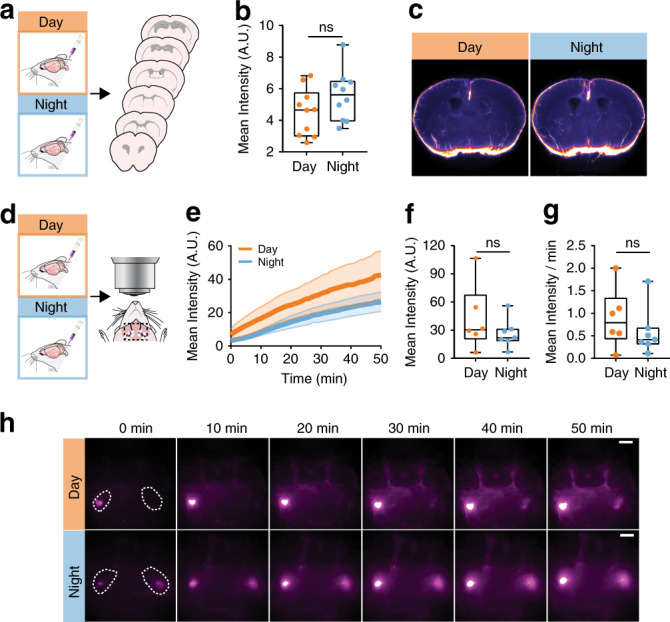
The glymphatic system is a network of perivascular spaces that promotes movement of cerebrospinal fluid (CSF) into the brain and clearance of metabolic waste. This fluid transport system is supported by the water channel aquaporin-4 (AQP4) localized to vascular endfeet of astrocytes. The glymphatic system is more effective during sleep, but whether sleep timing promotes glymphatic function remains unknown. We here show glymphatic influx and clearance exhibit endogenous, circadian rhythms peaking during the mid-rest phase of mice. Drainage of CSF from the cisterna magna to the lymph nodes exhibits daily variation opposite to glymphatic influx, suggesting distribution of CSF throughout the animal depends on time-of-day. The perivascular polarization of AQP4 is highest during the rest phase and loss of AQP4 eliminates the day-night difference in both glymphatic influx and drainage to the lymph nodes. We conclude that CSF distribution is under circadian control and that AQP4 supports this rhythm.
Overview
The claims and statistics of this paper haven’t been checked yet.
Free: it reads the open-access text and checks the first 5 claims that cite a source we can check. Create a free account to check every claim.
Integrity signals
Registry
Cites
Statistics
Figures
Verification
Claims the paper makes
The claims and statistics of this paper haven’t been checked yet.
Free: it reads the open-access text and checks the first 5 claims that cite a source we can check. Create a free account to check every claim.
Claims other papers make about this one
Each is checked against this paper’s own text: does it say what the citing paper says it does?
In the citing paper
“A recent analysis showed that glymphatic flow is also regulated by circadian rhythmicity, such that fluid transport peaks during the sleep phase of diurnal activity, and falls during the active phase, independent of the light cycle.”
From Glymphatic failure as a final common pathway to dementia (2020) · cites this paper as [38]
In the citing paper
“This rhythm is supported by the temporally-regulated localization of AQP4 via the dystrophin associated complex, providing a dynamic link to the molecular circadian clock (38),”
From Glymphatic failure as a final common pathway to dementia (2020) · cites this paper as [38]
Self-check
Percentages, sums and reported differences re-computed from the paper’s own numbers.
The self-check needs the paper’s full text.
Citations
Cites
A new mathematical model for relative quantification in real-time RT-PCR
Pfaffl, M. W. (2001) · Nucleic Acids Research · doi:10.1093/nar/29.9.e45 · Cited by 34,610
Yushkevich, P. A., Piven, J., Hazlett, H. C., Smith, R. G., Ho, S., Gee, J. C., & Gerig, G. (2006) · NeuroImage · doi:10.1016/j.neuroimage.2006.01.015 · Cited by 8,868
Iliff, J. J., Wang, M., Liao, Y., Plogg, B. A., Peng, W., Gundersen, G. A., Benveniste, H., Vates, G. E., Deane, R., Goldman, S. A., et al. (2012) · Science Translational Medicine · doi:10.1126/scitranslmed.3003748 · Cited by 5,824
Self-citationSleep Drives Metabolite Clearance from the Adult Brain
Xie, L., Kang, H., Xu, Q., Chen, M. J., Liao, Y., Thiyagarajan, M., O’Donnell, J., Christensen, D. J., Nicholson, C., Iliff, J. J., et al. (2013) · Science · doi:10.1126/science.1241224 · Cited by 5,411
Self-citationZhang, Y., Chen, K., Sloan, S. A., Bennett, M. L., Scholze, A. R., O'Keeffe, S., Phatnani, H. P., Guarnieri, P., Caneda, C., Ruderisch, N., et al. (2014) · The Journal of Neuroscience · doi:10.1523/jneurosci.1860-14.2014 · Cited by 4,875
Pittendrigh, C. S., & Daan, S. (1976) · Journal of Comparative Physiology ? A · doi:10.1007/bf01417856 · Cited by 2,127
Pittendrigh, C. S., & Daan, S. (1976) · Journal of Comparative Physiology ? A · doi:10.1007/bf01417860 · Cited by 1,636
Mop3 is an essential component of the master circadian pacemaker in mammals.
Bunger, M. K., Wilsbacher, L. D., Moran, S. M., Clendenin, C., Radcliffe, L. A., Hogenesch, J. B., Simon, M. C., Takahashi, J. S., & Bradfield, C. A. (2000) · Cell · doi:10.1016/s0092-8674(00)00205-1 · Cited by 1,621
The two‐process model of sleep regulation: a reappraisal
Borbély, A. A., Daan, S., Wirz‐Justice, A., & Deboer, T. (2016) · Journal of Sleep Research · doi:10.1111/jsr.12371 · Cited by 1,577
Impairment of paravascular clearance pathways in the aging brain
Kress, B. T., Iliff, J. J., Xia, M., Wang, M., Wei, H. S., Zeppenfeld, D., Xie, L., Kang, H., Xu, Q., Liew, J. A., et al. (2014) · Annals of Neurology · doi:10.1002/ana.24271 · Cited by 1,521 · cited 2×
“In both a standard LD cycle (day: n= 7 mice; night n= 5 mice) and in 10 days LL (rest: n= 7 mice; active: n= 7 mice) we found no significant differences in contractions per minute between the rest and active phases (two-way analysis of variance (ANOVA), main effect of phase: F(1, 22)= 0.”
MethodSelf-citation
Cited by
Items 201–300 of 704
Shang, Y., Yu, L., Xing, H., Chang, Y., Dong, K., Xiao, Y., Liu, Y., Feng, M., Qin, Y., & Dai, H. (2024) · Nature and Science of Sleep · doi:10.2147/nss.s496607 · Cited by 26
Aberrant waste disposal in neurodegeneration: why improved sleep could be the solution
Wafford, K. A. (2021) · Cerebral Circulation - Cognition and Behavior · doi:10.1016/j.cccb.2021.100025 · Cited by 34
“appears to be influenced by the circadian cycle, with much greater polarisation during the rest phase and associated with higher brain clearance [45].”
BackgroundGlymphatic pathway in sporadic cerebral small vessel diseases: From bench to bedside
Xu, J., Su, Y., Fu, J., Shen, Y., Dong, Q., & Cheng, X. (2023) · Ageing Research Reviews · doi:10.1016/j.arr.2023.101885 · Cited by 28
He, Z., & Sun, J. (2025) · Cognitive Neurodynamics · doi:10.1007/s11571-025-10298-y · Cited by 25
“Glymphatic influx and clearance show an endogenous circadian rhythm that peaks in the middle of the rest of the period in mice (Hablitz et al. 2020).”
Gao, H., Zhou, H.-Q., Ji, H., Shen, J. Z., Yin, D., & Wu, D. (2025) · Ecotoxicology and Environmental Safety · doi:10.1016/j.ecoenv.2025.119114 · Cited by 29
Sleep and circadian rhythms in α‐synucleinopathies—Perspectives for disease modification
Kunz, D., Oster, H., Rawashdeh, O., Neumann, W., Münte, T. F., & Berg, D. (2023) · Acta Physiologica · doi:10.1111/apha.13966 · Cited by 25
The role of astrocytes in the glymphatic network: a narrative review
Das, N., Dhamija, R., & Sarkar, S. (2023) · Metabolic Brain Disease · doi:10.1007/s11011-023-01327-y · Cited by 24
“…basal level dur - ing wakefulness and significantly increases during sleep and anesthetized states (Benveniste et al. 2017a, b ; Gakuba et al. 2018; Hablitz et al. 2020; Hannocks et al. 2018; Lilius et expression and localization is coordinated with tight junction protein function and cell…”
InfluentialDual orexin receptor antagonists as promising therapeutics for Alzheimer’s disease
Ragsdale, S. M., Radovich, J. M., Coiduras, I. I., McCall, W. V., Grant, S. C., Lee, C. S., & Wilber, A. A. (2025) · npj Biological Timing and Sleep · doi:10.1038/s44323-025-00025-5 · Cited by 28
“Furthermore, the glymphatic pathway also is regulated by the circadian system as APQ4 is regulated by the circadian clock [internal clock with an approximately 24 h rhythm that is typically entrained to the light/dark cycle 19,38 .”
InfluentialAkins, P. T., & Guppy, K. H. (2021) · Neurocritical Care · doi:10.1007/s12028-021-01224-1 · Cited by 22
Hu, S., Luo, L., & Zeng, L. (2022) · Critical Reviews in Food Science and Nutrition · doi:10.1080/10408398.2022.2040945 · Cited by 22
Zhao, H., Sun, M., Zhang, Y., Kong, W., Fan, L., Wang, K., Xu, Q., Chen, B., Dong, J., Shi, Y., et al. (2023) · Aging and Disease · doi:10.14336/ad.2023.0516 · Cited by 24
“Lauren M. Hablitz et al. showed that the distribution of cerebrospinal fluid is controlled by circadian rhythms and regulated by AQP-4[74].”
Day–night fluctuations in choroid plexus transcriptomics and cerebrospinal fluid metabolomics
Edelbo, B. L., Andreassen, S. N., Steffensen, A. B., & MacAulay, N. (2023) · PNAS Nexus · doi:10.1093/pnasnexus/pgad262 · Cited by 24
Mechanisms of Activation of Brain’s Drainage during Sleep: The Nightlife of Astrocytes
Postnov, D. E., Semyachkina-Glushkovskaya, O. V., Litvinenko, E., Kurths, J., & Penzel, T. (2023) · Cells · doi:10.3390/cells12222667 · Cited by 24
GABA promotes interstitial fluid clearance in an AQP4 ‐dependent manner by activating the GABAAR
Wu, C., Zhang, Q., Feng, Y., Zhang, N., Liu, Q., Ou, Z.-T., Lin, T., Ding, Q., Li, G., Pei, Z., et al. (2023) · Journal of Neurochemistry · doi:10.1111/jnc.15869 · Cited by 23
“Aquaporin 4 (AQP4) is the most important channel for glymphatic drainage and is active mainly during sleep (Hablitz et al., 2019; Hablitz et al., 2020; Xie et al., 2013).”
BackgroundPostoperative cognitive dysfunction: spotlight on light, circadian rhythms, and sleep
Campbell, E., & Figueiro, M. G. (2024) · Frontiers in Neuroscience · doi:10.3389/fnins.2024.1390216 · Cited by 20
Zhang, R., Li, J., Li, X., & Zhang, S. (2024) · Frontiers in Cell and Developmental Biology · doi:10.3389/fcell.2024.1467085 · Cited by 24
“Furthermore, the glymphatic system in mice exhibits a pronounced diurnal rhythm where maintaining such rhythms relies on the polarization of AQP4 in the vascular endfeet of astrocytes as a fundamental factor (Hablitz et al., 2020).”
BackgroundChan, L. L. Y., Cerda, M. T. E., Brodie, M. A. D., Lord, S. R., & Taylor, M. E. (2025) · International Psychogeriatrics · doi:10.1016/j.inpsyc.2024.100031 · Cited by 22
Rowe, R. K., & Griesbach, G. S. (2022) · Brain Research Bulletin · doi:10.1016/j.brainresbull.2022.04.017 · Cited by 22
Planetary sleep medicine: Studying sleep at the individual, population, and planetary level
Bragazzi, N. L., Garbarino, S., Puce, L., Trompetto, C., Marinelli, L., Currà, A., Jahrami, H., Trabelsi, K., Garcia, B. R. M., Asgary, A., et al. (2022) · Frontiers in Public Health · doi:10.3389/fpubh.2022.1005100 · Cited by 22
“Of note, unsurprisingly, brain glymphatic and lymphatic fluid flows are under circadian control (43).”
BackgroundSun, X., Qing, T., Yang, Z., Liu, Y., Li, C., Hou, B., & Xie, A. (2023) · Neuroscience Letters · doi:10.1016/j.neulet.2023.137062 · Cited by 19
Singhal, D., Börner, K., Chaikof, E. L., Detmar, M. J., Hollmén, M., Iliff, J. J., Itkin, M. G., Mäkinen, T., Oliver, G. C., Padera, T. P., et al. (2023) · Frontiers in Physiology · doi:10.3389/fphys.2023.1099403 · Cited by 24
“The clearance of solutes from the CNS to the cervical lymphatic drainage are dependent upon perivascular glymphatic exchange (Goodman and Iliff, 2020), while perivascular solute exchange and meningeal lymphatic drainage appear to be counter-regulated by the circadian cycle with more rapid perivascular exchange occurri…”
BackgroundRhythms in barriers and fluids: Circadian clock regulation in the aging neurovascular unit
Skapetze, L., Owino, S., Lo, E. H., Arai, K., Merrow, M. W., & Harrington, M. E. (2023) · Neurobiology of Disease · doi:10.1016/j.nbd.2023.106120 · Cited by 20
“Circadian regulation of glymphatic flow depends on aquaporin-4 function (Hablitz et al., 2020).”
BackgroundCircadian regulation of microglia function: Potential targets for treatment of Parkinson’s Disease
Kou, L., Chi, X., Sun, Y., Yin, S., Wu, J., Zou, W., Wang, Y., Jin, Z., Huang, J., Xiong, N., et al. (2024) · Ageing Research Reviews · doi:10.1016/j.arr.2024.102232 · Cited by 23
“Moreover, the circadian rhythms of astrocytes are involved in the regulation of the glymphatic and lymphatic system, which may significantly influence waste clearance that helps maintain brain homeostasis (Hablitz et al., 2020).”
Sun, B., Fang, D., Li, W., Li, M., & Zhu, S. (2024) · Journal of Nanobiotechnology · doi:10.1186/s12951-024-02481-w · Cited by 26
“The movement of CSF along the PVS surrounding the middle cerebral artery (MCA) has been considered as an imaging marker for evaluating variations in glymphatic system function in the brain-related diseases and circadian rhythms [4, 40–42].”
BackgroundAstrocyte aquaporin mediates a tonic water efflux maintaining brain homeostasisPreprint
Pham, C., Komaki, Y., Deàs-Just, A., Gac, B. L., Mouffle, C., Franco, C., Chaperon, A., Vialou, V., Tsurugizawa, T., Cauli, B., et al. (2024) · eLife · doi:10.7554/elife.95873 · Cited by 26
Zhu, X., Lin, J., Yang, P., Wu, S., Lin, H., He, W., Lin, D., & Cao, M. (2024) · Frontiers in Neuroscience · doi:10.3389/fnins.2024.1426718 · Cited by 22
Mi, L., Yuan, J.-Y., Jiang, Y., Hu, Y., Lv, C., Xu, Y., Liu, M., Liu, T., Liu, X.-H., Huang, J., et al. (2025) · Drug Delivery · doi:10.1080/10717544.2025.2486840 · Cited by 18
“…(iliff and Nedergaard 2013, Jessen et al. 2015). it can effectively eliminate interstitial solutes and brain metabolic waste from the central nervous system (cNs) through exchanging fluid between the cerebrospinal fluid (csF) and interstitial fluid (isF) (iliff et al. 2012, hablitz et al. 2020).”
Li, Y., Zhou, H., Xie, J., Yu, M., Ye, G., Zhang, Y., Li, Z., Zhang, K., Wu, J., Xiao, S., et al. (2025) · Brain Pathology · doi:10.1111/bpa.70022 · Cited by 20
“Once the mice were anesthetized and positioned on a mouse adapter as previously described [9, 32], the skull was exposed.”
Barlattani, T., Luca, D. D., Giambartolomei, S., Bologna, A., Innocenzi, A., Bruno, F., Socci, V., Malavolta, M., Rossi, A., Berardis, D. D., et al. (2025) · Frontiers in Psychiatry · doi:10.3389/fpsyt.2025.1653144 · Cited by 27
Sleep: The Tip of the Iceberg in the Bidirectional Link Between Alzheimer's Disease and Epilepsy
Szabo, A. B., Cretin, B., Gérard, F., Curot, J., Barbeau, E. J., Pariente, J., Dahan, L., & Valton, L. (2022) · Frontiers in Neurology · doi:10.3389/fneur.2022.836292 · Cited by 21
“Finally, it is of note that the glymphatic system, just as many physiological processes including the sleep-wake cycle, has been suggested to be under circadian control (95).”
BackgroundTekieh, T., Robinson, P. A., & Postnova, S. (2022) · Scientific Reports · doi:10.1038/s41598-022-15109-6 · Cited by 23
Spitz, S., Ko, E. C., Ertl, P., & Kamm, R. D. (2023) · International Journal of Molecular Sciences · doi:10.3390/ijms24032171 · Cited by 20
“While the proposed concept of an astrocyte-mediated clearance system initially produced some controversies, now, numerous studies have corroborated the presence of a perivascular waste-removal network [7] Intriguingly, recent studies have revealed that glymphatic activity is significantly enhanced during sleep, render…”
ResultZhang, X., Wang, W., Zhang, X., Bai, X., Yuan, Z., Zhang, P., Bai, R., Jiao, B., Zhang, Y., Li, Z., et al. (2023) · Headache The Journal of Head and Face Pain · doi:10.1111/head.14514 · Cited by 19
Chen, R., Routh, B. N., Gaudet, A. D., & Fonken, L. K. (2023) · Journal of Biological Rhythms · doi:10.1177/07487304231178950 · Cited by 21
Shirolapov, I. V., Zakharov, A. V., Smirnova, D. A., Lyamin, A. V., & Gayduk, A. (2023) · S S Korsakov Journal of Neurology and Psychiatry · doi:10.17116/jnevro202312309131 · Cited by 22
A 3D-printed blood-brain barrier model with tunable topology and cell-matrix interactions
Paone, L. S., Benmassaoud, M. M., Curran, A., Vega, S. L., & Galie, P. A. (2023) · Biofabrication · doi:10.1088/1758-5090/ad0260 · Cited by 19
“…interaction with the endothelium has been found to mediate a wide range of processes including transport associated with the glymphatic system [10] Therefore, the ability of an in vitro model to incorporate endothelial–astrocyte interaction is crucial to accurately mimic this aspect of the…”
BackgroundEvidence that Alzheimer’s Disease Is a Disease of Competitive Synaptic Plasticity Gone Awry
Huang, Z. (2024) · Journal of Alzheimer s Disease · doi:10.3233/jad-240042 · Cited by 21
“Activity of the glymphatic system normally increases during sleep and promotes the clearance of metabolic waste from the brain [280, 281].”
Persson, N. D. Å., Lohela, T. J., Mortensen, K. N., Rosenholm, M., Li, Q., Weikop, P., Nedergaard, M., & Lilius, T. O. (2024) · Anesthesiology · doi:10.1097/aln.0000000000005039 · Cited by 21
“…differences in lymphatic function under different anesthetic regimens, 42 differences between sexes in the anatomy of cerebral blood vessels, 43 circadian variation, 44 and differences between species highlighting the importance of considering these factors in studies on CSF outflow routes.”
Self-citationZhao, W., Rao, J., Wang, R., Chai, Y., Mao, T., Quan, P., Deng, Y., Chen, W., Wang, S., Guo, B., et al. (2025) · NeuroImage · doi:10.1016/j.neuroimage.2025.121097 · Cited by 20
“Furthermore, the sustained effects of sleep deprivation on glymphatic clearance function (Xie et al., 2013; Hablitz et al., 2020) may persist even after recovery sleep, further contributing to reduced ICC values.”
RetractedCumulative Damage: Cell Death in Posthemorrhagic Hydrocephalus of Prematurity
Sevensky, R., Newville, J., Tang, H. L., Robinson, S., & Jantzie, L. L. (2021) · Cells · doi:10.3390/cells10081911 · Cited by 23
Chen, J., Xiao, L., Chen, Y., Li, W., Liu, Y., Fang, Y., Zhou, Y., & Tan, H. (2022) · Sleep Medicine · doi:10.1016/j.sleep.2022.09.016 · Cited by 18
Li, H., Aboudhiaf, S., Parrot, S., Scoté-Blachon, C., Benetollo, C., Lin, J., & Seugnet, L. (2023) · Cell Reports · doi:10.1016/j.celrep.2023.113025 · Cited by 19
Circadian and Diurnal Regulation of Cerebral Blood Flow
Webb, A. J. S., Klerman, E. B., & Mandeville, E. T. (2024) · Circulation Research · doi:10.1161/circresaha.123.323049 · Cited by 26
“This may also have effects on glymphatic drainage of the brain, which is driven by arterial pulsatility, which demonstrates an important diurnal variation and relationship with sleep, 113 dealt with in another article within this compendium.”
BackgroundFunctional aspects of the brain lymphatic drainage system in aging and neurodegenerative diseases
Chen, Y., He, X., Cai, J., & Li, Q. (2024) · Journal of Biomedical Research · doi:10.7555/jbr.37.20230264 · Cited by 20
The role of astrocytes in generating circadian rhythmicity in health and disease
Costa, R., & Montagnese, S. (2021) · Journal of Neurochemistry · doi:10.1111/jnc.15312 · Cited by 18
Roura, I., Pardo, J., Martín‐Barceló, C., Falcón, C., Oltra, J., Campabadal, A., Bargalló, N., Serradell, M., Mayà, G., Montini, A., et al. (2025) · npj Parkinson s Disease · doi:10.1038/s41531-025-00942-z · Cited by 19
Cross talk mechanism of disturbed sleep patterns in neurological and psychological disorders
Sahu, M., Tripathi, R. S., Jha, N. K., Jha, S. K., Ambasta, R. K., & Kumar, P. (2022) · Neuroscience & Biobehavioral Reviews · doi:10.1016/j.neubiorev.2022.104767 · Cited by 19
Xiao, M., Hou, J., Xu, M., Li, S., & Yang, B. (2023) · Advances in experimental medicine and biology · doi:10.1007/978-981-19-7415-1_7 · Cited by 21
Xie, F., Zhou, C., Jin, H., Xing, W., & Wang, D. (2024) · Epilepsy & Behavior · doi:10.1016/j.yebeh.2024.109777 · Cited by 18
Sleep as the Foundation of Brain Health
Ibrahim, A., Högl, B., & Stefani, A. (2025) · Seminars in Neurology · doi:10.1055/a-2566-4073 · Cited by 26
Aquaporin-4 in Stroke and Brain Edema—Friend or Foe?
Ríos, C. A. G., & León-Rojas, J. E. (2025) · International Journal of Molecular Sciences · doi:10.3390/ijms26178178 · Cited by 21
“Another opportunity is leveraging the body’s own sleep and glymphatic mechanisms; induced sleep or slow-wave oscillations post-stroke could enhance glymphatic clearance (which is AQP4-dependent) and, thus, vasogenic edema resolution [66,67].”
Akalın, A. A., Dedekargınoğlu, B., Choi, S. R., Han, B., & Özçelikkale, A. (2022) · Pharmaceutical Research · doi:10.1007/s11095-022-03298-8 · Cited by 20
Protective effect of 5,6,7,8-Tetrahydroxyflavone on high altitude cerebral edema in rats
Jing, L., Wu, N., Zhang, J., Da, Q., & Ma, H. (2022) · European Journal of Pharmacology · doi:10.1016/j.ejphar.2022.175121 · Cited by 16
Miyazaki, M., Malis, V., Yamamoto, A., Kungsamutr, J., McEvoy, L. K., McDonald, M. A., & Bae, W. C. (2023) · Magnetic Resonance in Medical Sciences · doi:10.2463/mrms.mp.2023-0005 · Cited by 19
“33”
Noninvasive investigations of human glymphatic dynamics in a diseased model
Wu, C., Kuo, Y., Chang, F., Lirng, J., Ling, Y., Wang, Y.-F., Wu, H., Fuh, J., Lin, C., Wang, S., et al. (2023) · European Radiology · doi:10.1007/s00330-023-09894-5 · Cited by 16
“We did not strictly restrict the subjects’ body positions or sleep durations between the early and delayed panels, although these factors may affect glym-phatic function [8, 48, 49].”
BackgroundBuongiorno, M., Granell, E., Caruana, G., Sansa, G., Vives‐Gilabert, Y., Cullell, N., Molina‐Seguin, J., Almería, M., Artero, C., Sánchez‐Benavides, G., et al. (2023) · BMC Neurology · doi:10.1186/s12883-023-03460-8 · Cited by 22
“Recent experimental evidence in rodents has shown that cerebrospinal fluid (CSF) influx into the brain, as well as glymphatic system efficacy in clearing metabolic waste, are increased during non-rapid eye movement (NREM) slow-wave phases of sleep [2–4].”
BackgroundCircadian Biology and the Neurovascular Unit
Li, W., Tiedt, S., Lawrence, J. H., Harrington, M. E., Musiek, E. S., & Lo, E. H. (2024) · Circulation Research · doi:10.1161/circresaha.124.323514 · Cited by 19
Transporters, Ion Channels, and Junctional Proteins in Choroid Plexus Epithelial Cells
Ueno, M., Chiba, Y., Murakami, R., Miyai, Y., Matsumoto, K., Wakamatsu, K., Nakagawa, T., Takebayashi, G., Uemura, N., Yanase, K., et al. (2024) · Biomedicines · doi:10.3390/biomedicines12040708 · Cited by 17
Shlobin, N. A., Staple, B. L., Sclafani, M., & Harter, D. H. (2024) · World Neurosurgery · doi:10.1016/j.wneu.2024.07.062 · Cited by 18
Chen, C., Zhai, R., Lan, X., Yang, S., Tang, S., Xiong, X., He, Y., Lin, J., Feng, J., Chen, D., et al. (2024) · Ibrain · doi:10.1002/ibra.12167 · Cited by 16
“89 During sleep or anesthesia, the interstitial space expands, significantly enhancing the convective exchange between CSF and ISF.”
BackgroundRewiring of the glymphatic landscape in metabolic disorders
Chen, B., Meseguer, D., Lenck, S., Thomas, J., & Schneeberger, M. (2024) · Trends in Endocrinology and Metabolism · doi:10.1016/j.tem.2024.11.005 · Cited by 16
Li, Y., Lin, S., Guo, Z., Liang, Q., Zhang, Y., Lin, X., Chen, S., Wei, F., Zhu, L., Li, S., et al. (2025) · Sleep Medicine · doi:10.1016/j.sleep.2025.03.009 · Cited by 15
Glymphatic dysfunction associated with cortisol dysregulation in major depressive disorder
Chen, S., Xu, Z., Guo, Z., Lin, S., Zhang, H., Liang, Q., Chen, Q., Zhang, Y., Peng, B., Zhao, Y., et al. (2025) · Translational Psychiatry · doi:10.1038/s41398-025-03486-1 · Cited by 21
Cerebral glymphatic system: Structure, regulation, ageing, and mechanisms of encephalopathy
Zhao, D., Wang, J., Zhang, F., Wang, Q., Zang, M., Niu, H., & Tong, Z. (2025) · Ageing Research Reviews · doi:10.1016/j.arr.2025.102986 · Cited by 23
Liu, Z., Wang, Y., Ding, Y., Wang, H., Zhang, J., & Wang, H. (2022) · Clinical Immunology · doi:10.1016/j.clim.2022.109139 · Cited by 16
Wu, M., Huang, B., Hu, L., Zhang, T., Zhang, B., Zhao, X., Lu, R., Xiong, W., Zhang, S., Li, J., et al. (2023) · Experimental Gerontology · doi:10.1016/j.exger.2023.112147 · Cited by 15
Dredla, B. K., Brutto, Ó. H. D., & Castillo, P. R. (2023) · Current Neurology and Neuroscience Reports · doi:10.1007/s11910-023-01293-z · Cited by 19
“In these experimental models, it was found that the mid-rest phase showed peaked glymphatic influx and clearance, and this was opposite to the lymphatic daily variation [52].”
BackgroundExploring Astrocyte-Mediated Mechanisms in Sleep Disorders and Comorbidity
Li, Y., Que, M., Wang, X., Zhan, G., Zhou, Z., Luo, X., & Li, S. (2023) · Biomedicines · doi:10.3390/biomedicines11092476 · Cited by 20
“Notably, ablation of the AQP4 gene effectively disrupts the circadian regulation of CSF distribution [91].”
BackgroundSalminen, A. (2024) · European Journal of Neuroscience · doi:10.1111/ejn.16450 · Cited by 15
“In the brain, circadian clocks are proposed to regulate the functions of the blood – brain barrier (BBB) (Cuddapah et al., 2019) and glymphatic fluid flow (Hablitz et al., 2020).”
InfluentialYang, T., Tang, Y., Liu, X., Gong, S., & Yao, E. (2024) · IUBMB Life · doi:10.1002/iub.2903 · Cited by 18
Liu, W., Yang, M., Yang, M., Zhang, M., Liu, X., Shi, K., Liu, W., Ou, Y., Liu, L., Yang, Z., et al. (2025) · EBioMedicine · doi:10.1016/j.ebiom.2025.105568 · Cited by 22
“Firstly, CSF movement is in fl uenced by factors such as sleep patterns, arterial pressure fl uctuations, and the presence of different CNS pathologies, 33,34 which may impact the function of meningeal lymphatic vessels.”
Deng, Z., Wang, W., Nie, Z., Ma, S., Zhou, E., Xie, X., Gong, Q., Yao, L., Bu, L., Kang, L., et al. (2025) · NeuroImage Clinical · doi:10.1016/j.nicl.2025.103769 · Cited by 21
Chen, F., Heng, T., Feng, Q., Hua, R., Wu, J., Shi, F., Liao, Z., Qiao, K., Zhang, Z., & Miao, J. (2025) · Frontiers in Aging Neuroscience · doi:10.3389/fnagi.2025.1621106 · Cited by 19
“In animal models deficient in AQP4, the circadian regulation of glymphatic clearance is disrupted, leading to impaired elimination of brain metabolites and further supporting the involvement of glymphatic dysfunction in AD progression (Hablitz et al., 2020).”
Neutrophils-astrocyte interactions in central nervous system inflammation
Yuan, B., Zhang, X., Liu, L., Chai, Y., Zhang, J., & Chen, X. (2025) · Cell Death and Disease · doi:10.1038/s41419-025-07945-x · Cited by 19
Forsberg, M., Olsson, M. A., Seth, H., Wasling, P., Zetterberg, H., Hedner, J. A., & Hanse, E. (2021) · Journal of Sleep Research · doi:10.1111/jsr.13522 · Cited by 12
“We do not think that the change in [K+]E could be explained by a circadian regulation of the water content in the CSF (Hablitz et al., 2020), because we found no significant change in osmolality and an increase, rather than a decrease, in the albumin concentration in sleep- CSF. Ding et al. (2016),…”
BackgroundPathogenesis of posthemorrhagic hydrocephalus of prematurity: New horizons
Robinson, S., & Jantzie, L. L. (2022) · Seminars in Perinatology · doi:10.1016/j.semperi.2022.151596 · Cited by 16
Wang, M., Li, B., Liu, Y., Zhang, M., Huang, C., Cai, T., Jia, Y., Huang, X., Ke, H., Liu, S., et al. (2023) · Frontiers in Pharmacology · doi:10.3389/fphar.2023.1107507 · Cited by 16
“Sleep-wake cycles regulate several biological functions associated with the gastrointestinal tract including waste clearance, cell repair and regeneration, digestion, absorption, and electrolyte balance (Hablitz et al., 2020).”
BackgroundZhu, H., Li, S., Wang, Y., Song, B., Gao, Y., Xu, Y., & Li, Y. (2023) · Neurobiology of Disease · doi:10.1016/j.nbd.2023.106347 · Cited by 18
“The clearance of some peptides, proteins and neurotoxins from the brain occurs via active transport at these two barriers.”
BackgroundBeer, S., Elmenhorst, D., Bischof, G. N., Ramírez, A., Bauer, A., Drzezga, A. E., & Initiative, T. A. D. N. (2024) · Neurobiology of Aging · doi:10.1016/j.neurobiolaging.2024.08.002 · Cited by 16
Hollis, H. C., Sharma, A., Sheehan, P. W., Maggi, L. B., Weber, J. D., Hammarlund, J. A., Bennett, D. A., Menon, V., Musiek, E. S., & Anafi, R. C. (2025) · Neuron · doi:10.1016/j.neuron.2025.07.010 · Cited by 21
“71 Though hotly debated, 72–74 glymphatic clearance offers a compelling model for understanding brain waste removal.”
Lin, W., Chen, H., Zhang, Z., Zhang, Y., Wang, X., Guo, Y., Qin, H., Liu, T., & Chen, F. (2025) · Scientific Reports · doi:10.1038/s41598-025-15923-8 · Cited by 22
“Both glymphatic drainage and CSF production are closely linked to sleep and circadian rhythms 5,25,26 .”
Glymphatic-meningeal lymphatic system, a new therapeutic target for sleep disorders
Xiao, M., Marshall, C., & Yin, K. (2025) · Neuroscience · doi:10.1016/j.neuroscience.2025.09.008 · Cited by 14
Martín-Rodríguez, A., Dalamitros, A. A., Madrigal-Cerezo, R., Sánchez-Conde, P., Clemente‐Suárez, V. J., & Tornero-Aguilera, J. F. (2025) · Geriatrics · doi:10.3390/geriatrics10060143 · Cited by 21
“Although human data are limited, animal models indicate that exercising during the active phase (night in rodents) produces superior effects on CSF clearance [118].”
Development of circadian neurovascular function and its implications
Mitchell, J. W., & Gillette, M. U. (2023) · Frontiers in Neuroscience · doi:10.3389/fnins.2023.1196606 · Cited by 16
“Although no difference in the total level of AQP4 has been reported, its polarization to vascular structures is highest during the day in the cortex of rodents suggesting diurnal variation in water exchange across the BBI (Hablitz et al., 2020).”
Yslas, A. R., Park, R., Nishimura, N., & Lee, E. (2024) · Lab on a Chip · doi:10.1039/d4lc00287c · Cited by 13
Circadian rhythms tied to changes in brain morphology in a densely-sampled male
Murata, E. M., Pritschet, L., Grotzinger, H., Taylor, C. M., & Jacobs, E. G. (2024) · Journal of Neuroscience · doi:10.1523/jneurosci.0573-24.2024 · Cited by 19
“In mice, localization of AQP4 to the vasculature, and glymphatic in fl ux, peaked during the daytime, and knocking out AQP4 abolished these day – night changes in glymphatic in fl ux (Hablitz et al., 2020).”
BackgroundAngiotensin-II drives changes in microglia–vascular interactions in rats with heart failure
Althammer, F., Roy, R. K., Kirchner, M. K., Podpecan, Y., Helen, J., McGrath, S., Campos‐Lira, E., & Stern, J. E. (2024) · Communications Biology · doi:10.1038/s42003-024-07229-8 · Cited by 17
“…the dorsal hippocampus (DH) of sham and HF rats with antibodies against the microglial marker IBA1 and the indirect vascular marker aquaporin-4 (AQP4 37,47,48 ), to investigate potential differences in the number of parenchymal vs vessel-associated microglia (VAM) between the two groups (Fig.”
Impaired Macroscopic Cerebrospinal Fluid Flow by Sevoflurane in Humans during and after Anesthesia
Zimmermann, J., Sorg, C., Müller, L., Zistler, F., Neumaier, V., Bonhoeffer, M., Ranft, A., Golkowski, D., Priller, J., Zimmer, C., et al. (2025) · Anesthesiology · doi:10.1097/aln.0000000000005360 · Cited by 14
Zayed, M., Kim, Y., & Jeong, B. (2025) · Molecular Neurodegeneration · doi:10.1186/s13024-025-00835-y · Cited by 13
“In prion diseases, the perivascular waste-clearing system has been observed to upregulate the key protein of the glymphatic system, aquaporin-4 (AQP4) [7, 8], suggesting the therapeutic potential of the glymphatic system.”
Circadian Influences on Chemotherapy Efficacy in a Mouse Model of Brain Metastases of Breast Cancer
Walker, W. H., Sprowls, S. A., Bumgarner, J. R., Liu, J. A., Meléndez‐Fernández, O. H., Walton, J. C., Lockman, P. R., DeVries, A. C., & Nelson, R. J. (2021) · Frontiers in Oncology · doi:10.3389/fonc.2021.752331 · Cited by 13
“Indeed, a recent study demonstrated circadian alterations in glymphatic/interstitial fluid clearance within the brain (63).”
BackgroundSpitz, S., Bolognin, S., Brandauer, K., Füßl, J., Schuller, P., Schobesberger, S., Jordan, C., Schädl, B., Grillari, J., Wanzenboeck, H. D., et al. (2022) · bioRxiv (Cold Spring Harbor Laboratory) · doi:10.1101/2022.08.19.504522 · Cited by 20
Nimmo, A. J., & Younsi, A. (2025) · International Journal of Molecular Sciences · doi:10.3390/ijms26168066 · Cited by 15
“One unusual characteristic of the glymphatic system, as opposed to the lymphatic system, is that it is more active during sleep, including an anaesthetized state, a phenomenon that may have clinical implications [84,87].”
Cerebrospinal Fluid–Mediated Brain Clearance: Insights from Human Studies
Eide, P. K., Quesada, C. L. V., & Ringstad, G. A. (2026) · Annual Review of Physiology · doi:10.1146/annurev-physiol-043024-120520 · Cited by 16
Wang, X., Deng, H., Gao, S.-Q., Li, T., Gao, C.-C., Han, Y., Zhuang, Y.-S., Qiu, J.-Y., Miao, S.-H., & Zhou, M. (2023) · Frontiers in Pharmacology · doi:10.3389/fphar.2022.1061457 · Cited by 13
Zhai, S., Yin, M., Sun, H., Jiang, X., Liu, Y., Marshall, C., Wu, T., & Xiao, M. (2023) · The FASEB Journal · doi:10.1096/fj.202202040rr · Cited by 13
Kureshi, S. A., Stowe, C., Francis, J., & Djalilian, H. R. (2023) · Science Progress · doi:10.1177/00368504231189536 · Cited by 14
“This is partially explained by the synchronous firing of brain waves during SWS, which may orchestrate ion-driven fluid influx into the interstitial space.(24) The transition to asynchronous firing in REM sleep then facilitates fluid efflux.”
BackgroundThe cerebral lymphatic drainage system and its implications in epilepsy
Peng, T., Xie, Y., Liu, F., Lian, Y., Xie, Y., Ma, Y., Wang, C., & Xie, N. (2023) · Journal of Neuroscience Research · doi:10.1002/jnr.25267 · Cited by 13
“…associated with sleep, such as the autonomic nervous system, endogenous sleep factors, alcohol, and the circadian rhythm, may also trigger changes in GS function (Cheng et al., 2020; Goodman & Iliff, 2020 ; Hablitz et al., 2020 ; Li, Chen, et al., 2022; Lundgaard et al., 2018; Xie et al., 2013).”
BackgroundYamamoto, E. A., Koike, S., Luther, M. N., Dennis, L. E., Lim, M. M., Raskind, M. A., Pagulayan, K. F., Iliff, J. J., Peskind, E. R., & Piantino, J. A. (2024) · Journal of Neurotrauma · doi:10.1089/neu.2023.0505 · Cited by 15
“19,21 While previous studies in rodents have suggested an association between chronic neuroinflammation and imp-airment of perivascular clearance, 20,22 a link between neuroinflammation and PVS dilatation remains largely unexplored in clinical populations.”
Heterogeneity of brain extracellular matrix and astrocyte activation
Huber, R. E., Babbitt, C. C., & Peyton, S. R. (2024) · Journal of Neuroscience Research · doi:10.1002/jnr.25356 · Cited by 16
Sládek, M., Houdek, P., Myung, J., Semenovykh, K., Dočkal, T., & Sumová, A. (2024) · Fluids and Barriers of the CNS · doi:10.1186/s12987-024-00547-3 · Cited by 12
“Consistent with other processes in the brain, CSF production in humans is subject to daily fluctuations with a peak in production at night, i.e., during sleep [23, 24], although the underlying mechanism remains to be elucidated [25].”
Background
Metadata
- Authors
- Hablitz, L. M., Plá, V., Giannetto, M., Vinitsky, H. S., Stæger, F. F., Metcalfe, T., Nguyen, R., Benrais, A., & Nedergaard, M.
- Affiliations
- University of Rochester Medicine (US)
- University of Copenhagen (DK)
- Corresponding author
- Hablitz, Lauren M.
- ORCID
- Venue
- Nature Communications
- Published
- 2020-09-02
- Volume
- 11
- Issue
- 1
- Pages
- 4411-4411
- ISSN
- 2041-1723 (ISSN-L)
- PMC
- PMC7468152
- OpenAlex
- W3082563867
- Semantic Scholar
- d0d6ac140cf093d0d37d751100bbb70573d92415
- Cited by
- 704
- References
- 69
- Citations by year
- 2026: 149 · 2025: 151 · 2024: 132 · 2023: 123 · 2022: 79 · 2021: 65 · 2020: 5
- FWCI
- 31.17
- Type
- journal article
- Language
- en
- Open access
- gold
- doi.org
- Licence
- cc-by
- creativecommons.org/licenses/by/4.0 (tdm)
- creativecommons.org/licenses/by/4.0 (vor)
- Locations
- Nature Communications (publishedVersion, cc-by)
- PubMed Central (publishedVersion, cc-by)
- PubMed (publishedVersion)
- Research at the University of Copenhagen (University of Copenhagen) (publishedVersion, cc-by)
- RePEc: Research Papers in Economics (submittedVersion)
- DOAJ (DOAJ: Directory of Open Access Journals) (submittedVersion, cc-by-sa)
- Funders
- U.S. Department of Health & Human Services | NIH | National Institute of Neurological Disorders and Stroke (R01NS100366, RF1AG057575)
- United States Department of Defense | United States Army | U.S. Army Research, Development and Engineering Command | Army Research Office (MURI W911NF1910280)
- Fondation Leducq Transatlantic Networks of Excellence Program, Novo Nordisk and Lundbeck Foundations, and the EU Horizon 2020 research and innovation program
- Topics
- Health Sciences › Medicine › Clinical Neurology › Cerebrospinal fluid and hydrocephalus
- Life Sciences › Biochemistry, Genetics and Molecular Biology › Molecular Biology › Ion Transport and Channel Regulation
- Life Sciences › Neuroscience › Cognitive Neuroscience › Sleep and Wakefulness Research
- Keywords
- glymphatic system, circadian rhythm, cerebrospinal fluid, aquaporin-4, astrocytes, perivascular spaces, cerebrospinal fluid drainage, lymphatic drainage, sleep, cisterna magna, lymph nodes, waste clearance
- MeSH terms
- Glymphatic System, Animals, Astrocytes, Brain, Cerebrospinal Fluid, Circadian Rhythm, Cisterna Magna, Lymph Nodes, Mice, Aquaporin 4
About these checks
Registry, retraction, Cites and statistics results are computed, not judged, with one exception: a printed reference that no index lists is read once by a model before it counts as a citation error. Claims are extracted by a model and kept only when their quote appears verbatim in the text; each cited source is then checked, with a model’s help, for whether it says what the claim relies on. Those verdicts can be wrong — read the claim’s quote and the cited source before relying on one.
Statistics and arithmetic are recomputed, not judged.
Confidence bands are shown only for fields calibrated on our annotated test set. None is calibrated yet, so no band is shown.
What counts as a claim ›How we measure confidence ›How we check this ›
Are you an author, or do you see a problem with this page? Request a review
Data sources
Bibliographic data: Semantic Scholar, OpenAlex, Crossref.
Contains information from the Semantic Scholar Academic Graph Datasets, made available under the ODC Attribution License (ODC-BY 1.0).
Semantic Scholar’s data is described in: Kinney, R., et al. (2023). The Semantic Scholar Open Data Platform. arXiv:2301.10140.
