

Circadian control of brain glymphatic and lymphatic fluid flow
Open accessThe DOI matches its Crossref record; 69 of the 69 references it cites were found in a registry or an index.
Abstract
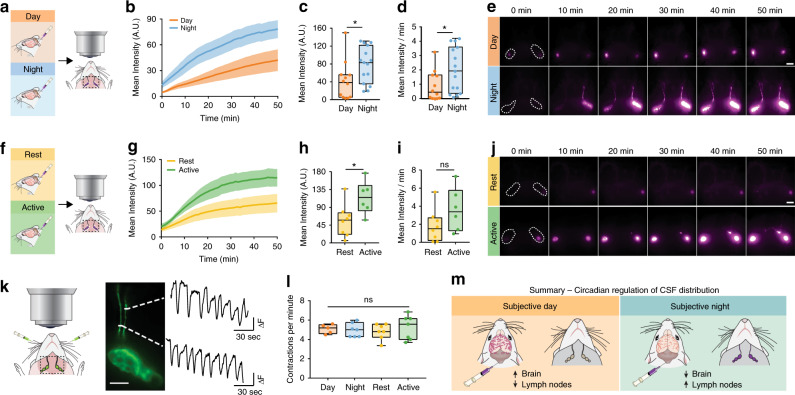
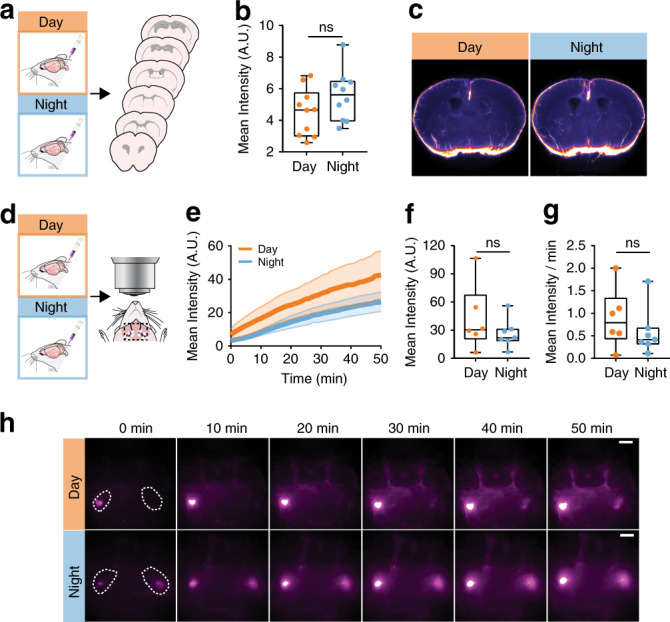
The glymphatic system is a network of perivascular spaces that promotes movement of cerebrospinal fluid (CSF) into the brain and clearance of metabolic waste. This fluid transport system is supported by the water channel aquaporin-4 (AQP4) localized to vascular endfeet of astrocytes. The glymphatic system is more effective during sleep, but whether sleep timing promotes glymphatic function remains unknown. We here show glymphatic influx and clearance exhibit endogenous, circadian rhythms peaking during the mid-rest phase of mice. Drainage of CSF from the cisterna magna to the lymph nodes exhibits daily variation opposite to glymphatic influx, suggesting distribution of CSF throughout the animal depends on time-of-day. The perivascular polarization of AQP4 is highest during the rest phase and loss of AQP4 eliminates the day-night difference in both glymphatic influx and drainage to the lymph nodes. We conclude that CSF distribution is under circadian control and that AQP4 supports this rhythm.
Overview
The claims and statistics of this paper haven’t been checked yet.
Free: it reads the open-access text and checks the first 5 claims that cite a source we can check. Create a free account to check every claim.
Integrity signals
Registry
Cites
Statistics
Figures
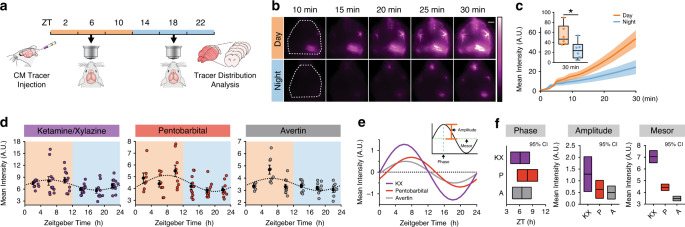
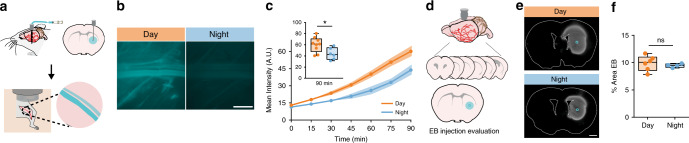
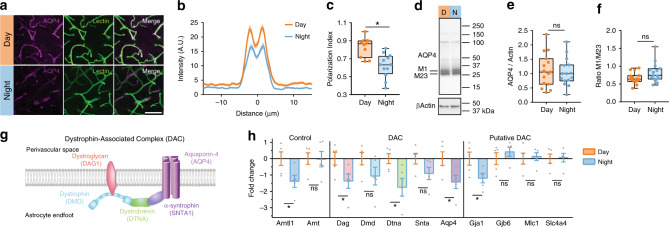
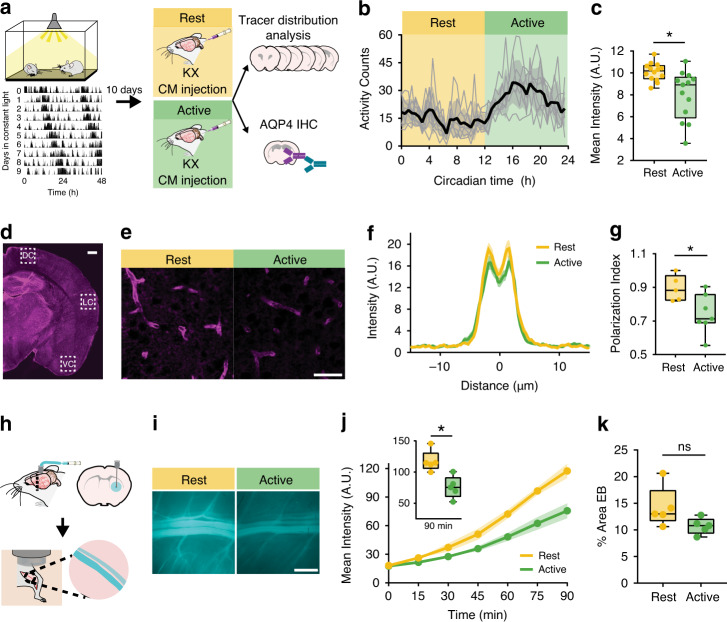
Verification
Claims the paper makes
The claims and statistics of this paper haven’t been checked yet.
Free: it reads the open-access text and checks the first 5 claims that cite a source we can check. Create a free account to check every claim.
Claims other papers make about this one
Each is checked against this paper’s own text: does it say what the citing paper says it does?
In the citing paper
“A recent analysis showed that glymphatic flow is also regulated by circadian rhythmicity, such that fluid transport peaks during the sleep phase of diurnal activity, and falls during the active phase, independent of the light cycle.”
From Glymphatic failure as a final common pathway to dementia (2020) · cites this paper as [38]
In the citing paper
“This rhythm is supported by the temporally-regulated localization of AQP4 via the dystrophin associated complex, providing a dynamic link to the molecular circadian clock (38),”
From Glymphatic failure as a final common pathway to dementia (2020) · cites this paper as [38]
Self-check
Percentages, sums and reported differences re-computed from the paper’s own numbers.
The self-check needs the paper’s full text.
Citations
Cites
A new mathematical model for relative quantification in real-time RT-PCR
Pfaffl, M. W. (2001) · Nucleic Acids Research · doi:10.1093/nar/29.9.e45 · Cited by 34,610
Yushkevich, P. A., Piven, J., Hazlett, H. C., Smith, R. G., Ho, S., Gee, J. C., & Gerig, G. (2006) · NeuroImage · doi:10.1016/j.neuroimage.2006.01.015 · Cited by 8,868
Iliff, J. J., Wang, M., Liao, Y., Plogg, B. A., Peng, W., Gundersen, G. A., Benveniste, H., Vates, G. E., Deane, R., Goldman, S. A., et al. (2012) · Science Translational Medicine · doi:10.1126/scitranslmed.3003748 · Cited by 5,824
Self-citationSleep Drives Metabolite Clearance from the Adult Brain
Xie, L., Kang, H., Xu, Q., Chen, M. J., Liao, Y., Thiyagarajan, M., O’Donnell, J., Christensen, D. J., Nicholson, C., Iliff, J. J., et al. (2013) · Science · doi:10.1126/science.1241224 · Cited by 5,411
Self-citationZhang, Y., Chen, K., Sloan, S. A., Bennett, M. L., Scholze, A. R., O'Keeffe, S., Phatnani, H. P., Guarnieri, P., Caneda, C., Ruderisch, N., et al. (2014) · The Journal of Neuroscience · doi:10.1523/jneurosci.1860-14.2014 · Cited by 4,875
Pittendrigh, C. S., & Daan, S. (1976) · Journal of Comparative Physiology ? A · doi:10.1007/bf01417856 · Cited by 2,127
Pittendrigh, C. S., & Daan, S. (1976) · Journal of Comparative Physiology ? A · doi:10.1007/bf01417860 · Cited by 1,636
Mop3 is an essential component of the master circadian pacemaker in mammals.
Bunger, M. K., Wilsbacher, L. D., Moran, S. M., Clendenin, C., Radcliffe, L. A., Hogenesch, J. B., Simon, M. C., Takahashi, J. S., & Bradfield, C. A. (2000) · Cell · doi:10.1016/s0092-8674(00)00205-1 · Cited by 1,621
The two‐process model of sleep regulation: a reappraisal
Borbély, A. A., Daan, S., Wirz‐Justice, A., & Deboer, T. (2016) · Journal of Sleep Research · doi:10.1111/jsr.12371 · Cited by 1,577
Impairment of paravascular clearance pathways in the aging brain
Kress, B. T., Iliff, J. J., Xia, M., Wang, M., Wei, H. S., Zeppenfeld, D., Xie, L., Kang, H., Xu, Q., Liew, J. A., et al. (2014) · Annals of Neurology · doi:10.1002/ana.24271 · Cited by 1,521 · cited 2×
“In both a standard LD cycle (day: n= 7 mice; night n= 5 mice) and in 10 days LL (rest: n= 7 mice; active: n= 7 mice) we found no significant differences in contractions per minute between the rest and active phases (two-way analysis of variance (ANOVA), main effect of phase: F(1, 22)= 0.”
MethodSelf-citation
Cited by
Items 301–400 of 704
Yook, S., Choi, S. J., Lee, H., Joo, E. Y., & Kim, H. (2024) · Sleep Medicine · doi:10.1016/j.sleep.2024.06.013 · Cited by 17
Gan, J., Wang, X., Shi, Z., Yuan, J., Zhang, Y., Liu, S., Wang, F., You, Y., Jia, P., Feng, L.-S., et al. (2022) · Frontiers in Aging Neuroscience · doi:10.3389/fnagi.2021.827772 · Cited by 19
Fluids and flows in brain cancer and neurological disorders
Jin, P., & Munson, J. M. (2022) · WIREs Mechanisms of Disease · doi:10.1002/wsbm.1582 · Cited by 15
“However, through advancement of imaging technology and careful experimental work focused on IF bulk flow through the glymphatic system, the role of IF is larger than previously thought (Hablitz et al., 2020; Iliff et al., 2012; Xie et al., 2013).”
Lozano-Tovar, S., Rodríguez‐Agudelo, Y., de Montellano, D. J. D., Pérez-Aldana, B. E., Ortega‐Vázquez, A., & Monroy‐Jaramillo, N. (2023) · International Journal of Environmental Research and Public Health · doi:10.3390/ijerph20054412 · Cited by 12
“Additionally, alterations of the circadian cycle, a relevant feature of AD, have also been associatedwith changes in the glymphatic system [20].”
BackgroundLi, Q., Wang, L., Tang, C., Wang, X., Yu, Z., Ping, X., Ding, M., & Zheng, L. (2023) · Molecular Neurobiology · doi:10.1007/s12035-023-03516-3 · Cited by 17
Astrocyte Circadian Timekeeping in Brain Health and Neurodegeneration
Brancaccio, M., Wolfes, A. C., & Ness, N. (2021) · Advances in experimental medicine and biology · doi:10.1007/978-3-030-81147-1_6 · Cited by 12
Keep, R. F., Jones, H. C., & Drewes, L. R. (2021) · Fluids and Barriers of the CNS · doi:10.1186/s12987-021-00258-z · Cited by 12
“[64] have shown a circadian rhythm in the glymphatic system in mice with a peak glymphatic influx and clearance during the mid-rest phase.”
BackgroundBraun, M., Simon, M. J., Jang, J., Sanderson, K., Swierz, J., Sevao, M., Pincus, A. B., Schaser, A. J., Elliott, J. E., Lim, M. M., et al. (2024) · bioRxiv (Cold Spring Harbor Laboratory) · doi:10.1101/2024.08.14.607971 · Cited by 12
Altered neurovascular-cerebrospinal fluid synergy in chronic insomnia disorder
Zhong, S., He, Y., Chen, K., Qu, R., Luo, W., Zhang, H., Zhang, S., Zhou, W., & Gong, L. (2025) · Sleep Medicine · doi:10.1016/j.sleep.2025.106815 · Cited by 13
Sun, X., Fang, D., Zhang, X., Zhu, H.-J., Sun, Y., Liu, G., Sun, B., Lü, J., & Zhu, S. (2025) · ACS Nano · doi:10.1021/acsnano.5c10519 · Cited by 15
Zhang, X., Hatoum, L., Ying, J., & Huang, C. (2025) · Psychoradiology · doi:10.1093/psyrad/kkaf031 · Cited by 15
“…(EEG) slow-wave activity is linked with greater CSF–ISF exchange in both animal and human studies, probably through its association with reduced norepinephrine tone, increased interstitial space volume, and enhanced perivascular flow (Hablitz et al. , 2019 , 2020 ; Jiang-Xie et al. , 2024 ).”
Is glymphatic clearance the secret to restorative sleep?
Hauglund, N. L., & Nedergaard, M. (2025) · Brain · doi:10.1093/brain/awaf453 · Cited by 66
Self-citationDeregulation of the Glymphatic System in Alzheimer’s Disease: Genetic and Non-Genetic Factors
Hu, Y., Su, T., Wu, L. Y., Wu, J., Liu, D., Zhu, L., & Yuan, M. (2024) · Aging and Disease · doi:10.14336/ad.2023.1229 · Cited by 21
Amyloid-β deposits in human astrocytes contain truncated and highly resistant proteoforms
Beretta, C., Svensson, E., Dakhel, A., Zyśk, M., Hanrieder, J., Sehlin, D., Michno, W., & Erlandsson, A. (2024) · Molecular and Cellular Neuroscience · doi:10.1016/j.mcn.2024.103916 · Cited by 15
“…and are crucial for maintaining brain homeostasis by supporting neurons and their synapses, as well as contributing to the blood brain barrier and the glymphatic system (Abbott et al., 2006; Allen, 2014; Hablitz et al., 2020; MacVicar and Newman, 2015; Mulica et al., 2021; Vasile et al., 2017).”
BackgroundInfluencing factors of glymphatic system during perioperative period
Dong, R., Liu, W., Han, Y., Wang, Z., Jiang, L., Wang, L., & Gu, X. (2024) · Frontiers in Neuroscience · doi:10.3389/fnins.2024.1428085 · Cited by 13
Ma, Y., & Han, Y. (2024) · Neural Regeneration Research · doi:10.4103/nrr.nrr-d-24-00821 · Cited by 19
“This circadian regulation persisted even under constant light conditions, but the absence of the AQP4 gene effectively eliminated this daily rhythm (Hablitz et al., 2020).”
Kim, M. J., Youn, J., Lee, H. J., Lee, S., Kim, T., Jung, Y., Shin, Y., Choi, B. T., Jeong, J., & Shin, H. K. (2025) · Advanced Science · doi:10.1002/advs.202417449 · Cited by 20
Cerebral small vessel disease: The impact of glymphopathy and sleep disorders
Hein, Z. M., Nassir, C. M. N. C. M., Ramli, M. D. C., Jaffer, U., Mehat, M. Z., Mustapha, M., & Hamid, H. A. (2025) · Journal of Cerebral Blood Flow & Metabolism · doi:10.1177/0271678x251333933 · Cited by 13
Influence of sleep disruption on protein accumulation in neurodegenerative diseases
Wang, X., Wang, R., & Li, J. (2022) · Ageing and Neurodegenerative Diseases · doi:10.20517/and.2021.10 · Cited by 17
Meningeal lymphatics as a therapeutic target for neurodegenerative disorders
Feng, Y., Wang, S., Xia, H., Jiang, X., Wu, M., Pan, S., & Song, W. (2025) · Translational Neurodegeneration · doi:10.1186/s40035-025-00528-y · Cited by 12
Moëlo, C., Quillévéré, A., Roy, L. L., & Timsit, S. (2023) · Glia · doi:10.1002/glia.24477 · Cited by 11
“…et al., 2020; Manley et al., 2004; Nakada, 2014), with evidence indicating that vascular polarized AQP4 expression is more important for effective fluid transport, rather than total AQP4 levels in the tissue (Gomolka et al., 2023; Hablitz et al., 2020; Mestre et al., 2018; Sylvain et al., 2021).”
BackgroundEffects of commonly used analgesics on sleep architecture: a topical review
Antila, H., Lilius, T. O., Palada, V., Lohela, T. J., Bell, R. F., Porkka‐Heiskanen, T., & Kalso, E. A. (2024) · Pain · doi:10.1097/j.pain.0000000000003201 · Cited by 17
“44,53,109 The sedative a 2 - adrenergic agonist dexmedetomidine reduces central norepinephrine levels and induces cortical slow waves and has been shown to promote glymphatic flow.”
BackgroundMouse brain elastography changes with sleep/wake cycles, aging, and Alzheimer's disease
Ge, G. R., Song, W., Giannetto, M. J., Rolland, J. P., Nedergaard, M., & Parker, K. J. (2024) · NeuroImage · doi:10.1016/j.neuroimage.2024.120662 · Cited by 12
“The glymphatic system is active during sleep, suppressed during wakefulness (Xie et al., 2013), and regulated by circadian rhythm via increased vascular AQP4 polarization (Hablitz et al., 2020).”
BackgroundSelf-citationA brain-wide solute transport model of the glymphatic system
Quirk, K., Stevens, K. A., Tithof, J., & Kelley, D. H. (2024) · Journal of The Royal Society Interface · doi:10.1098/rsif.2024.0369 · Cited by 12
“However, sleep increases glymphatic solute clearance [35] as well as flow speeds [53,54].”
BackgroundMethodInfluentialUnraveling the Diffusion MRI-Based Glymphatic System Alterations in Children with Rolandic Epilepsy
Yin, Y., Ma, M., Wang, F., Ju, C., Luo, X., Yu, H., Nie, L., Li, J., & Liu, H. (2024) · Academic Radiology · doi:10.1016/j.acra.2024.11.010 · Cited by 12
Michalaki, E., Pulliam, A. N., Roy, P. M. D., Dixon, J. B., & LaPlaca, M. C. (2025) · Neurotrauma Reports · doi:10.1089/neur.2024.0128 · Cited by 11
Baek, S., Tae, W., Park, J., & Kim, B. (2025) · Frontiers in Aging Neuroscience · doi:10.3389/fnagi.2025.1570327 · Cited by 12
“Various factors such as aging, sleep, circadian rhythm, and arterial pulsation could influence glymphatic function (Iliff et al., 2013b; Xie et al., 2013; Kress et al., 2014; Hablitz et al., 2020).”
Atrial fibrillation reduces CSF flow dynamics. A multimodal MRI study
Hofer, S., Schnieder, M., Polster, L., Dechent, P., & Bähr, M. (2025) · NeuroImage · doi:10.1016/j.neuroimage.2025.121337 · Cited by 11
Frey, M. M., Zohoorian, N., Skauli, N., Ottersen, O. P., & Amiry-Moghaddam, M. R. (2025) · Fluids and Barriers of the CNS · doi:10.1186/s12987-025-00676-3 · Cited by 14
“It raises questions about the model proposed by Hablitz et al. 2020 [16], which suggested that AQP4’s perivascular polarization peaks during the rest phase, facilitating enhanced glymphatic clearance.”
InfluentialBarker, R. B., Karakaya, E., Baran, D., Ergul, A., Yağmurlu, K., Albayram, S., & Albayram, Ö. (2025) · Molecular and Cellular Neuroscience · doi:10.1016/j.mcn.2025.104031 · Cited by 12
“Notably, establishing glymphatic function does not occur in isolation but is tightly linked to sleep-wake cycle maturation, vascular integrity, and lymphatic outflow development (Hablitz et al., 2020; Nedergaard and Goldman, 2020).”
REM phase: An ingenious mechanism to enhance clearance of metabolic waste from the retina
Magonio, F. (2021) · Experimental Eye Research · doi:10.1016/j.exer.2021.108860 · Cited by 11
Hayden, M. R. (2024) · Biomedicines · doi:10.3390/biomedicines12010096 · Cited by 17
A machine learning method to explore the glymphatic system via poroelastodynamics
Chou, D., & Chen, P.-Y. (2023) · Chaos Solitons & Fractals · doi:10.1016/j.chaos.2023.114334 · Cited by 11
Drapšin, M., Dočkal, T., Houdek, P., Sládek, M., Semenovykh, K., & Sumová, A. (2024) · Brain Behavior and Immunity · doi:10.1016/j.bbi.2024.01.217 · Cited by 10
Unraveling diurnal and technical variability in cerebral hemodynamics from neurovascular 4D-Flow MRI
Rivera‐Rivera, L. A., Roberts, G. S., Peret, A., Langhough, R. E., Jonaitis, E. M., Du, L., Field, A. S., Eisenmenger, L. B., Johnson, S. C., & Johnson, K. M. (2024) · Journal of Cerebral Blood Flow & Metabolism · doi:10.1177/0271678x241232190 · Cited by 9
Koundal, S., Chen, X., Gursky, Z. H., Lee, H., Xu, K., Liang, F., Xie, Z., Xu, F., Lin, H., Nostrand, W. E. V., et al. (2024) · iScience · doi:10.1016/j.isci.2024.111463 · Cited by 13
“Finally, we assessed the regional transport in the brain tissue of the WT and TgSD-AD rats using the traditional Gd-DOTA uptake measures 8,13,19,38,39 which confirmed that there were no statistically significant differences in glymphatic transport in the preselected ROIs including in the ventral…”
Functional abnormalities of the glymphatic system in cognitive disorders
Shentu, W., Kong, Q., Zhang, Y., Li, W., Chen, Q., Yan, S., Wang, J., Lai, Q., Qi, X., & Qiao, S. (2025) · Neural Regeneration Research · doi:10.4103/nrr.nrr-d-24-01049 · Cited by 9
“The glymphatic system has been shown to exhibit an endogenous circadian rhythm in a mouse model, with perivascular polarization of AQP4 being highest during rest and depolarization of AQP4 abolishing this circadian difference (Hablitz et al., 2020).”
Harnessing the circadian nature of the choroid plexus and cerebrospinal fluid
Fame, R. M. (2025) · npj Biological Timing and Sleep · doi:10.1038/s44323-025-00033-5 · Cited by 12
“Thisstudyalsosuggeststhatthedailyincreaseinintracranialpressureis independentofvascularparameters 142 that could in fl uence the perivascular CSF in fl ux 57 that changes between day and night 14,15 and after sleep deprivation 18,143,144 .”
Yoon, J., Ji, M., Hwang, I., Lee, W., Yu, S., Kim, J., Lee, C., Lee, H., Koh, B., Bae, H., et al. (2025) · Journal of Cerebral Blood Flow & Metabolism · doi:10.1177/0271678x251353142 · Cited by 14
“6 The glymphatic system is influenced not only by circadian rhythm 60 but also by homeostatic drives.”
Cilia in the brain display region-dependent oscillations of length and orientation
Monfared, R. V., Abdelkarim, S., Derdeyn, P., Chen, K., Wu, H., Leong, K., Chang, T. Y., Lee, J., Versales, S., Nauli, S. M., et al. (2025) · PLoS Biology · doi:10.1371/journal.pbio.3003197 · Cited by 14
“It is noteworthy that CSF composition and flow dynamics exhibit time-of-day-dependent variations, which are regulated in part by the beating of motile cilia [82], with highest flow during the night, when animal activity is at its peak [83].”
Multifaceted dynamics of circadian timing system influence aging and longevity
Jagota, A., Khan, Z. A., Sharma, S. A., & Priyanka (2025) · Biogerontology · doi:10.1007/s10522-025-10324-w · Cited by 11
“Aging is associated with a decline in perivascular AQP4 polarization in humans, indicating a deterioration in circadian control over glymphatic function (Zeppenfeld et al. 2017; Hablitz et al. 2020).”
Ciampi, C., Fagiani, F., Murtaj, V., Comella, F., Torre, V., Filibian, M., Andolfo, A., Braccia, C., Opallo, N., Bottone, M. G., et al. (2025) · Alzheimer s & Dementia · doi:10.1002/alz.70640 · Cited by 11
“11 Notably, the glymphatic system is under circadian regulation, 12 and its function is impaired in neurological diseases, including, but not limited to, neurodegenerative conditions.”
Agomelatine Targets Aquaporin-4 Polarization to Rescue Glymphatic Dysfunction in Parkinson’s Disease
Wang, S., Wu, D., Chen, G., Yuan, J., Zheng, L., Huang, X., Liu, X., Kang, Z., Feng, Y., Zhang, J., et al. (2025) · Neuroscience Bulletin · doi:10.1007/s12264-025-01543-9 · Cited by 13
“AQP4 polarization was defined as the M23 to M1 subtype level ratio, as previously detailed [30]: AQP4 polarization = M23/M1.”
When sleep fails, brain clearance suffers: the role of glymphatic impairment in clinical neurology
la Herrán-Arita, A. K. D. (2025) · Acta Neurologica Belgica · doi:10.1007/s13760-025-02959-w · Cited by 17
“Rodent studies have demon - strated that exogenous melatonin increases perivascular CSF tracer influx, possibly through nitric oxide–mediated vasodilation and reduced oxidative stress [ 26 ].”
Functional recovery of the adult murine hippocampus after cryopreservation by vitrification
German, A., Akdaş, E. Y., Flügel‐Koch, C., Erterek, E., Frischknecht, R., Fejtová, A., Winkler, J., Alzheimer, C., & Zheng, F. (2026) · Proceedings of the National Academy of Sciences · doi:10.1073/pnas.2516848123 · Cited by 10
“Circadian variation in the hydraulic conductivity of astro cytic perivascular endfeet might need to be considered as well (62, 63), and targeting aquaporins appears as a promising avenue for cryopreservation in general.”
The brain washing system in sepsis-associated encephalopathy
Chen, T., Hu, J., Liao, Y., Xie, S., & Zhang, L. (2025) · Journal of Neuroinflammation · doi:10.1186/s12974-025-03602-4 · Cited by 8
“Acute phase of SAE CSF circulation is jointly regulated by the respiratory and cardiac cycles [12, 117].”
Fagiani, F., Baronchelli, E., Pittaluga, A., Pedrini, E., Scacchi, C., Govoni, S. M., & Lanni, C. (2022) · Frontiers in Molecular Neuroscience · doi:10.3389/fnmol.2022.937174 · Cited by 11
Qiao, T., Tian, H., Shan, S., Shan, L., Peng, Z., Ke, J., Li, M., Wu, Y., & Han, Y. (2024) · Brain and Behavior · doi:10.1002/brb3.3399 · Cited by 8
Brendstrup‐Brix, K., Larsen, S. M. U., Lee, H., & Knudsen, G. M. (2024) · Journal of Sleep Research · doi:10.1111/jsr.14226 · Cited by 10
“…mechanism tightly linked to sleep (Hablitz & Nedergaard, 2021); in mice, the brain interstitial space volume increases by (cid:1) 65% during sleep relative to wakefulness (Xie et al., 2013), and the system is under circadian control with a peak volume at subjective night (Hablitz et al., 2020).”
Yong, Y., Cai, Y., Lin, J., Ma, L., Han, H., & Li, F. (2024) · Med-X · doi:10.1007/s44258-024-00021-7 · Cited by 13
Fan, H., Li, S., Guo, X., Chen, M., Zhang, H., & Chen, Y. (2024) · Parkinsonism & Related Disorders · doi:10.1016/j.parkreldis.2024.107182 · Cited by 8
NOTCH3 Mutation Causes Glymphatic Impairment and Promotes Brain Senescence in CADASIL
Li, C., Li, H., Men, X., Wang, Y., Kang, X., Hu, M., Su, X., Wang, S., Lu, D., Shen, S., et al. (2025) · CNS Neuroscience & Therapeutics · doi:10.1111/cns.70140 · Cited by 10
Yang, T., Lin, Z., Yu, M., Li, Y., Chen, J., Liu, Y., Huang, K., & Pan, S. (2025) · Glia · doi:10.1002/glia.70056 · Cited by 9
“The glymphatic system consists of cerebrospinal fluid (CSF) that flows through the brain parenchyma along the perivascular space where it surrounds penetrating arteries and exchanges with the surrounding interstitial fluid (ISF) (Hablitz et al. 2020; Iliff et al. 2013).”
Chen, Q., Zhong, T., Liu, J., Yuan, B., & Gao, H. (2025) · CNS Neuroscience & Therapeutics · doi:10.1111/cns.70512 · Cited by 10
Interplay between gut Microbiome and glymphatic system in cognitive function and memory regulation
Alavian, F., & Hajimohammadi, A. (2025) · Molecular Biology Reports · doi:10.1007/s11033-025-11129-3 · Cited by 10
“Its secretion at night promotes the expansion of interstitial spaces and increases CSF influx, optimizing con - ditions for waste clearance [63 , 64 ].”
Zhang, Z., Li, S., Xu, L., Xiao, S., Li, Y., Huang, J., Huang, J., Zuo, Y., Wen, W., Dai, Q., et al. (2026) · Nature Neuroscience · doi:10.1038/s41593-026-02261-9 · Cited by 14
“The polarization index serves as a quantitative measure of AQP4 channel localization at perivascular astrocytic endfeet, calculated following the protocol by Nedergaard’s group 27 .”
Image analysis techniques for in vivo quantification of cerebrospinal fluid flow
Kim, D., Gan, Y., Nedergaard, M., Kelley, D. H., & Tithof, J. (2023) · Experiments in Fluids · doi:10.1007/s00348-023-03719-3 · Cited by 7
“Further complicating the matter, recent research suggests that the rate and distribution of CSF production and outflow varies depending on the circadian rhythm (Steffensen et al. 2023; Hablitz et al. 2020).”
BackgroundSelf-citationBergamo, D., Handjaras, G., Petruso, F., Talami, F., Ricciardi, E., Benuzzi, F., Vaudano, A. E., Meletti, S., Bernardi, G., & Betta, M. (2023) · Sleep Medicine · doi:10.1016/j.sleep.2023.12.001 · Cited by 10
Qian, Y., Wang, J., Chen, J., Lin, W., Shen, H., Fang, Y., & Yu, W. (2024) · Experimental Neurology · doi:10.1016/j.expneurol.2024.115036 · Cited by 10
Living on the border of the CNS: Dural immune cells in health and disease
Chen, Z., Liu, P., Xia, X., Wang, L., & Li, X. (2022) · Cellular Immunology · doi:10.1016/j.cellimm.2022.104545 · Cited by 9
“Glymphatic” Neurodegeneration: Is Sleep the Missing Key?
Ferini‐Strambi, L., & Salsone, M. (2024) · Clinical and Translational Neuroscience · doi:10.3390/ctn8020023 · Cited by 10
“The term “temporal” is related to the circadian optimization of the CSF influx into the interstitial space [15].”
BackgroundLi, Y., Yan, Z., Shao, N., Tang, S. H., Zhang, X., Liu, X. M., & Tang, J. (2024) · Sleep Medicine · doi:10.1016/j.sleep.2024.07.023 · Cited by 8
The Concept of Neuroglia ‐ the State of the Art Circa 1900
Kettenmann, H., Ugursu, B., Ransom, B. R., & Steinhäuser, C. (2025) · Glia · doi:10.1002/glia.24678 · Cited by 8
Covert cerebrospinal fluid dynamics dysfunction: evolution from conventional to innovative therapies
Xu, Y. X., Yin, H., Li, L., Wang, X., & Hou, Q. (2025) · Frontiers in Neurology · doi:10.3389/fneur.2025.1554813 · Cited by 9
“The glymphatic system exhibits distinct circadian rhythmicity, with peak function during sleep (32), corresponding to AQP4 activity patterns (33).”
The glymphatic system in Huntington's disease
Duan, W., Zhou, Y., & Liu, H. (2025) · Journal of Huntington s Disease · doi:10.1177/18796397251331436 · Cited by 9
Yen, Y., Chen, M. W., Lim, J. X., & Chew, K. Y. (2025) · Plastic & Reconstructive Surgery · doi:10.1097/prs.0000000000012364 · Cited by 11
“50 However, slow-wave sleep quality declines with age, and pharmacologic sleep aids often have limited efficacy and are commonly associated with side effects.”
Chakif, D., & Furrer, J. (2026) · Frontiers in Pharmacology · doi:10.3389/fphar.2026.1765786 · Cited by 10
“Sleep interventions like CBT-I, CPAP therapy, and circadian rhythm regulation improve glymphatic clearance and aid in preventing neurodegeneration (Hablitz et al., 2020).”
Optimizing Sleep and Circadian Health in the NeuroICU
LaBuzetta, J. N., Malhotra, A., Zee, P. C., & Maas, M. B. (2022) · Current Treatment Options in Neurology · doi:10.1007/s11940-022-00724-5 · Cited by 8
Li, X., Tan, X., Zhou, Q., Xie, Z., Meng, W., Pang, Y., Huang, L., Ding, Z., Hu, Y., Li, R., et al. (2023) · Neuroscience · doi:10.1016/j.neuroscience.2023.04.017 · Cited by 7
Astrocytes: Lessons Learned from the Cuprizone Model
Kipp, M. (2023) · International Journal of Molecular Sciences · doi:10.3390/ijms242216420 · Cited by 9
Tsutsumi, S., Onο, H., & Ishii, H. (2021) · Surgical and Radiologic Anatomy · doi:10.1007/s00276-020-02649-7 · Cited by 8
Sarker, A. K., Suh, M., Choi, Y., Park, J. Y., Kwon, S., Kim, H., Lee, E. J., Seo, H., Lee, Y., & Lee, D. S. (2022) · Nuclear Medicine and Molecular Imaging · doi:10.1007/s13139-022-00746-6 · Cited by 6
“The diurnal variation of CSF to mLV clearance [89] could not be separately demonstrated in this study because the study lasted over 24 h which confers consecutive inclusion of both the dark and light cycles.”
BackgroundZhang, Y., Zhao, X., Zhang, Y., Zeng, F., Yan, S., Chen, Y., Li, Z., Zhou, D., & Liu, L. (2022) · Frontiers in Neuroscience · doi:10.3389/fnins.2022.1013027 · Cited by 8
“Studies have shown that AQP4 polarization around the vascular endfeet of astrocytes increased during the day, and genetic deletion of AQP4 effectively abolished the circadian regulation of CSF distribution (Hablitz et al., 2020).”
BackgroundLi, Y., Li, F., Liu, X., Zu, J., Zhang, W., Zhou, S., Zhu, J., Zhang, T., Cui, G., & Xu, C. (2023) · Neuroscience Letters · doi:10.1016/j.neulet.2023.137394 · Cited by 7
Desynchrony and synchronisation underpinning sleep–wake cycles
Postnov, D. E., Merkulova, K. O., & Postnova, S. (2021) · The European Physical Journal Plus · doi:10.1140/epjp/s13360-021-01491-z · Cited by 9
Significance of developmental meningeal lymphatic dysfunction in experimental post-traumatic injury
Virenque, A., Koivisto, H., Antila, S., Zub, E., Rooney, E. J., Miszczuk, D., Müller, A., Stoka, E., Marchi, N., Alitalo, K. K., et al. (2022) · Brain Behavior & Immunity - Health · doi:10.1016/j.bbih.2022.100466 · Cited by 10
Hourly Variations in Glymphatic Function Based on MRI Scan Times in Cognitively Normal Individuals
Ko, J. S., Choi, Y., Jeong, E., Park, J. E., & Kim, H. S. (2025) · Academic Radiology · doi:10.1016/j.acra.2025.01.034 · Cited by 8
Custer, R. M., Lynch, K. M., Barisano, G., Herting, M. M., Åkerstedt, T., Nilsonne, G., Ahmadi, H., & Choupan, J. (2025) · Sleep Medicine · doi:10.1016/j.sleep.2025.106537 · Cited by 9
Emerging Roles of Meningeal Lymphatic Vessels in Ischemic Stroke
Machado, R. S., Mathias, K., Joaquim, L. D. S., da Costa, M. D. A., Tiscoski, A. D. B., Gonçalves, C. L., Rezin, G. T., & Petronilho, F. C. (2025) · Molecular Neurobiology · doi:10.1007/s12035-025-04983-6 · Cited by 7
Rest, Repair, Repeat: The Complex Relationship of Autophagy and Sleep
Ullern, H., Schnur, P., Boccara, C. N., & Knævelsrud, H. (2025) · Journal of Molecular Biology · doi:10.1016/j.jmb.2025.169227 · Cited by 9
The parasagittal dural space of the human brain
Donahue, M. J., McKnight, C. D., Claassen, D. O., & Hett, K. (2025) · Brain · doi:10.1093/brain/awaf204 · Cited by 10
“However, with recent observations that neurofluid flow is modulated by behavioural state (e.g. sleep versus wakefulness), 71 studies of this nature are increasing.”
Circadian influences on central nervous system barriers and the glymphatic system
Elliott, B. D., Kisamore, C. O., Nelson, R. J., DeVries, A. C., & Walker, W. H. (2025) · Frontiers in Physiology · doi:10.3389/fphys.2025.1622236 · Cited by 7
Linking sleep patterns to eye health: a review of current understanding and future directions
Xuan, S., & Li, Z. (2025) · Visual Neuroscience · doi:10.48130/vns-0025-0008 · Cited by 11
Impact of Alzheimer's disease on sleep in adults with Down syndrome
Giménez, S., Vaqué‐Alcázar, L., Zhu, N., Benejam, B., Arranz, J., Maure‐Blesa, L., Videla, L., Carmona‐Iragui, M., Barroeta, I., Rebillat, A., et al. (2025) · Alzheimer s & Dementia · doi:10.1002/alz.70400 · Cited by 9
Bordoni, B., Morabito, B., Myftari, V., D’Amato, A., & Severino, P. (2025) · Journal of Cardiovascular Development and Disease · doi:10.3390/jcdd12100390 · Cited by 6
“In animal models, AQP4 activity influences the diurnal/nocturnal movement of the glymph (CSF and interstitial/extracellular fluids) and of the CSF [67].”
InfluentialThe cross-talk between neurodegeneration and metabolic disorders
Emanuele, E., Minoretti, P., Yilmaz, Y. N., Khoramipour, K., Crespo‐Escobar, P., Merino-País, M., López‐Ortiz, S., Santos‐Lozano, A., & Lista, S. (2025) · Metabolism and Target Organ Damage · doi:10.20517/mtod.2025.86 · Cited by 6
Circadian rhythms in ischemic stroke: From pathogenesis to chronotherapy
Fan, H., Wu, Z., Zhao, J., Kou, J., & Xu, Q. (2026) · Sleep Medicine · doi:10.1016/j.sleep.2026.108825 · Cited by 6
Zheng, M., Su, W., Tian, L., & Gao, W. (2026) · Brain Research · doi:10.1016/j.brainres.2026.150221 · Cited by 7
The Glymphatic system: A key mechanism linking sleep to brain health and diseases
Yang, Z., Li, P., Yin, R., Sun, S., Liu, X., Deng, C., Fang, Z., Wang, Y., Zhang, X., & Wei, J. (2026) · Neurobiology of Disease · doi:10.1016/j.nbd.2026.107515 · Cited by 7
Sleep, glymphatic system, and Parkinson’s disease
Wang, Y., Zou, W., Jin, Z., Yin, S., Chi, X., Li, J., Sun, Y., Wu, J., Kou, L., Xia, Y. F., et al. (2024) · Ageing and Neurodegenerative Diseases · doi:10.20517/and.2023.56 · Cited by 9
Zhang, S.-S., Meng, F., Rong, Y., Zhang, Y., & Liu, H.-Q. (2025) · Frontiers in Pharmacology · doi:10.3389/fphar.2025.1648308 · Cited by 10
Detection of Glymphatic Outflow of Tau from Brain to Cerebrospinal Fluid in Mice
Ishida, K., & Yamada, K. (2024) · Methods in molecular biology · doi:10.1007/978-1-0716-3629-9_19 · Cited by 6
Glymphatic flow resistance in humans measured by multifrequency impedance dispersionPreprint
Dagum, P., Giovangrandi, L., Levendovszky, S. R., Winebaum, J. J., Singh, T., Cho, Y., Kaplan, R. M., Jaffee, M. S., Lim, M. M., VandeWeerd, C. L., et al. (2024) · medRxiv · doi:10.1101/2024.01.06.24300933 · Cited by 6
Zhang, J., Liu, Y., Sun, Q., Shi, J., Ni, J., Li, T., Long, Z., Wei, M., & Tian, J. (2024) · Frontiers in Neurology · doi:10.3389/fneur.2024.1300459 · Cited by 6
Barbosa, I. D. O., Pontes‐Silva, A., & Prati, J. M. (2023) · Autoimmunity Reviews · doi:10.1016/j.autrev.2023.103500 · Cited by 5
Jászberényi, M., Thurzó, B., Jayakumar, A. R., & Schally, A. V. (2024) · International Journal of Molecular Sciences · doi:10.3390/ijms252313086 · Cited by 5
Potentiating Cerebral Perfusion Normalizes Glymphatic Dynamics in Systemic Inflammation
Zhao, R., Sun, B., Wei, P., Sun, Y., He, Q., Zhang, K., Lu, J. L., Zhu, S., Yang, Y., & Guo, Z. (2025) · Advanced Science · doi:10.1002/advs.202503576 · Cited by 9
Dynamics of brain valves: ostensible rectification mechanisms for cerebrospinal fluid flow
Guo, Y., Bork, P. A. R., Nedergaard, M., & Kelley, D. H. (2025) · Journal of The Royal Society Interface · doi:10.1098/rsif.2025.0419 · Cited by 5
“Genetically knocking out AQP4 reduces glymphatic function [24], especially for large molecules [25], as does distributing AQP4 uniformly across astrocytes, with‑ out preference for endfeet [26].”
Self-citationShim, G., Hall, R., Zhang, Z., Shokry, I. M., To, A., Cruz, L., Adam, M. C., Prentice, H. M., Wu, J., Su, H., et al. (2025) · Cells · doi:10.3390/cells14221754 · Cited by 7
“According to this hypothesis [28,29], the glymphatic pathway relies on astrocytes and their close association with small arteries and venules.”
Grigoraş, M. L., Bondar, A.-C., Bratosin, F., Bogdan, I. G., & Marc, F. (2025) · Diagnostics · doi:10.3390/diagnostics15222905 · Cited by 7
“Glymphatic transport is modulated by arousal state and circadian biology, with influx and lymphatic efflux peaking during the rest phase and diminishing with loss of AQP4 polarization [4].”
Metadata
- Authors
- Hablitz, L. M., Plá, V., Giannetto, M., Vinitsky, H. S., Stæger, F. F., Metcalfe, T., Nguyen, R., Benrais, A., & Nedergaard, M.
- Affiliations
- University of Rochester Medicine (US)
- University of Copenhagen (DK)
- Corresponding author
- Hablitz, Lauren M.
- ORCID
- Venue
- Nature Communications
- Published
- 2020-09-02
- Volume
- 11
- Issue
- 1
- Pages
- 4411-4411
- ISSN
- 2041-1723 (ISSN-L)
- PMC
- PMC7468152
- OpenAlex
- W3082563867
- Semantic Scholar
- d0d6ac140cf093d0d37d751100bbb70573d92415
- Cited by
- 704
- References
- 69
- Citations by year
- 2026: 149 · 2025: 151 · 2024: 132 · 2023: 123 · 2022: 79 · 2021: 65 · 2020: 5
- FWCI
- 31.17
- Type
- journal article
- Language
- en
- Open access
- gold
- doi.org
- Licence
- cc-by
- creativecommons.org/licenses/by/4.0 (tdm)
- creativecommons.org/licenses/by/4.0 (vor)
- Locations
- Nature Communications (publishedVersion, cc-by)
- PubMed Central (publishedVersion, cc-by)
- PubMed (publishedVersion)
- Research at the University of Copenhagen (University of Copenhagen) (publishedVersion, cc-by)
- RePEc: Research Papers in Economics (submittedVersion)
- DOAJ (DOAJ: Directory of Open Access Journals) (submittedVersion, cc-by-sa)
- Funders
- U.S. Department of Health & Human Services | NIH | National Institute of Neurological Disorders and Stroke (R01NS100366, RF1AG057575)
- United States Department of Defense | United States Army | U.S. Army Research, Development and Engineering Command | Army Research Office (MURI W911NF1910280)
- Fondation Leducq Transatlantic Networks of Excellence Program, Novo Nordisk and Lundbeck Foundations, and the EU Horizon 2020 research and innovation program
- Topics
- Health Sciences › Medicine › Clinical Neurology › Cerebrospinal fluid and hydrocephalus
- Life Sciences › Biochemistry, Genetics and Molecular Biology › Molecular Biology › Ion Transport and Channel Regulation
- Life Sciences › Neuroscience › Cognitive Neuroscience › Sleep and Wakefulness Research
- Keywords
- glymphatic system, circadian rhythm, cerebrospinal fluid, aquaporin-4, astrocytes, perivascular spaces, cerebrospinal fluid drainage, lymphatic drainage, sleep, cisterna magna, lymph nodes, waste clearance
- MeSH terms
- Glymphatic System, Animals, Astrocytes, Brain, Cerebrospinal Fluid, Circadian Rhythm, Cisterna Magna, Lymph Nodes, Mice, Aquaporin 4
About these checks
Registry, retraction, Cites and statistics results are computed, not judged, with one exception: a printed reference that no index lists is read once by a model before it counts as a citation error. Claims are extracted by a model and kept only when their quote appears verbatim in the text; each cited source is then checked, with a model’s help, for whether it says what the claim relies on. Those verdicts can be wrong — read the claim’s quote and the cited source before relying on one.
Statistics and arithmetic are recomputed, not judged.
Confidence bands are shown only for fields calibrated on our annotated test set. None is calibrated yet, so no band is shown.
What counts as a claim ›How we measure confidence ›How we check this ›
Are you an author, or do you see a problem with this page? Request a review
Data sources
Bibliographic data: Semantic Scholar, OpenAlex, Crossref.
Contains information from the Semantic Scholar Academic Graph Datasets, made available under the ODC Attribution License (ODC-BY 1.0).
Semantic Scholar’s data is described in: Kinney, R., et al. (2023). The Semantic Scholar Open Data Platform. arXiv:2301.10140.
