

Circadian control of brain glymphatic and lymphatic fluid flow
Open accessThe DOI matches its Crossref record; 69 of the 69 references it cites were found in a registry or an index.
Abstract
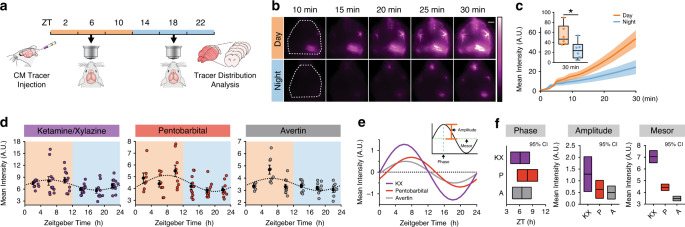
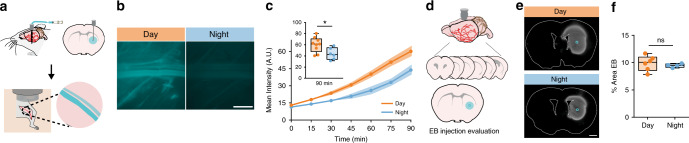
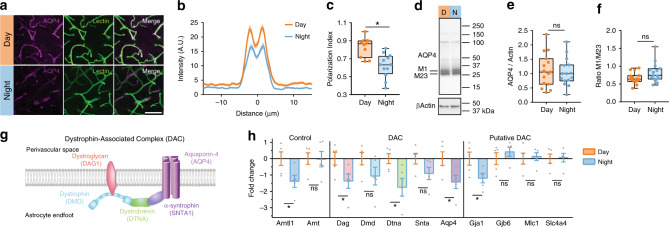
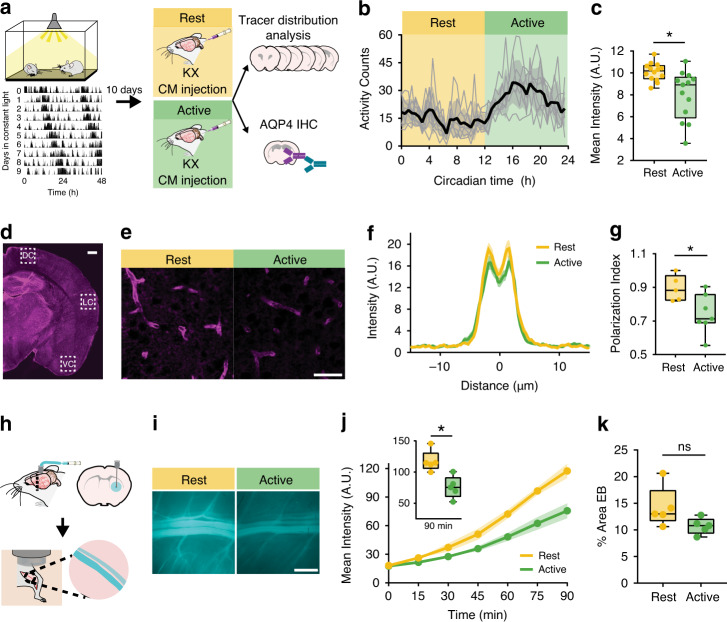
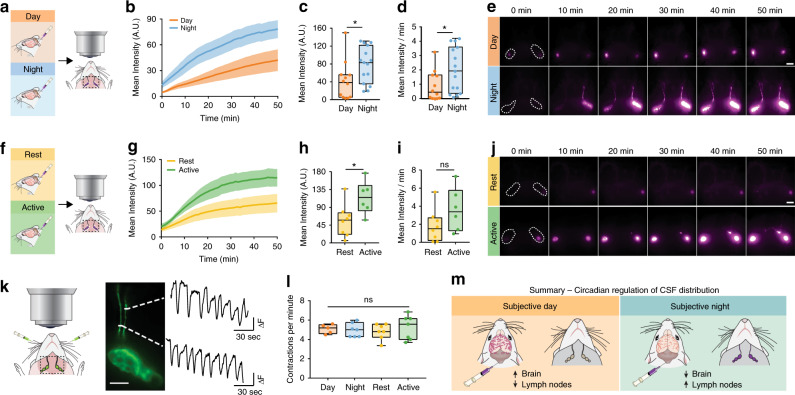
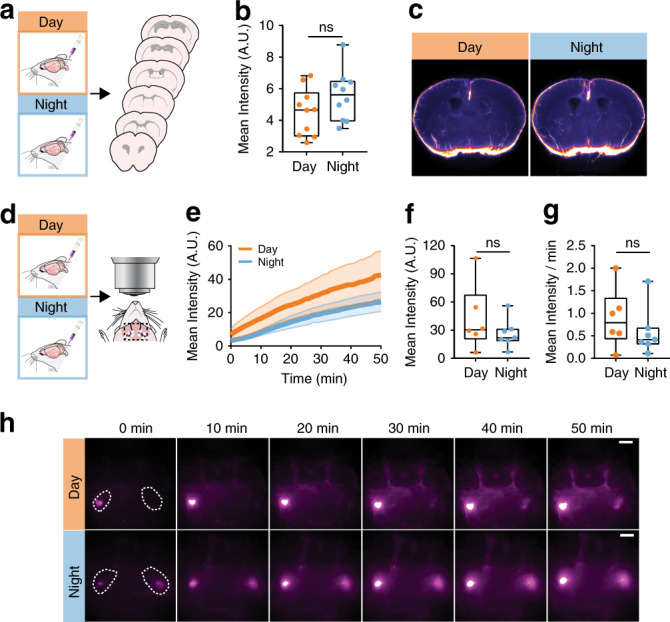
The glymphatic system is a network of perivascular spaces that promotes movement of cerebrospinal fluid (CSF) into the brain and clearance of metabolic waste. This fluid transport system is supported by the water channel aquaporin-4 (AQP4) localized to vascular endfeet of astrocytes. The glymphatic system is more effective during sleep, but whether sleep timing promotes glymphatic function remains unknown. We here show glymphatic influx and clearance exhibit endogenous, circadian rhythms peaking during the mid-rest phase of mice. Drainage of CSF from the cisterna magna to the lymph nodes exhibits daily variation opposite to glymphatic influx, suggesting distribution of CSF throughout the animal depends on time-of-day. The perivascular polarization of AQP4 is highest during the rest phase and loss of AQP4 eliminates the day-night difference in both glymphatic influx and drainage to the lymph nodes. We conclude that CSF distribution is under circadian control and that AQP4 supports this rhythm.
Overview
The claims and statistics of this paper haven’t been checked yet.
Free: it reads the open-access text and checks the first 5 claims that cite a source we can check. Create a free account to check every claim.
Integrity signals
Registry
Cites
Statistics
Figures
Verification
Claims the paper makes
The claims and statistics of this paper haven’t been checked yet.
Free: it reads the open-access text and checks the first 5 claims that cite a source we can check. Create a free account to check every claim.
Claims other papers make about this one
Each is checked against this paper’s own text: does it say what the citing paper says it does?
In the citing paper
“A recent analysis showed that glymphatic flow is also regulated by circadian rhythmicity, such that fluid transport peaks during the sleep phase of diurnal activity, and falls during the active phase, independent of the light cycle.”
From Glymphatic failure as a final common pathway to dementia (2020) · cites this paper as [38]
In the citing paper
“This rhythm is supported by the temporally-regulated localization of AQP4 via the dystrophin associated complex, providing a dynamic link to the molecular circadian clock (38),”
From Glymphatic failure as a final common pathway to dementia (2020) · cites this paper as [38]
Self-check
Percentages, sums and reported differences re-computed from the paper’s own numbers.
The self-check needs the paper’s full text.
Citations
Cites
A new mathematical model for relative quantification in real-time RT-PCR
Pfaffl, M. W. (2001) · Nucleic Acids Research · doi:10.1093/nar/29.9.e45 · Cited by 34,610
Yushkevich, P. A., Piven, J., Hazlett, H. C., Smith, R. G., Ho, S., Gee, J. C., & Gerig, G. (2006) · NeuroImage · doi:10.1016/j.neuroimage.2006.01.015 · Cited by 8,868
Iliff, J. J., Wang, M., Liao, Y., Plogg, B. A., Peng, W., Gundersen, G. A., Benveniste, H., Vates, G. E., Deane, R., Goldman, S. A., et al. (2012) · Science Translational Medicine · doi:10.1126/scitranslmed.3003748 · Cited by 5,824
Self-citationSleep Drives Metabolite Clearance from the Adult Brain
Xie, L., Kang, H., Xu, Q., Chen, M. J., Liao, Y., Thiyagarajan, M., O’Donnell, J., Christensen, D. J., Nicholson, C., Iliff, J. J., et al. (2013) · Science · doi:10.1126/science.1241224 · Cited by 5,411
Self-citationZhang, Y., Chen, K., Sloan, S. A., Bennett, M. L., Scholze, A. R., O'Keeffe, S., Phatnani, H. P., Guarnieri, P., Caneda, C., Ruderisch, N., et al. (2014) · The Journal of Neuroscience · doi:10.1523/jneurosci.1860-14.2014 · Cited by 4,875
Pittendrigh, C. S., & Daan, S. (1976) · Journal of Comparative Physiology ? A · doi:10.1007/bf01417856 · Cited by 2,127
Pittendrigh, C. S., & Daan, S. (1976) · Journal of Comparative Physiology ? A · doi:10.1007/bf01417860 · Cited by 1,636
Mop3 is an essential component of the master circadian pacemaker in mammals.
Bunger, M. K., Wilsbacher, L. D., Moran, S. M., Clendenin, C., Radcliffe, L. A., Hogenesch, J. B., Simon, M. C., Takahashi, J. S., & Bradfield, C. A. (2000) · Cell · doi:10.1016/s0092-8674(00)00205-1 · Cited by 1,621
The two‐process model of sleep regulation: a reappraisal
Borbély, A. A., Daan, S., Wirz‐Justice, A., & Deboer, T. (2016) · Journal of Sleep Research · doi:10.1111/jsr.12371 · Cited by 1,577
Impairment of paravascular clearance pathways in the aging brain
Kress, B. T., Iliff, J. J., Xia, M., Wang, M., Wei, H. S., Zeppenfeld, D., Xie, L., Kang, H., Xu, Q., Liew, J. A., et al. (2014) · Annals of Neurology · doi:10.1002/ana.24271 · Cited by 1,521 · cited 2×
“In both a standard LD cycle (day: n= 7 mice; night n= 5 mice) and in 10 days LL (rest: n= 7 mice; active: n= 7 mice) we found no significant differences in contractions per minute between the rest and active phases (two-way analysis of variance (ANOVA), main effect of phase: F(1, 22)= 0.”
MethodSelf-citation
Cited by
Items 601–700 of 704
Structural and Functional Features of the Glymphatic System: a Contemporary Perspective
Klyueva, L. A., Averin, D. A., & Vasyanina, K. A. (2025) · Morphology · doi:10.17816/morph.642000 · Cited by 1
Heller, H. C. (2025) · Oxford University Press eBooks · doi:10.1093/oxfordhb/9780197602751.013.40
Disorders of Intracranial Pressure
Wainwright, M. S., & Farias‐Moeller, R. (2024) · Elsevier eBooks · doi:10.1016/b978-0-443-10944-7.00125-6
Disordered Circulation and Communication: Examples of Extracellular Matrix Involvement and Treatment
Smith, F. (2025) · Springer eBooks · doi:10.1007/978-3-031-94465-9_7
Yu, M., Lin, J., Debora, A., Lin, K., Lin, M., Lin, R., Xu, H., Zheng, M., Zhou, Y., Yao, F., et al. (2025) · Frontiers in Neurology · doi:10.3389/fneur.2025.1655646
Sleep and Migraine: Neurobiological Insights and Therapeutic Approaches
Burgos, A. F., Burish, M. J., Yoo, S. H., & Vgontzas, A. (2025) · Current Sleep Medicine Reports · doi:10.1007/s40675-025-00347-7 · Cited by 1
“The glymphatic system is a network of perivascular channels that facilitates the clearance of waste products from the brain and is most active during sleep [110, 111].”
Endocannabinoid signaling in glial cells
Baraibar, A. M., Sánchez-Martín, E., Colomer, T., Calovi, S., Bernal-Chico, A., & Mato, S. (2025) · Handbook of behavioral neuroscience · doi:10.1016/b978-0-443-13908-6.00005-0
Giménez, S., & Boeve, B. F. (2025) · Cambridge University Press eBooks · doi:10.1017/9781108985055.025
Sleep health and dementia risk
Kaufmann, C. N., Tseng, C., Lucey, B. P., Malhotra, A., & Spira, A. P. (2025) · Elsevier eBooks · doi:10.1016/b978-0-443-13954-3.00048-6
Zyśk, M., Beretta, C., Naia, L., Dakhel, A., Påvénius, L., Brismar, H., Lindskog, M., Ankarcrona, M., & Erlandsson, A. (2023) · Figshare · doi:10.6084/m9.figshare.22610219
Zyśk, M., Beretta, C., Naia, L., Dakhel, A., Påvénius, L., Brismar, H., Lindskog, M., Ankarcrona, M., & Erlandsson, A. (2023) · Figshare · doi:10.6084/m9.figshare.22610222
Zyśk, M., Beretta, C., Naia, L., Dakhel, A., Påvénius, L., Brismar, H., Lindskog, M., Ankarcrona, M., & Erlandsson, A. (2023) · Figshare · doi:10.6084/m9.figshare.22610228
Zyśk, M., Beretta, C., Naia, L., Dakhel, A., Påvénius, L., Brismar, H., Lindskog, M., Ankarcrona, M., & Erlandsson, A. (2023) · Figshare · doi:10.6084/m9.figshare.22610213
Steffensen, A. B., Edelbo, B. L., Barbuskaite, D., Andreassen, S. N., Olsen, M. H., Møller, K., & MacAulay, N. (2023) · Figshare · doi:10.6084/m9.figshare.23573756
Vinje, V., Zapf, B., Ringstad, G. A., Eide, P. K., Rognes, M. E., & Mardal, K.-A. (2024) · Figshare · doi:10.6084/m9.figshare.26611406
Zyśk, M., Beretta, C., Naia, L., Dakhel, A., Påvénius, L., Brismar, H., Lindskog, M., Ankarcrona, M., & Erlandsson, A. (2023) · Figshare · doi:10.6084/m9.figshare.22610210
Sun, B., Fang, D., Li, W., Li, M., & Zhu, S. (2024) · Figshare · doi:10.6084/m9.figshare.26710763
Zyśk, M., Beretta, C., Naia, L., Dakhel, A., Påvénius, L., Brismar, H., Lindskog, M., Ankarcrona, M., & Erlandsson, A. (2023) · Figshare · doi:10.6084/m9.figshare.22610216
Vasciaveo, V., Iadarola, A., Casile, A., Dante, D., Morello, G., Minotta, L., Tamagno, E., Cicolin, A., & Guglielmotto, M. (2024) · Figshare · doi:10.6084/m9.figshare.26562571
Zyśk, M., Beretta, C., Naia, L., Dakhel, A., Påvénius, L., Brismar, H., Lindskog, M., Ankarcrona, M., & Erlandsson, A. (2023) · Figshare · doi:10.6084/m9.figshare.22610225
Goble, T., Kundu, T., Meyer, L. S., Klinaki, D., Hawkins, T. A., & Rihel, J. (2025) · bioRxiv (Cold Spring Harbor Laboratory) · doi:10.64898/2025.12.25.696495
Astrocytes in Neurofluid Drainage and Brain Disorders: Mechanisms and Therapeutic Implications
Wang, W., Tsai, Y., Yl, D., Yao, Q., Tian, J., Sun, Y., Qin, L., & Yan, J. (2026) · Current Neuropharmacology · doi:10.2174/011570159x406243251030105102
“Their protrusions exhibit localized calcium signaling, and their morphological adaptations can persist from seconds to days [26].”
Zhang, Z., Wu, Y., Zheng, Y., Li, Y., & Ye, Q. (2026) · bioRxiv (Cold Spring Harbor Laboratory) · doi:10.64898/2026.01.20.700750 · Cited by 1
“The secretion of cerebrospinal fluid (CSF) has become a significant area of investigation in recent years, with a growing recognition of the factors that influence CSF movement in the central nervous system (CNS), e.g., sleep, age, Alzheimer’s disease (AD), cardiac rhythms[1-7].”
Glymphatic System of the Brain: Anatomy, Physiology, and Clinical Implications
Chun, M. Y., Chung, S. J., & Jeong, S. H. (2026) · Journal of the Korean Neurological Association · doi:10.17340/jkna.2025.0050
Kim, J. (2026) · Headache and Pain Research · doi:10.62087/hpr.2026.0003
“6 Emerging imaging studies in humans have begun to explore clearance-related signatures in migraine, including meningeal lymphatic drainage abnormalities and alterations in perivascular fluid dynamics, although these findings are heterogeneous and require further validation.”
Human biorhythms and their monitoring using biological fluid indicators
Anuchina, A. V., Sarf, E. A., & Bel’skaya, L. V. (2026) · Экология человека · doi:10.17816/humeco698526
“Распределение спинно-мозговой жид-кости находится под циркадным контролем и поддержи-вается водным каналом аквапорина-4 [109].”
Kicherova, O. A., Kiprin, I. A., Рейхерт, Л. И., Кичерова, К. П., Эдуардовна, В. Т., Доян, Ю. И., Gorbachevskii, A. V., Анатольевна, С. В., & Александрович, М. Н. (2026) · S S Korsakov Journal of Neurology and Psychiatry · doi:10.17116/jnevro20261260217
Lee, D. A., Wi, J.-H., Lee, H., & Park, K. M. (2026) · Frontiers in Neurology · doi:10.3389/fneur.2026.1749772
Ilhan-Bayrakcı, M., Tüscher, O., & Stroh, A. (2026) · iScience · doi:10.1016/j.isci.2026.115455
“43 Given these diverse roles, it is plausible that SWEs engage different brain regions and serve distinct functional purposes.”
Dissociated glymphatic pathways mediates the neuronal hypometabolism on consciousness
Guo, K., Wang, Y., Quan, Z., Li, G., Zhang, Y., Laureys, S., Kang, F., & Wang, J. (2026) · NeuroImage · doi:10.1016/j.neuroimage.2026.121901
Velazquez, M. N. R., Gousopoulos, E., Wolf, S., Zurfluh, C. E., & Lindenblatt, N. (2026) · Ageing Research Reviews · doi:10.1016/j.arr.2026.103126 · Cited by 5
Life Cycle and Circadian Rhythms in Central Resident Immunity and Neuropsychiatric Pathology
Lim, Z., Nguyen, H. L., Zeng, Y., Qu, Q., Le, Y., Sun, M., Wang, X., Zhu, H., Qian, Y., Saeed, S., et al. (2026) · Neuroscience Bulletin · doi:10.1007/s12264-026-01612-7 · Cited by 1
“For instance, deletion of aquaporin-4 (AQP4) polarization in astrocytes disrupts the circadian regulation of cerebrospinal fluid (CSF) [4], while developmental circadian disruptions may permanently alter microglial priming.”
InfluentialIdziak, A. (2022) · theses.fr (ABES) · doi:10.70675/91c65c6ez289bz41b2za50azc10a875e4675 · Cited by 1
Apport du sommeil pour prédire l'évolution de la maladie de Parkinson
Dodet, P. (2024) · theses.fr (ABES) · doi:10.70675/35617e4bz0ab9z4e6dz92a5z3a610c9bd867
Shan, Z., Zhu, Q., Wang, S., Xia, Y., Yang, Y., & Tian, L. (2026) · Psychiatry Research · doi:10.1016/j.psychres.2026.117155
Assessment of glymphatic function in treatment-resistant depression using DTI-ALPS index
Zhang, X., Ye, S., Zhang, M., Ye, X., Chen, X., Chen, Z., Jiao, Q., Huang, M., & Cui, D. (2026) · Journal of Affective Disorders · doi:10.1016/j.jad.2026.121801 · Cited by 1
Liu, C., Xu, X., Li, Y., Chen, S. X., Liu, D., Liu, Y., Lu, J., Liu, P., & Liao, H. L. (2026) · Depression and Anxiety · doi:10.1155/da/3641238
“The function of the glymphatic system is mediated by aquaporin-4 and signi fi cantly in fl uenced by sleep [34, 37] and endogenous circadian rhythms [38].”
Zhang, L., Song, X., Chen, C., Ma, W., Zhang, J., Zheng, N., & Sui, H. (2026) · Frontiers in Medicine · doi:10.3389/fmed.2026.1790220
Alder, E., Among, K., Olexa, C., Hoskinson, K. R., Mattson, W. I., Nelson, E. E., & Yilanli, M. (2026) · JAACAP Open · doi:10.1016/j.jaacop.2026.04.004
“24,25 In addition to increased demands related to pruning, sleep demands increase during adolescence, and sleep quality is often disrupted for adolescents with psychosis symptoms.”
Zeng, J., Han, S., Zhu, M., Shang, Y., Wu, P., Gu, Q., & Li, Y. (2026) · Brain Imaging and Behavior · doi:10.1007/s11682-026-01151-9
“Notably, its activity is predominantly sleep-dependent (Hablitz et al. 2020, Xie et al. 2013).”
Jin, L., Li, R., Zhang, J., Ren, X., Li, B., Xiang, X., Liu, Y., Zhou, Y., & Song, Y. (2026) · Research Square · doi:10.21203/rs.3.rs-9467573/v1
Dong, X., He, Y., Li, J., Liu, M., Wu, Y., Zhan, C., Zhang, H., Lin, H., Jin, K., Xiang, Y., et al. (2026) · Pediatric Neurology · doi:10.1016/j.pediatrneurol.2026.04.025
Stimmell, A. C., Alday, L. J., Salvador, E. M., Diaz, J. M., Moseley, S. C., Cushing, S. D., Zheng, Y., Ogg, J. D., Ragsdale, S. M., & Wilber, A. A. (2026) · Journal of Alzheimer s Disease · doi:10.1177/13872877261429996 · Cited by 1
The glymphatic system and hydrocephalus: emerging insights into pathophysiological mechanisms
Geng, Z., Yang, Z., Li, P., Mao, Y., & Wei, J. (2026) · Reviews in the Neurosciences · doi:10.1515/revneuro-2026-0033 · Cited by 1
“…increases by approximately 60 % during nat-ural sleep or anesthesia, with enhanced convective exchange between CSF and ISF and markedly improved metabolic waste clearance e ffi ciency, whereas wakefulness or sleep deprivation signi fi cantly suppresses the exchange process (Hablitz et al. 2020).”
Engelhard, H. H., Balédent, O., Borzage, M., Andrews-Jones, L., Feldsien, T. M., & Lefebvre, D. R. (2026) · Frontiers in Drug Delivery · doi:10.3389/fddev.2026.1735474
“In mice, the light (rest) phase of the circadian rhythm is associated with increased CSF microcirculation and perivascular CSF clearance of fluorescent tracers, driven by aquaporin-4 (AQP4) (Hablitz et al., 2020).”
Jiang, J., Li, Z., Zhang, Z., Ji, S., Zhang, Z., Wu, Y., Li, Y., Yu, M., Qiao, P., Xu, J. H., et al. (2026) · BMC Geriatrics · doi:10.1186/s12877-026-07694-2
“This disruption impairs glymphatic clearance, promoting the aggregation of neurotoxic proteins notably amyloid-beta (Aβ) and tau [38, 50, 51].”
山田茂樹, 野﨑, 和., YAMADA, S., Ishikawa, M., & NOZAKI, K. (n.d.) · Institutional Repositories DataBase (IRDB)
The Cribriform Plate: A Multifaceted Neuroimmune Hub in CNS Health and Disease
Çetinkaya, K., & Algın, O. (2026) · Medicina · doi:10.3390/medicina62061125
Waight, E., Zhu, Y., Caudell, A., Vizcarra, V. S., Newbold, E. J., Giannetto, M. J., Duyvestyn, E., Balbuena, E., Song, W., Arefin, T. M., et al. (2026) · Journal of Clinical Investigation · doi:10.1172/jci201800 · Cited by 4
Self-citationZhang, R. (2026) · Research Square · doi:10.21203/rs.3.rs-10024823/v1
Nieva, G. V., Vassallu, F., Depino, A. M., Netti, V. A., & Igaz, L. M. (2026) · Discovery Immunology · doi:10.1093/discim/kyag011
“AQP4 polarization was quantified as previously described [23, 24] using 40 × images acquired as described for GFAP and Iba1 staining.”
Wu, Z., Chen, H., Xu, Y., & Wei, M. (2026) · Brain Circulation · doi:10.4103/bc.bc_148_25
Zhou, H. J., & Lü, B. (2026) · Brain Behavior and Immunity · doi:10.1016/j.bbi.2026.106909
Progress in imaging techniques applied to the study of the glymphatic system
Wang, W., Zhang, Z. Q., Wang, H., Shu, J., Jin, H., & Sun, W. (2026) · Neuroscience · doi:10.1016/j.neuroscience.2026.07.024
Scaling of anesthesia-dependent cerebrospinal fluid dynamics across rat and pig brainsPreprint
Beschörner, N., Navarro, M. L., Rosenholm, M., Sigurðsson, B., Raval, N. R., Beaman, E. E., Larsen, S. M. U., Jørgensen, L. M., Madsen, C. A., Stenmo, V. H., et al. (2026) · bioRxiv (Cold Spring Harbor Laboratory) · doi:10.64898/2026.07.10.737206 · Cited by 1
“Propofol is a common anesthetic in both pig and human surgery while in rodents, K/D has been shown to promote glymphatic activity 10,11,13 – 17 .”
Self-citationYamada, K., Ishida, K., Sakamoto, A., Shimada, H., Watanabe, M., Shimojo, M., Igarashi, H., & Iwatsubo, T. (2026) · Molecular Neurodegeneration · doi:10.1186/s13024-026-00977-7
“Several physiological and behavioral factors—such as sleep [30], anesthesia [31], circadian rhythm [32], exercise [33] and neuronal activity [34, 35] —have been shown to enhance glymphatic flow, highlighting the importance of these pathways in maintaining brain homeostasis.”
Wu, P., Liao, Y., Liu, C., Liu, X., Feng, Q., & Cheng, X. (2026) · Molecular Neurobiology · doi:10.1007/s12035-026-06066-6
“…circadian regulation of glymphatic/lymphatic transport has been demonstrated in mice, and reviews increasingly highlight sex-dependent biological modifiers of CNS barrier and clearance physiology, motivating systematic evaluation of hormonal status as a moderator of clearance proxies [150, 151].”
Zhang, X., 申维娜, Wu, Y., Zhang, W., & Ye, Q. (2026) · International Journal of Molecular Sciences · doi:10.3390/ijms27156719 · Cited by 1
“Hablitz et al. demonstrated that glymphatic influx and clearance exhibit endogenous circadian rhythms peaking during the mid-rest phase, with daytime influx approximately 22% higher than nighttime levels [30].”
Ermiş, A., Aliyeva, T., Salar, A. B., Akan, M., Çekmez, U., Ermiş, S. E., Ertan, G., & Birday, E. (2026) · Acta Neurologica Belgica · doi:10.1007/s13760-026-03155-0
“…dynamics; (2) completely normal neurological and physical examination; (3) preserved cognitive and psychiatric status based on clinical evaluation; (4) Pittsburgh Sleep Quality Index (PSQI) ≤ 5, confirming normal sleep quality, given that sleep is a recognized regulator of glymphatic function [11].”
Kicherova, O. A., Kiprin, I. A., Рейхерт, Л. И., Кичерова, К. П., Эдуардовна, В. Т., Доян, Ю. И., Gorbachevskii, A. V., Анатольевна, С. В., & Александрович, М. Н. (2026) · Neuroscience and Behavioral Physiology · doi:10.1007/s11055-026-02039-3
Xie, M., Wu, S., Yang, L., & Zhang, Y. (2026) · Frontiers in Neurology · doi:10.3389/fneur.2026.1895597
“During sleep, AQP4 polarization is enhanced, supporting more efficient glymphatic clearance (148).”
Peng, L., Wu, Z., Yuan, X., Zhou, C., & Fu, H. (2026) · Frontiers in Immunology · doi:10.3389/fimmu.2026.1910604
Bhakta-Guha, D., & Guha, G. (2026) · Experimental Neurology · doi:10.1016/j.expneurol.2026.115959
Late Chronotype Is Associated With Dizziness and Postural Instability
Han, S., Seo, H. W., Lee, S. H., & Chung, J. H. (2026) · The Laryngoscope · doi:10.1002/lary.70789
Luo, Y., Zhou, X., Xu, J., Lai, H., Lei, Q., Chen, Y., & Liu, H. (2026) · CNS Neuroscience & Therapeutics · doi:10.1002/cns.71079 · Cited by 1
“Third, given that glymphatic waste clearance is most active during sleep, sleep disturbances commonly observed in children with epilepsy may further impair this process [31, 32].”
Differential effects of P2Y12 inhibition on sleep and glymphatic function in male and female mice
Su, L., Tian, M., Zhang, S., Gao, P., Zhang, X., 谢敏杰, Liu, X., Xu, W., & 姚恩生 (2026) · Brain Behavior & Immunity - Health · doi:10.1016/j.bbih.2026.101330
“At specified zeitgeber times (ZT 0, 6, 12, and 18), 10 μ L of the tracer solution was infused at a rate of 1 μ L/min (Hablitz et al., 2020).”
InfluentialJiang, M., Rubin, M., Storelli, L., Grosselle, M., Esposito, F., Pagani, E., Margoni, M., Meani, A., Rocca, M. A., Filippi, M., et al. (2026) · Journal of Neurology · doi:10.1007/s00415-026-14070-y
“This approach was adopted because brain-fluid transport and lymphatic drainage may be influenced by circadian rhythms and vigilance state [23, 24, 54].”
Wang, Z., Zhang, J., Dong, Q., & Cao, W. (2026) · The Innovation Neurology · doi:10.59717/j.xinn-tine.2026.100014
Zeng, X.-X., Xu, M.-X., He, X., Huang, X. J., Yang, Y., Mao, F.-L., Qin, F., & Wang, Y. (2026) · Frontiers in Aging Neuroscience · doi:10.3389/fnagi.2026.1853704
Akar, A., Erbil, G., Aykora, D., & Uzun, M. (2026) · Molecular Biology Reports · doi:10.1007/s11033-026-12670-5
“Experimental evidence from rodent models indicates that both AQP4 expression and its perivascular polarization exhibit marked daily oscillations, suggesting regulation by astrocytic molecular clocks [38 ].”
Ding, S., Yang, J., Wang, Z., Bai, R., Yin, K., Jin, L., Kueckelhaus, M., Meuth, S. G., Xiao, M., & Hu, G. (2026) · Translational Neurodegeneration · doi:10.1186/s40035-026-00579-9
“Mouse studies also revealed that glymphatic influx and clearance follow an endogenous circadian rhythm, peaking during the mid-rest phase, while CSF drainage to cervical lymph nodes follows an opposite pattern [74].”
InfluentialEmerging Solutions for Future Generations of Intrathecal Drug Delivery Systems
Menéndez‐González, M. (2026) · Neuromethods · doi:10.1007/978-1-0716-5241-1_15
Intrathecal Therapies for Neurodegenerative Diseases
Menéndez‐González, M. (2026) · Neuromethods · doi:10.1007/978-1-0716-5241-1_10
Liu, S., An, J., Liu, W., Yao, S., Hou, S., Wang, M., Ying, Z., Liu, X., & Li, H. (2026) · Food Bioscience · doi:10.1016/j.fbio.2026.109876
Calvano, A., & van Wamelen, D. J. (2026) · International review of neurobiology · doi:10.1016/bs.irn.2026.08.017
Chaowen, H., Gao, Y., & Wang, H. (2026) · Frontiers in Neuroscience · doi:10.3389/fnins.2026.1879617
“…2023; Tariq et al., 2026) Few (Iliff et al., 2012; Xie et al., 2013; Carter et al., 2018; Mestre et al., 2018a; Ahn et al., 2019; Wheeler et al., 2019; Hablitz et al., 2020; Maasakkers et al., 2020; Taylor et al., 2022; Horiuchi et al., 2023; Tallon et al., 2023; Yoo et al., 2025) (Sperling et…”
InfluentialNing, Y., Li, Y., Xiong, Z., Sheng, Z., He, L., Xiang, S., Hu, Y., Peng, J., & Lv, F. (2026) · Frontiers in Aging Neuroscience · doi:10.3389/fnagi.2026.1932223
“It is well established that glymphatic function exhibits clear circadian fluctuations, and fragmentation of sleep architecture in OSA patients can impair this process, which is most efficacious during slow-wave sleep (Hablitz et al., 2020; Vasciaveo et al., 2023; Lin et al., 2024).”
Mechanisms underlying cerebrovascular dysfunction in driving central nervous system diseases
Lu, J., & Xiao, Y. A. N. G. (2026) · Shengming kexue · doi:10.3724/cbls.2026129
Han, W., Lu, W., Xu, H., Xie, G., Cao, Y., Wu, X., Qiu, F., & Fu, T. (2026) · CNS Neuroscience & Therapeutics · doi:10.1002/cns.71145
“ART downregulated AQP4 expression while restoring its polarization in A53T mice, in a pattern that was aligned with previous studies that emphasize the importance of proper AQP4 polarization, rather than overexpression, for effective waste clearance [32].”
Raihane, A. S., Napoli, M. D., Bragin, D. E., Cáceres, E. L., Ortiz, M. M., Moore, M. N., & Divani, A. A. (2026) · Current Neurology and Neuroscience Reports · doi:10.1007/s11910-026-01521-2
“Rodent posture and circadian studies indicate that body position, rest phase, and AQP4 polarization can modulate tracer transport [26, 29 ].”
Chronic Hypertension and the Brain’s Waste Drainage System
Alian, M., Le, C., Williams, A., Wardlaw, J. M., & Benveniste, H. (2026) · Hypertension · doi:10.1161/hypertensionaha.126.26767
Fan, W., Han, S., Wang, C., & Gao, J. (2026) · Brain Behavior & Immunity - Health · doi:10.1016/j.bbih.2026.101361
“Aging impairs paravascular clearance, sleep is associated with increased metabolite removal, and glymphatic and lymphatic fluid movement varies with time of day (Hablitz et al., 2020; Kress et al., 2014; Xie et al., 2013).”
Aerospace stressors and brain health in military aviators: a glymphatic–neurovascular framework
Ramirez, J., Marraffino, V. N., Anirud, U. A., & Rhind, S. G. (2026) · Frontiers in Physiology · doi:10.3389/fphys.2026.1953796
“…point is that inadequate recovery sleep can increase fatigue and cognitive vulnerability while also reducing the physiological capacity to restore neurovascular and metabolic homeostasis between sorties (Mendelsohn and Larrick, 2013; Xie et al., 2013; Hablitz et al., 2020; Hauglund et al., 2025).”
Sun, K., Zheng, Y., Deng, L., Huang, W., & Lin, W. (2026) · Frontiers in Aging Neuroscience · doi:10.3389/fnagi.2026.1945322 · Cited by 2
“Hablitz et al. (2020) showed that glymphatic influx and lymphatic efflux follow different circadian phases and that aquaporin-4 (AQP4) contributes to this temporal separation.”
InfluentialMao, J., Zhang, Y., Wang, P., & Qin, D. (2026) · Cells · doi:10.3390/cells15191721 · Cited by 1
“Sleep architecture includes non-rapid eye movement (NREM) and rapid eye movement (REM) sleep, which contribute differently to synaptic homeostasis, memory consolidation, and cognitive processing [106,107].”
Chen, J., Zhang, W., Liu, Q., & Zhang, Z. (2026) · Frontiers in Immunology · doi:10.3389/fimmu.2026.1884893
“AQP4 knockout completely abolishes circadian differences in both glymphatic in fl ux and ef fl ux (40).”
Zhao, J., Ma, Z., Chia, Z., Wang, X., Shi, C., Chen, J., Jin, D., Ma, S., Zhang, X., Chen, J., et al. (2026) · Therapeutic Advances in Neurological Disorders · doi:10.1177/17562864261492852
Tianci, M., Yongyi, L., Ding, Y., Liu, S., Gao, C., Li, X., Tong, Z., & Yan, L. (2026) · Frontiers in Aging · doi:10.3389/fragi.2026.1921485
Lima, B. F., Ferreira, G., Calvente, F. D. O., Costa, Y. D. S., Alencar, M., Quadros, J. P., & Freitas, H. R. (2026) · NeuroSci · doi:10.3390/neurosci7050106
“Circadian regulation of glymphatic clearance in mice [16]; circadian disruption and AD pathology [20]; metabolic benefits of TRF in mice [9] and of early TRE in humans [14].”
Rethinking diabetic retinopathy: Homeostatic mechanisms for retinal clearance
Little, K., Lechner, J., Rossi, G. D., Cullen, T., Perais, J. A., Beli, E., Lois, N., & Stitt, A. W. (2026) · Diabetic Medicine · doi:10.1111/dme.70485
Glymphatic function in humans: indicators, modulators, and measurement strategies
Nyan, T. H., Park, H., Baek, H. J., Park, E., & Cho, J. (2026) · Neurological Sciences · doi:10.1007/s10072-026-09463-w
“…risk profile, neuroactive medications and recent changes, time of day, prior sleep, recent caffeine, alcohol and exercise, scanner field strength, key sequence parameters, motion metrics, ROI definitions, model-fitting parameters, and soft - ware versions [5, 9, 25, 30, 34, 35, 49, 53, 63].”
InfluentialNon-invasive brain stimulation and glymphatic function: an aquaporin-4 perspective
Zhang, X., Wu, Y., Ming, X., & Bai, R. (2026) · Experimental Neurology · doi:10.1016/j.expneurol.2026.116052
La, Y., Yuan, J., Chen, J., Lv, K., Wang, X., qiqi, G., Wang, Y., Wang, C., Xu, B., Yang, Y., et al. (2026) · Translational Neurodegeneration · doi:10.1186/s40035-026-00588-8
Wrzesień, M. M., Poboży, K., Turek, G., Czyżewski, W., Zhu, B., & Ząbek, M. (2026) · Frontiers in Neuroscience · doi:10.3389/fnins.2026.1984401
Haq, N. U., Irshad, S. U., Bibi, Z., Rehman, S., Sohail, S., Irshad, S. R., Haider, N., Mir, S., Shareef, A., & Lucke-Wold, B. P. (2026) · Biomedicines · doi:10.3390/biomedicines14102314
“Sleep gives ~60% ISF expansion and ~2 × clearance [8]; posture [9], circadian [10] effects EEG-fMRI-CSF coupling in NREM [11]; sleep deprivation impairs tracer clearance [24]; sleep disturbance linked to A β /tau in neurotrauma [95] Acoustic stimulation [114], blue light and CBT in mTBI [115,116]…”
Astrocytic timekeepers and their influence on brain waste clearance in Alzheimer's disease
Koenders, C. L., Chiu, R. K., Medeiros-Furquim, T., & Bergink, S. (2026) · Neurobiology of Sleep and Circadian Rhythms · doi:10.1016/j.nbscr.2026.100155
“Additionally, AQP4 is found to support the circadian rhythm of water transport in the brain, thereby facilitating oscillations of ion concentrations (Hablitz et al., 2020).”
InfluentialBombaci, A., Iadarola, A., Giraudo, A., Fattori, E., Sinagra, S., Magnino, A., Falbo, M., Marco, G. D., Calvo, A., Chiò, A., et al. (2026) · Annals of Neurology · doi:10.1002/ana.78398
Liu, J., Xu, C., Ruan, H., Zhang, K., Wang, F., Qin, Q., Li, X., Chen, Y., Tan, Y., Qiu, Y., et al. (2026) · Science Advances · doi:10.1126/sciadv.aeh8870
“Concomitant-ly, AQP4 polarization on astrocytic endfeet peaks during the sleep phase, and genetic ablation of AQP4 abolishes this diurnal variation in glymphatic flow ( 27 ).”
Influential
Metadata
- Authors
- Hablitz, L. M., Plá, V., Giannetto, M., Vinitsky, H. S., Stæger, F. F., Metcalfe, T., Nguyen, R., Benrais, A., & Nedergaard, M.
- Affiliations
- University of Rochester Medicine (US)
- University of Copenhagen (DK)
- Corresponding author
- Hablitz, Lauren M.
- ORCID
- Venue
- Nature Communications
- Published
- 2020-09-02
- Volume
- 11
- Issue
- 1
- Pages
- 4411-4411
- ISSN
- 2041-1723 (ISSN-L)
- PMC
- PMC7468152
- OpenAlex
- W3082563867
- Semantic Scholar
- d0d6ac140cf093d0d37d751100bbb70573d92415
- Cited by
- 704
- References
- 69
- Citations by year
- 2026: 149 · 2025: 151 · 2024: 132 · 2023: 123 · 2022: 79 · 2021: 65 · 2020: 5
- FWCI
- 31.17
- Type
- journal article
- Language
- en
- Open access
- gold
- doi.org
- Licence
- cc-by
- creativecommons.org/licenses/by/4.0 (tdm)
- creativecommons.org/licenses/by/4.0 (vor)
- Locations
- Nature Communications (publishedVersion, cc-by)
- PubMed Central (publishedVersion, cc-by)
- PubMed (publishedVersion)
- Research at the University of Copenhagen (University of Copenhagen) (publishedVersion, cc-by)
- RePEc: Research Papers in Economics (submittedVersion)
- DOAJ (DOAJ: Directory of Open Access Journals) (submittedVersion, cc-by-sa)
- Funders
- U.S. Department of Health & Human Services | NIH | National Institute of Neurological Disorders and Stroke (R01NS100366, RF1AG057575)
- United States Department of Defense | United States Army | U.S. Army Research, Development and Engineering Command | Army Research Office (MURI W911NF1910280)
- Fondation Leducq Transatlantic Networks of Excellence Program, Novo Nordisk and Lundbeck Foundations, and the EU Horizon 2020 research and innovation program
- Topics
- Health Sciences › Medicine › Clinical Neurology › Cerebrospinal fluid and hydrocephalus
- Life Sciences › Biochemistry, Genetics and Molecular Biology › Molecular Biology › Ion Transport and Channel Regulation
- Life Sciences › Neuroscience › Cognitive Neuroscience › Sleep and Wakefulness Research
- Keywords
- glymphatic system, circadian rhythm, cerebrospinal fluid, aquaporin-4, astrocytes, perivascular spaces, cerebrospinal fluid drainage, lymphatic drainage, sleep, cisterna magna, lymph nodes, waste clearance
- MeSH terms
- Glymphatic System, Animals, Astrocytes, Brain, Cerebrospinal Fluid, Circadian Rhythm, Cisterna Magna, Lymph Nodes, Mice, Aquaporin 4
About these checks
Registry, retraction, Cites and statistics results are computed, not judged, with one exception: a printed reference that no index lists is read once by a model before it counts as a citation error. Claims are extracted by a model and kept only when their quote appears verbatim in the text; each cited source is then checked, with a model’s help, for whether it says what the claim relies on. Those verdicts can be wrong — read the claim’s quote and the cited source before relying on one.
Statistics and arithmetic are recomputed, not judged.
Confidence bands are shown only for fields calibrated on our annotated test set. None is calibrated yet, so no band is shown.
What counts as a claim ›How we measure confidence ›How we check this ›
Are you an author, or do you see a problem with this page? Request a review
Data sources
Bibliographic data: Semantic Scholar, OpenAlex, Crossref.
Contains information from the Semantic Scholar Academic Graph Datasets, made available under the ODC Attribution License (ODC-BY 1.0).
Semantic Scholar’s data is described in: Kinney, R., et al. (2023). The Semantic Scholar Open Data Platform. arXiv:2301.10140.
