

Circadian control of brain glymphatic and lymphatic fluid flow
Open accessThe DOI matches its Crossref record; 69 of the 69 references it cites were found in a registry or an index.
Abstract
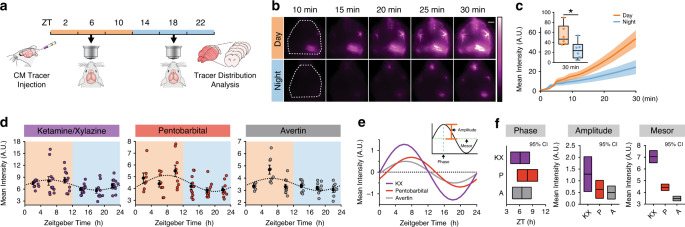
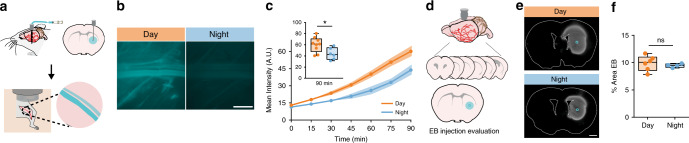
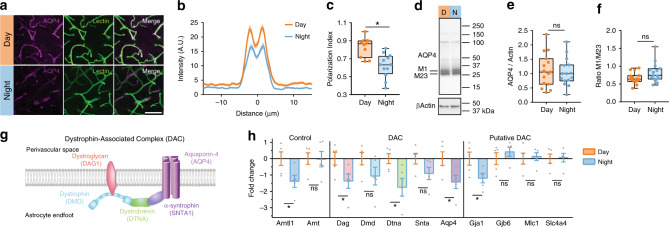
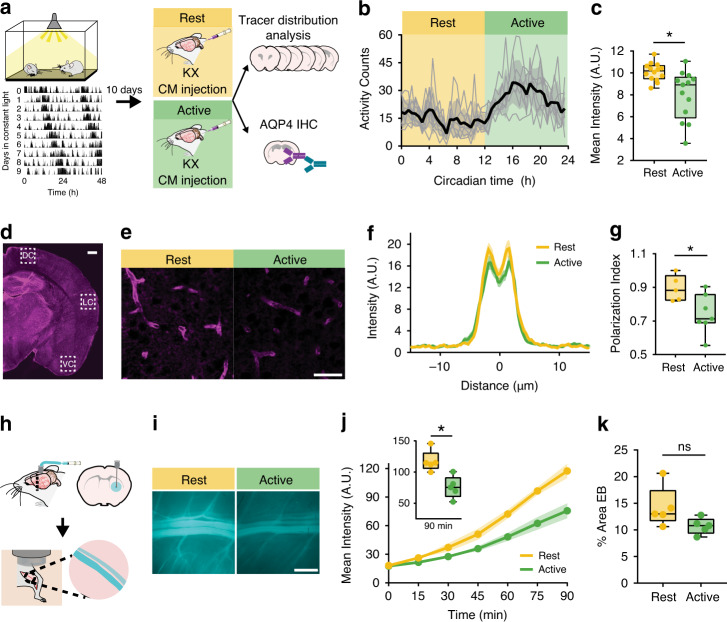
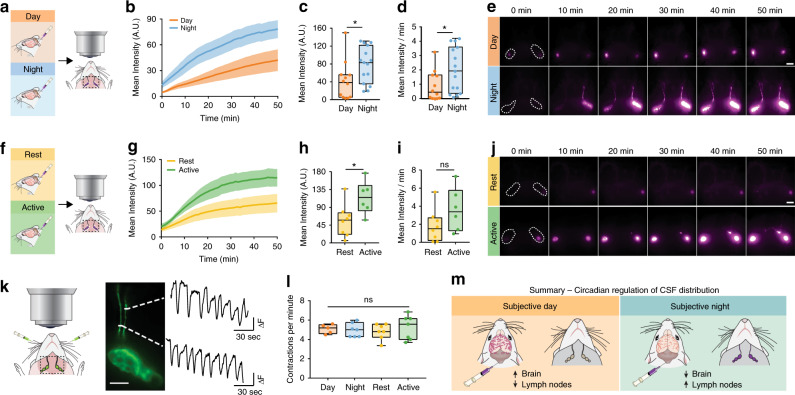
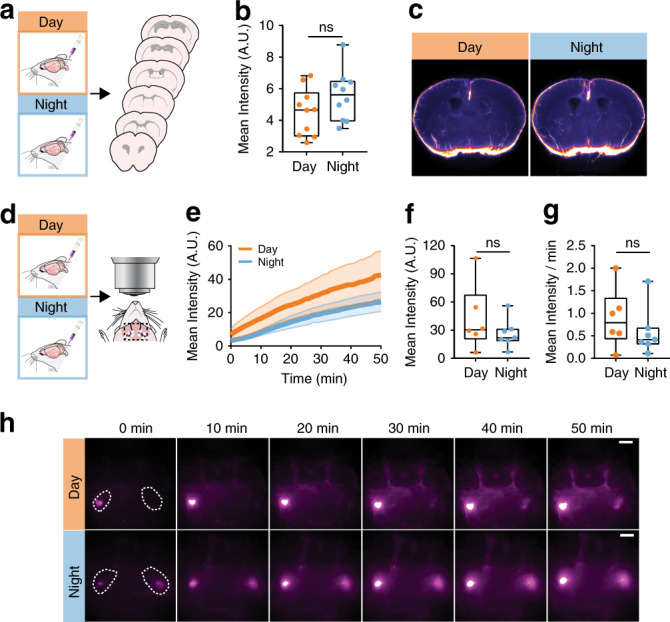
The glymphatic system is a network of perivascular spaces that promotes movement of cerebrospinal fluid (CSF) into the brain and clearance of metabolic waste. This fluid transport system is supported by the water channel aquaporin-4 (AQP4) localized to vascular endfeet of astrocytes. The glymphatic system is more effective during sleep, but whether sleep timing promotes glymphatic function remains unknown. We here show glymphatic influx and clearance exhibit endogenous, circadian rhythms peaking during the mid-rest phase of mice. Drainage of CSF from the cisterna magna to the lymph nodes exhibits daily variation opposite to glymphatic influx, suggesting distribution of CSF throughout the animal depends on time-of-day. The perivascular polarization of AQP4 is highest during the rest phase and loss of AQP4 eliminates the day-night difference in both glymphatic influx and drainage to the lymph nodes. We conclude that CSF distribution is under circadian control and that AQP4 supports this rhythm.
Overview
The claims and statistics of this paper haven’t been checked yet.
Free: it reads the open-access text and checks the first 5 claims that cite a source we can check. Create a free account to check every claim.
Integrity signals
Registry
Cites
Statistics
Figures
Verification
Claims the paper makes
The claims and statistics of this paper haven’t been checked yet.
Free: it reads the open-access text and checks the first 5 claims that cite a source we can check. Create a free account to check every claim.
Claims other papers make about this one
Each is checked against this paper’s own text: does it say what the citing paper says it does?
In the citing paper
“A recent analysis showed that glymphatic flow is also regulated by circadian rhythmicity, such that fluid transport peaks during the sleep phase of diurnal activity, and falls during the active phase, independent of the light cycle.”
From Glymphatic failure as a final common pathway to dementia (2020) · cites this paper as [38]
In the citing paper
“This rhythm is supported by the temporally-regulated localization of AQP4 via the dystrophin associated complex, providing a dynamic link to the molecular circadian clock (38),”
From Glymphatic failure as a final common pathway to dementia (2020) · cites this paper as [38]
Self-check
Percentages, sums and reported differences re-computed from the paper’s own numbers.
The self-check needs the paper’s full text.
Citations
Cites
A new mathematical model for relative quantification in real-time RT-PCR
Pfaffl, M. W. (2001) · Nucleic Acids Research · doi:10.1093/nar/29.9.e45 · Cited by 34,610
Yushkevich, P. A., Piven, J., Hazlett, H. C., Smith, R. G., Ho, S., Gee, J. C., & Gerig, G. (2006) · NeuroImage · doi:10.1016/j.neuroimage.2006.01.015 · Cited by 8,868
Iliff, J. J., Wang, M., Liao, Y., Plogg, B. A., Peng, W., Gundersen, G. A., Benveniste, H., Vates, G. E., Deane, R., Goldman, S. A., et al. (2012) · Science Translational Medicine · doi:10.1126/scitranslmed.3003748 · Cited by 5,824
Self-citationSleep Drives Metabolite Clearance from the Adult Brain
Xie, L., Kang, H., Xu, Q., Chen, M. J., Liao, Y., Thiyagarajan, M., O’Donnell, J., Christensen, D. J., Nicholson, C., Iliff, J. J., et al. (2013) · Science · doi:10.1126/science.1241224 · Cited by 5,411
Self-citationZhang, Y., Chen, K., Sloan, S. A., Bennett, M. L., Scholze, A. R., O'Keeffe, S., Phatnani, H. P., Guarnieri, P., Caneda, C., Ruderisch, N., et al. (2014) · The Journal of Neuroscience · doi:10.1523/jneurosci.1860-14.2014 · Cited by 4,875
Pittendrigh, C. S., & Daan, S. (1976) · Journal of Comparative Physiology ? A · doi:10.1007/bf01417856 · Cited by 2,127
Pittendrigh, C. S., & Daan, S. (1976) · Journal of Comparative Physiology ? A · doi:10.1007/bf01417860 · Cited by 1,636
Mop3 is an essential component of the master circadian pacemaker in mammals.
Bunger, M. K., Wilsbacher, L. D., Moran, S. M., Clendenin, C., Radcliffe, L. A., Hogenesch, J. B., Simon, M. C., Takahashi, J. S., & Bradfield, C. A. (2000) · Cell · doi:10.1016/s0092-8674(00)00205-1 · Cited by 1,621
The two‐process model of sleep regulation: a reappraisal
Borbély, A. A., Daan, S., Wirz‐Justice, A., & Deboer, T. (2016) · Journal of Sleep Research · doi:10.1111/jsr.12371 · Cited by 1,577
Impairment of paravascular clearance pathways in the aging brain
Kress, B. T., Iliff, J. J., Xia, M., Wang, M., Wei, H. S., Zeppenfeld, D., Xie, L., Kang, H., Xu, Q., Liew, J. A., et al. (2014) · Annals of Neurology · doi:10.1002/ana.24271 · Cited by 1,521 · cited 2×
“In both a standard LD cycle (day: n= 7 mice; night n= 5 mice) and in 10 days LL (rest: n= 7 mice; active: n= 7 mice) we found no significant differences in contractions per minute between the rest and active phases (two-way analysis of variance (ANOVA), main effect of phase: F(1, 22)= 0.”
MethodSelf-citation
Cited by
Items 501–600 of 704
Emerging role of aquaporin in neurodegenerative diseases: A novel target for drug development
Zhou, M., & Liu, R. (2024) · Learning and Motivation · doi:10.1016/j.lmot.2024.102083 · Cited by 2
Cheng, Q., Liu, Y., Yang, Z., Zhang, M., Liu, T., Niu, Y., Liu, W., Huang, L., Feng, Y., Zhang, X., et al. (2024) · Journal of Clinical and Translational Hepatology · doi:10.14218/jcth.2024.00413 · Cited by 6
Jouvencel, A., Dilharreguy, B., Baillet, M., Pérès, K., Dartigues, J., Amieva, H., Mayo, W., & Catheline, G. (2024) · Neurobiology of Sleep and Circadian Rhythms · doi:10.1016/j.nbscr.2024.100111 · Cited by 2
Lymphatic collection and cell isolation from mouse models for multiomic profiling
Sabatier, M., Solanki, A., Thangaswamy, S., Lei, P., Zhou, H., O’Melia, M. J., Menzel, L., Mitri, S., & Ubellacker, J. M. (2025) · Nature Protocols · doi:10.1038/s41596-024-01081-0 · Cited by 2
“The composition of lymph is notably affected by the absorption of nutrients during food intake, and it remains to be determined the extent to which lymphatic composition is impacted by circadian rhythm 50–54 .”
Local versus global sleep organization and the quest to determine sleep function
Dongen, H. P. A. V. (2025) · Neurobiology of Sleep and Circadian Rhythms · doi:10.1016/j.nbscr.2025.100117 · Cited by 3
“Energy replenishment and waste removal processes allow for free energy to be resupplied during both wakefulness and sleep (e.g., Scharf et al., 2008; Hablitz et al., 2020).”
Silver, R., Yao, Y., & Myung, J. (2025) · European Journal of Neuroscience · doi:10.1111/ejn.70097 · Cited by 5
Hypertension: a lymphatic disease?
Konatham, S., Goodlett, B. L., Smith, H. L., & Mitchell, B. M. (2025) · Clinical Science · doi:10.1042/cs20245149 · Cited by 2
Lai, G., Bevilacqua, L., Giuliani, M. E., Bigossi, G., Marcozzi, S., Casoli, T., Abbrescia, P., Frigeri, A., Malavolta, M., & Balietti, M. (2025) · GeroScience · doi:10.1007/s11357-025-01797-1 · Cited by 5
Aquaporin-4 in Astrocytes and Glial Cells: Structural Insights and Functional Implications
Mogni, G., Mola, M. G., Barile, B., Memeo, A., Cibelli, A., Abbrescia, P., Frigeri, A., & Nicchia, G. P. (2025) · Springer eBooks · doi:10.1007/978-3-031-94215-0_2 · Cited by 3
Is canonical SD a clinically relevant model of migraine? Argument pro
Öncel, M. M., & Harriott, A. M. (2025) · The Journal of Headache and Pain · doi:10.1186/s10194-025-02175-0 · Cited by 2
Rivera-Castaño, L. (2021) · Revista de Fomento Social · doi:10.24875/rmn.20000122 · Cited by 2
Xing, C., Guo, S., Li, W., Deng, W., Ning, M., Lok, J. M., Arai, K., & Lo, E. H. (2022) · Elsevier eBooks · doi:10.1016/b978-0-12-822546-2.00028-9 · Cited by 2
Smith, F. (2022) · Springer eBooks · doi:10.1007/978-3-031-13388-6_8 · Cited by 2
Wood, C. M., Farag, V. E., & Sy, J. C. (2022) · Journal of Pharmacokinetics and Pharmacodynamics · doi:10.1007/s10928-022-09827-7 · Cited by 1
“CSF flow rates also fluctuate naturally over time with age [3, 7].”
BackgroundDeli, A., Toth, R. A., Zamora, M., Zand, A. P. D., Green, A. L., & Denison, T. (2023) · International IEEE/EMBS Conference on Neural Engineering · doi:10.1109/ner52421.2023.10123850 · Cited by 1
“Both CSF volume and lymphatic flow change on a diurnal basis [19], [20], there is therefore an additional potential for brainstem positional shifts on a much longer timescale even where body position remains unchanged, as in the case of patients with a decreased level of consciousness and limited…”
BackgroundGlymphatic system and aquaporin‑4 in epilepsy
Nowicka, D. (2023) · Acta Neurobiologiae Experimentalis · doi:10.55782/ane-2023-2498 · Cited by 5
Bizri, E. A., & Benveniste, H. (2024) · Elsevier eBooks · doi:10.1016/b978-0-323-93273-8.00003-1 · Cited by 1
Glymphatic system, sleep, neurodegeneration
Gorbachevskii, A. V., Kicherova, O. A., & Рейхерт, Л. И. (2024) · Журнал высшей нервной деятельности им И П Павлова · doi:10.31857/s0044467724030024 · Cited by 9
Postnova, S., & Sanz‐Leon, P. (2025) · Handbook of clinical neurology · doi:10.1016/b978-0-323-90918-1.00013-7 · Cited by 3
Oltra, J., Kalpouzos, G., Ekström, I., Larsson, M., Li, Y., Qiu, C., & Laukka, E. J. (2025) · Frontiers in Aging Neuroscience · doi:10.3389/fnagi.2025.1539508 · Cited by 1
“Importantly, the continuous network of PVS known as glymphatic system is suggested to be responsible for clearing waste products from the brain (Iliff et al., 2012; Nedergaard and Goldman, 2020), being especially active during sleep (Xie et al., 2013; Hablitz et al., 2020; Dredla et al., 2023).”
U‐Net‐Based Prediction of Cerebrospinal Fluid Distribution and Ventricular Reflux Grading
Rieff, M., Holzberger, F., Lapina, O., Ringstad, G. A., Valnes, L. M., Warsza, B., Eide, P. K., Mardal, K., & Wohlmuth, B. I. (2025) · NMR in Biomedicine · doi:10.1002/nbm.70029 · Cited by 3
“However, the CSF dynamics is complex as it is dictated by not only cardiac pulsations, but respiration [4, 5], vasomotion [6, 7], sleep waves [8, 9] as well as the circadian rhythm [10].”
Paladugu, P., Kumar, R., Sporn, K., Ong, J., Song, A., Sekhar, T. C., Gowda, C., Davidoff, N., Shin, S. D., & Lee, A. G. (2025) · Life Sciences in Space Research · doi:10.1016/j.lssr.2025.05.006 · Cited by 4
Yang, M., Chen, G., Tang, C., Peng, F., Luo, C., Zhu, C., Kong, R., Liang, J., & Peng, P. (2025) · Neuroradiology · doi:10.1007/s00234-025-03654-6 · Cited by 2
“This function helps shield the brain from external harmful substances and maintain neuronal stability [42, 43].”
Neurotoxicity of Endogenous Neurotoxin Salsolinol in Parkinson's Disease
Wu, S., Zhou, Y., Li, Q., Sun, H., Du, L., & Wang, H. (2025) · CNS & Neurological Disorders - Drug Targets · doi:10.2174/0118715273379940250704062355 · Cited by 1
Jessup, M., Iglesias, N. J., Tadisina, K. K., Xu, K. Y., Mella, J. R., Pinchuk, L., Singh, D. P., Tse, D. T., Nayak, V. V., & Coelho, P. G. (2025) · Biomaterials and Biosystems · doi:10.1016/j.bbiosy.2025.100117 · Cited by 2
“AQP4 channel activity peaks during sleep, while knockout AQP4 models eliminate the difference in glymphatic function and CSF drainage throughout the wake-sleep cycle [56].”
Munjal, V., Akhter, A. S., Rocco, M. T., Fiandaca, M. S., Heiss, J. D., & Bankiewicz, K. S. (2025) · Neurosurgery · doi:10.1227/neu.0000000000003729 · Cited by 3
Blood Labyrinth Barrier Waste Clearance as Assessed by GBCAs on MRI : A Scoping Review
Ahmad, S. A., Huang, E. Y., Kim, J. S., Balhi, Y., Spann, M., & Ward, B. K. (2025) · Laryngoscope Investigative Otolaryngology · doi:10.1002/lio2.70240 · Cited by 1
“This glymphatic system in the brain and eye is thought to rely on the glial water channel aquaporin-4 (AQP4), which is located at the vascular foot processes of astrocytes [5, 7, 46].”
Time-of-day and age-related patterns in cerebrospinal fluid glucose and protein
Koleske, J. P., Pan, S., Meehan, T., Loe, M. E., Morales, D. M., Lucey, B. P., Musiek, E. S., & Strahle, J. M. (2025) · Fluids and Barriers of the CNS · doi:10.1186/s12987-025-00686-1 · Cited by 2
Glymphatic Clearance in the Optic Nerve: A Multidomain Electro-Osmostic Model
Xiao, S., Huang, H., Eisenberg, B., Song, Z., & Xu, S. (2025) · Entropy · doi:10.3390/e27111174 · Cited by 3
“Sleep exerts a powerful influence on CNS metabolic homeostasis by enhancing the clearance of neurotoxic solutes [11, 67].”
Altered Glymphatic Function in Tinnitus: Associations With Cognition and Effects of rTMS
Ye, W., Du, Y., Li, S., Xu, Q., Fang, Z., Xu, J., Zhang, H., Salvi, R., Chen, Y., & Cai, Y. (2026) · The Laryngoscope · doi:10.1002/lary.70384 · Cited by 1
“Sleep disorders in tinnitus patients may further compromise glymphatic function, as the system is most active during sleep [52–54].”
Bach, D., & Nguyễn, T. T. (2026) · Neurobiology of Sleep and Circadian Rhythms · doi:10.1016/j.nbscr.2026.100145 · Cited by 4
“…of cerebrospinal fluid (CSF) into brain parenchyma along perivascular pathways is not constant: it is enhanced during the rest phase relative to the active phase, aligning waste transport capacity with the sleep-dominant window of tissue repair and proteostatic maintenance (Hablitz et al., 2020).”
InfluentialSu, M., Li, Q., Liao, P., Fan, L., Li, X., Deng, L., Yang, J., Lu, F., Zhou, B., & Jiang, R. (2026) · International Journal of Molecular Sciences · doi:10.3390/ijms27052159 · Cited by 1
“This is consistent with previous observations that astrocytic aquaporin-4 (AQP4) expression peaks during sleep, facilitating waste clearance [13,31], and that adenosine release from astrocytes helps regulate sleep homeostasis [32,33].”
Yoon, S. H. (2026) · Journal of Brain Neuromodulation Therapy · doi:10.66227/jbnt.2026.1.1.14 · Cited by 1
The spinal lymphatic system: an emerging pathway bridging fluid homeostasis, immunity, and disease
Hou, Y., Wu, J., Yang, S., Hongwei, W., Wang, X., Lu, Z., Chen, Z., Feng, J., & 王宏利 (2026) · Bone Research · doi:10.1038/s41413-026-00508-6 · Cited by 2
“66,67 smLV drainage exhibits circadian oscillations that inversely correlate with glymphatic in fl ux dynamics.”
InfluentialGlymphatic system dysfunction in epilepsy: a review of mechanisms and clinical evidence
Byun, J. (2026) · encephalitis · doi:10.47936/encephalitis.2025.00171 · Cited by 1
“Glymphatic activity is governed not merely by external light conditions but by endogenous circadian mechanisms and behavioral state [9].”
Astrocytes in the Circadian System: A Promising Target for Mood Disorder Interventions
Liu, P., Li, H., Zhu, Y., Song, S., Kang, L., & Hu, Y. (2026) · Journal of Integrative Neuroscience · doi:10.31083/jin48501 · Cited by 1
Skull channels as gateways for immune surveillance of the brain
Eme‐Scolan, E., & Rua, R. (2026) · Trends in Immunology · doi:10.1016/j.it.2026.03.007 · Cited by 3
Lee, D., Choi, Y., Jeong, E., Nam, Y., Jo, S., Chung, S. J., & Kim, H. S. (2026) · PLoS ONE · doi:10.1371/journal.pone.0346730 · Cited by 2
“The present findings are consistent with intrinsic circadian modulation beyond the immediate arousal state [20].”
Suzuki, T., Tatsukawa, T., Sudo, G., Miyamoto, H., Zhang, Y., Holtzman, M. J., Itohara, S., Shimohata, A., Amano, K., Inoue, I., et al. (2026) · Molecular and Cellular Neuroscience · doi:10.1016/j.mcn.2026.104095 · Cited by 1
Nutritional modulation of the glymphatic system: mechanistic insights and clinical implications
Ko, J. W., & Jeon, S. (2026) · Critical Reviews in Food Science and Nutrition · doi:10.1080/10408398.2026.2659866 · Cited by 1
“This rhythm is abolished in Aqp4-knockout mice, demonstrating the essential role of polarized AQP4 in circadian-regulated clearance (Hablitz et al. 2020).”
Tavartkiladze, A. A., Tavartkiladze, L., Reiter, R. J., Burnier, M., Kasradze, D., Okrostsvaridze, N., Revazishvili, P., & Turmanidze, R. (2026) · Current Issues in Molecular Biology · doi:10.3390/cimb48050515 · Cited by 1
“Glymphatic transport is sleep-and circadian-sensitive, and experimental work implicates aquaporin-4 (AQP4) localization in perivascular fluid movement [17,18].”
Diurnal choroid plexus function in mice depends on sex, age, and amyloid-β status
Jansson, D., O’Boyle, R. P., Pedersen, T. J., Gino, E., Sevao, M., Vered, R., Suchland, K. L., Zhou, B., Fame, R. M., Keil, S. A., et al. (2026) · Communications Biology · doi:10.1038/s42003-026-10335-4 · Cited by 1
“8 and 9, and raw quanti-fi cation values are included in the Supplementary Data fi le.”
Agoston, D. V., & Meabon, J. S. (2026) · International Journal of Molecular Sciences · doi:10.3390/ijms27114669 · Cited by 4
“…specialized relative to peripheral vessels because BBB integrity depends on tight junctions, extensive pericyte coverage and astrocytic endfeet organization that together create a mechanically integrated barrier organ which coordinates parenchymal fluid flow with vascular dynamics [243,262,292].”
Hu, R., Tan, F., Duan, C., Sang, L., Yang, C., Yong, W., Jiang, Y., Miao, Y., Chen, W., & Lou, X. (2026) · BMC Psychiatry · doi:10.1186/s12888-026-08233-4 · Cited by 1
Liu, L., Li, J.-H., Bai, Y.-D., Wang, Y., & Bu, X. (2026) · Molecular Neurodegeneration · doi:10.1186/s13024-026-00962-0 · Cited by 1
“The cerebral lymphatic system promotes glymphatic CSF inflow and metabolic clearance during sleep or rest and facilitates CSF drainage via mLVs to CLNs during wakefulness or activity [49, 76].”
Kwon, M. J., Kim, J., Sung, J. S., Jo, S., Choi, Y., Kim, J., Kim, D.-H., Han, J. W., & Kim, K. W. (2026) · SLEEP · doi:10.1093/sleep/zsag159 · Cited by 1
Fu, F., Dai, C., Lin, C., Liu, X., Tao, Z., Zhang, X., Li, X., Ye, M., Xu, T., Hu, Y., et al. (2026) · The Journal of Headache and Pain · doi:10.1186/s10194-026-02427-7 · Cited by 1
“T1-based Frangi-derived PVS volume is not equivalent to dedicated T2/FLAIR PVS rating [28]. gBOLD-CSF coupling may have been affected by unmonitored sleep, respiratory, vascular, or CO2-related physiology [31–33].”
Asif, S., Mitchell, J. W., & Gillette, M. U. (2026) · International Journal of Molecular Sciences · doi:10.3390/ijms27135729 · Cited by 1
“Genetically deleting AQP4 eliminates this difference [118].”
Peng, C., Sun, X., Zhang, Z., Jia, M., Jin, J., He, Y., Zheng, W., Chen, J., Zhou, X., & Cai, X. (2026) · SLEEP · doi:10.1093/sleep/zsag182 · Cited by 2
Is amyloid beta peptide a driver of inflammaging?
Kechko, O. I., Moskalev, A. A., Franceschi, C., Mitkevich, V. A., & Makarov, A. А. (2026) · Ageing Research Reviews · doi:10.1016/j.arr.2026.103280 · Cited by 1
Maller, J. J., & Magnotta, V. A. (2026) · Neuroimage Reports · doi:10.1016/j.ynirp.2026.100394 · Cited by 4
“In addition, a previous study has shown that genetic deletion of AQP4 disrupts the circadian regulation of CSF distribution (Hablitz et al., 2020).”
Ciampi, C., Govoni, S. M., Preda, S., Mannelli, L. D. C., Racchi, M., Martelli, A., & Lanni, C. (2026) · Frontiers in Cell and Developmental Biology · doi:10.3389/fcell.2026.1891553 · Cited by 1
“As a consequence, CSF production is under circadian regulation and CSF distribution between brain areas also varies across the 24-h day (Hablitz et al., 2020).”
InfluentialDas, N., Sharma, A., Mann, M., Gordillo, A. J., Desai, A., Serletis, D., Moosa, A. N. V., Rammo, R. A., & Bingaman, W. E. (2024) · Child s Nervous System · doi:10.1007/s00381-024-06295-x · Cited by 1
El sueño: fisiología y homeostasis
Padilla-Gil, D. N. (2023) · Revista Colombiana de Ciencia Animal - RECIA · doi:10.24188/recia.v15.n1.2023.985 · Cited by 3
Shirolapov, I. V., Zakharov, A. V., Smirnova, D. A., Lyamin, A. V., & Gayduk, A. (2024) · Neuroscience and Behavioral Physiology · doi:10.1007/s11055-024-01604-y · Cited by 1
Kim, E., Reet, J. V., & Yoo, S. (2024) · Neuroreport · doi:10.1097/wnr.0000000000002065 · Cited by 1
“For example, wake/sleep cycles, along with the associated degree of noradrenergic tonus, have been shown to modulate the interstitial tracer transport in rodents, being mediated by changes in the volume of extracellular space [6].”
BackgroundMicrobiota as a Regulator of Circadian Rhythms—Special Focus on Sleep and Metabolism
Parkar, S. G., & Blum, D. J. (2021) · Elsevier eBooks · doi:10.1016/b978-0-12-819265-8.00109-1 · Cited by 1
The association between sleeping position and symptom severity of Autism Spectrum Disorder
Bisson, J. B., Keramati, C., Colwell, C., Bott, E., Shealy, K., & Shiffer, M. (2022) · Medical Hypotheses · doi:10.1016/j.mehy.2022.110773 · Cited by 1
Anisman, H., & Kusnecov, A. W. (2022) · Elsevier eBooks · doi:10.1016/b978-0-323-91904-3.00009-4 · Cited by 1
Sleep and the glymphatic system
Sakai, N., & Nishino, S. (2022) · Elsevier eBooks · doi:10.1016/b978-0-12-822963-7.00236-x · Cited by 1
Molecular Research in Multiple Sclerosis
Fucito, M., & Pieragostino, D. (2022) · International Journal of Molecular Sciences · doi:10.3390/ijms23052792 · Cited by 1
“Interestingly, it has recently been shown that CSF flow is affected by the circadian cycle [7].”
BackgroundNeuroinflammation, sleep, and autoimmune disease
Zielinski, M. R., & Gibbons, A. J. (2022) · Elsevier eBooks · doi:10.1016/b978-0-12-822963-7.00312-1 · Cited by 2
Cortical-wide impairment of “The Glymphatic system” after focal brain injuryPreprint
Azuma, M., Lee, H., Shinzaki, K., Yamane, R., & Morita, M. (2022) · bioRxiv (Cold Spring Harbor Laboratory) · doi:10.1101/2022.10.05.510560 · Cited by 1
“This flow is accelerated by sleep and anesthesia (Hablitz et al., 2019, 2020; Xie et al., 2013) and is dependent on AQP4 in astrocytes(Ishida et al., 2022; Simon et al., 2022, p. 4).”
BackgroundEditorial. The glymphatic system imagined and now imaged: what is it, and why is it important?
Hamilton, M. G. (2023) · Journal of neurosurgery · doi:10.3171/2023.7.jns231284 · Cited by 2
Editorial: Olfactory dysfunction in neurodegenerative diseases
Dasgupta, D., Heinbockel, T., & Ghatak, S. (2025) · Frontiers in Neuroscience · doi:10.3389/fnins.2025.1611870 · Cited by 1
Fabian‐Fine, R., Roman, A. G., Winters, M. J., Lathram, K. J., Bennett, C. H., Kipingi, L. K., Brännare-Gran, S. M., Whitley, A. E., Paul, C. M., Altman, L. M., et al. (2025) · bioRxiv (Cold Spring Harbor Laboratory) · doi:10.1101/2025.06.01.657219 · Cited by 2
“In this context, the previously proposed circadian dynamic of waste removal (Hablitz et al. , 2020) that may regulate the periodic swelling of these canals provides a compelling mechanism.”
Mechanical Ventilation Impairs Glymphatic Function and Induces Delirium-Like Behavior in MicePreprint
Liu, G., Wang, J., Tong, T., Liang, S., Newbold, E. J., Kroesbergen, E., Hong, S., Ladrón-de-Guevara, A., Boesen, H. C., Nedergaard, M., et al. (2025) · bioRxiv (Cold Spring Harbor Laboratory) · doi:10.64898/2025.12.12.694005 · Cited by 1
“Glymphatic flux is strongly modulated by the sleep–wake state 17,18 , anesthetics 19,20 , aging 21 , intracranial pressure (ICP) 22 and respiratory dynamics 23 .”
Self-citationVasomechanic treatment is associated with increased efflux of human brain proteins
Tuunanen, J., Hautamäki, K., Väyrynen, T., Järvelä, M., Korhonen, V. O., Huotari, N., Kaakinen, M., Kananen, J., Helakari, H., Raitamaa, L., et al. (2026) · Nature Communications · doi:10.64898/2026.01.22.26344377 · Cited by 1
Self-citationVessel-Resolved Mapping of Perivascular Spaces Reveals Hierarchical Neurofluid Organization In VivoPreprint
Zhou, X. A., Liu, X., Man, W., Choi, S.-C., Hike, D., Wang, X., Jiang, Y., Nedergaard, M., Kahle, K. T., Bacskai, B. J., et al. (2026) · bioRxiv (Cold Spring Harbor Laboratory) · doi:10.64898/2026.05.01.722268 · Cited by 1
“Brain state strongly modulates glymphatic transport, with sleep and circadian rhythms influencing fluid exchange and clearance 11 .”
Self-citationTong, T., Newbold, E. J., Wang, J., Waight, E., Caudell, A., Ladrón-de-Guevara, A., Giannetto, M. J., Hablitz, L. M., & Nedergaard, M. (2026) · bioRxiv (Cold Spring Harbor Laboratory) · doi:10.64898/2026.05.29.728816 · Cited by 3
“Intracisternal tracer infusion were performed as described previously (5, 31, 32).”
Self-citationPan, S., DeFreitas, D., Ramagiri, S., Bayguinov, P. O., Hacker, C. D., Snyder, A. Z., Wilborn, J., Huang, H., Yang, P. H., Raval, D. K., et al. (2021) · bioRxiv (Cold Spring Harbor Laboratory) · doi:10.1101/2021.12.18.473250
Roy, H., Smith, M. D., Blaber, H., Fry, C. H., Pereira, E. A. C., & Drake, M. J. (2022) · European Urology Focus · doi:10.1016/j.euf.2022.01.004
Brouwer, E., Claßen, S., Gauer, R., Gültig, O., Helmbrecht, S., Künzel, T., & Miller, A. (2021) · Elsevier eBooks · doi:10.1016/b978-3-437-48781-1.00006-5
Glymphatic and Immun Systems of the Brain
Kosif, R. (2022) · Journal of Medical Science And clinical Research · doi:10.18535/jmscr/v10i5.18
Nocturnal increase in cerebrospinal fluid secretion as a regulator of intracranial pressurePreprint
Steffensen, A. B., Edelbo, B. L., Barbuskaite, D., Andreassen, S. N., Olsen, M. H., Møller, K., & MacAulay, N. (2023) · bioRxiv (Cold Spring Harbor Laboratory) · doi:10.1101/2023.03.14.532581
“The day/night drainage 506 capacity cycle appears to be governed by the circadian rhythm, rather than sleep [39], as also 507 here observed for the CSF secretion capacity and ICP fluctuations.”
BackgroundInfluentialLi, X., Xie, Z., Zhou, Q., Tan, X., Meng, W., Pang, Y., Huang, L., Ding, Z., Hu, Y., Li, R., et al. (2023) · Research Square · doi:10.21203/rs.3.rs-2777379/v1
Buongiorno, M., Granell, E., Caruana, G., Sansa, G., Vives‐Gilabert, Y., Cullell, N., Molina‐Seguin, J., Almería, M., Artero, C., Sánchez‐Benavides, G., et al. (2023) · Research Square · doi:10.21203/rs.3.rs-2905114/v1
Zielinski, M. R., & Gibbons, A. J. (2023) · Elsevier eBooks · doi:10.1016/b978-0-323-85841-0.00003-1 · Cited by 1
Turner, R. P. (2023) · Elsevier eBooks · doi:10.1016/b978-0-323-89827-0.00008-5
Connection of brain glymphatic system with circadian rhythmPreprint
Kholmanskiy, A. S. (2023) · Authorea · doi:10.1101/2023.08.07.552123 · Cited by 7
“In the GS1 regime, relaxation processes of synaptic plasticity and chemical neutralization of toxins occur with the participation of water and melatonin [108, 163, 220, 232, 233].”
BackgroundTan, Y. L., Zhang, H., Zhang, C., Chen, W., Peng, T., Liu, Z., Wang, X., Zhang, P., Jin, L. L., & Hua, Q. (2023) · Journal of Traditional Chinese Medical Sciences · doi:10.1016/j.jtcms.2023.09.001
Thermo- and photoreceptors of eyes as regulators of circadian rhythm and glymphatic systemPreprint
Kholmanskiy, A. S. (2023) · bioRxiv (Cold Spring Harbor Laboratory) · doi:10.1101/2023.09.15.557924 · Cited by 4
Jansson, D., & Iliff, J. J. (2023) · Springer eBooks · doi:10.1007/978-3-031-39558-1_8
Beer, S., Elmenhorst, D., Bischof, G. N., Ramı́rez, A., Bauer, A., Drzezga, A. E., & Initiative, T. A. D. N. (2024) · medRxiv · doi:10.1101/2024.02.05.24302223
“The glymphatic system is mostly active during sleep, and it was shown in mice that glymphatic influx and clearance exhibit endogenous, circadian rhythms, supported at least in part via rhythmic localization of AQP4 to the perivascular endfeet of astrocytes (Hablitz et al., 2020).”
BackgroundHonma, S. (2024) · Royal Society of Chemistry eBooks · doi:10.1039/bk9781839167553-00107
Liu, W., Wang, N., Yang, M., Zhang, M., Liu, X., Shi, K., Liu, W., Ou, Y., Liu, L., Yang, Z., et al. (2024) · medRxiv · doi:10.1101/2024.03.03.24303548
Caffeine and Sleep in Preventing Post-spinal Headache: Which One is More Effective?
Yayla, A. Ç., Özlü, Z. K., & Aras, G. U. (2024) · Biological Research For Nursing · doi:10.1177/10998004241249938 · Cited by 1
“It functions mainly during sleep and is largely disabled during wakefulness (Hablitz et al., 2020; Thosar et al., 2018).”
PİNEALEKTOMİZE SIÇANLARIN BEYNİNDE AKUAPORİN 4 VE 1 EKSPRESYON DEĞİŞİKLİKLERİ: MELATONİNİN ROLÜ
Demir, M. T., & Başak, F. (2024) · İnönü Üniversitesi Sağlık Hizmetleri Meslek Yüksek Okulu Dergisi · doi:10.33715/inonusaglik.1463177
Bao, W., Jiang, P., Xu, P., Lin, H., Xu, J., Lai, M., Yuan, J., & Xu, J. (2024) · SSRN Electronic Journal · doi:10.2139/ssrn.4878784
Circadian Regulation of the Ocular Vasculature
Hudson, N., Cahill, M. T., & Campbell, M. (2024) · Elsevier eBooks · doi:10.1016/b978-0-443-13820-1.00109-2
Incompetent neck valves threaten the aging brain
Santisteban, M. M., & Iadecola, C. (2024) · Nature Aging · doi:10.1038/s43587-024-00707-y
Microglial Circadian Rhythms and Neurodegenerative Diseases
Xia, Y. F. (2024) · Current Alzheimer Research · doi:10.2174/0115672050336499240903113255
Astrocyte aquaporin mediates a tonic water efflux maintaining brain homeostasisPreprint
Pham, C., Komaki, Y., Deàs-Just, A., Gac, B. L., Mouffle, C., Franco, C., Chaperon, A., Vialou, V., Tsurugizawa, T., Cauli, B., et al. (2024) · eLife · doi:10.7554/elife.95873.2 · Cited by 3
(2024) · Elsevier eBooks · doi:10.1016/b978-0-443-23565-8.09996-8
Lifestyle Factors Affecting Biological Processes and Health
Anisman, H., Hayley, S. P., & Kusnecov, A. W. (2024) · Elsevier eBooks · doi:10.1016/b978-0-443-23565-8.00009-0
Stimmell, A. C., Alday, L. J., Diaz, J. M., Moseley, S. C., Cushing, S. D., Salvador, E., Ragsdale, S. M., & Wilber, A. A. (2024) · bioRxiv (Cold Spring Harbor Laboratory) · doi:10.1101/2024.11.12.622722
The blood–brain barrier: Gatekeeper and obstacle in neurodegenerative disorders
Bassiony, M., Ibrahem, M. A., Youssef, D. G., Elbadry, A. M. M., & Alaboudi, O. A. (2024) · Elsevier eBooks · doi:10.1016/b978-0-443-15702-8.00002-6
Basic Anatomy and Physiology of the Central Nervous System
Shkodina, A. D., Tarianyk, K. А., Пурденко, Т. Й., Zehravi, M., Lytvynenko, N. V., Delva, I. I., & Delva, M. Y. (2024) · Springer eBooks · doi:10.1007/978-981-96-0259-9_1 · Cited by 1
Anti-amyloid Monoclonal Antibodies for Alzheimer’s Disease: A New Hope? (Review)
Мазеркина, И. А. (2025) · Safety and Risk of Pharmacotherapy · doi:10.30895/2312-7821-2025-13-1-7-19 · Cited by 1
Influence of Behavioral States on Brain Energetics and Maintenance
Heller, H. C., & Nedergaard, M. (2025) · Oxford University Press eBooks · doi:10.1093/med/9780197756782.003.0022
Self-citation
Metadata
- Authors
- Hablitz, L. M., Plá, V., Giannetto, M., Vinitsky, H. S., Stæger, F. F., Metcalfe, T., Nguyen, R., Benrais, A., & Nedergaard, M.
- Affiliations
- University of Rochester Medicine (US)
- University of Copenhagen (DK)
- Corresponding author
- Hablitz, Lauren M.
- ORCID
- Venue
- Nature Communications
- Published
- 2020-09-02
- Volume
- 11
- Issue
- 1
- Pages
- 4411-4411
- ISSN
- 2041-1723 (ISSN-L)
- PMC
- PMC7468152
- OpenAlex
- W3082563867
- Semantic Scholar
- d0d6ac140cf093d0d37d751100bbb70573d92415
- Cited by
- 704
- References
- 69
- Citations by year
- 2026: 149 · 2025: 151 · 2024: 132 · 2023: 123 · 2022: 79 · 2021: 65 · 2020: 5
- FWCI
- 31.17
- Type
- journal article
- Language
- en
- Open access
- gold
- doi.org
- Licence
- cc-by
- creativecommons.org/licenses/by/4.0 (tdm)
- creativecommons.org/licenses/by/4.0 (vor)
- Locations
- Nature Communications (publishedVersion, cc-by)
- PubMed Central (publishedVersion, cc-by)
- PubMed (publishedVersion)
- Research at the University of Copenhagen (University of Copenhagen) (publishedVersion, cc-by)
- RePEc: Research Papers in Economics (submittedVersion)
- DOAJ (DOAJ: Directory of Open Access Journals) (submittedVersion, cc-by-sa)
- Funders
- U.S. Department of Health & Human Services | NIH | National Institute of Neurological Disorders and Stroke (R01NS100366, RF1AG057575)
- United States Department of Defense | United States Army | U.S. Army Research, Development and Engineering Command | Army Research Office (MURI W911NF1910280)
- Fondation Leducq Transatlantic Networks of Excellence Program, Novo Nordisk and Lundbeck Foundations, and the EU Horizon 2020 research and innovation program
- Topics
- Health Sciences › Medicine › Clinical Neurology › Cerebrospinal fluid and hydrocephalus
- Life Sciences › Biochemistry, Genetics and Molecular Biology › Molecular Biology › Ion Transport and Channel Regulation
- Life Sciences › Neuroscience › Cognitive Neuroscience › Sleep and Wakefulness Research
- Keywords
- glymphatic system, circadian rhythm, cerebrospinal fluid, aquaporin-4, astrocytes, perivascular spaces, cerebrospinal fluid drainage, lymphatic drainage, sleep, cisterna magna, lymph nodes, waste clearance
- MeSH terms
- Glymphatic System, Animals, Astrocytes, Brain, Cerebrospinal Fluid, Circadian Rhythm, Cisterna Magna, Lymph Nodes, Mice, Aquaporin 4
About these checks
Registry, retraction, Cites and statistics results are computed, not judged, with one exception: a printed reference that no index lists is read once by a model before it counts as a citation error. Claims are extracted by a model and kept only when their quote appears verbatim in the text; each cited source is then checked, with a model’s help, for whether it says what the claim relies on. Those verdicts can be wrong — read the claim’s quote and the cited source before relying on one.
Statistics and arithmetic are recomputed, not judged.
Confidence bands are shown only for fields calibrated on our annotated test set. None is calibrated yet, so no band is shown.
What counts as a claim ›How we measure confidence ›How we check this ›
Are you an author, or do you see a problem with this page? Request a review
Data sources
Bibliographic data: Semantic Scholar, OpenAlex, Crossref.
Contains information from the Semantic Scholar Academic Graph Datasets, made available under the ODC Attribution License (ODC-BY 1.0).
Semantic Scholar’s data is described in: Kinney, R., et al. (2023). The Semantic Scholar Open Data Platform. arXiv:2301.10140.
