

Circadian control of brain glymphatic and lymphatic fluid flow
Open accessThe DOI matches its Crossref record; 69 of the 69 references it cites were found in a registry or an index.
Abstract
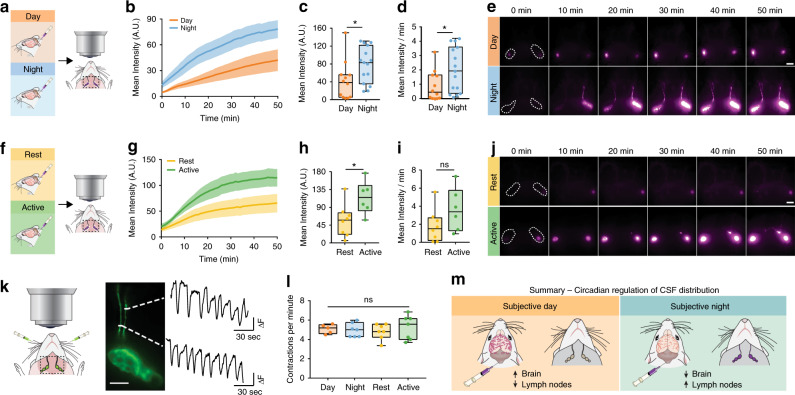
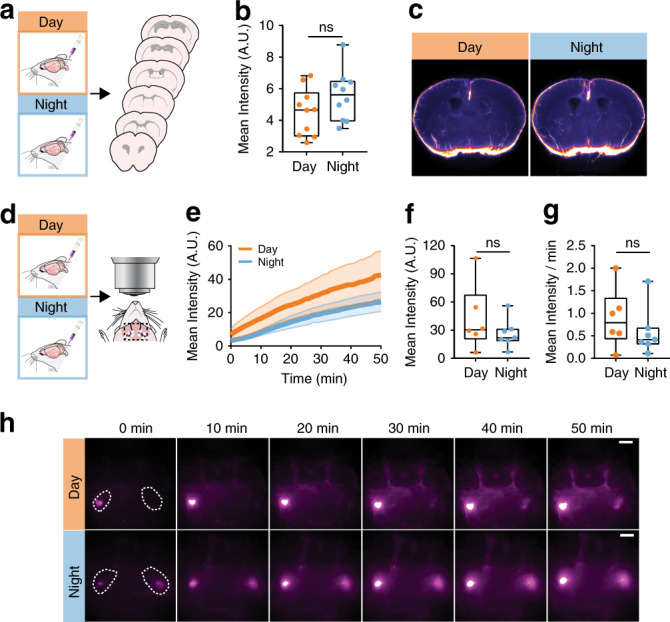
The glymphatic system is a network of perivascular spaces that promotes movement of cerebrospinal fluid (CSF) into the brain and clearance of metabolic waste. This fluid transport system is supported by the water channel aquaporin-4 (AQP4) localized to vascular endfeet of astrocytes. The glymphatic system is more effective during sleep, but whether sleep timing promotes glymphatic function remains unknown. We here show glymphatic influx and clearance exhibit endogenous, circadian rhythms peaking during the mid-rest phase of mice. Drainage of CSF from the cisterna magna to the lymph nodes exhibits daily variation opposite to glymphatic influx, suggesting distribution of CSF throughout the animal depends on time-of-day. The perivascular polarization of AQP4 is highest during the rest phase and loss of AQP4 eliminates the day-night difference in both glymphatic influx and drainage to the lymph nodes. We conclude that CSF distribution is under circadian control and that AQP4 supports this rhythm.
Overview
The claims and statistics of this paper haven’t been checked yet.
Free: it reads the open-access text and checks the first 5 claims that cite a source we can check. Create a free account to check every claim.
Integrity signals
Registry
Cites
Statistics
Figures
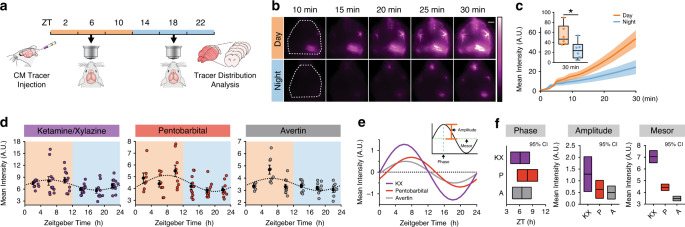
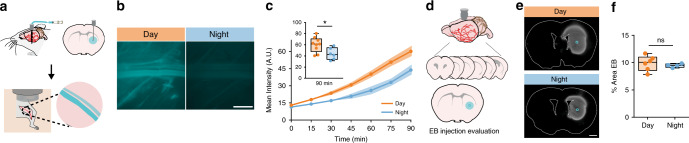
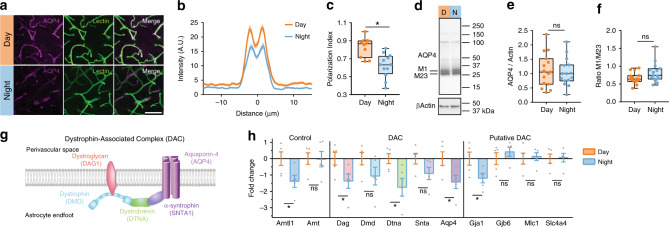
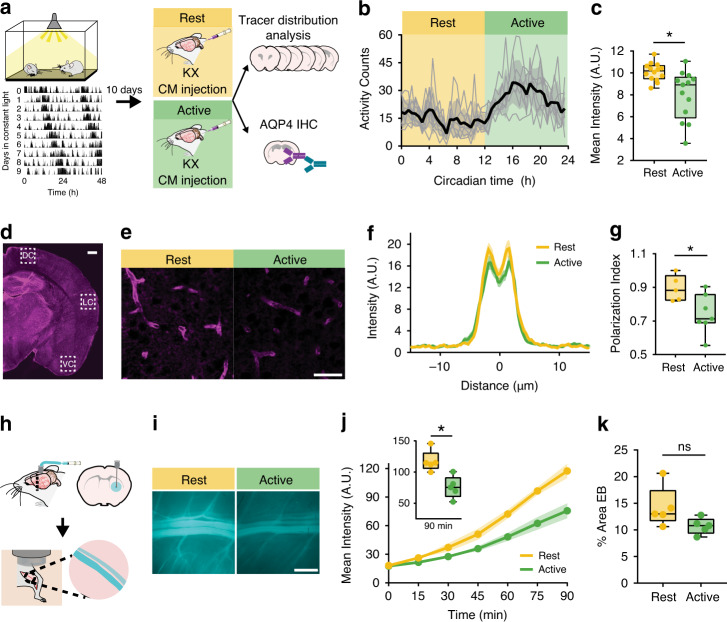
Verification
Claims the paper makes
The claims and statistics of this paper haven’t been checked yet.
Free: it reads the open-access text and checks the first 5 claims that cite a source we can check. Create a free account to check every claim.
Claims other papers make about this one
Each is checked against this paper’s own text: does it say what the citing paper says it does?
In the citing paper
“A recent analysis showed that glymphatic flow is also regulated by circadian rhythmicity, such that fluid transport peaks during the sleep phase of diurnal activity, and falls during the active phase, independent of the light cycle.”
From Glymphatic failure as a final common pathway to dementia (2020) · cites this paper as [38]
In the citing paper
“This rhythm is supported by the temporally-regulated localization of AQP4 via the dystrophin associated complex, providing a dynamic link to the molecular circadian clock (38),”
From Glymphatic failure as a final common pathway to dementia (2020) · cites this paper as [38]
Self-check
Percentages, sums and reported differences re-computed from the paper’s own numbers.
The self-check needs the paper’s full text.
Citations
Cites
A new mathematical model for relative quantification in real-time RT-PCR
Pfaffl, M. W. (2001) · Nucleic Acids Research · doi:10.1093/nar/29.9.e45 · Cited by 34,610
Yushkevich, P. A., Piven, J., Hazlett, H. C., Smith, R. G., Ho, S., Gee, J. C., & Gerig, G. (2006) · NeuroImage · doi:10.1016/j.neuroimage.2006.01.015 · Cited by 8,868
Iliff, J. J., Wang, M., Liao, Y., Plogg, B. A., Peng, W., Gundersen, G. A., Benveniste, H., Vates, G. E., Deane, R., Goldman, S. A., et al. (2012) · Science Translational Medicine · doi:10.1126/scitranslmed.3003748 · Cited by 5,824
Self-citationSleep Drives Metabolite Clearance from the Adult Brain
Xie, L., Kang, H., Xu, Q., Chen, M. J., Liao, Y., Thiyagarajan, M., O’Donnell, J., Christensen, D. J., Nicholson, C., Iliff, J. J., et al. (2013) · Science · doi:10.1126/science.1241224 · Cited by 5,411
Self-citationZhang, Y., Chen, K., Sloan, S. A., Bennett, M. L., Scholze, A. R., O'Keeffe, S., Phatnani, H. P., Guarnieri, P., Caneda, C., Ruderisch, N., et al. (2014) · The Journal of Neuroscience · doi:10.1523/jneurosci.1860-14.2014 · Cited by 4,875
Pittendrigh, C. S., & Daan, S. (1976) · Journal of Comparative Physiology ? A · doi:10.1007/bf01417856 · Cited by 2,127
Pittendrigh, C. S., & Daan, S. (1976) · Journal of Comparative Physiology ? A · doi:10.1007/bf01417860 · Cited by 1,636
Mop3 is an essential component of the master circadian pacemaker in mammals.
Bunger, M. K., Wilsbacher, L. D., Moran, S. M., Clendenin, C., Radcliffe, L. A., Hogenesch, J. B., Simon, M. C., Takahashi, J. S., & Bradfield, C. A. (2000) · Cell · doi:10.1016/s0092-8674(00)00205-1 · Cited by 1,621
The two‐process model of sleep regulation: a reappraisal
Borbély, A. A., Daan, S., Wirz‐Justice, A., & Deboer, T. (2016) · Journal of Sleep Research · doi:10.1111/jsr.12371 · Cited by 1,577
Impairment of paravascular clearance pathways in the aging brain
Kress, B. T., Iliff, J. J., Xia, M., Wang, M., Wei, H. S., Zeppenfeld, D., Xie, L., Kang, H., Xu, Q., Liew, J. A., et al. (2014) · Annals of Neurology · doi:10.1002/ana.24271 · Cited by 1,521 · cited 2×
“In both a standard LD cycle (day: n= 7 mice; night n= 5 mice) and in 10 days LL (rest: n= 7 mice; active: n= 7 mice) we found no significant differences in contractions per minute between the rest and active phases (two-way analysis of variance (ANOVA), main effect of phase: F(1, 22)= 0.”
MethodSelf-citation
Cited by
Items 401–500 of 704
Zhang, D., Wang, R., Zhou, L., Zhou, K., Zuo, Z., & Sun, G. (2026) · NeuroImage · doi:10.1016/j.neuroimage.2026.121769 · Cited by 6
Yang, Y., Jia, H., & Liu, H. (2026) · Frontiers in Neuroscience · doi:10.3389/fnins.2026.1775240 · Cited by 7
“Neural oscillations and vascular pulsatility drive CSF motion, while astrocytic regulation of water permeability tunes exchange eÿciency (Hablitz et al., 2020; Munk et al., 2019; Rasmussen et al., 2022).”
Keil, S. A., Li, Y., Krieger, A. C., Wang, X. H., Nguyen, T., Ivanidze, J., Chiang, G. C.-Y., Butler, T. A., & Zhou, L. (2026) · Neurobiology of Disease · doi:10.1016/j.nbd.2026.107325 · Cited by 6
“Shown to be predominantly sleep-active (Xie et al., 2013; Hablitz et al., 2020), it is further regulated by circadian rhythm (Hablitz et al., 2020) and central noradrenergic tone (Hablitz et al., 2019; Benveniste et al., 2017) and closely coupled to synchronous low-frequency neural activity…”
Glymphatic system impairment in neurological disorders: potential mechanisms and therapeutic targets
Wang, N., Liu, Z. H., Wang, Y., Cao, F., & Xu, D. (2026) · Molecular Biomedicine · doi:10.1186/s43556-026-00489-2 · Cited by 6
“…increased δ-wave (0.5–4 Hz) power, which correlates positively with CSF inflow and clearance [76, 77]; Impor-tantly, the polarized expression of AQP4 is also influenced by sleep–wake rhythm [78], through which sleep fragmentation impairs cognitive behaviors, particularly learning and memory [79].”
InfluentialSmagula, S. F., Zhang, G., Krafty, R. T., Ramos, A. R., Sotres‐Alvarez, D., Rodakowski, J. L., Gallo, L. C., Lamar, M., Gujral, S., Fischer, D. R., et al. (2024) · Sleep Health · doi:10.1016/j.sleh.2024.02.002 · Cited by 8
Reduced DTI-ALPS index in tinnitus patients: DTI-ALPS as a mediator of sleep on tinnitus
Liang, Y., Wen, H., Guo, R., Yin, G.-D., Zhao, J.-Q., Li, Z., & Zeng, X. (2025) · Neuroradiology · doi:10.1007/s00234-025-03556-7 · Cited by 5
Chung, S. J., Kang, S. H., Kang, M., Choi, Y., Park, Y. J., Kim, H., Oh, K., Koh, S., & Kim, J. B. (2025) · Alzheimer s Research & Therapy · doi:10.1186/s13195-024-01667-6 · Cited by 6
“Growing experimental evidence in rodent models has shown that glymphatic function, associated with clearance of metabolic waste, is activated during slow-wave sleep [25–27].”
Cerebrospinal fluid flow modulates brain health
Hablitz, L. M., & Nedergaard, M. (2025) · Journal of Clinical Investigation · doi:10.1172/jci197202 · Cited by 6
“The relative drainage of CSF among the multiple efflux paths is dynamically regulated by arousal state (7), circadian timing (8), anesthesia (9, 10), and body posture (11).”
Self-citationVerisokin, A. Y., Вячеславовна, В. Д., Kucherenko, V. V., Postnov, D. E., & Brazhe, A. (2021) · The European Physical Journal Plus · doi:10.1140/epjp/s13360-021-01687-3 · Cited by 6
Amyloid Beta Dynamics in Biological Fluids—Therapeutic Impact
Schreiner, T. G., & Popescu, B. O. (2021) · Journal of Clinical Medicine · doi:10.3390/jcm10245986 · Cited by 5
“other hand, gravitational factors and circadian rhythm, especially deep stages of sleep, seem to enhance solutes drainage through the glymphatic system [101].”
BackgroundZhou, N., Fan, Z., Tong, Y., Xiao, X., Xie, Y., Qi, Z., & Chen, L. (2023) · Neuropathology and Applied Neurobiology · doi:10.1111/nan.12913 · Cited by 5
“It has been recently shown that ILAs in layer I may interact with the immune system through the meningeal lymphatic system [22, 23].”
BackgroundA bibliometric and knowledge-map analysis of the glymphatic system from 2012 to 2022
Hou, C., Ren, W., Wang, B., Fu, X., Liu, Q., Li, J., Zhang, H., Wang, W.-H., Yang, X., Wei, P., et al. (2023) · Frontiers in Molecular Neuroscience · doi:10.3389/fnmol.2023.1148179 · Cited by 6
Shirolapov, I. V., Zakharov, A. V., Smirnova, D. A., Lyamin, A. V., & Gayduk, A. (2023) · S S Korsakov Journal of Neurology and Psychiatry · doi:10.17116/jnevro202312310142 · Cited by 5
Conservative Management of Acute Sports-Related Concussions: A Narrative Review
Kureshi, S. A., Mendizabal, M., Francis, J., & Djalilian, H. R. (2024) · Healthcare · doi:10.3390/healthcare12030289 · Cited by 5
“The glymphatic system is linked to sleep and the circadian system, with over 80% of glymphatic system clearance occurring during deep sleep [158–160].”
BackgroundHaas, A., Chung, J., Kent, C. D., Mills, B., & McCoy, M. (2024) · Cureus · doi:10.7759/cureus.56223 · Cited by 7
“Glymphatic system function appears to be active primarily during sleep and follows a circadian rhythm [305].”
BackgroundWichmann, T. O., Højsager, M. H., & Damkier, H. H. (2024) · Frontiers in Cellular Neuroscience · doi:10.3389/fncel.2024.1414662 · Cited by 5
Diffusion assessment through image processing: beyond the point-source paradigm
Postnikov, E. B., Nаmykin, A. A., SEMYACHKINA-GLUSHKOVSKAYA, O. V., & Postnov, D. E. (2021) · The European Physical Journal Plus · doi:10.1140/epjp/s13360-021-01487-9 · Cited by 5
Prolonged Light Exposure Induces Circadian Impairment in Aquaporin-4-Knockout Mice
Murakami, A., Tsuji, K., Isoda, M., Matsuo, M., Abe, Y., Yasui, M., Okamura, H., & Tominaga, K. (2023) · Journal of Biological Rhythms · doi:10.1177/07487304221146242 · Cited by 5
“AQP4 plays a crucial role in water movement in the brain (Mestre et al., 2018; Hablitz et al., 2020), and is speculated to be pathophysiologically involved in cerebral edema, which causes abnormal water retention in the brain parenchyma (Manley et al.”
BackgroundThe brake matters: Hyperexcitable arousal circuits in sleep fragmentation with age
Li, S., & de Lecea, L. (2022) · Clinical and Translational Medicine · doi:10.1002/ctm2.900 · Cited by 5
Barr, H. J., Caldwell, S. K., Reimertz, J. M., Depp, C., Walker, A. J., Marsh, S. E., Gupte, A. S., Hingerl, M., Patel, J., Park, S.-O., et al. (2025) · bioRxiv (Cold Spring Harbor Laboratory) · doi:10.64898/2025.12.08.693074 · Cited by 9
Diffusion Tensor Imaging in Neurofluids
Levendovszky, S. R., & Meyer, B. P. (2025) · Neuroimaging Clinics of North America · doi:10.1016/j.nic.2024.11.001 · Cited by 4
Aquino, G., Palagini, L., Alfì, G., Feige, B., Spiegelhalder, K., Piarulli, A., & Gemignani, A. (2025) · Journal of Sleep Research · doi:10.1111/jsr.70069 · Cited by 6
Chronic Intraventricular Cannulation for the Study of Glymphatic Transport
Gahn‐Martinez, D., Giannetto, M. J., Chang, E., Beam, N., Tobin, P., Plá, V., & Nedergaard, M. (2025) · eNeuro · doi:10.1523/eneuro.0537-24.2025 · Cited by 5
“Since the discovery of the glymphatic system in 2012 (Iliff et al., 2012), CMC has been widely used (Iliff et al., 2013; Hablitz et al., 2019, 2020; Giannetto et al., 2020).”
Self-citationNeurovascular plasticity as a modulator of hypothalamic function
Chen, B., Furtado, J., & Schneeberger, M. (2025) · Reviews in Endocrine and Metabolic Disorders · doi:10.1007/s11154-025-09982-5 · Cited by 6
“Moreover, glymphatic influx in the hypothalamus is higher during the day than at night, further linking AQP4 polarization to circadian variations in activity [61].”
Liu, S., Zhuang, L.-P., & Li, X. (2025) · Frontiers in Aging Neuroscience · doi:10.3389/fnagi.2025.1579373 · Cited by 4
“Recent advances reveal that glymphatic dysfunction not only exacerbates A β and tau-mediated synaptic toxicity (Xie et al., 2013) but also bidirectionally interacts with sleep–wake cycles, aging, and cerebral hemodynamics (Hablitz et al., 2020).”
Panda, M., Fakitsa, M., Markaki, M., & Tavernarakis, N. (2025) · Advanced Drug Delivery Reviews · doi:10.1016/j.addr.2025.115655 · Cited by 4
Kollarik, S., Humer, S. K., Zurfluh, C. E., Gousopoulos, E., & Lindenblatt, N. (2025) · Cellular and Molecular Neurobiology · doi:10.1007/s10571-025-01611-8 · Cited by 6
“It is well-established that sleep plays a critical role in regulating brain clearance (Hablitz et al. 2020; Lucke-Wold et al. 2015; Rasmussen et al. 2018; Shirolapov et al. 2024).”
Time-restricted feeding rescues sociability deficits and reduces neuroinflammation in aged mice
Ince, L. M., Routh, B. N., Darling, J. S., Manem, K., Prabhakar, A., Martinez, S., Chan, E., Chen, R., Gaudet, A. D., & Fonken, L. K. (2025) · Neurobiology of Aging · doi:10.1016/j.neurobiolaging.2025.11.007 · Cited by 8
Astrocyte Biology in CNS Inflammatory Diseases: A Clinical-Translational Perspective
Ye, J. J., & Quintana, F. J. (2025) · Neurology Neuroimmunology & Neuroinflammation · doi:10.1212/nxi.0000000000200529 · Cited by 8
Extracellular RNAs as Messengers and Early Biomarkers in Neurodegeneration
Lü, K., & Koziol, M. J. (2025) · International Journal of Molecular Sciences · doi:10.3390/ijms27010320 · Cited by 6
“Perivascular, glymphatic, and meningeal routes: The glymphatic system and meningeal lymphatic vessels provide conduits for interstitial fluid and solute clearance from brain tissue to peripheral lymph nodes and blood [171–175].”
Bouffard, M. A., Comeau, D. S., Avanaki, M. A., Jaafar, N., Brook, A., Abbasi, B., Alsop, D. C., Chang, Y., Rizzo, J. F., Mallery, R. M., et al. (2026) · Journal of Neuro-Ophthalmology · doi:10.1097/wno.0000000000002434 · Cited by 4
Glymphatic system dysfunction: a link between sleep disorders and neurodegeneration
Yang, H., Tian, X., Luo, X., Chang, Z., & Li, P. (2026) · Psychopharmacology · doi:10.1007/s00213-026-07004-z · Cited by 12
“These findings highlight the central role of the sleep-glymphatic system axis, with future research needing to focus on interventions such as improving AQP4 function (Hablitz et al. 2020 ) or targeted modulation of microglia.”
Gomolka, R. S., Ladrón-de-Guevara, A., Grubb, S., Hirschler, L., Strom, I., Weikop, P., van Osch, M. J. P., Nedergaard, M., & Mori, Y. (2026) · NeuroImage · doi:10.1016/j.neuroimage.2026.121761 · Cited by 5
Self-citationTahmasian, M., Elberse, J. D., Ahmadi, R., Wen, L., Rosenzweig, I., Genon, S., Eickhoff, S. B., & Mander, B. A. (2026) · GeroScience · doi:10.1007/s11357-026-02152-8 · Cited by 9
Oriquat, G., Ali, A. M., Patel, P. N., Hanumanthayya, M., Priyadarshini‐Nayak, P., Bainsal, N., Urazbaeva, D., Xusinovna, D. M., & Ghahari, A. (2026) · Behavioural Brain Research · doi:10.1016/j.bbr.2026.116138 · Cited by 6
Dong, Z., Du, X., Wang, L., Zou, X., Zuo, H., Yan, Y., Chen, G., Cheng, O., & Zhang, Y. (2024) · Journal of Central Nervous System Disease · doi:10.1177/11795735241259429 · Cited by 6
Thalamic involvement defines distinct slow-wave subtypes in NREM sleep
Bergamo, D., Handjaras, G., Picchioni, D., Ricciardi, E., Legendre, G., Özbay, P. S., de Zwart, J. A., Duyn, J. H., Bernardi, G., & Betta, M. (2026) · Communications Biology · doi:10.1038/s42003-026-09988-y · Cited by 7
“Interestingly, previous work suggested the existence of a three-way association between EEG slow waves, hemodynamic cortical changes, and CSF movements, and suggested that this interaction may ultimately favor the movement of interstitial fl uids and the removalofmetabolicwastesfrombraintissues 7,8 .”
Nguchu, B. A., Zhao, J., Yu, L., Han, Y., Jin, H., Wang, X., Li, H., & Shaw, P. M. (2025) · Frontiers in Psychiatry · doi:10.3389/fpsyt.2025.1509093 · Cited by 7
Wang, Y. S., Liu, Q., Wu, J., Meng, K., Zhou, L., & Ye, F. (2025) · Frontiers in Aging Neuroscience · doi:10.3389/fnagi.2025.1598608 · Cited by 9
“Physiological interventions such as high-intensity training and circadian rhythm synchronization can also effectively enhance AQP4 polarization and promote brain waste clearance (Hablitz et al., 2020; Feng et al., 2023).”
Connectivity promotes repeatable activation patterns in the model of astrocytic networks
Вячеславовна, В. Д., Verisokin, A. Y., Postnov, D. E., & Brazhe, A. (2021) · The European Physical Journal Plus · doi:10.1140/epjp/s13360-021-01708-1 · Cited by 4
Bulat-Klarica-Oreskovic Hypothesis: A Comprehensive Review
Bajda, J., Pitla, N., & Gorantla, V. R. (2023) · Cureus · doi:10.7759/cureus.45821 · Cited by 4
Ebrahimi, S.-M., Tuunanen, J., Saarela, V. O., Honkamo, M., Huotari, N., Raitamaa, L., Korhonen, V. O., Helakari, H., Järvelä, M., Kaakinen, M., et al. (2024) · Scientific Reports · doi:10.1038/s41598-023-51069-1 · Cited by 7
“These volumetric changes are in line with findings of increased brain glymphatic function 49 and ocular CSF clearance 1 during the night, which is mediated by aquaporin-4 water channels.”
ResultSong, Q., Zhao, Y., Lin, T., & Yue, J. (2022) · Frontiers in Aging Neuroscience · doi:10.3389/fnagi.2022.897802 · Cited by 5
“Moreover, it has been reported that metabolite clearance via PVS occurs particularly during sleep (Hablitz et al., 2020; Wardlaw et al., 2020), and sleep deficiency may lead to structural changes in PVS (Del Brutto et al.”
BackgroundOsteopathy in the Cranial Field as a Method to Enhance Brain Injury Recovery: A Preliminary Study
Dickerson, M. R., Murphy, S. F., Hyppolite, N. A., Brolinson, P. G., & VandeVord, P. J. (2022) · Neurotrauma Reports · doi:10.1089/neur.2022.0039 · Cited by 4
Umlauf, B. J., Frampton, G. A., Cooper, A., & Greene, H. F. (2023) · Journal of Controlled Release · doi:10.1016/j.jconrel.2023.10.024 · Cited by 5
van der Zwet, L. C. A., Michel, S. H., & Deboer, T. (2025) · Exploration of Endocrine and Metabolic Diseases · doi:10.37349/eemd.2025.101437 · Cited by 5
Advances in Imaging the Glymphatic System
Ford, J. N., Madan, N., Filippi, C. G., & Buch, K. A. (2025) · Advances in Clinical Radiology · doi:10.1016/j.yacr.2025.05.010 · Cited by 3
Impaired glymphatic transport in hypoxic-ischemic encephalopathy
Shen, J., Yang, Y., Chen, F., Zuo, Y., Yang, Y., We, W., Liu, Y., & Wen, J. (2025) · NeuroImage · doi:10.1016/j.neuroimage.2025.121414 · Cited by 3
Novel neuropathological observations in an adult with Dravet syndrome
Andrade, D. M., Bassett, A. S., Ali, Q. Z., Lira, V., Reyes, N. G. D., Tartaglia, M. C., Fasano, A. A., & Kovács, G. G. (2025) · Epilepsia · doi:10.1111/epi.18613 · Cited by 4
Association of long-term blood pressure exposure with DTI-ALPS: A population-based cohort study
Guo, S., Sun, J. P., Zhang, Y., Li, X., Li, J., Zhao, X., Zhao, P., Chen, S., Wu, S., Hui, Y., et al. (2025) · Brain Research · doi:10.1016/j.brainres.2025.149998 · Cited by 3
Wu, X., Zhang, R., Chen, W., Mei, Y., Hu, Q., Lan, W., Zhang, Y., Ye, Z., Huang, C., & Zhu, B. (2025) · Journal of Alzheimer s Disease Reports · doi:10.1177/25424823251387366 · Cited by 3
Sleep is a therapeutic window for photostimulation of drainage of aging brain
Terskov, A. V., Adushkina, V., Alexander, S., Наволокин, Н. А., Blokhina, I., Zlatogorskaya, D., Anastasiia, S.-G., Sonina, K., Evsukova, A., Elizarova, I. V., et al. (2025) · Frontiers of Optoelectronics · doi:10.1007/s12200-025-00168-0 · Cited by 7
Wang, C., Zhang, T., Lu, H., Xu, Z., Wei, S., Ma, C., Fang, P., Zhu, Y., & Guo, F. (2025) · Brain Research Bulletin · doi:10.1016/j.brainresbull.2025.111640 · Cited by 7
Zhang, Y., Chen, Z., Jiang, Y., Ye, Q., Lin, J., Zhang, X., Li, D., Hu, Q., Fu, Y., Liu, L., et al. (2025) · Neurobiology of Disease · doi:10.1016/j.nbd.2025.107214 · Cited by 5
Effect of organismal rhythmic activity on Aβ clearance by the glymphatic system
Mi, F., Li, H., Pan, D., & Yu, C. (2025) · European journal of medical research · doi:10.1186/s40001-025-03646-5 · Cited by 4
“…rhythm: Rodent GS function peaks during the active phase (nighttime for mice), while human GS activity is highest during NREM sleep (nighttime) [38, 41]—align-ing with species-specific sleep–wake cycles but requiring caution when extrapolating molecular mechanisms (e.g., PER2–AQP4 regulation)…”
Lu, H., Zhang, Y., Chen, C., Xie, H., Li, Y., & Qiu, S. (2026) · Journal of Neuroinflammation · doi:10.1186/s12974-026-03723-4 · Cited by 4
“While astrocytic endfeet delineate PVS boundaries, microglial processes infiltrate these spaces, phagocytosing metabolic waste (e.g., Aβ) [65, 70, 71].”
Review of research advances in the cerebral lymphatic system and neurological disorders
Xie, Z., Wei, J., & Wang, J. (2026) · Journal of Advanced Research · doi:10.1016/j.jare.2026.02.032 · Cited by 3
Diurnal changes of cerebrospinal fluid and global signal coupling
Müller, L., Berberich, C., Heinrich, P., Nuttall, R., Pilge, S., Zott, B., Sorg, C., Wohlschlaeger, A. M., Schneider, G., & Zimmermann, J. (2026) · NeuroImage · doi:10.1016/j.neuroimage.2026.121833 · Cited by 4
Wang, H., Wang, X., Liu, N., Wang, H., & Feng, C. (2026) · Frontiers in Immunology · doi:10.3389/fimmu.2026.1828809 · Cited by 3
Li, Z., Wang, S., Yang, J., Hu, H., Zheng, Y., Li, C., & Ding, Z. (2026) · Neuroscience · doi:10.1016/j.neuroscience.2026.04.021 · Cited by 3
Huang, B., & Tang, G. (2026) · Pathology - Research and Practice · doi:10.1016/j.prp.2026.156564 · Cited by 5
Fu, L., Ren, J., Lei, X., Zhang, R., He, Y., Wang, Y., Li, Q., Li, C., Guo, C., Teng, X., et al. (2026) · Journal of Affective Disorders · doi:10.1016/j.jad.2026.122109 · Cited by 3
Time of Day Influences Concentrations of Total Protein and Albumin in Cerebrospinal Fluid in HIV
Kakarla, V., Letendre, S. L., & Ellis, R. J. (2023) · International Journal of Molecular Sciences · doi:10.3390/ijms24032832 · Cited by 3
Pun, M., Guadagni, V., Longman, R. S., Hanly, P. J., Hill, M. D., Anderson, T. J., Hogan, D. B., Rawling, J. M., & Poulin, M. J. (2023) · Journal of Sleep Research · doi:10.1111/jsr.14095 · Cited by 4
“Alternatively, sleep fragmentation resulting from the apneic events and the associated impairment in metabolic waste clearance via glymphatic system (Hablitz et al., 2020; Lee et al., 2022; Lohela et al., 2022) could be the primary culprit of reduced cognitive functioning (McSorley et al., 2019).”
Intravenous arachnoid granulation hypertrophy in patients with Parkinson disease
Leguizamon, M., McKnight, C. D., Ponzo, T., Elenberger, J., Eisma, J. J., Song, A. K., Trujillo, P., Considine, C. M., Donahue, M. J., Claassen, D. O., et al. (2024) · npj Parkinson s Disease · doi:10.1038/s41531-024-00796-x · Cited by 3
Biological Fluid Flows: Signaling Mediums for Circadian Timing
Duyvesteyn, E., Vizcarra, V. S., Waight, E., Balbuena, E., & Hablitz, L. M. (2025) · Journal of Biological Rhythms · doi:10.1177/07487304251323318 · Cited by 4
“This is supported by a circadian rhythm in the movement of CSF between the glymphatic and lymphatic systems, with increased drainage of CSF to the superficial cervical lymph nodes during the active phase (Hablitz et al., 2020).”
Self-citationMa, J., Zhang, R., Lin, K., & Lee, T. M. C. (2026) · Psychological Medicine · doi:10.1017/s0033291726104292 · Cited by 3
“…pathways, driven by aquaporin-4 (AQP4) water channels on astrocytic end-feet, facilitate the clearance of metabolic waste (e.g. amyloid-β ) and the distribution of nutrients, primarily during sleep (Boespflug & Iliff, 2018; Hablitz et al., 2020; Jessen, Munk, Lundgaard, & Nedergaard, 2015).”
Björk, V. (2021) · Rejuvenation Research · doi:10.1089/rej.2020.2388 · Cited by 4
“49”
Sleep Disturbances Following Traumatic Brain Injury
Mathews, A. A., Halsey, S. L., & Bell, K. R. (2022) · Current Physical Medicine and Rehabilitation Reports · doi:10.1007/s40141-022-00351-w · Cited by 4
Zareba, M. R., Fąfrowicz, M., Marek, T., Ogińska, H., Beldzik, E., & Domagalik, A. (2024) · Chronobiology International · doi:10.1080/07420528.2024.2301944 · Cited by 3
“While the amount of fluid detectable within perivascular spaces increases with TOD (Barisano et al. 2021) and has been shown to be under circadian control (Hablitz et al. 2020), no studies have examined the impact of sleep health on the TOD differences in the discussed measures.”
BackgroundThe Regulation of Cerebral Lymphatic Drainage in the Transverse Sinus Region of the Mouse Brain
Xie, Z., He, Z., Yuan, Z., Wang, M., & Zhou, F. (2024) · Journal of Biophotonics · doi:10.1002/jbio.202400250 · Cited by 2
Astrocyte aquaporin mediates a tonic water efflux maintaining brain homeostasis
Pham, C., Komaki, Y., Deàs-Just, A., Gac, B. L., Mouffle, C., Franco, C., Chaperon, A., Vialou, V., Tsurugizawa, T., Cauli, B., et al. (2024) · eLife · doi:10.7554/elife.95873.3 · Cited by 2
The Glymphatic System, Sleep, and Neurodegeneration
Gorbachevskii, A. V., Kicherova, O. A., & Рейхерт, Л. И. (2024) · Neuroscience and Behavioral Physiology · doi:10.1007/s11055-024-01734-3 · Cited by 8
Insufficient Sleep and Alzheimer’s Disease: Potential Approach for Therapeutic Treatment Methods
Trinh, D. Q., Nhu, H., & Pham, D. T. (2024) · Brain Sciences · doi:10.3390/brainsci15010021 · Cited by 3
Neves, A. R., Vivès, É., Boisguérin, P., Quintela, T., & Costa, D. R. B. (2025) · International Journal of Molecular Sciences · doi:10.3390/ijms26136130 · Cited by 3
“In other words, the average phase of gene expression does not necessarily coincide with the time of maximum expression [40,41].”
Watson, J. A., Knoedler, S. A., von Reibnitz, D., Zurfluh, C. E., Imholz, C., Esposito, G., Schreiner, S. J., Gousopoulos, E., Cai, A., Kollarik, S., et al. (2025) · Plastic & Reconstructive Surgery Global Open · doi:10.1097/gox.0000000000007191 · Cited by 6
“14”
Deng, L., Jiang, N., Yuan, S., Jiang, D., Zhu, L., & Zhang, Y. (2025) · Journal of Affective Disorders · doi:10.1016/j.jad.2025.120427 · Cited by 6
A multimodal perspective to overcome translational barriers in cerebrospinal drug delivery
Kadamus, C., Sibi, S., Bharadwaj, R., & Subramony, J. A. (2025) · Expert Opinion on Drug Delivery · doi:10.1080/17425247.2025.2578369 · Cited by 5
“Evidence from rodent, NHP, and human studies suggest that the ICP is elevated at night when CSF production increases, potentially driven by circadian rhythms rather than sleep alone [29–31].”
Roura, I., Pardo, J., Martín‐Barceló, C., Pacheco-Jaime, L., Garcia-Vicente, C., Falcón, C., Madrid, J. A., Rol, M. A., Niñerola‐Baizán, A., Perissinotti, A., et al. (2026) · SLEEP · doi:10.1093/sleep/zsaf418 · Cited by 5
“Experimental and human studies show that glymphatic flow and AQP4 activity display circadian rhythmicity, with the highest metabolic clearance occurring during the rest phase [88, 94].”
Chen, Y., Jiang, L., Yao, D., Liu, D., Pan, Y., & Wang, Y. (2026) · Journal of Neuroinflammation · doi:10.1186/s12974-025-03688-w · Cited by 3
“Under physiological conditions, AQP4 trafficking to the astrocytic membrane follows a circadian rhythm [11].”
Lu, Q., Gu, H., Jiang, Z., Yang, Q., Hu, W., & He, C. (2026) · SLEEP · doi:10.1093/sleep/zsag016 · Cited by 2
Circadian timing of the dystrophin associated complex across the brain and body
Morse, I., Nedergaard, M., & Hablitz, L. M. (2026) · Fluids and Barriers of the CNS · doi:10.1186/s12987-026-00772-y · Cited by 2
“Circadian rhythms of glymphatic function and lymphatic drainage depend on the water channel aquapo-rin 4 (AQP4), which is enriched at the vascular endfeet of astrocytes [6].”
InfluentialSelf-citationLi, P., Li, Y., Zhang, Y., Sun, C., Yang, Y., Kang, Z., Wang, Y., Huang, Y., Xu, Z., Zhao, Y., et al. (2026) · Brain Research Bulletin · doi:10.1016/j.brainresbull.2026.111777 · Cited by 2
Rethinking cervical deep lymphovenous anastomosis in Alzheimer’s disease: problems and prospects
Wang, G., Li, H. Y., & Zhang, S. (2026) · Frontiers in Aging Neuroscience · doi:10.3389/fnagi.2026.1722759 · Cited by 2
“However, instead of invasive shunting, future strategies should explore less disruptive methods such as pharmacologic enhancement of lymphatic tone (Verghese et al., 2022), modulation of AQP4 polarization (Zhang et al., 2025), or circadian regulation of glymphatic flow (Hablitz et al., 2020).”
Exercise as Chronotherapy: Regulating Circadian Rhythms to Alleviate Symptoms in Parkinson’s Disease
Li, J., Liu, T., & Wei, J. (2026) · ACS Chemical Neuroscience · doi:10.1021/acschemneuro.5c00844 · Cited by 3
Glymphatic dysfunction: a unifying hypothesis for delirium
Boesen, H. C., Du, T., Goldman, S. A., & Nedergaard, M. (2026) · Nature Reviews Neurology · doi:10.1038/s41582-026-01194-y · Cited by 4
Self-citationSu, L., Tian, M., Hao, Y., Zhang, X., Liu, X., Liu, L., & Yao, E. (2026) · Progress in Neurobiology · doi:10.1016/j.pneurobio.2026.102911 · Cited by 3
Amyloid-β clearance: an astrocytic perspective
Li, J., Lv, Z., Chen, X. P., Fu, F., Yang, K., Lai, G., Wu, H., & Xie, G. (2026) · Frontiers in Neuroscience · doi:10.3389/fnins.2026.1812081 · Cited by 3
“Recent evidence has demonstrated that enhancing the transport efficiency of this system in AD mouse models significantly reduces A β plaque deposition and mitigates neuronal death, high-lighting its therapeutic potential in neurodegenerative diseases (Hablitz et al., 2020; Wang et al., 2024).”
The Glymphatic system: A dynamic regulator of brain health and therapeutic target
Wang, X., Gao, M., Sui, S., Liu, F., Tian, W., Wu, S., Ding, J., Chao, X., Xie, X., Gu, M., et al. (2026) · Experimental Neurology · doi:10.1016/j.expneurol.2026.115825 · Cited by 3
Zhang, J., Zhang, J., Ding, J., Zhang, X., Wang, Y., Wei, W., Chai, Y., Zhang, S., & Chen, X. (2026) · Alzheimer s & Dementia · doi:10.1002/alz.71451 · Cited by 4
“69 The efficiency of this CSF–ISF exchange is markedly enhanced during sleep, underscoring a fundamental link between sleep–wake cycles and brain metabolic health.”
Immune System of the Ischemic Brain: Old Paradigms Revisited
Vázquez‐Reyes, S., Esposito, E., Rosell, A., Lizasoaín, I., Lo, E. H., Moro, M. Á., & Hayakawa, K. (2026) · Stroke · doi:10.1161/strokeaha.125.051471 · Cited by 3
Yao, M., Liu, A., Song, J., Xing, L., Zi, M., & Li, H. (2026) · Neuroscience · doi:10.1016/j.neuroscience.2026.06.001 · Cited by 3
The Ontogeny of Rhythms in Circadian Clock Gene Expression in Mouse Brain and Neuroimmune Tissues
Bell, K. S., Chen, R., Weitzner, A. S., & Fonken, L. K. (2026) · Journal of Biological Rhythms · doi:10.1177/07487304261449282 · Cited by 2
“…expression (Myung et al., 2018; Quintela et al., 2015, 2018; Yamaguchi et al., 2020) and may contribute to the regulation of neural stem cell behavior and neurogenesis (Redzic et al., 2005) by modulating cerebro-spinal fluid dynamics across the day (Hablitz et al., 2020; Boespflug and Iliff, 2018).”
Brain health across the lifespan and the impact of nutrition, exercise, microbiota, and sleep
Shin, A. C., Haque, Z. F., Galyean, S., Hefner, M., Esmaeili, M., Lawrence, J. J., & Watkins, B. A. (2026) · Ageing Research Reviews · doi:10.1016/j.arr.2026.103245 · Cited by 3
Tachycardia and hypertension enhance tracer efflux from the spinal cord
Liu, S., Bilston, L. E., Stoodley, M. A., & Hemley, S. J. (2021) · Fluids and Barriers of the CNS · doi:10.1186/s12987-021-00279-8 · Cited by 4
Impaired glymphatic flow as a potential driver of pain chronification
Rümenapp, J., Sendel, M., Kersebaum, D., Larsen, N., Jansen, O., & Baron, R. (2023) · Pain · doi:10.1097/j.pain.0000000000002979 · Cited by 2
Jeffs, Q. L., Prather, J. F., & Todd, W. D. (2023) · Frontiers in Neuroscience · doi:10.3389/fnins.2023.1295998 · Cited by 2
“…for the increase in pathological load as a result of circadian disruption may be related to the glymphatic system, which has been found to aid in the clearance of A β during sleep, particularly during long, consolidated bouts of sleep (Kang et al., 2009; Xie et al., 2013; Hablitz et al., 2020).”
BackgroundA circadian clock regulates the blood-brain barrier across phylogeny
Avila, A., & Zhang, S. (2024) · Vitamins and hormones · doi:10.1016/bs.vh.2024.04.004 · Cited by 2
More than a bump to the head: An overview of the long-term effects of concussion
Coffman, C. A., Covassin, T., & Pontifex, M. B. (2024) · The Psychology of learning and motivation/The psychology of learning and motivation · doi:10.1016/bs.plm.2024.06.003 · Cited by 4
Li, X., Yang, T., Zhang, Z., Wu, S., Yuan, Z., & Zhou, F. (2024) · APL Photonics · doi:10.1063/5.0205571 · Cited by 4
Metadata
- Authors
- Hablitz, L. M., Plá, V., Giannetto, M., Vinitsky, H. S., Stæger, F. F., Metcalfe, T., Nguyen, R., Benrais, A., & Nedergaard, M.
- Affiliations
- University of Rochester Medicine (US)
- University of Copenhagen (DK)
- Corresponding author
- Hablitz, Lauren M.
- ORCID
- Venue
- Nature Communications
- Published
- 2020-09-02
- Volume
- 11
- Issue
- 1
- Pages
- 4411-4411
- ISSN
- 2041-1723 (ISSN-L)
- PMC
- PMC7468152
- OpenAlex
- W3082563867
- Semantic Scholar
- d0d6ac140cf093d0d37d751100bbb70573d92415
- Cited by
- 704
- References
- 69
- Citations by year
- 2026: 149 · 2025: 151 · 2024: 132 · 2023: 123 · 2022: 79 · 2021: 65 · 2020: 5
- FWCI
- 31.17
- Type
- journal article
- Language
- en
- Open access
- gold
- doi.org
- Licence
- cc-by
- creativecommons.org/licenses/by/4.0 (tdm)
- creativecommons.org/licenses/by/4.0 (vor)
- Locations
- Nature Communications (publishedVersion, cc-by)
- PubMed Central (publishedVersion, cc-by)
- PubMed (publishedVersion)
- Research at the University of Copenhagen (University of Copenhagen) (publishedVersion, cc-by)
- RePEc: Research Papers in Economics (submittedVersion)
- DOAJ (DOAJ: Directory of Open Access Journals) (submittedVersion, cc-by-sa)
- Funders
- U.S. Department of Health & Human Services | NIH | National Institute of Neurological Disorders and Stroke (R01NS100366, RF1AG057575)
- United States Department of Defense | United States Army | U.S. Army Research, Development and Engineering Command | Army Research Office (MURI W911NF1910280)
- Fondation Leducq Transatlantic Networks of Excellence Program, Novo Nordisk and Lundbeck Foundations, and the EU Horizon 2020 research and innovation program
- Topics
- Health Sciences › Medicine › Clinical Neurology › Cerebrospinal fluid and hydrocephalus
- Life Sciences › Biochemistry, Genetics and Molecular Biology › Molecular Biology › Ion Transport and Channel Regulation
- Life Sciences › Neuroscience › Cognitive Neuroscience › Sleep and Wakefulness Research
- Keywords
- glymphatic system, circadian rhythm, cerebrospinal fluid, aquaporin-4, astrocytes, perivascular spaces, cerebrospinal fluid drainage, lymphatic drainage, sleep, cisterna magna, lymph nodes, waste clearance
- MeSH terms
- Glymphatic System, Animals, Astrocytes, Brain, Cerebrospinal Fluid, Circadian Rhythm, Cisterna Magna, Lymph Nodes, Mice, Aquaporin 4
About these checks
Registry, retraction, Cites and statistics results are computed, not judged, with one exception: a printed reference that no index lists is read once by a model before it counts as a citation error. Claims are extracted by a model and kept only when their quote appears verbatim in the text; each cited source is then checked, with a model’s help, for whether it says what the claim relies on. Those verdicts can be wrong — read the claim’s quote and the cited source before relying on one.
Statistics and arithmetic are recomputed, not judged.
Confidence bands are shown only for fields calibrated on our annotated test set. None is calibrated yet, so no band is shown.
What counts as a claim ›How we measure confidence ›How we check this ›
Are you an author, or do you see a problem with this page? Request a review
Data sources
Bibliographic data: Semantic Scholar, OpenAlex, Crossref.
Contains information from the Semantic Scholar Academic Graph Datasets, made available under the ODC Attribution License (ODC-BY 1.0).
Semantic Scholar’s data is described in: Kinney, R., et al. (2023). The Semantic Scholar Open Data Platform. arXiv:2301.10140.
