

Abiraterone acetate preferentially enriches for the gut commensal Akkermansia muciniphila in castrate-resistant prostate cancer patients
Open accessThe DOI matches its Crossref record; 60 of the 60 references it cites were found in a registry or an index.
Abstract
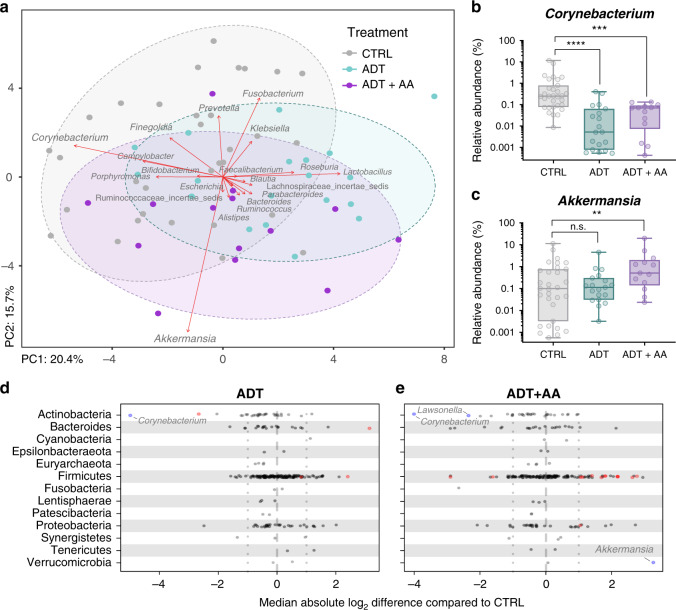
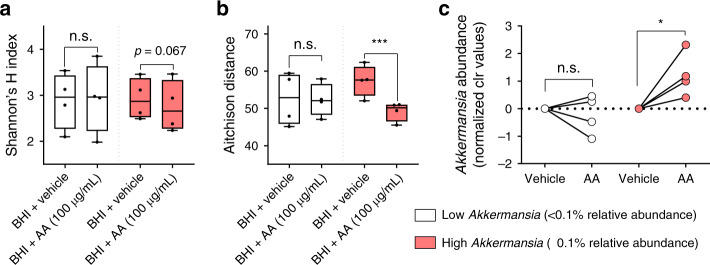
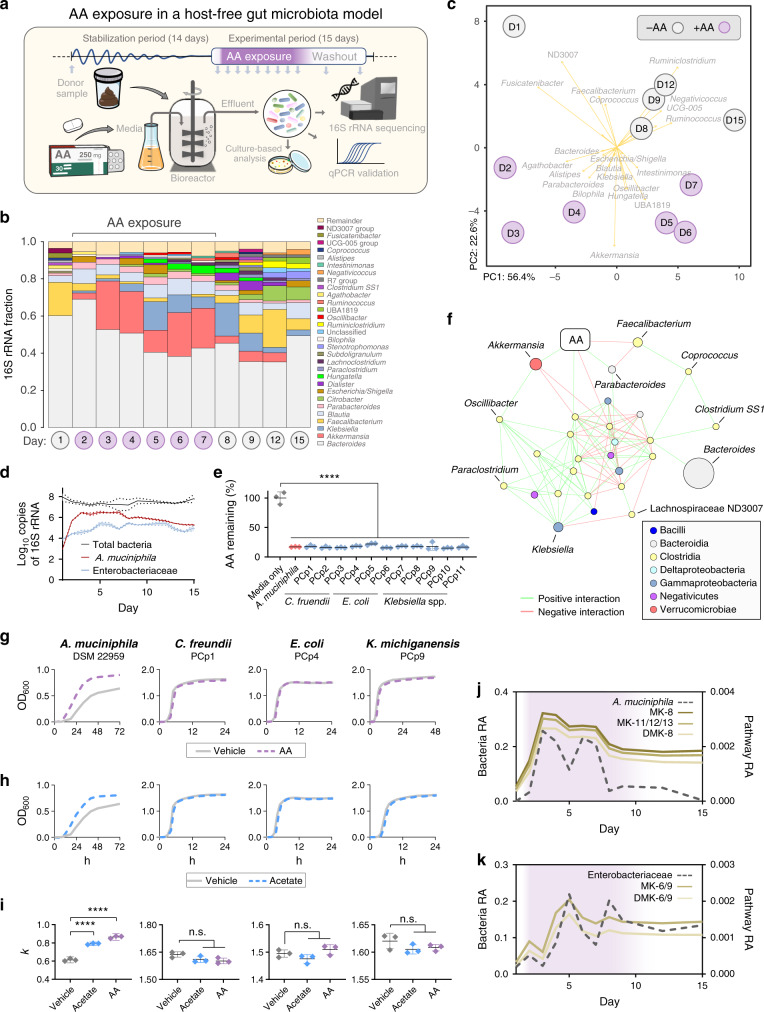
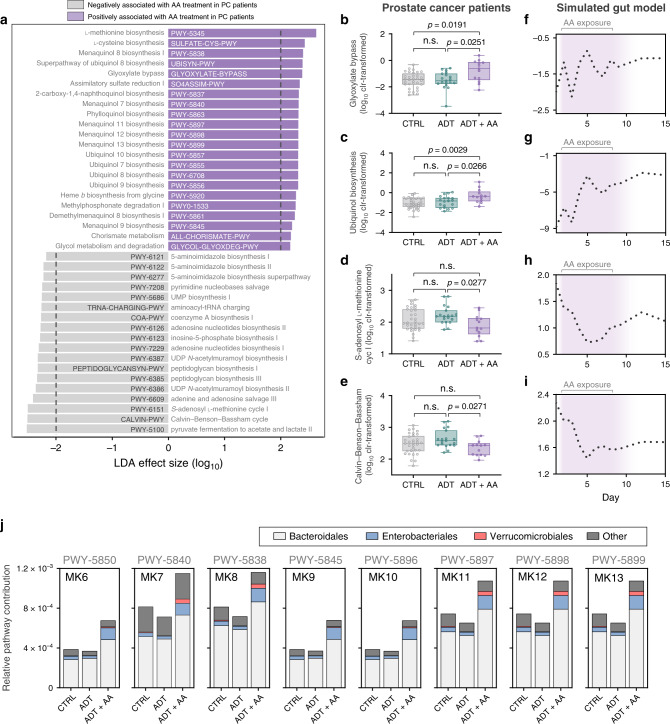
Abiraterone acetate (AA) is an inhibitor of androgen biosynthesis, though this cannot fully explain its efficacy against androgen-independent prostate cancer. Here, we demonstrate that androgen deprivation therapy depletes androgen-utilizing Corynebacterium spp. in prostate cancer patients and that oral AA further enriches for the health-associated commensal, Akkermansia muciniphila. Functional inferencing elucidates a coinciding increase in bacterial biosynthesis of vitamin K2 (an inhibitor of androgen dependent and independent tumor growth). These results are highly reproducible in a host-free gut model, excluding the possibility of immune involvement. Further investigation reveals that AA is metabolized by bacteria in vitro and that breakdown components selectively impact growth. We conclude that A. muciniphila is a key regulator of AA-mediated restructuring of microbial communities, and that this species may affect treatment response in castrate-resistant cohorts. Ongoing initiatives aimed at modulating the colonic microbiota of cancer patients may consider targeted delivery of poorly absorbed selective bacterial growth agents.
Overview
The claims and statistics of this paper haven’t been checked yet.
Free: it reads the open-access text and checks the first 5 claims that cite a source we can check. Create a free account to check every claim.
Integrity signals
Registry
Cites
Statistics
Figures
Verification
Claims the paper makes
The claims and statistics of this paper haven’t been checked yet.
Free: it reads the open-access text and checks the first 5 claims that cite a source we can check. Create a free account to check every claim.
Claims other papers make about this one
Each is checked against this paper’s own text: does it say what the citing paper says it does?
The source backs part of the claim, not all of it — or backs it for a different population, condition or comparison.
In the citing paper
“This observation was confirmed in prospective trials and large meta-analyses, suggesting that gut microbiota may be instrumental for the immunostimulatory mode of action of ICI 23,24 .”
From Intestinal Akkermansia muciniphila predicts clinical response to PD-1 blockade in patients with advanced non-small-cell lung cancer (2022) · cites this paper as [24]
Experimental — accuracy not yet measuredIn the citing paper
“For example, in prostate cancer, abiraterone acetate (AA) was used as an energy source by A. muciniphila and inhibited Corynebacterium species relying on AA-inhibited androgens for growth (100).”
From The microbiome and human cancer (2021) · cites this paper as [100]
Self-check
Percentages, sums and reported differences re-computed from the paper’s own numbers.
The self-check needs the paper’s full text.
Citations
Cites
Reproducible, interactive, scalable and extensible microbiome data science using QIIME 2
Bolyen, E., Rideout, J. R., Dillon, M. R., Bokulich, N. A., Abnet, C. C., Al-Ghalith, G. A., Alexander, H., Alm, E. J., Arumugam, M., Asnicar, F., et al. (2019) · Nature Biotechnology · doi:10.1038/s41587-019-0209-9 · Cited by 23,742 · cited 1×
“…distances (clr-transformed Euclidian distance) as input values using the “ prcomp ” function in R. Alpha and beta diversities for each sample were determined by calculating Shannon ’ s H index and Aitchison ’ s distance (within and between samples), respectively, using the QIIME2 software 50 .”
Self-citationUltra-high-throughput microbial community analysis on the Illumina HiSeq and MiSeq platforms
Caporaso, J. G., Lauber, C. L., Walters, W. A., Berg-Lyons, D., Huntley, J., Fierer, N., Owens, S. M., Betley, J., Fraser, L., Bauer, M., et al. (2012) · The ISME Journal · doi:10.1038/ismej.2012.8 · Cited by 8,839 · cited 1×
“…CTCTTCCGATCTNNNNxxxxxxxxxxxxGTGCCAGCMGCCGCGGTAA and (5 ′ – 3 ′ ) CGGTCTCGGCATTCCTGCTGAACCGCTCTTCCGATCTNNNNxxxxxx xxxxxxGGACTACHVGGGTWTCTAAT, wherein “ xxxxxxxxxxxx ” represents the sample-speci fi c 12-mer barcode following the Illumina adaptor sequence used for downstream library construction 48 .”
Gut microbiome influences efficacy of PD-1-based immunotherapy against epithelial tumors
Routy, B., Le Chatelier, E., Derosa, L., Duong, C. P. M., Alou, M. T., Daillère, R., Fluckiger, A., Messaoudene, M., Rauber, C., Roberti, M. P., et al. (2018) · Science · doi:10.1126/science.aan3706 · Cited by 5,671
Gut microbiome modulates response to anti-PD-1 immunotherapy in melanoma patients
Gopalakrishnan, V., Spencer, C. N., Nezi, L., Reuben, A., Andrews, M. C., Karpinets, T. V., Prieto, P. A., Vicente, D., Hoffman, K., Wei, S. C., et al. (2018) · Science · doi:10.1126/science.aan4236 · Cited by 4,812 · cited 1×
“The three PC patient groups examined included (1) patients not receiving any active treatment, (2) patients receiving ADT alone, and (3) patients receiving both ADT and treatment with orally administered AA.”
Exact sequence variants should replace operational taxonomic units in marker-gene data analysis
Callahan, B. J., McMurdie, P. J., & Holmes, S. P. (2017) · The ISME Journal · doi:10.1038/ismej.2017.119 · Cited by 3,300
The commensal microbiome is associated with anti-PD-1 efficacy in metastatic melanoma patients
Matson, V., Fessler, J., Bao, R., Chongsuwat, T., Zha, Y., Alegre, M.-L., Luke, J. J., & Gajewski, T. F. (2018) · Science · doi:10.1126/science.aao3290 · Cited by 3,107 · cited 1×
“The three PC patient groups examined included (1) patients not receiving any active treatment, (2) patients receiving ADT alone, and (3) patients receiving both ADT and treatment with orally administered AA.”
Microbiome Datasets Are Compositional: And This Is Not Optional
Gloor, G. B., Macklaim, J. M., Pawlowsky-Glahn, V., & Egozcue, J. J. (2017) · Frontiers in Microbiology · doi:10.3389/fmicb.2017.02224 · Cited by 3,044
Plovier, H., Everard, A., Druart, C., Depommier, C., Van Hul, M., Geurts, L., Chilloux, J., Ottman, N., Duparc, T., Lichtenstein, L., et al. (2017) · Nature Medicine · doi:10.1038/nm.4236 · Cited by 2,204
Akkermansia muciniphila gen. nov., sp. nov., a human intestinal mucin-degrading bacterium
Derrien, M., Vaughan, E. E., Plugge, C. M., & de Vos, W. M. (2004) · International Journal of Systematic and Evolutionary Microbiology · doi:10.1099/ijs.0.02873-0 · Cited by 2,094
Dao, M. C., Everard, A., Aron-Wisnewsky, J., Sokolovska, N., Prifti, E., Verger, E. O., Kayser, B. D., Levenez, F., Chilloux, J., Hoyles, L., et al. (2016) · Gut · doi:10.1136/gutjnl-2014-308778 · Cited by 1,931 · cited 2×
“This species has also been inversely correlated with in fl ammation, obesity, and a variety of metabolic disorders in mice and humans 4,5 .”
Microbial co-occurrence relationships in the human microbiome
Faust, K., Sathirapongsasuti, J. F., Izard, J., Segata, N., Gevers, D., Raes, J., & Huttenhower, C. (2012) · PLoS Computational Biology · doi:10.1371/journal.pcbi.1002606 · Cited by 1,527 · cited 1×
“Genus-level correlations between taxa and AA exposure in the gut model were assessed by constructing a co-occurrence network using the CoNet software 54 .”
Fernandes, A. D., Reid, J. N., Macklaim, J. M., McMurrough, T. A., Edgell, D. R., & Gloor, G. B. (2014) · Microbiome · doi:10.1186/2049-2618-2-15 · Cited by 1,329 · cited 2×
“Differential abundance of genera were compared with the ALDEx2 tool 51 , which uses clr-transformed posterior distribution of data generated from 128 Dirichlet Monte-Carlo instances to determine signi fi cantly different features within a compositional dataset 52 .”
IL-23 promotes tumour incidence and growth
Langowski, J. L., Zhang, X., Wu, L., Mattson, J. D., Chen, T., Smith, K., Basham, B., McClanahan, T., Kastelein, R. A., & Oft, M. (2006) · Nature · doi:10.1038/nature04808 · Cited by 1,018 · cited 1×
“8 and Supplementary Data 2 and 3) in their cell wall, which can evoke interleukin-23 signaling 43 — a key cytokine thought to contribute to tumorigenesis and progression to metastatic disease in the context of in fl ammation-related cancers 44 .”
Attard, G., Reid, A. H. M., Yap, T. A., Raynaud, F., Dowsett, M., Settatree, S., Barrett, M., Parker, C., Martins, V., Folkerd, E., et al. (2008) · Journal of Clinical Oncology · doi:10.1200/jco.2007.15.9749 · Cited by 903
Mulvey, M. A., Schilling, J. D., & Hultgren, S. J. (2001) · Infection and Immunity · doi:10.1128/iai.69.7.4572-4579.2001 · Cited by 849
Growthcurver: an R package for obtaining interpretable metrics from microbial growth curves
Sprouffske, K., & Wagner, A. (2016) · BMC Bioinformatics · doi:10.1186/s12859-016-1016-7 · Cited by 847
The fickle P value generates irreproducible results
Halsey, L. G., Curran-Everett, D., Vowler, S. L., & Drummond, G. B. (2015) · Nature Methods · doi:10.1038/nmeth.3288 · Cited by 765
Inter-kingdom signalling: Communication between bacteria and their hosts
Hughes, D. T., & Sperandio, V. (2008) · Nature Reviews Microbiology · doi:10.1038/nrmicro1836 · Cited by 761 · cited 1×
“Alongside the structural similarities and interking-dom receptor activation of various steroid hormones and bacterial autoinducers 13 , our fi ndings suggest that the active portion of AA (abiraterone; a steroidal progesterone derivative) may interfere with bacterial growth dynamics.”
Duncan, S. H., Barcenilla, A., Stewart, C. S., Pryde, S. E., & Flint, H. J. (2002) · Applied and Environmental Microbiology · doi:10.1128/aem.68.10.5186-5190.2002 · Cited by 743 · cited 1×
“3), which is interesting given that they are both well-known butyrate producers 15 and that F. prausnitzii has been shown to positively interact with A. muciniphila on multiple occassion 16,17 ; future studies would bene fi t from investigating the mechanism by which AA negatively impacts…”
The microbial pharmacists within us: a metagenomic view of xenobiotic metabolism
Spanogiannopoulos, P., Bess, E. N., Carmody, R. N., & Turnbaugh, P. J. (2016) · Nature Reviews Microbiology · doi:10.1038/nrmicro.2016.17 · Cited by 717
Microbes inside—from diversity to function: the case of Akkermansia
Belzer, C., & de Vos, W. M. (2012) · The ISME Journal · doi:10.1038/ismej.2012.6 · Cited by 715
A Parsimony Approach to Biological Pathway Reconstruction/Inference for Genomes and Metagenomes
Ye, Y., & Doak, T. G. (2009) · PLoS Computational Biology · doi:10.1371/journal.pcbi.1000465 · Cited by 686
Efficient comparative phylogenetics on large trees
Louca, S., & Doebeli, M. (2018) · Bioinformatics · doi:10.1093/bioinformatics/btx701 · Cited by 564
Fucose sensing regulates bacterial intestinal colonization
Pacheco, A. R., Curtis, M. M., Ritchie, J. M., Munera, D., Waldor, M. K., Moreira, C. G., & Sperandio, V. (2012) · Nature · doi:10.1038/nature11623 · Cited by 499 · cited 1×
“More-over, cleavage of host-derived mucin by various commensals (including A. muciniphila ) liberates fucose, which has been shown to stimulate the growth of certain Enterobacteriaceae via activation of their two-component sensing system, FusKR 32 .”
Belzer, C., Chia, L. W., Aalvink, S., Chamlagain, B., Piironen, V., Knol, J., & de Vos, W. M. (2017) · mBio · doi:10.1128/mbio.00770-17 · Cited by 436
Espey, M. G. (2013) · Free Radical Biology and Medicine · doi:10.1016/j.freeradbiomed.2012.10.554 · Cited by 396
Serum level of sex steroid hormone is associated with diversity and profiles of human gut microbiome
Shin, J.-H., Park, Y.-H., Sim, M., Kim, S.-A., Joung, H., & Shin, D.-M. (2019) · Research in Microbiology · doi:10.1016/j.resmic.2019.03.003 · Cited by 334
Ottman, N., Davids, M., Suarez-Diez, M., Boeren, S., Schaap, P. J., Martins dos Santos, V. A. P., Smidt, H., Belzer, C., & de Vos, W. M. (2017) · Applied and Environmental Microbiology · doi:10.1128/aem.01014-17 · Cited by 269
Profiling the Urinary Microbiome in Men with Positive versus Negative Biopsies for Prostate Cancer
Shrestha, E., White, J. R., Yu, S.-H., Kulac, I., Ertunc, O., De Marzo, A. M., Yegnasubramanian, S., Mangold, L. A., Partin, A. W., & Sfanos, K. S. (2018) · Journal of Urology · doi:10.1016/j.juro.2017.08.001 · Cited by 261
The Microbiome of the Prostate Tumor Microenvironment
Cavarretta, I., Ferrarese, R., Cazzaniga, W., Saita, D., Lucianò, R., Ceresola, E. R., Locatelli, I., Visconti, L., Lavorgna, G., Briganti, A., et al. (2017) · European Urology · doi:10.1016/j.eururo.2017.03.029 · Cited by 247
van der Beek, C. M., Canfora, E. E., Lenaerts, K., Troost, F. J., Olde Damink, S. W. M., Holst, J. J., Masclee, A. A. M., Dejong, C. H. C., & Blaak, E. E. (2016) · Clinical Science · doi:10.1042/cs20160263 · Cited by 230
Contextual control of skin immunity and inflammation by Corynebacterium
Ridaura, V. K., Bouladoux, N., Claesen, J., Chen, Y. E., Byrd, A. L., Constantinides, M. G., Merrill, E. D., Tamoutounour, S., Fischbach, M. A., & Belkaid, Y. (2018) · Journal of Experimental Medicine · doi:10.1084/jem.20171079 · Cited by 214
Lopez-Siles, M., Enrich-Capó, N., Aldeguer, X., Sabat-Mir, M., Duncan, S. H., Garcia-Gil, L. J., & Martinez-Medina, M. (2018) · Frontiers in Cellular and Infection Microbiology · doi:10.3389/fcimb.2018.00281 · Cited by 209
Alard, J., Lehrter, V., Rhimi, M., Mangin, I., Peucelle, V., Abraham, A., Mariadassou, M., Maguin, E., Waligora‐Dupriet, A., Pot, B., et al. (2016) · Environmental Microbiology · doi:10.1111/1462-2920.13181 · Cited by 187
McDonald, J. A. K., Schroeter, K., Fuentes, S., Heikamp-deJong, I., Khursigara, C. M., de Vos, W. M., & Allen-Vercoe, E. (2013) · Journal of Microbiological Methods · doi:10.1016/j.mimet.2013.08.008 · Cited by 175
Metagenomic analysis of microbe-mediated vitamin metabolism in the human gut microbiome
Das, P., Babaei, P., & Nielsen, J. (2019) · BMC Genomics · doi:10.1186/s12864-019-5591-7 · Cited by 168
Adaptation of Akkermansia muciniphila to the Oxic-Anoxic Interface of the Mucus Layer
Ouwerkerk, J. P., van der Ark, K. C. H., Davids, M., Claassens, N. J., Finestra, T. R., de Vos, W. M., & Belzer, C. (2016) · Applied and Environmental Microbiology · doi:10.1128/aem.01641-16 · Cited by 154
Sfanos, K. S., Markowski, M. C., Peiffer, L. B., Ernst, S. E., White, J. R., Pienta, K. J., Antonarakis, E. S., & Ross, A. E. (2018) · Prostate Cancer and Prostatic Diseases · doi:10.1038/s41391-018-0061-x · Cited by 147
Cell Envelope of Corynebacteria: Structure and Influence on Pathogenicity
Burkovski, A. (2013) · ISRN Microbiology · doi:10.1155/2013/935736 · Cited by 126
El Hage, R., Hernandez-Sanabria, E., Calatayud Arroyo, M., Props, R., & Van de Wiele, T. (2019) · Frontiers in Microbiology · doi:10.3389/fmicb.2019.01206 · Cited by 119
Syntrophic growth via quinone-mediated interspecies electron transfer
Smith, J. A., Nevin, K. P., & Lovley, D. R. (2015) · Frontiers in Microbiology · doi:10.3389/fmicb.2015.00121 · Cited by 116
Quinones are growth factors for the human gut microbiota
Fenn, K., Strandwitz, P., Stewart, E. J., Dimise, E., Rubin, S., Gurubacharya, S., Clardy, J., & Lewis, K. (2017) · Microbiome · doi:10.1186/s40168-017-0380-5 · Cited by 108
Nimptsch, K., Rohrmann, S., & Linseisen, J. (2008) · American Journal of Clinical Nutrition · doi:10.1093/ajcn/87.4.985 · Cited by 96
Vitamin K effects in human health: new insights beyond bone and cardiovascular health
Fusaro, M., Gallieni, M. A., Porta, C., Nickolas, T. L., & Khairallah, P. (2019) · Journal of Nephrology · doi:10.1007/s40620-019-00685-0 · Cited by 77
Genomic Analysis of the Human Gut Microbiome Suggests Novel Enzymes Involved in Quinone Biosynthesis
Ravcheev, D. A., & Thiele, I. (2016) · Frontiers in Microbiology · doi:10.3389/fmicb.2016.00128 · Cited by 68
Acharya, M. R., Gonzalez, M., Mannens, G., Vries, R. D., Lopez, C., Griffin, T., & Tran, N. (2012) · Xenobiotica · doi:10.3109/00498254.2012.721022 · Cited by 65
Samykutty, A. K., Shetty, A. V., Dakshinamoorthy, G., Kalyanasundaram, R., Zheng, G., Chen, A., Bosland, M. C., Kajdacsy‐Balla, A., & Munirathinam, G. (2013) · Evidence-based Complementary and Alternative Medicine · doi:10.1155/2013/287358 · Cited by 58
Al, K. F., Bisanz, J. E., Gloor, G. B., Reid, G., & Burton, J. P. (2017) · Journal of Microbiological Methods · doi:10.1016/j.mimet.2017.11.014 · Cited by 48
Self-citationDecréau, R. A., Marson, C. M., Smith, K. E., & Behan, J. M. (2003) · The Journal of Steroid Biochemistry and Molecular Biology · doi:10.1016/j.jsbmb.2003.09.005 · Cited by 43
Dasari, S., Samy, A. L. P. A., Kajdacsy‐Balla, A., Bosland, M. C., & Munirathinam, G. (2018) · Food and Chemical Toxicology · doi:10.1016/j.fct.2018.02.018 · Cited by 43
Prevalence of Prostatic Calcification Subtypes and Association With Prostate Cancer
Smolski, M., Turo, R., Whiteside, S., Bromage, S. J., & Collins, G. N. (2014) · Urology · doi:10.1016/j.urology.2014.09.026 · Cited by 35
Souza, M. C., dos Santos, L. S., de Sousa, L. P., Faria, Y. V., Ramos, J. N., Sabbadini, P. S., da Santos, C. S., Nagao, P. E., Vieira, V. V., Gomes, D. L. R., et al. (2015) · Antonie van Leeuwenhoek · doi:10.1007/s10482-015-0433-3 · Cited by 33
Flynn, J. M., Phan, C. Q., & Hunter, R. C. (2017) · Infection and Immunity · doi:10.1128/iai.00182-17 · Cited by 32
Türk, S., Mazzoli, S., Štšepetova, J., Kuznetsova, J., & Mändar, R. (2014) · Microbial Ecology in Health and Disease · doi:10.3402/mehd.v25.22701 · Cited by 28
Quinn, L., Sheh, A., Ellis, J. L., Smith, D. E., Booth, S. L., Fu, X., Muthupalani, S., Ge, Z., Puglisi, D., Wang, T. C., et al. (2020) · Gut Microbes · doi:10.1080/19490976.2019.1710092 · Cited by 28
Nixon, A., Mallet, A. I., Jackman, P. J. H., & Gower, D. B. (1986) · Journal of Steroid Biochemistry · doi:10.1016/0022-4731(86)90450-4 · Cited by 27
Perez, M., Ladero, V., del Rio, B., Redruello, B., de Jong, A., Kuipers, O., Kok, J., Martin, M. C., Fernandez, M., & Alvarez, M. A. (2017) · Frontiers in Microbiology · doi:10.3389/fmicb.2017.02107 · Cited by 23
Effect of the adhesive antibiotic TA on adhesion and initial growth of E. coli on silicone rubber
Simhi, E., Mei, H. C., Ron, E. Z., ROSENBERG, E. B., & Busscher, H. J. (2000) · FEMS Microbiology Letters · doi:10.1111/j.1574-6968.2000.tb09365.x · Cited by 18
Bacterial CYP 154C8 catalyzes carbon‐carbon bond cleavage in steroids
Dangi, B., & Oh, T. (2018) · FEBS Letters · doi:10.1002/1873-3468.13297 · Cited by 9
Differential quantitative proteome analysis of Escherichia coli grown on acetate versus glucose
Treitz, C., Enjalbert, B., Portais, J., Létisse, F., & Tholey, A. (2016) · PROTEOMICS · doi:10.1002/pmic.201600303 · Cited by 7
Research works printed but not linked: 1
- Snyder, J. W., Atlas, R. M. & Atlas, R. M. Handbook of Media for Clinical Microbiology (CRC Press, 2006).
Cited by
The microbiome and human cancer
Sepich-Poore, G. D., Zitvogel, L., Straussman, R., Hasty, J., Wargo, J. A., & Knight, R. (2021) · Science · doi:10.1126/science.abc4552 · Cited by 1,332
Derosa, L., Routy, B., Thomas, A. M., Iebba, V., Zalcman, G., Friard, S., Mazieres, J., Audigier-Valette, C., Moro-Sibilot, D., Goldwasser, F., et al. (2022) · Nature Medicine · doi:10.1038/s41591-021-01655-5 · Cited by 685
Hosomi, K., Saito, M., Park, J., Murakami, H., Shibata, N., Ando, M., Nagatake, T., Konishi, K., Ohno, H., Tanisawa, K., et al. (2022) · Nature Communications · doi:10.1038/s41467-022-32015-7 · Cited by 451
Bacteria in cancer initiation, promotion and progression
El Tekle, G., & Garrett, W. S. (2023) · Nature Reviews Cancer · doi:10.1038/s41568-023-00594-2 · Cited by 343
Drug-microbiota interactions: an emerging priority for precision medicine
Zhao, Q., Chen, Y., Huang, W., Zhou, H., & Zhang, W. (2023) · Signal Transduction and Targeted Therapy · doi:10.1038/s41392-023-01619-w · Cited by 268
Metadata
- Authors
- Daisley, B. A., Chanyi, R. M., Abdur-Rashid, K., Al, K. F., Gibbons, S., Chmiel, J. A., Wilcox, H., Reid, G., Anderson, A., Dewar, M., Nair, S. M., Chin, J., & Burton, J. P.
- Affiliations
- Western University (CA)
- Corresponding author
- Burton, Jeremy P.
- ORCID
- Venue
- Nature Communications
- Published
- 2020-09-24
- Volume
- 11
- Issue
- 1
- Pages
- 4822-4822
- ISSN
- 2041-1723 (ISSN-L)
- PMC
- PMC7515896
- OpenAlex
- W3088710714
- Cited by
- 128
- References
- 60
- Citations by year
- 2026: 12 · 2025: 22 · 2024: 16 · 2023: 27 · 2022: 33 · 2021: 16 · 2020: 2
- FWCI
- 6.48
- Type
- journal article
- Language
- en
- Update notices
- correction (2020-12-09)
- Open access
- gold
- doi.org
- Licence
- cc-by
- creativecommons.org/licenses/by/4.0 (tdm)
- creativecommons.org/licenses/by/4.0 (vor)
- Locations
- Nature Communications (publishedVersion, cc-by)
- PubMed Central (publishedVersion, cc-by)
- PubMed (publishedVersion)
- RePEc: Research Papers in Economics (submittedVersion)
- DOAJ (DOAJ: Directory of Open Access Journals) (submittedVersion, cc-by-sa)
- Scholarship@Western (Western University) (submittedVersion)
- Funders
- Gouvernement du Canada | National Research Council Canada (CGSD-519379-2018)
- Topics
- Life Sciences › Biochemistry, Genetics and Molecular Biology › Molecular Biology › Gut microbiota and health
- Life Sciences › Biochemistry, Genetics and Molecular Biology › Cancer Research › Prostate Cancer Treatment and Research
- Life Sciences › Agricultural and Biological Sciences › Food Science › Probiotics and Fermented Foods
- Keywords
- abiraterone, Akkermansia muciniphila, castration-resistant prostate cancer, gut microbiota, androgen deprivation therapy, Corynebacterium, vitamin K2 biosynthesis, androgen biosynthesis inhibition, treatment response
- MeSH terms
- Gastrointestinal Microbiome, Abiraterone Acetate, Akkermansia, Androgen Antagonists, Androgens, Bacteria, Feces, Humans, Male, Prostatic Neoplasms, RNA, Ribosomal, 16S, Vitamin K 2, Verrucomicrobia, Prostatic Neoplasms, Castration-Resistant
About these checks
Registry, retraction, Cites and statistics results are computed, not judged, with one exception: a printed reference that no index lists is read once by a model before it counts as a citation error. Claims are extracted by a model and kept only when their quote appears verbatim in the text; each cited source is then checked, with a model’s help, for whether it says what the claim relies on. Those verdicts can be wrong — read the claim’s quote and the cited source before relying on one.
Statistics and arithmetic are recomputed, not judged.
Confidence bands are shown only for fields calibrated on our annotated test set. None is calibrated yet, so no band is shown.
What counts as a claim ›How we measure confidence ›How we check this ›
Are you an author, or do you see a problem with this page? Request a review
Data sources
Bibliographic data: Semantic Scholar, OpenAlex, Crossref.
Contains information from the Semantic Scholar Academic Graph Datasets, made available under the ODC Attribution License (ODC-BY 1.0).
Semantic Scholar’s data is described in: Kinney, R., et al. (2023). The Semantic Scholar Open Data Platform. arXiv:2301.10140.
