

The DOI matches its Crossref record; 60 of the 61 references it cites were found in a registry or an index.
A computational reward learning account of social media engagement
Open accessAbstract
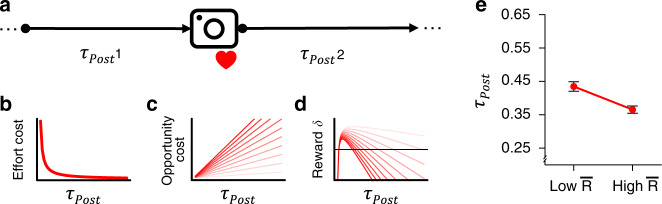
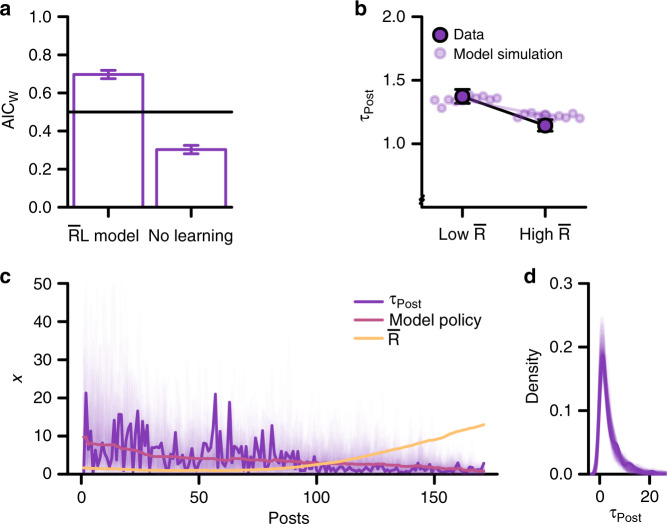
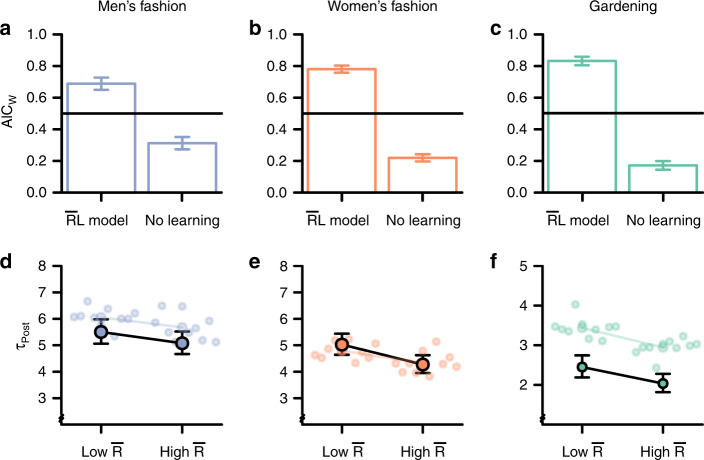
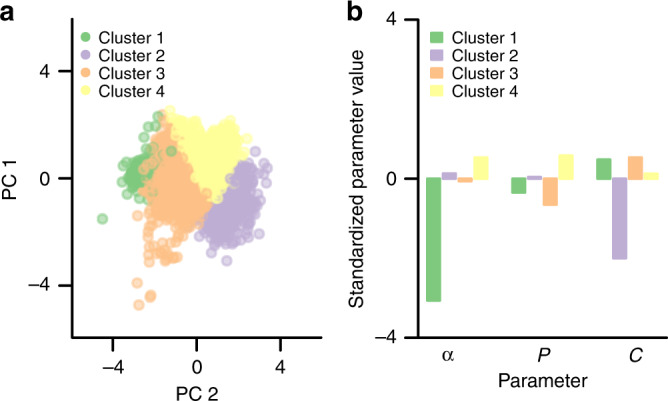
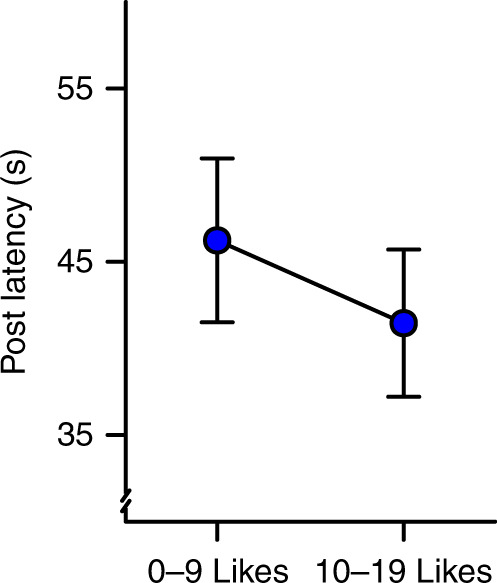
Social media has become a modern arena for human life, with billions of daily users worldwide. The intense popularity of social media is often attributed to a psychological need for social rewards (likes), portraying the online world as a Skinner Box for the modern human. Yet despite such portrayals, empirical evidence for social media engagement as reward-based behavior remains scant. Here, we apply a computational approach to directly test whether reward learning mechanisms contribute to social media behavior. We analyze over one million posts from over 4000 individuals on multiple social media platforms, using computational models based on reinforcement learning theory. Our results consistently show that human behavior on social media conforms qualitatively and quantitatively to the principles of reward learning. Specifically, social media users spaced their posts to maximize the average rate of accrued social rewards, in a manner subject to both the effort cost of posting and the opportunity cost of inaction. Results further reveal meaningful individual difference profiles in social reward learning on social media. Finally, an online experiment (n = 176), mimicking key aspects of social media, verifies that social rewards causally influence behavior as posited by our computational account. Together, these findings support a reward learning account of social media engagement and offer new insights into this emergent mode of modern human behavior.
Overview
The claims and statistics of this paper haven’t been checked yet.
Run the check — free, no account needed. It reads the open-access text and checks the sources it cites.
Integrity signals
Registry
Cites
Statistics
Figures
Verification
Claims the paper makes
The claims and statistics of this paper haven’t been checked yet.
Run the check — free, no account needed. It reads the open-access text and checks the sources it cites.
Claims other papers make about this one
Each is checked against this paper’s own text: does it say what the citing paper says it does?
The source backs part of the claim, not all of it — or backs it for a different population, condition or comparison.
In the citing paper
“Furthermore, the interval at which an algorithm rewards behavior influences how quickly it is repeated (Lindström et al., 2021).”
From Social Drivers and Algorithmic Mechanisms on Digital Media. (2024) · cites this paper as Lindström et al., 2021
Experimental — accuracy not yet measuredThe cited source says what the claim attributes to it.
In the citing paper
“Studies show that humans are susceptible to social feedback on digital media: Likes influence how quickly people post again (Lindström et al., 2021), whether or not they consider a post successful (Carr et al., 2018), and how happy, self-assured, and popular they feel after posting status updates (Rosenthal-von der Pütten et al., 2019; Zell & Moeller, 2018).”
From Social Drivers and Algorithmic Mechanisms on Digital Media. (2024) · cites this paper as Lindström et al., 2021
Self-check
Percentages, sums and reported differences re-computed from the paper’s own numbers.
The self-check needs the paper’s full text.
Citations
Cites
Reinforcement Learning: An Introduction
Sutton, R. S., & Barto, A. G. (1998) · IEEE Transactions on Neural Networks · doi:10.1109/tnn.1998.712192 · Cited by 27,225 · cited 3×
“As in Study 1, the estimated effect of R on posting latencies was stronger for individuals for whom the (cid:1) RL model provided a better fi t (see Supplementary Note 7).”
BackgroundMethodResultInfluentialReinforcement Learning: An Introduction
Sutton, R. S., & Barto, A. (2005) · IEEE Transactions on Neural Networks · doi:10.1109/tnn.2004.842673 · Cited by 25,268
lmerTest Package: Tests in Linear Mixed Effects Models
Kuznetsova, A., Brockhoff, P. B., & Christensen, R. H. B. (2017) · Journal of Statistical Software · doi:10.18637/jss.v082.i13 · Cited by 24,346
Advances in neural information processing systems 7
Cios, K. J., & Shields, M. E. (1997) · Neurocomputing · doi:10.1016/s0925-2312(97)90018-7 · Cited by 22,093
A theory of social comparison processes
Festinger, L. (1954) · Human Relations · doi:10.1177/001872675400700202 · Cited by 20,926
(1999) · Cited by 5,147
Centering predictor variables in cross-sectional multilevel models: A new look at an old issue.
Enders, C. K., & Tofighi, D. (2007) · Psychological Methods · doi:10.1037/1082-989x.12.2.121 · Cited by 4,462
NbClust : An R Package for Determining the Relevant Number of Clusters in a Data Set
Charrad, M., Ghazzali, N., Boiteau, V., & Niknafs, A. (2014) · Journal of Statistical Software · doi:10.18637/jss.v061.i06 · Cited by 3,396
AIC model selection using Akaike weights
Wagenmakers, E.-J., & Farrell, S. (2004) · Psychonomic Bulletin & Review · doi:10.3758/bf03206482 · Cited by 2,684
Herrnstein, R. J. (1970) · Journal of the Experimental Analysis of Behavior · doi:10.1901/jeab.1970.13-243 · Cited by 2,611
Cited by
Sorted by citations
Citizens Versus the Internet: Confronting Digital Challenges With Cognitive Tools
Kozyreva, A., Lewandowsky, S., & Hertwig, R. (2020) · Psychological Science in the Public Interest · doi:10.1177/1529100620946707 · Cited by 479
Mechanisms linking social media use to adolescent mental health vulnerability
Orben, A., Meier, A., Dalgleish, T., & Blakemore, S.-J. (2024) · Nature Reviews Psychology · doi:10.1038/s44159-024-00307-y · Cited by 220
“This result aligns with a reinforcement learning modelling study of Instagram data, which found that the likes a user receives on their own posts become less valuable and less predictive of future posting behaviour if others in their network receive more likes on their posts 160 .”
Social Drivers and Algorithmic Mechanisms on Digital Media.
Metzler, H., & Garcia, D. (2024) · Perspectives on Psychological Science · doi:10.1177/17456916231185057 · Cited by 204
“Studies show that humans are susceptible to social feedback on digital media: Likes influence how quickly people post again (Lindström et al., 2021), whether or not they consider a post successful (Carr et al., 2018), and how happy, self-assured, and popular they feel after posting status updates…”
BackgroundAlgorithm-mediated social learning in online social networks
Brady, W. J., Jackson, J. C., Lindström, B., & Crockett, M. J. (2023) · Trends in Cognitive Sciences · doi:10.1016/j.tics.2023.06.008 · Cited by 132
Self-citationSocial media and well-being: A methodological perspective
Parry, D. A., Fisher, J. T., Mieczkowski, H., Sewall, C. J. R., & Davidson, B. I. (2021) · Current Opinion in Psychology · doi:10.1016/j.copsyc.2021.11.005 · Cited by 138
Social media and its impact on health care
Patrick, M. D., Venkatesh, R. D., & Stukus, D. R. (2021) · Annals of Allergy Asthma & Immunology · doi:10.1016/j.anai.2021.09.014 · Cited by 115
Building and breaking social media habits
Bayer, J., Anderson, I. A., & Tokunaga, R. S. (2022) · Current Opinion in Psychology · doi:10.1016/j.copsyc.2022.101303 · Cited by 128
Clark, L., & Zack, M. (2023) · Addictive Behaviors · doi:10.1016/j.addbeh.2023.107626 · Cited by 59
“Social media apps rely on other social and gamified mechanics that further amplify variability, including the intermittent social reinforcement of ‘likes’, new followers, and friendship streaks (e.g. in SnapChat) (see Lindström et al., 2021; Westbrook et al., 2021).”
BackgroundYouths’ sensitivity to social media feedback: A computational account
Pinho, A. D. S., Izquierdo, V. C., Lindström, B., & van den Bos, W. (2024) · Science Advances · doi:10.1126/sciadv.adp8775 · Cited by 58
“Replicating earlier work ( 15 ), we found that changes in likes may increase or decrease the motivation to engage with the platform.”
Self-citationOgnibene, D., Wilkens, R., Taibi, D., Hernández‐Leo, D., Kruschwitz, U., Donabauer, G., Theophilou, E., Lomonaco, F., Buršić, S., Lobo, R. A., et al. (2023) · Frontiers in Artificial Intelligence · doi:10.3389/frai.2022.654930 · Cited by 57
Leaving traces behind: Using social media digital trace data to study adolescent wellbeing
Sultan, M., Scholz, C., & van den Bos, W. (2023) · Computers in Human Behavior Reports · doi:10.1016/j.chbr.2023.100281 · Cited by 51
Social feedback promotes positive social sharing, trust, and closeness.
Brudner, E. G., Fareri, D. S., Shehata, S., & Delgado, M. R. (2022) · Emotion · doi:10.1037/emo0001182 · Cited by 52
Changing the incentive structure of social media platforms to halt the spread of misinformation
Globig, L. K., Holtz, N., & Sharot, T. (2023) · eLife · doi:10.7554/elife.85767 · Cited by 56
Moretta, T., & Wegmann, E. (2025) · Addictive Behaviors Reports · doi:10.1016/j.abrep.2025.100603 · Cited by 52
Values-Alignment Messaging Boosts Adolescents’ Motivation to Control Social Media Use
Galla, B. M., Choukas‐Bradley, S., Fiore, H. M., & Esposito, M. V. (2021) · Child Development · doi:10.1111/cdev.13553 · Cited by 41
Tibber, M. S., & Silver, E. (2022) · The Cognitive Behaviour Therapist · doi:10.1017/s1754470x22000034 · Cited by 39
Characterizing Human Habits in the Lab
Nebe, S., Kretzschmar, A., Brandt, M. C., & Tobler, P. N. (2024) · Collabra Psychology · doi:10.1525/collabra.92949 · Cited by 37
Self-citationButler, S. (2024) · Frontiers in Psychology · doi:10.3389/fpsyg.2024.1340605 · Cited by 40
“…status and identity-enhancing information online include status updates, wall posts and group membership (Tong et al., 2008; Haferkamp et al., 2012; Lindström et al., 2021), as well as the ability to continually scroll and replay desired and identity-compatible content features (Noë et al., 2019).”
BackgroundSocial motivations’ limited influence on habitual behavior: Tests from social media engagement.
Anderson, I. A., & Wood, W. (2023) · Motivation Science · doi:10.1037/mot0000292 · Cited by 34
The effect of smartphone use on mental effort, learning, and creativity
Aru, J., & Rozgonjuk, D. (2022) · Trends in Cognitive Sciences · doi:10.1016/j.tics.2022.07.002 · Cited by 26
Computational models of behavioral addictions: State of the art and future directions
Kato, A., Shimomura, K., Ognibene, D., Parvaz, M. A., Berner, L. A., Morita, K., & Fiore, V. G. (2022) · Addictive Behaviors · doi:10.1016/j.addbeh.2022.107595 · Cited by 27
Amplification of emotion on social media
Goldenberg, A., & Willer, R. (2023) · Nature Human Behaviour · doi:10.1038/s41562-023-01604-x · Cited by 27
Integrating Media Selection and Media Effects Using Decision Theory
Fisher, J. T., & Hamilton, K. A. (2021) · Journal of Media Psychology Theories Methods and Applications · doi:10.1027/1864-1105/a000315 · Cited by 31
The Online Misinformation Engagement Framework
Geers, M., Swire‐Thompson, B., Lorenz-Spreen, P., Herzog, S. M., Kozyreva, A., & Hertwig, R. (2023) · Current Opinion in Psychology · doi:10.1016/j.copsyc.2023.101739 · Cited by 36
“Another line of research suggests that social media promotes habitual sharing of misinformation ([47]; see also [48]).”
BackgroundInvoking self-related and social thoughts impacts online information sharing
Scholz, C., Baek, E. C., & Falk, E. B. (2023) · Social Cognitive and Affective Neuroscience · doi:10.1093/scan/nsad013 · Cited by 24
Digital Slot Machines: Social Media Platforms as Attentional Scaffolds
Voinea, C., Marin, L., & Vică, C. (2024) · Topoi · doi:10.1007/s11245-024-10031-0 · Cited by 30
“…users on various social media platforms provides “clear evidence that behavior on social media indeed fol - lows principles of reward maximization, and thereby give credence to the popular portrayal of social media engage - ment as a Skinner Box for the modern human” (Lindström et al. 2021 , p. 7).”
BackgroundMethodGuan, X., Zeng, N., Zhao, Y., Huang, X., Lai, S., Shen, G., Zhang, W., Wang, N., Wang, Y., Guo, Y., et al. (2023) · Small · doi:10.1002/smll.202307961 · Cited by 22
TikTok’s political landscape: Examining echo chambers and political expression dynamics
Li, Y., Cheng, Z., & de Zúñiga, H. G. (2025) · New Media & Society · doi:10.1177/14614448251339755 · Cited by 21
“In the United States, 63% of teens have used TikTok, making it more popular than Instagram and Snapchat, while Facebook and Twitter have seen a sharp decline among this demographic (Pew Research Center, 2024).”
InfluentialPauli, R., Brazil, I. A., Kohls, G., Klein-Flügge, M. C., Rogers, J. C., Dikeos, D. G., Dochnal, R., Fairchild, G. F., Fernández‐Rivas, A., Herpertz‐Dahlmann, B., et al. (2023) · Nature Communications · doi:10.1038/s41467-023-41124-w · Cited by 18
Appetite for distraction? A systematic literature review on customer smartphone distraction
Taylor, A., Hook, M., Carlson, J., Gudergan, S. P., & Falk, T. (2023) · International Journal of Information Management · doi:10.1016/j.ijinfomgt.2023.102722 · Cited by 23
Hackel, L. M., Kalkstein, D. A., & Mende‐Siedlecki, P. (2024) · Trends in Cognitive Sciences · doi:10.1016/j.tics.2024.01.004 · Cited by 20
Contemporary Participatory Design: Research Agendas for Societal Crisis
Smith, R. C., Huybrechts, L., Simonsen, J. W., & Loi, D. (2025) · Decennial Aarhus Conference · doi:10.1145/3744169.3744183 · Cited by 27
Do "Likes" in a Brand Community Always Make You Buy More?
Liang, C., Wu, J., & Li, X. (2023) · Information systems research · doi:10.1287/isre.2022.0008 · Cited by 15
A multi‐school study in England, to assess problematic smartphone usage and anxiety and depression
Carter, B., Payne, M., Rees, P., Sohn, S. Y., Brown, J. S. L., & Kalk, N. J. (2024) · Acta Paediatrica · doi:10.1111/apa.17317 · Cited by 24
“24 Lindström et al. 25 report the number of likes predicts satisfaction and happiness and similarly that social media activity increases after a post, suggesting anticipation of receiving a reward.”
Social media feedback and extreme opinion expression
Konovalova, E., Mens, G. L., & Schoell, N. (2023) · PLoS ONE · doi:10.1371/journal.pone.0293805 · Cited by 26
Time Spent Thinking in Online Chess Reflects the Value of Computation
Russek, E. M., Acosta‐Kane, D., van Opheusden, B., Mattar, M. G., & Griffiths, T. L. (2025) · Cognitive Science · doi:10.1111/cogs.70119 · Cited by 19
“…(Niv, Daw, Joel, & Dayan, 2007), sensory decision-making (Gold & Shadlen, 2002), strategy selection (Lieder & Griffiths, 2017), control allocation (Otto & Daw, 2019), planning (Agrawal et al., 2022; Keramati et al., 2011; Sezener et al., 2019), and social media engagement (Lindström et al., 2021).”
Algorithm-Mediated Social Learning in Online Social NetworksPreprint
Brady, W. J., Jackson, J. C., Lindström, B., & Crockett, M. J. (2023) · doi:10.31219/osf.io/yw5ah · Cited by 18
Self-citationOld Strategies, New Environments: Reinforcement Learning on Social Media
Turner, G., Ferguson, A. M., Katiyar, T., Palminteri, S., & Orben, A. C. (2024) · Biological Psychiatry · doi:10.1016/j.biopsych.2024.12.012 · Cited by 35
The Economics of AttentionPreprint
Loewenstein, G. F., & Wojtowicz, Z. (2023) · SSRN Electronic Journal · doi:10.2139/ssrn.4368304 · Cited by 16
Goldenberg, A. (2024) · Perspectives on Psychological Science · doi:10.1177/17456916231179154 · Cited by 14
“Given that prior engagement, especially a rewarding one, is a strong predictor of future engagement (Brady et al., 2020; Lindström et al., 2021), emotions seem to be contributing to the strengthening of social interactions, which then leads to an even further stronger activation in future…”
BackgroundDoes Social Bot Help Socialize? Evidence from a Microblogging Platform
Gao, Y. A., Zhang, M. M., & Lysyakov, M. (2025) · Information Systems Research · doi:10.1287/isre.2024.1089 · Cited by 18
Jung, H., Dai, W., & Albarracín, D. (2023) · Perspectives on Psychological Science · doi:10.1177/17456916231198471 · Cited by 17
“Second, social media algorithms often expose users to other people who share similar interests or pursue similar actions (Kaiser & Rauchfleisch, 2020; Lindström et al., 2021).”
Azoulay, É., Kentish‐Barnes, N., Nainan-Myatra, S., Delgado, M.-C. M., Arabi, Y. M., Boulanger, C., Mistraletti, G., Θεοδωρακοπούλου, Μ., van Heerden, V., Paiva, J.-A., et al. (2024) · Intensive Care Medicine Experimental · doi:10.1186/s40635-024-00677-w · Cited by 14
“Hello jar: The Hello Jar (Hello box) in which HCPs can leave messages for their colleagues provides a platform for positive reinforcement through recognition and appreciation, boosting morale and fostering a supportive work environment [28].”
BackgroundDigital Media, Cognition, and Brain Development in Adolescence
Marciano, L., Dubicka, B., Magis‐Weinberg, L., Morese, R., Viswanath, K., & Weber, R. (2024) · Springer eBooks · doi:10.1007/978-3-031-69362-5_4 · Cited by 19
Hidden Reward: Affect and Its Prediction Errors as Windows Into Subjective Value
Vollberg, M. C., & Sander, D. (2024) · Current Directions in Psychological Science · doi:10.1177/09637214231217678 · Cited by 17
“…of departure, using affect and its prediction errors to complement our understanding of valuation in contexts where value is less tangible than monetary reward (Lindström et al., 2021; E. R. Pool et al., 2022; Tamir & Mitchell, 2012), encompassing policy decisions, social interactions, and more.”
BackgroundConnected in Bad Times and in Good Times: Empathy Induces Stable Social Closeness
Saulin, A., Ting, C.-C., Engelmann, J. B., & Hein, G. (2024) · Journal of Neuroscience · doi:10.1523/jneurosci.1108-23.2024 · Cited by 16
Social Media and Well-being: A Methodological PerspectivePreprint
Parry, D. A., Fisher, J. T., Mieczkowski, H., Sewall, C. J. R., & Davidson, B. I. (2021) · PsyArXiv (OSF Preprints) · doi:10.31234/osf.io/exhru · Cited by 16
“Although its use within SMU research is still in a nascent stage, formal modeling has already proven useful to better understand how reward learning mechanisms contribute to SMU and may underlie some forms of compulsive SMU [45].”
BackgroundRodrigues, V. P., & Caetano, M. A. L. (2023) · Heliyon · doi:10.1016/j.heliyon.2023.e22670 · Cited by 12
Telzer, E. H., & Burnell, K. (2026) · JAMA Network Open · doi:10.1001/jamanetworkopen.2026.1092 · Cited by 15
Tarifa‐Rodríguez, A., Ortega, J. V., Pereira, A. P.-B., Elvira, A. C., & Cowie, S. (2023) · Journal of Behavioral Education · doi:10.1007/s10864-023-09516-6 · Cited by 11
“For example, Lindström et al. (2021) were able to demonstrate reinforcement effects by focusing on inter-post time (which they labeled "latency") as a key social media engagement metric.”
InfluentialShaw, D. J., Kaye, L. K., Ngombe, N., Kessler, K., & Pennington, C. R. (2022) · PLoS ONE · doi:10.1371/journal.pone.0276765 · Cited by 18
Considering information-sharing motives to reduce misinformation
Globig, L. K., & Sharot, T. (2024) · Current Opinion in Psychology · doi:10.1016/j.copsyc.2024.101852 · Cited by 10
Ndour, A., & Foulkes, L. (2025) · European Child & Adolescent Psychiatry · doi:10.1007/s00787-025-02701-0 · Cited by 9
“These personal accounts of mental health problems are often rewarded with praise and attention in the form of ‘likes’, comments and followers, which are powerful indicators of social acceptance [63, 85].”
An exploratory design science research on troll factories
Marcondes, F. S., Almeida, J. J., & Nováis, P. (2023) · Integrated Computer-Aided Engineering · doi:10.3233/ica-230720 · Cited by 10
Tarchi, L., Stanghellini, G., Ricca, V., & Castellini, G. (2024) · Eating and Weight Disorders - Studies on Anorexia Bulimia and Obesity · doi:10.1007/s40519-023-01632-6 · Cited by 11
“At the same time, the attempt to experience and define one’s own self through the “gaze of the Other” may be captivating or socially rewarding [93].”
BackgroundPolitte‐Corn, M., Pegg, S. L., Dickey, L., & Kujawa, A. (2024) · Affective Science · doi:10.1007/s42761-024-00237-1 · Cited by 11
Modeling the Social Reinforcement of Misinformation Dissemination on Social Media
Aston, A. T. (2022) · Journal of Behavioral and Brain Science · doi:10.4236/jbbs.2022.1211031 · Cited by 15
The neuroscience of misinformation: A research agenda
van der Linden, S., & Cohen, M. S. (2025) · Neuron · doi:10.1016/j.neuron.2025.05.010 · Cited by 8
Graphical Evolutionary Game Theoretic Modeling of Strategy Evolution Over Heterogeneous Networks
Li, Y., Zhao, H. V., & Chen, Y. (2022) · IEEE Transactions on Signal and Information Processing over Networks · doi:10.1109/tsipn.2022.3202308 · Cited by 8
Kokorikou, D., Sarigiannidis, I., Fiore, V. G., Parkin, B., Hopkins, A. K., El‐Deredy, W., Dilley, L. C., & Moutoussis, M. (2023) · Frontiers in Sociology · doi:10.3389/fsoc.2023.1030115 · Cited by 18
“, 2021) is being used to design schedules of reinforcements that increase the chances of repeated use, as in social platforms or online gaming (Lindström et al., 2021).”
MethodProspective Predictors of Adolescent Screen Time and Problematic Screen Use
Grund, B. A., & Luciana, M. M. (2025) · JAACAP Open · doi:10.1016/j.jaacop.2025.06.007 · Cited by 7
Political reinforcement learners
Schulz, L., & Bhui, R. (2024) · Trends in Cognitive Sciences · doi:10.1016/j.tics.2023.12.001 · Cited by 8
“This feedback can function like RL signals, akin to a Skinner box, as evidenced by observational [6,7] and experimental studies [116] on social media platforms.”
BackgroundTarifa‐Rodríguez, A., Ortega, J. V., & Elvira, A. C. (2024) · Journal of Behavioral Education · doi:10.1007/s10864-024-09545-9 · Cited by 9
“For example, in a series of quantitative analyses, Lindström et al. (2021) showed that the latency of posting behavior (a dimension of behavior strength) was a function of the number of likes received in preceding posts.”
InfluentialKenntemich, C., Büttner, C. M., & Rudert, S. C. (2024) · Personality and Social Psychology Bulletin · doi:10.1177/01461672241297824 · Cited by 10
“This observation again aligns with the Reconnection with Many Hypothesis and with social media user’s reward-learning approaches after popular posts (Lindström et al., 2021).”
InfluentialAcute isolation is associated with increased reward seeking and reward learning in human adolescents
Tomova, L., Towner, E., Thomas, K., Zhang, L., Palminteri, S., & Blakemore, S. (2025) · Communications Psychology · doi:10.1038/s44271-025-00306-6 · Cited by 6
Consider the time dimension: theorizing and formalizing sequential media selection
Gong, X., & Huskey, R. (2023) · Human Communication Research · doi:10.1093/hcr/hqad051 · Cited by 10
The brain digitalization: it's all happening so fast!
Boulos, L. (2024) · Frontiers in Human Dynamics · doi:10.3389/fhumd.2024.1475438 · Cited by 9
How social media users adopt the toxic behaviors of ingroup and outgroup accounts
Zoizner, A., & Levy, A. (2025) · Journal of Computer-Mediated Communication · doi:10.1093/jcmc/zmaf018 · Cited by 7
Arana-Rodríguez, A., Garrido‐Fernández, A., Sánchez‐Alcón, M., Sánchez-Galloso, J., Rodríguez‐Domínguez, Á., & Padilla, F. M. G. (2025) · BMC Public Health · doi:10.1186/s12889-025-25793-4 · Cited by 7
“Social media are online platforms that encourage reward-seeking behaviour, comparable to a Skinner box, with teenagers tending to be more vulnerable to these stimuli [16, 17].”
Liu, L., Pang, Y.-X., Song, Z., Chen, S.-J., Han, Y.-Y., & Yao, Y. (2025) · Journal of Behavioral Addictions · doi:10.1556/2006.2025.00026 · Cited by 7
Rosman, M. R. M., Alias, N. R., Arshad, I. H., Hamid, H. A., & Idris, Z. (2022) · IEEE Engineering Management Review · doi:10.1109/emr.2022.3196929 · Cited by 6
“Besides, users prefer to engage with an IS that has the capability to provide intrinsic or extrinsic rewards to themselves [40].”
BackgroundGrüning, D. J. (2022) · Futures & Foresight Science · doi:10.1002/ffo2.137 · Cited by 8
Cognitive modeling of real-world behavior for understanding mental health
Mirea, D.-M., Nook, E. C., & Niv, Y. (2025) · Trends in Cognitive Sciences · doi:10.1016/j.tics.2025.07.009 · Cited by 11
Weng, C. A., Bulgin, J., Diaz, S., Zhang, J., Tan, R., Li, L., & Armstrong-Hough, M. (2025) · Addictive Behaviors · doi:10.1016/j.addbeh.2025.108324 · Cited by 6
Büttner, C. M., & Lutz, S. (2025) · Computers in Human Behavior Reports · doi:10.1016/j.chbr.2025.100674 · Cited by 7
Anderson, I. A. (2024) · doi:10.31234/osf.io/824nb · Cited by 4
Zhu, Z., Ye, Z., Wang, Q., Li, R., Li, H., Guo, W., Li, Z., Xia, L., & Fang, B. (2025) · JMIR Infodemiology · doi:10.2196/55065 · Cited by 6
When smartphones take over: a mixed methods study of phubbing in child and adolescent psychiatry
Büber, A., Lu, B., Başay, B. K., & Martin, A. (2025) · Child and Adolescent Psychiatry and Mental Health · doi:10.1186/s13034-025-00950-0 · Cited by 4
“Conversely, a decrease in the number of likes received on social media posts can lead to increased post latency, ultimately influencing social media behavior [42].”
Signatures of Reinforcement Learning in Natural Behavior
Hartley, C. A., Benear, S. L., & Heller, A. S. (2025) · Current Directions in Psychological Science · doi:10.1177/09637214251381193 · Cited by 4
“Another study tracking individuals on Instagram showed that increased social reward, operationalized as “likes” on one’s posts, predicted greater posting frequency (Lindström et al., 2021).”
Experience and advice consequences shape information sharing strategies
Anlló, H., Salamander, G., Raihani, N., Palminteri, S., & Hertz, U. (2024) · Communications Psychology · doi:10.1038/s44271-024-00175-5 · Cited by 5
Palminteri, S. (2025) · Mind & Society · doi:10.1007/s11299-025-00329-w · Cited by 5
“More recently, the RL framework has been applied to explain the dynamics of financial markets, as well as social media engagement (Lindström et al. 2021; Lussange et al. 2024; Turner et al. 2024).”
Old strategies, new environments: Reinforcement Learning on social mediaPreprint
Turner, G., Ferguson, A. M., Katiyar, T., Palminteri, S., & Orben, A. C. (2024) · doi:10.31234/osf.io/f5cjv · Cited by 4
Depression is associated with higher sensitivity to social media rewardsPreprint
Mirea, D.-M., Mildner, J. N., Kelley, S., Gillan, C. M., Nook, E. C., & Niv, Y. (2024) · PsyArXiv (OSF Preprints) · doi:10.31234/osf.io/4ynbc · Cited by 7
Zheng, A., Pahlen, S., Vo, T., Lawrence, F., Dungore, F., Lor, E., Bowman, N. D., Corley, R. P., Friedman, N. P., Wadsworth, S. J., et al. (2024) · Computers in Human Behavior · doi:10.1016/j.chb.2024.108401 · Cited by 6
ÖZOK, H. İ., Kaya, A., Dinçer, R. E., & Yıldırım, M. (2025) · Psihologija · doi:10.2298/psi231025014o · Cited by 3
Persons and Personalization on Digital Platforms
Greene, T., & Galit Shmueli, A. (2023) · Advances in human and social aspects of technology book series · doi:10.4018/978-1-6684-9591-9.ch011 · Cited by 3
Shaw, D. J., Kaye, L. K., Ngombe, N., Kessler, K., & Pennington, C. R. (2021) · doi:10.31234/osf.io/ztkmv · Cited by 3
Clark, L., & Zack, M. H. (2022) · doi:10.31234/osf.io/g57c2 · Cited by 3
When Can AI Models Explain Learning? Validity Criteria for AI as Cognitive Models in Education
Wang, P., Viberg, O., Law, E. L.-C., & Greiff, S. (2026) · Educational Psychology Review · doi:10.1007/s10648-026-10202-y · Cited by 3
“…including affective and social costs/bene - fits) in a single computational framework, and for studying how incentives, feedback timing, and perceived costs (e.g., effort or embarrassment in help-seeking) influence learning trajectories (Lindström et al., 2021; Schultner et al., 2025 ).”
Al-Azri, M. H., Harrasi, A. A., Ghailani, A. A., Mirza, H., Sinawi, H. A., Balushi, N. A., Farsi, M. A., & Al‐Alawi, M. (2025) · Scientific Reports · doi:10.1038/s41598-025-22938-8 · Cited by 2
Social media use and child cigarette smoking and e-cigarette use: A cohort study 2015–2023
Laverty, A. A., Parnham, J. C., McKee, M., Filippidis, F. T., & Hopkinson, N. S. (2025) · Tobacco Induced Diseases · doi:10.18332/tid/211432 · Cited by 2
“GEE) model, of social UK, 2015–2023 (N=6624) Social media use itself has addictive elements 17 , and elucidation of the precise pathways between social media and smoking/vaping should be a priority for future research.”
From likes to trusts: How trust feedback reduces misinformation on social media
Ceylan, G., & Wood, W. (2026) · Behavioral Science & Policy · doi:10.1177/23794607261423714 · Cited by 2
“43,44 What type of content generates high levels of engagement— likes, comments, and shares—on social media?”
Guerrero-Gutiérrez, N., Rojas-Cadena, S. J., Casadiegos, E. M. I., Rozo-Sánchez, A., Cepeda-Pineda, D., Carrillo-Sierra, S.-M., Bermudez, V., Contreras-Velásquez, J., Gómez-Charris, Y., & Rivera-Porras, D. (2026) · BMC Psychology · doi:10.1186/s40359-026-04109-0 · Cited by 2
“Social media operate as dynamic digital ecosystems that shape interaction patterns, modes of expression, and forms of meaning-making among young adults [22, 32– 35].”
The Cognitive Cost of Brain Rot: Indirect Effects on Depression via Burnout, Stress, and Anxiety
Batmaz, H., Özsağır, C. B., & Şekkeli, H. A. (2026) · Psychological Reports · doi:10.1177/00332941261450856 · Cited by 2
Big tech, the state, or you? Who is responsible for generative AI addiction?
Stahl, B. C., Ali, R., Hitcham, L., Liebherr, M., Murray, R., Vallejos, E. P., & Yankouskaya, A. (2026) · Behaviour and Information Technology · doi:10.1080/0144929x.2026.2663509 · Cited by 2
Disinformation elicits learning biases
Vidal-Perez, J., Dolan, R. J., & Moran, R. (2025) · eLife · doi:10.7554/elife.106073.4 · Cited by 3
The Reinforcements and Punishments in Social Media Addiction
Wang, J., & Zhang, X. (2023) · Journal of Education Humanities and Social Sciences · doi:10.54097/ehss.v8i.4503 · Cited by 4
Beyond the matrix: Experimental approaches to studying cognitive agents in social-ecological systems
Hertz, U., Koster, R., Janssen, M. A., & Leibo, J. Z. (2024) · Cognition · doi:10.1016/j.cognition.2024.105993 · Cited by 2
Blazek, E. S., Deedat, S., Kinney, O., Londerée, A. M., Frede, S. M., & Bucher, A. (2025) · Humanities and Social Sciences Communications · doi:10.1057/s41599-025-04961-2 · Cited by 2
“Social media posts are subject to similar fl aws where posters knowingly craft messages with an eye toward audience engagement (Lindström, Bellander, Schultner et al., 2021), which is greater for posts with negative affect (Berger, Milkman, 2012) and out-group animosity (Rathje, Van Bavel, van der…”
Khare, S. S., Pouwels, J. L., Hendriks, H., & Otten, R. (2025) · Computers in Human Behavior Reports · doi:10.1016/j.chbr.2025.100692 · Cited by 2
Metadata
- Authors
- Lindström, B., Bellander, M., Schultner, D. T., Chang, A., Tobler, P. N., & Amodio, D. M.
- Affiliations
- University of Amsterdam (NL)
- Karolinska Institutet (SE)
- Boston University (US)
- University of Zurich (CH)
- New York University (US)
- Corresponding author
- Lindström, Björn
- ORCID
- Venue
- Nature Communications
- Published
- 2021-02-26
- Volume
- 12
- Issue
- 1
- Pages
- 1311-1311
- ISSN
- 2041-1723 (ISSN-L)
- PMC
- PMC7910435
- OpenAlex
- W3130507978
- Cited by
- 185
- References
- 61
- Citations by year
- 2026: 49 · 2025: 43 · 2024: 33 · 2023: 33 · 2022: 18 · 2021: 8
- FWCI
- 31.88
- Type
- journal article
- Language
- en
- Update notices
- correction (2021-03-16)
- Open access
- gold
- doi.org
- Locations
- Nature Communications (publishedVersion, cc-by)
- PubMed Central (publishedVersion, cc-by)
- PubMed (publishedVersion)
- VU Research Portal (publishedVersion, other-oa)
- UvA-DARE (University of Amsterdam) (acceptedVersion, cc-by)
- DOAJ (DOAJ: Directory of Open Access Journals) (submittedVersion, cc-by-sa)
- Zurich Open Repository and Archive (University of Zurich) (submittedVersion, cc-by)
- Data Archiving and Networked Services (DANS) (submittedVersion, other-oa)
- Funders
- National Science Foundation
- Schweizerischer Nationalfonds zur Förderung der Wissenschaftlichen Forschung (100019, 176016)
- Nederlandse Organisatie voor Wetenschappelijk Onderzoek (016.Vici.185.058)
- Topics
- Social Sciences › Sociology and Political Science › Impact of Technology on Adolescents
- Social Sciences › Decision Sciences › General Decision Sciences › Decision-Making and Behavioral Economics
- Social Sciences › Communication › Digital Media and Philosophy
- Keywords
- social media engagement, reward learning, reinforcement learning, social reward, likes, posting behavior, effort cost, opportunity cost, individual differences, computational modeling, online experiments
- MeSH terms
- Female, Humans, Learning, Male, Reinforcement, Psychology, Reward, Social Behavior, Social Media
About these checks
Registry, retraction, Cites and statistics results are computed, not judged, with one exception: a printed reference that no index lists is read once by a model before it counts as a citation error. Claims are extracted by a model and kept only when their quote appears verbatim in the text; each cited source is then checked, with a model’s help, for whether it says what the claim relies on. Those verdicts can be wrong — read the claim’s quote and the cited source before relying on one.
Statistics and arithmetic are recomputed, not judged.
Confidence bands are shown only for fields calibrated on our annotated test set. None is calibrated yet, so no band is shown.
What counts as a claim ›How we measure confidence ›How we check this ›
Are you an author, or do you see a problem with this page? Request a review
