

The DOI matches its Crossref record; 75 of the 75 references it cites were found in a registry or an index.
Filamentous recombinant human Tau activates primary astrocytes via an integrin receptor complex
Open accessPublished version of a preprint
Abstract
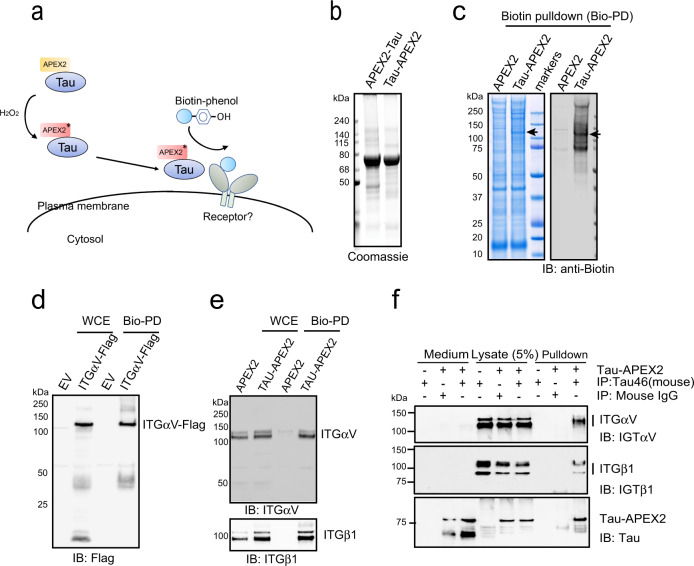
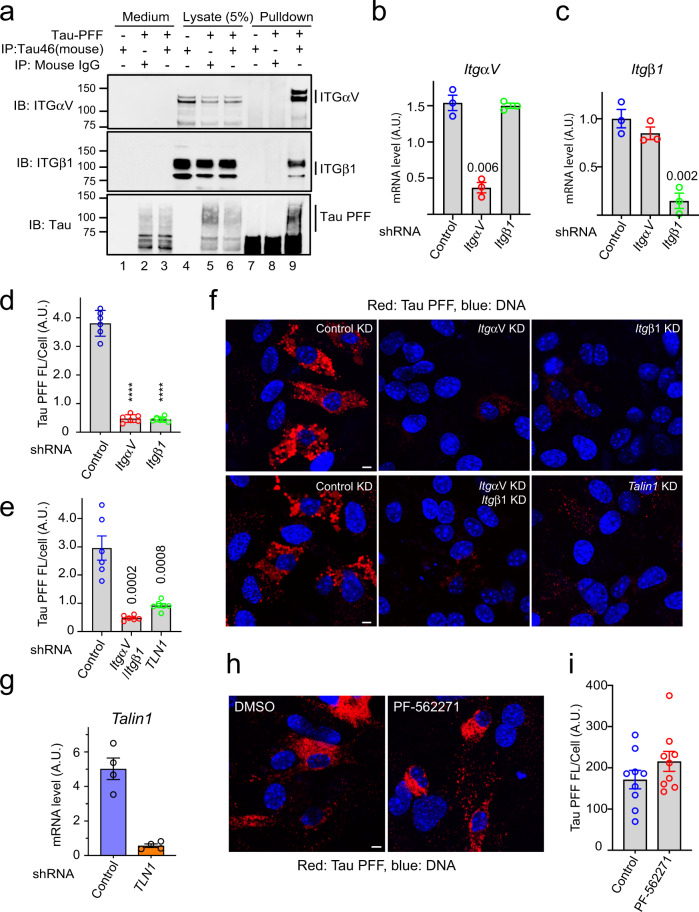
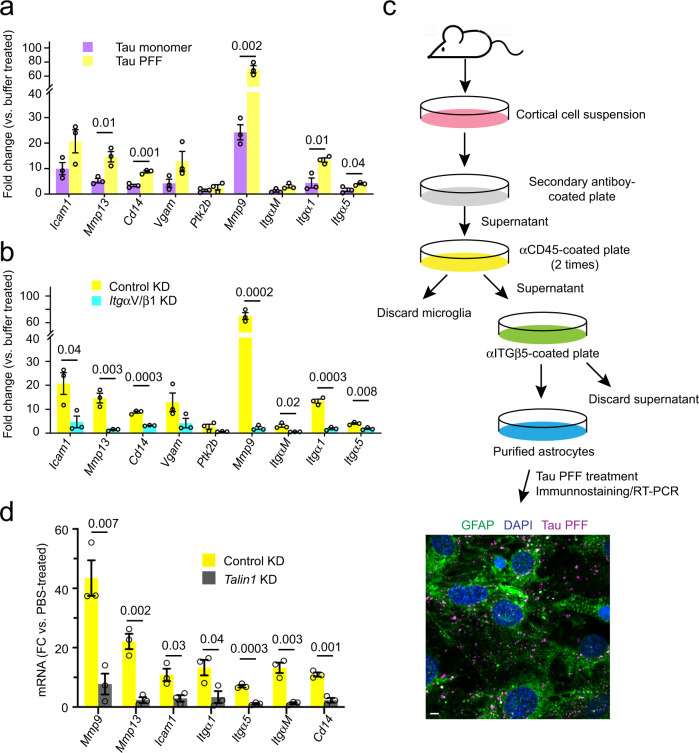
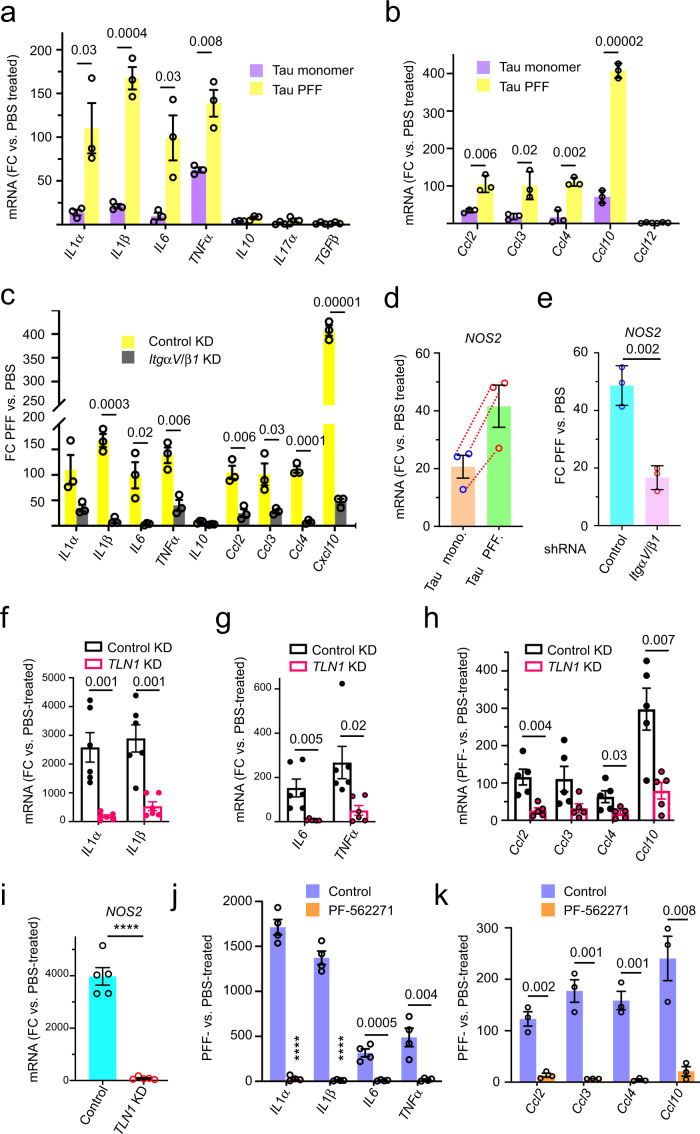
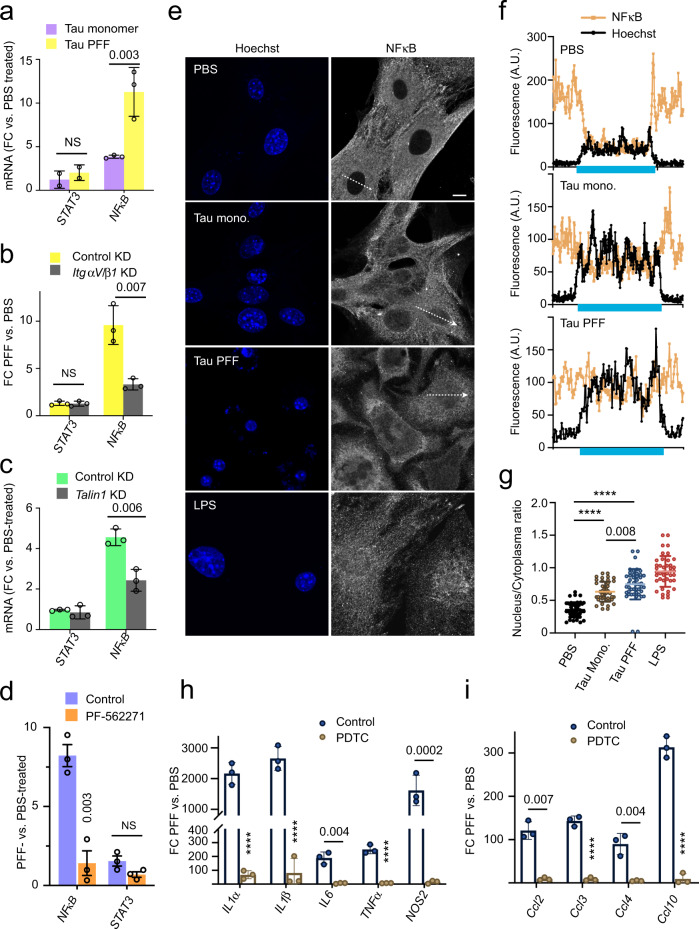
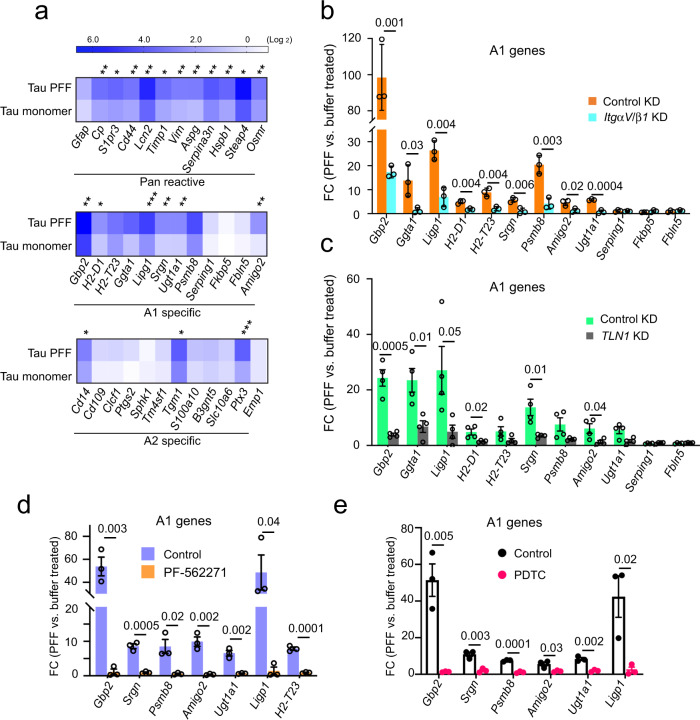
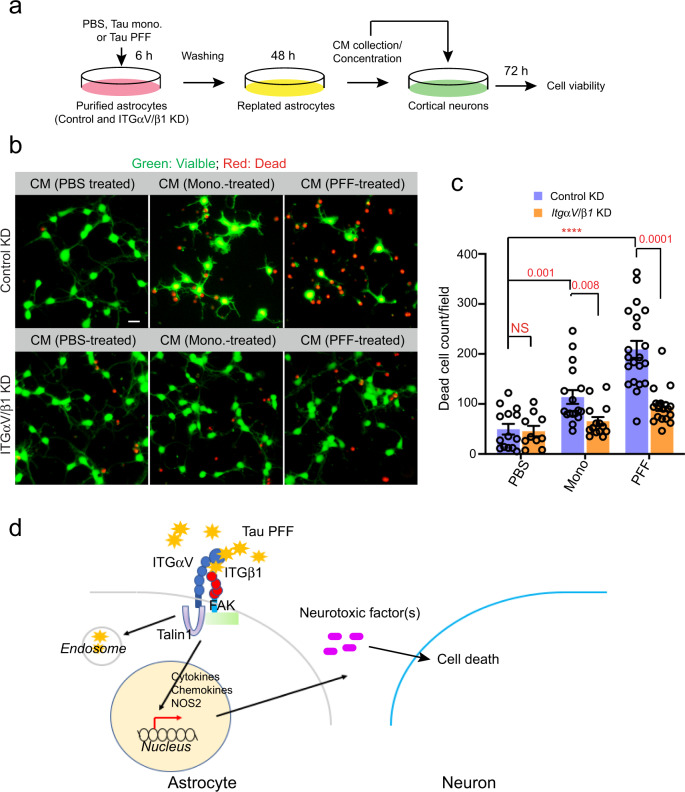
Microtubule-associated protein Tau can form protein aggregates transmissible within the brain, correlating with the progression of tauopathies in humans. The transmission of aggregates requires neuron-released Tau to interact with surface receptors on target cells. However, the underlying molecular mechanisms in astrocytes and downstream effects are unclear. Here, using a spatially resolved proteomic mapping strategy, we show that integrin αV/β1 receptor binds recombinant human Tau, mediating the entry of Tau fibrils in astrocytes. The binding of distinct Tau species to the astrocytic αV/β1 receptor differentially activate integrin signaling. Furthermore, Tau-mediated activation of integrin signaling results in NFκB activation, causing upregulation of pro-inflammatory cytokines and chemokines, induction of a sub-group of neurotoxic astrocytic markers, and release of neurotoxic factors. Our findings suggest that filamentous recombinant human Tau-mediated activation of integrin signaling induces astrocyte conversion towards a neurotoxic state, providing a mechanistic insight into tauopathies.
Overview
The claims and statistics of this paper haven’t been checked yet.
Run the check — free, no account needed. It reads the open-access text and checks the sources it cites.
Integrity signals
Registry
Cites
Statistics
Figures
Verification
Claims the paper makes
The claims and statistics of this paper haven’t been checked yet.
Run the check — free, no account needed. It reads the open-access text and checks the sources it cites.
Claims other papers make about this one
Each is checked against this paper’s own text: does it say what the citing paper says it does?
The source backs part of the claim, not all of it — or backs it for a different population, condition or comparison.
In the citing paper
“Previous studies have demonstrated that astrocytes can internalize both tau monomers and higher‐molecular‐weight tau species. 13 , 28”
From Protective mechanisms against Alzheimer's disease in APOE3‐Christchurch homozygous astrocytes (2025) · cites this paper as [28]
Experimental — accuracy not yet measuredIn the citing paper
“The binding of tau fibrils to astrocyte αV/β1 activates integrin signaling, resulting in NF-κB activation, leading to an increase of pro-inflammatory cytokines and chemokines, and induction of expression of neurotoxic astrocytic markers [203].”
From Tau and neuroinflammation in Alzheimer’s disease: interplay mechanisms and clinical translation (2023) · cites this paper as [203]
In the citing paper
“The integrin αV/β1 receptor interacts with tau monomers or fibrils and mediates tau uptake in primary astrocytes.”
From Tau and neuroinflammation in Alzheimer’s disease: interplay mechanisms and clinical translation (2023) · cites this paper as [203]
Self-check
Percentages, sums and reported differences re-computed from the paper’s own numbers.
The self-check needs the paper’s full text.
Citations
Cites
Neuropathological stageing of Alzheimer-related changes.
Braak, H., & Braak, E. (1991) · Acta Neuropathologica · doi:10.1007/bf00308809 · Cited by 16,123
Neurotoxic reactive astrocytes are induced by activated microglia
Liddelow, S. A., Guttenplan, K. A., Clarke, L. E., Bennett, F. C., Bohlen, C. J., Schirmer, L., Bennett, M. L., Münch, A. E., Chung, W.-S., Peterson, T. C., et al. (2017) · Nature · doi:10.1038/nature21029 · Cited by 7,971
STATs in cancer inflammation and immunity: a leading role for STAT3
Yu, H., Pardoll, D., & Jove, R. (2009) · Nature reviews. Cancer · doi:10.1038/nrc2734 · Cited by 4,383
Lee, V. M.-Y., Goedert, M., & Trojanowski, J. Q. (2001) · Annual Review of Neuroscience · doi:10.1146/annurev.neuro.24.1.1121 · Cited by 2,480
How neuroinflammation contributes to neurodegeneration
Ransohoff, R. M. (2016) · Science · doi:10.1126/science.aag2590 · Cited by 1,967
Transmission and spreading of tauopathy in transgenic mouse brain
Clavaguera, F., Bolmont, T., Crowther, R. A., Abramowski, D., Frank, S., Probst, A., Fraser, G., Stalder, A. K., Beibel, M., Staufenbiel, M., et al. (2009) · Nature Cell Biology · doi:10.1038/ncb1901 · Cited by 1,803
Every step of the way: integrins in cancer progression and metastasis
Hamidi, H., & Ivaska, J. (2018) · Nature Reviews Cancer · doi:10.1038/s41568-018-0038-z · Cited by 1,493
Propagation of Tau Pathology in a Model of Early Alzheimer's Disease
de Calignon, A., Polydoro, M., Suárez-Calvet, M., William, C., Adamowicz, D. H., Kopeikina, K. J., Pitstick, R., Sahara, N., Ashe, K. H., Carlson, G. A., et al. (2012) · Neuron · doi:10.1016/j.neuron.2011.11.033 · Cited by 1,427
Propagation of Tau Misfolding from the Outside to the Inside of a Cell
Frost, B., Jacks, R. L., & Diamond, M. I. (2009) · Journal of Biological Chemistry · doi:10.1074/jbc.m808759200 · Cited by 1,252
Talin Binding to Integrin ß Tails: A Final Common Step in Integrin Activation
Tadokoro, S., Shattil, S. J., Eto, K., Tai, V., Liddington, R., de Pereda, J. M., Ginsberg, M. H., & Calderwood, D. (2003) · Science · doi:10.1126/science.1086652 · Cited by 1,211
Cited by
Sorted by citations
Tau and neuroinflammation in Alzheimer’s disease: interplay mechanisms and clinical translation
Chen, Y., & Yu, Y. (2023) · Journal of Neuroinflammation · doi:10.1186/s12974-023-02853-3 · Cited by 516
Astrocyte contribution to dysfunction, risk and progression in neurodegenerative disorders
Brandebura, A. N., Paumier, A., Onur, T. S., & Allen, N. J. (2023) · Nature Reviews Neuroscience · doi:10.1038/s41583-022-00641-1 · Cited by 427
Bellaver, B., Povala, G., Ferreira, P. C. L., Ferrari-Souza, J. P., Leffa, D. T., Lussier, F. Z., Benedet, A. L., Ashton, N. J., Triana-Baltzer, G., Kolb, H. C., et al. (2023) · Nature Medicine · doi:10.1038/s41591-023-02380-x · Cited by 319
Chen, L.-L., Fan, Y.-G., Zhao, L.-X., Zhang, Q., & Wang, Z.-Y. (2023) · Bioorganic Chemistry · doi:10.1016/j.bioorg.2022.106301 · Cited by 200
Inflammatory aspects of Alzheimer’s disease
Lucena, P. B., & Heneka, M. T. (2024) · Acta Neuropathologica · doi:10.1007/s00401-024-02790-2 · Cited by 152
Transgenic Mouse Models of Alzheimer’s Disease: An Integrative Analysis
Sanchez-Varo, R. M., Mejias‐Ortega, M., Fernandez-Valenzuela, J. J., Nuñez‐Diaz, C., Cáceres-Palomo, L., Vegas‐Gomez, L., Sánchez‐Mejías, E., Trujillo‐Estrada, L., García‐León, J. A., Moreno‐González, I., et al. (2022) · International Journal of Molecular Sciences · doi:10.3390/ijms23105404 · Cited by 136
Microglia in Alzheimer’s Disease in the Context of Tau Pathology
Perea, J. R., Bolós, M., & Ávila, J. (2020) · Biomolecules · doi:10.3390/biom10101439 · Cited by 134
Rodríguez-Giraldo, M., González-Reyes, R. E., Ramírez-Guerrero, S., Bonilla-Trilleras, C. E., Guardo-Maya, S., & Nava-Mesa, M. O. (2022) · International Journal of Molecular Sciences · doi:10.3390/ijms232113630 · Cited by 122
Astrocytic propagation of Tau in the context of Alzheimer's disease
Fleeman, R. M., & Proctor, E. A. (2021) · Frontiers in Cellular Neuroscience · doi:10.3389/fncel.2021.645233 · Cited by 75
Complement System in Alzheimer’s Disease
Shah, A., Kishore, U., & Shastri, A. (2021) · International Journal of Molecular Sciences · doi:10.3390/ijms222413647 · Cited by 76
Lei, W., Cheng, Y., Liu, X., Gao, J., Zhu, Z., Ding, W., Xu, X., Li, Y., Ling, Z., Jiang, R., et al. (2025) · Frontiers in Immunology · doi:10.3389/fimmu.2025.1582119 · Cited by 68
Microglia: Friend and foe in tauopathy
Odfalk, K. F., Bieniek, K. F., & Hopp, S. C. (2022) · Progress in Neurobiology · doi:10.1016/j.pneurobio.2022.102306 · Cited by 60
Targeting tau in Alzheimer's disease: from mechanisms to clinical therapy
Ye, J., Wan, H., Chen, S., & Liu, G. (2023) · Neural Regeneration Research · doi:10.4103/1673-5374.385847 · Cited by 74
The impact of astrocytic NF-κB on healthy and Alzheimer’s disease brains
Huat, T. J., Camats‐Perna, J., Newcombe, E. A., Onraet, T., Campbell, D., Sucic, J. T., Martini, A. C., Forner, S., Mirzaei, M., Poon, W. W., et al. (2024) · Scientific Reports · doi:10.1038/s41598-024-65248-1 · Cited by 64
Brain clearance of protein aggregates: a close-up on astrocytes
Giusti, V., Kaur, G., Giusto, E., & Civiero, L. (2024) · Molecular Neurodegeneration · doi:10.1186/s13024-024-00703-1 · Cited by 54
Astrocyte and oligodendrocyte pathology in Alzheimer's disease
Ziar, R., Tesar, P. J., & Clayton, B. L. L. (2025) · Neurotherapeutics · doi:10.1016/j.neurot.2025.e00540 · Cited by 47
Annadurai, N., Sanctis, J. B. D., Hajdúch, M., & Das, V. (2021) · Experimental Neurology · doi:10.1016/j.expneurol.2021.113756 · Cited by 41
Bouvier, D. S., Fixemer, S., Heurtaux, T., Jeannelle, F., Frauenknecht, K. B. M., & Mittelbronn, M. G. A. (2022) · Frontiers in Physiology · doi:10.3389/fphys.2022.814889 · Cited by 43
Astrocytes: The Stars in Neurodegeneration?
Dittlau, K. S., & Freude, K. (2024) · Biomolecules · doi:10.3390/biom14030289 · Cited by 39
Acosta, D. M., Mancinelli, C. D., Bracken, C., & Eliezer, D. (2021) · Journal of Biological Chemistry · doi:10.1016/j.jbc.2021.101442 · Cited by 36
Liu, X., Li, Y., Huang, L., Kuang, Y., Wu, X., Ma, X., Zhao, B., & Lan, J. (2024) · Frontiers in Pharmacology · doi:10.3389/fphar.2024.1450704 · Cited by 39
Lu, J., Wu, K., Sha, X., Lin, J., Chen, H., & Yu, Z. (2024) · Translational Neurodegeneration · doi:10.1186/s40035-024-00445-6 · Cited by 31
Ye, J., Zhong, S., Wan, H., Guo, X., Yao, X., Liu, Q., Chen, L., Wang, J., & Xiao, S. (2025) · Molecular Neurodegeneration · doi:10.1186/s13024-025-00796-2 · Cited by 31
Puma, D. D. L., Ripoli, C., Puliatti, G., Pastore, F., Lazzarino, G., Tavazzi, B., Arancio, O., Piacentini, R., & Grassi, C. (2022) · Neuropathology and Applied Neurobiology · doi:10.1111/nan.12811 · Cited by 29
Astrocyte adaptation in Alzheimer’s disease: a focus on astrocytic P2X7R
Beltran-Lobo, P., Reid, M. J., Jiménez-Sánchez, M., Verkhratsky, A., Perez‐Nievas, B. G., & Noble, W. J. (2022) · Essays in Biochemistry · doi:10.1042/ebc20220079 · Cited by 30
Lin, L., Li, C., Li, T., Zheng, J., Shu, Y., Zhang, J., Shen, Y., & Ren, D. (2023) · Food Frontiers · doi:10.1002/fft2.210 · Cited by 28
ApoE4 expression disrupts tau uptake, trafficking, and clearance in astrocytes
Eisenbaum, M., Pearson, A., Ortiz, C., Mullan, M., Crawford, F., Ojo, J., & Bachmeier, C. (2024) · Glia · doi:10.1002/glia.24469 · Cited by 25
The role of astrocytes in prion-like mechanisms of neurodegeneration
Smethurst, P., Franklin, H., Clarke, B. E., Sidle, K. C. L., & Patani, R. (2021) · Brain · doi:10.1093/brain/awab366 · Cited by 25
Integrin Signaling in the Central Nervous System in Animals and Human Brain Diseases
Ikeshima-Kataoka, H., Sugimoto, C., & Tsubokawa, T. (2022) · International Journal of Molecular Sciences · doi:10.3390/ijms23031435 · Cited by 24
p38 Inhibition Decreases Tau Toxicity in Microglia and Improves Their Phagocytic Function
Perea, J. R., Bolós, M., Cuadros, R., García, E., García‐Escudero, V., Hernández, F., McManus, R. M., Heneka, M. T., & Ávila, J. (2022) · Molecular Neurobiology · doi:10.1007/s12035-021-02715-0 · Cited by 24
Virus-Induced Membrane Fusion in Neurodegenerative Disorders
Osorio, C. P., Sfera, A., Anton, J. J., Thomas, K. G., Andronescu, C. V., Li, E., Yahia, R., Avalos, A. G., & Kozlakidis, Z. (2022) · Frontiers in Cellular and Infection Microbiology · doi:10.3389/fcimb.2022.845580 · Cited by 23
Microglia internalize tau monomers and fibrils using distinct receptors but similar mechanisms
Falkon, K. F., Danford, L., Kuri, E. G., Esquinca‐Moreno, P., Señeriz, Y. L. P., Smith, S. A., Wickline, J. L., Louwrier, A., McPhail, J. A., Sayre, N. L., et al. (2024) · Alzheimer s & Dementia · doi:10.1002/alz.14418 · Cited by 26
Enhancement of nucleus pulposus repair by glycoengineered adipose-derived mesenchymal cells
Ying, L., Liang, C., Zhang, Y., Wang, J., Wang, C., Xia, K., Shi, K., Yu, C., Yang, B., Xu, H., et al. (2022) · Biomaterials · doi:10.1016/j.biomaterials.2022.121463 · Cited by 22
Intraneuronal tau aggregation induces the integrated stress response in astrocytes
Batenburg, K. L., Kasri, N. N., Heine, V. M., & Scheper, W. (2022) · Journal of Molecular Cell Biology · doi:10.1093/jmcb/mjac071 · Cited by 21
Emerging Roles of Cells and Molecules of Innate Immunity in Alzheimer’s Disease
Tamburini, B., Badami, G. D., Manna, M. P. L., Azgomi, M. S., Caccamo, N., & Dieli, F. (2023) · International Journal of Molecular Sciences · doi:10.3390/ijms241511922 · Cited by 22
Astrocytes in Neurodegenerative Diseases: A Perspective from Tauopathy and α-Synucleinopathy
Wang, P., & Ye, Y. (2021) · Life · doi:10.3390/life11090938 · Cited by 21
Self-citationYang, Q., Song, D. F., Xie, Z., He, G., Zhao, J., Wang, Z., Dong, Z., Zhang, H., Yang, L., Jiang, M., et al. (2021) · Progress in Neurobiology · doi:10.1016/j.pneurobio.2021.102209 · Cited by 22
Brezováková, V., Syková, E., & Jadhav, S. (2022) · Cells · doi:10.3390/cells11091429 · Cited by 19
A 3D human co-culture to model neuron-astrocyte interactions in tauopathies
Batenburg, K. L., Sestito, C., Cornelissen‐Steijger, P., van Weering, J. R. T., Price, L., Heine, V. M., & Scheper, W. (2023) · Biological Procedures Online · doi:10.1186/s12575-023-00194-2 · Cited by 22
Hernandez, S. J., Fote, G., Reyes-Ortiz, A. M., Steffan, J. S., & Thompson, L. M. (2021) · Matrix Biology Plus · doi:10.1016/j.mbplus.2021.100089 · Cited by 17
Wang, P., Anderson, D. E., & Ye, Y. (2023) · Cell & Bioscience · doi:10.1186/s13578-023-01128-x · Cited by 20
Self-citationLiu, S., Lin, G., Yang, Q. L., Wang, P., Ma, C., Qian, X., He, X., Dong, Z., Liu, Y., Liu, M., et al. (2022) · CNS Neuroscience & Therapeutics · doi:10.1111/cns.13998 · Cited by 15
Self-citationDeterminants of astrocytic pathology in stem cell models of primary tauopathies
Fiock, K. L., Hook, J. N., & Hefti, M. M. (2023) · Acta Neuropathologica Communications · doi:10.1186/s40478-023-01655-1 · Cited by 20
Positron Emission Tomography in Animal Models of Tauopathies
Cao, L., Kong, Y., Ji, B., Ren, Y., Guan, Y., & Ni, R. (2022) · Frontiers in Aging Neuroscience · doi:10.3389/fnagi.2021.761913 · Cited by 14
Pierson, S. R., Kolling, L. J., James, T. D., Selvakumar, G. P., & Marcinkiewcz, C. A. (2024) · Pharmacological Research · doi:10.1016/j.phrs.2024.107171 · Cited by 16
Luo, W., Li, Y., Xiang, C., Aizawa, T., Niu, R., Wang, Y., Zhao, J., Liu, Z., Li, C., Liu, W., et al. (2023) · Materials Today Bio · doi:10.1016/j.mtbio.2023.100888 · Cited by 15
Complement receptor 4 mediates the clearance of extracellular tau fibrils by microglia
Yoo, C. J., Choi, Y., Bok, E., Lin, Y., Cheon, M., Lee, Y., & Kim, J. (2024) · FEBS Journal · doi:10.1111/febs.17150 · Cited by 16
Wang, C., Wang, X., Sun, S., Chang, Y., Lian, P., Guo, H., Zheng, S., Ma, R., & Li, G. (2024) · Immunity & Ageing · doi:10.1186/s12979-024-00437-0 · Cited by 17
Internalization of extracellular Tau oligomers in Alzheimer’s disease
Chinnathambi, S., Rangappa, N., & Chandrashekar, M. (2025) · Advances in clinical chemistry · doi:10.1016/bs.acc.2025.01.005 · Cited by 14
ApoE-calypse tau: ApoE–tau synergy in Alzheimer’s disease
Lennol, M. P., Bordier, C., Kamelher, L., Ulrich, J. D., Holtzman, D. M., & Gratuze, M. (2025) · The Journal of Experimental Medicine · doi:10.1084/jem.20250965 · Cited by 14
Potential of astrocytes in targeting therapy for Alzheimer’s disease
Bi, W., Lei, T., Cai, S., Zhang, X., Yang, Y., Xiao, Z., Wang, L., & Du, H. (2022) · International Immunopharmacology · doi:10.1016/j.intimp.2022.109368 · Cited by 13
Glial phagocytosis for synapse and toxic proteins in neurodegenerative diseases
Choi, Y., & Chung, W. (2025) · Molecular Neurodegeneration · doi:10.1186/s13024-025-00870-9 · Cited by 14
Wu, Q., Yu, M., Wang, Z., Ai, X., Liu, Z., Zeng, J., Cai, L., Yuan, L., He, J., Lin, X., et al. (2022) · Neurochemistry International · doi:10.1016/j.neuint.2022.105463 · Cited by 12
Kim, D., Jo, Y. S., Jo, H.-S., Bae, S., Kwon, Y. W., Oh, Y., & Yoon, J. H. (2022) · International Journal of Molecular Sciences · doi:10.3390/ijms23021006 · Cited by 11
Fukumoto, H., Kao, T., Tai, C., Jang, M., & Miyamoto, M. (2024) · The FASEB Journal · doi:10.1096/fj.202401704r · Cited by 9
Deciphering the prion-like behavior of pathogenic protein aggregates in neurodegenerative diseases
Yoshida, S., & Hasegawa, T. (2022) · Neurochemistry International · doi:10.1016/j.neuint.2022.105307 · Cited by 9
The molecular pathology of neurodegenerative and psychiatric disorders
Yan, P., Deng, Y. M., Su, X., Kong, H., Zhang, Y., Li, W., & Kong, E. (2023) · Elsevier eBooks · doi:10.1016/b978-0-443-18677-6.00007-5 · Cited by 8
Protective mechanisms against Alzheimer's disease in APOE3‐Christchurch homozygous astrocytes
Tian, X., Rivera, E. K., Hwang, I., Nikitina, A. A., Smith, J. A., Cho, Y. J., Sala‐Jarque, J., DuBose, A., Andriola, C., Gollan‐Myers, T., et al. (2025) · Alzheimer's & Dementia · doi:10.1002/alz.70589 · Cited by 7
Lin, J., Han, H., Wu, K., Wu, X., Shen, J., Mo, Y., Zhang, Q., Yang, H., & Yu, Z. (2025) · Experimental & Molecular Medicine · doi:10.1038/s12276-025-01593-z · Cited by 7
Astrocyte–Neuron Interactions in Alzheimer’s Disease
Muñoz‐Castro, C., & Serrano‐Pozo, A. (2024) · Advances in neurobiology · doi:10.1007/978-3-031-64839-7_14 · Cited by 7
Does the Anti‐Tau Strategy in Progressive Supranuclear Palsy Need to Be Reconsidered? No
Höglinger, G. U. (2021) · Movement Disorders Clinical Practice · doi:10.1002/mdc3.13326 · Cited by 6
Chang, H., Chen, S.-W., Huang, S., Hsu, S., Lee, C.-C., Huang, C., Huang, C.-W., & Chang, C.-C. (2025) · Mechanisms of Ageing and Development · doi:10.1016/j.mad.2025.112113 · Cited by 5
Ved, A., Gajjar, T. B., Kakkad, A. D., Ganesan, S., Shankhyan, A., Jayabalan, K., Mishra, S., Jain, B., Arora, V., Gulati, M., et al. (2026) · Brain Sciences · doi:10.3390/brainsci16050434 · Cited by 5
Yamamoto, Y., Kubota, T., Noguchi, D., Saido, T. C., & Ohshima, T. (2025) · Molecular Neurobiology · doi:10.1007/s12035-025-05248-y · Cited by 5
Augustin, E., Vinasco‐Sandoval, T., Riquelme‐Perez, M., Plassard, D., Gaudin, M., Aurégan, G., Mitja, J., Bernier, S., Joséphine, C., Petit, F., et al. (2025) · Glia · doi:10.1002/glia.70019 · Cited by 4
Fueling Alzheimer’s Disease: Where Does Immunometabolism Stand?
Correia, S. C., Perry, G. L., & Moreira, P. I. (2024) · Journal of Alzheimer s Disease · doi:10.3233/jad-240787 · Cited by 3
Majumder, M., Dutta, D., Paidi, R. K., & Pahan, K. (2025) · Brain Research · doi:10.1016/j.brainres.2025.150089 · Cited by 5
Bustos, L. M., & Sattler, R. (2023) · Frontiers in Molecular Medicine · doi:10.3389/fmmed.2023.1075805 · Cited by 4
Aggregating gut: on the link between neurodegeneration and bacterial functional amyloidsPreprint
Wojciechowska, A. W., Wojciechowski, J. W., Zielińska, K., Söding, J., Kościółek, T., & Kotulska, M. (2024) · bioRxiv (Cold Spring Harbor Laboratory) · doi:10.1101/2024.11.26.624671 · Cited by 3
Ngo, H. T., Kang, Y. J., Diep, Y. N., Tran, V. T. A., Kim, S., Park, S., Lee, L. P., & Cho, H. (2025) · BioChip Journal · doi:10.1007/s13206-025-00226-x · Cited by 2
Tau in Health and Neurodegenerative Diseases
Chu, D., & Liu, F. (2021) · IntechOpen eBooks · doi:10.5772/intechopen.101299 · Cited by 2
Basic Concepts, Hypotheses and Drug Development of Alzheimer's Disease
Zhang, J. (2023) · Theoretical and Natural Science · doi:10.54254/2753-8818/3/20220484 · Cited by 1
Garrahy, J. P. (2025) · Journal of Alzheimer s Disease · doi:10.1177/13872877251404970 · Cited by 1
Targeting STAT3 in Alzheimer's disease: Potential mechanisms and therapeutic implications
Chen, P., Wang, R., Zhou, T., Sun, Y. N., Kirchhoff, F., Miao, Z., & Zhuang, C. (2026) · European Journal of Medicinal Chemistry · doi:10.1016/j.ejmech.2026.118785 · Cited by 1
Ye, J., Deng, Y., Zhang, B., Li, C., Guo, X., Yue, R., Wan, H., Hao, Y., & Xiao, S. (2026) · Alzheimer s Research & Therapy · doi:10.1186/s13195-026-02121-5 · Cited by 1
Astrocytic tau inclusions lead to microglial abnormalities, but leave neuronal networks intactPreprint
Vogels, T., Vargová, G., & Hromádka, T. (2024) · bioRxiv (Cold Spring Harbor Laboratory) · doi:10.1101/2024.01.28.577642
Wang, P., Anderson, D. E., & Ye, Y. (2023) · Figshare · doi:10.6084/m9.figshare.24208974
Self-citationWang, P., Anderson, D. E., & Ye, Y. (2023) · Figshare · doi:10.6084/m9.figshare.24208992
Self-citationWang, P., Anderson, D. E., & Ye, Y. (2023) · Figshare · doi:10.6084/m9.figshare.24208983
Self-citationWang, P., Anderson, D. E., & Ye, Y. (2023) · Figshare · doi:10.6084/m9.figshare.24208980
Self-citationWang, P., Anderson, D. E., & Ye, Y. (2023) · Figshare · doi:10.6084/m9.figshare.24208971
Self-citationWang, P., Anderson, D. E., & Ye, Y. (2023) · Figshare · doi:10.6084/m9.figshare.24208977
Self-citationWang, P., Anderson, D. E., & Ye, Y. (2023) · Figshare · doi:10.6084/m9.figshare.24208989
Self-citationBerrocal, M., Alvarez, A. M., & Mata, A. M. (2025) · FEBS Open Bio · doi:10.1002/2211-5463.70046 · Cited by 1
Lewandowska, J., Majewski, J., & Roszek, K. (2025) · Brain Sciences · doi:10.3390/brainsci15060570
Ye, H., Zhuang, C., Jin, Z., Hu, Y., He, J., Yu, Q., Hu, H., & Zheng, Y. (2025) · Journal of Alzheimer s Disease · doi:10.1177/13872877251385244
Antioxidants as immunomodulators for Tau and Amyloid-β in Alzheimer’s disease
Chinnathambi, S., Rangappa, N., & Chandrashekar, M. (2025) · Advances in protein chemistry and structural biology · doi:10.1016/bs.apcsb.2025.10.007
Chinnathambi, S., Suresh, S., Velmurugan, G., & Mishra, A. (2025) · Advances in immunology · doi:10.1016/bs.ai.2025.11.004
Wang, P., Anderson, D. E., & Ye, Y. (2023) · Figshare · doi:10.6084/m9.figshare.24208986
Self-citationAdditional file 1 of Determinants of astrocytic pathology in stem cell models of primary tauopathies
Fiock, K. L., Hook, J. N., & Hefti, M. M. (2024) · Figshare · doi:10.6084/m9.figshare.26623750
Additional file 2 of Determinants of astrocytic pathology in stem cell models of primary tauopathies
Fiock, K. L., Hook, J. N., & Hefti, M. M. (2024) · Figshare · doi:10.6084/m9.figshare.26623753
Wang, C., Wang, X., Sun, S., Chang, Y., Lian, P., Guo, H., Zheng, S., Ma, R., & Li, G. (2024) · Figshare · doi:10.6084/m9.figshare.25824768
The effect of astrocyte depletion and repopulation approaches in pathological condition of CNS
Tahmasebi, F., Safarian, A., Asl, E. R., Vahidinia, Z., & Barati, S. (2026) · Acta Neurologica Belgica · doi:10.1007/s13760-026-03005-z
BAG3 modulates clathrin-mediated endocytosis and tau uptake in astrocytes
Rodwell‐Bullock, J., Blau, E., Ganguly, A., Deaton, C. A., & Johnson, G. V. W. (2026) · American Journal of Physiology-Cell Physiology · doi:10.1152/ajpcell.00947.2025
Su, R., & Yang, Q.-Y. (2026) · New cell · doi:10.61958/ncjg8269
Astrocytes dysfunction in tauopathies
Augustin, E. (2023) · theses.fr (ABES) · doi:10.70675/a6b6a2f4zff42z4987z9ca0z62aca30c291c
Mei, J., Xia, M., Peng, L., & Li, X. (2026) · The American Journal of Drug and Alcohol Abuse · doi:10.1080/00952990.2026.2645215
Human Stem Cell-Derived Models of the Alzheimer’s Disease Neuroimmune System
Summers, R., Quang, D., & Johnson, N. R. (2026) · International Journal of Molecular Sciences · doi:10.3390/ijms27167360 · Cited by 1
When Pathologies Collide: The Intersection of Tau and Alpha-Synuclein in Neurodegenerative Diseases
Hunt, J. N., & Kortagere, S. (2026) · Molecular Neurobiology · doi:10.1007/s12035-026-06163-6
Makhlouf, H., Dorigatti, A. O., Hernandez, S. F., de Rosa, N., Miller, L. R., Hussong, S. A., Holstein, D. M., Lechleiter, J. D., Logan, S., Kayed, R., et al. (2026) · bioRxiv (Cold Spring Harbor Laboratory) · doi:10.64898/2026.09.08.750215
Metadata
- Authors
- Wang, P., & Ye, Y.
- Affiliations
- National Institutes of Health (US)
- Corresponding author
- Ye, Yihong
- ORCID
- Venue
- Nature Communications
- Published
- 2021-01-04
- Volume
- 12
- Issue
- 1
- Pages
- 95-95
- ISSN
- 2041-1723 (ISSN-L)
- PMC
- PMC7782792
- OpenAlex
- W3118652952
- Cited by
- 93
- References
- 75
- Citations by year
- 2026: 11 · 2025: 19 · 2024: 17 · 2023: 15 · 2022: 20 · 2021: 10
- FWCI
- 10.98
- Type
- journal article
- Language
- en
- Open access
- gold
- doi.org
- Locations
- Nature Communications (publishedVersion, cc-by)
- bioRxiv (Cold Spring Harbor Laboratory) (acceptedVersion, cc-by-nc-nd)
- Europe PMC (PubMed Central) (publishedVersion, other-oa)
- PubMed Central (publishedVersion, cc-by)
- PubMed (publishedVersion)
- RePEc: Research Papers in Economics (submittedVersion)
- DOAJ (DOAJ: Directory of Open Access Journals) (submittedVersion, cc-by-sa)
- Funders
- National Institute of Diabetes and Digestive and Kidney Diseases
- Topics
- Life Sciences › Neuroscience › Cellular and Molecular Neuroscience › Alzheimer's disease research and treatments
- Life Sciences › Neuroscience › Neurology › Neuroinflammation and Neurodegeneration Mechanisms
- Health Sciences › Medicine › Immunology and Allergy › Cell Adhesion Molecules Research
- Keywords
- tau protein, tauopathy, astrocytes, integrin αvβ1, integrin signaling, tau fibrils, NF-κB activation, inflammatory cytokines, chemokines, neuroinflammation
- MeSH terms
- Animals, Astrocytes, Cells, Cultured, Humans, Inflammation, Mice, Inbred C57BL, Neurons, Protein Binding, Recombinant Proteins, Signal Transduction, NF-kappa B, Talin, tau Proteins, Receptors, Vitronectin, Heparan Sulfate Proteoglycans, STAT3 Transcription Factor, Mice, Focal Adhesion Protein-Tyrosine Kinases, HEK293 Cells
About these checks
Registry, retraction, Cites and statistics results are computed, not judged, with one exception: a printed reference that no index lists is read once by a model before it counts as a citation error. Claims are extracted by a model and kept only when their quote appears verbatim in the text; each cited source is then checked, with a model’s help, for whether it says what the claim relies on. Those verdicts can be wrong — read the claim’s quote and the cited source before relying on one.
Statistics and arithmetic are recomputed, not judged.
Confidence bands are shown only for fields calibrated on our annotated test set. None is calibrated yet, so no band is shown.
What counts as a claim ›How we measure confidence ›How we check this ›
Are you an author, or do you see a problem with this page? Request a review
