

The DOI matches its Crossref record; 57 of the 57 references it cites were found in a registry or an index.
Large-scale discovery of protein interactions at residue resolution using co-evolution calculated from genomic sequences
Open accessAbstract
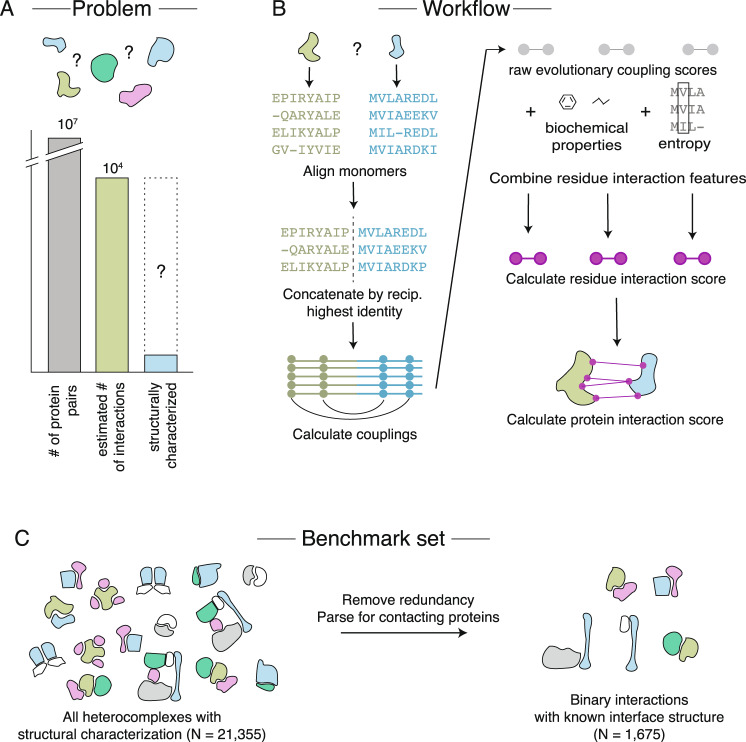
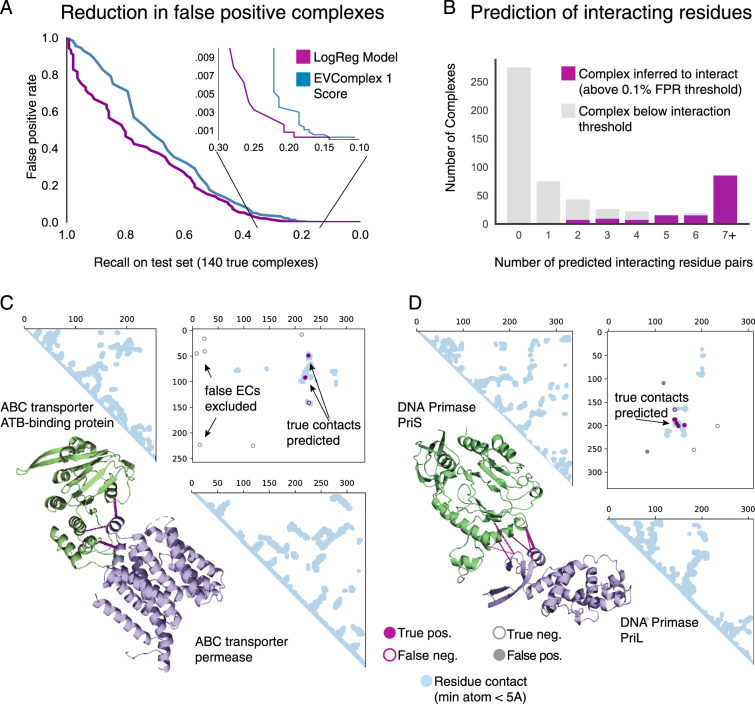
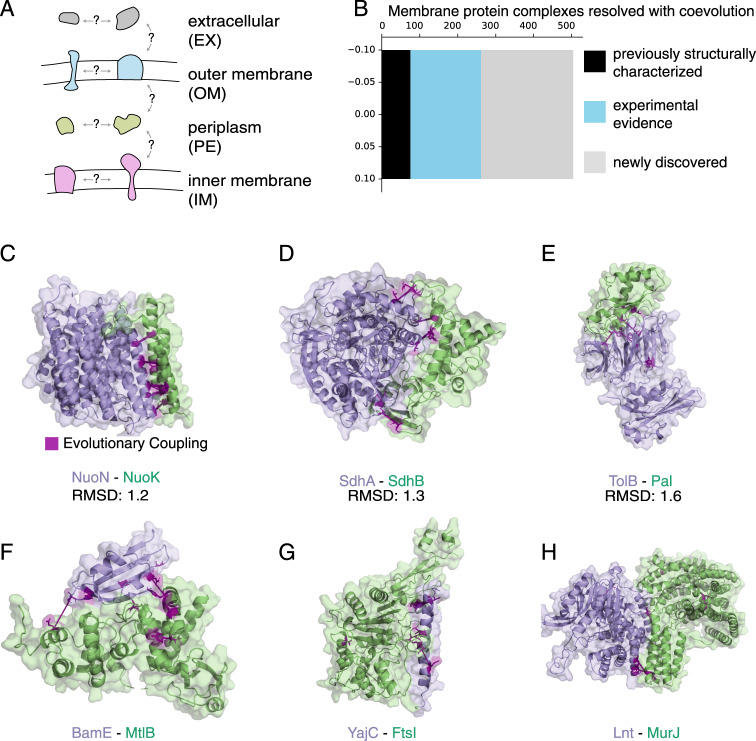
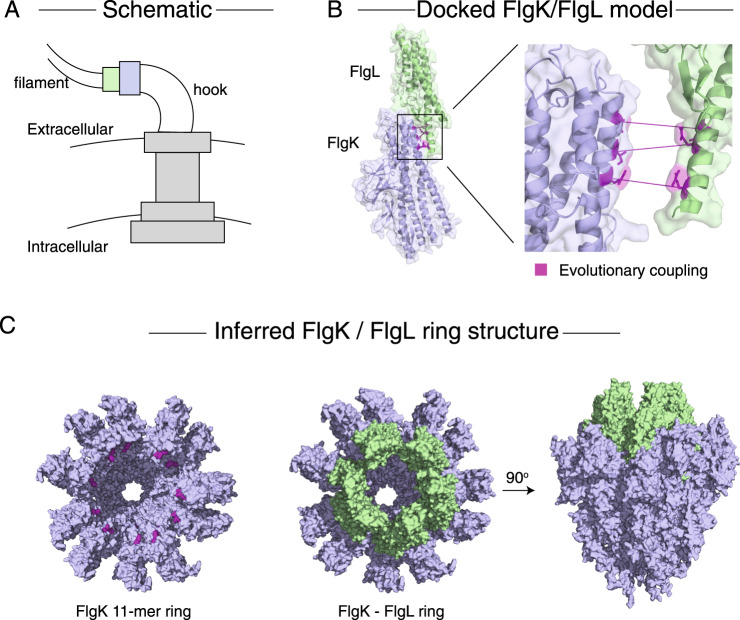
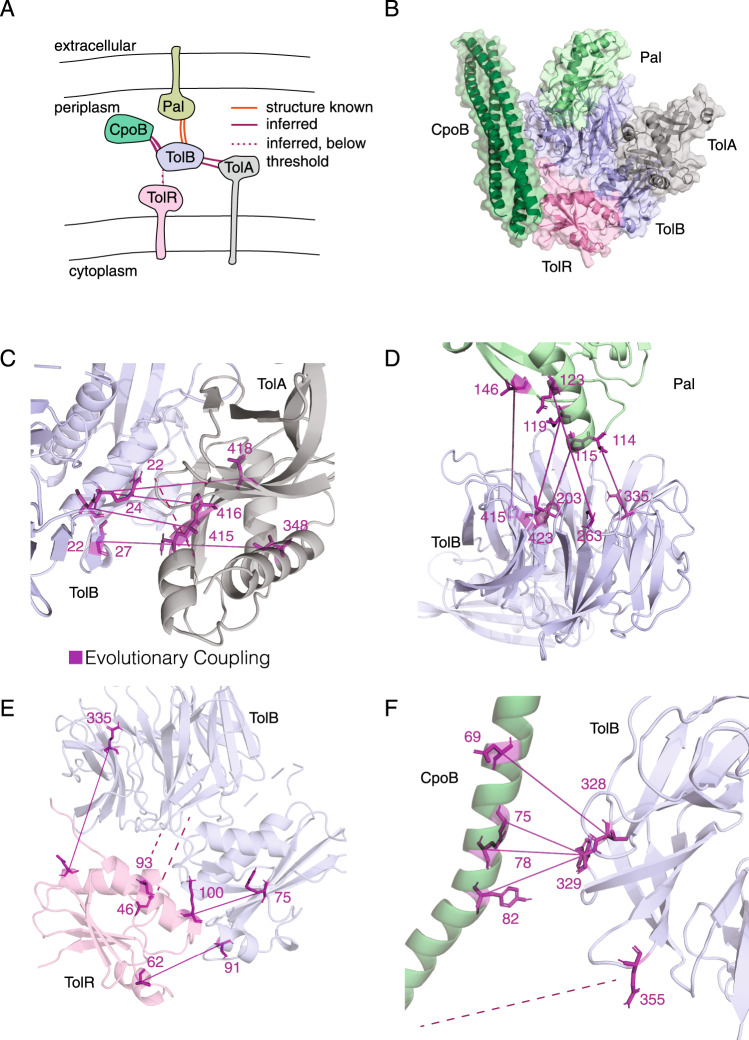
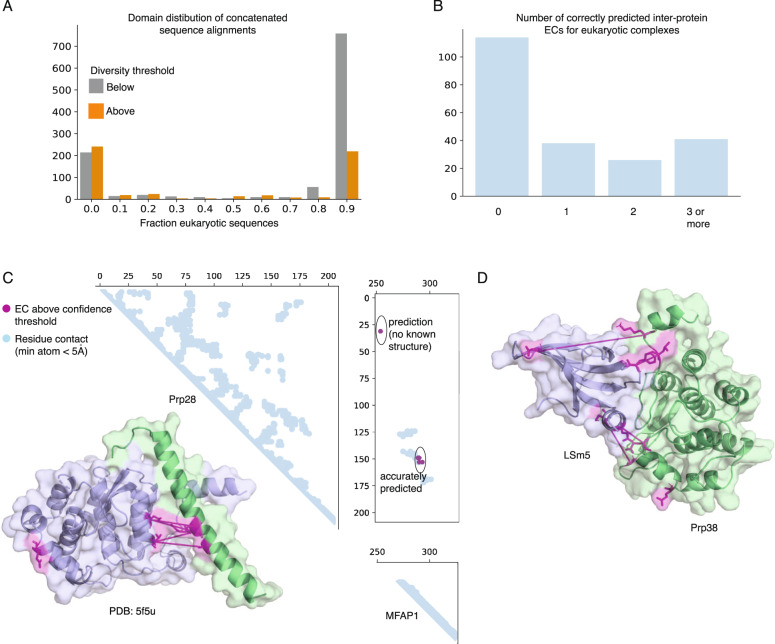
Increasing numbers of protein interactions have been identified in high-throughput experiments, but only a small proportion have solved structures. Recently, sequence coevolution-based approaches have led to a breakthrough in predicting monomer protein structures and protein interaction interfaces. Here, we address the challenges of large-scale interaction prediction at residue resolution with a fast alignment concatenation method and a probabilistic score for the interaction of residues. Importantly, this method (EVcomplex2) is able to assess the likelihood of a protein interaction, as we show here applied to large-scale experimental datasets where the pairwise interactions are unknown. We predict 504 interactions de novo in the E. coli membrane proteome, including 243 that are newly discovered. While EVcomplex2 does not require available structures, coevolving residue pairs can be used to produce structural models of protein interactions, as done here for membrane complexes including the Flagellar Hook-Filament Junction and the Tol/Pal complex.
Overview
The claims and statistics of this paper haven’t been checked yet.
Run the check — free, no account needed. It reads the open-access text and checks the sources it cites.
Integrity signals
Registry
Cites
Statistics
Figures
Verification
Claims the paper makes
The claims and statistics of this paper haven’t been checked yet.
Run the check — free, no account needed. It reads the open-access text and checks the sources it cites.
Claims other papers make about this one
Each is checked against this paper’s own text: does it say what the citing paper says it does?
In the citing paper
“Because residues at protein-protein interfaces are expected to coevolve, the likelihood that any two proteins interact can be assessed by identifying and aligning the ortholog sequences of the two proteins in many different species, joining them to create paired multiple sequence alignments (pMSA), and then determining the extent to which changes in the sequences of orthologs for the first protein”
From Computed structures of core eukaryotic protein complexes (2021) · cites this paper as [10]
Self-check
Percentages, sums and reported differences re-computed from the paper’s own numbers.
The self-check needs the paper’s full text.
Citations
Cites
Scikit-learn: Machine Learning in Python
Pedregosa, F., Varoquaux, G., Gramfort, A., Michel, V., Thirion, B., Grisel, O., Blondel, M., Müller, A., Nothman, J., Louppe, G., et al. (2012) · arXiv · doi:10.48550/arxiv.1201.0490 · Cited by 71,016
Kabsch, W., & Sander, C. (1983) · Biopolymers · doi:10.1002/bip.360221211 · Cited by 15,320
STRING v10: protein–protein interaction networks, integrated over the tree of life
Szklarczyk, D., Franceschini, A., Wyder, S., Forslund, K., Heller, D., Huerta-Cepas, J., Simonovic, M., Roth, A., Santos, A., Tsafou, K. P., et al. (2015) · Nucleic Acids Research · doi:10.1093/nar/gku1003 · Cited by 10,436
Inference of Macromolecular Assemblies from Crystalline State
Krissinel, E., & Henrick, K. (2007) · Journal of Molecular Biology · doi:10.1016/j.jmb.2007.05.022 · Cited by 10,007
UniProt: the Universal Protein knowledgebase
Apweiler, R. (2003) · Nucleic Acids Research · doi:10.1093/nar/gkh131 · Cited by 7,593
Accelerated Profile HMM Searches
Eddy, S. R. (2011) · PLoS Computational Biology · doi:10.1371/journal.pcbi.1002195 · Cited by 6,975
The Pfam protein families database in 2019
El-Gebali, S., Mistry, J., Bateman, A., Eddy, S. R., Luciani, A., Potter, S. C., Qureshi, M., Richardson, L. J., Salazar, G. A., Smart, A., et al. (2019) · Nucleic Acids Research · doi:10.1093/nar/gky995 · Cited by 4,602
Systematic identification of protein complexes in Saccharomyces cerevisiae by mass spectrometry
Ho, Y., Gruhler, A., Heilbut, A. M., Bader, G. D., Moore, L., Adams, S., Millar, A., Taylor, P. P., Bennett, K. L., Boutilier, K., et al. (2002) · Nature · doi:10.1038/415180a · Cited by 3,573
HADDOCK: A Protein−Protein Docking Approach Based on Biochemical or Biophysical Information
Dominguez, C., Boelens, R., & Bonvin, A. M. J. J. (2003) · Journal of the American Chemical Society · doi:10.1021/ja026939x · Cited by 3,187
Towards a proteome-scale map of the human protein–protein interaction network
Rual, J.-F. M., Venkatesan, K., Hao, T., Hirozane-Kishikawa, T., Dricot, A., Li, N., Berriz, G. F., Gibbons, F. D., Dreze, M., Ayivi-Guedehoussou, N., et al. (2005) · Nature · doi:10.1038/nature04209 · Cited by 2,904
Research works printed but not linked: 1
- Marcotte, C. & Marcotte, E. Predicting functional linkages from gene fusion. Appl. Bioinf. 1, 1–8 (2002).
Cited by
Sorted by citations
Protein complex prediction with AlphaFold-Multimer
Evans, R., O’Neill, M., Pritzel, A., Antropova, N., Senior, A., Green, T., Žídek, A., Bates, R., Blackwell, S., Yim, J., et al. (2021) · doi:10.1101/2021.10.04.463034 · Cited by 3,808
Improved prediction of protein-protein interactions using AlphaFold2
Bryant, P., Pozzati, G., & Elofsson, A. (2021) · doi:10.1101/2021.09.15.460468 · Cited by 1,022
AlphaFold2 and its applications in the fields of biology and medicine
Yang, Z., Zeng, X., Zhao, Y. C., & Chen, R. (2023) · Signal Transduction and Targeted Therapy · doi:10.1038/s41392-023-01381-z · Cited by 633
Computed structures of core eukaryotic protein complexes
Humphreys, I. R., Pei, J., Baek, M., Krishnakumar, A., Anishchenko, I., Ovchinnikov, S., Zhang, J., Ness, T. J., Banjade, S., Bagde, S. R., et al. (2021) · Science · doi:10.1126/science.abm4805 · Cited by 542
Protein design and variant prediction using autoregressive generative models
Shin, J.-E., Riesselman, A. J., Kollasch, A. W., McMahon, C., Simon, E., Sander, C., Manglik, A., Kruse, A. C., & Marks, D. S. (2021) · Nature Communications · doi:10.1038/s41467-021-22732-w · Cited by 320
Self-citationTowards a structurally resolved human protein interaction network
Burke, D. F., Bryant, P., Barrio-Hernandez, I., Memon, D., Pozzati, G., Shenoy, A., Zhu, W., Dunham, A. S., Albanese, P., Keller, A., et al. (2023) · Nature Structural & Molecular Biology · doi:10.1038/s41594-022-00910-8 · Cited by 269
Sledzieski, S., Singh, R., Cowen, L., & Berger, B. (2021) · Cell Systems · doi:10.1016/j.cels.2021.08.010 · Cited by 219
PeSTo: parameter-free geometric deep learning for accurate prediction of protein binding interfaces
Krapp, L. F., Abriata, L. A., Rodríguez, F. C., & Peraro, M. D. (2023) · Nature Communications · doi:10.1038/s41467-023-37701-8 · Cited by 168
Protein complexes in cells by AI‐assisted structural proteomics
(2023) · doi:10.15252/msb.202311544 · Cited by 147
Artificial intelligence in early drug discovery enabling precision medicine
Boniolo, F., Dorigatti, E., Ohnmacht, A. J., Saur, D., Schubert, B., & Menden, M. P. (2021) · Expert Opinion on Drug Discovery · doi:10.1080/17460441.2021.1918096 · Cited by 147
Recent advances in predicting and modeling protein–protein interactions
Durham, J., Zhang, J., Humphreys, I. R., Pei, J., & Cong, Q. (2023) · Trends in Biochemical Sciences · doi:10.1016/j.tibs.2023.03.003 · Cited by 82
Exploring protein-protein interactions at the proteome level
Elhabashy, H., Merino, F., Alva, V., Kohlbacher, O., & Lupas, A. N. (2022) · Structure · doi:10.1016/j.str.2022.02.004 · Cited by 57
Self-citationDormant spores sense amino acids through the B subunits of their germination receptors
Artzi, L., Alon, A., Brock, K. P., Green, A. G., Tam, A., Ramírez‐Guadiana, F. H., Marks, D. S., Kruse, A. C., & Rudner, D. Z. (2021) · Nature Communications · doi:10.1038/s41467-021-27235-2 · Cited by 51
Self-citationDeep learning for protein complex structure prediction
Bryant, P. (2023) · Current Opinion in Structural Biology · doi:10.1016/j.sbi.2023.102529 · Cited by 51
Xia, Y., Zhao, K., Liu, D., Zhou, X., & Zhang, G. (2023) · Communications Biology · doi:10.1038/s42003-023-05610-7 · Cited by 48
Protein interactions in human pathogens revealed through deep learning
Humphreys, I. R., Zhang, J., Baek, M., Wang, Y., Krishnakumar, A., Pei, J., Anishchenko, I. V., Tower, C. A., Jackson, B. A., Warrier, T., et al. (2024) · Nature Microbiology · doi:10.1038/s41564-024-01791-x · Cited by 48
Protein sequence‐to‐structure learning: Is this the end(‐to‐end revolution)?
Laine, E., Eismann, S., Elofsson, A., & Grudinin, S. (2021) · Proteins: Structure, Function, and Bioinformatics · doi:10.1002/prot.26235 · Cited by 44
“These advances have significantly increased the protein structure modelling coverage of genomes [19, 20, 21], and also of bacterial inter-actomes [22, 23, 24].”
BackgroundThe landscape of RNA binding proteins in mammalian spermatogenesis
Li, Y., wang, Y., Tan, Y., Yue, Q., Guo, Y., Yan, R., Meng, L., Zhai, H., Tong, L., Yuan, Z., et al. (2024) · Science · doi:10.1126/science.adj8172 · Cited by 45
Co-evolution of interacting proteins through non-contacting and non-specific mutations
Ding, D., Green, A. G., Wang, B., Lite, T.-L. V., Weinstein, E. N., Marks, D. S., & Laub, M. T. (2022) · Nature Ecology & Evolution · doi:10.1038/s41559-022-01688-0 · Cited by 43
Self-citationProtein Design and Variant Prediction Using Autoregressive Generative ModelsPreprint
Shin, J.-E., Riesselman, A. J., Kollasch, A. W., McMahon, C., Simon, E. P., Sander, C., Manglik, A., Kruse, A. C., & Marks, D. S. (2019) · bioRxiv (Cold Spring Harbor Laboratory) · doi:10.1101/757252 · Cited by 40
Self-citationAlphaFold2 enables accurate deorphanization of ligands to single-pass receptors
Banhos Danneskiold-Samsøe, N., Kavi, D., Jude, K. M., Nissen, S. B., Wat, L. W., Coassolo, L., Zhao, M., Santana-Oikawa, G. A., Broido, B. B., Garcia, K. C., et al. (2024) · Cell Systems · doi:10.1016/j.cels.2024.10.004 · Cited by 35
Peptide binder design with inverse folding and protein structure prediction
Bryant, P., & Elofsson, A. (2023) · Communications Chemistry · doi:10.1038/s42004-023-01029-7 · Cited by 35
Yehorova, D., Geronimo, B. D., Robinson, M., Kasson, P. M., & Kamerlin, S. C. L. (2024) · Current Opinion in Structural Biology · doi:10.1016/j.sbi.2024.102922 · Cited by 35
Pei, J., Zhang, J., & Cong, Q. (2022) · Bioinformatics · doi:10.1093/bioinformatics/btac527 · Cited by 35
Pairing interacting protein sequences using masked language modeling
Lupo, U., Sgarbossa, D., & Bitbol, A.-F. (2024) · Proceedings of the National Academy of Sciences · doi:10.1073/pnas.2311887121 · Cited by 31
Robust genome and cell engineering via in vitro and in situ circularized RNAs
Tong, M., Palmer, N. D., Dailamy, A., Kumar, A., Khaliq, H., Han, S., Finburgh, E. N., Wing, M. K., Hong, C., Xiang, Y., et al. (2024) · Nature Biomedical Engineering · doi:10.1038/s41551-024-01245-z · Cited by 31
Quignot, C., Postic, G., Bret, H., Rey, J., Granger, P., Murail, S., Chacón, P., Andréani, J., Tufféry, P., & Guérois, R. (2021) · Nucleic Acids Research · doi:10.1093/nar/gkab358 · Cited by 34
Modeling of protein conformational changes with Rosetta guided by limited experimental data
Sala, D., del Alamo, D., Mchaourab, H. S., & Meiler, J. (2022) · Structure · doi:10.1016/j.str.2022.04.013 · Cited by 30
Limits and potential of combined folding and docking
Pozzati, G., Zhu, W., Bassot, C., Lamb, J., Kundrotas, P., & Elofsson, A. (2022) · Bioinformatics · doi:10.1093/bioinformatics/btab760 · Cited by 25
Si, Y., & Yan, C. (2023) · Briefings in Bioinformatics · doi:10.1093/bib/bbad039 · Cited by 25
Wang, L., Li, F., Ma, X., Cang, Y., & Bai, F. (2022) · Journal of Chemical Information and Modeling · doi:10.1021/acs.jcim.2c01033 · Cited by 22
Protein language model-embedded geometric graphs power inter-protein contact prediction
Si, Y., & Yan, C. (2024) · eLife · doi:10.7554/elife.92184.3
Recent progress and future challenges in structure-based protein-protein interaction prediction
Yuan, R., Zhang, J., Zhou, J., & Cong, Q. (2025) · Molecular Therapy · doi:10.1016/j.ymthe.2025.04.003 · Cited by 22
Multimeric protein interaction and complex prediction: Structure, dynamics and function
Lu, D., Yu, S., Huang, Y., & Gong, X. (2025) · Computational and Structural Biotechnology Journal · doi:10.1016/j.csbj.2025.05.009 · Cited by 21
LncRNA–Protein Interactions: A Key to Deciphering LncRNA Mechanisms
Wang, Z., Aftab, M., Dong, Z., Jiang, Y., & Liu, K. (2025) · Biomolecules · doi:10.3390/biom15060881 · Cited by 20
Information-driven modeling of biomolecular complexes
van Noort, C. W., Honorato, R. V., & Bonvin, A. M. J. J. (2021) · Current Opinion in Structural Biology · doi:10.1016/j.sbi.2021.05.003 · Cited by 20
TRScore: a 3D RepVGG-based scoring method for ranking protein docking models
Guo, L., He, J., Lin, P., Huang, S., & Wang, J. (2022) · Bioinformatics · doi:10.1093/bioinformatics/btac120 · Cited by 19
AlphaFold2 Predicts Whether Proteins Interact Amidst Confounding Structural Compatibility
Martin, J. (2024) · Journal of Chemical Information and Modeling · doi:10.1021/acs.jcim.3c01805 · Cited by 20
Review and Comparative Analysis of Methods and Advancements in Predicting Protein Complex Structure
Zhao, N., Wu, T., Wang, W., Zhang, L., & Gong, X. (2024) · Interdisciplinary Sciences Computational Life Sciences · doi:10.1007/s12539-024-00626-x · Cited by 19
Zhang, W., Meng, Q., Wang, J., & Guo, F. (2022) · Briefings in Bioinformatics · doi:10.1093/bib/bbac169 · Cited by 18
Robin, V., Bodein, A., Scott‐Boyer, M., Leclercq, M., Périn, O., & Droit, A. (2022) · Frontiers in Molecular Biosciences · doi:10.3389/fmolb.2022.962799 · Cited by 19
Training bias and sequence alignments shape protein–peptide docking by AlphaFold and related methods
Guan, L., & Keating, A. E. (2025) · Protein Science · doi:10.1002/pro.70331 · Cited by 18
Hale, C. A., Persons, L., & de Boer, P. A. J. (2021) · Journal of Bacteriology · doi:10.1128/jb.00464-21 · Cited by 16
Einenkel, R., Qin, K., Schmidt, J., Al-Otaibi, N. S., Mann, D., Drobnič, T., Cohen, E. J., González-Rodríguez, N., Harrowell, J., Shmakova, E., et al. (2025) · Nature Microbiology · doi:10.1038/s41564-025-02037-0 · Cited by 15
Gandarilla-Pérez, C. A., Pinilla, S., Bitbol, A.-F., & Weigt, M. (2023) · PLOS Computational Biology · doi:10.1371/journal.pcbi.1011010 · Cited by 13
Carosella, N., Brock, K. P., Zambelli, B., Musiani, F., Sander, C., & Ciurli, S. (2023) · Frontiers in Chemical Biology · doi:10.3389/fchbi.2023.1243564 · Cited by 12
Self-citationYehorova, D., Crean, R., Kasson, P. M., & Kamerlin, S. C. L. (2024) · Protein Science · doi:10.1002/pro.4911 · Cited by 12
ZEPPI: Proteome-scale sequence-based evaluation of protein–protein interaction models
Zhao, H., Petrey, D. S., Murray, D., & Honig, B. H. (2024) · Proceedings of the National Academy of Sciences · doi:10.1073/pnas.2400260121 · Cited by 12
Extending the Horizon of Homology Detection with Coevolution-based Structure Prediction
Sánchez‐Pulido, L., & Ponting, C. P. (2021) · Journal of Molecular Biology · doi:10.1016/j.jmb.2021.167106 · Cited by 10
Dual functional POGases from bacteria encompassing broader O-glycanase and adhesin activities
Zhou, L., Ortega‐Rodriguez, U., Flores, M. J., Matsumoto, Y., Bettinger, J. Q., Wu, W. W., Zhang, Y., Kim, S.-R., Biel, T. G., Pritts, J. D., et al. (2025) · Nature Communications · doi:10.1038/s41467-025-57143-8 · Cited by 9
Defining hierarchical protein interaction networks from spectral analysis of bacterial proteomes
Zaydman, M. A., Little, A. S., Haro, F., Aksianiuk, V., Buchser, W., DiAntonio, A., Gordon, J. I., Milbrandt, J., & Raman, A. S. (2022) · eLife · doi:10.7554/elife.74104 · Cited by 7
Kilian, M., & Bischofs, I. B. (2023) · Molecular Microbiology · doi:10.1111/mmi.15169 · Cited by 8
Impact of phylogeny on structural contact inference from protein sequence data
Dietler, N., Lupo, U., & Bitbol, A.-F. (2023) · Journal of The Royal Society Interface · doi:10.1098/rsif.2022.0707 · Cited by 6
Kelm, M., Burkard, N., Hörner, M., Kollmann, C., Otto, C., Saravi, B., Seubert, A. C., Forchel, F., Kohler, T. N., Penner, M., et al. (2025) · Mucosal Immunology · doi:10.1016/j.mucimm.2025.08.003 · Cited by 6
Jia, K., Kilinc, M., & Jernigan, R. L. (2023) · Frontiers in Bioinformatics · doi:10.3389/fbinf.2023.1227193 · Cited by 6
Balasco, N., Damaggio, G., Esposito, L., Colonna, V., & Vitagliano, L. (2024) · International Journal of Biological Macromolecules · doi:10.1016/j.ijbiomac.2024.131054 · Cited by 6
Huang, X., Prasad, R., Saluja, S., Yang, Y., Yan, Q., Shuster, S. O., Karatekin, E., Olson, R., Lin, C., Davis, C. M., et al. (2026) · PLOS Pathogens · doi:10.1371/journal.ppat.1013990 · Cited by 5
GSScore: a novel Graphormer-based shell-like scoring method for protein–ligand docking
Guo, L., & Wang, J. (2024) · Briefings in Bioinformatics · doi:10.1093/bib/bbae201 · Cited by 5
Deep learning methods for proteome-scale interaction prediction
Yoon, M. S., Bae, B., Kim, K. H., Park, H., & Baek, M. (2025) · Current Opinion in Structural Biology · doi:10.1016/j.sbi.2024.102981 · Cited by 5
African Swine Fever Virus Protein–Protein Interaction Prediction
Fenster, J. A., Azzinaro, P. A., Dinhobl, M., Borca, M. V., Spinard, E. J., & Gladue, D. P. (2024) · Viruses · doi:10.3390/v16071170 · Cited by 5
ProBID-Net: a deep learning model for protein–protein binding interface design
Chen, Z., Ji, M., Qian, J., Zhang, Z., Zhang, X., Gao, H., Wang, H., Wang, R., & Qi, Y. (2024) · Chemical Science · doi:10.1039/d4sc02233e · Cited by 8
Interactomes in the era of deep learning
Pereira, J., & Schwede, T. F. (2021) · Science · doi:10.1126/science.abm8295 · Cited by 5
Fang, T., Szklarczyk, D., Hachilif, R., & von Mering, C. (2024) · Scientific Reports · doi:10.1038/s41598-024-55655-9 · Cited by 5
Chen, L., Cheng, X., Zhang, F., Dong, X., Wang, X., Jiang, W., Ma, L., & Xing, Q. (2025) · Nature Communications · doi:10.1038/s41467-025-67887-y · Cited by 4
KnotFold: Improving Peptide Structure Predictions with Simulated Coevolution
Gerlach, G., & Nicoludis, J. M. (2024) · PRX Life · doi:10.1103/prxlife.2.043018 · Cited by 4
Yehorova, D., Crean, R., Kasson, P. M., & Kamerlin, S. C. L. (2024) · Faraday Discussions · doi:10.1039/d4fd00018h · Cited by 4
Li, L., Zhang, B., & Cheng, L. (2022) · Frontiers in Genetics · doi:10.3389/fgene.2022.857839 · Cited by 4
What the protein!? Computational methods for predicting microbial protein functionsPreprint
Grigson, S. R., & Edwards, R. P. (2023) · OSF Preprints (OSF Preprints) · doi:10.31219/osf.io/jhmta · Cited by 4
High-throughput machine learning-aided antibody discovery for cell surface antigens
Kothiwal, D., Kollasch, A. W., Anuganti, M., Hollmer, N., Ghosh, A., Zhang, R., Li, H., Paul, S. B., Li, R., Zagar, Y., et al. (2026) · Cell Systems · doi:10.1016/j.cels.2026.101645 · Cited by 3
Self-citationAbAgym: a well-curated dataset for the mutational analysis of antibody–antigen complexes
Cia, G., Li, D., Poblete, S., Rooman, M. J., & Pucci, F. (2025) · mAbs · doi:10.1080/19420862.2025.2592421 · Cited by 3
Mechanistic basis of teichoic acid transport by a gatekeeper flippase
Cebrero, G., Chidananda, A. H., Cester, E., Dénéréaz, J., Demir, E. S., Mathew, A. T., Bhowmik, D. R., de Capitani, M., Reymond, J.-L., Kannan, N., et al. (2026) · Nature Communications · doi:10.1038/s41467-026-73616-w · Cited by 3
DiffPaSS—high-performance differentiable pairing of protein sequences using soft scores
Lupo, U., Sgarbossa, D., Milighetti, M., & Bitbol, A. (2024) · Bioinformatics · doi:10.1093/bioinformatics/btae738 · Cited by 3
Computational Docking Reveals Co-Evolution of C4 Carbon Delivery Enzymes in Diverse Plants
Wu, C., & Guo, D. (2022) · International Journal of Molecular Sciences · doi:10.3390/ijms232012688 · Cited by 3
Mehrabiani, K. M., Cheng, R. R., & Onuchic, J. N. (2021) · The Journal of Physical Chemistry B · doi:10.1021/acs.jpcb.1c07145 · Cited by 3
Xia, Y., Pu, Y., Wang, S., Zhuang, J., Liu, D., Hou, M., & Zhang, G. (2025) · Journal of Molecular Biology · doi:10.1016/j.jmb.2025.169128 · Cited by 2
Li, X., Perez, R. M., Giannakoulias, S. G., & Petersson, E. J. (2025) · NAR Genomics and Bioinformatics · doi:10.1093/nargab/lqaf128 · Cited by 2
Improving the quality of co‐evolution intermolecular contact prediction with DisVis
van Keulen, S. C., & Bonvin, A. M. J. J. (2023) · Proteins: Structure, Function, and Bioinformatics · doi:10.1002/prot.26514 · Cited by 2
Modeling Protein Complexes and Molecular Assemblies Using Computational Methods
Launay, R., Teppa, E., Esque, J., & André, I. (2022) · Methods in molecular biology · doi:10.1007/978-1-0716-2617-7_4 · Cited by 2
McCafferty, C. L., Taylor, D. W., & Marcotte, E. M. (2021) · Protein Science · doi:10.1002/pro.4067 · Cited by 2
An evolution-based machine learning to identify cancer type-specific driver mutations
Kim, D., Ha, D., Lee, K., Lee, H., Kim, I., & Kim, S. (2022) · Briefings in Bioinformatics · doi:10.1093/bib/bbac593 · Cited by 1
Zhang, R., Zhang, X., Zhao, S., Zou, Q., Ding, Y., Guo, X., & Wu, H. (2025) · Journal of Computational Chemistry · doi:10.1002/jcc.70111 · Cited by 1
Impact of phylogeny on the inference of functional sectors from protein sequence data
Dietler, N., Abbara, A., Choudhury, S., & Bitbol, A.-F. (2024) · PLOS Computational Biology · doi:10.1371/journal.pcbi.1012091 · Cited by 1
Metagenomic Comparison of Bat Colony Resistomes Across Anthropogenic and Pristine Habitats
López, J. D. S., Velásquez-González, O., Barrios-Izás, M. A., Belhassen‐García, M., Bellido, J. L. M., Fernández‐Soto, P., & Muro, A. (2026) · Antibiotics · doi:10.3390/antibiotics15010051 · Cited by 1
c-di-AMP analogs as allosteric inhibitors against tuberculosis: A 500 ns molecular dynamics study
Sahoo, P. S., Kasamuthu, P. S., Karthik, K. S., & Burra, P. V. L. S. (2026) · Letters in Drug Design & Discovery · doi:10.1016/j.lddd.2026.100393 · Cited by 1
Extensive in vitro and in vivo protein translation via in situ circularized RNAsPreprint
Kumar, A., Palmer, N. D., Miyasaki, K. F., Finburgh, E. N., Xiang, Y., Portell, A. J., Dailamy, A., Suhardjo, A., Chew, W. L., Kwon, E. J., et al. (2022) · bioRxiv (Cold Spring Harbor Laboratory) · doi:10.1101/2022.02.11.480072 · Cited by 1
Protein language model embedded geometric graphs power inter-protein contact predictionPreprint
Si, Y., & Yan, C. (2023) · eLife · doi:10.7554/elife.92184.1 · Cited by 1
ortho_seqs: A Python tool for sequence analysis and higher order sequence–phenotype mappingPreprint
Nafees, S., Vemuri, V. N. P., Woollacott, M., Solak, A. C., Logan, P., McGeever, A., Yoo, O., & Rice, S. H. (2022) · bioRxiv (Cold Spring Harbor Laboratory) · doi:10.1101/2022.09.14.506443
Computational Elucidation of Protein-Protein Interactions in the Minimal Proteome of JCVI-syn3A
Meduri, A., Meduri, A., & Robison, K. E. (2023) · Journal of Student Research · doi:10.47611/jsrhs.v12i3.5023
Investigating AlphaFold’s handling of nanobody-antigen complex prediction
Swaminathan, R., & Dingus, J. G. (2025) · Journal of Emerging Investigators · doi:10.59720/24-111
Co-Var, a Measure to Determine Intra-protein, Inter-protein, Protein–DNA, or Protein–RNA Coevolution
Mukherjee, I., & Chakrabarti, S. (2025) · Methods in molecular biology · doi:10.1007/978-1-0716-4828-5_5
Towards a phylogenetically informed approach to solving protein–protein interactions
Lim, C. S., Mace, P. D., Fineran, P. C., & Gardner, P. P. (2025) · Biochemical Society Transactions · doi:10.1042/bst20253031
Limited directional selection but coevolutionary signals among imprinted genes in A. lyrata
Vève, A. L., İltaş, Ö., Dutheil, J. Y., & Placette, C. L. (2026) · Peer Community Journal · doi:10.24072/pcjournal.702
Metadata
- Authors
- Green, A. G., Elhabashy, H., Brock, K. P., Maddamsetti, R., Kohlbacher, O., & Marks, D. S.
- Affiliations
- Harvard University (US)
- Max Planck Institute for Developmental Biology (DE)
- Universitätsklinikum Tübingen (DE)
- Broad Institute (US)
- Corresponding author
- Kohlbacher, Oliver
- Marks, Debora S.
- ORCID
- Venue
- Nature Communications
- Published
- 2021-03-02
- Volume
- 12
- Issue
- 1
- Pages
- 1396-1396
- ISSN
- 2041-1723 (ISSN-L)
- PMC
- PMC7925567
- OpenAlex
- W3133793061
- Cited by
- 114
- References
- 57
- Citations by year
- 2026: 14 · 2025: 17 · 2024: 24 · 2023: 25 · 2022: 21 · 2021: 13
- FWCI
- 6.51
- Type
- journal article
- Language
- en
- Open access
- gold
- doi.org
- Locations
- Nature Communications (publishedVersion, cc-by)
- PubMed Central (publishedVersion, cc-by)
- PubMed (publishedVersion)
- RePEc: Research Papers in Economics (submittedVersion)
- DOAJ (DOAJ: Directory of Open Access Journals) (submittedVersion, cc-by-sa)
- Funders
- National Science Foundation (DGE1144152)
- U.S. Department of Health & Human Services | National Institutes of Health (T15LM007092)
- Topics
- Life Sciences › Biochemistry, Genetics and Molecular Biology › Molecular Biology › Protein Structure and Dynamics
- Life Sciences › Biochemistry, Genetics and Molecular Biology › Molecular Biology › Machine Learning in Bioinformatics
- Life Sciences › Biochemistry, Genetics and Molecular Biology › Molecular Biology › Genomics and Phylogenetic Studies
- Keywords
- protein-protein interaction, membrane protein complexes
- MeSH terms
- Amino Acids, Bacterial Proteins, Base Sequence, Escherichia coli, Eukaryotic Cells, Membrane Proteins, Protein Binding, Genome, Bacterial, Evolution, Molecular, Proteome, Protein Interaction Mapping, Molecular Docking Simulation
About these checks
Registry, retraction, Cites and statistics results are computed, not judged, with one exception: a printed reference that no index lists is read once by a model before it counts as a citation error. Claims are extracted by a model and kept only when their quote appears verbatim in the text; each cited source is then checked, with a model’s help, for whether it says what the claim relies on. Those verdicts can be wrong — read the claim’s quote and the cited source before relying on one.
Statistics and arithmetic are recomputed, not judged.
Confidence bands are shown only for fields calibrated on our annotated test set. None is calibrated yet, so no band is shown.
What counts as a claim ›How we measure confidence ›How we check this ›
Are you an author, or do you see a problem with this page? Request a review
