

A genome-scale metabolic model of Saccharomyces cerevisiae that integrates expression constraints and reaction thermodynamics
Open accessPublished version of a preprint
The DOI matches its Crossref record; 69 of the 69 references it cites were found in a registry or an index.
Abstract
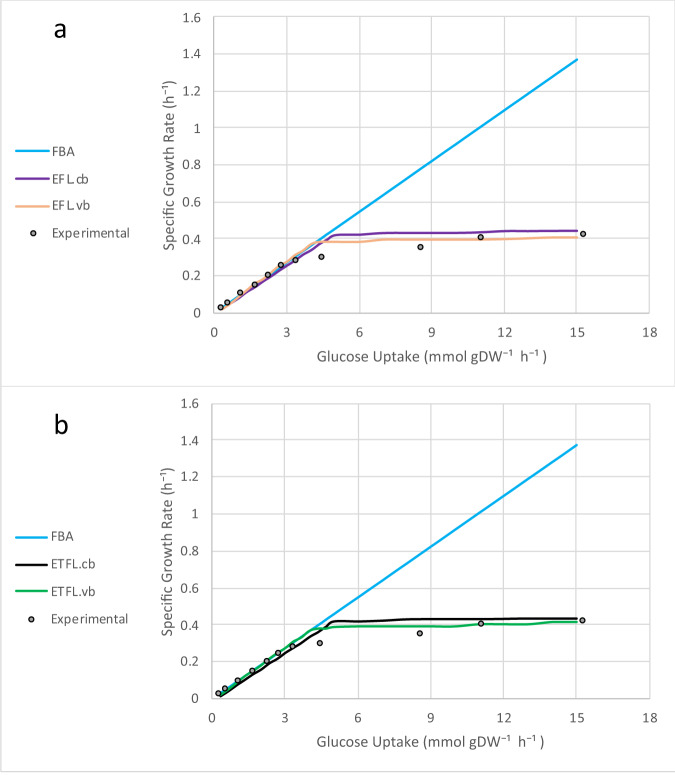
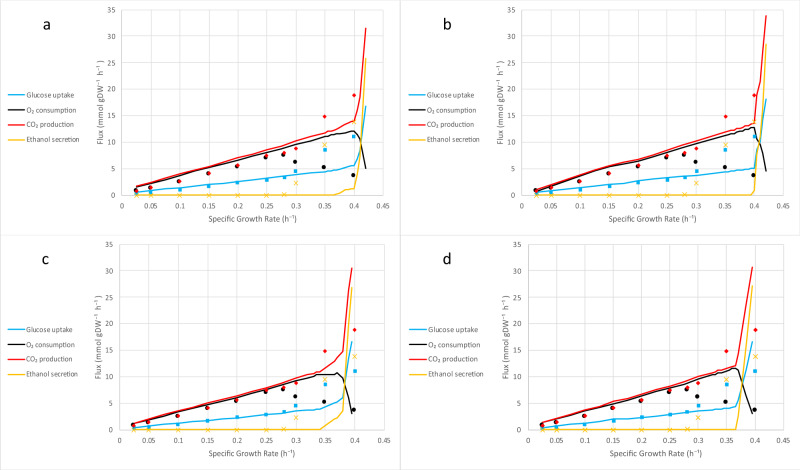
Eukaryotic organisms play an important role in industrial biotechnology, from the production of fuels and commodity chemicals to therapeutic proteins. To optimize these industrial systems, a mathematical approach can be used to integrate the description of multiple biological networks into a single model for cell analysis and engineering. One of the most accurate models of biological systems include Expression and Thermodynamics FLux (ETFL), which efficiently integrates RNA and protein synthesis with traditional genome-scale metabolic models. However, ETFL is so far only applicable for E. coli . To adapt this model for Saccharomyces cerevisiae , we developed yETFL, in which we augmented the original formulation with additional considerations for biomass composition, the compartmentalized cellular expression system, and the energetic costs of biological processes. We demonstrated the ability of yETFL to predict maximum growth rate, essential genes, and the phenotype of overflow metabolism. We envision that the presented formulation can be extended to a wide range of eukaryotic organisms to the benefit of academic and industrial research.
Overview
The claims and statistics of this paper haven’t been checked yet.
Free: it reads the open-access text and checks the first 5 claims that cite a source we can check. Create a free account to check every claim.
Integrity signals
Registry
Cites
Statistics
Figures
Verification
Claims the paper makes
The claims and statistics of this paper haven’t been checked yet.
Free: it reads the open-access text and checks the first 5 claims that cite a source we can check. Create a free account to check every claim.
Claims other papers make about this one
Each is checked against this paper’s own text: does it say what the citing paper says it does?
The cited source says what the claim attributes to it.
In the citing paper
“k cat values are also important parameters in other resource allocation models such as proteome-constrained GEMs 51-53 and metabolism/macromolecular-expression models 7,54,55 .”
From Deep learning-based kcat prediction enables improved enzyme-constrained model reconstruction (2022) · cites this paper as [54]
Self-check
Percentages, sums and reported differences re-computed from the paper’s own numbers.
The self-check needs the paper’s full text.
Citations
Cites
KEGG: Kyoto Encyclopedia of Genes and Genomes
Kanehisa, M. (2000) · Nucleic Acids Research · doi:10.1093/nar/28.1.27 · Cited by 37,077 · cited 2×
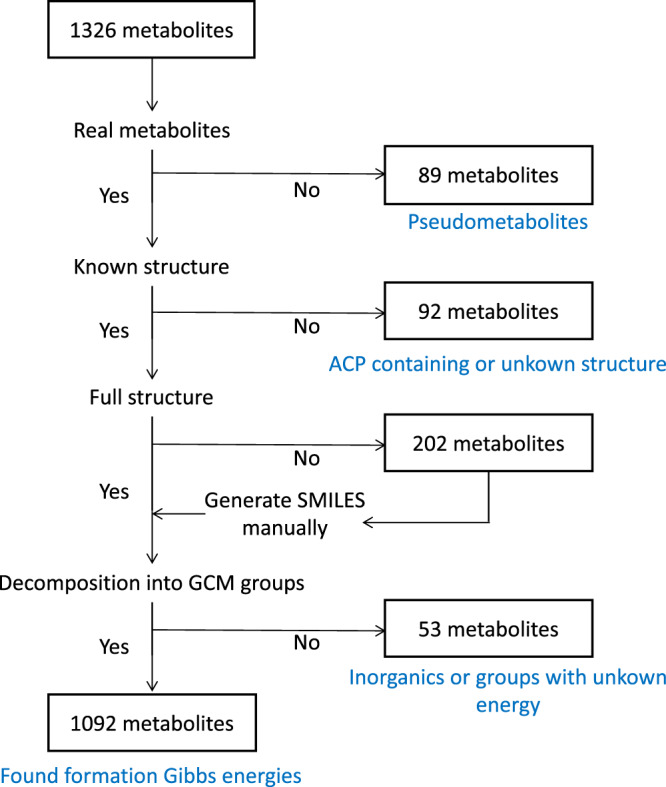
“Abbreviations: ACP: Acyl Carrier Protein; GCM: Group Contribution Method; SMILES: Simplified Molecular Input Line Entry System. mRNA, Peptide, and Protein Data The sequences for the peptides and mRNAs were obtained from the KEGG database39.”
MethodKEGG: Kyoto Encyclopedia of Genes and Genomes
Ogata, H., Goto, S., Sato, K., Fujibuchi, W., Bono, H., & Kanehisa, M. (1999) · Nucleic Acids Research · doi:10.1093/nar/27.1.29 · Cited by 31,232
Understanding the Warburg Effect: The Metabolic Requirements of Cell Proliferation
Vander Heiden, M. G., Cantley, L. C., & Thompson, C. B. (2009) · Science · doi:10.1126/science.1160809 · Cited by 16,197
Double-slit photoelectron interference in strong-field ionization of the neon dimer
Kunitski, M., Eicke, N., Huber, P., Köhler, J., Zeller, S., Voigtsberger, J., Schlott, N., Henrichs, K., Sann, H., Trinter, F., et al. (2019) · Nature Communications · doi:10.1038/s41467-018-07882-8 · Cited by 8,162
Double-slit photoelectron interference in strong-field ionization of the neon dimer
Kunitski, M., Eicke, N., Huber, P., Köhler, J., Zeller, S., Voigtsberger, J., Schlott, N., Henrichs, K., Sann, H., Trinter, F., et al. (2019) · Institutional Repository of Leibniz Universität Hannover (Leibniz Universität Hannover) · doi:10.15488/5174 · Cited by 8,161
Escherichia Coli and Salmonella: Typhimurium Cellular and Molecular Biology
Neidhardt, F. C., Ingraham, J. L., Low, K. B., Magasanik, B., Schaechter, M., & Umbarger, H. E. (1987) · Cited by 4,480
Escherichia Coli and Salmonella: Typhimurium Cellular and Molecular Biology
Neidhardt, F. C., & Ingraham, J. L. (1987) · Medical Entomology and Zoology · Cited by 4,089
What is flux balance analysis?
Orth, J. D., Thiele, I., & Palsson, B. Ø. (2010) · Nature Biotechnology · doi:10.1038/nbt.1614 · Cited by 3,903
THE GROWTH OF BACTERIAL CULTURES
Monod, J. (1949) · Annual Review of Microbiology · doi:10.1146/annurev.mi.03.100149.002103 · Cited by 3,707
Caspi, R., Billington, R., Ferrer, L., Foerster, H., Fulcher, C. A., Keseler, I. M., Kothari, A., Krummenacker, M., Latendresse, M., Mueller, L. A., et al. (2016) · Nucleic Acids Research · doi:10.1093/nar/gkv1164 · Cited by 3,395
D’Hulst, G., Soro-Arnaiz, I., Masschelein, E., Veys, K., Fitzgerald, G., Smeuninx, B., Kim, S., Deldicque, L., Blaauw, B., Carmeliet, P., et al. (2020) · Nature Communications · doi:10.1038/s41467-019-13889-6 · Cited by 2,310
Quantitative prediction of cellular metabolism with constraint-based models: the COBRA Toolbox v2.0
Schellenberger, J., Que, R., Fleming, R. M. T., Thiele, I., Orth, J. D., Feist, A. M., Zielinski, D. C., Bordbar, A., Lewis, N. E., Rahmanian, S., et al. (2011) · Nature Protocols · doi:10.1038/nprot.2011.308 · Cited by 1,835
A protocol for generating a high-quality genome-scale metabolic reconstruction
Thiele, I., & Palsson, B. Ø. (2010) · Nature Protocols · doi:10.1038/nprot.2009.203 · Cited by 1,789
COBRApy: COnstraints-Based Reconstruction and Analysis for Python
Ebrahim, A., Lerman, J. A., Palsson, B. O., & Hyduke, D. R. (2013) · BMC Systems Biology · doi:10.1186/1752-0509-7-74 · Cited by 1,378
Genome-Scale Reconstruction of the Saccharomyces cerevisiae Metabolic Network
Förster, J., Famili, I., Fu, P., Palsson, B. Ø., & Nielsen, J. (2003) · Genome Research · doi:10.1101/gr.234503 · Cited by 1,069
Kim, J. Y., Kim, Y.-G., & Lee, G. M. (2012) · Applied Microbiology and Biotechnology · doi:10.1007/s00253-011-3758-5 · Cited by 801
Current status and applications of genome-scale metabolic models
Gu, C., Kim, G. B., Kim, W. J., Kim, H. U., & Lee, S. Y. (2019) · Genome Biology · doi:10.1186/s13059-019-1730-3 · Cited by 785
Omic data from evolved E. coli are consistent with computed optimal growth from genome‐scale models
Lewis, N. E., Hixson, K. K., Conrad, T. M., Lerman, J. A., Charusanti, P., Polpitiya, A. D., Adkins, J. N., Schramm, G., Purvine, S. O., Lopez‐Ferrer, D., et al. (2010) · Molecular Systems Biology · doi:10.1038/msb.2010.47 · Cited by 753
Thermodynamics-Based Metabolic Flux Analysis
Henry, C. S., Broadbelt, L. J., & Hatzimanikatis, V. (2007) · Biophysical Journal · doi:10.1529/biophysj.106.093138 · Cited by 607
Differential influences of environment and self-motion on place and grid cell firing
Chen, G., Lu, Y., King, J. A., Cacucci, F., & Burgess, N. (2019) · Nature Communications · doi:10.1038/s41467-019-08550-1 · Cited by 585
Caspi, R., Foerster, H., Fulcher, C. A., Kaipa, P., Krummenacker, M., Latendresse, M., Paley, S., Rhee, S. Y., Shearer, A. G., Tissier, C., et al. (2007) · Nucleic Acids Research · doi:10.1093/nar/gkm900 · Cited by 582
Genome‐scale models of metabolism and gene expression extend and refine growth phenotype prediction
O'Brien, E. J., Lerman, J. A., Chang, R. L., Hyduke, D. R., & Palsson, B. Ø. (2013) · Molecular Systems Biology · doi:10.1038/msb.2013.52 · Cited by 471
Sánchez, B. J., Zhang, C., Nilsson, A., Lahtvee, P., Kerkhoven, E. J., & Nielsen, J. (2017) · Molecular Systems Biology · doi:10.15252/msb.20167411 · Cited by 466
Paxdb, a database of protein abundance averages across all three domains of life
Wang, M., Weiss, M., Simonovic, M., Haertinger, G., Schrimpf, S. P., Hengartner, M. O., & von Mering, C. (2012) · Molecular & Cellular Proteomics · doi:10.1074/mcp.o111.014704 · Cited by 466
Beg, Q. K., Vazquez, A., Ernst, J., de Menezes, M. A., Bar-Joseph, Z., Barabási, A.-L., & Oltvai, Z. N. (2007) · Proceedings of the National Academy of Sciences · doi:10.1073/pnas.0609845104 · Cited by 368
Lu, H., Li, F., Sánchez, B. J., Zhu, Z., Li, G., Domenzain, I., Marcišauskas, S., Anton, P. M., Lappa, D., Lieven, C., et al. (2019) · Nature Communications · doi:10.1038/s41467-019-11581-3 · Cited by 361
Gombert, A. K., Moreira dos Santos, M., Christensen, B., & Nielsen, J. (2001) · Journal of Bacteriology · doi:10.1128/jb.183.4.1441-1451.2001 · Cited by 348
Effect of Specific Growth Rate on Fermentative Capacity of Baker’s Yeast
Van Hoek, P., Van Dijken, J. P., & Pronk, J. T. (1998) · Applied and Environmental Microbiology · doi:10.1128/aem.64.11.4226-4233.1998 · Cited by 316
Reconstructing organisms in silico: genome-scale models and their emerging applications
Fang, X., Lloyd, C. J., & Palsson, B. O. (2020) · Nature Reviews Microbiology · doi:10.1038/s41579-020-00440-4 · Cited by 292
Advances in metabolic engineering of yeast Saccharomyces cerevisiae for production of chemicals
Borodina, I., & Nielsen, J. (2014) · Biotechnology Journal · doi:10.1002/biot.201300445 · Cited by 269
In silico method for modelling metabolism and gene product expression at genome scale
Lerman, J. A., Hyduke, D. R., Latif, H., Portnoy, V. A., Lewis, N. E., Orth, J. D., Schrimpe-Rutledge, A. C., Smith, R. D., Adkins, J. N., Zengler, K., et al. (2012) · Nature Communications · doi:10.1038/ncomms1928 · Cited by 266
Mavrovouniotis, M. L. (1990) · Biotechnology and Bioengineering · doi:10.1002/bit.260361013 · Cited by 236
Modeling of Overflow Metabolism in Batch and Fed-Batch Cultures of Escherichia coli
Xu, B., Jahic, M., & Enfors, S.-O. (1999) · Biotechnology Progress · doi:10.1021/bp9801087 · Cited by 233
Production of natural products through metabolic engineering of Saccharomyces cerevisiae
Krivoruchko, A., & Nielsen, J. (2015) · Current Opinion in Biotechnology · doi:10.1016/j.copbio.2014.12.004 · Cited by 215
The list of cytoplasmic ribosomal proteins ofSaccharomyces cerevisiae
Planta, R. J., & Mager, W. H. (1998) · Yeast · doi:10.1002/(sici)1097-0061(19980330)14:5<471::aid-yea241>3.0.co;2-u · Cited by 214
Lange, H. C., & Heijnen, J. J. (2001) · Biotechnology and Bioengineering · doi:10.1002/bit.10054 · Cited by 194
Yarrowia lipolytica and Its Multiple Applications in the Biotechnological Industry
Gonçalves, F. A. G., Colen, G., & Takahashi, J. A. (2014) · The Scientific World Journal · doi:10.1155/2014/476207 · Cited by 180
COBRAme: A computational framework for genome-scale models of metabolism and gene expression
Lloyd, C. J., Ebrahim, A., Yang, L., King, Z. A., Catoiu, E., O’Brien, E. J., Liu, J. K., & Palsson, B. O. (2018) · PLOS Computational Biology · doi:10.1371/journal.pcbi.1006302 · Cited by 167 · cited 3×
“Since it was shown that including such processes does not impact the predictions of the model in the protein limitation studies [24], and the transcription initiation is more complex in eukaryotic organisms, we did not model them at this stage.”
BackgroundMethodInfluentialEnergy metabolism controls phenotypes by protein efficiency and allocation
Chen, Y., & Nielsen, J. (2019) · Proceedings of the National Academy of Sciences · doi:10.1073/pnas.1906569116 · Cited by 156
Aung, H. W., Henry, S. A., & Walker, L. P. (2013) · Industrial Biotechnology · doi:10.1089/ind.2013.0013 · Cited by 156
Understanding carbon catabolite repression in Escherichia coli using quantitative models
Kremling, A., Geiselmann, J., Ropers, D., & de Jong, H. (2014) · Trends in Microbiology · doi:10.1016/j.tim.2014.11.002 · Cited by 144
Yeast 5 – an expanded reconstruction of the Saccharomyces cerevisiae metabolic network
Heavner, B. D., Smallbone, K., Barker, B., Mendes, P., & Walker, L. P. (2012) · BMC Systems Biology · doi:10.1186/1752-0509-6-55 · Cited by 142
Karpinets, T. V., Greenwood, D. J., Sams, C. E., & Ammons, J. T. (2006) · BMC Biology · doi:10.1186/1741-7007-4-30 · Cited by 129
van Hoek, P., van Dijken, J. P., & Pronk, J. T. (2000) · Enzyme and Microbial Technology · doi:10.1016/s0141-0229(00)00164-2 · Cited by 124
Quantitative Physiology of Saccharomyces cerevisiae at Near-Zero Specific Growth Rates
Boender, L. G. M., de Hulster, E. A. F., van Maris, A. J. A., Daran-Lapujade, P. A. S., & Pronk, J. T. (2009) · Applied and Environmental Microbiology · doi:10.1128/aem.00429-09 · Cited by 122
Regulation of alcoholic fermentation in batch and chemostat cultures ofKluyveromyces lactis CBS 2359
Kiers, J., Zeeman, A.-M., Luttik, M., Thiele, C., Castrillo, J. I., Steensma, H. Y., Van Dijken, J. P., & Pronk, J. T. (1998) · Yeast · doi:10.1002/(sici)1097-0061(19980330)14:5<459::aid-yea248>3.0.co;2-o · Cited by 118
Mitochondrial ribosomal proteins (MRPs) of yeast
GRAACK, H.-R., & WITTMANN-LIEBOLD, B. (1998) · Biochemical Journal · doi:10.1042/bj3290433 · Cited by 116
The complex portal - an encyclopaedia of macromolecular complexes
Meldal, B. H. M., Forner-Martinez, O., Costanzo, M. C., Dana, J., Demeter, J., Dumousseau, M., Dwight, S. S., Gaulton, A., Licata, L., Melidoni, A. N., et al. (2015) · Nucleic Acids Research · doi:10.1093/nar/gku975 · Cited by 114
Alberty, R. A. (1998) · Archives of Biochemistry and Biophysics · doi:10.1006/abbi.1998.0638 · Cited by 107
Salvy, P., & Hatzimanikatis, V. (2020) · Nature Communications · doi:10.1038/s41467-019-13818-7 · Cited by 105
Self-citationHeavner, B. D., Smallbone, K., Price, N. D., & Walker, L. P. (2013) · Database · doi:10.1093/database/bat059 · Cited by 102
Standardizing biomass reactions and ensuring complete mass balance in genome-scale metabolic models
Chan, S. H. J., Cai, J., Wang, L., Simons-Senftle, M. N., & Maranas, C. D. (2017) · Bioinformatics · doi:10.1093/bioinformatics/btx453 · Cited by 98
pyTFA and matTFA: a Python package and a Matlab toolbox for Thermodynamics-based Flux Analysis
Salvy, P., Fengos, G., Ataman, M., Pathier, T., Soh, K. C., & Hatzimanikatis, V. (2019) · Bioinformatics · doi:10.1093/bioinformatics/bty499 · Cited by 98
Self-citationPredicting Gene Essentiality Using Genome-Scale in Silico Models
Joyce, A. R., & Palsson, B. Ø. (2008) · Methods in Molecular Biology™ · doi:10.1007/978-1-59745-321-9_30 · Cited by 87
The future of whole-cell modeling
Macklin, D. N., Ruggero, N. A., & Covert, M. W. (2014) · Current Opinion in Biotechnology · doi:10.1016/j.copbio.2014.01.012 · Cited by 80
Yeast Diversity in Human Welfare
Kunze, G., & Satyanarayana, T. (2017) · Springer eBooks · doi:10.1007/978-981-10-2621-8 · Cited by 75
Boundary-directed epitaxy of block copolymers
Jacobberger, R. M., Thapar, V., Wu, G., Chang, T., Saraswat, V., Way, A. J., Jinkins, K. R., Ma, Z., Nealey, P. F., Hur, S., et al. (2020) · Nature Communications · doi:10.1038/s41467-020-17938-3 · Cited by 61
Constraining the Flux Space Using Thermodynamics and Integration of Metabolomics Data
Soh, K. C., & Vassily Hatzimanikatis, A. (2014) · Methods in molecular biology · doi:10.1007/978-1-4939-1170-7_3 · Cited by 53
Salvy, P., & Hatzimanikatis, V. (2021) · Proceedings of the National Academy of Sciences · doi:10.1073/pnas.2013836118 · Cited by 51
Self-citationChowdhury, R., Chowdhury, A., & Maranas, C. D. (2015) · Metabolites · doi:10.3390/metabo5040536 · Cited by 51
Yuan, Q., Huang, T., Li, P., Hao, T., Li, F., Ma, H., Wang, Z., Zhao, X., Chen, T., & Goryanin, I. (2017) · PLOS ONE · doi:10.1371/journal.pone.0169437 · Cited by 46
Comprehensive understanding of Saccharomyces cerevisiae phenotypes with whole‐cell model WM_S288C
Ye, C., Xu, N., Gao, C., Liu, G., Xu, J., Zhang, W., Chen, X., Nielsen, J., & Liu, L. (2020) · Biotechnology and Bioengineering · doi:10.1002/bit.27298 · Cited by 42
Optlang: An algebraic modeling language for mathematical optimization
Jensen, K. L., Cardoso, J., & Sonnenschein, N. (2017) · The Journal of Open Source Software · doi:10.21105/joss.00139 · Cited by 35
Kasemets, K., Nisamedtinov, I., Laht, T.-M., Abner, K., & Paalme, T. (2007) · Antonie van Leeuwenhoek · doi:10.1007/s10482-007-9141-y · Cited by 34
Chiappino-Pepe, A., Pandey, V., Ataman, M., & Hatzimanikatis, V. (2017) · Current Opinion in Systems Biology · doi:10.1016/j.coisb.2017.01.007 · Cited by 16
Salvy, P., & Hatzimanikatis, V. (2020) · bioRxiv (Cold Spring Harbor Laboratory) · doi:10.1101/2020.07.15.204420 · Cited by 7
Self-citationInamdar, I. F., Salve, D., & Sahu, P. (2020) · National Journal of Community Medicine · doi:10.5455/njcm.20191229052524 · Cited by 2
Oftadeh, O., Salvy, P., Masid, M., Maxime, C., Mišković, L., & Vassily Hatzimanikatis, A. (2021) · Figshare · doi:10.5281/zenodo.4541576 · Cited by 1
Self-citationEPFL-LCSB/yetfl: First release of yETFL code
Oftadeh, O., Salvy, P., Masid, M., Maxime, C., Mišković, L., & Vassily Hatzimanikatis, A. (2021) · Zenodo (CERN European Organization for Nuclear Research) · doi:10.5281/zenodo.5095272 · Cited by 1
Self-citation
Research works printed but not linked: 1
- Oftadeh et al. A genome-scale metabolic model of Saccharomyces cerevisiae that integrates expression constraints and reaction thermodynamics. Zenodo, 10.5281/zenodo.5095273 (2021). PMC8352978 34373465 · DOI
Cited by
Deep learning-based kcat prediction enables improved enzyme-constrained model reconstruction
Li, F., Yuan, L., Lu, H., Li, G., Chen, Y., Engqvist, M. K. M., Kerkhoven, E. J., & Nielsen, J. (2022) · Nature Catalysis · doi:10.1038/s41929-022-00798-z · Cited by 466
“Nonetheless, k cat values are also important parameters in other resource allocation models such as proteome-constrained GEMs 51–53 and metabolism/macromolecular-expression models 7,54,55 .”
BackgroundMitochondrial ATP generation is more proteome efficient than glycolysis
Shen, Y., Dinh, H. V., Cruz, E. R., Chen, Z., Bartman, C. R., Xiao, T., Call, C. M., Ryseck, R.-P., Pratas, J., Weilandt, D., et al. (2024) · Nature Chemical Biology · doi:10.1038/s41589-024-01571-y · Cited by 116
Wang, Z., Wang, S., He, Q., Yang, X., Zhao, B., Zhang, H., & Deng, Y. (2025) · ISME Communications · doi:10.1093/ismeco/ycaf133 · Cited by 102
Li, F., Chen, Y., Qi, Q., Wang, Y., Yuan, L., Huang, M., Elsemman, I. E., Feizi, A., Kerkhoven, E. J., & Nielsen, J. (2022) · Nature Communications · doi:10.1038/s41467-022-30689-7 · Cited by 105
“Similar to the metabolic-expression (ME) model for Escherichia coli 18 and S. cerevisiae 19 , protein expression, translation, folding, and degradation were subsequentially added for all proteins in the model.”
MethodResultLi, F., Chen, Y., Qi, Q., Wang, Y., Yuan, L., Huang, M., Elsemman, I. E., Feizi, A., Kerkhoven, E. J., & Nielsen, J. (2021) · doi:10.1101/2021.10.16.464630 · Cited by 91
Metadata
- Authors
- Oftadeh, O., Salvy, P., Masid, M., Curvat, M., Miskovic, L., & Hatzimanikatis, V.
- Affiliations
- École Polytechnique Fédérale de Lausanne (CH)
- Venue
- Nature Communications
- Published
- 2021-08-09
- Volume
- 12
- Issue
- 1
- Pages
- 4790-4790
- ISSN
- 2041-1723 (ISSN-L)
- PMC
- PMC8352978
- OpenAlex
- W3189700398
- Cited by
- 99
- References
- 66
- Citations by year
- 2026: 13 · 2025: 23 · 2024: 21 · 2023: 19 · 2022: 17 · 2021: 6
- FWCI
- 4.94
- Type
- journal article
- Language
- en
- Open access
- gold
- doi.org
- Licence
- cc-by
- creativecommons.org/licenses/by/4.0 (tdm)
- creativecommons.org/licenses/by/4.0 (vor)
- Locations
- Nature Communications (publishedVersion, cc-by)
- bioRxiv (Cold Spring Harbor Laboratory) (acceptedVersion, cc-by-nc-nd)
- PubMed Central (publishedVersion, cc-by)
- PubMed (publishedVersion)
- RePEc: Research Papers in Economics (submittedVersion)
- DOAJ (DOAJ: Directory of Open Access Journals) (submittedVersion, cc-by-sa)
- Infoscience (Ecole Polytechnique Fédérale de Lausanne) (submittedVersion, cc-by-nc-nd)
- Funders
- National Science Foundation
- European Commission (814408, 675585, HORIZON2020, 722287)
- École Polytechnique Fédérale de Lausanne
- Schweizerischer Nationalfonds zur Förderung der Wissenschaftlichen Forschung (188623, 200021)
- Topics
- Life Sciences › Biochemistry, Genetics and Molecular Biology › Molecular Biology › Microbial Metabolic Engineering and Bioproduction
- Life Sciences › Biochemistry, Genetics and Molecular Biology › Molecular Biology › Gene Regulatory Network Analysis
- Life Sciences › Biochemistry, Genetics and Molecular Biology › Molecular Biology › Fungal and yeast genetics research
- Keywords
- Saccharomyces cerevisiae, genome-scale metabolic models, reaction thermodynamics, biomass composition, energetic cost, maximum growth rate, essential genes, overflow metabolism
- MeSH terms
- Biotechnology, Computer Simulation, Escherichia coli, Glucose, Models, Biological, Phenotype, Saccharomyces cerevisiae, Thermodynamics, Gene Expression Regulation, Fungal, Genome, Biomass, Metabolic Networks and Pathways, Metabolic Engineering
About these checks
Registry, retraction, Cites and statistics results are computed, not judged, with one exception: a printed reference that no index lists is read once by a model before it counts as a citation error. Claims are extracted by a model and kept only when their quote appears verbatim in the text; each cited source is then checked, with a model’s help, for whether it says what the claim relies on. Those verdicts can be wrong — read the claim’s quote and the cited source before relying on one.
Statistics and arithmetic are recomputed, not judged.
Confidence bands are shown only for fields calibrated on our annotated test set. None is calibrated yet, so no band is shown.
What counts as a claim ›How we measure confidence ›How we check this ›
Are you an author, or do you see a problem with this page? Request a review
Data sources
Bibliographic data: Semantic Scholar, OpenAlex, Crossref.
Contains information from the Semantic Scholar Academic Graph Datasets, made available under the ODC Attribution License (ODC-BY 1.0).
Semantic Scholar’s data is described in: Kinney, R., et al. (2023). The Semantic Scholar Open Data Platform. arXiv:2301.10140.
