

Professional actors demonstrate variability, not stereotypical expressions, when portraying emotional states in photographs
Open accessThe DOI matches its Crossref record; 93 of the 93 references it cites were found in a registry or an index.
Abstract
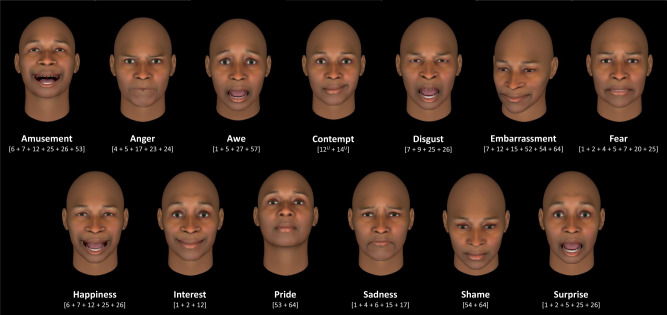
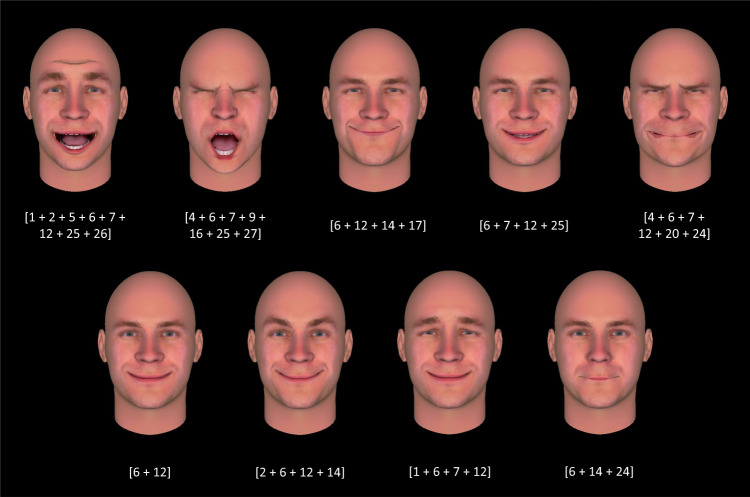
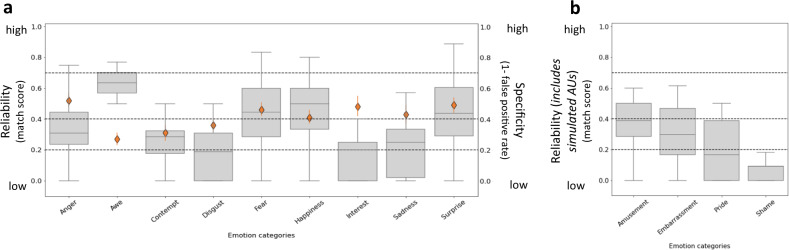
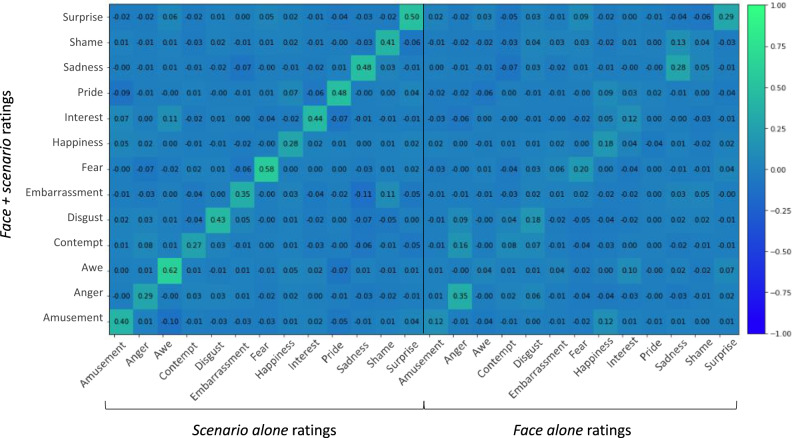
It is long hypothesized that there is a reliable, specific mapping between certain emotional states and the facial movements that express those states. This hypothesis is often tested by asking untrained participants to pose the facial movements they believe they use to express emotions during generic scenarios. Here, we test this hypothesis using, as stimuli, photographs of facial configurations posed by professional actors in response to contextually-rich scenarios. The scenarios portrayed in the photographs were rated by a convenience sample of participants for the extent to which they evoked an instance of 13 emotion categories, and actors’ facial poses were coded for their specific movements. Both unsupervised and supervised machine learning find that in these photographs, the actors portrayed emotional states with variable facial configurations; instances of only three emotion categories (fear, happiness, and surprise) were portrayed with moderate reliability and specificity. The photographs were separately rated by another sample of participants for the extent to which they portrayed an instance of the 13 emotion categories; they were rated when presented alone and when presented with their associated scenarios, revealing that emotion inferences by participants also vary in a context-sensitive manner. Together, these findings suggest that facial movements and perceptions of emotion vary by situation and transcend stereotypes of emotional expressions. Future research may build on these findings by incorporating dynamic stimuli rather than photographs and studying a broader range of cultural contexts.
Overview
The claims and statistics of this paper haven’t been checked yet.
Free: it reads the open-access text and checks the first 5 claims that cite a source we can check. Create a free account to check every claim.
Integrity signals
Registry
Cites
Statistics
Figures
Verification
Claims the paper makes
The claims and statistics of this paper haven’t been checked yet.
Free: it reads the open-access text and checks the first 5 claims that cite a source we can check. Create a free account to check every claim.
Claims other papers make about this one
Each is checked against this paper’s own text: does it say what the citing paper says it does?
The source backs part of the claim, not all of it — or backs it for a different population, condition or comparison.
In the citing paper
“The notion that discrete emotion categories can be reliably identified by specific behavioural patterns and/or physiological features has been seriously called into doubt by the marked variability within instances of the same category as well as similarities across categories.”
From A new science of emotion: implications for functional neurological disorder (2022) · cites this paper as [55]
Experimental — accuracy not yet measuredThe check wasn’t confident either way, so it gives no verdict — never disputed.
In the citing paper
“Even the supposed prototypic brain 'biomarkers' for a given emotion category vary substantially across studies, 65,[72][73][74][75][76] and across subjects within a given study.34,55,63,65,69,[77][78][79][80][81][82][83]”
From A new science of emotion: implications for functional neurological disorder (2022) · cites this paper as [55]
Experimental — accuracy not yet measured
Self-check
Percentages, sums and reported differences re-computed from the paper’s own numbers.
The self-check needs the paper’s full text.
Citations
Cites
SciPy 1.0: fundamental algorithms for scientific computing in Python
Virtanen, P., Gommers, R., Oliphant, T. E., Haberland, M., Reddy, T., Cournapeau, D., Burovski, E., Peterson, P., Weckesser, W., Bright, J., et al. (2020) · Nature Methods · doi:10.1038/s41592-019-0686-2 · Cited by 38,430
The expression of the emotions in man and animals.
Darwin, C. (1872) · J. Murray eBooks · doi:10.1037/10001-000 · Cited by 11,657
SciPy 1.0: fundamental algorithms for scientific computing in Python
Virtanen, P., Gommers, R., Oliphant, T. E., Haberland, M., Reddy, T., Cournapeau, D., Burovski, E., Peterson, P., Weckesser, W., Bright, J., et al. (2019) · Apollo - University of Cambridge Repository · doi:10.17863/cam.64134 · Cited by 10,460
Lucey, P., Cohn, J. F., Kanade, T., Saragih, J., Ambadar, Z., & Matthews, I. (2010) · 2010 IEEE Computer Society Conference on Computer Vision and Pattern Recognition - Workshops · doi:10.1109/cvprw.2010.5543262 · Cited by 4,303
Bayesian t tests for accepting and rejecting the null hypothesis
Rouder, J. N., Speckman, P. L., Sun, D., Morey, R. D., & Iverson, G. (2009) · Psychonomic Bulletin & Review · doi:10.3758/pbr.16.2.225 · Cited by 3,688
The NimStim set of facial expressions: Judgments from untrained research participants.
Tottenham, N., Tanaka, J. W., Leon, A. C., McCarry, T., Nurse, M., Hare, T. A., Marcus, D. J., Westerlund, A., Casey, B., & Nelson, C. (2009) · Psychiatry Research · doi:10.1016/j.psychres.2008.05.006 · Cited by 3,454
Murphy, G. L. (2002) · The MIT Press eBooks · doi:10.7551/mitpress/1602.001.0001 · Cited by 2,505
AffectNet: A Database for Facial Expression, Valence, and Arousal Computing in the Wild
Mollahosseini, A., Hasani, B., & Mahoor, M. H. (2019) · IEEE Transactions on Affective Computing · doi:10.1109/taffc.2017.2740923 · Cited by 2,338
On the universality and cultural specificity of emotion recognition: a meta-analysis
Elfenbein, H. A., & Ambady, N. (2002) · Psychological Bulletin · doi:10.1037/0033-2909.128.2.203 · Cited by 2,049
The Chicago face database: a free stimulus set of faces and norming data
Ma, D. S., Correll, J., & Wittenbrink, B. (2015) · Behavior Research Methods · doi:10.3758/s13428-014-0532-5 · Cited by 1,788
Research works printed but not linked: 9
- Fridlund, A. J. In The Science of Facial Expression (eds Fernández-Dols, J.-M. & Russell, J. A.) 77–92 (Oxford University Press, 2017).
- Ekman, P. & Friesen, W. V. Pictures of Facial Affect (Consulting Psychologists Press, Palo Alto, CA, 1976).
- Schatz, H. & Ornstein, B. J. In Character: Actors Acting (Bulfinch Press, 2006).
- Gendron, M., Mesquita, B. & Barrett, L. F. In Oxford Handbook of Cognitive Psychology (ed. Reisberg, D.) 379–389 (Oxford University Press, 2013).
- Ekman, P. & Friesen, W. V. Facial Action Coding (FACS) Manual (Consulting Psychologists Press, San Francisco, 1984).
- Hess, U. & Hareli, S. In The Science of Facial Expression (eds Fernandez-Dols, J. M. & Russell, J. A.) 375–396 (Oxford University Press, 2017).
- Scarantino, A. In The Psychological Construction of Emotion (eds Russell, J. A. & Barrett, L. F.) 334–376 (Guilford Press, 2015).
- Matsumoto, D., Keltner, D., Shiota, M. N., O’Sullivan, M. & Frank, M. In Handbook of Emotions (eds Michael Lewis, M., Haviland-Jones, J. M., & Barrett, L. F.) 211–234 (Guildford Press, 2008).
- Keltner, D. & Cordaro, D. T. In The Science of Facial Expression (eds Fernández-Dols, J. M. & Russell, J. A.) 57–75 (Oxford University Press, 2015).
Cited by
A new science of emotion: implications for functional neurological disorder
Jungilligens, J., Paredes-Echeverri, S., Popkirov, S., Barrett, L. F., & Perez, D. L. (2022) · Brain · doi:10.1093/brain/awac204 · Cited by 164
Self-citationBarrett, L. F. (2022) · American Psychologist · doi:10.1037/amp0001054 · Cited by 152
“For example, study participants partially scowled about 35% of the time during instances of anger, similar to experienced actors in the Le Mau et al. (2021) study, which suggests that scowling is one expression of anger in certain situations but is not a prototype, because a majority (65”
BackgroundResultInfluentialSelf-citationAllostasis, action and affect in depression: Insights from the theory of constructed emotion
Shaffer, C., Westlin, C., Quigley, K. S., Whitfield-Gabrieli, S., & Barrett, L. F. (2022) · Annual Review of Clinical Psychology · doi:10.1146/annurev-clinpsy-081219-115627 · Cited by 94
Self-citationThe Theory of Constructed Emotion: More Than a Feeling
Barrett, L. F., Atzil, S., Bliss‐Moreau, E., Chanes, L., Gendron, M., Hoemann, K., Katsumi, Y., Kleckner, I. R., Lindquist, K. A., Quigley, K. S., et al. (2025) · Perspectives on Psychological Science · doi:10.1177/17456916251319045 · Cited by 88
“(Barrett, 2017a; Hoemann, Khan et al., 2020; Le Mau et al., 2021; Siegel et al., 2018; Westlin et al., 2023).”
Self-citationThe unbearable (technical) unreliability of automated facial emotion recognition
Cabitza, F., Campagner, A., & Mattioli, M. (2022) · Big Data & Society · doi:10.1177/20539517221129549 · Cited by 73
“Le Mau et al. (2021) similarly highlighted the use of the above-mentioned simple score as well as controversial (although widespread) reliability cutoff values (Barrett et al., 2019) (namely, no reliability for values below 0.2, weak reliability for values between 0.2 and 0.4, moderate reliability…”
BackgroundInfluentialCowen, A., Brooks, J. A., Prasad, G., Tanaka, M., Kamitani, Y., Kirilyuk, V., Somandepalli, K., Jou, B., Schroff, F., Adam, H., et al. (2024) · Frontiers in Psychology · doi:10.3389/fpsyg.2024.1350631 · Cited by 52
Acquiring Complex Communicative Systems: Statistical Learning of Language and Emotion
Ruba, A. L., Pollak, S. D., & Saffran, J. R. (2022) · Topics in Cognitive Science · doi:10.1111/tops.12612 · Cited by 49
Emotional event perception is related to lexical complexity and emotion knowledge
Li, Z., Lu, H., Liu, D., Yu, A. N. C., & Gendron, M. (2023) · Communications Psychology · doi:10.1038/s44271-023-00039-4 · Cited by 42
Self-citationGoel, S., Jara‐Ettinger, J., Ong, D. C., & Gendron, M. (2024) · Nature Communications · doi:10.1038/s41467-024-46670-5 · Cited by 38
“This task was identical to the joint-cue condition from Le Mauand colleagues ’ paper 24 .”
InfluentialSelf-citationHöfling, T. T. A., & Alpers, G. W. (2023) · Frontiers in Neuroscience · doi:10.3389/fnins.2023.1125983 · Cited by 36
HICEM: A High-Coverage Emotion Model for Artificial Emotional Intelligence
Wortman, B., & Wang, J. Z. (2023) · IEEE Transactions on Affective Computing · doi:10.1109/taffc.2023.3324902 · Cited by 27
“However, several studies[20],[21],[22]suggestfacialexpressionsaloneareinsuf-ficienttodifferentiateemotions.”
Artificial emotional intelligence beyond East and West
White, D., & Katsuno, H. (2022) · Internet Policy Review · doi:10.14763/2022.1.1618 · Cited by 25
Technical Design Space Analysis for Unobtrusive Driver Emotion Assessment Using Multi-Domain Context
Bethge, D., Coelho, L. F., Kosch, T., Murugaboopathy, S., von Zadow, U., Schmidt, A., & Große-Puppendahl, T. (2022) · Proceedings of the ACM on Interactive Mobile Wearable and Ubiquitous Technologies · doi:10.1145/3569466 · Cited by 22
“Facial expression recognition, a frequently used method to detect emotions in driving contexts, often performs poorly [23, 34].”
BackgroundMethodArtificial Intelligence and Applications
(2022) · doi:10.5121/csit.2022.1209 · Cited by 18
EmoSex: Emotion prevails over sex in implicit judgments of faces and voices.
Korb, S., Mikuš, N., Massaccesi, C., Grey, J., Duggirala, S. X., Kotz, S. A., & Méhu, M. (2023) · Emotion · doi:10.1037/emo0001089 · Cited by 18
Values, Ethics, Morals? On the Use of Moral Concepts in NLP Research
Vida, K., Simon, J., & Lauscher, A. (2023) · Findings of the Association for Computational Linguistics: EMNLP (Findings of EMNLP) · doi:10.18653/v1/2023.findings-emnlp.368 · Cited by 49
Ullstein, C., Engelmann, S., Papakyriakopoulos, O., Ikkatai, Y., Arnez-Jordan, N. P., Caleno, R., Mboya, B., Higuma, S., Hartwig, T., Yokoyama, H., et al. (2024) · ACM Conference on Fairness, Accountability, and Transparency (FAccT) · doi:10.1145/3630106.3659038 · Cited by 18
“…view of six basic emotions, studies from psychology and cognitive sciences indicate that facial expressions and the way people interpret emotions are influenced by the context, can be similar or dissimilar across regions and, thus, go beyond Ekman’s basic facial expressions of emotions [19, 55].”
BackgroundEcosystem-level Analysis of Deployed Machine Learning Reveals Homogeneous Outcomes
Toups, C., Bommasani, R., Creel, K., Bana, S., Jurafsky, D., & Liang, P. (2023) · neural information processing systems · doi:10.52202/075280-2228 · Cited by 36
Why the Single-N Design Should Be the Default in Affective Neuroscience
Fischer, H., Nilsson, M. E., & Ebner, N. C. (2023) · Affective Science · doi:10.1007/s42761-023-00182-5 · Cited by 15
“This perspective is in line with findings that emotion categories are populations of instances, and should therefore be studied as such (Siegel et al., 2018; Mau et al., 2021).”
ResultMechanisms for Affect Communication from Dance: A Mixed Methods Study
Stutesman, M. G., & Goldstein, T. R. (2023) · The Journal of Creative Behavior · doi:10.1002/jocb.622 · Cited by 16
A database of heterogeneous faces for studying naturalistic expressions
Long, H., Peluso, N., Baker, C. I., JAPEE, S. A., & Taubert, J. (2023) · Scientific Reports · doi:10.1038/s41598-023-32659-5 · Cited by 18
EmoCodes: a Standardized Coding System for Socio-emotional Content in Complex Video Stimuli
Camacho, M. C., Williams, E. M., Balser, D., Kamojjala, R., Sekar, N., Steinberger, D. C., Yarlagadda, S., Perlman, S. B., & Barch, D. M. (2022) · Affective Science · doi:10.1007/s42761-021-00100-7 · Cited by 15
“This threshold was determined based on previous literature indicating that categorical distinctions in emotion are often subtle and that people often disagree on what emotions are present even in controlled contexts (le Mau et al., 2021).”
MethodResultGülbetekin, E., Fidancı, A., Altun, E., Er, M. N., & Gürcan, E. (2023) · Asian Journal Of Social Psychology · doi:10.1111/ajsp.12570 · Cited by 13
The Role of Contextual Information in Classifying Spontaneous Social Laughter
Rychlowska, M., McKeown, G. J., Sneddon, I., & Curran, W. J. (2022) · Journal of Nonverbal Behavior · doi:10.1007/s10919-022-00412-7 · Cited by 14
Taubert, J., & JAPEE, S. A. (2024) · Journal of Cognitive Neuroscience · doi:10.1162/jocn_a_02108 · Cited by 10
Morningstar, M. A., Nault, D. R., Lundell-Creagh, R., & daSilva, E. B. (2025) · Affective Science · doi:10.1007/s42761-025-00316-x · Cited by 9
de la Harpe, S., Palermo, R., Brown, E., Fay, N., & Dawel, A. (2024) · Journal of Nonverbal Behavior · doi:10.1007/s10919-024-00463-y · Cited by 9
“For example, models/actors are often instructed to pose each of the basic expressions in research labs without feeling any real emotion (Ekman et al., 2002; Langner et al., 2010; Le Mau et al., 2021; Lundqvist et al., 2015).”
Self-citationIndividual differences in emotion prediction and implications for social success.
Barrick, E. M., Thornton, M. A., Zhao, Z., & Tamir, D. (2024) · Emotion · doi:10.1037/emo0001386 · Cited by 12
“Emotion judgements can be highly sensitive to contextual information from body language and gestures, tone of voice, cultural background, and situational variables (Cowen et al., 2021; Le Mau et al., 2021; Reschke & Walle, 2021).”
BackgroundThat's not a Good Idea: A Robot Changes Your Behavior Against Social Engineering
Pasquali, D., Kothig, A., Aroyo, A. M., Muñoz, J. E., Dautenhahn, K., Bencetti, S., Rea, F., & Sciutti, A. (2023) · International Conference on Human-Agent Interaction (HAI) · doi:10.1145/3623809.3623879 · Cited by 8
From Mask to Flesh and Back: A Semiotic Analysis of the Actor’s Face Between Theatre and Cinema
Beato, M. R. (2022) · Topoi · doi:10.1007/s11245-022-09808-y · Cited by 8
An Exploratory Analysis of Interactive VR-Based Framework for Multi-Componential Analysis of Emotion
Somarathna, R., Bednarz, T. P., & Mohammadi, G. (2022) · IEEE International Conference on Pervasive Computing and Communications Workshops (PerCom Workshops) · doi:10.1109/percomworkshops53856.2022.9767281 · Cited by 11
The Role of Time in Facial Dynamics and Challenges in Automatic Emotion Recognition (2019–2024)
Contreras-Higuera, W., & Lanna, L. C. (2025) · Human Behavior and Emerging Technologies · doi:10.1155/hbe2/7777949 · Cited by 7
Real-life intense fear is communicated through context, not facial expressions
Lecker, M., Hallock, S., Danielson, A., Aertrickc, M. V., Kindt, M., & Aviezer, H. (2025) · Proceedings of the National Academy of Sciences · doi:10.1073/pnas.2414677122 · Cited by 7
Facial Expression Analysis Interpreting Emotion in Multicultural Settings
Siritanawan, P., Chaiyaroj, A., Tantawanich, P., Sirinaksomboon, K., & Kotani, K. (2023) · Annual Conference of the Society of Instrument and Control Engineers of Japan (SICE) · doi:10.23919/sice59929.2023.10354080 · Cited by 6
The Spatiotemporal Dynamics of Facial Movements Reveals the Left Side of a Posed Smile
Straulino, E., Scarpazza, C., Spoto, A., Betti, S., Barrientos, B. C., & Sartori, L. (2023) · Biology · doi:10.3390/biology12091160 · Cited by 7
“Furthermore, the manual procedure has recently been demonstrated to outperform the automated one [41].”
MethodDevelopment of the RIKEN database for dynamic facial expressions with multiple angles
Namba, S., Sato, W., Namba, S., Nomiya, H., Shimokawa, K., & Osumi, M. (2023) · Scientific Reports · doi:10.1038/s41598-023-49209-8 · Cited by 7
Interpretable Time-Dependent Convolutional Emotion Recognition with Contextual Data Streams
Bethge, D., Patsch, C., Hallgarten, P., & Kosch, T. (2023) · CHI Conference Extended Abstracts on Human Factors in Computing Systems (CHI EA) · doi:10.1145/3544549.3585672 · Cited by 6
“However, facial expressions can be misinterpreted without involving the user’s context [20] and subjective interpretation [23].”
BackgroundMultimodal Analysis of Emotions in Gaming: Understanding Cultural Influences
Gursesli, M. C., Tarchi, P., Calà, F., Frassineti, L., Guazzini, A., Duradoni, M., Park, K., Thawonmas, R., You, X., & Lanatà, A. (2026) · IEEE Transactions on Affective Computing · doi:10.1109/taffc.2026.3660362 · Cited by 6
“In addition, an experimental study with trained actors also demonstrates substantial variability in facial movements produced for the same emotion labels, supporting the idea that context strongly shapes how emotions are expressed and perceived [41].”
Hsu, C., Sato, W., & Yoshikawa, S. (2024) · PLoS ONE · doi:10.1371/journal.pone.0290765 · Cited by 7
Facial representations of complex affective states combining pain and a negative emotion
Tessier, M.-H., Mazet, J.-P., Gagner, E., Marcoux, A., & Jackson, P. L. (2024) · Scientific Reports · doi:10.1038/s41598-024-62423-2 · Cited by 7
Spatio-Temporal Properties of Amused, Embarrassed, and Pained Smiles
Namba, S., Sato, W., & Matsui, H. (2022) · Journal of Nonverbal Behavior · doi:10.1007/s10919-022-00404-7 · Cited by 5
“Although recent research encoding aspects of facial expressions has relied on static facial images (e.g., Le Mau et al., 2021; Sato et al., 2019a), the present study suggests that it is challenging to identify differences among emotion categories based only on static morphological properties,…”
BackgroundThe portrait of Dorian Gray: spontaneous expression of happiness is an invariant kinematic marker
Straulino, E., Scarpazza, C., Miolla, A., Spoto, A., Betti, S., & Sartori, L. (2025) · Frontiers in Psychology · doi:10.3389/fpsyg.2025.1546418 · Cited by 4
Kostick, K. M., Hurley, M. E., Ayaz, S., Herrington, J. D., Zampella, C., Parish‐Morris, J., Tunç, B., Lázaro‐Muñoz, G., Blumenthal‐Barby, J., & Storch, E. A. (2025) · JMIR Mental Health · doi:10.2196/79182 · Cited by 6
“This caution echoes the “Theory of Constructed Emotion” proposed by Barrett et al [53] and supported by like-minded scholars [54-57], who challenge the classical view that emotions are biologically hard-wired states expressed through universal behavioral markers.”
de Araujo, H. F., Nunes, F. L. S., & Machado‐Lima, A. (2022) · ACM Symposium on Applied Computing · doi:10.1145/3477314.3507268 · Cited by 5
Visual Privacy: Current and Emerging Regulations Around Unconsented Video Analytics in RetailPreprint
Pletcher, S. N. (2022) · OSF Preprints (OSF Preprints) · doi:10.31219/osf.io/tfw96 · Cited by 5
“…have been made that raw video data can now provide a host of other attributes such as existence of physical or mental health issues, emotional state or future job performance despite mixed evidence for their veracity (Harwell, 2022; Le Mau et al., 2021; Luo et al., 2019; Martinez-Martin, 2019).”
BackgroundThe inadequacy of normative ratings for building stimulus sets in affective science.
Westlin, C., McVeigh, K., Korogodsky, I., Fernando-McKinley, G., Erdogmus, D., Barrett, L. F., & Satpute, A. B. (2026) · Emotion · doi:10.1037/emo0001554 · Cited by 3
Self-citationMazzocconi, C., Petrone, C., & Champagne‐Lavau, M. (2024) · Journal of Pragmatics · doi:10.1016/j.pragma.2024.11.009 · Cited by 2
Lanna, L. C., Palmero, C., Escalera, S., & Puertas, E. (2025) · International Journal of Child-Computer Interaction · doi:10.1016/j.ijcci.2025.100790 · Cited by 2
Fang, L., Zhu, Y., Li, J., Fang, C., Xu, Y., & Wang, S. J. (2026) · International Journal of Human-Computer Interaction · doi:10.1080/10447318.2026.2643359 · Cited by 5
Facial analysis AI as social pseudotechnology
Seppälä, P., & Hirvonen, I. (2026) · European Journal for Philosophy of Science · doi:10.1007/s13194-026-00732-1 · Cited by 3
“They concluded that the expected standard expressions of emotions vary considerably culturally and contextually, and even across people in similar situations (Barrett et al., 2019 ; Crivelli et al., 2016 ; Le Mau et al., 2021 ).”
Spatiotemporal dynamics and substates underlie emotional signalling in facial movements
Cuve, H. C., Sowden, S., & Cook, J. L. (2026) · Scientific Reports · doi:10.1038/s41598-026-46726-0 · Cited by 2
Words matter when inferring emotions: a conceptual replication and extension
Ventura‐Bort, C., Panza, D., & Weymar, M. (2023) · Cognition & Emotion · doi:10.1080/02699931.2023.2183491 · Cited by 2
“…facial posing was done by professional actors and actresses for whom “their success involves authentic portrayal of emotional experiences in movies, television and theatre, such as their acted facial movement are perceived as believable with highly informational value” (cf. Le Mau et al., 2021).”
BackgroundInfluentialBruno, L., Cuéllar, A. I., Pasikowski, S., & Lindquist, K. A. (2024) · Pulso Revista de educación · doi:10.58265/pulso.6633 · Cited by 2
“However, recent studies have opposed to these theories, showing that there are no definitive connections between certain facial expressions and specific emotions one may experience (Russell, Bachorowski, & Fernández-Dols, 2003, Sánchez Aragón et al., 2011), and that a certain facial expression is not always accompanie…”
BackgroundWallman-Jones, A., Palser, E. R., Noohi, F., Zhang, B. Y., Veziris, C. R., Gerenza, A. K., Martinez-Arroyo, A. I., Shabash, M., Roy, A. R. K., Holley, S. R., et al. (2025) · Journal of Nonverbal Behavior · doi:10.1007/s10919-025-00490-3 · Cited by 2
“The facial behaviors that arise during emo - tions have predictable components as well as flexible elements that vary across people and contexts (Elfenbein et al., 2007 ; Gendron et al., 2014; Jack et al., 2014; Le Mau et al., 2021 ).”
Rethinking Ethics for an Era of Trusted Computational Tools
Kostick, K. M., Hurley, M. E., Herrington, J. D., & Storch, E. A. (2025) · Psychiatric Clinics of North America · doi:10.1016/j.psc.2025.08.016 · Cited by 2
Research Agenda for Speaker Authentication
van Rensburg, E. O. J., Botha, R. A., & Haskins, B. (2024) · IFIP advances in information and communication technology · doi:10.1007/978-3-031-72559-3_19 · Cited by 1
Why Internal Representations and Their Temporal Dependence Matter for Emotion Inference
Goel, S., & Gendron, M. (2025) · Emotion Review · doi:10.1177/17540739251379801 · Cited by 1
“First, there are abundant studies demonstrating that inferences of emotions from facial expressions are in fl uenced by contextual information (e.g., Aviezer et al., 2008; Le Mau et al., 2021).”
Self-citationScarpazza, C., Straulino, E., Sartori, L., & Cristaldi, F. D. P. (2026) · Scientific Reports · doi:10.1038/s41598-026-47026-3 · Cited by 1
“Nevertheless, we opted to combine kinematic analysis with manual rather than automated FACS coding because, as highlighted in a recent study 46 , manual coding continues to outperform automated methods for detecting subtle facial movements.”
Adolescents and Adults Use Different Facial Movements and Vocal Cues to Express Emotions
Nault, D. R., Robichaud, S., & Morningstar, M. A. (2026) · Developmental Science · doi:10.1111/desc.70234 · Cited by 1
Ullstein, C., Hohendanner, M., Großklags, J., Babalola, O., Onyekwelu, B. A., Katirai, A., Ozaki, A., Kuribayashi, J., Ema, A., Sharma, N., et al. (2026) · Proceedings of the ACM on Human-Computer Interaction · doi:10.1145/3816960 · Cited by 1
Individualized Emotion Recognition through Dual- Representations and Group-Established Ground Truth
Zhang, V. (2022) · doi:10.5121/csit.2022.120904 · Cited by 1
People optimally and flexibly process emotional information across multiple modalitiesPreprint
Ong, D. C., Jospe, K., Reddan, M. C., Wu, Z., Kahhalé, I., Chen, P., Perry, A., & Zaki, J. (2023) · PsyArXiv (OSF Preprints) · doi:10.31234/osf.io/5pr6w · Cited by 1
Exploring Theory-Laden Observations in the Brain Basis of Emotional ExperiencePreprint
Westlin, C., Singh, A., Erdogmus, D., Stratis, G., & Barrett, L. F. (2025) · PsyArXiv (OSF Preprints) · doi:10.31234/osf.io/hbg6k · Cited by 1
Self-citationIndividualized Emotion Recognition through Dual-representations and Group-established Ground Truth
Zhang, V. (2022) · IEEE International Conference on Pervasive Computing and Communications Workshops (PerCom Workshops) · doi:10.1109/percomworkshops53856.2022.9767488
“Thus, there is a potential to create a more effective emotion recognition system by combining the two models.”
BackgroundMultimodal continuous emotion analysis
Zhang, S. (2023) · DR-NTU (Nanyang Technological University) · doi:10.32657/10356/166783 · Cited by 1
Nasir, M., Sonawane, K., Bekkanti, N., & Talamonti, W. J. (2023) · Proceedings of the Human Factors and Ergonomics Society Annual Meeting · doi:10.1177/21695067231192630
“Most of the emotion SDKs are trained on image dataset, often using actors and there is a growing body literature questioning the use of acted emotions as being representative of real emotions (Le Mau et al , 2021).”
BackgroundModels of Human Emotion and Artificial Emotional Intelligence
Wortman, B. (2023) · Springer eBooks · doi:10.1007/978-3-031-50269-9_1
Predicting emotions across schizotypy levels
Barrick, E. M., Tamir, D., & Lincoln, S. H. (2025) · Schizophrenia Research · doi:10.1016/j.schres.2025.05.002
Moses, J. A., Lehrfield, A., Lupo, A., Fraczek, N., & Wagner, J. (2025) · Social Development · doi:10.1111/sode.12810
Structured variation in daily life experience within and across individuals.
Deming, P., Khan, Z., Hoemann, K., Marino, L., Runyun, Ş. L., Kross, Z., Gao, Y., Cory, L., Nielson, C., Feldman, M. J., et al. (2026) · Emotion · doi:10.1037/emo0001745
Self-citationCui, B. H., & Bex, P. J. (2025) · bioRxiv (Cold Spring Harbor Laboratory) · doi:10.1101/2025.10.23.683781
A New Paradigm of Business Computing Driven by Domain-specific Foundation Models
Yang, S., Jin, J., & Pan, Y. (2025) · 中国科学基金 · doi:10.3724/bnsfc-2025.06.12.0004
Ecosystem-level Analysis of Deployed Machine Learning Reveals Homogeneous Outcomes
Toups, C., Bommasani, R., Creel, K., Bana, S., Jurafsky, D., & Liang, P. (2023) · Chapman University Digital Commons (Chapman University) · Cited by 4
A computational framework for emotion understanding
Houlihan, S. D. (2022) · DSpace@MIT (Massachusetts Institute of Technology) · Cited by 4
Cui, B. H., & Bex, P. J. (2025) · bioRxiv (Cold Spring Harbor Laboratory) · doi:10.1101/2025.10.23.683775
Bhowmik, A. K. (2026) · Wiley eBooks · doi:10.1002/9781119615996.ch15
Cui, B. H., & Bex, P. J. (2026) · bioRxiv (Cold Spring Harbor Laboratory) · doi:10.64898/2026.06.01.729421
Is Emotional Expression Perceived? The Effect of Positive Emoji Position on Attentional Bias
Zhang, X., Han, Y., Tang, Z., & Zhang, X. (2026) · Mass Communication & Society · doi:10.1080/15205436.2026.2695144
Developing Empathy Quest: A Digital Game Based Learning Tool About Teachers’ Emotional Intelligence
Torre, S., Armigero, O. R. M., Ochner, V., Montalesi, F., Leone, C., Romagnolo, G., & Ligorio, M. B. (2026) · Education Sciences · doi:10.3390/educsci16081272
Psychological perspectives on acting, redux
Goldstein, T. R. (2026) · Current Opinion in Psychology · doi:10.1016/j.copsyc.2026.102408
The Theory of Constructed Emotion Extended
(2026) · Japanese Journal of Physiological Psychology and Psychophysiology · doi:10.5674/jjppp.2603ci
Investigating How Modality, Age, and Social Context Influence Nonverbal Emotional Communication
Nault, D. R. (2026) · QSpace (Queen's University Library)
Siebert, R., Taubert, N., Giese, M. A., & Thier, P. (2026) · Animal Cognition · doi:10.1007/s10071-026-02109-6
“This notion has only recently been questioned, with growing acknowl-edgement of the amenability of facial expressions to cultural learning and modulation by individual variation and context (e.g. Barrett et al. 2019; Durán and Fernández-Dols 2021; Le Mau et al. 2021; Valente et al. 2018).”
Socially embedded predictive construction: a model of emotional experience
Grimaldi, R. (2026) · Academia Neuroscience and Brain Research · doi:10.20935/acadneurosci8594
What can machine learning discover about the nature of emotion?
McVeigh, K., Smart, A., Satpute, A. B., Quigley, K. S., Theriault-Brown, J. E., & Barrett, L. F. (2026) · Trends in Cognitive Sciences · doi:10.1016/j.tics.2026.09.007
Self-citationCowen, A. S., Brooks, J. A., Prasad, G., Tanaka, M., Kamitani, Y., Kirilyuk, V., Somandepalli, K., Jou, B., Schroff, F., Adam, H., et al. (2024) · doi:10.3389/fpsyg.2024.1350631.s002
Metadata
- Authors
- Le Mau, T., Hoemann, K., Lyons, S. H., Fugate, J. M. B., Brown, E. N., Gendron, M., & Barrett, L. F.
- Affiliations
- KU Leuven (BE)
- University of Pennsylvania (US)
- University of Massachusetts Dartmouth (US)
- Massachusetts Institute of Technology (US)
- Yale University (US)
- Northeastern University (US)
- Corresponding author
- Barrett, Lisa Feldman
- Venue
- Nature Communications
- Published
- 2021-08-19
- Volume
- 12
- Issue
- 1
- Pages
- 5037-5037
- ISSN
- 2041-1723 (ISSN-L)
- PMC
- PMC8376986
- OpenAlex
- W3193736813
- Cited by
- 74
- References
- 93
- Citations by year
- 2026: 13 · 2025: 14 · 2024: 10 · 2023: 18 · 2022: 19
- FWCI
- 6.18
- Type
- journal article
- Language
- en
- Open access
- gold
- doi.org
- Licence
- cc-by
- creativecommons.org/licenses/by/4.0 (tdm)
- creativecommons.org/licenses/by/4.0 (vor)
- Locations
- Nature Communications (publishedVersion, cc-by)
- Europe PMC (PubMed Central) (publishedVersion, other-oa)
- PubMed Central (publishedVersion, cc-by)
- PubMed (publishedVersion)
- Lirias (submittedVersion, cc-by)
- RePEc: Research Papers in Economics (submittedVersion)
- DOAJ (DOAJ: Directory of Open Access Journals) (submittedVersion, cc-by-sa)
- DSpace@MIT (Massachusetts Institute of Technology) (submittedVersion, cc-by-nc)
- OSF Preprints (OSF Preprints) (submittedVersion)
- Funders
- U.S. Department of Health & Human Services | NIH | National Heart, Lung, and Blood Institute (F31 HL140943-01)
- U.S. Department of Health & Human Services | NIH | National Institute of General Medical Sciences (GM118629)
- JPB Foundation
- U.S. Department of Health & Human Services | NIH | National Institute of Mental Health (5 F32 MH105052, R01-MH113234, R01-MH109464)
- United States Department of Defense | United States Army | Army Research Institute for the Behavioral and Social Sciences (W911NF-16-1-019)
- U.S. Department of Health & Human Services | NIH | National Cancer Institute (U01-CA193632)
- National Science Foundation (Civil, Mechanical, and Manufacturing Innovation Grant 1638234)
- U.S. Department of Health & Human Services | NIH | National Eye Institute (R01-EY020834)
- Topics
- Life Sciences › Neuroscience › Cognitive Neuroscience › Face Recognition and Perception
- Physical Sciences › Computer Science › Artificial Intelligence › Emotion and Mood Recognition
- Social Sciences › Psychology › Experimental and Cognitive Psychology › Evolutionary Psychology and Human Behavior
- Keywords
- emotional facial expressions, facial motion, emotion perception, emotion classification, fear, happiness, surprise
- MeSH terms
- Adult, Emotions, Face, Facial Expression, Fear, Female, Happiness, Humans, Male, Stereotyped Behavior, Visual Perception, Reproducibility of Results, Cluster Analysis
About these checks
Registry, retraction, Cites and statistics results are computed, not judged, with one exception: a printed reference that no index lists is read once by a model before it counts as a citation error. Claims are extracted by a model and kept only when their quote appears verbatim in the text; each cited source is then checked, with a model’s help, for whether it says what the claim relies on. Those verdicts can be wrong — read the claim’s quote and the cited source before relying on one.
Statistics and arithmetic are recomputed, not judged.
Confidence bands are shown only for fields calibrated on our annotated test set. None is calibrated yet, so no band is shown.
What counts as a claim ›How we measure confidence ›How we check this ›
Are you an author, or do you see a problem with this page? Request a review
Data sources
Bibliographic data: Semantic Scholar, OpenAlex, Crossref.
Contains information from the Semantic Scholar Academic Graph Datasets, made available under the ODC Attribution License (ODC-BY 1.0).
Semantic Scholar’s data is described in: Kinney, R., et al. (2023). The Semantic Scholar Open Data Platform. arXiv:2301.10140.
