

A distributed fMRI-based signature for the subjective experience of fear
Open accessThe DOI matches its Crossref record; 72 of the 74 references it cites were found in a registry or an index.
Abstract
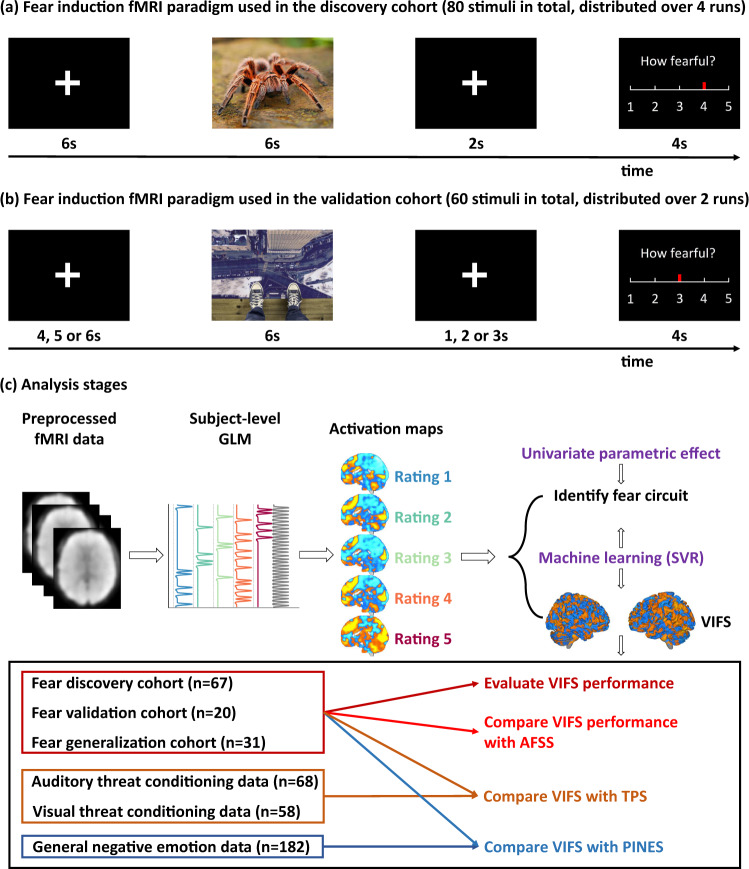
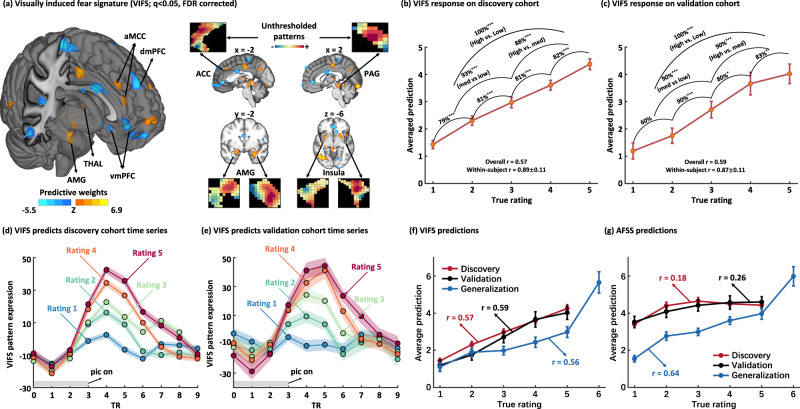
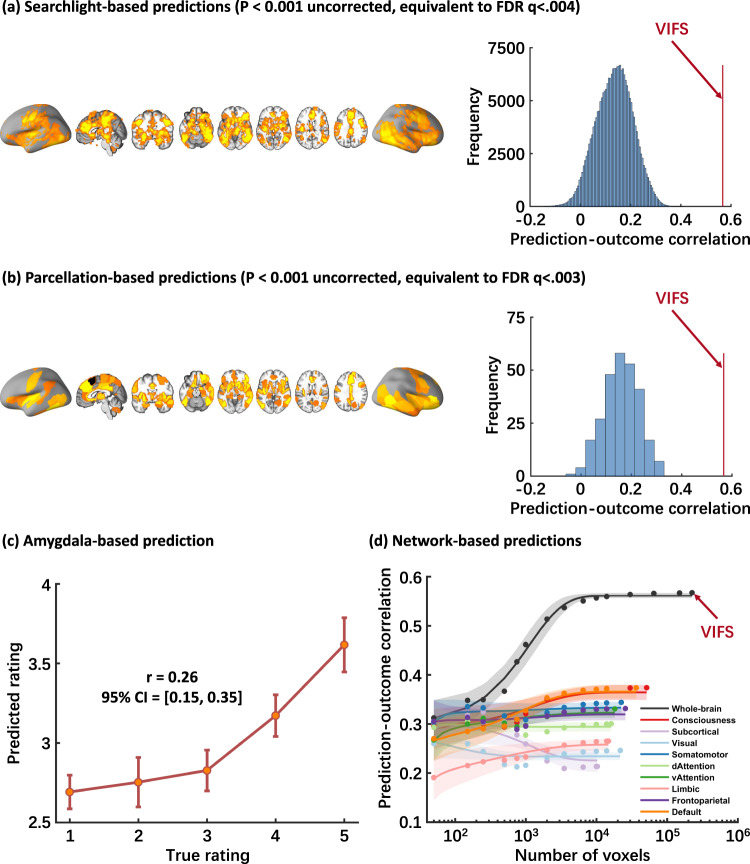
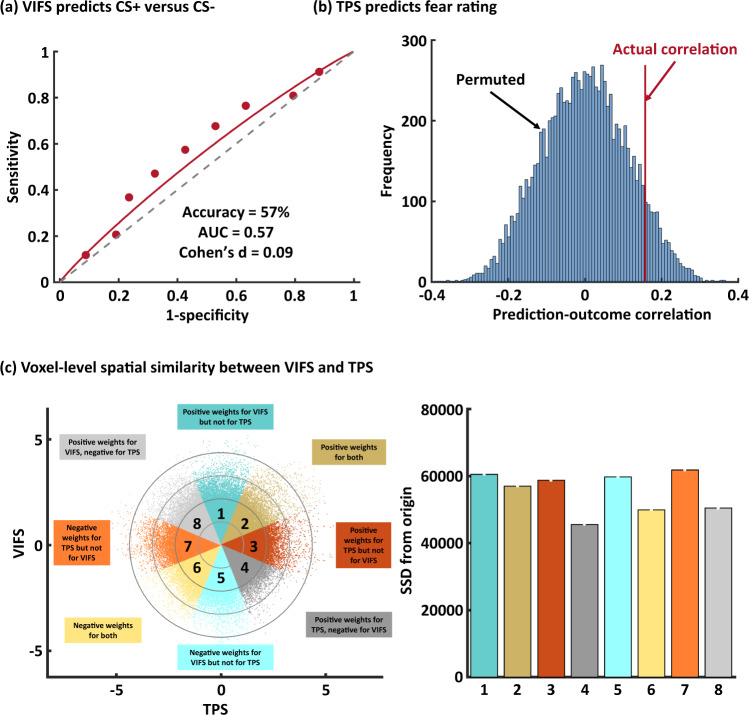
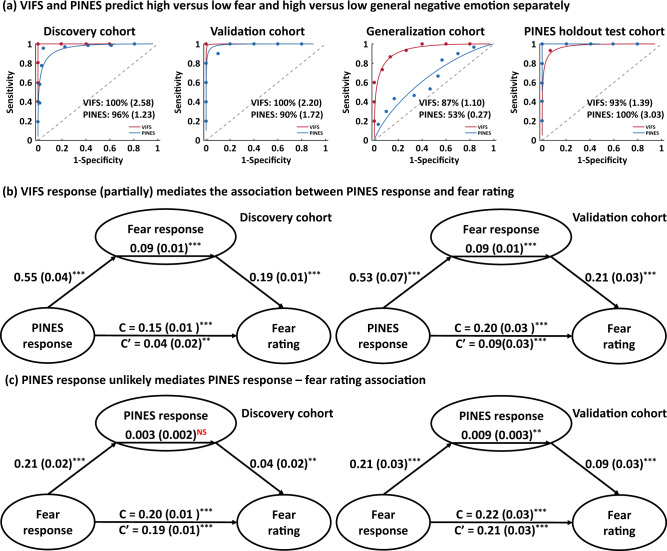
The specific neural systems underlying the subjective feeling of fear are debated in affective neuroscience. Here, we combine functional MRI with machine learning to identify and evaluate a sensitive and generalizable neural signature predictive of the momentary self-reported subjective fear experience across discovery (n = 67), validation (n = 20) and generalization (n = 31) cohorts. We systematically demonstrate that accurate fear prediction crucially requires distributed brain systems, with important contributions from cortical (e.g., prefrontal, midcingulate and insular cortices) and subcortical (e.g., thalamus, periaqueductal gray, basal forebrain and amygdala) regions. We further demonstrate that the neural representation of subjective fear is distinguishable from the representation of conditioned threat and general negative affect. Overall, our findings suggest that subjective fear, which exhibits distinct neural representation with some other aversive states, is encoded in distributed systems rather than isolated ‘fear centers’.
Overview
The claims and statistics of this paper haven’t been checked yet.
Free: it reads the open-access text and checks the first 5 claims that cite a source we can check. Create a free account to check every claim.
Integrity signals
Registry
Cites
Statistics
Figures
Verification
Claims the paper makes
The claims and statistics of this paper haven’t been checked yet.
Free: it reads the open-access text and checks the first 5 claims that cite a source we can check. Create a free account to check every claim.
Claims other papers make about this one
Each is checked against this paper’s own text: does it say what the citing paper says it does?
The source backs part of the claim, not all of it — or backs it for a different population, condition or comparison.
In the citing paper
“In early blocks of phobic stimuli, clearly visible exposure activated subcortical and cortical regions comprising the “fear network” (e.g., amygdala, hippocamus, thalamus, periaqueductal gray, brain stem, insula; Shin & Liberzon, 2010; Zhou, Zhao, Qi, Geng et al. 2021), including regions that have been shown to subserve the subjective experience of fear (middle frontal gyrus, dorsal medial PFC,”
From Advancing the treatment of anxiety disorders in transition‐age youth: a review of the therapeutic effects of unconscious exposure. (2025) · cites this paper as Zhou, Zhao, Qi, Geng et al. 2021
Experimental — accuracy not yet measuredThe source backs part of the claim, not all of it — or backs it for a different population, condition or comparison.
In the citing paper
“Even the supposed prototypic brain 'biomarkers' for a given emotion category vary substantially across studies, 65,[72][73][74][75][76] and across subjects within a given study.34,55,63,65,69,[77][78][79][80][81][82][83]”
From A new science of emotion: implications for functional neurological disorder (2022) · cites this paper as [76]
Experimental — accuracy not yet measured
Self-check
Percentages, sums and reported differences re-computed from the paper’s own numbers.
The self-check needs the paper’s full text.
Citations
Cites
The organization of the human cerebral cortex estimated by intrinsic functional connectivity
Thomas Yeo, B. T., Krienen, F. M., Sepulcre, J., Sabuncu, M. R., Lashkari, D., Hollinshead, M., Roffman, J. L., Smoller, J. W., Zöllei, L., Polimeni, J. R., et al. (2011) · Journal of Neurophysiology · doi:10.1152/jn.00338.2011 · Cited by 9,182
The organization of the human cerebellum estimated by intrinsic functional connectivity
Buckner, R. L., Krienen, F. M., Castellanos, A., Diaz, J. C., & Yeo, B. T. T. (2011) · Journal of Neurophysiology · doi:10.1152/jn.00339.2011 · Cited by 7,304
(1998) · Cited by 4,012
Large-scale automated synthesis of human functional neuroimaging data.
Yarkoni, T., Poldrack, R. A., Nichols, T. E., Van Essen, D. C., & Wager, T. D. (2011) · Nature Methods · doi:10.1038/nmeth.1635 · Cited by 3,686
Self-citationThe Human Brainnetome Atlas: A New Brain Atlas Based on Connectional Architecture
Fan, L., Li, H., Zhuo, J., Zhang, Y., Wang, J., Chen, L., Yang, Z., Chu, C., Xie, S., Laird, A. R., et al. (2016) · Cerebral Cortex · doi:10.1093/cercor/bhw157 · Cited by 2,998
The role of the amygdala in fear and anxiety
Davis, M. (1992) · Annual Review of Neuroscience · doi:10.1146/annurev.ne.15.030192.002033 · Cited by 2,357
The brain basis of emotion: a meta-analytic review
Lindquist, K. A., Wager, T. D., Kober, H., Bliss-Moreau, E., & Barrett, L. F. (2012) · Behavioral and Brain Sciences · doi:10.1017/s0140525x11000446 · Cited by 2,320
Self-citationCan cognitive processes be inferred from neuroimaging data?
POLDRACK, R. (2006) · Trends in Cognitive Sciences · doi:10.1016/j.tics.2005.12.004 · Cited by 2,249
Information-based functional brain mapping
Kriegeskorte, N., Goebel, R., & Bandettini, P. (2006) · Proceedings of the National Academy of Sciences · doi:10.1073/pnas.0600244103 · Cited by 2,113
The Neurocircuitry of Fear, Stress, and Anxiety Disorders
Shin, L. M., & Liberzon, I. (2010) · Neuropsychopharmacology · doi:10.1038/npp.2009.83 · Cited by 2,083
Research works printed but not linked: 2
- Clore, G. L. & Ortony, A. Appraisal theories: How cognition shapes affect into emotion. In Handbook of emotions (eds Lewis, M., Haviland-Jones, J. M. & Barrett, L. F.) (pp. 628-642) (The Guilford Press, New York City, 2008).
- Zhou, F. et al. Empathic pain evoked by sensory and emotional- communicative cues share common and process-specific neural representations. Elife 9, e56929 (2020). · DOI
Cited by
Du, Y., Li, B., Xu, G., & Wang, L. (2023) · InfoMat · doi:10.1002/inf2.12377 · Cited by 222
Putting the “mental” back in “mental disorders”: a perspective from research on fear and anxiety
Taschereau-Dumouchel, V., Michel, M., Lau, H., Hofmann, S. G., & LeDoux, J. E. (2022) · Molecular Psychiatry · doi:10.1038/s41380-021-01395-5 · Cited by 186
A new science of emotion: implications for functional neurological disorder
Jungilligens, J., Paredes-Echeverri, S., Popkirov, S., Barrett, L. F., & Perez, D. L. (2022) · Brain · doi:10.1093/brain/awac204 · Cited by 164
Grogans, S. E., Bliss‐Moreau, E., Buss, K. A., Clark, L. A., Fox, A. S., Keltner, D. J., Cowen, A., Kim, J. J., Kragel, P. A., MacLeod, C., et al. (2023) · Neuroscience & Biobehavioral Reviews · doi:10.1016/j.neubiorev.2023.105237 · Cited by 146
Surface decorated Ni sites for superior photocatalytic hydrogen production
Huang, W., Bo, T., Zuo, S., Wang, Y., Chen, J., Ould‐Chikh, S., Li, Y., Zhou, W., Zhang, J., & Zhang, H. (2022) · SusMat · doi:10.1002/sus2.76 · Cited by 110
Machine learning and artificial intelligence in neuroscience: A primer for researchers
Badrulhisham, F., Pogatzki-Zahn, E. M., Segelcke, D., Spisák, T., & Vollert, J. (2023) · Brain Behavior and Immunity · doi:10.1016/j.bbi.2023.11.005 · Cited by 127
Barrett, L. F. (2022) · American Psychologist · doi:10.1037/amp0001054 · Cited by 152
Wen, Z., Raio, C. M., Pace-Schott, E. F., Lazar, S. W., LeDoux, J. E., Phelps, E. A., & Milad, M. R. (2022) · Proceedings of the National Academy of Sciences · doi:10.1073/pnas.2204066119 · Cited by 80
Liu, X., Klugah‐Brown, B., Zhang, R., Chen, H., Zhang, J., & Becker, B. (2022) · Translational Psychiatry · doi:10.1038/s41398-022-02157-9 · Cited by 65
Self-citationSensing fear: Fast-and-precise threat evaluation in human sensory cortex
Li, W., & Keil, A. (2022) · Trends in Cognitive Sciences · doi:10.1016/j.tics.2023.01.001 · Cited by 77
Gan, X., Zhou, X., Li, J., Jiao, G., Jiang, X., Biswal, B. B., Yao, S., Klugah‐Brown, B., & Becker, B. (2022) · Neuroscience & Biobehavioral Reviews · doi:10.1016/j.neubiorev.2022.104553 · Cited by 61
Self-citationXu, S., Zhang, Z., Li, L., Zhou, Y., Lin, D., Zhang, M., Zhang, L., Huang, G., Liu, X., Becker, B., et al. (2023) · NeuroImage · doi:10.1016/j.neuroimage.2023.119941 · Cited by 58
Self-citationBiological markers and psychosocial factors predict chronic pain conditions
Fillingim, M., Tanguay-Sabourin, C., Parisien, M., Zare, A., Guglietti, G. V., Norman, J., Petre, B., Bortsov, A. V., Ware, M. A., Pérez, J., et al. (2025) · Nature Human Behaviour · doi:10.1038/s41562-025-02156-y · Cited by 71
Distributed neural representations of conditioned threat in the human brain
Wen, Z., Pace-Schott, E. F., Lazar, S. W., Rosén, J., Åhs, F., Phelps, E. A., LeDoux, J. E., & Milad, M. R. (2024) · Nature Communications · doi:10.1038/s41467-024-46508-0 · Cited by 56
Patterns of brain activity associated with nostalgia: a social-cognitive neuroscience perspective
Yang, Z., Wildschut, T., Izuma, K., Gu, R., Luo, Y. L. L., Cai, H., & Sedikides, C. (2022) · Social Cognitive and Affective Neuroscience · doi:10.1093/scan/nsac036 · Cited by 66
The Theory of Constructed Emotion: More Than a Feeling
Barrett, L. F., Atzil, S., Bliss‐Moreau, E., Chanes, L., Gendron, M., Hoemann, K., Katsumi, Y., Kleckner, I. R., Lindquist, K. A., Quigley, K. S., et al. (2025) · Perspectives on Psychological Science · doi:10.1177/17456916251319045 · Cited by 88
A neural signature for the subjective experience of threat anticipation under uncertainty
Liu, X., Jiao, G., Zhou, F., Kendrick, K. M., Yao, D., Gong, Q., Xiang, S., Jia, T., Zhang, X., Zhang, J., et al. (2024) · Nature Communications · doi:10.1038/s41467-024-45433-6 · Cited by 52
Self-citationPost-injury pain and behaviour: a control theory perspective
Seymour, B., Crook, R. J., & Chen, Z. S. (2023) · Nature reviews. Neuroscience · doi:10.1038/s41583-023-00699-5 · Cited by 45
On artificial intelligence and global mental health
Montag, C., Ali, R., Al‐Thani, D., & Hall, B. J. (2023) · Asian Journal of Psychiatry · doi:10.1016/j.ajp.2023.103855 · Cited by 45
Alternative splicing: An efficient regulatory approach towards plant developmental plasticity
Muhammad, S., Xu, X., Zhou, W., & Wu, L. (2022) · Wiley Interdisciplinary Reviews - RNA · doi:10.1002/wrna.1758 · Cited by 52
Zhang, R., Gan, X., Xu, T., Yu, F., Wang, L., Song, X., Jiao, G., Liu, X., Zhou, F., & Becker, B. (2025) · Nature Communications · doi:10.1038/s41467-025-61706-0 · Cited by 45
Self-citationGan, X., Zhou, F., Xu, T., Liu, X., Zhang, R., Zheng, Z., Yang, X., Zhou, X., Yu, F., Li, J., et al. (2024) · Nature Human Behaviour · doi:10.1038/s41562-024-01868-x · Cited by 37
Self-citationUnlocking the brain secrets of social media through neuroscience
Montag, C., Marciano, L., Schulz, P. J., & Becker, B. (2023) · Trends in Cognitive Sciences · doi:10.1016/j.tics.2023.09.005 · Cited by 39
Self-citationXu, T., Zhou, X., Kanen, J. W., Wang, L., Li, J., Chen, Z., Zhang, R., Jiao, G., Zhou, F., Zhao, W., et al. (2023) · Molecular Psychiatry · doi:10.1038/s41380-023-02001-6 · Cited by 23
Self-citationPain-preferential thalamocortical neural dynamics across species
Tu, Y., Li, Z., Zhang, L., Zhang, H., Bi, Y., Yue, L., & Hu, L. (2023) · Nature Human Behaviour · doi:10.1038/s41562-023-01714-6 · Cited by 32
Zhang, R., Zhao, W., Qi, Z., Xu, T., Zhou, F., & Becker, B. (2022) · Biological Psychiatry Cognitive Neuroscience and Neuroimaging · doi:10.1016/j.bpsc.2022.09.008 · Cited by 25
Self-citationHennings, A. C., Cooper, S. E., Lewis‐Peacock, J. A., & Dunsmoor, J. E. (2022) · Neuroscience & Biobehavioral Reviews · doi:10.1016/j.neubiorev.2022.104918 · Cited by 26
Johansson, E., Xiong, H.-Y., Polli, A., Coppieters, I., & Nijs, J. (2024) · Journal of Clinical Medicine · doi:10.3390/jcm13061645 · Cited by 27
Moughrabi, N., Botsford, C., Gruichich, T. S., Azar, A., Heilicher, M. O., Hiser, J., Crombie, K. M., Dunsmoor, J. E., Stowe, Z. N., & Cisler, J. M. (2022) · NeuroImage · doi:10.1016/j.neuroimage.2022.119709 · Cited by 23
Xu, T., Chen, Z., Zhou, X., Wang, L., Zhou, F., Yao, D., Zhou, B., & Becker, B. (2024) · Proceedings of the National Academy of Sciences · doi:10.1073/pnas.2306936121 · Cited by 19
Self-citationMetacognition as a window into subjective affective experience
Cushing, C. A., Lau, H. C., Hofmann, S. G., LeDoux, J. E., & Taschereau‐Dumouchel, V. (2024) · Psychiatry and Clinical Neurosciences · doi:10.1111/pcn.13683 · Cited by 22
Mori, K., & Haruno, M. (2022) · Human Brain Mapping · doi:10.1002/hbm.25822 · Cited by 16
A neural signature of social support mitigates negative emotion
Pei, R., Courtney, A. L., Ferguson, I., Brennan, C. M., & Zaki, J. (2023) · Scientific Reports · doi:10.1038/s41598-023-43273-w · Cited by 23
Lan, C., Liu, C., Li, K., Zhao, Z., Yang, J., Ma, Y., Scheele, D., Yao, S., Kendrick, K. M., & Becker, B. (2022) · The International Journal of Neuropsychopharmacology · doi:10.1093/ijnp/pyac037 · Cited by 20
Self-citationMcVeigh, K., Kleckner, I. R., Quigley, K. S., & Satpute, A. B. (2024) · Emotion · doi:10.1037/emo0001265 · Cited by 25
Understanding human brain function in real-world environments
Zhou, F., & Becker, B. (2025) · PLoS Biology · doi:10.1371/journal.pbio.3003210 · Cited by 15
Self-citationZhou, F., Zhang, R., Yao, S., Dong, D., Feng, P., Kranz, G. S., Feng, T., & Becker, B. (2025) · IEEE Transactions on Affective Computing · doi:10.1109/taffc.2025.3624391 · Cited by 13
Self-citationEmotion dynamics as hierarchical Bayesian inference in time
Majumdar, G., Yazin, F., Banerjee, A., & Roy, D. (2022) · Cerebral Cortex · doi:10.1093/cercor/bhac305 · Cited by 14
Revisiting sex differences in the acquisition and extinction of threat conditioning in humans
Wen, Z., Fried, J., Pace-Schott, E. F., Lazar, S. W., & Milad, M. R. (2022) · Learning & Memory · doi:10.1101/lm.053521.121 · Cited by 15
Wu, Y., Su, Y., Zhu, L.-L., Yan, C., Li, J., Lin, J., Chen, J., Chen, L., Li, K., Stein, D. J., et al. (2024) · Translational Psychiatry · doi:10.1038/s41398-024-02838-7 · Cited by 14
Cooper, S. E., Perkins, E. R., Webler, R. D., Dunsmoor, J. E., & Krueger, R. F. (2024) · Journal of Psychopathology and Clinical Science · doi:10.1037/abn0000945 · Cited by 17
Neural Predictors of Fear Depend on the Situation
Wang, Y., Kragel, P. A., & Satpute, A. B. (2024) · Journal of Neuroscience · doi:10.1523/jneurosci.0142-23.2024 · Cited by 24
Xu, T., Zhang, L., Zhou, F., Fu, K., Gan, X., Chen, Z., Zhang, R., Lan, C., Wang, L., Kendrick, K. M., et al. (2025) · Communications Biology · doi:10.1038/s42003-025-07561-7 · Cited by 15
Self-citationMa, C., Zhou, N., Ma, K., Niu, J., Mi, T., He, Z., Wen, Y., Liu, C., He, Z., & Niu, J. (2023) · Frontiers in Neuroscience · doi:10.3389/fnins.2023.1122803 · Cited by 11
Conceptual‐level disgust conditioning in contamination‐based obsessive‐compulsive disorder
Wang, J., Becker, B., Wang, Y., Ming, X., Lei, Y., & Wikgren, J. (2024) · Psychophysiology · doi:10.1111/psyp.14637 · Cited by 11
Self-citationFu, K., Xu, S., Zhang, Z., Liu, D. C., Xu, T., Zhang, Y., Zhou, F., Zhang, X., Lan, C., Wang, J., et al. (2025) · Advanced Science · doi:10.1002/advs.202503251 · Cited by 13
Self-citationMultivariate resting-state functional connectomes predict and characterize obesity phenotypes
Wang, J., Dong, D., Liu, Y., Yang, Y., Chen, X., He, Q., Lei, X., Feng, T., Qiu, J., & Chen, H. (2023) · Cerebral Cortex · doi:10.1093/cercor/bhad122 · Cited by 13
Zhang, M., Luo, Y., Wang, J., Sun, Y., Xie, B., Zhang, L., Cong, B., Ma, C., & Wen, D. (2023) · Journal of Psychiatric Research · doi:10.1016/j.jpsychires.2023.05.057 · Cited by 8
Fischbach, A. K., Satpute, A. B., Quigley, K. S., Kragel, P. A., Chen, D., Bianciardi, M., Wald, L. L., Wager, T. D., Choi, J., Zhang, J., et al. (2024) · Journal of Neuroscience · doi:10.1523/jneurosci.1757-23.2024 · Cited by 13
Self-citationLee, D., Guiomar, R. N. R. M., Gonçalves, Ó. F., Almeida, J., & Ganho-Ávila, A. (2022) · International Journal of Clinical and Health Psychology · doi:10.1016/j.ijchp.2022.100342 · Cited by 11
Binlateh, T., Hutamekalin, P., Yongsawatdigul, J., Yamabhai, M., & Jitprasertwong, P. (2023) · Journal of Biomedical Materials Research Part A · doi:10.1002/jbm.a.37561 · Cited by 8
Zhang, Y., Zhao, J., Huang, H., Zhang, Z., Wu, S., Qiu, J., & Wu, Y. J. (2024) · Bilingualism Language and Cognition · doi:10.1017/s1366728924000324 · Cited by 11
Horner, S., Lulla, R., Wu, H. M., Shaktivel, S., Vaccaro, A. G., Herschel, E., Christov‐Moore, L., McDaniel, C., Kaplan, J., & Greening, S. G. (2024) · Cognitive Affective & Behavioral Neuroscience · doi:10.3758/s13415-024-01232-6 · Cited by 11
Kwon, M., Bo, K., Botvinik‐Nezer, R., Kragel, P. A., Oudenhove, L. V., Wager, T. D., Ashar, Y. K., Atlas, L. Y., Barrett, L. F., Becker, B., et al. (2026) · Nature Communications · doi:10.1038/s41467-026-71568-9 · Cited by 10
Self-citationZhou, F., & Becker, B. (2025) · Current Opinion in Behavioral Sciences · doi:10.1016/j.cobeha.2025.101613 · Cited by 16
Self-citationKaźmierowska, A. M., Szczepanik, M., Wypych, M., Droździel, D., Marchewka, A., Michałowski, J. M., Olsson, A., & Knapska, E. (2022) · NeuroImage · doi:10.1016/j.neuroimage.2022.119648 · Cited by 12
Cain, C. K. (2023) · Current topics in behavioral neurosciences · doi:10.1007/7854_2023_434 · Cited by 13
Berman, T., Cushing, C. A., Manuel, S., Vachon‐Presseau, É., Cortese, A., Kawato, M., Woo, C., Wager, T. D., Lau, H. C., Roy, M., et al. (2024) · Philosophical Transactions of the Royal Society B Biological Sciences · doi:10.1098/rstb.2023.0082 · Cited by 9
Self-citationGan, X., Zhou, F., Xu, T., Liu, X., Zhang, R., Zheng, Z., Yang, X., Zhou, X., Yu, F., Li, J., et al. (2023) · bioRxiv (Cold Spring Harbor Laboratory) · doi:10.1101/2023.05.18.541259 · Cited by 8
Self-citationZhang, K., Klumpp, H., Jimmy, J., Phan, K. L., Milad, M. R., & Wen, Z. (2025) · JAMA Network Open · doi:10.1001/jamanetworkopen.2025.30008 · Cited by 8
Neurocognitive mechanisms of mental imagery-based disgust learning
Wang, J., Shen, S., Becker, B., Tsang, M. H. L., Mei, Y., Wikgren, J., & Lei, Y. (2024) · Behaviour Research and Therapy · doi:10.1016/j.brat.2024.104502 · Cited by 9
Self-citationNeural Patterns of Social Pain in the Brain‐Wide Representations Across Social Contexts
Zhang, X., Qing, P., Liu, Q., Liu, C., Liu, L., Gan, X., Fu, K., Lan, C., Zhou, X., Kendrick, K. M., et al. (2025) · Advanced Science · doi:10.1002/advs.202413795 · Cited by 10
Self-citationCisler, J. M., Tamman, A. J. F., & Fonzo, G. A. (2023) · Psychological Medicine · doi:10.1017/s0033291723000478 · Cited by 7
Automatic Brain Categorization of Discrete Auditory Emotion Expressions
Talwar, S., Barbero, F. M., Calce, R. P., & Collignon, O. (2023) · Brain Topography · doi:10.1007/s10548-023-00983-8 · Cited by 8
Cisler, J. M., Dunsmoor, J. E., Privratsky, A. A., & James, G. A. (2023) · Psychological Medicine · doi:10.1017/s0033291723002891 · Cited by 7
The Universality of Emotion: Perspectives from the Sciences and Humanities
Irish, B. J. (2025) · Cambridge University Press eBooks · doi:10.1017/9781009442534 · Cited by 11
Sleep deprivation altered encoding of basolateral amygdala on fear acquisition
Feng, P., Becker, B., Zhou, F., Feng, T., & Chen, Z. (2022) · Cerebral Cortex · doi:10.1093/cercor/bhac233 · Cited by 9
Self-citationDecoding threat neurocircuitry representations during traumatic memory recall in PTSD
Morris, K. A., Jaeb, M. A., Dunsmoor, J. E., Stowe, Z. N., & Cisler, J. M. (2024) · Neuropsychopharmacology · doi:10.1038/s41386-024-02028-5 · Cited by 8
Investigating the properties of fMRI-based signature of recognizing one’s own face
Knyazev, G. G., Savostyanov, A. N., Bocharov, A. V., Saprigyn, A. E., & Levin, E. A. (2024) · Biological Psychology · doi:10.1016/j.biopsycho.2024.108960 · Cited by 6
Gan, X., Zhang, R., Zheng, Z., Wang, L., Yang, X., Klugah‐Brown, B., Xu, T., Qiu, N., Kendrick, K. M., Mathiak, K., et al. (2025) · Neuroscience & Biobehavioral Reviews · doi:10.1016/j.neubiorev.2025.106356 · Cited by 8
Self-citationCommon and distinct neurofunctional signatures of dynamic naturalistic emotion regulation strategies
Jiang, H., He, J., Zimmermann, K., Zhou, X., Gan, X., Ferraro, S., Wang, L., Zhou, B., Li, L., Kendrick, K. M., et al. (2026) · Nature Communications · doi:10.1038/s41467-026-70708-5 · Cited by 15
Self-citationWang, Y., Becker, B., Wang, J., Wang, Y. Y., Zhang, L., Mei, Y., Li, H., & Lei, Y. (2024) · NeuroImage · doi:10.1016/j.neuroimage.2024.120645 · Cited by 6
Self-citationLiu, X., Becker, B., Wang, Y., Mei, Y., Dou, H., & Lei, Y. (2025) · npj Science of Learning · doi:10.1038/s41539-025-00318-1 · Cited by 4
Self-citationVaccaro, A. G., Heydari, P., Christov‐Moore, L., Damásio, A. R., & Kaplan, J. (2022) · Social Cognitive and Affective Neuroscience · doi:10.1093/scan/nsac035 · Cited by 8
A Voxel-Based Morphometric Study of Gray Matter in Specific Phobia
Rivero, F., Marrero, R. J., Olivares, T., Castro, W. P., Álvarez‐Pérez, Y., Pérez, J. M. B., & Fumero, A. (2022) · Life · doi:10.3390/life13010119 · Cited by 6
Liu, Y., Zhou, F., Zhang, R., & Feng, T. (2023) · Behavioural Brain Research · doi:10.1016/j.bbr.2023.114463 · Cited by 7
Self-citationWillems, A. L., Oudenhove, L. V., & Vervliet, B. (2025) · eLife · doi:10.1101/2023.08.15.553434 · Cited by 7
Interaction between the prefrontal and visual cortices supports subjective fear
Taschereau‐Dumouchel, V., Côté, M., Manuel, S., Valevicius, D., Cushing, C. A., Cortese, A., Kawato, M., & Lau, H. C. (2024) · Philosophical Transactions of the Royal Society B Biological Sciences · doi:10.1098/rstb.2023.0245 · Cited by 7
Insula uses overlapping codes for emotion in self and othersPreprint
Xiao, J., Adkinson, J. A., Allawala, A. B., Banks, G. P., Bartoli, E., Fan, X., Mocchi, M. M., Pascuzzi, B., Pulapaka, S., Franch, M. C., et al. (2024) · bioRxiv (Cold Spring Harbor Laboratory) · doi:10.1101/2024.06.04.596966 · Cited by 6
Jiang, H., He, J., Zimmermann, K., Zhou, X., Gan, X., Ferraro, S., Wang, L., Zhou, B., Li, L., Kendrick, K. M., et al. (2025) · medRxiv · doi:10.1101/2025.05.29.25328539 · Cited by 4
Self-citationImpact of trauma type on neural mechanisms of threat conditioning and its extinction
Moallem, B. I., Wen, Z., Hammoud, M. Z., Su, W., Pace-Schott, E. F., & Milad, M. R. (2024) · Journal of Psychiatric Research · doi:10.1016/j.jpsychires.2024.07.039 · Cited by 3
Franco, G. A. M., Jasinskaja‐Lahti, I., Aulbach, M. B., Harjunen, V. J., Peltola, A., Ravaja, N., Tassinari, M., Vainio, S., & Jääskeläinen, I. P. (2025) · NeuroImage · doi:10.1016/j.neuroimage.2025.121129 · Cited by 3
Development of pixel-based facial thermal image analysis for emotion sensing
Tang, B., Sato, W., Shimokawa, K., Hsu, C., & Kochiyama, T. (2025) · Computers in Human Behavior Reports · doi:10.1016/j.chbr.2025.100761 · Cited by 5
Liu, Q., Song, X., Zhou, X., Huang, L., Zhang, X., Wang, L., Zhu, S., Lan, C., Yang, W., & Zhao, W. (2023) · Psychoradiology · doi:10.1093/psyrad/kkad004 · Cited by 4
Self-citationAdams, T. G., Kelmendi, B., George, J. R., Forte, J., Hubert, T., Wild, H., Rippey, C. S., & Pittenger, C. (2023) · Neurobiology of Learning and Memory · doi:10.1016/j.nlm.2023.107825 · Cited by 5
Willems, A. L., Oudenhove, L. V., & Vervliet, B. (2025) · eLife · doi:10.7554/elife.91400 · Cited by 9
Morgenroth, E., Somarathna, R., Ville, D. V. D., Mohammadi, G., & Vuilleumier, P. O. (2024) · doi:10.31234/osf.io/qzdbu · Cited by 3
A Biomarker-Centric Framework for the Prediction of Future Chronic PainPreprint
Fillingim, M., Tanguay-Sabourin, C., Parisien, M., Zare, A., Guglietti, G. V., Norman, J., Petre, B., Bortsov, A. V., Ware, M. A., Pérez, J., et al. (2024) · medRxiv · doi:10.1101/2024.04.19.24306101 · Cited by 3
Siegel, P., & Peterson, B. S. (2025) · Journal of Child Psychology and Psychiatry · doi:10.1111/jcpp.14037 · Cited by 2
Kim, W., & Kim, M. J. (2024) · Psychological Medicine · doi:10.1017/s0033291724000473 · Cited by 3
Multi-voxel pattern analysis for developmental cognitive neuroscientists
Moreira, J. F. G., & Silvers, J. A. (2025) · Developmental Cognitive Neuroscience · doi:10.1016/j.dcn.2025.101555 · Cited by 3
Neural signatures underlying the effect of social structure on empathy and altruistic behaviors
Tian, X., Zheng, Z., Li, R., Luo, Y., & Feng, C. (2025) · NeuroImage · doi:10.1016/j.neuroimage.2025.121267 · Cited by 2
Endogenous opioid system modulates proximal and distal threat signals in the human brain
Seppälä, K., Putkinen, V., Harju, H., Rebelos, E., Hirvonen, J., Helin, S., Rajander, J., Karlsson, H. K., Saunavaara, J. P., Hyönä, J., et al. (2025) · Molecular Psychiatry · doi:10.1038/s41380-025-03385-3 · Cited by 3
Jiang, H., He, J., Zhou, B., Guo, Y., Gan, X., Fan, X., Wang, X., Ferraro, S., Vatansever, D., Kendrick, K. M., et al. (2026) · Journal of Affective Disorders · doi:10.1016/j.jad.2025.121145 · Cited by 2
Self-citationHuman superior colliculus pathways represent the form and motion of looming objects
Thieu, M. K., Sethi, M., Aberman, E., & Kragel, P. A. (2026) · Cell Reports · doi:10.1016/j.celrep.2026.117033 · Cited by 2
Yang, L., Vigotsky, A. D., Wu, B., Shen, B., Yan, Z., Apkarian, A. V., & Huang, L. (2022) · Frontiers in Network Physiology · doi:10.3389/fnetp.2022.992662 · Cited by 3
Shared and distinct neural signatures of feature and spatial attention
Yang, A., Jinhua, T., Wang, W., Liu, J., Zhou, L., & Zhou, K. (2025) · NeuroImage · doi:10.1016/j.neuroimage.2025.121296 · Cited by 2
An intracranial dissection of human escape circuits
Zhang, H., Cheng, J., Hu, K., Wang, F., Qi, S., Liu, Q., Yao, Y., Mobbs, D., & Wu, H. (2025) · Nature Communications · doi:10.1038/s41467-025-60666-9 · Cited by 3
From ancient fears to airborne threats: fMRI insights into neural fear responses
Rádlová, S., Pidnebesna, A., Chomik, A., Tomeček, D., Hlinka, J., Frynta, D., & Landová, E. (2025) · Brain and Cognition · doi:10.1016/j.bandc.2025.106371 · Cited by 3
Liu, X., Zhou, X., Zeng, Y., Li, J., Zhao, W., Xu, L., Zheng, X., Fu, M., Yao, S., Cannistraci, C. V., et al. (2022) · Brain Structure and Function · doi:10.1007/s00429-022-02462-5 · Cited by 3
Self-citation
Metadata
- Authors
- Zhou, F., Zhao, W., Qi, Z., Geng, Y., Yao, S., Kendrick, K. M., Wager, T. D., & Becker, B.
- Affiliations
- Dartmouth College (US)
- University of Electronic Science and Technology of China (CN)
- Corresponding author
- Wager, Tor D.
- Becker, Benjamin
- Venue
- Nature Communications
- Published
- 2021-11-17
- Volume
- 12
- Issue
- 1
- Pages
- 6643-6643
- ISSN
- 2041-1723 (ISSN-L)
- PMC
- PMC8599690
- OpenAlex
- W3214010604
- Cited by
- 155
- References
- 74
- Citations by year
- 2026: 28 · 2025: 37 · 2024: 33 · 2023: 30 · 2022: 27
- FWCI
- 11.83
- Type
- journal article
- Language
- en
- Open access
- gold
- doi.org
- Licence
- cc-by
- creativecommons.org/licenses/by/4.0 (tdm)
- creativecommons.org/licenses/by/4.0 (vor)
- Locations
- Nature Communications (publishedVersion, cc-by)
- PubMed Central (publishedVersion, cc-by)
- PubMed (publishedVersion)
- RePEc: Research Papers in Economics (submittedVersion)
- DOAJ (DOAJ: Directory of Open Access Journals) (submittedVersion, cc-by-sa)
- Funders
- China Postdoctoral Science Foundation (2018M643432)
- National Natural Science Foundation of China (31530032)
- U.S. Department of Health & Human Services | NIH | National Institute of Mental Health (R01MH076136, R01MH116026)
- National Key Research and Development Program of China
- Topics
- Life Sciences › Neuroscience › Cognitive Neuroscience › Memory and Neural Mechanisms
- Life Sciences › Neuroscience › Cognitive Neuroscience › Neural and Behavioral Psychology Studies
- Social Sciences › Psychology › Experimental and Cognitive Psychology › Anxiety, Depression, Psychometrics, Treatment, Cognitive Processes
- Keywords
- subjective fear, neural signatures, amygdala, thalamus, periaqueductal gray, insula, prefrontal cortex, midcingulate cortex, negative affect, aversive states, affective neuroscience
- MeSH terms
- Brain, Brain Mapping, Conditioning, Classical, Emotions, Fear, Female, Humans, Magnetic Resonance Imaging, Male, Nerve Net, Photic Stimulation, Reproducibility of Results, Cohort Studies, Young Adult
About these checks
Registry, retraction, Cites and statistics results are computed, not judged, with one exception: a printed reference that no index lists is read once by a model before it counts as a citation error. Claims are extracted by a model and kept only when their quote appears verbatim in the text; each cited source is then checked, with a model’s help, for whether it says what the claim relies on. Those verdicts can be wrong — read the claim’s quote and the cited source before relying on one.
Statistics and arithmetic are recomputed, not judged.
Confidence bands are shown only for fields calibrated on our annotated test set. None is calibrated yet, so no band is shown.
What counts as a claim ›How we measure confidence ›How we check this ›
Are you an author, or do you see a problem with this page? Request a review
Data sources
Bibliographic data: Semantic Scholar, OpenAlex, Crossref.
Contains information from the Semantic Scholar Academic Graph Datasets, made available under the ODC Attribution License (ODC-BY 1.0).
Semantic Scholar’s data is described in: Kinney, R., et al. (2023). The Semantic Scholar Open Data Platform. arXiv:2301.10140.
