

A distributed fMRI-based signature for the subjective experience of fear
Open accessThe DOI matches its Crossref record; 72 of the 74 references it cites were found in a registry or an index.
Abstract
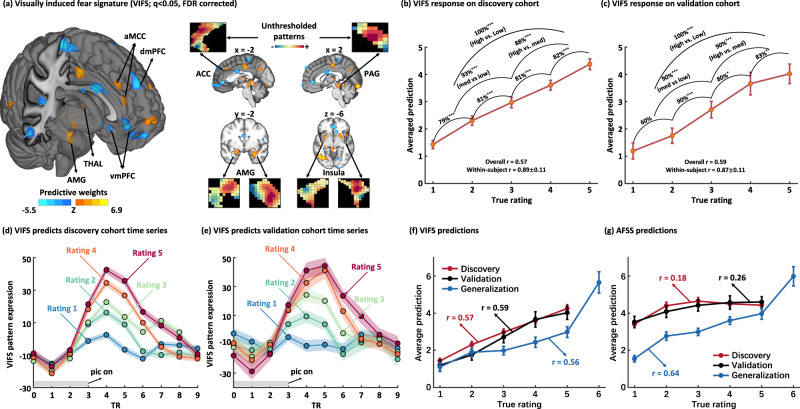
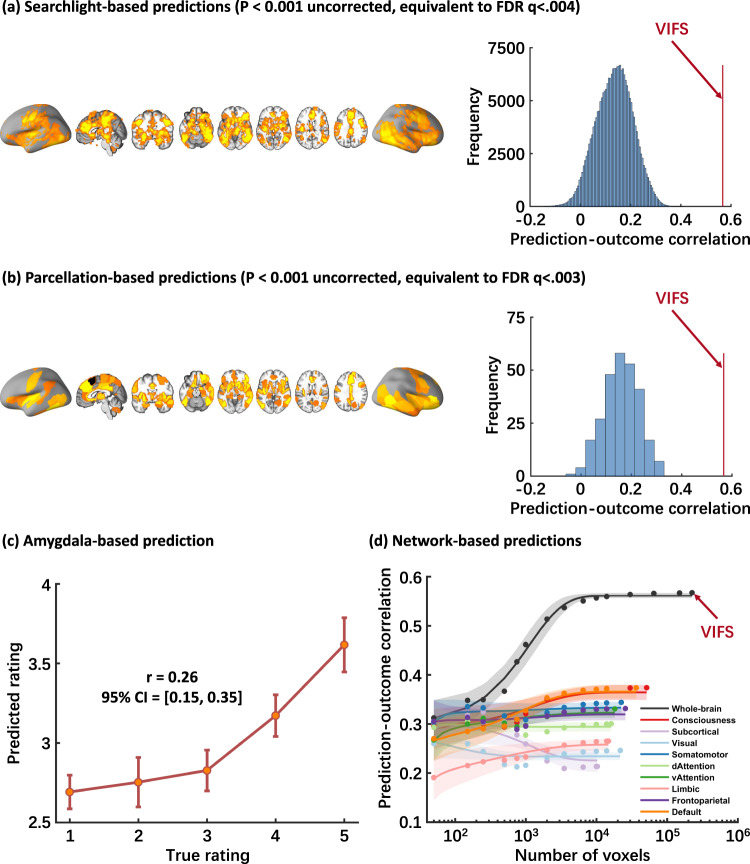
The specific neural systems underlying the subjective feeling of fear are debated in affective neuroscience. Here, we combine functional MRI with machine learning to identify and evaluate a sensitive and generalizable neural signature predictive of the momentary self-reported subjective fear experience across discovery (n = 67), validation (n = 20) and generalization (n = 31) cohorts. We systematically demonstrate that accurate fear prediction crucially requires distributed brain systems, with important contributions from cortical (e.g., prefrontal, midcingulate and insular cortices) and subcortical (e.g., thalamus, periaqueductal gray, basal forebrain and amygdala) regions. We further demonstrate that the neural representation of subjective fear is distinguishable from the representation of conditioned threat and general negative affect. Overall, our findings suggest that subjective fear, which exhibits distinct neural representation with some other aversive states, is encoded in distributed systems rather than isolated ‘fear centers’.
Overview
The claims and statistics of this paper haven’t been checked yet.
Free: it reads the open-access text and checks the first 5 claims that cite a source we can check. Create a free account to check every claim.
Integrity signals
Registry
Cites
Statistics
Figures
Verification
Claims the paper makes
The claims and statistics of this paper haven’t been checked yet.
Free: it reads the open-access text and checks the first 5 claims that cite a source we can check. Create a free account to check every claim.
Claims other papers make about this one
Each is checked against this paper’s own text: does it say what the citing paper says it does?
The source backs part of the claim, not all of it — or backs it for a different population, condition or comparison.
In the citing paper
“In early blocks of phobic stimuli, clearly visible exposure activated subcortical and cortical regions comprising the “fear network” (e.g., amygdala, hippocamus, thalamus, periaqueductal gray, brain stem, insula; Shin & Liberzon, 2010; Zhou, Zhao, Qi, Geng et al. 2021), including regions that have been shown to subserve the subjective experience of fear (middle frontal gyrus, dorsal medial PFC,”
From Advancing the treatment of anxiety disorders in transition‐age youth: a review of the therapeutic effects of unconscious exposure. (2025) · cites this paper as Zhou, Zhao, Qi, Geng et al. 2021
Experimental — accuracy not yet measuredThe source backs part of the claim, not all of it — or backs it for a different population, condition or comparison.
In the citing paper
“Even the supposed prototypic brain 'biomarkers' for a given emotion category vary substantially across studies, 65,[72][73][74][75][76] and across subjects within a given study.34,55,63,65,69,[77][78][79][80][81][82][83]”
From A new science of emotion: implications for functional neurological disorder (2022) · cites this paper as [76]
Experimental — accuracy not yet measured
Self-check
Percentages, sums and reported differences re-computed from the paper’s own numbers.
The self-check needs the paper’s full text.
Citations
Cites
The organization of the human cerebral cortex estimated by intrinsic functional connectivity
Thomas Yeo, B. T., Krienen, F. M., Sepulcre, J., Sabuncu, M. R., Lashkari, D., Hollinshead, M., Roffman, J. L., Smoller, J. W., Zöllei, L., Polimeni, J. R., et al. (2011) · Journal of Neurophysiology · doi:10.1152/jn.00338.2011 · Cited by 9,182
The organization of the human cerebellum estimated by intrinsic functional connectivity
Buckner, R. L., Krienen, F. M., Castellanos, A., Diaz, J. C., & Yeo, B. T. T. (2011) · Journal of Neurophysiology · doi:10.1152/jn.00339.2011 · Cited by 7,304
(1998) · Cited by 4,012
Large-scale automated synthesis of human functional neuroimaging data.
Yarkoni, T., Poldrack, R. A., Nichols, T. E., Van Essen, D. C., & Wager, T. D. (2011) · Nature Methods · doi:10.1038/nmeth.1635 · Cited by 3,686
Self-citationThe Human Brainnetome Atlas: A New Brain Atlas Based on Connectional Architecture
Fan, L., Li, H., Zhuo, J., Zhang, Y., Wang, J., Chen, L., Yang, Z., Chu, C., Xie, S., Laird, A. R., et al. (2016) · Cerebral Cortex · doi:10.1093/cercor/bhw157 · Cited by 2,998
The role of the amygdala in fear and anxiety
Davis, M. (1992) · Annual Review of Neuroscience · doi:10.1146/annurev.ne.15.030192.002033 · Cited by 2,357
The brain basis of emotion: a meta-analytic review
Lindquist, K. A., Wager, T. D., Kober, H., Bliss-Moreau, E., & Barrett, L. F. (2012) · Behavioral and Brain Sciences · doi:10.1017/s0140525x11000446 · Cited by 2,320
Self-citationCan cognitive processes be inferred from neuroimaging data?
POLDRACK, R. (2006) · Trends in Cognitive Sciences · doi:10.1016/j.tics.2005.12.004 · Cited by 2,249
Information-based functional brain mapping
Kriegeskorte, N., Goebel, R., & Bandettini, P. (2006) · Proceedings of the National Academy of Sciences · doi:10.1073/pnas.0600244103 · Cited by 2,113
The Neurocircuitry of Fear, Stress, and Anxiety Disorders
Shin, L. M., & Liberzon, I. (2010) · Neuropsychopharmacology · doi:10.1038/npp.2009.83 · Cited by 2,083
From circuits to behaviour in the amygdala
Janak, P. H., & Tye, K. M. (2015) · Nature · doi:10.1038/nature14188 · Cited by 2,011
Barrett, L. F. (2006) · Perspectives on Psychological Science · doi:10.1111/j.1745-6916.2006.00003.x · Cited by 1,859
Decoding subject-driven cognitive states with whole-brain connectivity patterns
Shirer, W. R., Ryali, S., Rykhlevskaia, E., Menon, V., & Greicius, M. D. (2012) · Cerebral Cortex · doi:10.1093/cercor/bhr099 · Cited by 1,843
Decoding the visual and subjective contents of the human brain
Kamitani, Y., & Tong, F. (2005) · Nature Neuroscience · doi:10.1038/nn1444 · Cited by 1,829
The Emotional Brain, Fear, and the Amygdala
LeDoux, J. (2003) · Cellular and Molecular Neurobiology · doi:10.1023/a:1025048802629 · Cited by 1,818
An fMRI-Based Neurologic Signature of Physical Pain
Wager, T. D., Atlas, L. Y., Lindquist, M. A., Roy, M., Woo, C.-W., & Kross, E. (2013) · New England Journal of Medicine · doi:10.1056/nejmoa1204471 · Cited by 1,597
Self-citationFear Extinction as a Model for Translational Neuroscience: Ten Years of Progress
Milad, M. R., & Quirk, G. J. (2012) · Annual Review of Psychology · doi:10.1146/annurev.psych.121208.131631 · Cited by 1,466
The theory of constructed emotion: an active inference account of interoception and categorization
Barrett, L. F. (2016) · Social Cognitive and Affective Neuroscience · doi:10.1093/scan/nsw154 · Cited by 1,426
Scanning the horizon: towards transparent and reproducible neuroimaging research
Poldrack, R. A., Baker, C. I., Durnez, J., Gorgolewski, K. J., Matthews, P. M., Munafò, M. R., Nichols, T. E., Poline, J.-B., Vul, E., & Yarkoni, T. (2017) · Nature Reviews Neuroscience · doi:10.1038/nrn.2016.167 · Cited by 1,410
On the interpretation of weight vectors of linear models in multivariate neuroimaging
Haufe, S., Meinecke, F., Görgen, K., Dähne, S., Haynes, J.-D., Blankertz, B., & Bießmann, F. (2014) · NeuroImage · doi:10.1016/j.neuroimage.2013.10.067 · Cited by 1,389
A mechanism for impaired fear recognition after amygdala damage
Adolphs, R., Gosselin, F., Buchanan, T. W., Tranel, D., Schyns, P., & Damasio, A. R. (2005) · Nature · doi:10.1038/nature03086 · Cited by 1,331
Variability in the analysis of a single neuroimaging dataset by many teams
(2020) · doi:10.1038/s41586-020-2314-9 · Cited by 1,097
Valsesia, A., Wang, Q.-P., Gheldof, N., Carayol, J., Ruffieux, H., Clark, T., Shenton, V., Oyston, L. J., Lefebvre, G., Metairon, S., et al. (2019) · Nature Communications · doi:10.1038/s41467-019-08492-8 · Cited by 1,073
Building better biomarkers: brain models in translational neuroimaging
Woo, C.-W., Chang, L. J., Lindquist, M. A., & Wager, T. D. (2017) · Nature Neuroscience · doi:10.1038/nn.4478 · Cited by 1,056
Self-citationUsing Neuroscience to Help Understand Fear and Anxiety: A Two-System Framework
LeDoux, J. E., & Pine, D. S. (2016) · American Journal of Psychiatry · doi:10.1176/appi.ajp.2016.16030353 · Cited by 1,035
The theory of constructed emotion: an active inference account of interoception and categorization
Barrett, L. F. (2017) · Social Cognitive and Affective Neuroscience · doi:10.1093/scan/nsx060 · Cited by 1,009 · cited 8×
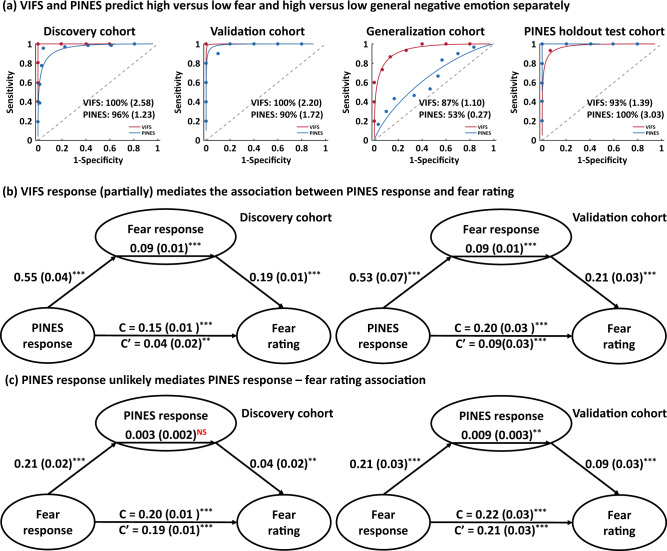
“, the PINES response; X) and fear ratings (Y) (our main hypothesis), and (2) as well as the alternative hypothesis of whether the general negative emotion response (M), which might represent the overarching emotional state of fear, mediates the association between fear signature (X) and fearful rating (Y).”
BackgroundMethodInfluentialWhen fear is near: threat imminence elicits prefrontal periaqueductal gray shifts in humans.
Mobbs, D., Petrovic, P., Marchant, J. L., Hassabis, D., Weiskopf, N., Seymour, B., Dolan, R. J., & Frith, C. D. (2007) · Science · doi:10.1126/science.1144298 · Cited by 951
Measuring functional connectivity during distinct stages of a cognitive task
Rissman, J., Gazzaley, A., & D'Esposito, M. (2004) · NeuroImage · doi:10.1016/j.neuroimage.2004.06.035 · Cited by 907
LeDoux, J. E. (2014) · Proceedings of the National Academy of Sciences · doi:10.1073/pnas.1400335111 · Cited by 891 · cited 3×
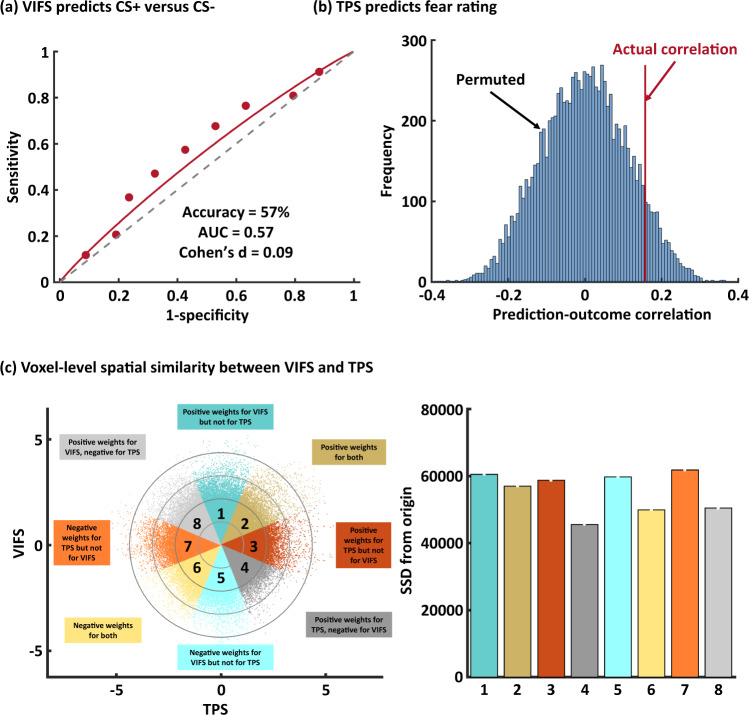
“The VIFS response was more strongly correlated with subjective fear (r78= 0.77) than any other emotional rating (disgust: r78= 0.64; anger: r78= 0.63; sadness: r78= 0.60; arousal: r78= 0.66; valence: r78= 0.65) suggesting that the VIFS indeed reacts most strongly (a) VIFS predicts CS+ versus CS- (b) TPS predicts fear…”
BackgroundInfluentialEmotion generation and emotion regulation: One or two depends on your point of view
Gross, J. J., & Feldman Barrett, L. (2011) · Emotion Review · doi:10.1177/1754073910380974 · Cited by 863 · cited 2×
“The VIFS response was more strongly correlated with subjective fear (r78= 0.77) than any other emotional rating (disgust: r78= 0.64; anger: r78= 0.63; sadness: r78= 0.60; arousal: r78= 0.66; valence: r78= 0.65) suggesting that the VIFS indeed reacts most strongly (a) VIFS predicts CS+ versus CS- (b) TPS predicts fear…”
BackgroundInfluentialRosenholtz, R., Li, Y., & Nakano, L. (2007) · Journal of Vision · doi:10.1167/7.2.17 · Cited by 796
Establishment of Best Practices for Evidence for Prediction: A Review
Poldrack, R. A., Huckins, G., & Varoquaux, G. (2020) · JAMA Psychiatry · doi:10.1001/jamapsychiatry.2019.3671 · Cited by 738
A higher-order theory of emotional consciousness
LeDoux, J. E., & Brown, R. (2017) · Proceedings of the National Academy of Sciences · doi:10.1073/pnas.1619316114 · Cited by 690
Gross, C. T., & Canteras, N. S. (2012) · Nature Reviews Neuroscience · doi:10.1038/nrn3301 · Cited by 596 · cited 2×
“The VIFS response was more strongly correlated with subjective fear (r78= 0.77) than any other emotional rating (disgust: r78= 0.64; anger: r78= 0.63; sadness: r78= 0.60; arousal: r78= 0.66; valence: r78= 0.65) suggesting that the VIFS indeed reacts most strongly (a) VIFS predicts CS+ versus CS- (b) TPS predicts fear…”
BackgroundInfluentialAdolphs, R. (2013) · Current Biology · doi:10.1016/j.cub.2012.11.055 · Cited by 524 · cited 1×
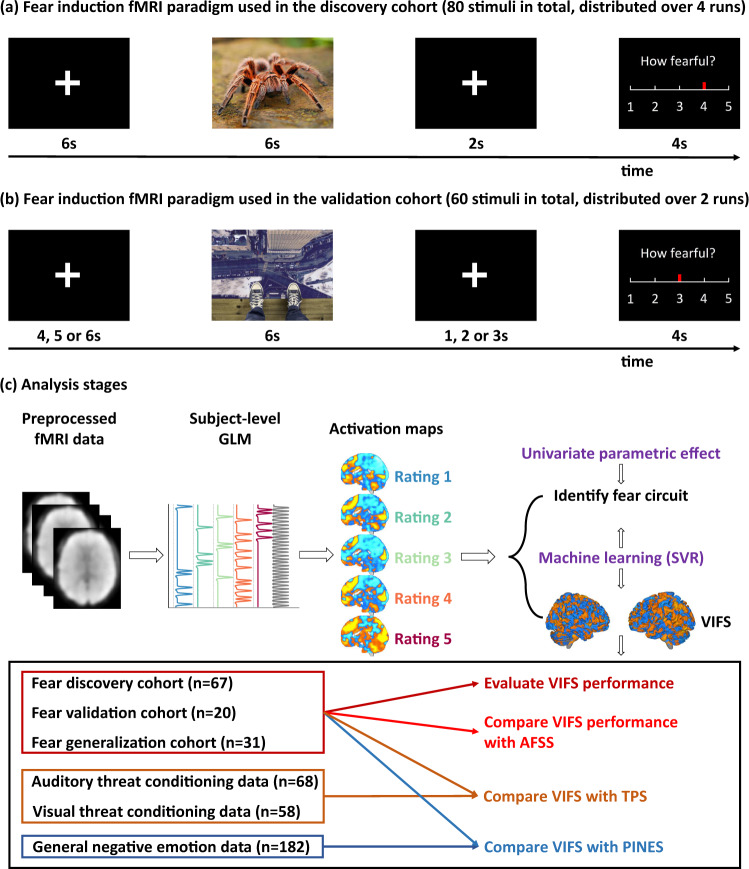
“Here, in the context of ongoing debates about the neural representations of fear, we capitalize on recent advances in MVPA-based neural decoding techniques to determine whether (1) it is possible to develop a sensitive and generalizable neural representation of the subjective fear experience on the population level, (…”
BackgroundThe ecology of human fear: survival optimization and the nervous system
Mobbs, D., Hagan, C. C., Dalgleish, T., Silston, B., & Prévost, C. (2015) · Frontiers in Neuroscience · doi:10.3389/fnins.2015.00055 · Cited by 498
The Human Amygdala and the Induction and Experience of Fear
Feinstein, J. S., Adolphs, R., Damasio, A., & Tranel, D. (2011) · Current Biology · doi:10.1016/j.cub.2010.11.042 · Cited by 497
Use of Structure Coefficients in Published Multiple Regression Articles: Β Is Not Enough
Courville, T., & Thompson, B. (2001) · Educational and Psychological Measurement · doi:10.1177/00131640121971211 · Cited by 459
Discrete Neural Signatures of Basic Emotions
Saarimäki, H., Gotsopoulos, A., Jääskeläinen, I. P., Lampinen, J., Vuilleumier, P., Hari, R., Sams, M., & Nummenmaa, L. (2016) · Cerebral Cortex · doi:10.1093/cercor/bhv086 · Cited by 458
Peelen, M. V., Wiggett, A. J., & Downing, P. E. (2006) · Neuron · doi:10.1016/j.neuron.2006.02.004 · Cited by 402
McTeague, L. M., Rosenberg, B. M., Lopez, J. W., Carreon, D. M., Huemer, J., Jiang, Y., Chick, C. F., Eickhoff, S. B., & Etkin, A. (2020) · American Journal of Psychiatry · doi:10.1176/appi.ajp.2019.18111271 · Cited by 388
Constructing constructs for psychopathology: The NIMH research domain criteria.
Cuthbert, B. N., & Kozak, M. J. (2013) · Journal of Abnormal Psychology · doi:10.1037/a0034028 · Cited by 367
Fear and panic in humans with bilateral amygdala damage
Feinstein, J. S., Buzza, C., Hurlemann, R., Follmer, R. L., Dahdaleh, N. S., Coryell, W. H., Welsh, M. J., Tranel, D., & Wemmie, J. A. (2013) · Nature Neuroscience · doi:10.1038/nn.3323 · Cited by 350
A Sensitive and Specific Neural Signature for Picture-Induced Negative Affect
Chang, L. J., Gianaros, P. J., Manuck, S. B., Krishnan, A., & Wager, T. D. (2015) · PLOS Biology · doi:10.1371/journal.pbio.1002180 · Cited by 349
Self-citationSeparate neural representations for physical pain and social rejection
Woo, C.-W., Koban, L., Kross, E., Lindquist, M. A., Banich, M. T., Ruzic, L., Andrews-Hanna, J. R., & Wager, T. D. (2014) · Nature Communications · doi:10.1038/ncomms6380 · Cited by 310
Self-citationContributions of the central extended amygdala to fear and anxiety
Shackman, A. J., & Fox, A. S. (2016) · Journal of Neuroscience · doi:10.1523/jneurosci.0982-16.2016 · Cited by 269
Distinct Brain Systems Mediate the Effects of Nociceptive Input and Self-Regulation on Pain
Woo, C.-W., Roy, M., Buhle, J. T., & Wager, T. D. (2015) · PLoS Biology · doi:10.1371/journal.pbio.1002036 · Cited by 263
Self-citationSomatic and vicarious pain are represented by dissociable multivariate brain patterns
Krishnan, A., Woo, C.-W., Chang, L. J., Ruzic, L., Gu, X., López-Solà, M., Jackson, P. L., Pujol, J., Fan, J., & Wager, T. D. (2016) · eLife · doi:10.7554/elife.15166 · Cited by 234
Self-citationAnderson, A. K., & Phelps, E. A. (2002) · Journal of Cognitive Neuroscience · doi:10.1162/08989290260138618 · Cited by 231
Of Mice and Men: Natural Kinds of Emotions in the Mammalian Brain? A Response to Panksepp and Izard
Barrett, L. F., Lindquist, K. A., Bliss-Moreau, E., Duncan, S., Gendron, M., Mize, J., & Brennan, L. (2007) · Perspectives on Psychological Science · doi:10.1111/j.1745-6916.2007.00046.x · Cited by 230
Empathic Care and Distress: Predictive Brain Markers and Dissociable Brain Systems
Ashar, Y. K., Andrews-Hanna, J. R., Dimidjian, S., & Wager, T. D. (2017) · Neuron · doi:10.1016/j.neuron.2017.05.014 · Cited by 230
Self-citationMultivariate neural biomarkers of emotional states are categorically distinct
Kragel, P. A., & LaBar, K. S. (2015) · Social Cognitive and Affective Neuroscience · doi:10.1093/scan/nsv032 · Cited by 218
Representation, Pattern Information, and Brain Signatures: From Neurons to Neuroimaging
Kragel, P. A., Koban, L., Barrett, L. F., & Wager, T. D. (2018) · Neuron · doi:10.1016/j.neuron.2018.06.009 · Cited by 215
Self-citationViewpoints: Approaches to defining and investigating fear
Mobbs, D., Adolphs, R., Fanselow, M. S., Barrett, L. F., LeDoux, J. E., Ressler, K., & Tye, K. M. (2019) · Nature Neuroscience · doi:10.1038/s41593-019-0456-6 · Cited by 202 · cited 10×
“5c, stronger weights across the whole-brain (sum of squared distances to the origin [SSDO]) were actually observed in the nonshared Octants (1, 3, 5, 7).”
BackgroundMethodInfluentialCorradi-Dell’Acqua, C., Tusche, A., Vuilleumier, P., & Singer, T. (2016) · Nature Communications · doi:10.1038/ncomms10904 · Cited by 190
Toward a unified framework for interpreting machine-learning models in neuroimaging
Kohoutová, L., Heo, J., Cha, S., Lee, S., Moon, T., Wager, T. D., & Woo, C.-W. (2020) · Nature Protocols · doi:10.1038/s41596-019-0289-5 · Cited by 176
Self-citationFear Processing and Social Networking in the Absence of a Functional Amygdala
Becker, B., Mihov, Y., Scheele, D., Kendrick, K. M., Feinstein, J. S., Matusch, A., Aydin, M., Reich, H., Urbach, H., Oros‐Peusquens, A., et al. (2012) · Biological Psychiatry · doi:10.1016/j.biopsych.2011.11.024 · Cited by 157
Self-citationOlfactory systems and neural circuits that modulate predator odor fear
Takahashi, L. K. (2014) · Frontiers in Behavioral Neuroscience · doi:10.3389/fnbeh.2014.00072 · Cited by 156
Taschereau‐Dumouchel, V., Kawato, M., & Lau, H. C. (2019) · Molecular Psychiatry · doi:10.1038/s41380-019-0520-3 · Cited by 142
Hemodynamic brain correlates of disgust and fear ratings
Stark, R., Zimmermann, M., Kagerer, S., Schienle, A., Walter, B., Weygandt, M., & Vaitl, D. (2007) · NeuroImage · doi:10.1016/j.neuroimage.2007.05.005 · Cited by 119
Attenuating Neural Threat Expression with Imagination
Reddan, M. C., Wager, T. D., & Schiller, D. (2018) · Neuron · doi:10.1016/j.neuron.2018.10.047 · Cited by 115
Self-citationZhou, F., Li, J., Zhao, W., Xu, L., Zheng, X., Fu, M., Yao, S., Kendrick, K. M., Wager, T. D., & Becker, B. (2020) · eLife · doi:10.7554/elife.56929 · Cited by 115
Self-citationUsing multi-voxel pattern analysis of fMRI data to interpret overlapping functional activations
Peelen, M. V., & Downing, P. E. (2007) · Trends in Cognitive Sciences · doi:10.1016/j.tics.2006.10.009 · Cited by 110
Amygdala control of emotion-induced forgetting and remembering: Evidence from Urbach-Wiethe disease
Hurlemann, R., Wagner, M., Hawellek, B., Reich, H., Pieperhoff, P., Amunts, K., Oros‐Peusquens, A., Shah, N. J., Maier, W., & Dolan, R. J. (2006) · Neuropsychologia · doi:10.1016/j.neuropsychologia.2006.08.027 · Cited by 88
Different brain networks mediate the effects of social and conditioned expectations on pain
Koban, L., Jepma, M., López-Solà, M., & Wager, T. D. (2019) · Nature Communications · doi:10.1038/s41467-019-11934-y · Cited by 88
Self-citationZhou, F., Geng, Y., Xin, F., Li, J., Feng, P., Liu, C., Zhao, W., Feng, T., Guastella, A. J., Ebstein, R. P., et al. (2019) · Biological Psychiatry · doi:10.1016/j.biopsych.2019.07.007 · Cited by 75
Self-citationAttention and amygdala activity: an fMRI study with spider pictures in spider phobia
Alpers, G. W., Gerdes, A. B. M., Lagarie, B., Tabbert, K., Vaitl, D., & Stark, R. M. (2008) · Journal of Neural Transmission · doi:10.1007/s00702-008-0106-8 · Cited by 70
Zhou, F., Zimmermann, K., Xin, F., Scheele, D., Dau, W., Banger, M., Weber, B., Hurlemann, R., Kendrick, K. M., & Becker, B. (2018) · Human Brain Mapping · doi:10.1002/hbm.24345 · Cited by 70
Self-citationDissociable neural systems for unconditioned acute and sustained fear
Hudson, M., Seppälä, K., Putkinen, V., Sun, L., Glerean, E., Karjalainen, T., Karlsson, H. K., Hirvonen, J., & Nummenmaa, L. (2020) · NeuroImage · doi:10.1016/j.neuroimage.2020.116522 · Cited by 65
The Danger of LeDoux and Pine’s Two-System Framework for Fear
Fanselow, M. S., & Pennington, Z. T. (2017) · American Journal of Psychiatry · doi:10.1176/appi.ajp.2017.17070818 · Cited by 58
Early brain-body impact of emotional arousal
D'Hondt (2010) · Frontiers in Human Neuroscience · doi:10.3389/fnhum.2010.00033 · Cited by 56
Finding Distributed Needles in Neural Haystacks
Cox, C. R., & Rogers, T. T. (2020) · Journal of Neuroscience · doi:10.1523/jneurosci.0904-20.2020 · Cited by 15
Research works printed but not linked: 2
- Clore, G. L. & Ortony, A. Appraisal theories: How cognition shapes affect into emotion. In Handbook of emotions (eds Lewis, M., Haviland-Jones, J. M. & Barrett, L. F.) (pp. 628-642) (The Guilford Press, New York City, 2008).
- Zhou, F. et al. Empathic pain evoked by sensory and emotional- communicative cues share common and process-specific neural representations. Elife 9, e56929 (2020). · DOI
Cited by
Du, Y., Li, B., Xu, G., & Wang, L. (2023) · InfoMat · doi:10.1002/inf2.12377 · Cited by 222
Putting the “mental” back in “mental disorders”: a perspective from research on fear and anxiety
Taschereau-Dumouchel, V., Michel, M., Lau, H., Hofmann, S. G., & LeDoux, J. E. (2022) · Molecular Psychiatry · doi:10.1038/s41380-021-01395-5 · Cited by 186
A new science of emotion: implications for functional neurological disorder
Jungilligens, J., Paredes-Echeverri, S., Popkirov, S., Barrett, L. F., & Perez, D. L. (2022) · Brain · doi:10.1093/brain/awac204 · Cited by 164
Grogans, S. E., Bliss‐Moreau, E., Buss, K. A., Clark, L. A., Fox, A. S., Keltner, D. J., Cowen, A., Kim, J. J., Kragel, P. A., MacLeod, C., et al. (2023) · Neuroscience & Biobehavioral Reviews · doi:10.1016/j.neubiorev.2023.105237 · Cited by 144
Surface decorated Ni sites for superior photocatalytic hydrogen production
Huang, W., Bo, T., Zuo, S., Wang, Y., Chen, J., Ould‐Chikh, S., Li, Y., Zhou, W., Zhang, J., & Zhang, H. (2022) · SusMat · doi:10.1002/sus2.76 · Cited by 110
Metadata
- Authors
- Zhou, F., Zhao, W., Qi, Z., Geng, Y., Yao, S., Kendrick, K. M., Wager, T. D., & Becker, B.
- Affiliations
- Dartmouth College (US)
- University of Electronic Science and Technology of China (CN)
- Corresponding author
- Wager, Tor D.
- Becker, Benjamin
- Venue
- Nature Communications
- Published
- 2021-11-17
- Volume
- 12
- Issue
- 1
- Pages
- 6643-6643
- ISSN
- 2041-1723 (ISSN-L)
- PMC
- PMC8599690
- OpenAlex
- W3214010604
- Cited by
- 155
- References
- 74
- Citations by year
- 2026: 28 · 2025: 37 · 2024: 33 · 2023: 30 · 2022: 27
- FWCI
- 11.83
- Type
- journal article
- Language
- en
- Open access
- gold
- doi.org
- Licence
- cc-by
- creativecommons.org/licenses/by/4.0 (tdm)
- creativecommons.org/licenses/by/4.0 (vor)
- Locations
- Nature Communications (publishedVersion, cc-by)
- PubMed Central (publishedVersion, cc-by)
- PubMed (publishedVersion)
- RePEc: Research Papers in Economics (submittedVersion)
- DOAJ (DOAJ: Directory of Open Access Journals) (submittedVersion, cc-by-sa)
- Funders
- China Postdoctoral Science Foundation (2018M643432)
- National Natural Science Foundation of China (31530032)
- U.S. Department of Health & Human Services | NIH | National Institute of Mental Health (R01MH076136, R01MH116026)
- National Key Research and Development Program of China
- Topics
- Life Sciences › Neuroscience › Cognitive Neuroscience › Memory and Neural Mechanisms
- Life Sciences › Neuroscience › Cognitive Neuroscience › Neural and Behavioral Psychology Studies
- Social Sciences › Psychology › Experimental and Cognitive Psychology › Anxiety, Depression, Psychometrics, Treatment, Cognitive Processes
- Keywords
- subjective fear, neural signatures, amygdala, thalamus, periaqueductal gray, insula, prefrontal cortex, midcingulate cortex, negative affect, aversive states, affective neuroscience
- MeSH terms
- Brain, Brain Mapping, Conditioning, Classical, Emotions, Fear, Female, Humans, Magnetic Resonance Imaging, Male, Nerve Net, Photic Stimulation, Reproducibility of Results, Cohort Studies, Young Adult
About these checks
Registry, retraction, Cites and statistics results are computed, not judged, with one exception: a printed reference that no index lists is read once by a model before it counts as a citation error. Claims are extracted by a model and kept only when their quote appears verbatim in the text; each cited source is then checked, with a model’s help, for whether it says what the claim relies on. Those verdicts can be wrong — read the claim’s quote and the cited source before relying on one.
Statistics and arithmetic are recomputed, not judged.
Confidence bands are shown only for fields calibrated on our annotated test set. None is calibrated yet, so no band is shown.
What counts as a claim ›How we measure confidence ›How we check this ›
Are you an author, or do you see a problem with this page? Request a review
Data sources
Bibliographic data: Semantic Scholar, OpenAlex, Crossref.
Contains information from the Semantic Scholar Academic Graph Datasets, made available under the ODC Attribution License (ODC-BY 1.0).
Semantic Scholar’s data is described in: Kinney, R., et al. (2023). The Semantic Scholar Open Data Platform. arXiv:2301.10140.
