

Windows of developmental sensitivity to social media
Open accessThe DOI matches its Crossref record; 48 of the 49 references it cites were found in a registry or an index; 25 of the 48 sources its claims cite were checked for support.
Abstract
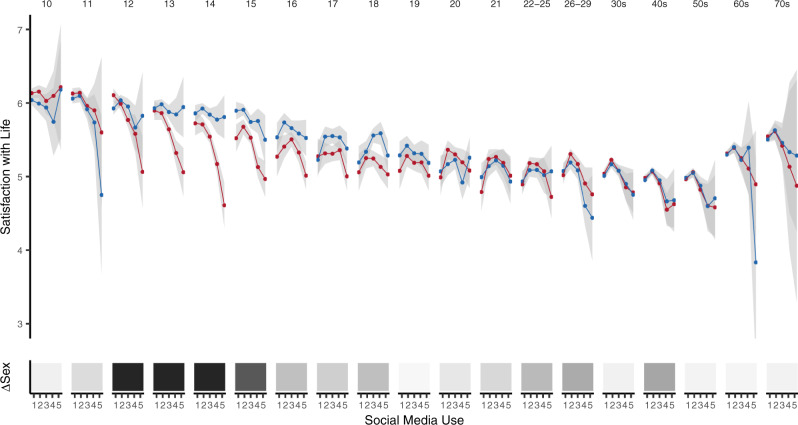
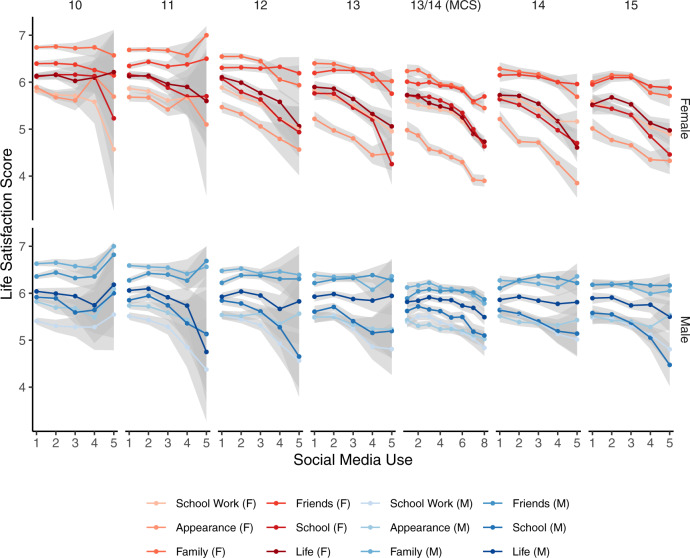
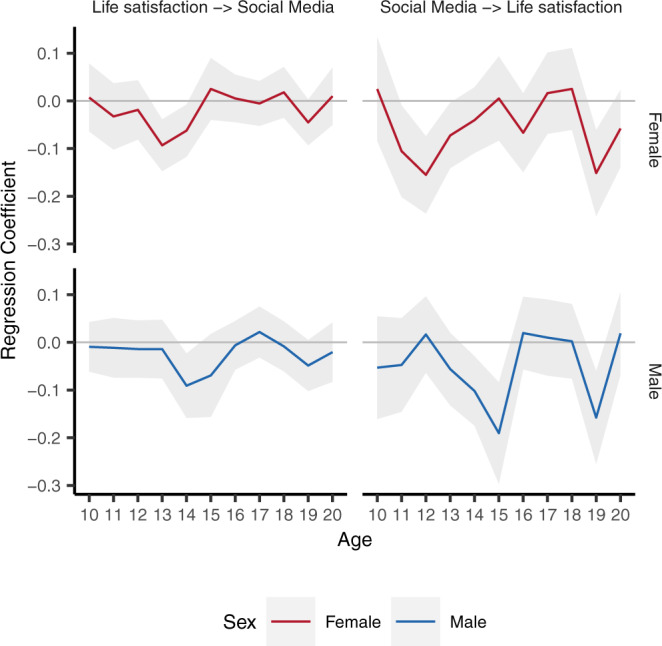
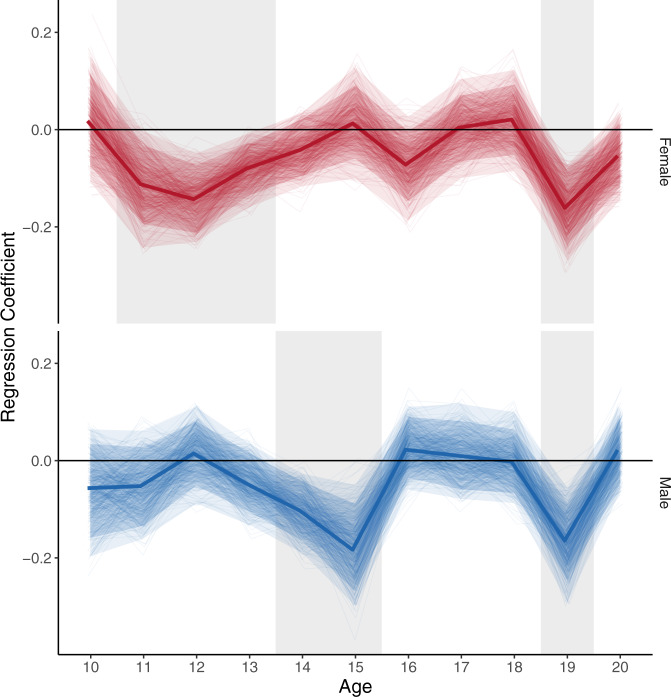
The relationship between social media use and life satisfaction changes across adolescent development. Our analyses of two UK datasets comprising 84,011 participants (10-80 years old) find that the cross-sectional relationship between self-reported estimates of social media use and life satisfaction ratings is most negative in younger adolescents. Furthermore, sex differences in this relationship are only present during this time. Longitudinal analyses of 17,409 participants (10-21 years old) suggest distinct developmental windows of sensitivity to social media in adolescence, when higher estimated social media use predicts a decrease in life satisfaction ratings one year later (and vice-versa: lower estimated social media use predicts an increase in life satisfaction ratings). These windows occur at different ages for males (14-15 and 19 years old) and females (11-13 and 19 years old). Decreases in life satisfaction ratings also predicted subsequent increases in estimated social media use, however, these were not associated with age or sex.
Overview
CoChat Summary
TL;DR
Using two UK longitudinal datasets, the paper finds that the association between estimated social media use and life satisfaction is strongest and most negative in adolescence, with sex differences appearing mainly in early adolescence. In longitudinal analyses of 17,409 adolescents, the authors identify age- and sex-specific “windows of sensitivity” where higher estimated social media use predicts lower life satisfaction one year later.
Key findings
- In cross-sectional analyses of 84,011 participants aged 10–80, the relationship between self-reported social media use and life satisfaction was “most negative in younger adolescents,” and sex differences were “only present during this time.”
- In longitudinal analyses of 17,409 participants aged 10–21, higher estimated social media use predicted lower life satisfaction one year later, and lower estimated social media use predicted higher life satisfaction one year later.
- The longitudinal “windows of sensitivity” differed by sex: females showed effects at ages 11–13 and 19, while males showed effects at ages 14–15 and 19.
- The reverse path also held: decreases in life satisfaction predicted subsequent increases in estimated social media use, and these effects were “not associated with age or sex.”
Methods
- Cross-sectional analysis of two UK datasets: Understanding Society (72,287 participants, surveyed up to seven times between 2011 and 2018) and the Millennium Cohort Study (11,724 participants, 2015 wave; ages 13–14).
- Longitudinal analysis used a Random Intercept Cross-Lagged Panel Model (RI-CLPM) on 17,409 Understanding Society participants aged 10–21 with 52,556 measurement occasions, using robust maximum likelihood, Huber-White standard errors, and FIML for missing data.
- Cross-sectional model comparison used linear/quadratic regressions with Akaike weights; longitudinal model comparison tested equality constraints across age and sex and examined cross-lagged paths between social media use and life satisfaction.
Limitations
- The paper states that causal interpretation would require strong assumptions: no time-varying unobserved confounding, adequate control of time-invariant confounding via the random intercept, no measurement error, a correct one-year time interval, and linear bidirectional links.
- The data are self-report, so the study infers effects of self-estimated social media time rather than objectively measured use.
- Evident from the text: the longitudinal findings are based on annual intervals only, so the authors note that different time frames could yield different results or mechanisms; also, some measures were available only for restricted age ranges, limiting comparisons across ages.
Model-written summary. Check it against the paper before relying on it.
Integrity signals
Registry
Cites
Statistics
Figures
Verification
Claims the paper makes
15 Valid · 1 Not valid · 10 Not checked · 60 Own results and interpretations
The cited sources support only part of this claim — read each source’s verdict below.
In the paper
“and the risk of certain mental health problems such as depression, self-harm, and eating disorders is higher in adolescent females than in males27.”
§ Windows of developmental sensitivity to social media > Introduction
What the sources say
- Partly supportedcites [27] Salk RH Hyde JS Abramson LY Gender differences in depression in representative national samples: Meta-analyses of diagnoses and symptoms Psychol. Bull. 2017 143 783 822 10.1037/bul0000102 28447828 PMC5532074 sourceExperimental — accuracy not yet measured
The Discussion’s Developmental Pattern section reports that the gender difference in depression peaks in adolescence, supporting the depression portion of the claim. The paper does not establish that adolescent females have higher risks of self-harm or eating disorders than males; its Background mentions suicidal behaviors only as a possible later risk associated with subthreshold depression. (LLM, conf=0.90)
plainstates an association- Asserted: passes — The authors put it forward as true.
- Checkable: passes — It can be checked against evidence.
- Load-bearing: passes — The paper’s conclusions depend on it.
- Based: passes — The paper gives a reason why it holds.
- Partly supported
The cited sources support only part of this claim — read each source’s verdict below.
In the paper
“Further, female life satisfaction drops earlier in adolescence25,26”
§ Windows of developmental sensitivity to social media > Introduction
What the sources say
- Partly supportedcites [25] Campbell, O., Bann, D. & Patalay, P. The gender gap in adolescent mental health: a cross-national investigation of 566,827 adolescents across 73 countries. http://medrxiv.org/lookup/doi/10.1101/2020.06.12.20129312 (2020). PMC7960541 33748389 sourceExperimental — accuracy not yet measured
The Results report that girls had lower life satisfaction than boys in most countries. But the Methods (Participants) describe a cross-sectional survey of students aged 15, and the paper does not establish that girls’ life satisfaction drops earlier in adolescence than boys’. (LLM, conf=0.86)
- Not checked — no full text of the sourcecites [26] Orben, A., Lucas, R. E., Fuhrmann, D. & Kievit, R. Trajectories of adolescent life satisfaction. 10.31234/osf.io/y8ruw (2020). PMC9346371 35937913 source
plainstates an association- Asserted: passes — The authors put it forward as true.
- Checkable: passes — It can be checked against evidence.
- Load-bearing: passes — The paper’s conclusions depend on it.
- Based: passes — The paper gives a reason why it holds.
- Partly supported
The cited sources support only part of this claim — read each source’s verdict below.
In the paper
“while experimental evidence is mixed8,9.”
§ Windows of developmental sensitivity to social media > Introduction
What the sources say
- Supportedcites [8] Vanman EJ Baker R Tobin SJ The burden of online friends: The effects of giving up Facebook on stress and well-being J. Soc. Psychol. 2018 158 496 508 10.1080/00224545.2018.1453467 29558267 source
The Discussion (p. 17) contrasts this study’s finding that the Facebook-as-normal group gained well-being with Tromholt’s experimental finding that a no-Facebook group gained well-being. The paper explicitly calls the results an apparent discrepancy, supporting the characterization of experimental evidence as mixed. (LLM, conf=0.92)
- Partly supportedcites [9] Allcott, H. et al. The Welfare Effects of Social Media. https://sites.google.com/site/allcott/research. (2019). sourceExperimental — accuracy not yet measured
The Introduction and §5.3 report experimental evidence that Facebook deactivation improved several well-being measures, while effects measured by daily text messages were not statistically significant. This supports variation across measures in this experiment, but the paper does not establish that experimental evidence across studies is mixed. (LLM, conf=0.80)
plainstates an association- Asserted: passes — The authors put it forward as true.
- Checkable: passes — It can be checked against evidence.
- Load-bearing: passes — The paper’s conclusions depend on it.
- Based: passes — The paper gives a reason why it holds.
- Supported
The sources with a verdict support this claim; the rest weren’t checked yet, have no full text we could read, or their verdicts aren’t rated yet.
In the paper
“Research has highlighted differences between males and females in the links between social media use and well-being in adolescence in a small subset of the analyzed data28, or other datasets10,29–33.”
§ Windows of developmental sensitivity to social media > Introduction
What the sources say
- Supportedcites [28] Booker CL Kelly YJ Sacker A Gender differences in the associations between age trends of social media interaction and well-being among 10–15 year olds in the UK BMC Public Health 2018 18 321 10.1186/s12889-018-5220-4 29554883 PMC5859512 source
The Discussion reports that social media interaction at age 10 was associated with well-being at older ages among females but not males. The paper therefore supports the attributed finding of gender differences in adolescent social-media–well-being links. (LLM, conf=0.92)
- Supportedcites [10] Orben A Dienlin T Przybylski AK Social media’s enduring effect on adolescent life satisfaction Proc. Natl Acad. Sci. USA 2019 116 10226 10228 10.1073/pnas.1902058116 31061122 PMC6534991 source
The paper reports that associations between social media use and adolescent life satisfaction appeared more negative for females across most models, prompting a focused analysis using participants who completed four waves. It cautions that the male and female confidence intervals overlap, so the reported differences should not be read as conclusive. The indexed copy labels these passages “Abstract” and provides no page number. (LLM, conf=0.86)
- Supportedcites [29] Kreski, N. et al. Social media use and depressive symptoms among United States adolescents. J. Adolescent Health10.1016/j.jadohealth.2020.07.006 (2020). PMC7876159 32798102 source
The Results report a positive association between daily social media use and depressive symptoms for girls only in the lowest depression-risk category after stratification. The Discussion contrasts this limited finding with the small, sometimes inverse associations observed among boys. This supports the claim that the paper highlighted sex differences in a subset of its analyzed data. (LLM, conf=0.90)
- Supportedcites [30] Nesi J Prinstein MJ Using social media for social comparison and feedback-seeking: Gender and popularity moderate associations with depressive symptoms J. Abnorm Child Psychol. 2015 43 1427 1438 10.1007/s10802-015-0020-0 25899879 PMC5985443 source
The Abstract reports that gender moderated the association between adolescents’ technology-based social comparison and feedback-seeking and depressive symptoms, with a particularly strong association among females. The Limitations and Conclusions section reiterates this finding. (LLM, conf=0.90)
- Not checked — no full text of the sourcecites [31] Viner RM Roles of cyberbullying, sleep, and physical activity in mediating the effects of social media use on mental health and wellbeing among young people in England: a secondary analysis of longitudinal data Lancet Child Adolesc. Health 2019 3 685 696 10.1016/S2352-4642(19)30186-5 31420213 source
- Not checked — no full text of the sourcecites [32] Twenge JM Martin GN Gender differences in associations between digital media use and psychological well-being: Evidence from three large datasets J. Adolescence 2020 79 91 102 10.1016/j.adolescence.2019.12.018 31926450 source
- Supportedcites [33] Kelly Y Zilanawala A Booker C Sacker A Social media use and adolescent mental health: Findings from the UK millennium cohort study EClinicalMedicine 2019 6 59 68 10.1016/j.eclinm.2018.12.005 31193561 PMC6537508 source
The Results section reports that the association between social media use and depressive symptoms was stronger for girls than for boys. The Discussion likewise identifies this gender difference among UK adolescents, supporting the cited point about differences in the social-media-use and well-being link. (LLM, conf=0.92)
plainstates an association- Asserted: passes — The authors put it forward as true.
- Checkable: passes — It can be checked against evidence.
- Load-bearing: passes — The paper’s conclusions depend on it.
- Based: passes — The paper gives a reason why it holds.
- Supported
The cited sources support only part of this claim — read each source’s verdict below.
In the paper
“It is therefore plausible that these processes heighten adolescents’ sensitivity to the interactive, communicative, and self-portraying nature of social media22, a technology they use more extensively than other age groups23,24.”
§ Windows of developmental sensitivity to social media > Introduction
What the sources say
- Supportedcites [22] Crone EA Konijn EA Media use and brain development during adolescence Nat. Commun. 2018 9 1 10 10.1038/s41467-018-03126-x 29467362 PMC5821838 source
The Introduction links adolescent brain development to heightened sensitivity to social influences through social media. The Conclusion describes social media as a means of connecting with others and presenting oneself, and suggests that developing sensitivities may make adolescents especially susceptible to its effects. The separate claim about how extensively adolescents use it is attributed to other citations. (LLM, conf=0.91)
- Not matchedcites [23] Ofcom. Children and parents: media use and attitudes report 2018. 1–17 https://www.ofcom.org.uk/research-and-data/media-literacy-research/childrens/children-and-parents-media-use-and-attitudes-report-2018 (2019).
We searched by its title and found no matching paper.
- Not matchedcites [24] Pew Research Centre. A quarter of Americans are online almost constantly | Pew Research Center. https://www.pewresearch.org/fact-tank/2021/03/26/about-three-in-ten-u-s-adults-say-they-are-almost-constantly-online/?msclkid=e6109554a61811ec875c44156f6f50c7 (2018).
We searched by its title and found no matching paper.
hedgedstates a possible cause- Asserted: passes — The authors put it forward as true.
- Checkable: passes — It can be checked against evidence.
- Load-bearing: passes — The paper’s conclusions depend on it.
- Based: passes — The paper gives a reason why it holds.
- Supported
47 more claims · 3 with their cited sources checked
Create a free account to see all 86 claims and every source verdict.
- It may state two separate claims as one. 14
- Probably not a substantial claim. 25
Claims other papers make about this one
Each is checked against this paper’s own text: does it say what the citing paper says it does?
The source backs part of the claim, not all of it — or backs it for a different population, condition or comparison.
In the citing paper
“Teens’ developmental stages is another area of differential susceptibility, with younger teens experiencing less life satisfaction and higher depression symptoms when they use more social media, as compared with older teens.137,144”
From Digital Ecosystems, Children, and Adolescents: Technical Report (2026) · cites this paper as [144]
Experimental — accuracy not yet measuredThe source backs part of the claim, not all of it — or backs it for a different population, condition or comparison.
In the citing paper
“In contrast, younger adolescents aged approximately 10-15 years remain comparatively underrepresented in the literature despite occupying a potentially important developmental period marked by increasing social media engagement and evolving identity formation [34, 35].”
From The Complex and Multifaceted Nature of Social Media: Perspectives From Young Adolescents, Parents and Experts (2026) · cites this paper as [35]
Experimental — accuracy not yet measuredThe source backs part of the claim, not all of it — or backs it for a different population, condition or comparison.
In the citing paper
“Social media use increases dramatically in adolescence, and this too might affect the way that the brain develops and could contribute to social pressures, mental ill health, and life satisfaction (figure 3). 189,190”
From The Lancet Psychiatry Commission on youth mental health (2024) · cites this paper as [189]
Experimental — accuracy not yet measuredThe cited source says what the claim attributes to it.
In the citing paper
“In general, early adolescence (10-15 years) 152 may represent a time of relatively greater susceptibility to the effects of social media (eg, lower life satisfaction).144”
From Digital Ecosystems, Children, and Adolescents: Technical Report (2026) · cites this paper as [144]
The cited source says what the claim attributes to it.
In the citing paper
“social media use has differential effects depending on the developmental timing [65]”
From Towards a youth mental health paradigm: a perspective and roadmap (2023) · cites this paper as [65]
4 more claims about this paper
Create a free account to see every claim other papers make about this one.
Statistics recomputed
Every reported test result, recomputed from its test statistic and degrees of freedom. A result shows as not adding up only once an independent check has confirmed it.
- Consistentχ²(434) = 1216.29reported p < .001 · recomputed p < .001
“χ2 (434) = 1216.29, p < .001”
- Consistentχ²(455) = 1234.736reported p < .001 · recomputed p < .001
“χ2 (455) = 1234.736, p < .001”
- Consistentt(3) = 0.33reported p = .77 · recomputed p = .763
“t(3) = 0.33, p = .77”
- Consistentt(37) = 1.74reported p = .09 · recomputed p = .090
“t(37) = 1.74, p = .09”
- Consistentχ²(63) = 2023reported p < .001 · recomputed p < .001
“χ2(63) = 2023, p < .001”
6 more recomputed tests
Create a free account to see every test the Stats check recomputed.
Self-check
Percentages, sums and reported differences re-computed from the paper’s own numbers.
Self-check results appear here once an independent check has confirmed them.
Citations
Cites
lavaan : An R Package for Structural Equation Modeling
Rosseel, Y. (2012) · Journal of Statistical Software · doi:10.18637/jss.v048.i02 · Cited by 27,955
Emerging adulthood: A theory of development from the late teens through the twenties.
Arnett, J. J. (2000) · American Psychologist · doi:10.1037/0003-066x.55.5.469 · Cited by 16,843
A critique of the cross-lagged panel model
Hamaker, E. L., Kuiper, R. M., & Grasman, R. P. P. P. (2015) · Psychological Methods · doi:10.1037/a0038889 · Cited by 4,005
Sawyer, S. M., Azzopardi, P. S., Wickremarathne, D., & Patton, G. C. (2018) · The Lancet Child & Adolescent Health · doi:10.1016/s2352-4642(18)30022-1 · Cited by 3,666
Effect size guidelines for individual differences researchers
Gignac, G. E., & Szodorai, E. T. (2016) · Personality and Individual Differences · doi:10.1016/j.paid.2016.06.069 · Cited by 2,860
Rhemtulla, M., Brosseau-Liard, P. É., & Savalei, V. (2012) · Psychological Methods · doi:10.1037/a0029315 · Cited by 2,816
AIC model selection using Akaike weights
Wagenmakers, E.-J., & Farrell, S. (2004) · Psychonomic Bulletin & Review · doi:10.3758/bf03206482 · Cited by 2,684
Salk, R. H., Hyde, J. S., & Abramson, L. Y. (2017) · Psychological Bulletin · doi:10.1037/bul0000102 · Cited by 2,622
Is Adolescence a Sensitive Period for Sociocultural Processing?
Blakemore, S.-J., & Mills, K. L. (2014) · Annual Review of Psychology · doi:10.1146/annurev-psych-010213-115202 · Cited by 2,264
Self-citationTwenge, J. M., Joiner, T. E., Rogers, M. L., & Martin, G. N. (2018) · Clinical Psychological Science · doi:10.1177/2167702617723376 · Cited by 1,705
Research works printed but not linked: 1
- Grimes, T., Anderson, J. A. & Bergen, L. Media Violence and Aggression: Science and Ideology (SAGE, 2008).
Cited by
Items 101–200 of 374
Does social media harm young people’s well-being? A suggestion from economic research
Pugno, M. (2025) · Academia Mental Health and Well-Being · doi:10.20935/mhealthwellb7581 · Cited by 25
Social Media Use and Well-Being Across Adolescent Development
Singh, B., Zhou, M., Curtis, R., Maher, C. A., & Dumuid, D. (2026) · Archives of Pediatrics and Adolescent Medicine · doi:10.1001/jamapediatrics.2025.5619 · Cited by 22
Emerging adults’ digital technology engagement and mental health during the COVID-19 pandemic
Chase, G. E., Brown, M. T., & Jensen, M. R. (2022) · Frontiers in Psychology · doi:10.3389/fpsyg.2022.1023514 · Cited by 20
Goodfellow, C., Willis, M., Inchley, J., Kharicha, K., Leyland, A. H., Qualter, P., Simpson, S. A., & Long, E. (2023) · British Journal of Educational Psychology · doi:10.1111/bjep.12581 · Cited by 20
“…social media is associated with poorer body image, poorer sleep and increased depressive symptoms, particularly among girls (Kelly et al., 2018), while other research has found that frequent social media use is most detrimental to life satisfaction among younger adolescents (Orben et al., 2022).”
BackgroundBidirectional Associations of Adolescents’ Momentary Social Media Use and Negative Emotions
Colasante, T., Faulkner, K., Kharbotli, D., Malti, T., & Hollenstein, T. (2024) · Affective Science · doi:10.1007/s42761-024-00244-2 · Cited by 18
Hinduja, S., & Patchin, J. W. (2026) · New Media & Society · doi:10.1177/14614448241284413 · Cited by 12
“Given that digital experiences affect adolescents in profound ways during certain developmental windows (Crone and Konijn, 2018; Orben et al., 2022) and understanding that social experiences online can profoundly affect the mental health and well-being of young people (Office of the Surgeon…”
Saletti, S. M. R., den Broucke, S. V., Billieux, J., Karila, L., Kuss, D. J., Espejo, J. M. R., Sheldon, P., Lang, C. P., Zimmer‐Gembeck, M. J., Zollo, P., et al. (2023) · Journal of Behavioral Addictions · doi:10.1556/2006.2022.00088 · Cited by 16
Piccardi, L., Burrai, J., Palmiero, M., Quaglieri, A., Lausi, G., Cordellieri, P., Fraschetti, A., Giannini, A. M., & Mari, E. (2023) · Heliyon · doi:10.1016/j.heliyon.2023.e18910 · Cited by 23
García‐Manglano, J., Fernández, A., Serrano, C., López-Madrigal, C., Fernández-Duval, G., Fernández-Pacheco, P. A. D. L. R., & Sádaba, C. (2024) · Journal of Social and Personal Relationships · doi:10.1177/02654075241230248 · Cited by 29
“Although recent articles have used cross-lagged models to analyze similar data (Jarman et al., 2022; Orben et al., 2022), we run Random Effects Within-Between (REWB) models, a version of multilevel models sometimes called “ hybrid ” models.”
MethodThe association between motivations for social media use, stress and academic attainment
Hughes-Nind, J., Wang, M., Zhang, C., & Tibber, M. S. (2024) · Current Psychology · doi:10.1007/s12144-024-06392-9 · Cited by 16
“The study was undertaken in a sample of Chinese under - graduate students because this age group (primarily 18–21 years) broadly coincides with the peak in SM use (Kemp, 2024) as well as a proposed window of heightened sensitivity to the effects of SM use (Orben et al., 2022 ).”
Smith, T. E. (2023) · Current Psychology · doi:10.1007/s12144-023-05350-1 · Cited by 14
“…social media use and the underlying mechanism of the maladaptive cognitive process that leads to its manifestation to determine whether it is a separate clinical disorder or a manifestation of other known disorders (Kardefelt-Winther, 2017; Motoki et al., 2020; Orben et al., 2022; Smith, 2022).”
Young People and Social Networks: News Consumption Habits and Credibility of the News
Batllé, P. F., Córdoba-Cabús, A., & Gómez-Calderón, B. J. (2023) · Comunicar · doi:10.58262/v32i78.13 · Cited by 25
“Orben et al. (2022) point out how, while on the one hand social media present young people with a setting that encourages socialization and contact with their environment, on the other they create feelings of dissatisfaction that lead young people to negatively evaluate core aspects of their lives,…”
Background(2024) · doi:10.2196/57154 · Cited by 10
“…examined the duration of time spent online, finding significant associations between spending ≥ 2 hours on SMPs a day and depressive symptoms in adolescent girls [6-8], with discrete windows of sensitivity emerging early in boys (aged 14 y and 19 y) and in girls (aged 13-15 y and 19 y) [9].”
Beyond screen time: The core influences of problematic screen use on adolescent development networks
Xu, L., Song, K., Deng, H.-Y., Geng, X., Zhang, J., Fang, X., Potenza, M. N., & Zhang, J. (2025) · Journal of Behavioral Addictions · doi:10.1556/2006.2025.00035 · Cited by 17
“…depression) concerns (Eirich et al., 2022; Neville, McArthur, Eirich, Lakes, & Madigan, 2021; Riehm et al., 2019), behavioral problems (Song et al., 2023), and poor mental health and life satisfaction (Nagata, Cortez, et al., 2022; Orben, Przybylski, Blakemore, & Kievit, 2022; Santos et al., 2023).”
The Internet, the Problem of Socialising Young People, and the Role of Religious Education
Kraner, D. (2023) · Religions · doi:10.3390/rel14040523 · Cited by 12
Identifying protective and risk behavior patterns of online communication in young people
Lowthian, E., Fee, G., Wakeham, C., Clegg, Z., Crick, T., & Anthony, R. (2023) · Journal of Adolescence · doi:10.1002/jad.12270 · Cited by 19
“Our sample also included a broad age range (9 − 16 years), and while the minimum recommended user age for most platforms is 13 years old, our research further con fi rm that children and young people are using them at a younger age (Ofcom, 2022; Orben et al., 2022).”
BackgroundBoyd, S. I., Dreier, M. J., Jorgensen, S. L., Moghaddas, S. L., Kleiman, E. M., & Hamilton, J. L. (2024) · Affective Science · doi:10.1007/s42761-024-00257-x · Cited by 12
“The unique features of SM use (Nesi et al., 2018a, b) in combination with the developmental context of adolescence have been demonstrated to create windows of sensitivity within this developmental period for the effects of SM use on well-being (Orben et al., 2022).”
Internet use and the Well-Being of the Elders. A Quantitative Study in an Aged Country
Álvarez, A. S., & Vicente, M. R. (2024) · Social Indicators Research · doi:10.1007/s11205-024-03490-w · Cited by 15
“Despite the potential of some digital solutions “to increase the well-being of millions of citizens” (European Commission, 2018a), empirical evidence shows no conclusive results yet on the links between their use and well-being (Orben et al., 2022).”
Person-Specific Analyses of Smartphone Use and Mental Health: Intensive Longitudinal Study
Cerit, M., Lee, A. Y., Hancock, J. T., Miner, A. S., Cho, M.-J., Muise, D., Torres, A., Haber, N., Ram, N., Robinson, T. N., et al. (2025) · JMIR Formative Research · doi:10.2196/59875 · Cited by 13
Social threat and adolescent mental health
Sequeira, S. L., Rodman, A. M., Nesi, J. L., & Silk, J. S. (2025) · Nature Reviews Psychology · doi:10.1038/s44159-025-00484-4 · Cited by 13
Onyeaka, H., Firth, J., Ajayi, K. V., Muoghalu, C., Holmes, K., Nkemjika, S., Oladunjoye, A. F., Anugwom, G., Eseaton, P. O., Onyeaka, N., et al. (2023) · Journal of Mood and Anxiety Disorders · doi:10.1016/j.xjmad.2023.100006 · Cited by 12
“Concern about the adverse effects of social media on mental health remains [25–27] although recent research suggests that duration of social media use or exposure during certain developmental periods is critical [28,29].”
Gender dysphoria in adolescence: examining the rapid-onset hypothesis
Leonhardt, A., Fuchs, M., Gander, M., & Sevecke, K. (2024) · Neuropsychiatrie · doi:10.1007/s40211-024-00500-8 · Cited by 11
A Life Course Approach to Women’s Health: Linking the Past, Present, and Future
Hardy, R., Kuh, D. J., & Mishra, G. D. (2023) · Oxford University Press eBooks · doi:10.1093/oso/9780192864642.003.0023 · Cited by 9
Social Media Use and Alcohol Sipping in Early Adolescents: A Prospective Cohort Study
Nagata, J. M., Sajjad, O. M., Smith, N., Zamora, G., Dhama, S., Al-Shoaibi, A. A. A., Ganson, K. T., Testa, A. M., Moreno, M. A., Kiss, O., et al. (2024) · Substance Use & Misuse · doi:10.1080/10826084.2024.2310501 · Cited by 12
“Prior studies have shown that social media is linked to alcohol use but have focused on later adolescence and young adulthood rather than early adolescence, which is considered a sensitive window for the effects of social media (Orben et al., 2022).”
BackgroundSocial Media and Depressive Symptoms
Twenge, J. M., Peeples, D. A., Shafi, R. M. A., Boers, E., Hale, L. E., & Weigle, P. E. (2024) · Springer eBooks · doi:10.1007/978-3-031-69362-5_19 · Cited by 13
Deng, H., Song, K., Geng, X., Xu, L., Zhang, J., Li, X., He, J., Potenza, M. N., & Zhang, J. (2024) · European Child & Adolescent Psychiatry · doi:10.1007/s00787-024-02620-6 · Cited by 12
“These biological, psychological, and cognitive changes arguably render youth particularly susceptible to online social environments [ 8, 9].”
InfluentialSchütz, R., Reiß, F., Moor, I., Kaman, A., Bilz, L., & HBSC Study Group Germany (2025) · BMC Public Health · doi:10.1186/s12889-025-23247-5 · Cited by 17
“They gradually detach themselves from their parents, while peer relationships become more important [18–20], and they must manage sociocultural changes such as going through a school pathway [21].”
Conceptualizing age‐appropriate social media to support children's digital futures
Livingstone, S., & Sylwander, K. R. (2025) · British Journal of Developmental Psychology · doi:10.1111/bjdp.70006 · Cited by 44
“…to social media during adolescence, with significant gender differences and bidirectional effects, and these will vary across geographies: Orben et al. (2022) found small effects of time spent using social media and subsequent life satisfaction a year later, notably among females aged…”
Welsey‐Smith, O., & Fleming, T. (2025) · Child and Adolescent Mental Health · doi:10.1111/camh.70033 · Cited by 8
Winbush, A., McDuff, D., Hernandez, J., Barakat, A., Jiang, A., Heneghan, C., Nelson, B. W., & Allen, N. B. (2025) · Proceedings of the National Academy of Sciences · doi:10.1073/pnas.2427311122 · Cited by 21
Colvin, M. K., Reesman, J. H., & Glen, T. (2024) · Archives of Clinical Neuropsychology · doi:10.1093/arclin/acae021 · Cited by 8
Tiraboschi, G. A., Garon‐Carrier, G., Smith, J., & Fitzpatrick, C. (2023) · Preventive Medicine Reports · doi:10.1016/j.pmedr.2023.102471 · Cited by 17
“In another recent study, Orben et al. (2022) found bidirectional associations between social media use and lower life satisfaction among adolescents aged 10 to 19, suggesting that bidirectional associations could have emerged if it was possible to observe a larger time frame.”
BackgroundNguyen, M., Sari, N. P. W. P., Li, D., & Vuong, Q. (2024) · Teaching and learning in nursing · doi:10.1016/j.teln.2024.08.014 · Cited by 15
Chen, S., Liao, J., Wang, X., Li, J., Liu, Y., & Zhang, W. (2025) · Computers in Human Behavior · doi:10.1016/j.chb.2025.108608 · Cited by 9
Bear, H. A., Fazel, M. S., the OxWell Study Team, & Skripkauskaitė, S. (2025) · Current Psychology · doi:10.1007/s12144-025-07643-z · Cited by 10
“We found a weak association between time spent on social media and loneliness for younger adolescents only, partially in line with previously identified developmental windows of sensitivity to social media(Orben et al., 2022).”
Desai, R., Stuart, L., Mapanga, W., Hart, C., & Norris, S. A. (2025) · BMJ Open · doi:10.1136/bmjopen-2024-097291 · Cited by 11
Cruz, G. V., Liberacka-Dwojak, M., Wiłkość-Dębczyńska, M., Terzioğlu, M. A., Farchione, T. J., Lecomte, T., Ingram, S., Khan, R., & Khazaal, Y. (2025) · JMIR Mental Health · doi:10.2196/78334 · Cited by 17
Andersen, A. I. O., Skogen, J. C., Hjetland, G. J., Finserås, T. R., Bøe, T., Colman, I., & Sivertsen, B. (2025) · Computers in Human Behavior Reports · doi:10.1016/j.chbr.2025.100881 · Cited by 12
Mason, A., Winter, T. J., Riordan, B. C., Griffiths, M. D., & Scarf, D. (2022) · Psych · doi:10.3390/psych4040071 · Cited by 9
“Given that smartphones are one of the primary avenues through which adolescents communicate, changes to young people’s social worlds are likely mirrored by changes in smartphone use [6].”
BackgroundNoon, E. J., Maes, C., Karsay, K., & Vandenbosch, L. (2023) · Media Psychology · doi:10.1080/15213269.2023.2227941 · Cited by 8
“Moreover, adolescents’ life satisfaction appears to be closely linked to general social media use (Orben, Przybylski, et al., 2022), and it is possible that young people who use social media more frequently are more likely to capita-lize on the platforms.”
BackgroundTie, B., Yang, X., & Qiu, J. (2024) · Body Image · doi:10.1016/j.bodyim.2023.101677 · Cited by 12
Tackling digital harms: why simply banning children from social media won’t protect them
Holly, L. (2024) · BMJ · doi:10.1136/bmj.q2617 · Cited by 7
Deprivation's role in adolescent social media use and its links to life satisfaction
Kurten, S., Ghai, S., Odgers, C. L., Kievit, R., & Orben, A. C. (2024) · Computers in Human Behavior · doi:10.1016/j.chb.2024.108541 · Cited by 15
Self-citationArenas-Arroyo, E., Fernández‐Kranz, D., & Nollenberger, N. (2025) · Journal of Health Economics · doi:10.1016/j.jhealeco.2025.103014 · Cited by 34
Beltrán, J., Jacob, Y., Mehta, M., Hossain, M. T., Adams, A., Fontaine, S., Torous, J. B., McDonough, C., Johnson, M., Delgado, A. D., et al. (2024) · medRxiv · doi:10.1101/2024.08.06.24311477 · Cited by 10
Shi, X., Duck, S. A., Jansen, E., Borsarini, B., Blackwell, C. K., Li, Y., & Carnell, S. (2024) · Obesity · doi:10.1002/oby.24199 · Cited by 10
“Social media, in turn, exhibiting idealized lives and bodies, may have a detrimental effect on well-being [31] by increasing comparisons, appearance-based evaluations, and body dissatisfaction.”
Social media are many things: Addressing the components and patterns of adolescent social media use
Maheux, A. J., Maes, C., Burnell, K., Bauer, D. J., Prinstein, M. J., & Telzer, E. H. (2025) · Annals of the New York Academy of Sciences · doi:10.1111/nyas.15326 · Cited by 7
Aryal, R., Hjetland, G. J., Haug, E., Samdal, O., & Skogen, J. C. (2025) · International Journal of Public Health · doi:10.3389/ijph.2025.1608425 · Cited by 17
Digital measures of activity and motivation impact depression and anxiety in the real world
Beltrán, J., Jacob, Y., Mehta, M., Hossain, T., Adams, A., Fontaine, S., Torous, J. B., McDonough, C., Johnson, M., Delgado, A. D., et al. (2025) · npj Digital Medicine · doi:10.1038/s41746-025-01669-0 · Cited by 11
“Although this dichotomous view has been recently challenged 63 , motivations behind use, and a range of other variables, can all in fl uence the effect of screentime betweenusersandwithinusersovertime 29,64,65 .”
Stević, A., Lee, A. Y., Liu, X., & Hancock, J. T. (2025) · Social Media + Society · doi:10.1177/20563051251346888 · Cited by 14
Parry, D. A., & Coetzee, B. (2025) · Journal of Computer-Mediated Communication · doi:10.1093/jcmc/zmaf011 · Cited by 13
A precautionary approach to social media: protecting young minds in an evolving digital world
Stankov, I., Tefera, Y. M., Bradley, M., Pickering, A., Willoughby, E. L., & Williams, C. (2025) · The Medical Journal of Australia · doi:10.5694/mja2.52722 · Cited by 8
“9,10 Although such research may be constrained for certain age groups by existing bans, it can be conducted in countries with comparable social and cultural structures, social media use and mental health patterns, with the aim of generalising the results more broadly.”
Kaya, M., & McCabe, C. (2022) · International Journal of Environmental Research and Public Health · doi:10.3390/ijerph19158927 · Cited by 10
“males [86] rather than gender effects per se as it has been hard to show this in other studies [87].”
ResultMeeus, A., Everaert, G., Eggermont, S., & Beullens, K. (2023) · Social Media + Society · doi:10.1177/20563051231205598 · Cited by 16
“Research has also found that the impact of social media on life satisfaction varies depending on individuals’ age and sex, with girls experiencing earlier increases in sensitivity to social media than boys (Orben et al., 2022).”
BackgroundSánchez, G., & JENKINS, J. H. (2024) · Social Science & Medicine · doi:10.1016/j.socscimed.2024.116839 · Cited by 7
“Furthermore, Orben et al. (2022) find sex differences in developmental sensitivity to SM that occur at an earlier age for girls than for boys warranting increased attention to the effects of online content.”
Centofanti, S. A., Lushington, K., Wicking, A., Wicking, P., & Dorrian, J. (2024) · Adolescents · doi:10.3390/adolescents4030025 · Cited by 11
“Consistent with this assumption, longitudinal findings in 10–21-year-olds indicate that sensitivity to social media not only occurs at a younger age in girls compared with boys but also underlies the much lower life satisfaction ratings reported by girls at one-year follow-up [79].”
ResultAriefdjohan, M. W., Reid, D., & Fritsch, S. L. (2024) · Pediatric Clinics of North America · doi:10.1016/j.pcl.2024.09.006 · Cited by 11
Petro, N. M., Picci, G., Webert, L. K., Schantell, M. D., Son, J. J., Ward, T. W., McDonald, K. M., Livermore, C. L., Killanin, A. D., Rice, D. L., et al. (2024) · Developmental Cognitive Neuroscience · doi:10.1016/j.dcn.2024.101479 · Cited by 16
Moving Beyond Fear and Restriction to Promoting Adolescent Resilience and Intentional Technology Use
Wiśniewski, P., Park, J., Badillo-Urquiola, K. A., Gabrielli, J., Doty, J. L., & Hartikainen, H. (2024) · Springer eBooks · doi:10.1007/978-3-031-69362-5_55 · Cited by 17
Health and relationship quality of sexual minorities in Europe
Berlingieri, F., & Kovačič, M. (2025) · Journal of Population Economics · doi:10.1007/s00148-025-01077-4 · Cited by 16
“…exacerbate the excessive use of social media, with potentially detrimental effects on mental health conditions (Twenge 2017; Braghieri et al. 2022; Orben et al. 2022) and loneliness (Allcott et al. 2020), with the latter further increasing the probability of experiencing emotional disorders…”
Characterizing Adolescent Social Media Experiences and Links to Momentary Affect
Sequeira, S. L., McKone, K. M. P., Diab, E. M., Thomas, J. G., Wolff, J. C., & Nesi, J. L. (2025) · Journal of Adolescence · doi:10.1002/jad.12530 · Cited by 13
Trajectories of Perceived Technological Impairment and Psychological Distress in Adolescents
Burnell, K., & Odgers, C. L. (2022) · Journal of Youth and Adolescence · doi:10.1007/s10964-022-01679-1 · Cited by 11
“Developmental period may relate to how adolescents experience digital technologies (e.g., Orben et al., 2022).”
BackgroundThe clinical implications of digital technology
Idelji-Tehrani, S., Dubicka, B., & Graham, R. (2022) · Clinical Child Psychology and Psychiatry · doi:10.1177/13591045221145400 · Cited by 13
Marciano, L., Albanese, E., Viswanath, K., & Camerini, A.-L. (2023) · European Journal of Health Communication · doi:10.47368/ejhc.2023.101 · Cited by 7
Social Network Sites and Well-Being: Is it Only a Matter of Content?
Masciantonio, A., Résibois, M., Bouchat, P., & Bourguignon, D. (2023) · International Review of Social Psychology · doi:10.5334/irsp.736 · Cited by 12
Lee, D. S., Jiang, T., Crocker, J., & Way, B. M. (2022) · Brain Behavior and Immunity · doi:10.1016/j.bbi.2023.05.010 · Cited by 8
Newson, J. J., Marinova, Z., & Thiagarajan, T. C. (2025) · Neuroscience & Biobehavioral Reviews · doi:10.1016/j.neubiorev.2025.106290 · Cited by 6
Digital Media Use and Screen Time Exposure Among Youths: A Lifestyle-Based Public Health Concern
Khanani, M. I., Khan, M. R., Farooqi, M. F., Fazal, J., Aabideen, Z., & Kuwaiti, N. A. (2025) · Cureus · doi:10.7759/cureus.88373 · Cited by 39
“…A UK-based study by Orben et al. (2022) applied advanced modeling techniques to data from the Millennium Cohort Study (n=17,409) and found that increased digital technology use was significantly associated with a decrease in life satisfaction ratings and self-image among adolescent girls [70].”
Liu, H., Yang, X., Shao, W., & Yu, X. (2025) · Educational Psychology Review · doi:10.1007/s10648-025-10062-y · Cited by 9
“…adolescence is also considered a socially sensitive developmental period (Andrews et al., 2021; Crone & Dahl, 2012), adolescents’ social interactions increasingly occur in digital or highly structured environments (e.g., social media, extracur-ricular clubs; Orben et al., 2022; Rizzo et al., 2019).”
de Casteele, M. V., Flamant, N., Morbée, S., van den Bogaard, D., & Vansteenkiste, M. (2025) · Computers in Human Behavior · doi:10.1016/j.chb.2025.108843 · Cited by 6
Zhu, X., Yang, Y., Wright, H. R., Speyer, L. G., Allitt, M., Obsuth, I., Errington, P. J., & Murray, A. L. (2025) · SSM - Mental Health · doi:10.1016/j.ssmmh.2025.100582 · Cited by 10
Vidal, C., Philippe, F. L., Geoffroy, M., & Paquin, V. (2024) · International Journal of Mental Health and Addiction · doi:10.1007/s11469-024-01313-0 · Cited by 13
“…identified within-person associations between changes in digital media use and changes in depression and vice versa, offering stronger evidence for causal effects as participants are compared with themselves, controlling for other individual characteristics, measured or not (Orben et al., 2022).”
The social media scale for depression in adolescence
Twivy, E., Freeman, D. H., Anderson, C., Loe, B. S., & Waite, F. (2025) · International Journal of Adolescence and Youth · doi:10.1080/02673843.2025.2450425 · Cited by 4
“However, the nature of social media use and its impact might vary according to stage of adolescent development (Orben et al., 2022).”
Yoon, J., Zhang, A. X., & Seering, J. (2025) · Proceedings of the ACM on Human-Computer Interaction · doi:10.1145/3711114 · Cited by 20
“We also emphasize the importance of offering peer-led online communities as healthy alternative social online experiences for youth today.”
Chen, S., Chen, C., Xu, H., Wang, L., Xie, W., Wang, T., & Luo, L. (2025) · Current Psychology · doi:10.1007/s12144-025-07509-4 · Cited by 6
“Therefore, it is in adolescence but not the children period that the adverse impact of social media on their self-control becomes apparent (Orben et al., 2022).”
How empathy affects preschool teachers’ burnout
He, Y., Li, X., Wang, X., & Xu, H. (2025) · Psychology Health & Medicine · doi:10.1080/13548506.2025.2469194 · Cited by 6
“The partial r2 corresponding to Median β served as the effect size; in large epidemiological studies, a partial r2 greater than 0.01 is considered sufficient to attract researchers’ and policy makers’ attention (Orben et al., 2022).”
InfluentialAdolescent user behaviors on short video application, cognitive functioning and academic performancePreprint
Xu, Z., Gao, X., Wei, J., et al. (2022) · doi:10.31234/osf.io/2mkqw · Cited by 5
Hinze, V., Blakemore, S., Dalgleish, T., Ford, T. J., Mansfield, K. L., Ukoumunne, O. C., Kuyken, W., & Montero‐Marín, J. (2025) · JAACAP Open · doi:10.1016/j.jaacop.2025.07.003 · Cited by 9
“46 Future research should consider longer follow-up periods into late adolescence to establish whether similar effects of self-reported working memory and self-monitoring on mental health outcomes may simply emerge later for boys or whether these effects are qualitatively different for boys and…”
Self-citationGlobal change in adolescent social media use (2018–2022): An ecological analysis across 28 countries
Marino, C., Bersia, M., Fürstová, J., Galeotti, T., van den Eijnden, R. J. J. M., Boniel‐Nissim, M., Pickett, W., Lenzi, M., Canale, N., Eriksson, C. C.-G., et al. (2025) · Computers in Human Behavior · doi:10.1016/j.chb.2025.108789 · Cited by 8
Social Media Use and Loneliness
d’Hombres, B., & Gentile, C. (2024) · Population economics · doi:10.1007/978-3-031-66582-0_5 · Cited by 7
Escobar-Viera, C. G., Coulter, R. W. S., Friedman, M. R., Thoma, B. C., Switzer, G. E., Martina, J., Egan, J. E., & Primack, B. A. (2023) · JMIR Research Protocols · doi:10.2196/43627 · Cited by 4
“In the general population, the former approach showed mixed findings of positive [30,31], bidirectional [32], or no association [33] between quantity of social media use and mental health outcomes over time.”
Zou, H., & Wang, Y. (2024) · IEEE Transactions on Computational Social Systems · doi:10.1109/tcss.2024.3403872 · Cited by 6
“However, these methodologies often exhibit limited classification performance when dealing with the rich and diverse forms of short text data on social media platforms, thereby diminishing the efficacy of subsequent research phases [31].”
Methodological considerations for social media intervention studies
Abeele, M. V., Murphy, S. L., Lemahieu, L., & Koster, E. H. W. (2025) · Nature Reviews Psychology · doi:10.1038/s44159-025-00474-6 · Cited by 16
“By contrast, much of the societal discussion on the potential harms of social media focuses on children and adolescents 5 because of windows of sensitivity during which their cognitive, socio-emotional and neurobiological development might make them more vulnerable than adults 34,112 .”
Montes, E., & DeAndrea, D. C. (2024) · Journal of Computer-Mediated Communication · doi:10.1093/jcmc/zmae006 · Cited by 6
Social uncertainty in the digital worldPreprint
Ferguson, A. M., Turner, G., & Orben, A. C. (2023) · doi:10.31234/osf.io/m97ug · Cited by 4
Self-citationDeriving models of change with interpretable parameters: linear estimation with nonlinear inferencePreprint
McCormick, E. M. (2023) · doi:10.31234/osf.io/r4vxb · Cited by 5
Old strategies, new environments: Reinforcement Learning on social mediaPreprint
Turner, G., Ferguson, A. M., Katiyar, T., Palminteri, S., & Orben, A. C. (2024) · doi:10.31234/osf.io/f5cjv · Cited by 4
Self-citationHuang, S., Lai, X., Zhang, C., Xinmei, Z., Xinran, D., Mengdi, Q., Huanlei, W., Wenrong, W., & Wang, Y. (2024) · Acta Psychologica Sinica · doi:10.3724/sp.j.1041.2024.00745 · Cited by 13
Weisskirch, R. S. (2026) · Social Science Computer Review · doi:10.1177/08944393251337016 · Cited by 3
“Indeed, Orben et al. (2022) found that adolescents, in particular, in comparison to older others in the lifespan were more susceptible to the in fl uence of social media on lower feelings of life satisfaction.”
Vijayakumar, N., Dashti, S. G., Canterford, L. D., Ellul, S., Parissi, A. J. A., Goddings, A., Viner, R., Moran, P., Borschmann, R., Mundy, L. K., et al. (2026) · The Medical Journal of Australia · doi:10.5694/mja2.70220 · Cited by 3
“Our findings broadly align with those from Orben and colleagues [21], who showed that female adolescents aged 11–13 years who increased their SMU reported poorer life satisfaction 1 year later (within-subject associations), with no such associations observed in 14–18- year-olds.”
Sametoğlu, S., Pelt, D. H. M., & Bartels, M. (2025) · Behavior Genetics · doi:10.1007/s10519-025-10224-2 · Cited by 6
“…between social media use and wellbeing or illbeing may vary by sex and age—with younger individuals and females potentially more susceptible to negative effects (e.g., Orben et al. 2022) we include both age and sex as covariates in our analyses, leveraging the full diversity of our sample.”
Pennington, C. R., Murray, E. A. H., Kaye, L. K., Burgess, A., Kessler, K., & Shaw, D. J. (2025) · Computers in Human Behavior Reports · doi:10.1016/j.chbr.2025.100753 · Cited by 6
Gugushvili, N., Masciantonio, A., Nitschinsk, L., Rozgonjuk, D., Täht, K., Kross, E. F., Ruiter, R. A. C., & Verduyn, P. (2025) · International Journal of Human-Computer Interaction · doi:10.1080/10447318.2025.2531288 · Cited by 7
“For instance, Orben et al. (2022) found that both age and sex influence the relationship between social media use and life satisfaction.”
Tibber, M. S., Rose, K., Mandy, W., Pellicano, E., & Pavlopoulou, G. (2025) · Autism in Adulthood · doi:10.1177/25739581251377915 · Cited by 4
Osamljenost in raztresenost v mreži socialnih medijev
Kraner, D. (2023) · Bogoslovni vestnik · doi:10.34291/bv2023/04/kraner · Cited by 7
Social Media and Youth Mental Health: A Departure from the Status Quo
Coyne, S. M., Escobar-Viera, C. G., Bekalu, M. A., Charmaraman, L., Primack, B. A., Shafi, R. M. A., Valkenburg, P. M., & Williams, K. D. A. (2024) · Springer eBooks · doi:10.1007/978-3-031-69362-5_17 · Cited by 6
Social media uses amongst adolescents: motives, minority stress and eudaimonic well-being
López‐Sáez, M. Á., Pérez-Torres, V., Ruiz, Y. P., Lobato-Rincón, L. L., Currás, H. T., & Angulo-Brunet, A. (2024) · Anales de Psicología · doi:10.6018/analesps.556871 · Cited by 8
“These results contradict studies that have found lower levels of well-being amongst females due to the effects of social comparison on online social media (Kerestes & Stulhofer, 2020; Orben et al., 2022).”
BackgroundResultLiu, Y., & Marciano, L. (2024) · Scientific Reports · doi:10.1038/s41598-024-81665-8 · Cited by 13
Guan, K., Yang, J., Cheval, B., Health, M., Herold, F., Werneck, A. O., Lowe, C. J., Hallgren, M. Å., Tari, B., Pindus, D. M., et al. (2025) · Mental health and physical activity · doi:10.1016/j.mhpa.2025.100698 · Cited by 4
Self-reported social media use by adolescents in Brazil: a school-based survey
Pereira, R. B., Martini, T., Buchweitz, C., Kieling, R. R., Fisher, H. L., Kohrt, B. A., Mondelli, V., & Kieling, C. (2022) · Trends in Psychiatry and Psychotherapy · doi:10.47626/2237-6089-2022-0545 · Cited by 12
Metadata
- Authors
- Orben, A., Przybylski, A. K., Blakemore, S.-J., & Kievit, R. A.
- Affiliations
- MRC Cognition and Brain Sciences Unit (GB)
- University of Oxford (GB)
- University of Cambridge (GB)
- Corresponding author
- Orben, Amy
- Venue
- Nature Communications
- Published
- 2022-03-28
- Volume
- 13
- Issue
- 1
- Pages
- 1649-1649
- ISSN
- 2041-1723 (ISSN-L)
- PMC
- PMC8960761
- OpenAlex
- W4220990449
- Semantic Scholar
- 3ebfd22b07604dad38798d3a7fd5aaa1a225fadf
- Cited by
- 387
- References
- 49
- Citations by year
- 2026: 108 · 2025: 112 · 2024: 82 · 2023: 61 · 2022: 23
- FWCI
- 99.98
- Type
- journal article
- Language
- en
- Open access
- gold
- doi.org
- Licence
- cc-by
- creativecommons.org/licenses/by/4.0 (tdm)
- creativecommons.org/licenses/by/4.0 (vor)
- Locations
- Nature Communications (publishedVersion, cc-by)
- PubMed Central (publishedVersion, cc-by)
- PubMed (publishedVersion)
- RePEc: Research Papers in Economics (submittedVersion)
- DOAJ (DOAJ: Directory of Open Access Journals) (submittedVersion)
- Radboud Repository (Radboud University) (submittedVersion)
- OSF Preprints (OSF Preprints) (submittedVersion)
- Apollo (University of Cambridge) (submittedVersion, cc-by)
- Radboud Repository (Radboud University) (submittedVersion, other-oa)
- Apollo
- Apollo (cc-by)
- Funders
- RCUK | Economic and Social Research Council (ES/T008709/1)
- RCUK | Medical Research Council (SWAG/076.G101400, SUAG/047 G101400)
- University of Cambridge | Emmanuel College, University of Cambridge (Research Fellowship)
- Wellcome Trust (WT107496/Z/15/Z)
- Jacobs Foundation
- University of Cambridge
- Topics
- Social Sciences › Sociology and Political Science › Impact of Technology on Adolescents
- Social Sciences › Education › Child Development and Digital Technology
- Social Sciences › Psychology › Social Psychology › Psychological Well-being and Life Satisfaction
- Keywords
- social media use, life satisfaction, adolescent development, developmental windows, sex differences, longitudinal change, well-being
- MeSH terms
- Adolescent, Adult, Aged, Aged, 80 and over, Child, Female, Humans, Longitudinal Studies, Male, Middle Aged, Adolescent Development, Young Adult, Self Report, Social Media
About these checks
Registry, retraction, Cites and statistics results are computed, not judged, with one exception: a printed reference that no index lists is read once by a model before it counts as a citation error. Claims are extracted by a model and kept only when their quote appears verbatim in the text; each cited source is then checked, with a model’s help, for whether it says what the claim relies on. Those verdicts can be wrong — read the claim’s quote and the cited source before relying on one.
The claim verdicts this report counts are experimental: their accuracy is not yet measured.
A language model drew the claims from the paper on 2026-10-10, under version 3 of the claim definition (model deepseek-v4.1-flash, prompt extract-v3).
A second model labelled each claim on 2026-10-10 (model jev-1.13-20260917, definition revision gold-guideline-v0.2).
Cited sources are checked with a language model’s help (gpt-6-sol).
Statistics and arithmetic are recomputed, not judged.
Confidence bands are shown only for fields calibrated on our annotated test set. None is calibrated yet, so no band is shown.
What counts as a claim ›How we measure confidence ›How we check this ›
Are you an author, or do you see a problem with this page? Request a review
Data sources
Bibliographic data: Semantic Scholar, OpenAlex, Crossref.
Contains information from the Semantic Scholar Academic Graph Datasets, made available under the ODC Attribution License (ODC-BY 1.0).
Semantic Scholar’s data is described in: Kinney, R., et al. (2023). The Semantic Scholar Open Data Platform. arXiv:2301.10140.
