

A new gene set identifies senescent cells and predicts senescence-associated pathways across tissues
Open accessPublished version of a preprint
The DOI matches its Crossref record; 103 of the 104 references it cites were found in a registry or an index; 43 of the 53 sources its claims cite were checked for support.
Abstract
Although cellular senescence drives multiple age-related co-morbidities through the senescence-associated secretory phenotype, in vivo senescent cell identification remains challenging. Here, we generate a gene set (SenMayo) and validate its enrichment in bone biopsies from two aged human cohorts. We further demonstrate reductions in SenMayo in bone following genetic clearance of senescent cells in mice and in adipose tissue from humans following pharmacological senescent cell clearance. We next use SenMayo to identify senescent hematopoietic or mesenchymal cells at the single cell level from human and murine bone marrow/bone scRNA-seq data. Thus, SenMayo identifies senescent cells across tissues and species with high fidelity. Using this senescence panel, we are able to characterize senescent cells at the single cell level and identify key intercellular signaling pathways. SenMayo also represents a potentially clinically applicable panel for monitoring senescent cell burden with aging and other conditions as well as in studies of senolytic drugs.
Overview
CoChat Summary
TL;DR
The paper introduces SenMayo, a 125-gene senescence/SASP panel, and validates its enrichment with aging and reduction after senescent cell clearance across human and mouse bulk and single-cell datasets. SenMayo identifies senescent cells across tissues and species and predicts senescence-associated intercellular signaling pathways.
Key findings
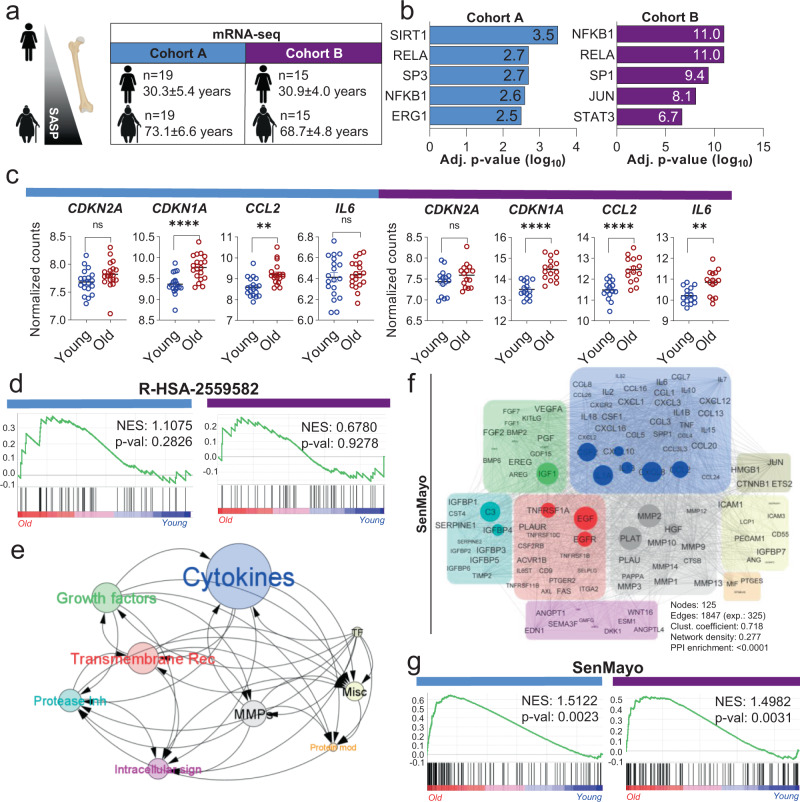
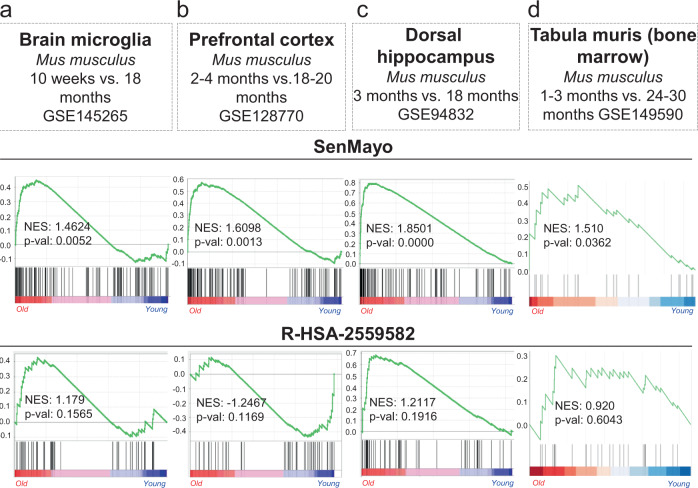
- SenMayo was generated from 15 studies after screening 1,656 studies and comprises 125 genes, predominantly SASP factors (n = 83), plus transmembrane (n = 20) and intracellular (n = 22) proteins. It was significantly enriched in aged human bone biopsies (p = 0.002 for Cohort A; p = 0.003 for Cohort B) and aged mouse brain regions (p = 0.005, p = 0.001, p < 0.001), whereas the prior R-HSA-2559582 gene set did not reach significance (p = 0.157, p = 0.117, p = 0.192).
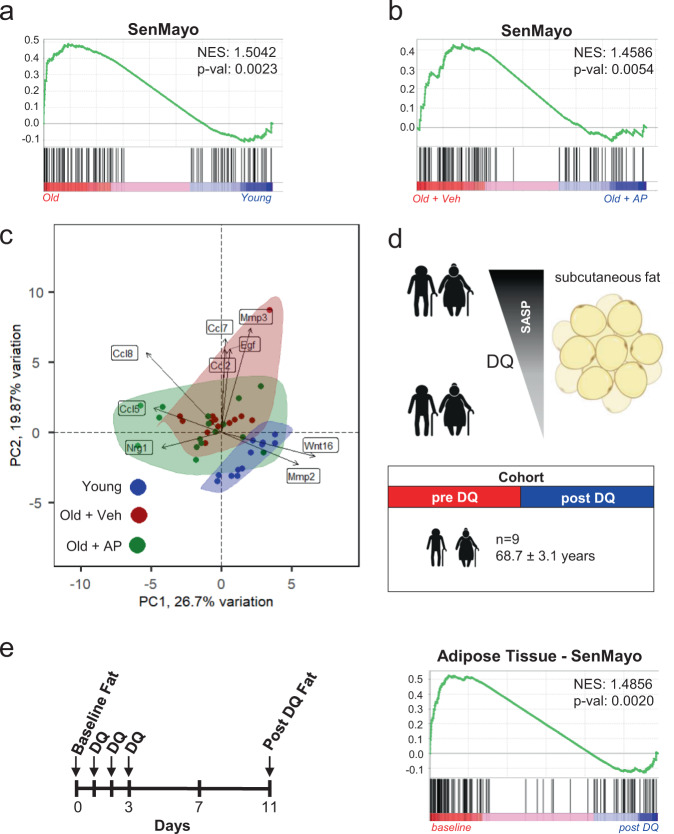
- SenMayo decreased after senescent cell clearance: in old p16-INK-ATTAC mice treated with AP20187, and in human subcutaneous adipose tissue after dasatinib plus quercetin treatment (p = 0.002). Mif mRNA was increased in bones from old versus young mice and significantly reduced after genetic clearance of senescent cells.
- SenMayo consistently outperformed six additional senescence/SASP gene sets based on normalized enrichment scores and p values across the mouse and human models tested.
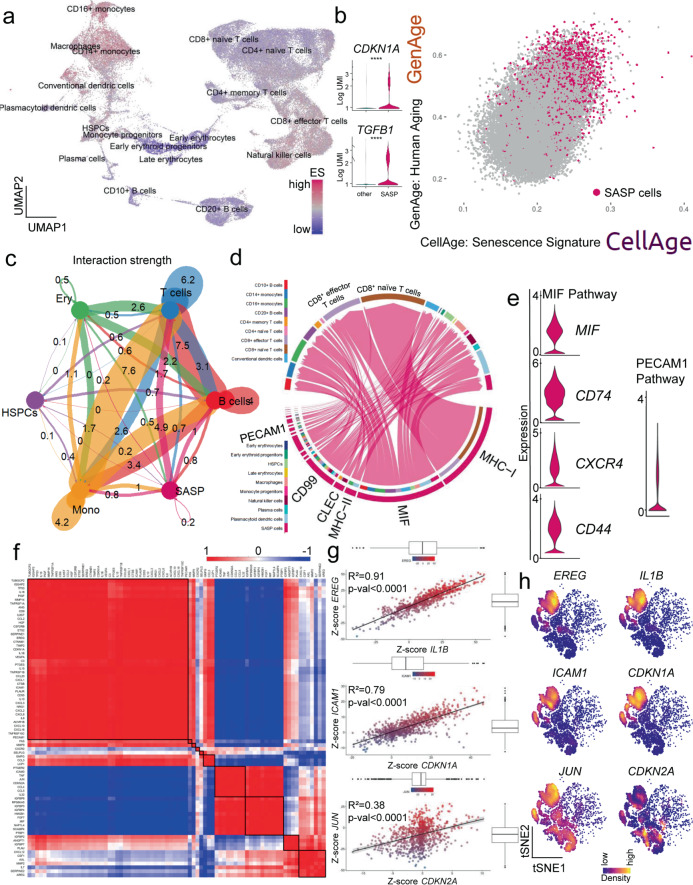
- In scRNA-seq, SenMayo identified SASP cells in human bone marrow (68,478 hematopoietic cells from 20 donors aged 24–84 years; top 10% enrichment yielded 6,850 SASP cells, predominantly monocytic) and in murine bone/bone marrow mesenchymal cells (35,368 cells; 3,537 SASP cells; 21% of osteolineage cells, including 24% OLC1 and 18% OLC2). MIF and PECAM1 pathways were among the most enriched intercellular communication pathways.
Methods
- SenMayo was built by literature search combining genes reported as enriched in senescent and/or SASP-secreting cells and experimentally verified in human or mouse cells; GSEA used default settings with 1,000 permutations, and network analysis used Cytoscape 3.8.2 with iRegulon.
- Human bulk RNA-seq included two cohorts of young versus postmenopausal women (Cohort A: young n = 19, 30.3 ± 5.4 years; postmenopausal n = 19, 73.1 ± 6.6 years; Cohort B: young n = 15, 30.9 ± 4.0 years; postmenopausal n = 15, 68.7 ± 4.8 years) and a phase I pilot of 9 diabetic kidney disease patients (7 male, 2 female, 68.7 ± 3.1 years) given dasatinib plus quercetin, with adipose biopsies before and 11 days after treatment.
- Mouse experiments used old (20 months) female INK-ATTAC mice injected with vehicle or AP20187 (10 mg/kg) twice weekly for 4 months and sacrificed at 24 months, with young (6-month) controls; RT-qPCR measured Mif. scRNA-seq analyses used Seurat v3.0, Louvain clustering at resolution 1.4 yielding 40 clusters, Monocle pseudotime, and CellChat.
Limitations
- Stated: CDKN2A/p16Ink4a is expressed at low levels even in senescent cells and may not be reliably detected in scRNA-seq; some canonical senescence markers, including CDKN2A/p16Ink4a, did not show the predicted increase with aging due to comparatively low expression. The authors propose co-expression analysis with JUN (human) or Dkk1 (mouse) to address this.
- Stated: the human dasatinib plus quercetin study was an open-label Phase 1 pilot, proof-of-concept study with an interim analysis, and SenMayo was part of an exploratory analysis.
- Evident: the human senolytic validation sample was small (9 diabetic kidney disease patients) and limited to subcutaneous adipose tissue; scRNA-seq SASP cells were defined by selecting the top 10% of cells with highest SenMayo expression, a threshold-dependent definition, and the analyses rely on previously published datasets.
Model-written summary. Check it against the paper before relying on it.
Integrity signals
Registry
Cites
Statistics
Figures
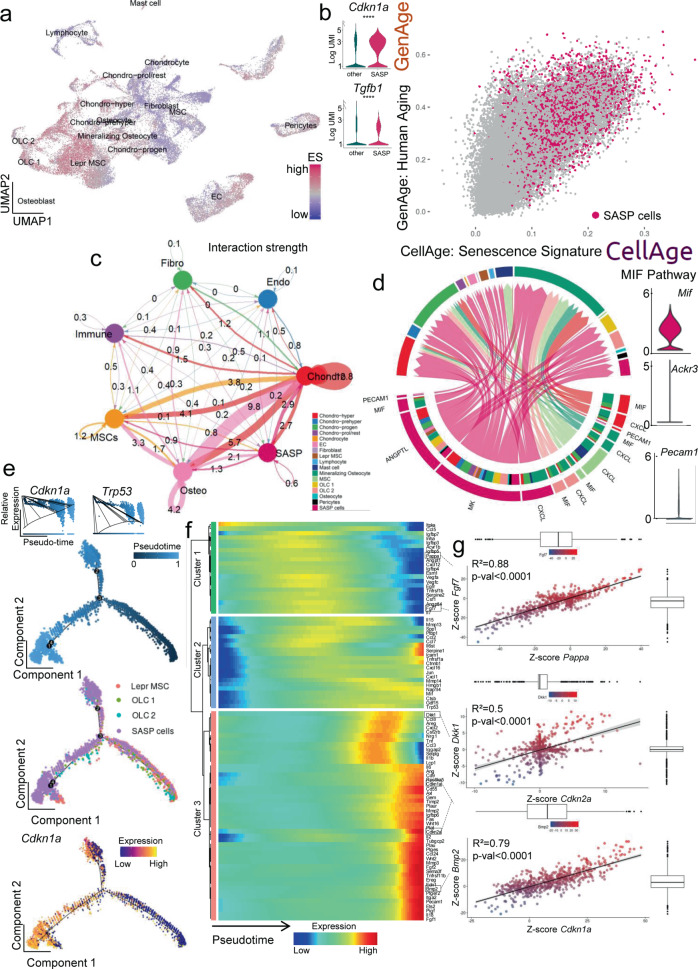
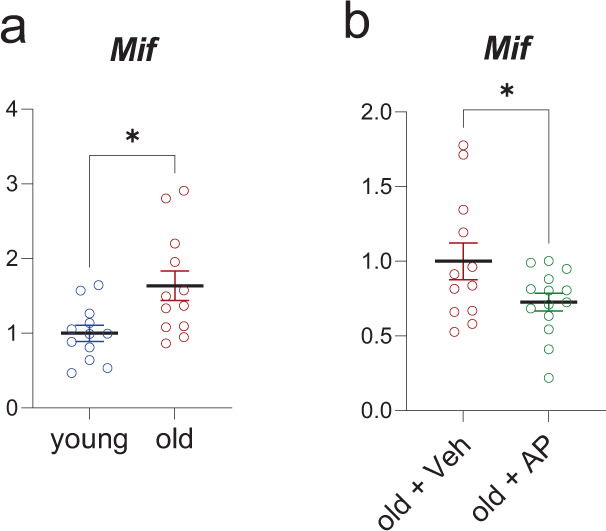
Verification
Claims the paper makes
17 Valid · 2 Not valid · 3 Not checked · 71 Own results and interpretations
The sources with a verdict support this claim; the rest weren’t checked yet, have no full text we could read, or their verdicts aren’t rated yet.
In the paper
“Using publicly available RNA-seq data, we demonstrated applicability across tissues and species and also found that SenMayo performed better than six existing senescence/SASP gene panels14,42–46.”
- Also stated in: § Discussion · plain
“also found that SenMayo performed better than six existing senescence/SASP gene panels14,42–46”
§ A new gene set identifies senescent cells and predicts senescence-associated pathways across tissues > Discussion
What the sources say
- Supportedcites [14] Acosta JC A complex secretory program orchestrated by the inflammasome controls paracrine senescence Nat. cell Biol. 2013 15 978 990 10.1038/ncb2784 23770676 PMC3732483 source
The citation is attached to the existing senescence/SASP gene panels, not to the citing authors’ finding that SenMayo performed better. In “Paracrine senescence resembles a full senescence response,” Acosta et al. describe deriving a paracrine-senescence gene signature, so the paper supports its identification as an existing panel. No page number is supplied in our copy. (LLM, conf=0.88)
- Not checked — no full text of the sourcecites [42] Casella G Transcriptome signature of cellular senescence Nucleic acids Res. 2019 47 11476 10.1093/nar/gkz879 31612919 PMC6868356 source
- Supportedcites [43] Purcell M Kruger A Tainsky MA Gene expression profiling of replicative and induced senescence Cell cycle (Georget., Tex.) 2014 13 3927 3937 10.4161/15384101.2014.973327 PMC4615143 25483067 source
The citation identifies an existing senescence gene panel, not the source of the citing authors’ SenMayo comparison. In ‘Genes differentially expressed in all 4 types of senescence’ (page unavailable), Purcell et al. identify a set of 48 senescence-associated genes and use it for clustering analysis. The paper does not itself compare that set with SenMayo. (LLM, conf=0.88)
- Supportedcites [44] Hernandez-Segura A Unmasking transcriptional heterogeneity in senescent cells Curr. Biol.: CB 2017 27 2652 2660.e4 10.1016/j.cub.2017.07.033 28844647 PMC5788810 source
The citation is attached to the six existing senescence/SASP gene panels, not to the citing authors’ finding that SenMayo performed better. The cited paper identifies a 55-gene senescence core signature in Results and Discussion (page unavailable), so it supports identifying one of the existing panels. (LLM, conf=0.90)
- Supportedcites [45] Fridman AL Tainsky MA Critical pathways in cellular senescence and immortalization revealed by gene expression profiling Oncogene 2008 27 5975 5987 10.1038/onc.2008.213 18711403 PMC3843241 source
The citation is attached to the existing senescence/SASP gene panels used as comparators, not to the citing authors’ finding that SenMayo performed better. In “Genomic approaches to identify senescence/immortalization genes and pathways” (page unavailable), the source says it summarizes genes identified in senescence studies in Supplemental Tables 1 and 2, supporting its use as a source of an existing senescence gene set. (LLM, conf=0.85)
- Supportedcites [46] Jochems F The Cancer SENESCopedia: a delineation of cancer cell senescence Cell Rep. 2021 36 109441 10.1016/j.celrep.2021.109441 34320349 PMC8333195 source
The citation is attached to the six existing panels used as comparators, rather than to the citing authors’ finding that SenMayo performed better. The Results section (‘SENCAN classifier for cancer cell senescence’; page unavailable) identifies this paper’s 137-gene SENCAN classifier, so it supports citing the paper as an existing senescence gene panel. It does not itself report a SenMayo comparison. (LLM, conf=0.88)
plain- Asserted: passes — The authors put it forward as true.
- Checkable: passes — It can be checked against evidence.
- Load-bearing: passes — The paper’s conclusions depend on it.
- Based: passes — The paper gives a reason why it holds.
- Also stated in: § Discussion · plain
Every source the paper cites for this claim was checked and supports it.
In the paper
“using murine bone marrow from the tabula muris senis (a murine single cell transcriptome atlas of young vs. aged tissues36), the applicability of SenMayo in identifying senescent cells associated with aging was confirmed by GSEA (Fig. 2d).”
§ A new gene set identifies senescent cells and predicts senescence-associated pathways across tissues > Results > SenMayo is applicable across tissues and species
What the sources say
- Supportedcites [36] Tabula Muris Consortium. A single-cell transcriptomic atlas characterizes ageing tissues in the mouse Nature 2020 583 590 595 10.1038/s41586-020-2496-1 32669714 PMC8240505 source
The citation identifies Tabula Muris Senis as the source of a murine single-cell atlas spanning young and aged tissues, rather than attributing the citing authors’ SenMayo GSEA result to it. The Abstract describes a mouse single-cell transcriptomic atlas across the lifespan, and the study description lists bone marrow among the sampled tissues. (LLM, conf=0.94)
plainstates an association- Asserted: passes — The authors put it forward as true.
- Checkable: passes — It can be checked against evidence.
- Load-bearing: passes — The paper’s conclusions depend on it.
- Based: passes — The paper gives a reason why it holds.
- Supported
The sources with a verdict support this claim; the rest weren’t checked yet, have no full text we could read, or their verdicts aren’t rated yet.
In the paper
“which was independently validated by demonstrating reductions in p16Ink4+, p21Cip+, and SA-βgal+ cells in the adipose tissue biopsy samples following D + Q treatment24,39.”
§ A new gene set identifies senescent cells and predicts senescence-associated pathways across tissues > Results > SenMayo demonstrates clearance of senescent cells
What the sources say
- Supportedcites [24] Hickson LJ Senolytics decrease senescent cells in humans: preliminary report from a clinical trial of Dasatinib plus Quercetin in individuals with diabetic kidney disease EBioMedicine 2019 47 446 456 10.1016/j.ebiom.2019.08.069 31542391 PMC6796530 source
The Results report significant reductions in p16INK4A+, p21CIP1+, and SAβgal+ cells in abdominal subcutaneous adipose tissue biopsies after D + Q treatment. The biopsies were taken from nine people with diabetes and chronic kidney disease before treatment and 11 days after a three-day course. (LLM, conf=0.95)
- Not checked — no full text of the sourcecites [39] Hickson LJ Corrigendum to ‘Senolytics decrease senescent cells in humans: Preliminary report from a clinical trial of Dasatinib plus Quercetin in individuals with diabetic kidney disease’ EBioMedicine 47 (2019) 446–456 EBioMedicine 2020 52 102595 10.1016/j.ebiom.2019.12.004 31542391 PMC6796530 source
boostedstates a cause- Asserted: passes — The authors put it forward as true.
- Checkable: passes — It can be checked against evidence.
- Load-bearing: passes — The paper’s conclusions depend on it.
- Based: passes — The paper gives a reason why it holds.
- Supported
The cited sources support only part of this claim — read each source’s verdict below.
In the paper
“first validated it in bone biopsy samples from two human cohorts consisting of young vs elderly women27,28”
§ A new gene set identifies senescent cells and predicts senescence-associated pathways across tissues > Discussion
What the sources say
- Partly supportedcites [27] Farr JN Effects of age and estrogen on skeletal gene expression in humans as assessed by rna sequencing PloS one 2015 10 e0138347 10.1371/journal.pone.0138347 26402159 PMC4581624 sourceExperimental — accuracy not yet measured
The Study subjects and Obtaining and processing needle biopsies of bone sections (pages unavailable) document bone biopsies from young and older women, supporting this paper as a source of such samples. The paper describes one study population, including an estrogen-treated older group; it does not report validating SenMayo or establish that this paper represents two cohorts. (LLM, conf=0.86)
- Partly supportedcites [28] Weivoda MM Identification of osteoclast-osteoblast coupling factors in humans reveals links between bone and energy metabolism Nat. Commun. 2020 11 87 10.1038/s41467-019-14003-6 31911667 PMC6946812 sourceExperimental — accuracy not yet measured
The Results (Identification of osteoclast and osteoblast gene signatures; page unavailable) describe bone-gene analyses in two cohorts, including an independent cohort of untreated postmenopausal women. The Methods (Study subjects; page unavailable) describe the biopsy participants as women aged 50–80. Our copy does not say that SenMayo was validated or that the cohorts compared young with elderly women. (LLM, conf=0.82)
plain- Asserted: passes — The authors put it forward as true.
- Checkable: passes — It can be checked against evidence.
- Load-bearing: passes — The paper’s conclusions depend on it.
- Based: passes — The paper gives a reason why it holds.
- Partly supported
Every source the paper cites for this claim was checked and supports it.
In the paper
“The key regulatory elements of the SenMayo genes, according to iRegulon30, featured the Factorbook-NFKB1 motif (Supplementary Fig. 1a)”
§ A new gene set identifies senescent cells and predicts senescence-associated pathways across tissues > Results > Development and validation of SenMayo in human datasets
What the sources say
- Supportedcites [30] Janky R iRegulon: from a gene list to a gene regulatory network using large motif and track collections PLoS computational Biol. 2014 10 e1003731 10.1371/journal.pcbi.1003731 PMC4109854 25058159 source
The citation identifies iRegulon as the motif-analysis method, rather than attributing the SenMayo result to the 2014 paper. The Results section (“The iRegulon framework”; page unavailable) describes how iRegulon finds enriched motifs in an input gene set. The citing sentence points to its own Supplementary Fig. 1a for the Factorbook-NFKB1 finding. (LLM, conf=0.90)
plainstates an association- Asserted: passes — The authors put it forward as true.
- Checkable: passes — It can be checked against evidence.
- Load-bearing: unclear — It is unclear whether the paper’s conclusions depend on it.
- Based: passes — The paper gives a reason why it holds.
- Supported
54 more claims · 4 with their cited sources checked
Create a free account to see all 93 claims and every source verdict.
- Probably not a substantial claim. 18
- It may state two separate claims as one. 20
- Borderline: one of the tests for a substantial claim is unclear. 1
Claims other papers make about this one
Each is checked against this paper’s own text: does it say what the citing paper says it does?
The source backs part of the claim, not all of it — or backs it for a different population, condition or comparison.
In the citing paper
“we previously reported that administration of D + Q to patients with diabetic kidney disease reduced expression (using a global gene set enrichment analysis) of a senescence/SASP gene set (SenMayo) in adipose tissue biopsies, analysis of peripheral blood mononuclear cells failed to find a similar signal26.”
From Effects of intermittent senolytic therapy on bone metabolism in postmenopausal women: a phase 2 randomized controlled trial (2024) · cites this paper as [26]
Experimental — accuracy not yet measuredThe source backs part of the claim, not all of it — or backs it for a different population, condition or comparison.
In the citing paper
“Although several valuable senescence signatures and computational tools have been developed, including SenMayo, hUSI, SenSig, and SenePy,14–17 their performance can vary across biological contexts, likely because they capture distinct facets of the senescence phenotype depending on how they were derived and validated.18”
From SenCat: Cataloging human cell senescence through multi-omic profiling of multiple senescent primary cell types (2026) · cites this paper as [14]
Experimental — accuracy not yet measuredThe source backs part of the claim, not all of it — or backs it for a different population, condition or comparison.
In the citing paper
“The senescent state was confirmed by evaluating multiple senescence markers or phenotypes, consistent with guidelines from the SenNet consortium.14–17,20”
From SenCat: Cataloging human cell senescence through multi-omic profiling of multiple senescent primary cell types (2026) · cites this paper as [14]
Experimental — accuracy not yet measuredThe source backs part of the claim, not all of it — or backs it for a different population, condition or comparison.
In the citing paper
“recent efforts have identified transcriptomic signatures of cellular senescence derived from a different panels of human in vitro datasets.14–17,20”
From SenCat: Cataloging human cell senescence through multi-omic profiling of multiple senescent primary cell types (2026) · cites this paper as [14]
Experimental — accuracy not yet measuredThe source backs part of the claim, not all of it — or backs it for a different population, condition or comparison.
In the citing paper
“These models demonstrate impressive cross-dataset generalizability and scoring robustness, but they are often derived either from heterogeneous multi-study collections or from narrower biological settings, which can limit the extent to which they capture the full diversity of senescent states across cell types and triggers.14–17,20”
From SenCat: Cataloging human cell senescence through multi-omic profiling of multiple senescent primary cell types (2026) · cites this paper as [14]
Experimental — accuracy not yet measured
12 more claims about this paper
Create a free account to see every claim other papers make about this one.
Citations
Cites
Subramanian, A., Tamayo, P., Mootha, V. K., Mukherjee, S., Ebert, B. L., Gillette, M. A., Paulovich, A., Pomeroy, S. L., Golub, T. R., Lander, E. S., et al. (2005) · Proceedings of the National Academy of Sciences · doi:10.1073/pnas.0506580102 · Cited by 53,625 · cited 1×
“between groups, but also evaluates overall trends for differences in gene expression between groups and hence provides considerably greater power than examining individual genes.(31) The”
Cytoscape: A software Environment for integrated models of biomolecular interaction networks
Shannon, P., Markiel, A., Ozier, O., Baliga, N. S., Wang, J. T., Ramage, D., Amin, N., Schwikowski, B., & Ideker, T. (2003) · Genome Research · doi:10.1101/gr.1239303 · Cited by 51,888 · cited 1×
“2.(30) For mRNA-seq of murine material, tibiae were centrifuged as noted above to remove bone marrow elements and then were immediately homogenized in QIAzol Lysis Reagent (QIAGEN, Valencia, CA) and stored at -80°C, until the time of RNA extraction.”
MethodMootha, V. K., Lindgren, C. M., Eriksson, K.-F., Subramanian, A., Sihag, S., Lehar, J., Puigserver, P., Carlsson, E., Ridderstråle, M., Laurila, E., et al. (2003) · Nature Genetics · doi:10.1038/ng1180 · Cited by 10,197
Inference and analysis of cell-cell communication using CellChat
Jin, S., Guerrero-Juarez, C. F., Zhang, L., Chang, I., Ramos, R., Kuan, C.-H., Myung, P., Plikus, M. V., & Nie, Q. (2021) · Nature Communications · doi:10.1038/s41467-021-21246-9 · Cited by 8,409 · cited 1×
“To explore these intercellular interactions, we evaluated potential ligand-receptor interactions and secretion patterns based on underlying gene expression levels in different hematopoietic cell types in human bone marrow.(50) The strongest interaction of SASP cells was found with T cells, followed”
MethodTrapnell, C., Cacchiarelli, D., Grimsby, J., Pokharel, P., Li, S., Morse, M., Lennon, N. J., Livak, K. J., Mikkelsen, T. S., & Rinn, J. L. (2014) · Nature Biotechnology · doi:10.1038/nbt.2859 · Cited by 7,314 · cited 2×
“Each cell is assigned a pseudotemporal space.(97,98) Monocle 2 was”
BackgroundMethodScenic: single-cell regulatory network inference and clustering.
Aibar, S., González-Blas, C. B., Moerman, T., Huynh-Thu, V. A., Imrichova, H., Hulselmans, G., Rambow, F., Marine, J.-C., Geurts, P., Aerts, J., et al. (2017) · Nature Methods · doi:10.1038/nmeth.4463 · Cited by 6,520
The senescence-associated secretory phenotype: the dark side of tumor suppression
Coppé, J.-P., Desprez, P.-Y., Krtolica, A., & Campisi, J. (2010) · Annual Review of Pathology: Mechanisms of Disease · doi:10.1146/annurev-pathol-121808-102144 · Cited by 5,206
Reversed graph embedding resolves complex single-cell trajectories
Qiu, X., Mao, Q., Tang, Y., Wang, L., Chawla, R., Pliner, H. A., & Trapnell, C. (2017) · Nature Methods · doi:10.1038/nmeth.4402 · Cited by 5,070
Cellular senescence: when bad things happen to good cells
Campisi, J., & d'Adda di Fagagna, F. (2007) · Nature Reviews Molecular Cell Biology · doi:10.1038/nrm2233 · Cited by 4,441
The biplot graphic display of matrices with application to principal component analysis
GABRIEL, K. R. (1971) · Biometrika · doi:10.1093/biomet/58.3.453 · Cited by 3,037
Cited by
Items 301–400 of 1,070
Single-cell and spatial detection of senescent cells using DeepScence
(2023) · doi:10.1101/2023.11.21.568150 · Cited by 12
“However, the original SenMayo study [20], which uses the ssGSEA method, treats the top 10% of cells with the highest senescence scores as senescent cells.”
The 15‐Year Survival Advantage: Immune Resilience as a Salutogenic Force in Healthy Aging
Manoharan, M. S., Lee, G. C., Harper, N., Meunier, J. A., Restrepo, M. I., Jiménez, F., Karekatt, S., Branum, A. P., Gaitán, Á. A., Andampour, K., et al. (2025) · Aging Cell · doi:10.1111/acel.70063 · Cited by 13
“Age_IL6 up and InflammΔage up were developed through FHS biomarker analyses (Lin et al. 2017; Pilling et al. 2015), while the SenMayo signature quantifies senescent cell load across tissues and species and decreases after senescent cell clearance in mice and humans (Saul et al. 2022).”
Fu, L., Yin, C., Zhao, Q., Guo, S., Shao, W., Xia, T., Sun, Q., Chen, L., Li, J., Wang, M., et al. (2024) · eLife · doi:10.7554/elife.96908 · Cited by 12
Phylloquinone improves endothelial function, inhibits cellular senescence, and vascular inflammation
Kieronska‐Rudek, A., Kij, A., Bar, A., Kurpińska, A., Mohaissen, T., Grosicki, M., Stojak, M., Sternak, M., Buczek, E., Proniewski, B., et al. (2024) · GeroScience · doi:10.1007/s11357-024-01225-w · Cited by 13
“…following pathways: DNA repair including mismatch repair (HEXB [63], LACTB [64], H2AFV [65], HLA-A [66], SLC25A24 [67], TPP1 [68], SAMHD1 [69]) and senescence (LAMP-1 [70], GLRX3 [71], HK1 [72], GMFG [73], FTH1 [74], MCM7 [75], LGALS3 [76], TXN [77], ASPH [78], TPP1 [68], STAT1 [79], FLNA [80]).”
Lymphoma accelerates T cell and tissue aging
Hesterberg, R. S., Davis, J. T., Handoo, K. J., Elmarsafawi, A. G., Augello, A. C., Cheng, C., Atkins, R. M., Lee, D. H., Yang, C., Yao, J., et al. (2025) · Cancer Cell · doi:10.1016/j.ccell.2025.07.023 · Cited by 16
Self-citationBian, X., Snow, Z. K., Zinn, C. J., Bratulin, A. L., Elhusseiny, K. M., Tchkonia, T., Kirkland, J. L., Zhu, Y., Khosla, S., Kim, S. R., et al. (2026) · EBioMedicine · doi:10.1016/j.ebiom.2026.106124 · Cited by 23
Self-citation(2025) · doi:10.1186/s13073-024-01418-0 · Cited by 12
Decoding aging in the heart via single cell dual omics of non-cardiomyocytes
Song, Y., Wang, L., Wang, H., Ma, H., Xu, J., Liu, J., & Li, Q. (2024) · iScience · doi:10.1016/j.isci.2024.111469 · Cited by 14
Anerillas, C., Altés, G., Gresova, K., Tsitsipatis, D., Mazan-Mamczarz, K., Banarjee, R., Cunningham, A. S. G., Salamini-Montemurri, M., Yang, J.-H., Munk, R., et al. (2026) · Molecular Cell · doi:10.1016/j.molcel.2026.05.017 · Cited by 11
Bi, W., Yang, M., Shi, M., Hou, M., Jiang, C. Q., Fan, G., & Guo, W. (2024) · Scientific Reports · doi:10.1038/s41598-024-69284-9 · Cited by 16
“The Senolytic cocktail of D + Q has been extensively explored in SkM aging to improve SkM molecular profile and function 23,59 .”
BackgroundKamal, M. J., Joanisse, S., & Parise, G. (2023) · GeroScience · doi:10.1007/s11357-023-00929-9 · Cited by 14
“The SASP markers CCL2, MMP9, Cyr61, and IL-33 were examined after consulting the recently published SenMayo gene set and a senescent atlas of skeletal muscle [36, 37].”
Senescence in cancer: Hallmarks, paradoxes, and therapeutic promise
Hinterleitner, C., Goldberg, H. V., McHugh, D., Barthet, V. J. A., Filliol, A. A., & Lowe, S. W. (2026) · Cell · doi:10.1016/j.cell.2026.03.005 · Cited by 24
“The widely used SenMayo signature 107 , compiled from hundreds of datasets, shows strongest overlap with “epithelial-to-mesenchymal transition (EMT)”, a cell state classically linked to development and metastasis.”
Liu, Y., Feng, Y., Cheng, L. L., Xu, Y., Wu, A., & Cheng, P. (2025) · Cell Death and Disease · doi:10.1038/s41419-025-07915-3 · Cited by 17
“For example, in the comparison of our SASP Score with 4 other senescence signatures [35 – 38], only our SASP Score consistently shows signi fi cant upregulation in the 9 senescence induction models (Fig.”
Mao, X., Li, L., Lee, G., Agborbesong, E., Zhou, J. X., Calvet, J. P., & Li, X. (2025) · Kidney International · doi:10.1016/j.kint.2025.05.027 · Cited by 14
Alam, M. T., Mansoor, M. A. M., Ashiqueali, S., Golusiński, P., Golusińska-Kardach, E., Strzelczyk, J. K., Rubiś, B., Golusiński, W., & Masternak, M. M. (2025) · Cancers · doi:10.3390/cancers17244024 · Cited by 17
“These findings underscore the importance of single-cell analysis in understanding SASP’s role in therapeutic resistance and tumor progression [154].”
Endothelial senescence induced by PAI-1 promotes endometrial fibrosis
Wu, J., Wang, J., Pei, Z., Zhu, Y., Zhang, X., Zhou, Z., Ye, C., Song, M., Hu, Y., Xue, P., et al. (2025) · Cell Death Discovery · doi:10.1038/s41420-025-02377-0 · Cited by 20
Self-citationBMAL1 modulates senescence programming via AP-1
Jachim, S. K., Zhong, J., Ördög, T., Lee, J., Bhagwate, A. V., Nagaraj, N. K., Westendorf, J. J., Passos, J. F., Matveyenko, A. V., & LeBrasseur, N. K. (2023) · Aging · doi:10.18632/aging.205112 · Cited by 12
Self-citationCáceres-Palomo, L., Sánchez‐Mejías, E., Trujillo‐Estrada, L., Pérez-Moreno, J. J., Lopez-Oliva, E., Lim, T. E., DeFlitch, L., Chang, S. H., Kampman, L., Corces, M. R., et al. (2025) · Journal of Neuroinflammation · doi:10.1186/s12974-025-03607-z · Cited by 12
“To confirm these observations, we performed RNA-seq and gene set enrichment analysis (GSEA) of recently reported markers associated with cell senescence [39, 42].”
InfluentialWang, X., Liu, H., Liu, H., Zhao, C., Xu, D., Xu, D., Zhang, E., Zhou, Z., Qi, X., Wang, X., et al. (2024) · Cell & Bioscience · doi:10.1186/s13578-024-01299-1 · Cited by 12
“Although the T3 cells express inflammatory cytokines, e.g. , CXCL14 , and fibroblast growth factors, such as FGF4 and FGF19 , they have the lowest SASP enrichment score calculated with the SenMayo gene set [31].”
MethodMan, R. D., McDonough, J. E., Adams, T. S., Nikola, F., Rangel, R., Anderson, S., Manning, E. P., Cala-García, J., Moss, B. J., Waich, A., et al. (2026) · Nature Communications · doi:10.1038/s41467-026-68810-9 · Cited by 22
“Modules were then assessed for the presence of genes from the Sen-Mayo gene list 15 using Fisher ’ s Exact Test (FET).”
Stiffening symphony of aging: Biophysical changes in senescent osteocytes
Tilton, M., Weivoda, M. M., Potes, M. D. A., Gingery, A., Liu, A. Y., Tchkonia, T., Lu, L., & Kirkland, J. L. (2024) · Aging Cell · doi:10.1111/acel.14421 · Cited by 12
“1,21 Additionally, there is evidence of sex-dependent variations in senescence-associated factors.”
InfluentialSelf-citationZhou, L., DeMarco, K. D., Murphy, K. C., Wu, Z., Li, J., Johnson, C., Liu, B., Giwa, H. K., Ma, B., Bhalerao, N., et al. (2025) · Cancer Discovery · doi:10.1158/2159-8290.cd-25-1212 · Cited by 22
Skeletal Senescence with Aging and Type 2 Diabetes
Farr, J. N. (2023) · Endocrinology and Metabolism · doi:10.3803/enm.2023.1727 · Cited by 14
“Although parallel data in humans with T2D treated with senolytics in still being collected, preliminary studies in patients with diabetic kidney disease treated with senolytics demonstrated efficacy for clearance of senescent cells in adipose tissue and skin as well as reductions in the SASP in blood and fat biopsies…”
ResultSelf-citationYan, P., Ke, B., & Fang, X. (2024) · Heliyon · doi:10.1016/j.heliyon.2024.e24872 · Cited by 15
“Its performance encompasses adaptability to aging in various tissues and species, along with superior responsiveness for clearing senescent cells compared to the existing six genomes [31] (Table S1).”
BackgroundMassemin, A., Goehrig, D., Flaman, J., Jaber, S., Griveau, A., Djebali, S., Marcos, É., Payen, L. F., Marvel, J., Parent, R., et al. (2023) · Aging Cell · doi:10.1111/acel.13971 · Cited by 10
Redefining SGLT2 inhibitors through cytoprotective mechanisms
Stanković, S., Miloradović, Z., Petrovič, V., & Stoiljković, M. (2026) · European Journal of Pharmacology · doi:10.1016/j.ejphar.2026.178647 · Cited by 14
(2023) · doi:10.1101/2023.03.07.531562 · Cited by 11
“Senescent cell characteristics include: 1) cell cycle arrest, 2) resistance to apoptosis, and 3) upregulation of the senescence-associated secretory phenotype (SASP) factors.”
BackgroundResultInfluentialSystematic transcriptomic analysis and temporal modelling of human fibroblast senescence
Scanlan, R.-L., Pease, L., O’Keefe, H., Guimera, A. M., Rasmussen, L. J., Wordsworth, J., & Shanley, D. P. (2024) · Frontiers in Aging · doi:10.3389/fragi.2024.1448543 · Cited by 11
Zhang, L., Wang, Z., Tang, F., Wu, M., Pan, Y., Bai, S., Lu, B., Zhong, S., & Xie, Y. (2024) · Journal of Diabetes Research · doi:10.1155/2024/5560922 · Cited by 11
Senolytic CAR T cells reverse aging-associated defects in intestinal regeneration and fitnessPreprint
Eskiocak, O., Chowdhury, S., Shah, V., Nnuji-John, E., Chung, C., Boyer, J. A., Harris, A. S., Habel, J., Sadelain, M., Beyaz, S., et al. (2024) · bioRxiv (Cold Spring Harbor Laboratory) · doi:10.1101/2024.03.19.585779 · Cited by 11
Endometrial Stromal Senescence Mediates the Progression of Intrauterine Adhesions
Deryabin, P. I., & Borodkina, A. V. (2025) · International Journal of Molecular Sciences · doi:10.3390/ijms26094183 · Cited by 11
“The second geneset, “Saul SenMayo”, consists of 125 genes that mainly represent SASP factors [27].”
Mapping the core senescence phenotype of primary human colon fibroblasts
Hattangady, N. G., Carter, K. T., Maroni-Rana, B., Wang, T., Ayers, J., Yu, M., & Grady, W. M. (2024) · Aging · doi:10.18632/aging.205577 · Cited by 15
FGF receptors mediate cellular senescence in the cystic fibrosis airway epithelium
Easter, M., Hirsch, M. J., Harris, E. S., Howze, P. H., Matthews, E. L., Jones, L., Bollenbecker, S., Vang, S., Tyrrell, D. J., Sanders, Y. Y., et al. (2024) · JCI Insight · doi:10.1172/jci.insight.174888 · Cited by 10
Manavi, Z., Melchor, G. S., Bullard, M. R., Gross, P. S., Ray, S., Gaur, P., Baydyuk, M., & Huang, J. K. (2025) · Journal of Neuroinflammation · doi:10.1186/s12974-025-03425-3 · Cited by 10
“Re-analysis of a previously published single-cell RNA sequencing dataset collected from MOG 35–55 EAE CNS and meninges [24] revealed an increase in senescence-associated gene signatures [25] in myeloid lineage cells with disease progression.”
Shao, X., Xu, H., Kim, H., ljaz, S., Beier, F., Jankowski, V., Lellig, M., Vankann, L., Werner, J. N., Chen, L., et al. (2024) · Cell Death Discovery · doi:10.1038/s41420-024-02131-y · Cited by 17
Cellular senescence in adult pulmonary hypertension: current state and future challenges
Lemay, S.-E. S., Kuwabara, Y., Bonnet, S., Potus, F., Provencher, S., Adnot, S., & Boucherat, O. (2025) · European Respiratory Review · doi:10.1183/16000617.0030-2025 · Cited by 16
HDAC Inhibitors recapitulate Human Disease-Associated Microglia Signatures in vitro
Haage, V. C., Tuddenham, J. F., Bautista, A. R., Garcia, F. G., White, C. C., Patel, R., Comandante-Lou, N., Marshe, V. S., Griffin, J. K., Zhou, Y., et al. (2024) · Brain Behavior and Immunity · doi:10.1016/j.bbi.2025.05.027 · Cited by 24
Oyabu, M., Ohira, Y., Fujita, M., Yoshioka, K., Kawaguchi, R., Kubo, A., Hatazawa, Y., Yukitoshi, H., Quiroga, H. P. O., Horii, N., et al. (2025) · iScience · doi:10.1016/j.isci.2025.112144 · Cited by 13
“GSEA of Dnmt3a-regulated genes was also performed using a senescence-associated gene set (SenMayo), 77 and gene sets of KEGG_Chemokine Signaling Pathway (M4844), KEGG_Cytokine-Cytokine Receptor Interaction (M9809), GOBP_NADH Dehydrogenase complex assembly (M22615), Muscle FoxO Signaling (Table S7),…”
Li, P. L., Tang, J., Li, X. T., Zhao, S. R., Xu, R. X., Zhao, Z. D., Zhong, L., Li, Z. L., Yin, B. F., Yu, F., et al. (2025) · Science Advances · doi:10.1126/sciadv.adu2294 · Cited by 26
TE-Seq: a transposable element annotation and RNA-Seq pipeline
Kelsey, M. M. G., Kalekar, R. L., & Sedivy, J. M. (2025) · Mobile DNA · doi:10.1186/s13100-025-00381-w · Cited by 15
Aging microvasculature: Effects on immune cell trafficking and inflammatory diseases
Reglero-Real, N., Rolas, L., & Nourshargh, S. (2025) · The Journal of Experimental Medicine · doi:10.1084/jem.20242154 · Cited by 14
Chiche, A., Djoual, L., Charifou, E., Wang, S., Temime, L., Saclier, M., Wang, S., Chantrel, J., & Li, H. (2026) · Nature Aging · doi:10.1038/s43587-025-01058-y · Cited by 12
“Gene set enrichment analysis (GSEA) demonstrated significant enrichment of senescence-associated genes 45 in both Inv3 and Inv7 compared with Inv0 (Fig.”
InfluentialWang, J., Guo, P., Wu, D., Yi, J., Jiang, Q., Hu, J., & Ouyang, H. (2025) · Advanced Science · doi:10.1002/advs.202414419 · Cited by 16
SenMayo transcriptomic senescence panel highlights glial cells in the ageing mouse and human retina
Suresh, S., Karthik, G., Ouyang, J. F., Chrysostomou, V., Tang, S. A., Petretto, E. G., Crowston, J. G., & Bell, K. C. (2024) · npj Aging · doi:10.1038/s41514-024-00187-9 · Cited by 13
Characterizing primary and secondary senescence in vivo
Sogabe, Y., Shibata, H., Kabata, M., Tanaka, A., Mitsunaga, K., Sunadome, K., Nakajima‐Koyama, M., Hirano, M., Nishida, E., Woltjen, K., et al. (2025) · Nature Aging · doi:10.1038/s43587-025-00917-y · Cited by 16
“Article https://doi.org/10.1038/s43587-025-00917-y Plaur , Serpine1 and Cd9 are also part of the recently identified set of 119 senescence genes, ‘SenMayo’ 32 .”
InfluentialMET receptor serves as a promising target in melanoma brain metastases
Redmer, T., Schumann, E., Peters, K., Weidemeier, M. E., Nowak, S., Schroeder, H. W. S., Vidal, A., Radbruch, H., Lehmann, A., Kreuzer-Redmer, S., et al. (2024) · Acta Neuropathologica · doi:10.1007/s00401-024-02694-1 · Cited by 11
“We found that MBM with high immune score were enriched in genes associated with MET and STAT3 signaling, tumor inflammation, stress and senescence (SenMayo [58]) (Fig.”
BackgroundDoolittle, M. L., Khosla, S., & Saul, D. (2023) · JBMR Plus · doi:10.1002/jbm4.10795 · Cited by 11
Self-citationKim, S., Nouws, J., Ruwisch, J., Woodard, G. A., Cooley, J. C., Khoury, J., Sun, H., Doherty, E. H., Piecychna, M., Manning, E. P., et al. (2025) · Science Translational Medicine · doi:10.1126/scitranslmed.adr2277 · Cited by 11
Zhang, S., Chen, Y., & Qu, L. (2025) · Scientific Reports · doi:10.1038/s41598-025-92559-8 · Cited by 11
“The SASP refers to a series of factors, inflammatory factors, and extracellular matrix proteins produced and secreted by senescent cells 21 .”
Habiballa, L., Hruby, A. J., Granic, A., Dodds, R. M., Hillman, S. J., Jurk, D., Passos, J. F., & Sayer, A. A. (2023) · GeroScience · doi:10.1007/s11357-023-00869-4 · Cited by 11
“…such as single cell RNA sequencing [54], MACS (Magnetic Activating Cell Sorting), and Gene Set Enrichment (GSEA)-based approaches (e.g., the SenMayo gene set) [55] will enable the examination of transcriptional changes in various mononuclear cell populations in skeletal muscle during ageing.”
Self-citationRusso, T., Plessis‐Belair, J., Sher, R. B., & Rießland, M. (2025) · Nature Communications · doi:10.1038/s41467-025-66012-3 · Cited by 10
p53 maintains lineage fidelity during lung capillary injury-repair in neonatal hyperoxia
Ellis, L. V., Bywaters, J. D., Ceas, A., Liu, Y., Sucre, J. M. S., & Chen, J. (2025) · JCI Insight · doi:10.1172/jci.insight.182880 · Cited by 14
“JCI Insight 2025;10(17):e182880 https://doi.org/10.1172/jci.insight.182880 senescence-associated secretory phenotype (SASP) gene lists and found a negligible increase in hyperoxia (Supplemental Figure 4B) (24).”
InfluentialSun, K., Kang, Z., Chen, Y., Yu, Y., Han, L., Shi, Y., Chen, L., Shi, J., Chen, Y., & Sun, J. (2025) · Advanced Science · doi:10.1002/advs.202412908 · Cited by 16
Mahmud, S., Chen, Z., Santiago, F. E., Zhang, L., Robbins, P. D., & Dong, X. (2024) · GeroScience · doi:10.1007/s11357-024-01485-6 · Cited by 15
“Additionally, we performed network analysis of the identified gene set and performed protein–protein interaction network analysis, comparing the results with those from CellAge [25] and SenMayo [14].”
InfluentialSelf-citationSenSkin™: a human skin-specific cellular senescence gene set
Wyles, S. P., Yu, G., Gânier, C., Tchkonia, T., Lynch, M. D., Kuchel, G. A., & Kirkland, J. L. (2025) · GeroScience · doi:10.1007/s11357-025-01568-y · Cited by 18
“Recent examples include CellAge, SenMayo, and Reactome’s Cellular Senescence gene set [2–5].”
InfluentialSelf-citationHIV-Tat upregulates the expression of senescence biomarkers in CD4+ T-cells
Casanova, V., Rodríguez-Agustín, A., Ayala-Suárez, R., Moraga, E., Maleno, M. J., Mallolas, J., Martínez, E., Sánchez‐Palomino, S., Miró, J. M., Alcamí, J., et al. (2025) · Frontiers in Immunology · doi:10.3389/fimmu.2025.1568762 · Cited by 10
“We found that among the genes that comprise the SenMayo dataset (57), Tat 101 expression upregulated TNF, CCL1, CDKN1A, PECAM1 , and ITPKA mRNA levels while downregulated IFGBPT7, IGFBP2, TIMP2, AXL , and CD9 (Figure 4C ).”
InfluentialFu, L., Yu, B., Zhang, Y., Cao, S., lv, B., Tian, Y., Chen, H., Yang, S., Hu, Y., Hua, J., et al. (2023) · Aging · doi:10.18632/aging.204804 · Cited by 15
Gkikoudi, A., Manda, G., Beinke, C., Giesen, U., Al-Qaaod, A., Dragnea, E. M., Dobre, M., Neagoe, I. V., Sangsuwan, T., Haghdoost, S., et al. (2025) · Biomolecules · doi:10.3390/biom15040536 · Cited by 14
“The overexpression of the CDKN1a gene in co-exposed Hs27 fibroblasts keratinocytes indicated that these cells might be committed to senescence [56] and cell cycle arrest [57] required for efficient DNA damage repair in aggressed cells.”
Yang, F., Wendusubilige, Kong, J., Zong, Y., Wang, M., Jing, C., Ma, Z., Li, W., Cao, R., Jing, S., et al. (2023) · The EPMA Journal · doi:10.1007/s13167-023-00334-4 · Cited by 10
“SASP-related genes were obtained from the literature [26].”
BackgroundDifferential susceptibility and role for senescence in CART cells based on costimulatory domains
Can, İ., Siegler, E. L., Sirpilla, O. L., Manriquez-Roman, C., Yun, K., Stewart, C. M., Feigin, J. M., Rodriguez, M. L., Gutierrez-Ruiz, O. L., Ogbodo, E. J., et al. (2025) · Molecular Cancer · doi:10.1186/s12943-025-02371-1 · Cited by 11
“…which consists of 125 genes whose expression is consistently associated with senescence of multiple tissues induced through different methods [49]. senMayo gene set was notably enriched in recurrently activated/ rested BBζ and in nonresponsive tisa-cel-treated patients but not in recurrently…”
Microglial STING is a central safeguard against neurological decline with age
Sulka, K. B., Carroll, K. A., Sawden, M., Hopkins, J. W., Smolgovsky, S. A., Bayer, A. L., Reed, E. R., Tai, A., Alcaide, P., Haydon, P. G., et al. (2025) · Cell Reports · doi:10.1016/j.celrep.2025.115749 · Cited by 15
Raza, K., Sharma‐Oates, A., Padyukov, L., Mil, A. H. M. V. D. H., Pratt, A. G., Jones, S. W., Filer, A. D., Lord, J. M., & Duggal, N. A. (2025) · EBioMedicine · doi:10.1016/j.ebiom.2025.105900 · Cited by 10
“19 CD4 T cells play a key role in RA pathogenesis; particularly Th17 cells, that produce and secrete IL17 which activates other immune cells [ as macrophages, B cells] and promotes migration towards inflammatory sites.”
Cell‐Surface LAMP1 is a Senescence Marker in Aging and Idiopathic Pulmonary Fibrosis
Meca-Laguna, G., Qiu, M., Hou, Y., Barkovskaya, A., Shankar, A., Dixit, B., Rae, M. J., Boominathan, A., & Sharma, A. (2025) · Aging Cell · doi:10.1111/acel.70141 · Cited by 11
Sambale, M., Lively, S. S., Espin‐Garcia, O., Potla, P., Pastrello, C., Bödecker, S., Wessendorf, L., Kleimann, S., Paruzel, P., Asgarian, R., et al. (2024) · JCI Insight · doi:10.1172/jci.insight.182103 · Cited by 12
“…DAPI + cells within the same area was found to be significantly higher in Trpc1 - /- cartilage than in that of wild type mice following DMM (Figure 4C), indicating that a large number of cells no longer expressing Sox9 remain within the articular cartilage of Trpc1 -/- mice following OA induction.”
Estropausal gut microbiota transplant improves measures of ovarian function in adult mice
Kim, M., Wang, J., Pilley, S. E., Lu, R., Xu, A., Kim, Y., Liu, M., Fu, X., Booth, S. L., Mullen, P. J., et al. (2026) · Nature Aging · doi:10.1038/s43587-026-01069-3 · Cited by 18
“Of note, our results showed a significant downregulation of the SenMayo gene set in the FMT-EF group, consistent with overall ‘rejuvenation’ of the ovarian transcriptome upon FMT-EF ( P value ~ 0.0382; Fig.”
InfluentialMolecular cartography of the human down syndrome and trisomic mouse brain
Feng, M. Y., Cao, W., Tahmasian, N., Kukreja, B., Li, G. L., Rusu, B., Youn, J., & Kalish, B. T. (2025) · Nature Communications · doi:10.1038/s41467-025-63752-0 · Cited by 11
Novais, E. J., Ottone, O. K., Jagannath, S., Akande, E. J., Barve, R. A., & Risbud, M. V. (2026) · Bone Research · doi:10.1038/s41413-026-00526-4 · Cited by 15
Xie, W., Chu, Q., Brea, L. T., Zeng, G., Wang, Y., Lü, X., Zheng, M., Ley, C. R., Lei, Z., Shi, H., et al. (2026) · Oncogene · doi:10.1038/s41388-025-03662-z · Cited by 9
“We used two well-established SASPs human gene sets, “ SAUL_SEN_MAYO ” [35] and “ FRIDMAN_SENESCENCE_UP ” [36], for the analysis.”
Liu, X., Liu, Y., Gao, Y., Zhang, C., Gu, C., Lv, J., Wu, J., & Su, W. (2025) · npj Aging · doi:10.1038/s41514-025-00222-3 · Cited by 14
Vu, H., Sun, Y., Xiong, Z., Tan, X., Radford‐Smith, D. E., Causer, A., Dickens, A. M., Hyötyläinen, T., Evstafev, I., Orešič, M., et al. (2025) · JHEP Reports · doi:10.1016/j.jhepr.2025.101657 · Cited by 20
Ham, M., Cho, Y., Kang, T., Oh, T., Kim, H., & Kim, K. (2024) · Aging Cell · doi:10.1111/acel.14049 · Cited by 8
“Senescence of cells and decline in the expression of their marker genes, such as cell cycle-related and senescence-associated secretory phenotype (SASP) genes, are increased in various tissues of older individuals (Saul et al., 2022).”
BackgroundNF-κB activation in astrocytes impairs wound healing after traumatic brain injury in male mice
Hein, T. M., Nespoli, E., Hakani, M., Wendt, H., May, S. N., Jorzik, J., Yagdiran, D., Schlett, J. S., Tsesmelis, K., Tsesmelis, M., et al. (2026) · Nature Communications · doi:10.1038/s41467-026-70304-7 · Cited by 14
Jahantigh, H. R., Elsharkawy, A., Guglani, A., Arora, K., Patterson, L. D., & Kumar, M. (2025) · Viruses · doi:10.3390/v17030329 · Cited by 8
“Infection with di ff erent variants upregulated genes like cyclin-dependent kinase inhibitor 1A ( CDKN1A ) and cyclin-dependent kinase inhibitor 2B ( CDKN2B ), which play a role in cellular senescence [42,43].”
Rusu, B., Kukreja, B., Wu, T., Dan, S. J., Feng, M. Y., & Kalish, B. T. (2023) · eNeuro · doi:10.1523/eneuro.0147-23.2023 · Cited by 10
Larson, K. C., Martens, L. H., Marconi, M., Dejesus, C., Bruhn, S., Miller, T. A., Tate, B. A., & Levenson, J. M. (2024) · Journal of Neuroinflammation · doi:10.1186/s12974-024-03029-3 · Cited by 10
“There was modest alignment with the senescence-associated ‘SenoMayo’ [71] gene signature (Additional file 3: Fig.”
BackgroundCellular senescence contributes to spontaneous repair of the rat meniscus
Aimono, Y., Endo, K., & Sekiya, I. (2024) · Aging Cell · doi:10.1111/acel.14385 · Cited by 12
“Senescence-associated genes were identified using SenMayo (Saul et al., 2022 ) and the genes coding secreted factors were extracted using the Matrisome database (Shao et al., 2020 ).”
Intact mitochondrial function in the setting of telomere‐induced senescence
Sullivan, D. I., Bello, F. M., Silva, A. G., Redding, K., Giordano, L., Hinchie, A. M., Loughridge, K. E., Mora, A. L., Königshoff, M., Kaufman, B. A., et al. (2023) · Aging Cell · doi:10.1111/acel.13941 · Cited by 10
“Additional analyses were conducted using GSEA (Mootha et al., 2003; Saul et al., 2022; Subramanian et al., 2005).”
MethodSong, D., Chen, B., Cheng, T., Jin, L., He, J., Li, Y., & Liao, C. (2024) · FEBS Journal · doi:10.1111/febs.17352 · Cited by 12
“By selecting a recently published combination of multiple marker genes for senescent cells (SenMayo) [37], it was revealed that an overall upregulation of senescence/SASP genes in gingiva of DP mice, including Tnf , Icam1 , Il1b , Mmp3 , and Mmp13 (Fig.”
Boone, I., Houtman, E., Tuerlings, M., van den Berg, J. J., Lehmann, J., de Keizer, P. L. J., Nelissen, R. G. H. H., & Meulenbelt, I. (2025) · Journal of Orthopaedic Research® · doi:10.1002/jor.26052 · Cited by 9
“This supports the notion that the SASP is heterogeneous across tissue types and should be targeted differently [30].”
Wu, Q., Klopack, E. T., Kim, J. K., Arpawong, T. E., Thyagarajan, B., Cole, S., Faul, J. D., Zhou, F., & Crimmins, E. M. (2025) · Nature Communications · doi:10.1038/s41467-025-64835-8 · Cited by 10
“The CSP score (based on 22 genes), the SIP score (48 genes), the SRP score (44 genes), the senescence summary score (112 genes) which is a combination of the previous three (gene lists are from Dehkordi et al. 17 ), and the SenMayo score (125 genes, gene list is from Saul et al. 25 ).”
Deng, E. Z., Fleishman, R. H., Xie, Z., Marino, G. B., Clarke, D. J. B., & Ma’ayan, A. (2023) · Aging Cell · doi:10.1111/acel.13809 · Cited by 7
Imerb, N., Thonusin, C., Pratchayasakul, W., Chanpaisaeng, K., Aeimlapa, R., Charoenphandhu, N., Chattipakorn, N., & Chattipakorn, S. C. (2023) · The FASEB Journal · doi:10.1096/fj.202301197rr · Cited by 11
“64 Therefore, to reduce the heterogeneity among different types of aging model, further study using SenMayo to identify cellular senescence in D-galactose-and HFD-induced premature skeletal aging as well as the potential effect of HBOT on improving those pathologies should be conducted in the…”
MethodHuman myofiber‐enriched aging‐induced lncRNA FRAIL1 promotes loss of skeletal muscle function
Miller, M. J., Gries, K. J., Marcotte, G. R., Ryan, Z., Strub, M. D., Kunz, H., Arendt, B. K., Dasari, S., Ebert, S. M., Adams, C. M., et al. (2024) · Aging Cell · doi:10.1111/acel.14097 · Cited by 10
“…included increased expression of Cdkn1a/p21 and other senescence-associated mRNAs (Avelar et al., 2020; Englund et al., 2023; Fox et al., 2014; Saul et al., 2022; Zhang et al., 2022), reduced expression of spermine oxidase mRNA and protein (Bongers et al., 2015; D'Ercole et al., 2022),…”
BackgroundPark, B., Nicaise, A. M., Tsitsipatis, D., Pirvan, L., Žucha, D., Munteanu, A., Prasad, P., Larraz, M., Bulgaru, C., Kollyfas, R., et al. (2025) · Neuron · doi:10.1016/j.neuron.2025.09.022 · Cited by 12
CCL3 is produced by aged neutrophils across cancers and promotes tumor growth
Bolli, E., Wirapati, P., Hicham, M., Xie, Y., Siwicki, M. R., Duval, F., Goubet, A., Kiss, M., Zitti, B., Zwahlen, T., et al. (2026) · Cancer Cell · doi:10.1016/j.ccell.2026.01.006 · Cited by 17
STING promotes homeostatic maintenance of tissues and confers longevity with agingPreprint
Hopkins, J. W., Sulka, K. B., Sawden, M., Carroll, K. A., Brown, R. D., Bunnell, S. C., Poltorak, A., Tai, A., Reed, E. R., & Sharma, S. (2024) · bioRxiv (Cold Spring Harbor Laboratory) · doi:10.1101/2024.04.04.588107 · Cited by 13
Lei, S., Hu, M., & Wei, Z. (2024) · Frontiers in Aging Neuroscience · doi:10.3389/fnagi.2024.1322519 · Cited by 9
Parabiosis, Assembloids, Organoids (PAO)
Hong, Y., Li, L., Yan, L., Bai, L., Su, J., & Zhang, X. (2025) · Advanced Science · doi:10.1002/advs.202511671 · Cited by 17
Self-citationDoshida, Y., Hashimoto, S., Iwabuchi, S., Takino, Y., Ishiwata, T., Aigaki, T., & Ishigami, A. (2023) · Scientific Reports · doi:10.1038/s41598-023-41352-6 · Cited by 9
“The SenMayo gene set had been validated as a good indicator of transcriptional features of senescent cells in human bone, human adipose tissue, murine brain, and murine bone marrow 24 .”
HDAC Inhibitors recapitulate Human Disease-Associated Microglia Signatures in vitroPreprint
Haage, V. C., Tuddenham, J. F., Bautista, A. R., White, C. C., Garcia, F. G., Patel, R., Comandante-Lou, N., Marshe, V. S., Soni, R. K., Sims, P. A., et al. (2024) · bioRxiv (Cold Spring Harbor Laboratory) · doi:10.1101/2024.10.11.617544 · Cited by 8
“6 dataset, DAM1 may represent an aging-or senescence-associated microglial cluster, supported by the high expression of SPP1 and APOE which also serve as markers for senescent microglia 30,31 .”
ResultMechanisms of mitochondrial reactive oxygen species action in bone mesenchymal cells
Ali, M. M., Nookaew, I., Resende-Coelho, A., Marques-Carvalho, A., Warren, A. D., Fu, Q., Kim, H., O’Brien, C. A., & Almeida, M. (2025) · Journal of Biological Chemistry · doi:10.1016/j.jbc.2025.110551 · Cited by 15
Wang, X., Yang, J., Chen, J., Wang, X., Contreras, D., Devos, M., & Suh, Y. (2024) · bioRxiv (Cold Spring Harbor Laboratory) · doi:10.1101/2024.08.12.607592 · Cited by 8
Mechanisms on How Matricellular Microenvironments Sustain Idiopathic Pulmonary Fibrosis
Jones, N., Rahar, B., Bernau, K., Schulte, J. J., Campagnola, P. J., & Brasier, A. R. (2025) · International Journal of Molecular Sciences · doi:10.3390/ijms26115393 · Cited by 11
“Senescent cells are marked by expression of senescence-associated genes, including β -gal (SA-β gal), Cyclin Dependent Kinase Inhibitor (CDKN)-1A/p21, CDKN-2A/p16 and Trp53, along with others (Table 1) [77].”
Zhang, X., Xiao, Z., Zhang, X., Li, N., Sun, T., Zhang, J., Kang, C., Fan, S., Dai, L., & liu, X. (2024) · Cancer Cell International · doi:10.1186/s12935-024-03242-3 · Cited by 10
“5.1) from the Molecular Signatures Database (MSigDB) and a new aging-related gene set in Soul study [22] were retrieved.”
MethodInfluentialSelf-citationLabra, S. R., Compher, J., Prabhavalkar, A., Almaraz, M., Kwong, C. C., Baal, C., Talantova, M. V., Dolatabadi, N., Piña‐Sanz, J., Wang, Y., et al. (2026) · Advanced Science · doi:10.1002/advs.202514783 · Cited by 15
“Such cellular stressors identified here, including the ferroptosis and senescence-related factors (elevated p16, p21, and SASP genes) [ 73, 74 ] may effectively mimic age-related processes that drive AD progression and pro-inflammatory conditions [ 27, 147–149 ].”
Redefining senescence through hepatocyte fate changes in liver diseases
Umbaugh, D. S., Diehl, A. M., & Du, K. (2025) · Trends in Endocrinology and Metabolism · doi:10.1016/j.tem.2025.08.003 · Cited by 16
Patel, H. A., Wang, J., Zinn, C. J., Learmonth, M., Bian, X., Jurk, D., Lerman, L. O., Wolfram, J., & Hickson, L. J. (2026) · Kidney International · doi:10.1016/j.kint.2025.10.019 · Cited by 13
Self-citationMahoney, S. A., Mazan-Mamczarz, K., Tsitsipatis, D., VanDongen, N. S., Henry-Smith, C., Okereke, A. N., Munk, R. B., Darvish, S., Murray, K. O., De, S., et al. (2026) · Aging Cell · doi:10.1111/acel.70500 · Cited by 11
“Given that CXCL12 has been implicated in inflammatory (Döring et al. 2019; Lu et al. 2024) and cellular senescence-related pathways (Saul et al. 2022; Guduric-Fuchs et al. 2024), its effects as a circulating SASP factor provide mechanistic insight into how endothelial dysfunction develops with…”
InfluentialCheng, S.-Y., Koppitch, K. A., Guo, J., Moy, N., Simonian, T. L., Wilson, P. C., & McMahon, A. P. (2025) · Kidney360 · doi:10.34067/kid.0000000868 · Cited by 8
“27,43,51 58 In mouse and human kidneys, analysis of single-nuclear chromatin pro fi les predicts the interaction of NF-k B transcriptional mediators at cis-regulatory elements associated with a number of genes encoding proin fl ammatory cytokines, chemokines, growth factors, and proteases, linked to…”
Metadata
- Authors
- Saul, D., Kosinsky, R. L., Atkinson, E. J., Doolittle, M. L., Zhang, X., LeBrasseur, N. K., Pignolo, R. J., Robbins, P. D., Niedernhofer, L. J., Ikeno, Y., Jurk, D., Passos, J. F., Hickson, L. J., Xue, A., Monroe, D. G., Tchkonia, T., Kirkland, J. L., Farr, J. N., & Khosla, S.
- Affiliations
- Mayo Clinic (US)
- University of Minnesota (US)
- The University of Texas at San Antonio Health Science Center (US)
- Corresponding author
- Saul, Dominik
- Farr, Joshua N.
- Khosla, Sundeep
- ORCID
- Venue
- Nature Communications
- Published
- 2022-08-16
- Volume
- 13
- Issue
- 1
- Pages
- 4827-4827
- ISSN
- 2041-1723 (ISSN-L)
- PMC
- PMC9381717
- OpenAlex
- W4292004337
- Semantic Scholar
- e6fbc09438aa7bee1288d3cb8da3c20461521881
- Cited by
- 1,022
- References
- 104
- Citations by year
- 2026: 336 · 2025: 341 · 2024: 219 · 2023: 115 · 2022: 11
- FWCI
- 68.16
- Type
- journal article
- Language
- en
- Open access
- gold
- doi.org
- Licence
- cc-by
- creativecommons.org/licenses/by/4.0 (tdm)
- creativecommons.org/licenses/by/4.0 (vor)
- Locations
- Nature Communications (publishedVersion, cc-by)
- PubMed Central (publishedVersion, cc-by)
- PubMed (publishedVersion)
- DOAJ (DOAJ: Directory of Open Access Journals) (submittedVersion, cc-by-sa)
- GoeScholar The Publication Server of the Georg-August-Universität Göttingen (Georg-August-Universität Göttingen) (submittedVersion, cc-by)
- Funders
- Dr. Mildred Scheel Stiftung für Krebsforschung
- Foundation for the National Institutes of Health (R37 AG 013925, R33AG 61456, AG 013925, AG065868, AR070241)
- Topics
- Life Sciences › Biochemistry, Genetics and Molecular Biology › Cell Biology › Telomeres, Telomerase, and Senescence
- Life Sciences › Biochemistry, Genetics and Molecular Biology › Aging › Genetics, Aging, and Longevity in Model Organisms
- Life Sciences › Biochemistry, Genetics and Molecular Biology › Molecular Biology › Single-cell and spatial transcriptomics
- Keywords
- cellular senescence, senescence-associated secretory phenotype, senolytics, senescent cell clearance, bone marrow, bone, adipose tissue, hematopoietic cells, mesenchymal cells, single-cell transcriptomics, aging
- MeSH terms
- Adipose Tissue, Aged, Aging, Animals, Bone and Bones, Humans, Cellular Senescence, Mice, Mesenchymal Stem Cells
About these checks
Registry, retraction, Cites and statistics results are computed, not judged, with one exception: a printed reference that no index lists is read once by a model before it counts as a citation error. Claims are extracted by a model and kept only when their quote appears verbatim in the text; each cited source is then checked, with a model’s help, for whether it says what the claim relies on. Those verdicts can be wrong — read the claim’s quote and the cited source before relying on one.
The claim verdicts this report counts are experimental: their accuracy is not yet measured.
A language model drew the claims from the paper on 2026-09-29, under version 3 of the claim definition (model deepseek-v4.1-flash, prompt extract-v3).
A second model labelled each claim on 2026-09-29 (model jev-1.13-20260917, definition revision gold-guideline-v0.2).
Cited sources are checked with a language model’s help (gpt-6-sol).
Statistics and arithmetic are recomputed, not judged.
Confidence bands are shown only for fields calibrated on our annotated test set. None is calibrated yet, so no band is shown.
What counts as a claim ›How we measure confidence ›How we check this ›
Are you an author, or do you see a problem with this page? Request a review
Data sources
Bibliographic data: Semantic Scholar, OpenAlex, Crossref.
Contains information from the Semantic Scholar Academic Graph Datasets, made available under the ODC Attribution License (ODC-BY 1.0).
Semantic Scholar’s data is described in: Kinney, R., et al. (2023). The Semantic Scholar Open Data Platform. arXiv:2301.10140.
