

A new gene set identifies senescent cells and predicts senescence-associated pathways across tissues
Open accessPublished version of a preprint
The DOI matches its Crossref record; 103 of the 104 references it cites were found in a registry or an index; 43 of the 53 sources its claims cite were checked for support.
Abstract
Although cellular senescence drives multiple age-related co-morbidities through the senescence-associated secretory phenotype, in vivo senescent cell identification remains challenging. Here, we generate a gene set (SenMayo) and validate its enrichment in bone biopsies from two aged human cohorts. We further demonstrate reductions in SenMayo in bone following genetic clearance of senescent cells in mice and in adipose tissue from humans following pharmacological senescent cell clearance. We next use SenMayo to identify senescent hematopoietic or mesenchymal cells at the single cell level from human and murine bone marrow/bone scRNA-seq data. Thus, SenMayo identifies senescent cells across tissues and species with high fidelity. Using this senescence panel, we are able to characterize senescent cells at the single cell level and identify key intercellular signaling pathways. SenMayo also represents a potentially clinically applicable panel for monitoring senescent cell burden with aging and other conditions as well as in studies of senolytic drugs.
Overview
CoChat Summary
TL;DR
The paper introduces SenMayo, a 125-gene senescence/SASP panel, and validates its enrichment with aging and reduction after senescent cell clearance across human and mouse bulk and single-cell datasets. SenMayo identifies senescent cells across tissues and species and predicts senescence-associated intercellular signaling pathways.
Key findings
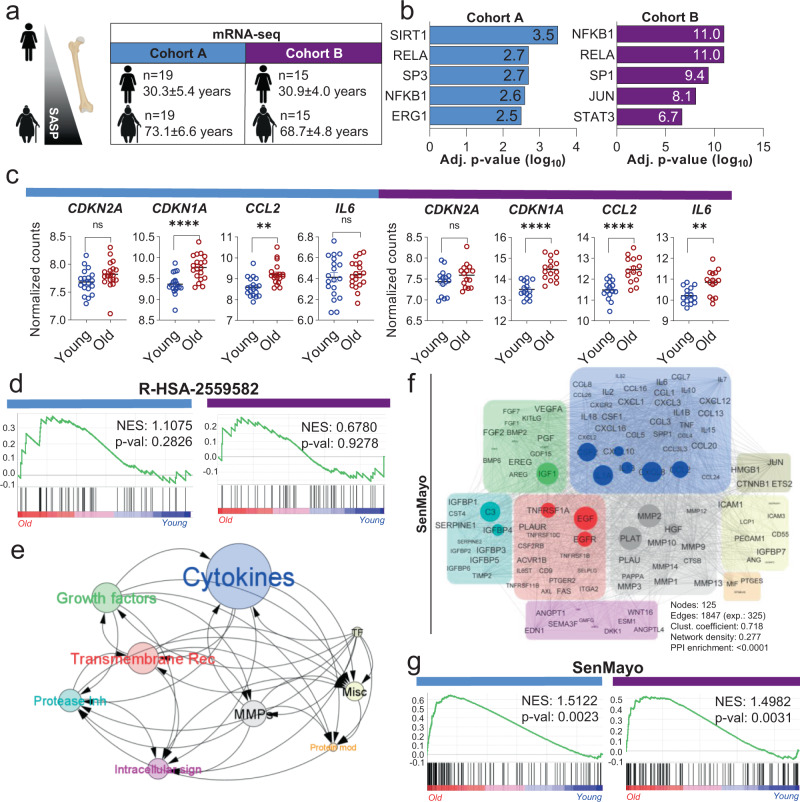
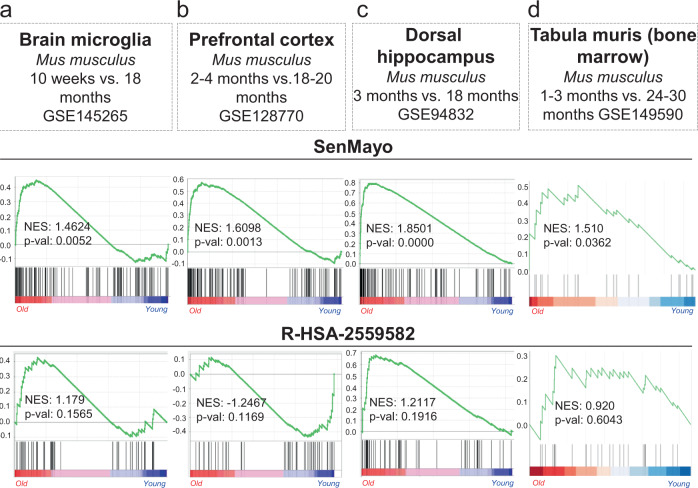
- SenMayo was generated from 15 studies after screening 1,656 studies and comprises 125 genes, predominantly SASP factors (n = 83), plus transmembrane (n = 20) and intracellular (n = 22) proteins. It was significantly enriched in aged human bone biopsies (p = 0.002 for Cohort A; p = 0.003 for Cohort B) and aged mouse brain regions (p = 0.005, p = 0.001, p < 0.001), whereas the prior R-HSA-2559582 gene set did not reach significance (p = 0.157, p = 0.117, p = 0.192).
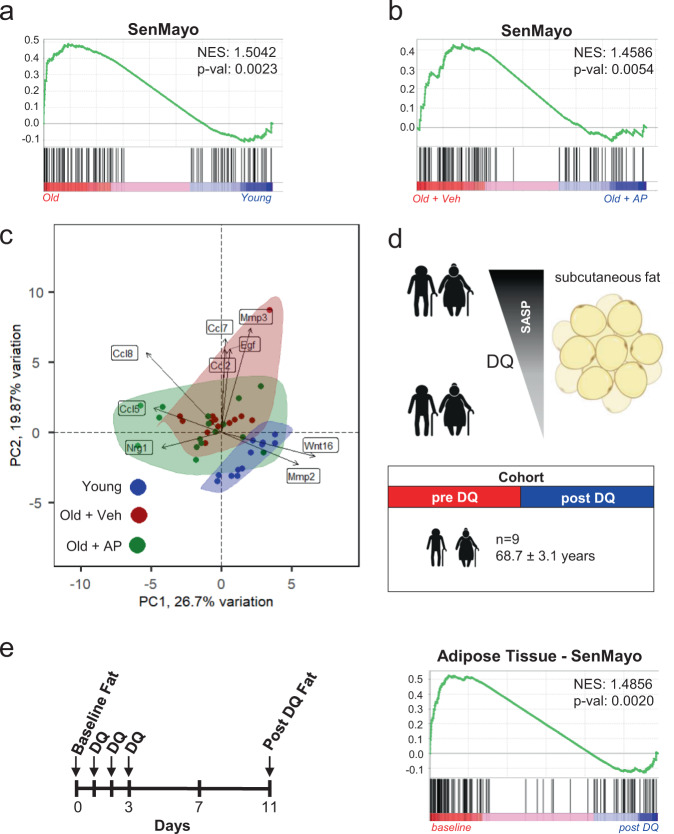
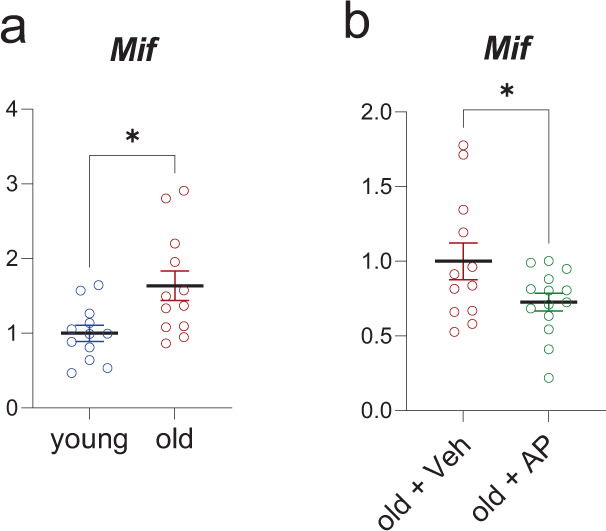
- SenMayo decreased after senescent cell clearance: in old p16-INK-ATTAC mice treated with AP20187, and in human subcutaneous adipose tissue after dasatinib plus quercetin treatment (p = 0.002). Mif mRNA was increased in bones from old versus young mice and significantly reduced after genetic clearance of senescent cells.
- SenMayo consistently outperformed six additional senescence/SASP gene sets based on normalized enrichment scores and p values across the mouse and human models tested.
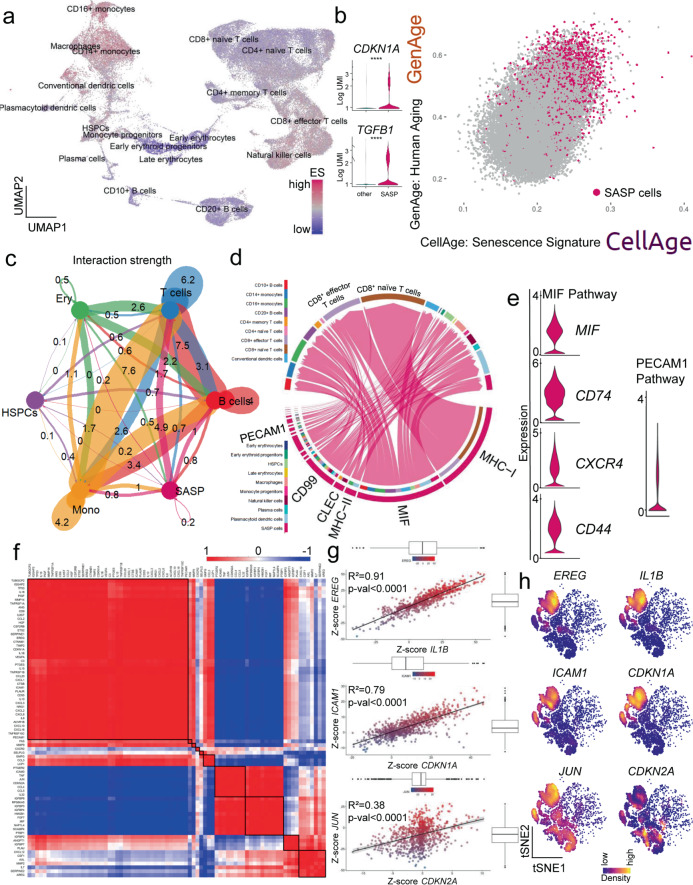
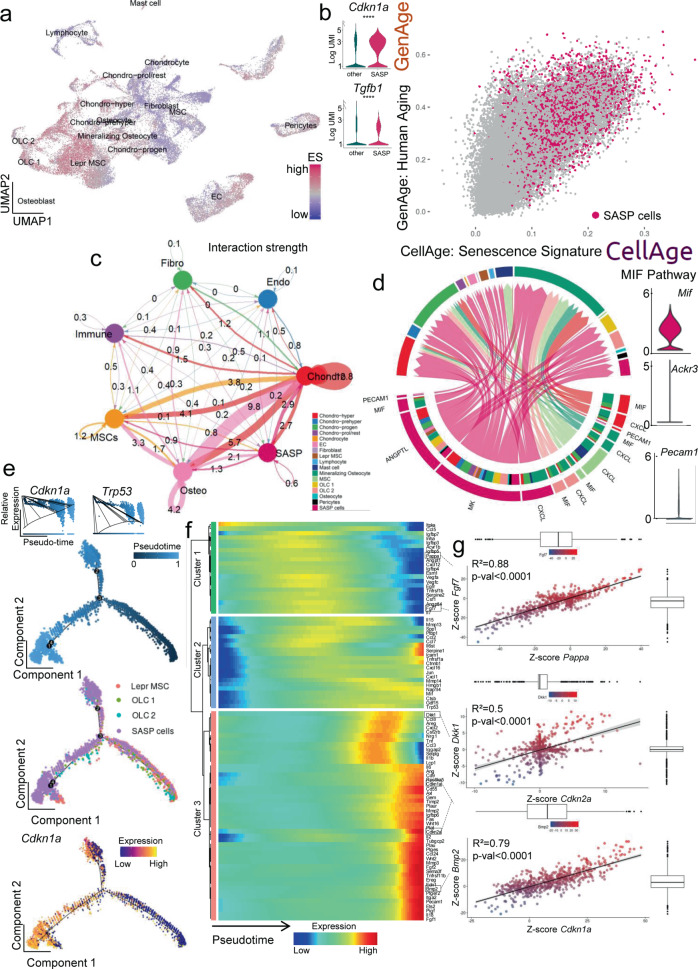
- In scRNA-seq, SenMayo identified SASP cells in human bone marrow (68,478 hematopoietic cells from 20 donors aged 24–84 years; top 10% enrichment yielded 6,850 SASP cells, predominantly monocytic) and in murine bone/bone marrow mesenchymal cells (35,368 cells; 3,537 SASP cells; 21% of osteolineage cells, including 24% OLC1 and 18% OLC2). MIF and PECAM1 pathways were among the most enriched intercellular communication pathways.
Methods
- SenMayo was built by literature search combining genes reported as enriched in senescent and/or SASP-secreting cells and experimentally verified in human or mouse cells; GSEA used default settings with 1,000 permutations, and network analysis used Cytoscape 3.8.2 with iRegulon.
- Human bulk RNA-seq included two cohorts of young versus postmenopausal women (Cohort A: young n = 19, 30.3 ± 5.4 years; postmenopausal n = 19, 73.1 ± 6.6 years; Cohort B: young n = 15, 30.9 ± 4.0 years; postmenopausal n = 15, 68.7 ± 4.8 years) and a phase I pilot of 9 diabetic kidney disease patients (7 male, 2 female, 68.7 ± 3.1 years) given dasatinib plus quercetin, with adipose biopsies before and 11 days after treatment.
- Mouse experiments used old (20 months) female INK-ATTAC mice injected with vehicle or AP20187 (10 mg/kg) twice weekly for 4 months and sacrificed at 24 months, with young (6-month) controls; RT-qPCR measured Mif. scRNA-seq analyses used Seurat v3.0, Louvain clustering at resolution 1.4 yielding 40 clusters, Monocle pseudotime, and CellChat.
Limitations
- Stated: CDKN2A/p16Ink4a is expressed at low levels even in senescent cells and may not be reliably detected in scRNA-seq; some canonical senescence markers, including CDKN2A/p16Ink4a, did not show the predicted increase with aging due to comparatively low expression. The authors propose co-expression analysis with JUN (human) or Dkk1 (mouse) to address this.
- Stated: the human dasatinib plus quercetin study was an open-label Phase 1 pilot, proof-of-concept study with an interim analysis, and SenMayo was part of an exploratory analysis.
- Evident: the human senolytic validation sample was small (9 diabetic kidney disease patients) and limited to subcutaneous adipose tissue; scRNA-seq SASP cells were defined by selecting the top 10% of cells with highest SenMayo expression, a threshold-dependent definition, and the analyses rely on previously published datasets.
Model-written summary. Check it against the paper before relying on it.
Integrity signals
Registry
Cites
Statistics
Figures
Verification
Claims the paper makes
17 Valid · 2 Not valid · 3 Not checked · 71 Own results and interpretations
The sources with a verdict support this claim; the rest weren’t checked yet, have no full text we could read, or their verdicts aren’t rated yet.
In the paper
“Using publicly available RNA-seq data, we demonstrated applicability across tissues and species and also found that SenMayo performed better than six existing senescence/SASP gene panels14,42–46.”
- Also stated in: § Discussion · plain
“also found that SenMayo performed better than six existing senescence/SASP gene panels14,42–46”
§ A new gene set identifies senescent cells and predicts senescence-associated pathways across tissues > Discussion
What the sources say
- Supportedcites [14] Acosta JC A complex secretory program orchestrated by the inflammasome controls paracrine senescence Nat. cell Biol. 2013 15 978 990 10.1038/ncb2784 23770676 PMC3732483 source
The citation is attached to the existing senescence/SASP gene panels, not to the citing authors’ finding that SenMayo performed better. In “Paracrine senescence resembles a full senescence response,” Acosta et al. describe deriving a paracrine-senescence gene signature, so the paper supports its identification as an existing panel. No page number is supplied in our copy. (LLM, conf=0.88)
- Not checked — no full text of the sourcecites [42] Casella G Transcriptome signature of cellular senescence Nucleic acids Res. 2019 47 11476 10.1093/nar/gkz879 31612919 PMC6868356 source
- Supportedcites [43] Purcell M Kruger A Tainsky MA Gene expression profiling of replicative and induced senescence Cell cycle (Georget., Tex.) 2014 13 3927 3937 10.4161/15384101.2014.973327 PMC4615143 25483067 source
The citation identifies an existing senescence gene panel, not the source of the citing authors’ SenMayo comparison. In ‘Genes differentially expressed in all 4 types of senescence’ (page unavailable), Purcell et al. identify a set of 48 senescence-associated genes and use it for clustering analysis. The paper does not itself compare that set with SenMayo. (LLM, conf=0.88)
- Supportedcites [44] Hernandez-Segura A Unmasking transcriptional heterogeneity in senescent cells Curr. Biol.: CB 2017 27 2652 2660.e4 10.1016/j.cub.2017.07.033 28844647 PMC5788810 source
The citation is attached to the six existing senescence/SASP gene panels, not to the citing authors’ finding that SenMayo performed better. The cited paper identifies a 55-gene senescence core signature in Results and Discussion (page unavailable), so it supports identifying one of the existing panels. (LLM, conf=0.90)
- Supportedcites [45] Fridman AL Tainsky MA Critical pathways in cellular senescence and immortalization revealed by gene expression profiling Oncogene 2008 27 5975 5987 10.1038/onc.2008.213 18711403 PMC3843241 source
The citation is attached to the existing senescence/SASP gene panels used as comparators, not to the citing authors’ finding that SenMayo performed better. In “Genomic approaches to identify senescence/immortalization genes and pathways” (page unavailable), the source says it summarizes genes identified in senescence studies in Supplemental Tables 1 and 2, supporting its use as a source of an existing senescence gene set. (LLM, conf=0.85)
- Supportedcites [46] Jochems F The Cancer SENESCopedia: a delineation of cancer cell senescence Cell Rep. 2021 36 109441 10.1016/j.celrep.2021.109441 34320349 PMC8333195 source
The citation is attached to the six existing panels used as comparators, rather than to the citing authors’ finding that SenMayo performed better. The Results section (‘SENCAN classifier for cancer cell senescence’; page unavailable) identifies this paper’s 137-gene SENCAN classifier, so it supports citing the paper as an existing senescence gene panel. It does not itself report a SenMayo comparison. (LLM, conf=0.88)
plain- Asserted: passes — The authors put it forward as true.
- Checkable: passes — It can be checked against evidence.
- Load-bearing: passes — The paper’s conclusions depend on it.
- Based: passes — The paper gives a reason why it holds.
- Also stated in: § Discussion · plain
Every source the paper cites for this claim was checked and supports it.
In the paper
“using murine bone marrow from the tabula muris senis (a murine single cell transcriptome atlas of young vs. aged tissues36), the applicability of SenMayo in identifying senescent cells associated with aging was confirmed by GSEA (Fig. 2d).”
§ A new gene set identifies senescent cells and predicts senescence-associated pathways across tissues > Results > SenMayo is applicable across tissues and species
What the sources say
- Supportedcites [36] Tabula Muris Consortium. A single-cell transcriptomic atlas characterizes ageing tissues in the mouse Nature 2020 583 590 595 10.1038/s41586-020-2496-1 32669714 PMC8240505 source
The citation identifies Tabula Muris Senis as the source of a murine single-cell atlas spanning young and aged tissues, rather than attributing the citing authors’ SenMayo GSEA result to it. The Abstract describes a mouse single-cell transcriptomic atlas across the lifespan, and the study description lists bone marrow among the sampled tissues. (LLM, conf=0.94)
plainstates an association- Asserted: passes — The authors put it forward as true.
- Checkable: passes — It can be checked against evidence.
- Load-bearing: passes — The paper’s conclusions depend on it.
- Based: passes — The paper gives a reason why it holds.
- Supported
The sources with a verdict support this claim; the rest weren’t checked yet, have no full text we could read, or their verdicts aren’t rated yet.
In the paper
“which was independently validated by demonstrating reductions in p16Ink4+, p21Cip+, and SA-βgal+ cells in the adipose tissue biopsy samples following D + Q treatment24,39.”
§ A new gene set identifies senescent cells and predicts senescence-associated pathways across tissues > Results > SenMayo demonstrates clearance of senescent cells
What the sources say
- Supportedcites [24] Hickson LJ Senolytics decrease senescent cells in humans: preliminary report from a clinical trial of Dasatinib plus Quercetin in individuals with diabetic kidney disease EBioMedicine 2019 47 446 456 10.1016/j.ebiom.2019.08.069 31542391 PMC6796530 source
The Results report significant reductions in p16INK4A+, p21CIP1+, and SAβgal+ cells in abdominal subcutaneous adipose tissue biopsies after D + Q treatment. The biopsies were taken from nine people with diabetes and chronic kidney disease before treatment and 11 days after a three-day course. (LLM, conf=0.95)
- Not checked — no full text of the sourcecites [39] Hickson LJ Corrigendum to ‘Senolytics decrease senescent cells in humans: Preliminary report from a clinical trial of Dasatinib plus Quercetin in individuals with diabetic kidney disease’ EBioMedicine 47 (2019) 446–456 EBioMedicine 2020 52 102595 10.1016/j.ebiom.2019.12.004 31542391 PMC6796530 source
boostedstates a cause- Asserted: passes — The authors put it forward as true.
- Checkable: passes — It can be checked against evidence.
- Load-bearing: passes — The paper’s conclusions depend on it.
- Based: passes — The paper gives a reason why it holds.
- Supported
The cited sources support only part of this claim — read each source’s verdict below.
In the paper
“first validated it in bone biopsy samples from two human cohorts consisting of young vs elderly women27,28”
§ A new gene set identifies senescent cells and predicts senescence-associated pathways across tissues > Discussion
What the sources say
- Partly supportedcites [27] Farr JN Effects of age and estrogen on skeletal gene expression in humans as assessed by rna sequencing PloS one 2015 10 e0138347 10.1371/journal.pone.0138347 26402159 PMC4581624 sourceExperimental — accuracy not yet measured
The Study subjects and Obtaining and processing needle biopsies of bone sections (pages unavailable) document bone biopsies from young and older women, supporting this paper as a source of such samples. The paper describes one study population, including an estrogen-treated older group; it does not report validating SenMayo or establish that this paper represents two cohorts. (LLM, conf=0.86)
- Partly supportedcites [28] Weivoda MM Identification of osteoclast-osteoblast coupling factors in humans reveals links between bone and energy metabolism Nat. Commun. 2020 11 87 10.1038/s41467-019-14003-6 31911667 PMC6946812 sourceExperimental — accuracy not yet measured
The Results (Identification of osteoclast and osteoblast gene signatures; page unavailable) describe bone-gene analyses in two cohorts, including an independent cohort of untreated postmenopausal women. The Methods (Study subjects; page unavailable) describe the biopsy participants as women aged 50–80. Our copy does not say that SenMayo was validated or that the cohorts compared young with elderly women. (LLM, conf=0.82)
plain- Asserted: passes — The authors put it forward as true.
- Checkable: passes — It can be checked against evidence.
- Load-bearing: passes — The paper’s conclusions depend on it.
- Based: passes — The paper gives a reason why it holds.
- Partly supported
Every source the paper cites for this claim was checked and supports it.
In the paper
“The key regulatory elements of the SenMayo genes, according to iRegulon30, featured the Factorbook-NFKB1 motif (Supplementary Fig. 1a)”
§ A new gene set identifies senescent cells and predicts senescence-associated pathways across tissues > Results > Development and validation of SenMayo in human datasets
What the sources say
- Supportedcites [30] Janky R iRegulon: from a gene list to a gene regulatory network using large motif and track collections PLoS computational Biol. 2014 10 e1003731 10.1371/journal.pcbi.1003731 PMC4109854 25058159 source
The citation identifies iRegulon as the motif-analysis method, rather than attributing the SenMayo result to the 2014 paper. The Results section (“The iRegulon framework”; page unavailable) describes how iRegulon finds enriched motifs in an input gene set. The citing sentence points to its own Supplementary Fig. 1a for the Factorbook-NFKB1 finding. (LLM, conf=0.90)
plainstates an association- Asserted: passes — The authors put it forward as true.
- Checkable: passes — It can be checked against evidence.
- Load-bearing: unclear — It is unclear whether the paper’s conclusions depend on it.
- Based: passes — The paper gives a reason why it holds.
- Supported
54 more claims · 4 with their cited sources checked
Create a free account to see all 93 claims and every source verdict.
- Probably not a substantial claim. 18
- It may state two separate claims as one. 20
- Borderline: one of the tests for a substantial claim is unclear. 1
Claims other papers make about this one
Each is checked against this paper’s own text: does it say what the citing paper says it does?
The source backs part of the claim, not all of it — or backs it for a different population, condition or comparison.
In the citing paper
“we previously reported that administration of D + Q to patients with diabetic kidney disease reduced expression (using a global gene set enrichment analysis) of a senescence/SASP gene set (SenMayo) in adipose tissue biopsies, analysis of peripheral blood mononuclear cells failed to find a similar signal26.”
From Effects of intermittent senolytic therapy on bone metabolism in postmenopausal women: a phase 2 randomized controlled trial (2024) · cites this paper as [26]
Experimental — accuracy not yet measuredThe source backs part of the claim, not all of it — or backs it for a different population, condition or comparison.
In the citing paper
“Although several valuable senescence signatures and computational tools have been developed, including SenMayo, hUSI, SenSig, and SenePy,14–17 their performance can vary across biological contexts, likely because they capture distinct facets of the senescence phenotype depending on how they were derived and validated.18”
From SenCat: Cataloging human cell senescence through multi-omic profiling of multiple senescent primary cell types (2026) · cites this paper as [14]
Experimental — accuracy not yet measuredThe source backs part of the claim, not all of it — or backs it for a different population, condition or comparison.
In the citing paper
“The senescent state was confirmed by evaluating multiple senescence markers or phenotypes, consistent with guidelines from the SenNet consortium.14–17,20”
From SenCat: Cataloging human cell senescence through multi-omic profiling of multiple senescent primary cell types (2026) · cites this paper as [14]
Experimental — accuracy not yet measuredThe source backs part of the claim, not all of it — or backs it for a different population, condition or comparison.
In the citing paper
“recent efforts have identified transcriptomic signatures of cellular senescence derived from a different panels of human in vitro datasets.14–17,20”
From SenCat: Cataloging human cell senescence through multi-omic profiling of multiple senescent primary cell types (2026) · cites this paper as [14]
Experimental — accuracy not yet measuredThe source backs part of the claim, not all of it — or backs it for a different population, condition or comparison.
In the citing paper
“These models demonstrate impressive cross-dataset generalizability and scoring robustness, but they are often derived either from heterogeneous multi-study collections or from narrower biological settings, which can limit the extent to which they capture the full diversity of senescent states across cell types and triggers.14–17,20”
From SenCat: Cataloging human cell senescence through multi-omic profiling of multiple senescent primary cell types (2026) · cites this paper as [14]
Experimental — accuracy not yet measured
12 more claims about this paper
Create a free account to see every claim other papers make about this one.
Citations
Cites
Subramanian, A., Tamayo, P., Mootha, V. K., Mukherjee, S., Ebert, B. L., Gillette, M. A., Paulovich, A., Pomeroy, S. L., Golub, T. R., Lander, E. S., et al. (2005) · Proceedings of the National Academy of Sciences · doi:10.1073/pnas.0506580102 · Cited by 53,625 · cited 1×
“between groups, but also evaluates overall trends for differences in gene expression between groups and hence provides considerably greater power than examining individual genes.(31) The”
Cytoscape: A software Environment for integrated models of biomolecular interaction networks
Shannon, P., Markiel, A., Ozier, O., Baliga, N. S., Wang, J. T., Ramage, D., Amin, N., Schwikowski, B., & Ideker, T. (2003) · Genome Research · doi:10.1101/gr.1239303 · Cited by 51,888 · cited 1×
“2.(30) For mRNA-seq of murine material, tibiae were centrifuged as noted above to remove bone marrow elements and then were immediately homogenized in QIAzol Lysis Reagent (QIAGEN, Valencia, CA) and stored at -80°C, until the time of RNA extraction.”
MethodMootha, V. K., Lindgren, C. M., Eriksson, K.-F., Subramanian, A., Sihag, S., Lehar, J., Puigserver, P., Carlsson, E., Ridderstråle, M., Laurila, E., et al. (2003) · Nature Genetics · doi:10.1038/ng1180 · Cited by 10,197
Inference and analysis of cell-cell communication using CellChat
Jin, S., Guerrero-Juarez, C. F., Zhang, L., Chang, I., Ramos, R., Kuan, C.-H., Myung, P., Plikus, M. V., & Nie, Q. (2021) · Nature Communications · doi:10.1038/s41467-021-21246-9 · Cited by 8,409 · cited 1×
“To explore these intercellular interactions, we evaluated potential ligand-receptor interactions and secretion patterns based on underlying gene expression levels in different hematopoietic cell types in human bone marrow.(50) The strongest interaction of SASP cells was found with T cells, followed”
MethodTrapnell, C., Cacchiarelli, D., Grimsby, J., Pokharel, P., Li, S., Morse, M., Lennon, N. J., Livak, K. J., Mikkelsen, T. S., & Rinn, J. L. (2014) · Nature Biotechnology · doi:10.1038/nbt.2859 · Cited by 7,314 · cited 2×
“Each cell is assigned a pseudotemporal space.(97,98) Monocle 2 was”
BackgroundMethodScenic: single-cell regulatory network inference and clustering.
Aibar, S., González-Blas, C. B., Moerman, T., Huynh-Thu, V. A., Imrichova, H., Hulselmans, G., Rambow, F., Marine, J.-C., Geurts, P., Aerts, J., et al. (2017) · Nature Methods · doi:10.1038/nmeth.4463 · Cited by 6,520
The senescence-associated secretory phenotype: the dark side of tumor suppression
Coppé, J.-P., Desprez, P.-Y., Krtolica, A., & Campisi, J. (2010) · Annual Review of Pathology: Mechanisms of Disease · doi:10.1146/annurev-pathol-121808-102144 · Cited by 5,206
Reversed graph embedding resolves complex single-cell trajectories
Qiu, X., Mao, Q., Tang, Y., Wang, L., Chawla, R., Pliner, H. A., & Trapnell, C. (2017) · Nature Methods · doi:10.1038/nmeth.4402 · Cited by 5,070
Cellular senescence: when bad things happen to good cells
Campisi, J., & d'Adda di Fagagna, F. (2007) · Nature Reviews Molecular Cell Biology · doi:10.1038/nrm2233 · Cited by 4,441
The biplot graphic display of matrices with application to principal component analysis
GABRIEL, K. R. (1971) · Biometrika · doi:10.1093/biomet/58.3.453 · Cited by 3,037
Cited by
Items 801–900 of 1,070
Noureen, N., & Kang, M. H. (2025) · bioRxiv (Cold Spring Harbor Laboratory) · doi:10.1101/2025.05.21.655338
Zhang, K., Huang, C., Zhou, J., Fan, K., Ruan, M., & Xiao, Y. (2025) · Mediators of Inflammation · doi:10.1155/mi/3705788
Endo, K., Ozeki, N., Koga, H., & Sekiya, I. (2026) · Biochemical and Biophysical Research Communications · doi:10.1016/j.bbrc.2026.154179 · Cited by 1
Reversing PROTAC-induced ASH2L degradation reactivates proliferation in senescent cellsPreprint
Müller, J., Barsoum, M., Bussmann, P., Mabrouk, M. H. E., Sayadi-Boroujeni, R., Vllaho, A.-M., Stenzel, A. T., Vogt, L., Kießling, P., Kuppe, C., et al. (2026) · bioRxiv (Cold Spring Harbor Laboratory) · doi:10.64898/2026.05.02.722411
Jaffery, H., Dhawan, U., Williams, J. A., Huesa, C., Carmody, R. J., Windmill, J. F. C., Reid, S. D., Childs, P. G., Salmerón‐Sánchez, M., & Dalby, M. J. (2025) · bioRxiv (Cold Spring Harbor Laboratory) · doi:10.1101/2025.07.24.666351
Tirzepatide reduces diet-induced senescence and NETosis-mediated liver fibrosis in micePreprint
Chen, F., Nam, Q., Wang, L. D., Chammas, F., Wüestefeld, T., Lee, B. T. K., & Wong, S. L. (2025) · bioRxiv (Cold Spring Harbor Laboratory) · doi:10.1101/2025.05.27.656284 · Cited by 1
B-Lightning: using bait genes for marker gene hunting in single-cell data with complex heterogeneity
Shao, Y., Gao, Q., Wang, L., Li, D., Nixon, A. B., Chan, C. C. W., Li, Q.-J., & Xie, J. (2024) · Briefings in Bioinformatics · doi:10.1093/bib/bbaf033
BCG vaccination mitigates tau pathology and restores cognitive function in PS19 micePreprint
Shee, S., Huang, M., Baghel, M. S., Zheng, Y., Lun, S., Yadav, S. K., Yadav, N. N., Ruiz-Gonzalez, C. E., Tyagi, S., Nuermberger, E. L., et al. (2026) · bioRxiv (Cold Spring Harbor Laboratory) · doi:10.64898/2026.05.12.724591
Koning, M., Kovynev, A., Fondevila, M. F., Ruhé, E. J. M., Mommersteeg, M. C., Ramakers, C. R. B., Hutten, B. A., Verwer, B. J., Vlug, M. S., Kuiper, T., et al. (2026) · Nature Metabolism · doi:10.1038/s42255-026-01643-4 · Cited by 1
Self-citationAge-related loss of brain demyelinating and remyelinating potential is overcome by microglia renewalPreprint
Boutou, A., Roufagalas, I., Papazian, I., Abbadessa, G., Asprou, K., Howell, O. W., Kourouvani, M., Sainouchi, M., Farkas, I., Pogka, V., et al. (2026) · bioRxiv (Cold Spring Harbor Laboratory) · doi:10.64898/2026.06.15.732390
“This was further supported by meta-analysis comparison of our previously published single cell RNA-Seq data at cuprizone demyelination onset in young mice 23 with published senescence signatures 44 – 46 ( Figure 2C ).”
Zhang, C., Zhang, Q., Chen, J., Li, H., Cheng, F., Wang, Y., Gao, Y., Zhou, Y., Shi, L., Yang, Y., et al. (2024) · SSRN Electronic Journal · doi:10.2139/ssrn.4834007
Azad, T. D., Li, M., Chiu, P.-Y., Jones, K. E., Lord, E. L., Molina, C. A., Walker, C. T., Osorio, J. A., Pizones, J., Theologis, A. A., et al. (2025) · Spine Deformity · doi:10.1007/s43390-025-01124-w · Cited by 1
Ocañas, S. R., Pham, K. D., Cox, J. E. J., Keck, A. W., Ko, S.-H., Ampadu, F. A., Porter, H. L., Ansere, V. A., Kulpa, A. M., Kellogg, C. M., et al. (2023) · Figshare · doi:10.6084/m9.figshare.23972885
Kövér, B., Willis, T. L., Sherwin, O., Kaufman-Cook, J., Kemkem, Y., Segoviano, M. V., Lodge, E. J., Zamojski, M., Mendelev, N., Zhang, Z., et al. (2026) · Yearbook of pediatric endocrinology · doi:10.1016/j.celrep.2026.117407 · Cited by 4
Deciphering senescence-associated mechanisms through cell painting & transcriptomics
Tan, Y., Liu, A., Larkin, E., Wani, R., Dick, A., Patassini, S., & Erlmann, P. (2026) · npj Aging · doi:10.1038/s41514-026-00500-8 · Cited by 1
Wu, J., Chen, Y., He, J., Mei, J., Zhu, H., & Zhou, D. (2026) · Functional & Integrative Genomics · doi:10.1007/s10142-026-01946-5 · Cited by 2
“The senescence-related gene set was obtained from the studies by Wyles et al. (Wyles et al. 2025) (SenSkin) and Saul et al. (Saul et al. 2022) (SenMayo).”
The E3 ubiquitin ligase HUWE1 is required for KRAS-induced lung cancer
Searle, J., Menotti, M., McDaid, W. J., Baker, M. J., Chaturvedi, A., GINN, L. H., Reed, H., Carter, M., Blackhall, F. H., Lindsay, C. R., et al. (2026) · Cell Death and Disease · doi:10.1038/s41419-026-08672-7 · Cited by 1
Liu, Z., Abulaiti, A., Li, D., Li, J., Wahafu, P., Zhang, Y., Maimaitiming, M., Li, S. Y., Li, G., & Yakufu, M. (2026) · Ageing Research Reviews · doi:10.1016/j.arr.2026.103221 · Cited by 1
Fan, Q., Chen, K., Liu, J., et al. (2026) · Chemical Biology & Drug Design · doi:10.1111/cbdd.70382
“Meanwhile, according to the previous literature, we have successively obtained 125 genes related to aging (Saul et al. 2022).”
Meng, Y., Chen, F., Chen, S., Xu, Y., Tan, Y., Liao, H., & Zheng, Q. (2026) · International Journal of Cancer · doi:10.1002/ijc.70651
Wu, Y., Li, C., Tang, J., Gao, X., Cheon, I. S., Zhu, B., Zhang, R., Fain, C. E., Hu, S. S., Narasimhan, H., et al. (2025) · bioRxiv (Cold Spring Harbor Laboratory) · doi:10.64898/2025.12.15.694321 · Cited by 2
Zhao, T., Wang, B., Feng, C., Yu, H. N., He, K., Chen, Z., Ma, Q., & Liu, Y. (2025) · Research Square · doi:10.21203/rs.3.rs-7912284/v1
Pooled single-cell screen in colorectal cancer defines transcriptional modules linked to oncogenes
Hollek, V., Böhning, F., Vargas, C. F., Sieber, A., Morkel, M., & Blüthgen, N. (2026) · Molecular Systems Biology · doi:10.1038/s44320-025-00186-2
“…et al, 2024; Agrawal et al, 2024; Liberzon et al, 2015; Schaefer et al, 2009; Wang et al, 2018; Gregorieff et al, 2015), a signature for senescence (Saul et al, 2022), a TP53 target gene set (Jeay et al, 2015), and gene signatures for metabolism-associated processes (Milacic et al, 2024;…”
Humbert, P., Danet, L., Carrot, E., Etienne, F., Halgand, B., Blanchard, F., Vinatier, C. S., Guicheux, J., Fusellier, M., Visage, C. L., et al. (2026) · Journal of Cellular and Molecular Medicine · doi:10.1111/jcmm.71026
“Library preparation was performed with Illumina Stranded mRNA Prep kit.”
Targeting cellular senescence mitigates chemotherapy-induced bone loss in young and aged mice
Izquierdo, D. J., Blancarte-Hernández, E., Schurman, C. A., Schilling, B., Woloszyk, A., Aguilar, L., Salmon, A., & Glatt, V. (2026) · GeroScience · doi:10.1007/s11357-026-02485-4
Zhang, X., Chen, F., Sun, W., Ma, H., Liang, F., Dai, L., Kang, C., & liu, X. (2026) · Cancer Cell International · doi:10.1186/s12935-026-04403-2
“The gene signature associated with aging in Soul study [36] was obtained and the gene set associated with stemness (BHATTACHARYA EMBRYONIC STEM CELL.v7.”
Self-citationOsteocyte State Transitions Modulate Bone Remodeling During Early Skeletal AgingPreprint
Denda, R., Liu, A., Hayashi, M., Wang, C., Akiyama, H., Takayanagi, H., Saito, M., & Nakashima, T. (2026) · bioRxiv (Cold Spring Harbor Laboratory) · doi:10.64898/2026.08.07.743422
Liu, B., Mahoney, M., Feng, Y., Telpoukhovskaia, M. A., Giani, A. M., Torres, E. R., Zhan, L., Ye, P., Zhu, J., Foxe, N. R., et al. (2026) · Neuron · doi:10.1016/j.neuron.2026.07.021 · Cited by 2
Ma, L., Li, H., Li, Y., Lin, Z.-A., Li, J., Zhang, Y., Zhang, P., Yao, Z., Li, J., Xiong, M., et al. (2025) · bioRxiv (Cold Spring Harbor Laboratory) · doi:10.1101/2025.10.11.681821
JUN mediates senescence and immune cell recruitment to prevent prostate cancer progressionPreprint
Redmer, T., Raigel, M., Sternberg, C., Ziegler, R., Probst, C., Lindner, D., Aufinger, A., Limberger, T., Trachtová, K., Kodajova, P., et al. (2023) · bioRxiv (Cold Spring Harbor Laboratory) · doi:10.1101/2023.11.29.569178
Jang, H. J., Urrutia, G., Ørskov, A. D., Nguyen, A. V., Kim, H. J., Nelson, S. A., Lee, H., Burgos, R. S., Johnson, B. K., Wegener, M., et al. (2026) · Blood Neoplasia · doi:10.1016/j.bneo.2026.100243 · Cited by 2
“39-42 Indeed, the senescence-associated “SenMayo” pathway 43 was also significantly enriched in STS CD34 + cells at baseline, supporting the presence of a senescent and immunocompromised marrow state.”
Matveeva, K. S., & Shevyrev, D. (2026) · International Journal of Molecular Sciences · doi:10.3390/ijms27188416
“The SenMayo gene set [36] is a widely recognized resource for defining transcriptional senescence signatures across tissues.”
Dong, F., Ping, P., Wang, S., Ma, Y., & Chen, X. (2026) · The Journals of Gerontology Series A · doi:10.1093/gerona/glag020
Ocañas, S. R., Pham, K. D., Cox, J. E. J., Keck, A. W., Ko, S.-H., Ampadu, F. A., Porter, H. L., Ansere, V. A., Kulpa, A. M., Kellogg, C. M., et al. (2023) · Figshare · doi:10.6084/m9.figshare.23972870
Ventricular assist device unloading reverses microvascular senescence in single ventricle disease
Li, X., Turaga, D., Zhao, Y., Tsai, C.-R., Li, R. G., Morikawa, Y., Tadros, H. J. J., Samee, M. A. H., Adachi, I., & Martin, J. F. (2026) · Nature Cardiovascular Research · doi:10.1038/s44161-026-00790-x · Cited by 4
“Cellular senescence scoring integrated three curated sources: ‘SenMayo’ SASP gene set (125 genes) 53 , Reactome Pathway Database human SASP gene set (R-HSA-2559582, 86 genes) and Cellular Senescence in Aging Atlas Database (55 genes), yielding 182 nonredundant genes.”
Stephan, P., Plassard, D., Keyes, W. M., & Hérault, Y. (2026) · Cellular and Molecular Life Sciences · doi:10.1007/s00018-026-06079-3
Liu, P., Wang, R., Yu, Y., Ning, Y., Chen, M., & Ye, M. (2026) · Biology Direct · doi:10.21203/rs.3.rs-9810404/v1
Horino, M., Ikeda, K., Okazaki, R., Nakano, Y., Kaneda, R., Ishii, R., Aoki, J., Hara, K., Takeuchi, A., Niitsu, Y., et al. (2025) · Scientific Reports · doi:10.1038/s41598-025-17231-7 · Cited by 1
Sclerotic skin in Hutchinson‐Gilford progeria syndrome: Reversible senescent phenotype
Kwak, D., Shin, J., Shin, K., Kim, B., Kim, M., Kim, Y. H., & Ko, H. (2025) · JDDG Journal der Deutschen Dermatologischen Gesellschaft · doi:10.1111/ddg.15709
Cell-autonomous immunity model of aging and disease
Wu, F., Winer, D. A., & Furman, D. (2026) · Trends Open · doi:10.1016/j.treopn.2026.04.012
Liu, B., Jia, J., Wang, N., Yin, C., Xu, L., & Lang, H. (2026) · PeerJ · doi:10.7717/peerj.21729
“Cellular senescence, defined as irreversible proliferation arrest induced by stress, is a core hallmark of aging and age-related diseases ( Huang et al., 2022 ; Saul et al., 2022 ).”
Zhou, Y., Li, K., Xie, Y., Su, C., Li, Z., Yang, Y., Qiao, P., Liu, W., Bai, Y., Xue, K., et al. (2026) · bioRxiv (Cold Spring Harbor Laboratory) · doi:10.64898/2026.04.27.721223
“Most of these chromatin changes are transient, yet certain histone modifications, such as H3K4me1 at enhancers and H3K4me3 at promoters, can persist and maintain a poised regulatory landscape for future activation 16, 17 .”
Effects of Aging on the Immune and Periosteal Response to Fracture in MicePreprint
King, J. S., Wan, M., Kim, A., Novak, S., Prabhu, S., Kalajzić, I., Delany, A. M., & Sanjay, A. (2024) · bioRxiv (Cold Spring Harbor Laboratory) · doi:10.1101/2024.11.06.622348
Transcriptional Elongation-Associated RNA Processing Errors in Induced Cellular Growth ArrestPreprint
Parast, S. M., Wang, S., Iwanaszko, M., et al. (2025) · bioRxiv (Cold Spring Harbor Laboratory) · doi:10.1101/2025.06.23.660200
Senolytic Changes in Murine Arteriovenous Fistulas with CKD
Kane, J., Kilari, S., Lemieux, A., Singh, P. G., Anderson, N., Saul, D., Tchkonia, T., Kirkland, J. L., & Misra, S. (2026) · Kidney360 · doi:10.34067/kid.0000001104
“29 The SenSig gene set identi fi es a senescent cellular fi brosis signature, which was generated in a foreign-body fi brosis response model using p16 reporter mice and validated using murine and human single cell RNA sequencing data.”
Self-citationPoetzsch, G., Jelacic, L., Bicker, A., Balling, M., Hellmann, S. L., Dammer, L., Andrade-Navarro, M. A., Shams, I., Avivi, A., & Hankeln, T. (2023) · bioRxiv (Cold Spring Harbor Laboratory) · doi:10.1101/2023.08.01.551427
“organs a decreased expression of proinflammatory factors, some of which are also part of the secretome of senescent cells (Il1a, Il6r and Cxcl1 (Saul et al., 2022).”
BackgroundRai, M., Wang, Y., Stephan, A., Nityanandam, A., & Demontis, F. (2026) · G3 Genes Genomes Genetics · doi:10.1093/g3journal/jkag245 · Cited by 1
Altulea, A., Mackedenski, S. J., Nehme, J., & Demaria, M. (2026) · The EMBO Journal · doi:10.1038/s44318-026-00845-6 · Cited by 2
“These include SenMayo, a cross-tissue panel enriched for in fl ammatory and extracellular remodeling programs characteristic of the SASP (Saul et al, 2022); CoreScence, a set of genes distilled from recurrent markers across single-cell and spatial studies, capturing mixed secretory and stress-associated features (Qu et…”
InfluentialFu, L.-L., Yin, C., Zhao, Q., Guo, S., Shao, W.-J., Xia, T., Sun, Q., Chen, L., Li, J.-H., Wang, M., et al. (2025) · bioRxiv · doi:10.1101/2024.02.21.581332 · Cited by 18
“The total RNA was then sent to the Analysis and Testing Center at the Institute of Hydrobiology, Chinese Academy of Sciences (Wuhan, China) for quality control, library preparation, and sequencing on the Illumina platform.”
Yu, M., Duan, L., Huang, Y., Cheng, Y., Wang, Y., Huang, G., Lian, J., Chen, S., Wen, F., Guo, L., et al. (2026) · Cancer Immunology Research · doi:10.1158/2326-6066.cir-25-1081 · Cited by 1
Wu, Y., Li, C., Tang, J., Gao, X., Cheon, I. S., Zhu, B., Zhang, R., Fain, C. E., Hu, S. S., Narasimhan, H., et al. (2026) · eLife · doi:10.7554/elife.109988.1
Yao, G., Wang, S.-J., Zhang, Y., et al. (2026) · Molecular Biology Reports · doi:10.1007/s11033-026-11710-4
Gilioli, D., Fusco, S., Tavella, T., Volpari, T., Santoro, A., Schönlein, M., Giannetti, K., Carsana, E., Gualandi, N., Noberini, R., et al. (2026) · Nature Communications · doi:10.1038/s41467-026-76853-1
Single nucleus RNA-sequencing study revealed expansion of Gpnmb+ microglia in aged mouse spinal cordPreprint
Gao, Y., Zhang, Z., Guo, W., Qian, P., & Xie, G. (2023) · Research Square · doi:10.21203/rs.3.rs-3333031/v1
Ocañas, S. R., Pham, K. D., Cox, J. E. J., Keck, A. W., Ko, S.-H., Ampadu, F. A., Porter, H. L., Ansere, V. A., Kulpa, A. M., Kellogg, C. M., et al. (2023) · Figshare · doi:10.6084/m9.figshare.23972888
Bloecher, P., Mitra, S., Guet, L., Kilic, E., Zou, Z., Sprang, M., & Mayer, J. U. (2026) · bioRxiv (Cold Spring Harbor Laboratory) · doi:10.64898/2026.05.21.726941
Wang, X., Yang, J., Jin, C., Wang, X., Contreras, D., Devos, M., Kane, M. M., Rosenfeld, M. G., & Suh, Y. (2026) · Proceedings of the National Academy of Sciences · doi:10.1073/pnas.2600323123 · Cited by 2
“We next assessed senescence - associated secretory phenotype (SASP) gene set scores using published gene lists (25, 26), and found significant increases in all ovarian cells from peri - (M) and post - estropause (O) ovaries compared to young ones (Y), with peri - estropause ovaries showing the…”
Zhou, Y., Chen, C., Zuo, F., Ding, S., Wang, H., Xu, X., Zhu, B., Wu, B., Liu, C., Yuan, T., et al. (2026) · Cellular and Molecular Life Sciences · doi:10.1007/s00018-026-06101-8
“In this study, we developed an Aging Risk Score (ARS) for patients with LUAD based on the AgingAtlas and SenMayo aging-related gene sets [ 25 , 26].”
Qian, Z., Long, H., Wu, H., Xie, J., Chen, S., Wu, J., & Cai, S. (2026) · Journal of Immunology Research · doi:10.1155/jimr/8683624 · Cited by 3
Single-cell atlas reveals age-related cellular shifts underlying fibrosis in murine synoviumPreprint
Bortolotti, O., Marinèche, L., Abasi-Ali, B., Séverac, D., Leccia, F., Duperray, C., Brugioti, L., Colinge, J., Bertrand‐Gaday, C., Sebti, S., et al. (2026) · bioRxiv (Cold Spring Harbor Laboratory) · doi:10.64898/2026.04.17.719179
“2g) 12 .”
Marker gene fishing for single-cell data with complex heterogeneityPreprint
Shao, Y., Gao, Q., Wang, L., Li, D., Nixon, A. B., Chan, C. C. W., Li, Q.-J., & Xie, J. (2024) · bioRxiv (Cold Spring Harbor Laboratory) · doi:10.1101/2024.11.03.621735
Husain, L. (2025) · Clinical and Translational Discovery · doi:10.1002/ctd2.70065
Wang, R., Shang, D., Tu, Z., & Liu, H. (2026) · Expert Opinion on Therapeutic Targets · doi:10.1080/14728222.2026.2709798
“The SASP gene set was curated by our team [79,80].”
Tucker, E. R., Lampis, A., Househam, J., Roberts, D., Barker, K. T., Costa, B. M. D., Greenslade, K., Mayfield, S., Lorenzi, F., Thorley, E., et al. (2026) · bioRxiv (Cold Spring Harbor Laboratory) · doi:10.64898/2026.09.01.743331
Parry, T. L., Gilmore, L. A., & Khamoui, A. V. (2025) · Functional & Integrative Genomics · doi:10.1007/s10142-024-01524-7
“In skeletal muscle, SASP was shown to impair recovery from injury (Moiseeva et al. 2023), and SASP markers in muscle and blood were linked to cachexia (Englund et al. 2024), suggesting SASP to regulate skeletal muscle and cachexia phenotypes.”
InfluentialCharacterization of p16-positive stromal cells in age-related cardiac disorders
Morimura, T., Wang, T.-W., Kawakami, S., & Nakanishi, M. (2026) · The Journal of Biochemistry · doi:10.1093/jb/mvag013
“Recently, several studies have attempted to extract senescent cells from bulk RNA-seq data using single-cell transcriptomic data ( 30 – 32 ).”
Vu, H., Sun, Y., Xiong, Z., Radford‐Smith, D. E., Causer, A., Nefzger, C. M., O'Sullivan, E. D., Watt, M. J., Ramm, G. A., Clouston, A. D., et al. (2025) · bioRxiv (Cold Spring Harbor Laboratory) · doi:10.1101/2025.03.20.644239
Mao, S., & Cui, J. (2026) · Histochemistry and Cell Biology · doi:10.1007/s00418-026-02475-9 · Cited by 1
Hu, J., Zhang, B., Chen, J., Huang, G., Zhou, H., Yang, F., Liu, K., Zheng, S., Liu, X., Liu, J.-L., et al. (2025) · bioRxiv (Cold Spring Harbor Laboratory) · doi:10.1101/2025.03.26.645381
González-Meljem, J. M., Haston, S., Gallage, S., Innes, A. J., & Scheckhuber, C. Q. (2024) · Springer eBooks · doi:10.1007/978-3-031-76469-1_2
Kaipa, S., Zhai, T., Meka, S. R. K., Losada, P. M., He, Z., Channappa, D., Oh, H. S., Rutledge, J., Zeineh, M., Agudelo, A., et al. (2026) · SSRN Electronic Journal · doi:10.2139/ssrn.7224054 · Cited by 1
Self-citationEditorial: Year in review: discussions in genetics of aging
Rogina, B., Franceschi, C., & Tissenbaum, H. A. (2024) · Frontiers in Genetics · doi:10.3389/fgene.2024.1470451
Koh, Y. W., Han, J.-H., Haam, S., & Lee, H. W. (2024) · GeroScience · doi:10.1007/s11357-024-01442-3
“The senescent cell signature (SCS) is calculated as the sum of these 125 genes [16].”
InfluentialXu, P., Zhang, H., Zhu, S., & Kong, Y. (2026) · Genome biology · doi:10.1186/s13059-026-03997-0 · Cited by 1
Bai, Z., Liang, J., Nie, Y., Wang, S., & Chang, D. (2025) · Discover Oncology · doi:10.1007/s12672-025-03078-x · Cited by 1
“Initially, we created a compilation of SAGs identified by Saul et al. [20], totaling 125 genes (Table S1).”
Túrós, D., Decollogny, M., Moyseos, A., Chanfon, A., Siffert, M., Bousmar, J., Romanens, L., Tille, J., Trédan, O., Labidi‐Galy, S. I., et al. (2026) · Nature Communications · doi:10.1038/s41467-026-74125-6 · Cited by 2
“We observed signi fi cant upregulation of the SASP signature 50 during MRD compared with both primary and recurrent tumour stages (Fig.”
InfluentialGuiho, R., Hamdi, H., Cooksley, G., Chang, T. H., Cao, L., Sigaud, R., Bliss, S., Vardon, A., Haston, S., Selt, F., et al. (2026) · Neuro-Oncology · doi:10.64898/2026.01.13.698644
443: COLORECTAL CANCER-ASSOCIATED BACTERIAL GENES ARE WIDELY ENCODED IN HUMAN MICROBIOMES
Minot, S. S., Li, N., Koester, S. T., Yu, M., Grady, W. M., Dominitz, J. A., & Dey, N. (2022) · Gastroenterology · doi:10.1016/s0016-5085(22)60242-7
Zhang, Z., Chen, N., Deng, S., Xu, C., Qin, M., & Wang, P. (2026) · Stem Cell Reviews and Reports · doi:10.1007/s12015-026-11240-3
Cassidy, P. B., Berry, E., Samatham, R. V., Mengden, S. J., Musci, T. S., Baron, D., Kent, G., Latour, E. J., Leachman, S. A., & Moos, P. J. (2026) · Journal of Investigative Dermatology · doi:10.1016/j.jid.2026.05.036
Sousa-Soares, C., Silva, M. A. B. D., Castro, J. P., Macedo, J. C., & Logarinho, E. (2026) · Aging Cell · doi:10.1101/2025.10.29.685369
“…in large gene sets related to inflammatory signaling from MSigDB (“Inflammatory Response” and “Cytokine Production”), well-characterized gene sets for senescence/SASP (e.g., SenMayo) (Coppé et al., 2008; Saul et al., 2022) and the AP-1 senescence gene signature (Martínez-Zamudio et al., 2020).”
LeeBae, J., Bopp, V., Goreth, A., Grozdanov, V., Kühlwein, J. K., Gazzola, E., Rombach, D., Meier, L., Dimou, L., & Danzer, K. M. (2025) · bioRxiv (Cold Spring Harbor Laboratory) · doi:10.1101/2025.08.08.669249
Cheung, N. (2026) · Cureus · doi:10.7759/cureus.111258 · Cited by 1
“A focused collection of ageing-related gene sets was curated from the Molecular Signatures Database (MSigDB), Reactome, Gene Ontology, HALLMARK, Kyoto Encyclopedia of Genes and Genomes (KEGG), WikiPathways, and the SenMayo senescence-associated secretory phenotype collection [15-21].”
Alveolar Epithelial Cell Loss of the Mitochondrial Regulator TFAM Drives Progressive Lung FibrosisPreprint
Hu, Q., Onwuka, U., Cárdenes, N., Packwood, M., Huang, E. L., Shi, J., Melo-Narváez, M. C., Dutta, P., Zhou, Z., Beaulieu, D., et al. (2026) · bioRxiv (Cold Spring Harbor Laboratory) · doi:10.64898/2026.05.28.728065
Ocañas, S. R., Pham, K. D., Cox, J. E. J., Keck, A. W., Ko, S.-H., Ampadu, F. A., Porter, H. L., Ansere, V. A., Kulpa, A. M., Kellogg, C. M., et al. (2023) · Figshare · doi:10.6084/m9.figshare.23972873
Yerrabelli, R., Thibodeau, A., Nehar-Belaid, D., Marcheş, R., Ravichandran, S., Barnouin, Y., Sen, R., Paust, S., Stitzel, M. L., Ferrucci, L., et al. (2026) · bioRxiv (Cold Spring Harbor Laboratory) · doi:10.64898/2026.05.08.723786
Breaking the self-reinforcing cycle of aging: Biomaterial strategies for aged bone regeneration
Wang, Y., Chen, J., Liu, X., Pei, Y., Chen, S., & Zhou, Y. (2026) · Ageing Research Reviews · doi:10.1016/j.arr.2026.103348
Li, X., Piao, Z. H., Lei, M., Xu, D., Jin, T., & Liu, L. (2026) · Discover Oncology · doi:10.1007/s12672-026-04967-5
“Senescence-associated genes (SAGs) were systematically curated from two principal databases: CellAge [13–15] and SenMayo [16].”
Butachlor-Induced BAZ2B Activation Promotes Cardiomyocyte Senescence through cGAS-STING pathway
Lou, M., Huang, Y.-F., Su, X., Hu, Z.-Y., Li, X., Yu, Q., Cheng, Y., Jiang, F., Chen, M.-S., Wang, J.-X., et al. (2026) · Journal of Agricultural and Food Chemistry · doi:10.1021/acs.jafc.5c14536 · Cited by 2
Clark, G. T., Zhao, Y., Reeve, R. E., Farley, C. M., Willey, C., Sheehan, S., Spellacy, S., Warren, A., Brackett, A., Rosenthal, N. A., et al. (2026) · bioRxiv (Cold Spring Harbor Laboratory) · doi:10.64898/2026.03.05.709919
“These genes regulate signaling, immune chemotaxis, adhesion, and extracellular matrix (ECM) remodeling—processes central to SASP evolution and tissue remodeling in aging (Saul et al., 2022).”
SenSpots: when B cells age in place
Ji, Q., Liu, G., & Qu, J. (2026) · Trends in Immunology · doi:10.1016/j.it.2026.07.008
Metadata
- Authors
- Saul, D., Kosinsky, R. L., Atkinson, E. J., Doolittle, M. L., Zhang, X., LeBrasseur, N. K., Pignolo, R. J., Robbins, P. D., Niedernhofer, L. J., Ikeno, Y., Jurk, D., Passos, J. F., Hickson, L. J., Xue, A., Monroe, D. G., Tchkonia, T., Kirkland, J. L., Farr, J. N., & Khosla, S.
- Affiliations
- Mayo Clinic (US)
- University of Minnesota (US)
- The University of Texas at San Antonio Health Science Center (US)
- Corresponding author
- Saul, Dominik
- Farr, Joshua N.
- Khosla, Sundeep
- ORCID
- Venue
- Nature Communications
- Published
- 2022-08-16
- Volume
- 13
- Issue
- 1
- Pages
- 4827-4827
- ISSN
- 2041-1723 (ISSN-L)
- PMC
- PMC9381717
- OpenAlex
- W4292004337
- Semantic Scholar
- e6fbc09438aa7bee1288d3cb8da3c20461521881
- Cited by
- 1,022
- References
- 104
- Citations by year
- 2026: 336 · 2025: 341 · 2024: 219 · 2023: 115 · 2022: 11
- FWCI
- 68.16
- Type
- journal article
- Language
- en
- Open access
- gold
- doi.org
- Licence
- cc-by
- creativecommons.org/licenses/by/4.0 (tdm)
- creativecommons.org/licenses/by/4.0 (vor)
- Locations
- Nature Communications (publishedVersion, cc-by)
- PubMed Central (publishedVersion, cc-by)
- PubMed (publishedVersion)
- DOAJ (DOAJ: Directory of Open Access Journals) (submittedVersion, cc-by-sa)
- GoeScholar The Publication Server of the Georg-August-Universität Göttingen (Georg-August-Universität Göttingen) (submittedVersion, cc-by)
- Funders
- Dr. Mildred Scheel Stiftung für Krebsforschung
- Foundation for the National Institutes of Health (R37 AG 013925, R33AG 61456, AG 013925, AG065868, AR070241)
- Topics
- Life Sciences › Biochemistry, Genetics and Molecular Biology › Cell Biology › Telomeres, Telomerase, and Senescence
- Life Sciences › Biochemistry, Genetics and Molecular Biology › Aging › Genetics, Aging, and Longevity in Model Organisms
- Life Sciences › Biochemistry, Genetics and Molecular Biology › Molecular Biology › Single-cell and spatial transcriptomics
- Keywords
- cellular senescence, senescence-associated secretory phenotype, senolytics, senescent cell clearance, bone marrow, bone, adipose tissue, hematopoietic cells, mesenchymal cells, single-cell transcriptomics, aging
- MeSH terms
- Adipose Tissue, Aged, Aging, Animals, Bone and Bones, Humans, Cellular Senescence, Mice, Mesenchymal Stem Cells
About these checks
Registry, retraction, Cites and statistics results are computed, not judged, with one exception: a printed reference that no index lists is read once by a model before it counts as a citation error. Claims are extracted by a model and kept only when their quote appears verbatim in the text; each cited source is then checked, with a model’s help, for whether it says what the claim relies on. Those verdicts can be wrong — read the claim’s quote and the cited source before relying on one.
The claim verdicts this report counts are experimental: their accuracy is not yet measured.
A language model drew the claims from the paper on 2026-09-29, under version 3 of the claim definition (model deepseek-v4.1-flash, prompt extract-v3).
A second model labelled each claim on 2026-09-29 (model jev-1.13-20260917, definition revision gold-guideline-v0.2).
Cited sources are checked with a language model’s help (gpt-6-sol).
Statistics and arithmetic are recomputed, not judged.
Confidence bands are shown only for fields calibrated on our annotated test set. None is calibrated yet, so no band is shown.
What counts as a claim ›How we measure confidence ›How we check this ›
Are you an author, or do you see a problem with this page? Request a review
Data sources
Bibliographic data: Semantic Scholar, OpenAlex, Crossref.
Contains information from the Semantic Scholar Academic Graph Datasets, made available under the ODC Attribution License (ODC-BY 1.0).
Semantic Scholar’s data is described in: Kinney, R., et al. (2023). The Semantic Scholar Open Data Platform. arXiv:2301.10140.
