

A new gene set identifies senescent cells and predicts senescence-associated pathways across tissues
Open accessPublished version of a preprint
The DOI matches its Crossref record; 103 of the 104 references it cites were found in a registry or an index; 43 of the 53 sources its claims cite were checked for support.
Abstract
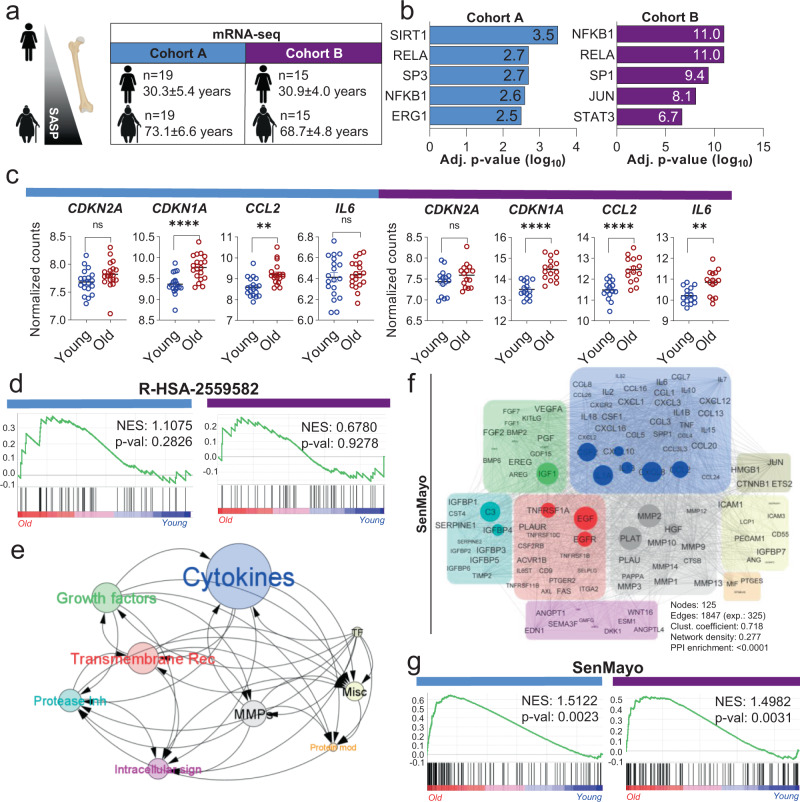
Although cellular senescence drives multiple age-related co-morbidities through the senescence-associated secretory phenotype, in vivo senescent cell identification remains challenging. Here, we generate a gene set (SenMayo) and validate its enrichment in bone biopsies from two aged human cohorts. We further demonstrate reductions in SenMayo in bone following genetic clearance of senescent cells in mice and in adipose tissue from humans following pharmacological senescent cell clearance. We next use SenMayo to identify senescent hematopoietic or mesenchymal cells at the single cell level from human and murine bone marrow/bone scRNA-seq data. Thus, SenMayo identifies senescent cells across tissues and species with high fidelity. Using this senescence panel, we are able to characterize senescent cells at the single cell level and identify key intercellular signaling pathways. SenMayo also represents a potentially clinically applicable panel for monitoring senescent cell burden with aging and other conditions as well as in studies of senolytic drugs.
Overview
CoChat Summary
TL;DR
The paper introduces SenMayo, a 125-gene senescence/SASP panel, and validates its enrichment with aging and reduction after senescent cell clearance across human and mouse bulk and single-cell datasets. SenMayo identifies senescent cells across tissues and species and predicts senescence-associated intercellular signaling pathways.
Key findings
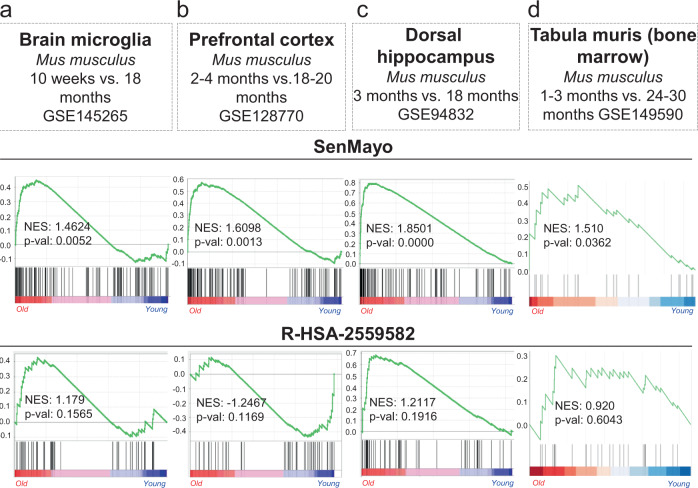
- SenMayo was generated from 15 studies after screening 1,656 studies and comprises 125 genes, predominantly SASP factors (n = 83), plus transmembrane (n = 20) and intracellular (n = 22) proteins. It was significantly enriched in aged human bone biopsies (p = 0.002 for Cohort A; p = 0.003 for Cohort B) and aged mouse brain regions (p = 0.005, p = 0.001, p < 0.001), whereas the prior R-HSA-2559582 gene set did not reach significance (p = 0.157, p = 0.117, p = 0.192).
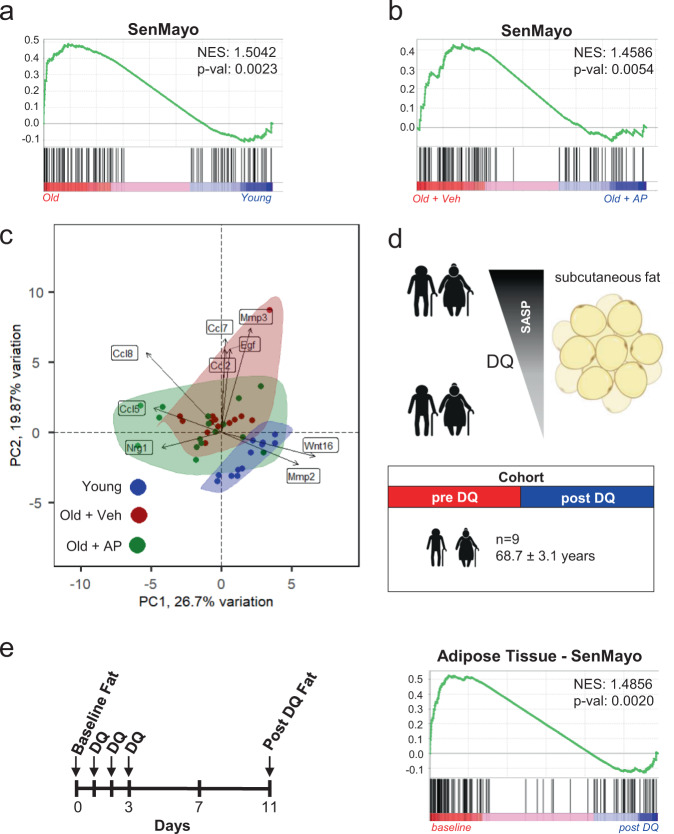
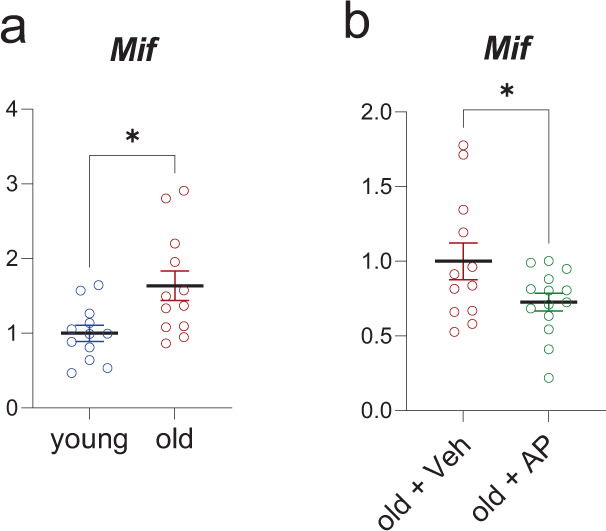
- SenMayo decreased after senescent cell clearance: in old p16-INK-ATTAC mice treated with AP20187, and in human subcutaneous adipose tissue after dasatinib plus quercetin treatment (p = 0.002). Mif mRNA was increased in bones from old versus young mice and significantly reduced after genetic clearance of senescent cells.
- SenMayo consistently outperformed six additional senescence/SASP gene sets based on normalized enrichment scores and p values across the mouse and human models tested.
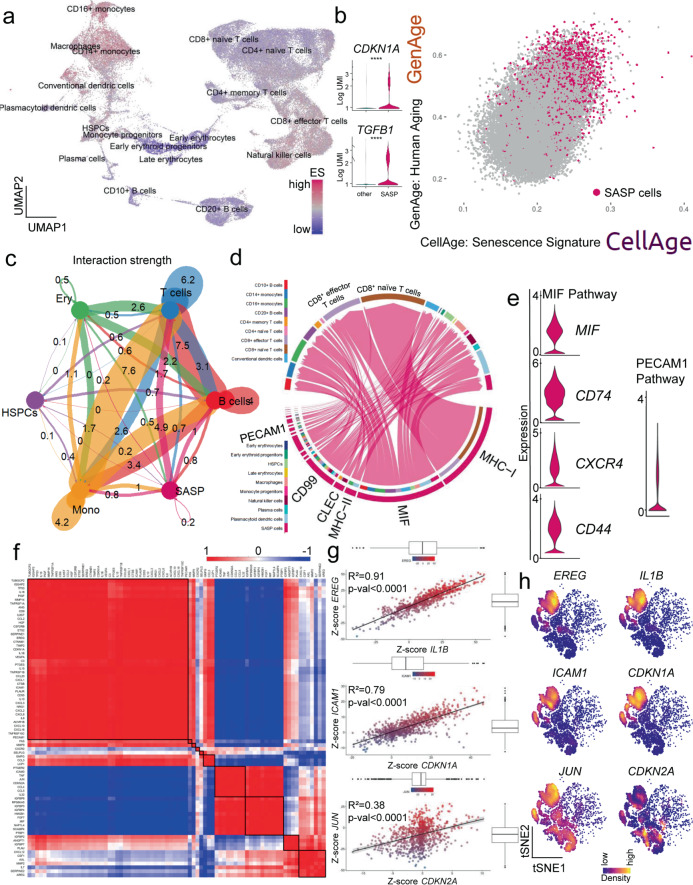
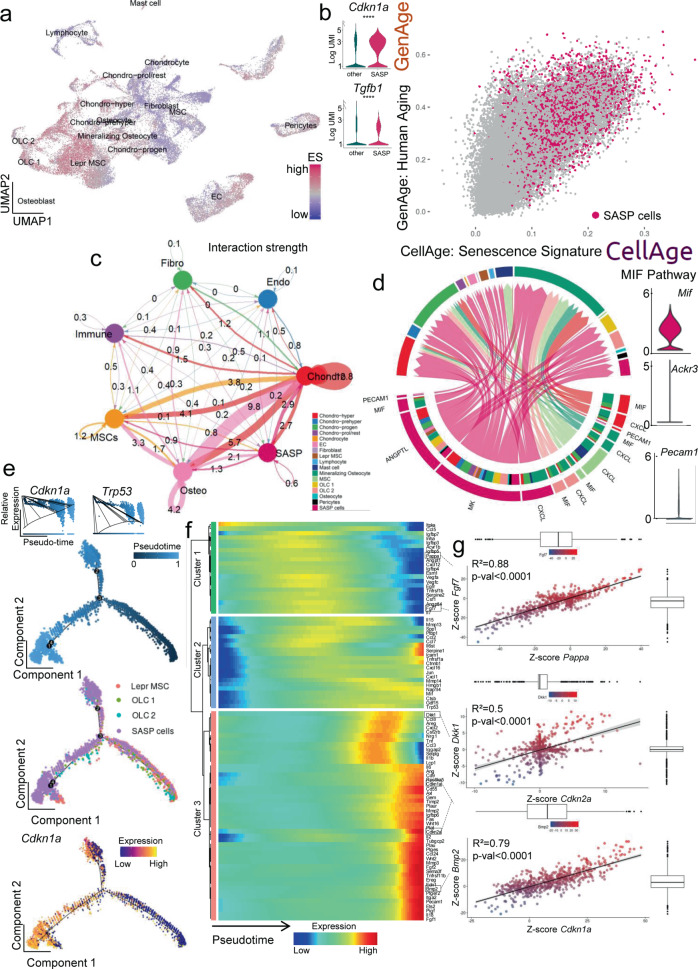
- In scRNA-seq, SenMayo identified SASP cells in human bone marrow (68,478 hematopoietic cells from 20 donors aged 24–84 years; top 10% enrichment yielded 6,850 SASP cells, predominantly monocytic) and in murine bone/bone marrow mesenchymal cells (35,368 cells; 3,537 SASP cells; 21% of osteolineage cells, including 24% OLC1 and 18% OLC2). MIF and PECAM1 pathways were among the most enriched intercellular communication pathways.
Methods
- SenMayo was built by literature search combining genes reported as enriched in senescent and/or SASP-secreting cells and experimentally verified in human or mouse cells; GSEA used default settings with 1,000 permutations, and network analysis used Cytoscape 3.8.2 with iRegulon.
- Human bulk RNA-seq included two cohorts of young versus postmenopausal women (Cohort A: young n = 19, 30.3 ± 5.4 years; postmenopausal n = 19, 73.1 ± 6.6 years; Cohort B: young n = 15, 30.9 ± 4.0 years; postmenopausal n = 15, 68.7 ± 4.8 years) and a phase I pilot of 9 diabetic kidney disease patients (7 male, 2 female, 68.7 ± 3.1 years) given dasatinib plus quercetin, with adipose biopsies before and 11 days after treatment.
- Mouse experiments used old (20 months) female INK-ATTAC mice injected with vehicle or AP20187 (10 mg/kg) twice weekly for 4 months and sacrificed at 24 months, with young (6-month) controls; RT-qPCR measured Mif. scRNA-seq analyses used Seurat v3.0, Louvain clustering at resolution 1.4 yielding 40 clusters, Monocle pseudotime, and CellChat.
Limitations
- Stated: CDKN2A/p16Ink4a is expressed at low levels even in senescent cells and may not be reliably detected in scRNA-seq; some canonical senescence markers, including CDKN2A/p16Ink4a, did not show the predicted increase with aging due to comparatively low expression. The authors propose co-expression analysis with JUN (human) or Dkk1 (mouse) to address this.
- Stated: the human dasatinib plus quercetin study was an open-label Phase 1 pilot, proof-of-concept study with an interim analysis, and SenMayo was part of an exploratory analysis.
- Evident: the human senolytic validation sample was small (9 diabetic kidney disease patients) and limited to subcutaneous adipose tissue; scRNA-seq SASP cells were defined by selecting the top 10% of cells with highest SenMayo expression, a threshold-dependent definition, and the analyses rely on previously published datasets.
Model-written summary. Check it against the paper before relying on it.
Integrity signals
Registry
Cites
Statistics
Figures
Verification
Claims the paper makes
17 Valid · 2 Not valid · 3 Not checked · 71 Own results and interpretations
The sources with a verdict support this claim; the rest weren’t checked yet, have no full text we could read, or their verdicts aren’t rated yet.
In the paper
“Using publicly available RNA-seq data, we demonstrated applicability across tissues and species and also found that SenMayo performed better than six existing senescence/SASP gene panels14,42–46.”
- Also stated in: § Discussion · plain
“also found that SenMayo performed better than six existing senescence/SASP gene panels14,42–46”
§ A new gene set identifies senescent cells and predicts senescence-associated pathways across tissues > Discussion
What the sources say
- Supportedcites [14] Acosta JC A complex secretory program orchestrated by the inflammasome controls paracrine senescence Nat. cell Biol. 2013 15 978 990 10.1038/ncb2784 23770676 PMC3732483 source
The citation is attached to the existing senescence/SASP gene panels, not to the citing authors’ finding that SenMayo performed better. In “Paracrine senescence resembles a full senescence response,” Acosta et al. describe deriving a paracrine-senescence gene signature, so the paper supports its identification as an existing panel. No page number is supplied in our copy. (LLM, conf=0.88)
- Not checked — no full text of the sourcecites [42] Casella G Transcriptome signature of cellular senescence Nucleic acids Res. 2019 47 11476 10.1093/nar/gkz879 31612919 PMC6868356 source
- Supportedcites [43] Purcell M Kruger A Tainsky MA Gene expression profiling of replicative and induced senescence Cell cycle (Georget., Tex.) 2014 13 3927 3937 10.4161/15384101.2014.973327 PMC4615143 25483067 source
The citation identifies an existing senescence gene panel, not the source of the citing authors’ SenMayo comparison. In ‘Genes differentially expressed in all 4 types of senescence’ (page unavailable), Purcell et al. identify a set of 48 senescence-associated genes and use it for clustering analysis. The paper does not itself compare that set with SenMayo. (LLM, conf=0.88)
- Supportedcites [44] Hernandez-Segura A Unmasking transcriptional heterogeneity in senescent cells Curr. Biol.: CB 2017 27 2652 2660.e4 10.1016/j.cub.2017.07.033 28844647 PMC5788810 source
The citation is attached to the six existing senescence/SASP gene panels, not to the citing authors’ finding that SenMayo performed better. The cited paper identifies a 55-gene senescence core signature in Results and Discussion (page unavailable), so it supports identifying one of the existing panels. (LLM, conf=0.90)
- Supportedcites [45] Fridman AL Tainsky MA Critical pathways in cellular senescence and immortalization revealed by gene expression profiling Oncogene 2008 27 5975 5987 10.1038/onc.2008.213 18711403 PMC3843241 source
The citation is attached to the existing senescence/SASP gene panels used as comparators, not to the citing authors’ finding that SenMayo performed better. In “Genomic approaches to identify senescence/immortalization genes and pathways” (page unavailable), the source says it summarizes genes identified in senescence studies in Supplemental Tables 1 and 2, supporting its use as a source of an existing senescence gene set. (LLM, conf=0.85)
- Supportedcites [46] Jochems F The Cancer SENESCopedia: a delineation of cancer cell senescence Cell Rep. 2021 36 109441 10.1016/j.celrep.2021.109441 34320349 PMC8333195 source
The citation is attached to the six existing panels used as comparators, rather than to the citing authors’ finding that SenMayo performed better. The Results section (‘SENCAN classifier for cancer cell senescence’; page unavailable) identifies this paper’s 137-gene SENCAN classifier, so it supports citing the paper as an existing senescence gene panel. It does not itself report a SenMayo comparison. (LLM, conf=0.88)
plain- Asserted: passes — The authors put it forward as true.
- Checkable: passes — It can be checked against evidence.
- Load-bearing: passes — The paper’s conclusions depend on it.
- Based: passes — The paper gives a reason why it holds.
- Also stated in: § Discussion · plain
Every source the paper cites for this claim was checked and supports it.
In the paper
“using murine bone marrow from the tabula muris senis (a murine single cell transcriptome atlas of young vs. aged tissues36), the applicability of SenMayo in identifying senescent cells associated with aging was confirmed by GSEA (Fig. 2d).”
§ A new gene set identifies senescent cells and predicts senescence-associated pathways across tissues > Results > SenMayo is applicable across tissues and species
What the sources say
- Supportedcites [36] Tabula Muris Consortium. A single-cell transcriptomic atlas characterizes ageing tissues in the mouse Nature 2020 583 590 595 10.1038/s41586-020-2496-1 32669714 PMC8240505 source
The citation identifies Tabula Muris Senis as the source of a murine single-cell atlas spanning young and aged tissues, rather than attributing the citing authors’ SenMayo GSEA result to it. The Abstract describes a mouse single-cell transcriptomic atlas across the lifespan, and the study description lists bone marrow among the sampled tissues. (LLM, conf=0.94)
plainstates an association- Asserted: passes — The authors put it forward as true.
- Checkable: passes — It can be checked against evidence.
- Load-bearing: passes — The paper’s conclusions depend on it.
- Based: passes — The paper gives a reason why it holds.
- Supported
The sources with a verdict support this claim; the rest weren’t checked yet, have no full text we could read, or their verdicts aren’t rated yet.
In the paper
“which was independently validated by demonstrating reductions in p16Ink4+, p21Cip+, and SA-βgal+ cells in the adipose tissue biopsy samples following D + Q treatment24,39.”
§ A new gene set identifies senescent cells and predicts senescence-associated pathways across tissues > Results > SenMayo demonstrates clearance of senescent cells
What the sources say
- Supportedcites [24] Hickson LJ Senolytics decrease senescent cells in humans: preliminary report from a clinical trial of Dasatinib plus Quercetin in individuals with diabetic kidney disease EBioMedicine 2019 47 446 456 10.1016/j.ebiom.2019.08.069 31542391 PMC6796530 source
The Results report significant reductions in p16INK4A+, p21CIP1+, and SAβgal+ cells in abdominal subcutaneous adipose tissue biopsies after D + Q treatment. The biopsies were taken from nine people with diabetes and chronic kidney disease before treatment and 11 days after a three-day course. (LLM, conf=0.95)
- Not checked — no full text of the sourcecites [39] Hickson LJ Corrigendum to ‘Senolytics decrease senescent cells in humans: Preliminary report from a clinical trial of Dasatinib plus Quercetin in individuals with diabetic kidney disease’ EBioMedicine 47 (2019) 446–456 EBioMedicine 2020 52 102595 10.1016/j.ebiom.2019.12.004 31542391 PMC6796530 source
boostedstates a cause- Asserted: passes — The authors put it forward as true.
- Checkable: passes — It can be checked against evidence.
- Load-bearing: passes — The paper’s conclusions depend on it.
- Based: passes — The paper gives a reason why it holds.
- Supported
The cited sources support only part of this claim — read each source’s verdict below.
In the paper
“first validated it in bone biopsy samples from two human cohorts consisting of young vs elderly women27,28”
§ A new gene set identifies senescent cells and predicts senescence-associated pathways across tissues > Discussion
What the sources say
- Partly supportedcites [27] Farr JN Effects of age and estrogen on skeletal gene expression in humans as assessed by rna sequencing PloS one 2015 10 e0138347 10.1371/journal.pone.0138347 26402159 PMC4581624 sourceExperimental — accuracy not yet measured
The Study subjects and Obtaining and processing needle biopsies of bone sections (pages unavailable) document bone biopsies from young and older women, supporting this paper as a source of such samples. The paper describes one study population, including an estrogen-treated older group; it does not report validating SenMayo or establish that this paper represents two cohorts. (LLM, conf=0.86)
- Partly supportedcites [28] Weivoda MM Identification of osteoclast-osteoblast coupling factors in humans reveals links between bone and energy metabolism Nat. Commun. 2020 11 87 10.1038/s41467-019-14003-6 31911667 PMC6946812 sourceExperimental — accuracy not yet measured
The Results (Identification of osteoclast and osteoblast gene signatures; page unavailable) describe bone-gene analyses in two cohorts, including an independent cohort of untreated postmenopausal women. The Methods (Study subjects; page unavailable) describe the biopsy participants as women aged 50–80. Our copy does not say that SenMayo was validated or that the cohorts compared young with elderly women. (LLM, conf=0.82)
plain- Asserted: passes — The authors put it forward as true.
- Checkable: passes — It can be checked against evidence.
- Load-bearing: passes — The paper’s conclusions depend on it.
- Based: passes — The paper gives a reason why it holds.
- Partly supported
Every source the paper cites for this claim was checked and supports it.
In the paper
“The key regulatory elements of the SenMayo genes, according to iRegulon30, featured the Factorbook-NFKB1 motif (Supplementary Fig. 1a)”
§ A new gene set identifies senescent cells and predicts senescence-associated pathways across tissues > Results > Development and validation of SenMayo in human datasets
What the sources say
- Supportedcites [30] Janky R iRegulon: from a gene list to a gene regulatory network using large motif and track collections PLoS computational Biol. 2014 10 e1003731 10.1371/journal.pcbi.1003731 PMC4109854 25058159 source
The citation identifies iRegulon as the motif-analysis method, rather than attributing the SenMayo result to the 2014 paper. The Results section (“The iRegulon framework”; page unavailable) describes how iRegulon finds enriched motifs in an input gene set. The citing sentence points to its own Supplementary Fig. 1a for the Factorbook-NFKB1 finding. (LLM, conf=0.90)
plainstates an association- Asserted: passes — The authors put it forward as true.
- Checkable: passes — It can be checked against evidence.
- Load-bearing: unclear — It is unclear whether the paper’s conclusions depend on it.
- Based: passes — The paper gives a reason why it holds.
- Supported
54 more claims · 4 with their cited sources checked
Create a free account to see all 93 claims and every source verdict.
- Probably not a substantial claim. 18
- It may state two separate claims as one. 20
- Borderline: one of the tests for a substantial claim is unclear. 1
Claims other papers make about this one
Each is checked against this paper’s own text: does it say what the citing paper says it does?
The source backs part of the claim, not all of it — or backs it for a different population, condition or comparison.
In the citing paper
“we previously reported that administration of D + Q to patients with diabetic kidney disease reduced expression (using a global gene set enrichment analysis) of a senescence/SASP gene set (SenMayo) in adipose tissue biopsies, analysis of peripheral blood mononuclear cells failed to find a similar signal26.”
From Effects of intermittent senolytic therapy on bone metabolism in postmenopausal women: a phase 2 randomized controlled trial (2024) · cites this paper as [26]
Experimental — accuracy not yet measuredThe source backs part of the claim, not all of it — or backs it for a different population, condition or comparison.
In the citing paper
“Although several valuable senescence signatures and computational tools have been developed, including SenMayo, hUSI, SenSig, and SenePy,14–17 their performance can vary across biological contexts, likely because they capture distinct facets of the senescence phenotype depending on how they were derived and validated.18”
From SenCat: Cataloging human cell senescence through multi-omic profiling of multiple senescent primary cell types (2026) · cites this paper as [14]
Experimental — accuracy not yet measuredThe source backs part of the claim, not all of it — or backs it for a different population, condition or comparison.
In the citing paper
“The senescent state was confirmed by evaluating multiple senescence markers or phenotypes, consistent with guidelines from the SenNet consortium.14–17,20”
From SenCat: Cataloging human cell senescence through multi-omic profiling of multiple senescent primary cell types (2026) · cites this paper as [14]
Experimental — accuracy not yet measuredThe source backs part of the claim, not all of it — or backs it for a different population, condition or comparison.
In the citing paper
“recent efforts have identified transcriptomic signatures of cellular senescence derived from a different panels of human in vitro datasets.14–17,20”
From SenCat: Cataloging human cell senescence through multi-omic profiling of multiple senescent primary cell types (2026) · cites this paper as [14]
Experimental — accuracy not yet measuredThe source backs part of the claim, not all of it — or backs it for a different population, condition or comparison.
In the citing paper
“These models demonstrate impressive cross-dataset generalizability and scoring robustness, but they are often derived either from heterogeneous multi-study collections or from narrower biological settings, which can limit the extent to which they capture the full diversity of senescent states across cell types and triggers.14–17,20”
From SenCat: Cataloging human cell senescence through multi-omic profiling of multiple senescent primary cell types (2026) · cites this paper as [14]
Experimental — accuracy not yet measured
12 more claims about this paper
Create a free account to see every claim other papers make about this one.
Citations
Cites
Subramanian, A., Tamayo, P., Mootha, V. K., Mukherjee, S., Ebert, B. L., Gillette, M. A., Paulovich, A., Pomeroy, S. L., Golub, T. R., Lander, E. S., et al. (2005) · Proceedings of the National Academy of Sciences · doi:10.1073/pnas.0506580102 · Cited by 53,625 · cited 1×
“between groups, but also evaluates overall trends for differences in gene expression between groups and hence provides considerably greater power than examining individual genes.(31) The”
Cytoscape: A software Environment for integrated models of biomolecular interaction networks
Shannon, P., Markiel, A., Ozier, O., Baliga, N. S., Wang, J. T., Ramage, D., Amin, N., Schwikowski, B., & Ideker, T. (2003) · Genome Research · doi:10.1101/gr.1239303 · Cited by 51,888 · cited 1×
“2.(30) For mRNA-seq of murine material, tibiae were centrifuged as noted above to remove bone marrow elements and then were immediately homogenized in QIAzol Lysis Reagent (QIAGEN, Valencia, CA) and stored at -80°C, until the time of RNA extraction.”
MethodMootha, V. K., Lindgren, C. M., Eriksson, K.-F., Subramanian, A., Sihag, S., Lehar, J., Puigserver, P., Carlsson, E., Ridderstråle, M., Laurila, E., et al. (2003) · Nature Genetics · doi:10.1038/ng1180 · Cited by 10,197
Inference and analysis of cell-cell communication using CellChat
Jin, S., Guerrero-Juarez, C. F., Zhang, L., Chang, I., Ramos, R., Kuan, C.-H., Myung, P., Plikus, M. V., & Nie, Q. (2021) · Nature Communications · doi:10.1038/s41467-021-21246-9 · Cited by 8,409 · cited 1×
“To explore these intercellular interactions, we evaluated potential ligand-receptor interactions and secretion patterns based on underlying gene expression levels in different hematopoietic cell types in human bone marrow.(50) The strongest interaction of SASP cells was found with T cells, followed”
MethodTrapnell, C., Cacchiarelli, D., Grimsby, J., Pokharel, P., Li, S., Morse, M., Lennon, N. J., Livak, K. J., Mikkelsen, T. S., & Rinn, J. L. (2014) · Nature Biotechnology · doi:10.1038/nbt.2859 · Cited by 7,314 · cited 2×
“Each cell is assigned a pseudotemporal space.(97,98) Monocle 2 was”
BackgroundMethodScenic: single-cell regulatory network inference and clustering.
Aibar, S., González-Blas, C. B., Moerman, T., Huynh-Thu, V. A., Imrichova, H., Hulselmans, G., Rambow, F., Marine, J.-C., Geurts, P., Aerts, J., et al. (2017) · Nature Methods · doi:10.1038/nmeth.4463 · Cited by 6,520
The senescence-associated secretory phenotype: the dark side of tumor suppression
Coppé, J.-P., Desprez, P.-Y., Krtolica, A., & Campisi, J. (2010) · Annual Review of Pathology: Mechanisms of Disease · doi:10.1146/annurev-pathol-121808-102144 · Cited by 5,206
Reversed graph embedding resolves complex single-cell trajectories
Qiu, X., Mao, Q., Tang, Y., Wang, L., Chawla, R., Pliner, H. A., & Trapnell, C. (2017) · Nature Methods · doi:10.1038/nmeth.4402 · Cited by 5,070
Cellular senescence: when bad things happen to good cells
Campisi, J., & d'Adda di Fagagna, F. (2007) · Nature Reviews Molecular Cell Biology · doi:10.1038/nrm2233 · Cited by 4,441
The biplot graphic display of matrices with application to principal component analysis
GABRIEL, K. R. (1971) · Biometrika · doi:10.1093/biomet/58.3.453 · Cited by 3,037
Cited by
Items 701–800 of 1,070
Cutler, R. R., Heid, J., Sun, S., Lee, M., Maslov, A. Y., Zhang, L., Sidoli, S., Dong, X., & Vijg, J. (2024) · bioRxiv (Cold Spring Harbor Laboratory) · doi:10.1101/2024.04.07.588286 · Cited by 2
Fucoidans are senotherapeutics that enhance SIRT6-dependent DNA repairPreprint
Zhang, L. J., Elsallabi, O., Soto-Palma, C., Bartz, J., Salekeen, R., Nunes, A., Xu, W., Lee, K., Hughes, B., Zhang, B., et al. (2025) · bioRxiv (Cold Spring Harbor Laboratory) · doi:10.1101/2025.04.27.650852 · Cited by 1
Self-citationExploring the role of cellular senescence in cancer prognosis across multiple tumor types
Xu, Q., & Feng, X. (2024) · Frontiers in Endocrinology · doi:10.3389/fendo.2024.1378356 · Cited by 1
Martins-Silva, R., Kaizeler, A., & Barbosa‐Morais, N. L. (2026) · NAR Genomics and Bioinformatics · doi:10.1093/nargab/lqag057 · Cited by 2
Wang, L., Qi, H., Zhang, Y., 魏国招, Pan, Z., Li, X., Ma, F., Zhang, H., Yang, R., Li, X., et al. (2026) · Journal of Translational Medicine · doi:10.1186/s12967-026-08075-4 · Cited by 1
“Signature genes of senescence and aging were obtained from recent studies [31–33].”
Immune surveillance and immune evasion of senescent cells
Garcia-Baucells, P., Serrano, M., & Amor, C. (2026) · Nature reviews. Immunology · doi:10.1038/s41577-026-01335-w · Cited by 6
Hashimoto, E., Ohuchi, M., Nomura, M., Miyahara, S., Hayashi, K., Saito, M., Yamashita, Y., Shimada, M., Yamada, H., & Tanuma, N. (2026) · Journal of Biological Chemistry · doi:10.1016/j.jbc.2026.113200 · Cited by 2
An open benchmark and language models for AI in aging biology
Zhavoronkov, A. A., Naumov, V., Sidorenko, D., Aliper, A., Aladinskiy, V., Hasani, R., Amini, A., Nasto, K., Reymond, M., Shayakhmetov, R., et al. (2026) · Cell · doi:10.1016/j.cell.2026.08.026 · Cited by 3
Chen, J., Guan, B., Zhang, J., Li, X., Fang, J., Guan, W., Lu, Q., & Xu, G. (2025) · Frontiers in Oncology · doi:10.3389/fonc.2025.1592426 · Cited by 6
Khetarpal, S. A., Li, H., Vitale, T., Rhee, J., Grauvogel, L., Castro, C., Mittenbühler, M. J., Houstis, N. E., Vargas‐Castillo, A., Smythers, A. L., et al. (2024) · bioRxiv (Cold Spring Harbor Laboratory) · doi:10.1101/2024.01.30.578093 · Cited by 1
Zhang, L.-Y., Allen, P. C., Lutzky, V. P., Apte, S. H., Groves, P., Tan, M. E., Silva, T. D., Spenceley, E., McCloy, R. A., Nguyen, Q. H., et al. (2026) · PLoS ONE · doi:10.1371/journal.pone.0347852 · Cited by 1
“When scored for cellular senescence using the SenMayo gene set [32], cells with the highest senescence scores were found toward the terminal endpoints of both MLM trajectories, confirming trajectory directionality.”
Role of Myeloid Cells in Regulating New Mechanisms of Bone Aging and Drug Therapy
Qin, X., Yang, W., Dong, L., Chen, L., & Wei, J. (2024) · Journal of Biosciences and Medicines · doi:10.4236/jbm.2024.1211003 · Cited by 1
Retinoic Acid-Loaded Cartilage Organoids Attenuate Chondrocyte Senescence in Osteoarthritis
Liang, X., Chen, Y., Luo, Z., & Zhang, D. (2025) · Journal of Inflammation Research · doi:10.2147/jir.s545622 · Cited by 1
Cellular senescence links muscle atrophy and posttraumatic osteoarthritis after ACL injury
Keeble, A. R., Owen, A. M., Gonzalez‐Velez, S., Thomas, N. T., Brightwell, C. R., Balawender, P. J., O'Daniel, M. G., Weiss, H., Noehren, H., Thompson, H. J., et al. (2026) · Function · doi:10.1152/function.017.2026 · Cited by 1
“…efforts, including positive and negative gating controls, immunocytochemical observation, con fi rmed upregulation of senescence-associated secretory phenotype (SASP) factors established by the SenMayo gene set (28), and a machine learning algorithm trained to identify senescent cells (SenCID) (31).”
Palmer, A. K., & Kirkland, J. L. (2024) · Elsevier eBooks · doi:10.1016/b978-0-443-15500-0.00012-8 · Cited by 3
Self-citationInferring pathway activity from single-cell and spatial transcriptomics data with PaaSc
Liao, X., Hong, Y., Feng, Y., Li, H., Fang, H., & Shi, J. (2025) · PLoS Computational Biology · doi:10.1371/journal.pcbi.1013666 · Cited by 2
“We focused on a previously established robust cell senescence signature with broad applicability across tissues and species [18].”
DHT ameliorates cardiac aging in progeroid mice by XRCC4-mediated genome stabilization
Jiang, R., Wang, H., Zhang, W., Li, J., Huang, S., Chen, L., Min, Y., Ouyang, Z., Jiang, Y., Mao, Z., et al. (2025) · Mechanisms of Ageing and Development · doi:10.1016/j.mad.2025.112141 · Cited by 3
Lin, Y., Altulea, A., & Demaria, M. (2026) · Ageing Research Reviews · doi:10.1016/j.arr.2026.103224 · Cited by 1
Broussard, J. A., Culpepper, S., Long, T., Trostle, A. J., Tower, R. J., Sammarco, M. C., & Simkin, J. (2025) · Frontiers in Cell and Developmental Biology · doi:10.3389/fcell.2025.1684670 · Cited by 1
Jang, H. J., Urrutia, G., Ørskov, A. D., Kim, H. J., Nelson, S. A., Nguyen, A. V., Lee, H., Burgos, R. S., Johnson, B. K., Wegener, M., et al. (2024) · bioRxiv (Cold Spring Harbor Laboratory) · doi:10.1101/2024.11.08.622670 · Cited by 1
Kim, H., Kummerfeld, E., Niedernhofer, L. J., Aliferis, C., Robbins, P. D., & Wang, J. (2026) · International Journal of Molecular Sciences · doi:10.3390/ijms27073012 · Cited by 1
“The gene names of the SASP factors were collected from multiple literature sources, including SenMayo’s list of 83 SASP factors [2].”
InfluentialSelf-citationMitochondrial Dysfunction Drives Age-Related Degeneration of the Thoracic AortaPreprint
Dhanekula, A. S., Harrison, B. R., Pharaoh, G. A., Mattson-Hughes, A., Tarantini, S., Stuppard, R. S., DeRoo, S. C., Burke, C. R., Hwang, B., Pal, J. D., et al. (2025) · bioRxiv · doi:10.1101/2025.06.13.659620
Qi, J., Zhu, Z., Cao, Y., Li, B., Li, J., Hu, S., Yao, G., Long, Y., Zhu, Q., Wang, Y., et al. (2025) · The FASEB Journal · doi:10.1096/fj.202402967r · Cited by 1
“To further identify the senescence-associated pathways in LPCAT3-knockdown hESCs, we used a newly generated gene set (SenMayo) [23], known for its robust ability to detect senescence in various tissues and species.”
Liu, X., Liu, B., Tong, Y., Zhu, X., Sang, Y., Gao, F., Niu, X., Tang, Y., Xu, K., Chen, H., et al. (2026) · Frontiers in Immunology · doi:10.3389/fimmu.2025.1744719 · Cited by 1
Tian, K., Du, Q., Guo, J. F., Liao, W., Yang, X., Lai, S., Liao, J., Mu, Y., & Xiao, L. (2026) · Communications Biology · doi:10.1038/s42003-026-09773-x · Cited by 2
“Senescent cells have a unique secretory phenotype, namely, the senescence-associated secretory phenotype (SASP) 21 .”
Cellular profiling identifies an early profibrotic alveolar type 2 cell signature in lung fibrosis
Naikawadi, R. P., Bazarov, A. V., Wax, M., Boostanpour, K., Kukreja, J., Traglia, M., Agrawal, A., Thomas, R., Bhattacharya, M., & Wolters, P. J. (2026) · American Journal of Respiratory and Critical Care Medicine · doi:10.1093/ajrccm/aamag044 · Cited by 4
Chen, J.-Y., Chen, M., Liu, Y., Yao, M., Wang, X.-R., Chen, J., Zhang, J., Pan, M., Zhou, J., & Bai, Y.-P. (2026) · Acta Pharmacologica Sinica · doi:10.1038/s41401-025-01736-y · Cited by 3
“Moreover, following IA supplementation, genes associated with the senescence-associated secretory phenotype (SASP) [50] were downregulated (Supplementary Fig.”
Feng, C., Liu, Y.-L., Wu, S., Xu, G., & Zeng, Y. (2025) · Immunology and Cell Biology · doi:10.1111/imcb.70068 · Cited by 3
“58 To evaluate senescence levels within each cell cluster, the AddModuleScore function was used to calculate module scores based on the expression of these genes.”
Noureen, N., & Kang, M. H. (2025) · Computational and Structural Biotechnology Journal · doi:10.1016/j.csbj.2025.11.020 · Cited by 1
Fu, L., Yin, C., Zhao, Q. P., Guo, S., Shao, W., Xia, T., Sun, Q., Chen, L., Li, J., Wang, M., et al. (2025) · eLife · doi:10.7554/elife.96908.3 · Cited by 19
Deinhardt-Emmer, S., Trottein, F., Armando, F., Tolosa, R. M., Rodríguez-Agustín, A., Casanova, V., Climent, N., Martínez-Orellana, P., Scarpa, E., Gariglio, M., et al. (2025) · Aging · doi:10.18632/aging.206349 · Cited by 2
“Transcriptomic profiling confirmed enrichment of the SenMayo gene set [15], reinforcing activation of a canonical senescence program.”
Modeling CIC::DUX4 sarcoma reveals oncogene-mediated MHCI-dependent immune evasion
Vachanaram, A. R., Wei, E., Mitanoska, A., Bassett, W., Kyba, M., & Bosnakovski, D. (2025) · Molecular Cancer · doi:10.1186/s12943-025-02485-6 · Cited by 2
“G Volcano plot of differentially expressed cellular senescence-associated genes (highlighted in red) from a curated list of 125 genes from the SenMayo dataset [37] and 54 SASP-related genes identified by Coppé et al. [38] in imChCDS cells after 72 h of dox withdrawal.”
Zhao, L., Wu, C., Chen, K., Xu, Z., You, Y., Zhao, P., Zhu, D., Su, M., Luo, J., & Wang, Y. (2025) · Cell Regeneration · doi:10.1186/s13619-025-00263-9 · Cited by 3
Kim, E.-C., Jung, H.-B., Park, Y.-K., Son, Y., Cha, H.-N., Patel, Y., Lee, J. H., Choi, M., Park, S., Kim, I.-K., et al. (2026) · Nature Communications · doi:10.1038/s41467-026-70475-3 · Cited by 1
Russo, T., Plessis‐Belair, J., Sher, R. B., & Rießland, M. (2025) · bioRxiv (Cold Spring Harbor Laboratory) · doi:10.1101/2025.02.06.636893 · Cited by 1
Molecular underpinnings of induced degenerative heterogeneity in the retinal pigment epithelium
Singh, K. K., Jin, Y. O., Hu, M.-W., Palazzo, I., Cano, M., Hoang, T., Bhutto, I. A., Wang, S., Sinha, D., Blackshaw, S., et al. (2026) · Proceedings of the National Academy of Sciences · doi:10.1073/pnas.2505412123 · Cited by 5
“We next analyzed dedifferentiated RPE for evidence of EMT and senescence using the Broad Institute’s EMT gene set and the SenMayo gene set, respectively (36).”
Li, L., Wu, Q., Lin, Z., Liang, S., Fu, Q., Wei, Y., Wang, B., & Su, T. (2026) · Radiotherapy and Oncology · doi:10.1016/j.radonc.2025.111225 · Cited by 1
Park, S. S., Heo, J., Kang, H. Y., & Park, T. J. (2026) · Ageing Research Reviews · doi:10.1016/j.arr.2026.103185 · Cited by 1
Hughes, J. B., Pujari, A., Sandholm, A., Croll, D., Monk, L. B., Joshua, I., Butterfield, R., Horton, C., Schneider, K., Senchyna, F., et al. (2026) · npj Aging · doi:10.1038/s41514-026-00388-4 · Cited by 4
Dermal fibroblasts attenuate osteoarthritis by restoring synovial fibroblast homeostasis
Shi, L., Xing, T., Liu, K., Rong, K., Li, H., Li, Y., Jiang, L., Guo, T., (6544), C. C., Winkler, T., et al. (2026) · Journal of Orthopaedic Translation · doi:10.1016/j.jot.2026.101138 · Cited by 1
“1D), with KEGG enrichment analysis and gene set enrichment analysis (GSEA) confirming enrichment of inflammatory signaling, invasive pathways, and senescence-related gene [34] signatures (Fig.”
Ma, H., Zhao, X., Zhang, Z., Li, Z., Pan, X., Zhao, H., Du, M., Wan, Q., Zou, X., Fu, J., et al. (2026) · Drug Resistance Updates · doi:10.1016/j.drup.2026.101415 · Cited by 1
Multi-modal choroid plexus pathology in aging and Alzheimer’s diseasePreprint
Xu, H., Lotfy, P., Englert, B., Oberhauser, J., Byer, L. I. J., Wihlman, J., Colangelo, K., Okar, S. V., Thommana, A. A., Puttonen, H. A. J., et al. (2025) · bioRxiv (Cold Spring Harbor Laboratory) · doi:10.64898/2025.12.30.697051 · Cited by 3
A Novel Human Cellular System for Studying Normal Aging and for Anti‐Aging Discovery
Feng, Z., Li, C. S., Fu, H., Jiang, W., Zhang, W., Huang, Y., Huang, Y., Tam, T. T. K. K., Li, Y., Liu, F., et al. (2026) · Aging Cell · doi:10.1111/acel.70352 · Cited by 1
“We first cross-examined a curated high-fidelity senescence gene set (refer to Saul et al. 2022, Table S1), which was generated by an in-depth literature search and validated in human biopsies, along the trophoblast differentiation.”
Chen, J., Shen, J., Li, D., Huang, G., Wang, R., Sun, X., Chen, M., Liao, T., Yan, L., Yuan, P. B., et al. (2026) · Nature Communications · doi:10.1038/s41467-026-72406-8 · Cited by 5
Senolytic reduction of senescent cells mitigates atrial arrhythmia vulnerability in aging rabbits
Sengun, E., Zhou, L., Kelsey, M. M. G., Turan, N. N., Lu, Y., Kabakov, A. Y., Bronk, P., Mi, E., Kim, T. Y., Vijayakumar, S., et al. (2026) · Heart Rhythm · doi:10.1016/j.hrthm.2026.01.007 · Cited by 1
Han, D. D., Brooks, A. C., Baker, C. D., Dirkx, R. A., Mickelsen, D. M., Fisler, B., Phadke, K., Ashton, J. M., Delmar, M., & Small, E. M. (2026) · Circulation Heart Failure · doi:10.1161/circheartfailure.125.013966 · Cited by 1
Duke, V. R., Philippon, M. J., Lind, D. R. G., Kasler, H. G., Yamaura, K., Huard, M., Czachor, M. E., Hollenbeck, J. F. M., Brown, J., Garcia, A., et al. (2026) · Journal of Orthopaedic Research® · doi:10.1002/jor.70193 · Cited by 3
“Future studies taking a multiparametric approach to contrasting systemic versus local cellular senescence will add further insight into how cellular senescence in Z24 −/− progeria mice compares to natural aging [57, 64, 65].”
Jing, F., Mu, J., Liu, J., Hu, C., Wu, F., & Gao, Q. (2025) · Archives of Oral Biology · doi:10.1016/j.archoralbio.2025.106242 · Cited by 1
Novel kinetic and developmental transcriptomic pan-stress responses by embryonic stem cells
Singh, A., Ruden, X. L., Tang, W., Awonuga, A. O., Ruden, D. M., Korzeniewski, S. J., Puscheck, E. E., Feng, H., & Rappolee, D. A. (2025) · Scientific Reports · doi:10.1038/s41598-025-06628-z · Cited by 3
Prater, K. E., & Lin, K. (2024) · Glia · doi:10.1002/glia.24633 · Cited by 2
“For example, the biological signature to define if a microglia is inflamed or in senescence is itself an active and evolving area of research (e.g., Ng et al., 2023; Saul et al., 2022; Vidal-Itriago et al., 2022).”
The telomeric DNA damage response as a therapeutic target in idiopathic pulmonary fibrosis
Rossiello, F., Cicio, G., Sepe, S., Mancheno-Ferris, A., Cancila, V., Castellini, A., Rey, F., Bertolazzi, G., Oppezzo, A., Marinelli, E., et al. (2026) · EMBO Molecular Medicine · doi:10.1038/s44321-026-00500-x · Cited by 3
“Leveraging from two de fi ned signatures of cellular senescence, the Sen Mayo signature and the Universal signature (Hernandez-Segura et al, 2017a; Saul et al, 2022), we probed our RNA-seq dataset, and we observed an enrichment for both of these signatures in lungs from old wild-type mice compared…”
Cao, T., Tang, J., Zhou, D., Yao, C., Xu, J., Liu, Y., Feng, C., Shi, Y., Wang, M., Chao, W., et al. (2025) · bioRxiv (Cold Spring Harbor Laboratory) · doi:10.1101/2025.06.02.657200 · Cited by 2
Bravo, J. I., Tewelde, E., King, C. D., Bons, J., Shah, S., Rose, J., Campisi, J., Schilling, B., & Benayoun, B. A. (2025) · GeroScience · doi:10.1007/s11357-025-02033-6 · Cited by 2
“…obtained several aging-and senescence-associated gene sets, including core senescence-associated secretory phenotype (SASP) factors [52], SenMayo [53], CellAge build 3 [54], aging-related genes derived from the Genotype-Tissue Expression project [55], and differentially expressed genes/repeats…”
The human pathome shows sex and tissue specific aging patterns
Ezra, M. B., Garbrecht, J. B., Rasmussen, N., Mediavilla, M. C., Heckenbach, I., Petr, M. A., Bakula, D., Mortensen, L. H., & Scheibye‐Knudsen, M. (2026) · npj Aging · doi:10.1038/s41514-025-00307-z · Cited by 3
Sessions, G. A., Loops, M. V., Diekman, B. O., & Purvis, J. E. (2025) · GeroScience · doi:10.1007/s11357-024-01503-7 · Cited by 3
“Previous studies have addressed this heterogeneity at the RNA level and have produced robust tools for identifying senescent cells based on their transcriptomic signatures [16, 17].”
Selvarani, R., Lee, S., Saminathan, M., Boovalingam, P., Kurup, K., Pham, K., Wolf, R. F., Freeman, W. M., Unnikrishnan, A., & Richardson, A. G. (2025) · GeroScience · doi:10.1007/s11357-025-01994-y · Cited by 1
“2022 [38] (Saul Sen Mayo).”
Single-Nucleus Profiling Reveals a BBB Senescence Unit Driving AD Pathology in Human Brain
Zhang, Y., Jin, Z., Rao, R., Si, L., Zhang, Z., Ma, R., Min, Y., Mei, J., Yue, Z., Fang, X., et al. (2026) · Molecular Neurobiology · doi:10.1007/s12035-026-05956-z · Cited by 1
“For defining senescent cells, we adopted two senescence gene sets from DeepScence[18] and SenMayo [17].”
Olinger, B., & Basisty, N. (2026) · Ageing Research Reviews · doi:10.1016/j.arr.2026.103254 · Cited by 2
Stromal cell senescence augments haematopoietic cell fitness in clonal haematopoiesis
Mistry, J. J., Young, K. A., Figueredo, A. N., Edun, G., Aguilar-Navarro, A. G., Díaz, P. A. C., Telpoukhovskaia, M. A., Fernández-Maestre, I., Cai, S. F., Götze, K. S. S., et al. (2026) · Nature Cell Biology · doi:10.1038/s41556-026-02025-4 · Cited by 4
“We find that MSCs cultured with CHIP HSPCs were enriched for a robust molecular signature of cellular senescence (SEN_MAYO) 33 (Fig.”
Raza, K., Sharma‐Oates, A., Padyukov, L., et al. (2025) · SSRN Electronic Journal · doi:10.2139/ssrn.5134436 · Cited by 1
Senchyna, F., Schneider, K., Devrukhkar, P. R., Martin, N., Tran, T., Byrne, J., Watson, M. A., Wu, F., Belić, M., Fuentealba, M., et al. (2026) · bioRxiv (Cold Spring Harbor Laboratory) · doi:10.64898/2026.02.02.703302 · Cited by 1
Borukaeva, I. K., Хараева, З. Ф., Tkhabisimova, I. K., Барасбиевич, Х. А., Алимбекович, У. Т., Shogenov, B. M., & Kunizhev, A. M. (2026) · Бюллетень Восточно-Сибирского научного центра Сибирского отделения Российской академии медицинских наук · doi:10.29413/abs.2026-11.1.11 · Cited by 1
Convergent molecular signatures of ageing and injury in the peripheral nervous systemPreprint
Helbing, D. L., Reuter, M., Cirri, E., Dau, T., Kirkpatrick, J. M., Stockdale, A., Schulz, A., Oraha, N., Böhm, L., Koch, P., et al. (2026) · bioRxiv (Cold Spring Harbor Laboratory) · doi:10.64898/2026.02.09.704884 · Cited by 1
Lv, C., Du, J., Feng, W., Rang, Z., & Chen, J. (2026) · Oncogene · doi:10.1038/s41388-026-03701-3 · Cited by 2
Genomic, epigenomic and transcriptomic regulation of cellular senescence
Salekeen, R., Kieu, T. L., Robbins, P. D., Niedernhofer, L. J., & Laux, L. (2026) · Nature Reviews Genetics · doi:10.1038/s41576-026-00982-y · Cited by 4
Self-citationJeon, H., Lee, S., Kim, Y., Kim, Y., Shin, S., Lee, Y., Kim, M., Ko, E., Lee, E. J., Song, B. M., et al. (2025) · npj Aging · doi:10.1038/s41514-025-00242-z · Cited by 2
“First, we investigated whether exercise could delay the progression of aging in the intestine by assessing the enrichment of the SenMayo, which comprises genes highly expressed in senescent cells 38 .”
McGrath, E. R., Folick, A., Morrissette, L. J., Mayfield, S. M. B., Kim, H., Weng, L.-F., Pham, V., Pillutla, S. N., Choi, M. K., Tomaka, C., et al. (2026) · Cell Reports · doi:10.64898/2026.02.18.706643 · Cited by 1
“Gene signatures corresponding to disease-associated microglia (DAM) 4 , interferon-responsive microglia (IRM) 5 , and the SenMayo senescence program 58 were used to compute per-cell enrichment scores using the Scanpy score_genes function with default parameters.”
Subtype-specific genetic drivers of immune evasion in breast cancer
Menyhárt, O., & Győrffy, B. (2025) · Immuno-Oncology Technology · doi:10.1016/j.iotech.2025.101075 · Cited by 2
SanMartín, C. D., Salech, F., Ponce, D. P., Concha-Cerda, J., Romero-Hernández, E., Liabeuf, G., Rogers, N. K., Murgas, P., Bruna, B., More, J., et al. (2023) · International Journal of Molecular Sciences · doi:10.3390/ijms24087364 · Cited by 2
“[45] described a set of 125 genes that identify senescent cells and predict senescence-associated pathways in human samples.”
BackgroundLu, J., Rao, S. R., Knowles, H. J., Zhan, H., Gámez, B., Platt, E., Frost, L. R., Allen, T.-J., Marshall, G. B., Huber, K., et al. (2025) · bioRxiv (Cold Spring Harbor Laboratory) · doi:10.1101/2025.03.25.645228 · Cited by 1
Self-citationNuclear Import Defects Drive Cell Cycle Dysregulation in Neurodegeneration
(2025) · doi:10.1101/2025.01.28.635269 · Cited by 1
“Utilizing a previously established set of genes identified in senescence and the SASP (SenMayo)(Saul et al., 2022), we examined the expression of these genes over time following nuclear import inhibition and observed a significant dysregulation of genes associated with the SASP (Fig 3A).”
A network-based atlas of human skeletal muscle agingPreprint
Stokes, T., Lim, C., Ali, M., Mcleod, J. C., Gisby, J., Mariniello, K., Crossland, H., Sharif, J.-A., Deane, C. S., Moseley, T., et al. (2026) · medRxiv · doi:10.64898/2026.02.15.26346348 · Cited by 1
Padvitski, T., Avila, P. U., Chen, H., Özel, C., Braun, F., Kroll, M.-K., Vossen, C., Wienand, P., Butt, L., Unnersjö‐Jess, D., et al. (2026) · Cell Genomics · doi:10.1016/j.xgen.2026.101337 · Cited by 3
Immunometabolic resistors of aging in long-lived golden spiny mice
Kim, H., Sagiv, T., Youm, Y., Vardi-Naim, H., Dlugos, T., Strino, F., Kazavchinsky-Bar, M., Egulsky, L., Bodogai, M., Biragyn, A., et al. (2026) · Science Advances · doi:10.1126/sciadv.aec9991 · Cited by 2
“The gene lists for scoring guided aging trends genes (GATG) ( 46 ), iAge ( 48 ), SenMayo ( 54 ), Aging Atlas ( 44 ), and CMA ( 53 ) were used to analyze each score following previously reported methods.”
Immunotherapy: should we worry about immunosenescence?
Özkan, A., de Glas, N. A., & Portielje, J. E. A. (2024) · Ageing and Cancer Research & Treatment · doi:10.70401/acrt.2024.104 · Cited by 4
Farzad, N., Enninful, A., Lu, Y., Parisi, F., Fung, A. A., Kwon, Y., Li, Y., Labrosse, M., Yang, M., Strino, F., et al. (2026) · bioRxiv (Cold Spring Harbor Laboratory) · doi:10.64898/2026.04.02.716161 · Cited by 1
Zhang, Y., Yang, T., Zheng, S., Wang, L., Bai, L., Liu, T., Li, X., Shan, W., Song, M., Ning, S., et al. (2025) · Medicine · doi:10.1097/md.0000000000046616 · Cited by 1
“Additionally, 1610 aging-related genes (ARGs) were compiled from 4 repositories: MsigDB, [23] CellAge, SenMayo, [24] and the HAGR.”
Fu, L., Yin, C., Zhao, Q. P., Guo, S., Shao, W., Xia, T., Sun, Q., Chen, L., Li, J., Wang, M., et al. (2025) · eLife · doi:10.7554/elife.96908.2 · Cited by 1
Integrative Omics Reveal Female‐Specific Benefits of p16 + Cell Clearance in Aging Mice
Lin, Y., Wang, B., Huang, M., Wolters, J. C., & Demaria, M. (2025) · Advanced Science · doi:10.1002/advs.202509444 · Cited by 2
Macrophage-derived CCL24 promotes fibrosis and worsens cardiac dysfunction during heart failurePreprint
Parthiban, P., Barrow, F., Nguyen, H., Neto, F., Florczak, K. L., Wang, H., Yücel, D., Liu, H., Draxler, M., Ciske, E., et al. (2024) · bioRxiv (Cold Spring Harbor Laboratory) · doi:10.1101/2024.07.12.603277 · Cited by 1
“Interestingly, CCL24 has been identified as one of the canonical senescence-associated secretory phenotype SASP markers that predict aging-related senescence across tissues in humans 22, 23 .”
BackgroundZhang, Y., Yu, X., Huang, Y., et al. (2025) · Nutrition Journal · doi:10.1186/s12937-025-01250-1 · Cited by 1
“To identify genes associated with aging in colorectal cancer, we re-analyzed our previously published bulk RNA-seq dataset GSE145037 and extracted 125 age-related genes that have been robustly implicated in recent literature [25].”
Meinsohn, M.-C., Cleverdon, J., Mermin-Bunnell, A. M., de Mattos, K., May, P., Kashiwagi, A., Stavely, R. G., Nagykery, N. G., Saunders, D. C., Tsui, E. L., et al. (2025) · Biology of Reproduction · doi:10.1093/biolre/ioaf230 · Cited by 2
Ferreira, R. S., Aires, H. I. R., Rebelo, C., Passos, J. F., Ori, A., Pitrez, P. R., & Ferreira, L. (2026) · Biomaterials · doi:10.1016/j.biomaterials.2026.124117 · Cited by 3
Self-citationLee, C. M., Kim, J., Song, J., Kim, A., Jo, S., Hwang, N., Jeong, J. W., Kim, M., Shin, S. J., Fang, S., et al. (2026) · Cell Death Discovery · doi:10.1038/s41420-026-03020-2 · Cited by 4
Miura, Y., Milad, N., Takata, A., & Kanazawa, S. (2025) · Aging · doi:10.18632/aging.206312 · Cited by 6
Carver, C. M., Gomez, P. T., Rodriguez, S. L., Redden, J. T., Latham, A. S., Ha, Y., Kachergus, J. M., Liu, Y., Shi, J., Tran, T., et al. (2026) · Nature Aging · doi:10.1038/s43587-026-01154-7 · Cited by 7
Weng, L., Gopalan, K. S., Guyot, M., Vanmechelen, M., Nazari, P., Duhamel, M., Donisi, C., Pallarés-Moratalla, C., Garg, A. D., White, K., et al. (2026) · Neuro-Oncology · doi:10.1093/neuonc/noag018 · Cited by 7
Decline of chaperone-mediated autophagy in aging impairs macrophage clearance of senescent cells
Sereda, R., Lindenau, K. L., Díaz, A., Liu, Z., Santiago‐Fernández, O., Khawaja, R. R., Cutler, R. R., Calyeca, J., McCabe, M., Durand, S., et al. (2026) · Nature Aging · doi:10.1038/s43587-026-01240-w · Cited by 4
Exercise mitigates Alzheimer’s disease by targeting ferroptosis driven by cellular senescence
Yu, Y., & Chen, K. (2026) · Frontiers in Cell and Developmental Biology · doi:10.3389/fcell.2025.1742209 · Cited by 8
“At the tissue level, SASP-mediated inflammation establishes a permissive microenvironment that links ferroptosis to subsequent neurodegenerative processes (Saul et al., 2022).”
Bonnefous, H. (2025) · theses.fr (ABES) · doi:10.70675/67742b4az1242z4d30z964ezd8bf9300d4ac · Cited by 1
Xiao, F., Wang, H., Zhao, L., Li, G., Ma, S.-Y., Yang, L.-Q., Wang, H., Zhang, Y. X., Li, J., & Kong, Q. (2026) · Cell Reports Medicine · doi:10.1016/j.xcrm.2026.102767 · Cited by 1
“…gene sets, categorized as ‘‘GenAge,’’ ‘‘CellAge,’’ ‘‘SenMayo,’’ and ‘‘senescence-associated secretory phenotype (SASP; Reactome),’’ 15,16 we observed that LLIs exhibited a noticeable downward deviation from the age-related increasing trajectory observed in YCs (Figure S3B),…”
When the Brain Grows Old Too Soon: Aging and Senescence as a Driver of MS Progression
Drake, S., Zaman, A., & Fournier, A. E. (2026) · Journal of Neuroscience · doi:10.1523/jneurosci.0308-26.2026
Paladini, M. S., Yang, B. A., Feng, X., Frias, E. S., Krukowski, K., Sit, R. V., Morri, M., Lam, W., Pedoia, V., Tyanova, S., et al. (2024) · bioRxiv (Cold Spring Harbor Laboratory) · doi:10.1101/2024.11.18.624186
Pellegrino, N., Diniz, B. S., Zhou, Y., Fortinsky, R. H., Kuchel, G. A., Brugge, D., & Kuo, C.-L. (2026) · The Science of The Total Environment · doi:10.1016/j.scitotenv.2026.182315
Metadata
- Authors
- Saul, D., Kosinsky, R. L., Atkinson, E. J., Doolittle, M. L., Zhang, X., LeBrasseur, N. K., Pignolo, R. J., Robbins, P. D., Niedernhofer, L. J., Ikeno, Y., Jurk, D., Passos, J. F., Hickson, L. J., Xue, A., Monroe, D. G., Tchkonia, T., Kirkland, J. L., Farr, J. N., & Khosla, S.
- Affiliations
- Mayo Clinic (US)
- University of Minnesota (US)
- The University of Texas at San Antonio Health Science Center (US)
- Corresponding author
- Saul, Dominik
- Farr, Joshua N.
- Khosla, Sundeep
- ORCID
- Venue
- Nature Communications
- Published
- 2022-08-16
- Volume
- 13
- Issue
- 1
- Pages
- 4827-4827
- ISSN
- 2041-1723 (ISSN-L)
- PMC
- PMC9381717
- OpenAlex
- W4292004337
- Semantic Scholar
- e6fbc09438aa7bee1288d3cb8da3c20461521881
- Cited by
- 1,022
- References
- 104
- Citations by year
- 2026: 336 · 2025: 341 · 2024: 219 · 2023: 115 · 2022: 11
- FWCI
- 68.16
- Type
- journal article
- Language
- en
- Open access
- gold
- doi.org
- Licence
- cc-by
- creativecommons.org/licenses/by/4.0 (tdm)
- creativecommons.org/licenses/by/4.0 (vor)
- Locations
- Nature Communications (publishedVersion, cc-by)
- PubMed Central (publishedVersion, cc-by)
- PubMed (publishedVersion)
- DOAJ (DOAJ: Directory of Open Access Journals) (submittedVersion, cc-by-sa)
- GoeScholar The Publication Server of the Georg-August-Universität Göttingen (Georg-August-Universität Göttingen) (submittedVersion, cc-by)
- Funders
- Dr. Mildred Scheel Stiftung für Krebsforschung
- Foundation for the National Institutes of Health (R37 AG 013925, R33AG 61456, AG 013925, AG065868, AR070241)
- Topics
- Life Sciences › Biochemistry, Genetics and Molecular Biology › Cell Biology › Telomeres, Telomerase, and Senescence
- Life Sciences › Biochemistry, Genetics and Molecular Biology › Aging › Genetics, Aging, and Longevity in Model Organisms
- Life Sciences › Biochemistry, Genetics and Molecular Biology › Molecular Biology › Single-cell and spatial transcriptomics
- Keywords
- cellular senescence, senescence-associated secretory phenotype, senolytics, senescent cell clearance, bone marrow, bone, adipose tissue, hematopoietic cells, mesenchymal cells, single-cell transcriptomics, aging
- MeSH terms
- Adipose Tissue, Aged, Aging, Animals, Bone and Bones, Humans, Cellular Senescence, Mice, Mesenchymal Stem Cells
About these checks
Registry, retraction, Cites and statistics results are computed, not judged, with one exception: a printed reference that no index lists is read once by a model before it counts as a citation error. Claims are extracted by a model and kept only when their quote appears verbatim in the text; each cited source is then checked, with a model’s help, for whether it says what the claim relies on. Those verdicts can be wrong — read the claim’s quote and the cited source before relying on one.
The claim verdicts this report counts are experimental: their accuracy is not yet measured.
A language model drew the claims from the paper on 2026-09-29, under version 3 of the claim definition (model deepseek-v4.1-flash, prompt extract-v3).
A second model labelled each claim on 2026-09-29 (model jev-1.13-20260917, definition revision gold-guideline-v0.2).
Cited sources are checked with a language model’s help (gpt-6-sol).
Statistics and arithmetic are recomputed, not judged.
Confidence bands are shown only for fields calibrated on our annotated test set. None is calibrated yet, so no band is shown.
What counts as a claim ›How we measure confidence ›How we check this ›
Are you an author, or do you see a problem with this page? Request a review
Data sources
Bibliographic data: Semantic Scholar, OpenAlex, Crossref.
Contains information from the Semantic Scholar Academic Graph Datasets, made available under the ODC Attribution License (ODC-BY 1.0).
Semantic Scholar’s data is described in: Kinney, R., et al. (2023). The Semantic Scholar Open Data Platform. arXiv:2301.10140.
