

Augmented tactile-perception and haptic-feedback rings as human-machine interfaces aiming for immersive interactions
Open accessThe DOI matches its Crossref record; 70 of the 70 references it cites were found in a registry or an index.
Abstract
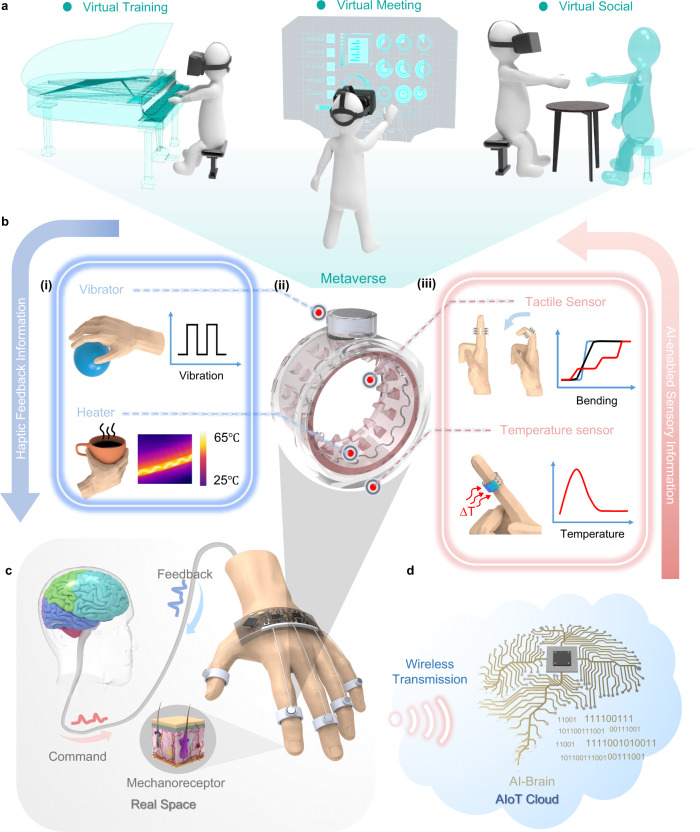
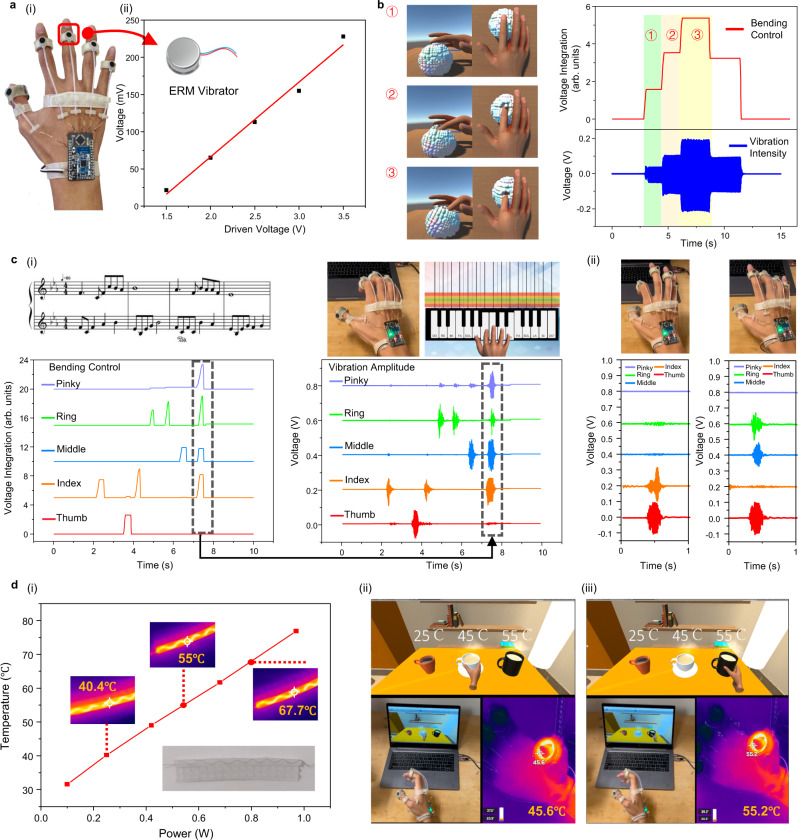
Advancements of virtual reality technology pave the way for developing wearable devices to enable somatosensory sensation, which can bring more comprehensive perception and feedback in the metaverse-based virtual society. Here, we propose augmented tactile-perception and haptic-feedback rings with multimodal sensing and feedback capabilities. This highly integrated ring consists of triboelectric and pyroelectric sensors for tactile and temperature perception, and vibrators and nichrome heaters for vibro- and thermo-haptic feedback. All these components integrated on the ring can be directly driven by a custom wireless platform of low power consumption for wearable/portable scenarios. With voltage integration processing, high-resolution continuous finger motion tracking is achieved via the triboelectric tactile sensor, which also contributes to superior performance in gesture/object recognition with artificial intelligence analysis. By fusing the multimodal sensing and feedback functions, an interactive metaverse platform with cross-space perception capability is successfully achieved, giving people a face-to-face like immersive virtual social experience.
Overview
The claims and statistics of this paper haven’t been checked yet.
Free: it reads the open-access text and checks the first 5 claims that cite a source we can check. Create a free account to check every claim.
Integrity signals
Registry
Cites
Statistics
Figures
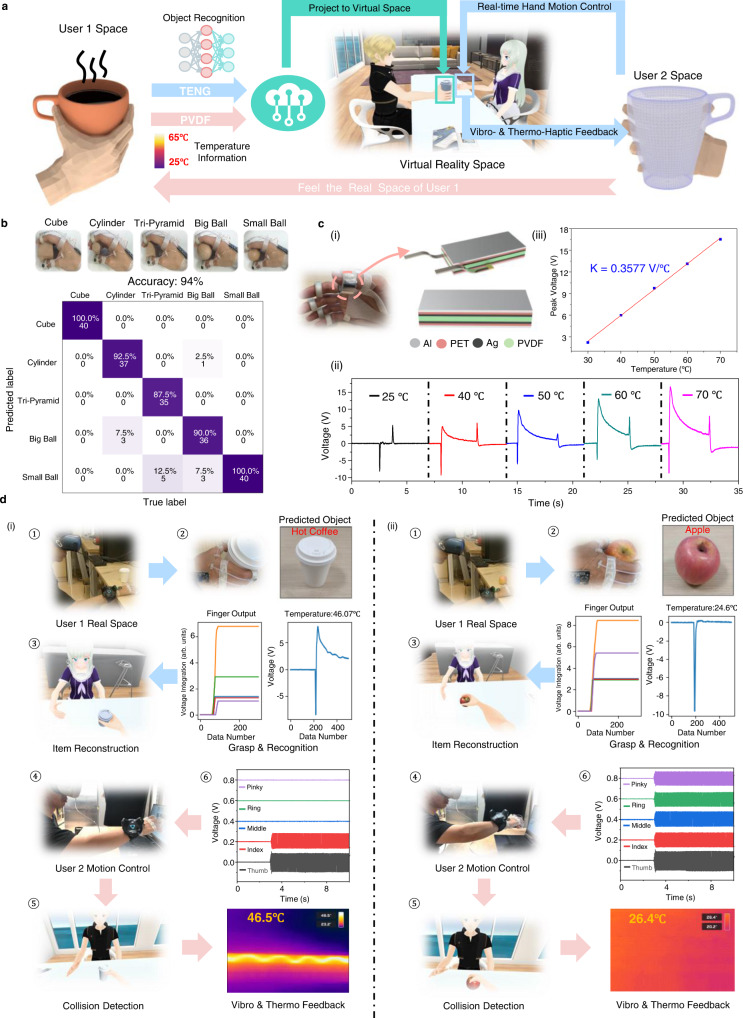
Verification
Claims the paper makes
The claims and statistics of this paper haven’t been checked yet.
Free: it reads the open-access text and checks the first 5 claims that cite a source we can check. Create a free account to check every claim.
Claims other papers make about this one
Each is checked against this paper’s own text: does it say what the citing paper says it does?
In the citing paper
“Additionally, immersive interactions in virtual reality (Fig. 1g, h) 50,51 and driver behavior monitoring in intelligent vehicles (Fig. 1i) [52][53][54] rely on HMIP technology to accurately capture complex motion intentions.”
From Recent advances in intelligent wearable systems: from multiscale biomechanical features towards human motion intent prediction (2026) · cites this paper as [51]
Self-check
Percentages, sums and reported differences re-computed from the paper’s own numbers.
The self-check needs the paper’s full text.
Citations
Cites
Vision based hand gesture recognition for human computer interaction: a survey
Rautaray, S. S., & Agrawal, A. (2015) · Artificial Intelligence Review · doi:10.1007/s10462-012-9356-9 · Cited by 1,526
Learning the signatures of the human grasp using a scalable tactile glove
Sundaram, S., Kellnhofer, P., Li, Y., Zhu, J.-Y., Torralba, A., & Matusik, W. (2019) · Nature · doi:10.1038/s41586-019-1234-z · Cited by 1,162
Conductive Fiber‐Based Ultrasensitive Textile Pressure Sensor for Wearable Electronics
Lee, J., Kwon, H., Seo, J., Shin, S., Koo, J. H., Pang, C., Son, S., Kim, J. H., Jang, Y. H., Kim, D. E., et al. (2015) · Advanced Materials · doi:10.1002/adma.201500009 · Cited by 1,152
3D Virtual worlds and the metaverse: Current status and future possibilities
Dionisio, J. D. N., III, W. G. B., & Gilbert, R. (2013) · ACM Computing Surveys · doi:10.1145/2480741.2480751 · Cited by 1,151
Skin-integrated wireless haptic interfaces for virtual and augmented reality
Yu, X., Xie, Z., Yu, Y., Lee, J., Vazquez-Guardado, A., Luan, H., Ruban, J., Ning, X., Akhtar, A., Li, D., et al. (2019) · Nature · doi:10.1038/s41586-019-1687-0 · Cited by 1,025
Self-citationSign-to-speech translation using machine-learning-assisted stretchable sensor arrays
Zhou, Z., Chen, K., Li, X., Zhang, S., Wu, Y., Zhou, Y., Meng, K., Sun, C., He, Q., Fan, W., et al. (2020) · Nature Electronics · doi:10.1038/s41928-020-0428-6 · Cited by 841
Pyroelectric materials and devices for energy harvesting applications
Bowen, C. R., Taylor, J., LeBoulbar, E., Zabek, D., Chauhan, A., & Vaish, R. (2014) · Energy Environ. Sci. · doi:10.1039/c4ee01759e · Cited by 836
Highly Stretchable and Transparent Metal Nanowire Heater for Wearable Electronics Applications
Hong, S., Lee, H., Lee, J., Kwon, J., Han, S., Suh, Y. D., Cho, H., Shin, J., Yeo, J., & Ko, S. H. (2015) · Advanced Materials · doi:10.1002/adma.201500917 · Cited by 788
Pyroelectric Nanogenerators for Harvesting Thermoelectric Energy
Yang, Y., Guo, W., Pradel, K. C., Zhu, G., Zhou, Y., Zhang, Y., Hu, Y., Lin, L., & Wang, Z. L. (2012) · Nano Letters · doi:10.1021/nl3003039 · Cited by 784
Zhu, M., Sun, Z., Zhang, Z., Shi, Q., He, T., Liu, H., Chen, T., & Lee, C. (2020) · Science Advances · doi:10.1126/sciadv.aaz8693 · Cited by 784
Self-citation
Cited by
Items 201–300 of 626
Dhouib, A., Hijab, M. H. F., Chemnad, K., Al‐Thani, D., & Othman, A. (2025) · Smart Learning Environments · doi:10.1186/s40561-025-00416-y · Cited by 27
“Moreover, studies have reported that hearing-impaired students struggle with conceptualizing abstract temporal constructs, indicating specific accessibility barriers in instructional design (Sun et al., 2022).”
InfluentialAn 18-g haptic feedback ring with a three-axis force-sensing skin
Kang, S., Mete, M., Gandla, S., Türkmen, D., John, R. K., Kalafat, M. A., Kim, S., & Paik, J. K. (2025) · Nature Electronics · doi:10.1038/s41928-025-01515-x · Cited by 27
“Finger-based haptic interfaces 22–25 tend to focus on vibrotactile or thermal feedback, with limited capability for kinaesthetic force feedback.”
Shape‐Configurable MXene‐Based Thermoacoustic Loudspeakers with Tunable Sound Directivity
Kim, J., Jung, G., Jung, S., Bae, M. H., Yeom, J., Park, J., Lee, Y., Kim, Y., Kang, D., Oh, J. H., et al. (2023) · Advanced Materials · doi:10.1002/adma.202306637 · Cited by 27
Fully addressable textile sensor array for self-powered haptic interfacing
Xiang, S., Chen, G., Wen, Q., Li, H., Luo, X., Zhong, J., Shen, S., Carlo, A. D., Fan, X. H., & Chen, J. (2023) · Matter · doi:10.1016/j.matt.2023.10.024 · Cited by 27
Wang, Y., Zhao, J., Zeng, X., Huang, J., Wen, Y., Brügger, J., & Zhang, X. (2024) · Advanced Science · doi:10.1002/advs.202400479 · Cited by 28
Wu, Z., Cheng, Y., Yang, Z., Wang, T., Liu, J., Feng, J., Tian, Y., & Guo, C. F. (2025) · Advanced Functional Materials · doi:10.1002/adfm.202517569 · Cited by 26
Zheng, T. Z., Li, G., Zhang, L., & Lei, Y. (2024) · Journal of Materials Chemistry A · doi:10.1039/d3ta05954e · Cited by 26
3D Multimodal Sensing and Feedback Finger Case for Immersive Dual‐Way Interaction
Chen, T., Dai, Z., Liu, M., Zhao, Y., Ling, H., Sun, L., He, H., Lee, C., & Zhu, M. (2024) · Advanced Materials Technologies · doi:10.1002/admt.202301681 · Cited by 26
Self-citationDing, S., Zhao, D., Chen, Y., Dai, Z., Zhao, Q., Gao, Y., Zhong, J., Luo, J., & Zhou, B. (2024) · Advanced Science · doi:10.1002/advs.202302782 · Cited by 26
Yang, H., Li, N., Yang, K., Sun, L., Zhang, H., Zhang, Z., & Cui, X. (2024) · Chemical Engineering Journal · doi:10.1016/j.cej.2024.150816 · Cited by 26
Fang, D., Ding, S., Liu, Y., Zhou, Q., Qi, B., Ji, B., & Zhou, B. (2025) · Advanced Materials · doi:10.1002/adma.202417867 · Cited by 25
Laga, I., Rubio-Manzanares-Dorado, M., Eguía, A. P., Racero-Moreno, J., Eguía-Salinas, I., Pereira-Arenas, S., Jiménez-Rodríguez, R. M., & Ruiz, F. J. P. (2025) · Frontiers in Robotics and AI · doi:10.3389/frobt.2025.1567955 · Cited by 25
Gao, L., Liu, K., Wang, W., Li, X., Deng, Q., Hu, N., Chen, X., & Mu, X. (2025) · Advanced Functional Materials · doi:10.1002/adfm.202517158 · Cited by 25
Less is more: Enabling complex human motion capture with a printed low-pixel strain sensor array
Lin, X., Xue, H., Li, F., Wang, J., Li, J., Zhao, H., & Zhang, T. (2024) · Nano Energy · doi:10.1016/j.nanoen.2024.109350 · Cited by 25
Guo, X., Zhao, J., Hu, B., Li, J., Tao, J., Chen, Y., Zong, S., Hong, W., Li, X., Zhu, S., et al. (2024) · IEEE Transactions on Electron Devices · doi:10.1109/ted.2024.3401653 · Cited by 25
“I N CONTEMPORARY times, the fast evolution of electronic skins (e-skins) [1], [2], the Internet of Things (IoT) [3], artificial intelligence (AI) [4], and human–machine interfaces [5], [6] have led to a surge in research on flexible capacitive sensors.”
BackgroundOuyang, Q., Wang, X., Wang, S., Huang, Z., Shi, Z., Pang, M., Liu, B., Tan, C., Yang, Q., & Rong, L. (2024) · ACS Applied Materials & Interfaces · doi:10.1021/acsami.4c07056 · Cited by 25
Everyday Metaverse: The Metaverse as an Integral Part of Everyday Life
Wang, G., Zhang, Z., Nandhakumar, J., & Manoharan, N. (2025) · Journal of Management Information Systems · doi:10.1080/07421222.2025.2455772 · Cited by 25
“Some concentrate on the digital environment, others consider the physical devices [13, 56], and some prioritize immersion into the digital world, whereas others ponder the interface between the digital and physical worlds [47, 79, 87].”
Digitizing Human Motion via Bending Sensors toward Humanoid Robot
Liu, J., Liao, F., Chen, Z., Zhou, R., Zhong, X., Лю, Б., Wang, Z., He, M., Lin, H., Zhang, Z., et al. (2023) · Advanced Intelligent Systems · doi:10.1002/aisy.202200337 · Cited by 24
Niu, H., Li, N., Kim, E., Shin, Y. K., Kim, N., Shen, G., & Li, Y. (2023) · InfoMat · doi:10.1002/inf2.12500 · Cited by 25
Aslam, A. M., Chaudhary, R., Bhardwaj, A., Kumar, N., & Buyya, R. (2025) · Journal of Network and Computer Applications · doi:10.1016/j.jnca.2025.104138 · Cited by 25
Dan, X., Cao, X., Wang, Y., Yang, J., Wang, Z. L., & Sun, Q. (2023) · ACS Applied Nano Materials · doi:10.1021/acsanm.2c05360 · Cited by 23
Zhang, J., Zhu, P., Ouyang, H., Wang, E., Xue, J., Li, Z., Shi, B., & Fan, Y. (2024) · ACS Sensors · doi:10.1021/acssensors.3c02180 · Cited by 23
Wang, Y., Zhu, P., Sun, Y., Li, P., & Mao, Y. (2024) · Bio-Design and Manufacturing · doi:10.1007/s42242-024-00284-4 · Cited by 23
Zhang, C., Zhang, L., Tian, Y., An, Z., Li, B., & Li, D. (2025) · eScience · doi:10.1016/j.esci.2025.100373 · Cited by 23
An AI-enabled self-sustaining sensing lower-limb motion detection system for HMI in the metaverse
Chen, H., He, D., Xiong, K., Zhao, X., Fang, Z., Zou, R., Zhi, J., & Zhang, Z. (2025) · Nano Energy · doi:10.1016/j.nanoen.2025.110724 · Cited by 23
Zhang, W., Deng, L., Lü, X., Liu, M., Ren, Z., Chen, S., Zheng, Y., Yao, B., Bao, W., & Wang, Z. L. (2025) · InfoMat · doi:10.1002/inf2.70002 · Cited by 22
Cross-modal communication technology: A survey
Wei, X., Wu, D., Zhou, L., & Guizani, M. (2023) · Fundamental Research · doi:10.1016/j.fmre.2023.08.002 · Cited by 22
“Sun et al. [44] proposes an augmented tactile-perception and haptic-feedback ring.”
Hwang, G. W., Jeon, S. H., Song, J. H., Kim, D. W., Lee, J., Kim, J., Jo, G., Park, S., Kim, H. J., Kim, M., et al. (2023) · Advanced Functional Materials · doi:10.1002/adfm.202308747 · Cited by 22
Zhao, Q., Fan, L., Zhao, N., He, H., Zhang, L., & Tan, Q. (2024) · Nanoscale · doi:10.1039/d3nr05155b · Cited by 22
Triboelectric Bending Sensors for AI‐Enabled Sign Language Recognition
Wang, W., Bo, X., Li, W., Eldaly, A. B. M., Wang, L., Li, W. J., Chan, L. L. H., & Daoud, W. A. (2025) · Advanced Science · doi:10.1002/advs.202408384 · Cited by 22
Cai, M., Sun, H., Yang, T., Hu, H., Li, X., & Jia, Y. (2025) · Micromachines · doi:10.3390/mi16080902 · Cited by 22
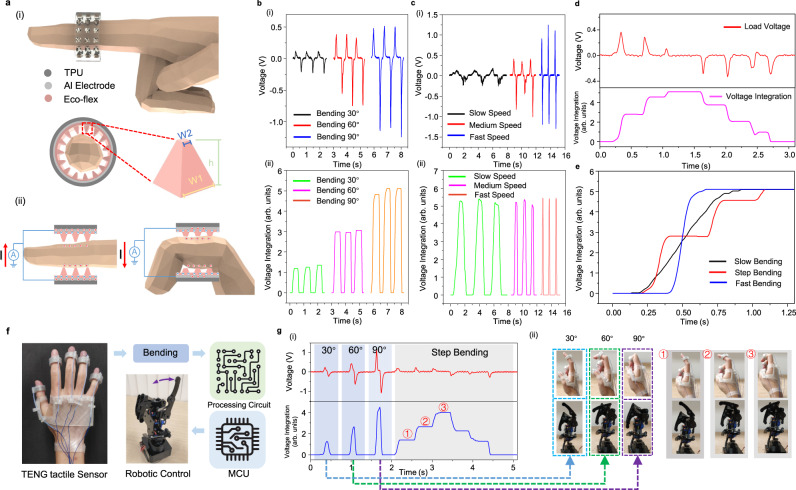
“In soft robotics, Sun et al. developed a TENG-based tactile sensor for continuous bending detection, enabling accurate measurement of bending angles independent of speed through voltage integration [71].”
Body‐Coupled‐Driven Object‐Oriented Natural Interactive Interface
Hong, J., Xiao, Y., Chen, Y., Duan, S., Xiang, S., Wei, X., Zhang, H., Liu, L., Xia, J., Lei, W., et al. (2025) · Advanced Materials · doi:10.1002/adma.202507067 · Cited by 21
Self-citationSurgery in the Next Space Missions
Pantalone, D. (2023) · Life · doi:10.3390/life13071477 · Cited by 21
“STAR was controlled by artificial-intelligence (AI) algorithms, receiving input from an array of visual and haptic sensors [55] that can create an experience of touch by applying forces, vibrations, or motions to the user [55].”
Viscoelastic blood coagulation testing system enabled by a non‐contact triboelectric angle sensor
Wang, B., Wei, X., Zhou, H., Cao, X., Zhang, E., Wang, Z. L., & Wu, Z. (2023) · Exploration · doi:10.1002/exp.20230073 · Cited by 21
Sayyad, P. W., Park, S., & Ha, T. (2023) · Biotechnology Advances · doi:10.1016/j.biotechadv.2023.108297 · Cited by 21
Metarobotics for Industry and Society: Vision, Technologies, and Opportunities
Kaigom, E. G. (2023) · IEEE Transactions on Industrial Informatics · doi:10.1109/tii.2023.3337380 · Cited by 22
“Indeed, geographically distributed collaborators can showcase and familiarize with specific cultural rules of People-to-People (P2P) communication and etiquette, including remote hugs and hand-shakes in meetings [46], without e.g. contamination hazards.”
BackgroundInfluentialBoateng, D., Li, X., Wu, W., Yang, A., Gul, A., Kang, Y., Yang, L. Z., Liu, J., Zeng, H., Zhang, H., et al. (2024) · ACS Applied Materials & Interfaces · doi:10.1021/acsami.4c10168 · Cited by 21
Chen, Y., Wu, H., Wang, X., Qiu, P., Wan, H., Jiao, J., Wang, D., & Zhang, Z. (2024) · Chemical Engineering Journal · doi:10.1016/j.cej.2024.156612 · Cited by 22
Xu, J., Guo, X., Zhang, Z., Liu, H., & Lee, C. (2024) · Advanced Science · doi:10.1002/advs.202407888 · Cited by 21
Self-citationAI-Driven Robotics: Innovations in Design, Perception, and Decision-Making
Li, L., Li, L., Li, M., & Liang, K. (2025) · Machines · doi:10.3390/machines13070615 · Cited by 22
Metaverse‐Enabled Yoga Coach Avatar Using AI‐Enhanced Multimodal Insole Sensing System
Wang, L., Guo, X., Zhang, Z., & Lee, C. (2025) · Advanced Functional Materials · doi:10.1002/adfm.202519562 · Cited by 20
Self-citationLi, K., Yue, W., Guo, Y., Li, Y., Shen, G., & Lee, J. (2026) · Science Advances · doi:10.1126/sciadv.aea2020 · Cited by 20
“Wearable technology, especially gloves, has become ideal for HMI due to comfort, portability, and integration ease ( 20 – 22 ).”
Guo, W., Fu, Z., Bu, T., Wang, Z., Fang, H., Zhou, S., Huang, J., & Wu, H. (2024) · Nano Energy · doi:10.1016/j.nanoen.2024.109639 · Cited by 20
Hoang, T. T., Cunio, A. M., Zhao, S., Nguyen, T., Peng, S., Liaw, S., Barber, T. J., Zhang, J., Farajikhah, S., Dehghani, F., et al. (2024) · Advanced Sensor Research · doi:10.1002/adsr.202400039 · Cited by 20
A thermosensitive smart robotic self-powered sensor for material identification
Pal, A., Lim, K. C., Chen, S.-W., Huang, Y., Parashar, P., Ganguly, A., Chen, Y.-H., Fan, K., Shen, L.-C., Cheng, J., et al. (2024) · Device · doi:10.1016/j.device.2024.100421 · Cited by 20
du, L., Li, Y., Qiu, R., Xu, J., Nie, K., Cao, X., Tang, J., Wang, Y., Du, G., & Bu, L. (2024) · Journal of Micromechanics and Microengineering · doi:10.1088/1361-6439/ad6778 · Cited by 20
“Sun et al [52] also proposed a TENG sensor with a pyramidal pattern structure (figure 5(e)).”
Yang, B., Yang, L., Zhao, H., Pan, F., Cheng, X., Ji, L., Wang, X., Li, C., Li, W., Qu, X., et al. (2024) · Nano Energy · doi:10.1016/j.nanoen.2024.110638 · Cited by 20
Han, L., Liu, Y., Qi, Z., Zhao, Y., Zhang, N., Dong, Y., & Wang, X. (2025) · Nano Energy · doi:10.1016/j.nanoen.2025.110775 · Cited by 20
Periyasamy, T., Asrafali, S. P., & Lee, J. (2025) · Gels · doi:10.3390/gels11050372 · Cited by 20
Touch Matters: The Impact of Physical Contact on Haptic Product Perception in Virtual Reality
Miralles, F. F., Galán, J., Contero, M., & García-García, C. (2023) · Applied Sciences · doi:10.3390/app13042649 · Cited by 20
Fundamental theory and cutting-edge applications of TENGs
Kang, X., Li, P., Yurchenko, D., Dai, S., & Wang, J. (2025) · Materials Futures · doi:10.1088/2752-5724/adf132 · Cited by 19
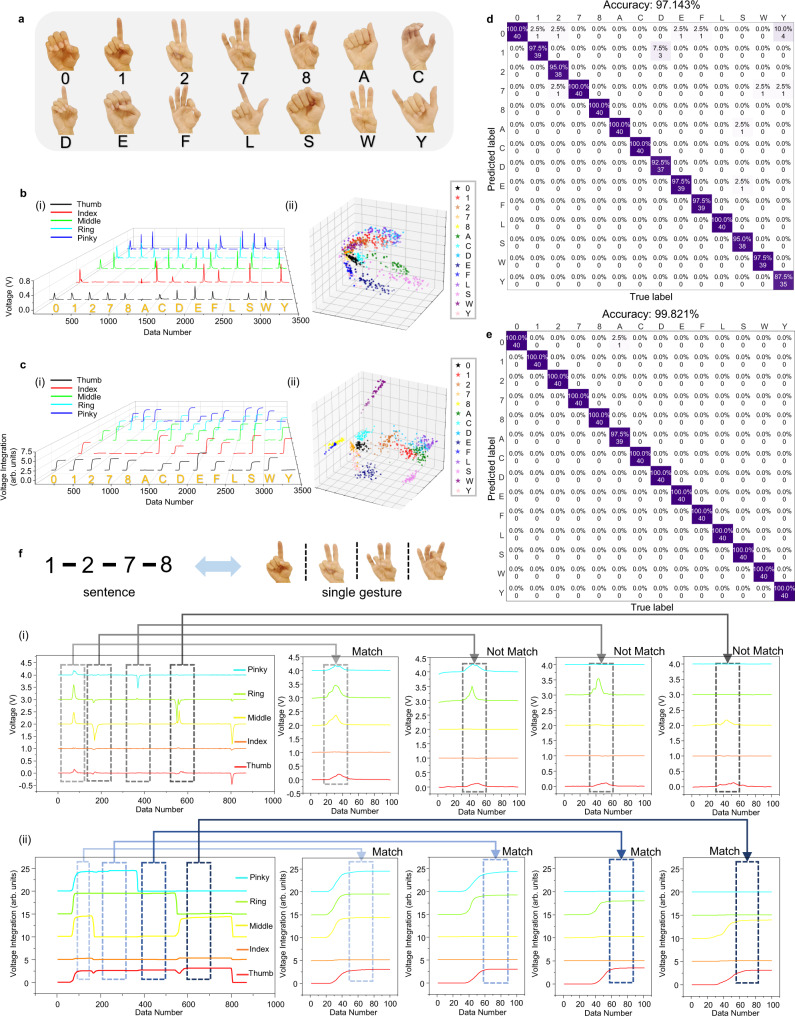
“Sun et al [179] developed augmented tactile perception and haptic feed-back rings (ATH-Rings), as shown in figures 11(d) and (e), facilitating immersive intelligent human–computer interaction.”
Bionic tribo-sensors with sweat and smudge-resistant as electronic skin for personal authentication
Liu, W., Zeng, S., Wang, Q., Cao, W., Li, K., Zeng, X., Guo, L., & Hua, Y. (2024) · Nano Energy · doi:10.1016/j.nanoen.2024.109399 · Cited by 20
Shih, C., Lin, P.-J., Chen, Y., & Chen, S. (2024) · IEEE Access · doi:10.1109/access.2024.3392513 · Cited by 19
“Other previous studies [17], [18], [19] demonstrate integrating training for daily life activities into VR not only enhances rehabilitation engagement but also leverages visual and auditory stimuli to focus users on relevant tasks, thereby enhancing rehabilitation outcomes.”
BackgroundThermoGrasp: Enabling Localized Thermal Feedback on Fingers for Precision Grasps in Virtual Reality
Nasser, A., & Hasan, K. (2024) · Proceedings of the ACM on Human-Computer Interaction · doi:10.1145/3676526 · Cited by 19
“We incorporated the extra feedback condition into our study as prior works [3, 18, 36] primarily focus on providing feedback either across the entire palm or entire finger phalanges.”
Lei, H., Cao, Y., Sun, G., Huang, P., Xue, X., Lu, B., Yan, J., Wang, Y., Lim, E. G., Tu, X., et al. (2024) · ACS Nano · doi:10.1021/acsnano.4c14285 · Cited by 19
Fabric-Type Flexible Energy-Storage Devices for Wearable Electronics
Xiang, S., Qin, L., Wei, X., Fan, X. H., & Li, C. (2023) · Energies · doi:10.3390/en16104047 · Cited by 19
Oh, S., Jang, J., Ji, W., Yang, Y., Khan, M., Majidi, C., Ryu, J.-H., & Oh, I. (2025) · Advanced Functional Materials · doi:10.1002/adfm.202502222 · Cited by 18
Soft 3D Lattice Iontronic Tactile Sensor
Li, J., Yu, Q., Shen, Z., Wang, D., & Gu, G. (2025) · SmartBot · doi:10.1002/smb2.70002 · Cited by 18
Prosthetic finger for fingertip tactile sensing via flexible chromatic optical waveguides
Zhou, J., Fu, C., Fang, J., Shang, K., Pu, X., Zhang, Y., Jiang, Z., Lu, X., He, C., Jia, L., et al. (2023) · Materials Horizons · doi:10.1039/d3mh00921a · Cited by 18
Ionic hydrogels-based triboelectric nanogenerators for self-powered human–machine interfaces
Liang, S., Li, C., Niu, M., Zhu, P., Pan, Z., & Mao, Y. (2023) · Journal of Physics Materials · doi:10.1088/2515-7639/ad05e7 · Cited by 18
Kim, H. H., Kim, K., Yang, J., & Choi, M. K. (2023) · Advanced Materials Technologies · doi:10.1002/admt.202301262 · Cited by 18
Li, T., Zhang, A., Du, M., Zhu, Y., Wang, N., Han, X., Li, X., Tan, Y., & Zhou, Z. (2024) · IEEE/ASME Transactions on Mechatronics · doi:10.1109/tmech.2024.3450751 · Cited by 18
“Furthermore, literature indicates intelligent perception combining force feedback and machine learning is an inevitable trend in robot tactile perception [30], [31].”
Miniaturized, portable gustation interfaces for VR/AR/MR
Liu, Y., Park, W., Yiu, C. K., Huang, X., Jia, S., Chen, Y., Zhang, H., Chen, H., Wu, P., Wu, M., et al. (2024) · Proceedings of the National Academy of Sciences · doi:10.1073/pnas.2412116121 · Cited by 18
Mechanoluminescence-powered bite-controlled human–machine interface
Wang, C., Hu, H., Zhu, D., & Pan, C. (2023) · 中国科学通报:英文版 · doi:10.1016/j.scib.2023.02.036 · Cited by 18
Non-hazardous and fully recyclable ionic thermoelectrics for sustainable human–machine interfaces
Yang, J., Wang, Z., Yang, Z., Liu, M., Lee, D. K. H., Bian, K., Ouyang, J., & Tee, B. C. K. (2025) · Nature Communications · doi:10.1038/s41467-025-65377-9 · Cited by 17
“This active thermal sensing mechanism is more sustainable than passivesensingmechanisms,as it minimizes theneed for external power sources, thereby enhancing device practicality 15,16 .”
Wearable Intelligent Human–Machine Interfaces Ready for Sustainable Edge Computing Systems
Zhu, M., He, S., Chen, T., & Lee, C. (2025) · AI Sensors · doi:10.3390/aisens1020009 · Cited by 17
“The augmented tactile-perception and haptic-feedback rings with multimodal sensing and feedback capabilities shown in Figure 9f indicates a possible direction [213].”
Self-citationHui, X., Li, Z., Tang, L., Sun, J., Hou, X., Chen, J., Peng, Y., Wu, Z., & Guo, H. (2022) · Nano-Micro Letters · doi:10.1007/s40820-022-00999-y · Cited by 17
“In addition, owing to the saturated-output characteristic [24, 25], TENG as an active sensor holds ultra-high sensitivity to tiny displacement and has been demonstrated for detecting sphygmus [26], eye blinking [27], heart beating [28–32], breath [33, 34], touching [35, 36], microvibration [37], underwater acoustic [3…”
BackgroundWearable Haptics for Orthotropic Actuation Based on Perpendicularly Nested Auxetic SMA Knotting
Khan, M., Oh, S., Song, T., Ji, W., Mahato, M., Yang, Y., Saatchi, D., Ali, S. S., Roh, J., Yun, D. H., et al. (2024) · Advanced Materials · doi:10.1002/adma.202411353 · Cited by 17
Adhesive bioelectronics for closed-loop therapy
Jung, H., Lee, H., Shin, M., & Son, D. (2025) · Med-X · doi:10.1007/s44258-025-00055-5 · Cited by 20
Virtual hospitals and digital doctors: how far are we from the CardioVerse?
Skalidis, I., Fournier, S., Skalidis, E. I., & Maurizi, N. (2022) · European Heart Journal · doi:10.1093/eurheartj/ehac603 · Cited by 17
Wang, S., Dong, M., Bao, R., & Pan, C. (2025) · Advanced Intelligent Discovery · doi:10.1002/aidi.202500112 · Cited by 16
Zhang, B., Jiang, Y., Chen, B., Li, H., & Mao, Y. (2024) · Nanoenergy Advances · doi:10.3390/nanoenergyadv4010003 · Cited by 16
“The field of human–machine interaction (HMI) and electronic skin (e-skin) has made remarkable strides, yet it is riddled with challenges that have hindered its progress [1–6].”
BackgroundJu, H., Xing, L., Ali, A. H., El-Arab, I. M. E., Elshekh, A. E. A., Abbas, M., Abdullah, N., Elattar, S., Hashmi, A., Ali, E., et al. (2024) · Environmental Research · doi:10.1016/j.envres.2024.119248 · Cited by 16
Wang, R., Jiang, L., Li, J., Dai, Z., Liu, M., Lv, P., Li, X., & Zhu, M. (2024) · Nano Energy · doi:10.1016/j.nanoen.2024.110273 · Cited by 16
Self-citationPapermaking-inspired sustainable triboelectric sensors for intelligent detecting system
Liu, B. Y., Li, S., Wen, Y., Xie, Z., Zhang, M., Cheng, Z., Liu, D., Jia, C., & Sun, F. (2024) · Nano Energy · doi:10.1016/j.nanoen.2024.110322 · Cited by 16
Soft Robotics for Parkinson’s Disease Supported by Functional Materials and Artificial Intelligence
Mazumdar, H., Khondakar, K. R., Das, S., & Kaushik, A. K. (2025) · BME Frontiers · doi:10.34133/bmef.0143 · Cited by 18
Rational Design of Flexible Mechanical Force Sensors for Healthcare and Diagnosis
Zhang, H., & Zhang, Y. (2023) · Materials · doi:10.3390/ma17010123 · Cited by 16
“For example, Sun et al. developed a TENG tactile sensor by combining a layer of silicone rubber film with pyramid structures and a TPU ring (Figure 6h) [77].”
BackgroundMethodArbaud, R., Najafi, M., Gandarías, J. M., Lorenzini, M., Paul, U. C., Żych, A., Athanassiou, A., Cataldi, P., & Ajoudani, A. (2024) · Advanced Materials Technologies · doi:10.1002/admt.202301265 · Cited by 16
Chen, Y., Li, T., Wang, Z., Yan, Z., Vita, R. D., & Tan, T. (2023) · Advanced Science · doi:10.1002/advs.202304091 · Cited by 15
Cardio-oncology rehabilitation: are we ready?
Bisceglia, I., Venturini, E., Canale, M. L., Ambrosetti, M., Riccio, C., Giallauria, F., Gallucci, G., Abrignani, M. G., Russo, G., Lestuzzi, C., et al. (2024) · European Heart Journal Supplements · doi:10.1093/eurheartjsupp/suae030 · Cited by 15
“76 Mobile technologies, besides, enable a more objective evaluation of patients.”
BackgroundXiong, Y., Liu, Y., Yang, J., Wang, Y., Xu, N., Wang, Z. L., & Sun, Q. (2024) · Nano Energy · doi:10.1016/j.nanoen.2024.109956 · Cited by 15
Wearable Sensors for Motion and Electrophysiological Signal Tracking in XR
Qiu, Y., He, X., Li, Z., Peng, Z., Huang, Y., & Yu, X. (2024) · Korean Journal of Chemical Engineering · doi:10.1007/s11814-024-00227-w · Cited by 15
“Reproduced with permission [118].”
AirWhisper: enhancing virtual reality experience via visual-airflow multimodal feedback
Zhao, F., Li, Z., Luo, Y., Li, Y., & Liang, H. (2024) · Journal on Multimodal User Interfaces · doi:10.1007/s12193-024-00438-9 · Cited by 15
A paradigm shift toward active resistive sensing driven by triboelectric nanogenerator
Hong, J., Rao, Z., Duan, S., Xiang, S., Wei, X., Xiao, Y., Chen, Y., Sheng, H., Xia, J., Lei, W., et al. (2024) · Nano Energy · doi:10.1016/j.nanoen.2024.110327 · Cited by 15
Wearable Hydrogels for Personal Protection Applications
Li, Y., Hu, X., Jin, X., & Wang, J. (2025) · Macromolecular Rapid Communications · doi:10.1002/marc.202400960 · Cited by 15
Enhancing haptic continuity in virtual reality using a continuity reinforcement skeleton
Wang, X., Meng, Z., & Chen, C. (2025) · Nature Communications · doi:10.1038/s41467-025-58318-z · Cited by 15
“Haptic devices can be generally categorized into interactive object 16 – 23 , kinesthetic devices 24 – 26 , and cutaneous devices 5,27 .”
Metaverse for logistics and supply chain management: new framework and research advances
Zhang, Z., Wu, H., Qiu, Y., Liao, Z., & Song, M. (2025) · The International Journal of Logistics Management · doi:10.1108/ijlm-07-2024-0461 · Cited by 15
Ke, Y., Li, T., Li, J., Pei, M., Wang, X., Xie, W., Zhuang, S., Ye, X., Li, Z., Wang, Z., et al. (2025) · eScience · doi:10.1016/j.esci.2025.100436 · Cited by 15
Advances in flexible high-density microelectrode arrays for brain-computer interfaces
Ban, S., Chong, D., Kwon, J., Lee, S., Huang, Y., Yoo, S., & Yeo, W. (2025) · Biosensors and Bioelectronics · doi:10.1016/j.bios.2025.118102 · Cited by 15
Lan, R., Sun, X. S., Wang, Q., & Liu, B. (2024) · CHI Conference on Human Factors in Computing Systems · doi:10.1145/3613904.3642417 · Cited by 15
“Immersive Experiences in VR/AR (Figure 8 (c)): over the last decades, the concept of “Metaverse” and the advancement of virtual reality technology showed great development prospects in the areas of social, gaming, training, etc. [55, 72].”
BackgroundAqueous battery fiber with high volumetric and areal power density for flexible electronics
Qin, L., Xu, C., Che, Q., Yan, F., Xue, J., Wei, X., Xiang, S., Wu, J., Tao, C., Liu, X., et al. (2023) · Device · doi:10.1016/j.device.2023.100179 · Cited by 14
Self-citationZhang, H., Liu, Z., Xie, X., Wu, J. L., & Shi, Q. (2024) · Nanoenergy Advances · doi:10.3390/nanoenergyadv4040023 · Cited by 14
Flexible PDMS-NdFeB Composite Membrane for Haptic Force Perception
Zhao, X., Li, F., Ruan, L., Wen, J., Zhang, Y., Gao, R., Zhang, F., Zhang, K., Wang, Y., & Yang, W. (2025) · ACS Applied Electronic Materials · doi:10.1021/acsaelm.5c00070 · Cited by 14
Journal Editorial: Welcome to the New Era of AI-Enabled Sensing
Leng, T., Li, L., & Lee, C. (2025) · AI Sensors · doi:10.3390/aisens1010001 · Cited by 14
Self-citationOne Pot Photomediated Formation of Electrically Conductive Hydrogels
Nguyen, D. M., Lo, C., Guo, T., Choi, T., Sundar, S., Swain, Z. R., Wu, Y., Dhong, C., & Kayser, L. V. (2023) · ACS Polymers Au · doi:10.1021/acspolymersau.3c00031 · Cited by 14
Zhang, S., Sun, Y.-H. P., Sun, F., Yang, Y., & Fang, B. (2024) · Sensors and Actuators A Physical · doi:10.1016/j.sna.2024.115090 · Cited by 14
The metaverse: an analysis from a human rights perspective
Cuellar, D. M. P., Lasso, A. D. V., & Salazar, A. B. (2024) · Revista Jurídica Mario Alario D´Filippo · doi:10.32997/2256-2796-vol.16-num.33-2024-4889 · Cited by 14
“In addition, augmented tactile perception and haptic feedback (Sun et al., 2022) illustrate how advanced technology facilitates the integration of physical and virtual experiences in the metaverse, providing a sense of continuity and connection between actions and environments.”
Tactile–Thermal Interactions: Cooperation and Competition
Jones, L. A., & Ho, H.-N. (2025) · IEEE Transactions on Haptics · doi:10.1109/toh.2025.3549677 · Cited by 13
“The focus of much of the research on distributed displays has been on determining whether sensory information presented at a location other than the interaction point can be interpreted realistically [119], [120].”
Wearable soft actuation systems for human–machine–environment interactions
Zhan, L., & Zhai, W. (2025) · Materials Today · doi:10.1016/j.mattod.2025.07.014 · Cited by 13
Lu, H., Wang, M., Chen, Z., Yu, G., Ma, Y., Wen, L., Yang, Y., & Wang, S. (2025) · Science Bulletin · doi:10.1016/j.scib.2025.10.008 · Cited by 14
Metadata
- Authors
- Sun, Z., Zhu, M., Shan, X., & Lee, C.
- Affiliations
- National University of Singapore (SG)
- Agency for Science, Technology and Research (SG)
- Corresponding author
- Lee, Chengkuo
- Venue
- Nature Communications
- Published
- 2022-09-05
- Volume
- 13
- Issue
- 1
- Pages
- 5224-5224
- ISSN
- 2041-1723 (ISSN-L)
- PMC
- PMC9445040
- OpenAlex
- W4294677009
- Semantic Scholar
- 1111bab7ad7ca5d988212dd9c6c60bc4d8786fe7
- Cited by
- 532
- References
- 70
- Citations by year
- 2026: 79 · 2025: 164 · 2024: 160 · 2023: 120 · 2022: 9
- FWCI
- 32.87
- Type
- journal article
- Language
- en
- Open access
- gold
- doi.org
- Licence
- cc-by
- creativecommons.org/licenses/by/4.0 (tdm)
- creativecommons.org/licenses/by/4.0 (vor)
- Locations
- Nature Communications (publishedVersion, cc-by)
- PubMed Central (publishedVersion, cc-by)
- PubMed (publishedVersion)
- RePEc: Research Papers in Economics (submittedVersion)
- DOAJ (DOAJ: Directory of Open Access Journals) (submittedVersion, cc-by-sa)
- Funders
- National University of Singapore (A-0005947-20-00)
- National Key Research and Development Program of China (2019YFB2004800, R‐2020‐S‐002)
- Topics
- Physical Sciences › Engineering › Biomedical Engineering › Advanced Sensor and Energy Harvesting Materials
- Life Sciences › Neuroscience › Cognitive Neuroscience › Tactile and Sensory Interactions
- Physical Sciences › Engineering › Mechanical Engineering › Teleoperation and Haptic Systems
- Keywords
- wearable devices, virtual reality, somatosensory perception, gesture recognition, multimodal sensing, metaverse
- MeSH terms
- Haptic Technology, Artificial Intelligence, Feedback, Humans, Touch, Touch Perception
About these checks
Registry, retraction, Cites and statistics results are computed, not judged, with one exception: a printed reference that no index lists is read once by a model before it counts as a citation error. Claims are extracted by a model and kept only when their quote appears verbatim in the text; each cited source is then checked, with a model’s help, for whether it says what the claim relies on. Those verdicts can be wrong — read the claim’s quote and the cited source before relying on one.
Statistics and arithmetic are recomputed, not judged.
Confidence bands are shown only for fields calibrated on our annotated test set. None is calibrated yet, so no band is shown.
What counts as a claim ›How we measure confidence ›How we check this ›
Are you an author, or do you see a problem with this page? Request a review
Data sources
Bibliographic data: Semantic Scholar, OpenAlex, Crossref.
Contains information from the Semantic Scholar Academic Graph Datasets, made available under the ODC Attribution License (ODC-BY 1.0).
Semantic Scholar’s data is described in: Kinney, R., et al. (2023). The Semantic Scholar Open Data Platform. arXiv:2301.10140.
