

The DOI matches its Crossref record; 40 of the 40 references it cites were found in a registry or an index.
Haptic-feedback smart glove as a creative human-machine interface (HMI) for virtual/augmented reality applications
Open accessAbstract
A haptic-feedback glove with triboelectric sensors and piezoelectric stimulators is developed for interaction in virtual space.
Overview
The claims and statistics of this paper haven’t been checked yet.
Free: it reads the open-access text and checks the first 5 claims that cite a source we can check. Create a free account to check every claim.
Integrity signals
Registry
Cites
Statistics
Figures

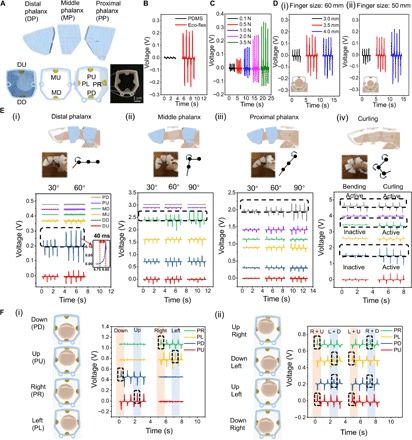
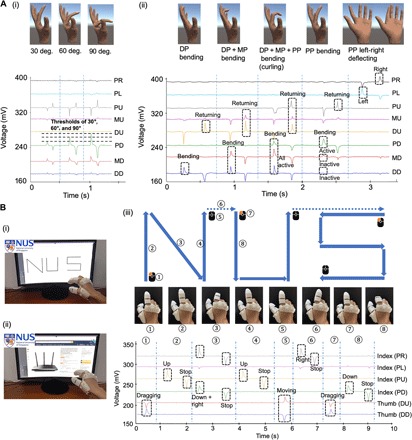


Verification
Claims the paper makes
The claims and statistics of this paper haven’t been checked yet.
Free: it reads the open-access text and checks the first 5 claims that cite a source we can check. Create a free account to check every claim.
Claims other papers make about this one
Each is checked against this paper’s own text: does it say what the citing paper says it does?
The check wasn’t confident either way, so it gives no verdict — never disputed.
In the citing paper
“Compared with the simulated feelings of sight, hearing, and smell, virtual tactile sense is much more difficult to be realized because it requires a fast-response, high-resolution, bio-friendly, and large-sized tactile stimulation technique”
From Self-powered electro-tactile system for virtual tactile experiences (2021) · cites this paper as [4]
Experimental — accuracy not yet measured
Self-check
Percentages, sums and reported differences re-computed from the paper’s own numbers.
The self-check needs the paper’s full text.
Citations
Cites
Skin-like pressure and strain sensors based on transparent elastic films of carbon nanotubes
Lipomi, D. J., Vosgueritchian, M., Tee, B. C.-K., Hellstrom, S. L., Lee, J. A., Fox, C. H., & Bao, Z. (2011) · Nature Nanotechnology · doi:10.1038/nnano.2011.184 · Cited by 3,188 · cited 1×
“In addition to conformability, different sensing mechanisms have also been studied widely, such as transistor-based (12), resistive-based (13), and capacitivebased (14) sensors for detecting strain, static force, and dynamic force, or even the slippery motions with high sensitivities (15).”
Skin-inspired highly stretchable and conformable matrix networks for multifunctional sensing
Hua, Q., Sun, J., Liu, H., Bao, R., Yu, R., Zhai, J., Pan, C., & Wang, Z. L. (2018) · Nature Communications · doi:10.1038/s41467-017-02685-9 · Cited by 1,413
Self-citationLearning the signatures of the human grasp using a scalable tactile glove
Sundaram, S., Kellnhofer, P., Li, Y., Zhu, J.-Y., Torralba, A., & Matusik, W. (2019) · Nature · doi:10.1038/s41586-019-1234-z · Cited by 1,162
Skin-integrated wireless haptic interfaces for virtual and augmented reality
Yu, X., Xie, Z., Yu, Y., Lee, J., Vazquez-Guardado, A., Luan, H., Ruban, J., Ning, X., Akhtar, A., Li, D., et al. (2019) · Nature · doi:10.1038/s41586-019-1687-0 · Cited by 1,025
Self-citationBoutry, C. M., Negre, M., Jorda, M., Vardoulis, O., Chortos, A., Khatib, O., & Bao, Z. (2018) · Science Robotics · doi:10.1126/scirobotics.aau6914 · Cited by 921
A transparent bending-insensitive pressure sensor
Lee, S., Reuveny, A., Reeder, J., Lee, S., Jin, H., Liu, Q., Yokota, T., Sekitani, T., Isoyama, T., Abe, Y., et al. (2016) · Nature Nanotechnology · doi:10.1038/nnano.2015.324 · Cited by 833
Noninvasive Brain-Actuated Control of a Mobile Robot by Human EEG
del R. Millan, J., Renkens, F., Mourino, J., & Gerstner, W. (2004) · IEEE Transactions on Biomedical Engineering · doi:10.1109/tbme.2004.827086 · Cited by 740 · cited 1×
“Furthermore, wrist bands containing electromyographic electrodes can record hand gestures ( 3 ), and electroencephalogram (EEG) electrodes are even able to detect human intentions directly, i.e., by detecting brain wave ( 4 ).”
Soft robot perception using embedded soft sensors and recurrent neural networks
Thuruthel, T. G., Shih, B., Laschi, C., & Tolley, M. T. (2019) · Science Robotics · doi:10.1126/scirobotics.aav1488 · Cited by 678 · cited 1×
“By leveraging the proper learning model for specific sensing application, more comprehensive information can be extracted for those simply designed sensors, such as motion sequences, touch forces, and slip-ping ( 30 ).”
Wearable Microfluidic Diaphragm Pressure Sensor for Health and Tactile Touch Monitoring
Gao, Y., Ota, H., Schaler, E. W., Chen, K., Zhao, A., Gao, W., Fahad, H. M., Leng, Y., Zheng, A., Xiong, F., et al. (2017) · Advanced Materials · doi:10.1002/adma.201701985 · Cited by 614
Tee, B. C. ‐., Chortos, A., Dunn, R. R., Schwartz, G., Eason, E., & Bao, Z. (2014) · Advanced Functional Materials · doi:10.1002/adfm.201400712 · Cited by 538
Cited by
Wearable Sensors‐Enabled Human–Machine Interaction Systems: From Design to Application
Yin, R., Wang, D., Zhao, S., Lou, Z., & Shen, G. (2021) · Advanced Functional Materials · doi:10.1002/adfm.202008936 · Cited by 769
Triboelectric nanogenerator sensors for soft robotics aiming at digital twin applications
Jin, T., Sun, Z., Li, L., Zhang, Q., Zhu, M., Zhang, Z., Yuan, G., Chen, T., Tian, Y., Hou, X., et al. (2020) · Nature Communications · doi:10.1038/s41467-020-19059-3 · Cited by 695
Self-citationPyo, S., Lee, J., Bae, K., Sim, S., & Kim, J. (2021) · Advanced Materials · doi:10.1002/adma.202005902 · Cited by 631
Flexible Electronics and Devices as Human–Machine Interfaces for Medical Robotics
Heng, W., Solomon, S., & Gao, W. (2022) · Advanced Materials · doi:10.1002/adma.202107902 · Cited by 609
The Triboelectric Nanogenerator as an Innovative Technology toward Intelligent Sports
Luo, J., Gao, W., & Wang, Z. L. (2021) · Advanced Materials · doi:10.1002/adma.202004178 · Cited by 537
Metadata
- Authors
- Zhu, M., Sun, Z., Zhang, Z., Shi, Q., He, T., Liu, H., Chen, T., & Lee, C.
- Affiliations
- National University of Singapore (SG)
- Soochow University (CN)
- Corresponding author
- Chen, Tao
- Lee, Chengkuo
- ORCID
- Venue
- Science Advances
- Published
- 2020-05-08
- Volume
- 6
- Issue
- 19
- Pages
- eaaz8693-eaaz8693
- ISSN
- 2375-2548 (ISSN-L)
- PMC
- PMC7209995
- OpenAlex
- W3022965290
- Cited by
- 784
- References
- 40
- Citations by year
- 2026: 96 · 2025: 132 · 2024: 154 · 2023: 144 · 2022: 136 · 2021: 99 · 2020: 23
- FWCI
- 31.58
- Type
- journal article
- Language
- en
- Open access
- gold
- doi.org
- Licence
- cc-by-nc
- Locations
- Science Advances (publishedVersion, cc-by-nc)
- PubMed Central (publishedVersion, cc-by-nc)
- PubMed (publishedVersion)
- National University of Singapore (submittedVersion)
- Funders
- HIFES Seed Funding (R-263-501-012-133)
- Agency for Science, Technology and Research (A*STAR), Singapore and Narodowe Centrum Badańi Rozwoju (NCBR), Poland Joint Grant (R-263-000-C91-305)
- National Research Funding - Competitive Research Programme (R-719-000-001-281)
- Topics
- Physical Sciences › Engineering › Biomedical Engineering › Advanced Sensor and Energy Harvesting Materials
- Life Sciences › Neuroscience › Cognitive Neuroscience › Tactile and Sensory Interactions
- Physical Sciences › Computer Science › Human-Computer Interaction › Hand Gesture Recognition Systems
- Keywords
- haptic feedback, smart glove, human-machine interaction, triboelectric sensors, finger bending detection, piezoelectric actuators, haptic stimulation, object recognition, virtual reality, augmented reality, low-cost wearable sensing, hand gesture recognition
About these checks
Registry, retraction, Cites and statistics results are computed, not judged, with one exception: a printed reference that no index lists is read once by a model before it counts as a citation error. Claims are extracted by a model and kept only when their quote appears verbatim in the text; each cited source is then checked, with a model’s help, for whether it says what the claim relies on. Those verdicts can be wrong — read the claim’s quote and the cited source before relying on one.
Statistics and arithmetic are recomputed, not judged.
Confidence bands are shown only for fields calibrated on our annotated test set. None is calibrated yet, so no band is shown.
What counts as a claim ›How we measure confidence ›How we check this ›
Are you an author, or do you see a problem with this page? Request a review
How to cite
Cite CoChat for the checks on this page, and the paper for its own findings.
- This page
- CoChat. (2026). Citation check: Haptic-feedback smart glove as a creative human-machine interface (HMI) for virtual/augmented reality applications. https://app.cochat.ai/papers/10.1126/sciadv.aaz8693
- The paper
- Zhu, M., Sun, Z., Zhang, Z., Shi, Q., He, T., Liu, H., Chen, T., & Lee, C. (2020). Haptic-feedback smart glove as a creative human-machine interface (HMI) for virtual/augmented reality applications. Science Advances. https://doi.org/10.1126/sciadv.aaz8693
Data sources
Bibliographic data: Semantic Scholar, OpenAlex, Crossref.
Contains information from the Semantic Scholar Academic Graph Datasets, made available under the ODC Attribution License (ODC-BY 1.0).
Semantic Scholar’s data is described in: Kinney, R., et al. (2023). The Semantic Scholar Open Data Platform. arXiv:2301.10140.
