

Turnover number predictions for kinetically uncharacterized enzymes using machine and deep learning
Open accessPublished version of a preprint
The DOI matches its Crossref record; 73 of the 73 references it cites were found in a registry or an index; 11 of the 50 sources its claims cite were checked for support.
Abstract
The turnover number k cat , a measure of enzyme efficiency, is central to understanding cellular physiology and resource allocation. As experimental k cat estimates are unavailable for the vast majority of enzymatic reactions, the development of accurate computational prediction methods is highly desirable. However, existing machine learning models are limited to a single, well-studied organism, or they provide inaccurate predictions except for enzymes that are highly similar to proteins in the training set. Here, we present TurNuP, a general and organism-independent model that successfully predicts turnover numbers for natural reactions of wild-type enzymes. We constructed model inputs by representing complete chemical reactions through differential reaction fingerprints and by representing enzymes through a modified and re-trained Transformer Network model for protein sequences. TurNuP outperforms previous models and generalizes well even to enzymes that are not similar to proteins in the training set. Parameterizing metabolic models with TurNuP-predicted k cat values leads to improved proteome allocation predictions. To provide a powerful and convenient tool for the study of molecular biochemistry and physiology, we implemented a TurNuP web server.
Overview
CoChat Summary
## TL;DR
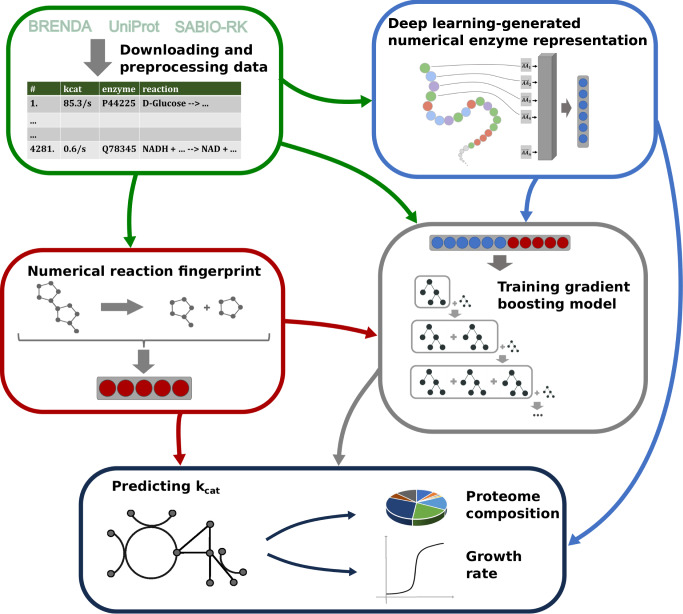
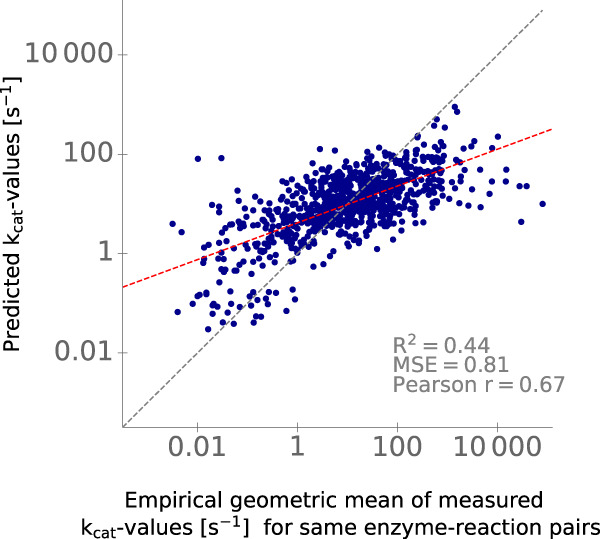
TurNuP is a machine/deep learning model that predicts enzyme turnover numbers (kcat) from enzyme sequence and full reaction information, and it outperforms prior methods on the paper’s held-out test sets. On the authors’ final test set of 4,271 data points, the combined model reached \(R^2 = 0.44\) with mean absolute deviation 0.69 on the \(\log_{10}\) scale, corresponding to a 4.8-fold average deviation from measured values.
## Key findings
- The final curated dataset contained 4,271 data points, with 2,977 unique reactions and 2,827 unique enzymes; the train/test split was 80%/20% with no identical enzyme sequences in both splits.
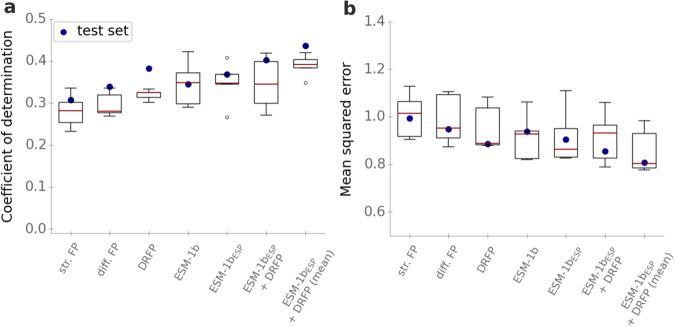
- Using reaction information alone, the best reaction fingerprint model achieved \(R^2 = 0.38\), MSE = 0.89, and Pearson \(r = 0.62\) on the test set.
- Using enzyme information alone, the best enzyme representation achieved \(R^2 = 0.37\), MSE = 0.91, and \(r = 0.61\) on the test set.
- The final TurNuP ensemble of enzyme and reaction models achieved \(R^2 = 0.44\), MSE = 0.81, and \(r = 0.67\) on the test set; adding extra features like \(K_M\) and reaction flux did not improve performance (\(R^2 = 0.39\) with those added features).
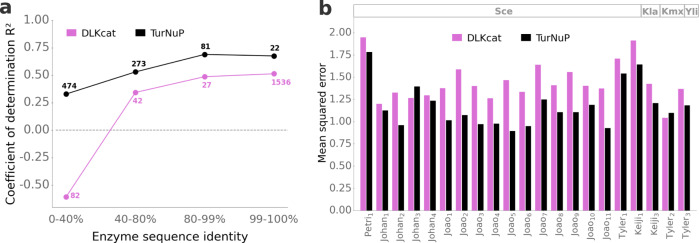
- TurNuP performed better than DLKcat across all enzyme-sequence-identity bins, with reported significance levels of \(p = 4.3 \times 10^{-11}\), 0.0017, 0.00037, and 0.048 for the four sequence-identity groups.
- Using TurNuP-derived kcat values in yeast proteome allocation modeling improved predictions in 19 of 21 environment-species combinations, with mean squared errors improving by about 18% on average.
## Methods
- The authors compiled kcat measurements from BRENDA, UniProt, and Sabio-RK, mapped them to enzyme sequences and reaction identities, removed non-wild-type/non-natural reactions, duplicates, incomplete records, and outliers, and log-transformed kcat values.
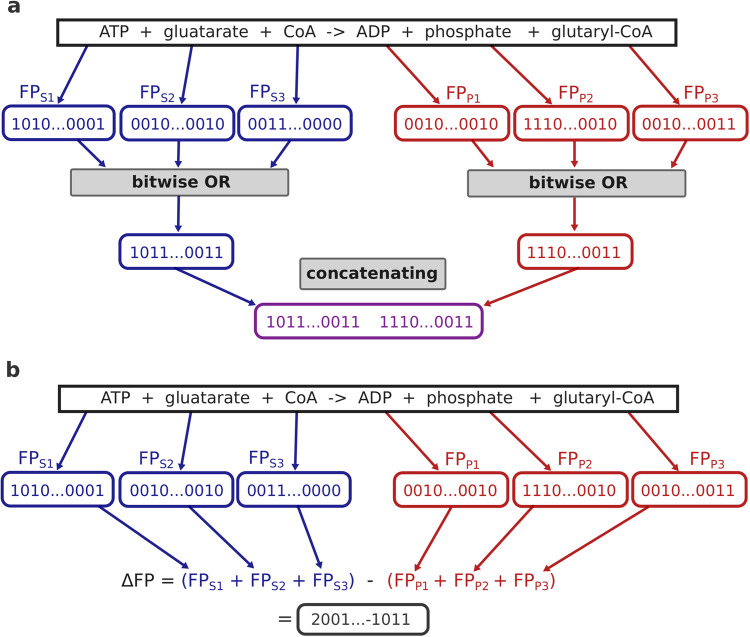
- They trained and compared gradient boosting models using different inputs: reaction fingerprints (structural, difference, DRFP), enzyme representations (ESM-1b and a fine-tuned ESM-1b-based representation), and combinations of these.
- Model development used fivefold cross-validation for hyperparameter search and a held-out test set; performance was assessed with \(R^2\), MSE, Pearson \(r\), and nonparametric tests for model comparisons.
## Limitations
- The paper states that the training data are small and noisy; it reports an average deviation of 5.7-fold between two kcat measurements for the same enzyme-reaction pair and notes database errors and varying assay conditions as contributors.
- The authors state they could not include experimental conditions such as pH and temperature for most data points because these are generally unavailable in the databases; this likely limits accuracy.
- Evident from the text: the model was trained only on natural reactions of wild-type enzymes, so the authors say it should not be used for non-natural reactions or enzyme mutants.
Model-written summary. Check it against the paper before relying on it.
Integrity signals
Registry
Cites
Statistics
Figures
Verification
Claims the paper makes
7 Valid · 0 Not valid · 27 Not checked · 101 Own results and interpretations
The cited sources support only part of this claim — read each source’s verdict below.
In the paper
“In genome-scale kinetic models of cellular metabolism, this issue is typically addressed by either sampling missing k cat values or fitting them to large datasets 7 , 8 , 12 , 13 .”
What the sources say
- Partly supportedcites [7] Khodayari, A. & Maranas, C. D. A genome-scale escherichia coli kinetic metabolic model k-ecoli457 satisfying flux data for multiple mutant strains. Nat. Commun. 7, 1–12 (2016). sourceExperimental — accuracy not yet measured
The Abstract describes parameter sampling in kinetic models, and Methods > Estimation of k-ecoli457 parameters describes fitting model parameters to multiple mutant-strain flux datasets. Results > Comparison of predicted Michaelis–Menten parameters reports estimated kcat values. The paper supports these approaches as examples, but does not establish that they are the typical ways to address specifically missing kcat values. (LLM, conf=0.83)
- Partly supportedcites [8] Ebrahim, A. et al. Multi-omic data integration enables discovery of hidden biological regularities. Nat. Commun. 7, 1–9 (2016). sourceExperimental — accuracy not yet measured
The Methods sections on sampling and iterative simulation describe randomly initializing effective turnover rates (keff) and updating them using experimental proteomics data. But the paper distinguishes its in vivo keff estimates from in vitro enzyme kinetic parameters; it does not establish that sampling or fitting missing kcat values is typical practice across genome-scale kinetic models. No page numbers were available in our copy. (LLM, conf=0.84)
- Not checked yetcites [12] Saa, P. A. & Nielsen, L. K. Formulation, construction and analysis of kinetic models of metabolism: a review of modelling frameworks. Biotechnol. Adv. 35, 981–1003 (2017). source
plain- Asserted: passes — The authors put it forward as true.
- Checkable: passes — It can be checked against evidence.
- Load-bearing: passes — The paper’s conclusions depend on it.
- Based: passes — The paper gives a reason why it holds.
- Partly supported
The cited sources support only part of this claim — read each source’s verdict below.
In the paper
“It has been shown that the resulting representations contain rich information about the structure and the function of the proteins 17 , 32 , 33 .”
What the sources say
- Partly supportedcites [17] Rives, A. et al. Biological structure and function emerge from scaling unsupervised learning to 250 million protein sequences. Proc. Natl Acad. Sci. USA 118, e2016239118 (2021). sourceExperimental — accuracy not yet measured
The Linear Projections section (Figs. 4–5 and Table 3; page not provided) shows that ESM-1b representations contain information about secondary structure and residue contacts. The Prediction of Mutational Effects section supports a connection between learned representations and protein function, but its functional results use a 34-layer Transformer rather than ESM-1b specifically. The claim’s ESM-1b-specific functional component is therefore not established by these passages. (LLM, conf=0.85)
- Partly supportedcites [32] Kroll, A., Ranjan, S., Engqvist, M. K. & Lercher, M. J. A general model to predict small molecule substrates of enzymes based on machine and deep learning. Nat. Commun. 14, 2787 (2023). sourceExperimental — accuracy not yet measured
The Results section (“Fine-tuning of a state-of-the-art protein embedding model”; page unavailable) says ESM-1b representations store local and global sequence information. The paper also uses these representations to predict enzyme substrates, supporting a connection to function, but our copy does not establish that they contain information about protein structure. (LLM, conf=0.82)
- Supportedcites [33] Goldman, S., Das, R., Yang, K. K. & Coley, C. W. Machine learning modeling of family wide enzyme-substrate specificity screens. PLoS Comput. Biol. 18, 1–20 (2022). source
The Results (Models; page not provided) identify ESM-1b as the representation used and report its performance on contact prediction and prediction of the functional effects of sequence variations. These support the paraphrase that its representations contain information about protein structure and function. (LLM, conf=0.90)
plain- Asserted: passes — The authors put it forward as true.
- Checkable: passes — It can be checked against evidence.
- Load-bearing: passes — The paper’s conclusions depend on it.
- Based: passes — The paper gives a reason why it holds.
- Partly supported
The cited sources support only part of this claim — read each source’s verdict below.
In the paper
“The model achieved a coefficient of determination R 2 ≈ 0.34 on a test set.”
What the sources say
- Partly supportedcites [14] Heckmann, D. et al. Machine learning applied to enzyme turnover numbers reveals protein structural correlates and improves metabolic models. Nat. Commun. 9, 5252 (2018). sourceExperimental — accuracy not yet measured
In Results, under “Training predictive models of enzyme turnover numbers” (Fig. 2 caption; page unavailable), the paper says it measured R² on an independent test set. Our copy does not give a test-set R² of approximately 0.34; the nearby values 0.31 and 0.76 are cross-validation averages, not test-set results. (LLM, conf=0.78)
plain- Asserted: passes — The authors put it forward as true.
- Checkable: passes — It can be checked against evidence.
- Load-bearing: unclear — It is unclear whether the paper’s conclusions depend on it.
- Based: passes — The paper gives a reason why it holds.
- Partly supported
Every source the paper cites for this claim was checked and supports it.
In the paper
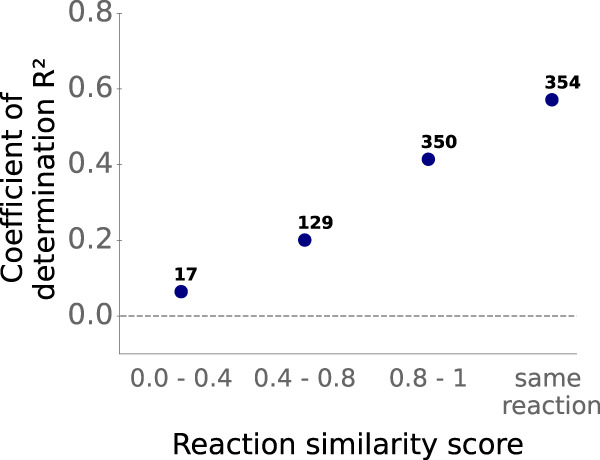
“In our study on predicting the substrate scope of enzymes 32 , we found that prediction performance depends strongly on the sequence similarity between a target enzyme and enzymes in the training set”
What the sources say
- Supportedcites [32] Kroll, A., Ranjan, S., Engqvist, M. K. & Lercher, M. J. A general model to predict small molecule substrates of enzymes based on machine and deep learning. Nat. Commun. 14, 2787 (2023). source
In Results (‘Good predictions even for unseen enzymes’), the paper compares ESP performance across enzyme sequence-identity ranges and concludes that using more similar enzymes during training improves prediction quality. Accuracy rises from 89% at 0–40% identity to 95% at 60–80%, although performance remains good even at low identity. (LLM, conf=0.90)
boostedstates an association- Asserted: passes — The authors put it forward as true.
- Checkable: passes — It can be checked against evidence.
- Load-bearing: passes — The paper’s conclusions depend on it.
- Based: passes — The paper gives a reason why it holds.
- Supported
The cited sources support only part of this claim — read each source’s verdict below.
In the paper
“Its coefficient of determination ( R 2 = 0.44) is higher than that of Heckmann et al. ( R 2 ≈ 0.34) 14”
What the sources say
- Partly supportedcites [14] Heckmann, D. et al. Machine learning applied to enzyme turnover numbers reveals protein structural correlates and improves metabolic models. Nat. Commun. 9, 5252 (2018). sourceExperimental — accuracy not yet measured
Our copy never reports an R² of 0.34 for Heckmann et al.; the closest stated value is in Results > 'Training predictive models of enzyme turnover numbers', which gives average cross-validated R²s of 0.76 for kapp,max and 0.31 for kcat in vitro (Fig. 2; test-set R²s are shown only as points in Fig. 2, not tabulated in the text). The attributed magnitude 0.34 therefore does not match the source's stated 0.31, and the claim also drops the qualifier that bounds the number: the paper reports two different model performances, and only the lower (kcat in vitro) one sits below TurNuP's 0.44 — the kapp,max model at 0.76 is well above it. The direction of the comparison is thus partly supported (a stated R² below 0.44 exists for the in vitro kcat models), but the specific value and the unstated target quantity are not. (LLM, conf=0.75)
plain- Asserted: passes — The authors put it forward as true.
- Checkable: passes — It can be checked against evidence.
- Load-bearing: passes — The paper’s conclusions depend on it.
- Based: passes — The paper gives a reason why it holds.
- Partly supported
75 more claims · 1 with their cited sources checked
Create a free account to see all 135 claims and to verify the 39 references still open.
- It may state two separate claims as one. 30
- Probably not a substantial claim. 24
- The quote only partly states this claim. 2
Self-check
Percentages, sums and reported differences re-computed from the paper’s own numbers.
Each contradiction between two passages listed here was confirmed by an independent check.
Rated minor: it would not touch a result — a value no result rests on, a p-value that stays on the same side of the significance level, or a conflict that is clerical, resolved elsewhere in the paper, or outside its own findings.
In the paper
“we trained two gradient-boosting models to predict k cat , each with one of the reaction fingerprints as the only input.”
“We performed a fivefold CV with a random grid search for hyperparameter optimization for all three models.”
Rated minor: it would not touch a result — a value no result rests on, a p-value that stays on the same side of the significance level, or a conflict that is clerical, resolved elsewhere in the paper, or outside its own findings.
In the paper
“We partitioned the enzymes in the test set based on their maximal sequence identity to enzymes in the test set, resulting in four subsets with 0–40%, 40–80%, 80–99%, and 99–100% maximal sequence identity, respectively.”
“it decreases to R 2 = 0.33 for enzymes with a maximal sequence identity below 40%.”
Citations
Cites
XGBoost: A Scalable Tree Boosting System
Chen, T., & Guestrin, C. (2016) · Proceedings of the 22nd ACM SIGKDD International Conference on Knowledge Discovery and Data Mining · doi:10.1145/2939672.2939785 · Cited by 54,569
SciPy 1.0: fundamental algorithms for scientific computing in Python
Virtanen, P., Gommers, R., Oliphant, T. E., Haberland, M., Reddy, T., Cournapeau, D., Burovski, E., Peterson, P., Weckesser, W., Bright, J., et al. (2020) · Nature Methods · doi:10.1038/s41592-019-0686-2 · Cited by 38,430
KEGG: Kyoto Encyclopedia of Genes and Genomes
Kanehisa, M. (2000) · Nucleic Acids Research · doi:10.1093/nar/28.1.27 · Cited by 37,077
PyTorch: An Imperative Style, High-Performance Deep Learning Library
Paszke, A., Gross, S., Massa, F., Lerer, A., Bradbury, J., Chanan, G., Killeen, T., Lin, Z., Gimelshein, N., Antiga, L., et al. (2019) · arXiv · doi:10.48550/arxiv.1912.01703 · Cited by 31,473 · cited 1×
“We created the enzyme representations using the deep learning library PyTorch 43 .”
MethodKEGG: Kyoto Encyclopedia of Genes and Genomes
Ogata, H., Goto, S., Sato, K., Fujibuchi, W., Bono, H., & Kanehisa, M. (1999) · Nucleic Acids Research · doi:10.1093/nar/27.1.29 · Cited by 31,232
TensorFlow: A system for large-scale machine learning
Abadi, M., Barham, P., Chen, J., Chen, Z., Davis, A., Dean, J., Devin, M., Ghemawat, S., Irving, G., Isard, M., et al. (2016) · arXiv (Cornell University) · doi:10.48550/arxiv.1605.08695 · Cited by 11,822
SciPy 1.0: fundamental algorithms for scientific computing in Python
Virtanen, P., Gommers, R., Oliphant, T. E., Haberland, M., Reddy, T., Cournapeau, D., Burovski, E., Peterson, P., Weckesser, W., Bright, J., et al. (2019) · Apollo - University of Cambridge Repository · doi:10.17863/cam.64134 · Cited by 10,460
EMBOSS: the European molecular biology open software suite.
Rice, P., Longden, I., & Bleasby, A. (2000) · Trends in Genetics · doi:10.1016/s0168-9525(00)02024-2 · Cited by 9,466 · cited 1×
“To achieve this, we calculated for every test sequence the maximal pairwise sequence identity compared to all sequences in the training set using the Needleman-Wunsch algorithm from the software package EMBOSS 52 .”
MethodUniProt: a worldwide hub of protein knowledge
The UniProt Consortium (2019) · Nucleic Acids Research · doi:10.1093/nar/gky1049 · Cited by 7,698
Extended-Connectivity Fingerprints
Rogers, D., & Hahn, M. (2010) · Journal of Chemical Information and Modeling · doi:10.1021/ci100050t · Cited by 7,524
Research works printed but not linked: 4
- Friedman, J. H.The Elements Of Statistical Learning: Data Mining, Inference, And Prediction (Springer Open, New York, 2017).
- Vaswani, A. et al. Attention is all you need. Adv. Neural Inf. Process. Syst. 30, 5998–6008 (2017).
- Bergstra, J., Yamins, D. & Cox, D. Making a science of model search: Hyperparameter optimization in hundreds of dimensions for vision architectures. In Proc. 30th International Conference on Machine Learning, vol. 28 of Proceedings of Machine Learning Research, 115–123 (PMLR, Atlanta, 2013).
- Pedregosa, F. et al. Scikit-learn: Machine learning in Python. J. Mach. Learn. Res. 12, 2825–2830 (2011).
Cited by
Items 101–189 of 189
Endowing protein language models with structural knowledge
Hartout, P., Chen, D., Pellizzoni, P., Oliver, C., & Borgwardt, K. M. (2025) · Bioinformatics · doi:10.1093/bioinformatics/btaf582 · Cited by 43
“Notable examples include ESM-1b (Rives et al. 2021) and ESM-2 (Lin et al. 2023), which have achieved strong results on various downstream tasks (Meier et al. 2021, Notin et al. 2022, Kroll et al. 2023).”
Kennedy, L. S., Harper, M., & Čuperlović‐Culf, M. (2025) · Briefings in Bioinformatics · doi:10.1093/bib/bbaf635 · Cited by 6
“Alternatives to these functional classifications include numeric enzyme properties describing catalytic activity such as enzyme turnover k cat [43, 44] and Michaelis constants K M [45], or dissociation constants K d , related to ligand interactions [46].”
Emerging trends in materials for water splitting catalysts in hydrogen production
Lin, K., Lee, K.-H., Mukundan, A., Karmakar, R., Rahmawati, E., Abdullah, K. N., Wang, C.-C., & Wang, H. (2025) · Energy Reports · doi:10.1016/j.egyr.2025.11.074 · Cited by 8
Zhou, R. H. F. L., Ma, H., Xin, T., Miao, Q., Zou, L., Hu, Q., Cheng, H., Guo, J., Mu, Y., Wang, S., et al. (2026) · Journal of Chemical Information and Modeling · doi:10.1021/acs.jcim.6c00090 · Cited by 3
Investigating Enzyme Biochemistry by Deep Learning: A Computational Tool for a New Era
Rayka, M., Mirzaei, M., Farnoosh, G., & Latifi, A. M. (2024) · Journal of Computational Biophysics and Chemistry · doi:10.1142/s2737416524400052 · Cited by 3
COBREXA 2: tidy and scalable construction of complex metabolic models
Kratochvíl, M., Wilken, S. E., Ebenhöh, O., Schneider, R., & Satagopam, V. (2025) · Bioinformatics · doi:10.1093/bioinformatics/btaf056 · Cited by 4
“Notably, these constructions were made feasible at the community scale only by recent advances in in silico estimation and optimization of enzyme kinetic parameters (Wilken et al. 2022, Kroll et al. 2023).”
Ferreira, M. A. D. M., de Almeida, E. L. M., da Silveira, W. B., & Nikoloski, Z. (2025) · iScience · doi:10.1016/j.isci.2025.112126 · Cited by 6
“See Figure S4 for TurNuP results.”
InfluentialJeon, H. R., Moon, S. H., & Yang, Y. J. (2025) · ACS Sustainable Chemistry & Engineering · doi:10.1021/acssuschemeng.4c09686 · Cited by 3
Karakoltzidis, A., Karakitsios, S., & Sarigiannis, D. A. (2025) · NAM journal. · doi:10.1016/j.namjnl.2025.100012 · Cited by 3
“Instances from the available literature demonstrate that calculations for the kinetic constants of enzymes can rely on specific numerical representations (Kroll et al., 2021; Kroll et al., 2023).”
LICEDB: light industrial core enzyme database for industrial applications and AI enzyme design
Gong, L., Liu, F., Zhang, C., Ming, Y., Mou, Y., Yuan, Z., Jiang, H., Gao, B., Lu, F., & Zhang, L. (2025) · Database · doi:10.1093/database/baaf001 · Cited by 3
“[21] curated and standardized 4271 enzyme sequences and molecular fingerprint data from BRENDA, SABIO-RK, and UniProt databases, training an accurate TurNuP model to predict enzyme activity parameters.”
Pan, T., Cui, X., Koh, H. Y., Bi, Y., Wang, X., Zhang, Y., Hu, S., Webb, G. I., Kurgan, L., Zhang, G., et al. (2025) · bioRxiv (Cold Spring Harbor Laboratory) · doi:10.1101/2025.03.09.642294 · Cited by 3
“# values and the evaluation process remains time-consuming and labor-intensive ( 12 ).”
SAKPE: A Site Attention Kinetic Parameters Prediction Method for Enzyme EngineeringPreprint
Qiu, J.-H., Lin, Z., Chen, K., Sun, T., Zhang, X., Li, Y., Tian, Y., & Wu, Y. (2025) · bioRxiv (Cold Spring Harbor Laboratory) · doi:10.1101/2025.04.30.651216 · Cited by 3
Pang, A., Luo, Y.-S., Zhou, J.-P., Cai, X., Huang, L.-G., Zhang, B., Liu, Z.-Q., & Zheng, Y.-G. (2024) · Biotechnology Journal · doi:10.1002/biot.202400203 · Cited by 2
Algebraic differentiation for fast sensitivity analysis of optimal flux modes in metabolic models
Chapman, H., Kratochvíl, M., Ebenhöh, O., & Wilken, S. E. (2025) · Bioinformatics · doi:10.1093/bioinformatics/btaf287 · Cited by 2
“Due to this lack of reliable experimental data, researchers may have to turn to non-mechanistic approximations via machine learning, for example that of Kroll et al. (2023).”
TCNeKP: A Novel Deep Learning Architecture for Enzyme Catalytic Activity Prediction
Lei, Y., Liu, R., Yu, H., Xu, W., Long, T., & Hu, M. Y. (2025) · Journal of Chemical Information and Modeling · doi:10.1021/acs.jcim.5c01830 · Cited by 3
Zhao, M., Cheng, H., Zhang, X., Wang, Z., Shang, J., Zhang, Y., Li, H., & Qi, X. (2026) · Journal of Agricultural and Food Chemistry · doi:10.1021/acs.jafc.5c11105 · Cited by 2
Accurate enzyme specificity constant prediction with iESC
Zhang, Y., Liu, L.-H., Wang, S., & Jiang, A. (2026) · Bioresource Technology · doi:10.1016/j.biortech.2026.134067 · Cited by 3
Enzyme Catalytic Parameters and Evolution Across the Dissipation Plane
Juretić, D., & Mađarić, B. B. (2026) · International Journal of Molecular Sciences · doi:10.3390/ijms27041709 · Cited by 3
Genome-scale modeling for rational design of microbial cells and cocultures
Peng, J., Ren, S., Han, S., & Chen, Y. (2026) · Trends in biotechnology · doi:10.1016/j.tibtech.2026.02.007 · Cited by 3
From waste to wealth: AI-driven enzyme innovation for straw transformation
Sun, X., Zhou, L., Li, Y., Shen, Q., Wang, Y., Jia, B., Yao, Y., & Pu, Z. (2026) · Bioresource Technology · doi:10.1016/j.biortech.2026.134875 · Cited by 3
Enzyme Kinetic Parameter Prediction via Catalytic Pocket-Augmented Machine Learning
Luo, D., Ji, H., Cheng, S., Wen, K., Qu, X., Cao, M., Hong, L., & Wang, B. (2026) · ACS Catalysis · doi:10.1021/acscatal.6c03874 · Cited by 3
Transfer learning improves predictions of enzyme kinetic parameters
Kroll, A. (2024) · Chem Catalysis · doi:10.1016/j.checat.2024.101121 · Cited by 3
Self-citationA Regressor-Guided Graph Diffusion Model for Predicting Enzyme Mutations to Enhance Turnover Number
Yu, X., Yi, K., Wang, Y. G., & Shen, Y. (2024) · IEEE International Conference on Bioinformatics and Biomedicine (BIBM) · doi:10.1109/bibm62325.2024.10822301 · Cited by 3
A De Novo Design Strategy to Convert FAcD from Dimer to Active MonomerPreprint
Chen, K.-W., Wang, C., Huang, H.-S., Wu, X., Chen, J., Qiu, J.-H., Hoi, K. K., Sun, T., Wang, J., & Wu, Y. (2025) · bioRxiv (Cold Spring Harbor Laboratory) · doi:10.1101/2025.01.11.632520 · Cited by 3
Enhancing kcat prediction through residue-aware attention mechanism and pre-trained representations
Cai, Y., Ge, F., Zhang, C., Chen, H., Qi, X., Liao, X., & Wang, L. (2026) · Communications Biology · doi:10.1038/s42003-026-09551-9 · Cited by 2
GELKcat: An Integration Learning of Substrate Graph with Enzyme Embedding for Kcat prediction
Du, B.-X., Yu, H., Zhu, B., Long, Y., Wu, M., & Shi, J. (2023) · IEEE International Conference on Bioinformatics and Biomedicine (BIBM) · doi:10.1109/bibm58861.2023.10385630 · Cited by 10
“Its prowess stems from its robust feature extraction capabilities, melding insights from both chemical reactions and enzyme data, processed via a dedicated Transformer Network for protein sequences [10].”
MethodModelling energy metabolism dysregulations in neuromuscular diseases: A case study of calpainopathy
Siharath, C., Biondi, O., & Pérès, S. (2024) · Heliyon · doi:10.1016/j.heliyon.2024.e40918 · Cited by 2
“Even if the computation of relevant EFMs that respect diverse linear and boolean constraints is possible with a large set of constraints [31], the identification of all the kinetic parameters is challenging [32,33].”
Experimental Assays: Chemical Properties, Biochemical and Cellular Assays,and In Vivo Evaluations
Serafim, M. S. M., Reis, E. V. D. S., Coelho-dos-Reis, J. G. A., Abrahão, J. S., & O’Donoghue, A. J. (2024) · Computer-aided drug discovery and design · doi:10.1007/978-3-031-76718-0_12 · Cited by 2
Wang, Y. (2025) · New Phytologist · doi:10.1111/nph.70100 · Cited by 1
Sequence and taxonomic feature evaluation facilitated the discovery of alcohol oxidases
Han, Y., Ding, X., Tan, J., Sun, Y., Duan, Y., Liu, Z., Zheng, G., & Lu, D. (2025) · Synthetic and Systems Biotechnology · doi:10.1016/j.synbio.2025.04.014 · Cited by 2
“The current data-mining workflow is compatible with additional evaluation methods, such as soluble expression prediction models [78] and machine learning models focused on activity prediction [79], and thus holds promise for extension to precise quantitative functional assessments.”
Pandey, A. K. (2025) · Molecular Diversity · doi:10.1007/s11030-025-11419-9 · Cited by 1
Qu, G., Li, J., Wang, Q., Li, C. K., Qiu, C., Yuan, B., Zhang, Z., & Sun, Z. (2026) · Journal of Agricultural and Food Chemistry · doi:10.1021/acs.jafc.6c01883 · Cited by 1
EZPro-Multi: Contrastive Learning-Enhanced Multi-property Prediction for Enzyme Engineering
Sui, J., Xu, R., Sun, H., Duan, H., Zheng, L., & Guo, J. (2026) · Journal of Chemical Theory and Computation · doi:10.1021/acs.jctc.6c00821 · Cited by 4
Wang, X., Wang, Y., Zhuang, Y., Wang, G., & Lu, H. (2026) · Nature Communications · doi:10.1038/s41467-026-73744-3 · Cited by 8
“Sequence-based tools, such as DLKcat and TurNup, leverage graph neural networks or Transformer architectures to predict k cat values from protein sequences and substrate structures 11,12 .”
Wang, Y., Mao, Z., Dong, J., Zhang, P., Gao, Q., Liu, D., Tian, C., & Ma, H. (2024) · Research Square · doi:10.21203/rs.3.rs-3927159/v1 · Cited by 1
Wu, K., Liu, H., Sun, M., Mao, R., Jiang, Y., Kerkhoven, E. J., Chen, Y., Nielsen, J., & Li, F. (2024) · bioRxiv (Cold Spring Harbor Laboratory) · doi:10.1101/2024.09.02.610684 · Cited by 1
Wang, X., Zhuang, Y., Wang, G., & Lu, H. (2025) · bioRxiv (Cold Spring Harbor Laboratory) · doi:10.1101/2025.08.23.670849 · Cited by 1
Enzyme Turnover Number Prediction Based on Protein 3D Structures
He, Y., Wang, Y., Zhang, Y., Yang, Y., Cheng, L., & Alghazzawi, D. (2024) · Communications in computer and information science · doi:10.1007/978-981-97-0903-8_15
Karakoltzidis, A., Karakitsios, S., & Sarigiannis, D. A. (2024) · Research Square · doi:10.21203/rs.3.rs-4276245/v1
ADDZYME: A software to predict effect of additives on enzyme activity
Rayka, M., Latifi, A. M., Mirzaei, M., Farnoosh, G., & Khosravi, Z. (2024) · Journal of Chemical Sciences · doi:10.1007/s12039-024-02272-8
Modelling Energy Metabolism Dysregulations in Neuromuscular Diseases: A Case Study of CalpainopathyPreprint
Siharath, C., Biondi, O., & Pérès, S. (2024) · SSRN Electronic Journal · doi:10.2139/ssrn.4865346
Model-driven evaluation of microbial physiology: insights from protein allocation
Ferreira, M. A. D. M. (2024) · doi:10.47328/ufvbbt.2024.425
Ferreira, M. A. D. M., de Almeida, E. L. M., da Silveira, W. B., & Nikoloski, Z. (2024) · bioRxiv (Cold Spring Harbor Laboratory) · doi:10.1101/2024.09.06.611666
Wang, R., Wang, R., Wu, F., et al. (2024) · Industrial Crops and Products · doi:10.1016/j.indcrop.2024.119680
Alharthi, F. R., Althagafi, H. A. E., Jafri, I., et al. (2024) · Rhizosphere · doi:10.1016/j.rhisph.2024.100970
Revolutionizing Enzyme Turnover Predictions with Non-Binary Reaction Fingerprints and AI
Cheng, J., Chen, C., Cui, G., Jiang, H., & Cui, X. (2024) · IEEE International Conference on Bioinformatics and Biomedicine (BIBM) · doi:10.1109/bibm62325.2024.10822663
“TurNuP [11] utilizes DRFPs [12] as chemical reaction representation, but DRFPs focuses on whether molecular structures have changed, using this binary difference to represent reactions.”
InfluentialWang, J., Zhao, Y., Yang, Z., et al. (2025) · Research Square · doi:10.21203/rs.3.rs-5583389/v1
MxlPy - Python Package for Mechanistic Learning in Life SciencePreprint
van Aalst, M., Nies, T., Pfennig, T., & Matuszyńska, A. (2025) · bioRxiv (Cold Spring Harbor Laboratory) · doi:10.1101/2025.05.06.652335
Luo, D., Qu, X., & Wang, B. (2025) · bioRxiv (Cold Spring Harbor Laboratory) · doi:10.1101/2025.05.18.654694
SKiD: A Structure-Oriented Kinetics Database of Enzyme-Substrate InteractionsPreprint
Krishnan, S. R., Pandey, N., Srinivasan, R., & Roy, A. (2025) · bioRxiv (Cold Spring Harbor Laboratory) · doi:10.1101/2025.05.18.654770
Komkova, D., Simon, M., Wolf, J., & Steuer, R. (2025) · bioRxiv (Cold Spring Harbor Laboratory) · doi:10.1101/2025.08.29.672875
Ferdiansyah, M. K., Ji, S. H., Park, B., et al. (2025) · Gene · doi:10.1016/j.gene.2025.149804
Wikaputri, A. S., Ihwah, A., Irvine, D. J., Stockman, R. A., Grebby, S. R., & Shivaprasad, P. (2025) · Biochemical Engineering Journal · doi:10.1016/j.bej.2025.110002 · Cited by 4
GO-HKP: A Gene Ontology hierarchy-driven framework for enzyme k cat prediction
Meng, Q., Mao, Z., Chen, H., Huang, Y., & Ma, H. (2025) · Software Impacts · doi:10.1016/j.simpa.2025.100803
Zhang, F., Naeem, M., Yu, B., Liu, F., & Ju, J. (2024) · Figshare · doi:10.6084/m9.figshare.26729704
Okuno, T., Ono, N., Altaf-Ul-Amin, M., & Kanaya, S. (2025) · Computational and Structural Biotechnology Journal · doi:10.1016/j.csbj.2025.11.045 · Cited by 2
Rousset, Y., Kroll, A., & Lercher, M. J. (2026) · bioRxiv (Cold Spring Harbor Laboratory) · doi:10.64898/2026.01.23.701068 · Cited by 1
“Machine learning models, particularly those based on protein language models 7–11 , have recently been applied to predict enzyme turnover numbers ( k cat ) from sequence 12,13 .”
Self-citationDeep Learning Meets Synthetic Biology: Applications Across Molecular, Cellular, and Metabolic Scales
Zhao, Y., Yang, C., Xue, B., Liu, H., Wang, S., & Su, H. (2026) · Green Carbon · doi:10.1016/j.greenca.2025.11.003 · Cited by 3
UniKineG: Unified-Coordinate Geometric Graphs Enable Robust Enzyme Kinetic Prediction
Wang, X., Shi, P., Mao, J., Liu, K., & Shuangping, L. I. U. (2026) · International Journal of Molecular Sciences · doi:10.3390/ijms27041731
“TurNup and UniKP also used integrated pretrained protein language models (pLMs), such as ESM-1b, to encode the rich evolutionary semantics of amino acid sequences and conduct multitask prediction [12,13].”
Functional Locality–Aligned Learning Reveals Structure–Function Causality in Enzyme KineticsPreprint
Zhang, H., Zhang, H., Kang, M., Zhang, K., Yang, T., & Zheng, N. (2026) · bioRxiv (Cold Spring Harbor Laboratory) · doi:10.64898/2026.03.04.709726
“C”), fingerprints were computed independently for each component and subsequently summed to obtain a composite molecular fingerprint, following [23].”
Liu, X., Zhou, R., Qi, S., Qiao, N., & Deng, Z. (2026) · Journal of Chemical Information and Modeling · doi:10.1021/acs.jcim.6c00032
Wu, H., Nie, Z., Zhang, H., & Ren, Z. (2026) · Journal of Chemical Information and Modeling · doi:10.1021/acs.jcim.5c03204 · Cited by 3
Mu, X., Yang, Y., Wang, Q., Chen, Z., Luo, B., Huang, Z., Lin, X., Xu, L., Li, X., Qu, Y., et al. (2026) · bioRxiv (Cold Spring Harbor Laboratory) · doi:10.64898/2026.04.28.721430
Modeling of Glucosinolate Biosynthesis During Biotic Stress as a Function of mRNAPreprint
Earle, J., Neefjes, A. C. M., Ploeger, X. S. D., van Laar, M., Wees, S. C. M. V., Schuurink, R. C., van Dijk, A. D. J., Bleeker, P., & Hoefsloot, H. C. J. (2026) · bioRxiv (Cold Spring Harbor Laboratory) · doi:10.64898/2026.05.29.728632
“To begin to constrain the undefined Michaelis Menten kinetics, two XGBoost tree models with architectures derived from Kroll et al. [15,16] were used to predict the K M and k cat of the enzymes of interest.”
InfluentialPriyanka, Chandra, R., Fahad, M. S., Oraon, R., & Ranjan, A. (2026) · Enzyme and Microbial Technology · doi:10.1016/j.enzmictec.2026.110915
Multi-omic data fusion reveals the in vivo enzyme kinetics of Vibrio natriegens at the genome-scalePreprint
Wilken, S. E., Beyß, M., Kratochvíl, M., Grebel, A., Methling, K., Stefanski, A., London, P., Lalk, M., Schaper, K., Axmann, I. M. I., et al. (2026) · bioRxiv (Cold Spring Harbor Laboratory) · doi:10.64898/2026.06.02.729587
Next-generation metabolic models: Nonlinear resource allocation beyond the proteome
Dourado, H., & Lercher, M. J. (2026) · Current Opinion in Systems Biology · doi:10.1016/j.coisb.2026.100602 · Cited by 1
Self-citationLiu, H. (2026) · Computational Biology and Chemistry · doi:10.1016/j.compbiolchem.2026.109222
Annotating the pangenome reveals the diversity in the genetic basis for metabolic enzymes
Ardalani, O., Phaneuf, P. V., Krishnan, J., Li, G., Burrows, J., Nielsen, L. K., & Palsson, B. Ø. (2026) · Science Advances · doi:10.1126/sciadv.aeb3363 · Cited by 5
“From these structural models, Michaelis-Menten parameters were predicted ( 35 ).”
EPIC: A Machine-Learning Framework for Product-Dependent Behavior in β-Glucosidases
Malli, A., Vasyutyn, D., Majumder, A., & Kim, J. R. (2026) · ACS Omega · doi:10.1021/acsomega.6c04226
Computational design of microbial cell factories for sustainable biomanufacturing
Liu, L., Li, C., & Li, F. (2026) · Green Energy & Environment · doi:10.1016/j.gee.2026.07.001 · Cited by 1
RCKcat: Reliability-Gated Reaction-Center Augmentation for Enzyme Kcat Prediction
Zhang, H., Zhang, Y., Cheng, L., & Alghazzawi, D. (2026) · Lecture notes in computer science · doi:10.1007/978-981-92-3485-1_13
An enzyme-specific protein language model for catalytic property prediction
Wang, C., Li, M., Geng, S., Li, W., Zhou, X., Wang, Y. G., Yu, Y., Wang, T., & Shen, Y. (2026) · Nature Communications · doi:10.1038/s41467-026-75283-3 · Cited by 4
“To evaluate the impact of substituting task-speci fi c PLM back-bones with EnzGFM, we kept the downstream architectures of TurNuP ( k cat ) 44 , UniKP ( K m ) 3 , CataPro ( k cat / K m ) 10 , and CatPred ( K i ) 41 unchanged andreplacedonlythesequenceencoderwithEnzGFM(Supplementary Fig.”
AUKAT: Conditional VAE-Driven Augmentation and Neural Modeling of Enzyme Turnover Numbers
Liu, M., Ni, X., & Bryliński, M. (2026) · Biomolecules · doi:10.3390/biom16071049 · Cited by 2
“Several machine learning approaches have been developed to address the scarcity of experimentally measured enzyme kinetic parameters, including DLKcat [6], TurNuP [9], DeepEnzyme [10], CatPred [11], and related representation-learning frameworks.”
Matyszczak, G. (2026) · International Journal of Molecular Sciences · doi:10.3390/ijms27156839 · Cited by 1
“For that reason Kroll and cooperators developed TurNuP, a new machine learning model that was organism-independent and capable of successful prediction of turnover number for natural reactions involving wild-type enzymes [145].”
InfluentialNumerical Approximation of a Smoking Dynamics Model Using a Hybrid Deep Neural Network Architecture
Dad, A., Javeed, S., Khan, M. S., Jameel, A., & Bǎleanu, D. (2026) · Mathematical and Computational Applications · doi:10.3390/mca31040152
“ANNs are capable of data handling, numerical control, forecasting, time-series analysis, function approximation, and computational processing, among other tasks [13].”
Machine learning for mechanistic modeling of plant metabolic pathways
Wendering, P., & Nikoloski, Z. (2026) · Journal of Experimental Botany · doi:10.1093/jxb/erag400 · Cited by 2
Raghuraman, P., & Park, S. (2026) · Frontiers in Plant Science · doi:10.3389/fpls.2026.1842722
Wang, X., Li, W., Ding, S., Deng, Y., Zhang, H., Li, H., & Li, Y. (2026) · Journal of Chemical Information and Modeling · doi:10.1021/acs.jcim.6c02075
Deep Learning in Enzyme Function Prediction and Novel Enzyme Discovery
Gao, R., Liu, Y., Duan, C., Qin, N., Liu, K., Tsuboi, T., & Chen, Z. (2026) · ACS Synthetic Biology · doi:10.1021/acssynbio.6c00633
Wang, Q., Bao, T., Qiu, J.-H., Hu, M., Qin, Z., Wang, Y., Zhang, X., Chen, K.-W., & Rao, Z. (2026) · ACS Catalysis · doi:10.1021/acscatal.6c05381
AI-Assisted rational enzyme engineering: advancing biocatalysis for industrial applications
Shafiq, M., Zeb, L., Wang, X., Wang, C., He, Y., Luo, H., Ayaz, M., Xue, B., Wan, Y., Zhang, W., et al. (2026) · Catalysis Reviews · doi:10.1080/01614940.2026.2733243
Predicting Enzyme Turnover Numbers and Enabling Rational Enzyme Evolution
Ge, F., Ma, X., Li, J., Wang, M., 路福平, Liu, Y., & Wang, L. (2026) · Advanced Science · doi:10.1002/advs.77789
“TurNup [ 12 ] first used a pre-trained model ESM-1 𝑏 𝐸𝑆𝑃 [ 40 ] to obtain the enzyme representations.”
InfluentialLi, R., Tang, S., Deng, J., 邱太兴, Guo, F., Tang, J., & Liu, X. (2026) · Bioinformatics · doi:10.1093/bioinformatics/btag709
“TurNup (Kroll et al. 2023) introduced a species-independent approach using differential reaction fingerprints and retrained ESM-1b (Rives et al. 2021) to represent complete chemical transformations.”
Advances in directed evolution: Mutagenesis, sensing, screening, and in silico innovation
Liu, L.-H., Zhang, Y., Hu, Y., Zhang, X., Xu, B., Wang, S., Li, W., & Jiang, A. (2026) · Biotechnology Advances · doi:10.1016/j.biotechadv.2026.109070
Machine Learning Empowers Enzyme Discovery, Structure Prediction, Engineering, and Design
王木强, Jiang, L., Yu, H., Yu, J., Zheng, W., & Wu, J. (2026) · ACS Catalysis · doi:10.1021/acscatal.6c07060
Chai, K. F., & Chen, W. N. (2026) · Bioresource Technology Reports · doi:10.1016/j.biteb.2026.103097
SAEKP: A Site Attention Enzyme Kinetics Prediction Method to Facilitate Enzyme Engineering
Qiu, J.-H., Lin, Z., Chen, K.-W., Wang, Q., Sun, T., Yuan, L., Zhang, X., Tian, Y., & Wu, Y. (2026) · Journal of Chemical Information and Modeling · doi:10.1021/acs.jcim.6c01516 · Cited by 2
Integrative machine learning approaches for enzyme kinetic parameter prediction
Zhou, R., Xi, W., Yin, P., Wang, S., Zhang, Y., & Wei, Y. (2026) · Briefings in Bioinformatics · doi:10.1093/bib/bbag533
“For example, TurNuP uses a carefully curated dataset with comprehensive substrate-product annotation comprising 4271 entries [ 71].”
Influential
Metadata
- Authors
- Kroll, A., Rousset, Y., Hu, X.-P., Liebrand, N. A., & Lercher, M. J.
- Affiliations
- Heinrich Heine University Düsseldorf (DE)
- Corresponding author
- Lercher, Martin J.
- Venue
- Nature Communications
- Published
- 2023-07-12
- Volume
- 14
- Issue
- 1
- Pages
- 4139-4139
- ISSN
- 2041-1723 (ISSN-L)
- PMC
- PMC10338564
- OpenAlex
- W4384023735
- Semantic Scholar
- 826fea6d384a075c93d9e959043a1110155ac805
- Cited by
- 186
- References
- 72
- Citations by year
- 2026: 53 · 2025: 80 · 2024: 45 · 2023: 8
- FWCI
- 16.43
- Type
- journal article
- Language
- en
- Open access
- gold
- doi.org
- Licence
- cc-by
- creativecommons.org/licenses/by/4.0 (tdm)
- creativecommons.org/licenses/by/4.0 (vor)
- Locations
- Nature Communications (publishedVersion, cc-by)
- PubMed Central (publishedVersion, cc-by)
- PubMed (publishedVersion)
- DOAJ (DOAJ: Directory of Open Access Journals) (submittedVersion, cc-by-sa)
- Funders
- Deutsche Forschungsgemeinschaft (CRC 1310 + EXC 2048/1 (Project ID: 390686111))
- Topics
- Life Sciences › Biochemistry, Genetics and Molecular Biology › Molecular Biology › Machine Learning in Bioinformatics
- Life Sciences › Biochemistry, Genetics and Molecular Biology › Molecular Biology › Microbial Metabolic Engineering and Bioproduction
- Life Sciences › Biochemistry, Genetics and Molecular Biology › Molecular Biology › Protein Structure and Dynamics
- Keywords
- turnover number, proteome allocation, enzyme kinetics, web server
- MeSH terms
- Machine Learning, Deep Learning, Amino Acid Sequence, Electric Power Supplies, Proteome
About these checks
Registry, retraction, Cites and statistics results are computed, not judged, with one exception: a printed reference that no index lists is read once by a model before it counts as a citation error. Claims are extracted by a model and kept only when their quote appears verbatim in the text; each cited source is then checked, with a model’s help, for whether it says what the claim relies on. Those verdicts can be wrong — read the claim’s quote and the cited source before relying on one.
The claim verdicts this report counts are experimental: their accuracy is not yet measured.
A language model drew the claims from the paper on 2026-10-11, under version 3 of the claim definition (model deepseek-v4.1-flash, prompt extract-v3).
A second model labelled each claim on 2026-10-11 (model jev-1.13-20260917, definition revision gold-guideline-v0.2).
Cited sources are checked with a language model’s help (gpt-6-sol and qwen3.8-omni-flash).
Statistics and arithmetic are recomputed, not judged.
Confidence bands are shown only for fields calibrated on our annotated test set. None is calibrated yet, so no band is shown.
What counts as a claim ›How we measure confidence ›How we check this ›
Are you an author, or do you see a problem with this page? Request a review
Data sources
Bibliographic data: Semantic Scholar, OpenAlex, Crossref.
Contains information from the Semantic Scholar Academic Graph Datasets, made available under the ODC Attribution License (ODC-BY 1.0).
Semantic Scholar’s data is described in: Kinney, R., et al. (2023). The Semantic Scholar Open Data Platform. arXiv:2301.10140.
