

PAM-flexible genome editing with an engineered chimeric Cas9
Open accessPublished version of a preprint
The DOI matches its Crossref record; 46 of the 50 references it cites were found in a registry or an index.
Abstract
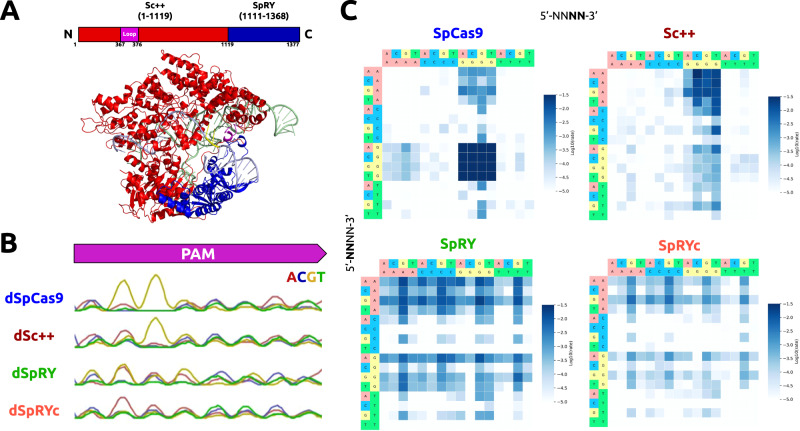
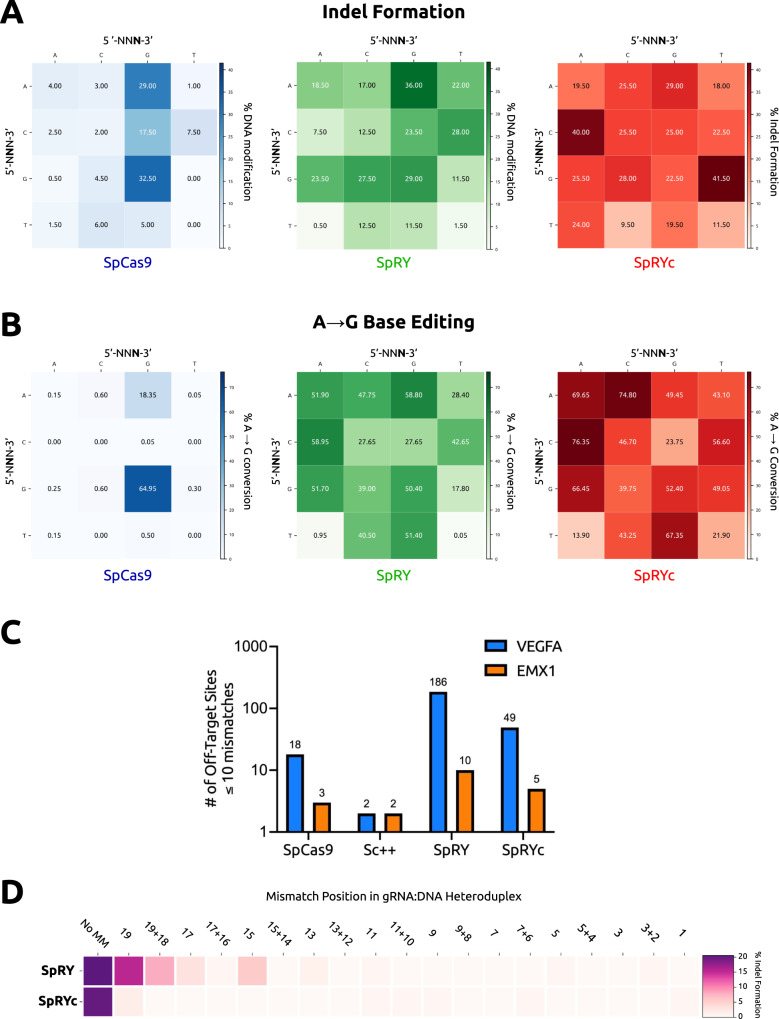
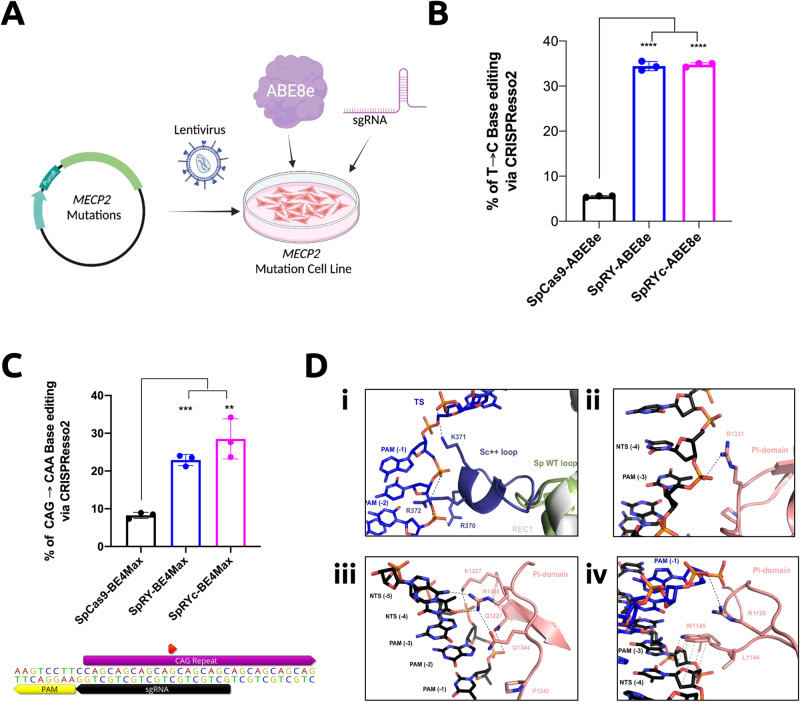
CRISPR enzymes require a defined protospacer adjacent motif (PAM) flanking a guide RNA-programmed target site, limiting their sequence accessibility for robust genome editing applications. In this study, we recombine the PAM-interacting domain of SpRY, a broad-targeting Cas9 possessing an NRN > NYN (R = A or G, Y = C or T) PAM preference, with the N-terminus of Sc + +, a Cas9 with simultaneously broad, efficient, and accurate NNG editing capabilities, to generate a chimeric enzyme with highly flexible PAM preference: SpRYc. We demonstrate that SpRYc leverages properties of both enzymes to specifically edit diverse PAMs and disease-related loci for potential therapeutic applications. In total, the approaches to generate SpRYc, coupled with its robust flexibility, highlight the power of integrative protein design for Cas9 engineering and motivate downstream editing applications that require precise genomic positioning.
Overview
The claims and statistics of this paper haven’t been checked yet.
Free: it reads the open-access text and checks the first 5 claims that cite a source we can check. Create a free account to check every claim.
Integrity signals
Registry
Cites
Statistics
Figures
Verification
Claims the paper makes
The claims and statistics of this paper haven’t been checked yet.
Free: it reads the open-access text and checks the first 5 claims that cite a source we can check. Create a free account to check every claim.
Claims other papers make about this one
Each is checked against this paper’s own text: does it say what the citing paper says it does?
The source backs part of the claim, not all of it — or backs it for a different population, condition or comparison.
In the citing paper
“In general, less stringent PAM variants can produce more off-target editing, which may be undesirable depending on the experimental context.35”
From Adenine base editor for knockout of proteins: A practical guide from design to analysis with updated MultiEditRbatch (2026) · cites this paper as [35]
Experimental — accuracy not yet measured
Self-check
Percentages, sums and reported differences re-computed from the paper’s own numbers.
The self-check needs the paper’s full text.
Citations
Cites
Features and development of Coot
Emsley, P., Lohkamp, B., Scott, W. G., & Cowtan, K. (2010) · Acta Crystallographica Section D Biological Crystallography · doi:10.1107/s0907444910007493 · Cited by 29,915
A Programmable Dual-RNA–Guided DNA Endonuclease in Adaptive Bacterial Immunity
Jinek, M., Chylinski, K., Fonfara, I., Hauer, M., Doudna, J. A., & Charpentier, E. (2012) · Science · doi:10.1126/science.1225829 · Cited by 17,116
Multiplex Genome Engineering Using CRISPR/Cas Systems
Cong, L., Ran, F. A., Cox, D., Lin, S., Barretto, R., Habib, N., Hsu, P. D., Wu, X., Jiang, W., Marraffini, L. A., et al. (2013) · Science · doi:10.1126/science.1231143 · Cited by 15,339
SWISS-MODEL: homology modelling of protein structures and complexes
Waterhouse, A., Bertoni, M., Bienert, S., Studer, G., Tauriello, G., Gumienny, R., Heer, F. T., de Beer, T. A. P., Rempfer, C., Bordoli, L., et al. (2018) · Nucleic Acids Research · doi:10.1093/nar/gky427 · Cited by 13,067
RNA-Guided Human Genome Engineering via Cas9
Mali, P., Yang, L., Esvelt, K. M., Aach, J., Guell, M., DiCarlo, J. E., Norville, J. E., & Church, G. M. (2013) · Science · doi:10.1126/science.1232033 · Cited by 9,210
Self-citationU1 snRNP regulates cancer cell migration and invasion in vitro
Oh, J.-M., Venters, C. C., Di, C., Pinto, A. M., Wan, L., Younis, I., Cai, Z., Arai, C., So, B. R., Duan, J., et al. (2020) · Nature Communications · doi:10.1038/s41467-019-13993-7 · Cited by 7,157
Programmable editing of a target base in genomic DNA without double-stranded DNA cleavage
Komor, A. C., Kim, Y. B., Packer, M. S., Zuris, J. A., & Liu, D. R. (2016) · Nature · doi:10.1038/nature17946 · Cited by 5,437
Programmable base editing of A•T to G•C in genomic DNA without DNA cleavage
Gaudelli, N. M., Komor, A. C., Rees, H. A., Packer, M. S., Badran, A. H., Bryson, D. I., & Liu, D. R. (2017) · Nature · doi:10.1038/nature24644 · Cited by 4,184
High-fidelity CRISPR-Cas9 nucleases with no detectable genome-wide off-target effects
Kleinstiver, B. P., Pattanayak, V., Prew, M. S., Tsai, S. Q., Nguyen, N. T., Zheng, Z., & Joung, J. K. (2016) · Nature · doi:10.1038/nature16526 · Cited by 2,673
Self-citationGUIDE-seq enables genome-wide profiling of off-target cleavage by CRISPR-Cas nucleases
Tsai, S. Q., Zheng, Z., Nguyen, N. T., Liebers, M., Topkar, V. V., Thapar, V., Wyvekens, N., Khayter, C., Iafrate, A. J., Le, L. P., et al. (2015) · Nature Biotechnology · doi:10.1038/nbt.3117 · Cited by 2,268
Cited by
Past, present, and future of CRISPR genome editing technologies
Pacesa, M., Pelea, O., & Jinek, M. (2024) · Cell · doi:10.1016/j.cell.2024.01.042 · Cited by 609
Design of highly functional genome editors by modelling CRISPR–Cas sequences
Ruffolo, J. A., Nayfach, S., Gallagher, J. P., Bhatnagar, A., Beazer, J., Hussain, R., Russ, J., Yip, J., Hill, E., Pačesa, M., et al. (2025) · Nature · doi:10.1038/s41586-025-09298-z · Cited by 249
Off-target effects in CRISPR-Cas genome editing for human therapeutics: Progress and challenges
Kalter, N., Fuster‐García, C., Silva, A., Ronco-Díaz, V., Roncelli, S., Turchiano, G., Gorodkin, J., Cathomen, T., Benabdellah, K., Lee, C. M., et al. (2025) · Molecular Therapy — Nucleic Acids · doi:10.1016/j.omtn.2025.102636 · Cited by 134
Design of highly functional genome editors by modeling the universe of CRISPR-Cas sequences
Ruffolo, J. A., Nayfach, S., Gallagher, J., Bhatnagar, A., Beazer, J., Hussain, R., Russ, J., Yip, J., Hill, E., Pacesa, M., et al. (2024) · doi:10.1101/2024.04.22.590591 · Cited by 90
Custom CRISPR–Cas9 PAM variants via scalable engineering and machine learning
Silverstein, R. A., Kim, N., Kroell, A.-S., Walton, R. T., Delano, J., Butcher, R. M., Pacesa, M., Smith, B. K., Christie, K. A., Ha, L. L., et al. (2025) · Nature · doi:10.1038/s41586-025-09021-y · Cited by 73
Self-citationCRISPR/Cas9: a sustainable technology to enhance climate resilience in major Staple Crops
Kaur, N., Qadir, M., Francis, D. V., Alok, A., Tiwari, S., & Ahmed, Z. F. R. (2025) · Frontiers in Genome Editing · doi:10.3389/fgeed.2025.1533197 · Cited by 61
Recent applications, future perspectives, and limitations of the CRISPR-Cas system
Park, S.-J., Lee, G. E., Cho, S. M., & Choi, E.-H. (2025) · Molecular Therapy — Nucleic Acids · doi:10.1016/j.omtn.2025.102634 · Cited by 49
Zahedipour, F., Zahedipour, F., Zamani, P., Jaafari, M. R., & Sahebkar, A. (2024) · Virus Research · doi:10.1016/j.virusres.2024.199314 · Cited by 38
Rapid two-step target capture ensures efficient CRISPR-Cas9-guided genome editing
Shi, H., Al-Sayyad, N., Wasko, K. M., Trinidad, M. I., Doherty, E., Vohra, K., Boger, R. S., Colognori, D., Cofsky, J. C., Skopintsev, P., et al. (2025) · Molecular Cell · doi:10.1016/j.molcel.2025.03.024 · Cited by 35
Peeling back the layers of immunogenicity in Cas9-based genomic medicine
Stigzelius, V., Cavallo, A. L., Chandode, R. K., & Nitsch, R. (2025) · Molecular Therapy · doi:10.1016/j.ymthe.2025.06.045 · Cited by 33
Engineered base editors with reduced bystander editing through directed evolution
Perrotta, R. M., Vinke, S., Ferreira, R., Moret, M., Mahas, A., Chiappino-Pepe, A., Riedmayr, L. M., Mehra, A.-T., Lehmann, L. S., & Church, G. M. (2025) · Nature Biotechnology · doi:10.1038/s41587-025-02937-w · Cited by 35
Self-citationEngineering Cas9: next generation of genomic editors
Kovalev, M. A., Davletshin, A. I., & Karpov, D. S. (2024) · Applied Microbiology and Biotechnology · doi:10.1007/s00253-024-13056-y · Cited by 32
“Later, a more active variant of SpCas9-NG was obtained (Nishimasu et al. 2018), which, however, was outperformed by a form of SpG with the same specificity to NGN PAM (Walton et al. 2020).”
BackgroundInfluentialNuccio, S. P., Cadoni, E., Nikoloudaki, R., Galli, S., Ler, A.-J., Sanchez-Cabanillas, C., Maher, T. E., Fan, E., Guneri, D., Flint, G., et al. (2025) · Nature Communications · doi:10.1038/s41467-025-67074-z · Cited by 26
Chen, T., Dumas, M., Watson, R., Vincoff, S., Peng, C., Zhao, L., Hong, L., Pertsemlidis, S., Shaepers-Cheu, M., Wang, T. Z., et al. (2023) · PubMed Central · doi:10.48550/arxiv.2310.03842 · Cited by 43
Self-citationRecent advances in CRISPR-Cas system for Saccharomyces cerevisiae engineering
Wu, X., Wan, X., Yu, H., & Liu, H. (2025) · Biotechnology Advances · doi:10.1016/j.biotechadv.2025.108557 · Cited by 27
Alessa, O., Aiba, Y., Arbaah, M., Hidaka, Y., Watanabe, S., Miyanaga, K., Wannigama, D. L., & Cui, L. (2025) · Molecules · doi:10.3390/molecules30153132 · Cited by 21
“Several engineered Cas9 variants with relaxed PAM requirements have been developed, including those recognizing NNG (less strict) [123], NRN or NYN (semi-PAMless), where R is A or G and Y is T or C [124,125], and even NNN (fully PAMless) motifs [126].”
CRISPR Technology and Its Emerging Applications
Zhang, X. E., Ma, D., & Liu, F. (2025) · Genomics Proteomics & Bioinformatics · doi:10.1093/gpbjnl/qzaf034 · Cited by 23
An outlook on structural biology after A lpha F old: tools, limits and perspectives
Rosignoli, S., Pacelli, M., Manganiello, F., & Paiardini, A. (2024) · FEBS Open Bio · doi:10.1002/2211-5463.13902 · Cited by 26
Hybrid Cas12a Variants with Relaxed PAM Requirements Expand Genome Editing Compatibility
Liu, Z., Liu, H., Huang, C., Zhou, Q., & Luo, Y. (2024) · ACS Synthetic Biology · doi:10.1021/acssynbio.4c00103 · Cited by 24
Next-generation CRISPR technology for genome, epigenome and mitochondrial editing
Lau, C., Liang, Q., & Zhu, H. (2024) · Transgenic Research · doi:10.1007/s11248-024-00404-x · Cited by 21
Treatment of a severe vascular disease using a bespoke CRISPR–Cas9 base editor in mice
Alves, C. R. R., Das, S., Krishnan, V., Ha, L. L., Fox, L. R., Stutzman, H. E., Shamber, C., Kalailingam, P., McCarthy, S., Cardenas, C. L. L., et al. (2025) · Nature Biomedical Engineering · doi:10.1038/s41551-025-01499-1 · Cited by 20
Self-citationMake-or-break prime editing for genome engineering in Streptococcus pneumoniae
Monica, R.-G., Mazzuoli, M.-V., Janssen, A. B., Rueff, A.-S., Burnier, J., Liu, X., & Veening, J. (2025) · Nature Communications · doi:10.1038/s41467-025-59068-8 · Cited by 16
Advancements in CRISPR-Cas-based strategies for combating antimicrobial resistance
Zhang, R., Zhou, Q., Huang, S., Zhang, N., & Sun, D. (2025) · Microbiological Research · doi:10.1016/j.micres.2025.128232 · Cited by 18
Gene editing therapy for cardiovascular diseases
Wu, X., Yang, J., Zhang, J., & Song, Y. (2024) · MedComm · doi:10.1002/mco2.639 · Cited by 18
Broadening the targetable space: engineering and discovery of PAM-flexible Cas proteins
Cai, Z., Xie, W., & Bao, Z. (2024) · Trends in Microbiology · doi:10.1016/j.tim.2024.05.004 · Cited by 12
Nguyen, D. A. H., & Quang, M. T. (2025) · Molecular Biotechnology · doi:10.1007/s12033-025-01533-2 · Cited by 13
Assessing off-target effects in CRISPR/Cas9: challenges and strategies for precision DNA editing
Basit, A., Zhu, J., & Zheng, W. (2026) · Archives of Microbiology · doi:10.1007/s00203-025-04687-4 · Cited by 18
One-for-all gene inactivation via PAM-independent base editing in bacteria
Li, X., Wei, Y., Wang, S., Wang, S., & Xia, P. (2024) · Journal of Biological Chemistry · doi:10.1016/j.jbc.2024.108113 · Cited by 10
PROTACs coupled with oligonucleotides to tackle the undruggable
Zhang, G., Yan, S., Liu, Y., Du, Z., Min, Q., & Qin, S. (2025) · Bioanalysis · doi:10.1080/17576180.2025.2459528 · Cited by 12
In vivo CRISPR base editing for treatment of Huntington’s disease
Shirguppe, S., Gapinske, M., Swami, D., Shenouda, K., Miskalis, A., Gosstola, N. C., Siller, D. D. B., Guerra, I., Acharya, P., Joulani, D., et al. (2026) · Nature Biomedical Engineering · doi:10.1038/s41551-026-01747-y · Cited by 11
Roy, A. A., Pokale, R., Mukharya, A., Nikam, A. N., Dua, K., Rao, B. S. S., Seetharam, R. N., & Mutalik, S. (2025) · Current Gene Therapy · doi:10.2174/0115665232342293241120033251 · Cited by 8
Zanbili, F., Marjani, A. P., & Mahmoudian, M. (2026) · Scientific Reports · doi:10.1038/s41598-026-38127-0 · Cited by 6
Accelerated discovery and miniaturization of novel single-stranded cytidine deaminases
Deng, J., Li, X., Yu, H., Yang, L., Wang, Z., Yi, W., Liu, Y., Xiao, W., Xiang, H., Xie, Z., et al. (2024) · Nucleic Acids Research · doi:10.1093/nar/gkae800 · Cited by 6
Steiner, S., & Roy, C. R. (2024) · mSphere · doi:10.1128/msphere.00523-24 · Cited by 6
From IscB to Cas9: Engineering and advances in the next generation of miniature gene editing tools
Zhou, C., Zhu, S., Luo, C., Wang, W., Fan, H.-Q., Gao, Y., Xu, X., Wang, Q., Yu, Y., & Xie, T. (2025) · Biotechnology Advances · doi:10.1016/j.biotechadv.2025.108743 · Cited by 5
Du, W., Zhang, T., Guo, L., Zheng, Y., Zhang, H., Zhu, X., Tang, D., Hu, H., Chen, L., & Liu, C. (2026) · Journal of Translational Medicine · doi:10.1186/s12967-026-08175-1 · Cited by 7
Developing small Cas9 hybrids using molecular modeling
Mangin, A., Dion, V., & Menzies, G. E. (2024) · Scientific Reports · doi:10.1038/s41598-024-68107-1 · Cited by 6
“Similarly, four chimeric Cas9 enzymes have been created that change PAM sequence requirements 31,39,40 .”
BackgroundStructural basis of a dual-function type II-B CRISPR–Cas9
Hibshman, G. N., & Taylor, D. W. (2025) · Nucleic Acids Research · doi:10.1093/nar/gkaf585 · Cited by 4
“First, the clamp domain could be engineered into other Cas9 variants or smaller Cas effectors to minimize off-target cleavage [ 47–50 ].”
Enhanced Genome Editing Activity with Novel Chimeric ScCas9 Variants in Rice
Liang, Z., Wu, Y., Deng, S., Wei, S., Zhang, K., & Guo, Y. (2025) · Advanced Science · doi:10.1002/advs.202411549 · Cited by 3
Characterization of CoCas9 nuclease from Capnocytophaga ochracea
Vasileva, A., Selkova, P., Arseniev, A. S., Abramova, M., Shcheglova, N., Musharova, O. S., Мизгирев, И. В., Артамонова, Т. О., Khodorkovskii, M. A., Severinov, K., et al. (2023) · RNA Biology · doi:10.1080/15476286.2023.2256578 · Cited by 3
Enhanced genome editing with a Streptococcus equinus Cas9
Liu, J., Wang, Y., Wei, J., Wang, S., Li, M., Huang, Z., Zhang, S., Liu, H., Huang, J., & Wang, Y. (2025) · Communications Biology · doi:10.1038/s42003-025-07593-z · Cited by 4
Eaton, E. J., Wick, B. J., Chacón, J. S., Wang, A. J., Kluesner, M., Barnes, J. T., Kar, B., Wang, M., Johnson, M. J., Skeate, J. G., et al. (2026) · Molecular Therapy Nucleic Acids · doi:10.1016/j.omtn.2026.102908 · Cited by 2
Gene Editing in Maize: Progress and Challenges
Hassan, S., Munawar, N., Khawar, A., Zaini, P., Al-Harrasi, A., Qari, S. H., & Ahmad, A. (2026) · Sustainability Sciences in Asia and Africa · doi:10.1007/978-981-95-6722-5_12 · Cited by 2
ABE9 fused to SpRY Cas9 nickase enables precise generation of bystander free mouse models
Ong, J. K., Bhunia, S., Hilbert, B., Kirschner, V., Duglosz, S., Zimmermann, F., Freichel, M., & Cornean, A. (2026) · Scientific Reports · doi:10.1038/s41598-026-40642-z · Cited by 2
du Rand, A., Buttle, B., & Sheppard, H. M. (2026) · Drugs · doi:10.1007/s40265-026-02285-2 · Cited by 4
“Efforts to engineer Cas9 variants with less stringent PAM requirements have further broadened the targeting range for CRISPR genome editing, including the development of a near PAM-less Cas9 variant (spRYCas9) [31].”
Synergistic HMGN1 and VP64 Fusions Potentiate High‐Precision and PAM‐Flexible Base Editing
Luo, X., Qu, Y., Ye, Z., Li, Z. L., Zhang, Y., Luo, L., Li, S., Wei, Z., Wang, M., Bock, R., et al. (2026) · Advanced Science · doi:10.1002/advs.76047 · Cited by 2
Gene editing for HD: Therapeutic prospects
Chen, R. Z., & Vogt, T. (2024) · Elsevier eBooks · doi:10.1016/b978-0-323-95672-7.00021-2 · Cited by 4
A New Serotyping Method of Streptococcus pneumoniae Based on CRISPR/Cas9–Targeted Sequencing
Maladan, Y., Retnaningrum, E., Daryono, B. S., Sarassari, R., Sari, R. F., Balqis, S. A., Wahid, G. A., & Safari, D. (2024) · Journal of Molecular Diagnostics · doi:10.1016/j.jmoldx.2024.08.009 · Cited by 1
Mosterd, C., & Moineau, S. (2025) · International Journal of Molecular Sciences · doi:10.3390/ijms26052005 · Cited by 1
PAM-interacting domain turn-helix 51 motifs can improve Cas9–SpRY activity
Eggenschwiler, R., Hoffmann, T., Dmytrenko, O., Opitz, M., Ackel-Zakour, M., Wang, P., McCallan, S. A., Fráguas-Eggenschwiler, M., Niemann, H., Patronov, A., et al. (2025) · Nucleic Acids Research · doi:10.1093/nar/gkaf782 · Cited by 1
Optimizing prime editing: Advances in efficiency enhancement
Qu, Y., Li, Y., Shao, T., Kuang, J., Qi, Y., Yang, J., Liu, Y., Wang, J., Fu, X., Liu, J., et al. (2026) · Biotechnology Advances · doi:10.1016/j.biotechadv.2026.108815 · Cited by 1
Ren, Y., Xu, J., Luo, Q., Li, P., Jiang, M., Cheng, Y., Zhang, H., Wei, D., Bai, W., Liu, S., et al. (2026) · ACS Nano · doi:10.1021/acsnano.5c17709 · Cited by 1
On-target and off-target activities of CRISPR therapeutics across scales
Magdy, M., Gibson, J. R., Dhungana, A., Herring‐Nicholas, A., Cottle, R. N., & Josephs, E. A. (2026) · Trends in biotechnology · doi:10.1016/j.tibtech.2026.07.015 · Cited by 1
Employment of RNA Interference and CRISPR/Cas Machinery for Disease Resistance in Crops
Imran, I., Awan, M. J. A., Akhtar, M., Sajjad, M. W., Buzdar, M. I., Zahid, R., Khan, J., Amin, I. U., & Naqvi, R. Z. (2025) · Wiley eBooks · doi:10.1002/9781394280049.ch16 · Cited by 1
Vasileva, A., Abramova, M., Selkova, P., Arseniev, A. N., Musharova, O. S., Malysheva, P. V., Demkina, A., Khodorkovskii, M. A., & Severinov, K. (2025) · The CRISPR Journal · doi:10.1177/25731599251404417 · Cited by 3
Chimeric Cas9 allows PAM-Independent Gene Editing
Wang, T. (2025) · Serican Journal of Medicine · doi:10.17161/sjm.v2i2.23210
Research progress of compact Class 2 Cas effector proteins
Liu, B., Huang, S., & ZHENG, W. (2025) · Scientia Sinica Vitae · doi:10.1360/ssv-2025-0095
Engineering compact RNA-guided endonucleases for CAG/CTG repeats editing
Mangin, A. (2024) · ORCA Online Research @Cardiff (Cardiff University)
The Chimeric Nuclease SpRYc Exhibits Highly Variable Performance Across Biological Systems
Deriglazova, I. O., Shepelev, M. V., Kruglova, N. A., Georgiev, P. G., & Maksimenko, O. G. (2026) · International Journal of Molecular Sciences · doi:10.3390/ijms27010488
“This protein engineering effort resulted in an enzyme with a highly flexible PAM preference approaching near-universal NNN PAM recognition [18].”
InfluentialCRISPR-Cas9: Genome Engineering and Future Vaccine Applications
Madhi, M., & Gholizadeh, P. (2026) · Molecular Biotechnology · doi:10.1007/s12033-026-01563-4 · Cited by 2
Wang, M., Li, Z., & Li, Z. (2026) · Journal of Biotechnology · doi:10.1016/j.jbiotec.2026.04.012
Vondracek, K., Lee, M. B., Liu, T., & Lee, S. (2026) · BMC Research Notes · doi:10.1186/s13104-026-07792-9
TAMIPAMI: Software and methods for PAM/TAM identification in CRISPR and OMEGA gene editing systemsPreprint
Orosco, C., Jain, P., & Rivers, A. R. (2026) · bioRxiv (Cold Spring Harbor Laboratory) · doi:10.64898/2026.05.15.725432
Hogan, P. J., Duclusaud, M., Ipoutcha, T., Lartigue, C., Gourgues, G., Blanchard, A., Baranowski, É., Béven, L., Arfi, Y., Sirand‐Pugnet, P., et al. (2026) · bioRxiv (Cold Spring Harbor Laboratory) · doi:10.64898/2026.05.29.712936
Interplay Between Base Editing and DNA repair: From Molecular Mechanisms to Clinical Translation
Tao, R., Li, M., Luo, T., & Yao, S. (2026) · Biotechnology Advances · doi:10.1016/j.biotechadv.2026.109018
From scissors to editors: how the evolution of precision is redefining therapeutic genome editing
Rahbari, M., Lohrasbi, R., & Amiri‐Yekta, A. (2026) · Molecular Genetics and Genomics · doi:10.1007/s00438-026-02467-3
“This requirement restricts single guide RNA (sgRNA) design and limits the flexibility of the CRISPR/Cas9 system (Zhao et al. 2023).”
The CRISPR/Cas technology landscape: From molecular mechanisms to multidisciplinary applications
Liu, Z., Yang, Y., Li, Z., Li, P., Jia, J., Qiao, X., Su, Y., Qin, Y., Wang, H., Dai, Y., et al. (2026) · Genes & Diseases · doi:10.1016/j.gendis.2026.102484
An Overview of Programmable Epigenetic Editing Based on CRISPR Tools for Gene Expression Regulation
Djordjevič, M., Dinić, S., Sarič, A., Uskoković, A. S., & Vidaković, M. (2026) · Methods in molecular biology · doi:10.1007/978-1-0716-5547-4_5
AI-driven strategies for Cas12 protein design and genome editing optimization
Li, Y., Zhang, C., & Meng, F. (2026) · Frontiers in Plant Science · doi:10.3389/fpls.2026.1997664
Metadata
- Authors
- Zhao, L., Koseki, S. R. T., Silverstein, R. A., Amrani, N., Peng, C., Kramme, C., Savic, N., Pacesa, M., Rodríguez, T. C., Stan, T., Tysinger, E., Hong, L., Yudistyra, V., Ponnapati, M. R., Jacobson, J. M., Church, G. M., Jakimo, N., Truant, R., Jinek, M., Kleinstiver, B. P., Sontheimer, E. J., & Chatterjee, P.
- Affiliations
- Duke University (US)
- Harvard University (US)
- University of Massachusetts Chan Medical School (US)
- McMaster University (CA)
- MIT Media Lab (US)
- Corresponding author
- Chatterjee, Pranam
- ORCID
- Zhao, Lin
- Koseki, Sabrina R. T.
- Silverstein, Rachel A.
- Amrani, Nadia
- Peng, Christina
- Kramme, Christian
- Pacesa, Martin
- Rodríguez, Tomás C.
- Stan, Teodora
- Tysinger, Emma
- Hong, Lauren
- Yudistyra, Vivian
- Jacobson, Joseph M.
- Church, George M.
- Jakimo, Noah
- Truant, Ray
- Jinek, Martin
- Kleinstiver, Benjamin P.
- Sontheimer, Erik J.
- Chatterjee, Pranam
- Venue
- Nature Communications
- Published
- 2023-10-04
- Volume
- 14
- Issue
- 1
- Pages
- 6175-6175
- ISSN
- 2041-1723 (ISSN-L)
- PMC
- PMC10550912
- OpenAlex
- W4387341290
- Cited by
- 59
- References
- 50
- Citations by year
- 2026: 15 · 2025: 25 · 2024: 17 · 2023: 2
- FWCI
- 5.26
- Type
- journal article
- Language
- en
- Open access
- gold
- doi.org
- Licence
- cc-by
- creativecommons.org/licenses/by/4.0 (tdm)
- creativecommons.org/licenses/by/4.0 (vor)
- Locations
- Nature Communications (publishedVersion, cc-by)
- Research Square (acceptedVersion, cc-by)
- PubMed Central (publishedVersion, cc-by)
- PubMed (publishedVersion)
- Zurich Open Repository and Archive (University of Zurich) (acceptedVersion, cc-by-nc-nd)
- PubMed Central (submittedVersion, cc-by)
- DOAJ (DOAJ: Directory of Open Access Journals) (submittedVersion, cc-by-sa)
- Zurich Open Repository and Archive (University of Zurich)
- Funders
- National Science Foundation
- Howard Hughes Medical Institute
- CHDI Foundation
- Vallee Foundation
- Schweizerischer Nationalfonds zur Förderung der Wissenschaftlichen Forschung (31003A, 182567)
- Krembil Foundation
- National Institutes of Health (1dp2ca281401-01, HL142494, 4dp2ca281401-02)
- Natural Sciences and Engineering Research Council of Canada
- National Heart, Lung, and Blood Institute (P01HL142494)
- National Cancer Institute (DP2-CA281401)
- National Institute of General Medical Sciences (R01GM115911)
- Topics
- Life Sciences › Biochemistry, Genetics and Molecular Biology › Molecular Biology › CRISPR and Genetic Engineering
- Life Sciences › Biochemistry, Genetics and Molecular Biology › Molecular Biology › RNA regulation and disease
- Health Sciences › Medicine › Oncology › CAR-T cell therapy research
- Keywords
- CRISPR/Cas9, protospacer adjacent motif, SpRY, scandium, guide RNA, genome editing, protein engineering
About these checks
Registry, retraction, Cites and statistics results are computed, not judged, with one exception: a printed reference that no index lists is read once by a model before it counts as a citation error. Claims are extracted by a model and kept only when their quote appears verbatim in the text; each cited source is then checked, with a model’s help, for whether it says what the claim relies on. Those verdicts can be wrong — read the claim’s quote and the cited source before relying on one.
Statistics and arithmetic are recomputed, not judged.
Confidence bands are shown only for fields calibrated on our annotated test set. None is calibrated yet, so no band is shown.
What counts as a claim ›How we measure confidence ›How we check this ›
Are you an author, or do you see a problem with this page? Request a review
Data sources
Bibliographic data: Semantic Scholar, OpenAlex, Crossref.
Contains information from the Semantic Scholar Academic Graph Datasets, made available under the ODC Attribution License (ODC-BY 1.0).
Semantic Scholar’s data is described in: Kinney, R., et al. (2023). The Semantic Scholar Open Data Platform. arXiv:2301.10140.
