

Navigating the 16-dimensional Hilbert space of a high-spin donor qudit with electric and magnetic fields
Open accessThe DOI matches its Crossref record; 60 of the 60 references it cites were found in a registry or an index.
Abstract
Efficient scaling and flexible control are key aspects of useful quantum computing hardware. Spins in semiconductors combine quantum information processing with electrons, holes or nuclei, control with electric or magnetic fields, and scalable coupling via exchange or dipole interaction. However, accessing large Hilbert space dimensions has remained challenging, due to the short-distance nature of the interactions. Here, we present an atom-based semiconductor platform where a 16-dimensional Hilbert space is built by the combined electron-nuclear states of a single antimony donor in silicon. We demonstrate the ability to navigate this large Hilbert space using both electric and magnetic fields, with gate fidelity exceeding 99.8% on the nuclear spin, and unveil fine details of the system Hamiltonian and its susceptibility to control and noise fields. These results establish high-spin donors as a rich platform for practical quantum information and to explore quantum foundations.
Overview
The claims and statistics of this paper haven’t been checked yet.
Free: it reads the open-access text and checks the first 5 claims that cite a source we can check. Create a free account to check every claim.
Integrity signals
Registry
Cites
Statistics
Figures
Verification
Claims the paper makes
The claims and statistics of this paper haven’t been checked yet.
Free: it reads the open-access text and checks the first 5 claims that cite a source we can check. Create a free account to check every claim.
Self-check
Percentages, sums and reported differences re-computed from the paper’s own numbers.
The self-check needs the paper’s full text.
Citations
Cites
Zwanenburg, F. A., Dzurak, A. S., Morello, A., Simmons, M. Y., Hollenberg, L. C. L., Klimeck, G., Rogge, S., Coppersmith, S. N., & Eriksson, M. A. (2013) · Reviews of Modern Physics · doi:10.1103/revmodphys.85.961 · Cited by 1,210
Self-citationAn addressable quantum dot qubit with fault-tolerant control-fidelity
Veldhorst, M., Hwang, J. C. C., Yang, C. H., Leenstra, A. W., de Ronde, B., Dehollain, J. P., Muhonen, J. T., Hudson, F. E., Itoh, K. M., Morello, A., et al. (2014) · Nature Nanotechnology · doi:10.1038/nnano.2014.216 · Cited by 940
Self-citationA single-atom electron spin qubit in silicon
Pla, J. J., Tan, K. Y., Dehollain, J. P., Lim, W. H., Morton, J. J. L., Jamieson, D. N., Dzurak, A. S., & Morello, A. (2012) · Nature · doi:10.1038/nature11449 · Cited by 808 · cited 14×
“Weknowthesignof f +q becauseweareable to deterministically initialise a speci fi c nuclear state ∣ m I (cid:4) through a combination of ESR and EDSR transitions (see Supplementary Materials, Section 3) and thus identify the ∣ 7 = 2 (cid:4) $ ∣ 5 = 2 (cid:4) transition as the one at the lowest frequency.”
InfluentialSelf-citationSingle-shot readout of an electron spin in silicon
Morello, A., Pla, J. J., Zwanenburg, F. A., Chan, K. W., Tan, K. Y., Huebl, H., Möttönen, M., Nugroho, C. D., Yang, C., van Donkelaar, J. A., et al. (2010) · Nature · doi:10.1038/nature09392 · Cited by 789 · cited 1×
“The device features a single electron transistor (SET) to read out the spin of the donor-bound electron 40 , a set of gates to control the electrostatic potential of the donor or drive NER 24 , and a broadband short-circuited microwave antenna used to deliver the B 1 fi eld for ESR and NMR.”
Self-citationStoring quantum information for 30 seconds in a nanoelectronic device
Muhonen, J. T., Dehollain, J. P., Laucht, A., Hudson, F. E., Kalra, R., Sekiguchi, T., Itoh, K. M., Jamieson, D. N., McCallum, J. C., Dzurak, A. S., et al. (2014) · Nature Nanotechnology · doi:10.1038/nnano.2014.211 · Cited by 661
Self-citationHigh-fidelity readout and control of a nuclear spin qubit in silicon
Pla, J. J., Tan, K. Y., Dehollain, J. P., Lim, W. H., Morton, J. J. L., Zwanenburg, F. A., Jamieson, D. N., Dzurak, A. S., & Morello, A. (2013) · Nature · doi:10.1038/nature12011 · Cited by 530
Self-citationQuantum logic with spin qubits crossing the surface code threshold
Xue, X., Russ, M., Samkharadze, N., Undseth, B., Sammak, A., Scappucci, G., & Vandersypen, L. M. K. (2022) · Nature · doi:10.1038/s41586-021-04273-w · Cited by 524
Qudits and High-Dimensional Quantum Computing
Wang, Y., Hu, Z., Sanders, B. C., & Kais, S. (2020) · Frontiers in Physics · doi:10.3389/fphy.2020.589504 · Cited by 478
Fast universal quantum gate above the fault-tolerance threshold in silicon
Noiri, A., Takeda, K., Nakajima, T., Kobayashi, T., Sammak, A., Scappucci, G., & Tarucha, S. (2022) · Nature · doi:10.1038/s41586-021-04182-y · Cited by 471
Multivalued logic gates for quantum computation
Muthukrishnan, A., & Stroud, C. R. (2000) · Physical Review A · doi:10.1103/physreva.62.052309 · Cited by 399 · cited 1×
“Circuit complexity can be reduced even further; using two-qudit gates, an N -dimensional unitary operator U can be simulated using a factor ð log 2 d Þ 2 less gates as compared to its qubit-based counterpart 2 .”
Qubits made by advanced semiconductor manufacturing
Zwerver, A. M. J., Krähenmann, T., Watson, T. F., Lampert, L., George, H. C., Pillarisetty, R., Bojarski, S. A., Amin, P., Amitonov, S. V., Boter, J. M., et al. (2022) · Nature Electronics · doi:10.1038/s41928-022-00727-9 · Cited by 364 · cited 1×
“…quantum devices 14 host spin qubits that combine exceptionally long coherence times 15 , exceeding 30 seconds in nuclear spins 16 , one-and two-qubit gate fi delities above 99% 17 – 20 , and compatibility with the manufacturing processes that underpin the established semiconductor industry 21 .”
A universal qudit quantum processor with trapped ions
Ringbauer, M., Meth, M., Postler, L., Stricker, R., Blatt, R., Schindler, P., & Monz, T. (2022) · Nature Physics · doi:10.1038/s41567-022-01658-0 · Cited by 351 · cited 1×
“Experimental qudit platforms can be found in optics 6,7 , superconductors 8 – 10 , trapped ions 11 , atomic ensembles 12 and molecular magnets 13 .”
Two-qubit silicon quantum processor with operation fidelity exceeding 99%
Mills, A. R., Guinn, C. R., Gullans, M. J., Sigillito, A. J., Feldman, M. M., Nielsen, E., & Petta, J. R. (2022) · Science Advances · doi:10.1126/sciadv.abn5130 · Cited by 329
Emulation of a Quantum Spin with a Superconducting Phase Qudit
Neeley, M., Ansmann, M., Bialczak, R. C., Hofheinz, M., Lucero, E., O'Connell, A. D., Sank, D., Wang, H., Wenner, J., Cleland, A. N., et al. (2009) · Science · doi:10.1126/science.1173440 · Cited by 304
A programmable qudit-based quantum processor
Chi, Y., Huang, J., Zhang, Z., Mao, J., Zhou, Z., Chen, X., Zhai, C., Bao, J., Dai, T., Yuan, H., et al. (2022) · Nature Communications · doi:10.1038/s41467-022-28767-x · Cited by 273 · cited 1×
“Experimental qudit platforms can be found in optics 6,7 , superconductors 8 – 10 , trapped ions 11 , atomic ensembles 12 and molecular magnets 13 .”
Atomic clock transitions in silicon-based spin qubits
Wolfowicz, G., Tyryshkin, A. M., George, R. E., Riemann, H., Abrosimov, N. V., Becker, P., Pohl, H.-J., Thewalt, M. L. W., Lyon, S. A., & Morton, J. J. L. (2013) · Nature Nanotechnology · doi:10.1038/nnano.2013.117 · Cited by 268 · cited 1×
“This creates interesting spin physics phenomena related to the strong electron-nuclear mixing 33,36 .”
Precision tomography of a three-qubit donor quantum processor in silicon
Mądzik, M. T., Asaad, S., Youssry, A., Joecker, B., Rudinger, K. M., Nielsen, E., Young, K. C., Proctor, T. J., Baczewski, A. D., Laucht, A., et al. (2022) · Nature · doi:10.1038/s41586-021-04292-7 · Cited by 241
Self-citationNielsen, E., Gamble, J. K., Rudinger, K., Scholten, T., Young, K., & Blume-Kohout, R. (2021) · Quantum · doi:10.22331/q-2021-10-05-557 · Cited by 189 · cited 1×
“In preparation for futureworkonqudits 1 and logical qubits 30 encoding on the 123 Sb system, we used gate set tomography (GST) 17,47 to benchmark the performance of one-qubit gates.”
Enhanced Fault-Tolerant Quantum Computing ind-Level Systems
Campbell, E. T. (2014) · Physical Review Letters · doi:10.1103/physrevlett.113.230501 · Cited by 184
Silicon quantum processor with robust long-distance qubit couplings
Tosi, G., Mohiyaddin, F. A., Schmitt, V., Tenberg, S., Rahman, R., Klimeck, G., & Morello, A. (2017) · Nature Communications · doi:10.1038/s41467-017-00378-x · Cited by 168 · cited 3×
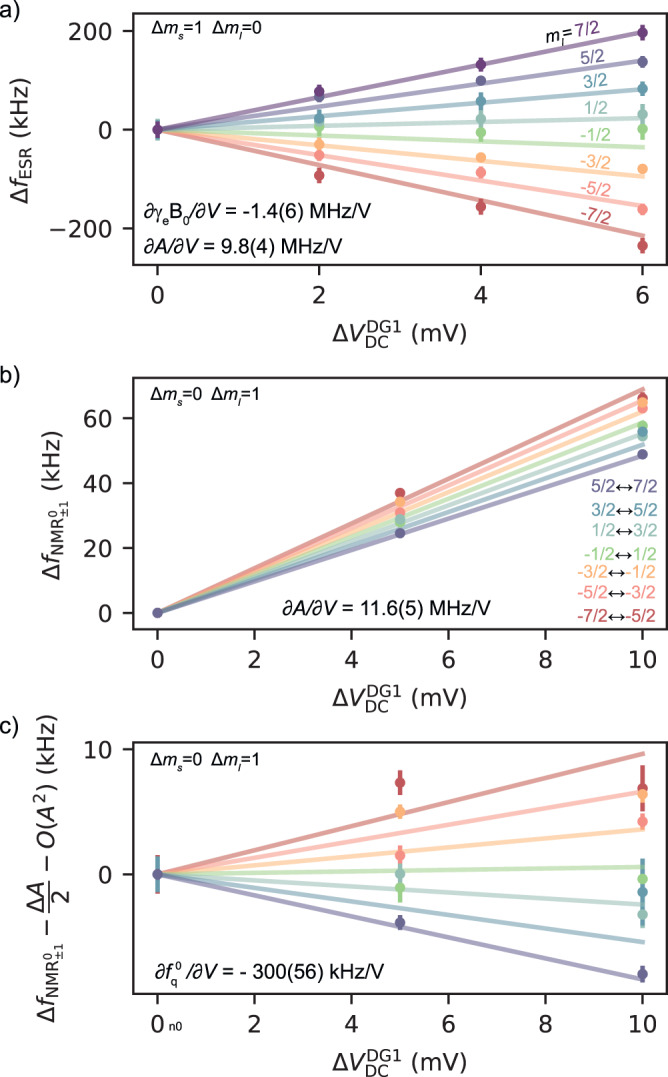
“3a, b may be attributed to variations in the DC voltage settings between measurements, potentially impacting the electron ’ s wavefunction sensitivity to electric fi elds 44 .”
Self-citationElectrically controlling single-spin qubits in a continuous microwave field
Laucht, A., Muhonen, J. T., Mohiyaddin, F. A., Kalra, R., Dehollain, J. P., Freer, S., Hudson, F. E., Veldhorst, M., Rahman, R., Klimeck, G., et al. (2015) · Science Advances · doi:10.1126/sciadv.1500022 · Cited by 167
Self-citationNo ψ -Epistemic Model Can Fully Explain the Indistinguishability of Quantum States
Barrett, J., Cavalcanti, E. G., Lal, R., & Maroney, O. J. E. (2014) · Physical Review Letters · doi:10.1103/physrevlett.112.250403 · Cited by 156 · cited 1×
“Another quantum foundations experiment afforded by the large Hilbert space is the test of the reality of the quantum state, where the bound on the inadequacy of a purely epistemic view becomes tighter in higher dimensions 54 .”
Asymptotically Optimal Quantum Circuits ford-Level Systems
Bullock, S., O’Leary, D., & Brennen, G. (2005) · Physical Review Letters · doi:10.1103/physrevlett.94.230502 · Cited by 150
The initialization and manipulation of quantum information stored in silicon by bismuth dopants
Morley, G. W., Warner, M., Stoneham, A. M., Greenland, P. T., van Tol, J., Kay, C. W. M., & Aeppli, G. (2010) · Nature Materials · doi:10.1038/nmat2828 · Cited by 135 · cited 2×
“The antimony donor Like phosphorus 22,23 , arsenic 32 and bismuth 33 , antimony is a group-V donor in silicon.”
Coherent electrical control of a single high-spin nucleus in silicon
Asaad, S., Mourik, V., Joecker, B., Johnson, M. A. I., Baczewski, A. D., Firgau, H. R., Mądzik, M. T., Schmitt, V., Pla, J. J., Hudson, F. E., et al. (2020) · Nature · doi:10.1038/s41586-020-2057-7 · Cited by 132 · cited 9×
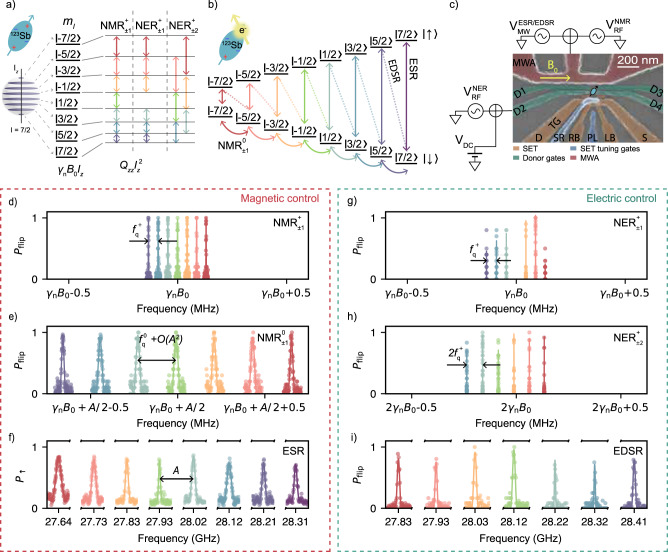
“Thespectraareofcourseidentical, except for the absence of the m I = − 1/2 ↔ +1/2 transition in the NER +±1 case, due to the selection rules imposed by modulation of the quad-rupole interaction 24 .”
InfluentialSelf-citationHigh-fidelity qutrit entangling gates for superconducting circuits
Goss, N., Morvan, A., Marinelli, B., Mitchell, B. K., Nguyen, L. B., Naik, R. K., Chen, L., Jünger, C., Kreikebaum, J. M., Santiago, D. I., et al. (2022) · Nature Communications · doi:10.1038/s41467-022-34851-z · Cited by 129
Quantum-enhanced sensing using non-classical spin states of a highly magnetic atom
Chalopin, T., Bouazza, C., Evrard, A., Makhalov, V., Dreon, D., Dalibard, J., Sidorenkov, L. A., & Nascimbène, S. (2018) · Nature Communications · doi:10.1038/s41467-018-07433-1 · Cited by 122
Molecular Nanomagnets as Qubits with Embedded Quantum-Error Correction
Chiesa, A., Macaluso, E., Petiziol, F., Wimberger, S., Santini, P. M., & Carretta, S. (2020) · The Journal of Physical Chemistry Letters · doi:10.1021/acs.jpclett.0c02213 · Cited by 108 · cited 1×
“…discovery of nuclear electric resonance 24 and the steady development of ideas to use high-spin nuclei in quantum information processing 29 – 31 high-lighted the unique opportunity to use 123 Sb as a qudit that exploits all the bene fi ts and fl exibility of silicon quantum electronic…”
Lu, H., Myilswamy, K. V., Bennink, R. S., Seshadri, S., Alshaykh, M. S., Liu, J., Kippenberg, T. J., Leaird, D. E., Weiner, A. M., & Lukens, J. M. (2022) · Nature Communications · doi:10.1038/s41467-022-31639-z · Cited by 100 · cited 1×
“Experimental qudit platforms can be found in optics 6,7 , superconductors 8 – 10 , trapped ions 11 , atomic ensembles 12 and molecular magnets 13 .”
Accurate and Robust Unitary Transformations of a High-Dimensional Quantum System
Anderson, B. E., Sosa-Martinez, H., Riofrío, C. A., Deutsch, I. H., & Jessen, P. S. (2015) · Physical Review Letters · doi:10.1103/physrevlett.114.240401 · Cited by 94 · cited 1×
“Experimental qudit platforms can be found in optics 6,7 , superconductors 8 – 10 , trapped ions 11 , atomic ensembles 12 and molecular magnets 13 .”
Hotter is Easier: Unexpected Temperature Dependence of Spin Qubit Frequencies
Undseth, B., Pietx-Casas, O., Raymenants, E., Mehmandoost, M., Mądzik, M. T., Philips, S. G. J., de Snoo, S. L., Michalak, D. J., Amitonov, S. V., Tryputen, L., et al. (2023) · Physical Review X · doi:10.1103/physrevx.13.041015 · Cited by 86 · cited 1×
“This helps reduce context-dependent errors, where the frequency of thequbitorthereadoutcontrastinthechargesensorisaffectedbythe presence or absence of a driving fi eld 38,48 .”
Implementation of a Walsh-Hadamard Gate in a Superconducting Qutrit
Yurtalan, M. A., Shi, J., Kononenko, M., Lupaşcu, A., & Ashhab, S. (2020) · Physical Review Letters · doi:10.1103/physrevlett.125.180504 · Cited by 82
Efficient realization of quantum algorithms with qudits
Nikolaeva, A. S., Kiktenko, E. O., & Fedorov, A. K. (2024) · EPJ Quantum Technology · doi:10.1140/epjqt/s40507-024-00250-0 · Cited by 77
Formation of strain-induced quantum dots in gated semiconductor nanostructures
Thorbeck, T., & Zimmerman, N. M. (2015) · AIP Advances · doi:10.1063/1.4928320 · Cited by 75 · cited 1×
“The numerical value of f +q is close to that observed in a similar device 24 and is well understood as arising from theEFGproduced by static strainin the deviceas a consequenceof the differential thermal expansion of the aluminium gates placed over the silicon 24,41 .”
Designing Codes around Interactions: The Case of a Spin
Gross, J. A. (2021) · Physical Review Letters · doi:10.1103/physrevlett.127.010504 · Cited by 63 · cited 1×
“For quantum information processing, an exciting prospect is the encoding of an error-correctable logical qubit in the I =7/2 nuclear spin 30 .”
Corley-Wiciak, C. X., Richter, C., Zoellner, M. H., Zaitsev, I., Manganelli, C. L., Zatterin, E. M., Schülli, T. U., Corley‐Wiciak, A. A., Katzer, J., Reichmann, F., et al. (2023) · ACS Applied Materials & Interfaces · doi:10.1021/acsami.2c17395 · Cited by 57
Coherent control of electron spin qubits in silicon using a global field
Vahapoglu, E., Slack-Smith, J., Leon, R. C. C., Lim, W. H., Hudson, F. E., Day, T., Cifuentes, J. D., Tanttu, T., Yang, C. H., Saraiva, A., et al. (2022) · npj Quantum Information · doi:10.1038/s41534-022-00645-w · Cited by 55
Self-citationAn electrically driven single-atom “flip-flop” qubit
Savytskyy, R., Botzem, T., de Fuentes, I. F., Joecker, B., Pla, J. J., Hudson, F. E., Itoh, K. M., Jakob, A. M., Johnson, B. C., Jamieson, D. N., et al. (2023) · Science Advances · doi:10.1126/sciadv.add9408 · Cited by 51
Self-citationPulse engineering of a global field for robust and universal quantum computation
Hansen, I., Seedhouse, A. E., Saraiva, A., Laucht, A., Dzurak, A. S., & Yang, C. H. (2021) · Physical Review A · doi:10.1103/physreva.104.062415 · Cited by 50
Self-citationLinear Effect of Applied Electric Field on Nuclear Quadrupole Resonance
Armstrong, J. A., Bloembergen, N., & Gill, D. (1961) · Physical Review Letters · doi:10.1103/physrevlett.7.11 · Cited by 49
Hyperfine Stark effect of shallow donors in silicon
Pica, G., Wolfowicz, G., Urdampilleta, M., Thewalt, M. L. W., Riemann, H. P., Abrosimov, N. V., Becker, P., Pohl, H.-J., Morton, J. J. L., Bhatt, R. N., et al. (2014) · Physical Review B · doi:10.1103/physrevb.90.195204 · Cited by 48
Interaction of Strain and Nuclear Spins in Silicon: Quadrupolar Effects on Ionized Donors
Franke, D. P., Hrubesch, F. M., Kuenzl, M., Becker, H.-W., Itoh, K. M., Stutzmann, M., Hoehne, F., Dreher, L., & Brandt, M. S. (2015) · Physical Review Letters · doi:10.1103/physrevlett.115.057601 · Cited by 42
Self-citationGeneralized Ramsey interferometry explored with a single nuclear spin qudit
Godfrin, C., Ballou, R., Bonet, E., Ruben, M., Klyatskaya, S., Wernsdorfer, W., & Balestro, F. (2018) · npj Quantum Information · doi:10.1038/s41534-018-0101-3 · Cited by 42 · cited 1×
“Experimental qudit platforms can be found in optics 6,7 , superconductors 8 – 10 , trapped ions 11 , atomic ensembles 12 and molecular magnets 13 .”
Exploring quantum chaos with a single nuclear spin
Mourik, V., Asaad, S., Firgau, H. R., Pla, J. J., Holmes, C. A., Milburn, G. J., McCallum, J. C., & Morello, A. (2018) · Physical review. E · doi:10.1103/physreve.98.042206 · Cited by 39
Self-citationHyperfine-enhanced gyromagnetic ratio of a nuclear spin in diamond
Sangtawesin, S., McLellan, C. A., Myers, B. A., Jayich, A. C. B., Awschalom, D. D., & Petta, J. R. (2016) · New Journal of Physics · doi:10.1088/1367-2630/18/8/083016 · Cited by 35
An ultra-stable 1.5 T permanent magnet assembly for qubit experiments at cryogenic temperatures
Adambukulam, C., Sewani, V. K., Stemp, H. G., Asaad, S., Mądzik, M. T., Morello, A., & Laucht, A. (2021) · Review of Scientific Instruments · doi:10.1063/5.0055318 · Cited by 22
Self-citationRobust macroscopic Schrödinger's cat on a nucleus
Gupta, P., Vaartjes, A., Yu, X., Morello, A., & Sanders, B. C. (2024) · Physical Review Research · doi:10.1103/physrevresearch.6.013101 · Cited by 20
Self-citationHighly 28Si enriched silicon by localised focused ion beam implantation
Acharya, R., Coke, M., Adshead, M., Li, K., Achinuq, B., Cai, R., Gholizadeh, A. B., Jacobs, J., Boland, J. L., Haigh, S. J., et al. (2024) · Communications Materials · doi:10.1038/s43246-024-00498-0 · Cited by 19
Self-citationScalable Atomic Arrays for Spin‐Based Quantum Computers in Silicon
Jakob, A. M., Robson, S. G., Firgau, H. R., Mourik, V., Schmitt, V., Holmes, D., Posselt, M., Mayes, E. L. H., Spemann, D., McCallum, J. C., et al. (2024) · Advanced Materials · doi:10.1002/adma.202405006 · Cited by 19 · cited 3×
“Upon impact with the surface, the atoms in the molecule break apart, and the kinetics of the ion stopping in the substrate lands the two atoms at ≈ 5nm distance with a high probability 50 .”
InfluentialSelf-citationCoherent Manipulation of Nuclear Spins in Semiconductors with an Electric Field
Ono, M., Ishihara, J., Sato, G. E., Ohno, Y., & Ohno, H. (2013) · Applied Physics Express · doi:10.7567/apex.6.033002 · Cited by 18
Detecting quantumness in uniform precessions
Zaw, L. H., Aw, C. C., Lasmar, Z., & Scarani, V. (2022) · Physical Review A · doi:10.1103/physreva.106.032222 · Cited by 18
Hardware-efficient error-correcting codes for large nuclear spins
Gross, J. A., Godfrin, C., Blais, A., & Dupont-Ferrier, E. (2024) · Physical Review Applied · doi:10.1103/physrevapplied.22.014006 · Cited by 16
Quadrupolar effects on nuclear spins of neutral arsenic donors in silicon
Franke, D. P., Pflüger, M., Mortemousque, P.-A., Itoh, K. M., & Brandt, M. S. (2016) · Physical review. B./Physical review. B · doi:10.1103/physrevb.93.161303 · Cited by 13
Self-citationError channels in quantum nondemolition measurements on spin systems
Joecker, B., Stemp, H. G., de Fuentes, I. F., Johnson, M. A. I., & Morello, A. (2024) · Physical review. B./Physical review. B · doi:10.1103/physrevb.109.085302 · Cited by 11
Self-citationEngineering local strain for single-atom nuclear acoustic resonance in silicon
O'Neill, L. A., Joecker, B., Baczewski, A., & Morello, A. (2021) · Applied Physics Letters · doi:10.1063/5.0069305 · Cited by 9 · cited 4×
“Electron spin qubits can be controlled using both magnetic 15,22 (electron spin resonance, ESR) and electric 18 – 20 (electric dipole spin resonance, EDSR) fi elds; nuclear qubits are normally driven by nuclear magnetic resonance 23 (NMR), but quadrupolar nuclei can exhibit Electric 24 (NER) or even Acoustic 25 (NAR) r…”
InfluentialSelf-citationMultiple-Quantum Transitions and Charge-Induced Decoherence of Donor Nuclear Spins in Silicon
Franke, D. P., Pflüger, M., Itoh, K. M., & Brandt, M. S. (2017) · Physical Review Letters · doi:10.1103/physrevlett.118.246401 · Cited by 5
Self-citationScalable Atomic Arrays for Spin-Based Quantum Computers in SiliconPreprint
Jakob, A., Robson, S. G., Firgau, H. R., et al. (2023) · Research Square · doi:10.21203/rs.3.rs-3367541/v1 · Cited by 4
Self-citationQudits for decomposing multiqubit gates and realizing quantum algorithmsPreprint
Kiktenko, E. O., Nikolaeva, A. S., & Fedorov, A. K. (2023) · arXiv (Cornell University) · doi:10.48550/arxiv.2311.12003 · Cited by 1
Highly ${ }^{28} \mathrm{Si}$ Enriched Silicon by Localised Focused Ion Beam ImplantationPreprint
Acharya, K. R., Coke, M., Adshead, M., et al. (2023) · arXiv (Cornell University) · doi:10.48550/arxiv.2308.12471
Hardware-efficient error-correcting codes for large nuclear spins
Gross, J. A., Godfrin, C., Blais, A., & Dupont-Ferrier, E. (2021) · arXiv · doi:10.48550/arxiv.2103.08548
Cited by
Quantum error correction of qudits beyond break-even
Brock, B. L., Singh, S., Eickbusch, A., Sivak, V. V., Ding, A. Z., Frunzio, L., Girvin, S. M., & Devoret, M. H. (2025) · Nature · doi:10.1038/s41586-025-08899-y · Cited by 64
“…considerable experimental effort has been spent in recent years on developing qudit-based platforms for quantum computing, using donor spins in silicon 8 , ultracold atoms and molecules 9,10 , optical photons 11,12 , superconducting circuits 13–15 , trapped ions 16,17 , and vacancy centers 18,19 .”
Schrödinger cat states of a nuclear spin qudit in silicon
Yu, X., Wilhelm, B., Holmes, D., Vaartjes, A., Schwienbacher, D., Nurizzo, M., Kringhøj, A., van Blankenstein, M. R., Jakob, A. M., Gupta, P., et al. (2025) · Nature Physics · doi:10.1038/s41567-024-02745-0 · Cited by 94
“In this work, we experimentally demonstrate the creation and manipulation of Schrödinger cat states of a single antimony-123 ( 123 Sb) nuclear spin qudit in silicon 20,21 .”
Self-citationMetalloporphyrins as Building Blocks for Quantum Information Science
Santanni, F., & Privitera, A. (2024) · Advanced Optical Materials · doi:10.1002/adom.202303036 · Cited by 33
Colloquium : Qudits for decomposing multiqubit gates and realizing quantum algorithms
Kiktenko, E. O., Nikolaeva, A. S., & Fedorov, A. K. (2025) · Reviews of Modern Physics · doi:10.1103/revmodphys.97.021003 · Cited by 62
Single-Electron Spin Qubits in Silicon for Quantum Computing
Hu, G., Huang, W., Cai, R., Wang, L., Yang, C. H., Cao, G., Xue, X., Huang, P., & He, Y. (2025) · Intelligent Computing · doi:10.34133/icomputing.0115 · Cited by 33
Metadata
- Authors
- Fernández de Fuentes, I., Botzem, T., Johnson, M. A. I., Vaartjes, A., Asaad, S., Mourik, V., Hudson, F. E., Itoh, K. M., Johnson, B. C., Jakob, A. M., McCallum, J. C., Jamieson, D. N., Dzurak, A. S., & Morello, A.
- Affiliations
- UNSW Sydney (AU)
- Keio University (JP)
- RMIT University (AU)
- The University of Melbourne (AU)
- Corresponding author
- Morello, Andrea
- ORCID
- Venue
- Nature Communications
- Published
- 2024-02-14
- Volume
- 15
- Issue
- 1
- Pages
- 1380-1380
- ISSN
- 2041-1723 (ISSN-L)
- PMC
- PMC11258329
- OpenAlex
- W4391805808
- Semantic Scholar
- c9b3f70df88bcf09f6a25134ffcb537c7ab4013e
- Cited by
- 46
- References
- 56
- Citations by year
- 2026: 18 · 2025: 23 · 2024: 5
- FWCI
- 7.29
- Type
- journal article
- Language
- en
- Open access
- gold
- doi.org
- Licence
- cc-by
- creativecommons.org/licenses/by/4.0 (tdm)
- creativecommons.org/licenses/by/4.0 (vor)
- Locations
- Nature Communications (publishedVersion, cc-by)
- PubMed Central (publishedVersion, cc-by)
- PubMed (publishedVersion)
- arXiv (Cornell University) (submittedVersion, cc-by-nc-nd)
- RePEc: Research Papers in Economics (submittedVersion)
- DOAJ (DOAJ: Directory of Open Access Journals) (submittedVersion)
- Minerva Access (University of Melbourne) (submittedVersion, cc-by)
- arXiv (Cornell University)
- Funders
- Australian National Fabrication Facility
- Australian Government
- University of New South Wales
- Department of Industry, Innovation and Science, Australian Government
- Multidisciplinary University Research Initiative
- Australian Research Council (DP210103769)
- Army Research Office (W911NF‐17‐1‐0200, W911NF)
- Topics
- Physical Sciences › Physics and Astronomy › Condensed Matter Physics › Quantum and electron transport phenomena
- Physical Sciences › Physics and Astronomy › Atomic and Molecular Physics, and Optics › Semiconductor Quantum Structures and Devices
- Physical Sciences › Materials Science › Materials Chemistry › Diamond and Carbon-based Materials Research
- Keywords
- qudits, antimony donors, silicon, nuclear spin, electron-nuclear coupling, electric field control, magnetic field control, gate fidelity, noise sensitivity, quantum computing hardware, quantum foundations
About these checks
Registry, retraction, Cites and statistics results are computed, not judged, with one exception: a printed reference that no index lists is read once by a model before it counts as a citation error. Claims are extracted by a model and kept only when their quote appears verbatim in the text; each cited source is then checked, with a model’s help, for whether it says what the claim relies on. Those verdicts can be wrong — read the claim’s quote and the cited source before relying on one.
Statistics and arithmetic are recomputed, not judged.
Confidence bands are shown only for fields calibrated on our annotated test set. None is calibrated yet, so no band is shown.
What counts as a claim ›How we measure confidence ›How we check this ›
Are you an author, or do you see a problem with this page? Request a review
Data sources
Bibliographic data: Semantic Scholar, OpenAlex, Crossref.
Contains information from the Semantic Scholar Academic Graph Datasets, made available under the ODC Attribution License (ODC-BY 1.0).
Semantic Scholar’s data is described in: Kinney, R., et al. (2023). The Semantic Scholar Open Data Platform. arXiv:2301.10140.
