

Rapid evolution of an adaptive multicellular morphology of Candida auris during systemic infection
Open accessThe DOI matches its Crossref record; 85 of the 85 references it cites were found in a registry or an index.
Abstract
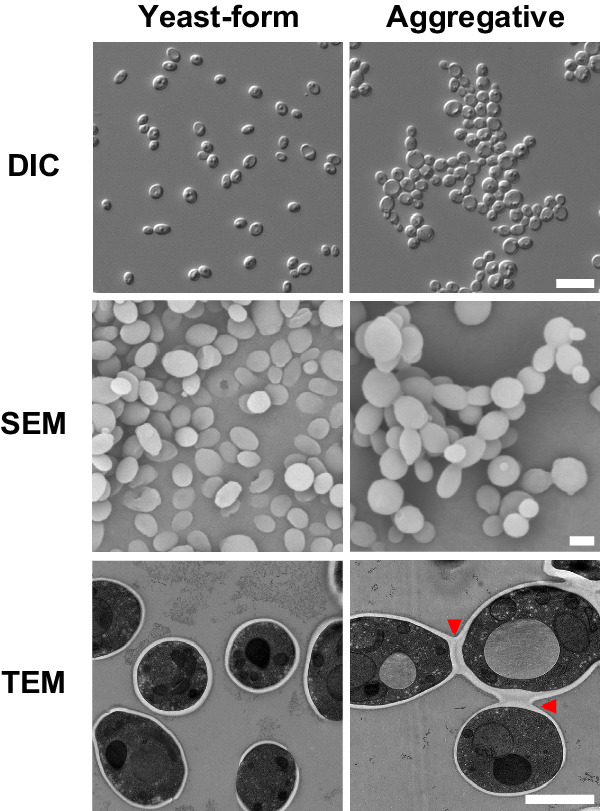
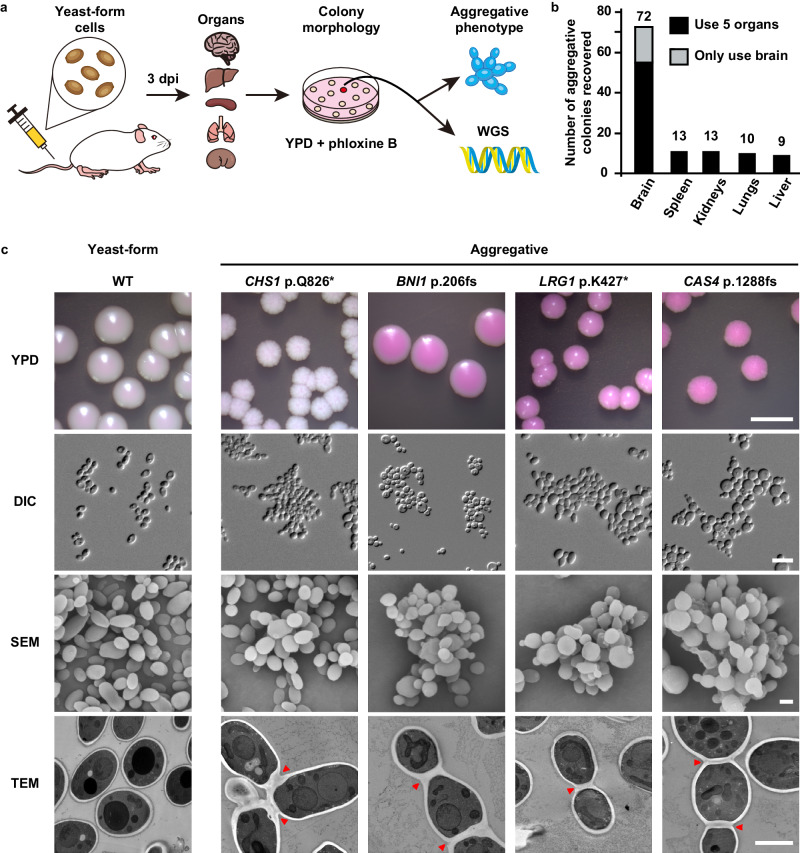
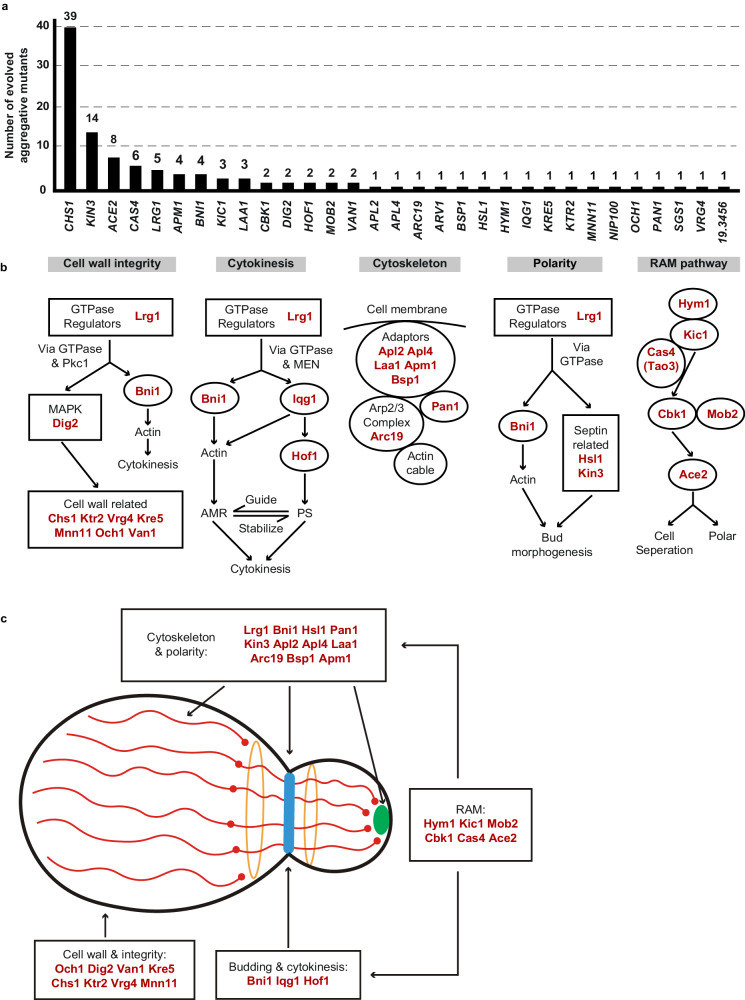
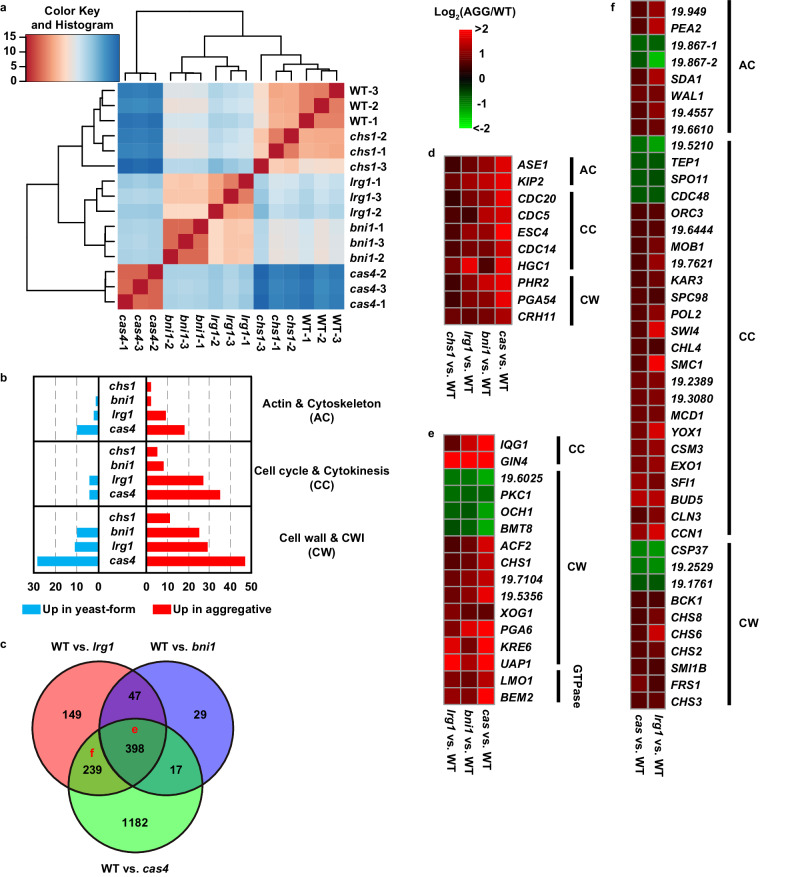
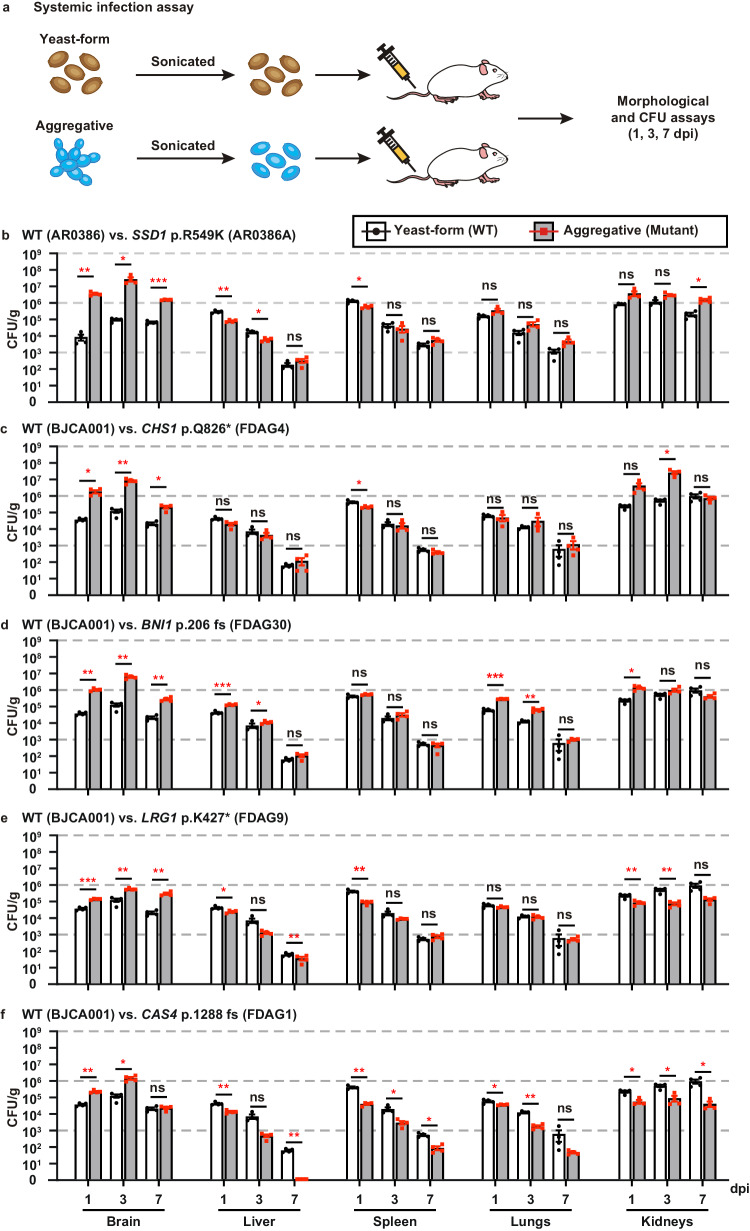
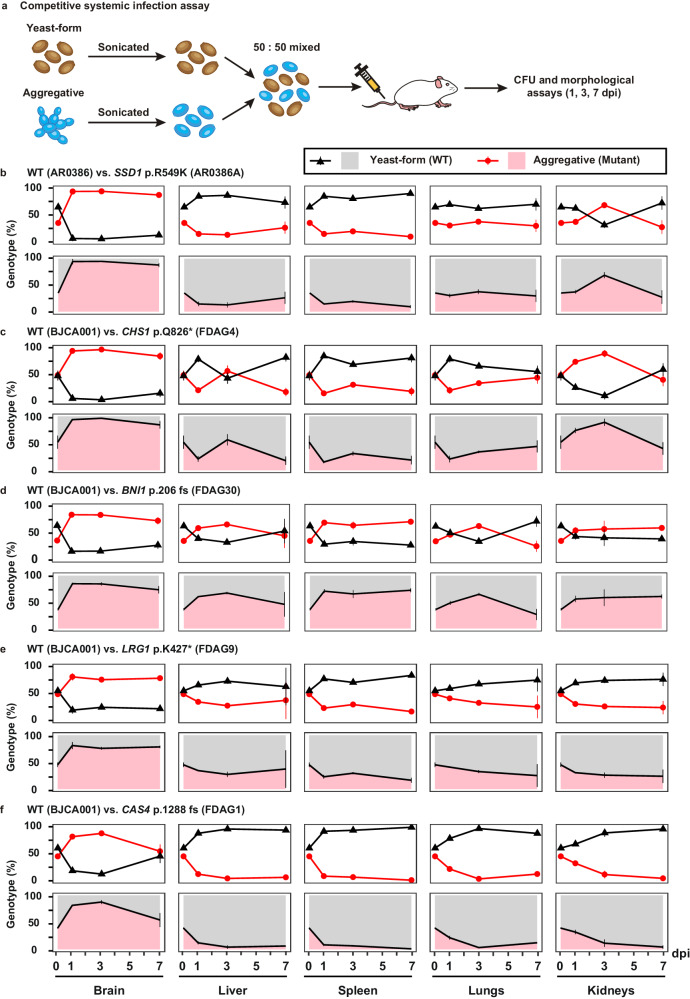
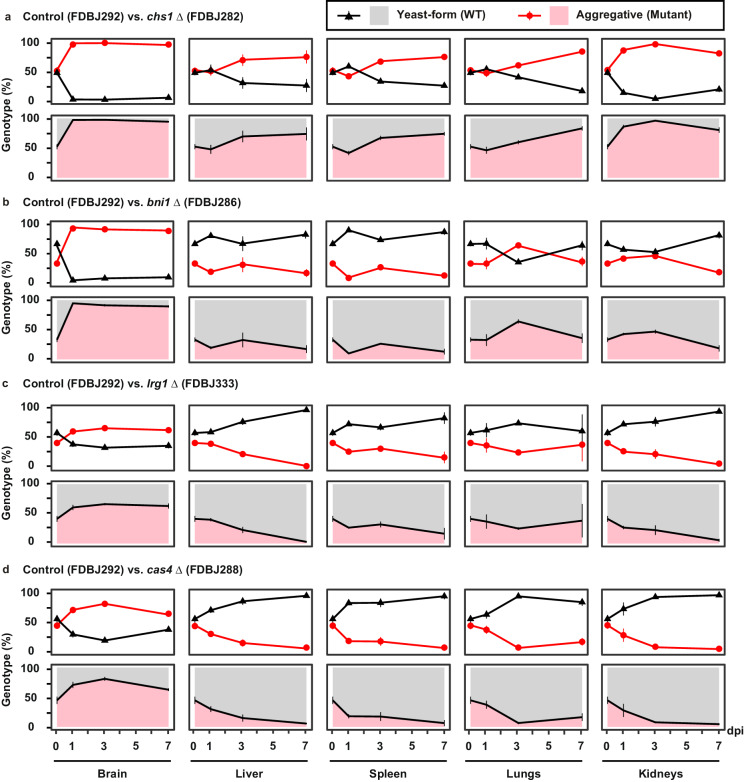
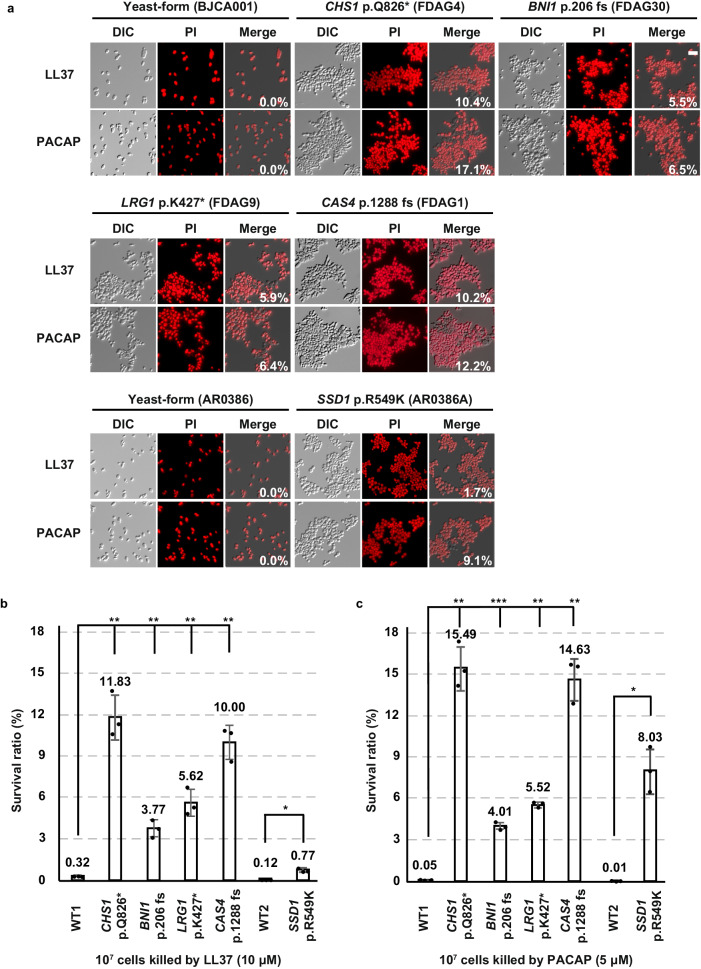
Candida auris has become a serious threat to public health. The mechanisms of how this fungal pathogen adapts to the mammalian host are poorly understood. Here we report the rapid evolution of an adaptive C. auris multicellular aggregative morphology in the murine host during systemic infection. C. auris aggregative cells accumulate in the brain and exhibit obvious advantages over the single-celled yeast-form cells during systemic infection. Genetic mutations, specifically de novo point mutations in genes associated with cell division or budding processes, underlie the rapid evolution of this aggregative phenotype. Most mutated C. auris genes are associated with the regulation of cell wall integrity, cytokinesis, cytoskeletal properties, and cellular polarization. Moreover, the multicellular aggregates are notably more recalcitrant to the host antimicrobial peptides LL-37 and PACAP relative to the single-celled yeast-form cells. Overall, to survive in the host, C. auris can rapidly evolve a multicellular aggregative morphology via genetic mutations.
Overview
The claims and statistics of this paper haven’t been checked yet.
Free: it reads the open-access text and checks the first 5 claims that cite a source we can check. Create a free account to check every claim.
Integrity signals
Registry
Cites
Statistics
Figures
Verification
Claims the paper makes
The claims and statistics of this paper haven’t been checked yet.
Free: it reads the open-access text and checks the first 5 claims that cite a source we can check. Create a free account to check every claim.
Claims other papers make about this one
Each is checked against this paper’s own text: does it say what the citing paper says it does?
The source backs part of the claim, not all of it — or backs it for a different population, condition or comparison.
In the citing paper
“Among them, suppression of the ACE2 locus due to point mutations or loss of ORF region was reported during C. auris adaptive evolution in the host.”
From Cell aggregation mediated by ACE2 deletion in Candida auris modulates fungal colonization and host immune responses in the skin (2024) · cites this paper as [20]
Experimental — accuracy not yet measuredThe source backs part of the claim, not all of it — or backs it for a different population, condition or comparison.
In the citing paper
“Aggregation has been mainly observed among clade III isolates but has also been reported in other clades and can be induced under some in vitro or in vivo conditions (18, 49–51).”
From Ume6-dependent pathways of morphogenesis and biofilm formation in Candida auris (2024) · cites this paper as [50]
Experimental — accuracy not yet measuredThe cited source says what the claim attributes to it.
In the citing paper
“Furthermore, the experimental host-driven evolution of C. auris in the murine model of systemic infection identified multicellular aggregative morphologies with point mutations at several gene loci (20).”
From Cell aggregation mediated by ACE2 deletion in Candida auris modulates fungal colonization and host immune responses in the skin (2024) · cites this paper as [20]
The cited source says what the claim attributes to it.
In the citing paper
“Interestingly, the mice intravenously infected with host-evolved C. auris with suppression of ACE2 locus did not survive after 5 days post-infection, denoting its virulence traits in C. auris (20).”
From Cell aggregation mediated by ACE2 deletion in Candida auris modulates fungal colonization and host immune responses in the skin (2024) · cites this paper as [20]
Self-check
Percentages, sums and reported differences re-computed from the paper’s own numbers.
The self-check needs the paper’s full text.
Citations
Cites
Moderated estimation of fold change and dispersion for RNA-seq data with DESeq2
Love, M. I., Huber, W., & Anders, S. (2014) · Genome Biology · doi:10.1186/s13059-014-0550-8 · Cited by 95,106
The Sequence Alignment/Map format and SAMtools
Li, H., Handsaker, B., Wysoker, A., Fennell, T., Ruan, J., Homer, N., Marth, G., Abecasis, G., Durbin, R., & 1000 Genome Project Data Processing Subgroup (2009) · Bioinformatics · doi:10.1093/bioinformatics/btp352 · Cited by 62,041 · cited 1×
“361 76 , Picard Tools v1.”
Fast and accurate short read alignment with Burrows-Wheeler transform
Li, H., & Durbin, R. (2009) · Bioinformatics · doi:10.1093/bioinformatics/btp324 · Cited by 58,607
The Genome Analysis Toolkit: A MapReduce framework for analyzing next-generation DNA sequencing data
McKenna, A., Hanna, M., Banks, E., Sivachenko, A., Cibulskis, K., Kernytsky, A., Garimella, K., Altshuler, D., Gabriel, S., Daly, M., et al. (2010) · Genome Research · doi:10.1101/gr.107524.110 · Cited by 27,895 · cited 1×
“7.2 were used for single nucleotide variant (SNV) and InDel analyses 77 .”
InfluentialSzklarczyk, D., Gable, A. L., Lyon, D., Junge, A., Wyder, S., Huerta-Cepas, J., Simonovic, M., Doncheva, N. T., Morris, J. H., Bork, P., et al. (2019) · Nucleic Acids Research · doi:10.1093/nar/gky1131 · Cited by 17,749 · cited 1×
“To further uncover the genetic and functional connections among the DEGs between the yeast-form strain and aggregative mutants (common DEGs found in two or more mutants), we performed network analysis using the STRING database 57 .”
ANNOVAR: functional annotation of genetic variants from high-throughput sequencing data
Wang, K., Li, M., & Hakonarson, H. (2010) · Nucleic Acids Research · doi:10.1093/nar/gkq603 · Cited by 14,621 · cited 1×
“An amino acid mutations were annotated using ANNOVAR 78 .”
Transcript-level expression analysis of RNA-seq experiments with HISAT, StringTie and Ballgown
Pertea, M., Kim, D., Pertea, G. M., Leek, J. T., & Salzberg, S. L. (2016) · Nature Protocols · doi:10.1038/nprot.2016.095 · Cited by 6,845 · cited 1×
“3.3b using default parameters 85 .”
GOplot: an R package for visually combining expression data with functional analysis
Walter, W., Sánchez-Cabo, F., & Ricote, M. (2015) · Bioinformatics · doi:10.1093/bioinformatics/btv300 · Cited by 1,756 · cited 1×
“Gene ontology (GO) analysis was performed by R package GOplot 79 .”
Antimicrobial host defence peptides: functions and clinical potential
Mookherjee, N., Anderson, M. A., Haagsman, H. P., & Davidson, D. J. (2020) · Nature Reviews Drug Discovery · doi:10.1038/s41573-019-0058-8 · Cited by 1,502 · cited 1×
“Aggregative cells are more resistant to host-derived anti-microbial peptides than yeast-form cells Antimicrobial or host defense peptides are key components of the mammalian innate immune system 60 .”
Satoh, K., Makimura, K., Hasumi, Y., Nishiyama, Y., Uchida, K., & Yamaguchi, H. (2009) · Microbiology and Immunology · doi:10.1111/j.1348-0421.2008.00083.x · Cited by 1,381
Cited by
Alves, V., Zamith‐Miranda, D., Frasés, S., & Nosanchuk, J. D. (2025) · Journal of Fungi · doi:10.3390/jof11020093 · Cited by 60
“C. auris can quickly develop adaptive traits, such as multicellular aggregative morphology, through genetic mutations, which enhances its survival in host environments and increases resistance to antimicrobial peptides [7].”
Li, M., Wang, B., Chen, J., Jiang, L., Zhou, Y., Guo, G., Jiang, F., Hu, Y., Wang, C., Yang, Y., et al. (2024) · npj Biofilms and Microbiomes · doi:10.1038/s41522-024-00576-8 · Cited by 37
“The formation of bacterial clumping is a common strategy employed by pathogens to evade host immune responses 44,50 .”
Zhang, Y., Zeng, L., Huang, X., Wang, Y., Chen, G., Moses, M., Zou, Y., Xiong, S., Xue, W., Dong, Y., et al. (2025) · Nature Communications · doi:10.1038/s41467-025-59898-6 · Cited by 33
“A de fi ning characteristic of C. auris is its ability to rapidly adapt to external pressures through diverse tolerance mechanisms, both in vitro and in vivo 61 – 65 .”
Self-citationEvolutionary accumulation of FKS 1 mutations from clinical echinocandin-resistant Candida auris
Tian, S., Wu, Y., Li, H., Chen, R., Wu, N., Chu, Y., Jiang, N., Zhang, J., & Shang, H. (2024) · Emerging Microbes & Infections · doi:10.1080/22221751.2024.2377584 · Cited by 34
“Prior research indicates that the non-synonymous mutant genes, RBR 3, IFF 6, MKC 1, and LRG1 , which show morphological changes such as cell aggregation in response to drug exposure and other stressors, may be involved at the cell wall stress stage (cell wall integrity or PKC pathways) [16–22].”
Uniqueness of Candida auris cell wall in morphogenesis, virulence, resistance, and immune evasion
Dakalbab, S., Hamdy, R., Holigová, P., Abuzaid, E. J., Abu-Qiyas, A., Lashine, Y., Mohammad, M. G., & Soliman, S. S. M. (2024) · Microbiological Research · doi:10.1016/j.micres.2024.127797 · Cited by 31
Ramos, L. S., Barbosa, P. F., Lorentino, C. M. A., Lima, J. C., Braga, A. L., Lima, R., Giovanini, L., Casemiro, A. L., Siqueira, N. L. M., da Costa, S. C., et al. (2025) · Current Research in Microbial Sciences · doi:10.1016/j.crmicr.2025.100354 · Cited by 33
White-Brown switching controls phenotypic plasticity and virulence of Candida auris
Phan-Canh, T., Jenull, S., Bitencourt, T. A., Seiser, S., Moser, D., Motamedi, M., Chowdhary, A., Elbe‐Bürger, A., & Kuchler, K. (2025) · Cell Reports · doi:10.1016/j.celrep.2025.115976 · Cited by 24
Repositioning Antimicrobial Peptides Against WHO‐Priority Fungi
Roque‐Borda, C. A., Medina‐Alarcón, K. P., Pereira, J. P. S. G., Sevilhano, T. C. D. A., Aguilar‐Morón, B., Díaz‐Cárdenas, F., da Cruz, L. S., Júnior, F. H. X., Vicente, E. F., Perdigão, J., et al. (2025) · Advanced Science · doi:10.1002/advs.202509567 · Cited by 24
Ume6-dependent pathways of morphogenesis and biofilm formation in Candida auris
Louvet, M., Li, J., Brandalise, D., Bachmann, D., Sala de Oyanguren, F., Labes, D., Jacquier, N., Genoud, C., Mucciolo, A., Coste, A. T., et al. (2024) · Microbiology Spectrum · doi:10.1128/spectrum.01531-24 · Cited by 25
Cha, H., Won, D., & Bahn, Y.-S. (2025) · mBio · doi:10.1128/mbio.02475-23 · Cited by 19
Candida auris cells form giant lipid droplets to survive in harsh environments
Zheng, Q., Li, C., Hu, T., Bing, J., Nobile, C. J., Chu, H., & Huang, G. (2025) · Communications Biology · doi:10.1038/s42003-025-08204-7 · Cited by 19
“AntimicrobialpeptidesLL-37andPACAPhavebeen showntodisplaystrongantifungalactivitiesagainstpathogenicfungisuch as C. albicans and C. auris 22 .”
Self-citationPublic Health Risks of Pathogenic Fungi in China
Miao, B., Yao, J., Zhang, S., Guo, X., Geng, Y., & Gong, J. (2026) · iFungi · doi:10.26599/ifungi.2026.9670003 · Cited by 21
Innate immune response to Candida auris
Holt, A. M., & Nett, J. E. (2024) · Current Opinion in Microbiology · doi:10.1016/j.mib.2024.102510 · Cited by 18
Research advances and public health strategies in China on WHO priority fungal pathogens
Wang, Y., Han, L., Gong, J., Liu, L., Miao, B., & Xu, J. (2025) · Mycology: An International Journal on Fungal Biology · doi:10.1080/21501203.2025.2561612 · Cited by 15
“For instance, the national monitoring network for fungal diseases has observed, through long-term surveillance of antifungal resistance among pathogenic fungi, a sharp rise in azole resistance rates among C. tropicalis in recent years (Brueggemann et al. 2021; Bing et al. 2024a; Huang et al. 2024).”
InfluentialBing, J., Li, S., Ji, L., Du, H., Shamoon, N. M., Nobile, C. J., & Huang, G. (2026) · Clinical Microbiology Reviews · doi:10.1128/cmr.00394-25 · Cited by 15
Self-citationZhang, W., Zhang, H., Gao, Y., Lei, J., & Suo, C. (2025) · Frontiers in Cellular and Infection Microbiology · doi:10.3389/fcimb.2025.1596688 · Cited by 17
Suppressing the virulence factors of Candida auris with baicalein through multifaceted mechanisms
Li, C., Wang, J., Li, H., Wang, Y., Wu, H., Wei, W., Wu, D., Shao, J., Wang, T., & Wang, C. (2024) · Archives of Microbiology · doi:10.1007/s00203-024-04038-9 · Cited by 14
“(Bing et al. 2024).”
Do morphogenetic switching and intraspecies variation enhance virulence of Candida auris?
Phan-Canh, T., & Kuchler, K. (2024) · PLoS Pathogens · doi:10.1371/journal.ppat.1012559 · Cited by 13
Balakumar, A., Cox, A., & Thangamani, S. (2024) · mSphere · doi:10.1128/msphere.00734-24 · Cited by 13
“Interestingly, the mice intravenously infected with host-evolved C. auris with suppression of ACE2 locus did not survive after 5 days post-infection, denoting its virulence traits in C. auris (20).”
Management of Intra-Abdominal Candidiasis in Intensive Care Setting: A Narrative Review
Pais, M. M., Zaragoza, R., Martín‐Loeches, I., Gómez-Bertomeu, F., & Rodríguez, A. H. (2025) · Journal of Fungi · doi:10.3390/jof11050362 · Cited by 12
“Since it was first identified in Japan (2009), it has spread rapidly to more than 35 countries [12–14].”
Octenidine effectively reduces Candida auris colonisation on human skin
Cerbu, D., Seiser, S., Phan-Canh, T., Moser, D., Freystätter, C., Matiasek, J., Kuchler, K., & Elbe‐Bürger, A. (2025) · Scientific Reports · doi:10.1038/s41598-025-11914-x · Cited by 11
“Thus, we used four well described C. auris isolates from diverse geographic origins (clades I, III and IV), each exhibiting distinct antifungal susceptibilities as well as varying biofilm formation and adhesion properties 27,34,78,83–89 .”
Wu, Y., Zou, Y., Dai, Y., Lu, H., Zhang, W., Chang, W., Wang, Y., Nie, Z., Wang, Y., & Jiang, X. (2025) · PLOS Pathogens · doi:10.1371/journal.ppat.1013220 · Cited by 10
Shor, E., Perlin, D. S., & Kontoyiannis, D. P. (2025) · mSphere · doi:10.1128/msphere.00161-25 · Cited by 11
Gifford, H., Bedekovic, T., Helmstetter, N., Gregory, J., Ma, Q., Brand, A., Wilson, D., Rhodes, J. L., Ramsdale, M., Kudoh, T., et al. (2025) · Communications Biology · doi:10.1038/s42003-025-09321-z · Cited by 11
“Most murine models, such as BALB/c 25,34 – 36 and C57BL/6 mice 24 , have rarely demonstrated lethality through C. auris infection 23,37,38 without major immuno-suppression with cyclophosphamide/cortisone 39 – 50 , monoclonal antibody neutrophil depletion 26,51 , or other immunode fi ciency 27,52,53 .”
Baicalein induces apoptosis by targeting ribosomes in Candida auris
Li, C., Wang, J., Wu, H., Zang, L., Qiu, W., Wei, W., Wang, T., & Wang, C. (2024) · Archives of Microbiology · doi:10.1007/s00203-024-04136-8 · Cited by 9
“C. auris is classified as a critical priority pathogen on the WHO’s fungal priority pathogens list (WHO FPPL) (Bing et al. 2024).”
Interaction with amoeba drives virulence-associated phenotypes in the Candida haemulonii complex
Amsri, A., Pruksaphon, K., Thammasit, P., Poonsawat, W., Nosanchuk, J. D., & Youngchim, S. (2025) · Virulence · doi:10.1080/21505594.2025.2570002 · Cited by 8
“In C. auris , pink and white morphologies have differential capacities for hyphal growth and aggregation [41,56,57].”
Vertebrate and invertebrate animal infection models of Candida auris pathogenicity
Martinez, M., Garsin, D. A., & Lorenz, M. C. (2024) · Current Opinion in Microbiology · doi:10.1016/j.mib.2024.102506 · Cited by 8
Insight into Virulence and Mechanisms of Amphotericin B Resistance in the Candida haemulonii Complex
Huang, Y., Su, Y., Chen, X., Xiao, M., & Xu, Y. (2024) · Journal of Fungi · doi:10.3390/jof10090615 · Cited by 8
“…of Bing et al. showed that strains that have mutated to become more aggregative exhibit higher virulence compared to wild type strains, and they found that the mutated genes in evolved aggregative strains play roles in controlling cell division, cytoskeletal properties, and cellular polarity [69].”
BackgroundEmergence and characterization of mixed Candida auris strain infections in China
Du, H., Huang, Y., Guo, P., Liang, W., Zheng, T., Guan, Z., Bing, J., Chu, H., & Huang, G. (2025) · Infection · doi:10.1007/s15010-025-02536-6 · Cited by 7
“Whole genome analysis was performed according to our previous publication [19].”
Self-citationThe emerging pathogen Candida auris: host interactions and disease drivers
Sanya, D. R. A., Arevalo, A. V., Onésime, D., & Nobile, C. J. (2026) · Journal of Biomedical Science · doi:10.1186/s12929-026-01230-5 · Cited by 6
“Intriguingly, these aggregating cells display reduced virulence in the Galleria mellonella infection model [60, 102–104], yet exhibit enhanced survival and increased brain colonization in murine models of disseminated candidiasis [105].”
Self-citationPathogenicity and virulence of Candida auris
Phan-Canh, T., Seiser, S., Chauhan, M., Kuchler, K., Chauhan, N., & Elbe‐Bürger, A. (2026) · Virulence · doi:10.1080/21505594.2026.2707827 · Cited by 7
“Genetic ablation of chitin biosynthesis regulators ( ACE2 , TAO3 / CAS4 ), chitin synthase ( CHS1/CHS2 ), the cytoskeletal polarity protein ( BNI1 ) or the GTPase activator ( LRG1 ) enhances C. auris aggregation (Figure 2) [99,118].”
InfluentialBaicalin promotes β-1,3-glucan exposure in Candida albicans and enhances macrophage response
Pan, Y., Shi, Z., Wang, Y., Chen, F., Yang, Y., Ma, K., & Li, W. (2024) · Frontiers in Cellular and Infection Microbiology · doi:10.3389/fcimb.2024.1487173 · Cited by 9
Deng, Y.-C., Shih, C., Lin, S., Wang, L., Yang, T.-Y., & Tseng, S. (2025) · Journal of Microbiology Immunology and Infection · doi:10.1016/j.jmii.2025.01.001 · Cited by 7
The high-osmolarity glycerol (HOG) pathway in Candida auris
Yaakoub, H., Courdavault, V., & Papon, N. (2025) · mBio · doi:10.1128/mbio.03538-24 · Cited by 6
Valente, M. R., Alcântara, L. M., Cintra, D. S., Mendoza, S. R., Medeiros, E. G., Gomes, K. X., Honorato, L., Almeida, M. D. A., Vieira, C. B., Nosanchuk, J. D., et al. (2024) · Microbiology Spectrum · doi:10.1128/spectrum.01746-24 · Cited by 6
“(82) reported the occurrence of a new C. auris phenotype in vivo , upon the accumulation of de novo point mutations in several genes involved in cell division, cytokinesis, cellular polarization, budding, and cell wall integrity, yielding a rapid evolution to a multicellular aggregative morphology…”
Alvarruiz, J., Gaitán, A. C. R., Cabañero-Navalón, M. D., Pemán, J., Blanes-Hernández, R., Tejido, S. D. C., & García-Bustos, V. (2025) · Journal of Fungi · doi:10.3390/jof11060406 · Cited by 6
Diagnostics for human pathogenic fungal infections: Current status and future prospects
Huang, X., Moses, M., Nie, L., Wandera, E. A., & Chen, C. (2026) · hLife · doi:10.1016/j.hlife.2025.11.005 · Cited by 5
“Fungal infections, now widely recognized as a “silent pandemic,” are evolving at a rapid pace and growing increasingly resistant to existing therapies, posing an escalating threat to global health in the 21st century [1,2].”
Self-citationEmergence of traits in human fungal pathogens
Ma, X., Cui, J., Tao, Y., Liao, G., & Wang, L. (2026) · Trends in Microbiology · doi:10.1016/j.tim.2025.12.005 · Cited by 5
Li, C., Li, S., Zheng, Q., Li, T., Bing, J., Guan, Z., Hu, T., Chu, H., & Huang, G. (2025) · Science China Life Sciences · doi:10.1007/s11427-024-2902-9 · Cited by 4
“Passage through animals in a systemic infection model can also efficiently induce this aggregative phenotype through genetic mutations in various genes involved in multiple biological processes (Bing et al., 2024).”
Self-citationZhang, M., Zhao, Y., Cui, H., Huang, W., Xiong, K., Yang, S., Duan, Y., He, Y., Yang, L., Su, C., et al. (2025) · Proceedings of the National Academy of Sciences · doi:10.1073/pnas.2417721122 · Cited by 5
“In addition to C. albicans , we also identified CO 2 - induced hypersusceptibility to caspofungin pnas.org among non - albicans Candida species including three Candida auris isolates ( 38 ) ( Fig.”
Duan, Y., Mei, C., Hong, X., Cai, D., & Li, X. (2025) · BMC Infectious Diseases · doi:10.1186/s12879-025-11931-1 · Cited by 4
“In recent years, outbreaks have been reported in the United States, Europe, and other regions, making it one of the ‘super fungi’ posing a serious threat to public health safety [6, 7].”
C. elegans as a tractable infection model for the emerging fungal pathogen Candida auris
Martinez, M., Cruz, M. R., Garsin, D. A., & Lorenz, M. C. (2026) · Microbiology Spectrum · doi:10.1128/spectrum.03156-25 · Cited by 3
Daneshnia, F., Cai, L., Gunasekaran, D., Gautam, I., Perry, A. M., Ghahfarokhy, P. M., Ebadati, A., Munoz, J., Padilla, D., Hilmioglu-Polat, S., et al. (2026) · Microbiology Spectrum · doi:10.1128/spectrum.03043-25 · Cited by 4
Self-citationCandida auris uses nutrient sensing to modulate virulence and host immune responses
Tedja, I., Weerasinghe, H., Bryak, G., Stölting, H., Lo, T. L., Simm, C., Swaminathan, A., Kraupner-Taylor, C. A., Harrison, P. F., Olivier, F. A. B., et al. (2026) · Nature Microbiology · doi:10.1038/s41564-026-02454-9 · Cited by 4
“These results are in line with the reported genomic plasticity and phenotypic heterogeneity of C. auris 9,21,36,51,52 .”
In vitro activities of lipopeptides against fluconazole-resistant Candida auris
Fioriti, S., Pallotta, F., D’Achille, G., Cirioni, O., Simonetti, O., Neubauer, D., Kamysz, E., Kamysz, W., Brescini, L., Caucci, S., et al. (2025) · Microbiology Spectrum · doi:10.1128/spectrum.01786-24 · Cited by 3
Henry, M., Khouas, M., Théberge-Julien, G., Vincent, A. T., Villeneuve, L. R., Rhéaume, É., Tardif, J., & Sellam, A. (2025) · Virulence · doi:10.1080/21505594.2025.2569630 · Cited by 3
“Recent studies on the multi-drug-resistant yeast C. auris have demonstrated that evolved aggrega-tive cells, or cells where aggregation is induced by specific drugs or growth conditions, are more resistant to phagocytosis by macrophages than their yeast-form counterparts [28,58].”
Systemic Acetylome Analysis of Evolution in Fluconazole Resistance Candida auris
Zhou, X., Jing, D., Huang, Y., Song, N., Li, D., Liu, W., Liu, C., & Li, X. (2025) · Journal of Proteome Research · doi:10.1021/acs.jproteome.4c01031 · Cited by 2
Neto, J. X. D. S., Leite, L. O., da Silva, A. P. A., Guedes, M. I. F., & Sousa, D. O. B. (2025) · Probiotics and Antimicrobial Proteins · doi:10.1007/s12602-025-10744-7 · Cited by 2
Farias, N. S., de Souza-Salgado, L., de Barros, F. B., de Oliveira, M. A. N., Macêdo, M. J. F., Souza, F. D. S., Torres, J. P. A., Coutinho, H. D. M., Ferrari, J., de Freitas, M. A., et al. (2026) · ACS Omega · doi:10.1021/acsomega.5c11226 · Cited by 2
Going fishing: how to get what you want from a fungal genetic screen
O’Meara, T. R. (2024) · mSphere · doi:10.1128/msphere.00638-23 · Cited by 1
Mendoza, S. R., Honorato, L., Cintra, D. S., Ferreira, M. D. S., Zamith‐Miranda, D., Nosanchuk, J. D., Nimrichter, L., & Guimaraes, A. J. (2025) · Infection and Immunity · doi:10.1128/iai.00329-25 · Cited by 1
The Rise of Candida auris: A Global Health Threat
Warrier, A. R., & Moses, S. S. (2025) · Infectious diseases · doi:10.5772/intechopen.1012838 · Cited by 1
Xu, X., Wu, M., Li, B., Li, J., Chen, S., Chen, L., 于东虎, Yang, L., Hong, Z., Pan, H., et al. (2026) · Exploration · doi:10.1002/exp.20250276 · Cited by 4
“In addition, the representative multicellular aggregative phenotype of C. auris can be observed under TB and white light irradiation (red circle), suggesting attenuated virulence [ 67 ].”
Negi, P., Verma, N., Rishi, P., Multani, K., Sharma, M., Kumari, S., & Raj, K. (2026) · Archives of Microbiology · doi:10.1007/s00203-026-04864-z · Cited by 1
Seif, E. J. M., Avino, I. N., Mendonça, R. Z., & da Silva, P. I. (2026) · Probiotics and Antimicrobial Proteins · doi:10.1007/s12602-026-11092-w · Cited by 1
Ryan, L. K., Griffiths, I. M., ‘Emily’, U., Gao, D., Figgins, E. L., Sørensen, K., Lin, J. S., Molchanova, N., Kirshenbaum, K., Barron, A. E., et al. (2026) · ACS Infectious Diseases · doi:10.1021/acsinfecdis.6c00525 · Cited by 1
Seaside to Bedside: Assembly in Research for Emerging Human Fungal Pathogen Candida auris
Gifford, H., Wilson, D., Rhodes, J. L., & Farrer, R. A. (2025) · Methods in molecular biology · doi:10.1007/978-1-0716-4702-8_13 · Cited by 1
mSphere of Influence: Rapid evolution of pathogenesis and drug resistance in human pathogenic fungi
Hu, P. (2025) · mSphere · doi:10.1128/msphere.00570-24 · Cited by 1
“The work by Bing et al. showed that host stress can cause trans poson-independent fungal mutations to accumulate.”
InfluentialCandida auris can acquire antifungal resistance without selection pressurePreprint
Phan-Canh, T., Nguyen-Le, D.-M., Chauhan, M., Luu, P., Chowdhary, A., Chauhan, N., & Kuchler, K. (2026) · bioRxiv (Cold Spring Harbor Laboratory) · doi:10.64898/2026.01.07.695227 · Cited by 3
“During antifungal therapy, drug-resistant C. auris isolates are increasingly recovered from patients [24,25], underscoring the roles of selection pressure and rapid microevolution [4,7].”
InfluentialEwunkem, A. J., Merrills, L., Williams, Z. J., Maness, L. R., Meixner, J. A., Justice, B. L., Iloghalu, U. B., Williams, V., Kiki, L. C., & Singh, D. (2025) · Open Journal of Medical Microbiology · doi:10.4236/ojmm.2025.151002
“Furthermore, genetic mutations of candida genes underline the rapid evolution of this aggregative phenotype [51].”
Nett, J. E., & Holt, A. M. (2025) · Springer series on biofilms · doi:10.1007/978-3-031-93315-8_10
Deadly drug-resistant fungus spreading rapidly through European hospitals
Wildman, J. L., Feil, E. J., & Henk, D. A. (2025) · The Conversation · doi:10.64628/ab.qwg4m6eup
Zheng, A., Wang, F., Li, Y., Li, W., Wu, W., Gan, J., & Jin, Y. (2026) · Journal of Medical Case Reports · doi:10.1186/s13256-026-05853-y
Fonctions et biosynthèse des β-1,6-glucanes de la paroi cellulaire chez Candida albicans
Bekirian, C. (2024) · theses.fr (ABES) · doi:10.70675/b1028289z0c26z4acaz8f96z18e5c0c94464
Liu, L. L., Niu, T., Zhang, T., Tan, D., Duan, X., & Li, X. (2026) · Microbiological Research · doi:10.1016/j.micres.2026.128542
Synthetic cell-cell adhesion provides benefits of proximity without diffusion-related costsPreprint
Klumpe, H. E., Loshinsky, S., Hart, D. J., Tong, K., Dunlop, M. J., & Khalil, A. S. (2026) · bioRxiv (Cold Spring Harbor Laboratory) · doi:10.64898/2026.05.28.728462
Insights on molecular drivers of phenotypic plasticity in Candidozyma auris
Solanki, S., Singh, B., Mathur, K., Asif, S., Francis, A., Gangwar, G., Thakur, A. S., & Puria, R. (2026) · World Journal of Microbiology and Biotechnology · doi:10.1007/s11274-026-05085-8
“…suggesting that the observed pigmentation differences may be associated with yeast-to-filamentous morphological transitions in C. auris , supporting its use as a meaningful screening tool to investigate filamentation and its contribution to C. auris virulence (Bing et al. 2024; Deng et al. 2021).”
Biological characterization of Candida parapsilosis haploids induced by voriconazole
Ji, L., Zheng, T., Hu, T., Li, S., Bing, J., Zheng, Q., Chu, H., & Huang, G. (2026) · International Journal of Antimicrobial Agents · doi:10.1016/j.ijantimicag.2026.107922
Self-citationOsama, D., Alsedawy, M., Hussein, M. S., Hassan, M. A., Elrefaey, S. M., & Tawfick, M. M. (2026) · Antonie van Leeuwenhoek · doi:10.1007/s10482-026-02393-9
“Bing et al. approved that the aggregative cells of clinical isolates of C. auris can form a multicellular aggregative morphology during infection of mammalian host cells (Bing et al. 2024).”
InfluentialWei, M., Xue, Y., Mei, Y., Zhu, J., Li, L., Ma, X., Chen, G., & Zhu, M. (2026) · Frontiers in Cellular and Infection Microbiology · doi:10.3389/fcimb.2026.1860369
“…or exogenous fatty acids can induce fi lamentous growth that may enhance tissue invasion (Deng et al., 2024), and earlier systemic-infection studies indicate that aggrega-tive or fi lamentation-competent states may in fl uence virulence outside the skin niche (Chen et al., 2018; Bing et al., 2024).”
Baicalein suppresses adhesion and biofilm formation in Candida auris
Li, C., Wu, H., Wang, Y., Wei, W., Wu, D., Feng, X., Wang, T., & Wang, C. (2026) · Microbiology Spectrum · doi:10.1128/spectrum.01097-26
Wang, T., Ma, T., Zhou, C., Martinez, R. G., Putnam, N. E., Johnson, J. K., & Jabra‐Rizk, M. A. (2026) · bioRxiv (Cold Spring Harbor Laboratory) · doi:10.64898/2026.08.26.747207
“Although the host environmental inducers remain unknown, C. auris was shown to rapidly evolve a multicellular aggregative morphology from single cells during systemic infection in a mouse model, with aggregates abundantly found in kidney tissue (27, 28).”
Gómez-Gaviria, M., Ramírez-Sotelo, U., & Mora-Montes, H. M. (2026) · Journal of Fungi · doi:10.3390/jof12100791
“Importantly, aggregate-forming strains of C. auris and N. glabratus have been associated with enhanced virulence and increased resistance to immune-mediated killing [175,176].”
Kouroupis, D., Papathanasiou, A.-I., Bourtzinakos, K., Sentona, M., Kolaza, M., Vafeidou, K., Ftergioti, A., Gyltidou, S., Gekas, C., Zarras, C., et al. (2026) · Pathogens · doi:10.3390/pathogens15101057
“Candidozyma auris exhibits an extraordinary phenotypic capacity to switch from single-celled yeast forms into highly aggregative, multicellular communities embedded within a dense, self-produced extracellular polysaccharide matrix [38,39].”
Lazreg, I., Ghazawi, A., Dakalbab, S., Ismail, H., Aly, M. A. A., Haddad, O., Dhaheri, F. A. A., & Soliman, S. S. M. (2026) · Infection · doi:10.1007/s15010-026-03017-0
Metadata
- Authors
- Bing, J., Guan, Z., Zheng, T., Ennis, C. L., Nobile, C. J., Chen, C., Chu, H., & Huang, G.
- Affiliations
- Fudan University (CN)
- University of California, Merced (US)
- Chinese Academy of Sciences (CN)
- Tongji University (CN)
- Southwest University (CN)
- Corresponding author
- Chu, Haiqing
- Huang, Guanghua
- ORCID
- Venue
- Nature Communications
- Published
- 2024-03-16
- Volume
- 15
- Issue
- 1
- Pages
- 2381-2381
- ISSN
- 2041-1723 (ISSN-L)
- PMC
- PMC10944540
- OpenAlex
- W4392885420
- Cited by
- 74
- References
- 85
- Citations by year
- 2026: 25 · 2025: 33 · 2024: 16
- FWCI
- 25.60
- Type
- journal article
- Language
- en
- Open access
- gold
- doi.org
- Licence
- cc-by
- creativecommons.org/licenses/by/4.0 (tdm)
- creativecommons.org/licenses/by/4.0 (vor)
- Locations
- Nature Communications (publishedVersion, cc-by)
- PubMed Central (publishedVersion, cc-by)
- PubMed (publishedVersion)
- eScholarship (California Digital Library) (submittedVersion, cc-by)
- RePEc: Research Papers in Economics (submittedVersion)
- DOAJ (DOAJ: Directory of Open Access Journals) (submittedVersion, cc-by-sa)
- Funders
- National Natural Science Foundation of China (31930005 and 82272359, 32170193 and 32000018)
- U.S. Department of Health & Human Services | NIH | National Institute of General Medical Sciences (R35GM124594)
- Topics
- Health Sciences › Medicine › Infectious Diseases › Antifungal resistance and susceptibility
- Life Sciences › Biochemistry, Genetics and Molecular Biology › Molecular Biology › Fungal and yeast genetics research
- Health Sciences › Medicine › Infectious Diseases › Fungal Infections and Studies
- Keywords
- Candida auris, multicellular aggregates, rapid evolution, systemic fungal infection, brain infection, cell division, cytokinesis, cell wall integrity, cytoskeleton, antimicrobial peptides, LL-37, PACAP, host-pathogen interaction
- MeSH terms
- Candida auris, Animals, Antifungal Agents, Candida, Candidiasis, Mammals, Microbial Sensitivity Tests, Phenotype, Saccharomyces cerevisiae, Sepsis, Mice
About these checks
Registry, retraction, Cites and statistics results are computed, not judged, with one exception: a printed reference that no index lists is read once by a model before it counts as a citation error. Claims are extracted by a model and kept only when their quote appears verbatim in the text; each cited source is then checked, with a model’s help, for whether it says what the claim relies on. Those verdicts can be wrong — read the claim’s quote and the cited source before relying on one.
Statistics and arithmetic are recomputed, not judged.
Confidence bands are shown only for fields calibrated on our annotated test set. None is calibrated yet, so no band is shown.
What counts as a claim ›How we measure confidence ›How we check this ›
Are you an author, or do you see a problem with this page? Request a review
Data sources
Bibliographic data: Semantic Scholar, OpenAlex, Crossref.
Contains information from the Semantic Scholar Academic Graph Datasets, made available under the ODC Attribution License (ODC-BY 1.0).
Semantic Scholar’s data is described in: Kinney, R., et al. (2023). The Semantic Scholar Open Data Platform. arXiv:2301.10140.
